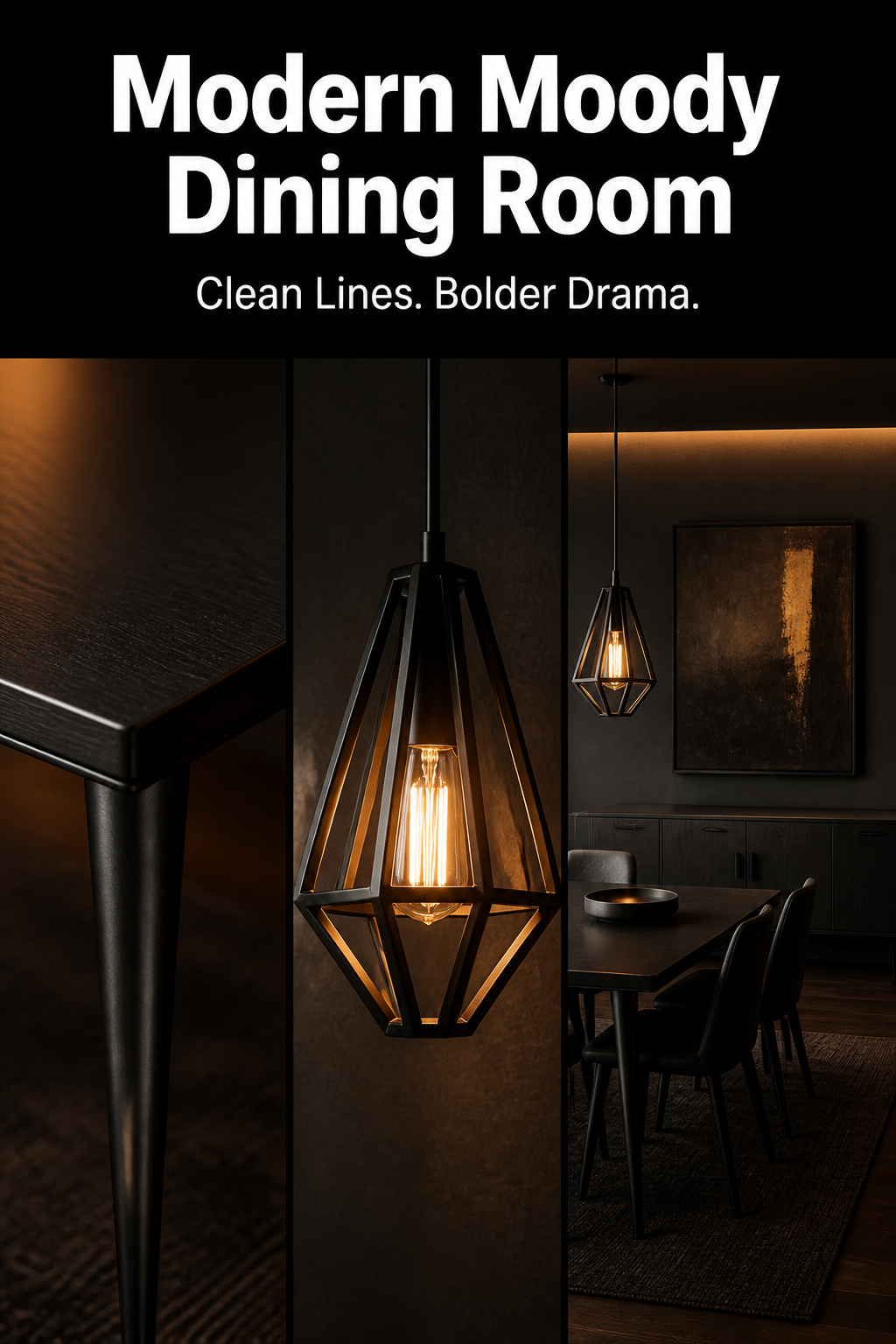
Most moody dining rooms look the same: dark panelled walls, tufted velvet chairs, an antique chandelier, a sideboard staged like a prop room. Fine aesthetic. But a modern moody dining room works differently — clean lines, matte surfaces, fewer but bolder pieces — and most search results are steering you toward the wrong version. The complete dark-dining framework is in our moody dining room ideas guide; this article covers the modern take.
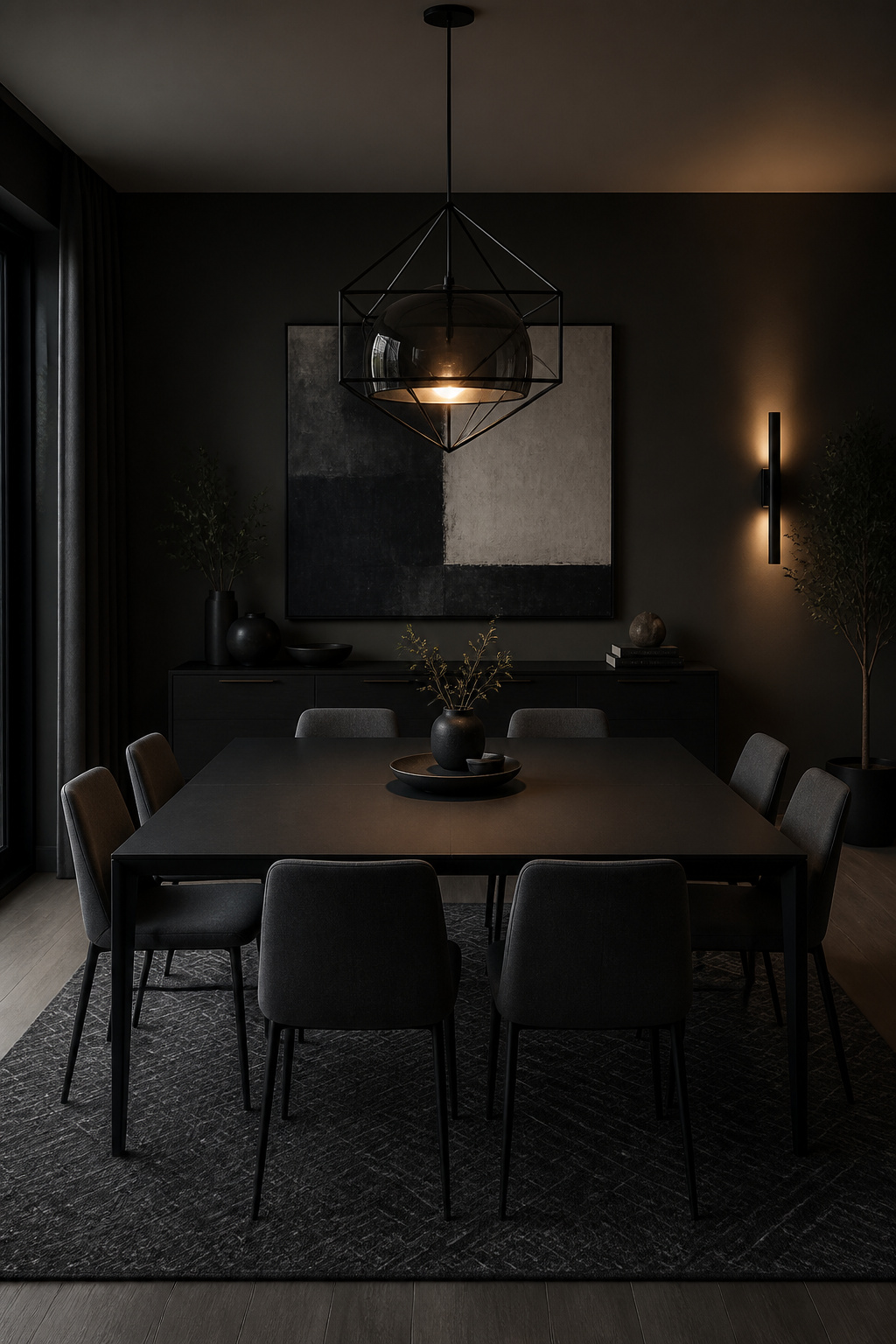
TL;DR
- Three things separate modern dark from traditional-heavy: furniture silhouette (tapered legs, not carved), surface finish (matte, not gloss), and decor restraint (two objects, not twenty).
- The modern-moody palette runs from true matte black through warm graphite and smoked finishes to deep neutrals — all avoiding a heritage read.
- One sculptural fixture at 2700K on a dimmer outperforms three conventional ones. A hardware swap to matte-black pulls costs under $100 and shifts the whole room’s register.
The Problem With Most ‘Moody’ Dining Rooms
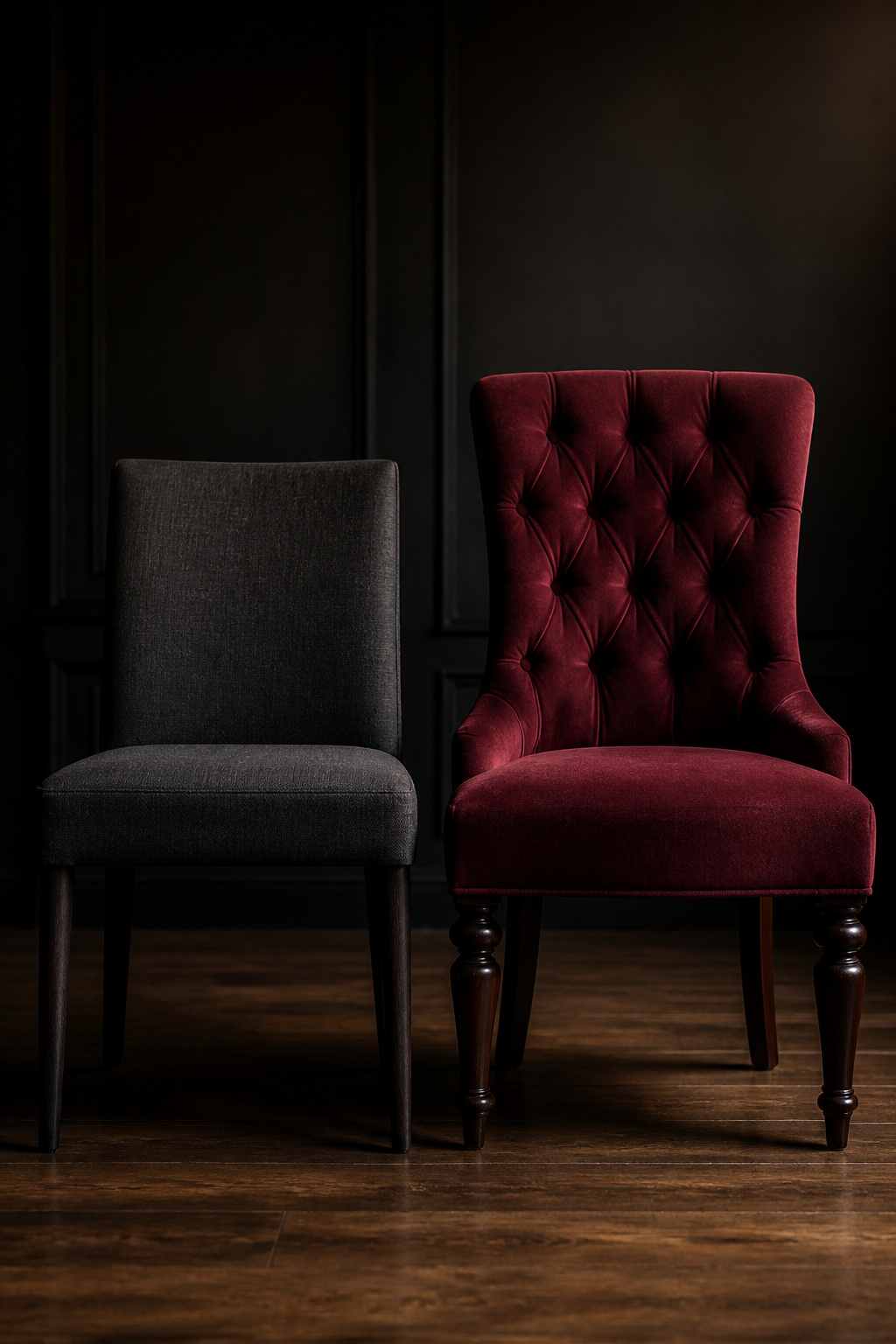
The default moody dining room leans traditional. Searches return carved mahogany, deep velvet, antique chandeliers, layered brass, botanical prints, wainscoting in Brinjal or Hale Navy. None of that is wrong. But moody is not a synonym for Victorian, and if your taste runs cleaner, the dominant imagery is steering you wrong.
Why the default moody room reads Victorian
The moody-interior trend’s roots run back to Georgian and Victorian precedent: dark panelling, carved furniture, layered fabrics, brass-heavy fixtures. Searches for moody living rooms and kitchens more than doubled on Houzz in 2024–2025, but the most-shared reference images still skew ornate. Designer Jen Morrell identifies that moody dining rooms default to charcoal gray, slate blue, burnt orange, and deep green — a palette that works in either register, depending on furniture and finish choices.
What modern moody actually means
The modern-moody register is darker than Scandinavian minimalism but without the ornamentation of traditional-moody. Susie Novak Interiors describes it as “moody colour, dramatic lighting, mixed metals, and varied textures” — the same ingredients as the traditional version, delivered through updated silhouettes, mixed metals rather than all-brass, and contemporary artwork rather than antique prints.
Three things that make a dark room feel heavy vs sleek
Three levers control how a dark room reads — the palette can be identical in both registers:
Silhouette. Turned and carved legs signal traditional weight. Tapered legs narrow from top to bottom and create visual lightness even on dark furniture. Hairpin and square-section metal legs are two further modern options, both in matte black.
Finish. High-gloss lacquer reflects light and reads traditional. Matte and satin finishes absorb light, hold shadow, and read modern.
Clutter level. The traditional moody room layers: decor objects, framed prints, multiple vase groupings. The modern-moody room keeps surfaces spare. Negative space is a design element, not a gap.
Modern Moody Dining Room Palette: Matte Black, Smoked and Deep Neutrals
Colour alone does not make a room modern. Finish and undertone do most of the work. For the full range of dark paint options and how undertones behave under warm dining light, see the right dark palette.
Why matte-black reads modern where charcoal reads transitional
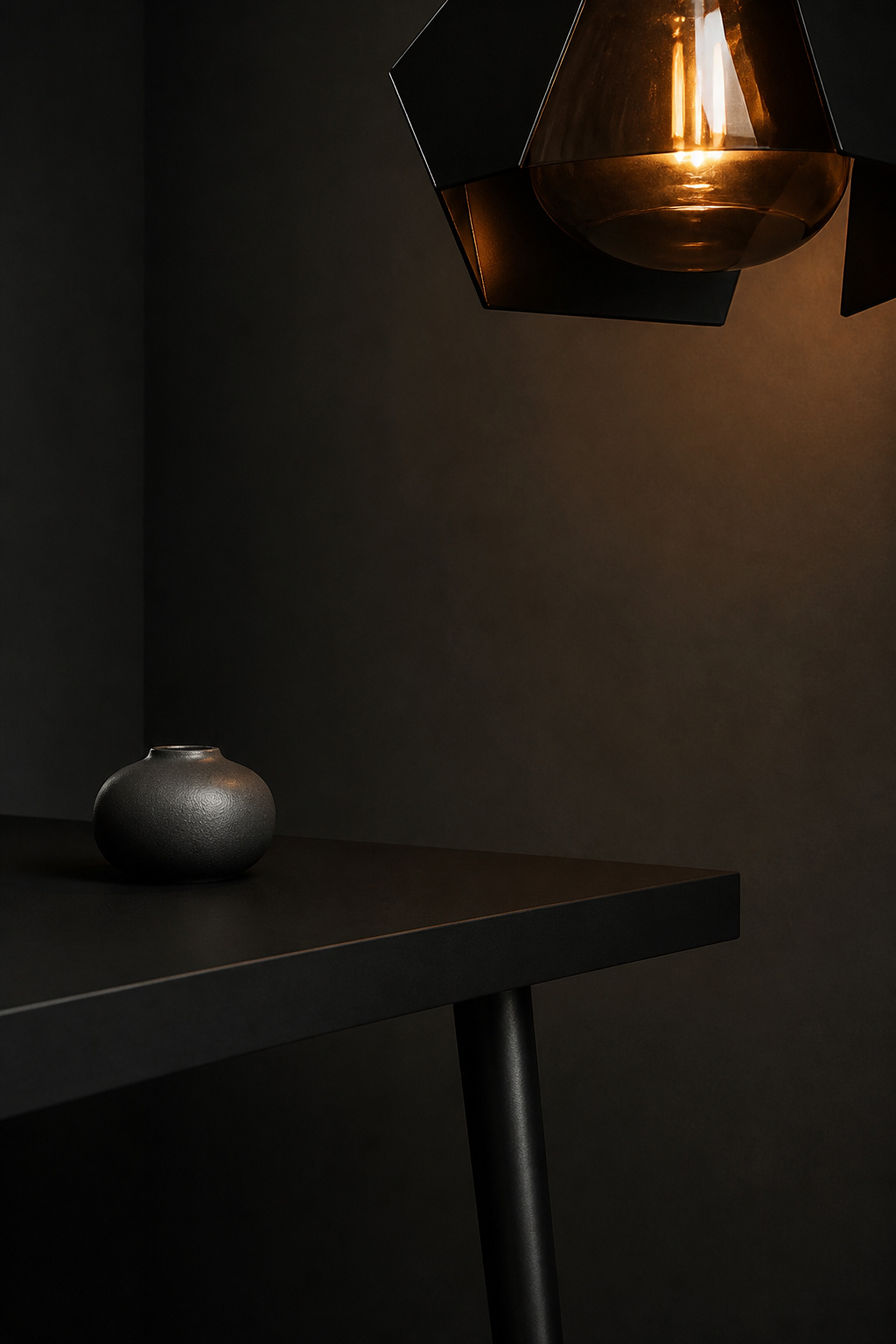
True matte black — Behr “Limousine Leather” is one example — creates a void-like effect where everything in front of it stands out in sharp relief. Sherwin-Williams Iron Ore (SW 7069) softens and blends; it reads transitional. Benjamin Moore Silhouette (AF-655), a deep smoky espresso-brown with a hint of grey, sits between the two: modern-minimalist or layered-transitional depending on what surrounds it.
| Colour / finish | Register | Best paired with |
|---|---|---|
| True matte black | Modern-graphic | Tapered metal legs, smoked glass, white oak |
| Warm graphite / Iron Ore | Transitional | Charcoal linen chairs, brushed nickel |
| Deep neutral (dark taupe, mushroom) | Quiet modern | Light ash furniture, minimal styling |
| Heritage dark (Brinjal, Hale Navy) | Traditional | Carved wood, velvet, brass |
Smoked finishes and deep neutrals
A smoked-glass table top delivers the impact of a black table without shrinking the room — it transmits light from below while reading dark from above. In 2026, “quiet luxury darks” — mushroom, dark taupe — avoid heritage-colour associations and pair best with white oak or light ash: the light wood pops graphically against the wall.
Fewer Pieces, Bolder Scale: The Modern Furniture Edit
The traditional moody room accumulates. The modern-moody room edits: one table, chairs, one credenza. Nothing surplus. Empty floor space is as intentional as the furniture.
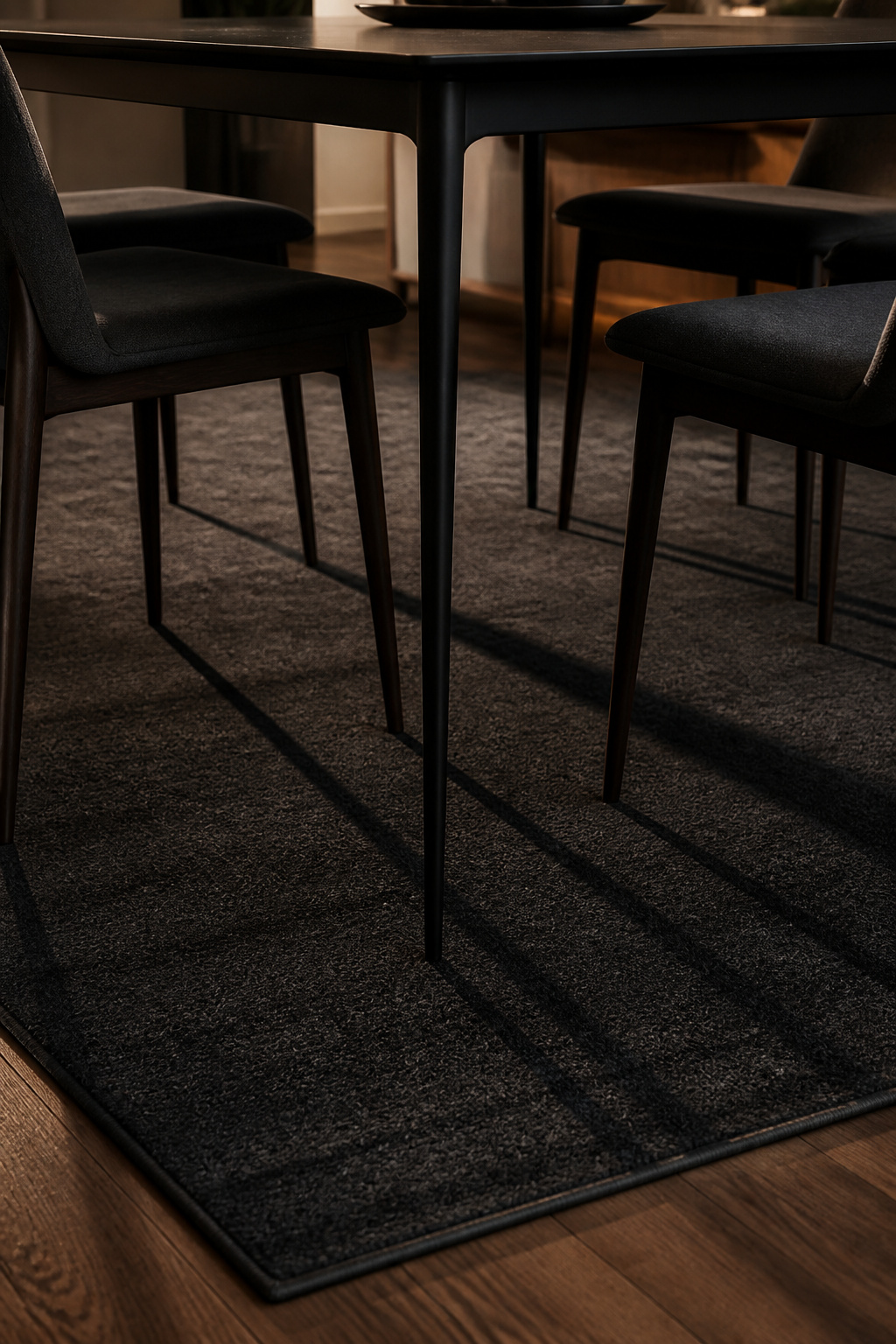
The one-statement-piece rule
Pick one piece to anchor the room. Everything else recedes into a coordinated dark ground.
- Fixture as anchor. Caitlin Marie (Caitlin Marie Design): “If you are going to splurge on one item in your dining room, I recommend a chandelier” — visible from every angle, and it stays when the table changes.
- Table as anchor. A sculptural oval or round black table with a geometric trestle or column base reads as room art. Chairs and credenza recede in a matching dark finish.
- What to avoid. The “built-it-all-at-once set” look reads purchased. Mix materials instead: matte-black table with charcoal linen chairs, or dark stone top with slim brushed-steel legs.
If the table cannot be replaced yet, Caitlin Marie confirms “a tablecloth and decor accents” can carry the room.
Silhouettes that read modern in a dark room
- Tapered legs: narrow from top to bottom, the mid-century signal
- Hairpin and square-section metal legs: clean, available in matte black
- Geometric or column pedestal bases: sculptural, flexible seating
- Low-profile chair backs: modern regardless of fabric; high-back tufted backs read traditional-moody
Matte-Black and Smoked Finishes on Fixtures and Hardware
Matte-black hardware is the most affordable register shift in the room. Standard cabinet hole spacings — 32mm, 64mm, 96mm, 128mm — mean no new drilling. Basic pulls cost $5–$50 per piece.
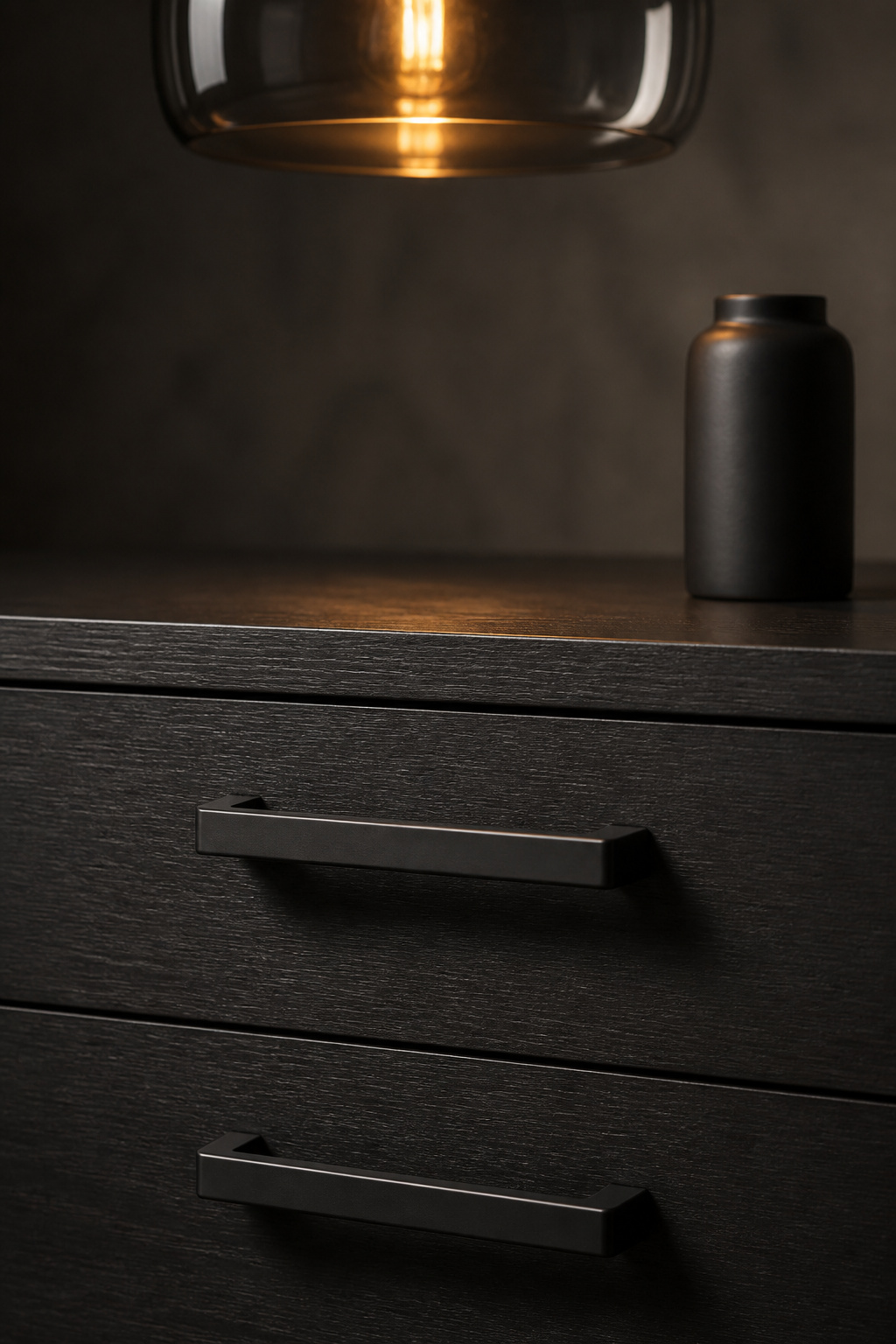
Where matte-black earns its place
Matte black “adds an element of sophistication to any room while maintaining a contemporary edge” (Inspire Hardware). Unlike polished chrome, it reads as a deliberate choice. Matte and gently textured surfaces hide fingerprints and crumbs better than high-gloss — a practical bonus in a dining room.
| Material | What it does | Register signal |
|---|---|---|
| Smoked glass (pendant / table) | Filters light, reads dark from above | Contemporary, design-aware |
| Blackened steel (frames / bases) | Subtle surface variation, dark oxide finish | Industrial-modern |
| Matte-black painted metal | Flat, graphic, affordable | Modern-graphic |
| Brushed nickel | Cool sheen, low reflectance | Transitional accent |
Mixing matte-black with a second metal
The rule from Inspire Hardware: matte-black dominant (60–70% of metal elements), one accent at 30–40%, three finishes maximum. Matte black with brushed nickel stays cool and contemporary — similar textures keep them cohesive. Matte black with warm brass (satin or antique, not polished) adds warmth without a heritage read. Use matte-black on lower surfaces; accent metal on upper elements and fixtures.
Sculptural Lighting as the Room’s Focal Statement
Lighting in the modern-moody register means one architectural fixture, not the layered multi-source approach of traditional rooms. The fixture’s silhouette — geometric, cage-form, dome — matters as much as the light it casts.
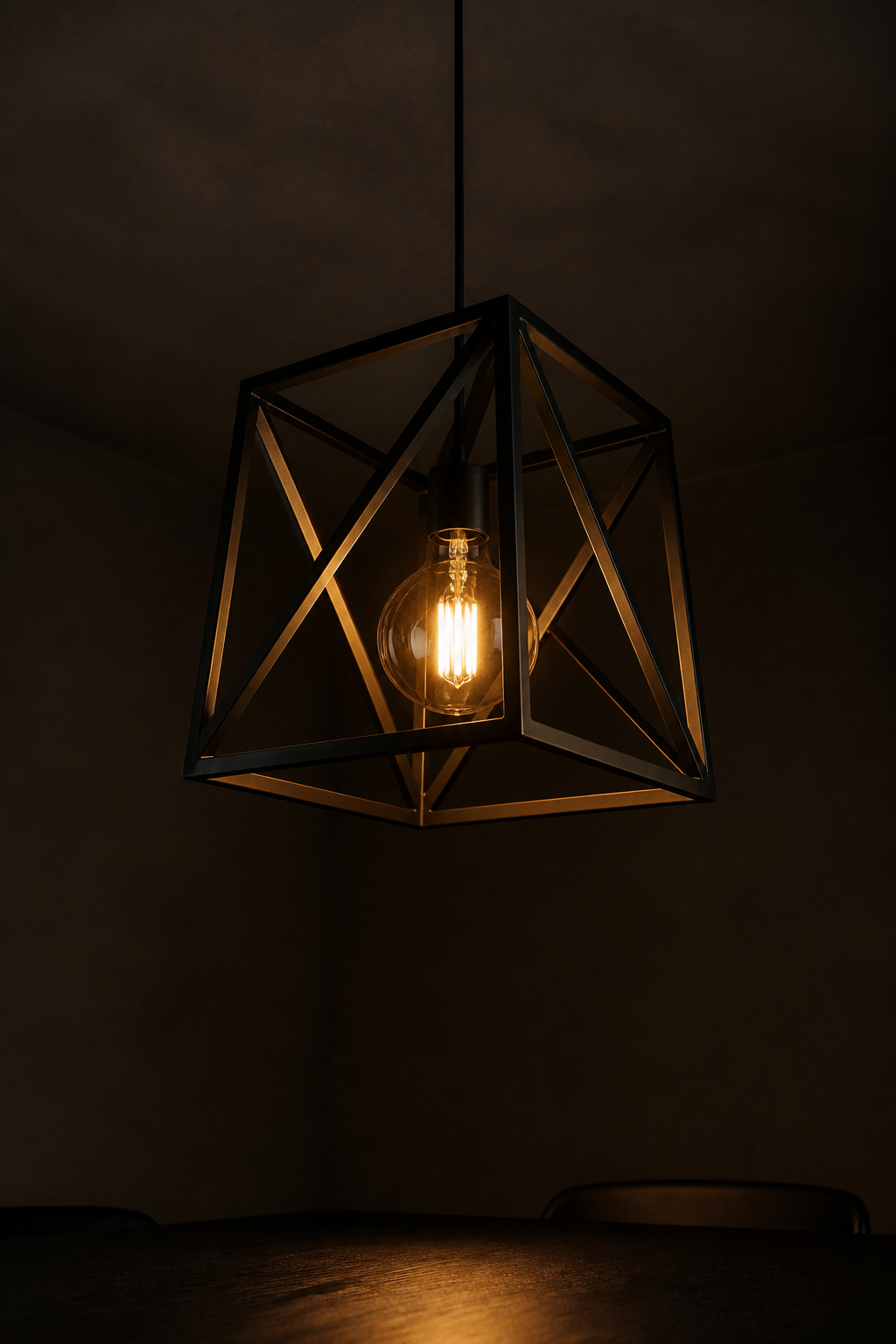
One sculptural fixture, not three conventional ones
2025–2026 trends favour “matte black linear suspensions, oversized dome pendants in brushed brass, and sculptural chandeliers with angular designs” — one fixture with maximum presence, not three medium ones. Modern silhouettes: geometric cage pendants, linear suspensions over rectangular tables, asymmetric cluster pendants, oversized dome pendants in matte-black or smoked glass.
Size at roughly one-third the table length, bottom sitting 75–85 cm (30–33 inches) above the table surface. Standard 8-foot ceiling: 30–36 inches above the table; add 3 inches per additional ceiling foot. Floor-to-fixture minimum: 7 feet from finished floor.
Colour temperature and dimmers
2700K produces warm tones that “mimic sunset and candlelight, creating comfort, intimacy and a sense of time suspension.” Dark walls absorb significantly more light than pale rooms — estimates from lighting sources range from 10–30% depending on the depth of the colour — and the answer for a single-fixture modern room is a more powerful fixture, not more fixture types. A dimmer is essential; without it, the fixture’s atmospheric range is permanently capped. Renters who cannot swap the ceiling fitting: a 2700K bulb in the existing light is the near-free first move.
Restrained Styling: What Not to Put in a Modern-Moody Room
The modern-moody room’s signature is the edit. The traditional register layers; the modern register removes most of it.
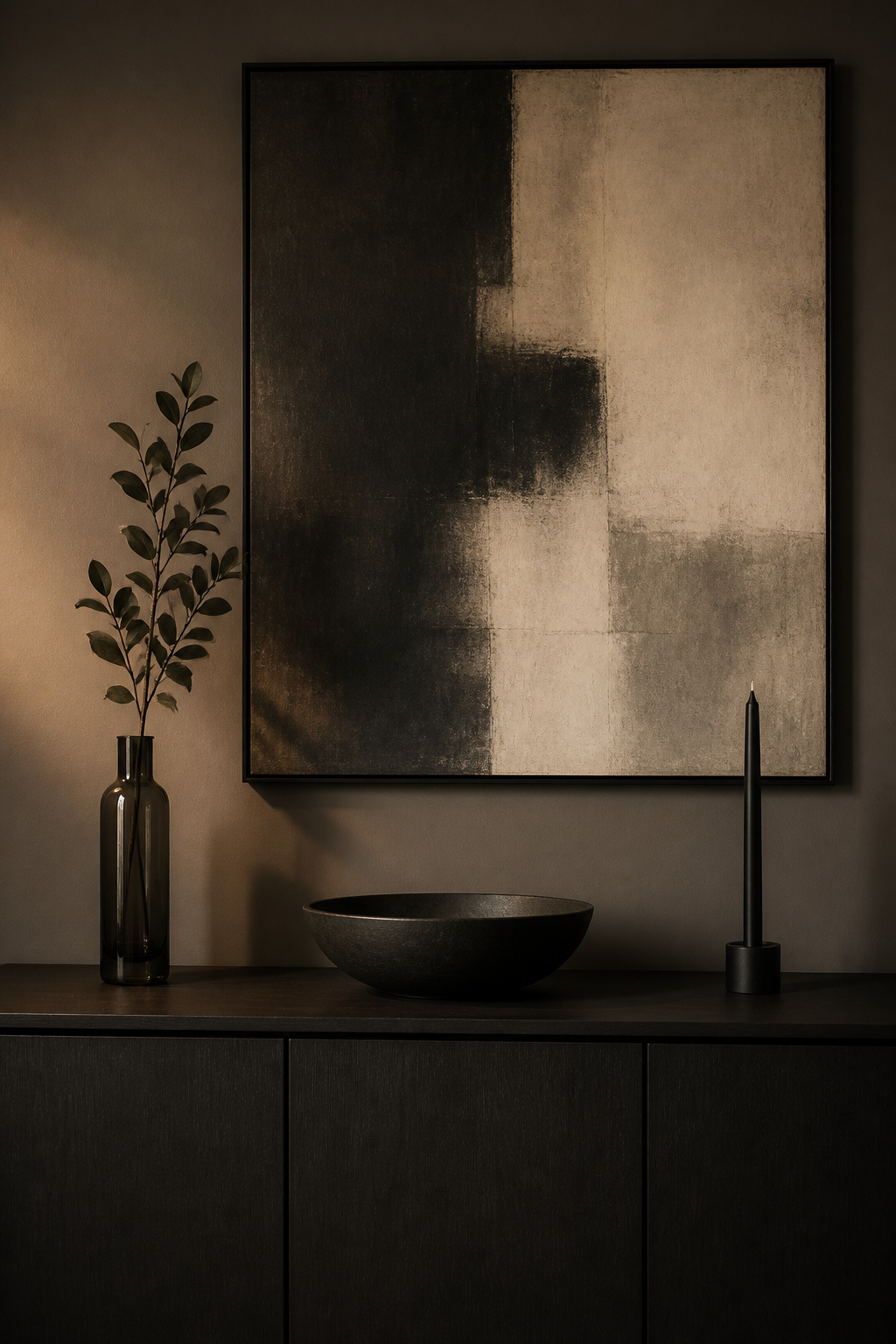
What comes out first:
- Gallery walls of framed prints
- Multiple candlestick heights on the sideboard
- Layered tablecloths and runners
- Crystal glassware collections on display
What stays: sculptural ceramics (matte, dark-toned, simple form), a single stem in a smoked-glass vase, snake plants or ZZ plants in matte-black planters — the graphic silhouette, not the florals. One overscale abstract artwork replaces the gallery wall; one canvas at 60×40 inches does more atmospheric work than four at 16×20.
On the sideboard, three objects with breathing room is a practical working limit: one tall element, one low, one lighting element. Once a fourth lands, the edit collapses. That is Tess’s working rule — observed practice, not a cited authority.
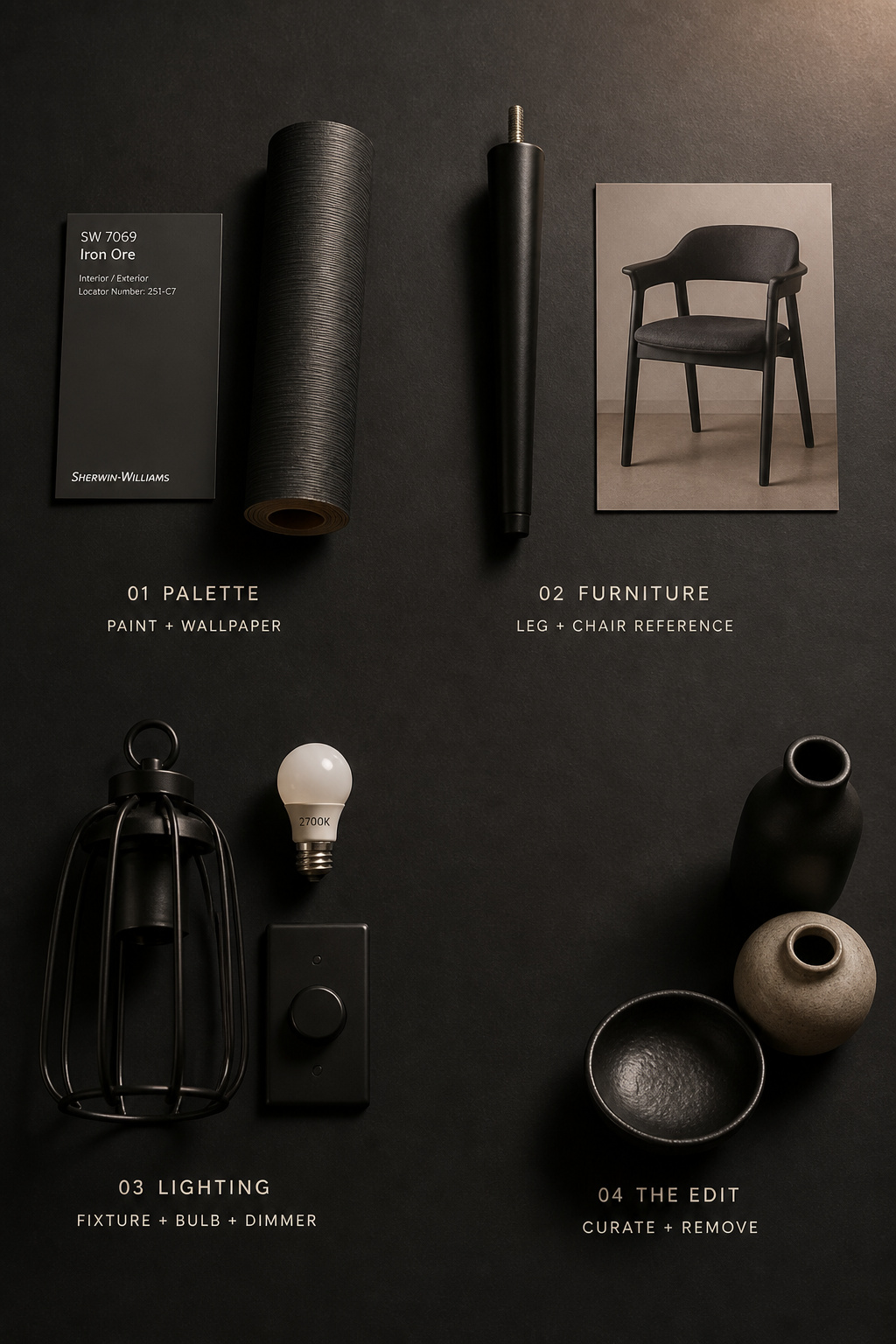
Where to Start: The Modern-Moody Room in Four Decisions
These decisions build on each other — start at the top.
-
Palette. Owners: paint walls, trim, and ceiling the same shade (colour drenching). Renters: removable peel-and-stick wallpaper in matte-black tones removes cleanly. No walls at all? Dark velvet curtains and a charcoal rug shift the colour mass without a nail.
-
One bold piece. Pick the fixture or the table, not both. A dark tablecloth buys time. Start with the fixture — it stays when the table changes. For small dark dining rooms facing the same constraint, see small dark rooms.
-
Fixture and colour temperature. Install a 2700K bulb first. Add the dimmer. Replace the fixture when budget allows. Do them in this order — the bulb and dimmer swap shows you what a great fixture will deliver before you commit.
-
The edit. Free. Before any decor goes in, remove objects: extra chairs, a second rug, wall prints, sideboard clutter. The modern-moody aesthetic starts with subtraction — what survives is what gets styled.
The moody dining room ideas guide covers how all four decisions connect.
FAQ
What makes a moody dining room look modern instead of traditional?
Three elements shift the register: furniture silhouette (tapered or hairpin legs versus carved and turned legs), surface finish (matte and satin versus high-gloss lacquer), and decor restraint (one or two sculptural objects versus layered styling). The palette can be the same dark colour in both registers; the difference is entirely in these three details.
Can I achieve a modern moody dining room in a rental apartment?
Yes. Four renter tools work without touching permanent surfaces: removable peel-and-stick wallpaper in matte dark tones, dark velvet curtains floor-to-ceiling, dark furniture with a low-pile charcoal rug, and plug-in pendant or floor lighting at 2700K. Hardware swaps to matte-black pulls are generally personal property — store the originals and reinstall at move-out.
What metals work in a modern dark dining room?
The two best modern-moody combinations are matte black (dominant, 60–70%) with warm satin brass, or matte black with brushed nickel as accent. Satin brass adds warmth; brushed nickel stays cool and contemporary. Polished chrome and polished brass both read heritage in a dark room. Maximum three finishes, one clear dominant.