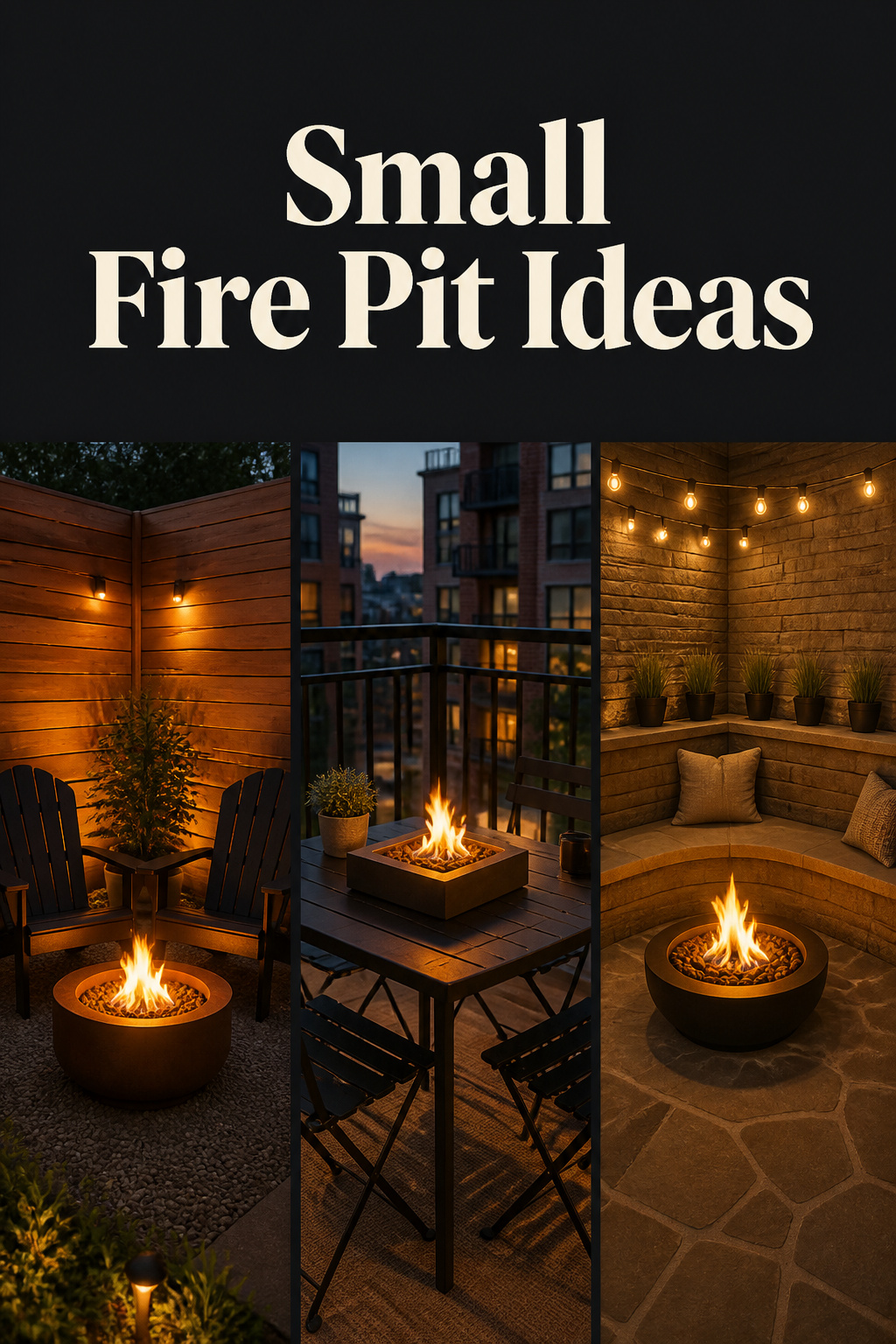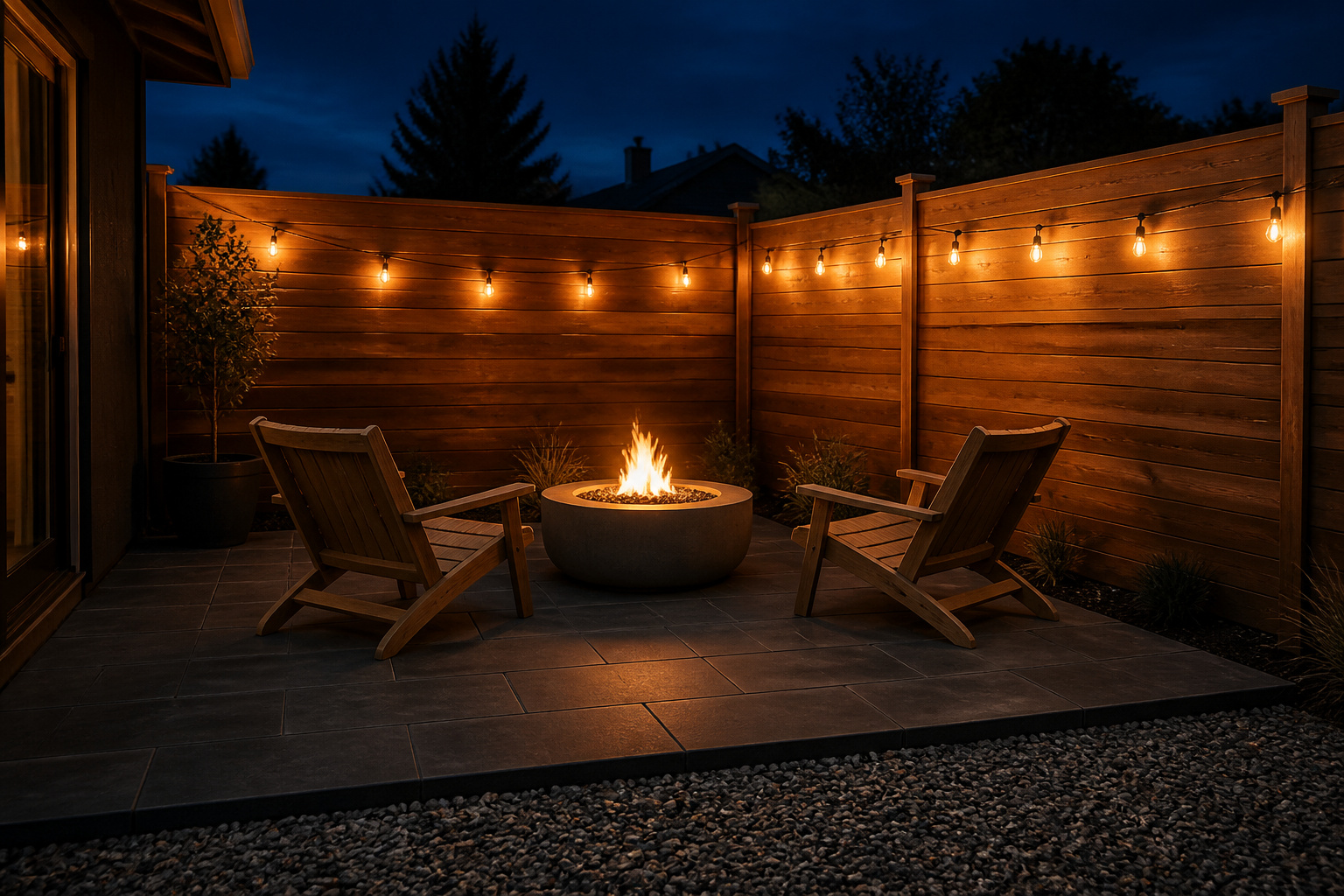

The yard that “doesn’t have room” usually does — it just needs a different layout. Most small fire pit setups want about 100 square feet and a willingness to think in corners, not centres. Put the pit in the far corner, angle two chairs toward it, and all you’ve given up is a strip of dead grass nobody sat on. For the broader decisions, our complete guide to backyard fire pit ideas covers fuel types, materials and budgets.
TL;DR
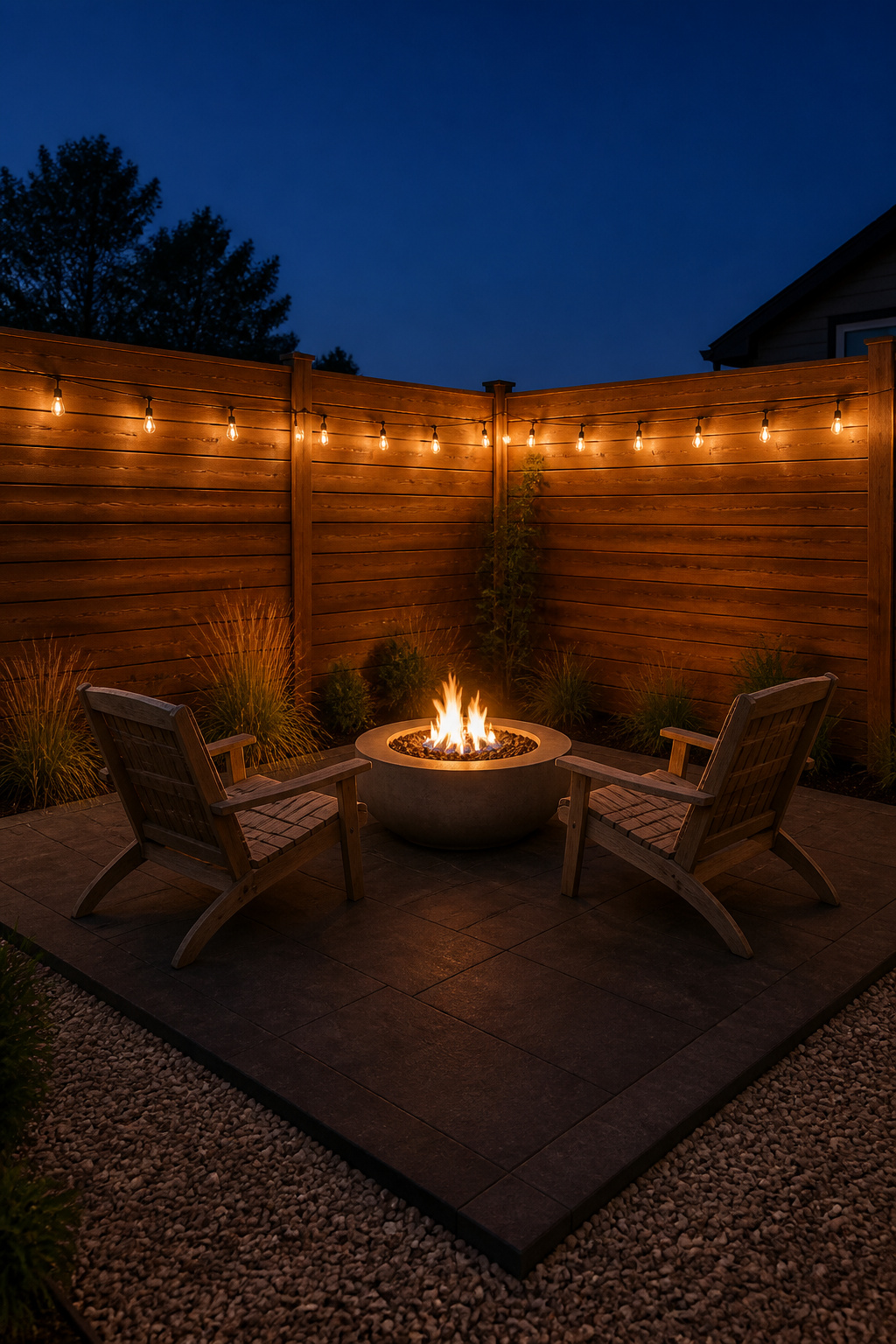
- A workable fire pit area fits a 10×10-foot footprint for two: a 30-inch gas pit, 15–24 inches of clearance to chairs, and a 36-inch walkway behind them.
- Choose gas or propane in any yard under about 20 feet wide — it needs only 36 inches of clearance from a fence or wall, where wood-burning wants 10–25 feet.
- Put the pit in a corner so two fence walls do the clearance work, freeing the open sides for seating; a curved bench saves 20 inches of depth per seat over chairs.
How Much Space a Fire Pit Actually Needs (Less Than You Think)
The number in most people’s heads is wrong, and wrong in their favour. A complete fire pit area — pit, seating, and a path in and out — fits a 10-by-10-foot square for two, a 12-by-12 for four.
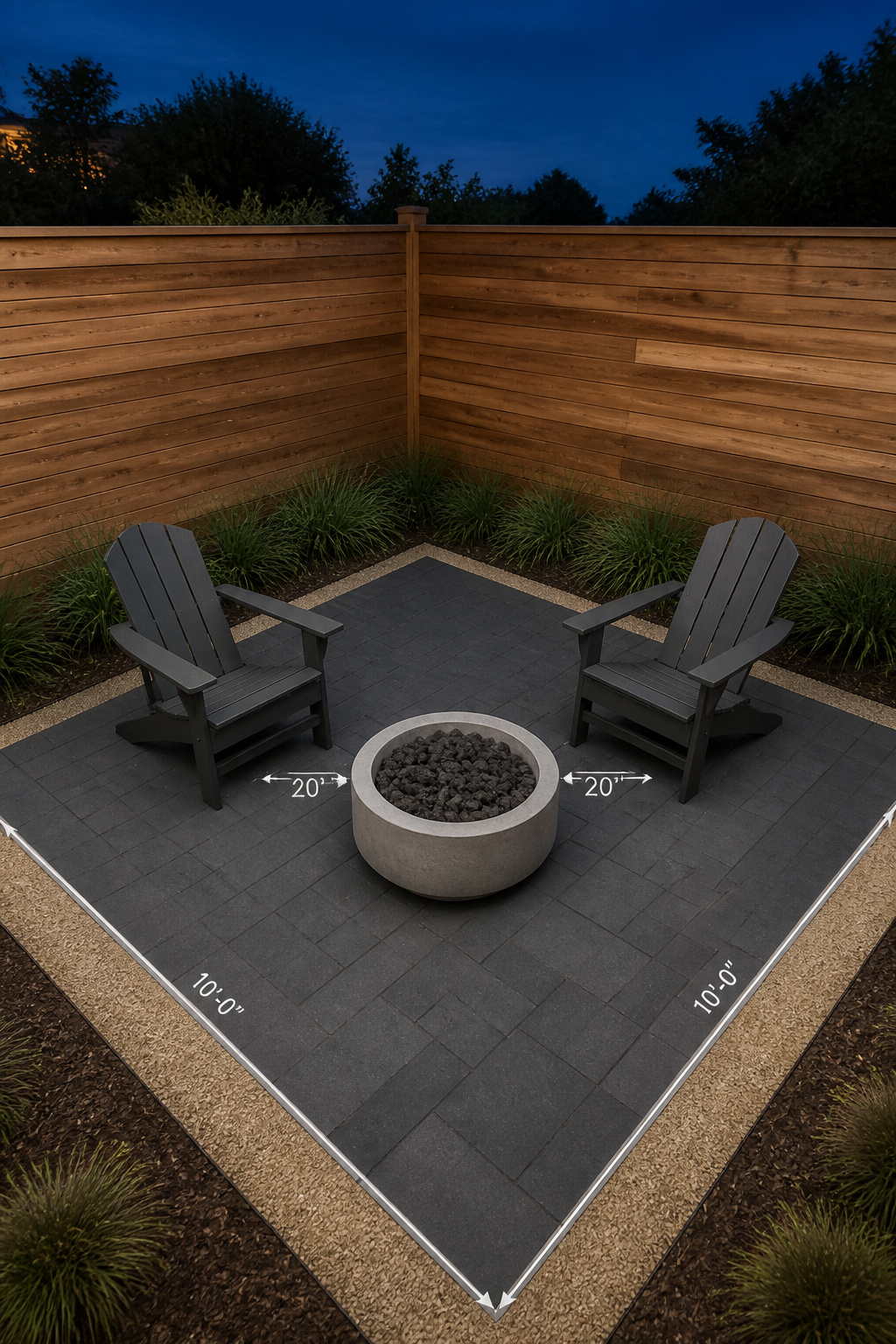
The minimum workable area, clearance included
The single biggest space lever is fuel. A gas pit needs only 36 inches of clearance from a combustible structure — fence, wall, shed — where a wood-burning pit wants 10–25 feet. That controlled flame is what “means tighter spaces become viable, decks become an option and covered patios open up,” as DreamCast’s Catherine Traschenko puts it. Seating sits closer too, at 15–24 inches, since gas throws no sparks. The clearance most people forget is the 36-inch walkway behind the chairs — that dimension usually decides the whole question.
Pit size versus yard size
A simple ratio keeps the fire from eating the yard: the pit and its safe zone should take no more than a third of the patio. On 144 square feet, that limits you to 36–44 inches of diameter — and a 32–36-inch pit is the sweet spot, substantial enough to feel real, small enough to leave the space breathing.
Under 200 square feet: what fits and what doesn’t
One rule cuts through the rest: below 150 square feet a wood-burning pit that meets its setback is nearly impossible, so gas becomes the only honest option.
| Total space | Realistic seats | What works |
|---|---|---|
| Under 100 sq ft | 2 | Tabletop propane or small portable bowl on a non-combustible surface |
| 100–150 sq ft | 3–4 | 30-inch gas bowl in a corner; curved bench or two slim chairs |
| 150–200 sq ft | 4–6 | 32–36-inch gas pit with L-shaped or wraparound seating |
One move costs nothing: define the floor. Pavers, gravel or decking under the fire and chairs read as a distinct room, and a small yard with a clear room in it feels larger.
Choosing the Right Pit Type for a Small Yard
Three pit types suit tight spaces. Gas wins the clearance math every time; the question is how permanent and how warm.
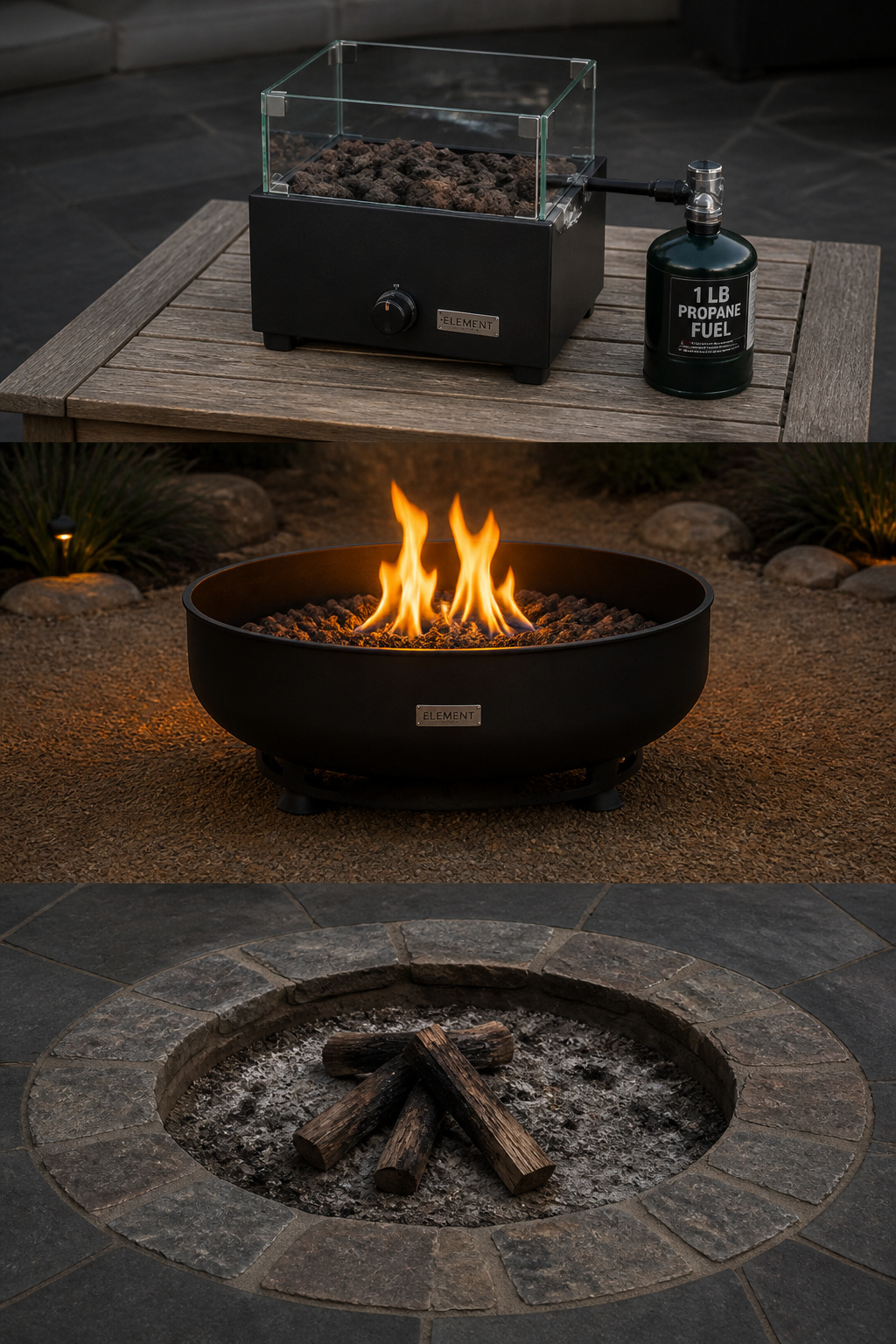
Tabletop fire bowls: the real space-saver, and its limits
A tabletop propane bowl needs almost no footprint — but read the BTU before you fall for the form. The little 10-inch, 10,000-BTU models are ambiance only: a candle-scale flame, useless for warmth. For heat you feel at four to six feet, you need 30,000–40,000 BTU, which the 28-inch category delivers while still fitting a dining table. These figures come from manufacturer and retailer specs, so treat them as typical rather than tested.
Portable propane bowls: warmth that folds flat
When the fire is the feature rather than a centrepiece, a portable propane bowl is the move. The 19-inch, 58,000-BTU format throws real warmth for two to four people sitting close. The best small-space variant has a lid: a 20–28-inch propane table whose burner caps into a flat surface is two pieces of furniture in one — fire pit on Friday, drinks table on Sunday — the only kind a tight patio can afford.
Compact in-ground or ring builds
If you want something permanent and have just enough room, a compact in-ground ring is the most affordable fixed option: dig 6–12 inches deep, line it with fire brick or a steel insert, and keep the diameter 24–36 inches. It sits flush and blocks no sightlines; DIY runs $200–$500, a pro install $500–$1,500. The catch is fuel — it still burns wood, so the same 10–25-foot setback puts it in yards with 15-plus feet of open centre, not the truly tight ones.
Corner Placement: The Layout Move That Recovers Space
If there’s one idea to take from this article, it’s the corner: it turns the two walls you already have into the safety buffer and hands the open sides back for living.
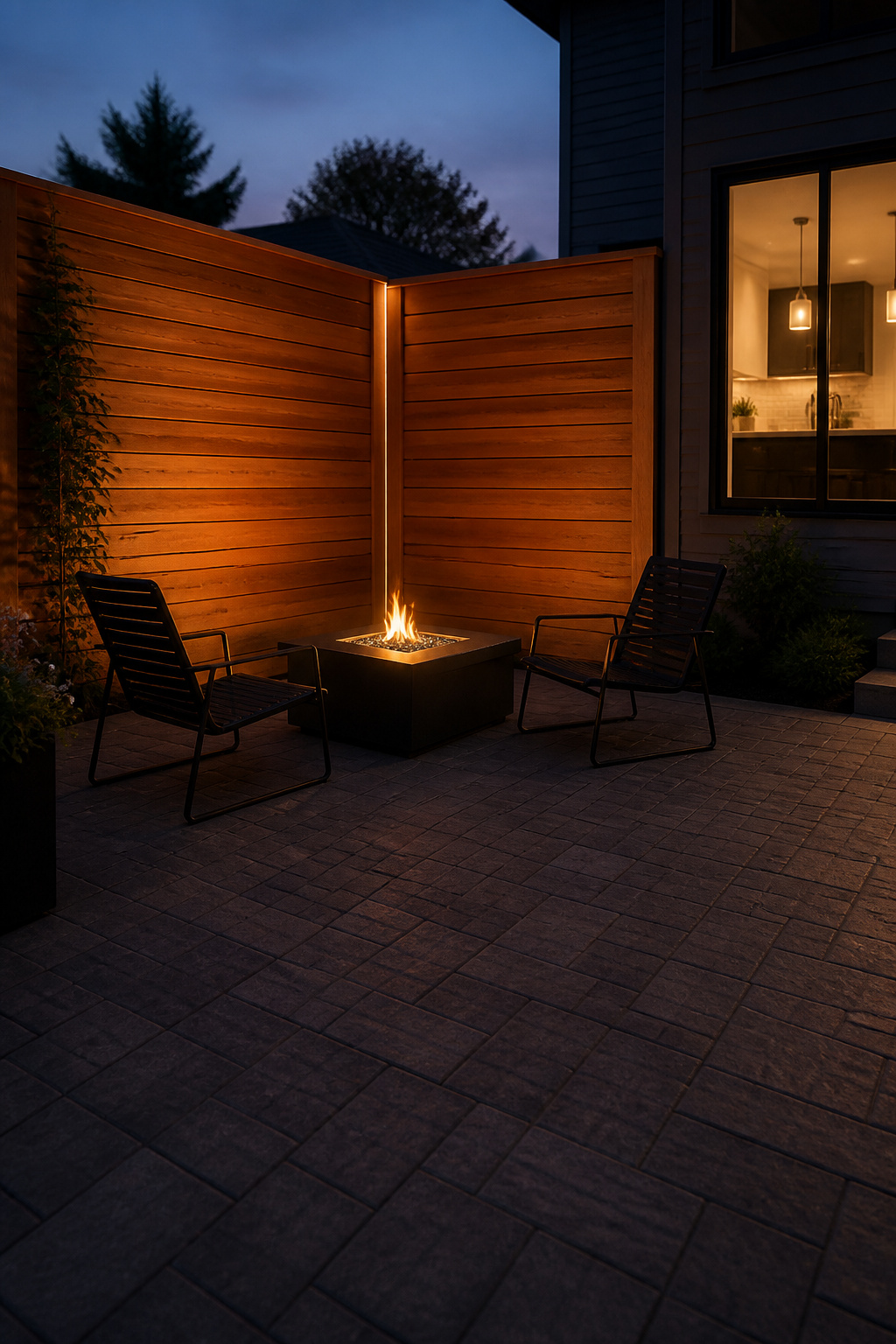
Why corners work: the clearance math
In a corner, the fence faces supply two clearance boundaries for free. A gas pit needing 36 inches sits three feet off each wall, and the two open sides stay clear for seating. Landscape designers single out corner pits for exactly this reason — they read as more intimate and leave room for planting. One note on shape: square or angular pits tuck in with no dead space, where a round bowl leaves a sliver of unusable area behind the curve.
Orienting for smoke and wind
Weather gets a vote. Check prevailing wind at the hours you’ll use the pit, and seat guests upwind so the breeze carries smoke to the fence behind the fire, not into their faces. The corner’s one failure mode is its own enclosure: box a pit between two tall solid fences and the smoke recirculates. The fix is an escape side — a 4-to-6-foot gap, a lower panel, or an open planted border so smoke and heat lift out.
Sightlines that make the yard feel bigger
A fire in the far corner is quiet garden trickery. The focal point at the greatest distance from the house pulls the eye furthest, and the yard reads deeper than it measures. The view from indoors helps too: an amber flame through a kitchen window makes the yard feel like part of the living space on nights you don’t go out. Soften the corner with low grasses that frame without blocking the line to the fire.
Seating Solutions That Don’t Eat the Yard
In a yard under 150 square feet, the chairs decide everything — pick right and the same footprint seats four. For the full furniture catalogue and conversation layouts, see our compact seating ideas.
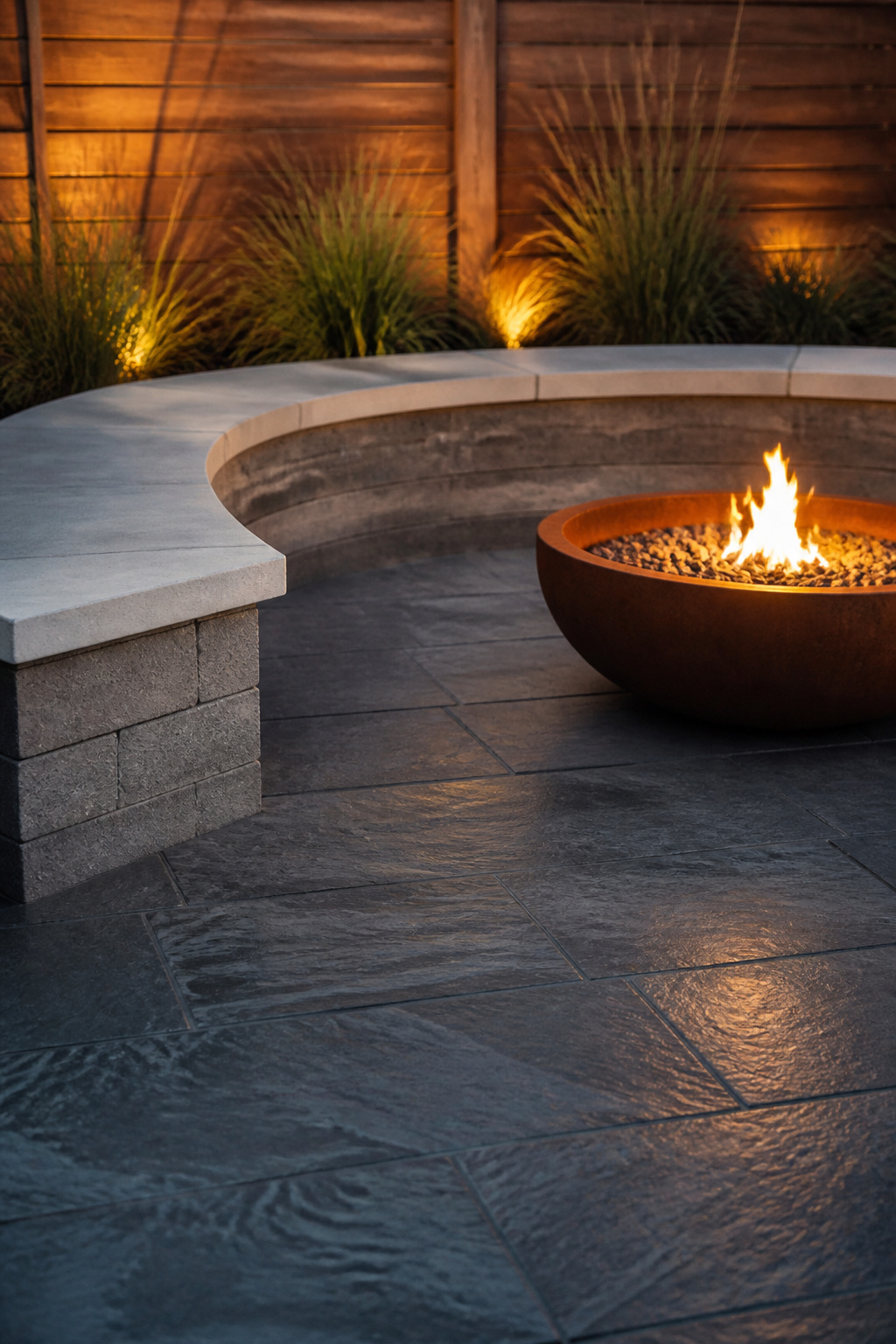
Curved built-in benches that double as edging
A curved bench that hugs the pit perimeter earns its place twice: it seats and edges in the same footprint. Set at 16–18 inches high and 18–24 inches from a gas pit, it takes 14–16 inches of depth per seat where an Adirondack chair takes 36 — roughly 20 inches saved per person, which in a tight yard is the difference between four seats and two. A DIY timber version can run under $100 based on one builder’s project, so treat that as a starting point, not a quoted price.
Folding and stackable chairs: the honest trade-off
Folding chairs in HDPE or aluminium store flat against a fence and occupy zero space when the fire’s out. The catch is comfort: basic models ($30–$60) skimp on padding, while better aluminium rocker styles narrow that gap at $80–$150. A movable chair does what a bench can’t — pull it toward the heat, angle it toward a friend, drag it into the sun. That adjustability matters most in tight yards.
How many seats actually fit under 150 square feet
In 150 square feet, a 30-inch gas pit with 20-inch clearance to seating and a 36-inch walkway yields about four usable seats — add a fifth and it blocks the path. The hybrid solves the crowd problem: a curved bench on two walls plus two folding chairs seats five without permanently occupying the floor. Forcing six always breaks one of three constraints — pit clearance, walkway, or elbow room. Four is the honest maximum.
Multi-Use and Movable Fire Pit Setups for Renters and Shared Yards
A small yard is often a rented one, or a space with nowhere to store an idle bowl for nine months. Movable setups suit how I think a modest space should work: used four nights a week.
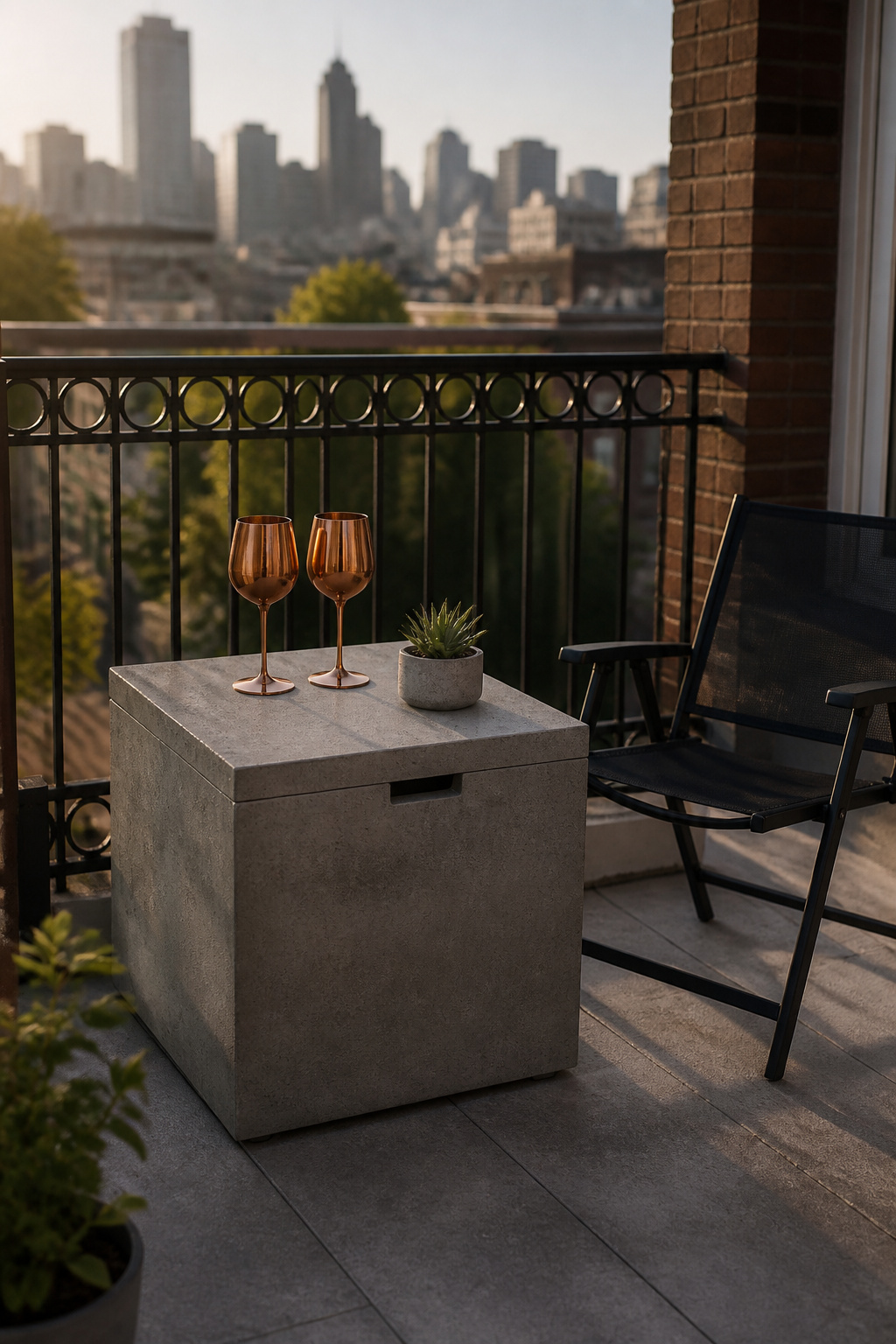
Pieces that become tables when the fire’s off
The most space-honest fire features do two jobs. A 20–28-inch propane fire table with a fitted steel lid converts from burner to full tabletop — fire on Friday, drinks surface on Sunday. Multi-function tables come most often in 28–30-inch square formats, in propane or ventless ethanol; ethanol suits covered patios and balconies where propane ventilation is harder to satisfy. Quality tables also conceal the 20-lb tank inside the cabinet, keeping the compact look intact.
Propane that moves with you at lease-end
A portable propane bowl — the 19-inch, 58,000-BTU Outland Deluxe and its kind — assembles in minutes with no tools and folds flat to travel. A CSA-certified unit is approved on combustible surfaces, including a wood deck, when set on a non-combustible mat. Read the lease and local code first: many places ban open-flame wood fires at multi-unit properties while permitting CSA-certified gas appliances, which are also often allowed during fire bans since they throw no embers.
The compact build that adds value without breaking code
When a permanent install makes sense, it can pay back. Per the National Association of Realtors, homeowners may recover up to 67% of their investment in outdoor features like fire pits at resale — a secondary-source figure, so treat it as a ballpark. A hardlined gas or masonry pit conveys with the house and needs permit paperwork for a clean sale; a portable pit is personal property you take when you leave. Pair a permanent build with the groundwork in our small budget builds guide — and pull the permit, because an undocumented gas install becomes a title problem later.
Small Yard Fire Pit Layouts: Three Plans That Actually Work
Three layouts you can lift straight into your own yard, each built from documented dimensions and verified clearances.
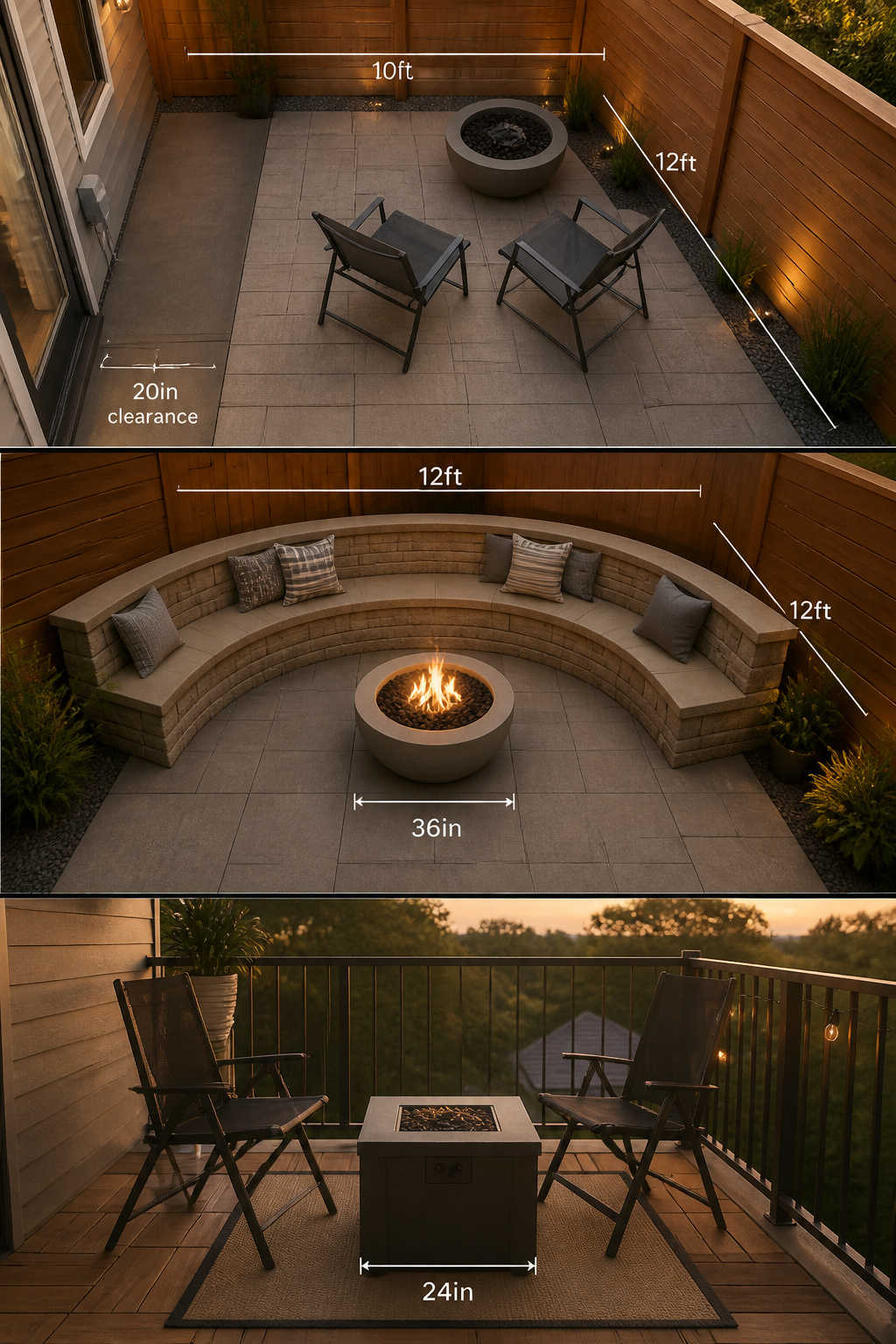
Layout A: 10×12 patio, compact ring and two chairs
On 120 square feet:
- 30-inch gas bowl in the far corner, three feet off each fence wall.
- Two slim chairs — sling-back or powder-coated lounge at 24 inches deep, not 36-inch Adirondacks — at 20 inches from the edge.
- 36-inch walkway along the house side, with about two feet of buffer at the short end.
A 30-inch portable propane bowl at 58,000 BTU handles warmth for two at that distance.
Layout B: corner pit with curved bench, under 150 sq ft
On 144 square feet, a corner pit with a curved bench along the two fence-adjacent walls seats four along an L-shaped arc, leaving the open sides for circulation. Bench runs 36 inches off each fence and 18–24 inches off the pit, built 17–18 inches high. This converts two fence walls from dead clearance into seating — the small yard’s biggest liability becomes its capacity.
Layout C: portable table on a balcony or deck, under 80 sq ft
On a deck or balcony under 80 square feet, a CSA-certified propane fire table in the 20–28-inch range is the only safe fire feature — no open-flame wood, no non-certified propane. Centre it between two folding chairs at 18 inches, keep 36 inches to the railing, and confirm at least 84 inches of overhead clearance. A certified table with two layers of heat shielding is safe on wood decking with a non-combustible mat underneath. One non-negotiable: store the 20-lb tank outside, never indoors — fire code in most places.
The corner, the right fuel, and chairs that know their size — that’s the whole kit. Your tight yard almost certainly has the same fire in it, waiting on those three decisions.
FAQ
What is the smallest fire pit that still gives off real heat?
For warmth you feel at four to six feet, a pit needs at least 30,000 BTU; a typical 10,000-BTU tabletop model is decorative only. The smallest format that delivers real heat is the 19-inch Outland portable propane bowl at 58,000 BTU — at 20-inch seating distance it extends usable evenings by several weeks in cool weather.
Can you have a fire pit in a small backyard under 20 feet wide?
Yes, with gas or propane. A gas pit needs only 36 inches of clearance from combustible structures, where a wood-burning pit typically needs 10–25 feet — impossible in that width. Corner placement makes it work: site the pit three feet from each bounding fence wall, and the full open width stays free for seating.
Are portable propane fire pits safe on a wood deck?
CSA-certified portable propane pits with two layers of heat shielding under the burner tray are safe on wood and composite decking — look for “approved for use on combustible surfaces” in the specs. Place a non-combustible mat beneath as a second layer, and keep at least 84 inches of overhead clearance to any structure above.