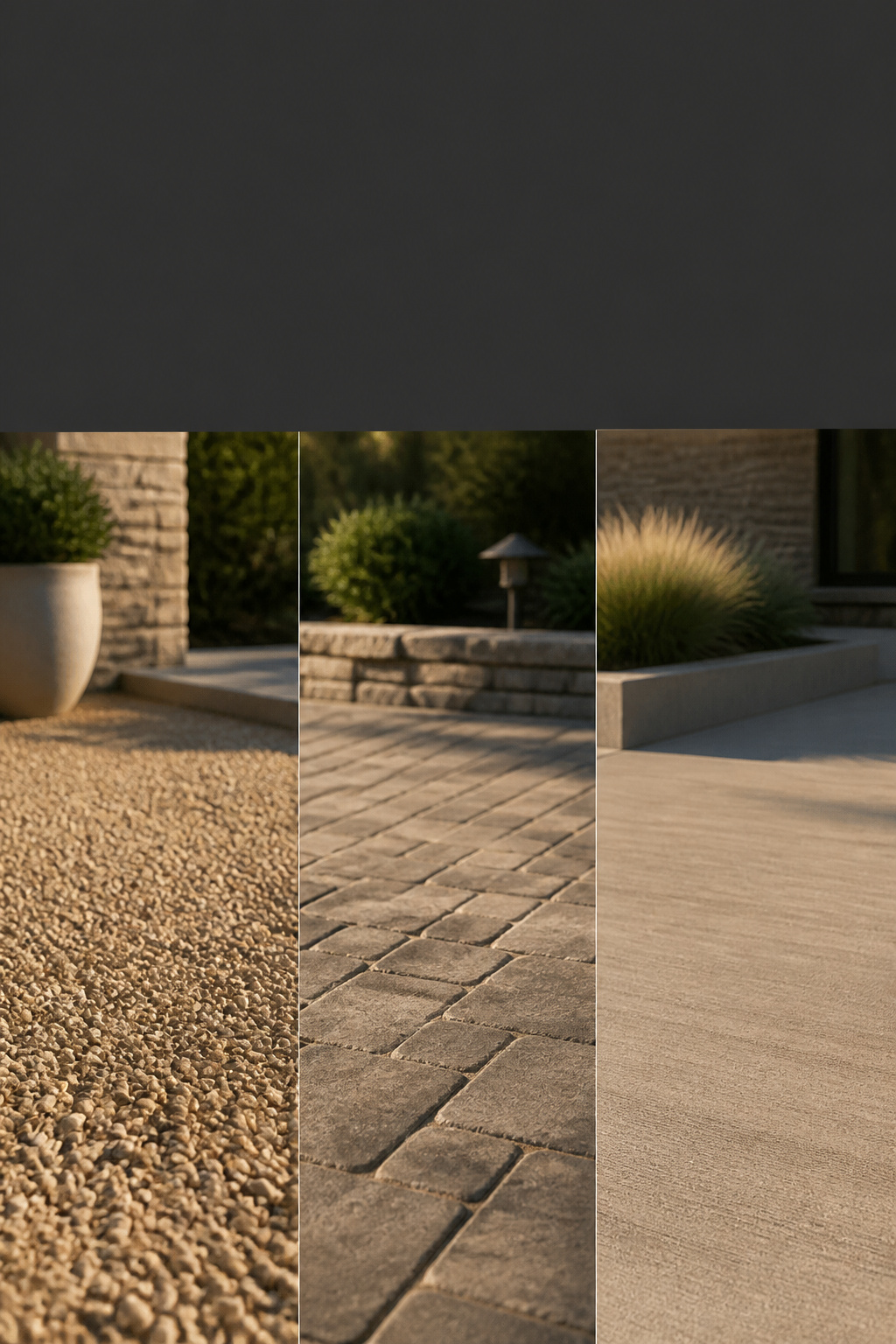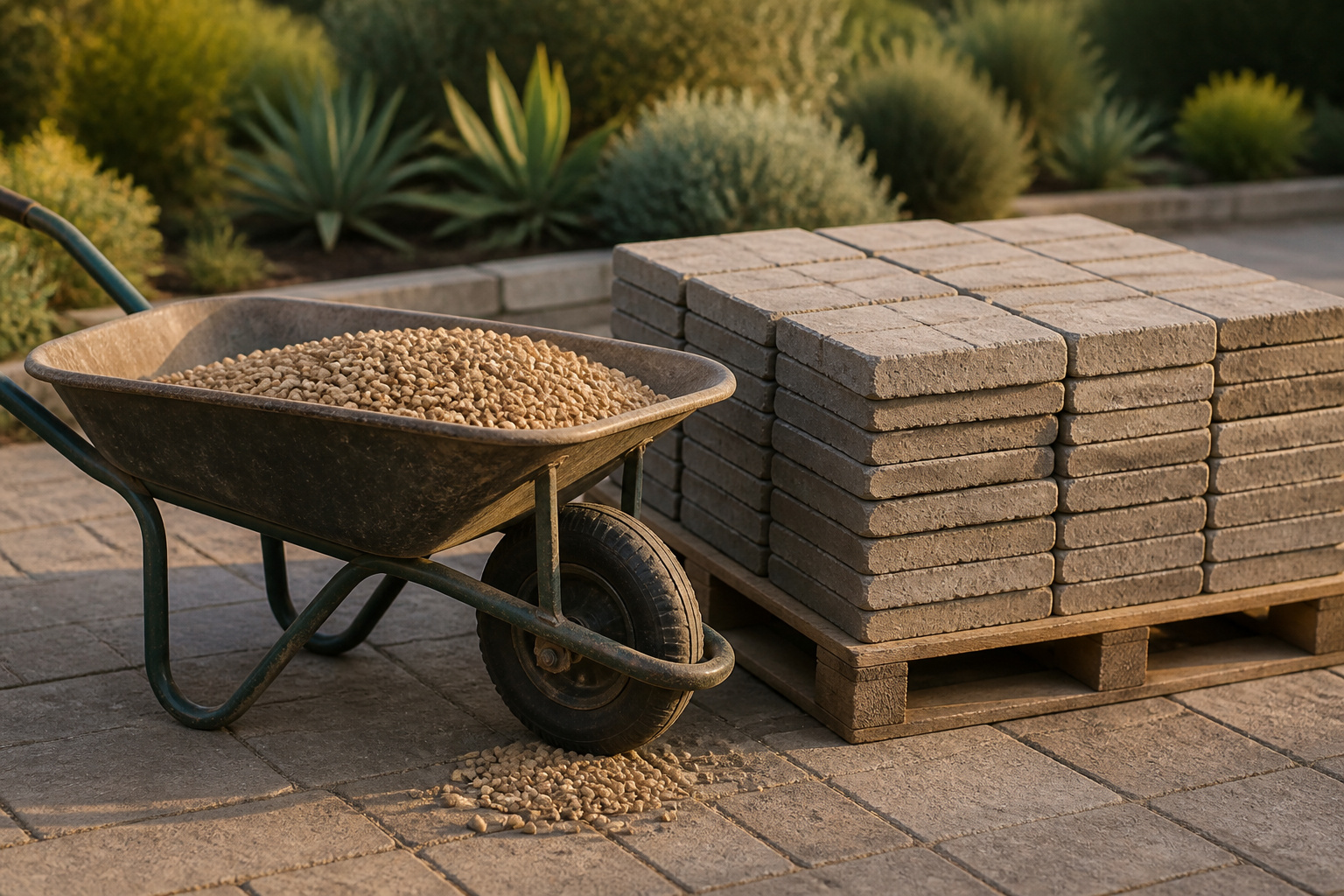
Gravel is the budget patio; concrete is the safe long-term one. That’s the rule most people shop by — a gravel patio cost of a dollar or two per square foot feels like a decision already made. It isn’t. Sticker price is the least complete number in the comparison, and cheapest on day one isn’t automatically cheapest by year ten. I’ll show you the real math — install, upkeep, and the decade-long picture — so you can pick with numbers, not a hunch.
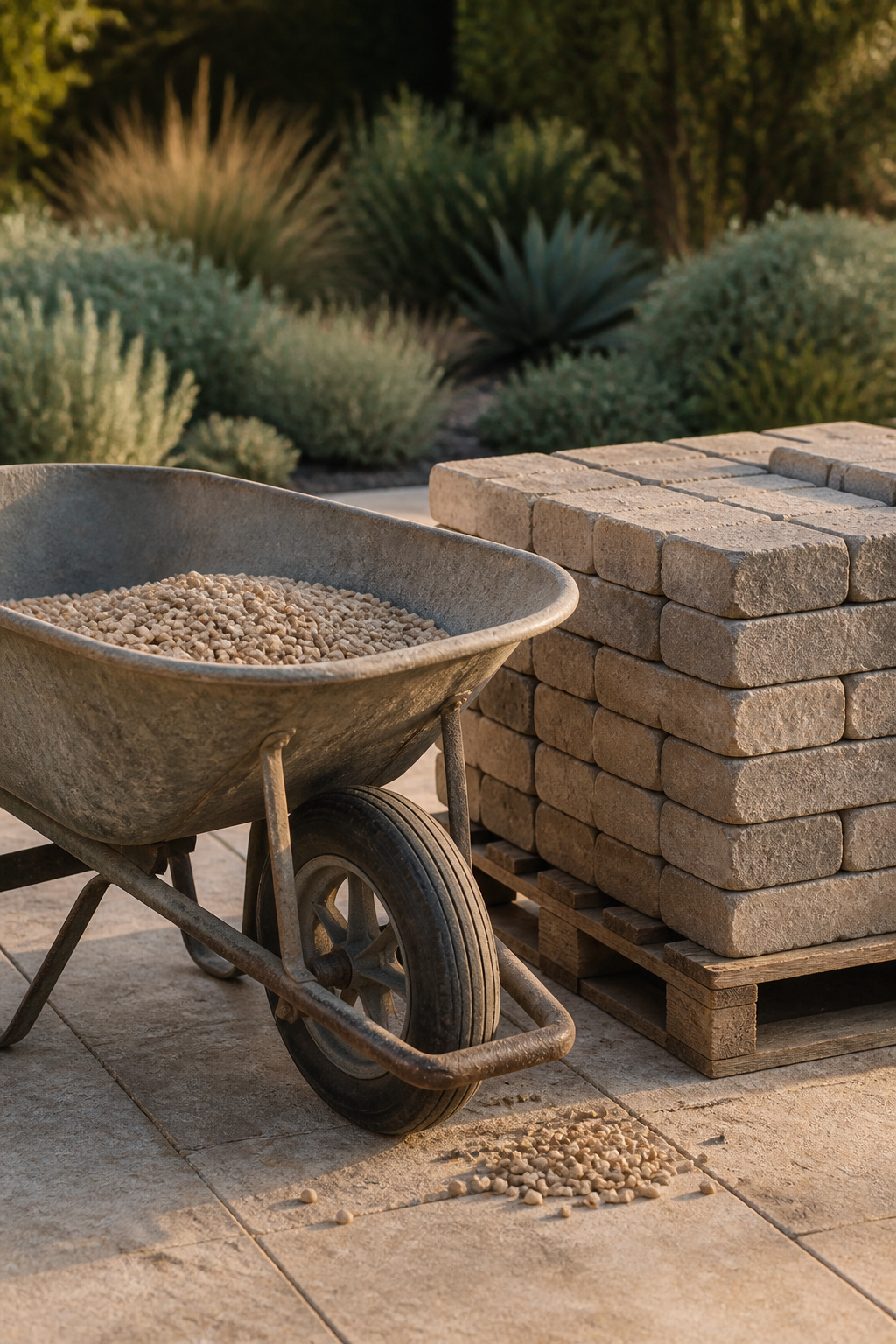
TL;DR
- Gravel installs cheapest at $1-$3 per square foot in 2026 vs $10-$17 for pavers and $4-$12 for concrete — a five-to-eight-times sticker gap.
- Over ten years gravel usually stays cheapest, but the gap narrows — top-ups every 2-3 years, new fabric every 5-7 — while concrete and pavers cost more up front but less often after.
- DIY installation is the single biggest cost lever, cutting roughly $4-$18 per square foot in labor.
The Myth: Cheapest Up Front Isn’t Cheapest Overall
Cheapest up front and cheapest overall are different measurements, and patio shopping almost always confuses the two.
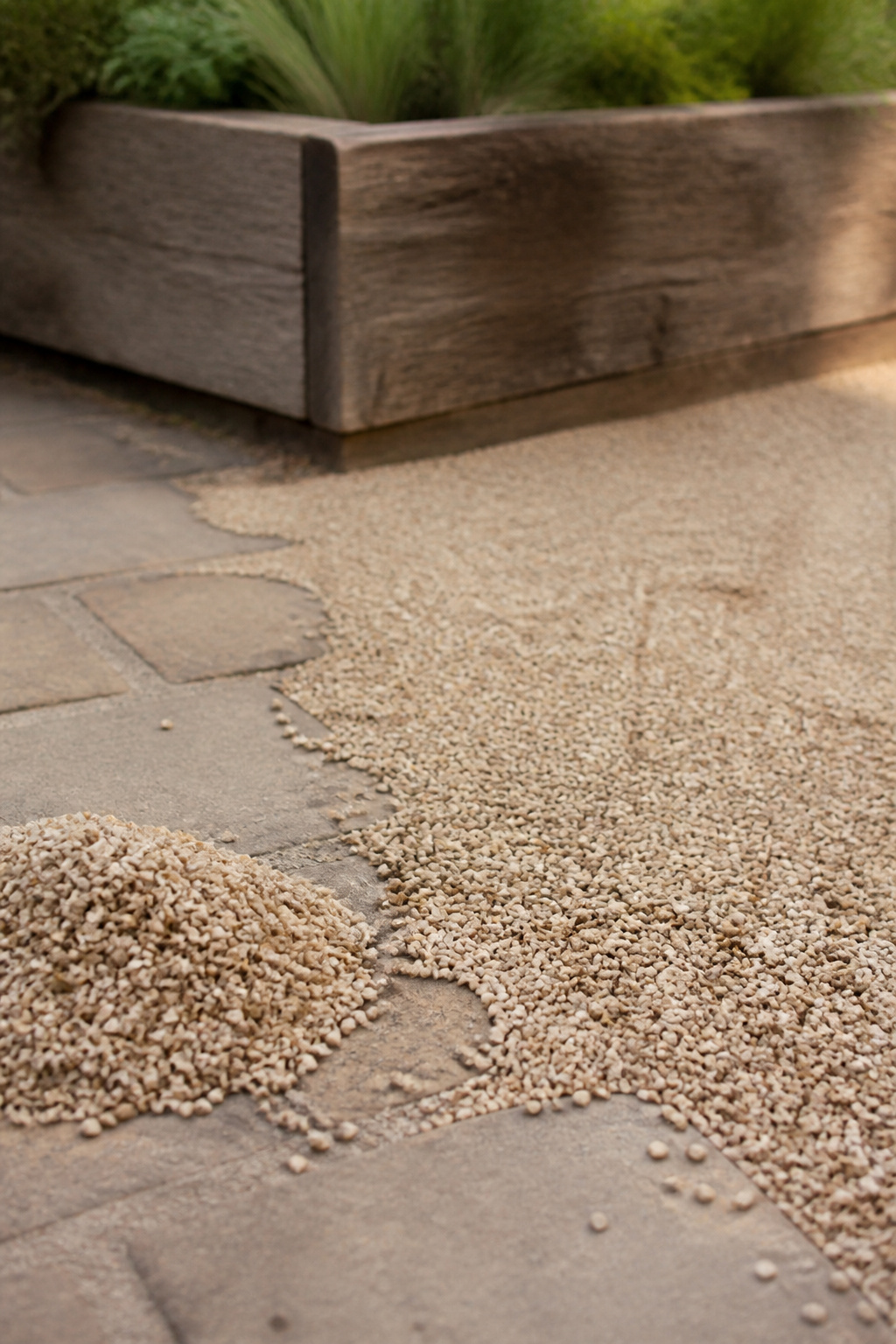
What the sticker-price comparison actually hides
Gravel installs for about $1-$3 per square foot; pavers run $10-$17, plain concrete $4-$12 — a five-to-eight-times spread before maintenance even enters the math. That spread hides the recurring lines: gravel needs topping up every 2-3 years, and the fabric underneath needs replacing every 5-7 — costs a one-time quote never shows. Gravel also returns only 1-3% at resale, per Raleigh realtor Ryan Fitzgerald — the cheap-now choice doesn’t scale up there either. Before you get far into planning a gravel patio, look past the first number.
Why this myth persists in patio shopping
Every major 2026 cost calculator — Angi, HomeGuide, Lawnstarter — leads with an installed cost per square foot, and none defaults to a ten-year total, so the figure a shopper sees first is the least complete one. Even gravel-friendly guides hedge: Bob Vila’s patio cost guide calls it “a less expensive option for a patio, yet it’s a high-maintenance choice.” The tradeoff is documented; it’s just easy to read past.
What Gravel Costs Per Square Foot
Gravel alone runs about $1-$3 per square foot installed in 2026 — and that figure moves more on what sits under the stone than on the stone itself.
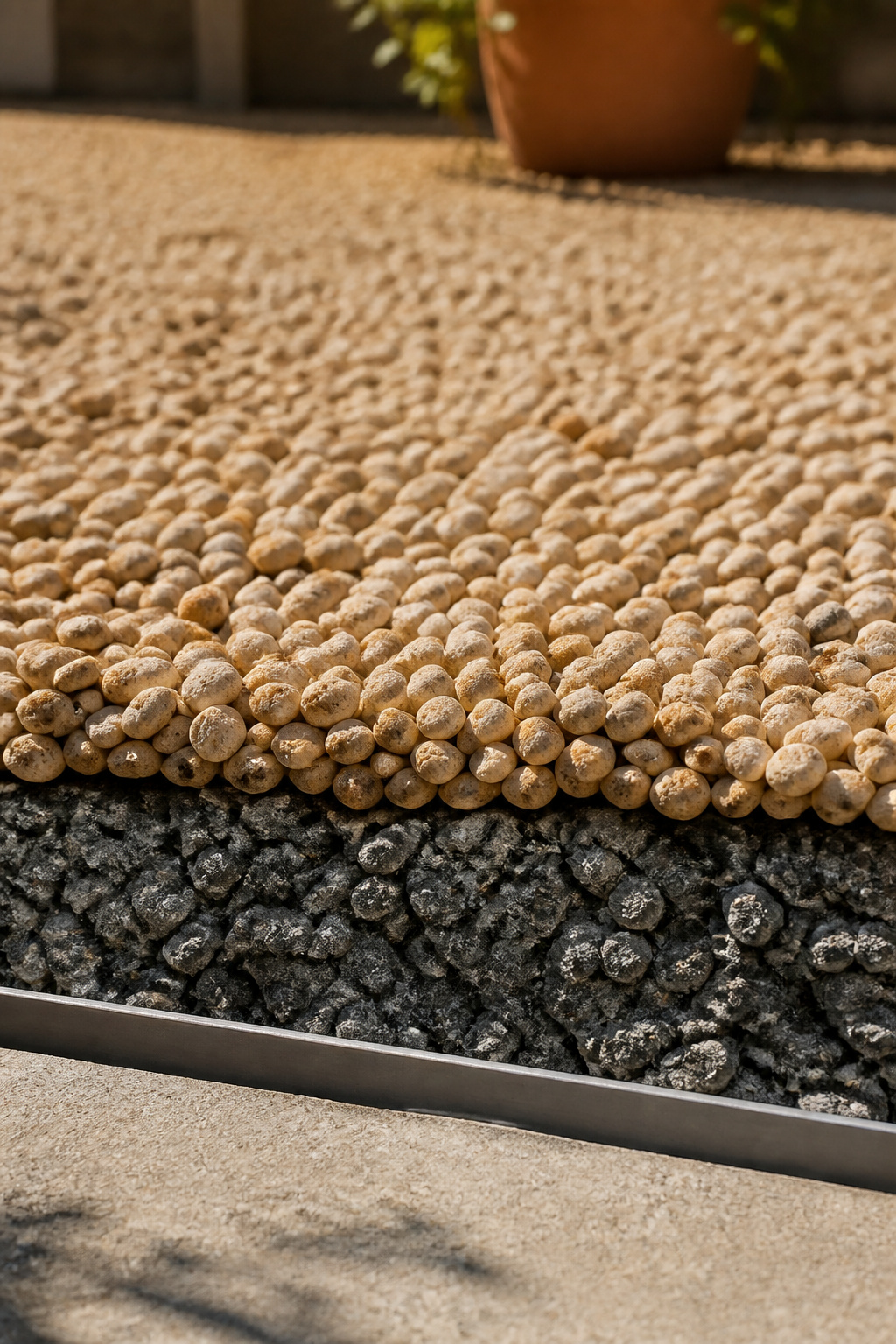
Stone type and how it moves the price
Pea gravel runs $28-$45 per ton in 2026; decomposed granite $25-$50; general crushed stone spans the widest band at $10-$50. The catch: pea gravel needs no compaction, while decomposed granite wants a plate compactor, multiple passes, and light misting to reach density — labor time the per-ton price never mentions.
Base depth and how much that adds
A compacted base, typically 4-10 inches deep, adds $2-$5 per square foot on top of the surface stone — often more of the bill than what’s on top. Depth climbs in cold climates and under furniture load, which is why the range runs wide. Weed-barrier fabric adds only $0.05-$0.25 per square foot but needs replacing every 5-7 years.
DIY labor vs hiring it out
Professional labor bills at roughly $50-$100 per hour, and doing the install yourself typically saves $4-$18 per square foot. Gravel is faster to lay than pavers or concrete because it skips the precision work of cutting and curing. A gravel mistake is cheap to fix: rake it out, add more stone. A botched concrete pour usually needs professional correction once cured — a risk gravel doesn’t carry.
Gravel vs Pavers: The Real Price Gap
So why pay five times more for pavers? Because the sticker gap isn’t the whole ledger.
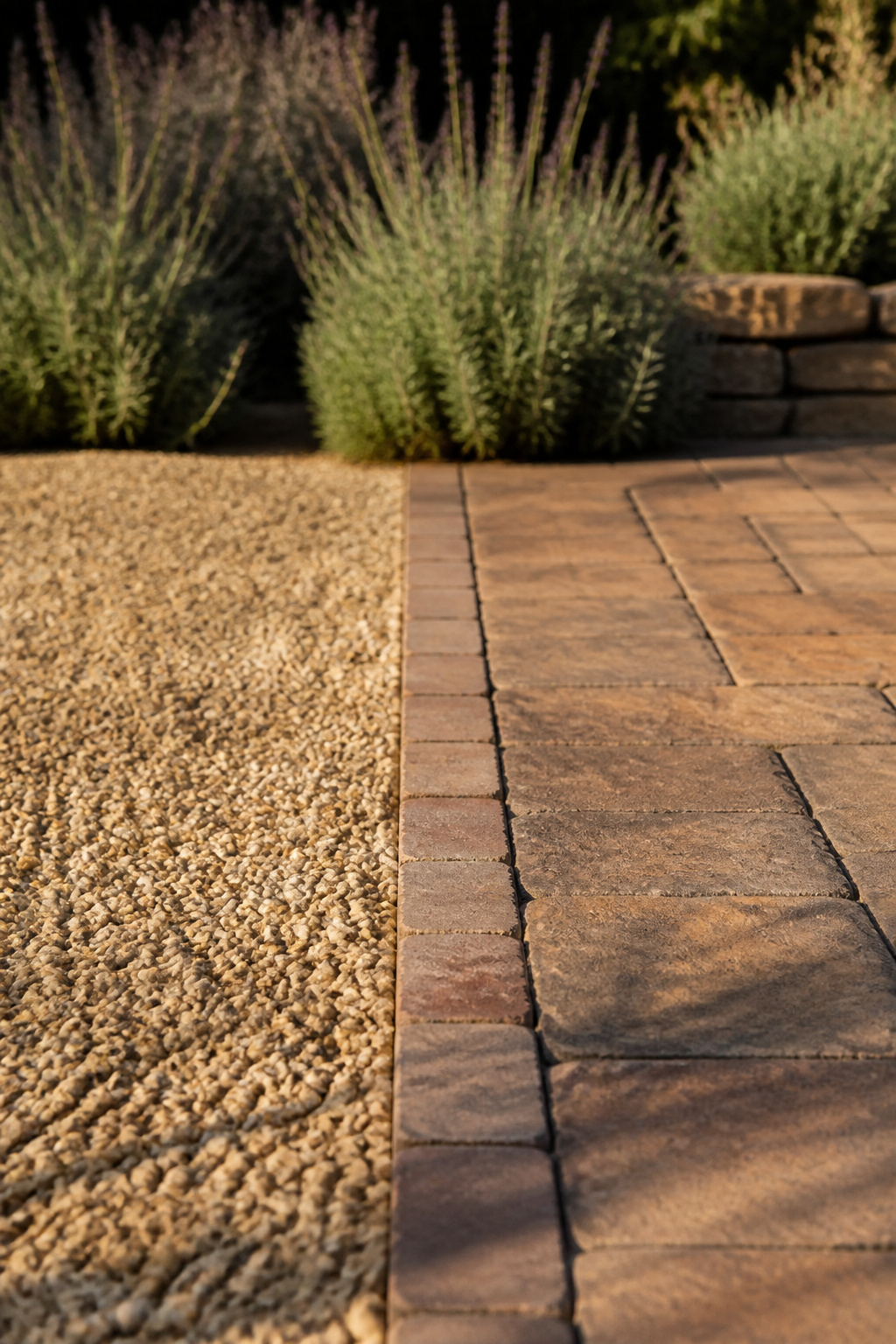
Material and install cost side by side
Gravel runs $1-$3 per square foot; pavers run $10-$17 installed, or $5-$10 if you lay them yourself. Even the DIY paver price lands two to four times above gravel’s material cost.
Where pavers claw back value over time
Pavers claw back value through repair frequency: standard pavers commonly last up to 25 years against gravel’s every-2-to-3-year topping cycle. When one shifts or sinks, resetting it costs $3-$15 per square foot for a targeted fix — a fraction of a full install, so most of that higher up-front price stays banked, not spent again. Sealing every few years runs $1.50-$3.25 per square foot.
When pavers are actually worth the premium
Pavers pay off on a patio that takes real punishment — heavy traffic, furniture dragged back and forth — where the 25-year lifespan offsets gravel’s lower entry price within about a decade. Resale is the other case: a mid-scale patio recovers roughly 9% of its cost per HomeLight’s agent survey, and an elaborate one about 50% per Remodeling Magazine — both well above gravel’s 1-3%.
Gravel vs Poured Concrete: The Real Price Gap
Concrete sits between gravel and pavers on price and buys longevity, but it isn’t the maintenance-free slab people picture.
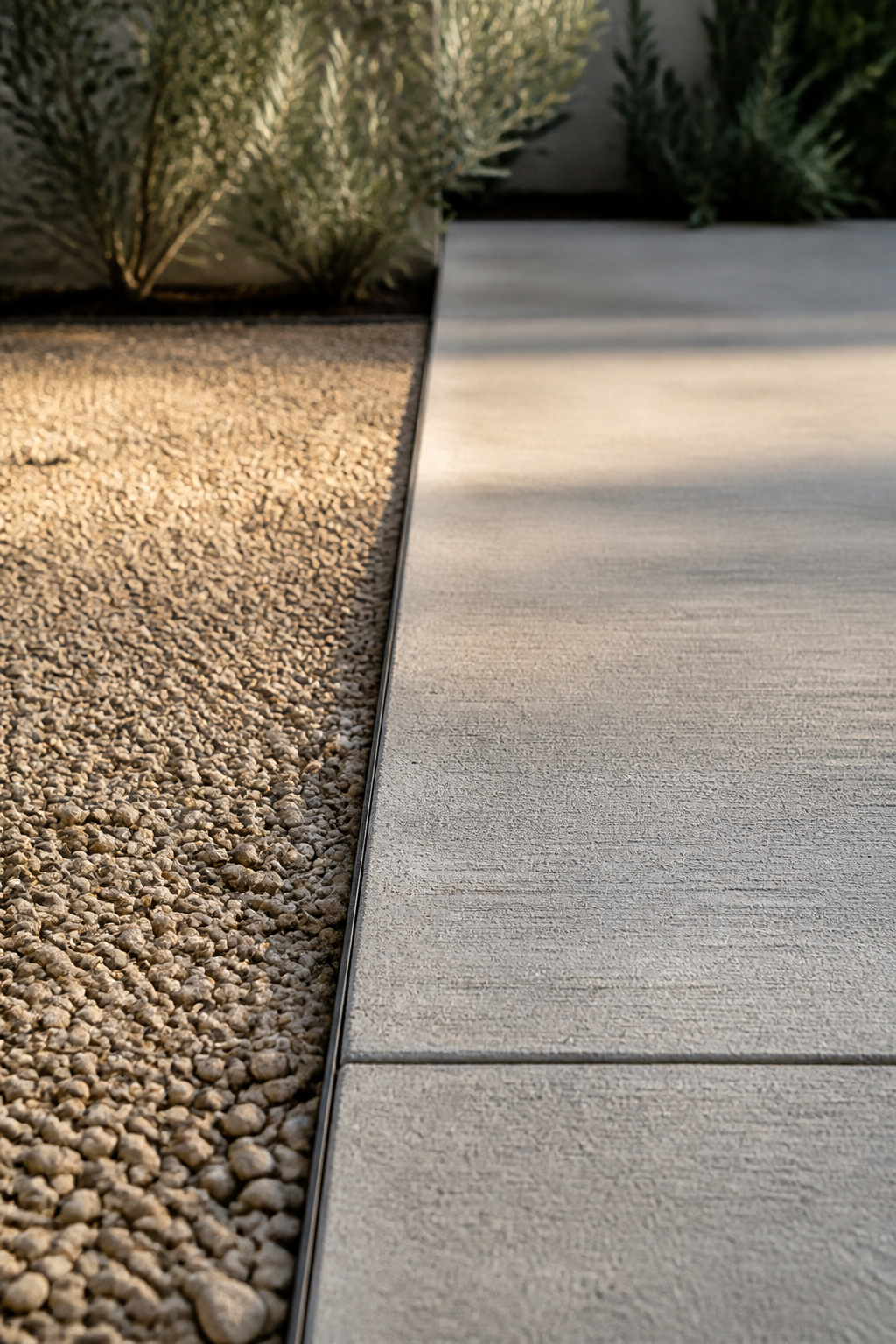
Material and install cost side by side
Gravel runs $1-$3 per square foot; plain concrete runs $4-$12, stained or stamped $8-$30. Labor makes up 50-60% of a concrete patio’s total, so the gap is real but smaller: concrete costs about two to four times more than gravel to install, not five to eight.
What concrete cracking actually costs to fix
Concrete repairs run $5-$20 per square foot by Angi’s figures, or $3-$15 in Fixr’s broader bracket. A minor crack repair averages around $300, and sealing every 3-5 years costs $3-$5 per square foot. If a section settles, mudjacking to relevel it runs $3-$8 per square foot.
When concrete is actually worth the premium
A well-installed slab can last 25-30 years on little more than periodic sealing, well past gravel’s replenishment cycle. It also never has gravel’s migration problem — stone that scatters into the lawn and gets tracked indoors. When it ages out, resurfacing runs $3-$7 per square foot versus $4-$12 to replace, though the overlay lasts only 8-15 years.
The 10-Year Gravel Patio Cost Comparison
Line up ten years of ownership and the picture the sticker hid finally shows itself.
Upkeep costs for each material
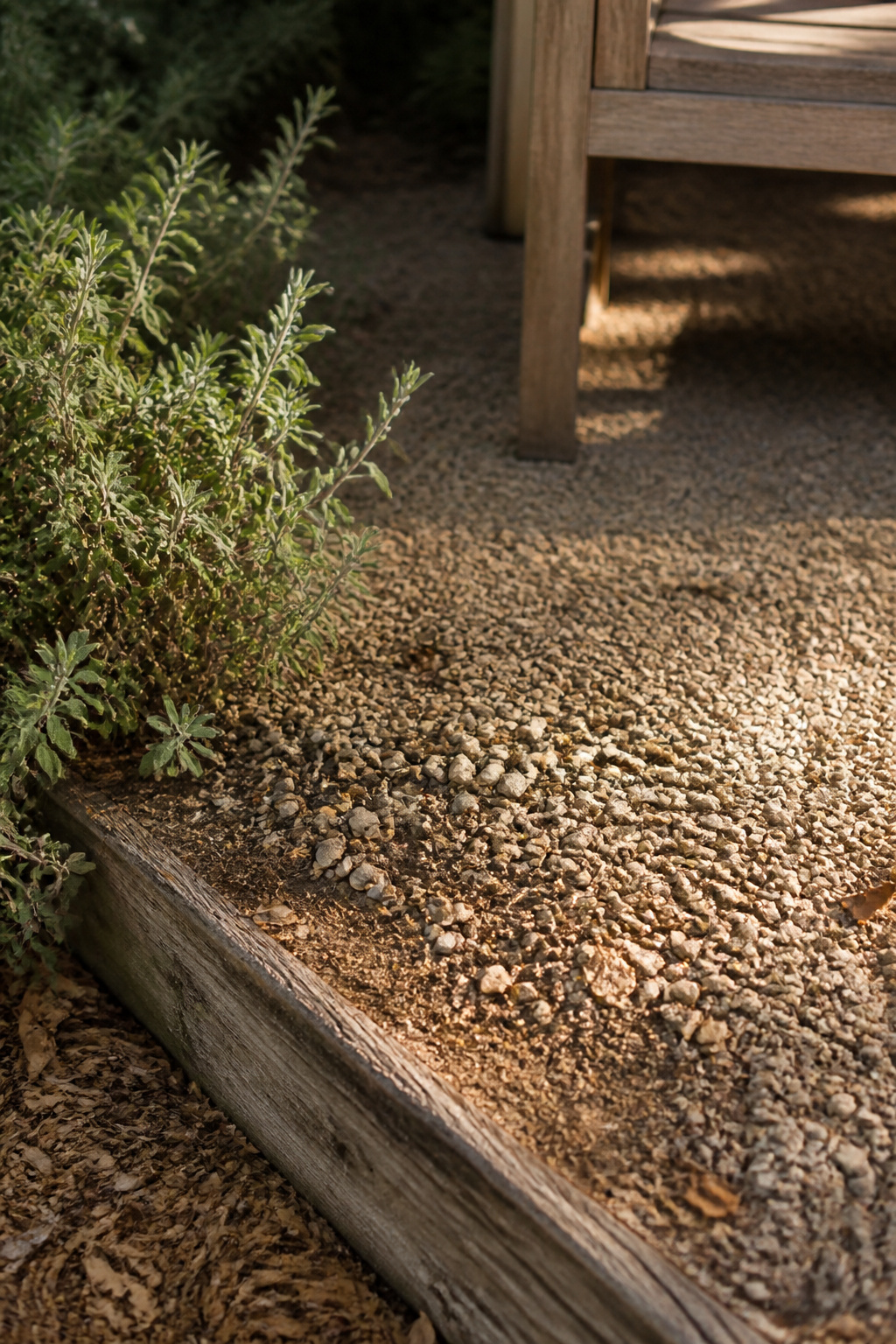
Gravel wants a 2-3 inch top-up every 2-3 years plus fabric every 5-7. Pavers need spot resetting at $3-$15 per square foot as needed, plus sealing every few years. Concrete takes sealing every 3-5 years at $3-$5 per square foot, plus the occasional $300 crack repair.
Topping up gravel vs patching concrete vs resetting pavers
Gravel’s maintenance is small-dollar but frequent: no single top-up costs much, but a 2-3 year cycle recurs three to four times across a decade. Concrete’s is larger per event but rarer — sealing plus the odd crack repair, maybe two or three events in ten years. Pavers sit in between; their up-to-25-year lifespan means most of a decade passes with no full-replacement decision at all.
The comparison table that settles it
The numbers below stack each material’s 2026 install price against its documented upkeep rhythm on a 200-square-foot patio. It’s a synthesis — the install and maintenance figures come from separate sources, not one pre-computed total — so read it as a shape, not a quote.
| Material | Install, 200 sq ft (2026) | Recurring upkeep across 10 years |
|---|---|---|
| Gravel | $200-$600 ($1-$3/sq ft) | Top up every 2-3 years (3-4 times); new fabric every 5-7 years |
| Poured concrete | $800-$2,400 ($4-$12/sq ft) | Seal every 3-5 years ($3-$5/sq ft); ~$300 crack repair as needed |
| Pavers | $2,000-$3,400 ($10-$17/sq ft) | Seal every few years ($1.50-$3.25/sq ft); spot reset $3-$15/sq ft as needed |
Gravel still lands cheapest against pavers by a wide margin, and against concrete the race is closer than the sticker suggests — but only if you keep topping up. Neglected gravel that thins and migrates loses its edge faster than either of the other two.
Build It Yourself to Save
A “two-hour” floating-shelf video once ate most of my Saturday — the run back to the store for the right screws wasn’t in the video, and it never is. I’ve distrusted every printed time estimate since, including the ones on patio installs. Which is the point: your own hours are the cost you actually control.
What DIY installation actually removes from the bill
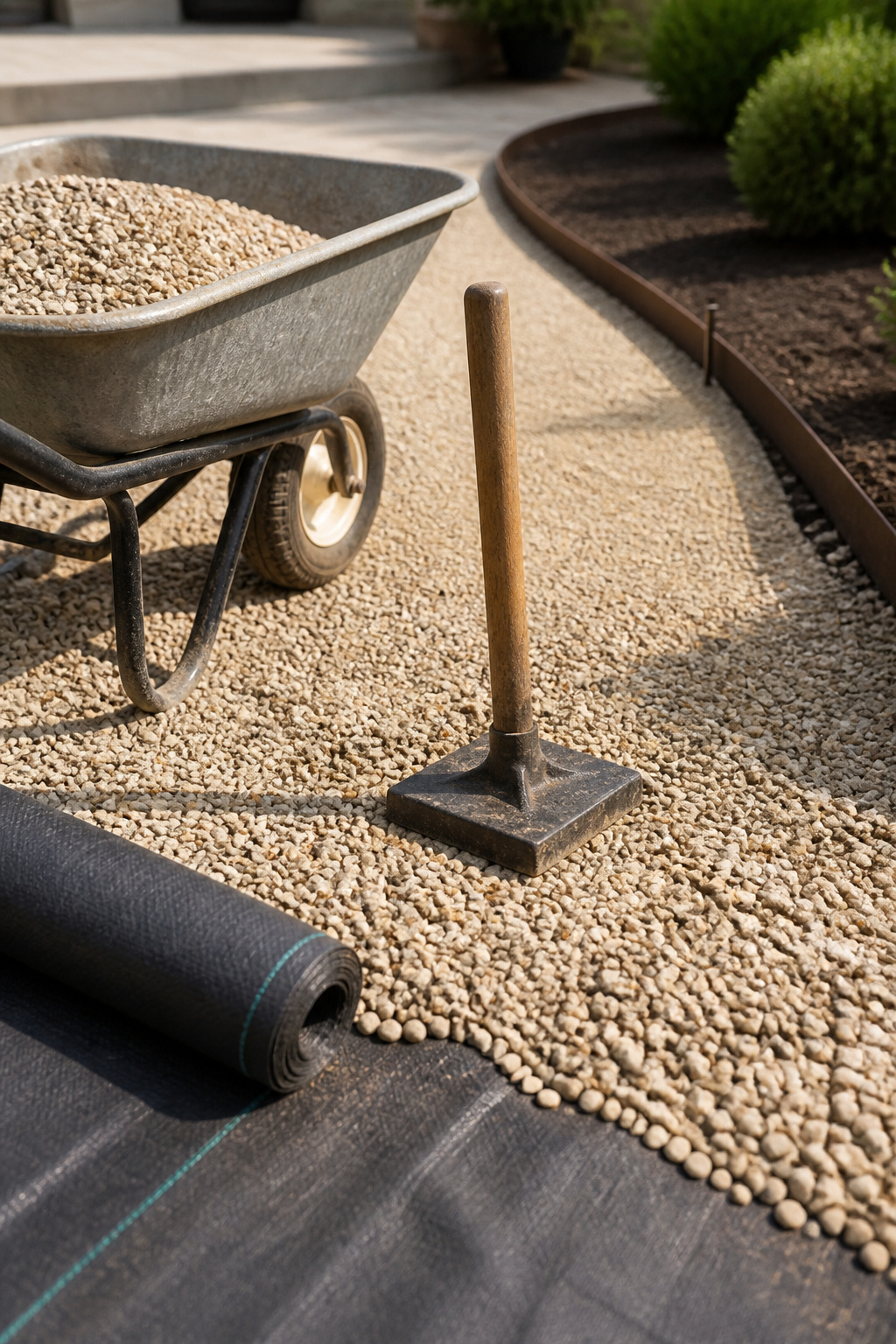
Laying pavers yourself costs $5-$10 per square foot against a $10-$17 installed price — roughly half the total. Across patio types, DIYers save $4-$18 per square foot in labor, because the labor line, not the material, is where the money hides at $50-$100 an hour. Gravel is the fastest DIY win of the three: it skips forms and cutting tools, so there’s less skilled labor to replace. Here’s how to build it yourself to save the labor line entirely.
Where hiring out still makes sense
Some steps are worth paying for — getting them wrong is what generates repair bills later:
- Excavation dug to a consistent depth
- Base compaction that won’t settle unevenly
- Drainage grading that sheds water away from the patio
Watch the tool math too: renting a plate compactor and prep gear runs $40-$425 per day, which can eat your DIY savings on a one-off small job.
Which Gravel Costs What
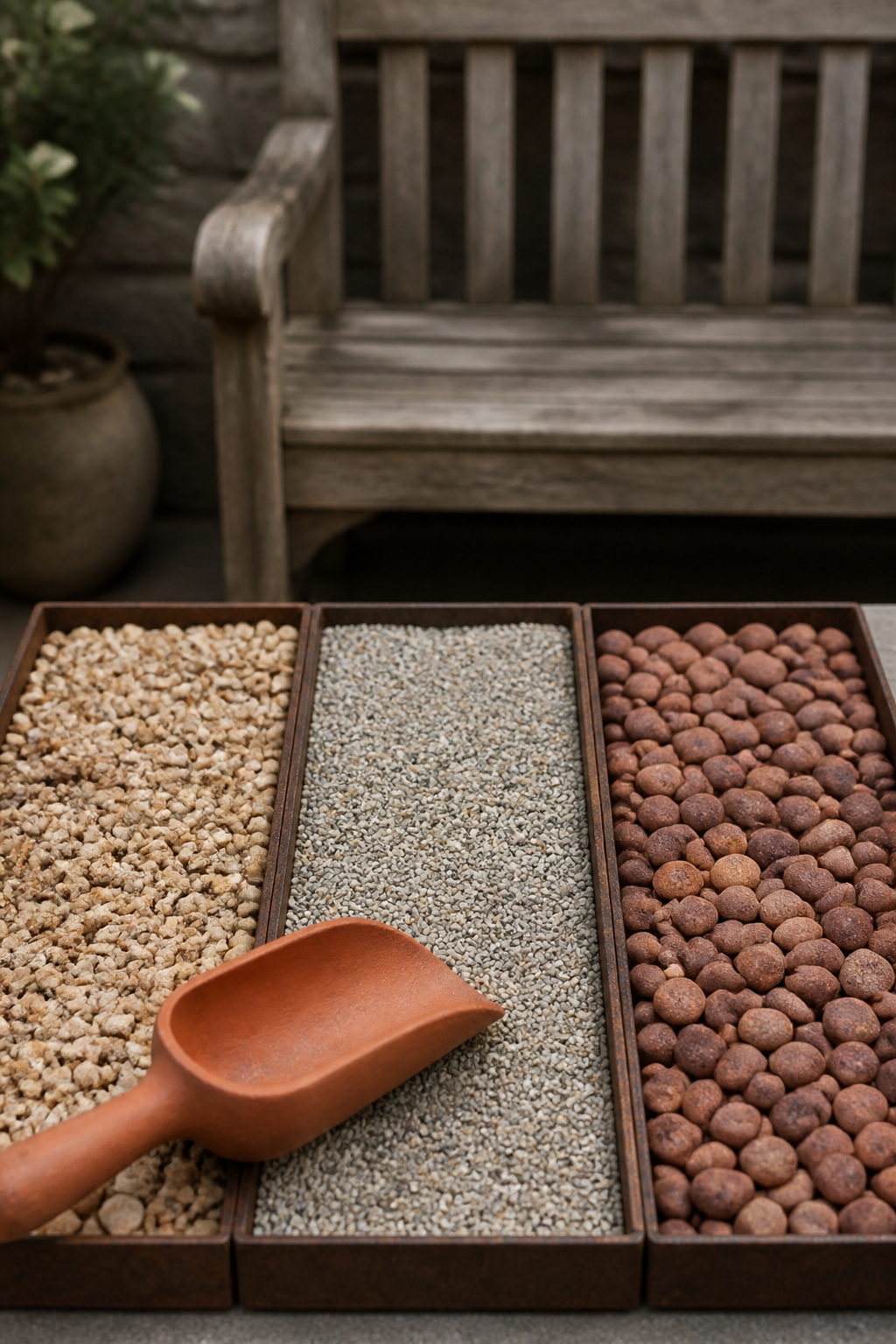
Stone choice alone can swing gravel’s cost three to four times per ton — here’s the cost-only breakdown before you order.
Stone type cost breakdown
These are 2026 per-ton and per-cubic-yard ranges, plus the compaction each demands — that drives labor time as much as material cost.
| Stone type | Per ton (2026) | Per cubic yard | Compaction |
|---|---|---|---|
| Pea gravel | $28-$45 | $29-$86 | None needed |
| Decomposed granite | $25-$50 | $38-$75 | Plate compactor or tamper |
| Crushed stone (general) | $10-$50 | $15-$75 | Varies by grade |
| River rock | $45-$130 | $50-$160 | None (decorative) |
| Lava rock | $76-$85 | — | None |
Delivery adds $10-$25 per ton, free with a 5-ton minimum within 5 miles.
Why the cheapest gravel isn’t always the cheapest choice either
Crushed stone’s bottom-of-range $10-per-ton price usually means small, sharp, angular pieces meant for drainage or base fill, not a comfortable seating surface. Decomposed granite often costs somewhat more per ton than pea gravel, but it locks together and needs less frequent re-leveling — which can slow the topping-up cycle from the math above. For the full stone-by-stone tradeoffs — drainage, comfort, how furniture behaves — see which gravel costs what.
So the rule to shop by isn’t “cheapest material wins” — it’s price the decade, not the day. Gravel usually stays cheapest over ten years, but only if you keep the top-ups going, and its resale return trails pavers and concrete by a wide margin. Measure the patio, multiply by the 2026 ranges here, then add your material’s upkeep line before you commit a dollar. The number that changes the total most is whether you swing the shovel yourself.
FAQ
Does a gravel patio add home value?
Yes, but only modestly. A gravel patio typically adds about 1-3% to home value, depending on installation quality, per Raleigh realtor Ryan Fitzgerald. Its resale return won’t match a paver or stone patio, and depends heavily on whether local buyers value low-water landscaping.
How often do you need to top up gravel to keep long-term costs down?
Under light foot traffic, a patio needs a gravel refresh about every 2-3 years; a driveway under vehicle traffic needs it every 1-2. A refresh means spreading roughly 2-3 inches of new stone where it has thinned. Staying on that cycle is what keeps gravel’s decade-long cost advantage intact.
Is a gravel patio cheaper to insure or maintain than a paver patio?
Not in the way people assume. Homeowners insurance covers hardscape by peril, not by paving material, so no insurer prices gravel against pavers. On maintenance, gravel costs less per event than a $3-$15 per square foot paver reset, but it recurs every 2-3 years — cheaper per instance, not automatically cheaper overall.