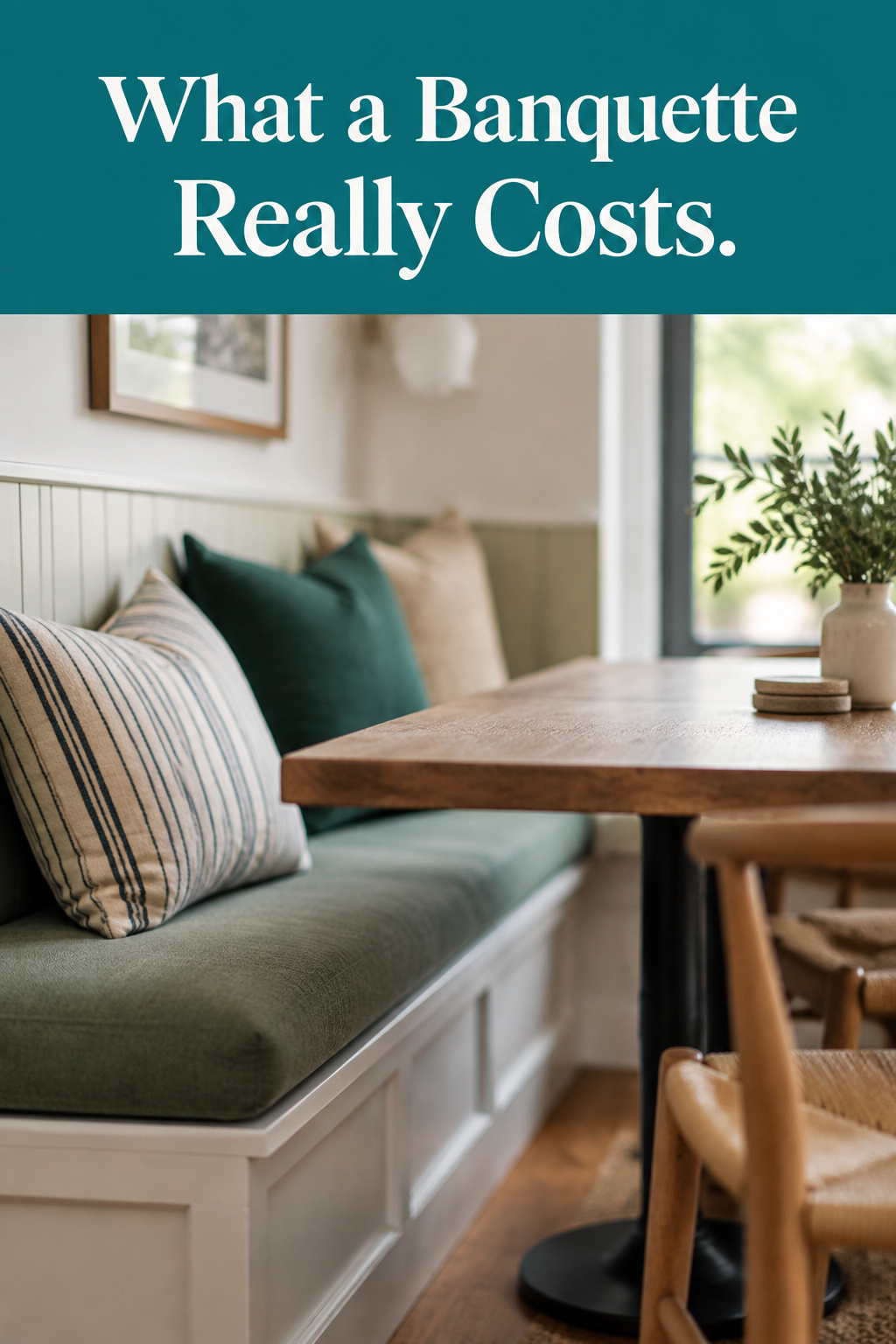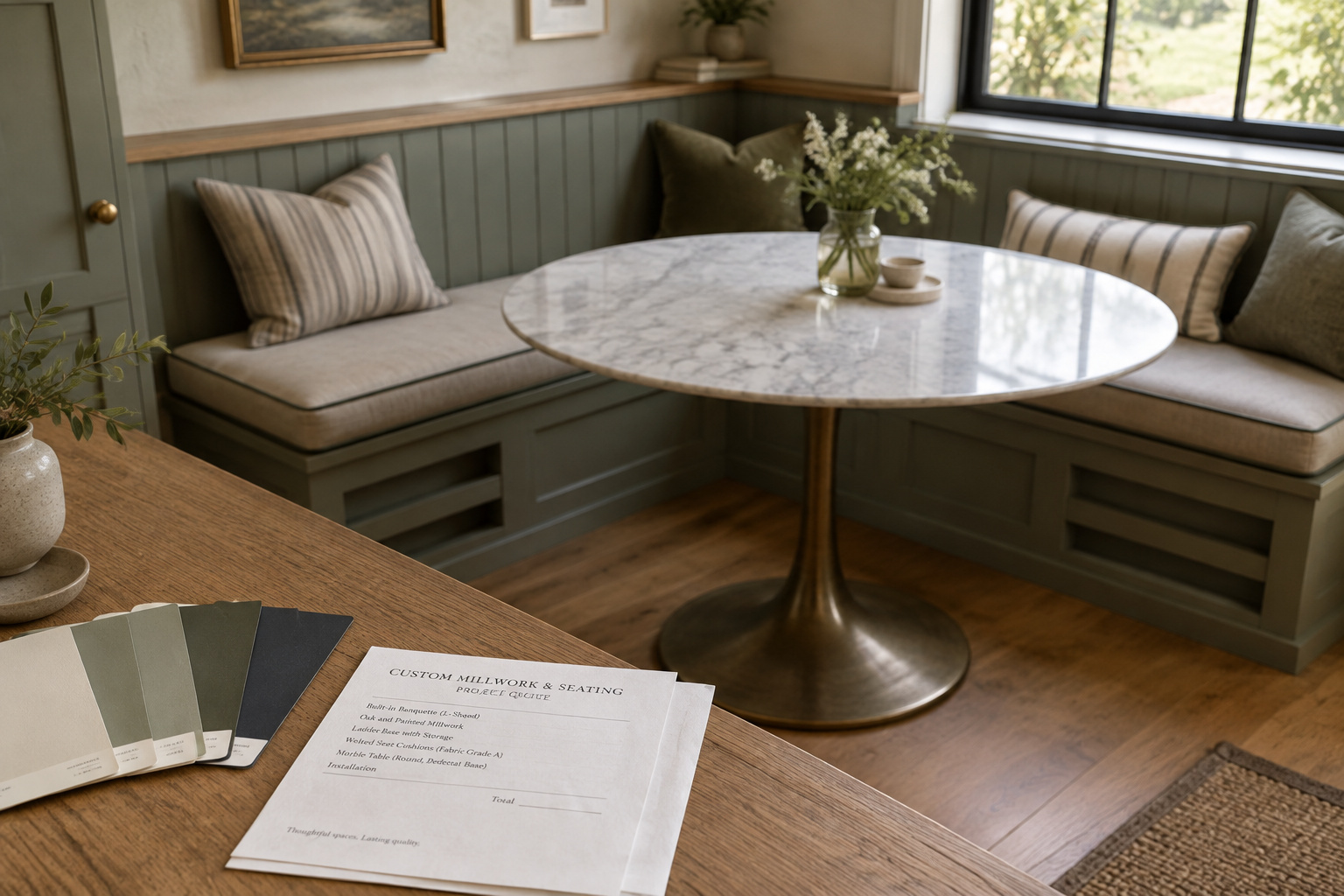

On a Houzz thread titled “Banquette sticker shock!”, a homeowner posting as azmelt reported her cabinet maker’s estimate for a 90-degree corner built-in, forty-eight inches on each side, just the bench with no backs. It came to over $2,000, and thirty-six replies piled in behind her. The post is roughly sixteen years old and still the clearest starting point anyone has on banquette seating cost, because every figure published since prices a different object on a different date. There are three real routes to a bench in your corner, and if you average their numbers you get a figure nobody can defend.
TL;DR
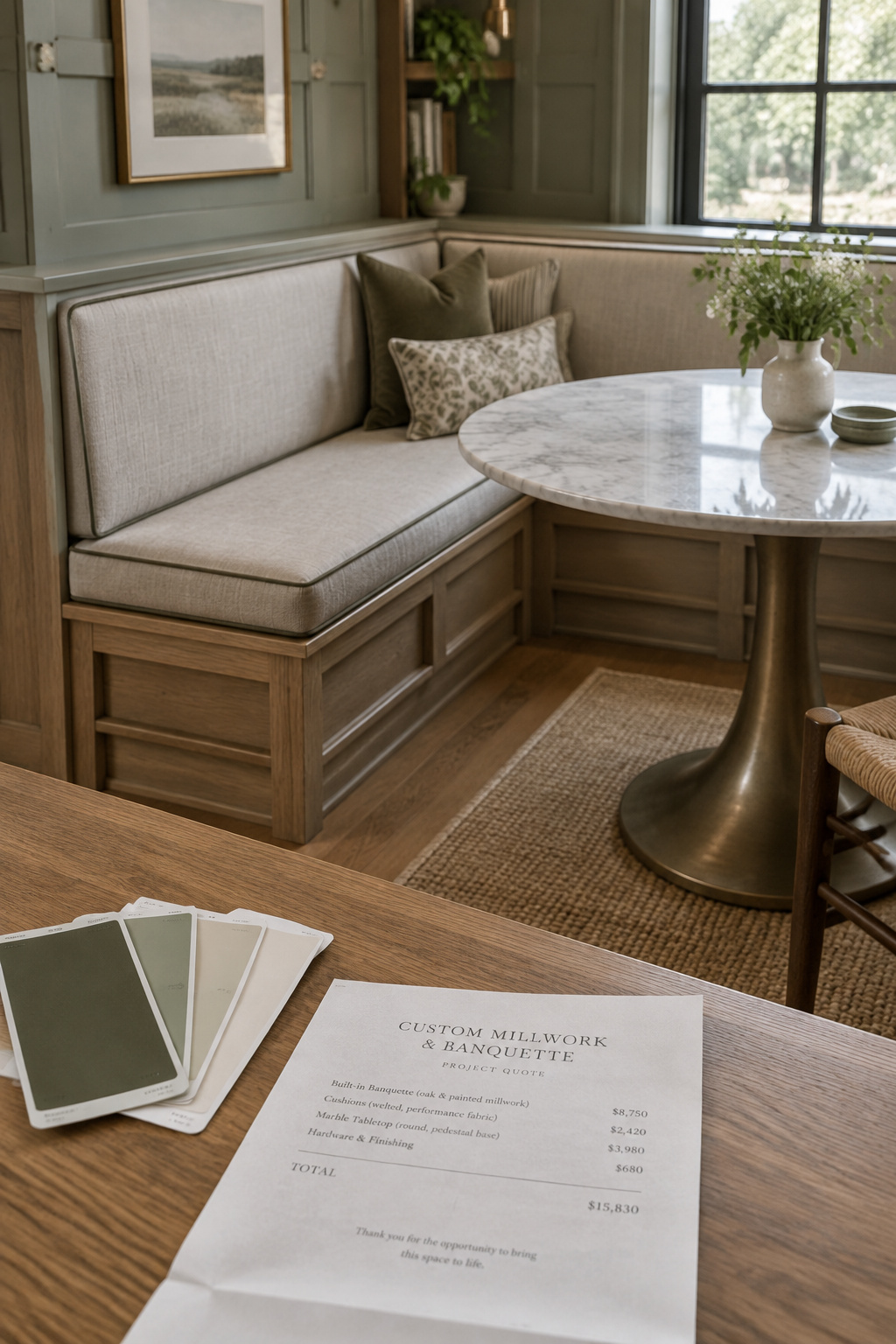
- Published rates for a cabinetmaker’s built-in disagree wildly: $200 to $400 per linear foot from a 2019 costbook, against $1,200 to $2,000 from fabricators quoting in 2025-26.
- Building the carcass from stock cabinets is the cheapest route that still looks built-in: about $419 in materials for a six-foot run unfinished, or $725 pre-finished, with no labor.
- Upholstery is where budgets break. One documented $2,500 banquette carried a separate $1,175 charge for the cushion alone.
What banquette seating cost breaks down to
Four sources give four different answers because each route has its own price data, attached to its own year. A rate from a contractor’s estimating costbook, a fabricator’s current quote, a materials receipt and a retail price tag are four different kinds of number, and search results stack them as though they were interchangeable. Below they are separated, each tagged with the date of the data rather than the date of the page.
| Route | What the figure actually prices | Published figure | Date of the data |
|---|---|---|---|
| Cabinetmaker built-in | Structure, finish and install, one-off shape | $200–$400 per linear ft; $800–$1,600 for a typical L-shaped run | 2019 costbook |
| Cabinetmaker built-in, current | The same work, quoted now | $1,200–$2,000 per linear ft; $1,500–$5,000 installed | 2025–26 fabricators |
| DIY cabinet carcass | Materials only, no labor | $418.91 unfinished / $724.93 pre-finished, 6-ft run | priced 2026-09-02 |
| Bought freestanding | A finished piece you place | About $2,500 for a ready-made set | captured 2023 |
| One real quote, bare bench | Structure only: no backs, no cushions | Over $2,000 for a 48 in × 48 in corner | approx. 2010 |
One Ontario fabricator, Dream Spaces, refuses to publish a bracket at all: “We’d rather price your actual project than publish a misleading bracket.” They name length and shape, storage type, materials, cushions and the condition of your wall and floor as the drivers. The refusal is fair, because a bare corner bench, a storage-integrated run and a fully upholstered system are three different projects that share one name.
The built-in: what a cabinetmaker charges
This is the route behind most sticker shock. If you want what a built-in eating bench involves start to finish, that guide covers the whole job. This section covers only the money.
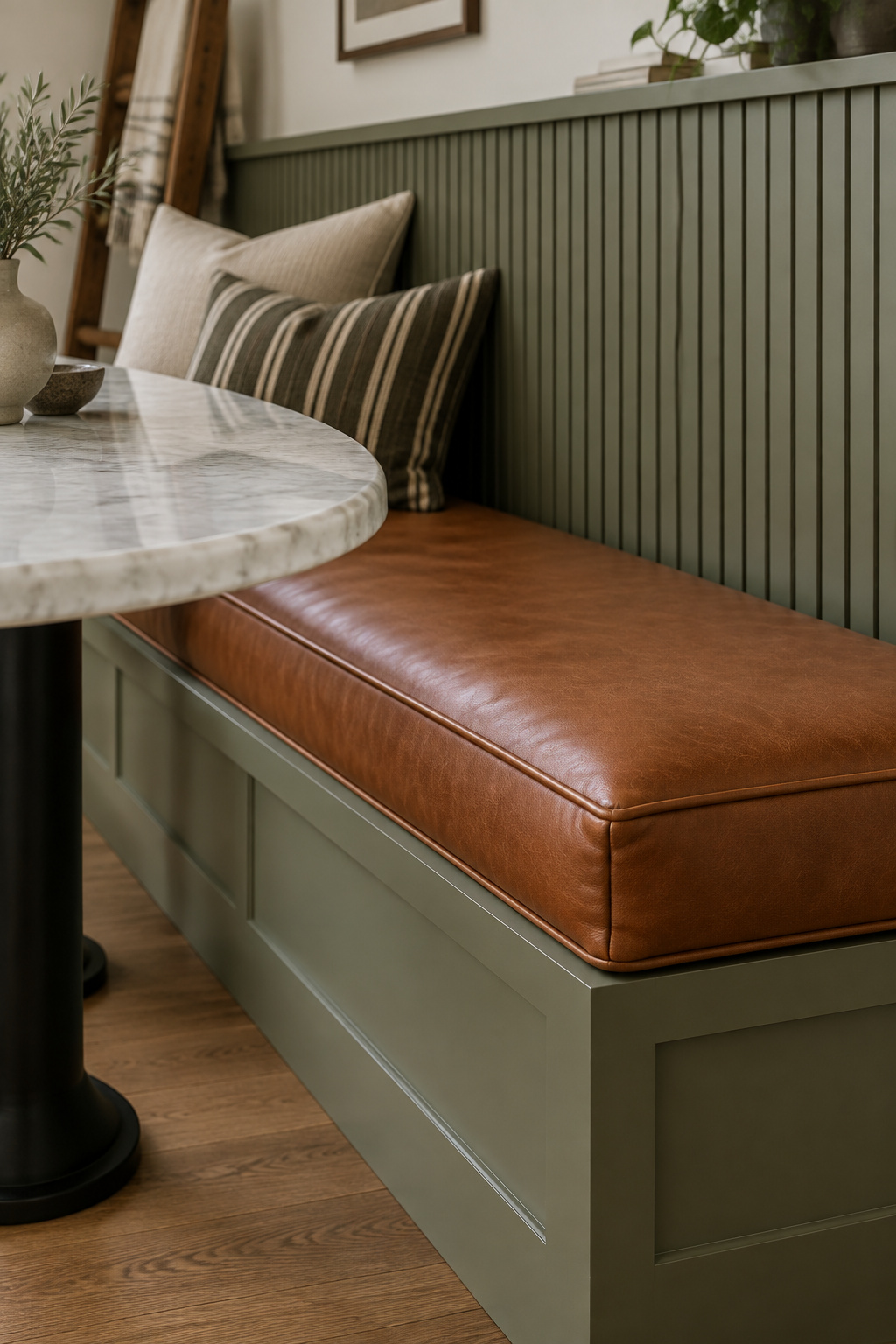
The 2019 costbook number, and why it’s aging
The figure you meet first is $200 to $400 per linear foot, or $800 to $1,600 for a typical L-shaped installation. It comes from HowMuch.net’s built-in seating guide, which sources it explicitly to the Craftsman Estimator Costbook, complete series year 2019.
That number has two problems. An estimator’s costbook prices labor and materials by region and trade for general contracting. It is not a banquette survey, and it cannot see the lumber and skilled-labor run-up of the early 2020s. Current banquette-specific pricing has also moved well past it: Extra Touch Upholstery in Reno prices long runs at $1,200 to $2,000 per linear foot today. That works out to $1,200 ÷ $400 = 3× the costbook rate at the low end and $2,000 ÷ $200 = 10× at the high end.
Check the year before you trust a figure. At least one cost article published 2026-07-04 republishes those 2019-derived numbers verbatim, with no note that the data underneath is seven years old. A fresh publish date doesn’t mean fresh pricing, so look for the year of the data as well as the year on the page.
One real quote: sticker shock for a bare bench
Here is how azmelt put it: “Just got the estimate from our cabinet maker for a 90 degree corner built-in banquette seat — just the bench, no backs — 48 inches on each side. It was over $2,000!” What galled her was that “anything that doesn’t come pretty much according to their normal specs is spectacularly expensive,” and she went straight to the forum asking about stock cabinetry as a cheaper base.
Her quote also works as a rate. 48 in + 48 in = 96 in, or 8 linear feet of bench, and $2,000 ÷ 8 ft = $250 per linear foot. That falls inside the 2019 costbook’s $200 to $400 range, from a quote roughly a decade older than the costbook.
Her shock came from the scope of the quote. She was priced for structure only: no backrest, no cushions, no upholstery, nothing you would sit on. At $250 a foot that box was fairly priced against any published range you can find. What blindsided her was learning that $2,000 bought the least finished version of what she wanted. Today’s finished quotes run three to ten times the old rate through the same mechanism in reverse, since the price movement has been in finish and upholstery while the box itself has moved much less. When two banquette quotes differ, compare what each one includes before you compare the totals.
The middle route: building the carcass yourself
Building that box yourself costs a fraction of the shop price. A cabinet shop’s estimate is usually four lines long and the fourth line is the total, which tells you nothing about whose labor is the expensive part. Priced out item by item, the gap is wide.
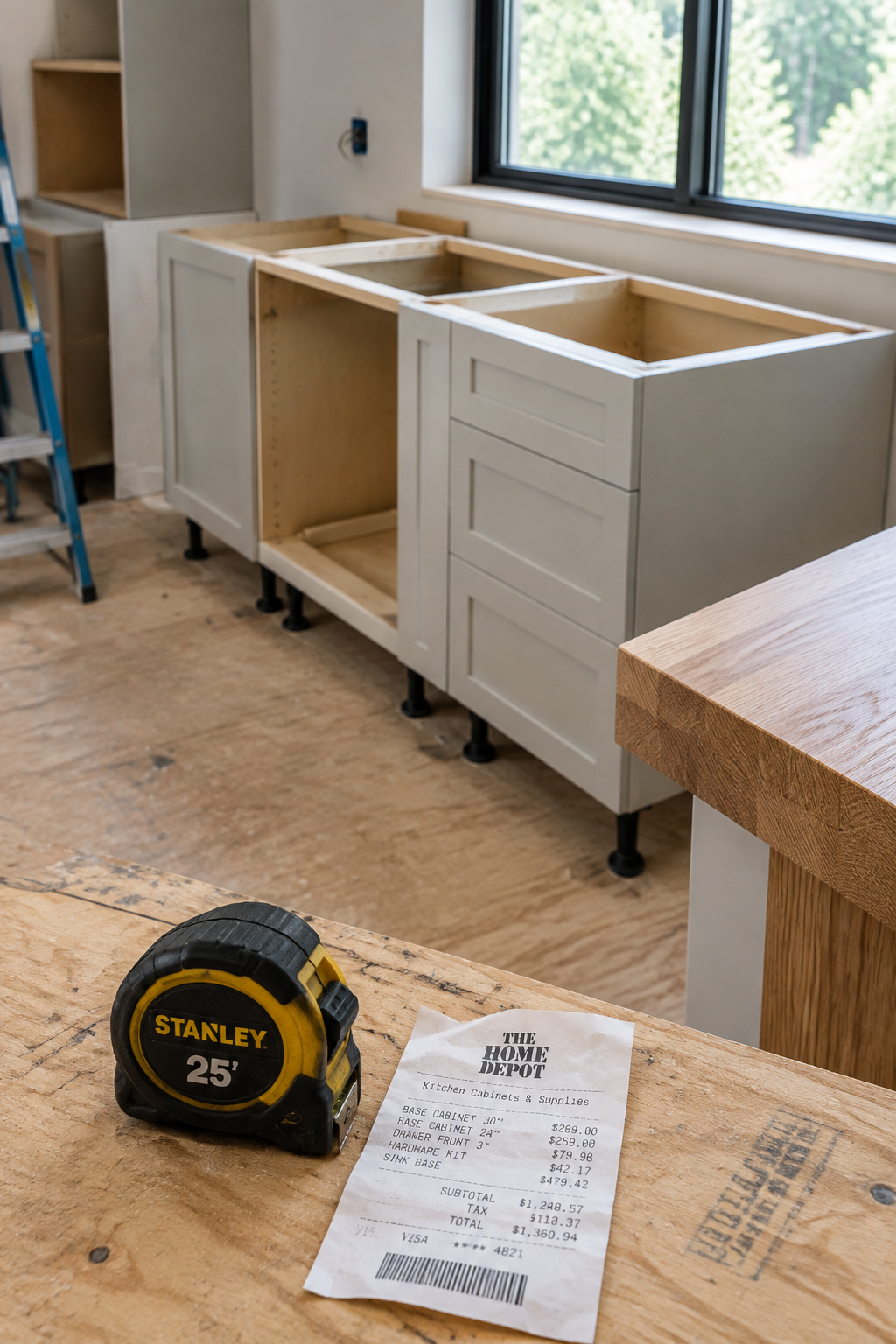
- Our own cut list: $418.91 in materials with unfinished stock cabinets, or $724.93 pre-finished, for a six-foot run. That covers cabinets, ladder base, plywood deck, fasteners and finish, priced against Home Depot and Ace listings on 2026-09-02, and it is materials only, with no labor or cushions.
- Independent reports land in the same order of magnitude: $200 to $400 in materials for a straight 60-inch bench before cushions, and $320 to $900 in a DIY-versus-pro breakdown, against $1,200 to $2,800 to hire the work out.
- The floor sits lower still: one blogged build using ReStore cabinets marked down 75% totaled $55 in materials.
Per foot, that is $418.91 ÷ 6 ft = $69.82 unfinished and $724.93 ÷ 6 ft = $120.82 pre-finished. Those rates are a fifth to a third of the outdated 2019 professional rate and a small fraction of any current fabricator quote. The gap is that wide because most of a built-in’s price is labor on a shape that exists once, in your corner. Both totals come from the full cabinet-carcass build, step by step, which works them out. I’m citing that cut list here without redoing it.
The bought bench: pricing a freestanding banquette
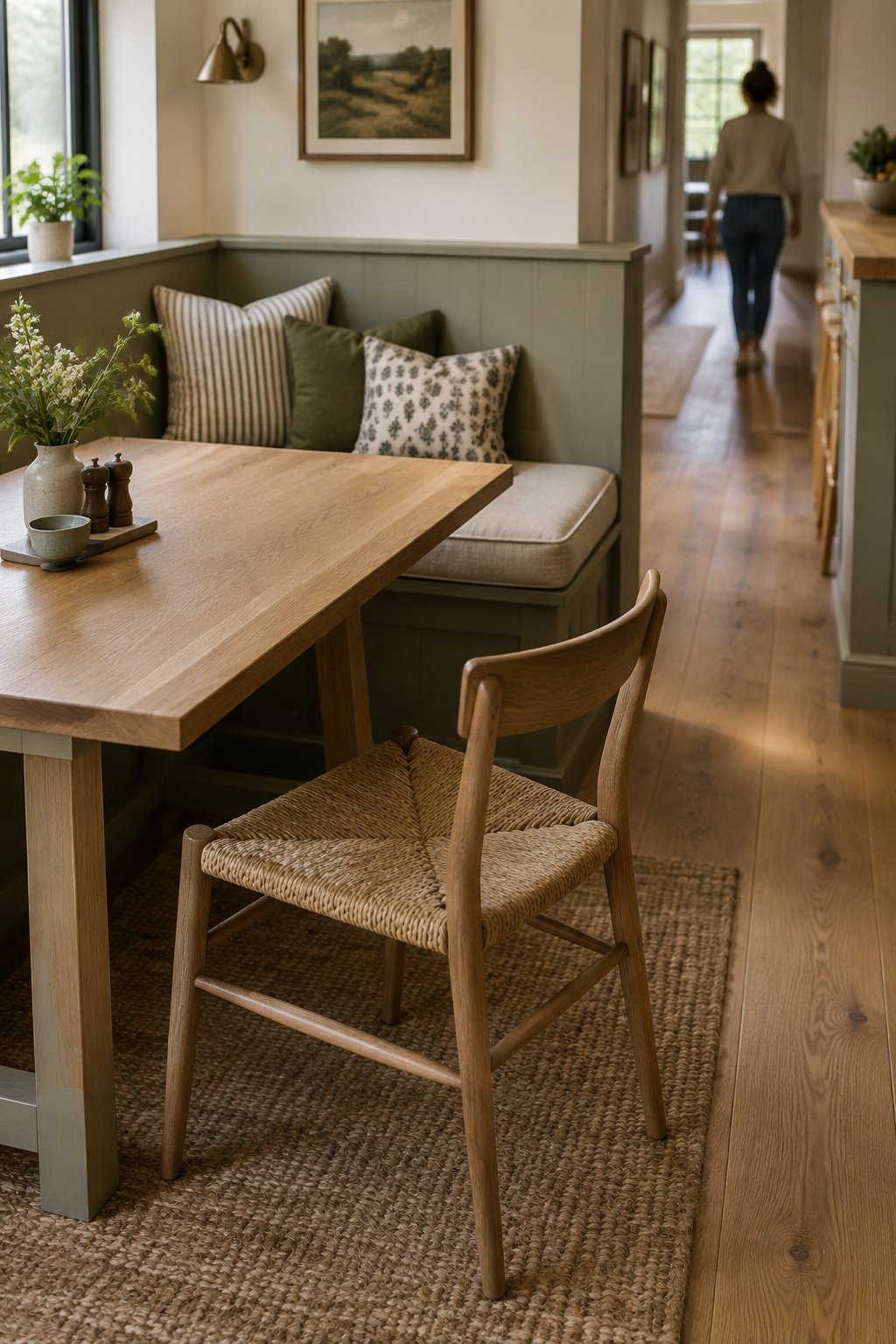
Pull a freestanding bench away from the wall and nothing happens: no scribed filler tears, no caulk line splits, and no toe kick is left stranded. You are paying for a piece that stands on its own, and it prices differently because it was made before anyone measured your corner.
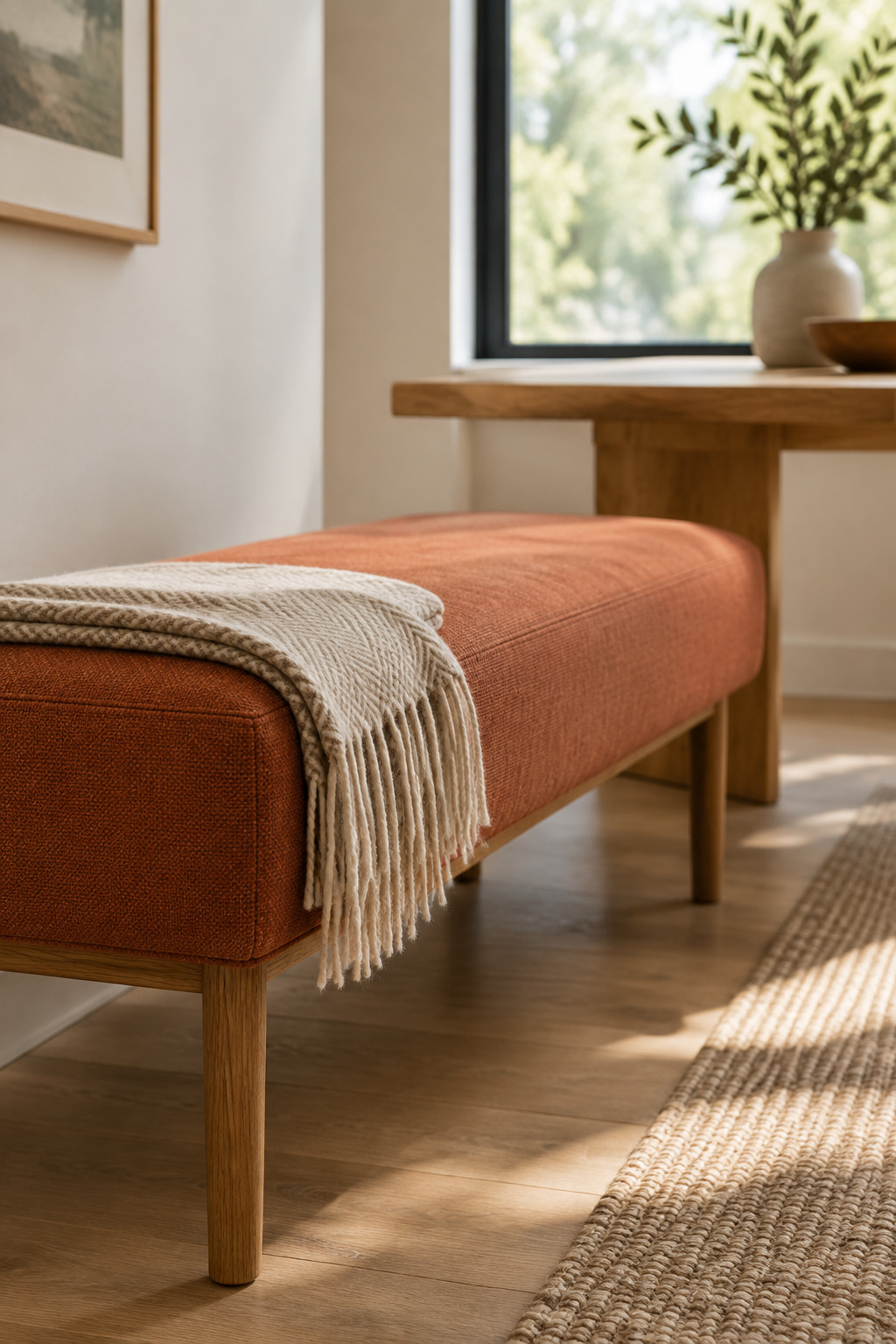
A ready-made banquette set from Ballard Designs ran approximately $2,500 plus tax and shipping, fully assembled. That retail figure was captured in an article last modified 2023-08-26, so the price may have moved since. Designer Rebecca West of Seriously Happy Homes set it against a comparable custom build from a Seattle-area finish carpenter at roughly $6,800, a 2.75× gap. The match isn’t clean, though, since her custom quote included drawers where the retail set used top-load bins.
What the 2026 number is pricing
The most-shared current figure doesn’t belong in that comparison. Angi’s 2026-dated guide gives $500 to $8,000, with most homeowners spending around $2,500, but the page is scoped to window seats, reading corners and built-in daybeds. That means seating tied to a bay or a bump-out, which is a different job from a corner or wall-run kitchen banquette. Its closest structural analog, a semi-circle or U-shaped seat at $1,000 to $8,000, is comparable in shape, but its median still describes window seats. Budgeting an L-shaped run off a window-seat median is how people reach numbers that later double.
Where the banquette budget blows up
The common mistake is pricing the bench and stopping there, then finding out the seat you sit on was quoted separately. Every route here shares the same line items, and people tend to leave them out of the budget:
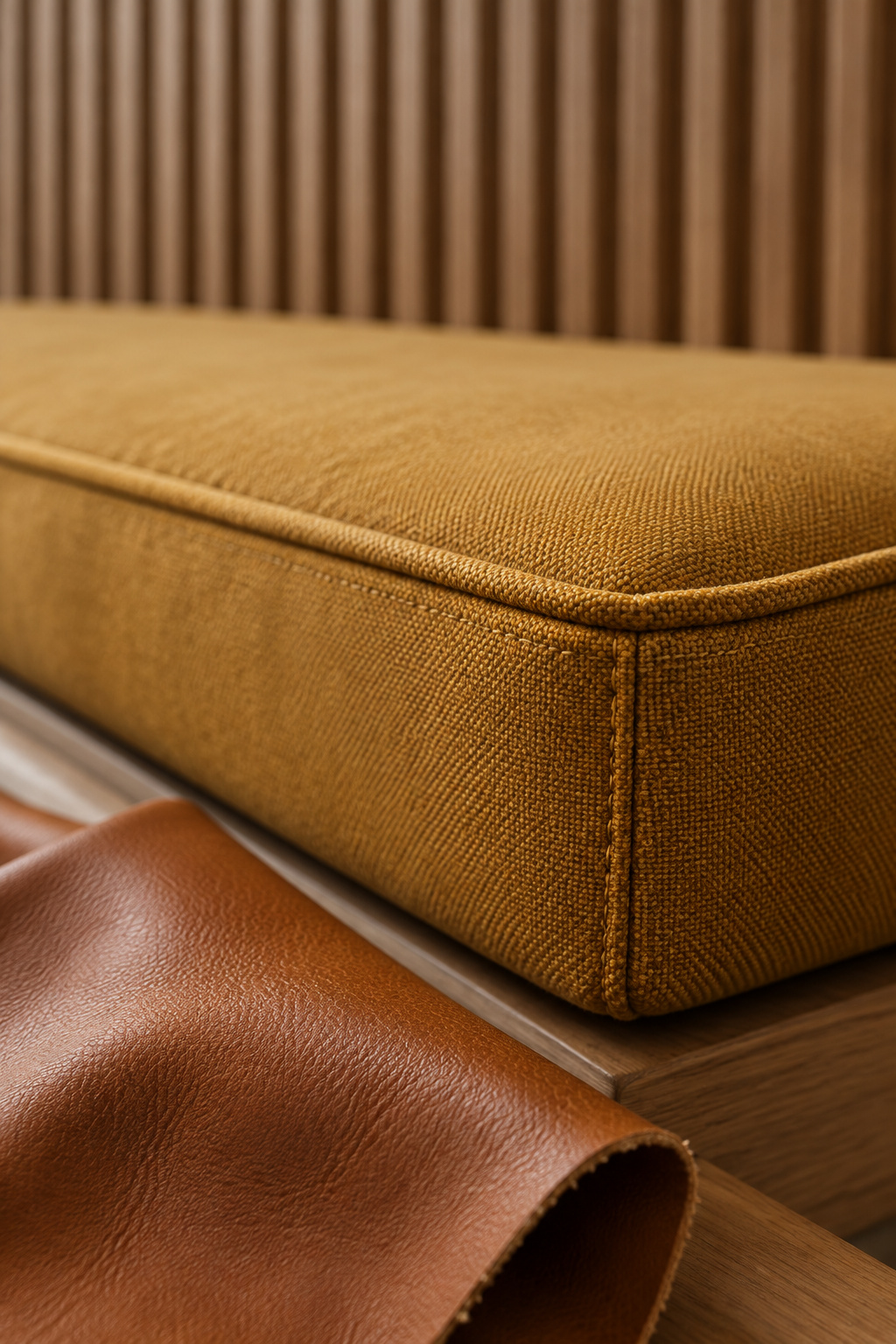
- Cushions: $200 to $500 from a local upholsterer for a standard bench seat, or roughly $75 to $150 if you make it yourself.
- That DIY cushion, itemized: foam at seat density rather than back density at $60 to $180, fabric and covers at $40 to $150, and polyester wadding at $10 to $30.
- Hardware on any hinged storage seat: $15 to $60 for lid stays and soft-close hinges.
- Complexity that lifts a fabricator’s per-foot rate: curved fronts or radiused corners, channel-back or tufted upholstery, integrated drawers or lift-up seats, and tight-access installation.
One documented project put a $1,175 custom seat cushion on a $2,500 banquette, nearly half the cost of the structure holding it up. Foam is also the wrong place to economize, because low-density foam bottoms out within about a year of daily use and replacing it means taking the seat apart. Specify the fabric and foam that survive a kitchen before you start comparing quotes.
Built-in or freestanding: the decision behind the price
I went looking for evidence behind the resale argument and found none. No appraiser, standards body or study addressing built-in banquette seating and home value turned up. General kitchen-appraisal training weighs marketability and material quality and never mentions built-in seating. The pages claiming built-ins add value are businesses that sell built-ins, citing “real estate pros” with no name and no method. I wouldn’t build a budget on that.
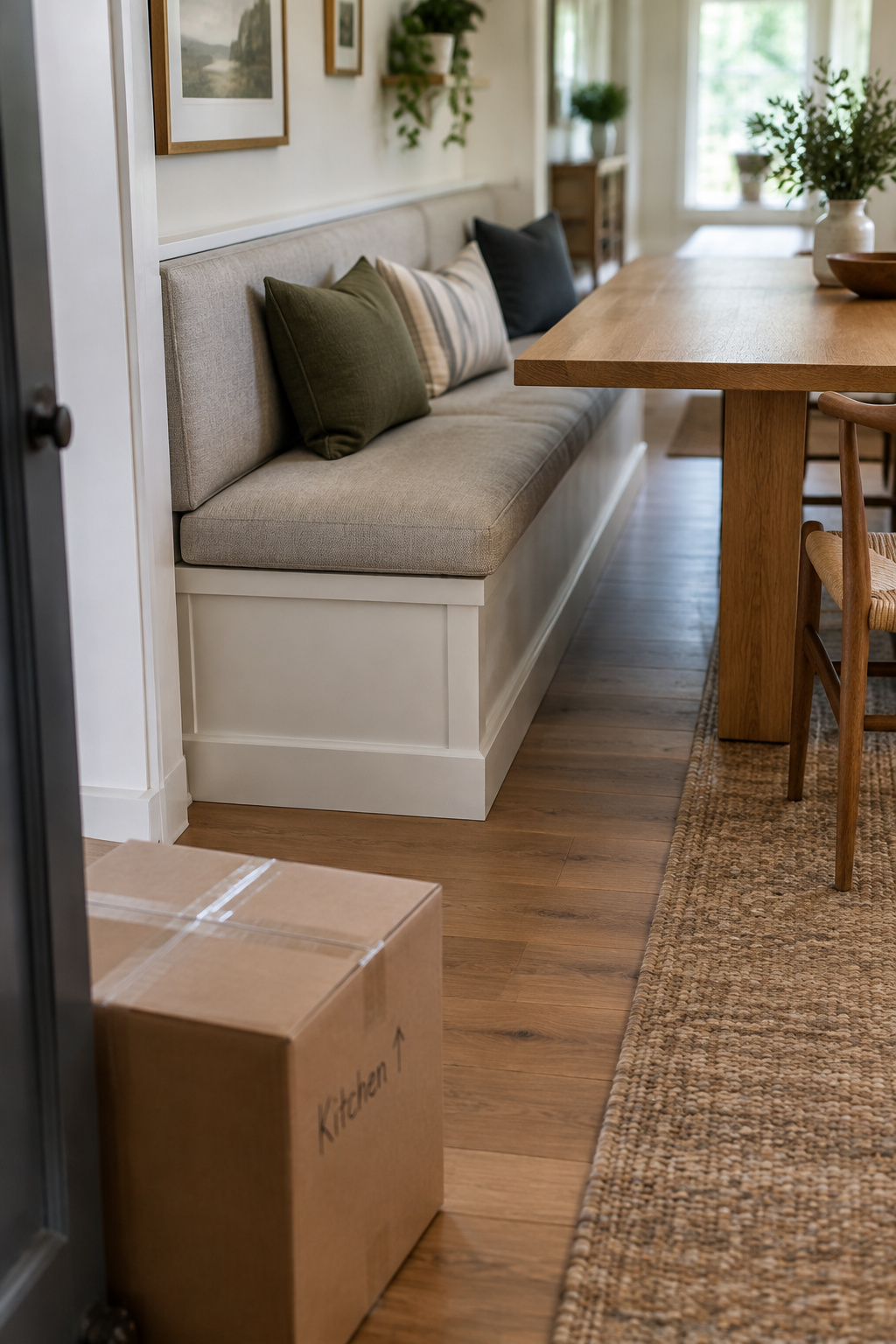
The evidence that does exist points the other way. Valerie Burmester, a broker with Marketplace Sotheby’s International Realty, reports that clients “are moving away from breakfast nooks because they are leaning toward counter dining and more formal gathering dinner places.” Jody Finglas, co-founder of NYC Fine Finishes, says homeowners have been removing theirs, some swapping the space for an island or extra storage. A built-in the next buyer doesn’t want is a demolition line item for them. The case for mobility, on the other hand, has concrete documentation: one designer chose freestanding storage benches deliberately so they could move between apartments, or be split up and repurposed later.
Which route suits you mostly comes down to how long you’ll stay. If you rent, or expect to move inside a few years, buy freestanding and stop pricing built-ins. That bench survives the lease, while a built-in is a sunk cost the day you hand back the keys. If you are staying, the corner is out of square and you want storage under the seat, a built-in earns its money on fit; don’t count on resale. If you can also run a circular saw over two weekends, the carcass route buys that fit for a fifth of the rate. Whichever you pick, make the quote name the backs, the cushions and the fabric before you set it beside any number here. The $2,000 estimate azmelt got covered none of them.
FAQ
Does built-in banquette seating add resale value to a kitchen?
No evidence found supports that. No appraiser, standards body or study addresses banquette seating and resale, and general kitchen-appraisal guidance never mentions built-in seating. Claims that it adds value come from businesses selling built-ins, with no named source. One named broker reports clients moving away from the feature.
Can I buy a freestanding bench now and have it built in later?
Yes, and it is a documented middle path: a finish carpenter can add trim and skirting to a ready-made bench so it reads as built-in, without paying for custom fabrication upfront. Expect compromises, though. Retail cabinetry shows visible gaps, and a factory base will not sit onto an uneven floor the way a scribed built-in does.
How long does a custom banquette actually take from quote to install?
Four to six weeks is typical, per one current fabricator, depending on size and complexity. A semi-custom production line quotes longer: 8 to 10 weeks to build, plus one to three weeks in transit. The DIY carcass route runs 18 to 30 hours of hands-on work, or two days reusing cabinets.