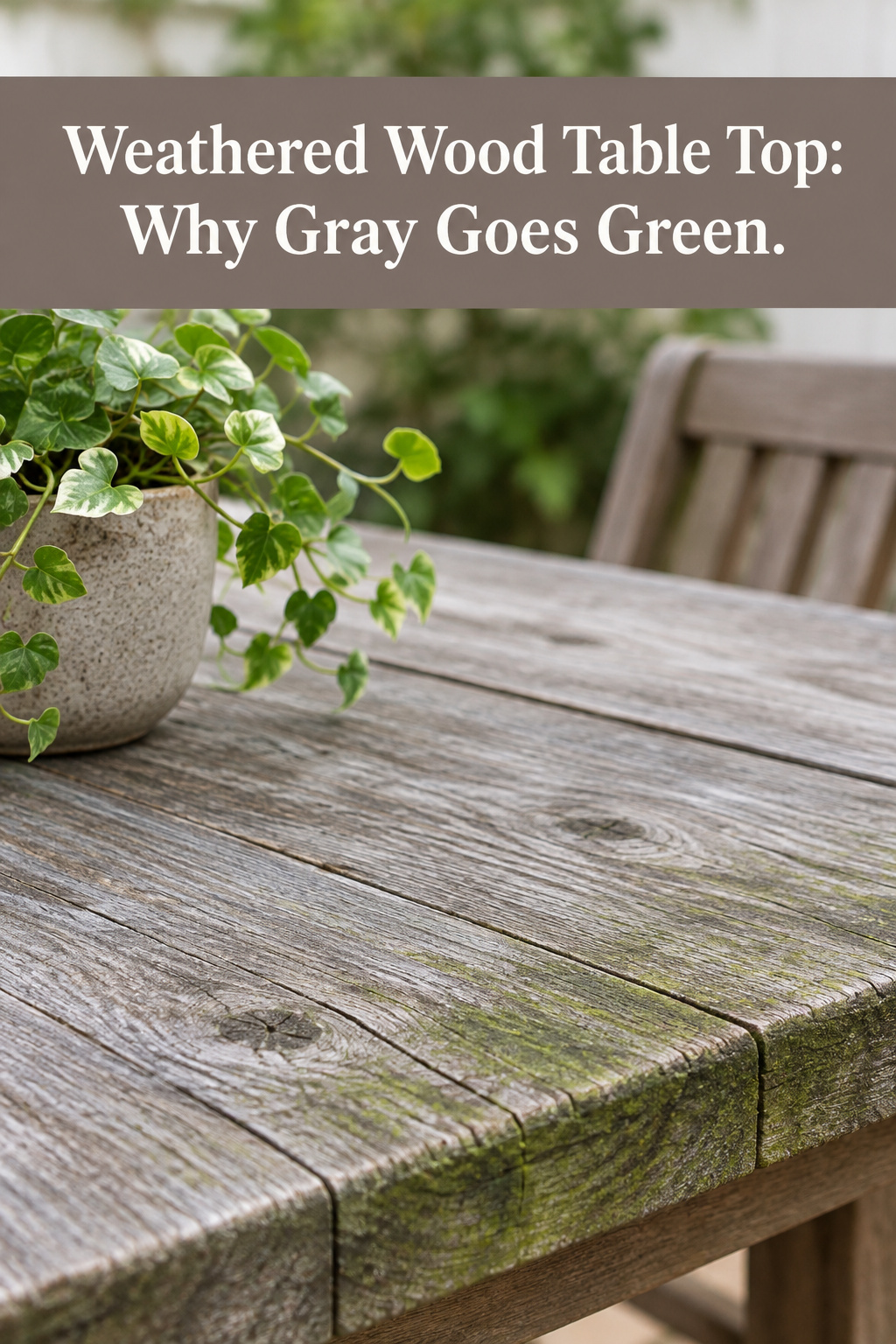
The usual mistake happens before the brush is even wet. You choose a gray from the swatch on the can, brush it over an oak table, and an hour later the top has a faint green cast the swatch never hinted at. Then you seal it with the polyurethane already on the shelf, and over the next months the gray drifts warm. A weathered wood table top is meant to look calm, pale and unhurried, the way wood looks after years of sun. Chemistry you cannot see decides whether it gets there: the wood underneath and the clear coat on top.
TL;DR
- Gray goes green on some woods with some stains. A blue-leaning gray over the yellow undertone of pine or oak mixes toward green; maple, birch and poplar hold a truer gray. Test on an offcut of your own wood first.
- Choose the method by your patience. Layered stain gives the most control, dry-brushing is fastest and forgives rough grain, and a thinned wash covers quickest but splotches most on pine.
- Seal with a water-based topcoat, and still test. Oil-based poly ambers as it cures and pulls gray warm. Water-based is the fix, though Minwax itself notes slight ambering is possible over light surfaces.
What Weathering Actually Is (and Why We Fake It Indoors)
Real weathering is a slow chemical undoing rather than simple fading. Sunlight’s ultraviolet breaks down the lignin at the wood’s surface, rain washes the fragments away, and what is left is the pale, silvery layer of cellulose we admire on old docks and barn boards.
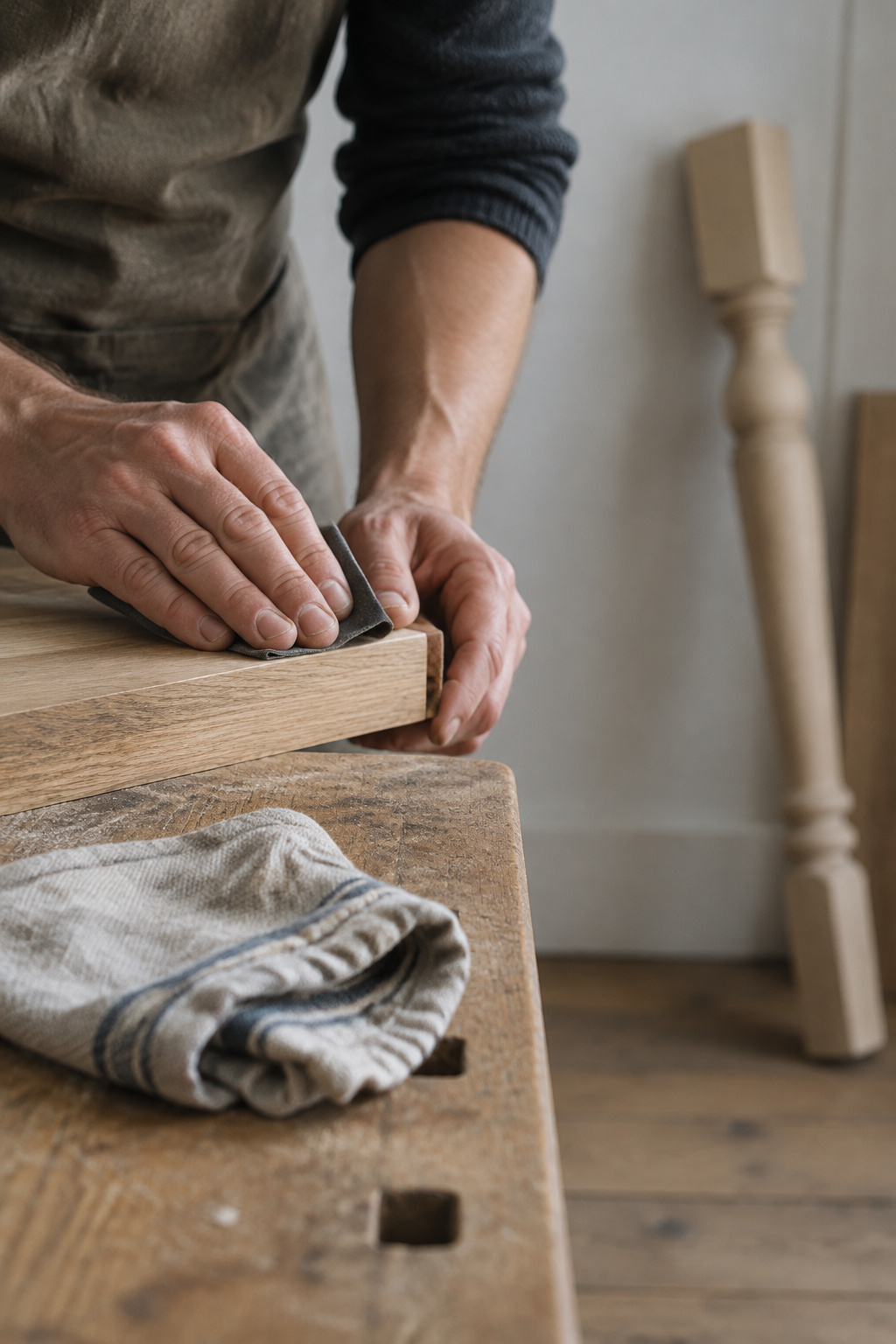
A dining table indoors meets none of this: no rain, no fungi, very little sun. The finish you apply is a picture of weathering, laid in pigment over wood whose lignin is still whole and whose own color is still very much present.
That matters more than any product choice, because the wood underneath is an active layer in the finish. Its undertone mixes with your gray like two paints on a palette.
Why fake it at all? A pale, quiet top slows a room down. It holds the bowls and the afternoon light and asks for nothing. Putting the color on the top is one option for a two-tone table, and there are more ways to split a table into two finishes than a gray top alone.
Species Decides Silver or Green
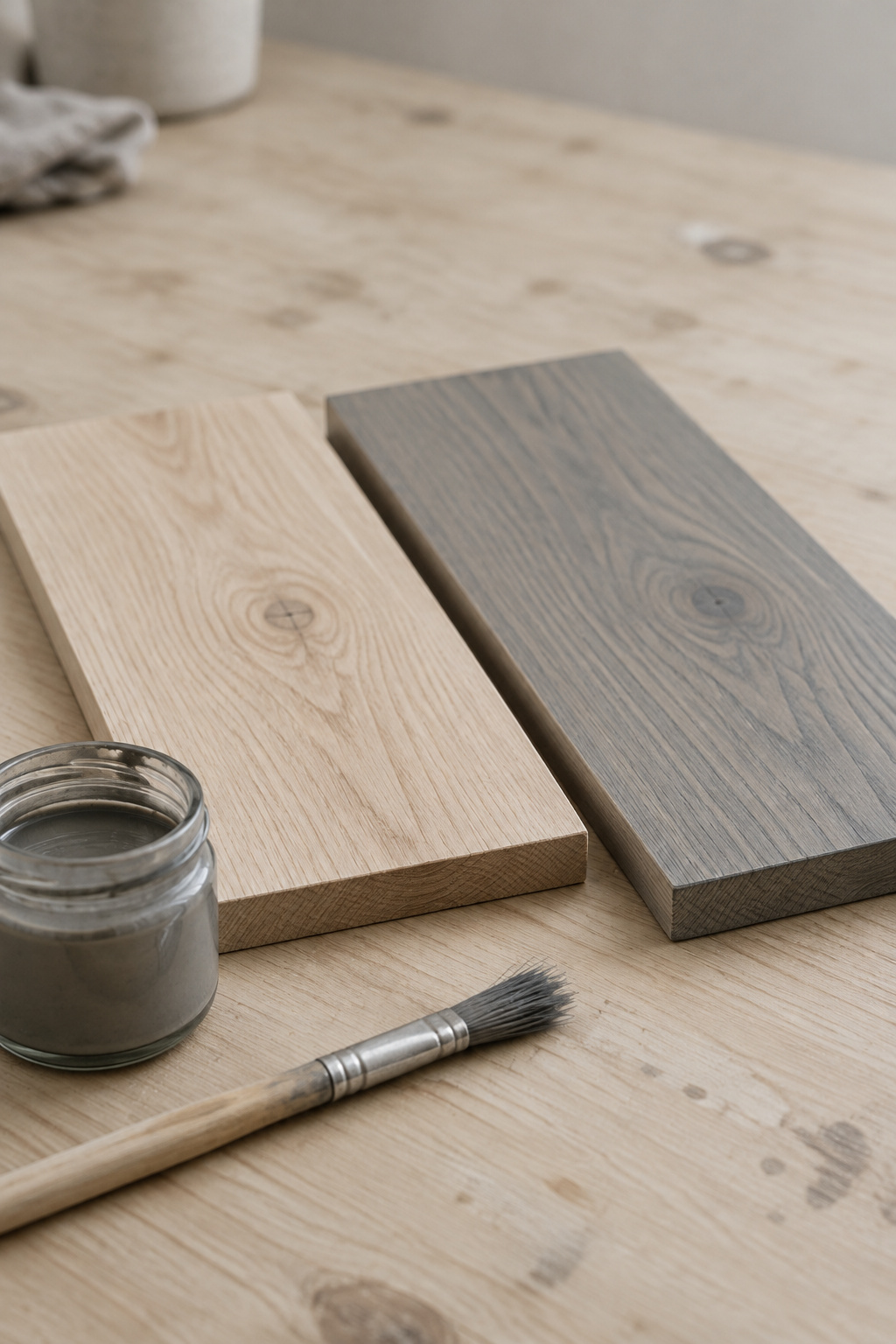
The same can of stain gives different colors on different woods, and independent stain testing shows the pattern is predictable.
| Wood | Undertone | How it takes a gray |
|---|---|---|
| Maple, birch, poplar | Pale, fairly neutral | Holds a true, even gray; results stay consistent across these three |
| Pine | Yellow | Often reads blue-tinted; soft, uneven grain absorbs unevenly and can look splotchy |
| Oak | Yellow | Least predictable; one gray went distinctly green, others went purple or blue, and one barely absorbed and streaked |
| Walnut | Dark brown and purple | Reads muddy rather than silver unless the color is removed first |
The green on oak is ordinary subtractive color mixing. A blue-leaning gray over a yellow undertone reflects both, and the eye reads blue plus yellow as green, just as it would if you mixed the paints in a cup. In one seven-species test, Varathane’s Carbon Gray gave oak that greenish cast; a warmer gray, or another wood, may not. Gray goes green on some woods with some stains, not on every table, and you cannot know from the can which yours is.
Walnut is a different problem. By one professional finisher’s account, a convincing gray on walnut means bleaching out its brown and purple first, which is slow and costly. My advice: if your top is walnut, leave it walnut.
My one recommendation is to brush your gray onto an offcut or the underside of the top, let it dry, and look at it in daylight. Ten minutes of testing saves days of sanding.
Three Ways to Lay Down the Gray
At my grandparents’ summer cottage on the Stockholm archipelago, the walls and furniture were unpainted pine, one open shelf held the crockery, and the light came from oil lamps. It is still my reference for what enough looks like. A gray top should aim for that feeling and skip the distressed prop: enough gray to calm the wood, never so much that the table looks costumed.
| Method | Control | Speed | Forgiving of uneven grain |
|---|---|---|---|
| Layered stain | Most | Slowest, several dry times | Moderate |
| Dry-brushing | Least for an even tone | Fast | Most |
| Wash | Limited over uneven absorption | Fastest across a full top | Least, especially on pine |
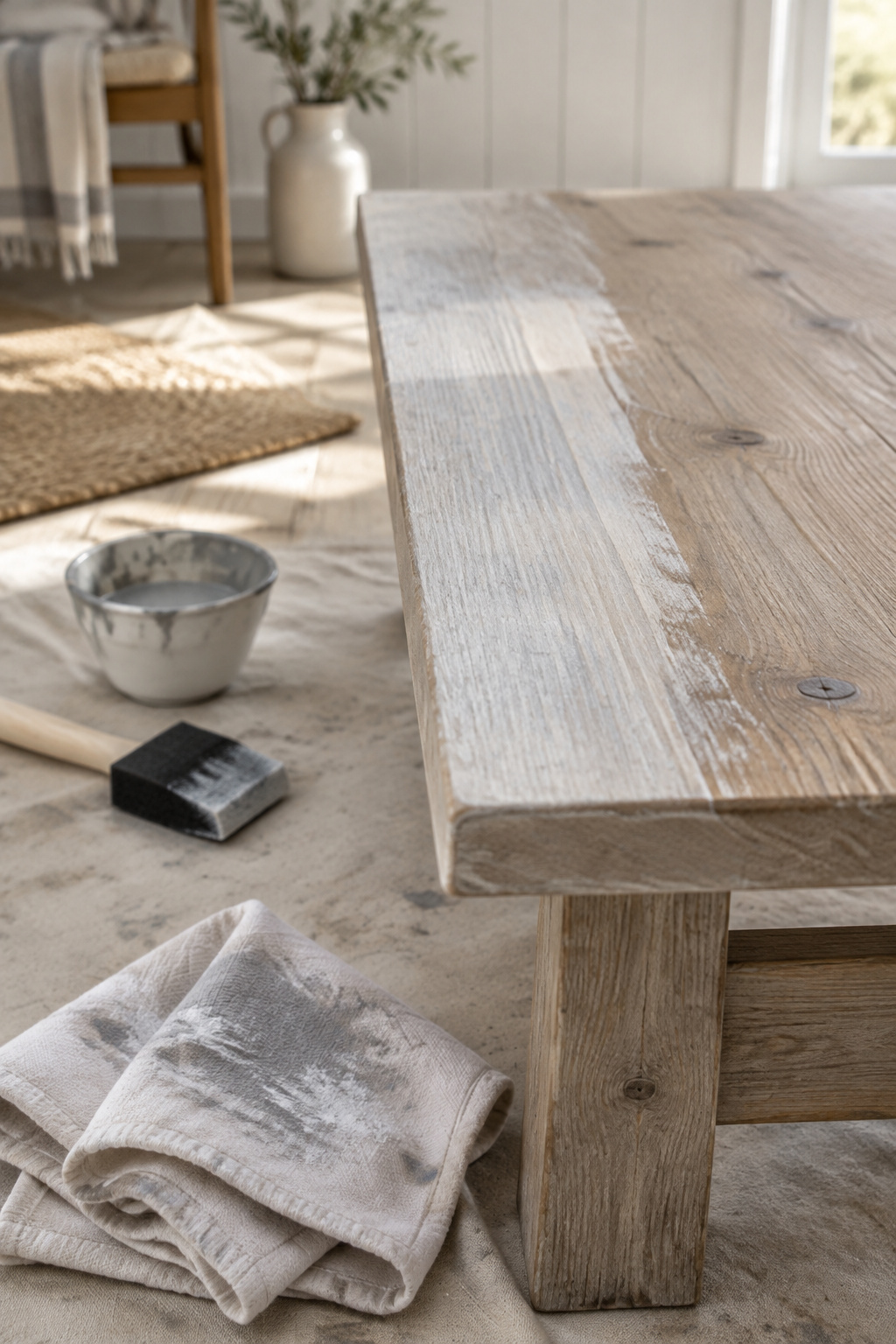
Most people try the wash first: paint or stain thinned heavily with water and wiped back in one pass. On pine it is the likeliest to go blotchy.
Layered Stain: The Most Controllable Route
I would choose this route for a first table. The best-documented version starts with a dark wood stain, brushed on with the grain and wiped off after a few minutes. When that is dry, a white latex paint thinned roughly half and half with water goes over it and gets wiped back within about 30 seconds. The control lives in that short window, because pass by pass you decide how much pale sits in the open grain and how much of the dark shows through. Leave the paint longer and it builds up where passes overlap.
A heavier, product-based version lays down two or three coats of bright white first, then wipes an oil-based gray stain-and-finish over it in long strokes, building to as many as four coats with about eight hours between them. It is slow, and it gives the deepest weathered look.
Dry-Brushing: Fast, Textural, Forgiving of Grain
Load a stiff brush lightly, blot almost all of the paint off on a rag, then work in short, fast strokes with little pressure. As Bob Vila’s guidance puts it, the technique carries just enough color to the surface. The gray catches on the raised grain and skips the hollows, so dry-brushing flatters a rough or heavily grained top that a wash would punish. What you give up is evenness: each pass carries a slightly different load, so a flat, uniform gray is hard to reach.
The Clear Coat Problem: Why Amber Ruins Gray
Here the habit of a lifetime works against you. Oil-based polyurethane turns slightly amber as a normal property of the finish, and the amber deepens as it cures and with each added coat. Over a gray built precisely to look cool and sun-bleached, that warmth slowly undoes the work.
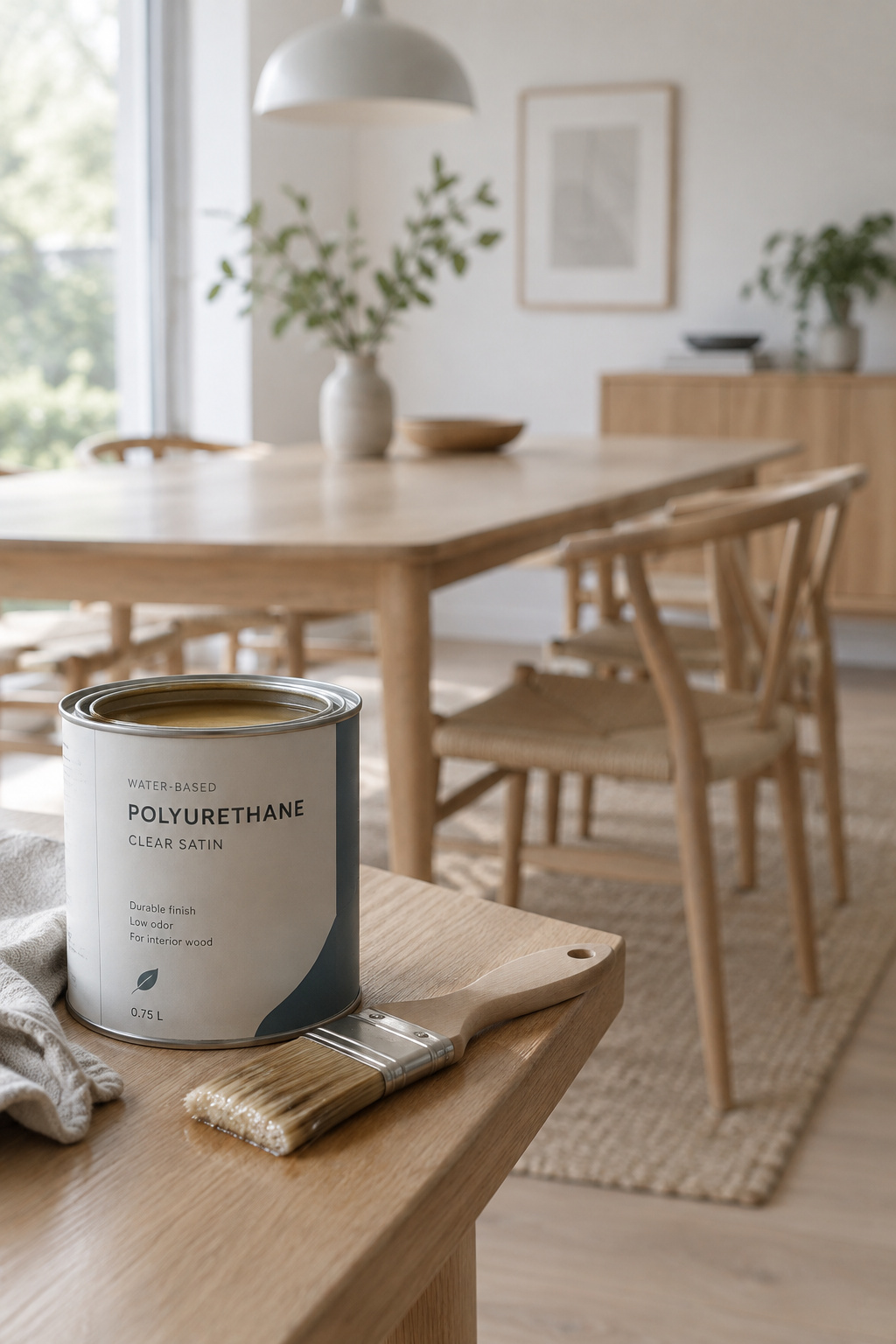
The fix is a water-based topcoat. Minwax sells its water-based Helmsman as a non-ambering, crystal-clear finish, and it recommends its water-based floor finish specifically over light and gray stains such as its own Weathered Oak and Classic Gray, because it dries clear and does not amber over time.
There is a caveat. Minwax’s own technical data sheet for its Water Based Polyurethane warns that slight ambering may still appear over light-colored surfaces, and advises a spot test. Water-based is the right choice, though it comes with no guarantee. Brush a coat onto your test board beside an unsealed patch, let it dry, and compare the two in daylight before you commit the whole top.
Durability and the wider choice of topcoats for a dining surface belong to the guide on the best finish for a kitchen table.
Choosing a Base Color for a Gray Top
Most gray tops sit on a painted base, and the base either lets the gray stay quiet or argues with it.
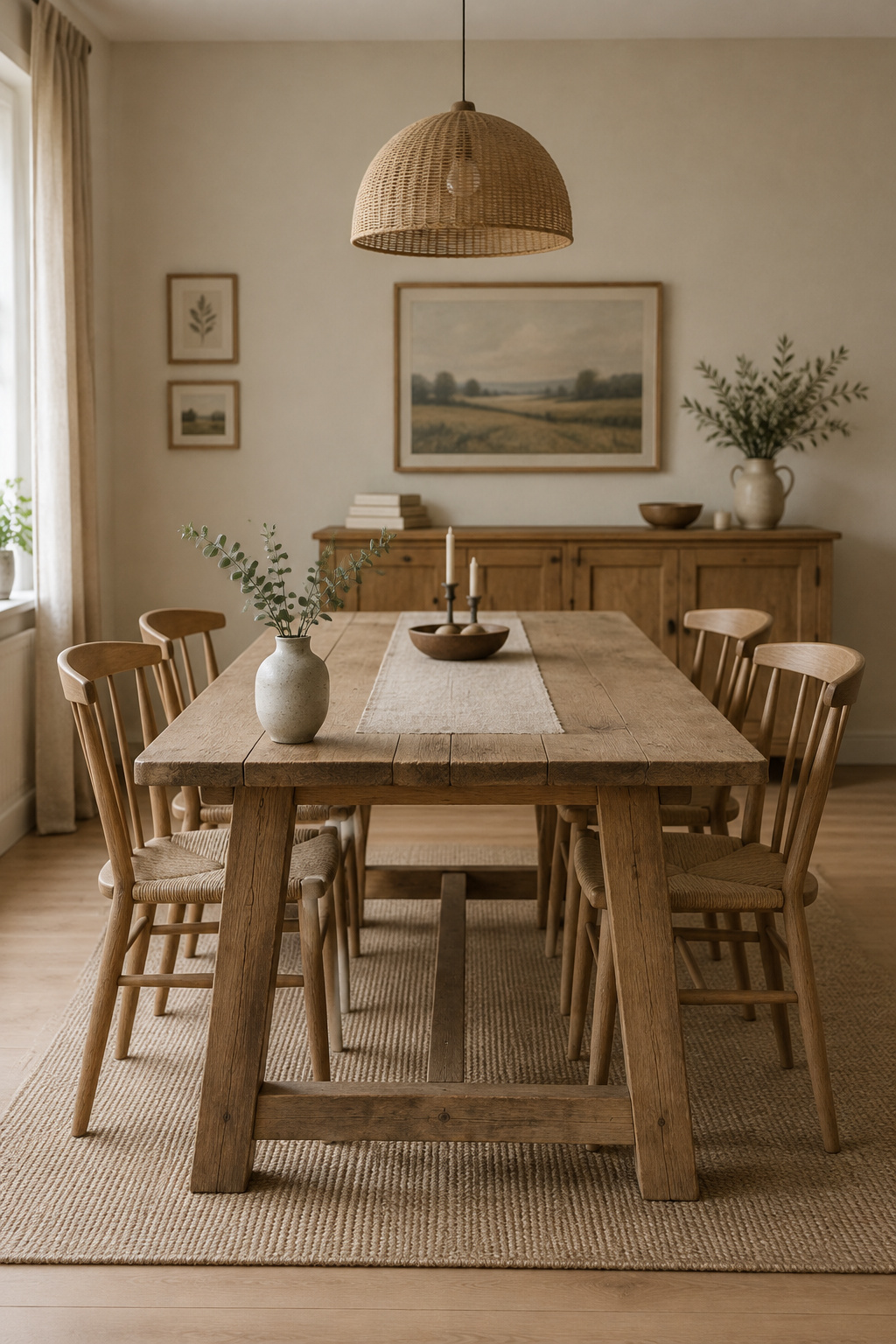
Documented gray-wash projects most often pair the top with a soft, muted base: off-white, cream or a warm soft gray. The base recedes and the top’s grain and tone stay the focus. A saturated base such as deep navy or black makes a bolder two-tone piece, which is a legitimate choice but a different table from the calm one this finish is usually chosen for.
A cool gray top against a creamy, yellow-leaning white can look faintly mismatched even when each half is fine alone, so hold the two samples side by side before you buy. The undertone reasoning behind this is in the separate guide to choosing the base color that suits a gray top.
Putting a Weathered Wood Table Top on a Painted Base
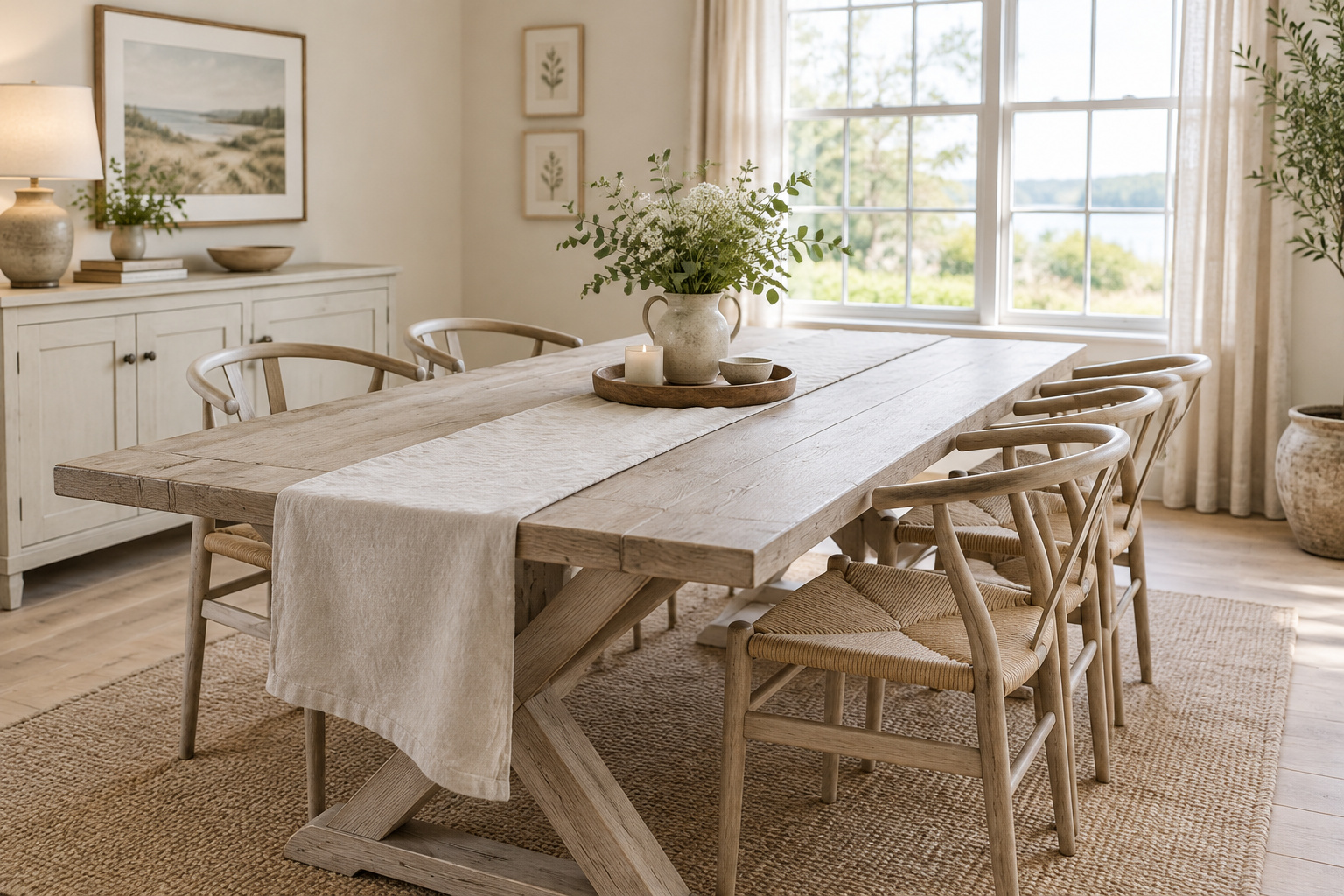
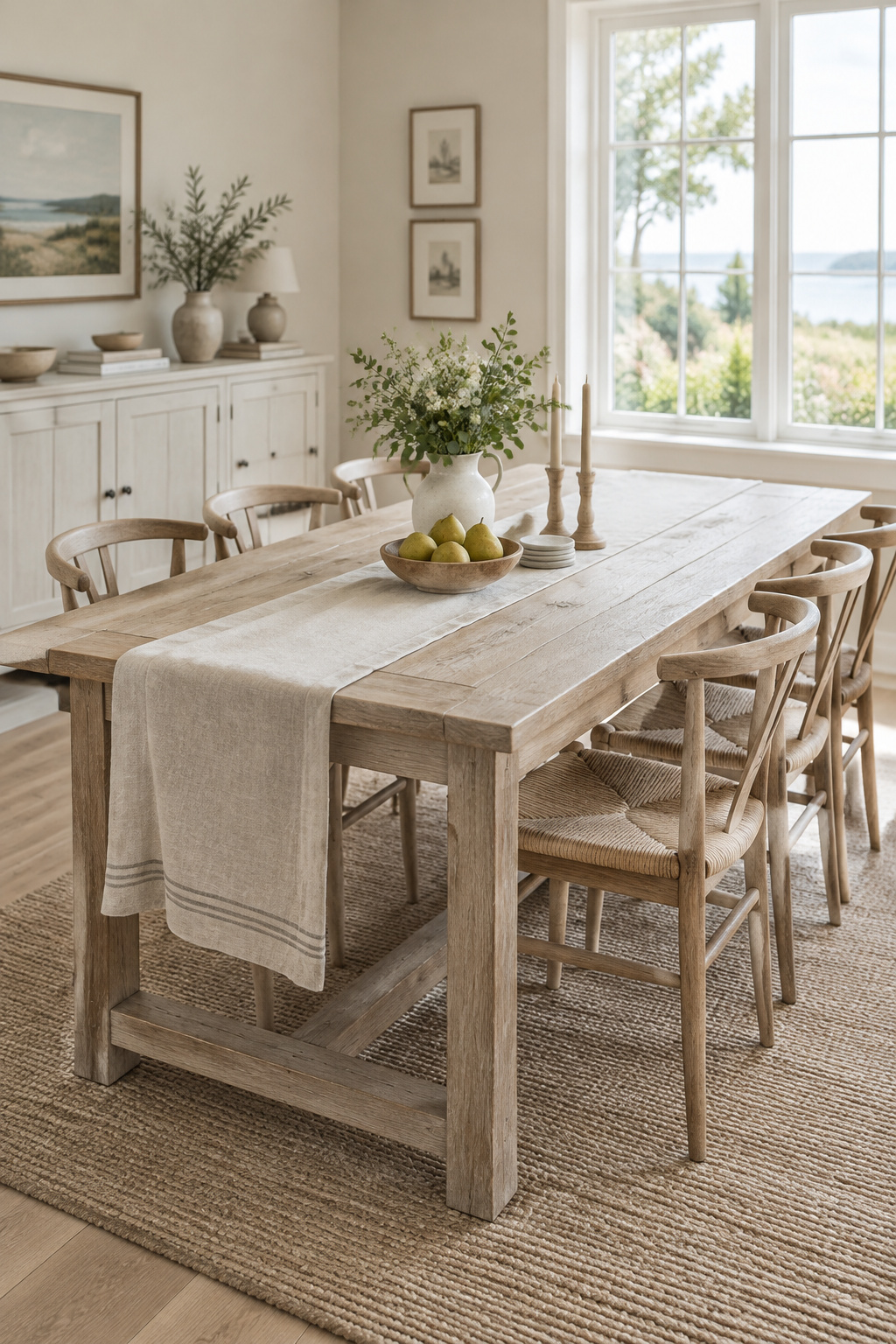
Picture the oak table from the beginning, done the other way. You tested the gray on the underside, saw the green before it reached the top, and chose a warmer gray. The white was wiped back in thirty seconds, and the water-based coat had been tried on a board first. Now the table stands on a cream base, pale and quiet, the grain showing through like wood that has spent summers by the water.
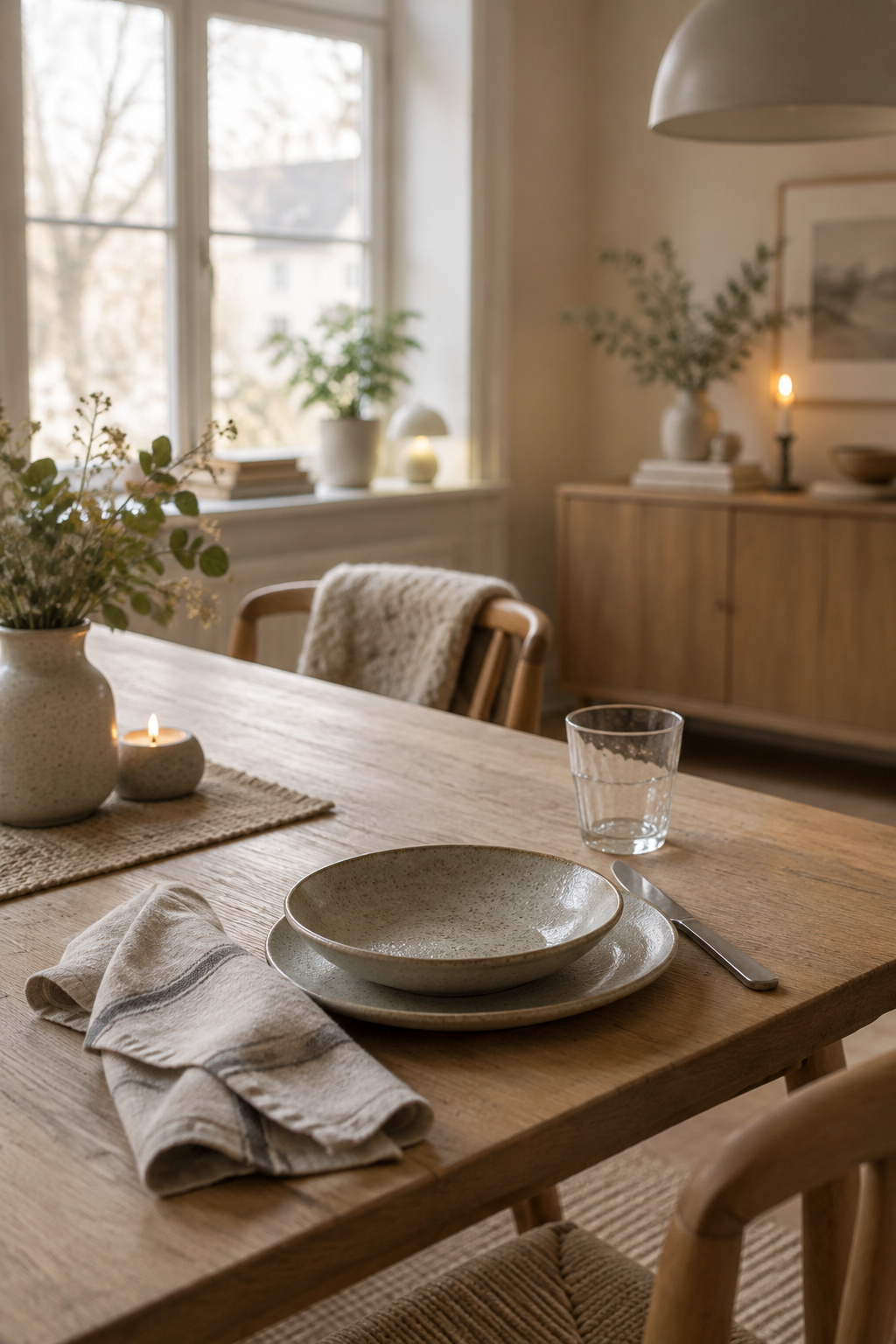
The base is a job of its own, with its own prep, paint and waiting, and the painted-base method a weathered top sits on walks through it.
As for how long the finish lasts, no published source gives a refresh interval for an indoor gray-washed top. I can offer practice instead of a figure: wear gathers where hands and plates land, at the center and along the edges. Keep your test board, compare the top against it now and then, and when those areas fade, re-wash them lightly instead of redoing the whole surface.
That calm, sun-touched top is within reach with the right gray for your wood, a method matched to your patience, and a clear coat that keeps the gray gray. The oak went green because the gray was never tested on the wood first.
FAQ
Does a weathered gray top work with a natural wood base, or does it need paint?
It works on either, though a painted base is the more common and more controlled pairing: a soft painted neutral lets the gray top stay the quiet element. A natural wood base is a real option if you choose the two wood tones deliberately, so their undertones do not clash side by side.
How long does a gray wash last before it needs refreshing?
No published source gives a refresh interval for an indoor gray-washed tabletop. The published intervals cover outdoor finishes, which wear by a different mechanism. In practice, wear shows first at the center and edges where hands and place settings land, and a light re-wash of those areas is more realistic than redoing the whole top.
Can you weather a table top that’s already been stained a warm color?
Not directly. A warm stain has already soaked into the fibers, so a gray wash over it mixes with that color instead of replacing it. Before the gray will read as intended, sand the top back to bare wood, or chemically strip it in stubborn cases. Walnut resists gray for the same reason.