Six hundred to eight hundred dollars. Below that line, a table sold as “solid wood” is almost always veneer over engineered wood, particleboard, or pine. Most buyers settle the solid wood vs veneer dining table question with one glance under a drawer and a read of the listing, and both can be wrong at once. The tag is marketing, and the glance misses printed laminate, which isn’t wood at all. To know what you’re buying, run a short stack of checks together and sanity-check the price first.
TL;DR
- No single check settles it. Compare grain across two panels of the same piece, check the edge banding and sheen, then flip the table and inspect the underside. Weight comes last. The tap test only supplements the rest.
- Repeating grain isn’t automatically fake. Real veneer is often book-matched or slip-matched, so the grain mirrors on purpose. The laminate tell is a pixel-identical knot in the same spot on every panel.
- Price has a floor. Genuine hardwood with decent joinery realistically starts around $1,000 to $2,500, laminate lives under roughly $300, and real veneer and some solid species overlap from about $500 to $1,200.
The Check Most Buyers Get Wrong
Buyers tend to assume that if the listing says solid wood, or the drawer edge looks like wood, the table is solid wood. Neither signal holds up.
Start with the words. “Solid oak” implies solid wood throughout, while “oak effect,” “wood finish” and “engineered wood” mean the surface only imitates wood. None of these terms is a regulated guarantee. The trade doesn’t treat this as a two-way choice either. ANSI/HPVA HP-1, the American National Standard for hardwood and decorative plywood, sorts panels by core: veneer core, lumber core, particleboard core, MDF core, hardboard core and combination core. A top can be genuine walnut veneer over a solid lumber core and still not be “solid wood” in the sense a shopper means.
The One-Sentence Drawer Check (and Why It’s Not Enough)
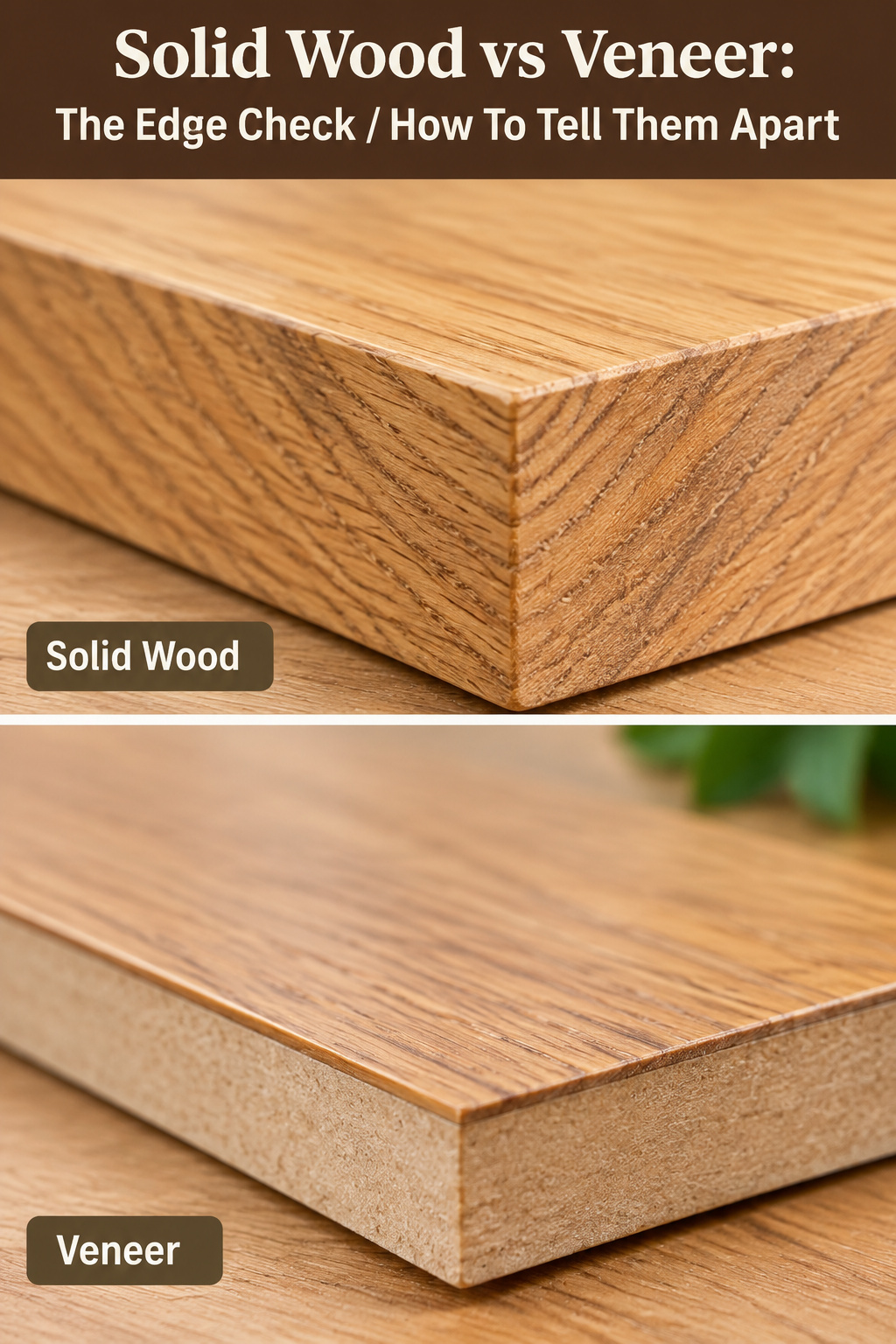
Look at a drawer edge or the end of the top. Continuous end grain matching the face says solid; a thin face layer over a different core says veneer. Most people know this check, and it has a blind spot. Printed laminate can wear a convincing edge band, and one glance never compares one panel with another. RealCraft, Furniture.co.uk and Nathan Home all reach the same advice: cross-check grain, edges, underside and weight together.
Printed Laminate vs Real Veneer: The Tells That Actually Work
What’s printed laminate, exactly? A photograph of wood on paper or foil, glued over MDF or particleboard. Real veneer is actual wood: sliced thin from a log, kept in the order it came off, and laid onto a core by someone making choices.

Grain Repeat: The Giveaway Laminate Can’t Hide
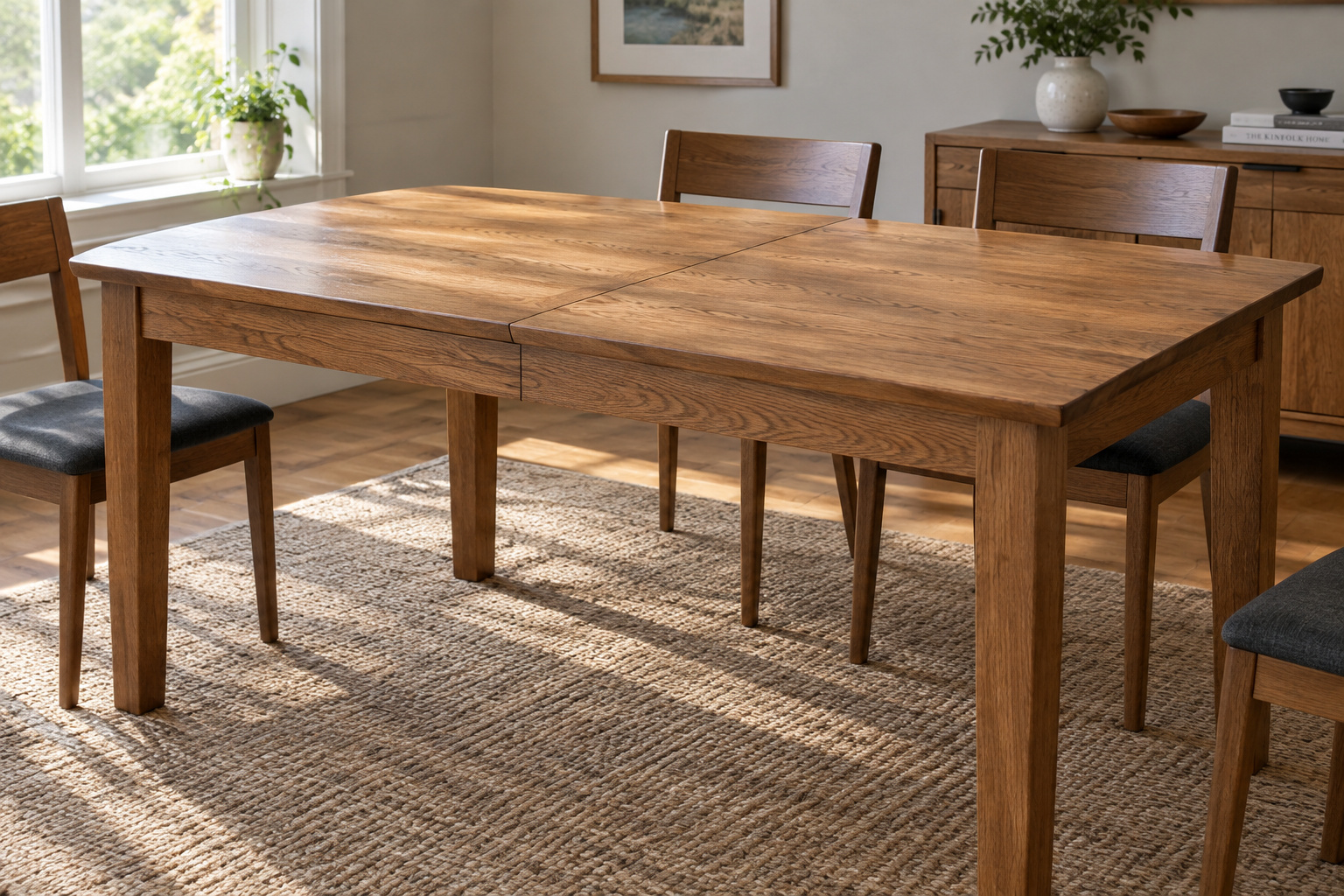
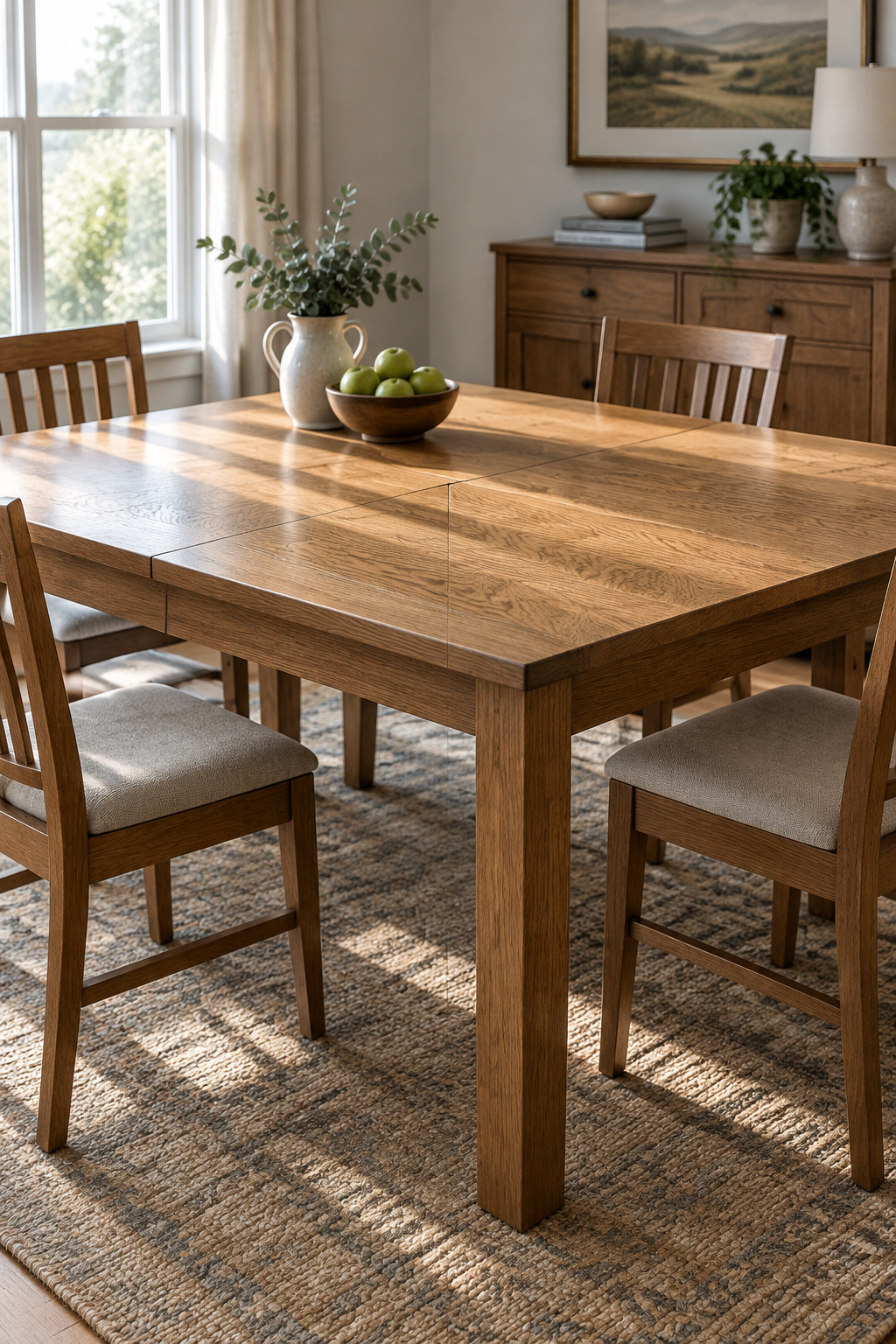
Most buying guides say repeating grain means fake. On its own, it doesn’t. Book-matching opens two consecutive veneer leaves like a book, so the grain mirrors. Slip-matching lays leaves side by side in sequence, so the figure recurs. Timothy Cole, writing in Fine Woodworking, describes both as standard layup methods. A mirrored “cathedral” pattern on a real veneer top is the craft working as intended.
The laminate tell is narrower and more reliable: the same knot, in the same position, on every panel. Put two drawer fronts or two leaves side by side. Real veneer varies from leaf to leaf, with the odd mineral streak or small knot. A printed surface repeats the photograph exactly and looks suspiciously flawless. Perfect uniformity flags laminate, not premium wood.
Edge Banding and Sheen
In plywood construction, “banding” is a defined term: a strip of matching solid wood or veneer applied around a panel’s edge. A real piece shows either true end grain or a band that matches the face species and grain. Laminate edges usually carry a printed PVC or paper band that looks lower-resolution or slightly misaligned against the face. Where it stops at a corner, you’ll often see gray or tan compressed particles underneath.
Then tilt your head. Real wood and real veneer take oil, wax or a catalyzed finish into the surface, so sheen and grain depth shift as your angle changes. Laminate sits under a plastic-feeling topcoat and looks flat and glassy from every angle.
If you own the piece or the seller agrees, sand a hidden spot with 100-grit paper. Tan or brown dust matching the surface means wood or genuine veneer. White or gray powder means MDF or particleboard, and it shows up almost immediately. I trust the color of the dust on the paper more than any tag. A knuckle tap is the last extra: a short, warm ring suggests wood or a wood-based core, and a dull thud suggests MDF or particleboard. That test comes from a single source, so use it as a tiebreaker and never as the verdict.
Underside and Weight: What the Rest of the Table Tells You
Flip it. Nobody bothers making an underside pretty, so it shows you the core outright. At any cut or unfinished edge, compressed gray chips mean particleboard, stacked light and dark layers mean a plywood core, and continuous end grain matching the top means solid lumber.
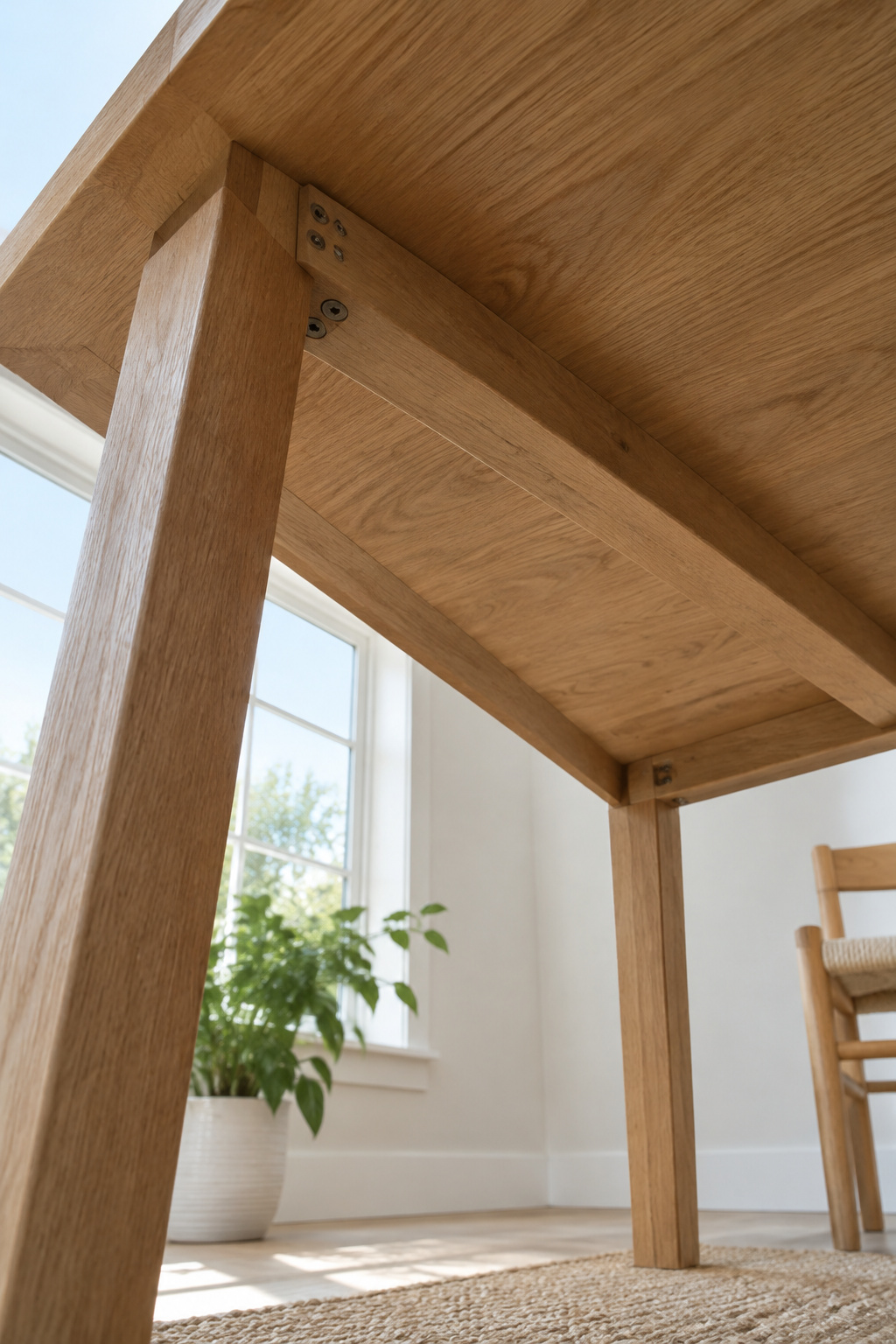
Then pull a drawer, if there is one. Solid hardwood sides (maple or birch, about 5/8 inch thick) with dovetailed corners and a plywood bottom are the trade’s named mark of quality case work. Sides of particleboard, MDF or PVC held with staples mark the low end.
Weight comes last, on purpose. Solid wood is usually heavier than the same piece in veneer or laminate, but some solid species are naturally light (Western red cedar is the usual example) and a dense engineered core can feel surprisingly heavy. I can’t give you a number for how much heavier solid should feel, because no source I trust offers one. Lift a corner to back up what the underside told you, not to override it.
Skill rating for the whole inspection: first build. All you need is a flashlight, a scrap of 100-grit, and the nerve to ask a seller to let you look underneath.
What Each Construction Lets You Do Later
Each construction closes different doors later, which is why identification matters.
| Construction | Sand and refinish | Paint or two-tone | The catch |
|---|---|---|---|
| Solid wood | Yes, repeatedly over its life | Yes | Full thickness is the species itself |
| Real wood veneer | Limited, depends on the veneer layer | Yes | Every sanding spends veneer you can’t get back |
| Printed laminate or foil | No, there’s no grain underneath | Sometimes, with a bonding primer | Can’t give you a wood-grain half |
Solid wood is the forgiving one. Most factory-made pieces can be refinished without real loss of value, though a genuine antique usually earns its original finish instead. Real veneer is a normal, workable top, but it limits how much sanding it can take. If that’s what you’ve got, here’s what a veneer top can still take on.
The mistake I see most: someone buys a cheap printed table planning to sand it back and stain it. The first pass goes through the photo into particleboard, and more sanding won’t fix that. Recovery is to stop, apply a bonding primer and paint the whole thing. You end up with a painted table, not a wood top, and for a two-tone look the wood half is the point.
Price Bands: What a Solid Wood vs Veneer Dining Table Should Cost
What should you expect to pay? Two independent price breakdowns agree at both ends of the range.

| Price band | Typical construction | What to expect |
|---|---|---|
| Under about $300 | MDF or particleboard with printed laminate | Effectively disposable |
| Under about $600 to $800, sold as “solid wood” | Almost always veneer over engineered wood, particleboard, or pine | Don’t trust the label here |
| About $500 to $1,200 | Solid softer or mid-range species (rubberwood, mango, kiln-dried oak) or walnut veneer over a solid wood core | Price stops telling you the construction; check the tells |
| About $1,000 to $2,500 and up | Domestic hardwood (walnut, white oak, cherry) with dovetail or mortise-and-tenon joinery | The realistic floor for real solid hardwood |
That middle row is the honest mess. The same breakdown lists walnut veneer over a solid core right beside solid rubberwood, mango and kiln-dried oak. A well-built veneer table can cost as much as an entry-level solid one without being a worse table.
Where the Price Jumps and Why
Part of the jump is materials. Cabinet-grade birch plywood, a common substrate under real veneer, runs $55 to $80 a 4×8 sheet, against $30 to $45 for CDX pine construction plywood. Hand joinery comes next, dovetails and mortise-and-tenon, and that is labor, which shows up at the top of the market. If you’re shopping with what a two-tone finish needs from the table underneath in mind, the real question is whether the top has to be wood you can stain.
Species That Hold Up to a Daily Table
Pick by how hard your table gets used, not by the photo.
Hardness and Everyday Wear
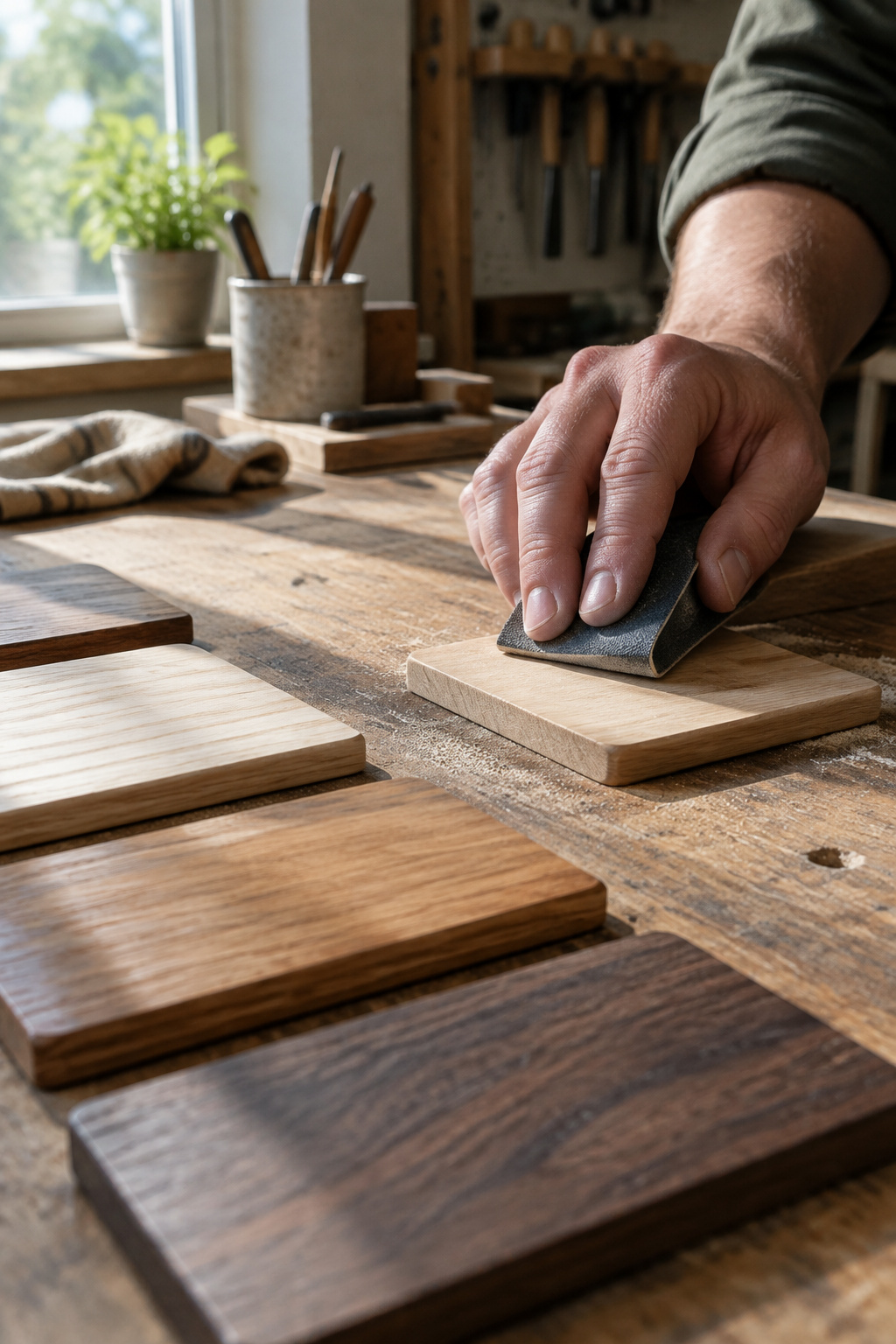
Janka hardness measures dent resistance, and only dent resistance. It says nothing about water, heat or how a finish holds up. Two independent trade tables (Osborne Wood Products and Butcher Block Co.) agree exactly on walnut at 1,010 lbf and white oak at 1,360, which gives us the ladder:
| Species | Janka hardness (lbf) | Best for |
|---|---|---|
| Yellow pine | about 870 | Farmhouse character; dents and patinas fast |
| American cherry | 950 | Lighter use, color that deepens with age |
| Black walnut | 1,010 | Premium look, moderate daily durability |
| Birch | 1,260 | Budget-friendly hardwood with decent dent resistance |
| White oak | 1,360 | The durable default for families with heavy daily use |
| Hard maple | 1,450 | High dent resistance; takes stain less evenly |
| Hickory | 1,820 | Hardest common option |
The trade-off: harder, tighter-grained white oak, hard maple and hickory resist dents, but they take stain less readily and need a clear coat suited to a less porous surface. Softer pine, cherry and walnut dent faster and usually stain more evenly. The species decides how hard the clear coat has to work, so settle the wood before you shop for the finish.
If the table takes breakfast with kids every day, keep one number: by my arithmetic, white oak at 1,360 lbf over yellow pine at about 870 is roughly 56% more dent resistance, assuming dents are what you’re guarding against.
FAQ
Is veneer furniture bad quality?
No, not inherently. Real wood veneer over a plywood or solid lumber core is a standard construction, one the American national standard for decorative plywood names explicitly, and it can be as durable as some solid pieces. Printed laminate over particleboard gives veneer its bad reputation. It can’t be refinished and sits in the lowest price tier.
Can you sand and refinish a veneer dining table?
Sometimes, depending entirely on how thick the veneer layer is. Sand too hard and you risk going straight through to the core, so work gently and check often. Printed laminate is different. It can’t be sanded and refinished at all, because under the printed layer there’s no wood grain, only particleboard or MDF.
How much heavier is a solid wood table than a veneer one?
No reliable single figure exists. Solid wood is usually heavier than an equivalent veneer or laminate table, but species, size and core material vary too much to state one number. Some solid woods are naturally light, and dense engineered cores feel heavy. Use weight to support other checks, never as the only one.