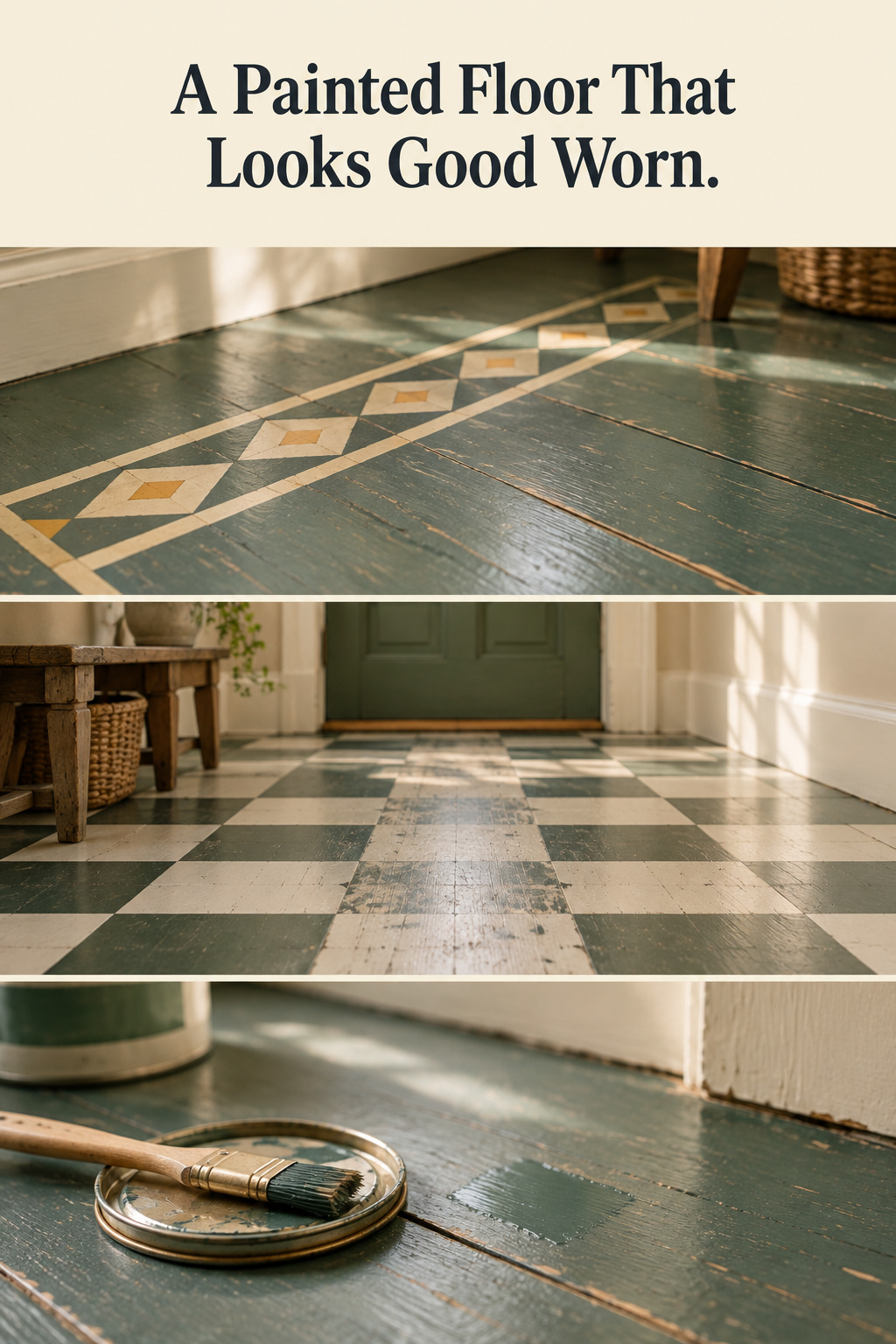
You will often read that floor paint is fully cured in seven days. The maker’s data sheet says something narrower, and a painted entryway floor repays following that schedule to the hour. Painted floors were common in American houses through the nineteenth century, and surviving stenciled floors are rare, because the floors were walked away. I keep a worn painted board on my bench, and the paint is gone exactly where feet landed. The path to the door will wear, and that wear is the life of the finish. What you control is how the floor looks half worn and how tough the topcoat gets. Floor paint is the one change a landlord will notice for good, since it comes off only by stripping or sanding, so if you rent, get a yes before the first coat.
TL;DR
- Floor enamel has a schedule: on Sherwin-Williams Porch & Floor Enamel, touch dry in 1 hour, recoat at 4 hours, light foot traffic at 24 hours, and furniture and heavy traffic at 7 days (at 77°F and 50% humidity). Seven days is the traffic threshold, not full cure.
- Choose a pattern for how it looks with a pale lane worn to the door: a border along the walls stays intact, while a small stencil in the walking lane is lost first.
- Touch up only the path once a year from the original labeled can, and test a concrete slab first with a 2 ft by 2 ft sheet of plastic taped down for 48 hours.
Why a Painted Entryway Floor Was Always Meant to Wear
In the eighteenth century the painted floor in an American house was a floorcloth: canvas covered in several coats of paint, laid in passages, entries and stairways and replaced when it wore out. A probate-inventory study of Chesapeake homes from 1760 to 1800 found floorcloths in about half of them, averaging two each. Carlyle House in Alexandria still runs its floorcloths to the end; it replaced a well-worn, 30-year-old one in John Carlyle’s study with a new cloth from a 1739 pattern book.
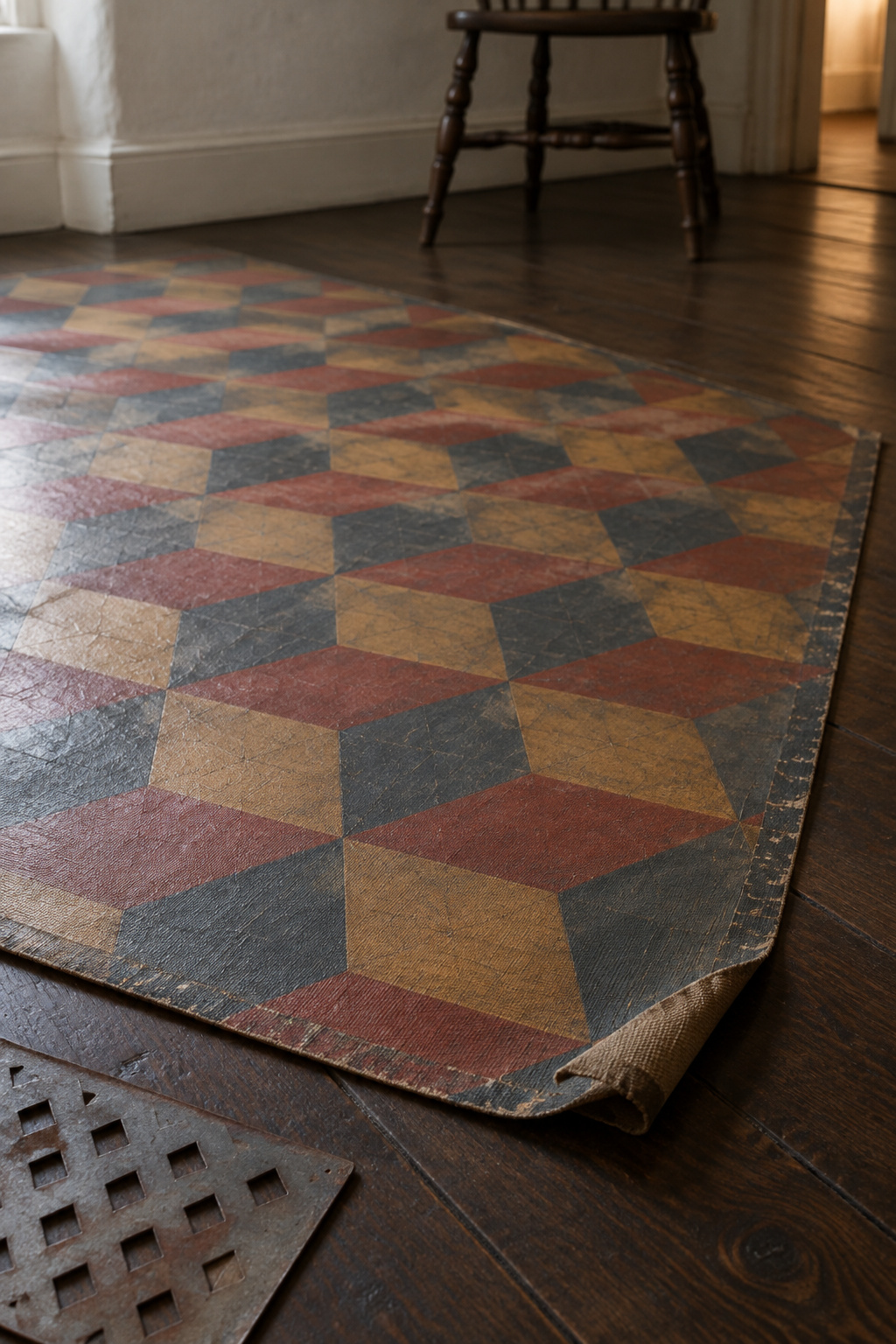
Paint on the boards themselves came later. Until the nineteenth century most wooden floors were left bare, swept and scrubbed, and painted wood floors became common as that century went on, usually stenciled to imitate carpet or marble, and repainted when they wore. My partner teaches high-school history and argues with me about dates, so I hold this one firmly: floorcloths in the eighteenth century, painted floors in the nineteenth.
Neither was built to stay perfect, and Historic New England’s advice for an old painted floor is still to repaint it, not strip it. Join that tradition and you can stop chasing a coat that never scuffs. Real wear beats applied distressing every time; sanding through new paint to make it look old is a costume, and the floor will make its own record soon enough.
Wood and Concrete: The Entry Floors That Take Paint Well
The surface decides how paint wears before any pattern does. Choosing the enamel and primer is covered in the painted stairs guide.
Bare and previously finished wood
Bare wood takes enamel well; old finishes need more care. Scrape and sand any peeling or checked paint back to a sound surface, and sand glossy paint or a factory sealer dull so the new coat can bite. Wax has to come off completely. Sherwin-Williams warns that anything short of total removal may shorten the finish’s service life, a fair trade on an old floor you would rather not strip. In a house built before 1978, treat old floor paint as lead paint until it is tested, and sand only with a fitted respirator, containment and a proper cleanup.
Painted concrete entry floors
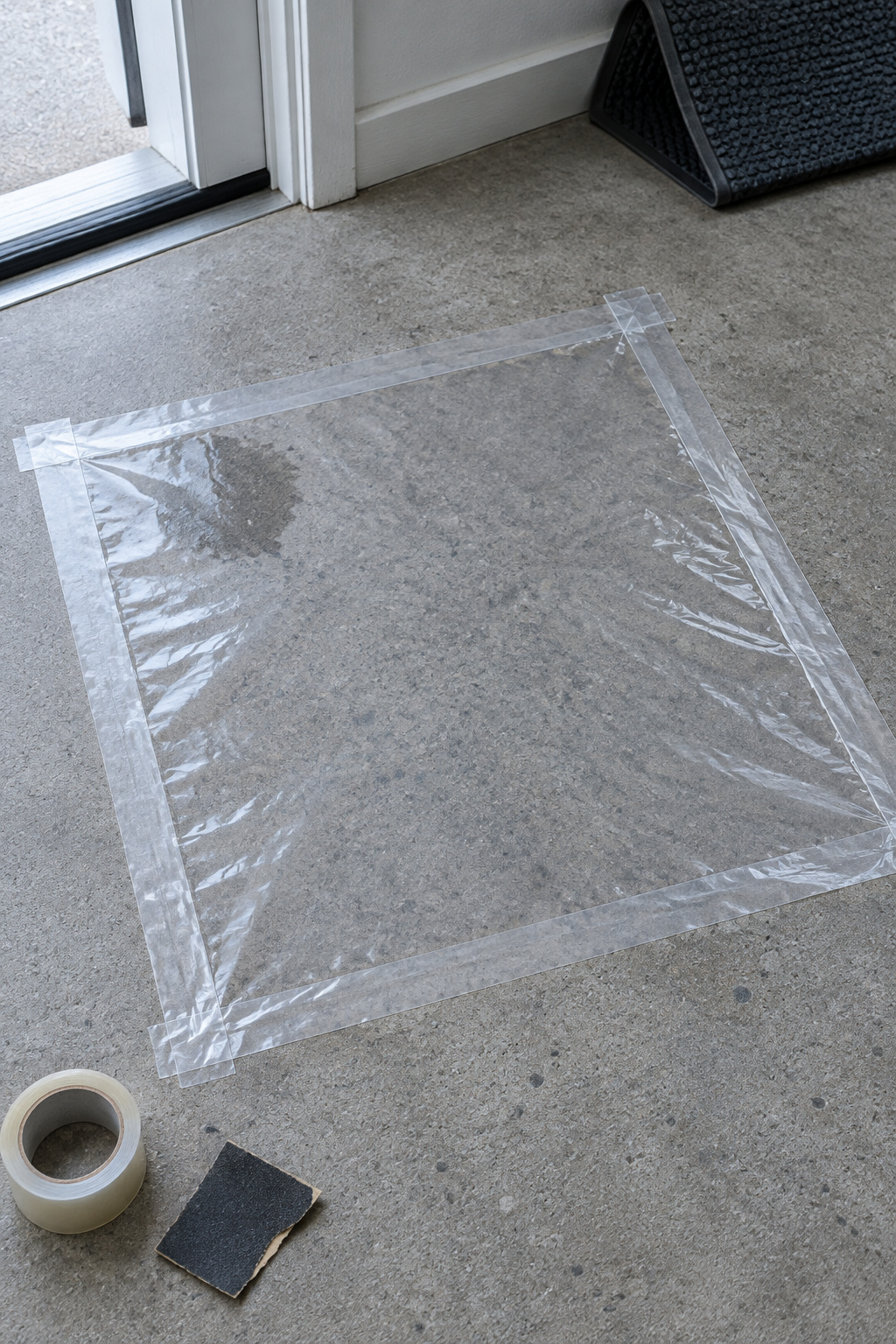
Concrete wants a moisture test first. Tape a 2 ft by 2 ft sheet of plastic over bare concrete, seal every edge, and look after 48 hours. Damp, darkening or condensation on the slab or the underside of the plastic means you find and fix the water before you paint, or the enamel can peel in sheets. A new slab needs at least 28 days of cure. Run your hand over it: it should feel like 120-grit sandpaper. If it is smoother than that, etch it, but never etch a slab that already carries paint.
Patterns That Still Look Right Half Worn at the Door
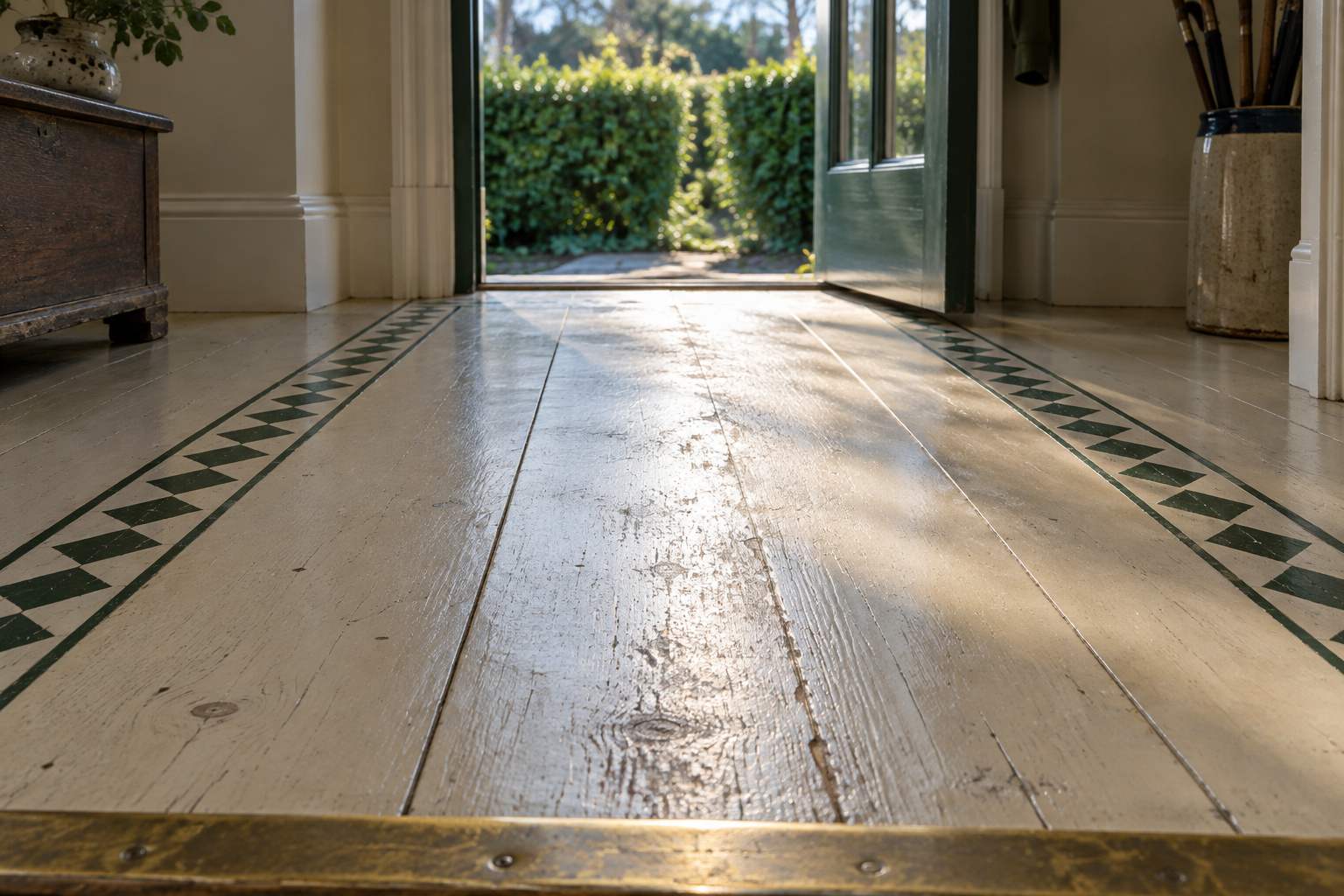
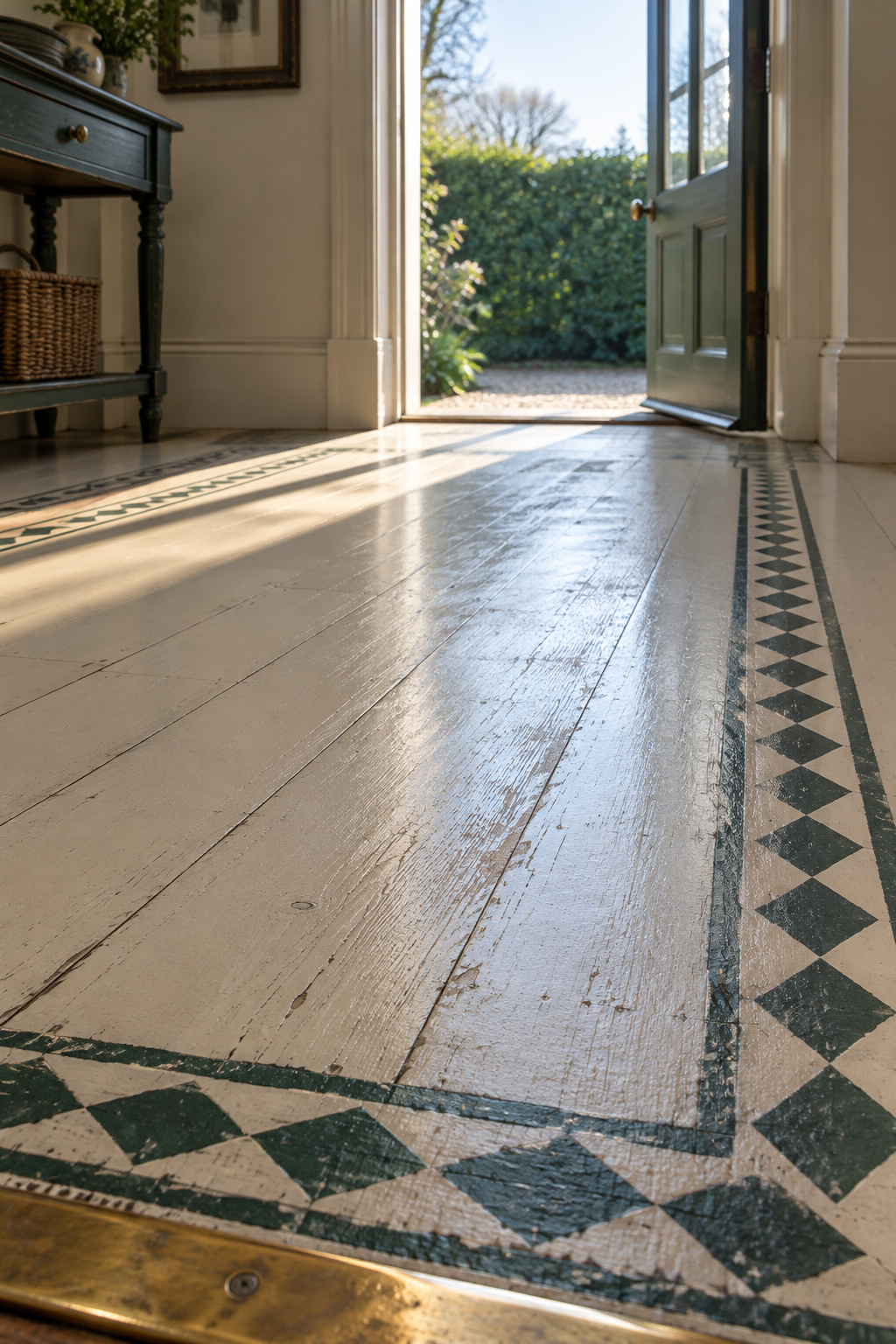
Picture the floor in its second spring. Along the walls the paint is as it went down. From the sill inward a pale lane has opened, and on a satin enamel it shows twice: as thinner color, and as a shine where feet have burnished the film. Choose the pattern for that floor, not the first photograph:
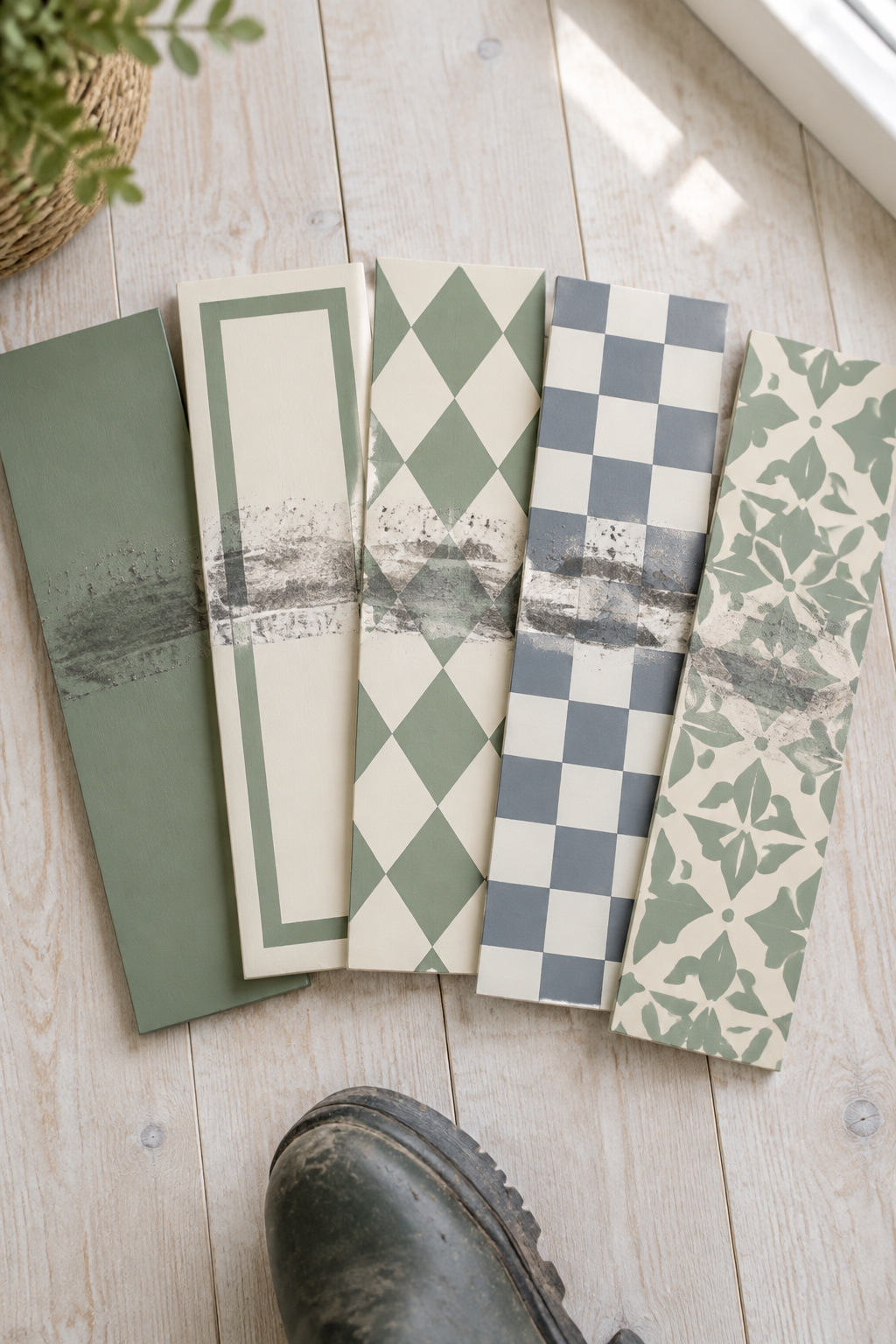
| Pattern | Where the wear shows | How a touch-up blends | Effort to repaint the path |
|---|---|---|---|
| Solid color | Even fade and sheen change down the lane | Easiest: one can, feathered edges | Low |
| Border with a plain field | Field wears, border at the walls stays intact | Good: only the field color is touched | Low |
| Diamond | The lane cuts the same diamonds every time | Fair: two colors, edges to re-cut | Medium |
| Painted checkerboard | The lane crosses the same squares every time | Fair: two cans, square edges to match | Medium |
| Small repeating stencil | Lost first in the walking lane | Hard: re-stenciling to register | High |
A border carries wear best because it sits outside the walking lane, which is how the old stenciled floors were often laid out. A painted “rug” can stand in for a real one, as long as you accept it is the part that wears. Sources disagree on whether a high-contrast checkerboard hides scuffs or shows them, so I judge it only on how it looks half worn.
In my experience a door that drags or lets water in wears the paint in front of it faster than anything else in the hall, so if yours sticks or leaks, start with fixing the front door before you paint the floor under it.
Painting Over Entryway Tile: When It Works and When It Wears Fast
Tile is where the plan for graceful wear runs out. Benjamin Moore’s own contractor guidance says plainly that it does not recommend painting over floor tile, because foot traffic and friction wear the paint prematurely. If you do it anyway, the glaze has to be scuffed and deglossed and coated with a bonding primer rated for glazed surfaces; skipping that primer is the commonest reason painted tile fails. Then come a floor-rated paint and a floor topcoat. Primer drying times vary between products, so follow the primer’s label.
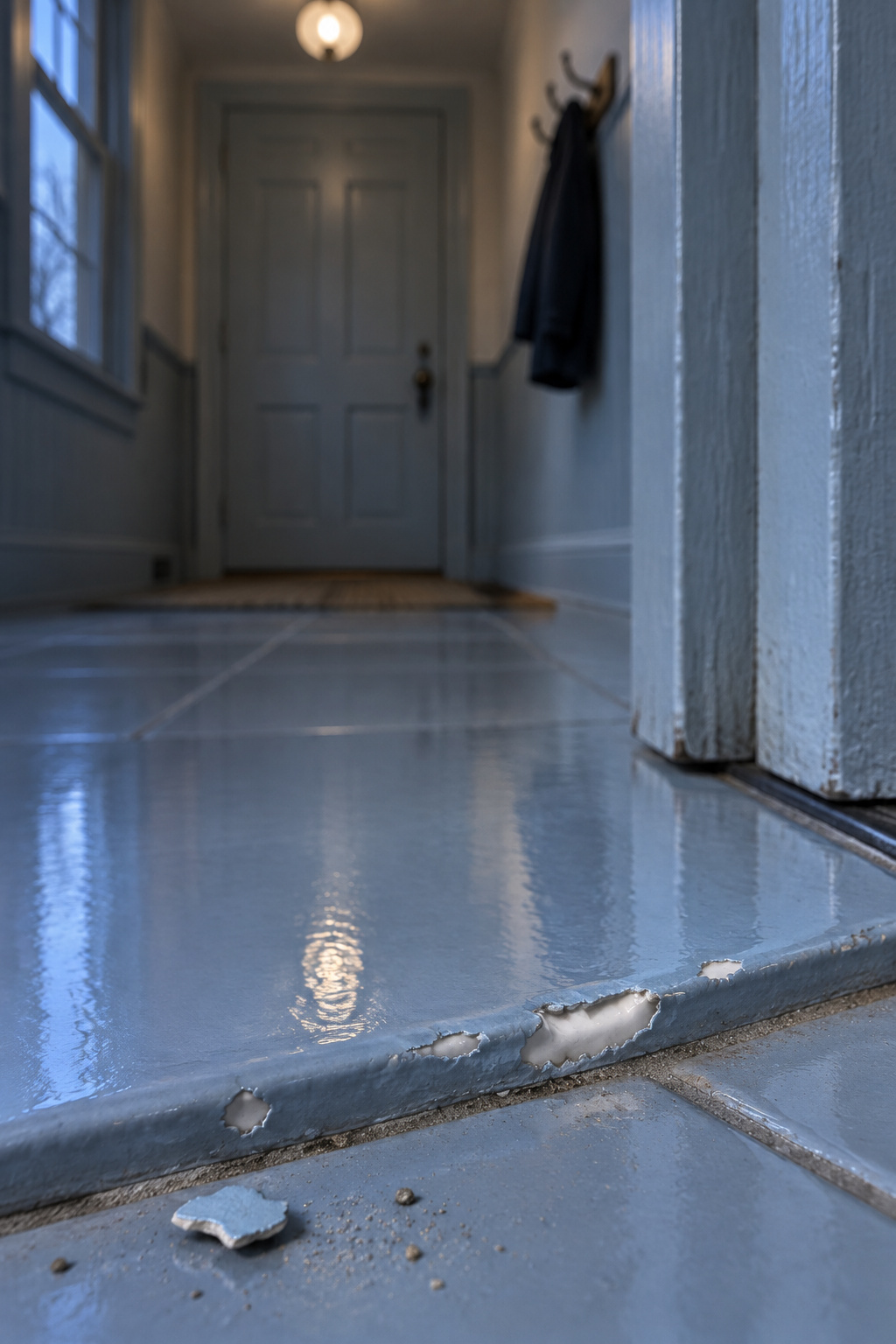
Even with all that, it does not last long at a door. One estimate, from Ace Handyman Services, puts a painted high-traffic entry at 12 to 18 months before real wear, against three to five years in a low-traffic room, and without a topcoat the paint goes through at doorways within months.
My verdict: paint tile in an entry you are about to renovate, a rental you have permission to refresh, or a side door that sees little traffic, and treat it as temporary. If the tile is worn and the entry is busy, re-tiling is the better job, and tiling an entry floor has its own guide on the site.
The Topcoat Schedule: What Wet Shoes Do and When the Floor Can Take Traffic
The Sherwin-Williams data sheet for Porch & Floor Enamel gives the schedule. At 77°F and 50% relative humidity it is touch dry in 1 hour and ready to recoat at 4 hours. Light foot traffic can start at 24 hours. Tables, chairs and heavy foot traffic wait 7 days. Temperature, humidity and film thickness all move these numbers.
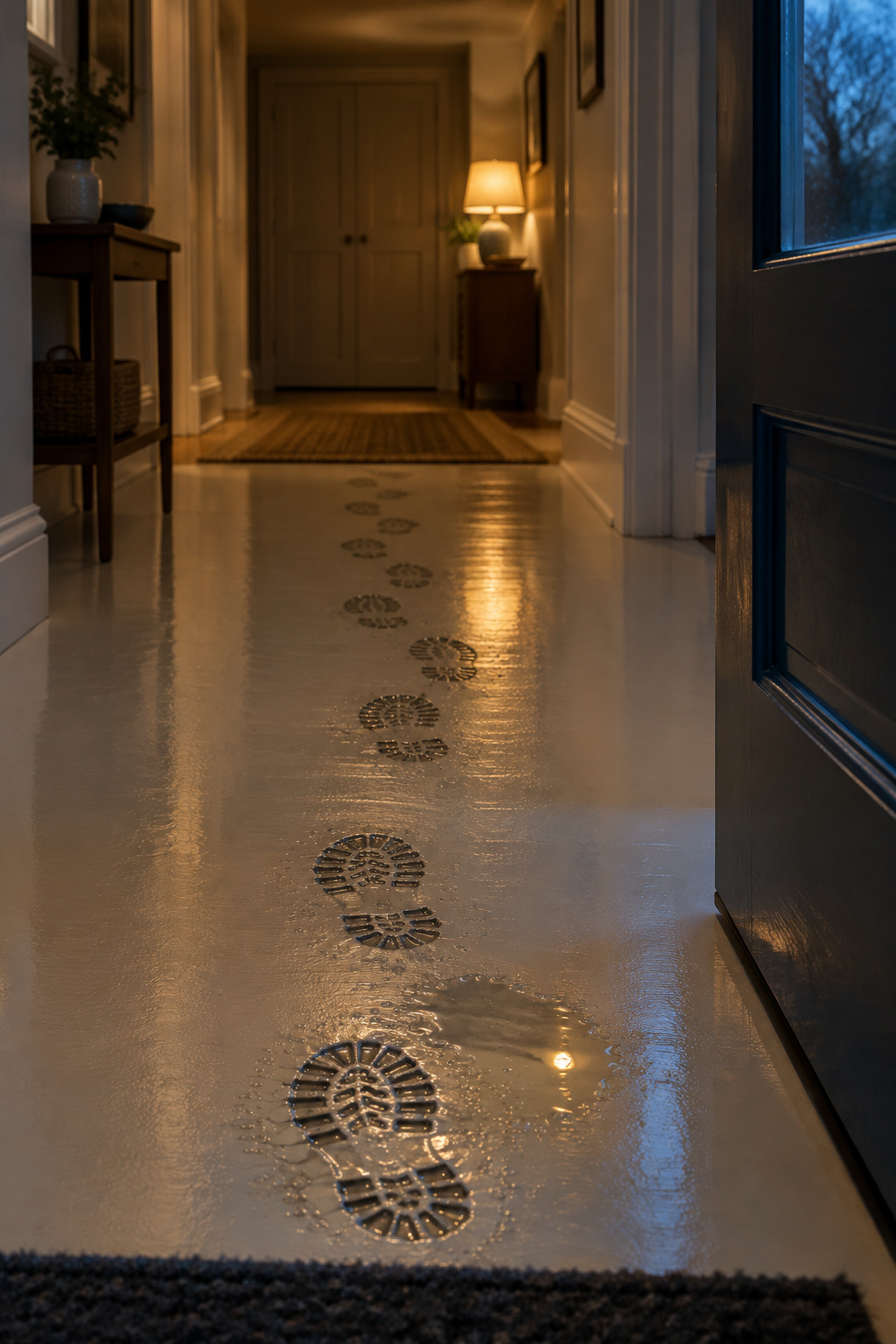
In practice: first coat in the morning, second coat four hours later, socks only from the next day, and boots, backed mats and furniture a full week after the last coat. The common claim of a full cure in seven days goes further than the data sheet: seven days is when it can take furniture and heavy traffic, and it gives no full-cure figure at all. The film stays soft through that first week, and walking on it early prints scuffs and dents into it. A gallon runs about $45 to $60.
I have come to think wet shoes are the worst thing that happens to floor paint at a door: they bring water and grit together, and grit under a sole works like sandpaper. Give them a rack with a drip tray and keep them off the paint. Clean the same way: dry-sweep first and damp-mop only now and then, since too much water works against adhesion.
The data sheet says nothing about a clear coat over this enamel, so ask the maker before adding one.
Touch Up the Wear Path Once a Year and Let the Rest Age
Floor enamel is a recoat product. Each spring, look at the floor in low light from the door: the burnished shine and the thinning color mark the lane. Retouch only the lane. Clean it, scuff-sand it, feather one thin coat from the same can, and leave the walls’ edges and the corners to age at their own pace. Sherwin-Williams expects painted concrete to need a full repaint every three to five years; a yearly path touch-up is the smaller job in between.
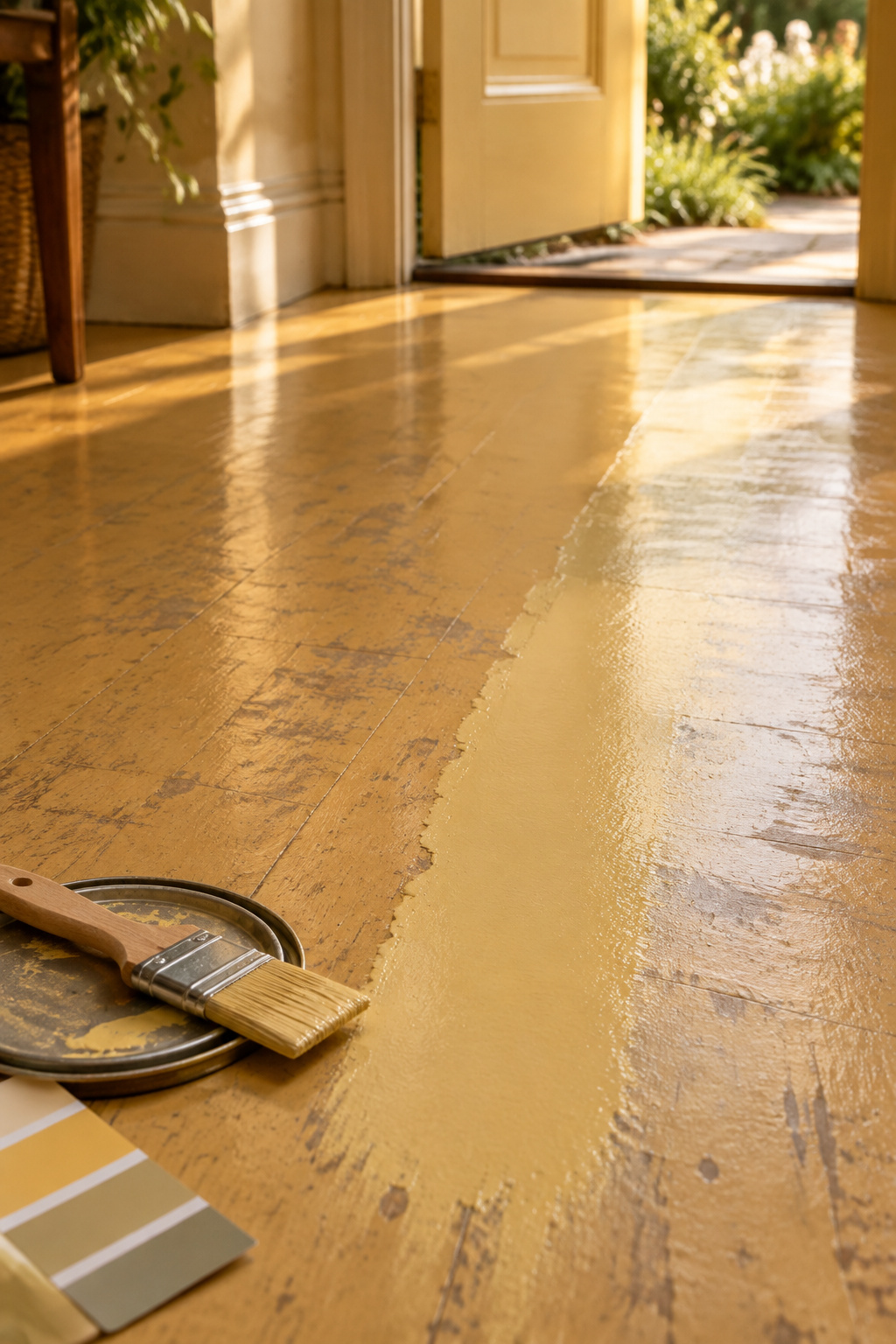
Keep a small can of every color, with the color name and batch number on the lid. How far a stored can drifts in a year is not something anyone can promise, so try the first brushful in a hidden corner. The patch will look newer than its neighbors, and that is fine. New work should be honest about being new, and a patch that is faked old to match is the same costume as the sanded-through floor.
A good restorer leaves notes for the next one. Write the color, the brand and the date on the underside of the threshold, or inside a closet door, so whoever owns the house next can match it without guessing. With the floor done, you can decide what to do in the entry next.
The board on my bench lost its paint where the traffic was, and that worn line is the best thing about it. Plan for the lane and your floor will wear just as well.
FAQ
Can you paint over an old painted entryway floor without stripping it?
Yes, if the old paint is sound. Scrape and sand any peeling or checked paint back to a firm surface, sand glossy areas dull, and remove any wax completely so the enamel can grip. Old floor paint can carry lead, so test before sanding and work with a fitted respirator, containment and a careful cleanup.
How do you clean a painted entryway floor without dulling the finish?
Dry-sweep or vacuum with a soft brush first so grit cannot scratch the paint, then damp-mop with warm water and a little mild dish soap and dry the floor. Keep wet mopping to an occasional deep clean, skip abrasive pads and steam, and wait the full seven days after painting before any wet cleaning.
How do you lay out a painted checkerboard so it looks straight in a crooked entry?
Work from the center, not a wall. Snap chalk lines between the middles of facing walls, square the cross with the 3-4-5 method, and dry-lay the grid first. If an edge would leave a sliver under half a square, shift the grid: 4 and 6 inches of partial square on opposite sides beat a full square against a 1-inch strip.