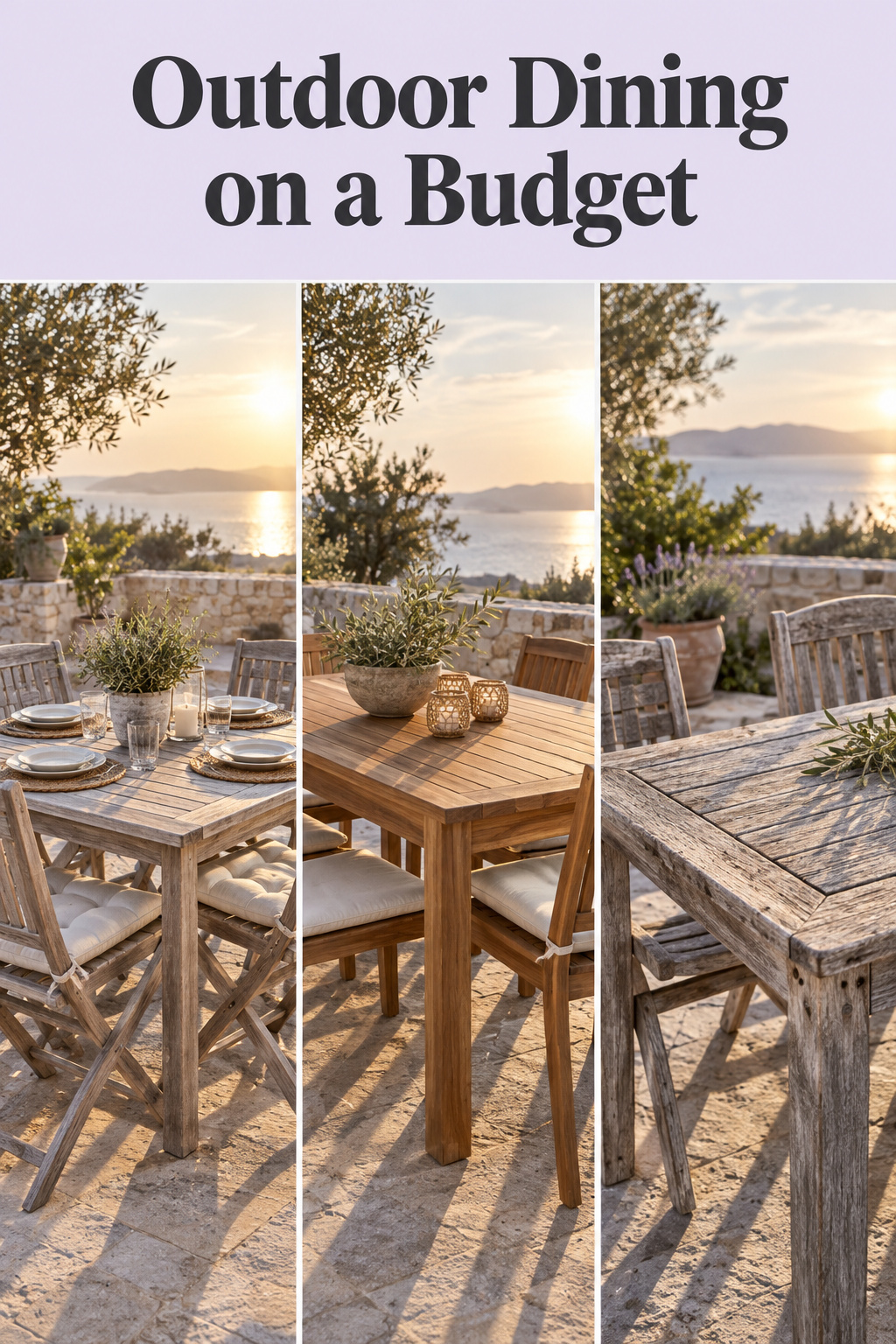
$204.99 and $2,014.19. Both are real, checked on September 13, 2026: a five-piece folding set at Target and a six-piece solid teak set at Home Depot. Outdoor dining on a budget usually gets pitched as a hunt for the cheapest option, and that misses the point. Two line items punish you for saving. The rest don’t care what you paid.
TL;DR
- Mainstream six-seat sets run about $475 to $2,014 right now, and the tiers differ in weld quality, coating thickness and foam type, none of which shows in a photo.
- Pay up on two things: the frame and the cushion fabric. Both are costly or impossible to swap later, unlike tabletops and covers.
- Secondhand is two markets: estate-sale clearance at 10–20% of retail, individual resale listings at 20–70%. Averaging the two is how people overpay.
What Each Price Tier Actually Buys
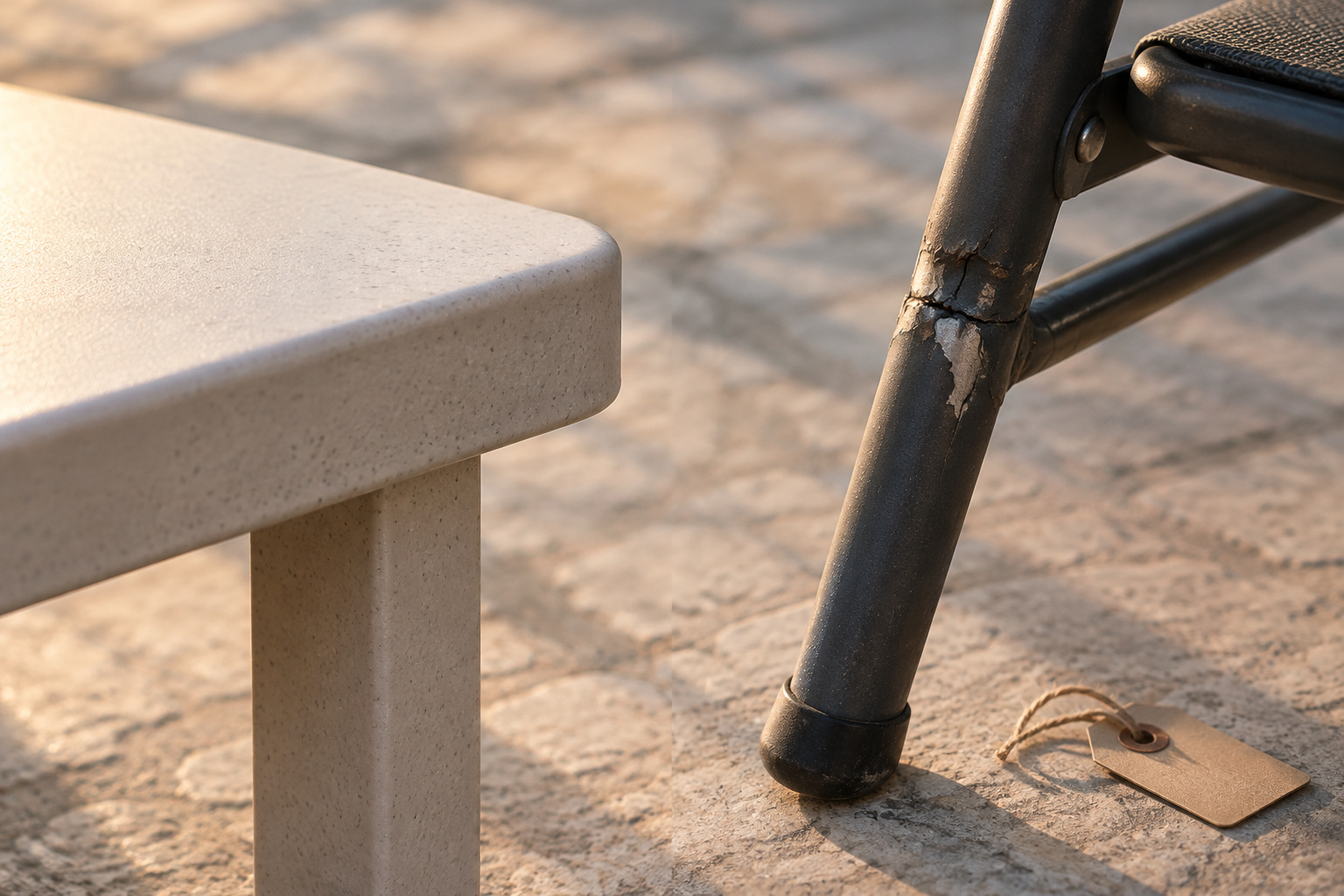
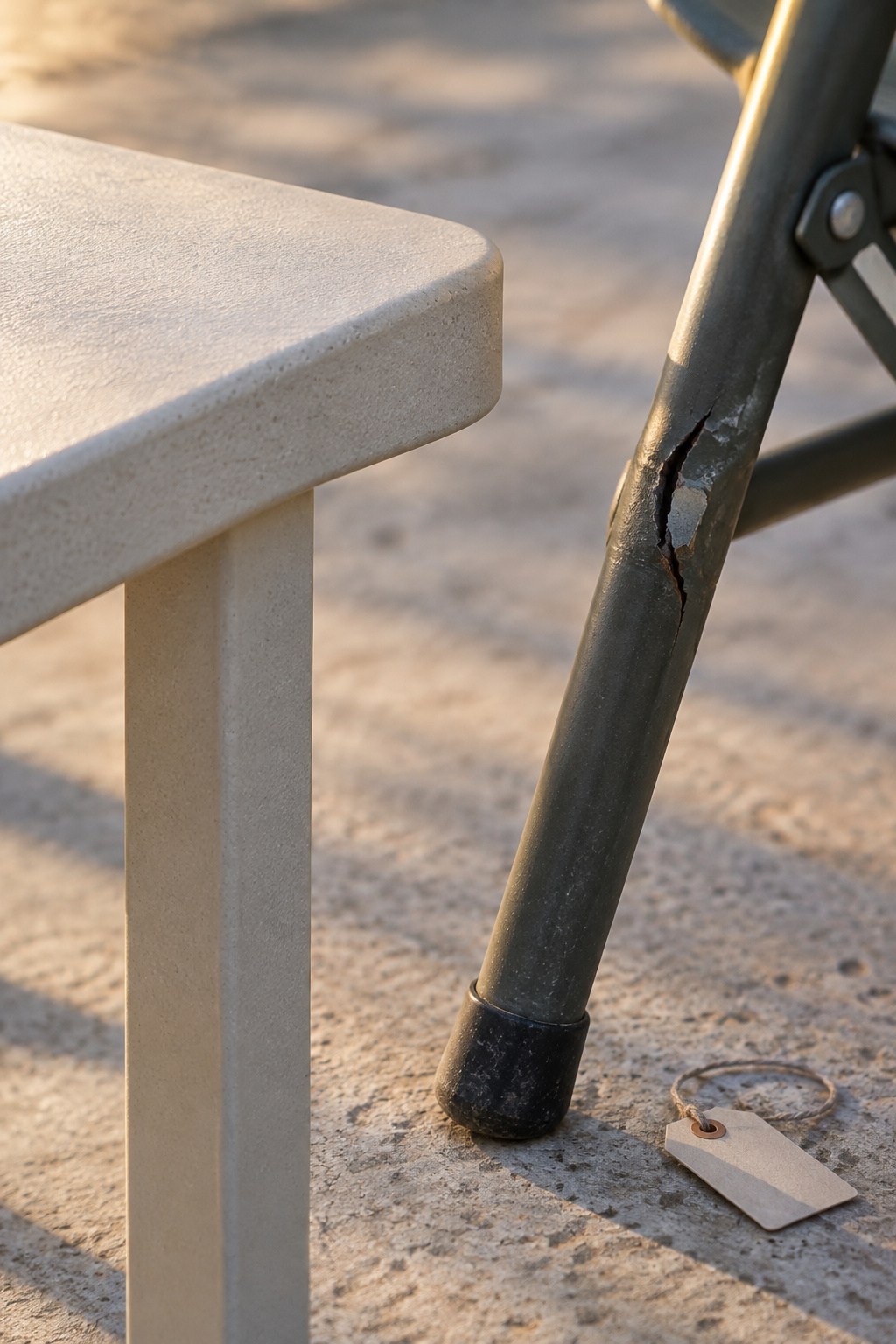
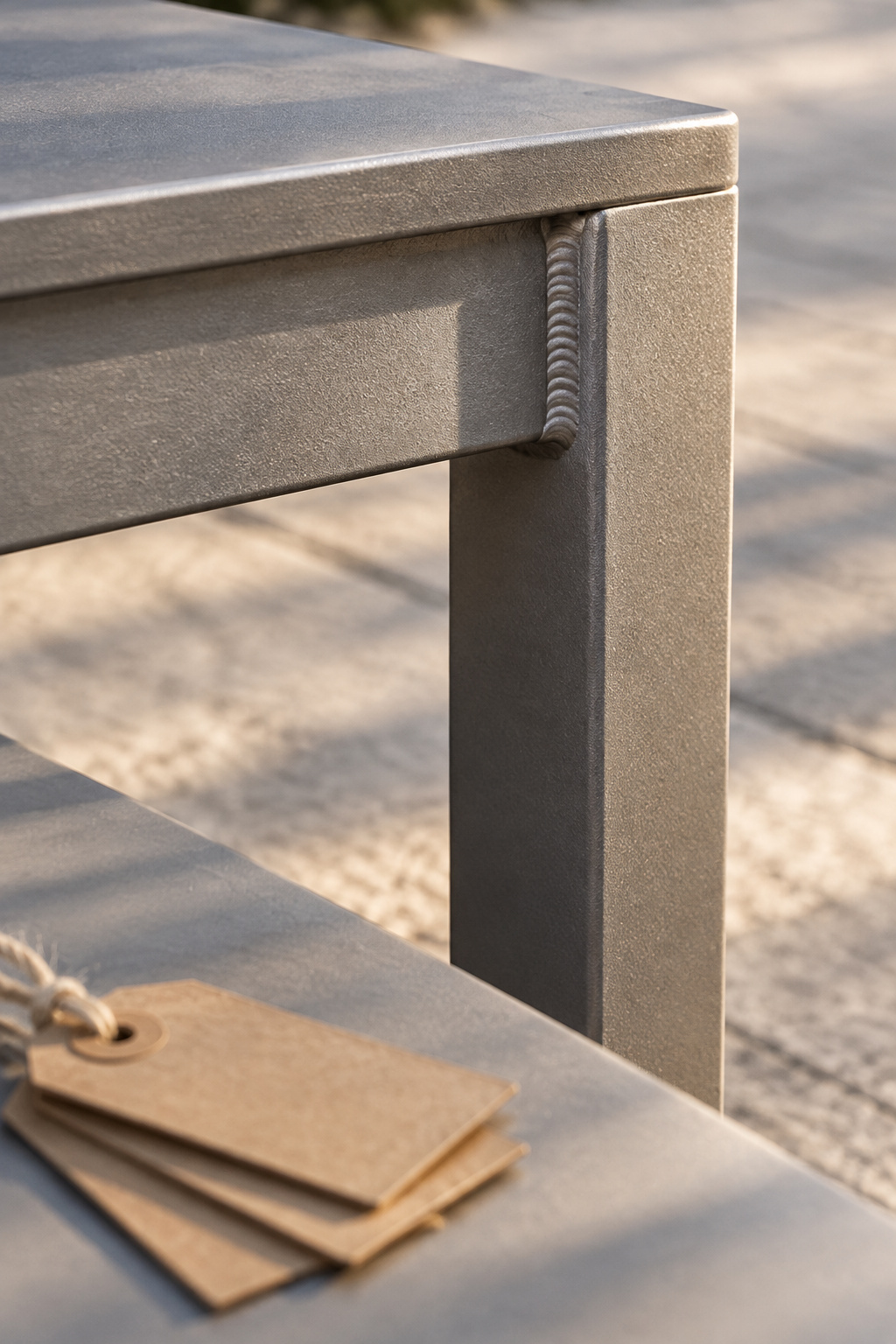
The cheapest thing on my patio is the resin tabletop. I bought it cheap on purpose, having decided that a scratched top is cosmetic, not structural. It’s chalky now and still dead flat. The cheapest chairs from the same week are gone. The powder coat went at the leg ends, then the welds began to move, and I stopped trusting them with anyone heavier than me. Same reasoning, opposite outcomes: what decided it was whether the part that failed held anything up.
This is one dated afternoon of shopping for a table and chairs.
| Tier | Price checked Sept 13, 2026 | What it buys | What fails first |
|---|---|---|---|
| Entry | $140–$475 | Folding or sling chairs, tempered-glass or resin top. Costway five-piece for four, $204.99 at Target; PHI VILLA six-piece with umbrella, $475.52 at Home Depot | Thin powder coat chips and lets corrosion under; thin-wall tubing flexes and cracks at the welds; closed-cell foam traps water and molds |
| Mid | $700–$1,400 | Aluminum frames with wicker or rattan, cushions included. Noble House Garner $717.00, Palermo $1,112.53, Aisha $1,400.87, all Home Depot | The cushion fabric — fading, then mildew |
| Upper | $1,900–$2,014 | Solid teak, extendable table. Cambridge Casual Caterina six-piece, $1,915.38 bare or $2,014.19 with cushions, Home Depot | The cushions again. The frame and top are the durable part |
| Designer | $13,560 and up | A Gloster Split teak table at $5,940 plus Ryder stacking armchairs at $1,270 each; Gloster Raw tables alone, $17,761–$33,469 | Nothing you will live to see |
That last row is there for scale. A Gloster eight-seat set lists at £25,230. I’m leaving it in sterling because I have no exchange rate I’d stake a published figure on, and a wrong conversion is worse than none.
Construction is what moves a set between those rows. Kroy Crofoot at Palm Casual, who manufactures the stuff, offers the fastest field test going: lift the chair. If it weighs under five pounds, the tubing walls are almost certainly too thin to last. You can audit a whole price tier in a showroom aisle with one hand. For how the set fits its space, read the full outdoor dining walkthrough.
The Two or Three Things Worth Paying Up For
Two. Not the whole set, and not a percentage of your budget. Everything else is negotiable.
I judge a purchase by cost per year of use. Agati, a commercial furniture procurement consultancy, publishes the formula: total cost of ownership per year equals purchase price plus lifetime maintenance, minus resale value, divided by expected lifespan in years. I’ll state it and stop, because the input doesn’t exist. Nobody has tested how many years an outdoor set lasts by tier. Warranty pages, Consumer Reports and the trade press all come up empty. Any dollar-per-year figure from me would be an invented lifespan in a formula’s clothes.
For scale, Consumer Reports’ 2020 survey of over 38,000 members put the median item price under $300 at Walmart and Target and over $3,000 at Arhaus and RH. That’s a ten-times gap, per senior research associate Jane Manweiler, and it’s about furniture generally, not patio furniture.
The Frame and the Fabric
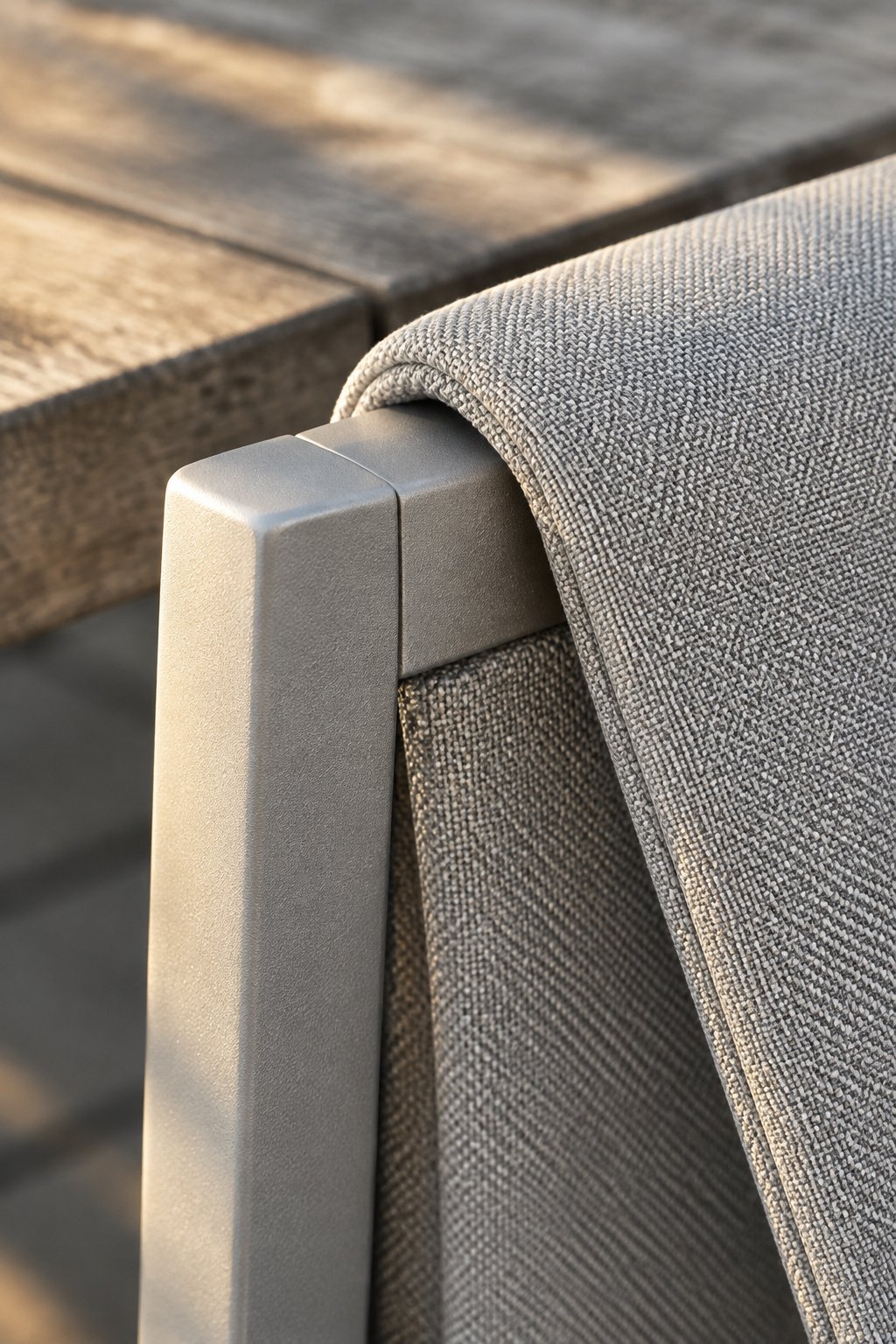
You can’t upgrade the frame later without buying the whole set again. A cracked weld or a corroded joint ends the set however good the top still looks. Which material to buy for that money underlies every tier above, and where the material money actually goes settles it with weather and lifespan figures I’m not restating.
Fabric is the second. Standard polyester covers fade and mildew faster than solution-dyed acrylic, and recovering four to six chairs plus a bench costs a real fraction of the set’s original price. The test for any part is what fixing it later costs. Frame and fabric both fail it expensively. Almost nothing else does.
Where Buying Cheap Is Actually Fine
So what’s genuinely safe at the bottom of the market? More than most guides admit.
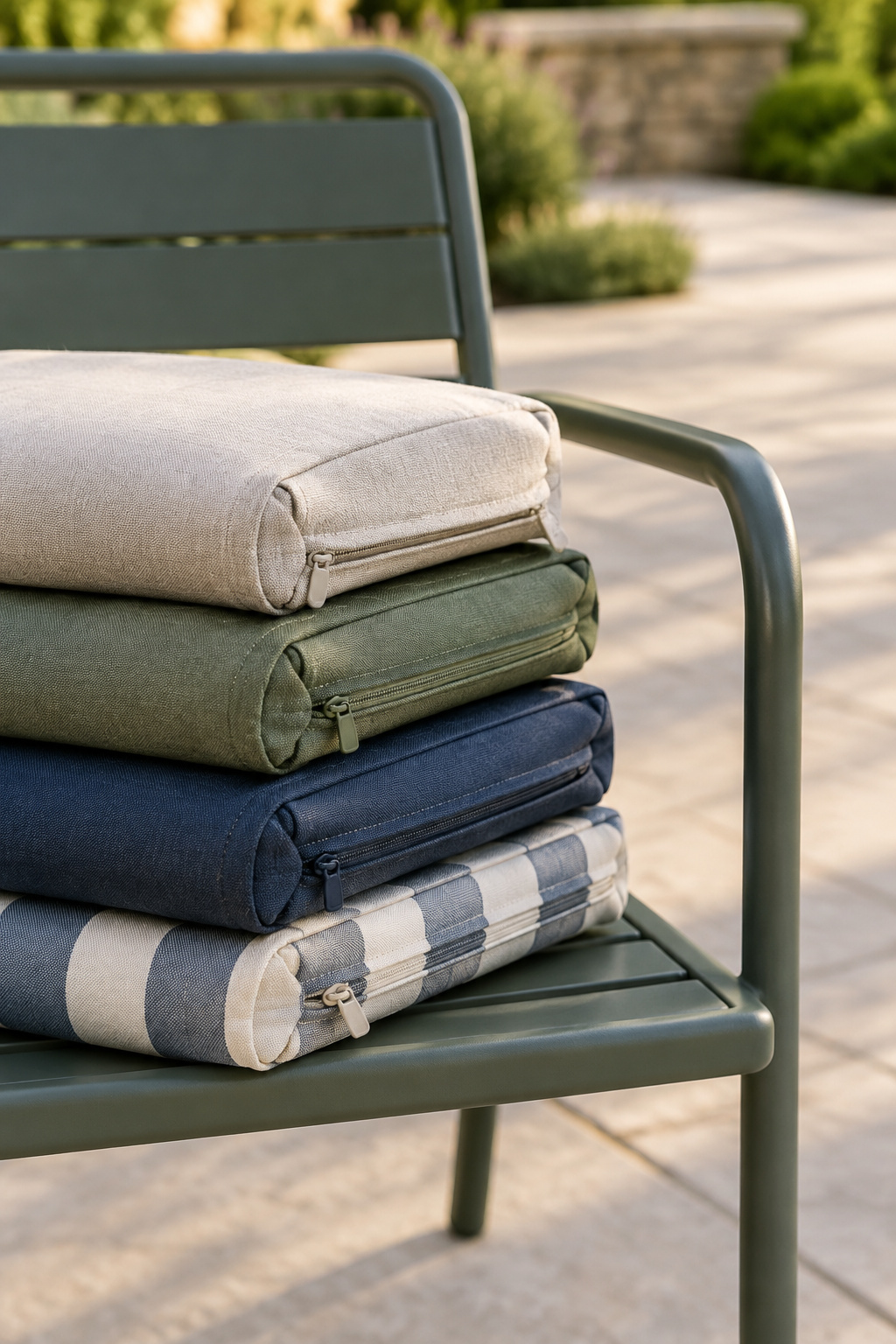
Cushion covers come first, the covers and not the foam inside them. They’re cheap to replace on their own schedule whatever tier the frame came from, and buying the cheapest matching set when the originals fade is an ongoing cost, not a false economy.
A tempered-glass or resin top is second. It carries no structural failure risk, so a scratch is cosmetic, and replacing or covering the top later beats paying up front.
Third, an entry-tier folding set makes sense when use is genuinely occasional: a property you don’t live in, a set stored indoors most of the year, overflow seating once a summer. Those sets fail from accumulated weather, and nine months in a garage accumulates none. I don’t hold with budget shame. Buying the cheapest version of something disposable is arithmetic, not a character flaw. The one cheap buy I’d argue with is a cheap frame.
Secondhand Patio Furniture: Where It Wins and Where It’s a Trap
Secondhand pricing comes from separate markets, and the whole question turns on keeping them apart. Fast-clearance pricing at estate sales and thrift stores runs roughly 10–20% of retail replacement value. Resale listings on Marketplace, eBay and consignment run 20–70%, depending on condition and venue.
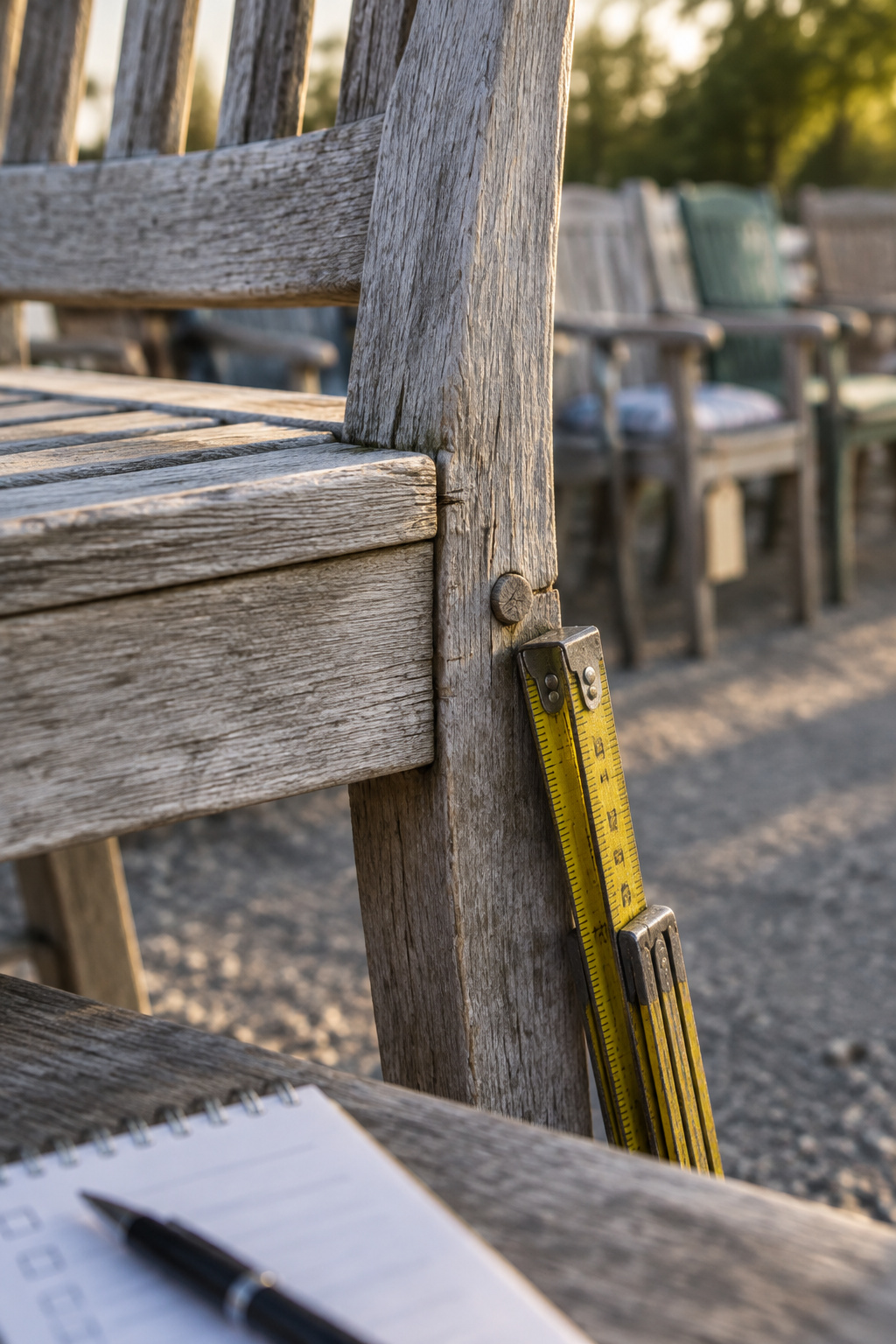
Estate sales mostly run on a three-day schedule: full price, then 25% off, then 50% off on the final day. The clearance percentage is realized on that last day, when the best pieces are already gone.
The trap comes in two shapes. Curated platforms are one: Chairish prices equivalent vintage pieces at three to five times Facebook Marketplace asking prices, so paying curated money without checking peer-to-peer first is a straight overpay. Condition is the other: a chip or crack cuts value 40–70%, and a disclosed repair cuts it 30–60%. The asking price tells you what the seller hopes. The inspection tells you which bracket the piece is in. These are general furniture-resale figures, not patio-specific. I think the logic transfers, but I can’t show you a study that says so.
What to Check Before You Buy Someone Else’s Set
Start with the frame, before any cushion. On metal, wiggle every leg and corner. Any movement means a loose fastener or a failed weld. Surface rust that sands off is maintenance. Flaking, pitting or holes are structural, and that’s a walk-away.
On wood, learn the two kinds of crack. Checks that run with the grain are normal weathering; splits across the grain, or soft spongy patches, mean rot. Teak goes gray outside, which is fine, but underneath it should feel dense rather than fibrous. Press a thumbnail into it.
Then the cushions. Assume you’ll replace them unless they’re nearly new. Sniff for mustiness, which is trapped moisture and mildew and doesn’t clean out. Budget $30–$60 per seat cushion for outdoor-grade foam and Sunbrella-type fabric, and add that before you call a set cheap. A $300 set with six dead cushions is a $500 set.
When Building Beats Buying
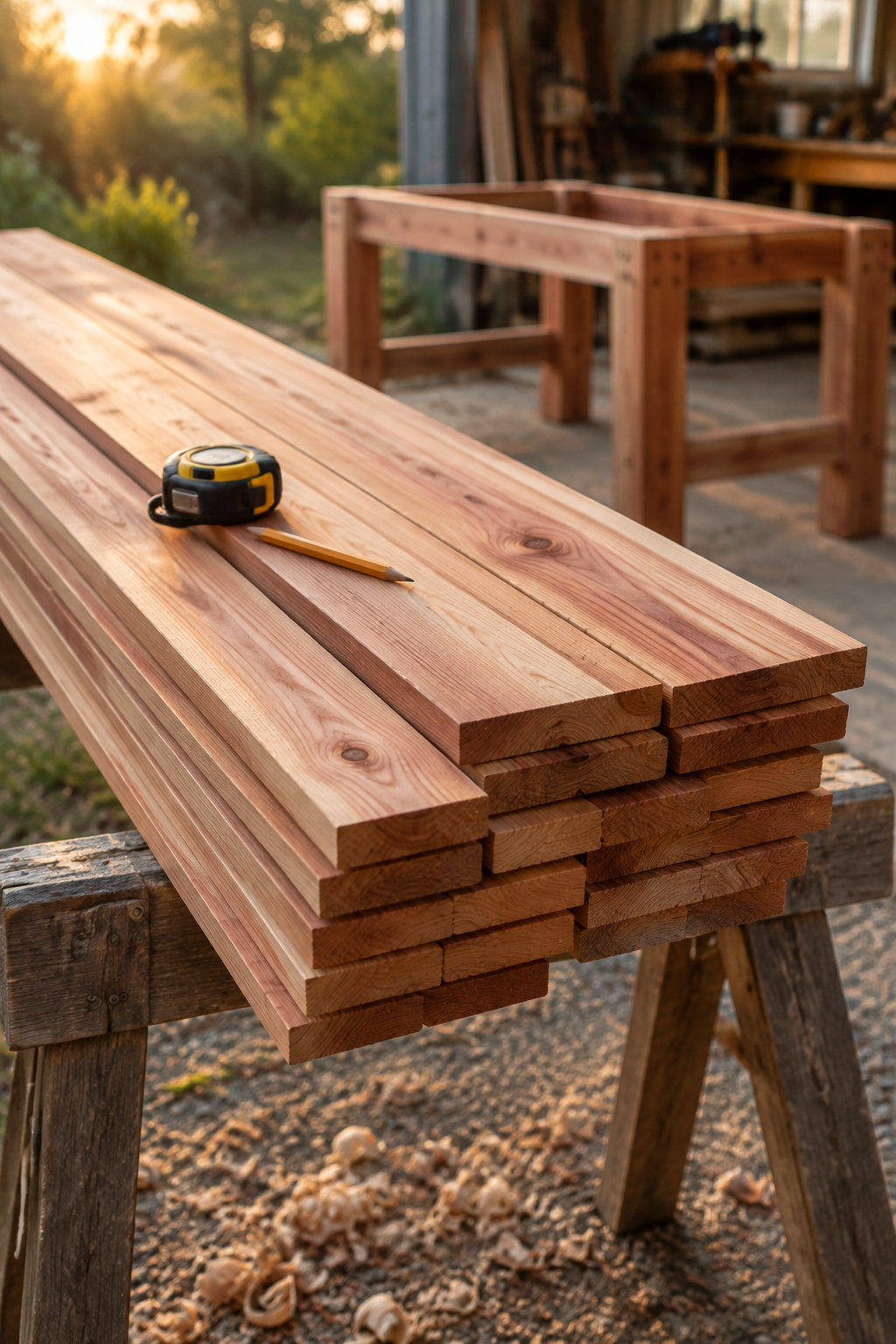
Comparing lumber against a whole retail set isn’t a fair comparison. Lumber is one line. Hardware, glue, finish and any new tool are the rest. Two things decide it: the tier you’re measuring against and your skill. Building makes obvious sense against the mid and upper rows above, and very little against a $475 six-piece. It’s a some-builds project, not a first weekend with a drill.
What a Built Table Costs, as One Data Point
Building one instead of buying it already prices the whole thing line by line, so I won’t re-cost it. It comes to about $506 in cedar, hardware and finish, or about $635 if you buy a pocket-hole jig for the job. Treat it as a table, not a set. You still need six chairs, which is where a build stops undercutting the entry tier.
One caution applies to any lumber figure, that one included. Cedar pricing across sources is unreliable. A named lumberyard’s dated price list puts 2×6 cedar at $8.75 per linear foot, while a generic cost-calculator site prices the same nominal board around $0.44–$0.81, more than ten times apart for one product. I use the lumberyard because it cites a real price list rather than an aggregated average, and aggregator lineage is the class of source this site has banned once already. Price your lumber locally before you set a build budget.
Outdoor Dining on a Budget: Putting Together a Table for Six
I looked for a benchmark and found none. No standards body, manufacturer association or consumer-testing organization publishes a recommended spend for outdoor dining furniture. Consumer Reports, ASTM, NKBA and the trade associations came back empty. What exists is general furniture data, labeled as such above, so the answer is rules, not a figure.
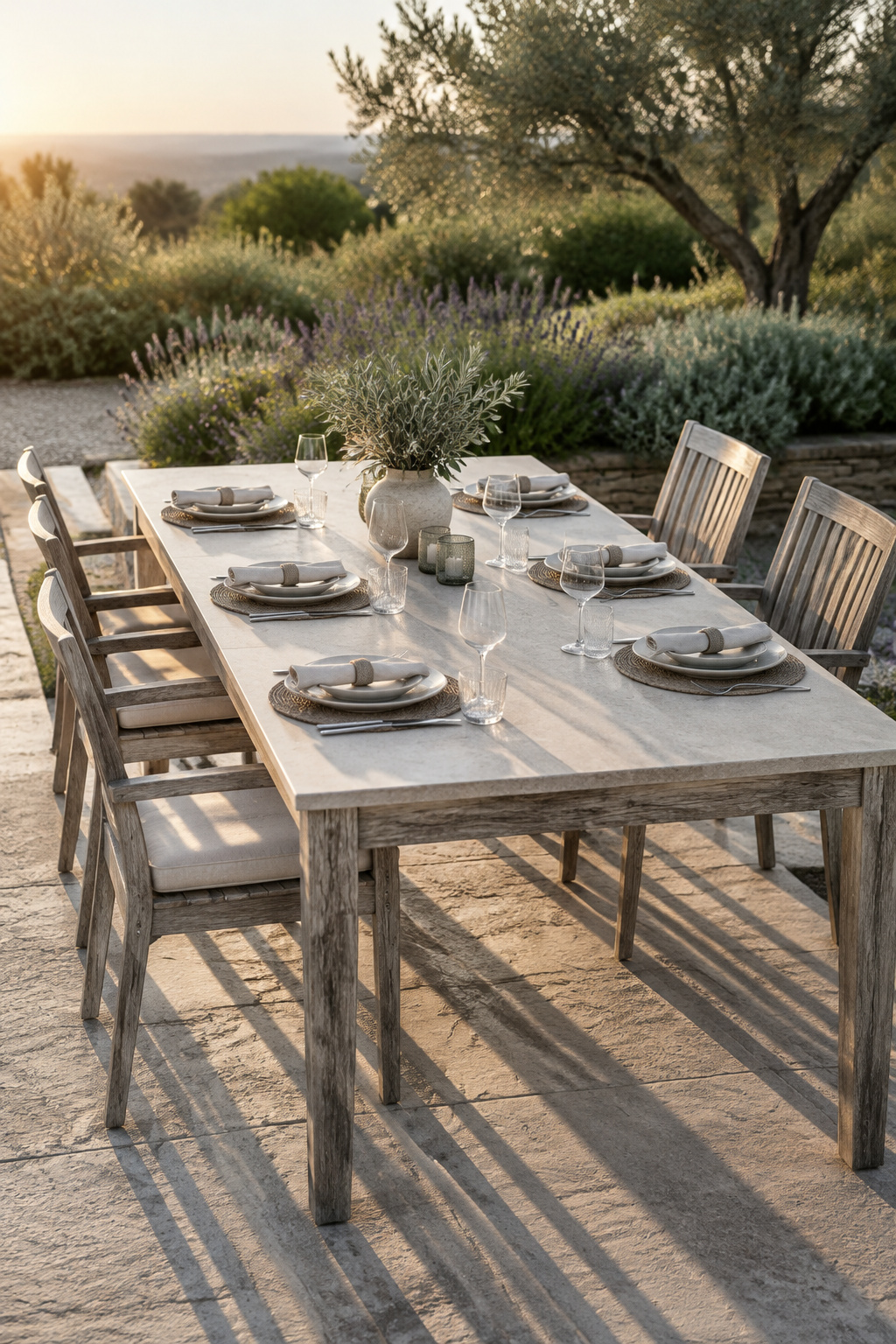
Spend on the frame and the fabric. Buy the top, the covers and the accessories at the bottom of the market with a clear conscience. Keep the two secondhand markets apart and price the cushions before you agree a number. Build only against a mid-tier set. Don’t judge construction from a photo, and don’t pay up for a part that can only fail cosmetically.
Then do the thing that costs nothing. Find the set you’re considering and pick up one chair by an arm. If it’s under five pounds, walk away. In two seconds you’ll have learned more than every listing photo you’ve scrolled this week.
FAQ
Is it worth buying a cheap outdoor dining set if I’ll replace it in a few years?
Yes, if the use is genuinely occasional, such as a property you rent out, seasonal storage or overflow seating once a year. Those sets fail from weather exposure they never get. For daily use all season, the frame and the cushion fabric are the two components where paying up reliably pays back.
What should I check before buying a secondhand patio dining set?
Start with the frame. Wiggle every leg and joint for movement, and tell surface rust, which sands off, from flaking or pitted rust, which is structural and a walk-away. On wood, splits across the grain or soft spots mean rot. Budget $30–$60 per seat cushion.
How much should a basic outdoor dining set for four people cost?
Roughly $140–$300 at mass retailers for a four- or five-piece folding set with a tempered-glass or resin top, checked September 2026. A six-piece version with a bench sits closer to $475. No standards body publishes a recommended spend for patio furniture, so treat those as floors.