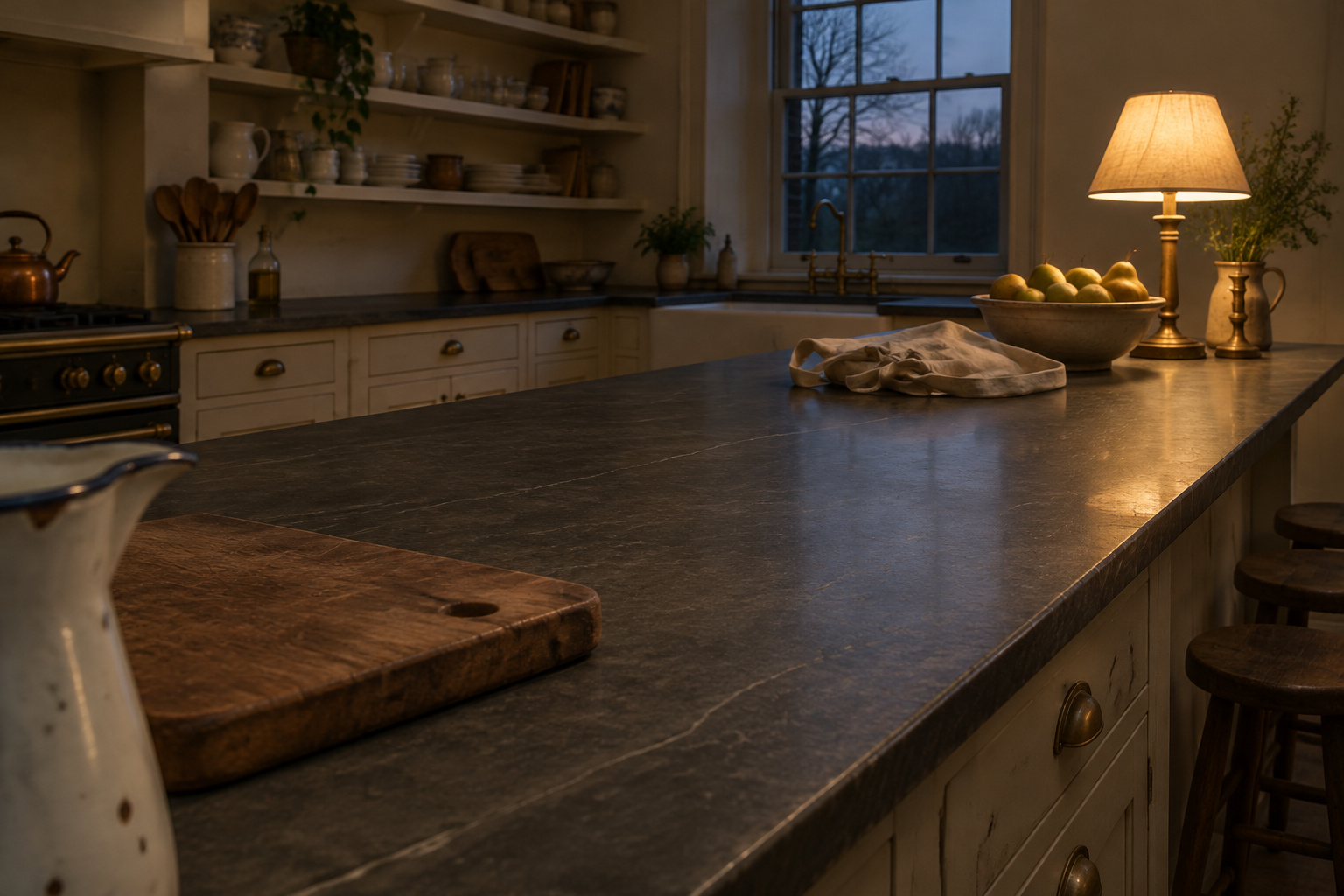

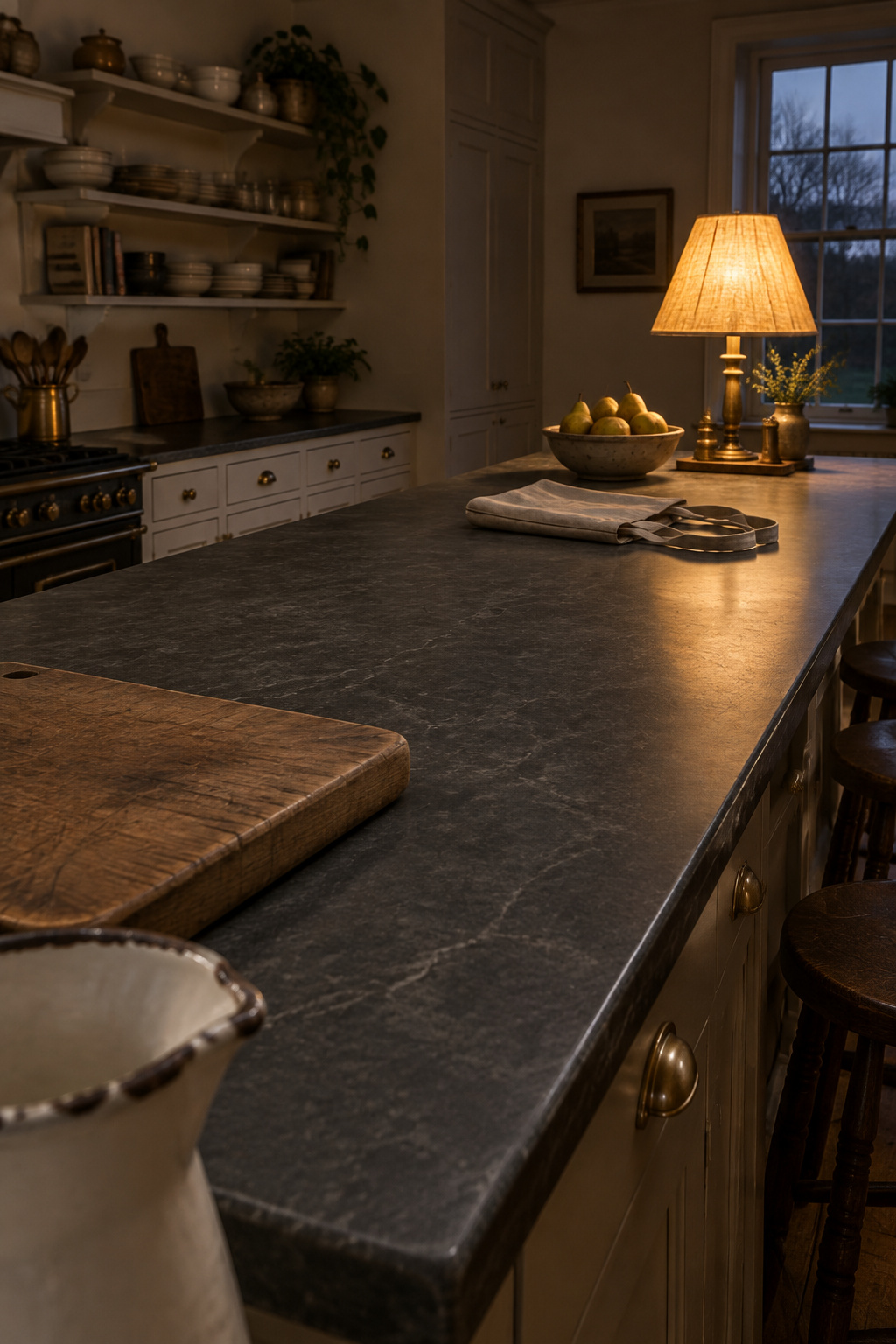
No standard says where the groceries land on a kitchen island. None says how much of it should stay bare for chopping, either. The planning guidelines give counter beside a fridge, an oven and a sink a job each, then go quiet about the island in the middle. Into that quiet comes every photo of farmhouse island decor: a dough bowl, a bread board, a lantern, a pitcher of branches, all sitting exactly where somebody needs to put down a bag of shopping. I would rather start from what the counter is for, and let the decor move in last.
TL;DR
- Give the island counter three jobs before it gets any decor: a bare work stretch, an empty set-down spot for groceries mid-task, and one gathering end where the farmhouse pieces live.
- Borrow the kitchen planners’ figures. NKBA wants 15 in of landing counter beside a fridge and accepts counter up to 48 in across the aisle, so the island can be that landing. Its 36 × 24 in prep area is written for counter next to a sink.
- Style the gathering end with objects you use and can lift away in one go, like a bread board, a crock of spoons and a bowl of fruit, and keep any candle at least 12 in from anything that can burn.
Give the Island Counter Three Jobs Before It Gets Anything Else
A good island counter feels like room for your hands. You put down the cutting board and nothing has to move first. That feeling is made of empty space, and empty space is the first thing a styled photo fills.
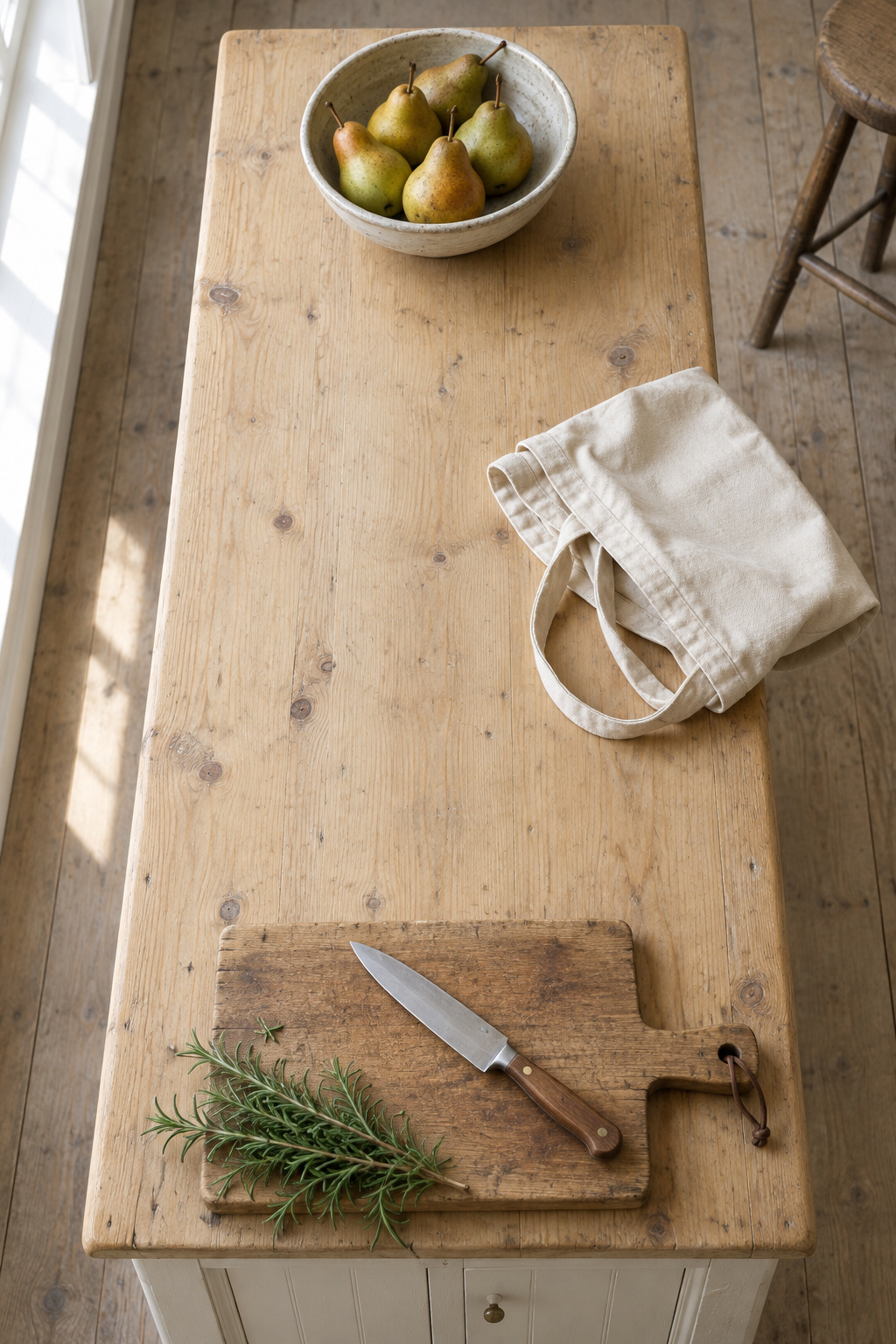
The island top does three jobs a day, planned or not:
- Work: the stretch you chop, roll and assemble on.
- Set-down: a spot where the grocery bag, the hot dish or the colander lands while your hands are busy.
- Gathering: the end where someone sits with a coffee while you cook.
The planning guidelines hand out counter by job (landing, preparation, storage), and decor appears nowhere on the list. Recent styling pages divide the island by use too. What I add is a rule for the decor: it lives at the gathering end, and nothing goes there without a reason.
Whether the island itself suits a farmhouse kitchen is a question for the farmhouse island guide, and the light over it is a separate decision. Here the only question is what sits on it.
Before you buy anything, sit at the island at the hour it is actually used, and watch where things land.
Keep the Work Stretch Bare, and Move Everything Else to a Drawer
Start with what can leave. The work stretch, nearest the sink or cooktop, should hold nothing at all between meals.
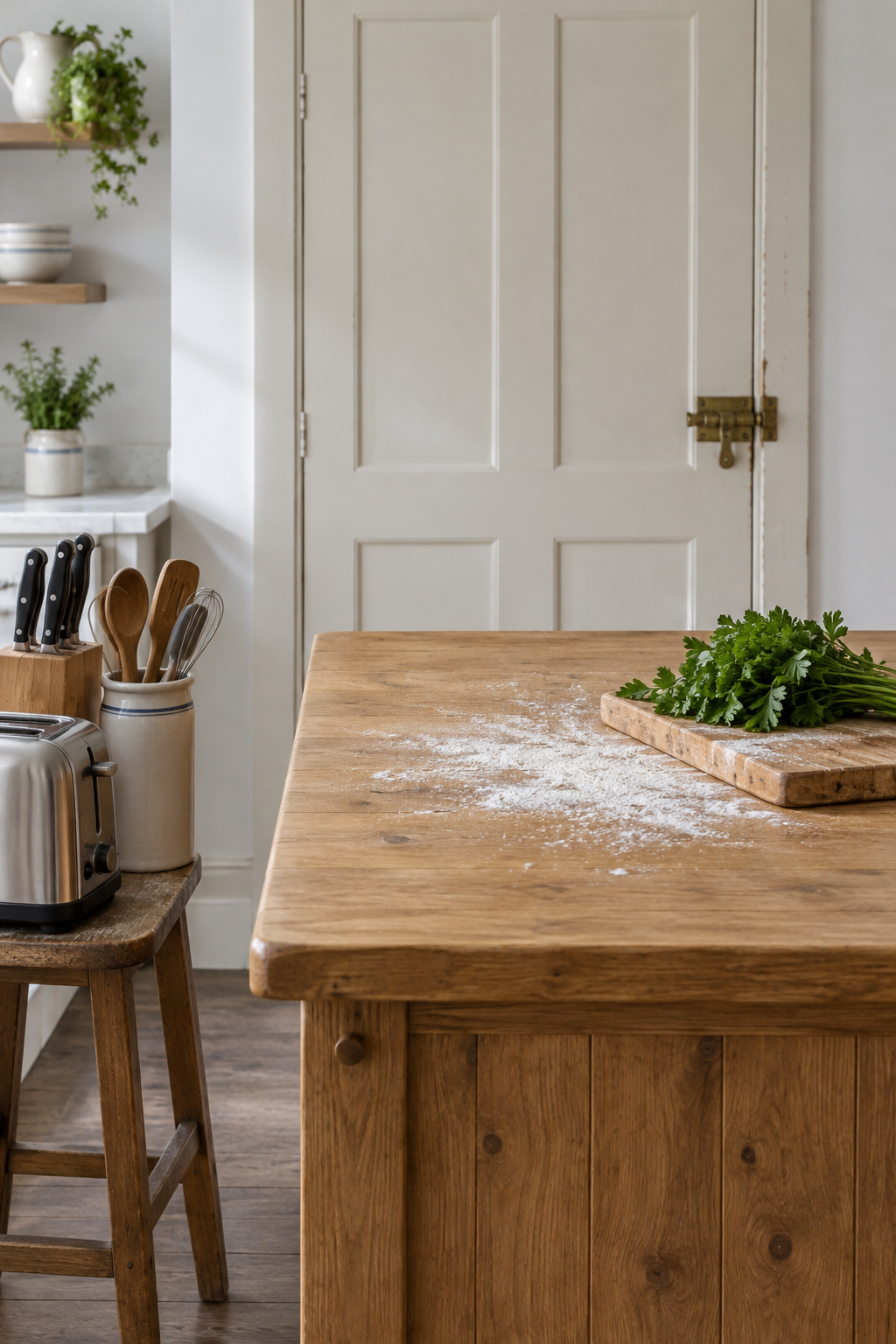
NKBA’s figure for a useful prep area is a continuous run of counter 36 in wide and 24 in deep, which is 6 sq ft. It is written for counter immediately next to a sink. I use it anyway, as a size to protect: mark 36 in along the island top, and whatever sits inside that mark is in the cook’s way.
The usual tenants of that stretch, and where they can go:
- The toaster, to a cupboard, out only when it’s used.
- The knife block, to a drawer insert under the work stretch.
- The second utensil crock, gone; one is plenty, and it belongs at the gathering end.
NFPA advises keeping anything that can catch fire, wooden utensils, oven mitts and towels included, away from the stovetop, so on a cooking island the crock of wooden spoons that looks so right in photos is often in the wrong place.
What leaves needs a home within reach, usually a deep drawer. Which tools get it is worked out in what to keep inside the island instead.
Clear the work stretch tonight, and leave it bare for one full day of cooking.
The Set-Down Spot: Where Groceries and Bags Land Mid-Task
Something always arrives while your hands are full. The shopping comes in, the roast comes out. With no spot left for it, the bag lands in whatever gap it finds, usually the work stretch.
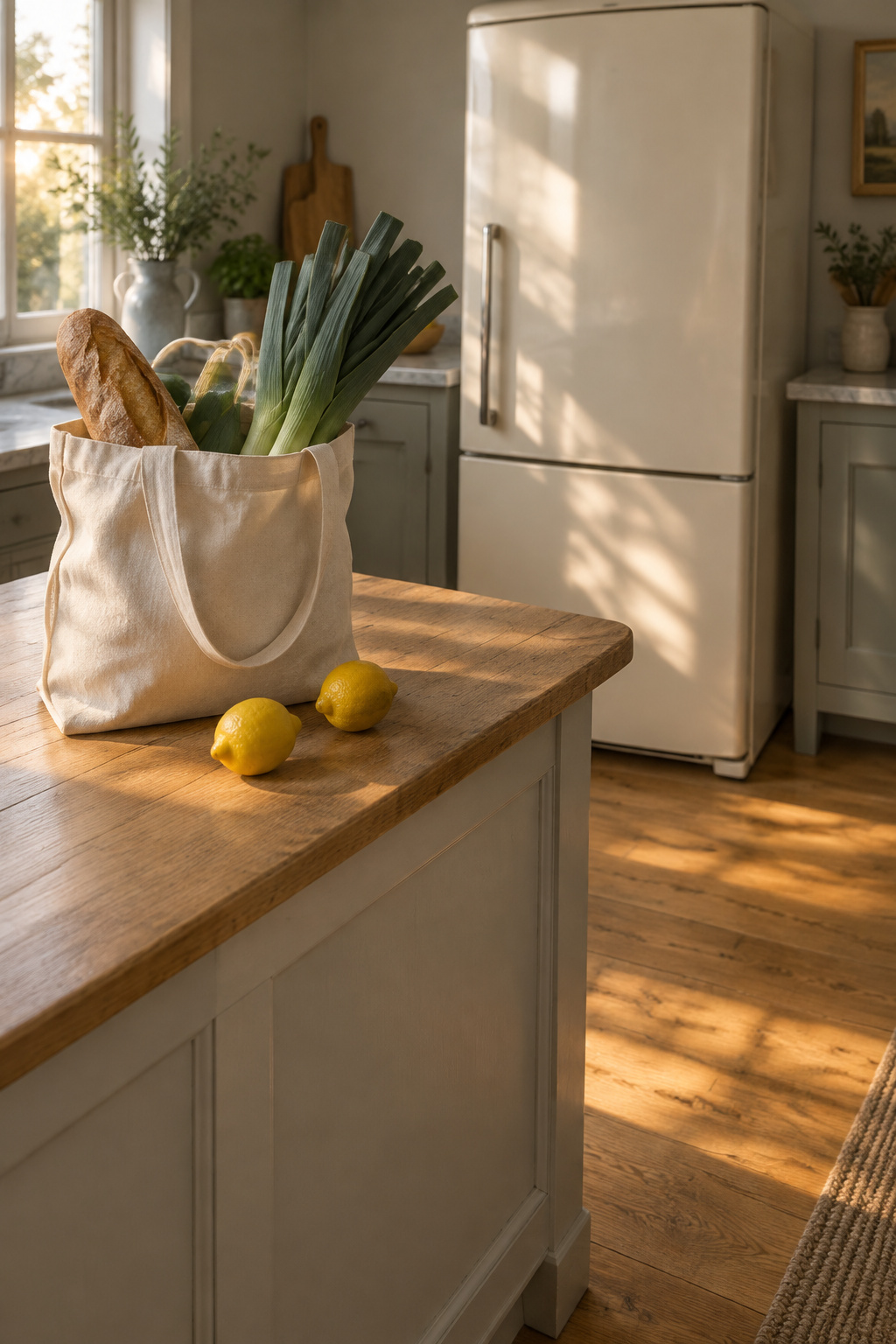
Kitchen planners call this a landing area. NKBA asks for at least 15 in of counter on the handle side of the refrigerator, and it accepts 15 in that is no more than 48 in across from the fridge front. In many kitchens that across-the-aisle counter is the island. The same 15 in applies beside a wall oven.
So I borrow the number. Give the set-down spot 15 in of island edge on the side nearest the fridge or oven, and keep it empty on purpose. The moment a fruit bowl takes that spot, the grocery bag goes somewhere worse. My cat, Dal, sits in exactly that patch, which tells you how inviting a clear space is.
The spot is for things mid-task: groceries waiting to be put away, a hot dish, a bag you’ll empty in a minute. Mail, keys and the bag you carry every day are a different habit with their own place by the door, which the drop-zone ideas guide covers. Let the set-down spot be a little empty.
Farmhouse Island Decor at the Gathering End: Three Styled Examples
The gathering end is where the island softens. Where your seats at the gathering end go decides where the decor goes, and everything below stays at that end: low enough to talk over, light enough to lift.
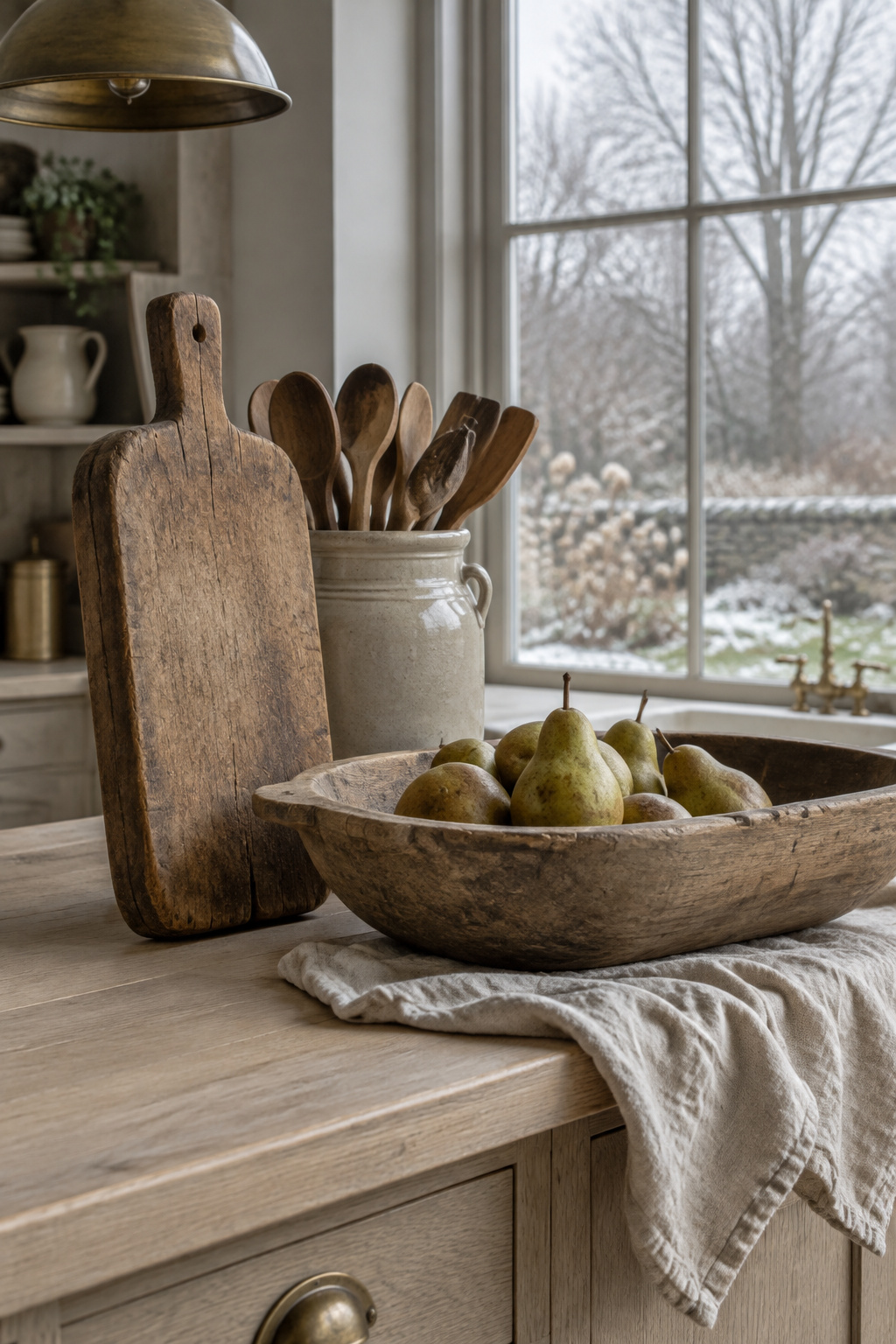
The pairings are mine, built from objects farmhouse pages have put on islands for years.
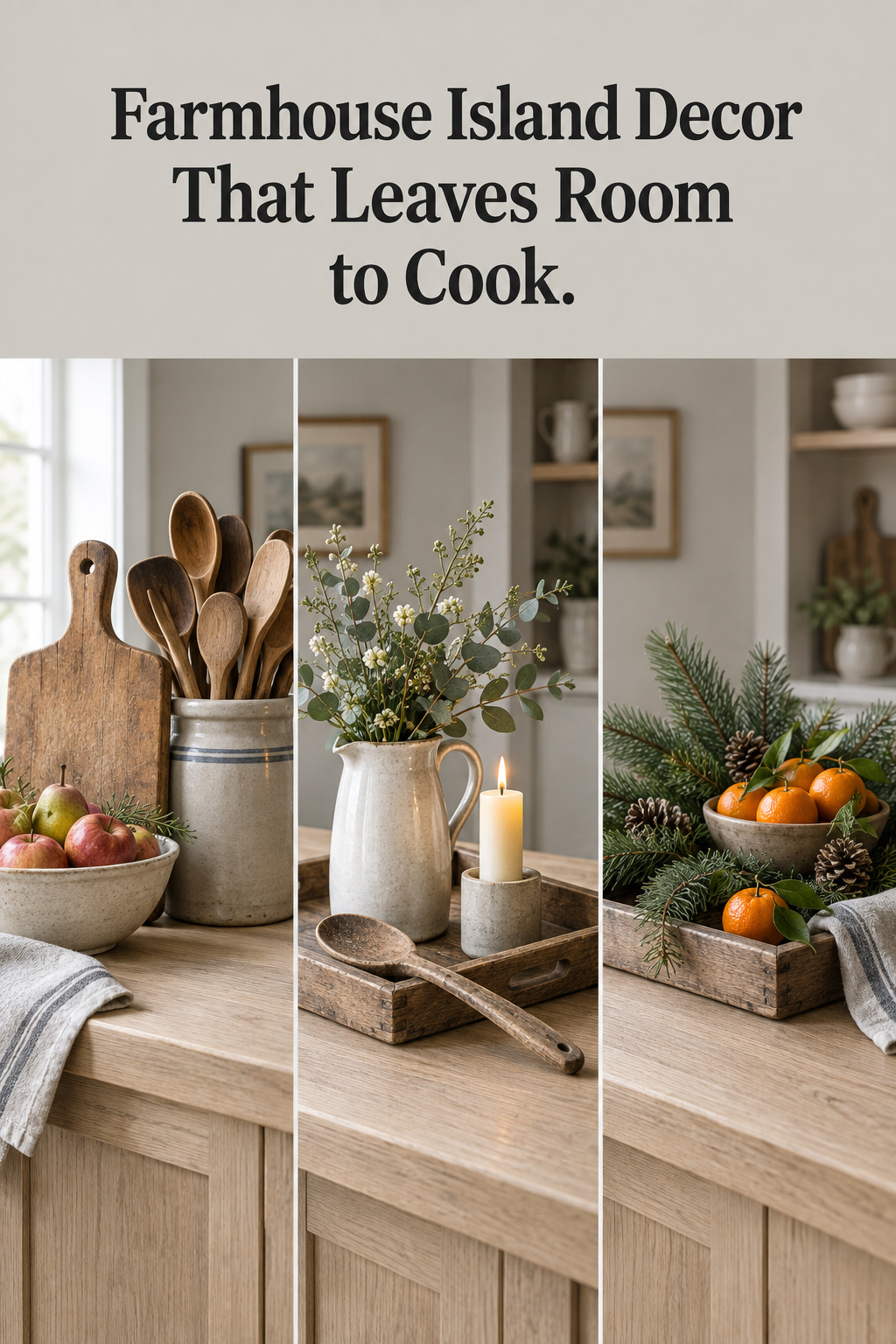
A Bread Board, a Crock of Spoons and a Bowl of Fruit
This one works hardest. The bread board stands at the back, the crock of wooden spoons beside it, a shallow bowl of fruit in front, so the group steps down toward whoever is sitting. The board comes down for slicing, the spoons get used, the fruit gets eaten and refilled, and the arrangement is never quite the same two days running. Designer Jacqueline Goncalves of Moksa Studio says you can’t go wrong with items that are both beautiful and functional.
A Tray with a Pitcher of Stems and One Candle
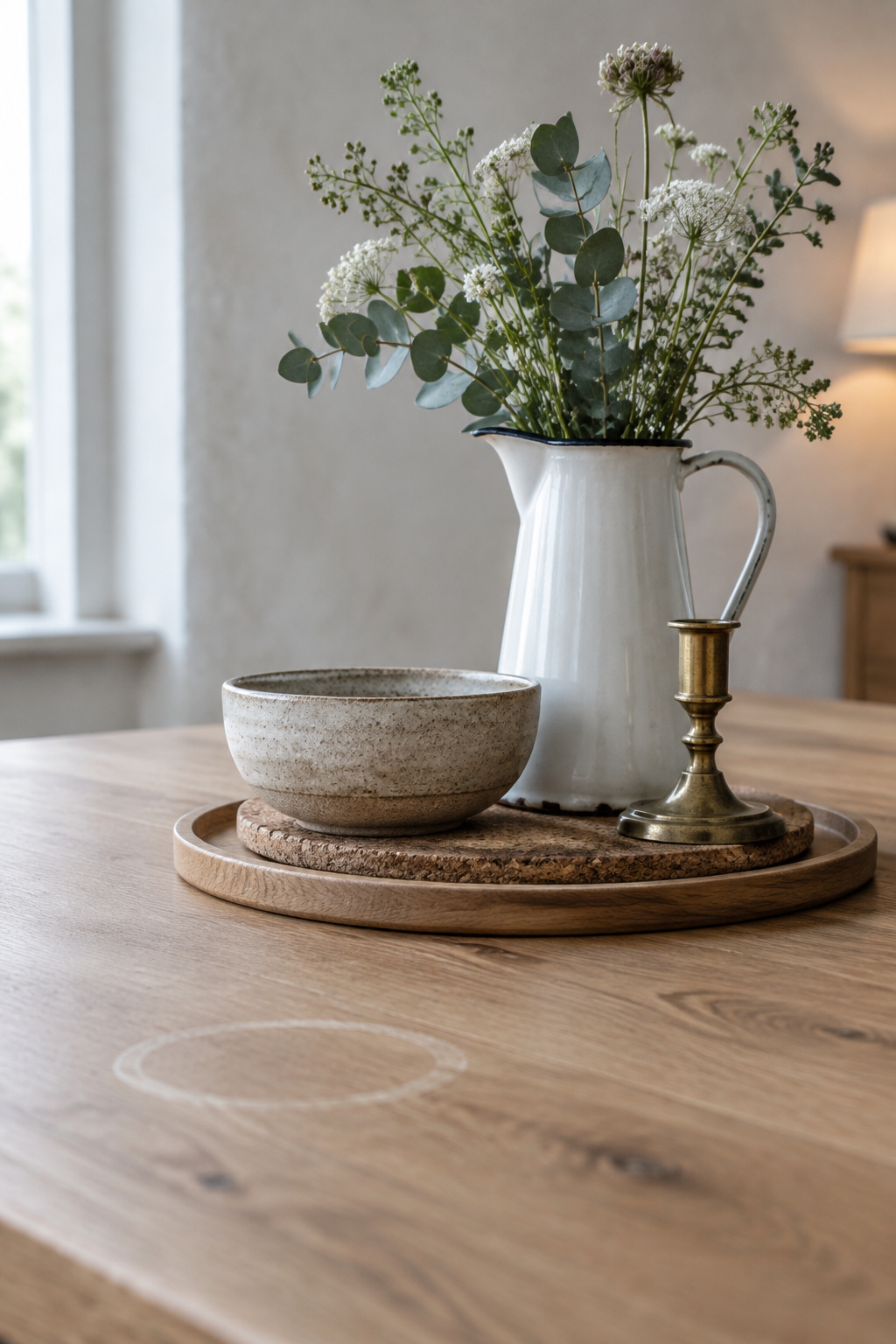
A low wood or woven tray holds a pitcher of stems, a small bowl and one candle, three things and no more. Because they all sit on the tray, the group lifts away in one motion when you need the whole island for a big bake.
The candle needs room. NFPA’s rule is at least 12 in from anything that can burn, and that includes the stems beside it and a towel on the counter. If 12 in won’t fit on the tray, use a flameless candle.
One Tray, Four Seasons
Keep the tray and change only what’s on it: squash and dried stems in fall, clementines and greenery in winter, cut branches in spring, tomatoes in summer that end up in dinner. The container stays, so the island never gains a second tray.
Scale, Height and Weight: What Earns a Place on a Wood Island Top
Three questions decide any object. Does it have a job? Can you see the person across from you over it? Can you lift it away with one hand?
On height, the guides disagree: under about 14 in, under 18 in, or anywhere from 12 to 20 in, and some designers want the island to carry height. No standard settles it. So sit on a stool and look across. If an object cuts off a face, it moves to the far end or goes.
How I place the usual pieces, judged from a seat rather than with a ruler:
| Object | Height, seated view | What it does | Where it lives |
|---|---|---|---|
| Shallow fruit bowl | Low, below the forearm | Holds what gets eaten this week | Gathering end |
| Crock of wooden spoons | Below the chin | Holds spoons in daily use | Gathering end, away from the cooktop |
| Bread board on edge | Below eye level | Comes down for slicing | Gathering end, at the back |
| Pitcher of stems | Tallest piece, off-center | Brings the garden in | Gathering end, far edge |
| Tray | Flat | Lets the group lift away | Gathering end |
| Nothing | — | Leaves room for hands and bags | Work stretch and set-down spot |
A wood top asks for one more habit. Anything that sweats or holds water needs a trivet, a cork pad or the tray beneath it. A white ring is moisture trapped in the finish; wood finisher Bruce Johnson calls it the sign of a weak finish and warns that waxing over it only seals the moisture in. Oiled tops are easier to repair but only moderately water-resistant, so the tray matters more on them. Choosing the top itself belongs to the butcher block countertops guide, and dining-table centerpieces and open-shelf styling have their own guides too.
Sit With the Counter for a Week, Then Let One Thing Stay
Go back to that first feeling, room for your hands, and live with the three jobs for a week before adding anything. Notice what migrates. The fruit bowl edges toward the chopping board; something you thought you loved never gets touched. What wanders onto the work stretch needs a drawer. What nobody reaches for can leave.
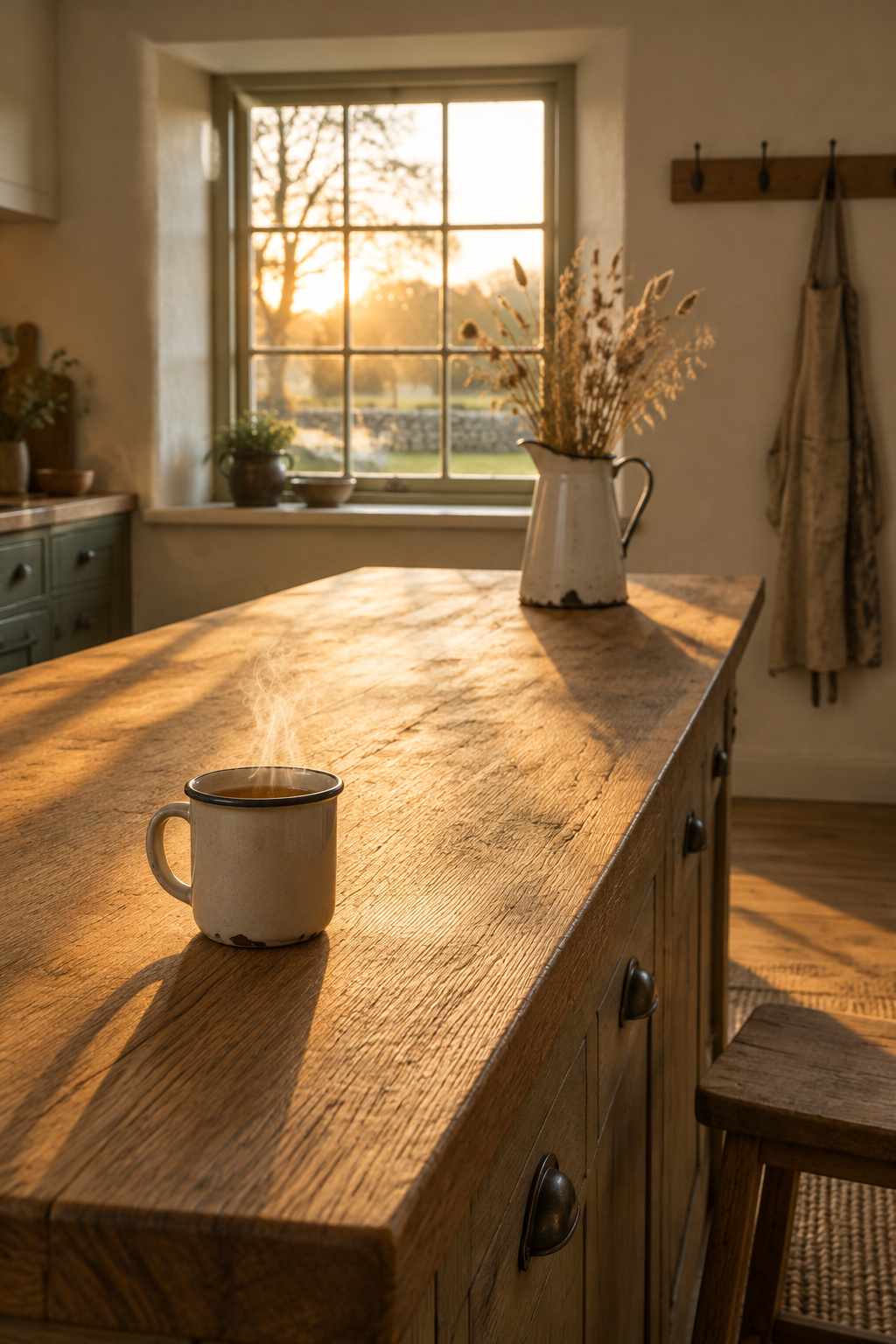
I used to insist a room be completely bare, until clients told me it felt like a waiting room. So at the end of the week, keep the one thing at the gathering end you actually reached for, the board, the bowl or the pitcher. One object with a job settles a counter more than six without one.
Next time the shopping comes in, watch the bag. If it lands on that empty 15 in by the fridge and nothing had to move to make room, the island is done.
FAQ
Is it safe to keep a candle on a kitchen island near where you cook?
Only with distance and attention. NFPA advises keeping a candle at least 12 in from anything that can burn, and more than half of candle fires start when something flammable sits too close. Keep candles at the gathering end, away from towels and wooden spoons, never leave one burning unattended, and choose a flameless candle near the cooktop.
How do you stop vases and crocks leaving water rings on a wood island top?
Put a trivet, tray or cork pad under anything that can sweat or hold water. Vases and chilled bottles transfer moisture, and on a film or wax finish that leaves a white ring trapped in the finish. Don’t wax over a ring. Wipe spills promptly, and lift objects rather than sliding them across the wood.
Should you put a plant on a kitchen island?
Only one you will actually water, because a dead plant is worse than none. Most herbs need six to eight hours of direct sun, which an island away from a window rarely gets. A pot also needs a saucer, and wood under it hides moisture. If you have a cat, skip lilies entirely; they can be lethal.