

Nearly every list of screened porch decorating ideas calls the porch a retreat, and then hands you things to add. Pillows, lanterns, a sign by the door, a wind chime. A retreat is a quiet place, yet the lists rarely mention what the room sounds like once it is full. So the porch still feels restless. The door slaps, a panel flaps at the far end, and the fan hums over your head. No pillow fixes any of that. What I want from a porch is simpler: a place where you can hear the rain.

TL;DR
- A cozy porch is a quiet one, so fix the slapping door, the humming fan and the flapping panel at the source before you buy anything soft.
- Rugs and cushions soften the clink of a cup and the edge of conversation, but a thin rug only takes in higher sounds (roughly 1 kHz and up), so it won’t hush a thud.
- Under a roof, plants live in shade, so match them to the light the roof leaves and keep them out of the rain’s reach.
Screened porch decorating ideas that start with the sound of rain on the roof
Start with how the porch should feel: settled and unhurried.

Rain on the roof is the part of that feeling you don’t have to buy. A 2021 PNAS review pooled 18 publications and found that natural sounds lowered stress and annoyance. Most of that work was done in labs and hospitals, and rain on a porch roof was not one of the sounds tested, so I hold it loosely. I keep a cast-iron kettle on the stove mostly for the sound it makes; some sounds are worth choosing.
What sits overhead sets the baseline. Metal roofs are much louder in rain than shingle, and metal over open rafters is the loud case, because a solid deck under the roofing muffles the drumming. That is a roofer’s question; your job is what happens underneath.
I once recommended a white noise machine to a client who found it more stressful than the street noise it hid, so I no longer cover a sound before I know what it is. On a porch, I keep the rain and soften or fix everything else.
Take something out before you bring anything in. The four looks below each come paired with what they do to the room’s sound. They work all year; seasonal swaps are a different job.
| Look | The sound it works on |
|---|---|
| A rug-and-daybed corner | The clink, the scrape of a chair, the ring of hard boards |
| A low table by the door | The clatter of things put down in a hurry |
| A plant group out of the rain | Adds a soft rustle of its own, to my ear |
| A heavy linen panel at the windward end | The flap and snap of loose fabric in a breeze |
A rug-and-daybed corner that softens the echo and the clatter
A porch is mostly hard surfaces: boards underfoot, a ceiling overhead, frames and posts. Hard surfaces throw sound back. Soft, porous ones take some of it in, because sound loses energy moving through the fibers. Fuller, heavier fabric takes in more.

A rug has a limit, though. Carpet is rarely thicker than about a centimeter, so it only takes in higher sounds, from roughly 1 kHz up: the cup on a saucer, the edge of a conversation, never the thud of a door. So the corner softens the room, and the bigger noises get fixed at their source.
The arrangement does most of the work. Size the rug so the front legs of the seating sit on it; a small rug floating in the middle leaves every chair scraping on bare boards. Then give the corner one long, low place to rest. HGTV showed a daybed made from a 1930s collapsible walnut camp cot with pillows, and I like that it looks found. Pillows and throws soften hard frames for the ear as well as the eye.
Choose the pieces themselves for weather first; the guide to furniture that can stay out in the rain works through it spot by spot.
Sit in the corner and set a cup down twice, once on the bare table and once on a folded cloth.
A low table by the door and one clear path to it
What can leave? I start every porch at the door, because that is where people arrive with their hands full.
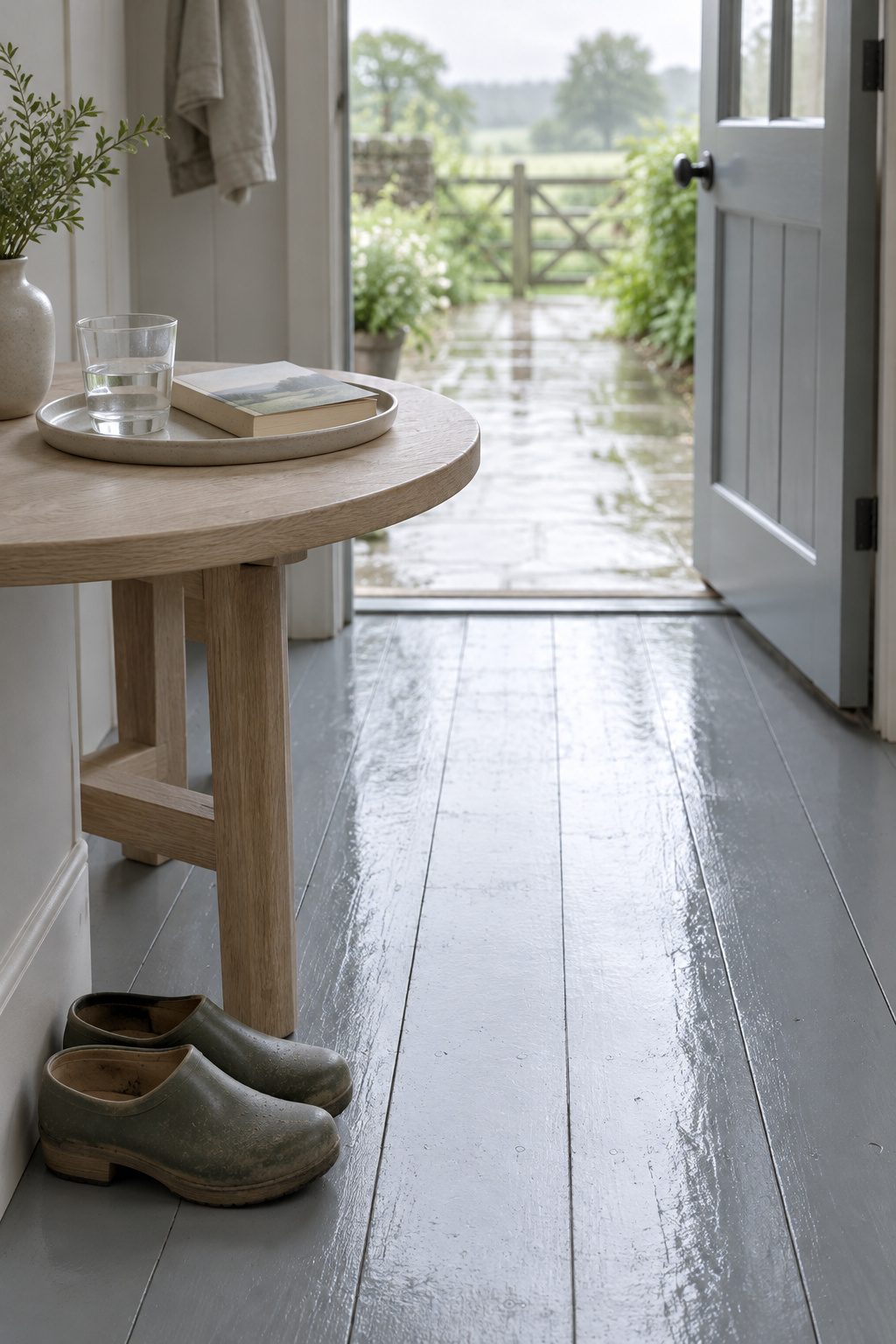
Clutter on the floor is louder than clutter on a shelf, to the ear and to the attention. A bag dropped by the step or a watering can in the walkway catches the eye and, sooner or later, a foot. This Old House puts it plainly: leave clearance for traffic, especially near entry points. Keep one clear strip of floor from the door to the seating, and let nothing live on it.
Then give the hands somewhere to go. A low table just inside, out of the door’s swing, means a glass or a bag gets set down instead of dropped. A galvanized bucket for yard shoes hides them better than a tray. Plastic glassware, a cloth runner and a few coasters are usually chosen to save the finish and the glasses, but to my ear they also take the knock out of a set-down drink.
Keep only a few objects, each with a reason to be there, and the porch settles.
A plant group out of the rain, chosen for the light the roof leaves
Plants are the one look that adds a sound instead of taking one away. When the wind moves through a big fern, the porch is quiet without being silent. That is my ear, not a measurement, but it is why I group them.
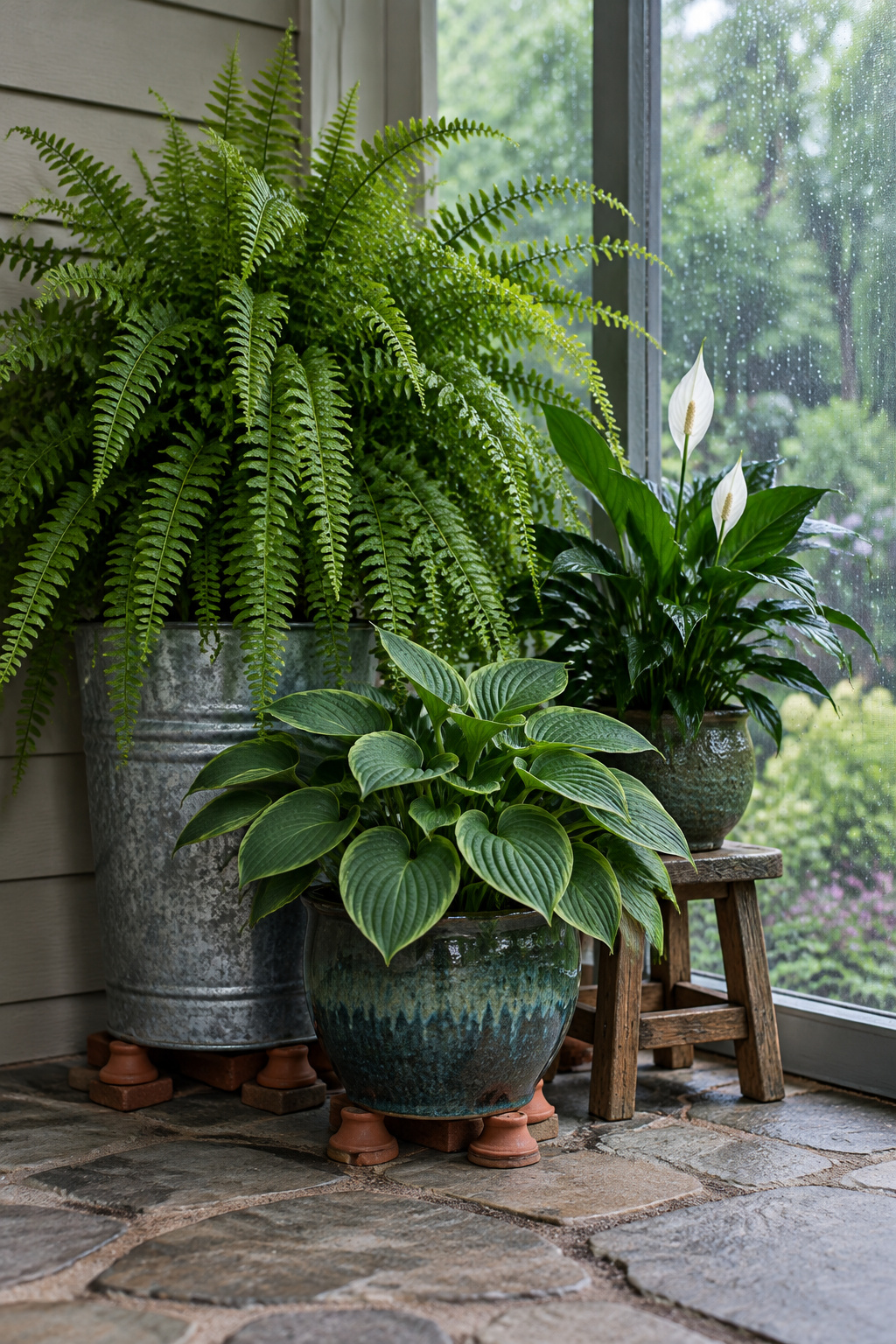
Under a roof, a plant is in shade. Michigan State University Extension describes shade plants as ones that get less than six hours of sun a day, with overhangs cutting those hours further, and they still need some bright, indirect light to bloom. Full shade means under four hours of direct sun, mostly morning. Watch your spot for a day and count.
For a shaded porch, the usual picks are hosta, caladium and hanging ferns. New Guinea impatiens, coleus and creeping Jenny make a mixed pot that tolerates part shade, at about one plant per 6 in of pot width, so an 18 in pot takes three. Give every pot drainage holes and take it out of any saucer that collects water.
Keep the group back from the screen, where blown rain reaches, and away from the windiest end, where plants use a lot of water. Houseplants can come out once nights stay above 50 F; start them in the most sheltered spot, ease them toward partial shade after about two weeks, and check the soil more often than indoors, since porch air is drier.
The surface above decides some of that light, and brightening the ceiling overhead can change what grows there.
What rattles, flaps and buzzes on a screened porch, and how to quiet each
On a silent retreat, the only clock in the hall was loud enough that by the second day everyone had noticed it. Someone quietly took the battery out. Small sounds matter more in quiet rooms, and a porch built for listening is one.
Start with the screen door. It slams from changes in air pressure or because it hangs out of plumb. One that swings shut slowly is quieter; the screen guide covers the closers.
Then the fan. A wall dimmer or a variable-speed control is a common cause of hum. Clicking most often means a loose blade or blade-holder screw, a screwdriver job. A steady hum beyond that is usually electrical, and an electrician’s call.
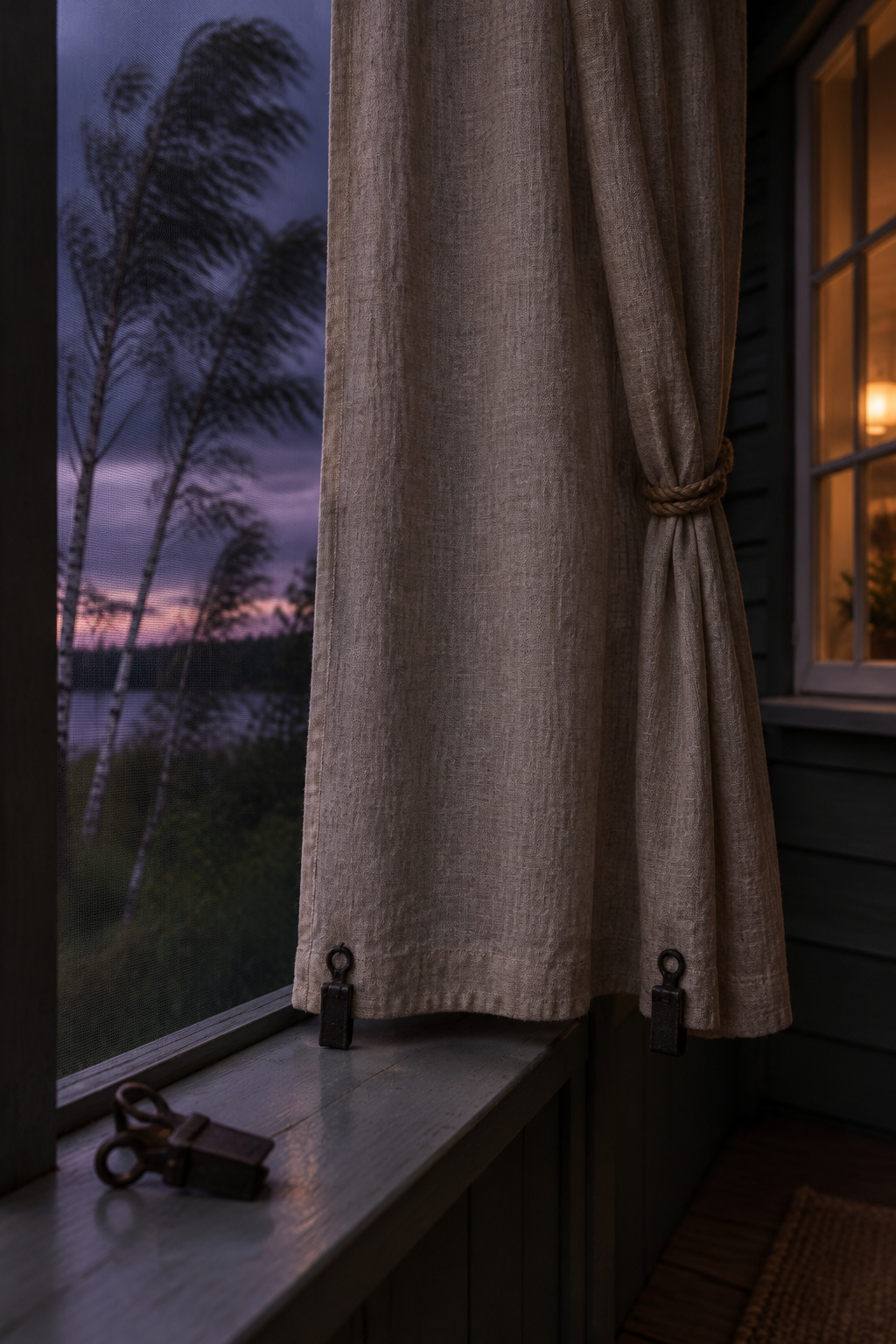
The heavy linen panel is the fourth look, and it only works if it is still. Hung at the windward end, it will flap in the first breeze unless you hold it. Tie it back, clip weights to the hem, or run a rope through the hem pulled taut between the corner posts; on sturdy fabric, small washers sewn in about every 12 in keep it down. Choose weight, since a thin see-through curtain hardly softens sound at all. Panels that keep the rain out are covered in the furniture guide.
Last, the small tappers: a wind chime, a lantern on a hook, a frame knocking the post. Each is a little clock in the hall.
Walk the porch on a windy day and stop at every sound you didn’t choose.
The quiet-porch checklist: sit in the rain for ten minutes, then check these
Sit with it for ten minutes, in rain if you can, in whatever chair is there. Don’t fix anything yet. Notice where your shoulders go each time something bangs or buzzes. Then check:
- The door closes slowly and doesn’t slap the frame.
- The fan runs without a hum from its control and without a click from its blades.
- The panel at the windward end hangs still, weighted or tied.
- Nothing taps, swings or chimes that you didn’t put there on purpose.
- Soft pieces sit in the corner where the room rings.
- The path from the door is clear, with a low table inside to set things down.
- Plants sit back from the screen in the light the roof leaves, with no standing water under their pots.
Then sit again. With the door quiet, the fan quiet and the panel still, the rain has the room to itself. That is the porch those lists promised, and it usually takes a screwdriver, a length of rope and a few things carried back inside. This weekend, pick the first sound on your list and fix that one. When you are ready for the rest of the room, there are more screened porch ideas for the structure around it.
FAQ
Can you put a TV on a screened porch?
You can, but use an outdoor-rated set. An indoor TV isn’t built for a porch even under a roof: humidity can damage its parts, temperature swings are hard on it, and putting one outdoors usually voids the warranty. Look for IP54 or higher. I’d still leave it out, since it adds its own noise over the rain.
Is it okay to hang art on the walls of a screened porch?
Yes, as long as it tolerates weather. Baskets, plates, mirrors, sculptures and laminated prints all work, and a mirror gives a nice indoor feel with reflections of the garden. Fix each piece firmly so it can’t swing or tap against the wall in the wind, or it becomes one more sound you didn’t choose.
How do you make a small screened porch feel bigger?
Use fewer, better pieces in lighter colors, with exposed legs and open-backed woven frames instead of heavy dark wood. Climbing greenery draws the eye up. Designers disagree on scale: some say size furniture down, others say use the largest sofa that fits. Either way, keep the path to the door clear.