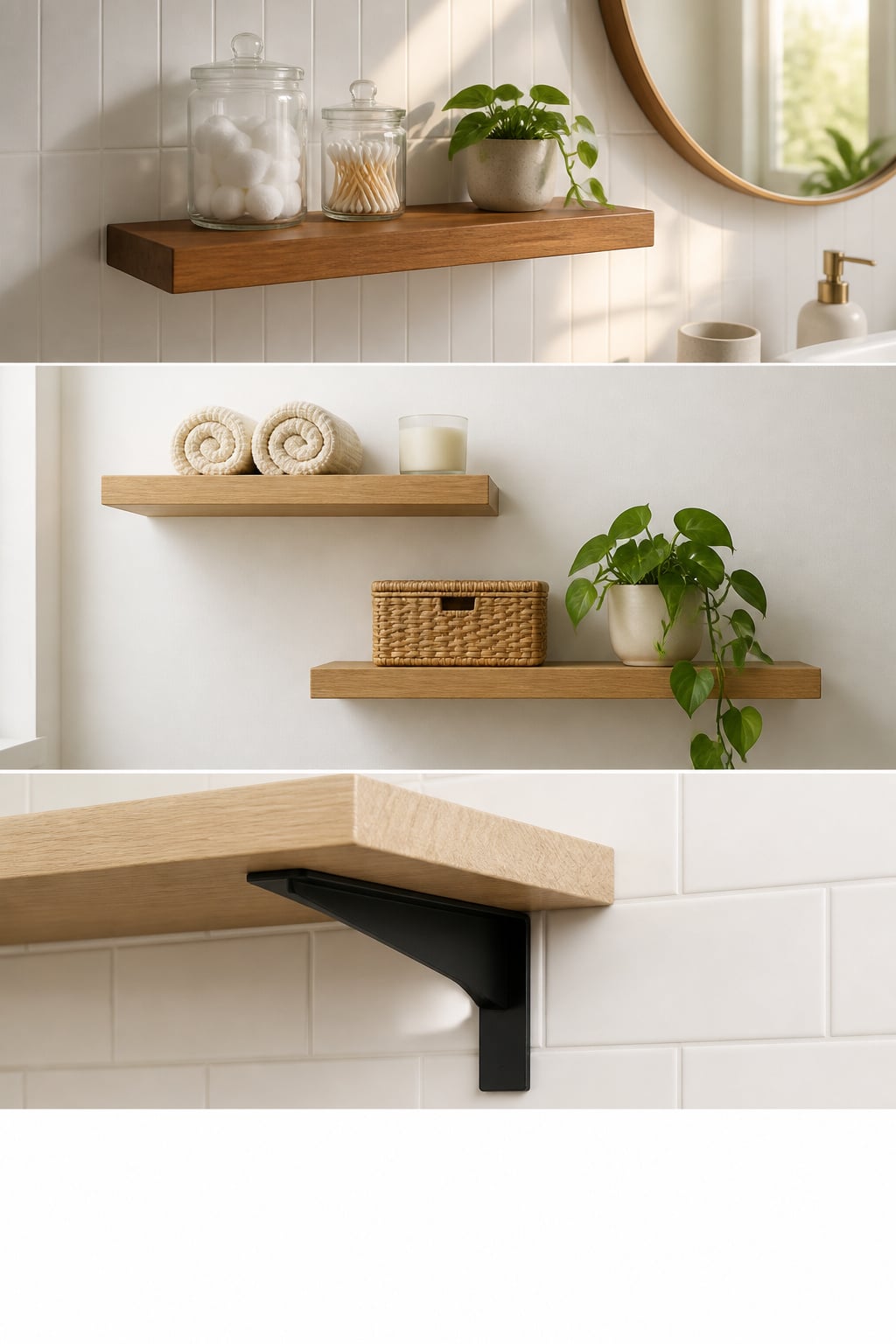
Ask the harder question before you buy a shelf: what do you want this wall to be? A closed cabinet forgives a little mess. An open shelf does not — everything on it is on display, every day. Handled well, that is not a burden; it is the whole point. The best bathroom floating shelf ideas turn a cramped room into something lighter and calmer than cabinetry, because open shelving asks for discipline up front and gives back warmth and space.
TL;DR
- For a humid bathroom, choose teak (its natural oils resist moisture untreated) or sealed white oak; avoid MDF, which swells and delaminates at any exposed edge and cannot be repaired.
- Keep shelves 6–8 inches deep, set a shelf beside the mirror rather than crowding above it, and group items in odd numbers with one quarter of the shelf left empty.
- Mount into studs (45–50 lbs each) or use toggle bolts, never plastic anchors; seal all six surfaces of a wood shelf before it ever touches the wall.
Open Shelves in a Bathroom Are a Commitment — Here Is How to Make It Work
In Sweden we have a word, lagom — not too much, not too little. Open shelving makes that concrete: it holds what you need and reveals, plainly, when you have too much.
Why open shelving is harder than a cabinet but better when done right
A cabinet hides things you would rather not look at; an open shelf removes that option, so the work happens before the first bracket goes in. Floating shelves keep the floor visible and the wall light, which makes a small room feel larger, and natural wood adds warmth without bulk. Pair it with one closed cabinet for cleaning supplies and backup stock, leaving the shelf for display and daily items only.
The Nordic discipline behind it: only things that earn their place on the wall
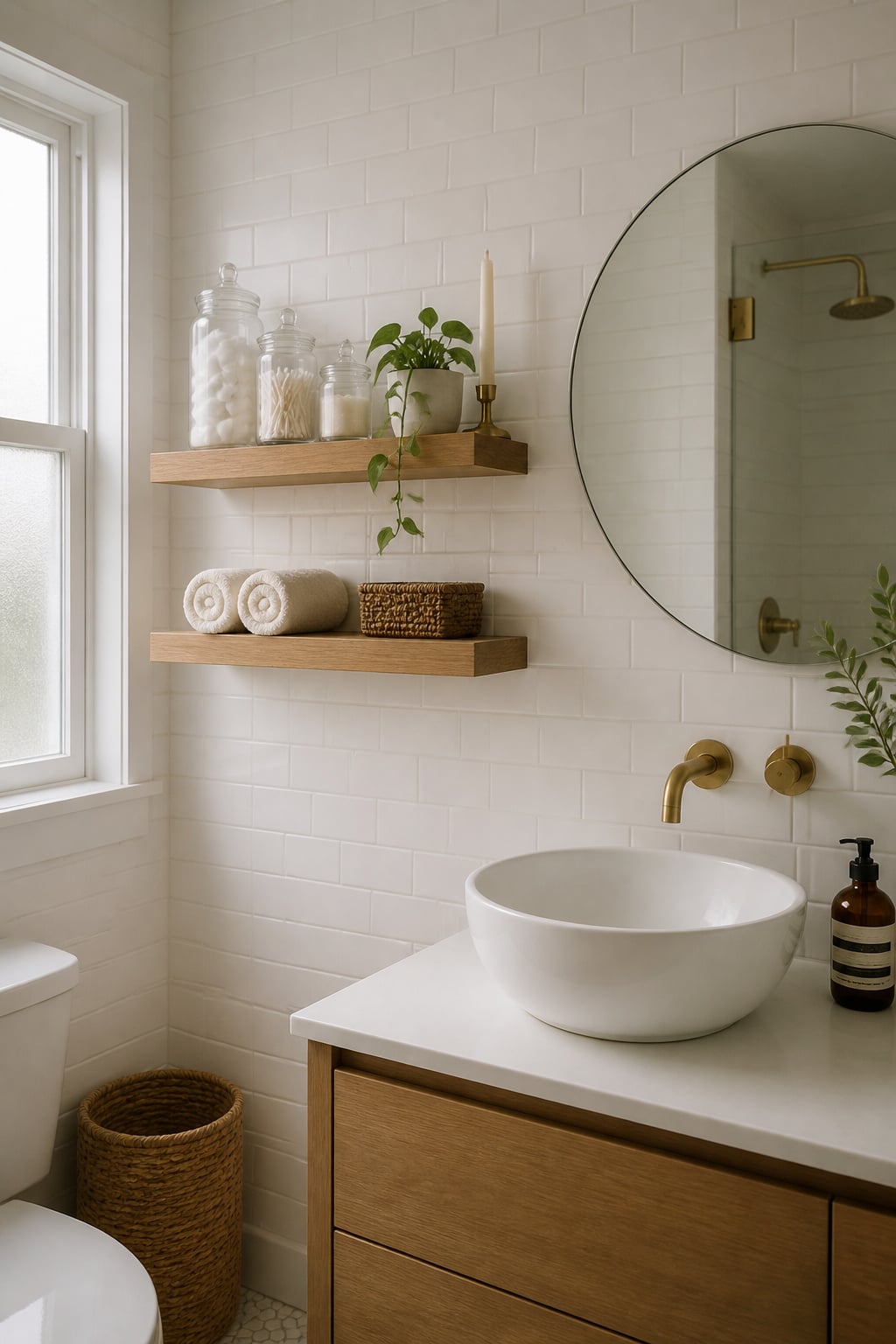
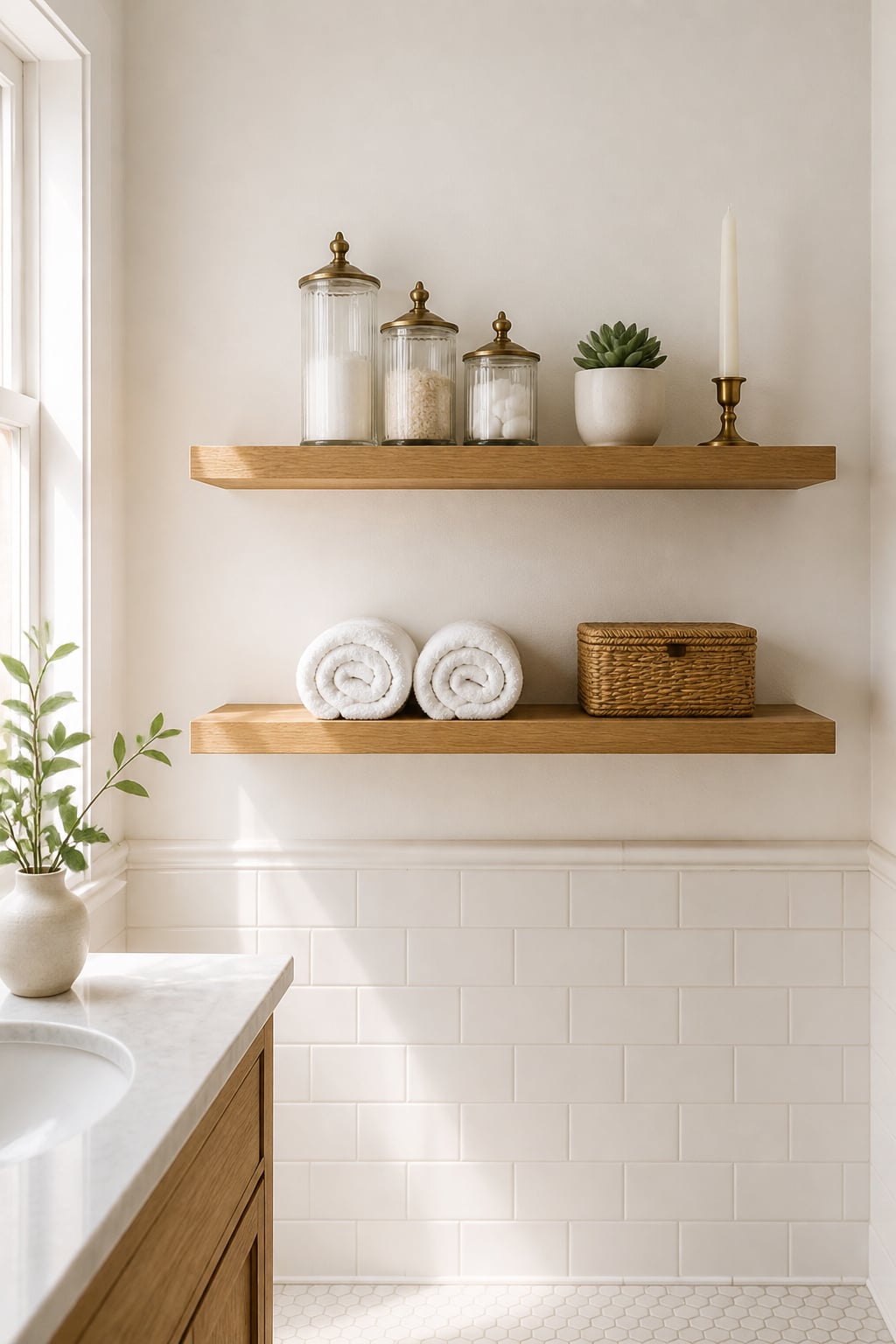
Scandinavian bathroom storage runs on light wood, white walls, and simple containers — and the look comes from one rule most people skip: quality over quantity. One solid-wood shelf in the right place does more than three cheap ones. Baskets on lower shelves hide the bulk; upper shelves show only what is worth showing.
Before installing: the edit that determines whether shelves will look calm or chaotic
Run an audit before you drill. Sort everything into three piles: used daily (keep it out), used weekly (a basket on the shelf), used monthly or less (behind a door). Then decant — shampoo, cotton swabs, bath salts moved into matching jars stop reading as branded packaging and start reading as display.
Material Choices: What Lasts in a Humid Bathroom
One variable decides everything: moisture. Bathroom humidity spikes to 80–100% during a shower, and a shelf that lasts a decade in a living room can fail within a year if the wood, finish, or hardware is wrong.
| Material | Humidity resistance | Finish required | Lifespan with care | Character |
|---|---|---|---|---|
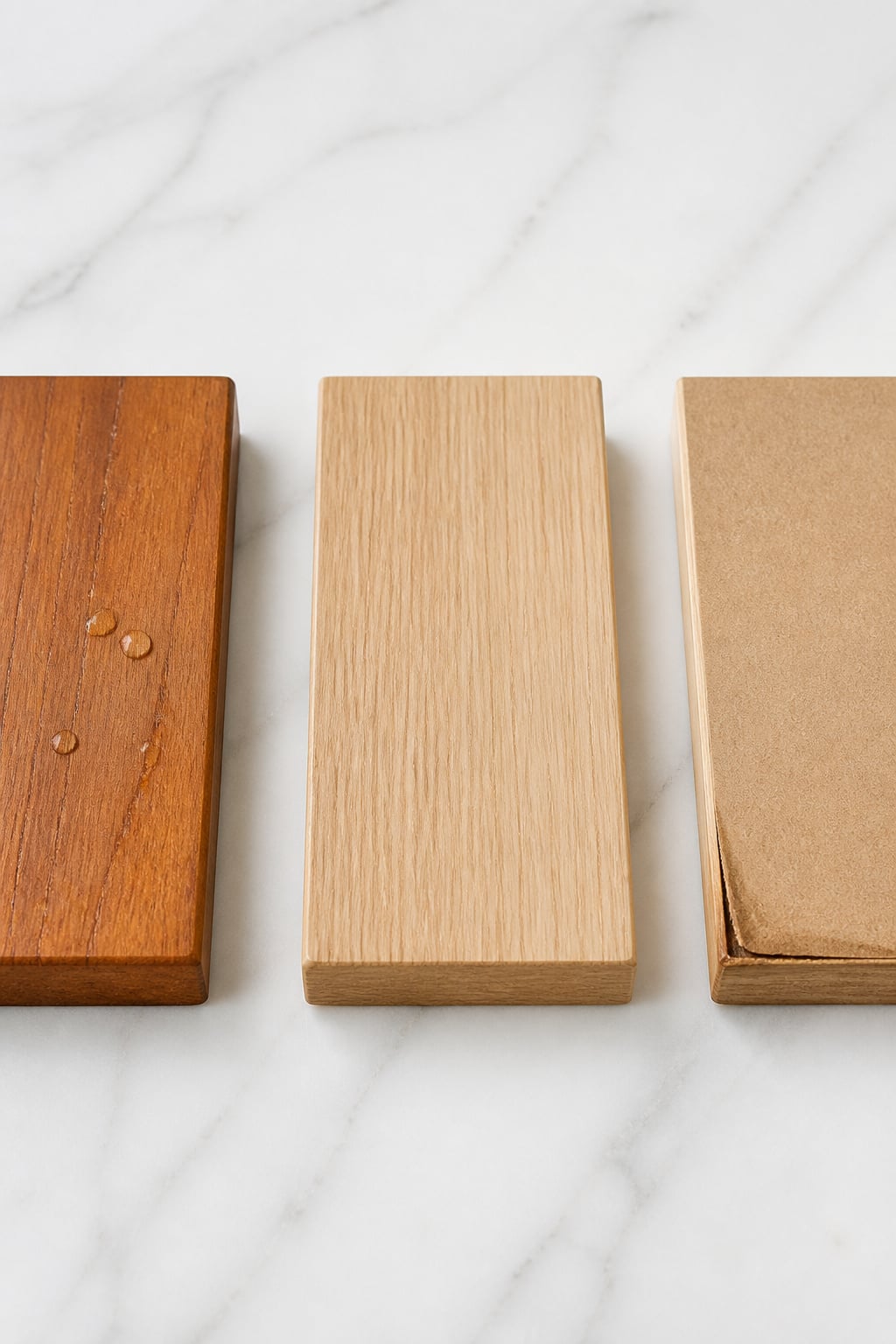
| Teak | Excellent (natural oils) | None essential; re-oil every 1–2 years | ~75 years untreated | Warm, golden, ages well |
| Sealed white oak | Good | Reseal every 1–2 years, all six faces | Long, with upkeep | Natural, classic Nordic |
| Bamboo | Moisture-resistant, not moisture-proof | Re-oil periodically | Good if well ventilated | Pale, fine-grained |
| Tempered glass | Impervious | None | Indefinite | Clinical, light |
| Powder-coated steel | Good (specify stainless) | None | Long; coat scratches | Razor-thin, modern |
| MDF / particle board | Poor | Full seal of all faces, rarely done | Often under a year | Unsuitable here |
If you take one row, take teak — and if budget rules it out, sealed white oak.
Solid wood, teak and bamboo: the natural options and what each needs from you
Teak earns its place through chemistry: its natural oils and rubber content resist moisture without a finish — which is why it sits on boat decks — and deter mold besides. An optional re-oil each year or two keeps it right. Sealed white oak and cedar work with a reseal every one to two years across every surface. Bamboo is moisture-resistant rather than moisture-proof and suits a well-ventilated bathroom with periodic oiling. Whatever the wood, run the exhaust fan for 15–20 minutes after every shower to hold humidity near the 30–50% wood likes.
Glass and metal: lower maintenance, different character
Glass does not care about humidity — it will not warp, swell, or grow mold. Specify tempered glass for anything load-bearing; a 24-inch span at 1/4-inch thickness safely holds up to 120 lbs. The catch: glass needs visible brackets and leans clinical rather than warm. Always specify stainless steel hardware — mild steel rusts within a year or two.
MDF and veneer: what the humidity does and the finish that slows it
MDF and particle board absorb water through any unprotected edge or screw hole, then swell, warp, and delaminate — structural failure, not cosmetic. Edge banding and polyurethane on all six surfaces can slow it, but that preparation is almost never applied to a budget shelf.
Placement: Where a Floating Shelf Adds Space and Where It Steals It
A shelf in the wrong place does not add storage; it subtracts room. Three positions earn their keep in most small bathrooms.
The three positions that work in most bathrooms: beside the mirror, above the toilet, over the door
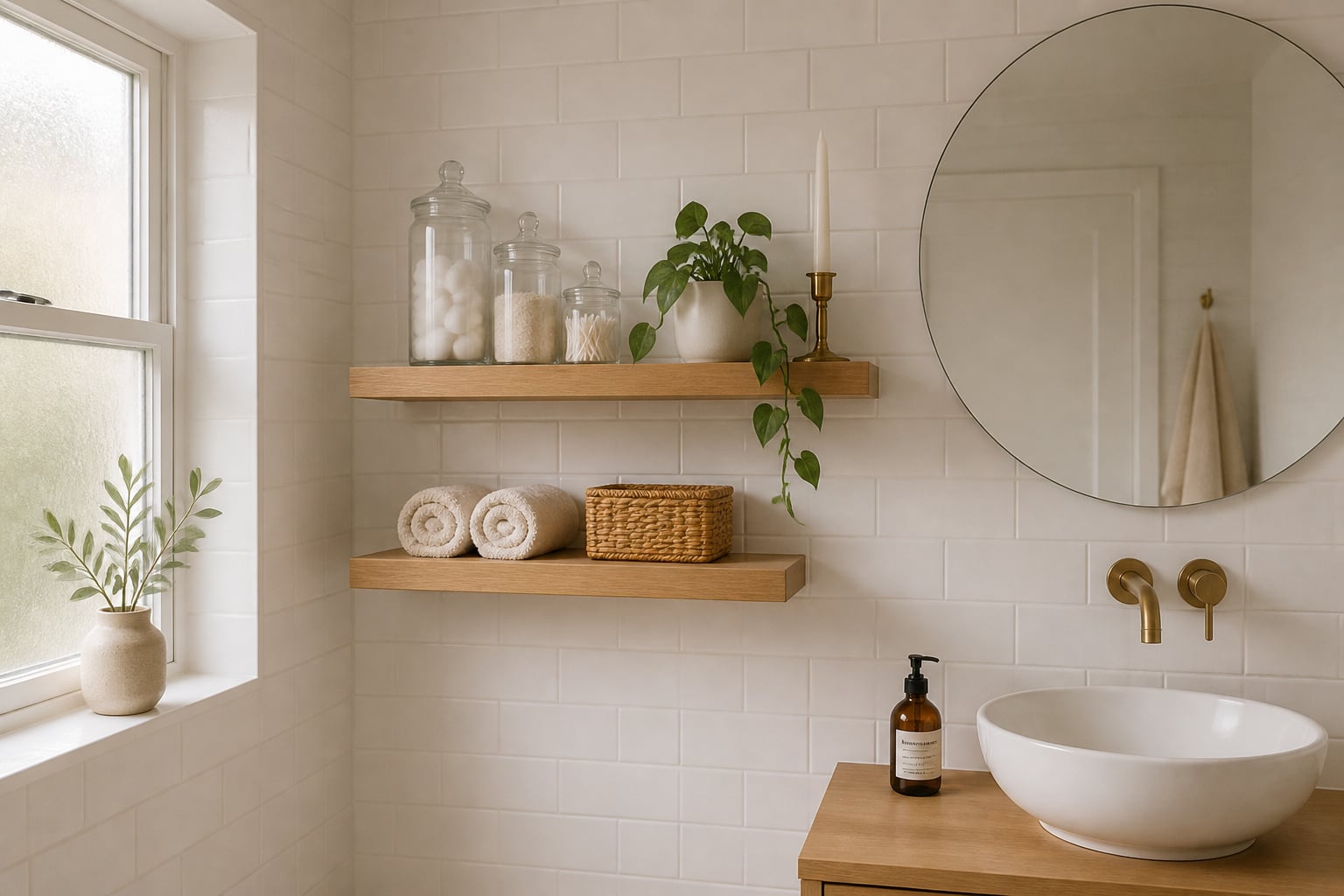
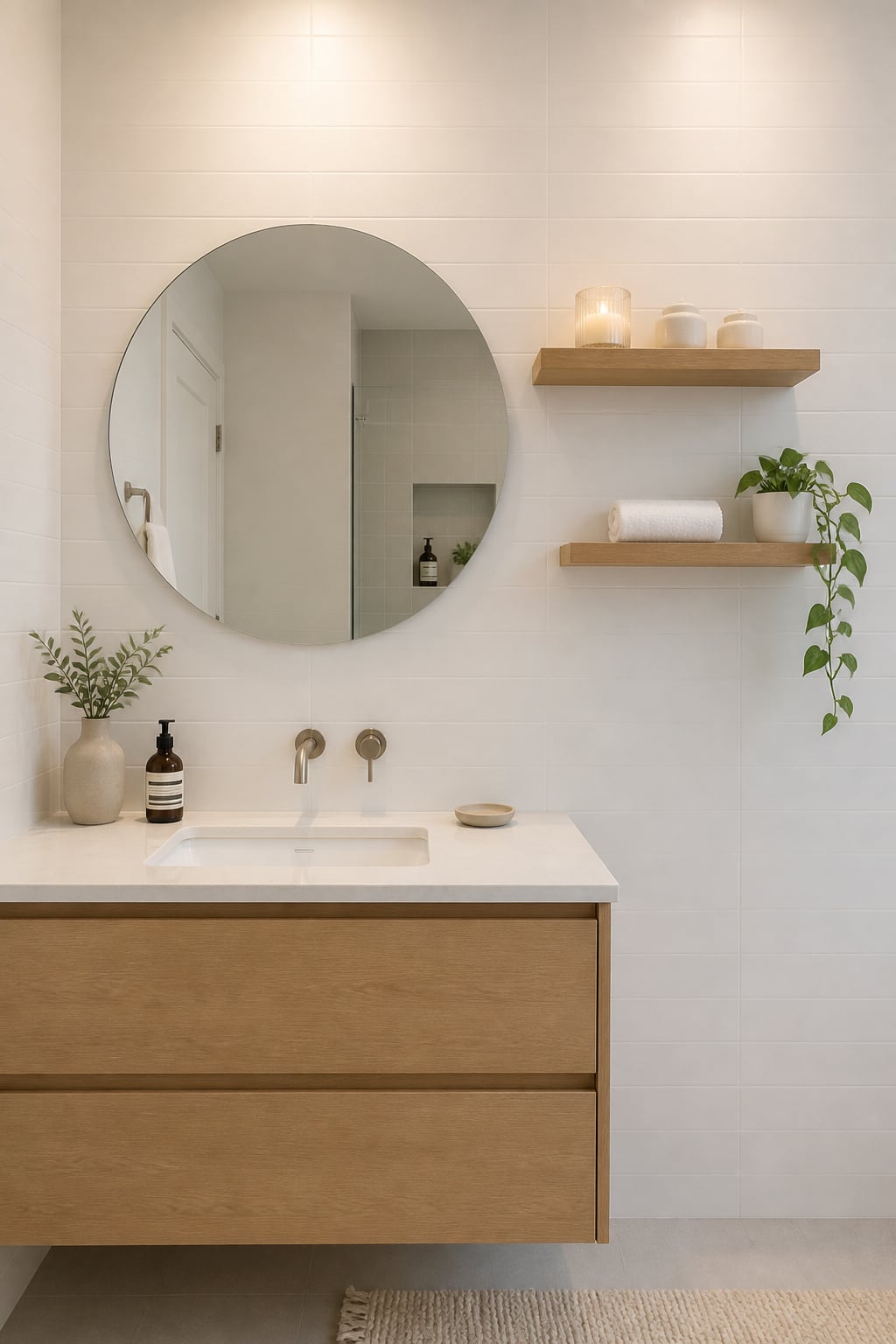
- Beside the mirror. When the mirror owns the central wall and there is 6–12 inches to one side, a shelf relieves the counter. Set its bottom 4–6 inches above the mirror’s top, or level with the top but 12 or more inches to the side. A 24-inch-wide shelf is the useful default.
- Above the toilet. Wasted vertical wall, and a subject of its own — see over-the-toilet storage ideas for tank clearances and anchoring. The key figure: start at least 24 inches above the tank lid so the lid still lifts out.
- Over the door. Dead horizontal space, best for things reached rarely. Keep it 8 inches deep or less so it does not project into the room when the door swings open.
Depth and height rules for each position so shelves don’t cut the room
The professional standard for bathrooms is 6–8 inches deep — 8 inches fits toiletries and a small basket while staying out of the movement zone. Cross 10 inches and the shelf projects; the longer lever arm also strains the fixings. Above a sink, hold it 12–15 inches over the backsplash to clear routine splash.
Staggered arrangements vs single-level runs: when each looks intentional
A single-level run — three shelves of equal width stacked cleanly — reads as intentional architecture. A staggered arrangement draws the eye upward and adds rhythm in a narrow bathroom; it also gives a tall bottle room on a lower shelf with the next offset to the side. Leave 10–12 inches between shelves either way.
Styling Bathroom Floating Shelf Ideas So They Look Calm, Not Cluttered
Three disciplines determine whether a shelf reads as a spa or as a junk drawer with the door removed.
The grouping principle: odd numbers, varied heights, one empty quarter
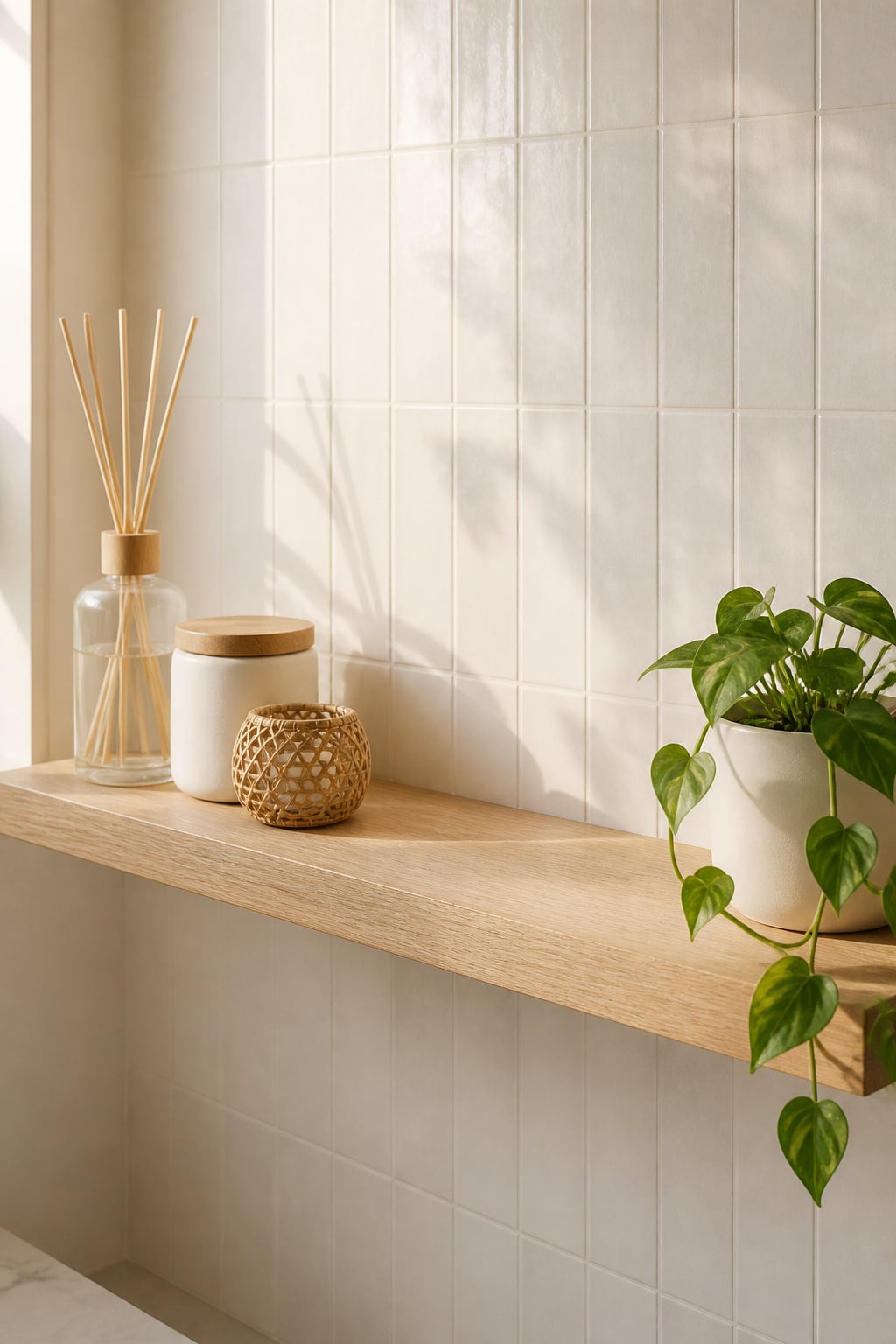
Group in odd numbers — threes and fives. A pair reads as bookends; three reads as deliberate. Vary heights too — one tall object, one medium, one low — so the grouping gains depth instead of flattening into a row. Then the part that feels wrong until you see it: leave roughly a quarter of each shelf empty. Emptiness, placed on purpose, is rest for the eye.
Baskets and decanted containers: how to keep daily-use items on an open shelf without the visual noise
Decanting has the highest impact per minute: everyday products poured into matching jars stop competing for attention and start looking curated. For what cannot be decanted — cotton balls, hair ties, spare razors — a wicker, rattan, or linen basket hides the noise. One small plant helps; pothos or a snake plant suits bathroom humidity and warms hard surfaces.
What belongs on a bathroom shelf and what should stay behind a door
The open shelf is always public. Candles, ceramic and glass vessels, a soap dispenser, a plant, and neatly rolled towels belong out; cleaning supplies, medication, bulk stock, and anything in loud packaging belong behind a door. Rolled towels read neater than folded stacks — two or three per shelf, no more — which is half the reason open shelving pairs well with good towel storage ideas.
Installation: Getting the Wall Right Before You Hang Anything
The wall matters as much as the wood. Sequence:
- Find the studs (roughly 16 inches apart on-centre) and mark where brackets hit them.
- Where a stud is missing, use a toggle bolt, not a plastic expansion anchor.
- Drill tile with a diamond-tipped bit on a taped guide, rotary only — never into a grout joint.
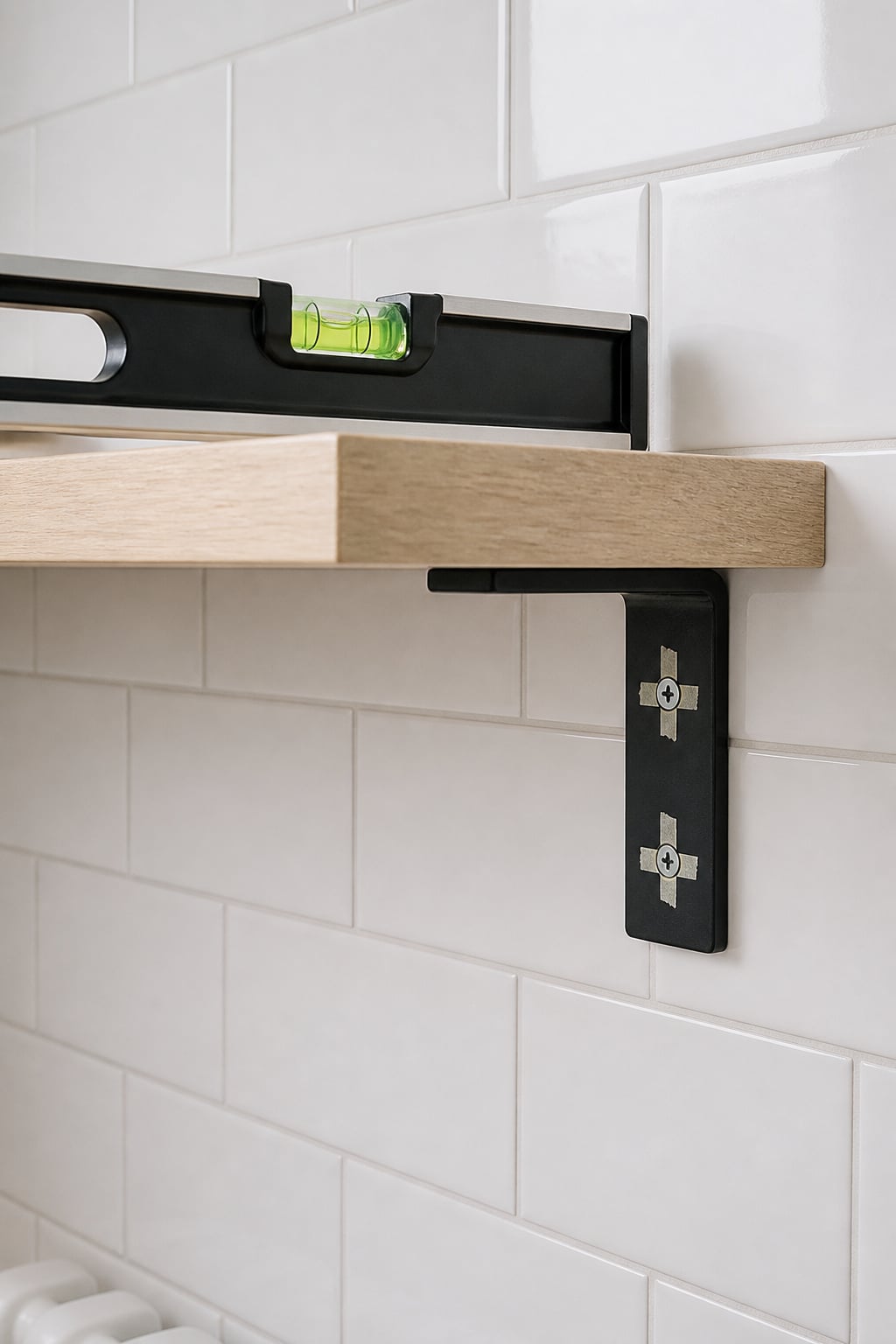
- Level both brackets before marking a hole.
- Seal all six surfaces of the shelf, then mount.
- Load gradually and check the brackets hold without flex.
Stud, anchor or toggle: what your bathroom walls will and won’t take
Capacity comes from stud connections: a bracket into a stud holds 45–50 lbs, two studs 90–100 lbs. Where no stud sits behind the spot, a 3/8-inch toggle bolt holds up to 50 lbs in half-inch drywall and snap-toggles 75–100 lbs; plastic expansion anchors hold only 5–25 lbs — inadequate for a loaded shelf.
Level and load: the two numbers to know for every bracket
Rate each bracket for at least twice the expected weight — 30–60 lbs covers a typical bathroom shelf. Specify stainless steel hardware; mild steel rusts within one to two years and stains both wall and shelf. Run a spirit level across both brackets before marking holes.
Moisture-sealing the back edge and underside so the shelf lasts
The back edge and underside are the surfaces budget shelves leave bare, and they fail first. Two coats of water-based polyurethane on all six surfaces before installation is the professional minimum — end grain wicks moisture into the core before surface damage shows. Keep wood shelves several feet clear of direct shower spray.
One good shelf in honest material, placed where it gives space rather than takes it, holding only what earns the wall — that is the whole Nordic case. See more ways to store things in a small bathroom.
FAQ
What type of floating shelf is best for a humid bathroom?
Teak is the strongest natural choice — its built-in oils and rubber content resist moisture without any finish and handle humidity better than any common wood. Sealed white oak, cedar, and sealed acacia also work in well-ventilated bathrooms but need resealing every one to two years across all six surfaces. Avoid MDF and particle board entirely; they swell and delaminate.
How deep should bathroom floating shelves be?
The professional standard for bathroom floating shelves is 6–8 inches deep, and 8 inches is the most practical depth for toiletries, small baskets, and rolled towels. Go deeper than 10 inches and the shelf projects into a small bathroom’s movement zone, while the longer lever arm strains the brackets and fixings.
How do you style floating shelves in a small bathroom without it looking messy?
Decant daily-use products into matching glass or ceramic containers — this single step removes the branded-packaging noise that makes most open shelves look cluttered. Then group items in odd numbers with varied heights, leave at least a quarter of the shelf empty, and use a basket to hide anything functional. Keep monthly-use items behind a door.