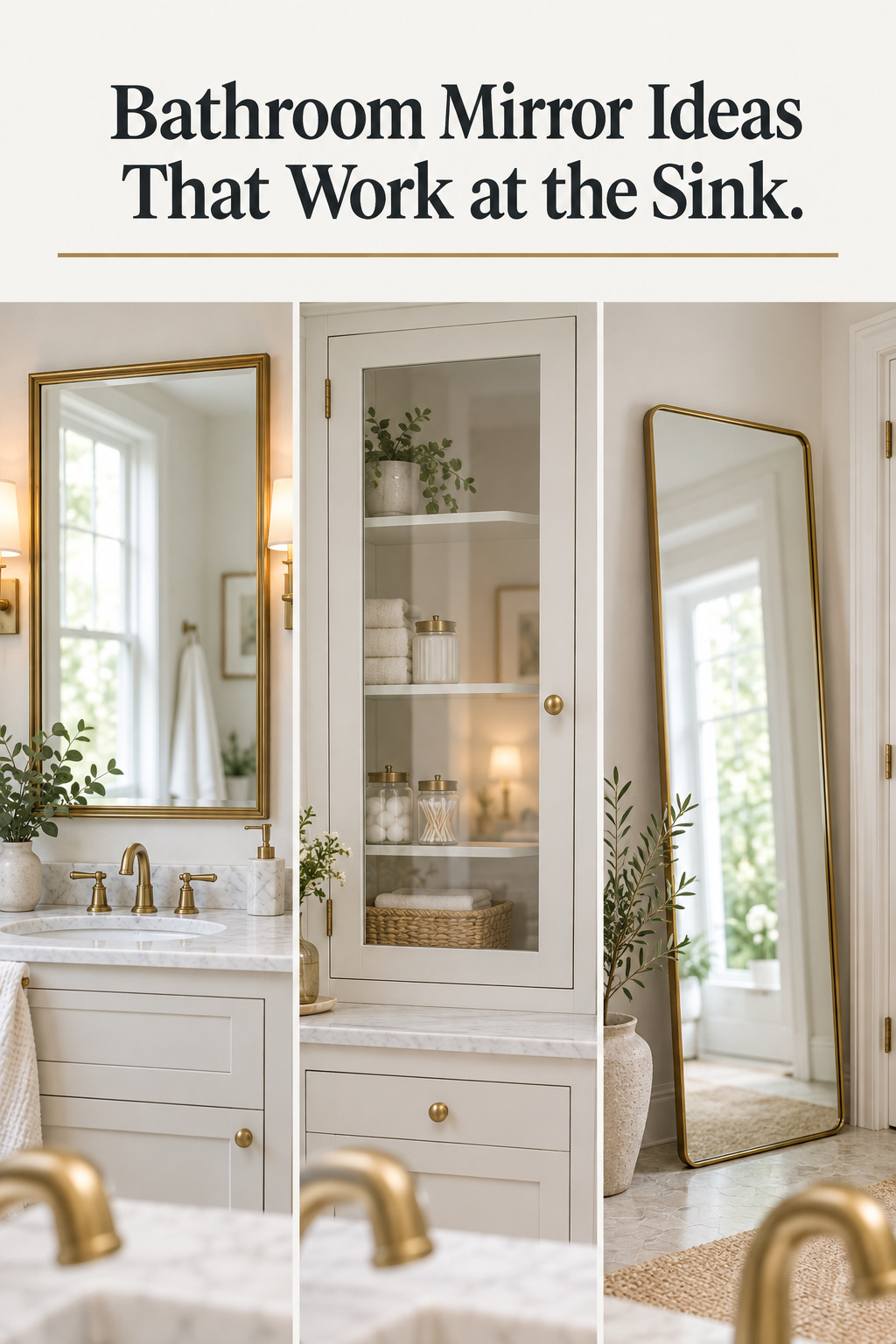
The mirror came out of a gallery photo: a painted wood frame, thirty inches of glass, hung so its bottom edge sat five inches above the countertop because a sizing chart said five inches. The chart meant five inches above the faucet. Now the spout stands in front of the bottom of the glass, and after one winter of hot showers the lower corners of the frame have started to swell. Nothing about either problem showed in the photo.
Every collection of bathroom mirror ideas is full of mirrors like that one, and by now you’ve probably looked at forty of them. Round, arched, backlit, brass, black, floating. They all look right, which is exactly why none of them helps you buy one. A gallery ranks mirrors by how they look. The mirror you live with gets judged at seven in the morning by three plainer things: whether it stays on the wall, whether it lights your face, and whether everyone who uses the sink can see into it.
So I sort mirrors in the order a remodeling crew would. Wall first, light second, the household third, and the look you already had your heart set on last. The look still gets its turn, just not first.
Three bathroom mirror ideas worth copying, and what each asks of your wall
Start with three finished looks, because they’re why you came, and each one asks something different of the wall behind it.
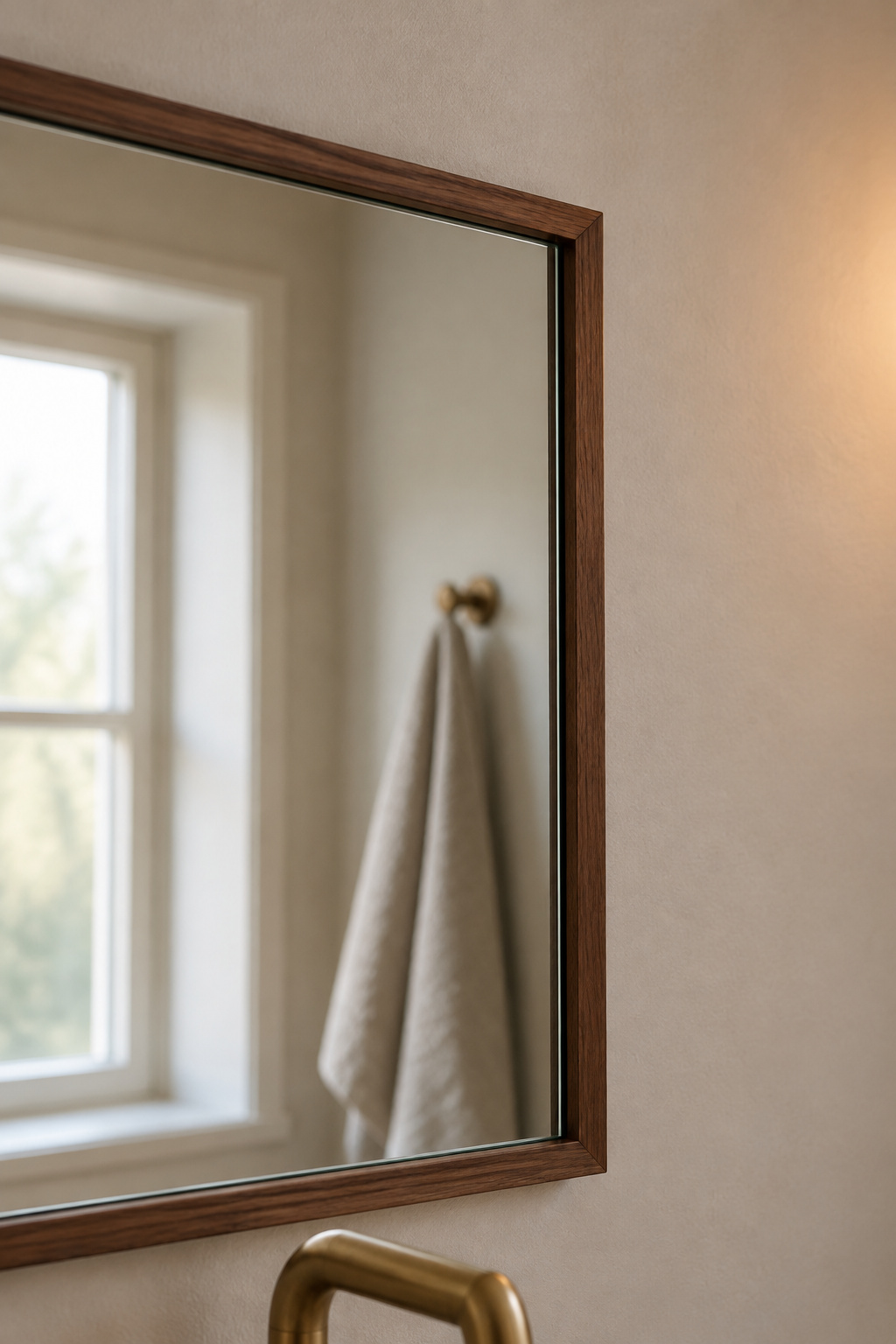
A framed mirror centered over the vanity. This is the classic, and it hangs the way a picture does, on D-rings or a wire, so it sits a little off the wall and looks like a piece of furniture. That means the wall needs solid backing at two real points, studs if you can get them. The frame material matters more than the color. Wood and MDF can swell, warp or bubble in a bathroom with a weak fan, while metal, resin and composite frames hold up far better.
A mirrored medicine cabinet. Same glass at the sink, with storage behind it. Cabinets come surface mounted, semi-recessed or fully recessed, and the last two mean cutting into the wall. Before you fall for one, you need to know what’s inside that wall.
A tall mirror. A full-height mirror is the one the National Kitchen and Bath Association recommends for access, because it gives reflection at eye level “regardless of the user’s height or stature.” It also asks the most of the wall: a lot of glass, a lot of weight and a lot of reflection pointed somewhere.
Every mirror on the boards you’ve saved makes demands like those three. Before shape and frame, settle how it hangs, what lights your face and who has to see into it. The designer Juliette Byrne also puts use first: leave room at the vanity edges, hang it high enough for comfortable use, and consider the room’s lighting and style “when choosing the shape and frame.”
Start at the wall: how the mirror hangs decides what you can buy
Tile, drywall and old plaster each fail in their own way, and the wall above a sink can be any of the three, sometimes two at once.
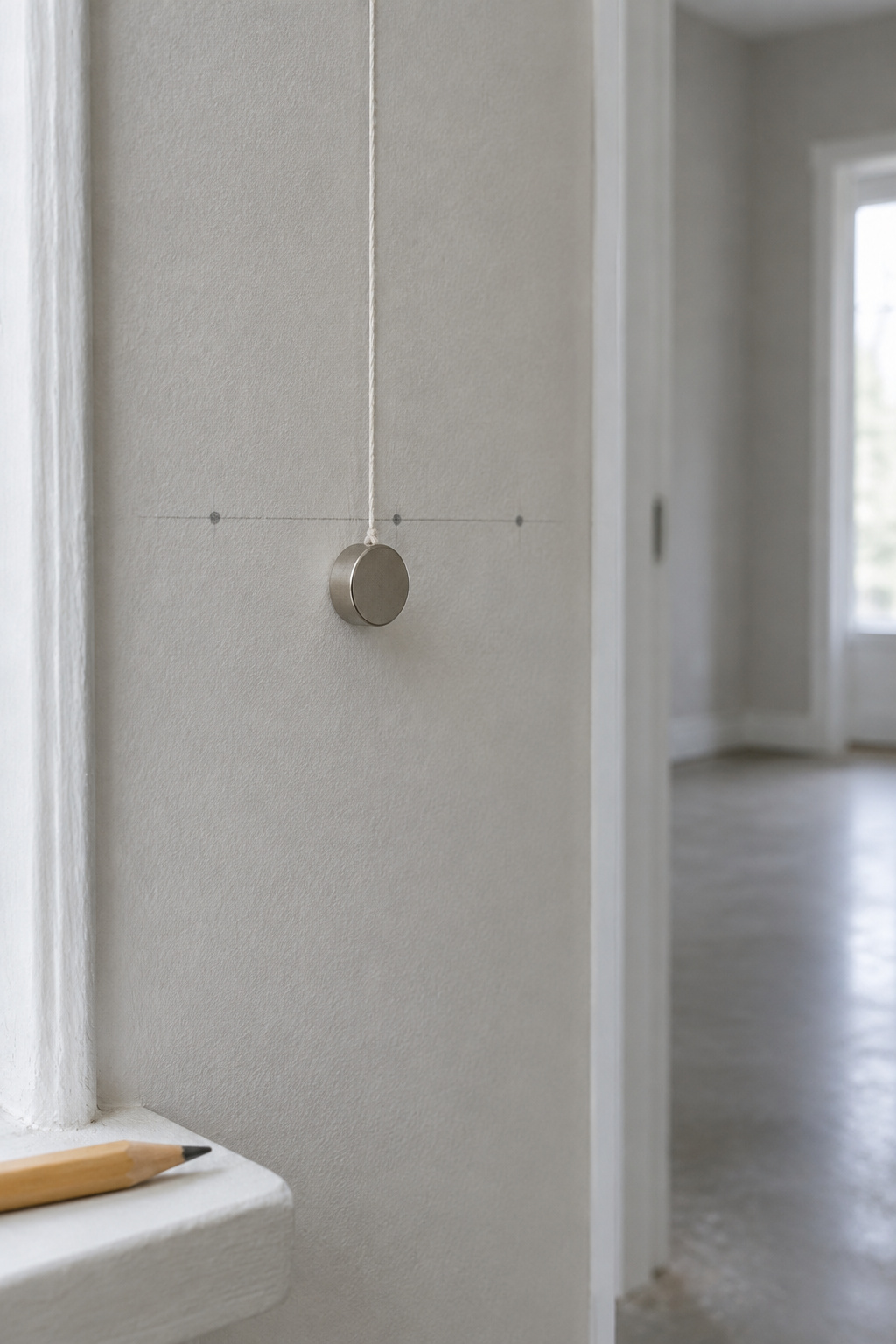
Tile hides things. Behind it there may be cement board, an uncoupling membrane, thinset or metal studs, and an electronic stud finder does a poor job through all of that and throws false readings. Old plaster defeats magnetic and electronic finders alike. Finding the studs behind either is a method job, and the hanging guide below sets out the steps.
The glass industry’s installation bulletin adds the rules that decide what you can buy. Never put a mirror on unsealed plaster or masonry, or on a freshly painted wall before the paint is dry or sealed. Leave the back some breathing space so air moves behind it. And hold the glass up mechanically, with J-moldings, clips and screws, or a frame, using adhesive as an addition rather than the whole plan. A frameless mirror you were going to glue to last week’s paint is the wrong mirror for that wall until the paint is dry or sealed.
That’s also why installers want to see a wall before they quote. Uneven drywall mud, old plaster or hidden damage behind a vanity backsplash causes trouble for framed and frameless mirrors alike.
The mistake at this step is buying hardware for the wall you imagine. I keep a box of spare screws, shims and a level behind the seat of my pickup. It started after a job where I drove forty minutes for one screw. The lesson I took from that drive is to plan for the trip you don’t want to make, and with a mirror the trip you don’t want is the one after you’ve opened the anchor packet and found out what the wall really is. Find out first. Then buy.
The finders, bits, anchors, clips and weight ratings for each wall type are in our guide to how to hang a bathroom mirror on any wall.
Size and height at the sink: the numbers for a full or shared bathroom
Once you know the wall can take it, size the glass to the vanity under it. No code or standard governs how wide a home bathroom mirror should be. What exists is a working convention, and the people who use it don’t all agree.
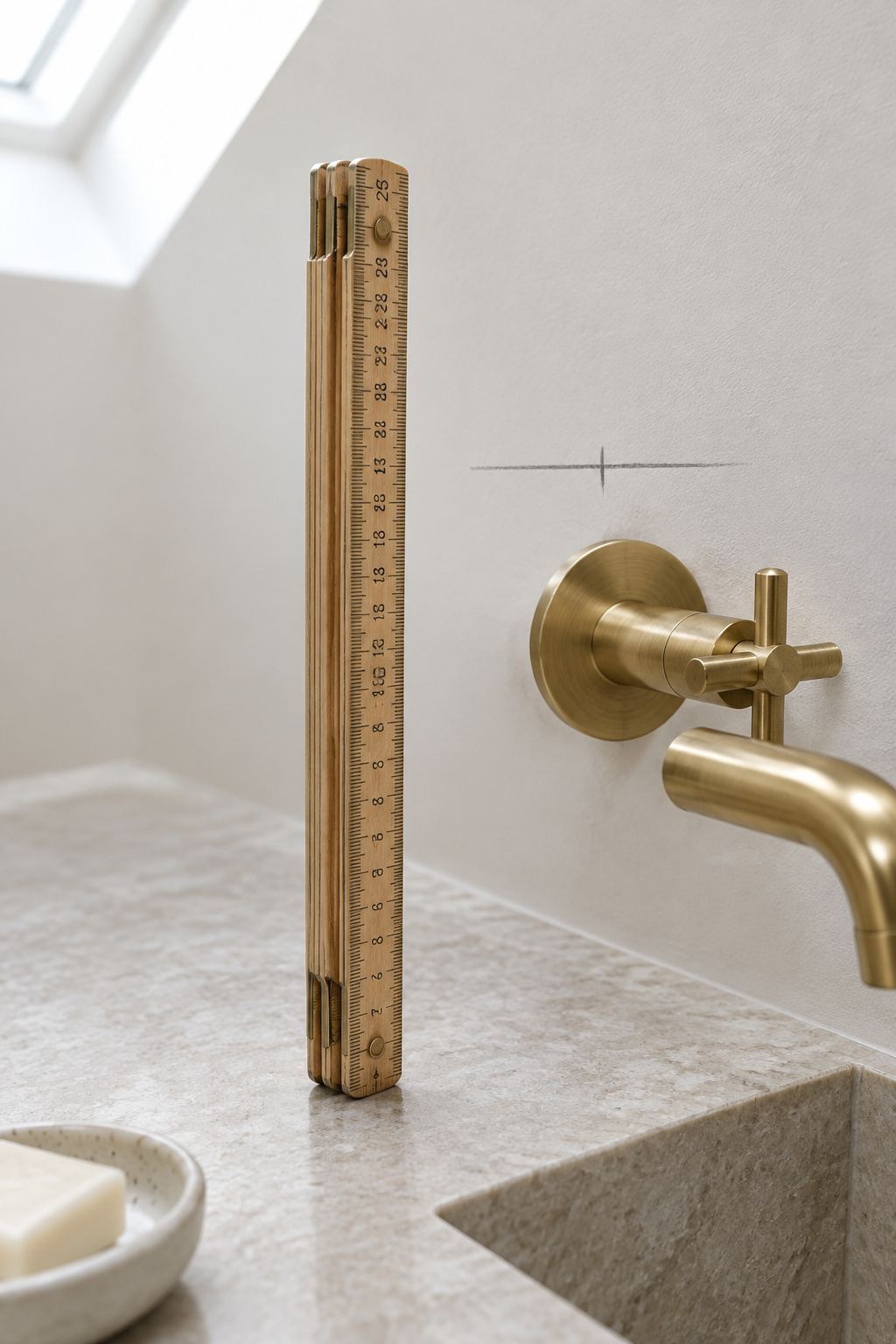
Width against the vanity
The common starting point, from Houzz, is a mirror about 70 to 80% as wide as the vanity, so it looks a bit smaller than the cabinet without looking shrunken. Designers quoted in the home magazines land close by, at about three-quarters of the vanity’s width or 70 to 90%, and one of them adds that there’s no hard and fast rule. If you plan sconces on either side, go narrower, to 60 or 70%, so the lights sit over the vanity instead of hanging past its ends.
Here’s what those shares come to on common vanity widths.
| Vanity width | Mirror at 70-80% | Mirror at 60-70%, sconces either side |
|---|---|---|
| 30 in | 21-24 in | 18-21 in |
| 36 in | 25-29 in | 22-25 in |
| 48 in | 34-38 in | 29-34 in |
| 60 in | 42-48 in | 36-42 in |
| 72 in | 50-58 in | 43-50 in |
Other sources pull the range wider. Another designer aims for a mirror 25 to 45% narrower than the vanity, which is 55 to 75% of its width. Glass shops and retailers skip the fraction altogether and say 2 to 4 in narrower than the vanity on each side. On a 36 in vanity those answers run from about 20 in to 32 in: 25 to 29 in on the usual share, 20 to 27 in on the narrower designer range, 28 to 32 in on the per-side margin. They converge near 27 to 29 in. If you can’t decide, start there and adjust by eye.
For a pedestal or console sink with no vanity at all, our powder room mirror size guide covers what the glass should relate to instead.
Height above the faucet
This is where the opening mirror went wrong. Robern sets the bottom edge 5 to 10 in above the highest point of the faucet. Some retailers measure the same 5 to 10 in from the countertop, which on a standard deck faucet is a different and much lower height. I measure from the faucet, because that’s what the glass has to clear.
Vanity heights vary more than most people expect. The NKBA’s planning guidelines put lavatory height anywhere from 32 to 43 in “to fit the user,” while Robern says most vanities stand 32 to 36 in. Take that common range and one real single-handle faucet that stands 8-3/16 in, about 8.19 in:
- Low end: 32 in counter + 8.19 in faucet + 5 in clearance = about 45 in to the bottom of the mirror.
- High end: 36 in counter + 8.19 in faucet + 10 in clearance = about 54 in.
That one faucet is an example, not a survey, so measure yours. With a tall spout, Robern suggests measuring the 5 to 10 in from the top of the handles instead, leaving only an inch or two over the spout tip.
It’s worth checking against the people at the sink. A mirror only needs to reach about a foot above and below your eye line, and average standing eye height is about 59.7 in for women and 64.6 in for men. A foot below those puts the bottom edge between 47.7 and 52.6 in, which lands inside the faucet-based range. The 40 in maximum bottom edge you may come across is a limit for regulated accessible bathrooms, not a hanging height for a house.
One long mirror or two over a double vanity
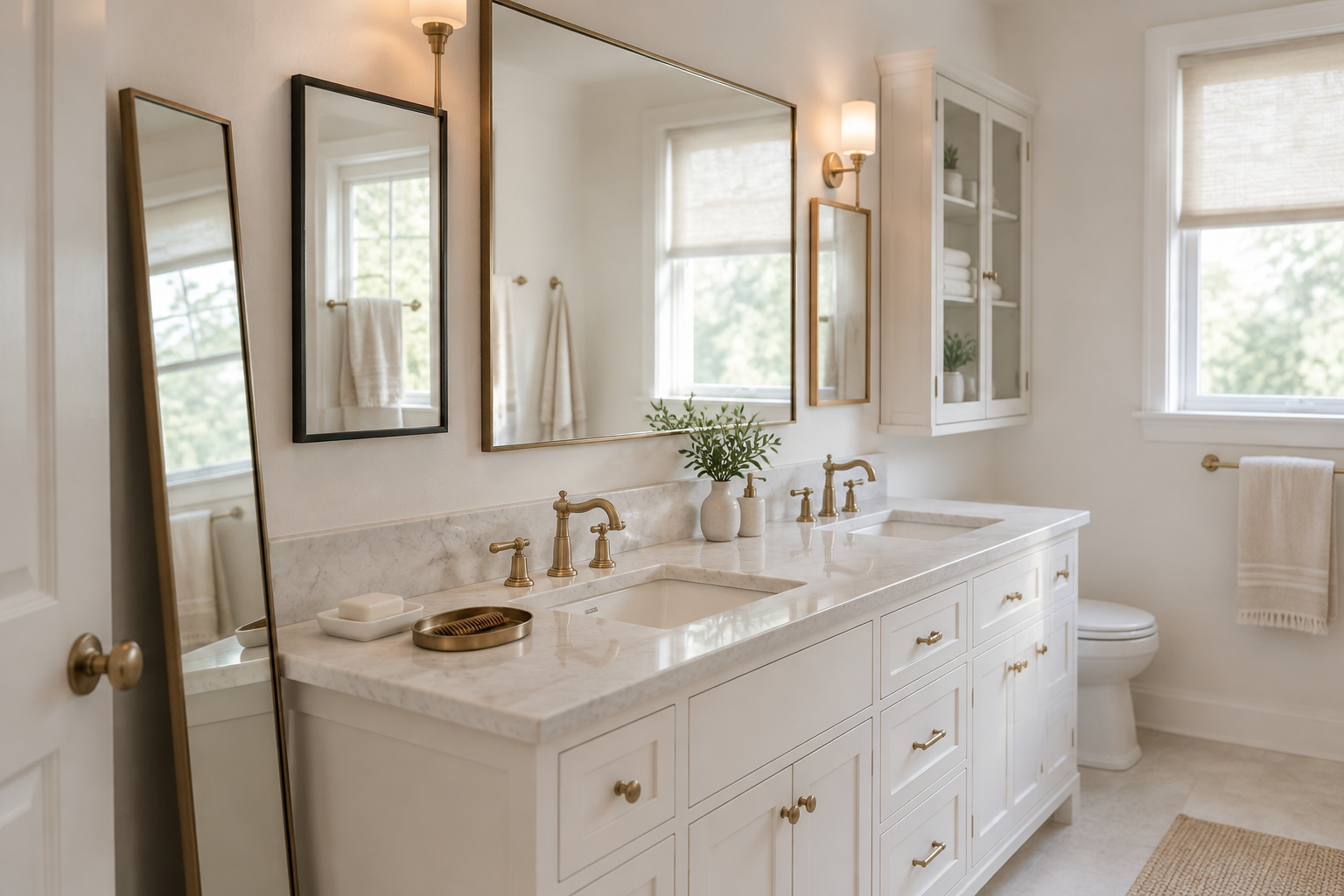
There’s no standard here either; it’s taste. One long mirror looks calm and serves two people of different heights from one piece of glass. Two mirrors give each person their own zone, but they have to hang at exactly the same height, centered over each basin, with the pair’s total width inside the vanity. The NKBA’s recommended spacing between basin centers is 36 in, so two 30 in mirrors centered on them leave a 6 in gap between them. Advice on that gap runs from 4 to 6 in up to 4 to 10 in, and a sconce between the mirrors needs more.
What lights your face: lighted mirrors, sconces and the glare they avoid
Notice where the light on your face actually comes from. That’s the problem the mirror has to solve, and it’s why light comes second, before the frame.
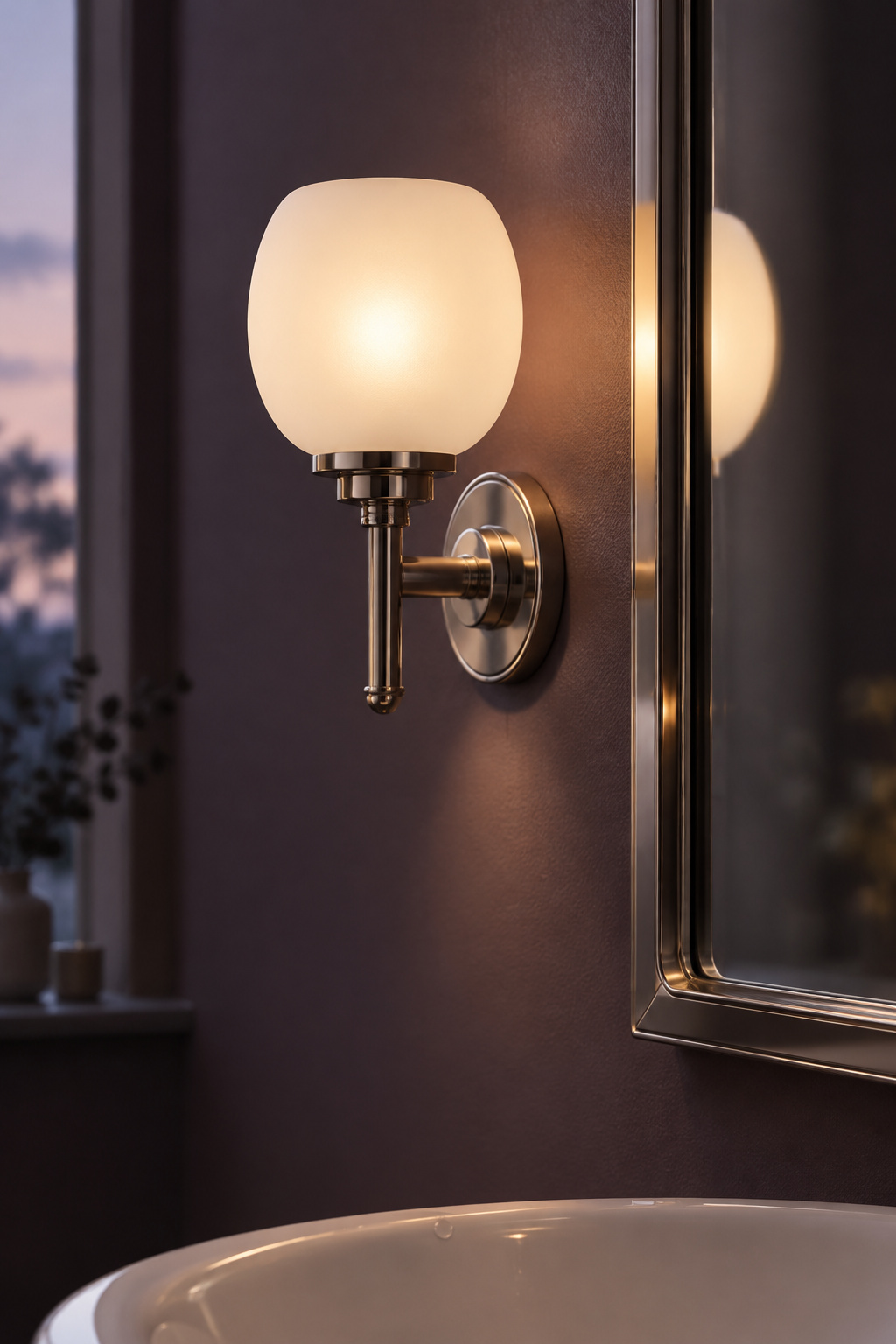
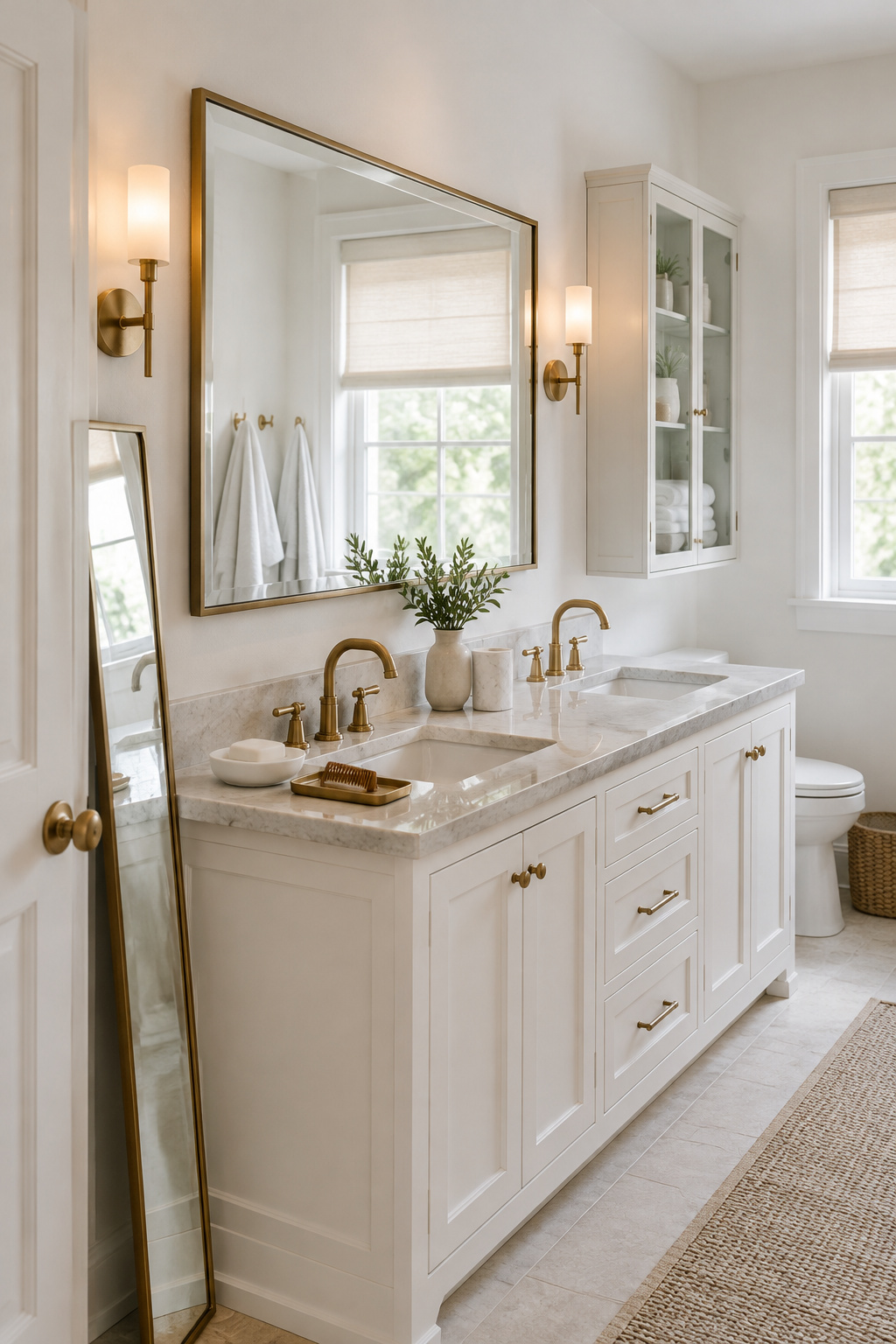
The NKBA’s guidance is short: task lighting at the vanity belongs beside the mirror and at eye level, with the lamp itself not visible to the eye. You can get there two ways. Sconces on either side of the mirror are the traditional answer, which is why the sconce column in the width table is narrower. A mirror with its own built-in light is the other, and whether one of those actually lights your face depends on which way its LEDs point. Our guide to choosing an LED bathroom mirror for the light it gives shows how to tell, what the lifespan claim on the box really measures, and which specs a seller should be able to show you.
If you keep a fixture above the glass, mind its shape. A remodeling writer at JLC advises taking a mirror right up to the base of a plain horizontal strip light, but keeping it below the lowest edge of any globe or shade. A mirror hung higher than that reflects the back of the shade, which gathers dust. Mounting heights for bars and sconces are in our guide to vanity lighting, color rendering is explained in our guide to bathroom light color temperature, and the softer evening glow lives with the spa lighting ideas in the same series.
Gas and the main panel are professional work, and a new circuit or a moved box for a lighted mirror falls in the same group. Price that before you pick the mirror.
Who has to see into it: cabinets, kids and the whole household
Who measured for the mirror? If it was one person, the mirror was probably hung for them.
Most bathrooms are shared, though, and the people sharing them stand at different heights. Average standing eye height differs by about 4.9 in between the average man and woman, and households hold a lot more variety than two averages. The NKBA says to place the mirror with the user’s eye height in mind, and Robern suggests starting from average heights and adjusting for your own household. In practice that means checking two people: the shortest and the tallest who use the sink every day. Each should see their whole face without bending down or stretching up. If no single height works for both, a taller mirror, or the full-height one the NKBA recommends for access, solves it.
Then ask whether the household needs storage behind the glass. A mirrored cabinet gives you the same mirror plus a place for razors, floss and everything else that otherwise lives on the counter. Whether you can have one depends on the wall. Surface mounting asks the least of it. Semi-recessed and recessed cabinets need the right depth and a clear bay between studs, and the wall decides both. The measurements, the reach heights for children and adults, and why medicine is better kept somewhere other than a steamy cabinet are all in our guide to recessed or surface-mount medicine cabinets.
Shape and frame come last, once the mirror already works
By now the wall, the light and the household have narrowed the choice. What’s left is the part the galleries lead with, and you can enjoy it, because you’re choosing among mirrors that already work.
Rectangle, round, arch
Shape is mostly taste once the limits are known, and those limits come from the faucet, the lights and the tile, not from any ranking of shapes.
- A rectangle follows the vanity and the tile lines.
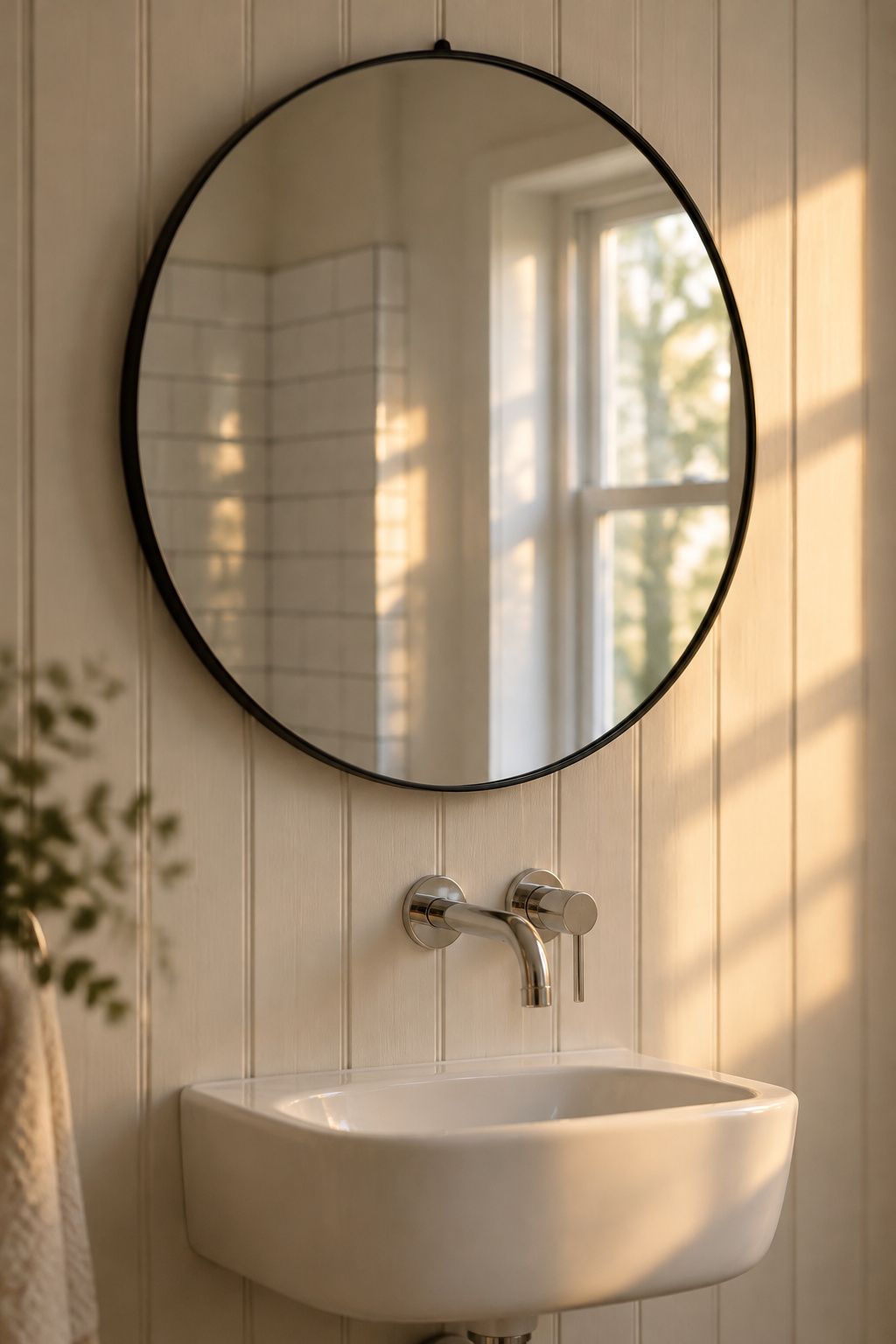
- A round or oval is narrowest at the bottom, so check faucet clearance where the curve bottoms out.
- An arch needs height above the vanity to show its shape.
Side lights need bare wall on either side of the glass, and moving a box means rewiring, so the lights set the widest mirror you can use before the shape comes into it. Our guide to round, arched and rectangular mirror shapes works through each one against the light boxes, the faucet and a wall that isn’t level.
Framed or frameless
The differences are in the edges, the hanging and the finish.
A frame protects the mirror’s edges and hangs on hooks, a cleat or rated anchors, which makes it the more forgiving install for a beginner. Frameless glass mounts flush with clips, a J-channel or mastic, often in combination, and a large sheet is a two-person job for someone experienced.
Edges need care in a bathroom. The glass industry calls the damage “black edge”: liquid reaching the edge of the mirror and attacking the silver. On frameless glass, cut and polished edges should be sealed with a sealant the mirror maker approves, and the bottom edge, where condensation puddles, should be a factory edge. A framed mirror pushes the problem onto the frame, so pick the material for the room. A resin or metal frame shrugs off steam that a wood-look frame won’t, and either lasts longer if you wipe it dry after a shower.
For finish, brushed brass, brushed nickel and matte black all come framed, and antique brass shows up too. If you’d rather build the frame yourself, our boho bathroom DIY guide has a mirror frame project.
Second mirrors beyond the sink: a tall mirror and an old one
The same order works on mirrors that never hang over a vanity.
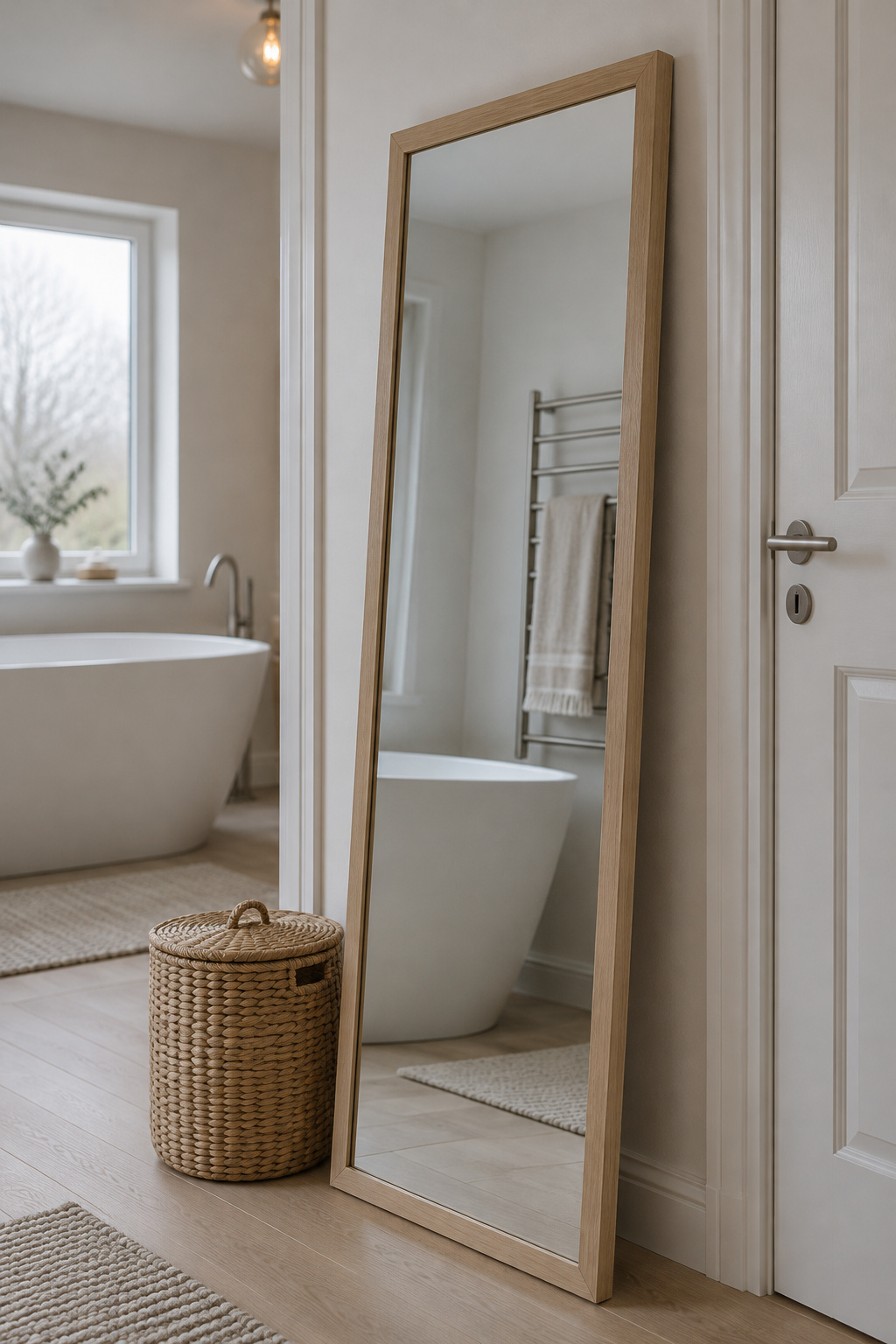
A full-length mirror doesn’t light anyone’s face, so the question changes to what it shows. A tall mirror reflects whatever it faces, and in a bathroom that can be the toilet. Judge it from the doorway, the tub and the toilet before you pick its wall, and check what you’d see from each spot. Our guide to where a full length mirror works in a bathroom shows all three views, the sizes that work, and the door-back option.
An old mirror brings a different worry. The silver on the back is open to damage from moisture and chemicals, and steam finds the edges first. An antique can live in a working bathroom if you choose its wall carefully and keep water off its edges, and our guide to keeping an antique mirror safe from steam explains which wall, how to read its age from the back, and why resilvering is usually the wrong fix. If you’re still hunting for one, our vintage bathroom accessories guide helps with where to look.
Pick your mirror in this order and you are done choosing
Every mirror type comes down to one check that decides whether it suits your bathroom. Here they are side by side.
| Mirror type | The check that decides it | Where the detail is |
|---|---|---|
| Framed | Solid backing at two points, and a frame material that handles steam | The hanging guide |
| Frameless | Sealed edges, a gap at the sill and mechanical support, not adhesive alone | The hanging guide |
| Lighted | Which way the LEDs aim, and whether your wall has the wiring | The LED mirror guide |
| Medicine cabinet | Whether the wall allows a recess, and whether the household needs storage | The medicine cabinet guide |
| Antique | The condition of the silver and edges, and how much steam the wall gets | The antique mirror guide |
| Full-length | What it shows from the door, the tub and the toilet | The full-length mirror guide |
Look again at that first mirror, the one with the swollen corners and the spout in front of its bottom edge. Its owner chose by the photo, so the frame came first and the faucet and the steam came as surprises. The last question got answered before the first three.
Your bathroom is different from that one and from every photo you’ve saved. The wall over your sink is tile, plaster or drywall, and you can find out which. Your vanity has a width you can measure and a faucet with a highest point. You know who stands there. Most of what made the choice feel impossible was never about style, and once those answers are in, you’re left with one decision that really is about style: the shape and frame you wanted when you started looking.