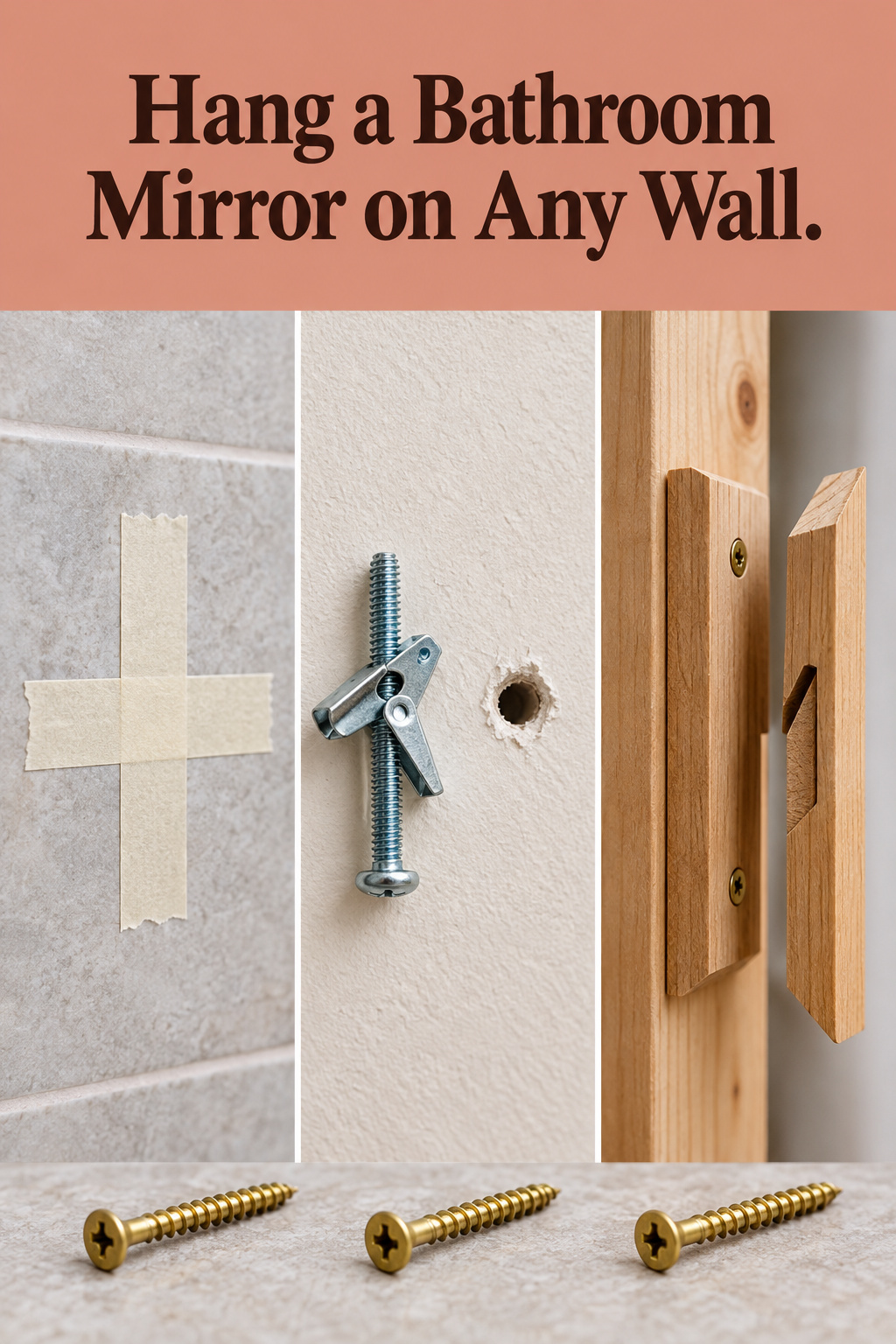

What’s behind the wall over your sink? Knock on it. That question decides how to hang a bathroom mirror long before the hardware aisle does. The plastic plug that sits happily in drywall can split old lath. The hammer setting that drives a fixing into brick will shatter glazed tile. Read the wall and weigh the glass before buying hardware.
TL;DR
- Weigh the mirror and buy hardware rated to at least twice that weight; a 4 mm mirror runs about 10 kg per square meter, and above roughly 22 lb installers put a J-channel under any mastic.
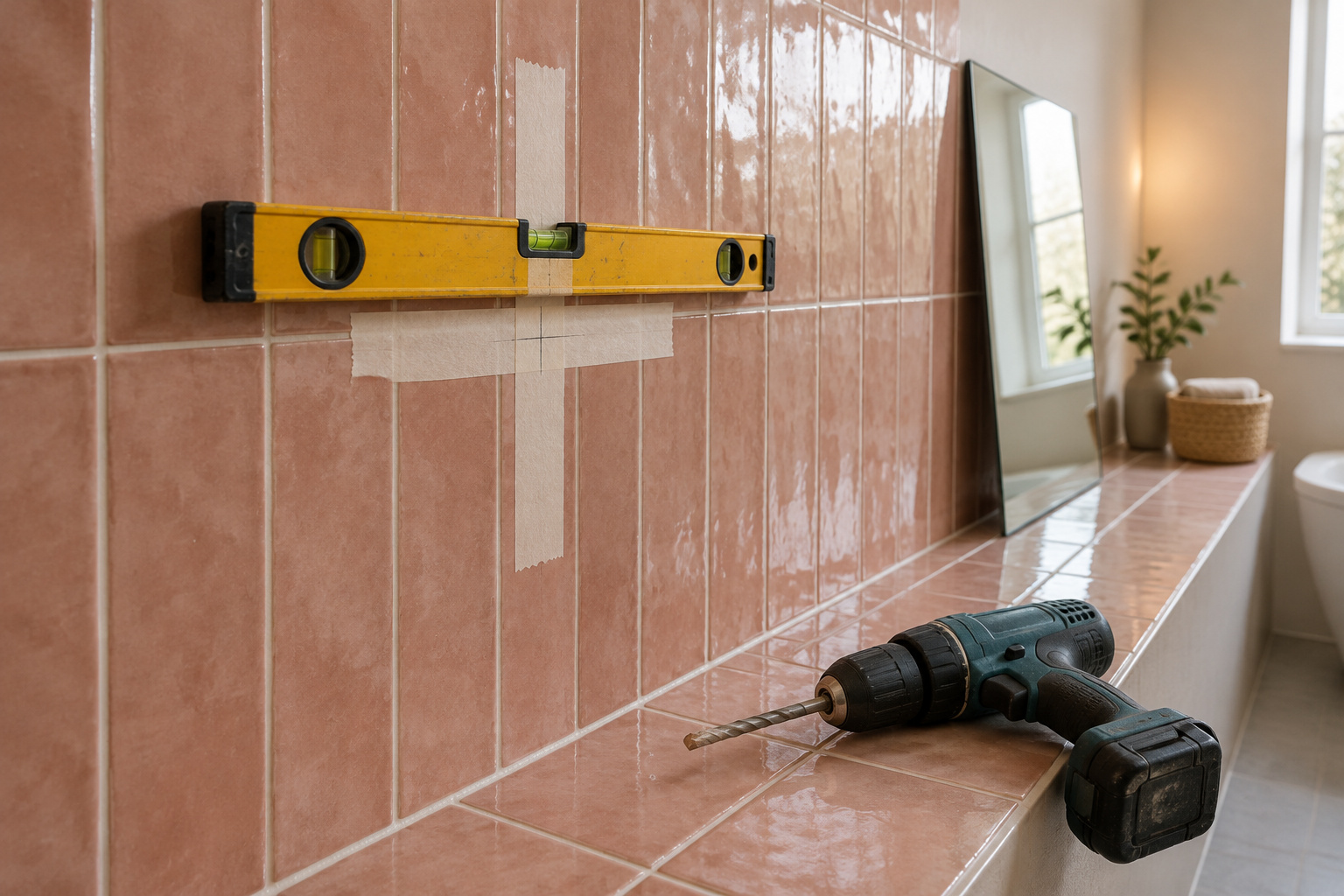
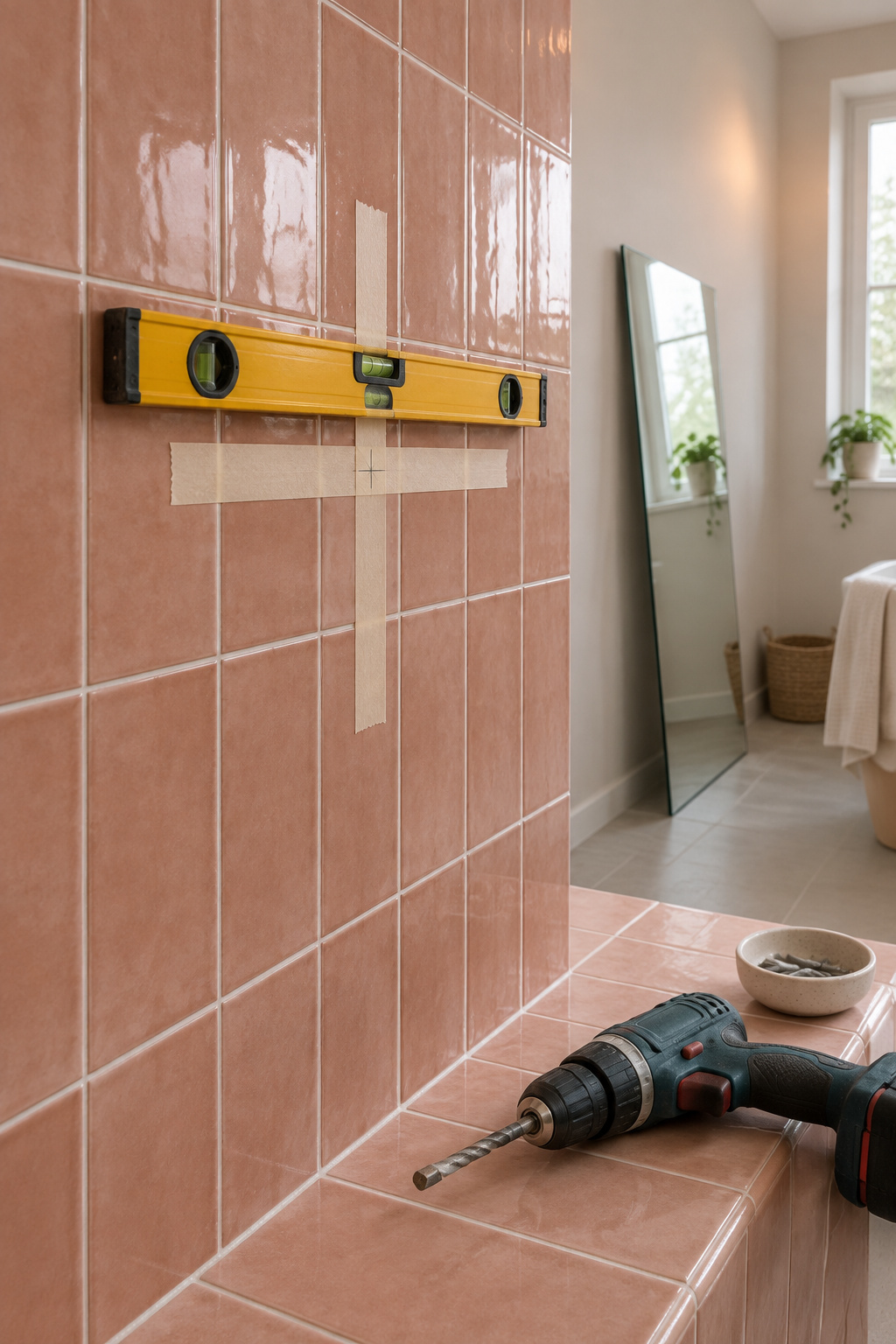
- On tile, use a carbide-tipped bit for ceramic or a diamond-tipped bit for porcelain, with hammer mode off, tape over the mark, a slow start and water to keep the bit cool.
- On old plaster and lath, pre-drill, never hammer, and screw into studs or use toggles at least 2 in long, because plastic plugs and nails break the plaster’s grip on the lath.
How to Hang a Bathroom Mirror: Weigh It and Read the Wall Before You Choose Hardware
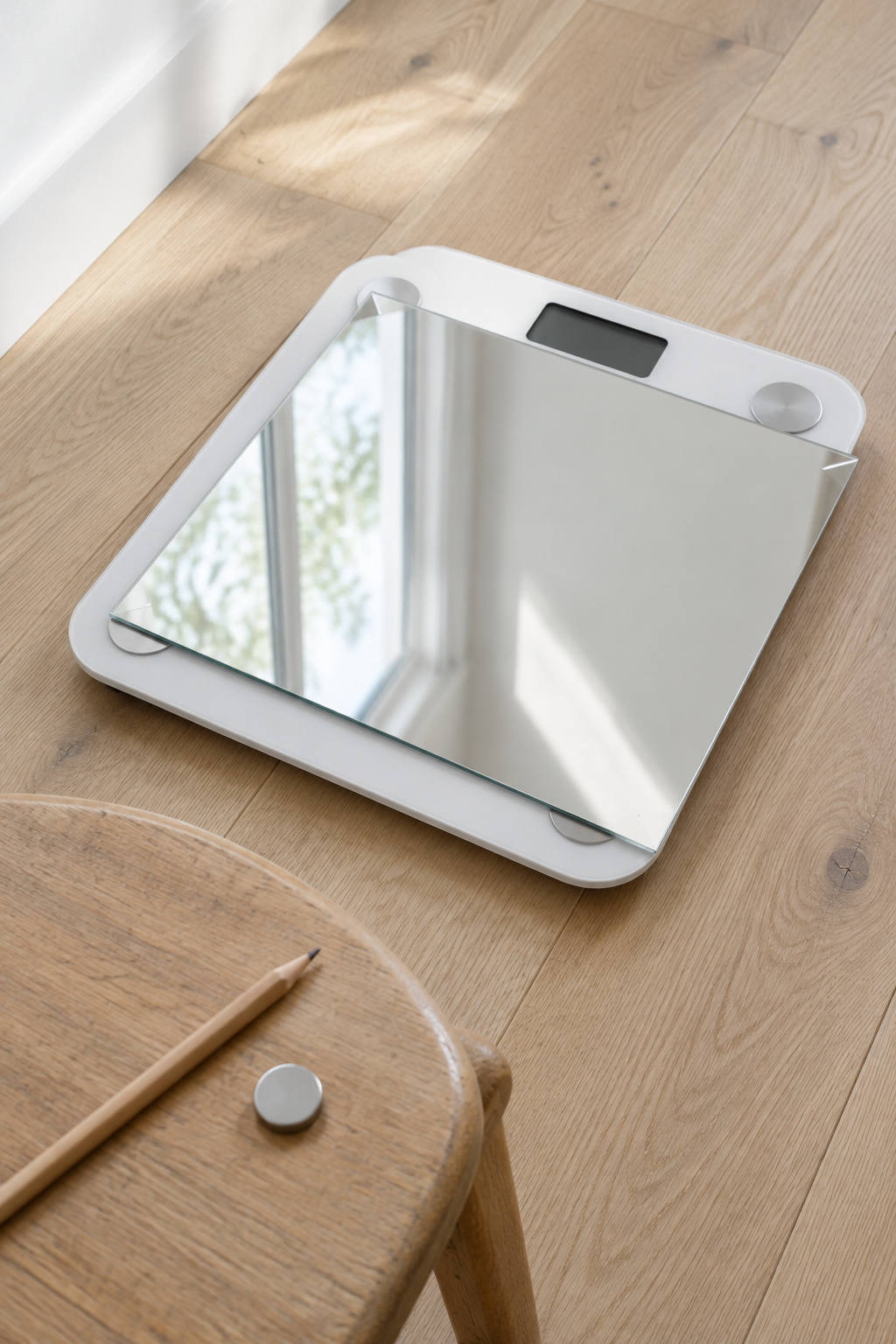
Put the mirror on the bathroom scale and double the number. Every anchor, clip and cleat on the job should be rated to at least twice the mirror’s weight, so a 20 lb mirror needs hardware rated to 40 lb. If the mirror is still in the store, estimate it: 4 mm glass weighs about 10 kg per square meter, and 8 mm doubles that. A 70 x 70 cm mirror at 4 mm is 0.49 square meters, so about 4.9 kg, or 10.8 lb.
Read packet ratings with some suspicion. Toggler counts a safe working load as a quarter of what its anchor held in testing, so a toggle that held 265 lb is about a 66 lb anchor in your wall. Toggle bolts rated 50 to 100 lb are the usual answer on drywall. Above roughly 22 lb, installers set a frameless mirror on a J-channel and use mastic only to stop it tipping forward. That’s installer practice, not code.
Next, the wall: stud finders struggle behind tile and plaster. A rare-earth magnet finds the screws in cement board behind tile and the nails in old lath.
If you haven’t picked the mirror yet, start with our bathroom mirror ideas worth hanging, because the weight comes with the choice. Then match it to the wall:
| Mirror | Wall | Hardware | Check first |
|---|---|---|---|
| Under about 22 lb | Drywall | Clips or rated toggles, a stud where one lines up | Rating at 2x the weight |
| Over about 22 lb, frameless | Drywall | J-channel carries it, mastic stops it tipping | Is the wall painted? |
| Any weight | Tile | Hollow-wall anchor or toggle through a drilled hole, a stud if you can catch one | Ceramic or porcelain, pipes behind |
| Any weight | Plaster and lath | Screws into studs, toggles at least 2 in long | Loose or hollow plaster |
| Framed, over 50 lb | Any wall with studs | French cleat into two or three studs | Stud positions across the width |
Drilling Tile Without Cracking It: Bit, Speed and the Grout-Line Trick
Glazed tile is fired hard on its face, and an ordinary twist bit can’t cut it. Hammer action is worse. Smith & Arrow, who make tile bits, say it “will almost certainly shatter the tile.”
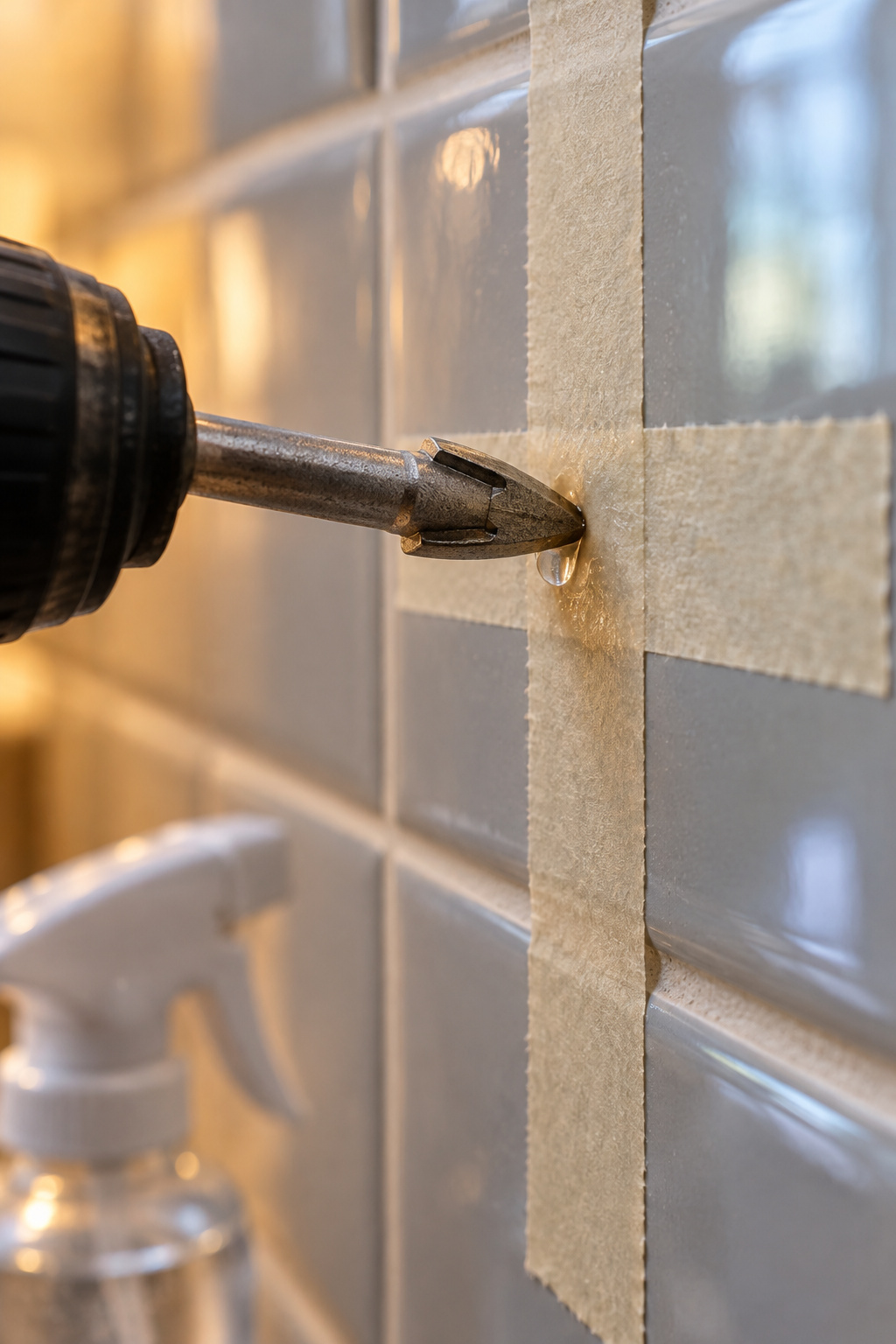
Porcelain or ceramic: check which you have first
Wall tile is usually ceramic, which drills with a tungsten-carbide-tipped bit. Porcelain and natural stone are dense and need a diamond-tipped bit. Use a new bit.
Tape, mark and start with no hammer mode
- Check for pipes and cables behind the spot.
- Tape over it and draw an X, so the bit can grip the glaze.
- Switch the hammer setting off and start at the slowest speed with steady, moderate pressure. Full speed overheats the bit and shakes the tile.
- Spray a little water on the hole to keep the bit cool.
- Once through the tile, change to a masonry or wood bit for whatever’s behind it.
Snug the fixing and stop there, because over-tightening cracks tile too.
Roy Berendsohn of Popular Mechanics calls catching a stud with every screw the gold standard on tile, and admits you usually end up with a hollow-wall anchor. To find a stud, drill tiny holes through the grout, probe with a finish nail, then fill them with grout. For a light mirror I put the fixing hole in a grout line, or where four tiles meet, whenever the layout allows. That’s my habit for light loads, not a maker’s instruction. A heavy mirror goes where the studs are.
The usual mistake is a drill left in hammer mode. The sneakier one is tile stuck on with dabs of adhesive, which leaves hollows that crack under the drill’s vibration.
Hanging a Mirror on Old Plaster and Lath: Finding What Actually Holds
Old plaster holds on by its keys, the wet plaster that squeezed between the wood laths and hooked behind them. Vibration, a hammer drill or a nail can break those keys over a patch much bigger than your hole.
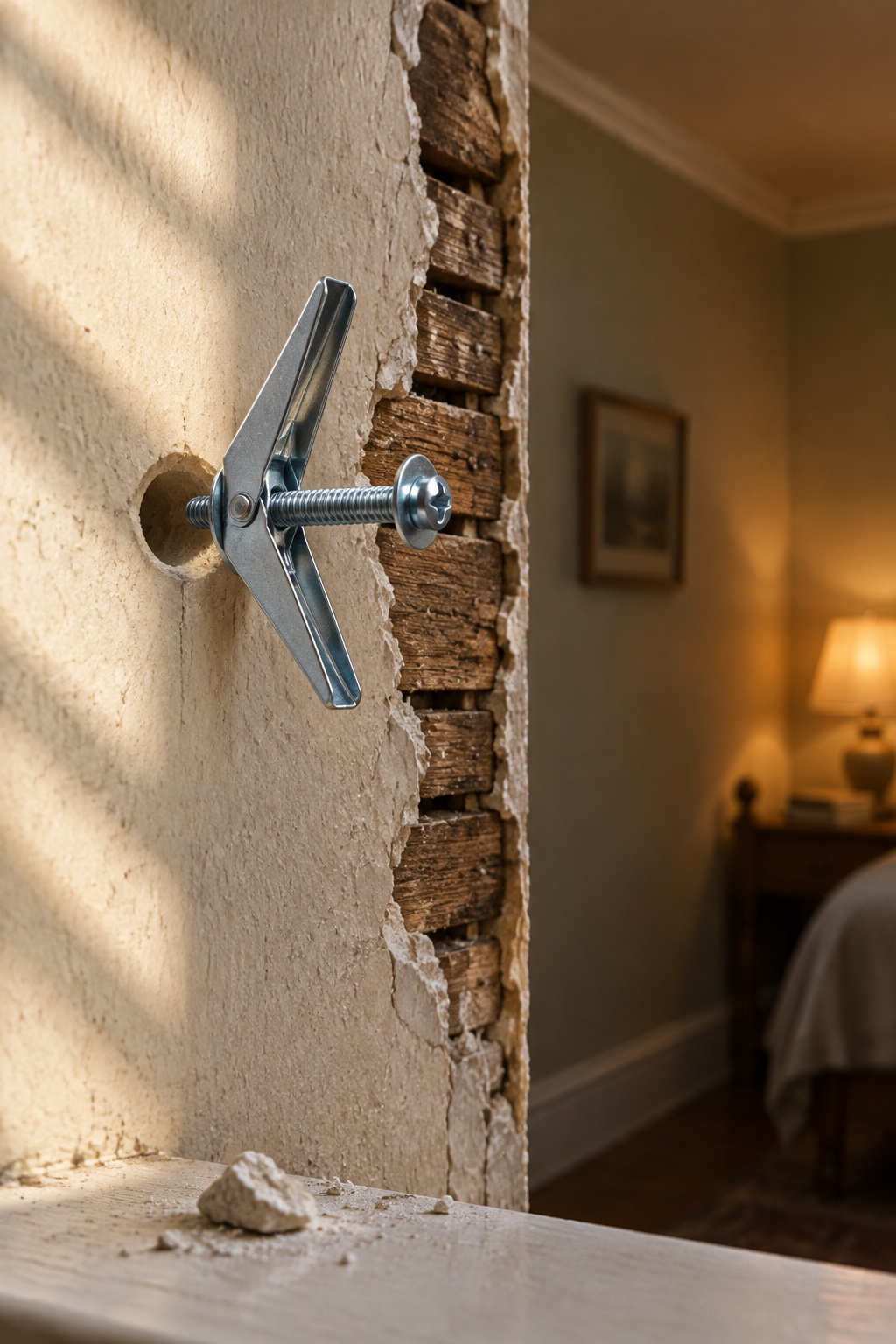
Finding lath and studs
Studs sit 16 or 24 in apart, so measure from a corner or door casing, run a magnet along that line to pick up the lath nails, and drill a test hole with your thinnest bit. You’ll feel plaster, then lath, then either nothing or solid wood. Solid wood is a stud, and a 2.5 in screw into it holds almost anything. A screw into lath alone holds a picture, not a shelf. If the plaster sounds hollow and gives when you press it, repair it before anything heavy goes up.
What anchors crumble, and what grips
Plastic expansion plugs and compression anchors push outward, which is how they split lath and release chunks of plaster. Self-drilling anchors are out for plaster, and anything hammered in breaks the keys. A toggle grips: its wings open behind the lath and pull tight against it. Buy them at least 2 in long so they clear the lath, pre-drill every hole to the packet size, and keep painter’s tape over the mark so the edge doesn’t chip. I can’t give you a plaster rating for any anchor, so get into studs wherever the mirror’s width allows.
I learned the stud habit the hard way. In my twenties I hung a shelf on drywall anchors, and at 2 a.m. it let go and dropped a stack of plates. I’ve screwed into studs ever since. Anchors are not studs, whatever the packet says.
Skill level: some builds, and most of the skill is patience.
Drywall, Clips and Mastic in the Short Version, and Why Mastic Is a One-Way Door
Studs first, rated toggles second. Clips or a J-channel come down later with a few holes to fill.
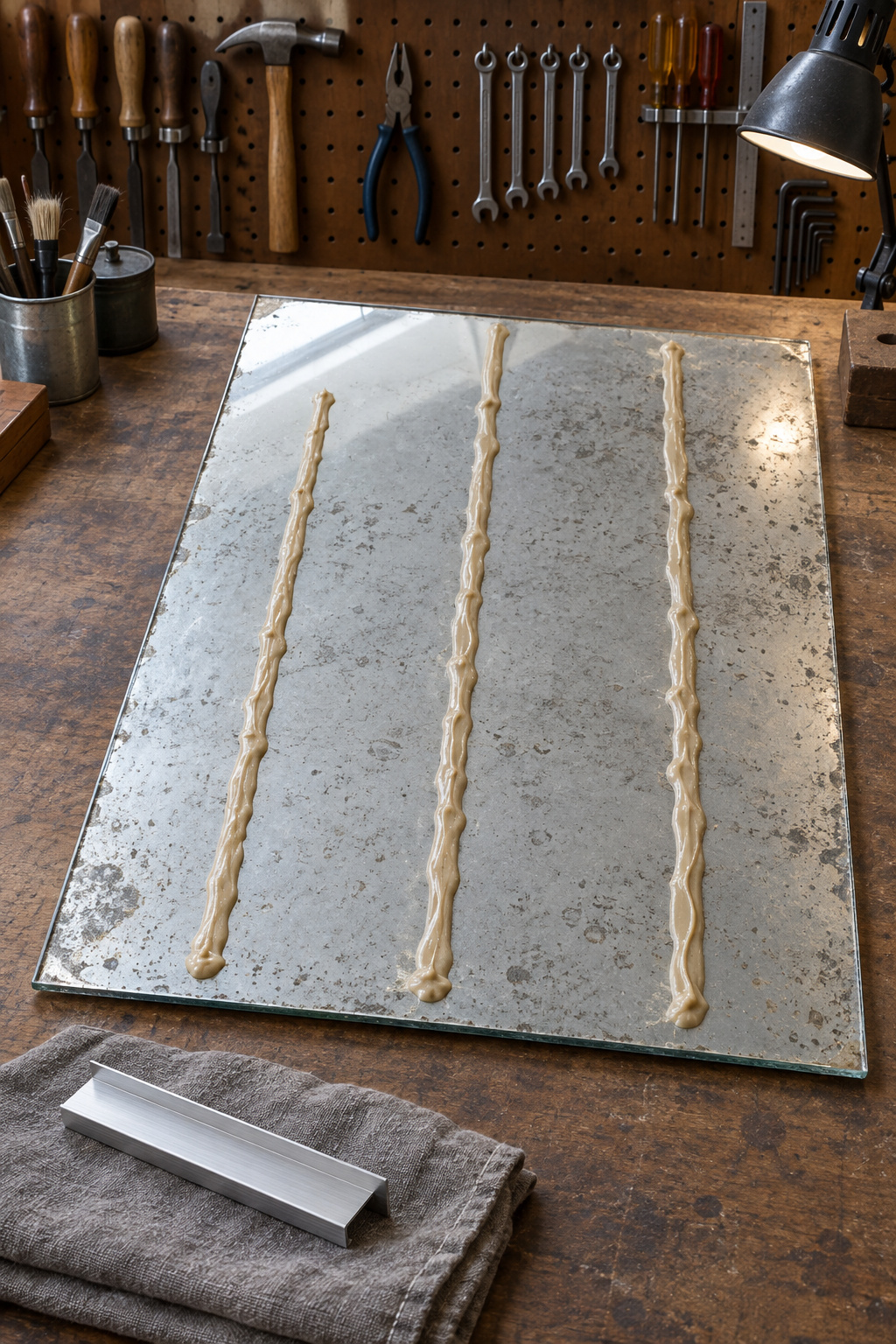
Mastic bonds the mirror and the drywall’s paper face into one piece, and taking the mirror off later tears that paper away in chunks. Our guide to updating a bathroom without demolition walks through the swap. Several mastic makers are stricter than the 22 lb practice and want a support under the bottom edge of every mirror, while others let smaller mirrors go up on adhesive alone. I follow the strict ones. A J-channel is cheap insurance.
Use mirror mastic, never ordinary construction adhesive, which can eat the silver backing, and run the beads vertically rather than in circles that trap solvent. Then look at the paint. Mastic makers warn against painted walls, or at least fresh paint, and want you sanded back to the original surface. Most bathroom drywall is painted.
The boring step is the wait. Props can come off after about 48 hours with some mastics, but Gunther’s mastic reaches full strength at 7 days and Seal Bond quotes 7 to 14.
Heavy Mirrors and Old Frames: the French Cleat, Studs and When to Call a Pro
Framed mirrors from 24 x 36 to 36 x 60 in can weigh 25 to 80 lb, and anything over 50 lb belongs in studs. For those I use a French cleat, two strips with matching 45-degree bevels that hook together. A 100 lb mirror on a cleat held by drywall anchors alone will pull away.
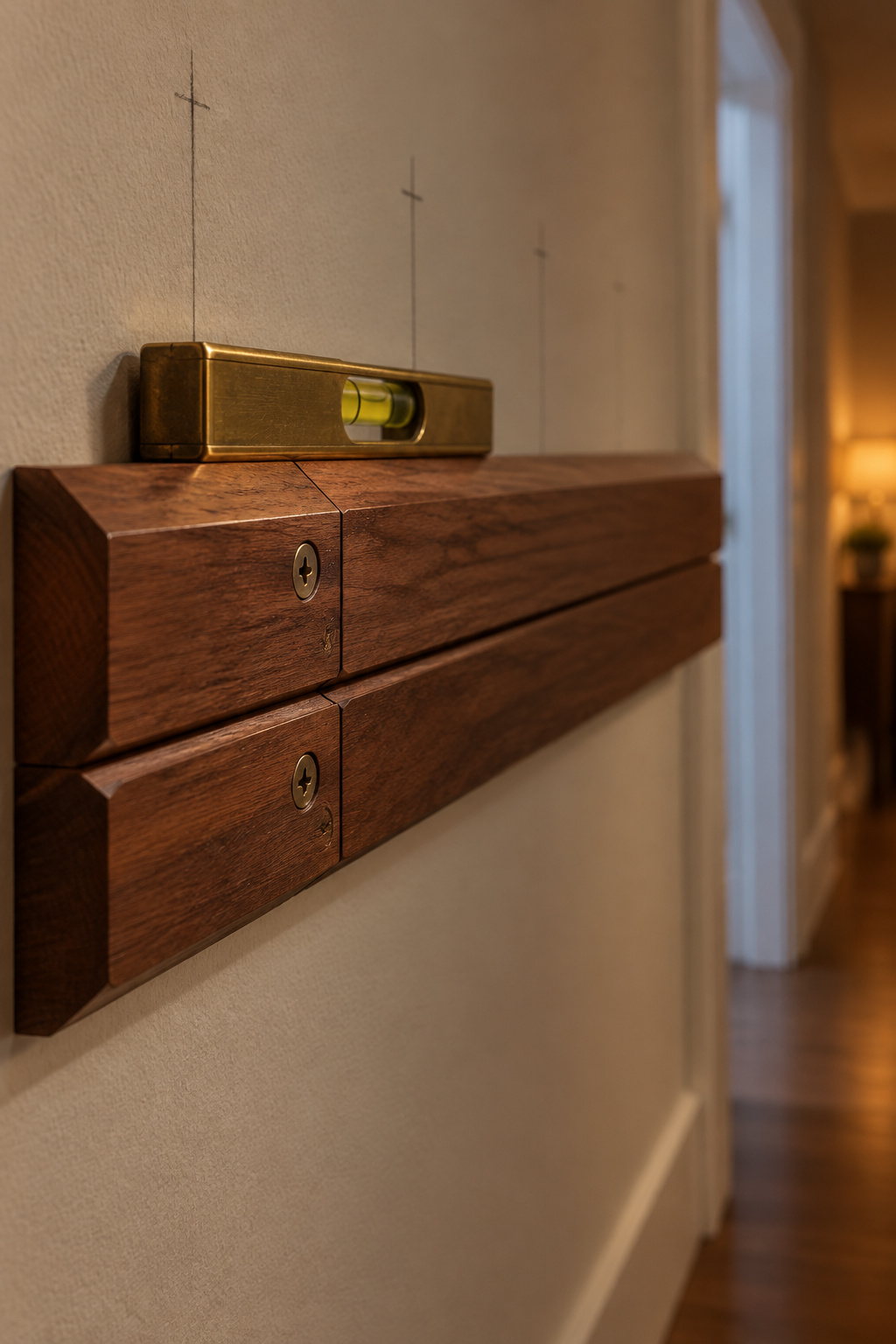
- Mark the studs across the width. You need at least two, three for a wide mirror.
- One common build rips a 1/2 x 6 in board down the middle at 45 degrees, and 3/4 in board suits an extremely heavy mirror. My garage is my shop, so I use the table saw. No saw? Buy a two-piece metal cleat; they’re sold for frames from 50 to 400 lb.
- Level the wall piece with the bevel facing the wall, so it makes a pocket at the top, and shim it if the wall isn’t flat. Pre-drill and drive 3 in wood screws into every stud, with a second row if the board allows.
- Fix the mirror piece between the middle and the top of the frame so it can’t tip forward, then lift with a second person and lower the cleats together. Keep the screws short of the front.
Heavy antique frames and fragile backings need their own method, and our guide to old mirrors that need gentler hanging shows how. If the studs don’t line up with where the mirror has to go, the fix is 2×4 blocking between them, which means opening the wall. That’s a pro job unless you’ve framed before.
Your Weekend Plan: Time, Tools and the Recessed Alternative
Most beginners buy too many tools. Start with a drill, a level and a good tape measure, and add only what your wall asks for:
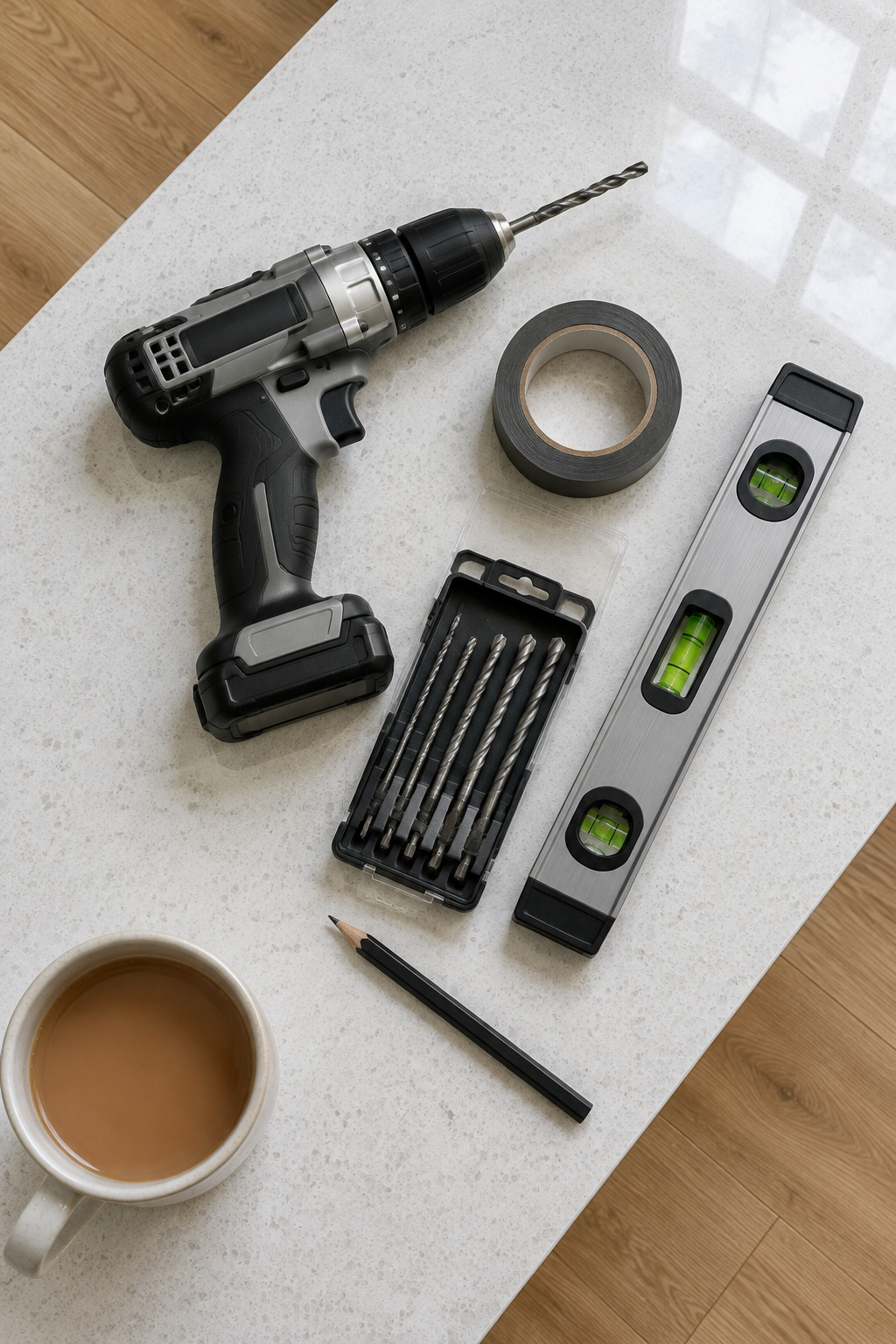
- A plain drill, or a hammer drill with the hammer switched off
- A magnet and a thin bit instead of a stud finder
- Masking tape and a new carbide or diamond bit for tile
- Toggles, clips or a cleat rated to twice the mirror’s weight. Buy the extra box.
- A second person for anything heavy
There’s no standard price or time for hanging a mirror, because the wall decides both. The waits set the schedule more than the drilling: adhesive fasteners want 24 hours before they take weight, and mastic wants a week to full strength. Budget for longer toggles if the wall is plaster.
If you’d rather set the mirror into the wall than hang it on one, recessed medicine cabinets are the alternative.
Before you buy a single anchor, put the mirror on the bathroom scale, write its weight on a strip of masking tape on the back, and run a magnet across the wall above the sink.
FAQ
Can you hang a bathroom mirror on tile without drilling?
Yes, if the mirror is light. Velcro’s kitchen and bath fasteners hold up to 10 lb each on clean, dry tile, kept off the grout lines. tesa rates its mirror tape for bathrooms up to 70 x 70 cm at 4 mm thick, while VITO says tape doesn’t belong where water condenses. Keep tape for small mirrors.
How do you fill the old holes after moving a mirror?
On drywall, scrape off any adhesive, peel the loose paper, and seal the torn paper before applying compound or it will blister. Then thin coats of spackle, sanding and primer. Small test holes in grout take a dab of fresh grout. A hole through the tile glaze or old plaster has no standard repair.
How do you keep a heavy mirror level while you mark and fix it?
Have a second person hold the mirror while you mark, and check the marks with a spirit level. On a cleat, level the wall piece and keep the mirror piece parallel to the frame’s top edge; a toothpick in the track nudges it true. With mastic, support the mirror until it sets.