Studs are normally 16 inches apart, center to center. Take away the 1-1/2 inches of the stud itself and the clear space you can actually cut into is 14-1/2 inches. That one subtraction decides more about a medicine cabinet with mirror than any product photo. Buy a box wider than the bay and you are cutting studs.
The other half of the choice stands at the sink every morning: the people who use it, and how far up they can reach. Get both right, then fill the cabinet with toiletries and keep the medicine somewhere else.
TL;DR
- Recess the cabinet only where a clear stud bay (14-1/2 in at 16 in spacing) is about 4 in deep with no pipes inside; semi-recess a deeper box into a 2×4 wall; surface mount everywhere else.
- Set the shelves for the shortest person who uses the cabinet daily: a cabinet hung about 40 in off the floor sits right at the reach limit of a five- to eight-year-old.
- Keep medicine out of it. Shower heat and moisture weaken medicine over months, so a high dresser drawer or closet shelf, locked for kids, is better.
Medicine cabinet with mirror: recessed, semi-recessed or surface mount by the wall you have
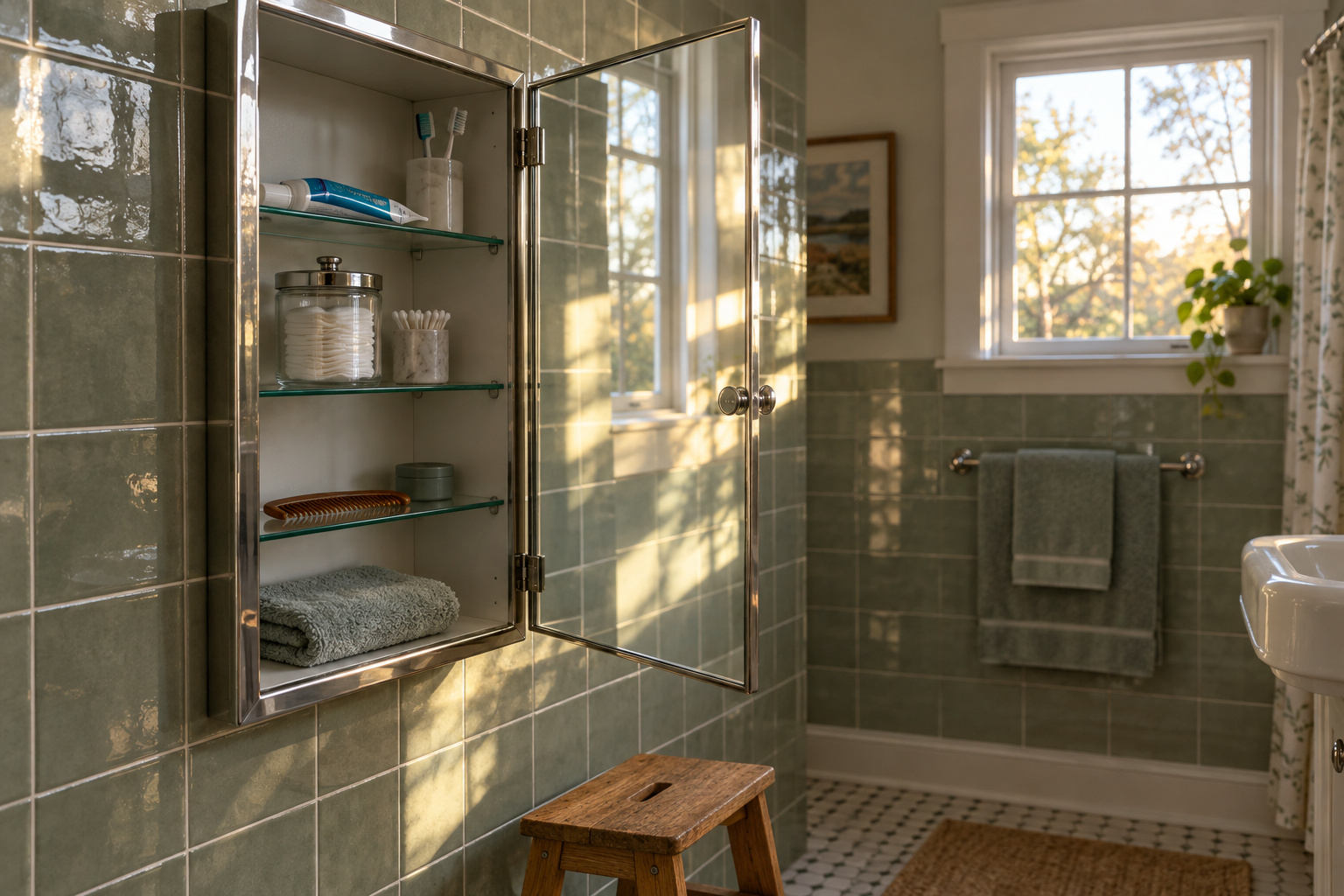
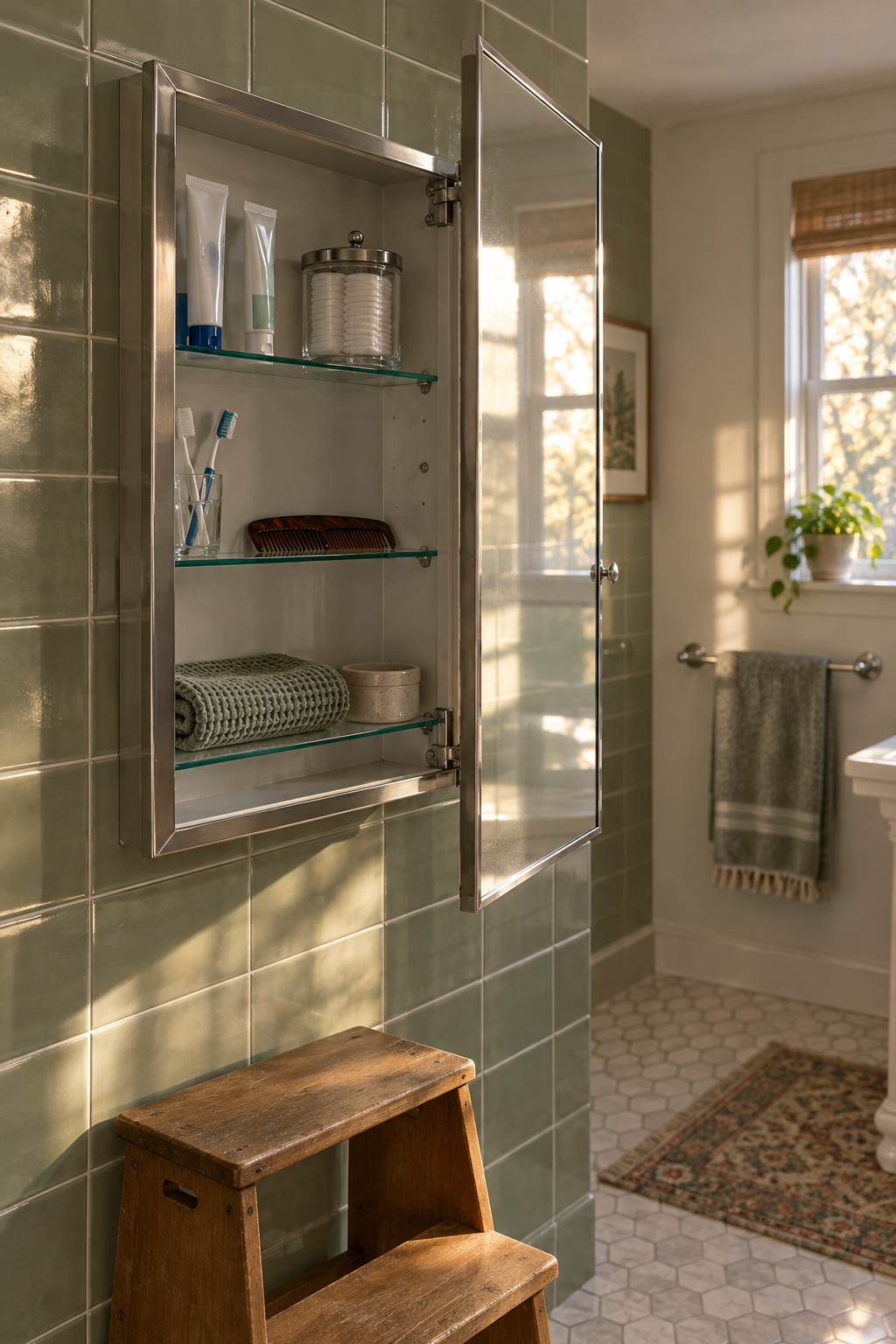
The three types differ by how much of the box sits inside the wall. A recessed cabinet sits almost flush: Robern’s 4 in model sticks out only 7/8 in. A semi-recessed one buries part of a deeper box, trading a few inches of projection for shelf depth. A surface-mount cabinet needs no cut and shows its whole depth.
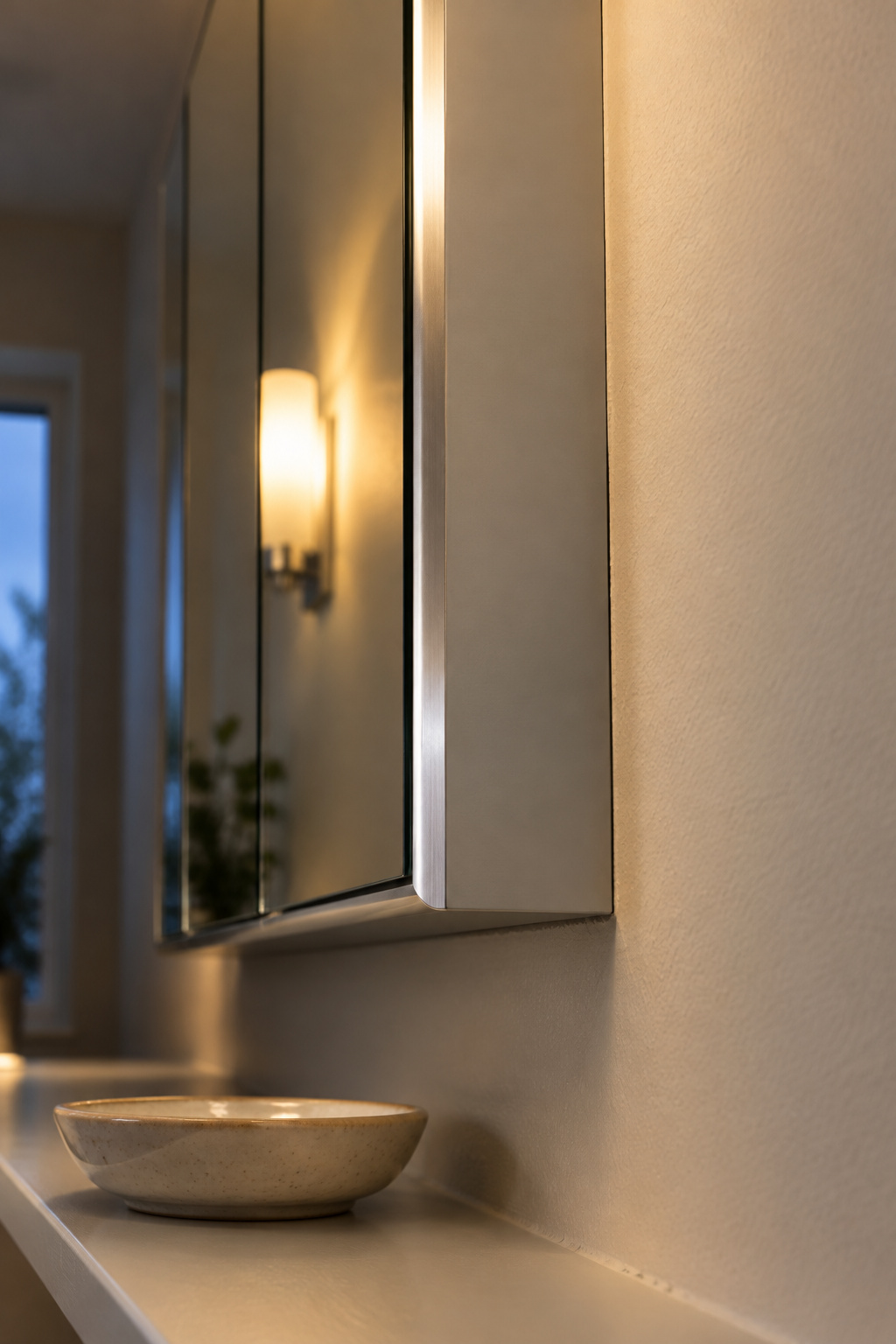
If you have a clear stud bay, about 4 in of depth and nothing living in the wall, recess it. If the wall is 2×4 and you want a deeper box, semi-recess it. If the bay is blocked, shallow, or on an exterior wall, surface mount it and stop fighting the wall.
| Type | Wall depth it needs | Opening to cut | Best for |
|---|---|---|---|
| Recessed | About 4 in (3-1/2 in minimum on some sheets) | 14-14-1/2 in wide for one cabinet | A clear interior stud bay |
| Semi-recessed | 4 in rough opening for a 6 in-class box | Same bay; projects about 3 in | 2×4 walls when you want deeper shelves |
| Surface mount | None | None; a mounting bar into a stud | Blocked bays, exterior walls, rentals |
On an exterior wall, a recessed box pushes out the insulation behind it, which is why Martin Holladay at GreenBuildingAdvisor recommends surface mount if you want the wall’s full R-value. Renters land in the same place: a surface cabinet comes off with a few holes to patch.
Measuring the recess: 4 inches deep, a clear stud bay and the opening to cut
Maker rough openings for a single cabinet run 14 to 14-1/2 in wide. That width is the clear bay between studs. The “16 in” you hear quoted is the stud spacing, or roughly the width of the cabinet’s face, and a true 16 in cut would take part of a stud with it. Depth is where the numbers agree: the 4 in our small vintage bathroom guide uses is what Robern and Bradley ask for, with some makers accepting 3-1/2 in. A 6 in recess needs a 2×6 wall.
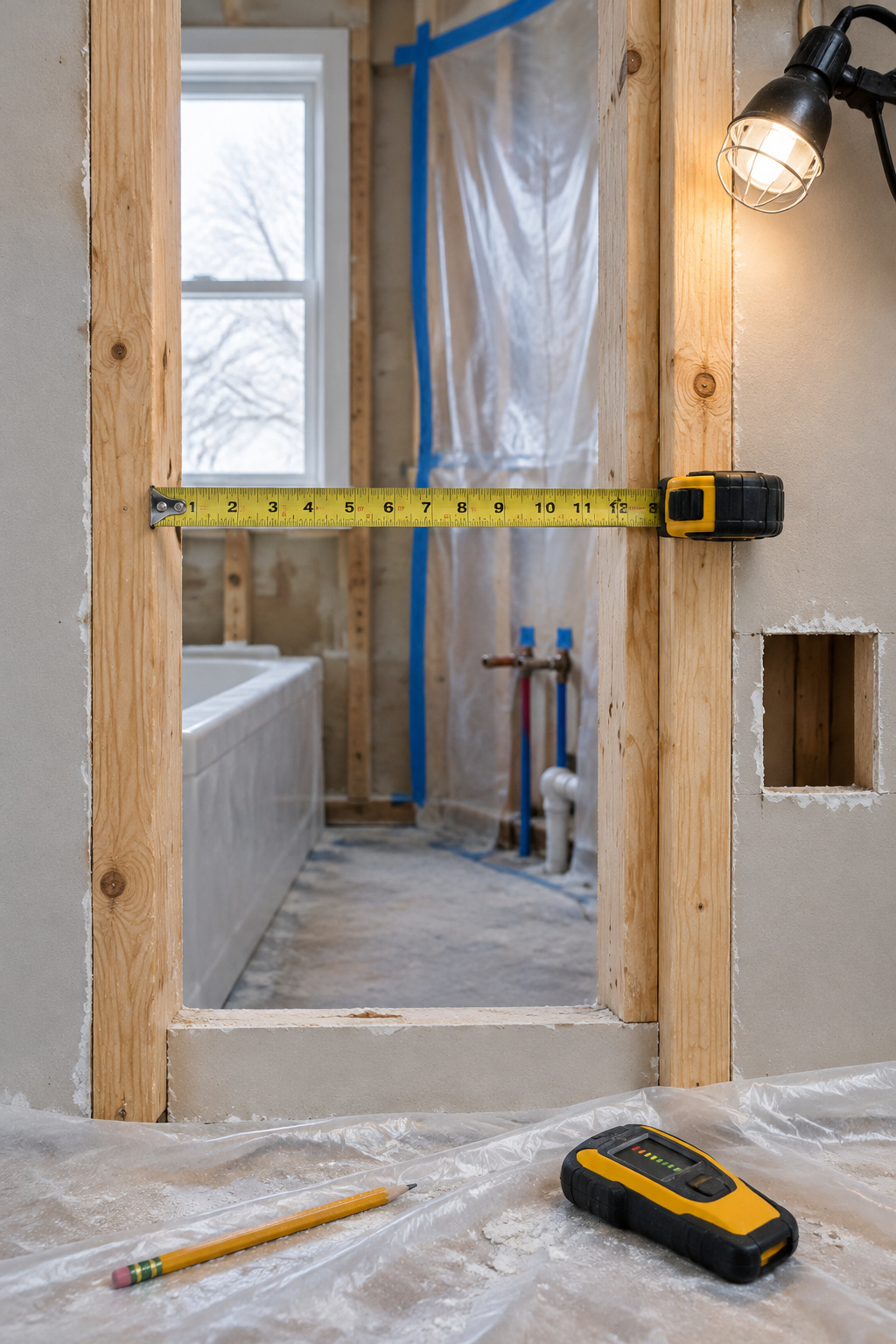
Here is the order I’d check a wall in:
- Find and mark the studs. Note that the first bay in a wall, next to a corner, is only 13-3/4 in.
- Turn off the power, then cut one small inspection hole in the middle of the spot you want. If the bay is blocked, you only patch a small hole.
- Shine a flashlight inside. Wires can sometimes be moved; drain pipes, vents and ductwork can’t. Stop and call a pro if you see them, or if the wall is load-bearing.
- Measure depth from the finished wall face, not the stud face, and compare it with the sheet for the cabinet you want.
- Tape or cardboard-template the cabinet on the wall and level it before anything else is cut.
If step 3 ends the plan, a surface cabinet hangs like a heavy mirror, into studs or hardware rated well above the weight, and our guide to mounting a surface cabinet into studs covers the method.
Mirrored doors, single or side by side: how the door and the number of cabinets change daily use
One cabinet per adult is my rule when two grown-ups share a sink, because nobody wants to move someone else’s razor to reach their own floss. Two cabinets side by side change the carpentry, though. Two bays plus the stud between them come to 14-1/2 + 1-1/2 + 14-1/2 = 30-1/2 in, and the opening for a pair of small cabinets is about 29-1/4 in, so the middle stud has to be cut and headered. Century’s formula for connected cabinets is the two widths minus 3/4 in: a 15 in and a 19 in cabinet need 34 – 3/4 = 33-1/4 in of opening.
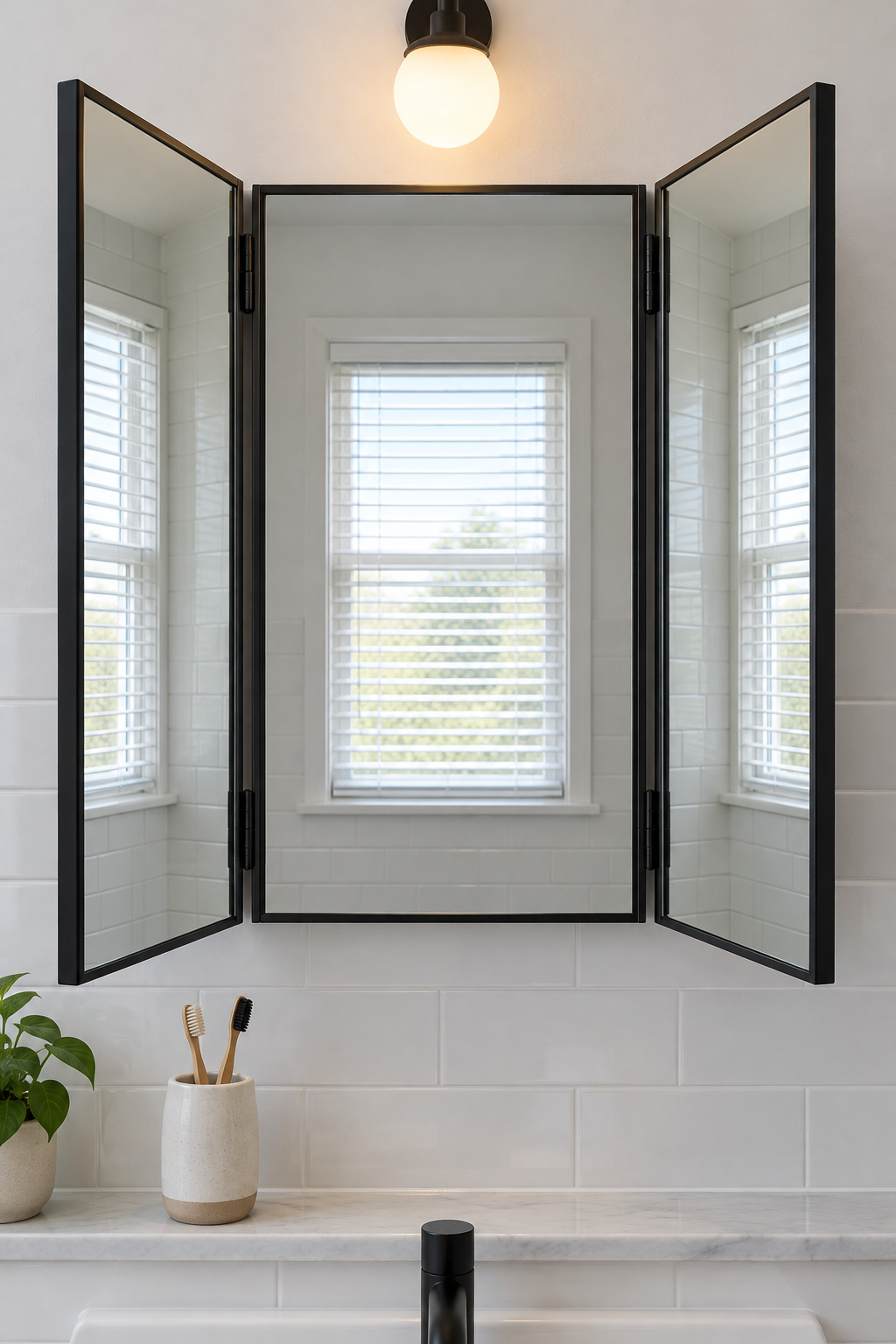
“Tri-view” is just the retail name for a wide box with three mirrored doors. Some, like Kohler’s Verdera, are mirrored inside the door and on the back wall too.
Hinge side is reversible on the maker sheets, so pick it at install. Clearance advice splits: some makers ask 1 in between the door and the faucet, others 3 in. There’s no single rule, so read the sheet for your cabinet.
A cabinet door is 28 to 38 in tall. It shows a face and shoulders, and that’s it. For the full-body check, it’s worth placing a full length mirror by what it reflects somewhere else in the room. If the cabinet still can’t hold everything, our small bathroom storage guide picks up where the cabinet stops.
Shelf heights, outlets and reach: set the shelves for the shortest daily user
Get down to their height before you decide anything. Kneel in front of the sink and look up.
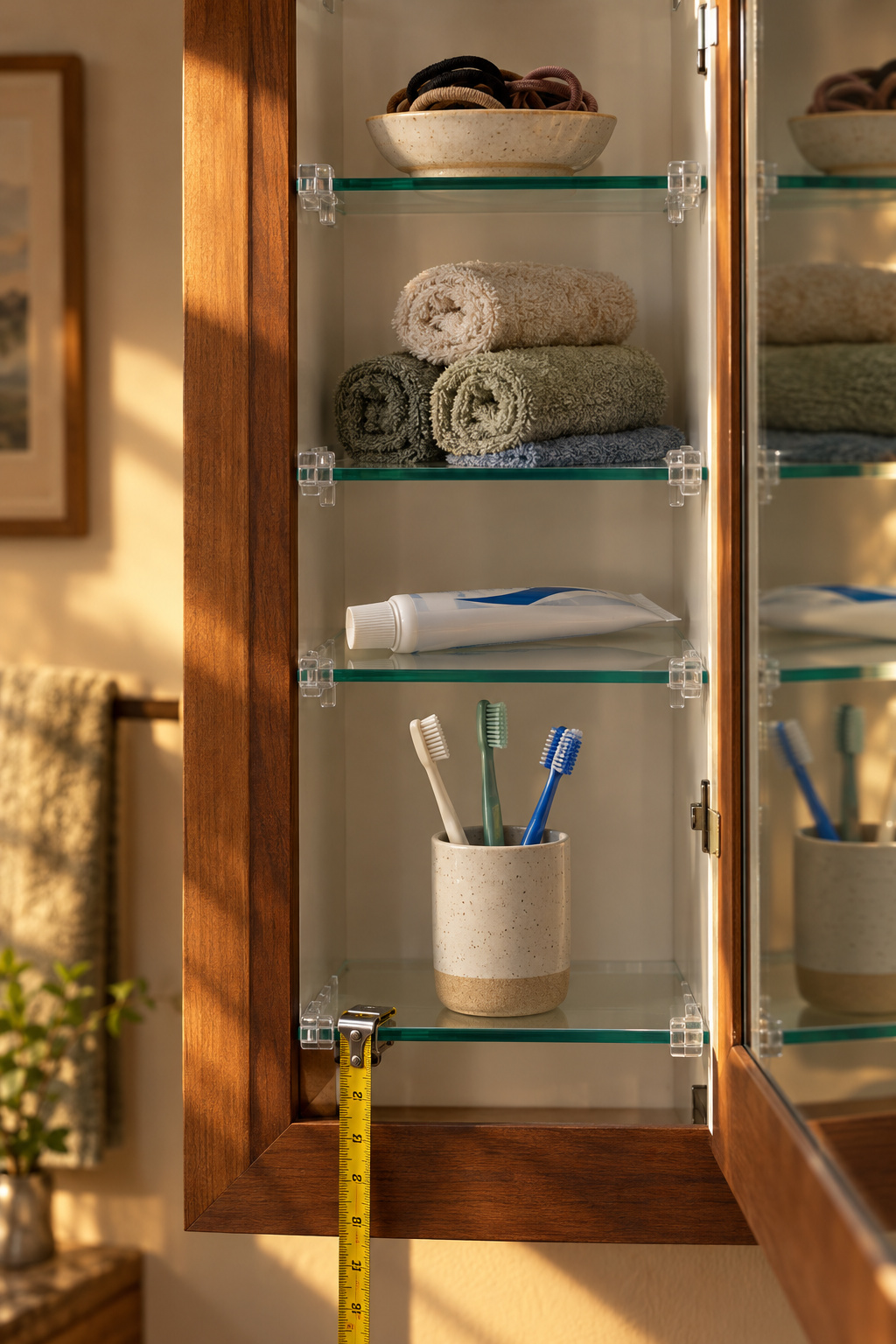
Nobody publishes medicine cabinet shelf heights by user. What I use is a working layout built from accessibility reach ranges: the ADA’s adult forward reach and California’s suggested ranges for children, set against where cabinets usually hang. It is a planning tool, not a cabinet standard.
| Daily user | Highest comfortable reach | What I’d put there |
|---|---|---|
| Child, 3-4 | 36 in | Nothing in the cabinet; a low hook and a cup by the sink |
| Child, 5-8 | 40 in | Toothbrush and toothpaste on the lowest shelf |
| Child, 9-12 | 44 in | Their own lowest shelf: hairbrush, deodorant, floss |
| Adults, standing or seated | 48 in high, 15 in low | Everything else, highest shelf for the rarely used |
A cabinet bottom usually sits about 40 in off the floor, though over a vanity the faucet can lift it, so the lowest shelf starts there or higher. That is right at a five- to eight-year-old’s reach, 4 in inside a nine- to twelve-year-old’s, and 4 in above a preschooler’s. Shelves adjust in 2 in steps on some cabinets, so slide the bottom one as low as it goes. Can a tired kid do it? At 40 in, a school-age one can.
For the youngest, skip the cabinet. A low hook does more for tidiness than any organizer, because a towel with a place they can reach actually gets hung up. And plan for the next stage: the lowest shelf a six-year-old reaches today becomes the shelf a ten-year-old owns.
Outlets and lights inside a cabinet are options, not standard parts, and on Robern’s they need a 20 A feed and a licensed electrician. Decide before the wall is closed.
What belongs in a bathroom cabinet, and why medicine goes somewhere cooler and locked
Toothpaste, floss, razors on the top shelf: that is what a bathroom cabinet is for. Medicine is the exception.
Why a steamy bathroom is a poor place for medicine
Every shower swings a bathroom from room temperature to hot and wet. The FDA warns that “a damp bathroom cabinet” can make medicines less effective before their expiration date, and MedlinePlus names shower, bath and sink heat as the cause. Most medicines want 59 to 77°F and dry air. One household study left ibuprofen in a bathroom for a year: tablets held over 90% of their strength through three months, then averaged 73% at twelve. That’s a slow fade, not an emergency, but for a heart or blood pressure medicine a weaker dose matters.
Where it goes instead: cool, dry and out of reach
After my younger child climbed the pantry shelves, I started keeping a step stool in every room with a high shelf. Kids will reach for things regardless, so make it safe. With medicine, safe means height alone isn’t the plan: in about half of over-the-counter poisonings, the child climbed onto something to get there.
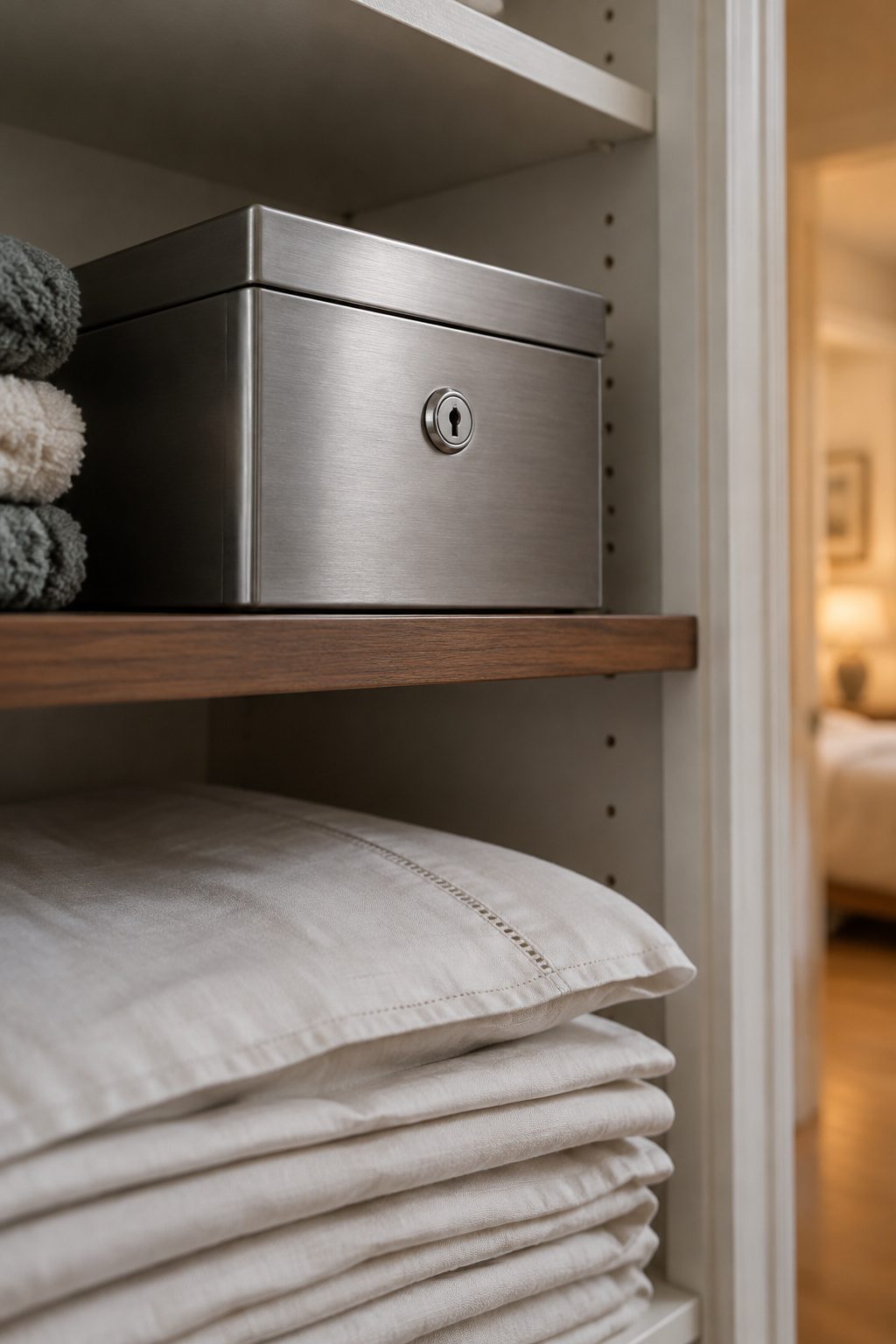
The standard advice is up, away and out of sight, every time, even if the next dose is due in a few hours. MedlinePlus goes a step further and says locked: a childproof catch on whatever holds the medicine, because a child-resistant cap isn’t childproof. Older children can defeat cabinet locks, so a lockbox is the stronger choice, especially for prescription pain or ADHD medicine.
Keep it in a high dresser drawer, on a closet shelf or in a storage box in a cool bedroom, with a lock where kids are around. Some guidance allows a kitchen cabinet away from the sink and stove, but kitchens get hot and steamy too, and I’d rather not. My older one now wants her own room and a door that locks. Fair enough. Medicine deserves the same courtesy. Save the Poison Help line, 1-800-222-1222, in your phone while you’re at it.
Measure the wall, then the shortest user
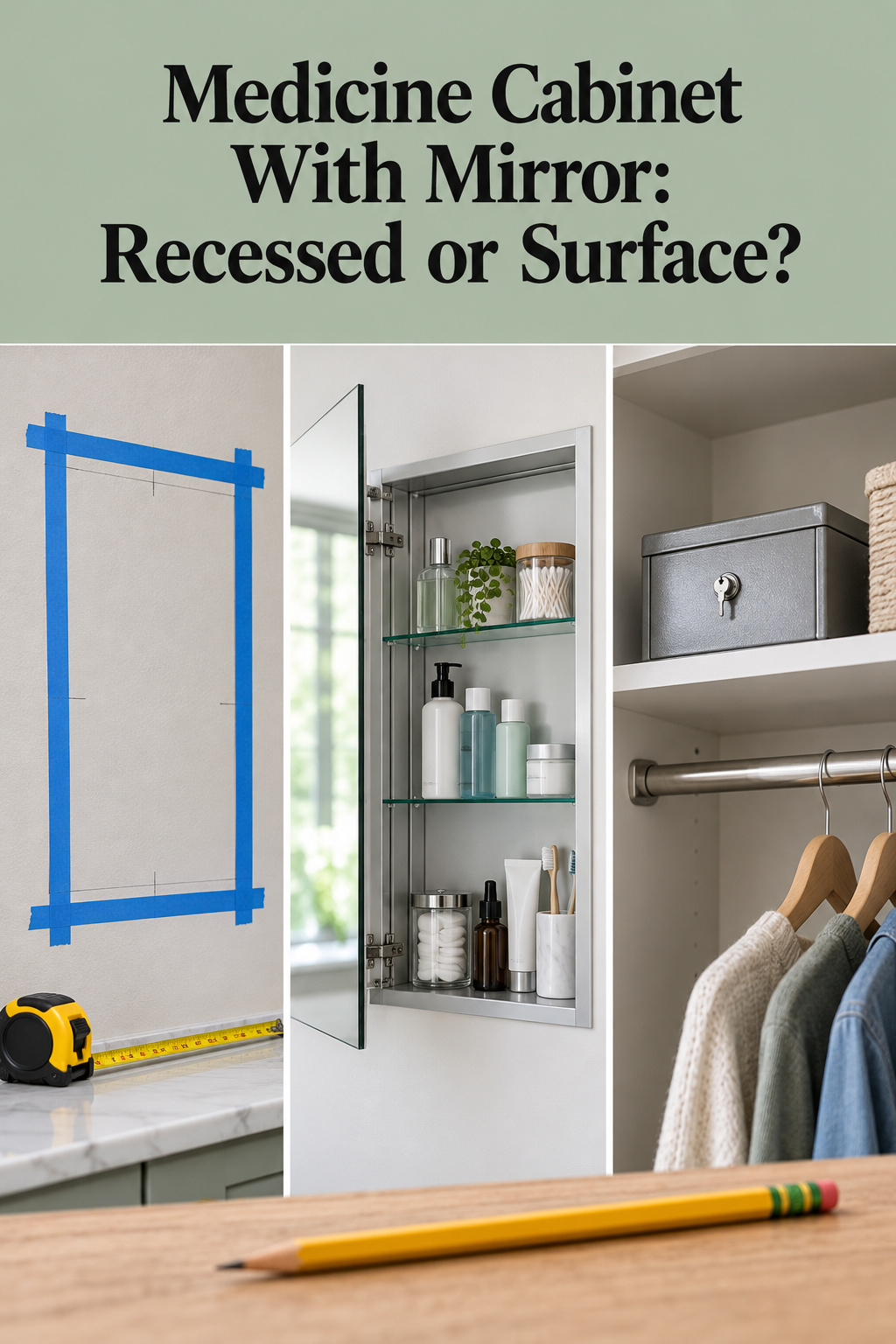
You need a stud finder, a tape measure and a roll of painter’s tape.
- Mark the studs and measure the bay. At 16 in spacing you’re looking for 14-1/2 in clear, and about 4 in of depth from the finished wall face through a small inspection hole.
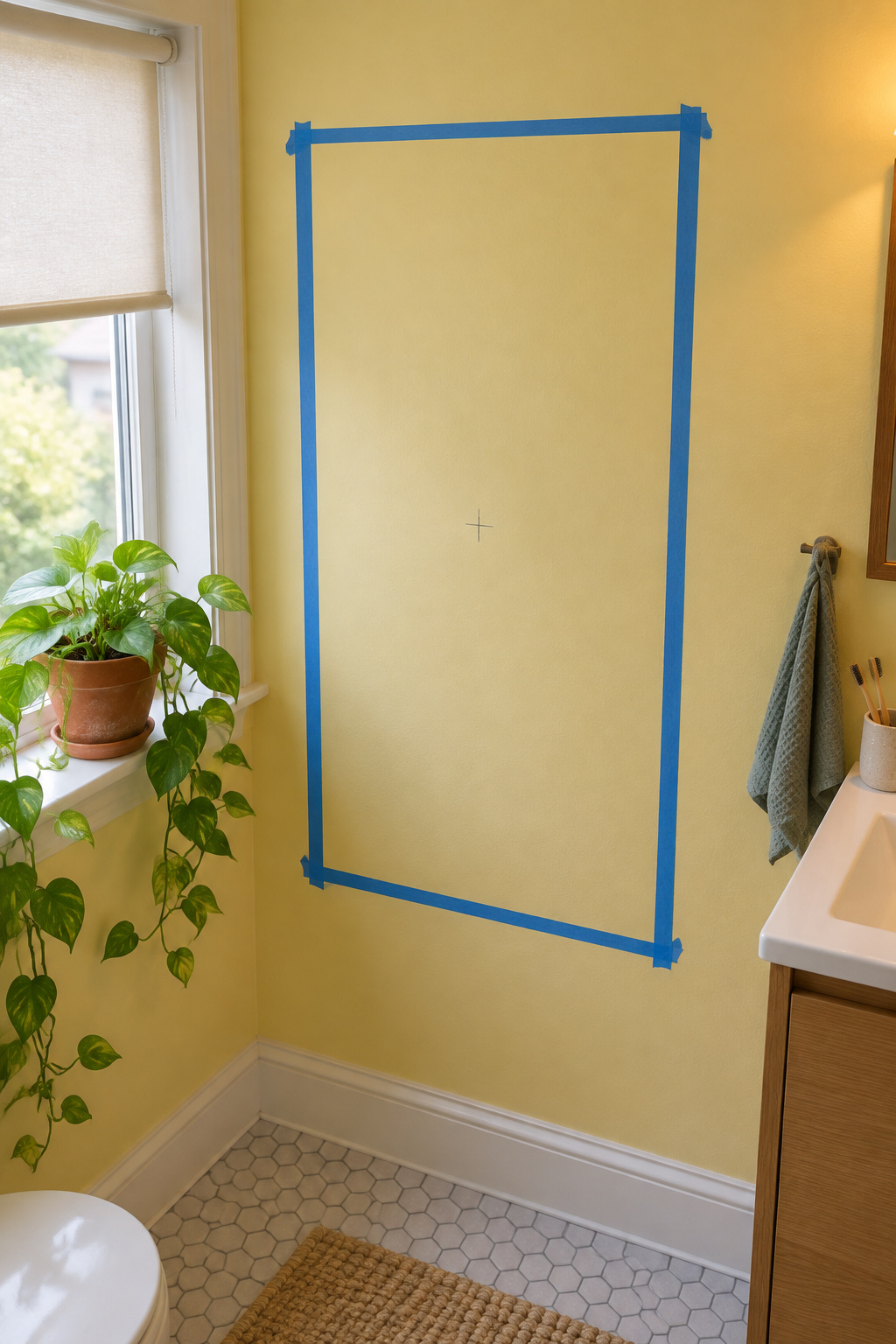
- Stand the shortest daily user at the sink and mark their reach on the wall with a strip of painter’s tape. Your kids will enjoy this more than you will.
- Choose the type from what you found: a clear, deep bay means recessed, a 2×4 wall and a deeper box means semi-recessed, and anything blocked, shallow or exterior means surface mount.
Then hold that strip against the usual 40 in cabinet bottom. That comparison is the reach table in one line, and it rests on one assumption: it’s a working layout built from accessibility reach ranges, not a cabinet standard. If the mark is below 40, the lowest shelf belongs to the grown-ups for now. When the cabinet is sorted, the other mirror choices for a bathroom are the next thing to look at.
FAQ
How do you clean a mirrored medicine cabinet door without streaks?
Dampen a microfiber cloth with warm water or a mild glass cleaner, never spraying the door itself, and wipe in an S pattern. Skip vinegar and ammonia on the silvered glass. Dab toothpaste spots with rubbing alcohol first, then buff dry with a second cloth, edges and hinges included, where liquid pools.
Do mirrored medicine cabinets fog up in a steamy bathroom?
Yes, like any mirror. Fog is steam condensing on glass that’s colder than the air’s dew point, and a cabinet door is no warmer than any other mirror. Some cabinets offer a door defogger as part of an electric package, but non-electric models don’t have one. A quick pass with a warm hair dryer clears it briefly.
Is a mirrored medicine cabinet worth it over a plain mirror and an open shelf?
For most families, yes, because it hides the clutter and keeps razors behind a door. Recessed ones save wall space; surface ones install easily and often have deeper shelves. Estimates run from about $178 to $841 across two cost estimators, so price your wall before you shop.