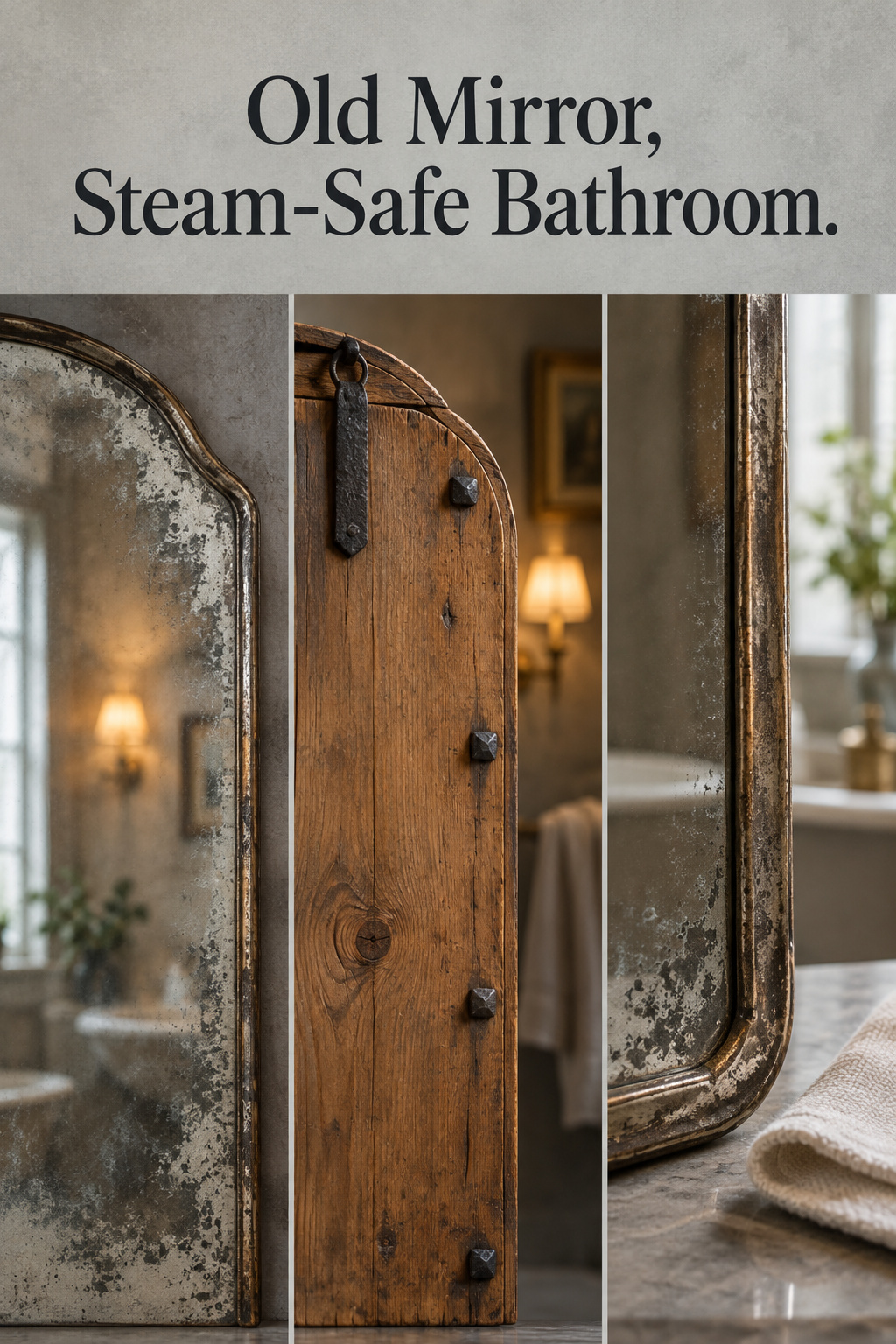
Turn an old mirror face-down on a blanket and look at what nobody photographs. Rough-sawn boards, a few square-headed nails, paint gone chalky at the corners, and behind it all a thin film of silver. That back is where an antique bathroom mirror keeps its history, and where steam does its damage. The black creeping in from the edges looks like the end of the mirror. It is a record of what has reached the glass. Read it properly and an old mirror can live in a working bathroom; misread it and you’ll banish it or pay to have it resilvered.
TL;DR
- Hang an old mirror on the driest wall you have, never touching the sink back, with air behind it and a gap of at least 10 mm (about 2/5 in) under its bottom edge so water can drain.
- Judge age by the back and the color of the tarnish, not by dark edges, because factory antiquing puts its distress at the edges and corners on purpose.
- Clean with warm water on a wrung-out lint-free cloth, never spray the glass, keep ammonia and vinegar away from it, and dry the edges straight after.
Three Walls Where an Old Mirror Belongs, Ranked by Steam
Before about 1835, mirror glass was backed with a tin and mercury amalgam; chemical silvering then took over slowly, and the two overlapped into the early twentieth century. A silvered mirror was almost always painted or varnished to protect the silver. A tin-mercury plate was usually coated only if it was meant for a humid room or for sea, and damp air attacks the amalgam directly. A suspected mercury mirror belongs on the driest wall in the house, which is often not in the bathroom.
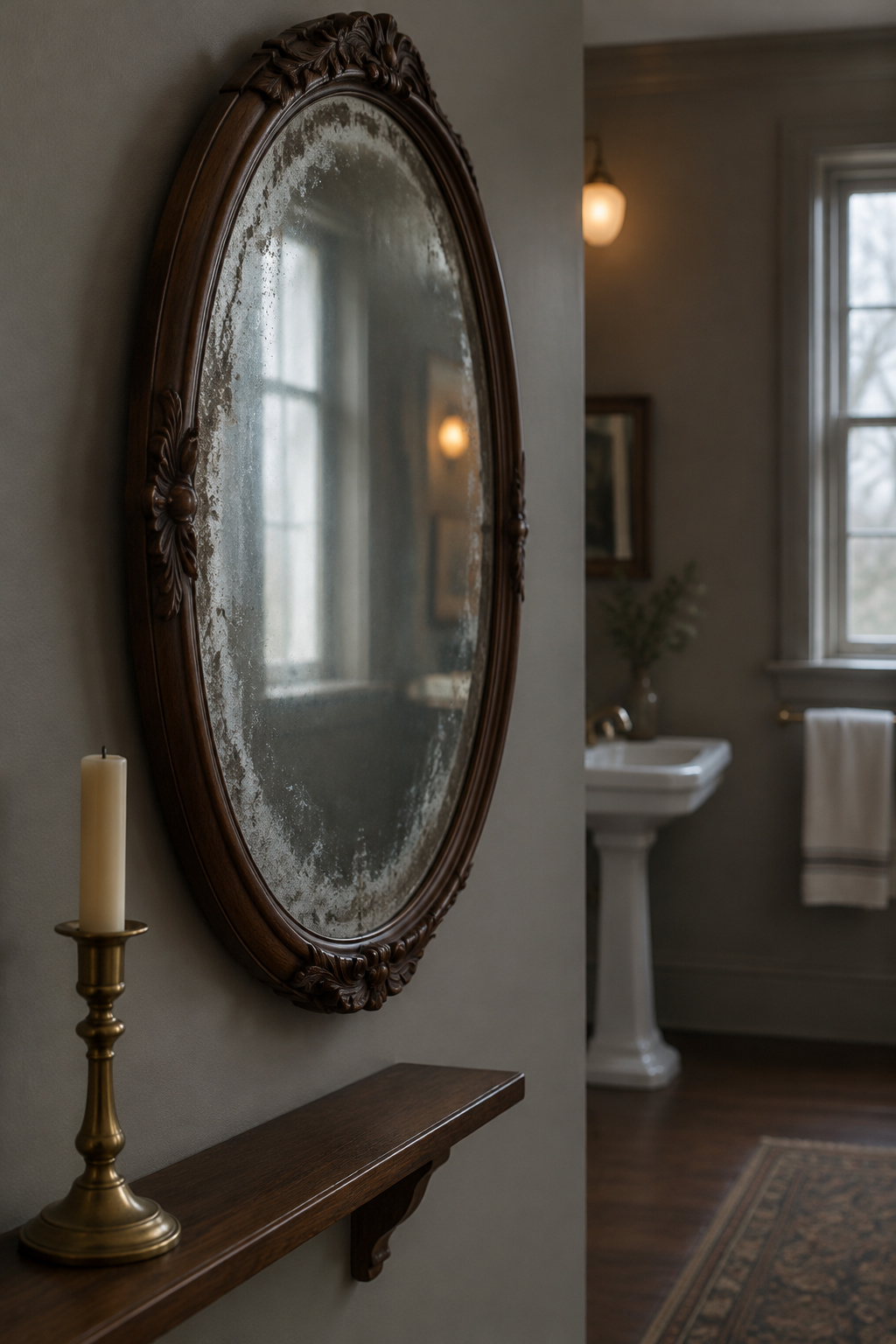
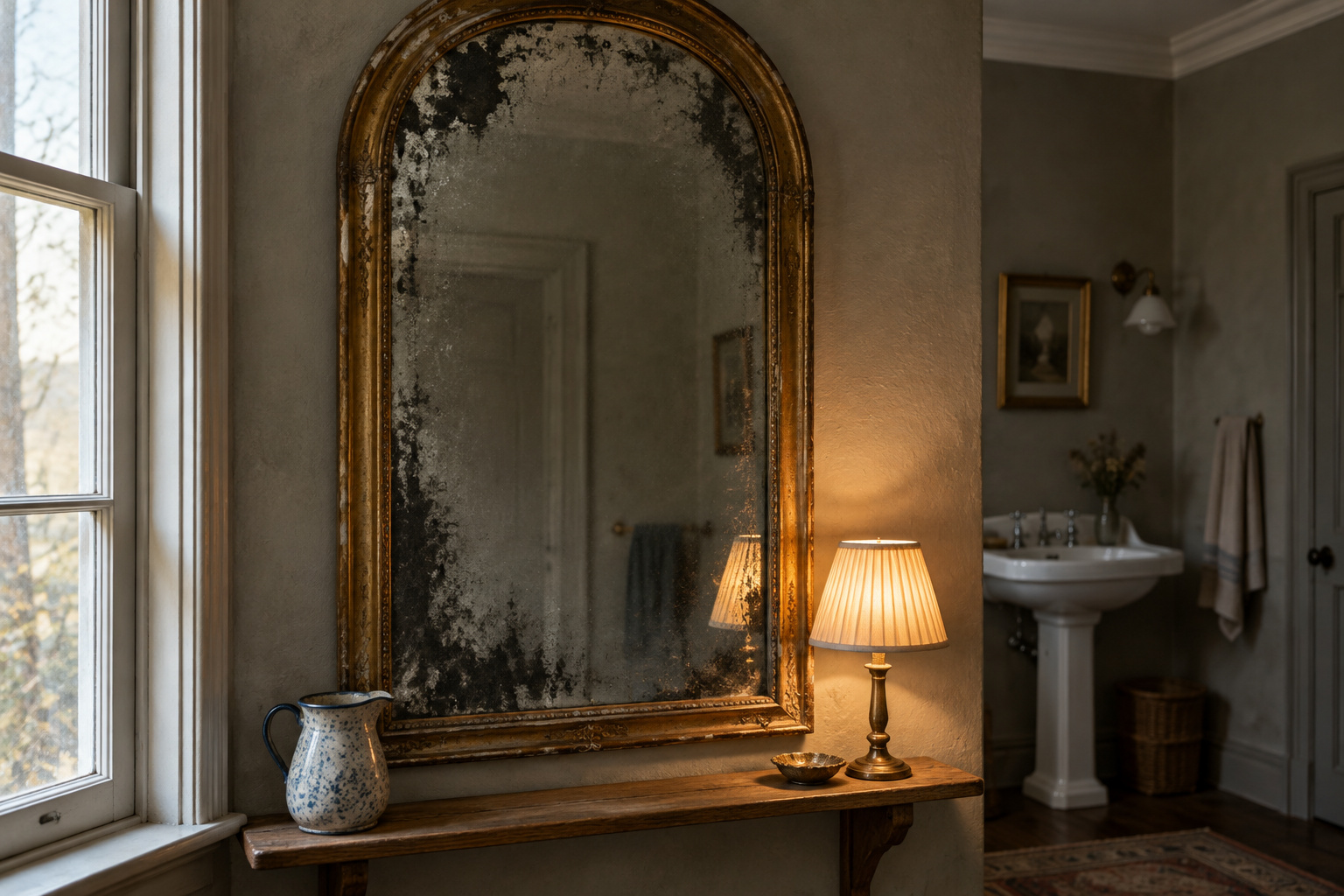
Glass makers give no safe distance from a shower, and their rules are written for new mirrors. What they agree on is what a good wall looks like: air moving behind the mirror so condensation can’t settle on the back, no contact with a splashback or sink back, and nothing at the bottom edge where water can pool. In bathrooms built before the 1950s, tile usually ran as a wainscot to 48 to 54 in, so an old mirror above the tile cap sits on painted wall, which is where I’d want it anyway.
Here is how I rank the usual spots, wettest last.
| Wall | Steam exposure | Pairs with | What to watch |
|---|---|---|---|
| Dry wall opposite the window | Lowest | Painted plaster, a brass lamp | The glass will reflect the window itself |
| Floor or cheval mirror at the dressing spot | Low | A chair, a towel rail, timber floors | Feet and frame clear of mopping water |
| Over a pedestal or console sink | Highest of the three | Brass taps, a stone or porcelain basin | Splash and sweat at the bottom edge |
The sink wall is the one people want, and designers do use it: a worn antique mirror over a stone sink echoes the basin’s weathered surface. Our powder room mirror size guide explains sizing over a sink with no vanity, and if you’d rather keep a tall mirror out of the steam, the dressing spot is the place for an old cheval glass. Brass and painted plaster are simply my taste; old silver looks warm against both.
Why an Antique Bathroom Mirror Goes Black From the Edges In
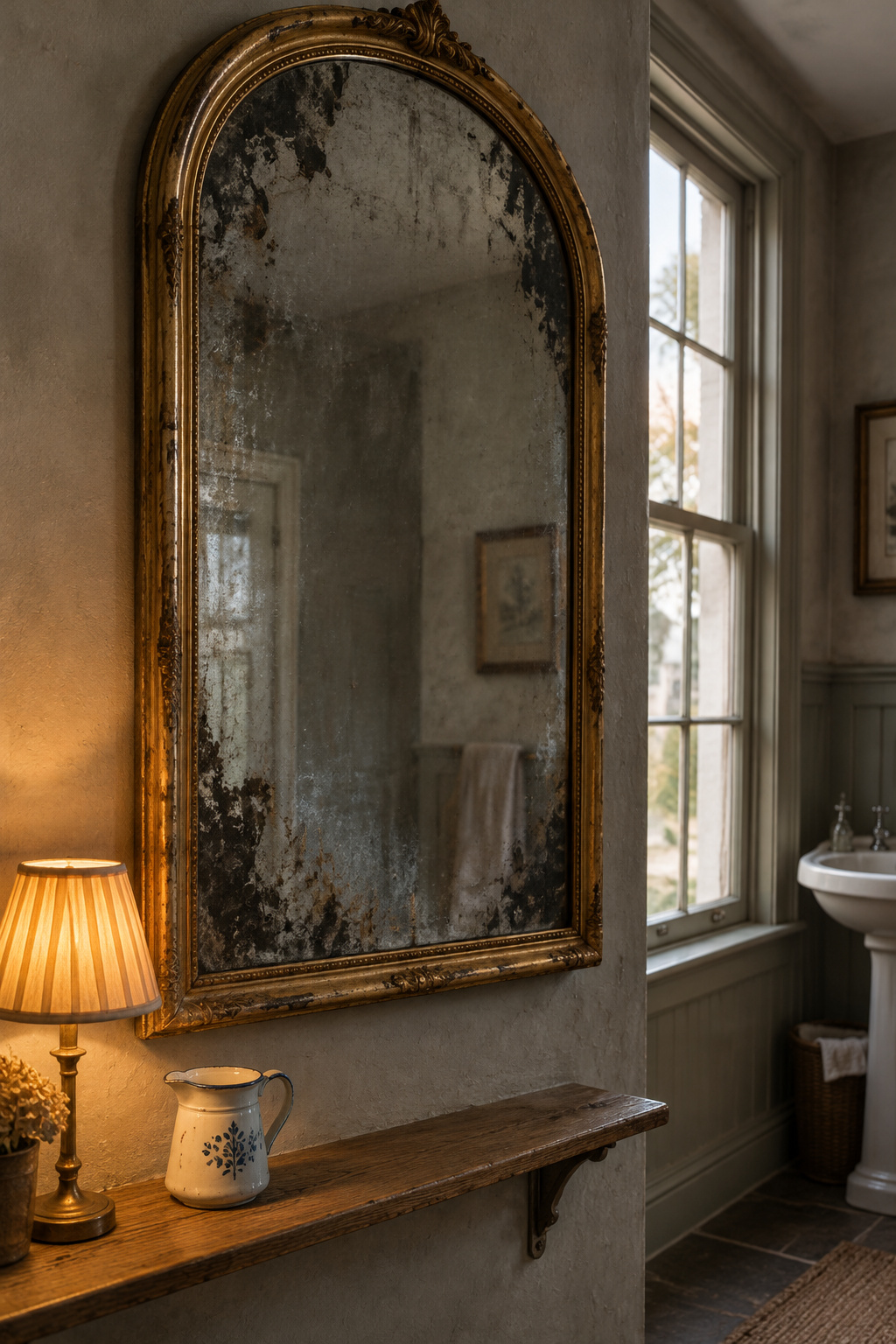
Glaziers have a name for it: black edge. A mirror’s reflective layer is a thin film of silver, protected by paint but still open to corrosion from chemicals and excess moisture. The edges are where the layers may not be sealed, so liquid creeps between them.
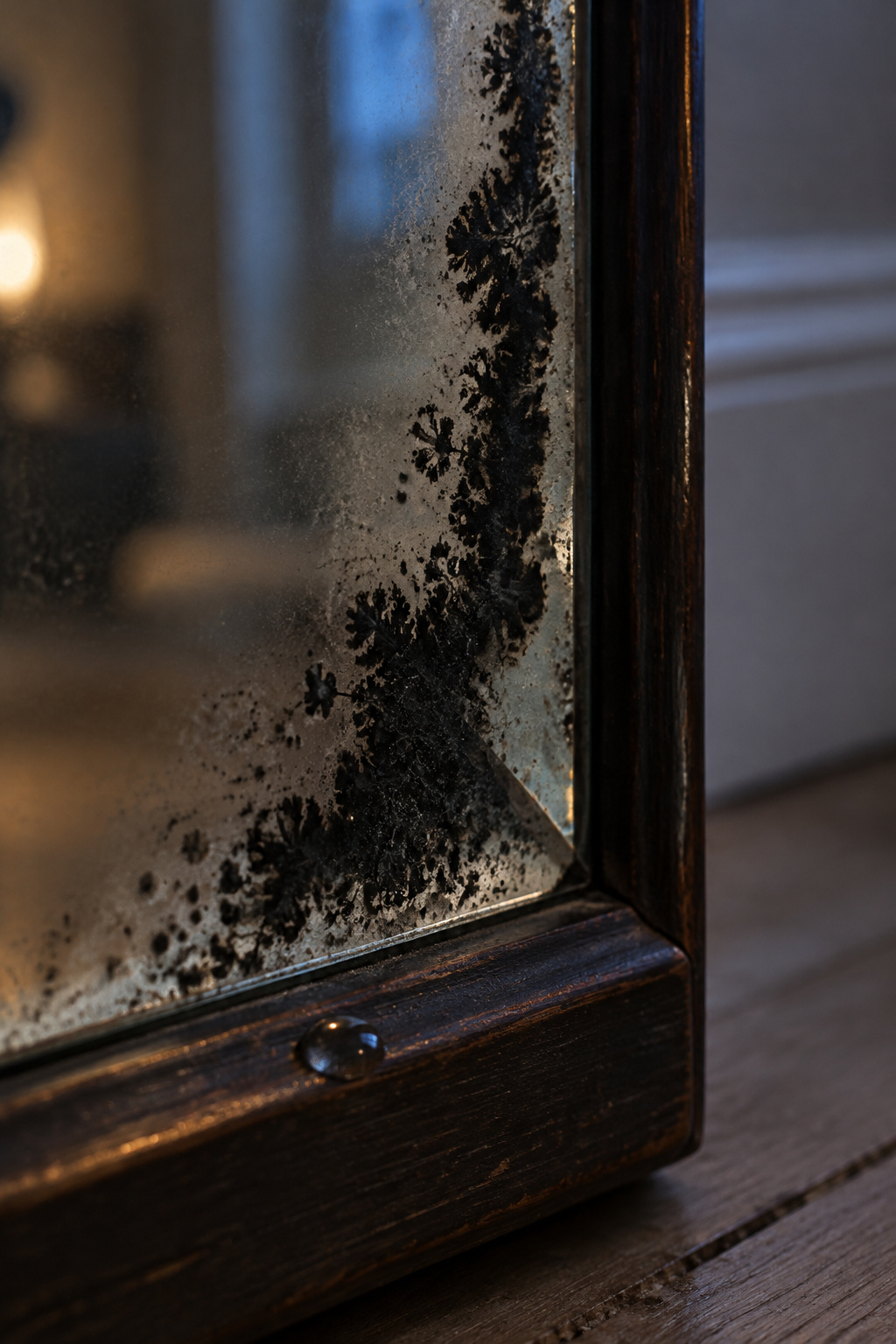
In a bathroom, two things reach those edges: condensation, which the makers call corrosive there, and whoever cleans the glass. Bobrick’s technical bulletin warns that liquid applied straight to the glass can wick between the layers at the edge, and the discoloration can be permanent. A spritz of glass cleaner can run down the face and collect in the frame, where the makers say cleaner shouldn’t sit.
Corroded silver doesn’t come back. The black is silver already lost, which is why no cleaning shifts it. The color tells you something too: silver tarnishes a warm yellow-brown, while tin-mercury goes bluish, and a mercury mirror can fail more along its lower half as the liquid metal migrates down.
What foxing is, and how to protect the frame, is in the vintage mirror section of our boho bathroom lighting guide. For a bathroom mirror, keeping water and cleaner off the edges deals with the main cause of black edge.
Read the Back Before You Buy: Old Silvering or Imitation
Dark edges alone don’t prove a mirror is old. A US patent for antiquing new mirror describes an acid patina applied more heavily around the edges and corners, because genuinely aged mirrors tend to show their wear there. The back is the better place to look.
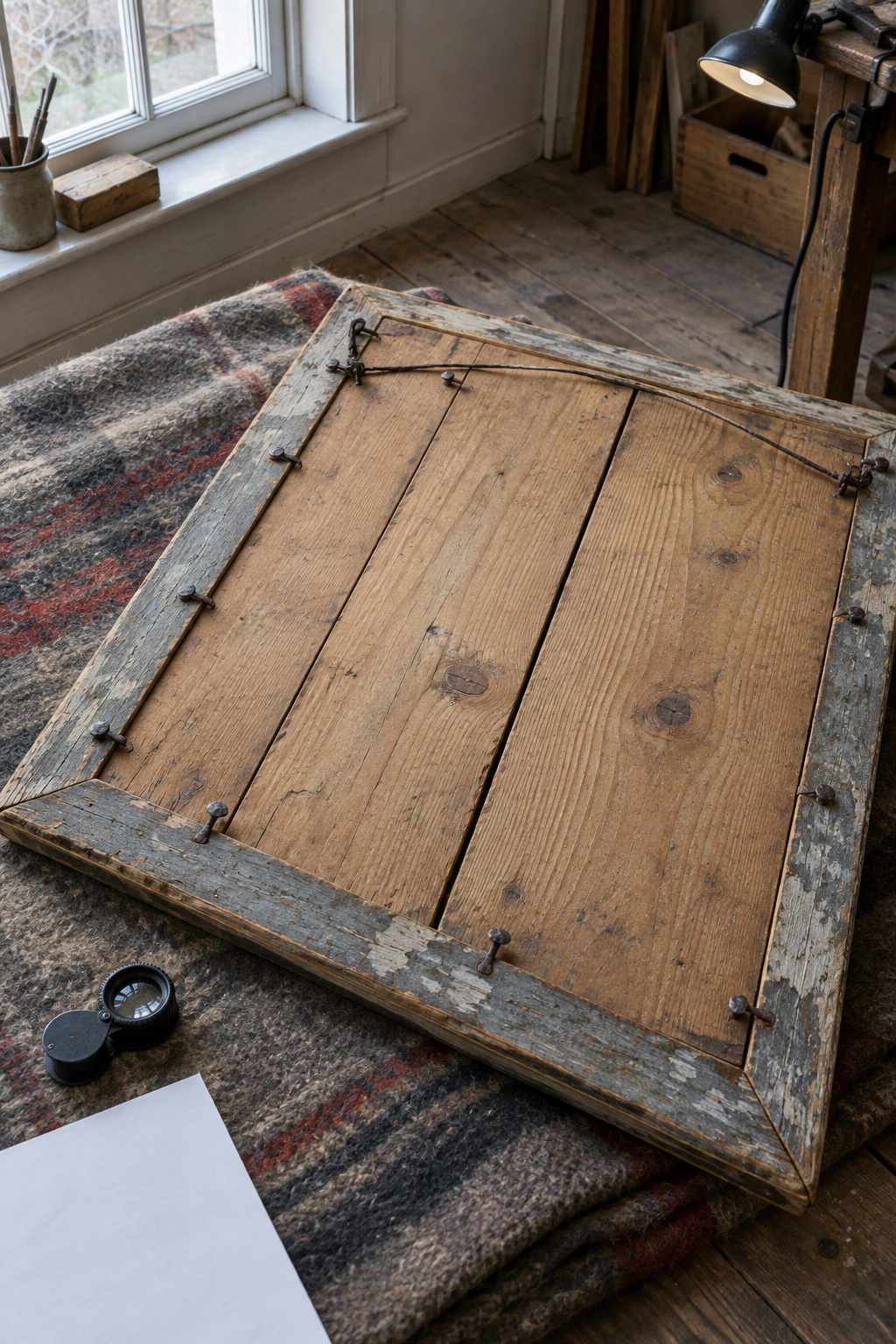
So turn it over. Let’s see what it’s made of.
| Tell | Older silvered or mercury glass | Antiqued or reproduction |
|---|---|---|
| Backing | Rough-sawn boards, hand-forged or square nails | Plywood, staples, wire nails, or a painted card back |
| Tarnish color | Warm yellow-brown (silver) or bluish (tin-mercury) | Acid patina, often with a card back painted black, brown or aluminum |
| Glass | Ripple, scattered seed bubbles, thicker plate (about 5/16 in before the 1950s) | Perfectly flat, about 1/4 in |
| Edges and fixings | Irregular hand bevel, hand-filed screw slots | Crisp machine bevel, Phillips screws, sawtooth hangers |
Conservators add one more check: a thin sheet of white paper generally looks brighter laid over silver than over tin-mercury. Even they call it one clue among several. Old isn’t the same as original, either. Plywood and modern grey paint on an otherwise old mirror suggest it was re-backed, which tells you about its life, not its birth date.
One caution belongs here. A mercury mirror is often identified only when droplets appear along its bottom edge. Don’t test for it and don’t poke at the back; put on disposable gloves and call a conservator. Very old or mercury glass is a conservator’s job from then on, cleaning included.
Keep the Foxing, Skip the Resilvering
Resilvering sounds like repair. One vintage-mirror shop says it will in most cases dip the glass in acid to strip the old silver, which means taking it out of the frame and waiting at least two weeks.
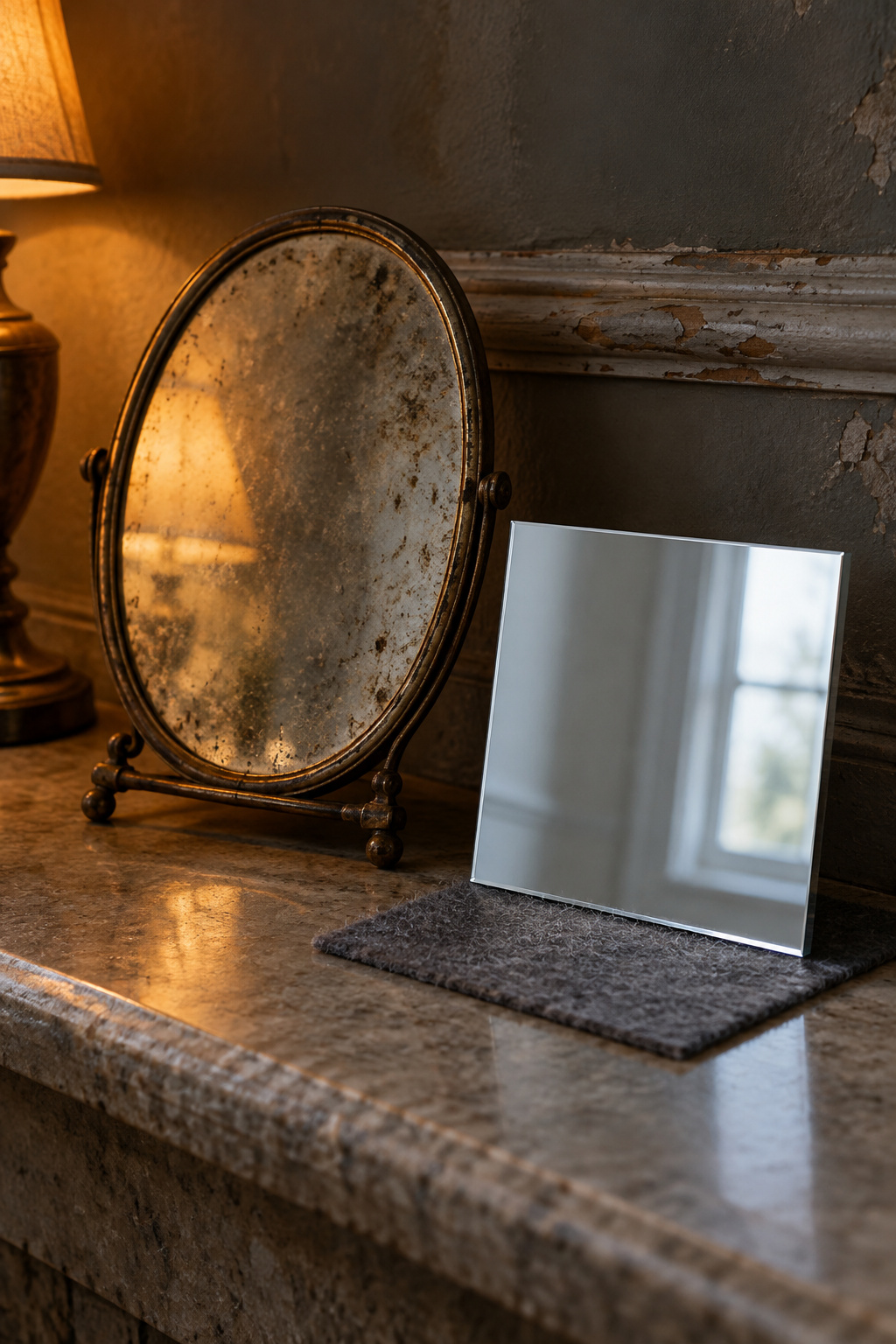
Never trust a contractor in a hurry to demolish, and a glass shop eager to strip a mirror is that contractor with a different tool. What comes back is old glass with new silver. The clouds and spots that record its life are gone, and nobody can put the originals back.
It isn’t cheap either. Angi’s current figures put resilvering at $15 to $40 a square foot, antique work at $25 to $40, with a $100 minimum charge that can apply and $10 to $50 more if old backing or badly damaged silver has to come off first. A 2 by 3 ft glass is 6 sq ft, so $150 to $240 at antique rates, before the backing.
Blake Vonder Haar, a New Orleans conservator, advises against it: “unless it’s something you just can’t live with, you shouldn’t resilver it.” If you can’t, he says to sell it and replace it. That leaves the mirror as it was, and whether the next owner can undo what I did is the only test I apply to an old piece. Faking age the other way, with acid-aged new glass, is a costume.
A glass restorer would argue that a plain, undecorated mirror is almost always better replaced than resilvered, and that resilvering only earns its cost on special shapes or engraved glass. Fair enough, if the old glass goes to someone who wants it. If you’re still shopping, our guide to vintage bathroom accessories covers where to look and what to pay.
Cleaning and Hanging an Old Mirror Without Wetting Its Edges
The National Glass Association calls warm water on a wrung-out lint-free cloth the very best and safest mirror cleaner.
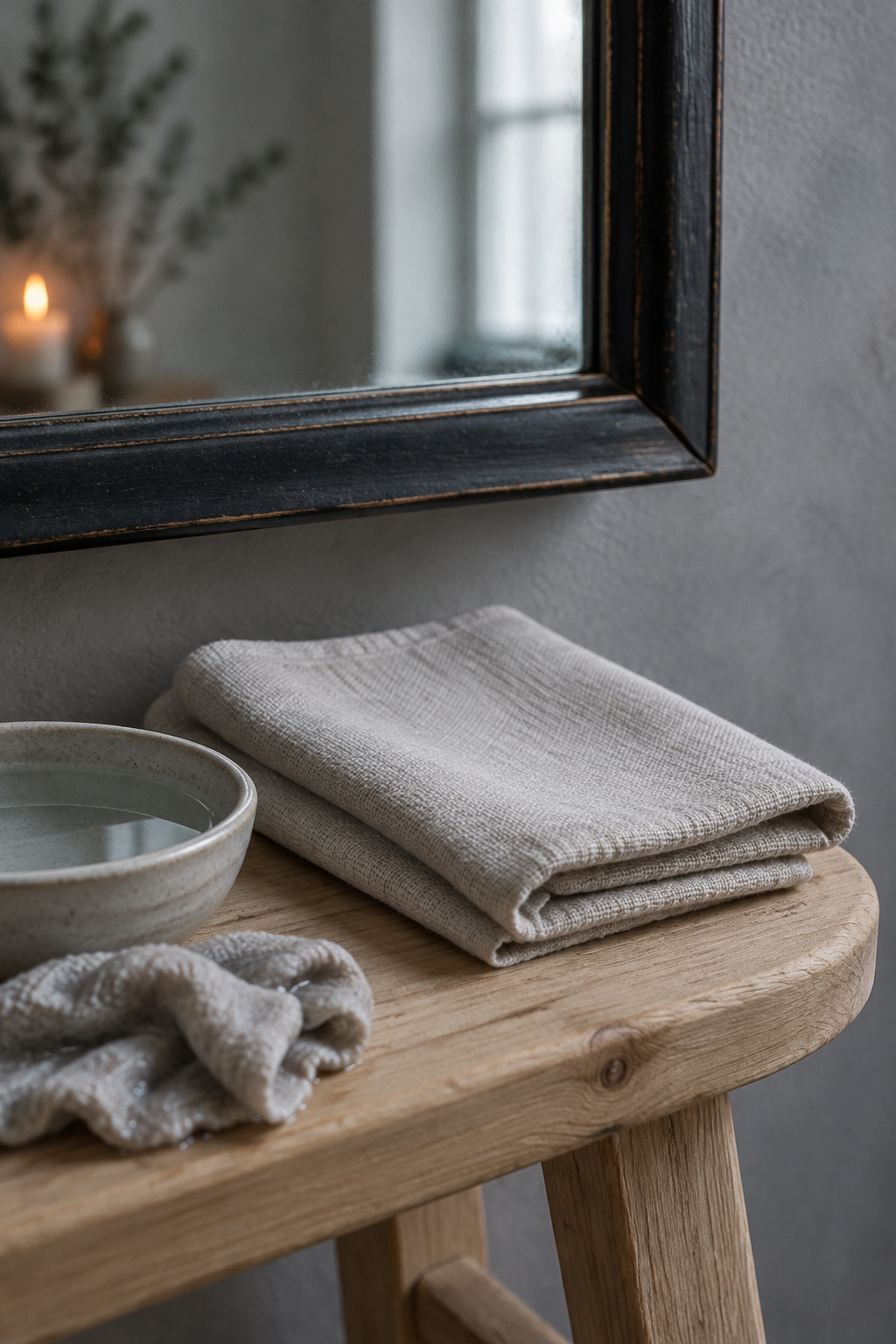
- Dust the glass with a soft brush, top down.
- Wet a lint-free cloth in warm water and wring it until almost nothing comes out.
- Wipe the face with the damp cloth. Never spray anything at the glass, and keep ammonia, vinegar and any acid or alkali cleaner away from it.
- Dry the glass at once with a second cloth, finishing along the edges and the joint with the frame.
- Once a year, take it down and check the back for new black spots, peeling paint or droplets along the bottom.
Wear gloves when you handle it so skin salts don’t end up on the backing.
Much pre-1950s glass is thicker and heavier than you’d expect, and a carved frame adds more. The weight should rest on a mounting board or cleat rather than the glass, going into studs or hardware rated well above the mirror’s weight. Tile and old plaster each need their own method, and our walk-through on hardware for a heavy framed mirror handles both.
Leave a Dated Note on the Back for the Next Owner
I took off a baseboard once and found a pencil note behind it: a carpenter’s name and the date, 1931. I’ve left a dated note behind every job since. The back of an old mirror is a good place for one.
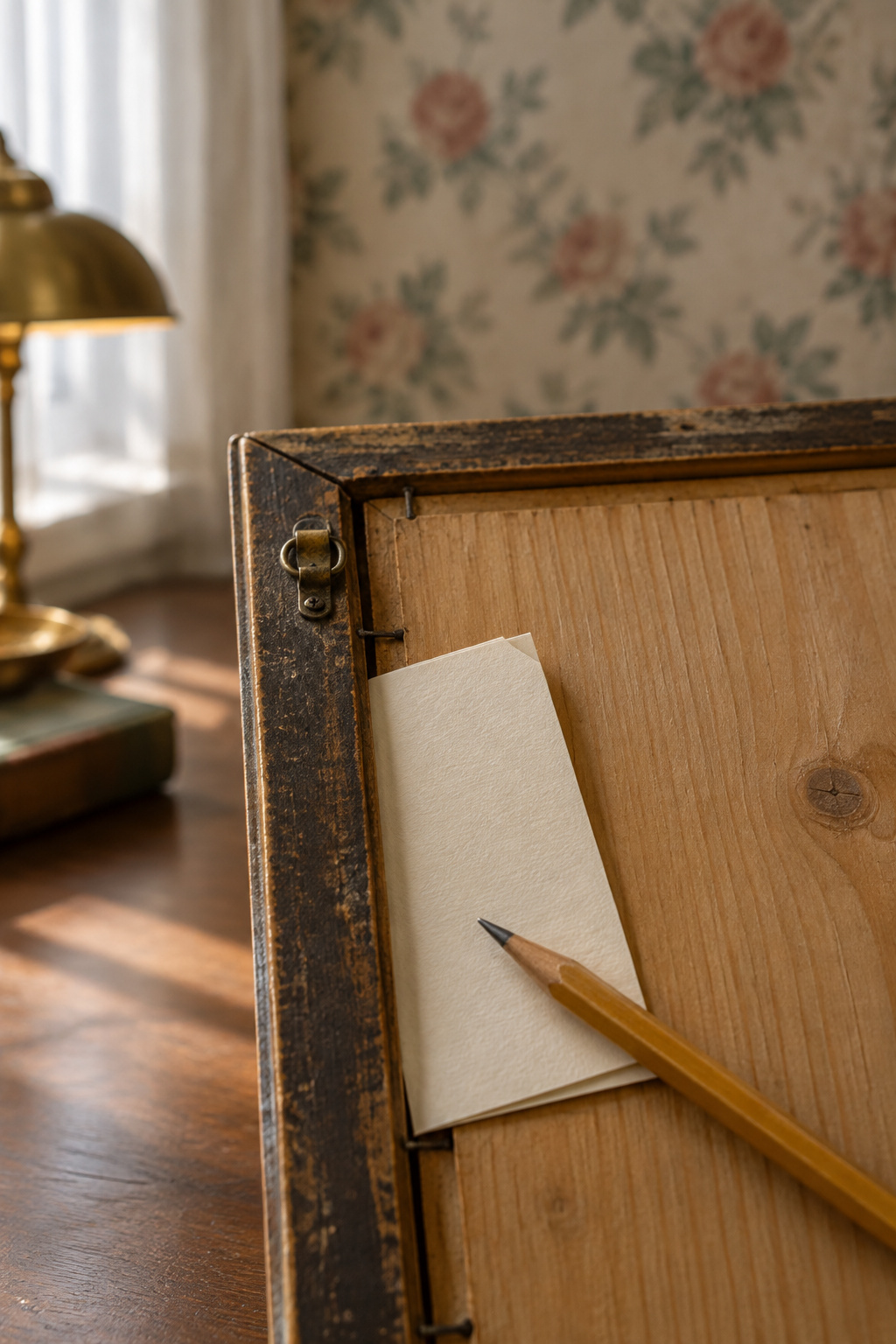
Write it on a card and tuck it behind the backing board, never on the paint or the silver, so it comes out without a mark. Put down where the mirror hung and when, that it was cleaned with warm water on a cloth, that the silvering and foxing are original and never resilvered, and when you last checked the back. You’re only its steward for a while, and the card tells the next owner what was done and what wasn’t.
Once it’s up, the rest of the room can be as modern as you like, and there are plenty of mirror ideas for the rest of the bathroom that sit happily beside an old one.
Which leaves the question of whether it’s old at all. My partner teaches high-school history and argues with me about dates, so I know how long a provenance argument can run. The back, the tarnish, the glass and the screws each give you a clue, and when they point different ways, I’d rather leave the question open than call it. No single tell settles it.
FAQ
Can I put a regular mirror or an antique one in a bathroom with a shower?
Yes, with conditions. Leave air behind the glass, keep a gap of at least 10 mm under the bottom edge, and keep the edges from puddling. An old mirror is more vulnerable than a new one, because its paint may have worn and mercury plates corrode in damp air, so give it the driest wall, away from the shower.
What causes black spots on the back of an old mirror?
Moisture reaching the silver causes them. The paint backing wears with damp, temperature swings and harsh cleaners, and once water gets behind it the silver corrodes, usually starting at the edges where the layers aren’t sealed. Glass cleaner sprayed on the face and left to run down into the frame can be a culprit.
How do I remove black spots from an antique mirror without damaging it?
You can’t wipe them off, because the black is silver that has already gone. The only repair that removes them is resilvering, which strips the original silver and the mirror’s age with it. Better to stop the spread: dry the edges, clean with a damp cloth only, and keep cleaner off the border.