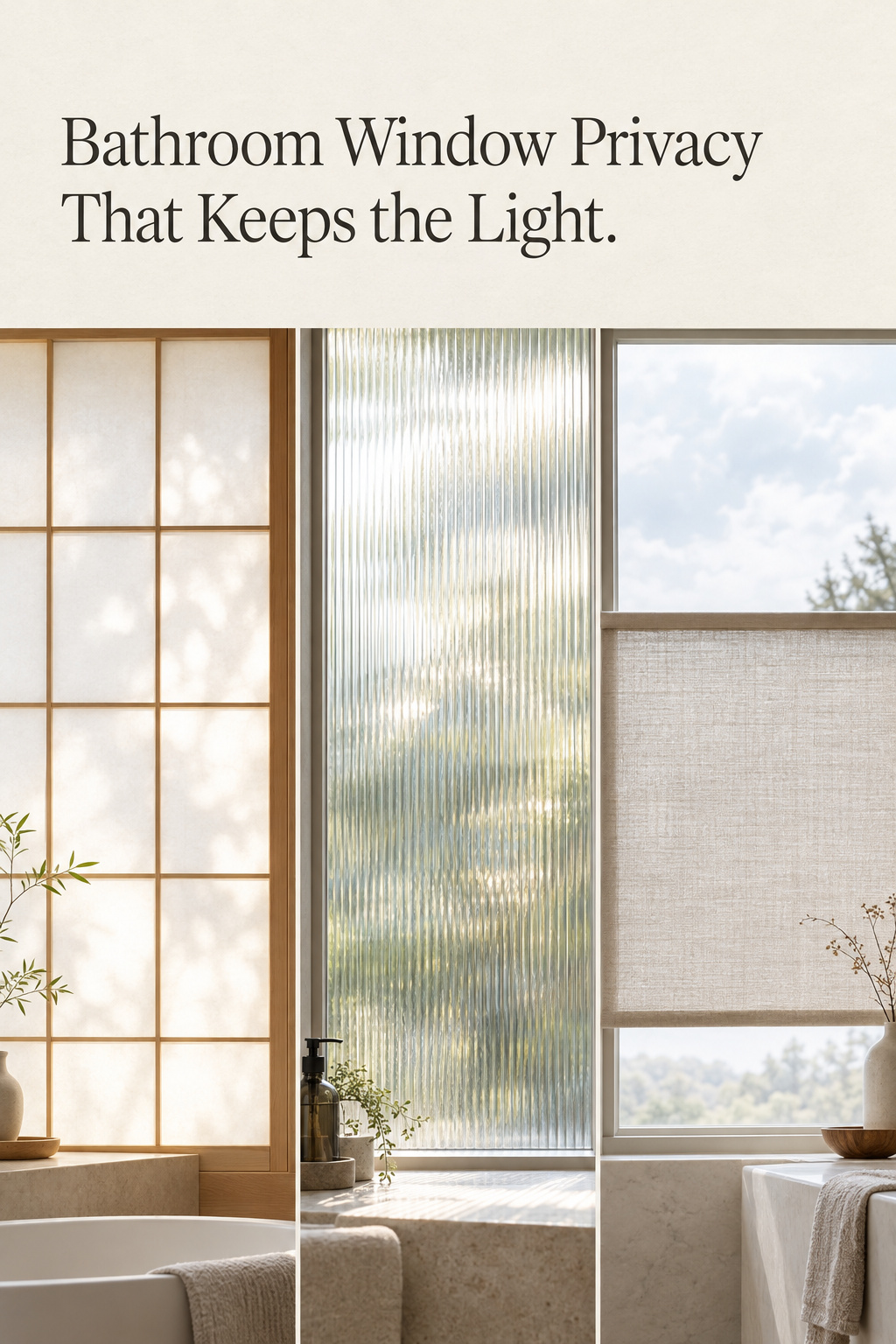
Clear glass lets through 85 to 90 percent of the daylight that reaches it, and every kind of bathroom window privacy spends some of that. A good translucent layer spends a little and gives back something better: daylight with the view taken out. The product pages all promise privacy and brightness at once, and they can’t all be right. Three tests sort them: how wet the window gets, how much daylight survives, and whether the thing can come off again. Most of the time, the window itself should stay.
TL;DR
- Sort the window by water first: paper belongs only on a dry wall, while a wet window needs rigid plastic sheet, a wipe-clean shade or safety glass.
- Frosted film keeps roughly 55 to 87 percent of the light depending on the pattern and peels off again, but it isn’t meant for glass where condensation runs constantly.
- Reglazing a sound sash costs far less than a new window (glass alone runs about $150 to $880, an insert replacement $450 to $1,200), and glass near a tub or shower has to be tempered or laminated.
Bathroom Window Privacy Starts With How Wet the Window Gets
Let’s see what it’s made of, and where it sits. The window is usually the coldest surface in a bathroom, so it’s where the steam lands first. Single glass starts to fog at about 24 percent indoor humidity when it’s 20°F outside; a sealed double-glazed unit holds out to roughly 47 to 50 percent. An old single-pane sash is wet long before the room feels damp.
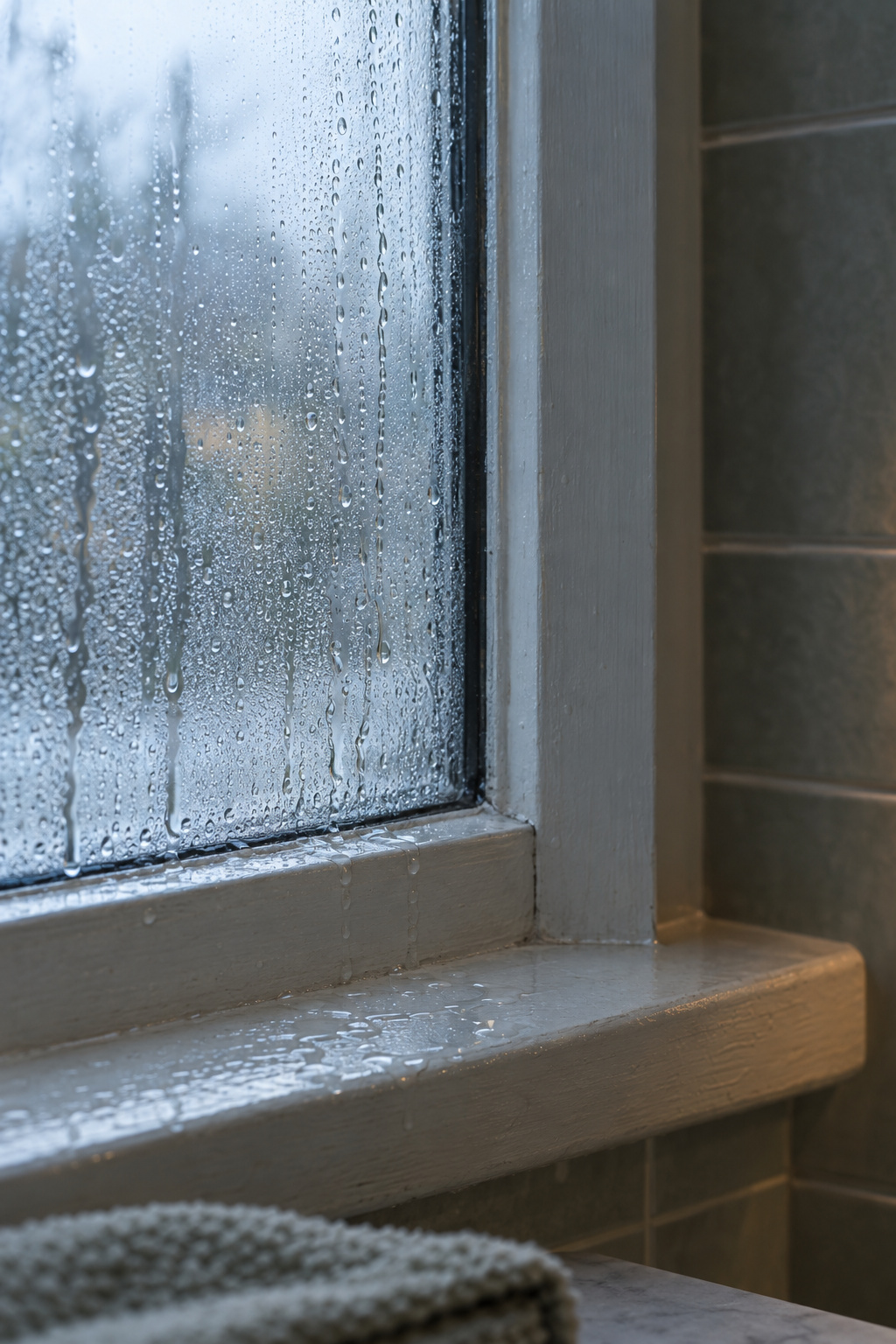
That gives three kinds of bathroom window:
- In or directly over the shower, where water hits the glass. Only glass, rigid plastic or something you can wipe down survives here.
- Beside the tub or sink, where steam and the odd splash leave condensation on a cold morning.
- On a dry wall across the room from the water, the only place paper can live.
If you’re still moving fixtures, the window and where the wash area goes decide each other, and a window that ends up in the spray narrows every choice that follows. Lighting the room after dark is a separate job for the bathroom lighting guide; daylight is the light you get for nothing.
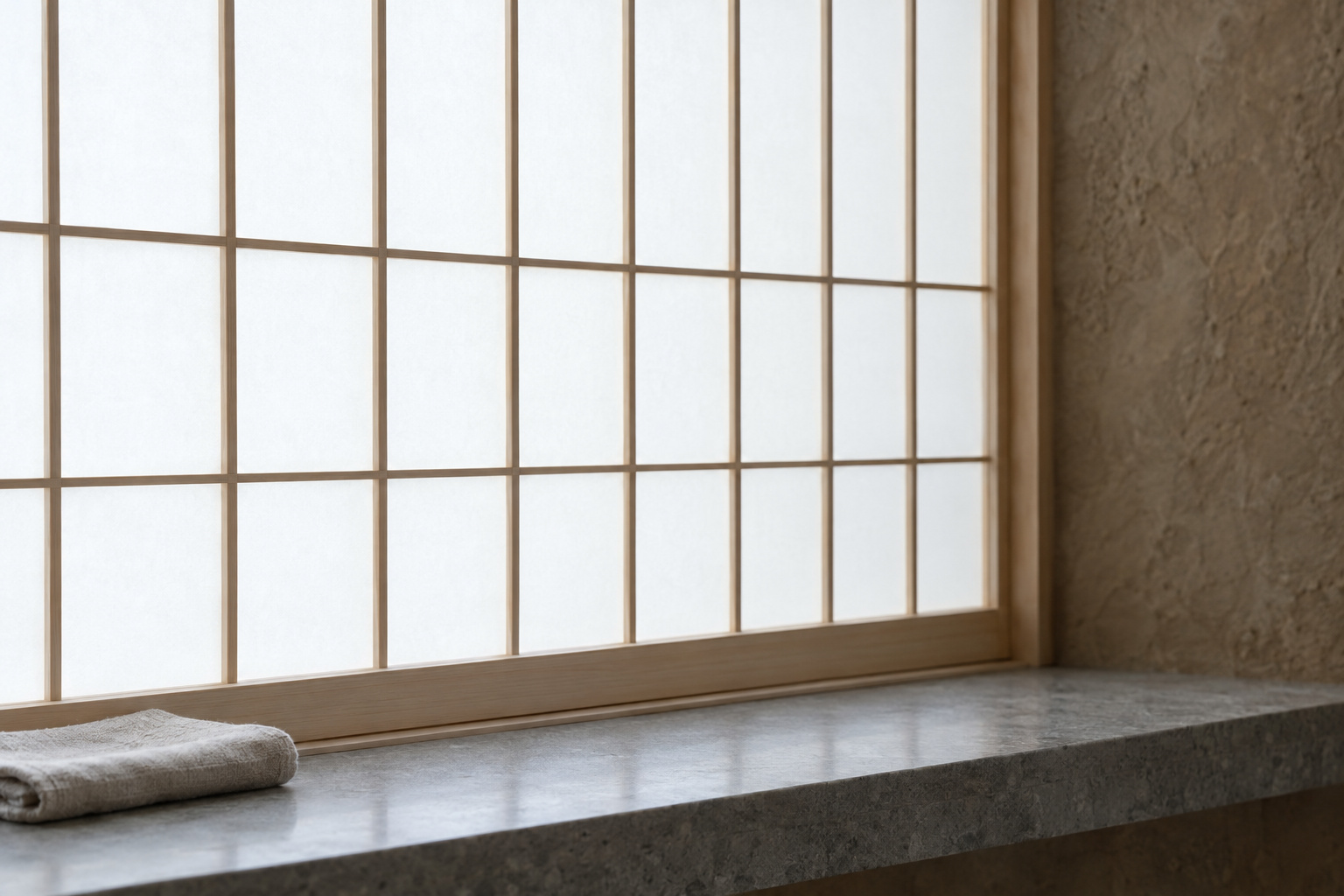
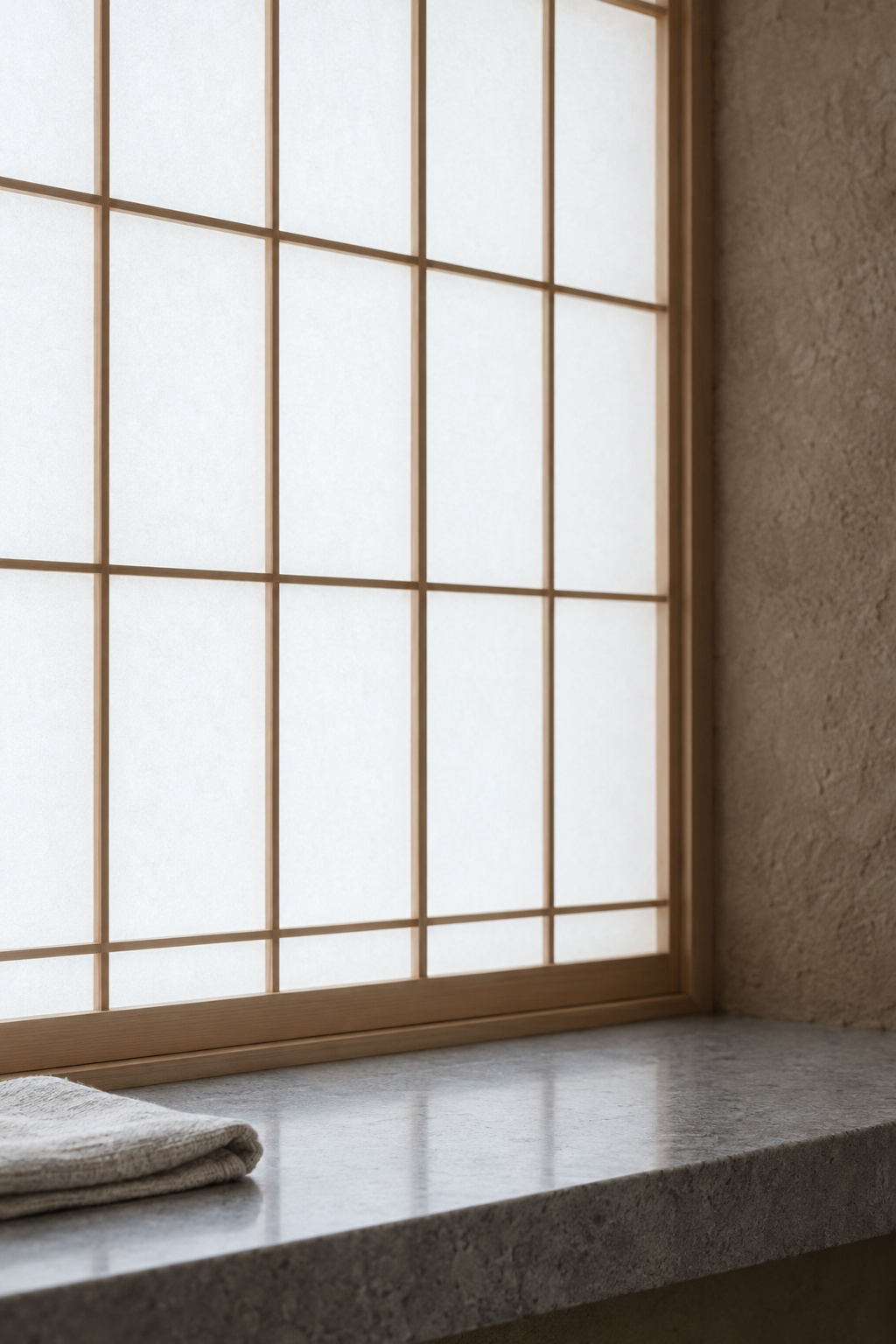
Shoji-Style Panels: Paper, Laminate or Polycarbonate Inside the Frame
Shoji paper was never made to get wet. Its sellers say so: no ordinary paper by a bath or sink, and even vinyl-laminated paper draws water in at its edges. Washi belongs on the dry-wall window and nowhere else.
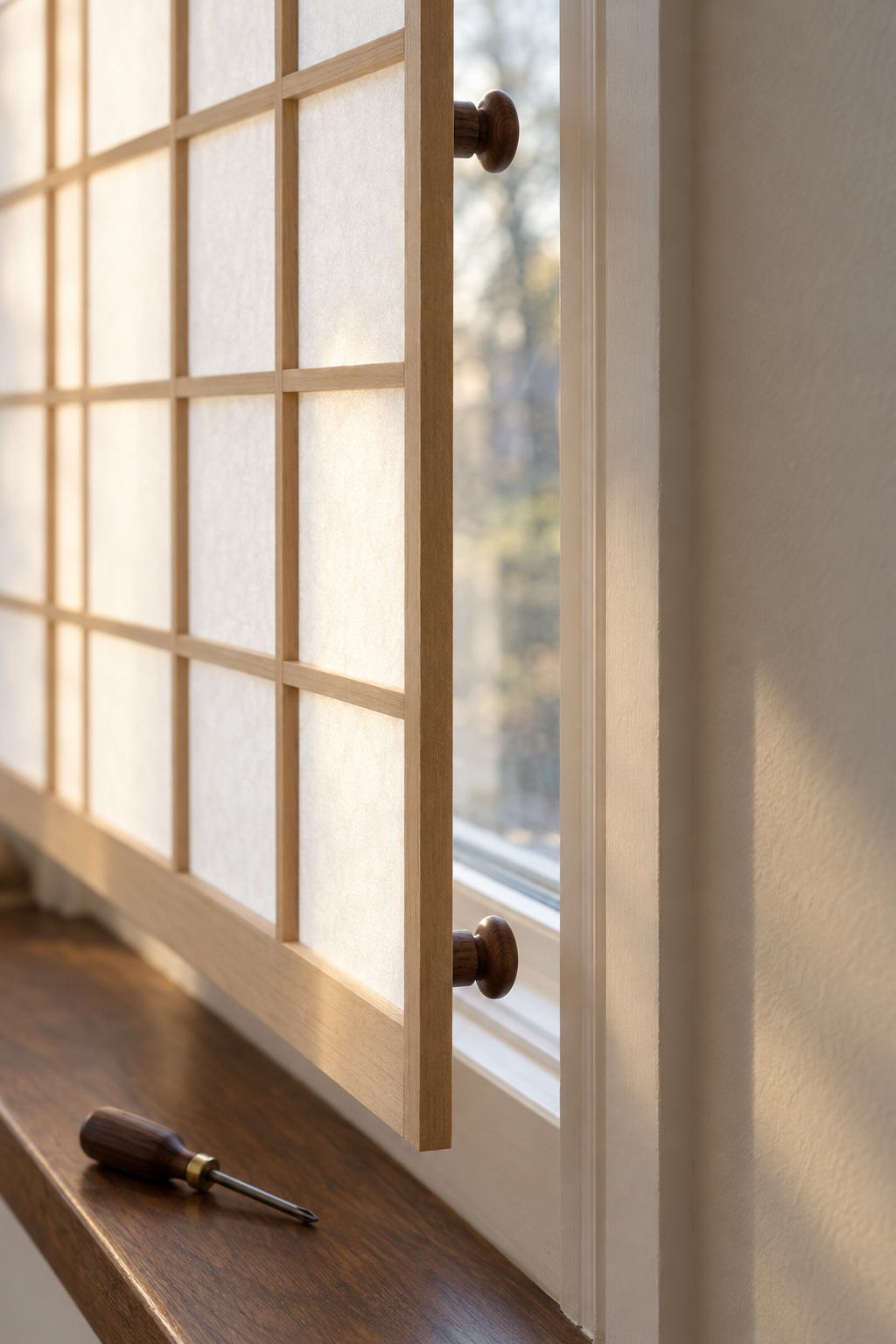
For a window that sees steam, the shoji look comes from rigid plastic sheet, about 2 mm of acrylic or polycarbonate, in one continuous piece per frame. Some acrylic sheets carry a printed washi-look film, and I’d rather use the plain one. New work should be honest about being new, and a plastic sheet that admits it’s plastic sits better in an old casing than a printed imitation of paper.
The light is the reason to bother: a translucent sheet a few inches inside the glass turns a view into an even glow, which is most of how light and paper work in a Japandi bathroom. Laminated paper passes roughly 39 to 50 percent of the light. Nobody publishes a figure for the plastic sheet, so hold a sample against your own window before you order.
The wooden lattice is a humidity part too: steam can warp the frame. Fix the panel so it lifts out. Small turn-buttons on the casing hold it, and a couple of screw holes are the only trace it leaves. Glue or nails into original trim are what I’d refuse.
Privacy Film: The Afternoon Fix and What It Costs You in Light
Film is the afternoon job, and the easiest thing on the list to undo, which I count in its favor.
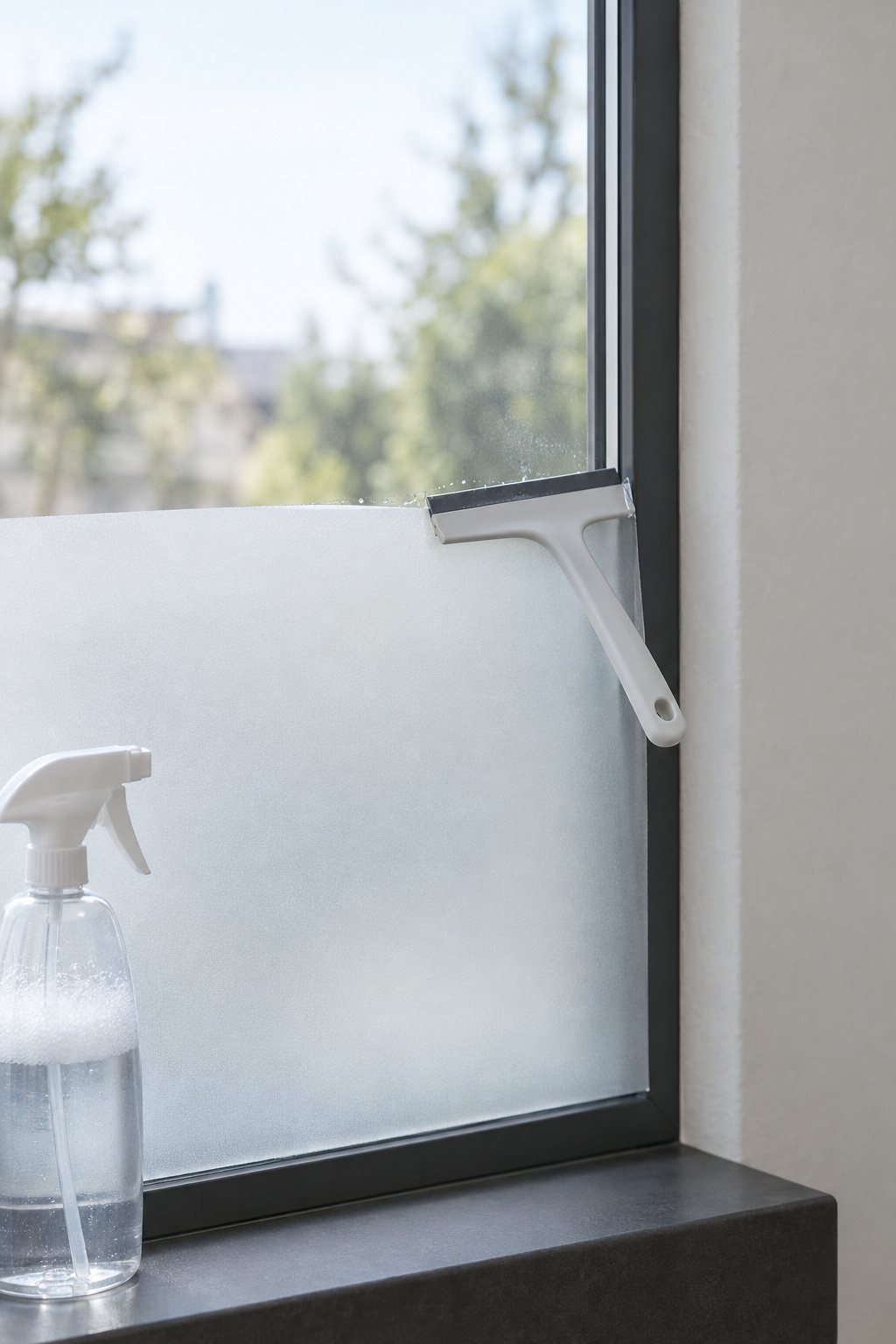
Frosted films keep roughly 55 to 87 percent of the light, and the pattern decides where you land. 3M’s frosted film tests at 72 percent and its dusted one at 85; a deep etch can fall to 30. There’s no going rate published for plain frosted film, plastic sheet or a finished shoji panel, though film is still the cheapest way in.
What film can’t take is constant wet. 3M doesn’t recommend its decorative films where condensation consistently occurs, which rules out glass inside a shower. Gila’s sheet for its privacy-control mirror film says not to apply it to glass more than 40 years old, or to etched or frosted glass. That’s one product’s sheet, but if your sash is original, ask the maker before you stick anything to it.
Buy frosted or patterned film, never one-way mirror film. Mirror film only works while it’s brighter outside, so at night, with the bathroom lit, it gives the street the view. Frosted film holds its privacy after dark.
Top-Down Shades and Cafe Heights: Privacy That Leaves the Sky Alone
Sometimes the glass can stay exactly as it is. Privacy only has to reach the height of someone looking in; cover that, leave the upper pane clear, and the sky comes in as before.
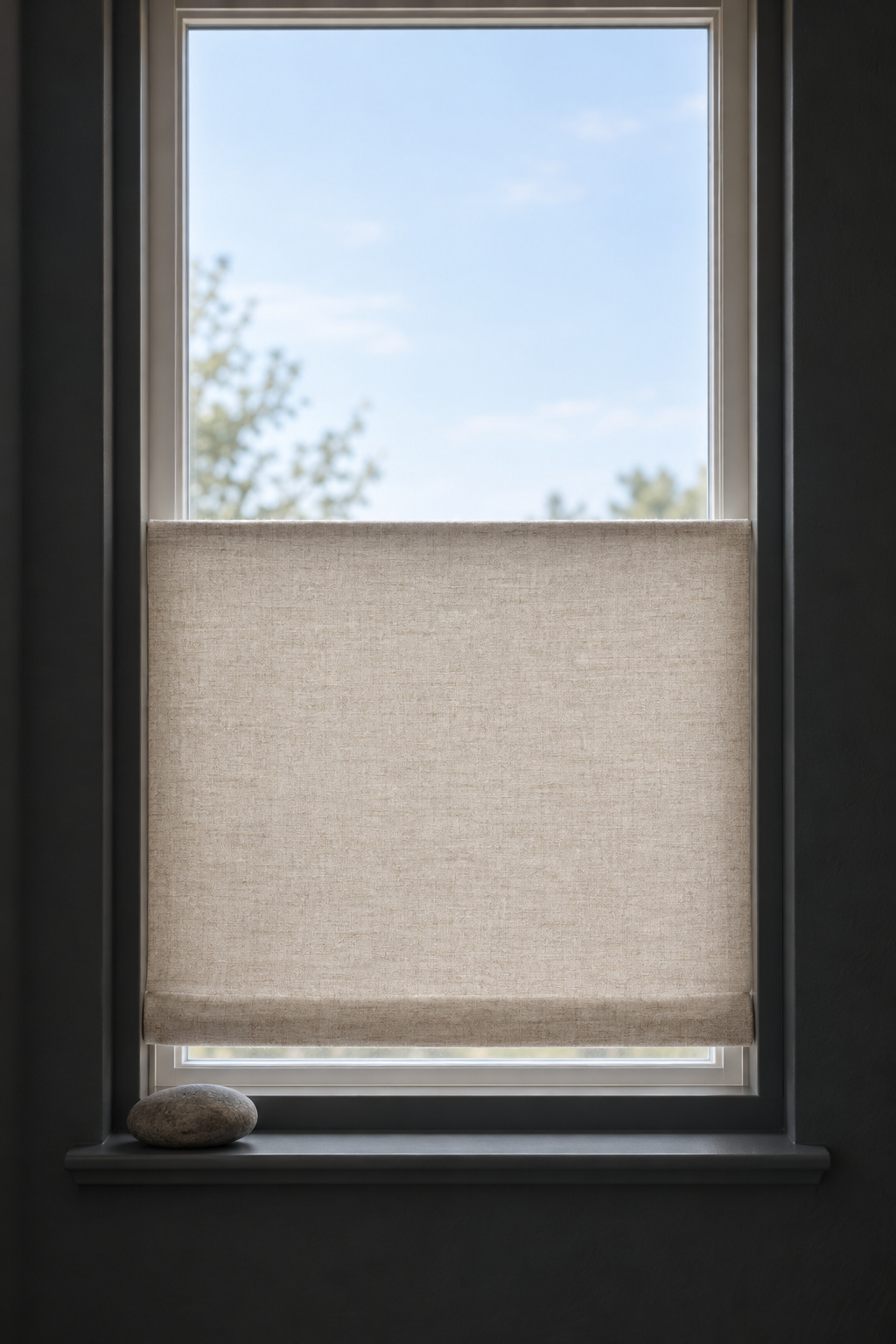
A top-down, bottom-up shade lowers from the top and stops where the sightline ends. A café-height panel on a spring tension rod covers the same band with no drilling at all. There is no standard café height, so stand outside where a neighbor would and see what needs covering.
Faux wood, vinyl and aluminum blinds take bathroom humidity; real wood blinds warp or crack. Cellular shades aren’t waterproof, so open them after a shower and let the steam leave the glass. Stock coverings sold in the US have had to be cordless or have inaccessible cords since 2023, so an old corded shade in a bathroom children use is the one to replace.
The smaller the room, the more it depends on that one window, and light in a small bathroom is worth protecting before anything else.
Reeded or Obscure Glass: Reglaze the Sash Before You Replace the Window
Many of the bathroom windows people want rid of are sound. The putty has dried, the paint has sealed the sash shut (old houses seem to consider this a feature), and the glass is clear when you’d like it not to be. None of that needs a new window, only new glass in the sash you already have.
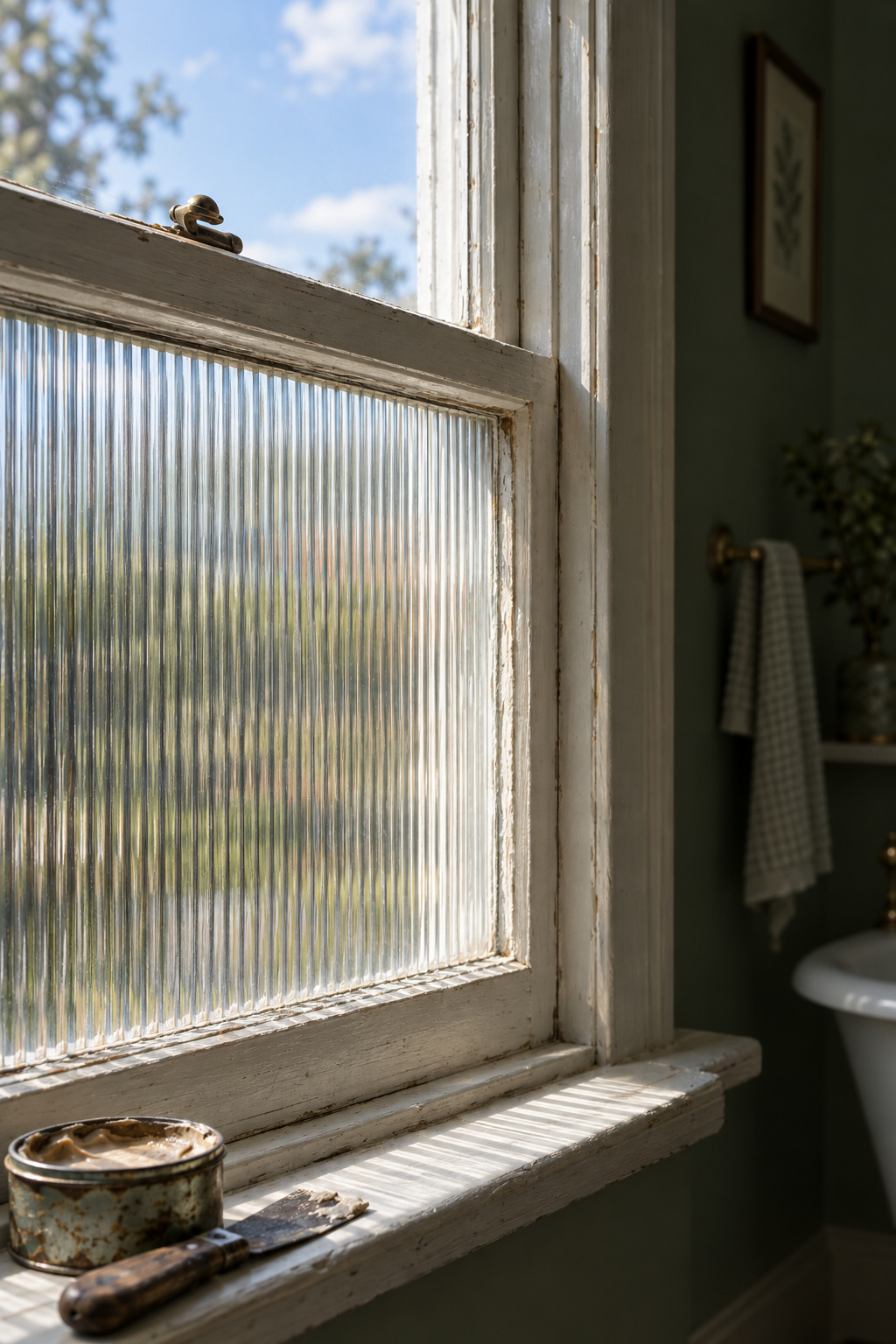
A client of mine had been quoted for vinyl replacements. I reglazed and weatherstripped one sash as a test, and the client kept all twelve originals. Original windows can almost always be repaired for less than people think, and the price guides agree on the order: glass alone runs about $150 to $880 a window, against $450 to $1,200 for an insert replacement and $800 to $2,500 or more for a full frame. One glass shop lists reeded glass at $15 to $28 a square foot plus $50 to $150 to fit. A 2 by 3 ft sash is 6 square feet, $90 to $168 in glass, so $140 to $318 fitted. These are rough consumer figures; get a local quote.
Reeded glass passes most of the light: one maker lists up to 86 percent, a glass shop 60 to 75, since reed spacing and thickness differ. Tighter reeds hide more. Tempered or decorative glass can take a couple of weeks to arrive, so plan to cover the opening. The case is strongest for single-glazed wood sash, which takes new glass pane by pane, and it’s slow, pleasant work in a carriage house that smells of linseed oil all year.
Safety glazing near a tub or shower
Under IRC R308.4.5, glass in a wall containing or adjacent to a tub or shower counts as a hazardous location when its bottom edge is less than 60 inches above any standing or walking surface, unless it sits more than 60 inches, measured horizontally, from the tub’s water edge or the shower’s edge. That glass must be safety glazing, which in practice means tempered or laminated, with the permanent mark in one corner. The wording has changed between editions, so check which edition your area adopted before you assume a window is exempt. A window inside the shower needs safety glass, and film or paper over ordinary glass doesn’t fix that. Reeded, frosted and obscure glass all come tempered or laminated.
When replacement is the right call
The National Park Service puts repair first and accepts that past a certain level of decay, replacement becomes the right treatment. Probe the wood with something sharp; a sound surface can hide a soft core. If the frame is rotted, warped, leaking or out of square, new glass in it is money spent twice. On a house built before 1978, scrape old paint lead-safe, even on your own home.
Choosing by Daylight, Reversibility and Humidity
Lay the options side by side and the three tests do most of the choosing.
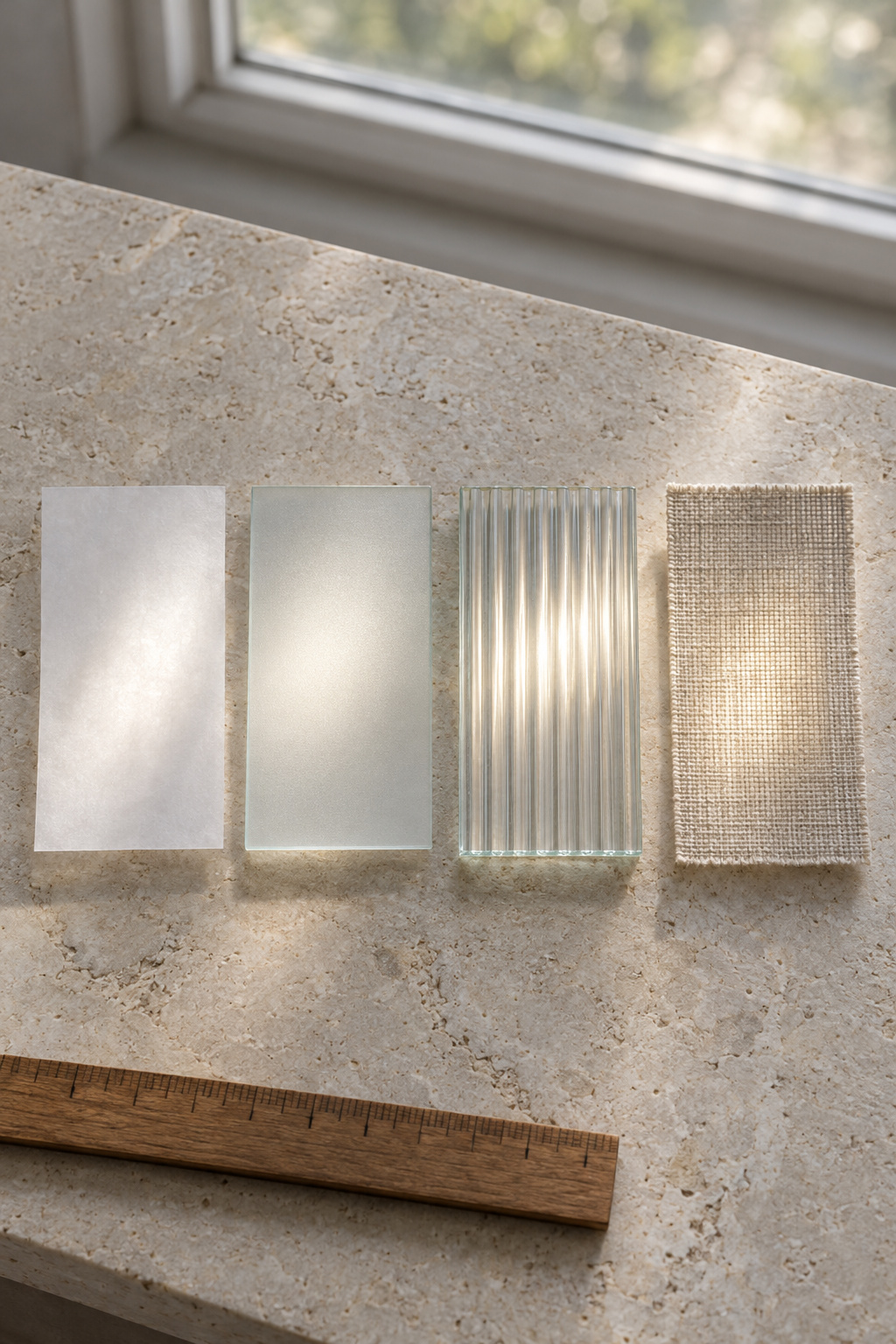
| Option | Daylight kept | Comes off? | Humidity limit |
|---|---|---|---|
| Clear glass (baseline) | 85–90% | Nothing to remove | None |
| Shoji-style panel, plastic sheet | No published figure | Lifts out on turn-buttons | Waterproof; lattice must stay dry |
| Shoji-style panel, laminated paper | About 39–50% | Lifts out on turn-buttons | Dry wall only |
| Frosted film | About 55–87%, by pattern | Peels off; residue after years | Not where condensation is constant |
| Top-down shade or café panel | Upper pane stays clear | Brackets or tension rod | Faux wood, vinyl or aluminum |
| Reeded glass, tempered | Up to 86% (maker); 60–75% (glass shop) | Permanent; original sash stays | None |
| Frosted glass, tempered | 60–75% | Permanent; original sash stays | None |
Then decide by water. A window in or over the shower, or inside the code distances from the tub, gets safety-glazed reeded or obscure glass. A damp window that’s never splashed can take film, a plastic-sheet panel or a wipe-clean shade, chosen by its light figure. Washi goes only on a dry wall.
What I’d avoid: anything opaque that blocks the window, a new window where the old sash only needed glass, and film or paper where the spray reaches. An original window has already outlasted several owners, and we’re its stewards only for a while.
I reglaze sashes. Supplying and setting safety glass beside a tub is a glazier’s job, and which edition of the code your town follows is a question for your building department, not for me.
FAQ
Can people see through frosted privacy film at night when the bathroom light is on?
No, frosted, patterned and decorative films keep their privacy at night with the light on. One-way mirror films don’t, because they only work while it’s brighter outside. Lighter textures show more shape after dark, so a light fluted film leaves more of a silhouette than a deep frost. Stand outside one evening with the bathroom lit and look.
How do you remove old privacy film without damaging the glass?
Lift one edge and pull the film back on itself at about 135 degrees with smooth, even tension, cutting it into strips if the pane is large. A steamer or hair dryer softens stubborn adhesive. Clear what’s left with soapy water and a safety-handle scraper. Film that’s been up for years usually leaves some residue; static-cling film leaves none.
Should a bathroom window be able to open if the room has a fan?
It doesn’t have to. The IRC accepts either an opening window, with at least 3 sq ft of glass and half of it able to open, or electric light plus an exhaust fan that meets the mechanical code. Even with a fan, a window you can crack open after a shower helps the glass and whatever covers it dry out.