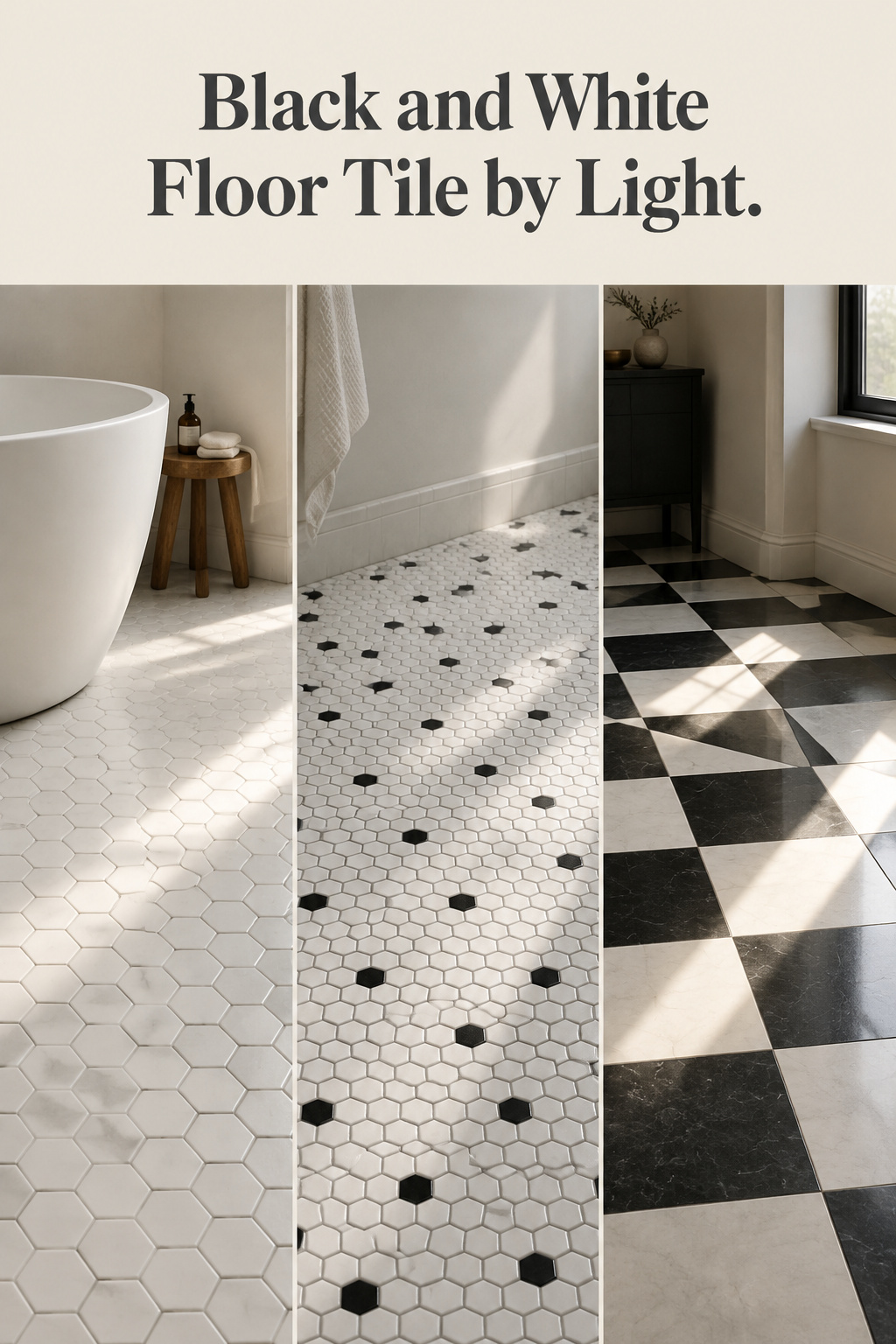
The light in your bathroom should choose your black and white floor tile, not the lamp over the showroom’s sample board. On a wet Tuesday evening the floor you saved looks different in your own room. The mat is damp under your heel. The ceiling light is the only light. Across the black squares lies a pale line of lint, a dusting of talc, the dried ring where a drip landed. On the white ones, grit from the hallway.
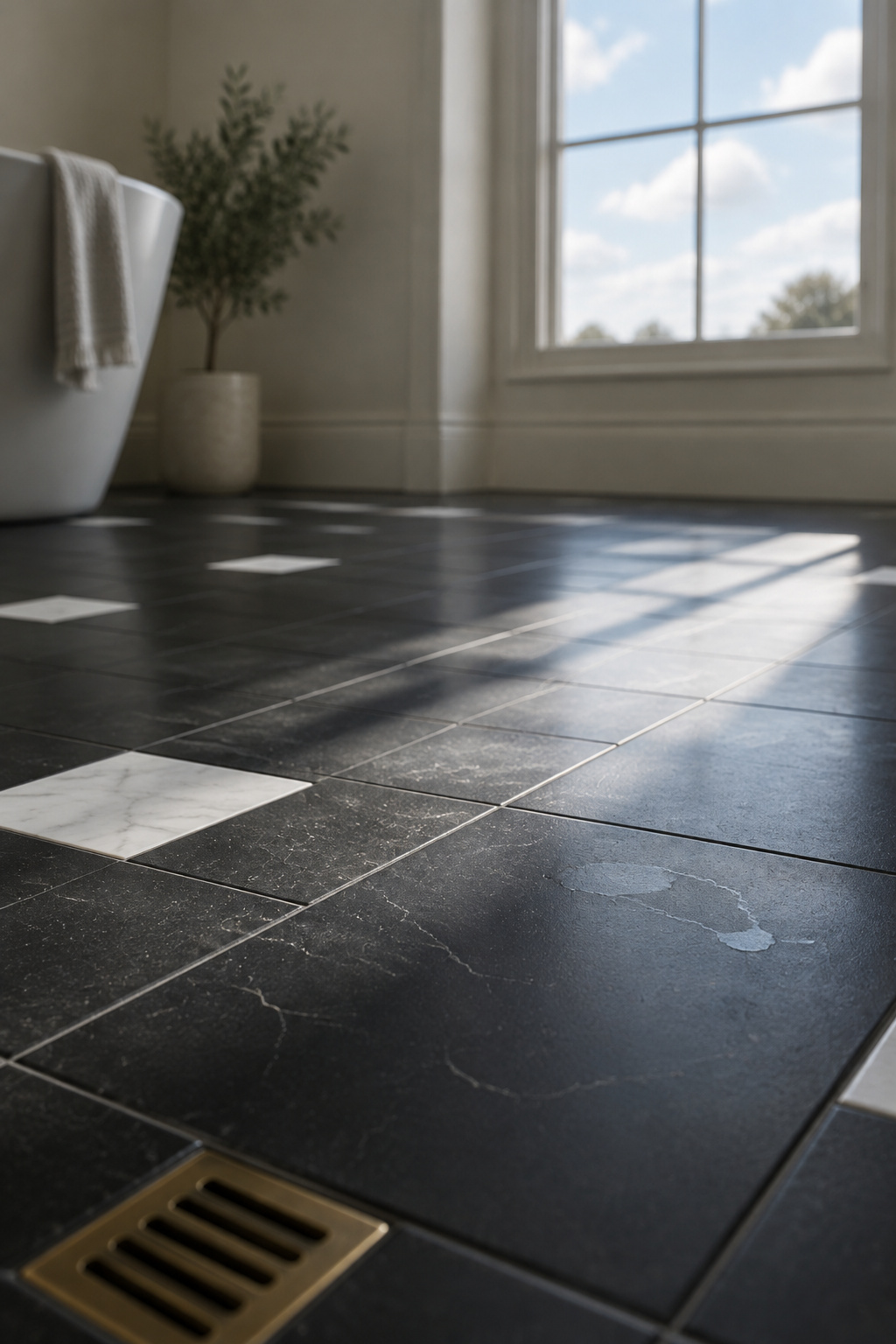
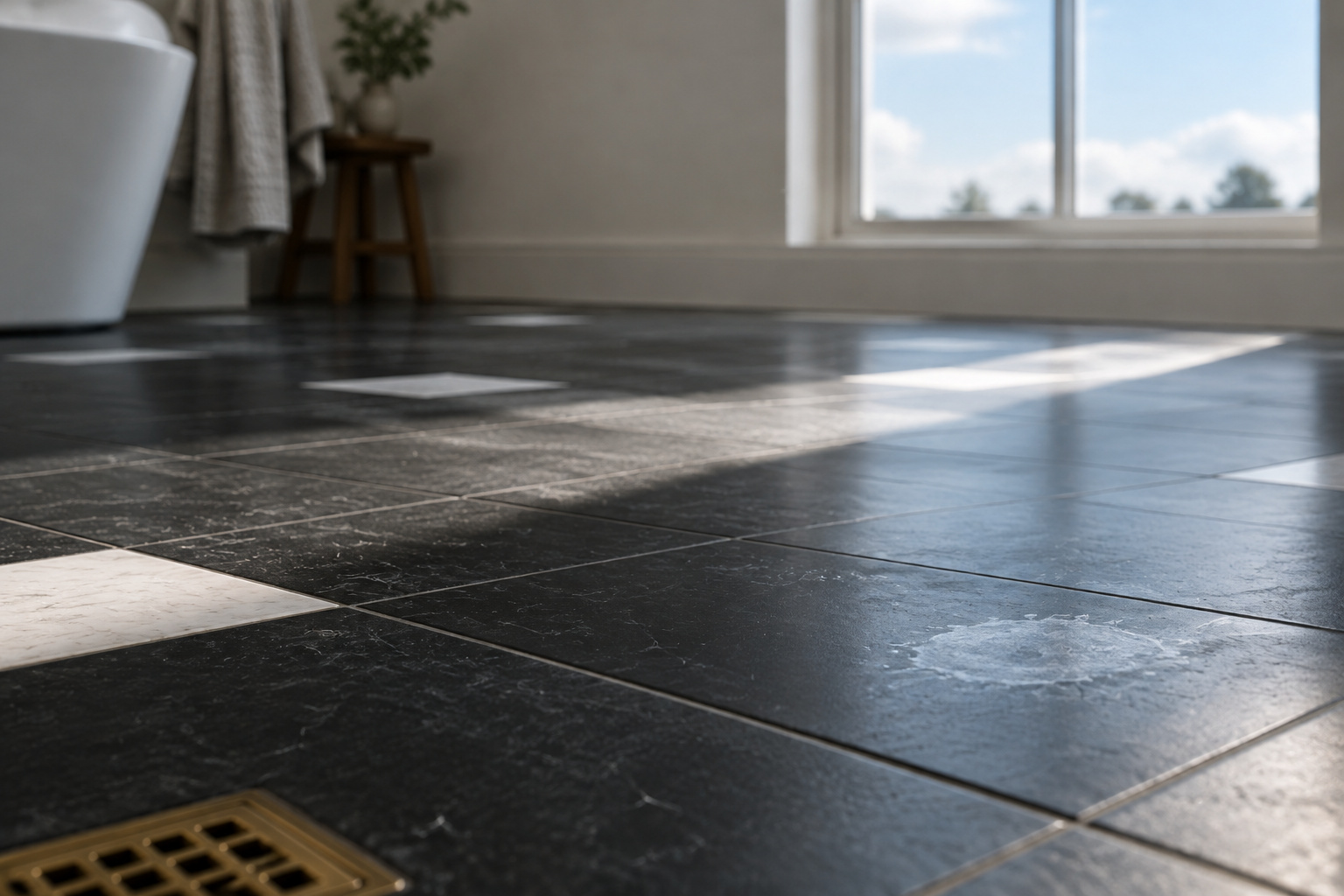
Every black-and-white floor shows something. What differs is which mess your room’s light puts on display, and whether the floor holds under wet feet. You can judge both before you buy a box.
TL;DR
- Black tile shows pale specks, such as lint, talc, soap scum and hard-water marks, most on gloss and in low, directional light; white tile shows the dark soil instead.
- A dim or windowless bath does best with a floor that is mostly white, in a warm white; a bright bath can carry more black if the tile is matte.
- For a floor that gets wet, a small mosaic tends to grip better, and the 0.42 wet DCOF benchmark compares tiles without promising you won’t slip.
Read your bathroom’s light before you read a tile sample
A tile’s reflectance is fixed. What changes is the light falling on it, and that decides how bright the floor looks and how much shows on it. Light that comes in low from one side sharpens every pale speck on a dark tile. In our house outside Duluth, north light rakes across the floor in a way no showroom ever does.
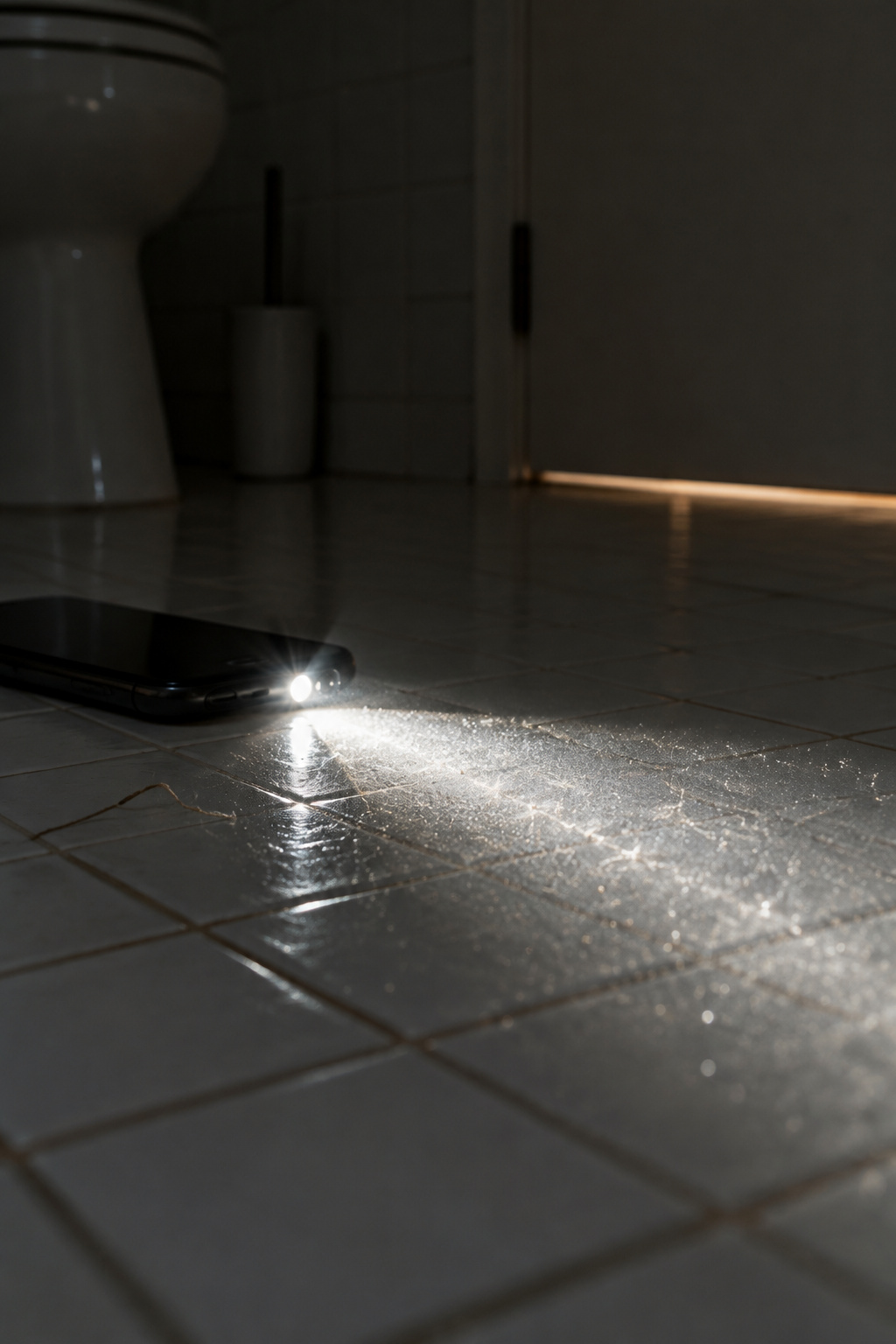
So I rate the room before any sample comes home.
- Note the window: its size and which way it faces. A small north window gives a dim room most of the year. No window is dim by definition.
- Turn the lamps off and stand there at the hour you actually use the room.
- Hold a phone flashlight almost on the floor and skim the beam across the tile you have now. That raking light shows you what a new floor will show.
- Look at anything white in that light. If it goes grey and cold, the room is dim, whatever the window suggests.
Call the room dim, middling or bright, and choose the floor from that rating.
White is not neutral in a north-facing room. For a dim floor I pick a warm white, or an off-white with some yellow in it, because a cold white floor in a dim bath looks grey and tired.
Black and white floor tile in dim, middling and bright baths
The common line is that a dark floor hides dirt. It hides one kind. Black tile makes pale things stand out: soap scum, hard-water residue, talc and lint, especially on gloss. Darker debris, such as soil, mildew or hair dye, blends into black because it sits at much the same tone. Mapei’s care guide gives the other half: lighter tile and grout show dirt more easily. Both are true, because they describe different specks.
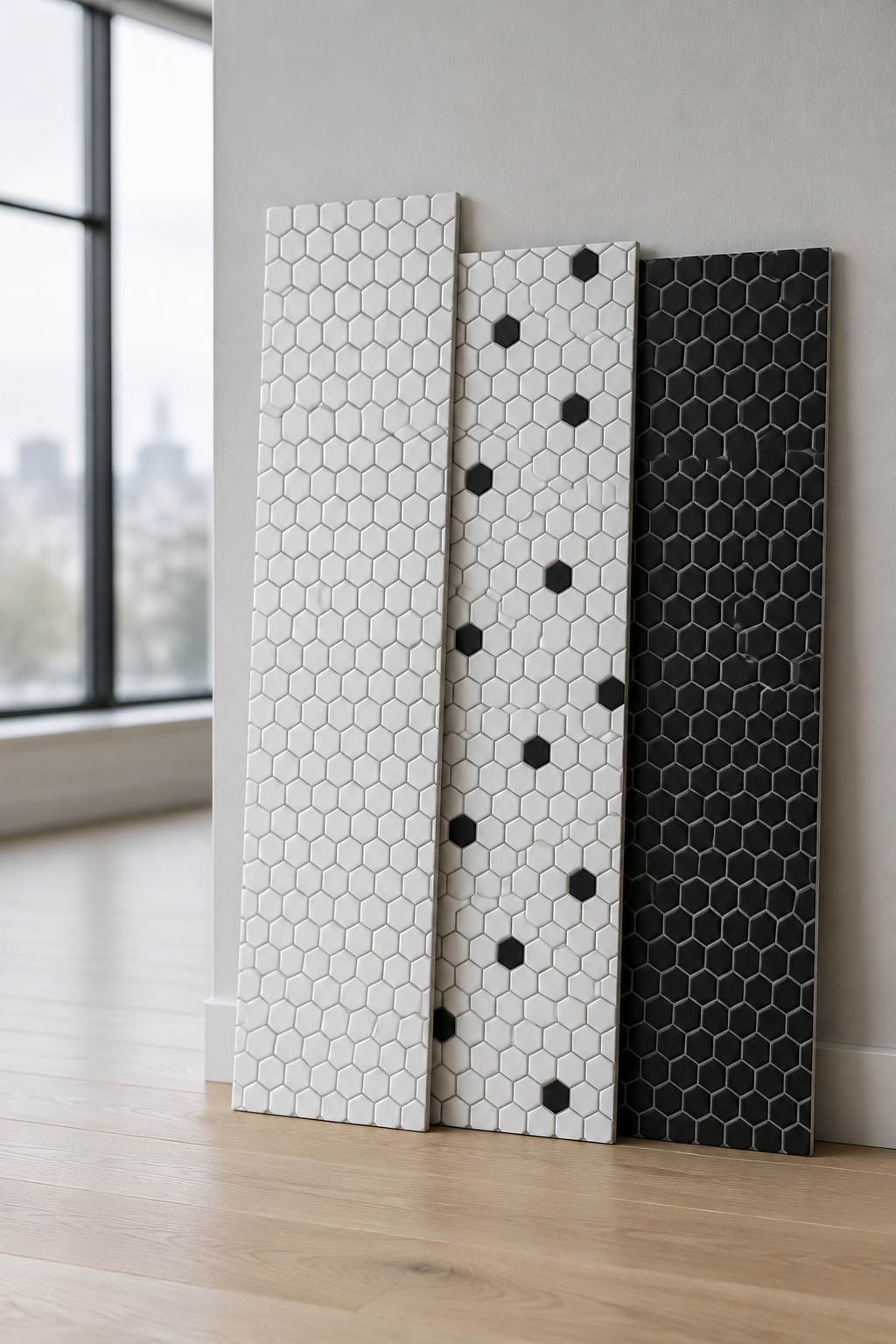
So the choice is which speck you would rather see, in the light you have.
| Floor mix | What shows most | What it hides | Light it suits |
|---|---|---|---|
| Mostly white | Dark soil, grit, hair | Lint, talc, pale water marks | Dim or windowless |
| White with scattered black | Some of each, in smaller doses | Some of each, partly | Dim to middling |
| Mostly black | Lint, talc, soap scum, hard-water spots | Dark soil | Bright, and kept matte |
In my practice, a dim bath gets the first row and a middling bath the second. Only a bright bath gets the third, and only in matte, because gloss amplifies water spots, prints and fine dust under directional light. Matte diffuses light and softens small smudges, though its fine texture can hold debris, so it wants a proper wash rather than a quick wipe.
Footprints can be the cleaner’s fault, not the color’s. A porcelain maker lists footprint marks and a dull haze as signs of the wrong daily detergent. Change the cleaner before you blame the tile.
Tile size and finish settle wet-foot grip before pattern does
Someone steps out of the shower onto the mix you chose. The slip figures that follow are the tile industry’s, not mine.
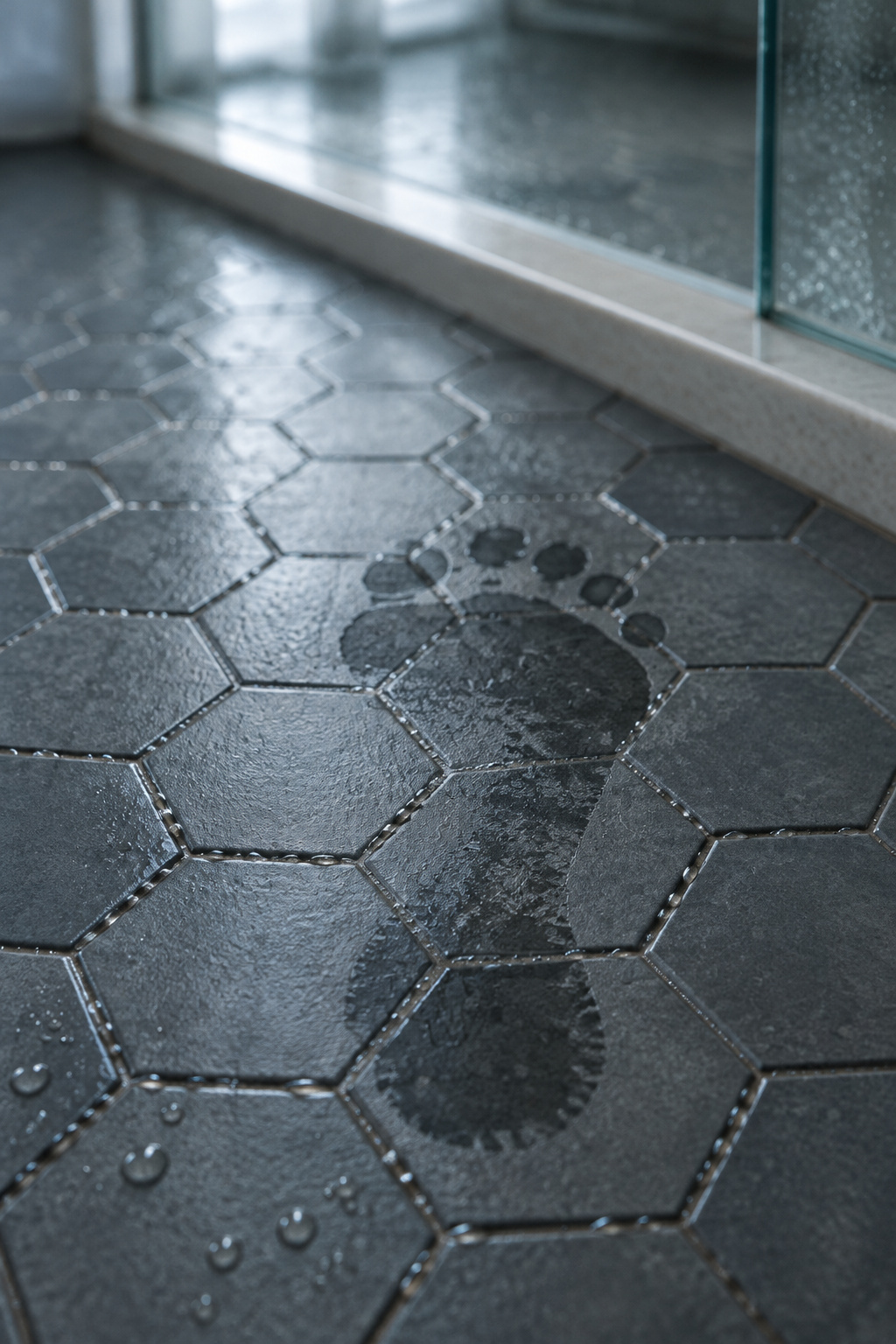
Tiles are compared by DCOF, the dynamic coefficient of friction: the force needed to keep something sliding across the surface, divided by its weight. Under ANSI A326.3, a tile for level interior floors walked on wet needs a wet DCOF of at least 0.42, or a maker’s declaration for that use. The test uses a slightly soapy solution in a laboratory. The Tile Council of North America is careful here: DCOF “does not predict the likelihood a person will or will not slip … and it is not synonymous with slip resistance.” Use the number to compare two tiles, not as a promise.
Mosaic makers say the extra grout joints in a small tile break up surface water and help bare feet grip. Treat that as a tendency. One of them, SICIS, argues the lab test reads grout gaps as voids, so a small mosaic can score lower than its real wet grip. The standard has mosaic makers declare the use class instead of relying on the lab number alone.
Finish counts as much as color. In one tile study, smooth wet surfaces risked hydroplaning, while surfaces with fine, evenly spread points or pores kept their grip. And never wax a tile floor.
By the light rating:
- Dim bath: small matte or textured mosaic, mostly warm white.
- Middling bath: small mosaic or a modest matte tile, white with scattered black.
- Bright bath with a wet floor: matte tile, with black wherever you want it; polished tile only where the floor stays dry.
Hex and mosaic put scattered black where a dim bath needs it
A dim bath can still carry black if it is placed on purpose.
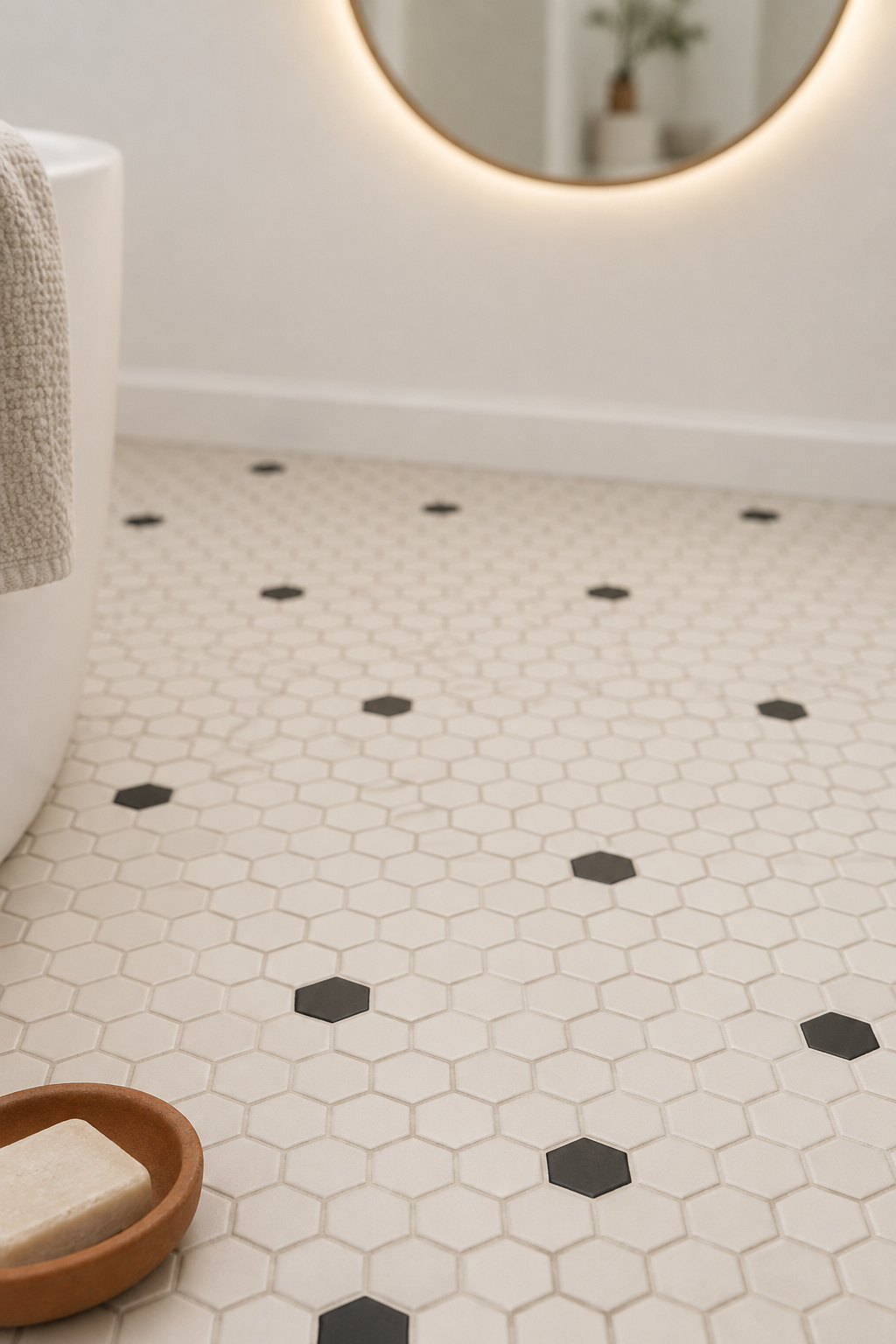
A hexagon or small mosaic floor in warm white, with black tiles dropped through it in a loose scatter, is what I would put in most windowless bathrooms. The white carries the light. The black gives the eye somewhere to rest. Keep the scatter loose. Set the black in a regular grid and you have built a small checkerboard, with all its demands.
I don’t count black tiles. I hold the flashlight low and stop while the white still does most of the work. Enough is a good word.
Mesh-backed sheets make hex easier to lay. For period accuracy, the right hex for a house of a particular decade, our vintage bathroom tile guide covers it properly.
One caution for a tight room: smaller tiles mean more edges, and a busy floor adds the most of them. Read about a small bathroom with fewer black edges before you commit to a dense scatter.
A checkerboard bathroom floor belongs in the bright bath, and grout color changes the pattern
The checkerboard is what most people mean by a black and white floor, and it is the most demanding one. Half of it is black, so half of it shows every pale speck, and large polished squares show water spots and fingerprints under directional light. A big polished checkerboard in a dim bath that gets wet is a floor for a photograph.
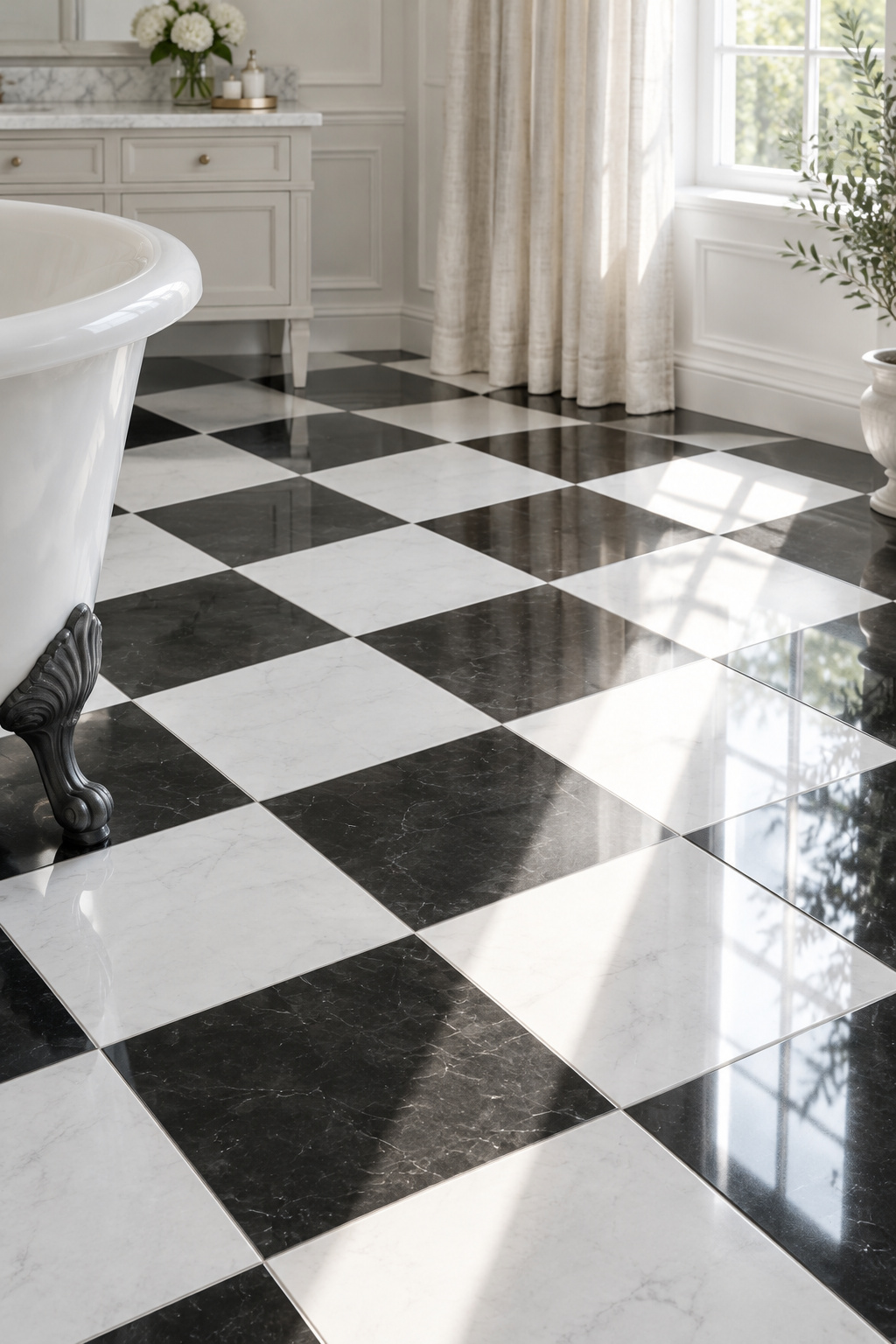
In a bright bath with a floor that mostly stays dry, it works. Even light keeps specks from catching, and a dry floor asks less of polish. Where the floor gets wet, choose matte and accept a slightly softer pattern. For the history of the pattern and the size of the squares, the checkerboard entryway floor guide has it.
Grout color is the other pattern decision, and people make it last when it should come early. White grout draws a white line around every black square, black grout a dark line around every white one, and grey calms both. Designers quoted by House Digest advise against stark contrast and say to match grout to tile. Before you choose, see what black grout does on a white floor, because the joint changes more than the look.
Pulling it together: let the floor set the rest of the room
Look again at that wet Tuesday floor. Its trouble has a name now: mostly black and polished, in a dim room, showing its pale specks in the only light the room has, slick when wet. The same tiles in matte, in a bright room, would have been fine.
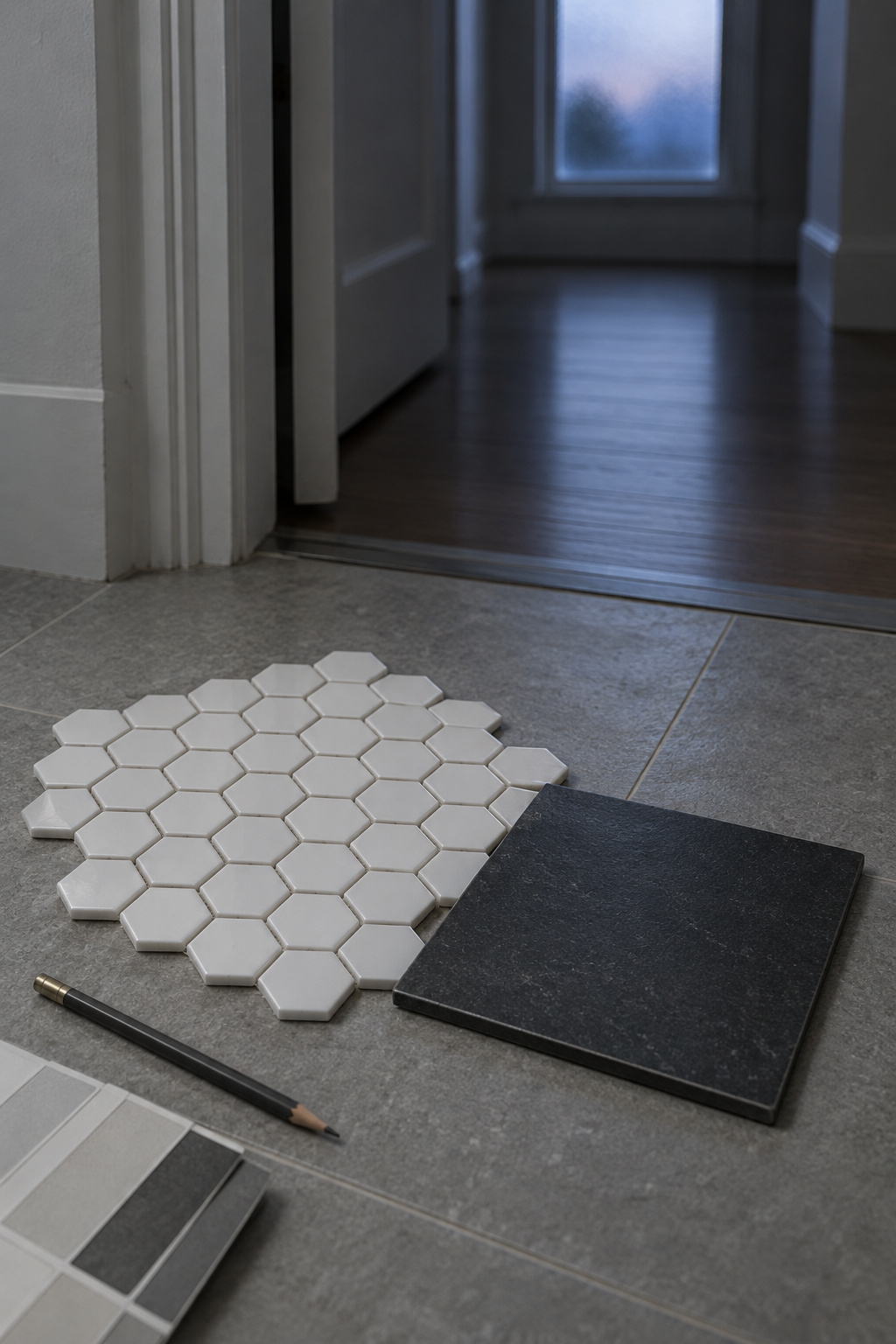
Keep the order, and settle the floor first: rate the light, choose size and finish for wet feet, then place the black. A lighter floor also reflects more light back into the room, which a dim bath can use. What the walls, vanity and fixtures should be is the next question, and the guide to a black and white bathroom starts with them.
Bring home two samples, one warm white and one black, in the finish you are considering. Lay them where you step out of the shower, turn the lamps off at the hour you use the room, skim a flashlight across them, and see which you can live with.
FAQ
How do you clean a black and white tile floor without streaks?
Clean it with a pH-neutral tile cleaner or plain water, then dry it with a microfiber cloth. Streaks usually come from detergent residue or hard water left to dry. Avoid cleaners with oils, soaps or fats, which leave a film, and never wax the floor. A squeegee and towel after a shower help stop water spots forming.
Should a bathroom floor be lighter or darker than the walls?
I don’t have a rule for this. I let the room’s light decide the floor first and place black elsewhere afterwards. A lighter floor reflects more light into the room, and dark walls may make a space feel a little smaller. The two are separate decisions.
Does black and white hexagon tile look dated?
Opinion is split. Some designers think mosaic hex and stark black and white are fading as bathrooms move to large tiles and earthier colors. Edward Martin, a tile seller, says hex is a lasting shape. Either way, the same advice keeps it fresh: a matte finish, classic colors and grout close to the tile.