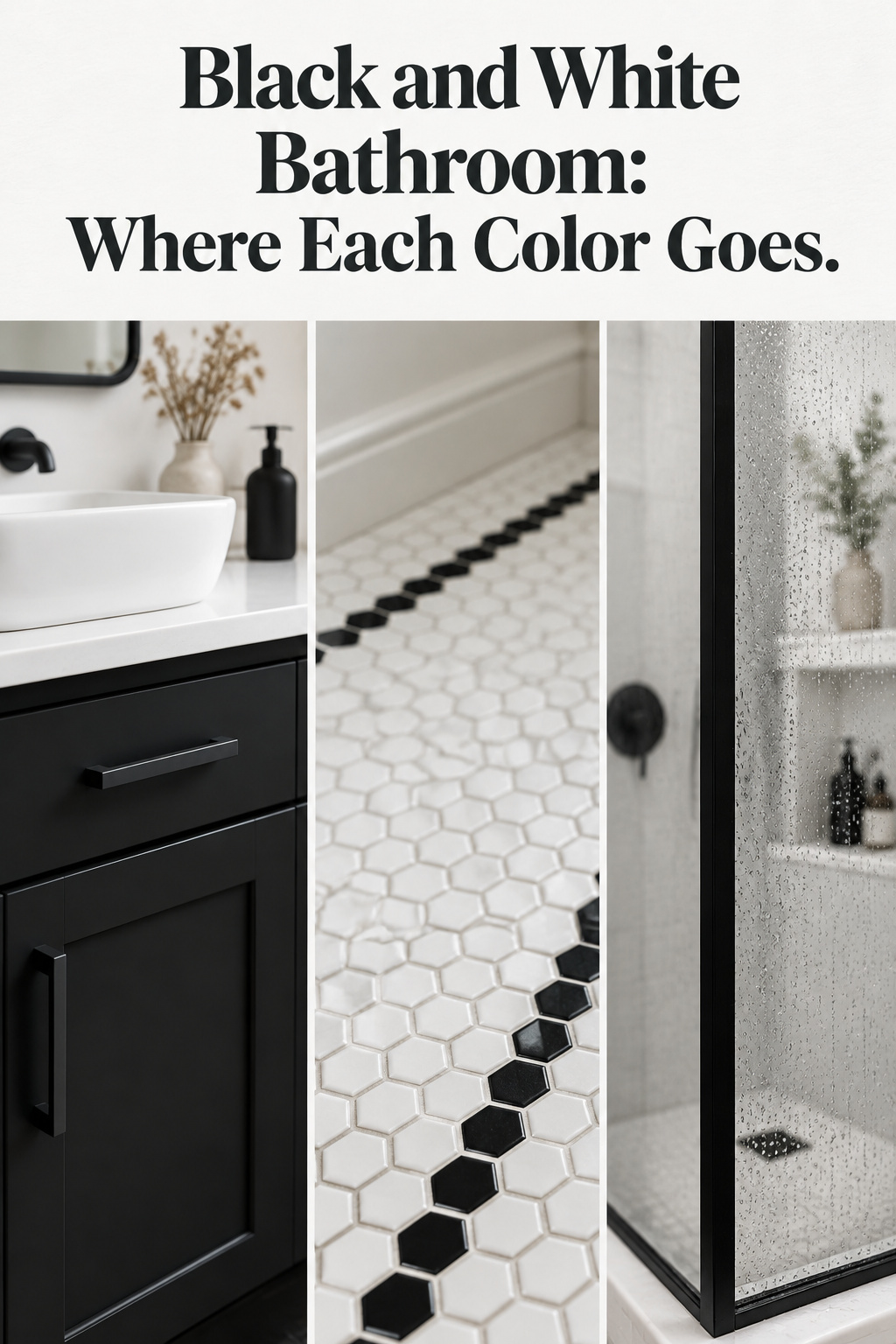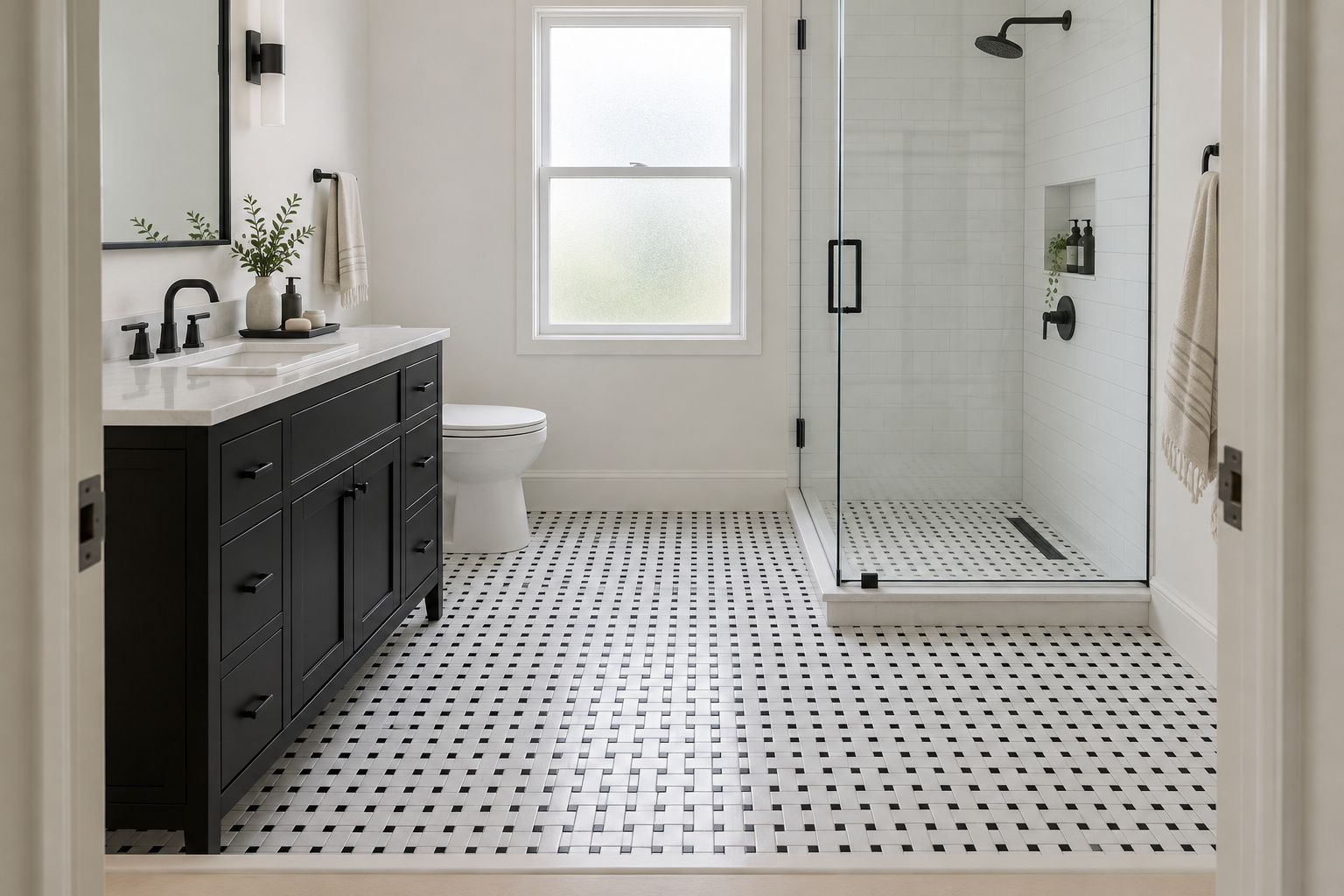

By a quarter past eight the bathroom is empty, and the morning is written all over it. Three dark hairs and a little grit from someone’s shoe lie on the white floor by the basin. The black basin has a pale ridge of dried toothpaste near the drain and a white ring where the tap drips. In the shower, the black grout carries a chalky line at the height the spray reaches most, while the white tile around it, wet for just as long, looks untouched. The matte black tap has a faint white bloom at its base. Along the top of the black vanity sits a soft gray film of dust.
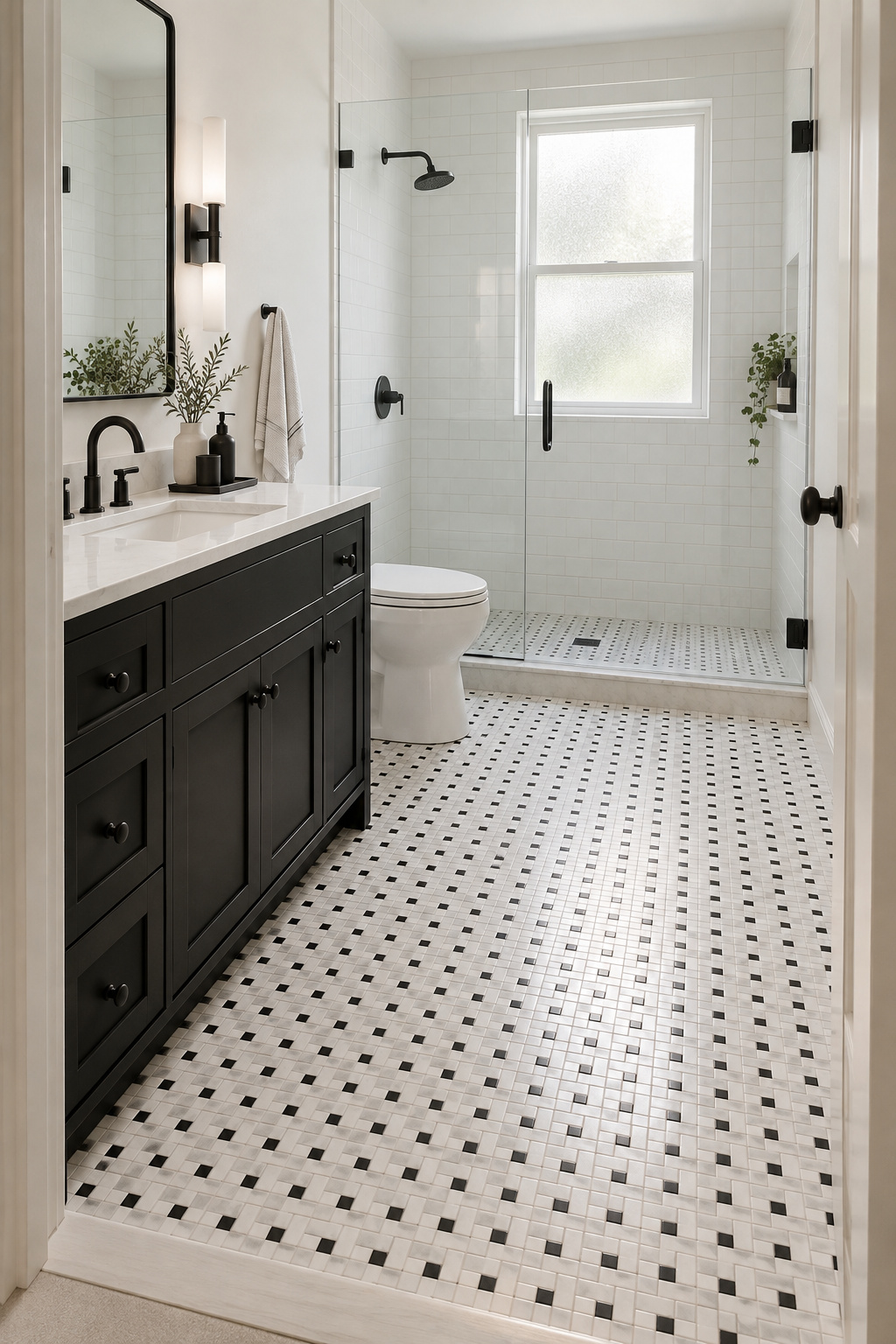
It is the same room at the same hour with two kinds of mess, and each color shows only one of them. White shows what is dark: hair, grit, scuffs. Black shows what is pale: water spots, soap, toothpaste, lint and dust. A black and white bathroom that stays looking clean gives each surface the color that hides what lands on it.
Photographs rarely show this, because every bathroom you saved was photographed before anyone had brushed their teeth in it. If you have a folder of saved rooms and a nagging worry that yours will look stark, or grubby by Thursday, this is the rule they leave out. Take the room one surface at a time with it, and most of the decisions make themselves.
A Black and White Bathroom Shows Different Dirt on Each Color
The tile and grout makers say this already, one product at a time. LATICRETE’s grout guide says light joints show soil readily and dark joints in a shower may show water deposits. European Ceramics says the same of black tile: it can seem to hide debris, but hard-water minerals may leave spots and residue that show more than they would on a lighter color.
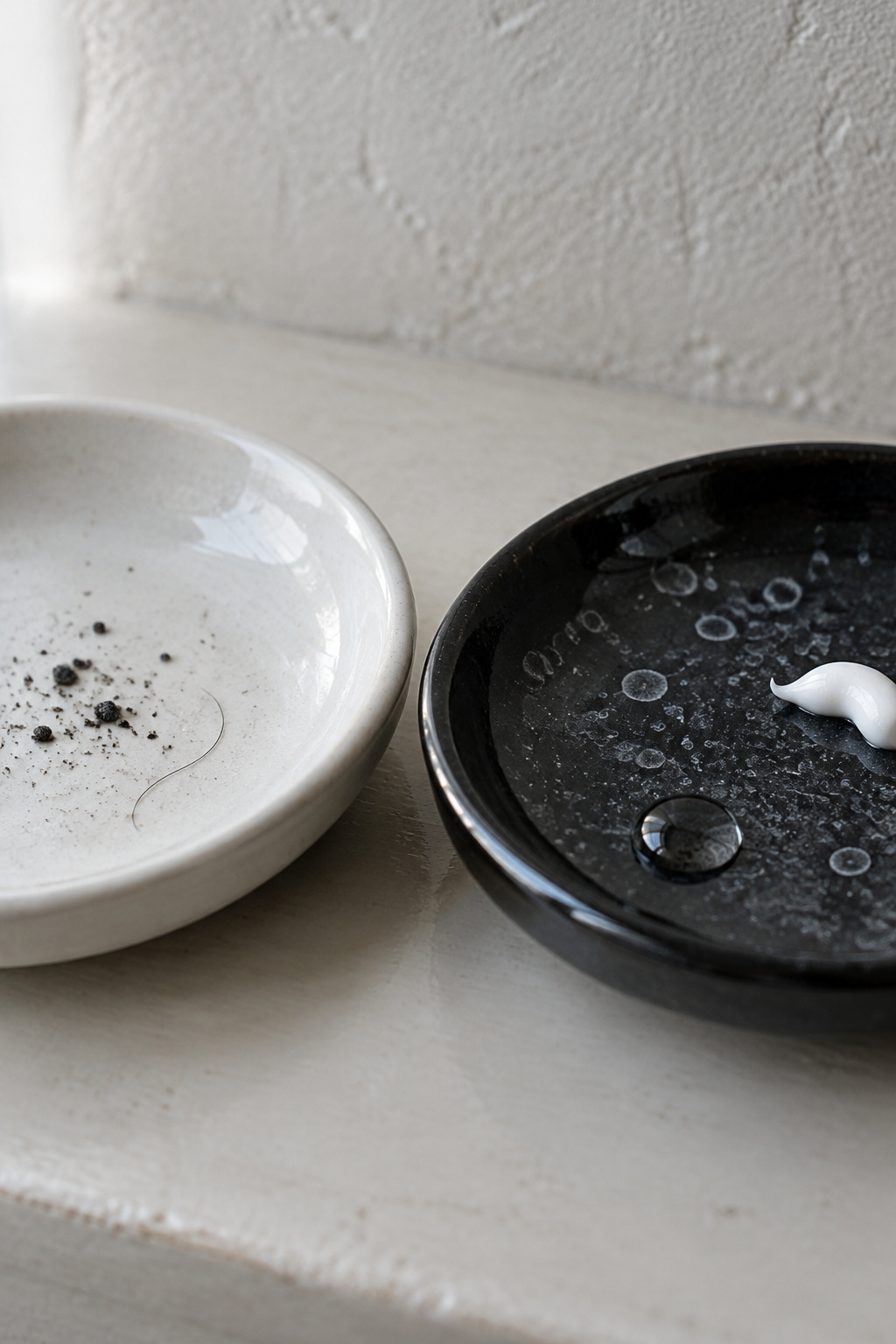
Put those statements side by side and you have the whole sort. The one correction most people need is about dust. Black hides scuffs and dark marks. It does not hide dust or lint, which are pale and settle as a gray film on any dark top. Keep those two apart and the pattern holds across the room:
| What lands | On white | On black | Where it lands most |
|---|---|---|---|
| Dark grit and tracked-in soil | Shows | Hides | Floor, bath mat |
| Dark hair | Shows | Hides | Floor, basin, shower floor |
| Scuffs and knocks | Shows | Hides | Lower walls, cabinet doors, door trim |
| Pale dust and lint | Hides | Shows | Cabinet tops, shelves, dark mats and towels |
| Water spots and limescale | Hides | Shows | Basin, toilet, grout, glass, taps |
| Soap film and toothpaste | Hides | Shows | Basin, counter, shower walls |
Neither color is cleaner. What changes is which dirt you can see from the doorway.
I learned to look this way in my own kitchen. I live in an 1898 brick house in Bucks County, Pennsylvania, and the kitchen has been half-restored for years: a modern range, one wall of open shelves, and the original layout still under review. Living in that room has taught me more about how it is used than any guess at the layout would have, and I’d give a bathroom the same patience. Before you decide which surface is black, use the room and watch what lands where.
The Floor Is Where Both Kinds of Mess Land, So the Light Decides
Four floors are worth comparing:
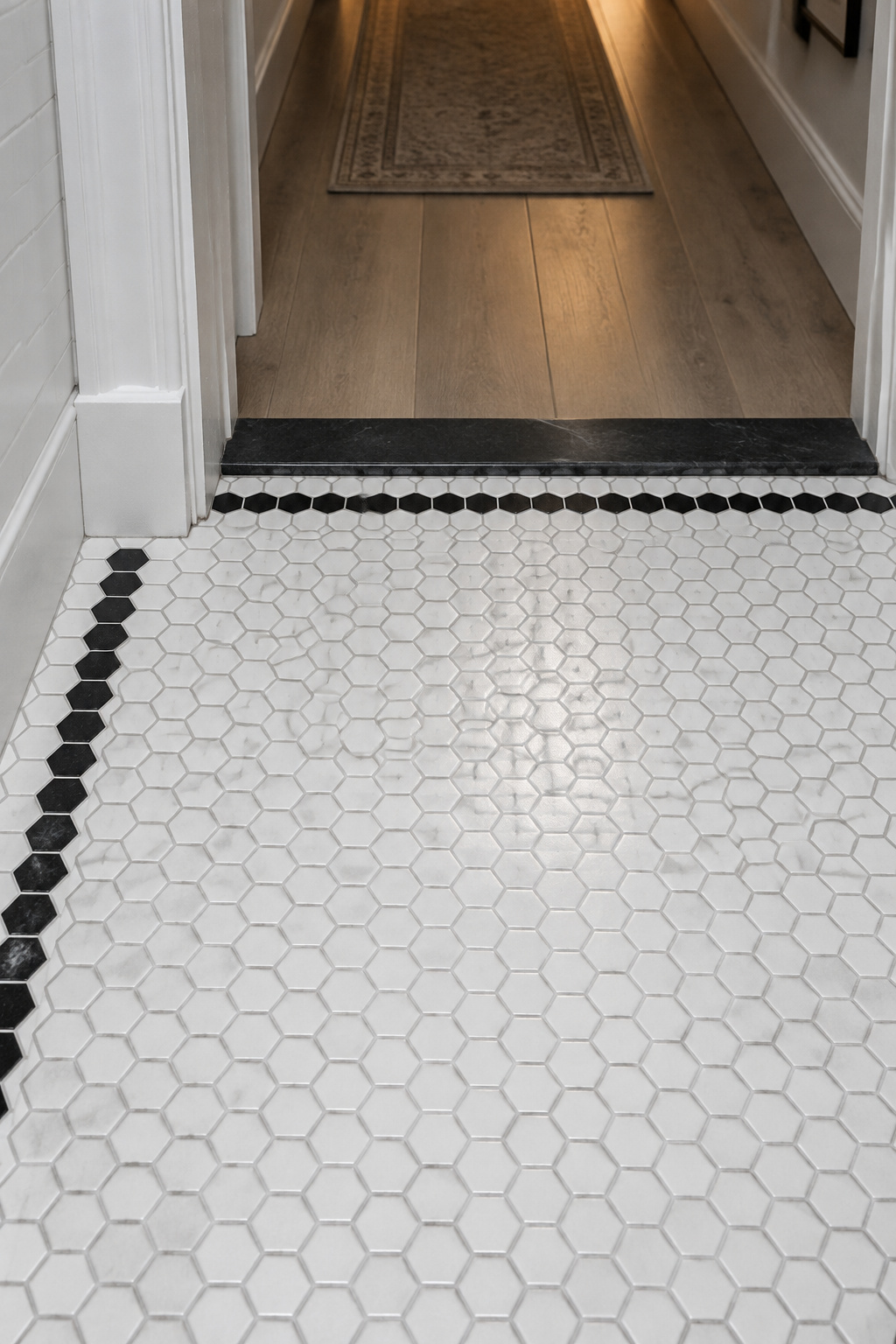
- A black and white checkerboard, the boldest of the four and the one that asks most of the room.
- White hex with a black border, which keeps the field pale and puts the black at the edges.
- Plain white tile with a single black line at the threshold, the quietest choice.
- All-black tile with white grout, which looks the most dramatic in a showroom and shows the most pale specks at home.
Here the table stops working. Dark grit and hair come in on shoes and fall from heads; dried water marks, talc and lint come out of the shower and off the towel. All of it lands underfoot. A white floor shows the first lot and a black floor the second. So what matters is which mess you would rather look at, and that depends on how bright your room is and how wet the floor gets. Low, raking light from one side and a glossy finish make pale specks on black stand out. The same black tile in even light and a matte finish is a different floor.
That makes the floor the one surface you can’t settle from a picture of someone else’s room. Rating your own room, then choosing the finish and size that keep wet feet steady, is the work of choosing black and white floor tile by the light. For the hex sizes and patterns right to a particular decade, the vintage bathroom tile guide has them, and the history of the checkerboard itself sits in the checkerboard entryway floor guide.
Walls and Tile: Black Where Scuffs Gather, White Where Water Lands
Black Walls Above the Splash Line
Walls take two different kinds of wear, and they meet at a line you can find with a tape. Below it, near the tub and basin, water lands every day. Above it, the wall gets elbows, the corner of a laundry basket and the vacuum cord, and pale paint shows every one of those scuffs. That upper wall is where black does its best work. Tile the wet part in white to a wainscot with a cap, and paint black above it, so the cap marks the change from water to wear. If you want names, a warm white such as Benjamin Moore White Dove on the ceiling and trim and a deep black such as Onyx above the tile give you the pair; choosing paint in any more depth is its own job. Set the cap height above the highest splash, not the average one.
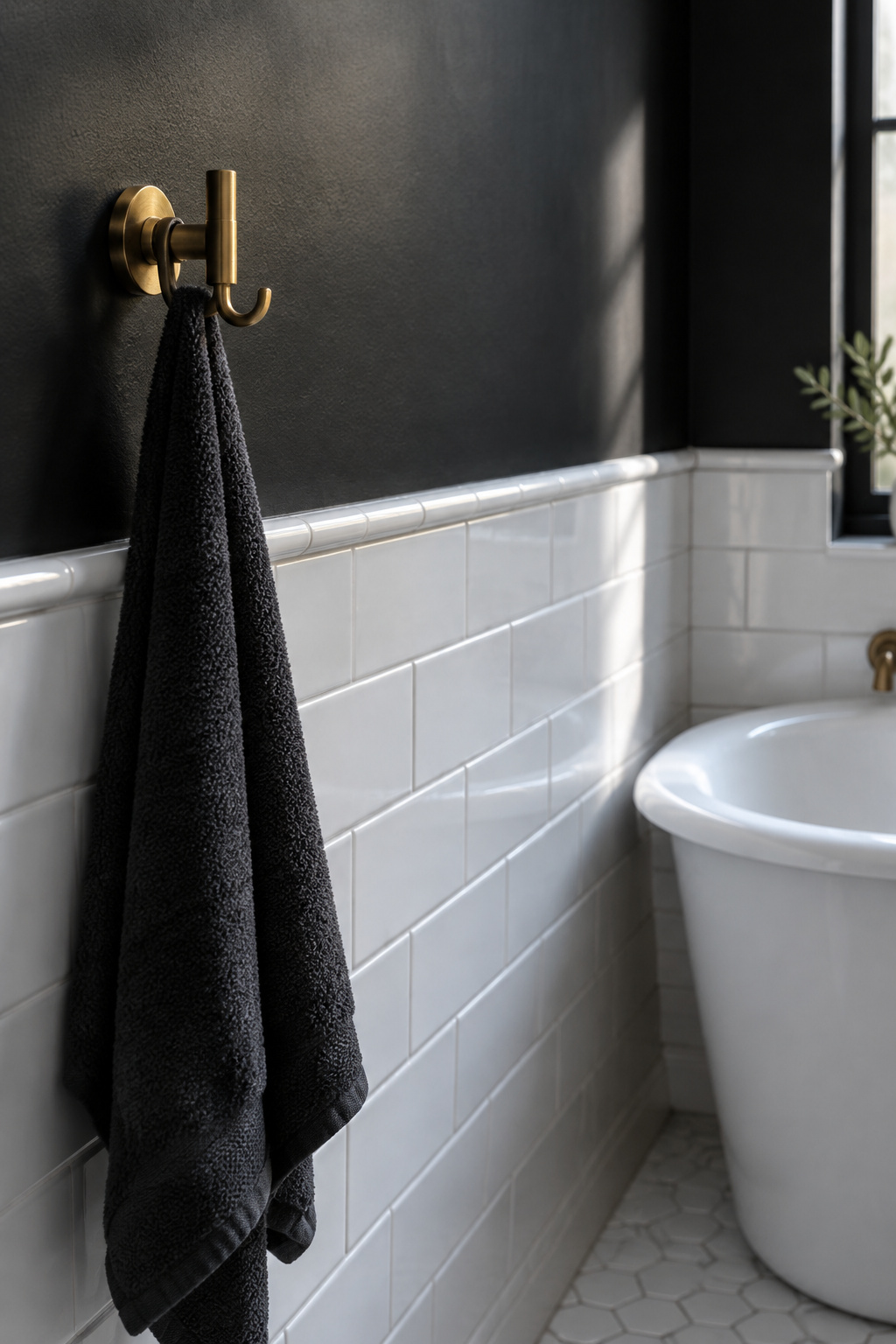
A bold black-and-white paper is the other way to dress that upper wall, and the powder room wallpaper guide covers the patterns.
White Tile Where the Water Is, and Grout That Agrees
Inside the shower and behind the basin, white tile does the job, because water dries pale and a white glaze swallows it. The grout should agree with the tile. A light or mid-gray joint keeps the wet wall calm, while a black joint in the spray may show water deposits and turn chalky. Read what black grout on white subway tile shows before you commit to the graphic look in a shower. Mid-gray period grout for an older house is covered in the vintage bathroom tile guide.
A Black Border, the Period Detail Worth Copying
Black on white in a bathroom goes back a long way. The National Park Service’s guide to historic tile floors notes that toward the end of the 19th century, white encaustic tiles with a black or gold design were common, and that small white unglazed tiles were promoted for bathroom floors for their sanitary qualities. That is when my own house was built. The lesson worth copying is the restraint: a white field doing the work, with black kept to a design or a line at the edge. A single black row framing a white floor or capping a white wainscot keeps the black out of the splash.
Vanity, Sink and Toilet: Black Cabinet, White Glaze, Unless Your Water Is Soft
A Black Vanity Under a White Basin
One corner of the room splits neatly in two. The cabinet is the piece that gets bumped, kicked and opened with wet hands, and black hides the scuffs. It will not hide dust, and a glossy black finish makes water spots and dust more noticeable than a lighter cabinet would, especially in a humid room. So keep the water off the black. A white china basin set into a white top, or a white vessel on a black base, gives the water a surface where it dries the same color it lands on.
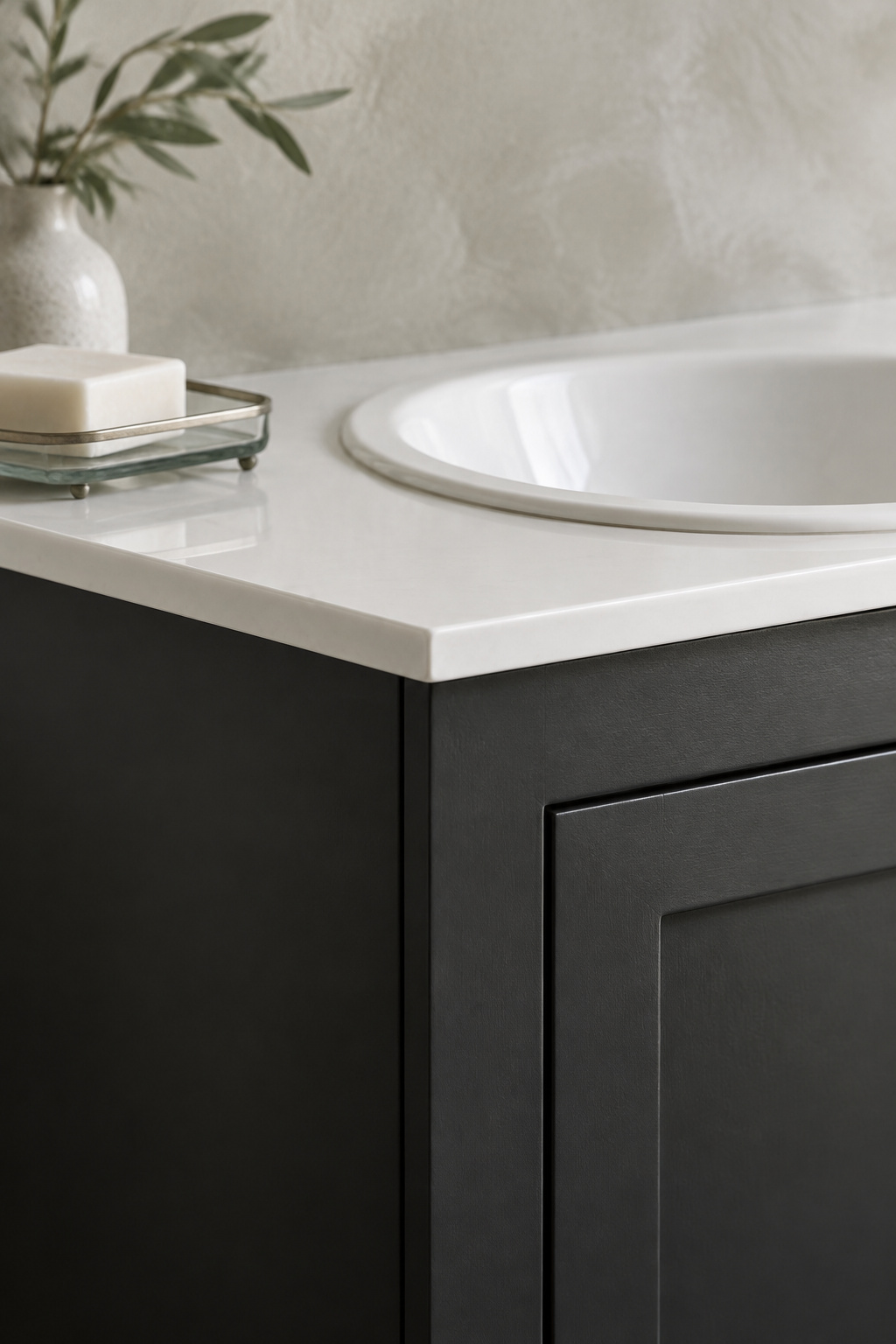
Picture a black painted cabinet with a white undermount basin and a pale counter, or a wall-hung black vanity under a white sink; the floating vanity ideas guide covers hanging one. Whether to paint the vanity you have or buy one finished in black depends on what the box is made of and how much your room steams, which is the subject of painting or buying a black bathroom vanity.
A Black Sink or Toilet in Hard Water
Black glaze is beautiful and unforgiving. Every mineral line and every smear of toothpaste dries pale on it, and a black composite sink is no escape. In soft or only moderately hard water a black basin or toilet stays as glossy as it was in the shop. In hard water it asks for a wipe-dry after every use, by somebody, or a softener. Test your water before you order, and read a black toilet or sink in hard water for what your result means for black.
Glass and Metal: Watch the Glass, Dry the Matte Black
A Black Frame Around Clear Glass
Clear glass belongs on the water side of the sort. It shows hard-water spots as plainly as anything in a shower, and the cleaning expert Kathy Turley names frameless glass as the surface that shows them most. Glass-care sheets agree on the remedy: a squeegee or a microfiber cloth after each shower makes it hard for mineral spots to form in the first place. Keep a squeegee on a hook inside the shower.
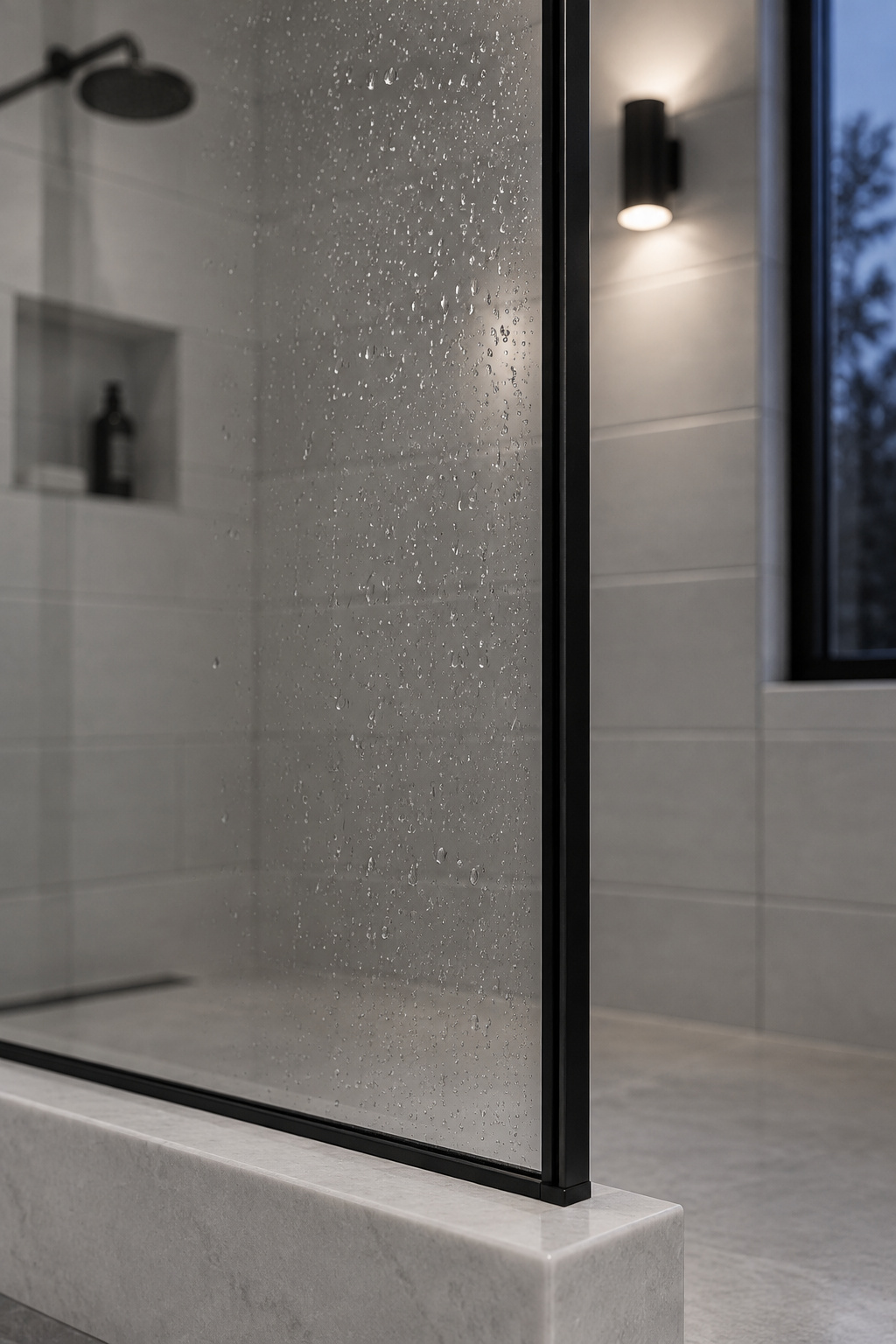
The frame is where black comes back in. A slim black frame around a clear door or a fixed panel draws a clean line against white tile, the way a black border frames a white floor. A single fixed panel in a thin black frame beside a white subway wall is one version, and a framed hinged door with one long black pull is another. Which style suits your household, and what the track asks of you, belongs to a black framed shower door.
Matte Black Metal Hides Prints, Not Scale
Matte black taps, shower trim and towel bars have a name for never looking dirty, and that is half right. Matte black hides fingerprints and fine water spots better than chrome does, as the bathroom fixture finishes guide ranks it, because a matte surface scatters light and small marks blend into it. Built-up scale is another matter. Calcium carbonate dries white and opaque, and on a dark ground it shows hard. Signature Faucets, a faucet seller, puts the scale side bluntly: “Matte black is the finish that asks the most of you in hard water.”
So matte black metal hides the small things and shows the big one. Treat it like the glass beside it: dry it after each use. The finish itself, from PVD to powder coat, and the cleaners that are safe on it, are covered in the bathroom fixture finishes guide.
Marble and Black Stone: Veining That Does the Job of Pattern
A honed white marble vanity top with soft gray veining, a black honed stone ledge and a wall of marble-look porcelain behind the tub are each a pattern before you add anything else, because veining is pattern laid down by geology. Stone asks for plain surfaces around it: a white marble top wants a plain black cabinet beneath it, not a busy floor beside it.
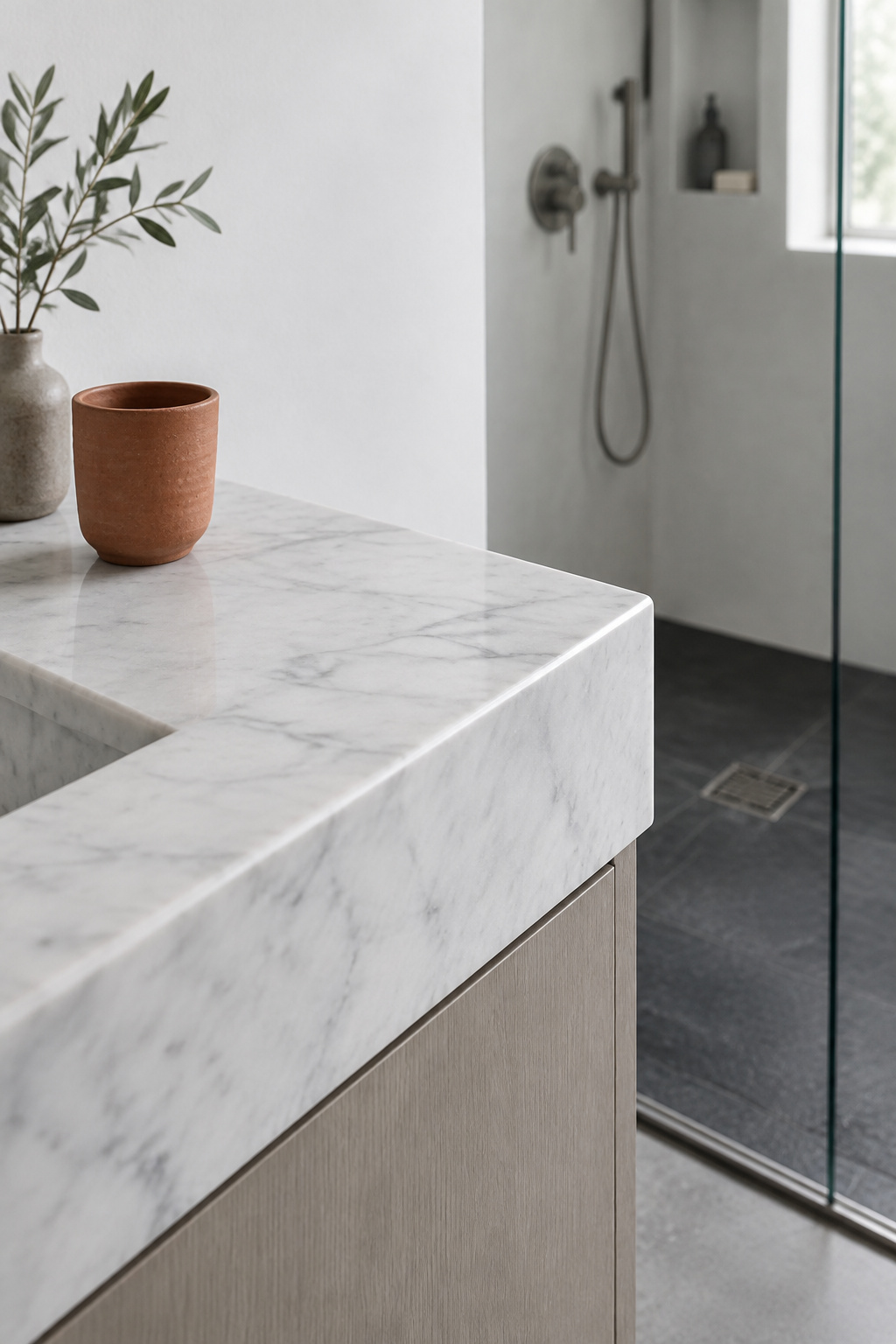
I read stone the way I read tile: a pale stone shows dark soil, and a dark stone shows dried water and soap.
The bigger question with marble is what it does with acid. Marble etches, and how much that mark shows depends on the finish and on where the stone sits. Work out where black and white marble can go before you choose a slab, because the vanity top is a different decision from the shower wall.
A Small Black and White Bathroom Wants Fewer Lines, Not Less Black
When a small room feels busy, most people blame the black and take some out. The trouble usually starts in the edges, every place black meets white. A mirror frame, a shelf, a striped mat and black grout around every tile can make a tiny room restless even when the amount of black is small.
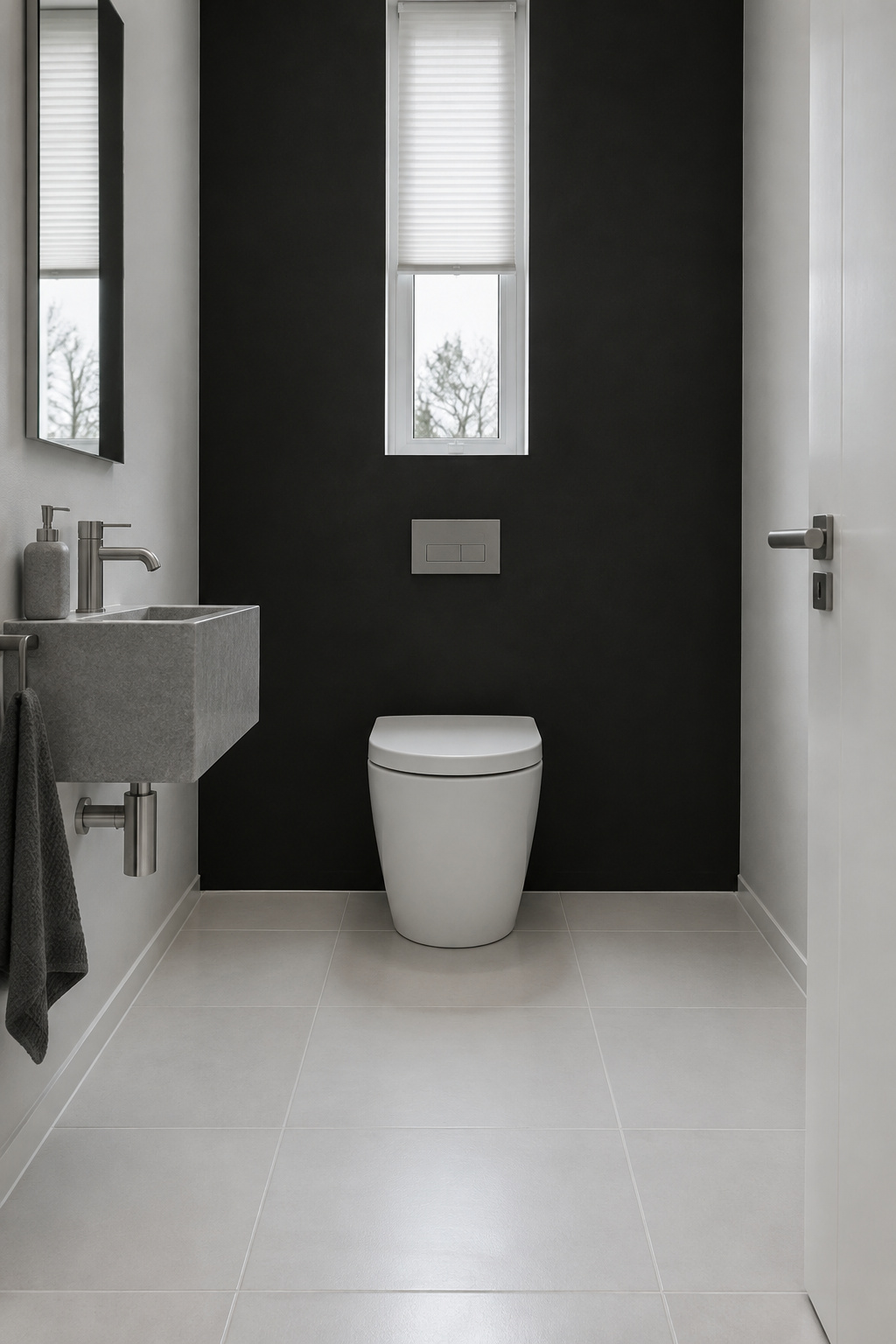
So cut edges instead. One pattern in the room, on the floor or on one wall, never both. Grout the same color as the tile, which removes the contrast of the joints while leaving the joints themselves. Larger tile, so there are fewer lines to begin with. And one large black area, such as the wall behind the toilet and basin, in place of several small black pieces dotted about. Every edge you take away is one less place for the eye to stop. The full argument, including what black does to the apparent size of a room, is in keeping a black and white small bathroom calm. If the real trouble is fitting a tub and a shower into the space, the small modern bathroom ideas guide deals with that trade.
Towels, Mats and Art: Decor Comes Last and Stays Short
Put the textiles through the same sort and they behave exactly like the tile. A black bath mat hides dark hair, damp footprints and gray soil, and shows pale lint, tissue fibers, toothpaste and dried hard-water spots. A white mat shows dark hair, makeup and dye sooner. If you want the black mat without the lint, a heathered charcoal is more forgiving than jet black.
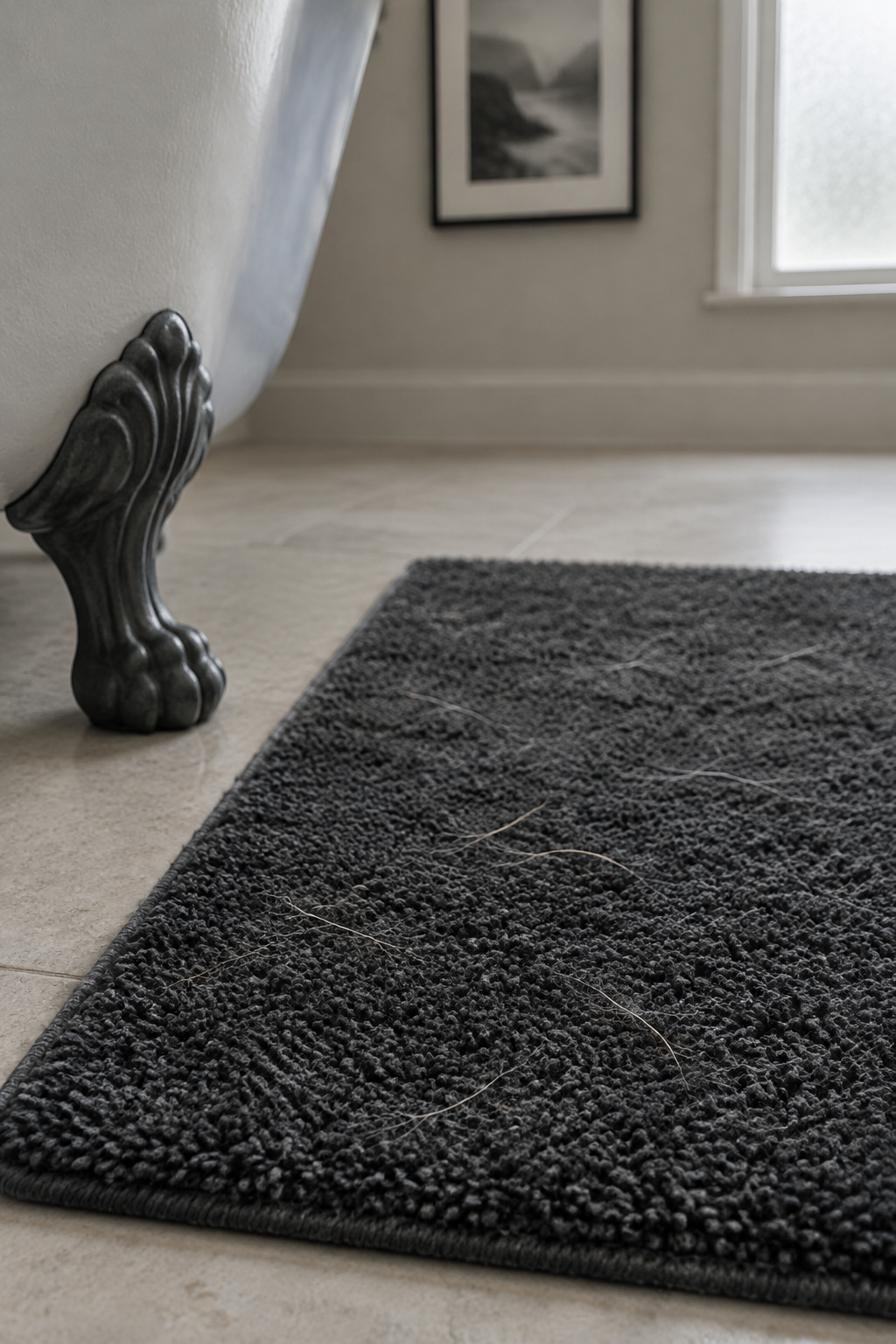
Black towels carry one more catch. Dark colors take more dye, and loose dye comes out in the first washes and can stain white items, so wash black towels on their own for the first few cycles. I’d keep towels white or a mid-gray near a black vanity and let the cabinet hold the contrast.
Art belongs on a dry wall, away from the splash of the basin and the steam of the shower: a single framed black-and-white print opposite the door does more than three small ones. Bath textiles as a style in their own right are covered in the boho bathroom textiles guide.
Add Up the Surfaces and the Black Decides Itself
How much black should a black and white bathroom have? Whatever the sorted surfaces add up to, once each has its color by what lands on it. If you want a proportion to argue with, the laundry room article on black and white takes that question on.
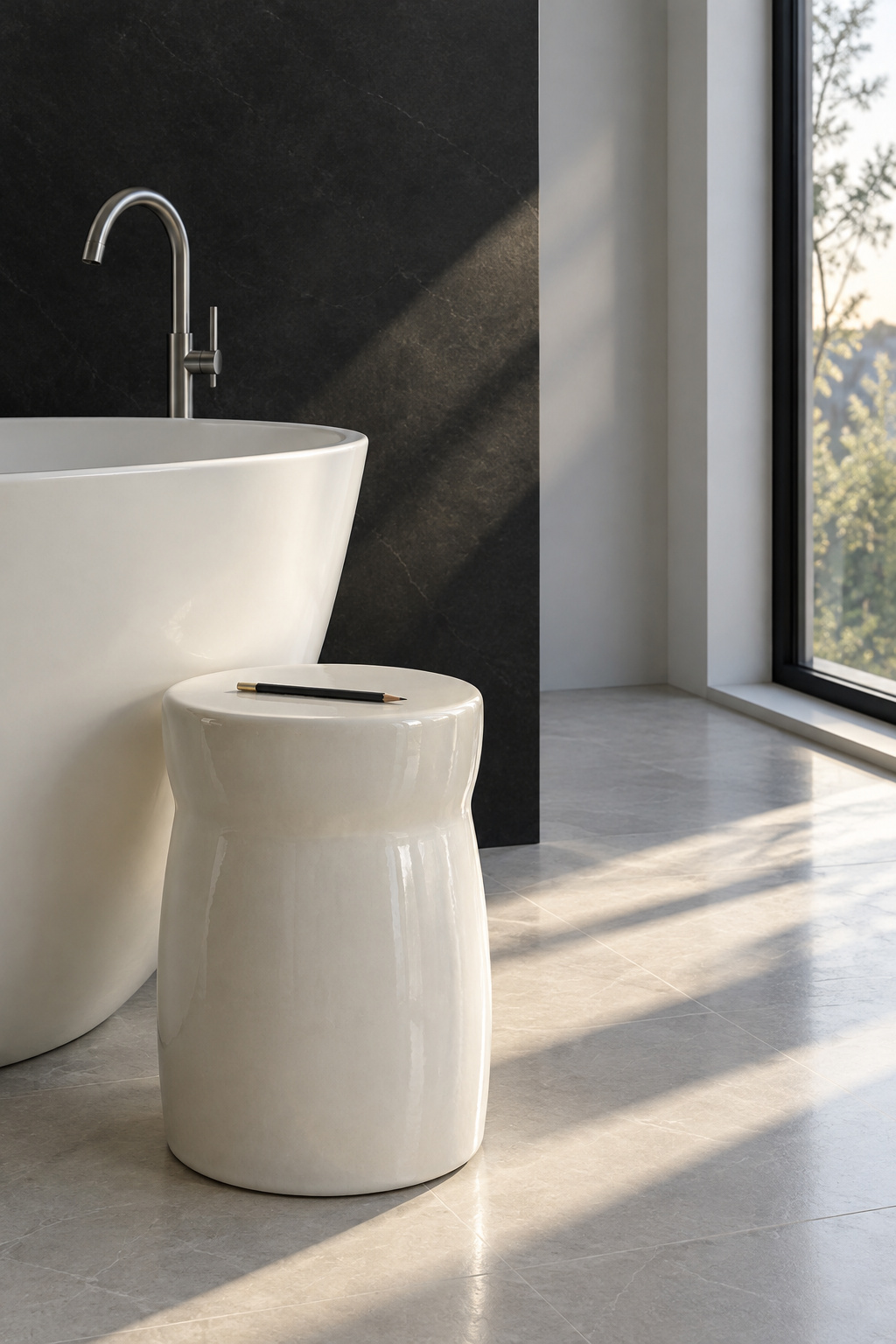
Walk your own room with the sort. The floor goes to the light, and the light is yours to measure. The upper walls can be black where they take knocks, and the wet walls white where the spray lands. The vanity cabinet can be black, under a white basin that takes the water. The toilet and sink go black only if your water is soft or only moderately hard, or someone will dry them. The glass stays clear and gets a squeegee, and the matte black tap gets the same towel. Stone goes where its etch won’t matter most. In a small room, cut the edges before you cut the black. Decor comes last.
Never trust a contractor in a hurry to demolish. Once tile is off the wall, every decision has to be made at the speed of the dumpster, and that is how a black floor ends up in a dark room or black grout in a hard-water shower. Make the decisions while the old room is still standing, and keep it standing until they are made.
So start where I started in my kitchen. Write down every surface in your bathroom on one sheet of paper. Use the room as it is for a few ordinary mornings and note what lands on each surface, and when, before you buy a tile or a tin of paint. Then make one decision: which single surface becomes black first. Get that one right, and your room at a quarter past eight should look as if nothing much happened.