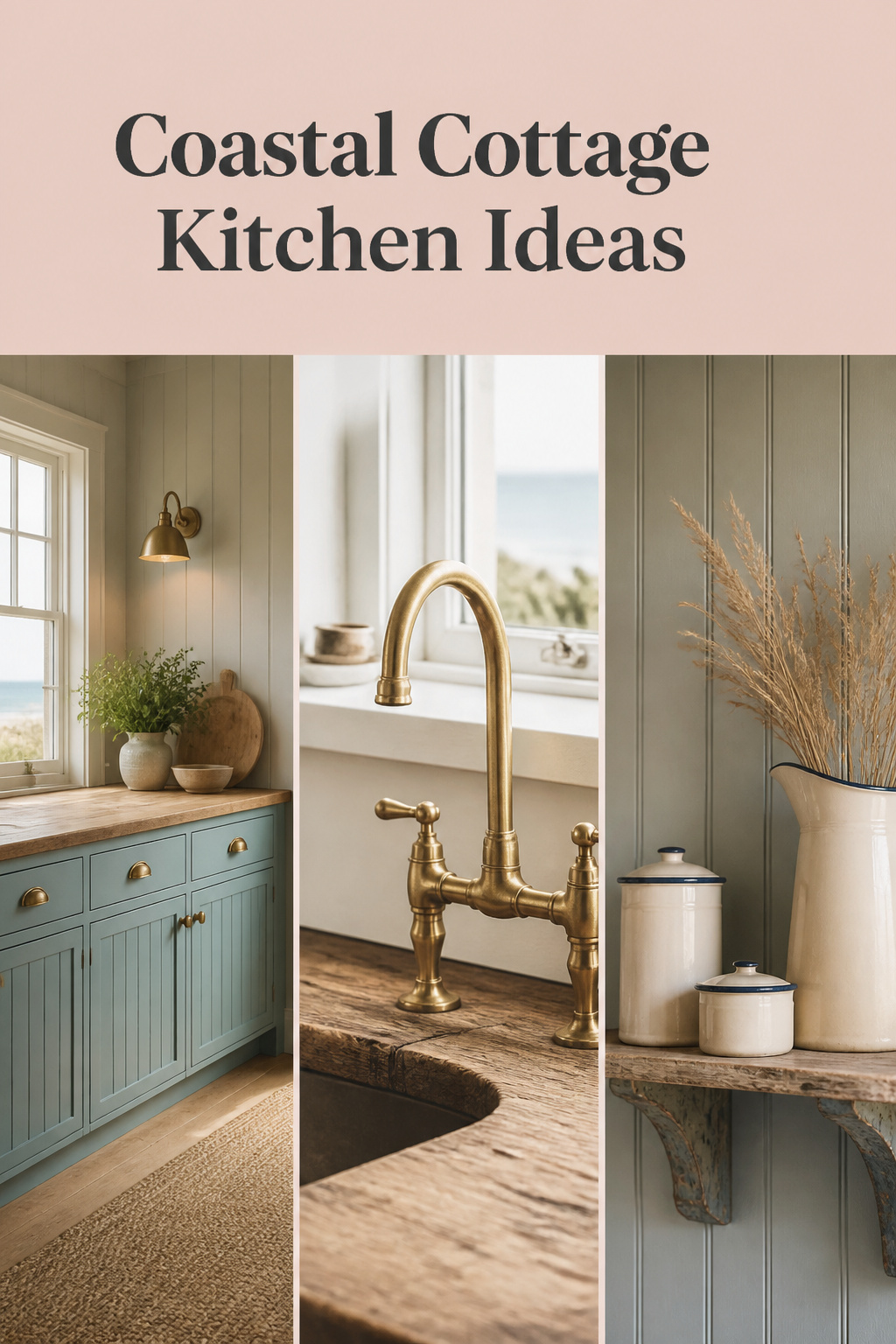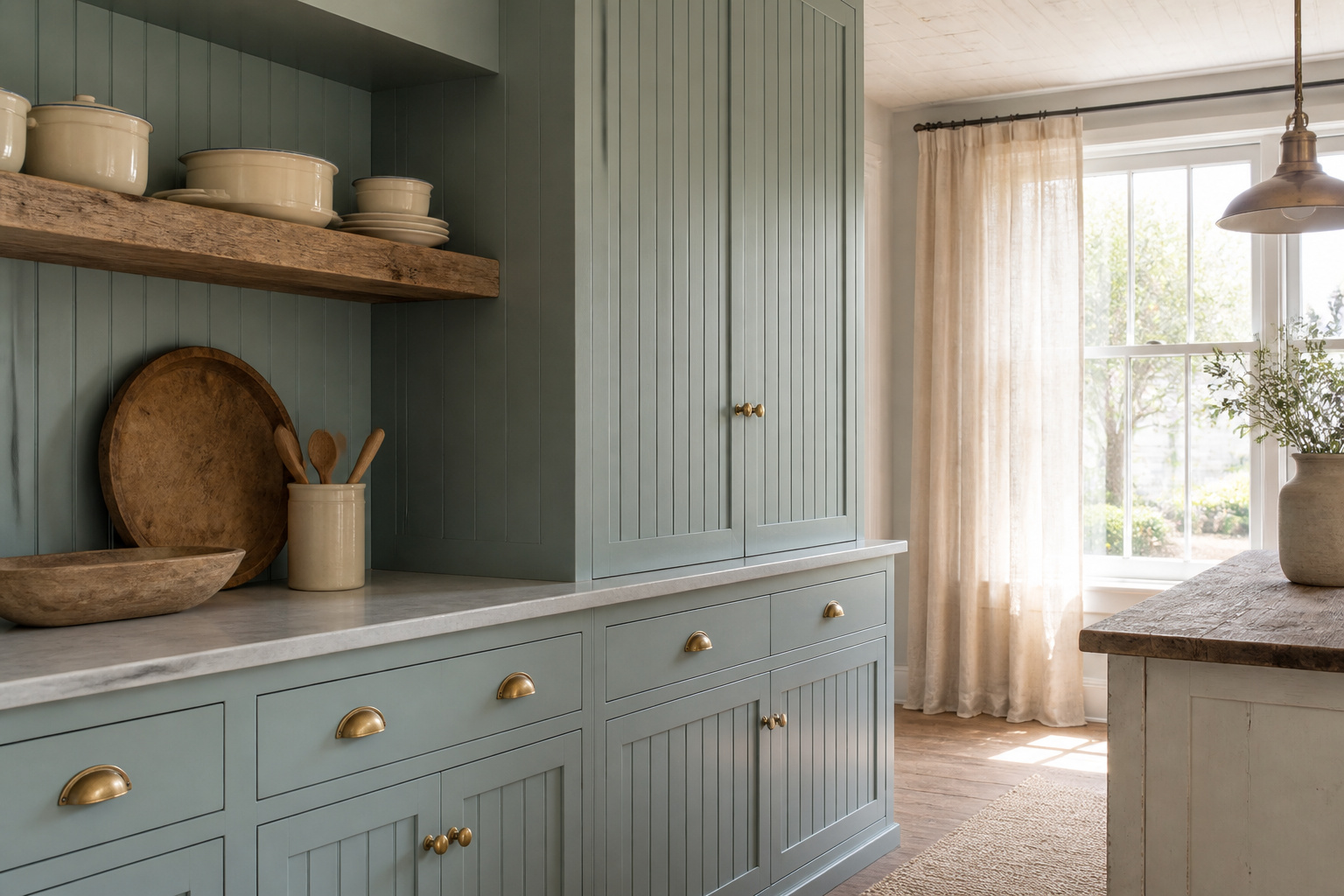

Open the window in a coastal cottage kitchen and the room changes. Air moves through it, and the light comes off the water pale and shifting — warm and low in the morning, cooler and flatter at noon. This is the feeling people are chasing, and it is almost never about a single object. Yet the honest worry is real: the look can slide into anchors-and-rope theme decor, or the materials can quietly fail in salt air and humidity. You want the breeze without the costume, and a kitchen that survives the coast it sits on.
TL;DR
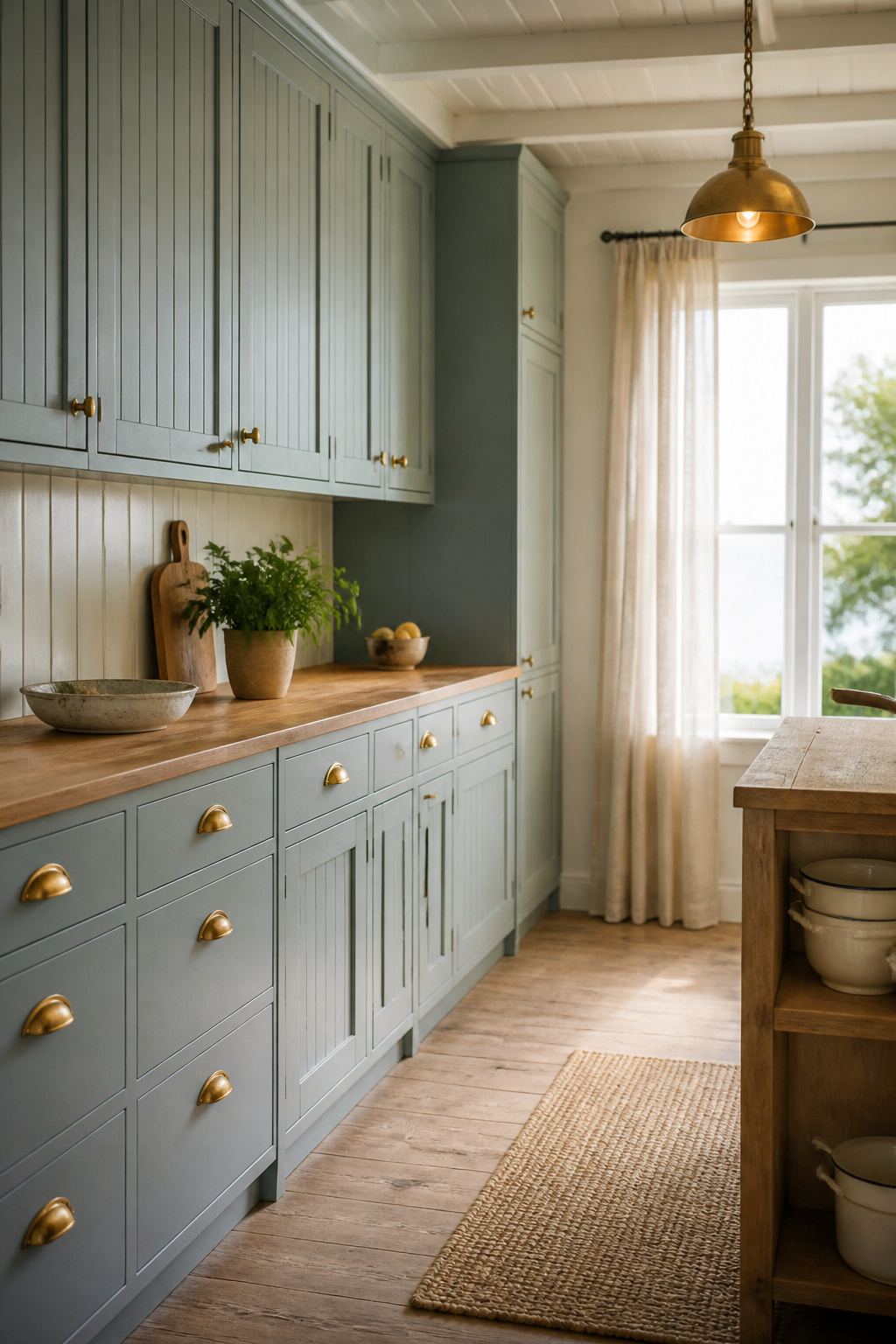
- Build the look from light-washed, grain-visible wood and a layered blue-green palette — think Wythe Blue or Sea Salt over a white base, not one saturated ocean blue.
- Specify salt-safe materials: solid unlacquered brass or bronze hardware, Grade 316 stainless, and quartz or porcelain counters, because coastal air corrodes steel 400 to 500 times faster than desert air.
- Keep it restrained: one or two genuine coastal moves, not a shelf of matching props, is what separates cottage charm from beach-theme kitsch.
The Kitchen a Coastal Cottage Actually Needs
Sell the light first; everything else gets chosen to carry it.
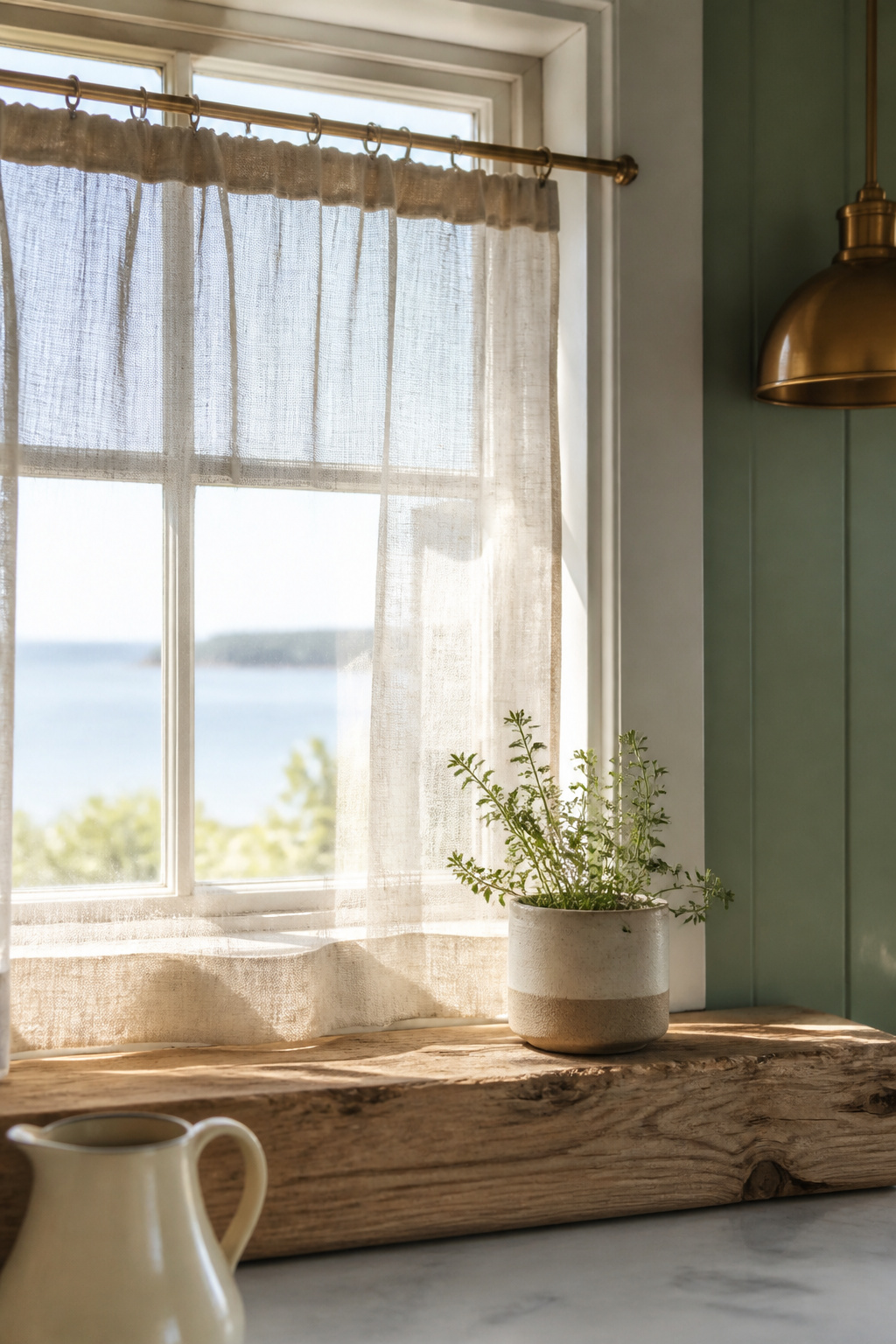
What light and air do to a room across a coastal day
Coastal daylight never sits still. Pair a warm wood tone with a cool blue-green and the room holds either way — it won’t go sterile at midday or muddy at dusk. I have a habit of photographing a finished room in the depth of a Swedish winter, when the day gives only a few thin hours of light. A kitchen that still feels right then will never let you down in June.
The feeling this style is chasing
The target is closer to a sensation than a shopping list: window open, salt air moving, negative space doing half the work. Designer Jeff Andrews frames the palette as “a great white base,” then a pastel layer over it — Sea Glass, Water, Sand and Sky — rather than one loud colour. Warmth and light carry the coast, not a fixed blue: Ailsa MacConnell proved it near Portobello Beach with buttery yellow instead of nautical blue.
Where theme decor gets it wrong
Here is the trap. Coastal becomes a prop list — anchors, rope, a shelf of shells — and the room turns into a set. The fix is one strong material move, not a checklist: a Jersey Shore kitchen by OAK Design Project used wax-finished white oak with a few seagrass inserts as its only literal nod to the ocean.
Light-Washed Woods and the Coastal Palette
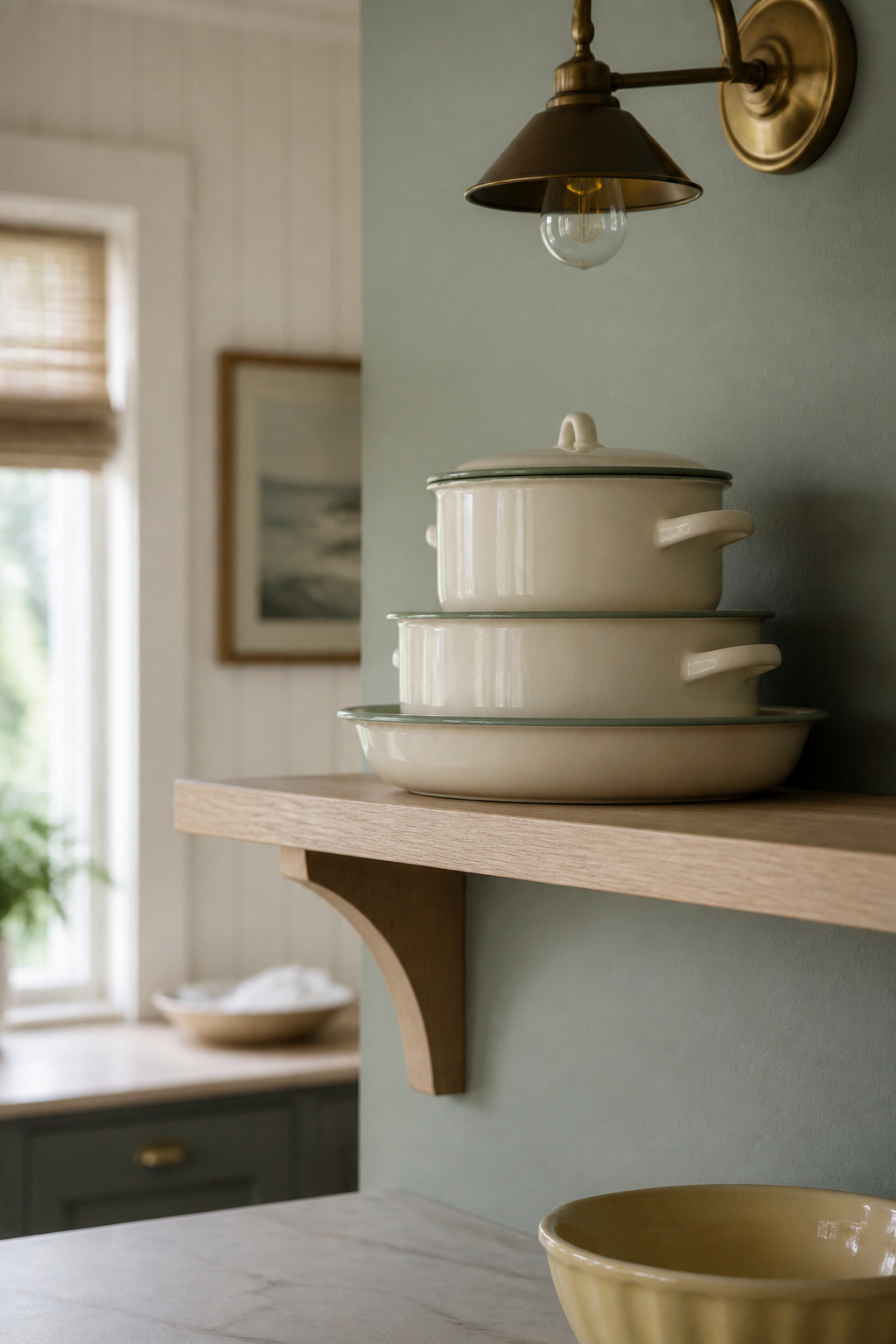
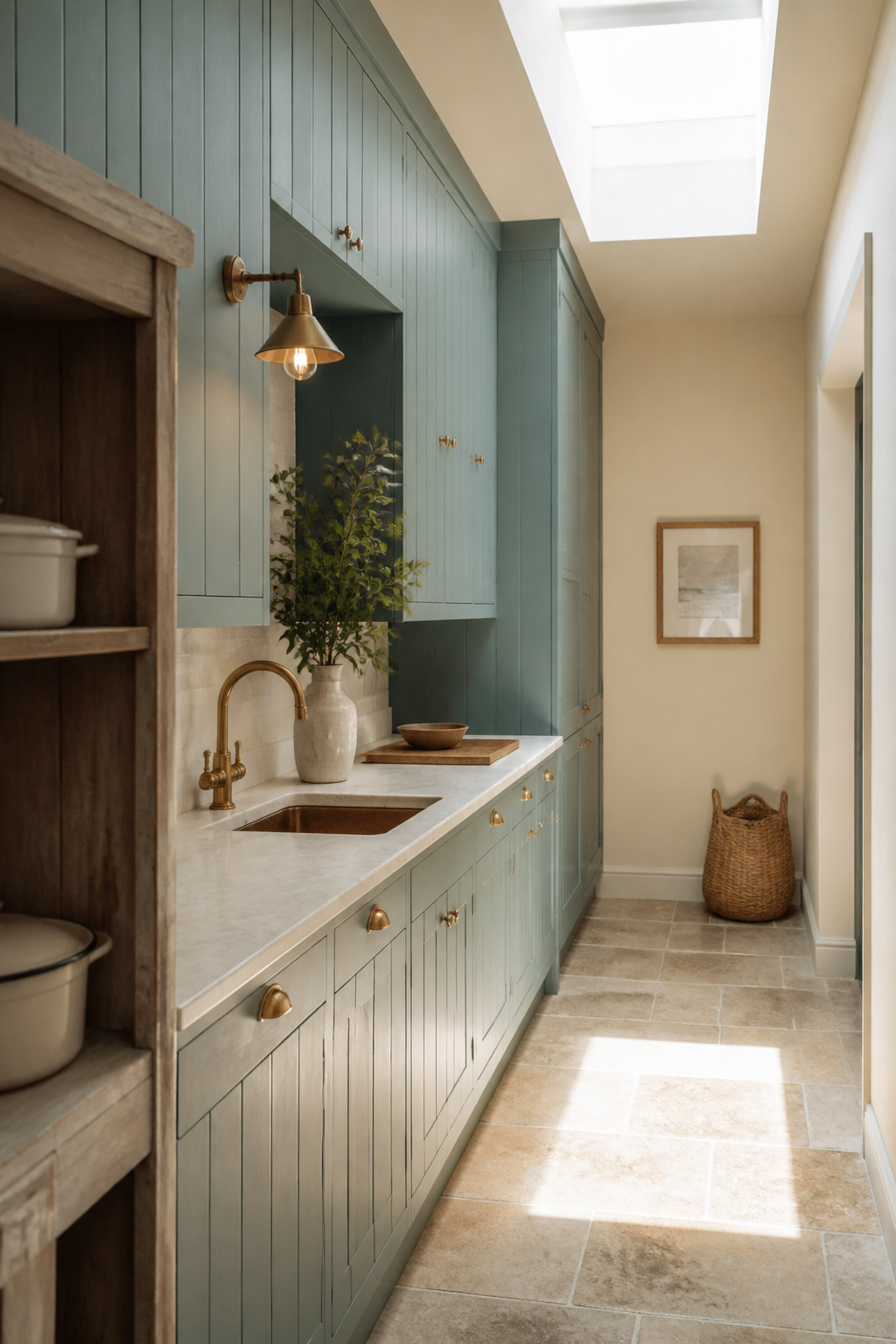
The woods and colours that look genuinely coastal are light and slightly cool — never orange, never heavily glossed.
Wood tones that read as sun-bleached, not staged
A sun-bleached finish lifts the wood’s own pigment — a wood bleach, or a diluted whitewash — so the grain stays visible. Lay opaque white paint over the grain and you lose exactly the weathered quality you wanted. White oak has a tight grain that shrugs off moisture, while red oak wicks it through a more open fibre. For cabinetry a few streets from the water, that difference is not cosmetic.
Blue-green colours that pair with them
Skip the single “ocean blue.” A layered blue-green does the work: Benjamin Moore Wythe Blue, “a soft blue with a touch of green,” or Sherwin-Williams Sea Salt, a soft green that suggests the water without shouting. In a genuinely small kitchen, reach for Palladian Blue — a light, airy green-blue noted for brightening a room. I keep paint names light here on purpose: the pairing matters more than any one swatch, warm wood against cool colour.
Where white still works and where it goes flat
White is a base, not the whole palette. On its own, wall-to-wall white with no wood, brass or blue-green tends to land as generic modern farmhouse rather than coastal cottage. Texture rescues it: beadboard, stepped fronts and a crown detail give the eye somewhere to land under bright coastal light.
Materials That Survive Salt Air and Humidity
This is where the style either lasts or quietly falls apart. Coastal air corrodes unprotected steel roughly 400 to 500 times faster than desert air. In one study, steel just 24 metres from the shore corroded twelve times faster than steel sitting 243 metres back.
Finishes and hardware that resist corrosion
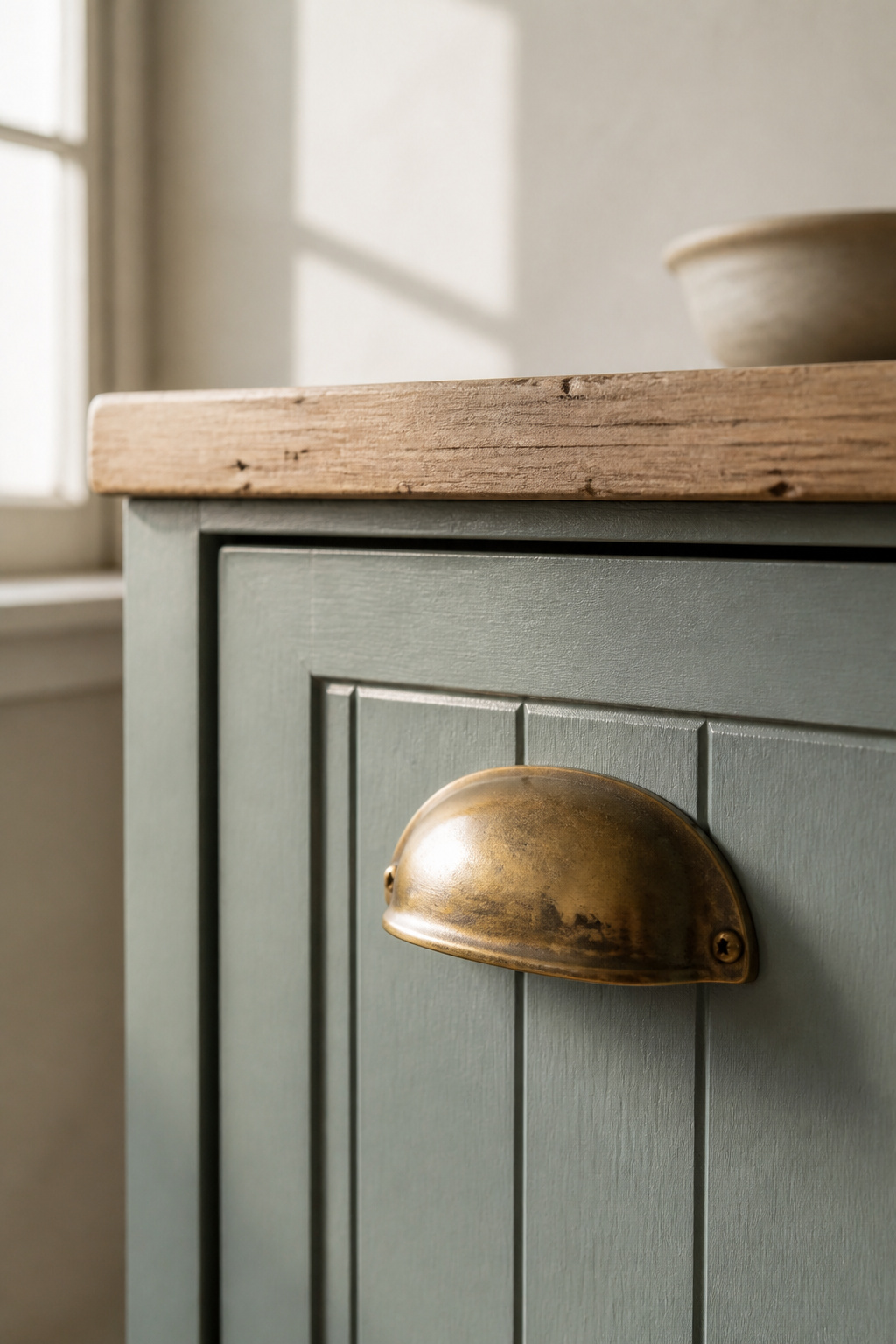
Specify hardware that ages instead of failing.
| Hardware / metal | How it holds up in salt air |
|---|---|
| Solid unlacquered brass, bronze or pewter | Best — no destructive corrosion; wipes clean and settles into a stable patina |
| Grade 316 stainless (contains molybdenum) | Rated for direct salt-spray exposure |
| Grade 304 stainless (no molybdenum) | Only where it is sheltered from spray |
| Lacquered brass | Poor — the lacquer breaks down within months, pitting black underneath |
| Chrome or nickel plating over Zamak (zinc) | Worst — the plating pits and crumbles within weeks |
Remember one line: solid unlacquered brass improves in salt air instead of failing; lacquered brass gives you the opposite of the aged look you wanted.
Countertop and floor choices for humid climates
Quartz and porcelain slab perform best in humid coastal heat — non-porous, no sealing, stain-resistant — while marble is the weakest, often etched and replaced inside three to five years. This look leans on reclaimed pine worktops, and I won’t pretend that is trouble-free by the sea. Wood moves: a solid panel going from 40% to 70% humidity can change width by a sixteenth to an eighth of an inch. Pine still works, but on terms — leave an expansion gap, and keep it under a breathable oil you reapply, never a hard sealed film or paint that traps moisture and lifts.
What to avoid near a coastline
A few materials don’t belong near the water:
- Untreated steel or iron fixtures, which rust fast in salt air even indoors when ventilation is poor.
- Low- and medium-density fibreboard cabinets, porous enough to swell and degrade even under paint.
- High-gloss finishes on cabinetry, which trap moisture underneath and bubble; a satin or matte paint breathes better.
Marine-grade plywood carcasses, by contrast, hold their shape where standard board fails.
Keeping It Restrained, Not Theme-y
How many coastal signals can one kitchen carry before it stops being charming? Fewer than the marketplace wants to sell you.
What separates coastal cottage from novelty beach decor
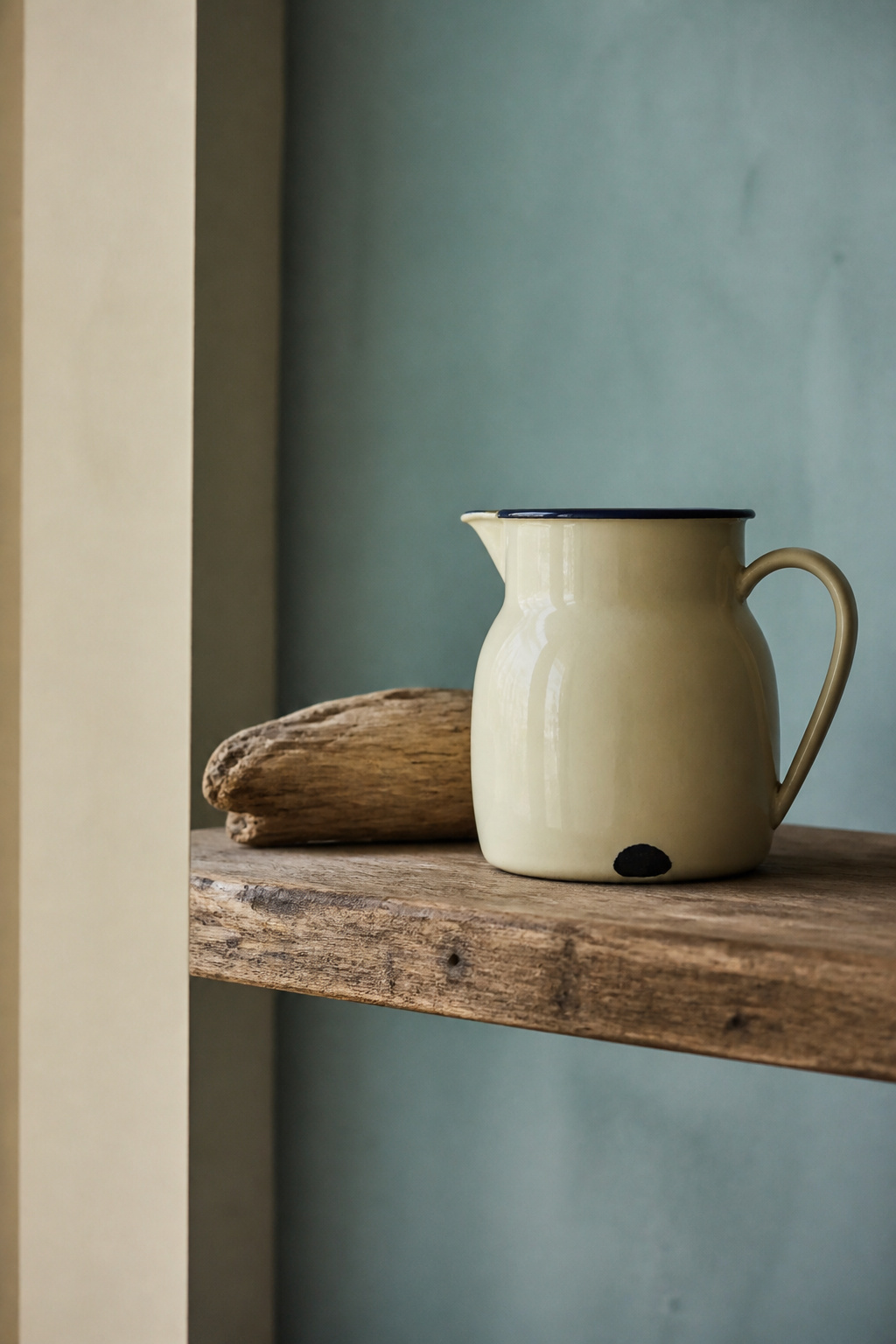
Natural material, used honestly, is the whole difference. Anne Grandinetti of Ashby Collective ties coastal decor to seagrass, raffia and the odd coral fragment rather than literal imagery. Livingetc’s advice matches mine: use coastal elements sparingly, or the room tips theme-park.
Editing collections and accessories
Let function do the styling. In a Charleston kitchen by Basic Projects, a plate rack, mug pegs and a single leaning seascape carried the whole look — everyday storage, not a shelf of trinkets.
One or two intentional coastal details, not twelve
Restraint is a number. One motif, maybe two, and the room stays credible; a striped textile plus rope plus shell art plus a boat model reads as a gift shop. Pick the one detail that means something, and stop. The empty space you leave around it is not missing decor; it is the breeze the whole style is built on.
Coastal Cottage vs. Modern Cottage
Coastal cottage and modern cottage are cousins. They share a light-first, uncluttered instinct, then part ways on warmth.
Where the two palettes and philosophies overlap
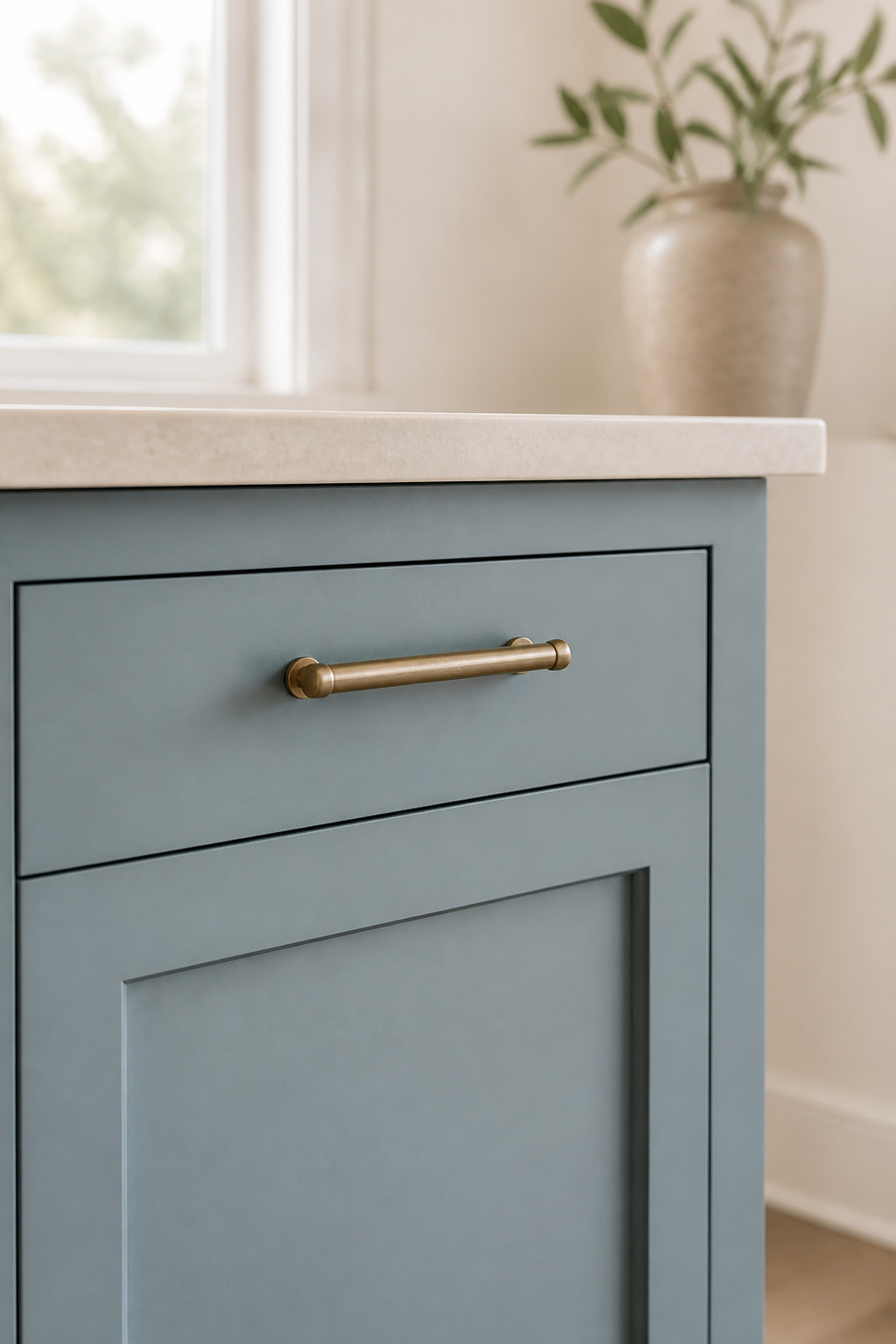
Both start from the same place: a light, airy base of white, soft blue and sandy neutral before either adds its signature. Modern cottage’s core move — simplified shaker fronts, quiet hardware — depends on the same restraint that keeps a coastal kitchen breezy. For that cleaner, quieter read, the modern cottage kitchen look covers it; here I’ll stay on what makes coastal distinct.
When to lean coastal instead of modern
Lean coastal when you want warmth and lived-in history over polish. The coastal cottage look is built on weathered, slightly rustic pieces — distressed wood, wicker, soft pastel — for a relaxed, collected feel. Choose the more streamlined, polished-and-metallic direction instead, and you have drifted toward a resort look, closer to modern cottage’s clean lines than to coastal warmth. Neither is wrong, as I see it — they answer different questions about how finished you want the room.
Borrowing restraint from the modern version
Borrow one thing from the modern side: its discipline. Even a weathered, layered coastal kitchen benefits from consistent, quiet hardware and edited shelving. What you don’t borrow is the gloss. Pair weathered texture with a high-lacquer finish and the two fight; keep surfaces matte and the warmth stays.
Coastal Cottage Kitchens in Smaller Homes
Beach cottages tend to be small — that is their nature, not a compromise.
Why beach cottages skew small
The historic footprint was modest by design. One 1950s seaside cottage that This Old House profiled came in under 1,200 square feet, with a kitchen of roughly 150 — one real example, not a rule, but a telling one. Early Outer Banks “Beach Box” cottages centred the kitchen and kept the bedrooms small — partly a defence against flooding and erosion.
Layout moves that transfer directly
The moves that make a tiny coastal kitchen work are the same ones that make any small kitchen work, plus coastal-safe finishes on top. Go vertical for light and storage: the This Old House kitchen used stepped, crown-topped cabinets and a vaulted ceiling with skylights to add volume without taking floor. A corner banquette seats four to six in about 25 square feet. For the full small-kitchen playbook, small cottage kitchen design lays it out.
Where light and palette carry two jobs at once
Palladian Blue is both the coastal statement and a documented way to brighten a small space — the colour and the square-footage trick in one choice. Consistent light wood or beadboard carried through connects small rooms so they feel larger than their measured footage.
Choose light-washed, grain-visible wood and a layered blue-green over a white base; specify unlacquered brass, 316 stainless and quartz or porcelain so the room survives the salt air; and make one or two honest coastal moves instead of twelve. Do that, and you have the breezy, window-open kitchen from the opening — without the theme-park kitsch or the corrosion you were right to fear. The pillar gathers every element of the cottage kitchen look in one place.
FAQ
What colors work best in a coastal cottage kitchen?
Build from a white base, then layer soft blue-greens like Benjamin Moore Wythe Blue or Sherwin-Williams Sea Salt, with a warm accent such as buttery yellow. Designer Jeff Andrews recommends a pastel palette over one saturated shade — layered, light-washed colour looks coastal far more convincingly than a single strong “ocean blue.”
What materials hold up best in a humid coastal kitchen?
Grade 316 stainless and solid, unlacquered brass, bronze or pewter resist salt corrosion far better than lacquered brass or chrome-on-zinc. For counters, quartz and porcelain slab are the strongest performers in humidity, while marble and unsealed wood are the weakest. Tight-grained woods like white oak beat open-grained red oak for moisture resistance.
How is coastal cottage style different from modern cottage?
Coastal cottage leans on rustic, weathered furniture and natural elements — distressed wood, wicker, soft pastel — for a relaxed, lived-in feel. Modern cottage subtracts ornament toward clean-lined shaker fronts and quiet hardware. Both share a light-first, uncluttered instinct, so a coastal kitchen can borrow modern’s hardware and shelving discipline without losing its warmth.