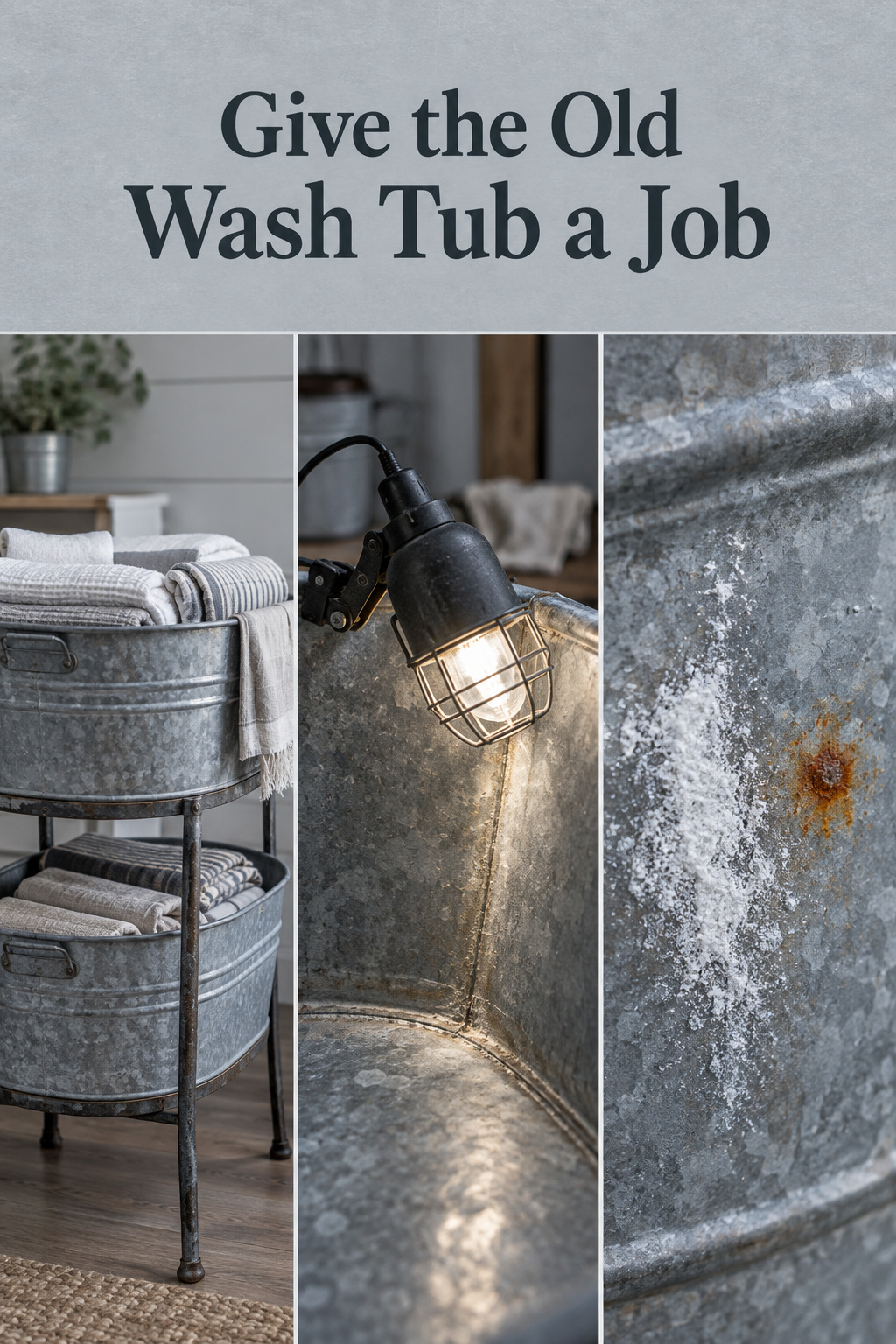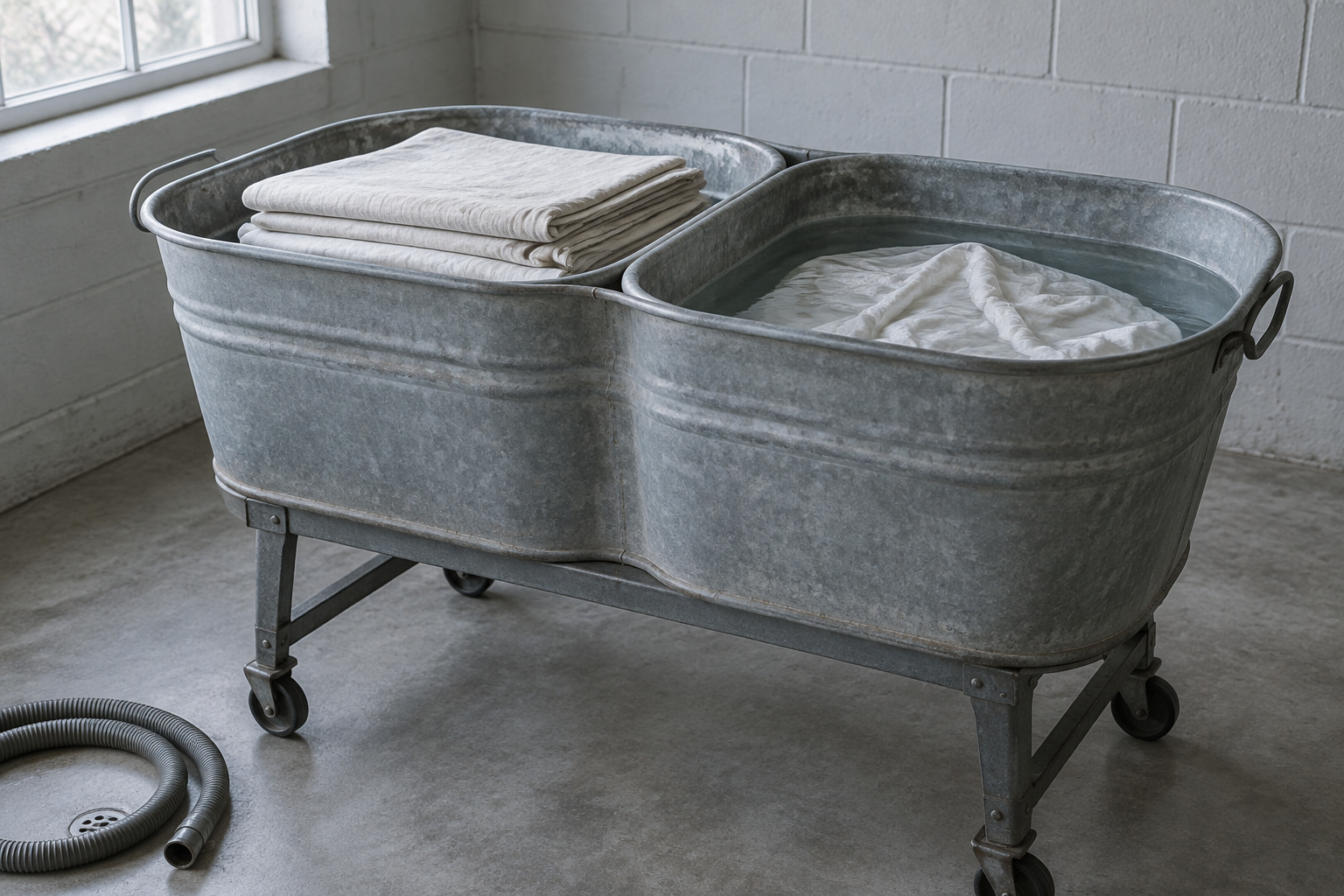

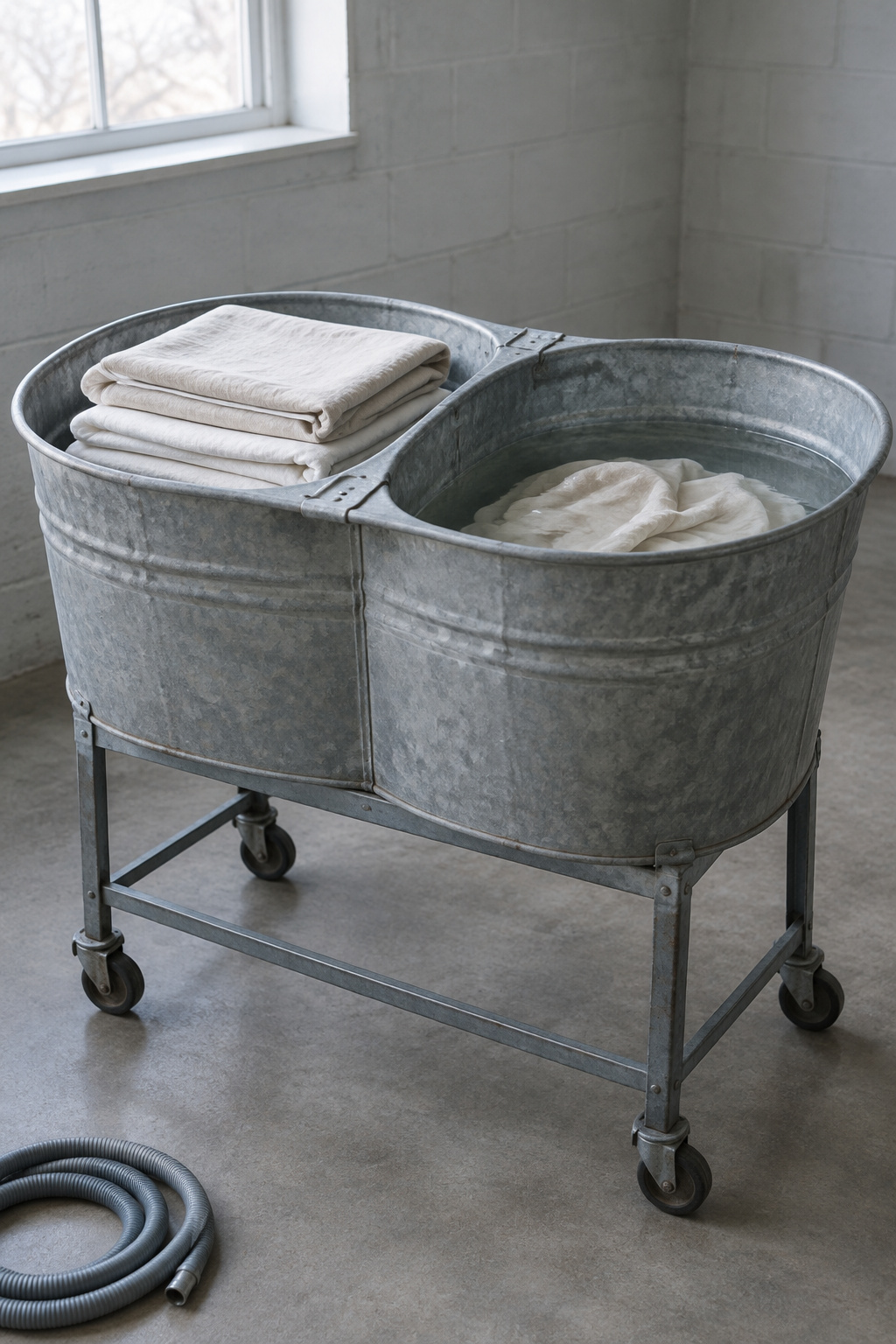
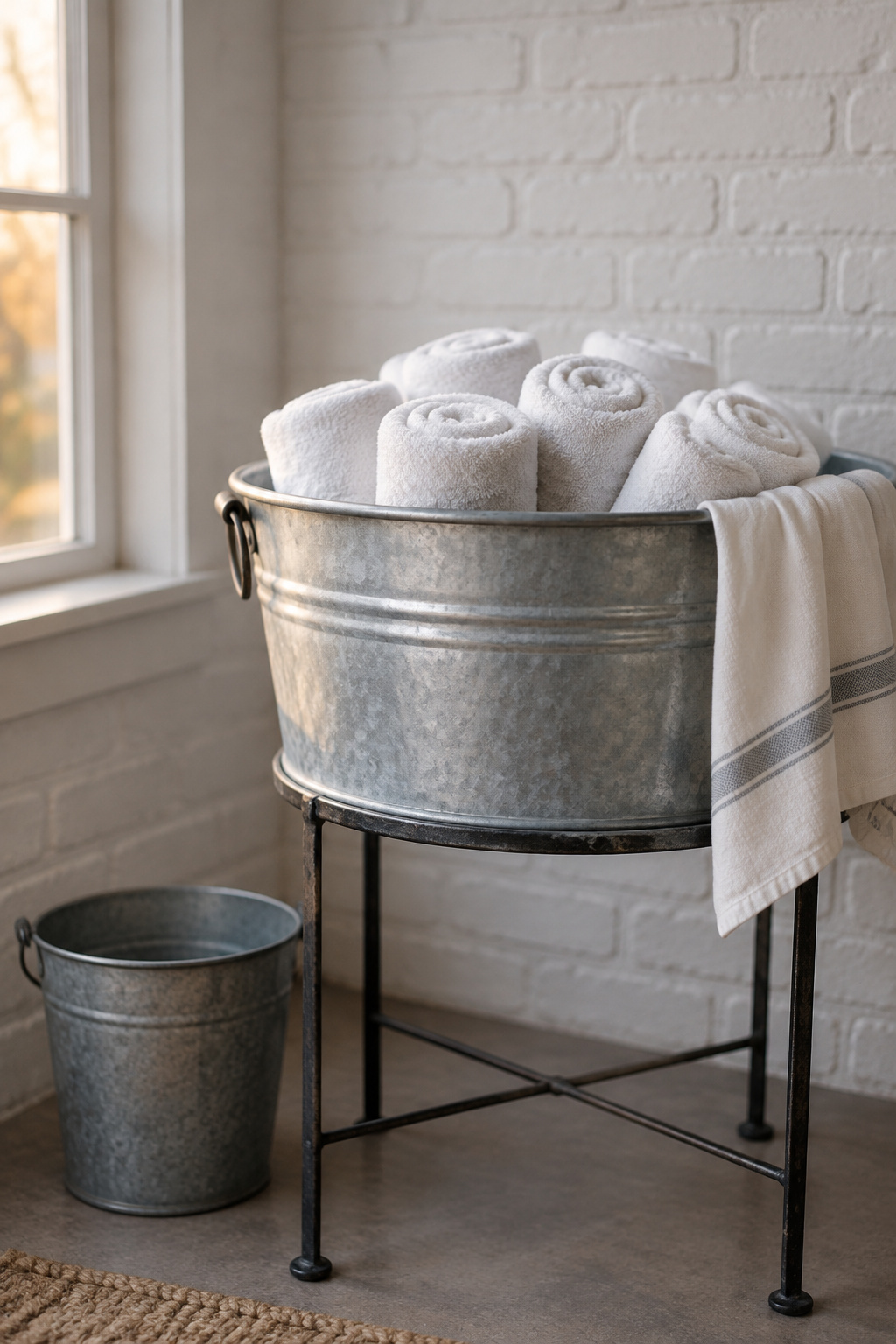
A double tub on its rolling stand holds a shirt soaking on one side and tomorrow’s whites sorted into the other, and galvanized wash tub decor needs nothing more. The mistake is getting there the hard way. Someone pays around $350 for a vintage double set, wheels it into the laundry and fills it for the first time on a finished floor. If the bottom seam weeps, the floor finds out first.
Budget around $33 for a new single tub or $118 to $399 for a double on a stand (current asking prices), a day for a water test, and up to nine more days if the inside needs a coating. The tub in your corner, holding a fern under a white powder, is closer to working than it looks.
TL;DR
- Give the tub one job (soak, sort or store) and fill it with water for 24 hours before you pay, then run a dry paper towel along the outside of the bottom seam.
- White powder on galvanized is zinc corroding where water sat without air; light white rust is cosmetic, while orange rust means the zinc is gone and the steel is going.
- Sound zinc handles water and ordinary detergent, so dry the tub after every use and keep bleach out; seal only worn or patched spots, allowing about 2 days for a patch or 8 to 9 days for a coating.
Galvanized Wash Tub Decor That Earns Its Floor Space: Soak, Sort or Store
A tub on a stand is a standing station beside the machines. Getting a load to it is a separate problem, which is what old baskets that carry a wet load are for.
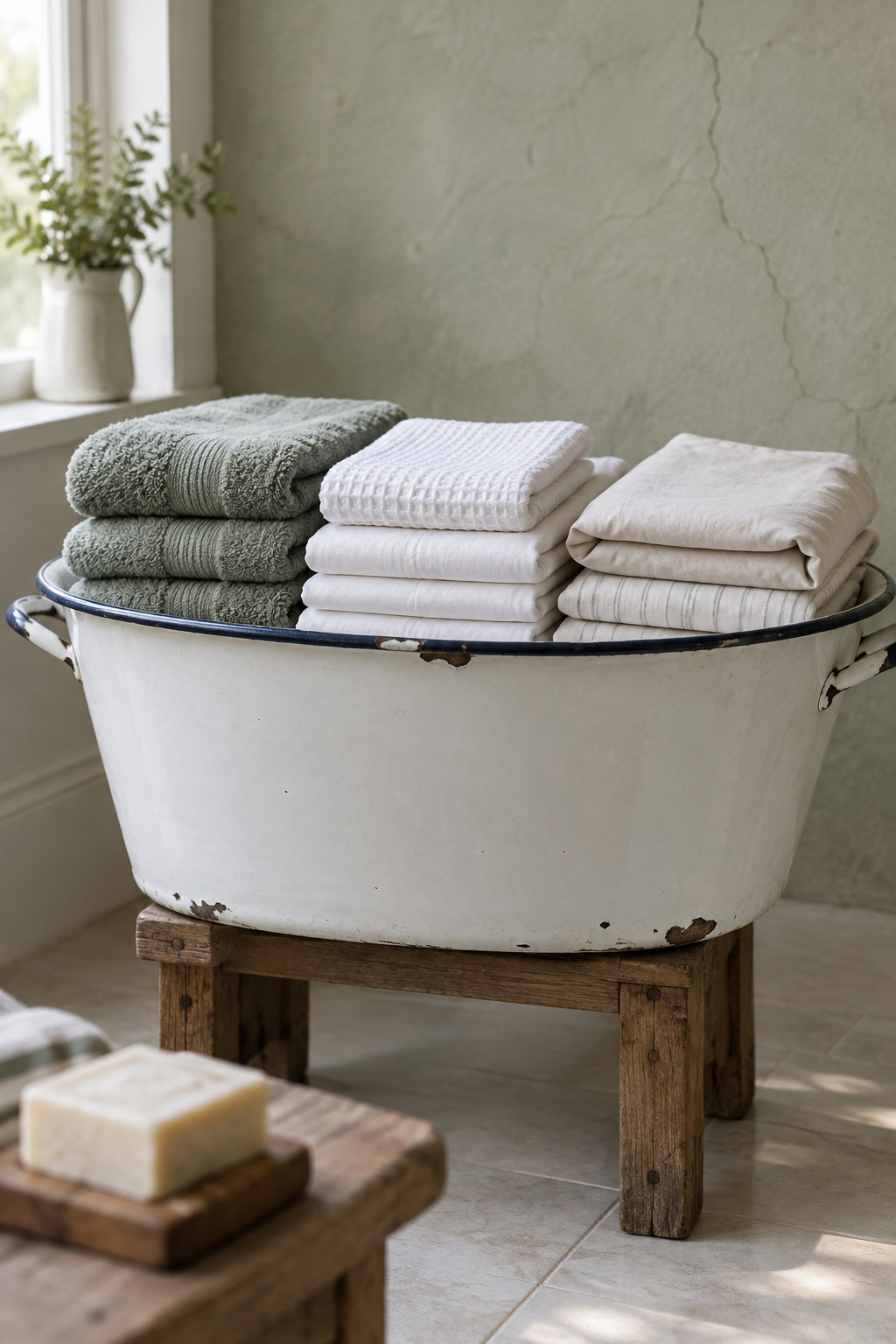
Pick the job first, because the job decides what the tub has to survive:
| Job | What it asks of the tub | What to buy with it | Skill |
|---|---|---|---|
| Soak | Sound seams, water for hours, dried after | Drain hose, pan or mat, patch kit | Some builds |
| Sort | A dry, smooth inside | A cloth liner, or nothing | First build |
| Store | Dry linens, no standing water | A cover cloth that breathes | First build |
New double kits with stand and hoses run around $118 to $299; vintage doubles run around $146 at a reuse store to $399 from a salvage dealer, who lists one as a drink cooler and planter first and a laundry tub last. A planter is fine, but it isn’t a job.
Check an Old Tub for Seams, Pinholes and Rust-Through Before You Pay
The old federal standard for galvanized ware had a plain acceptance test: fill anything meant to hold liquid, let it stand 24 hours, and it passes if nothing leaks. It was a factory test for new tubs; borrowing it for a secondhand one is my own stretch, and it works if the seller gives you the day.
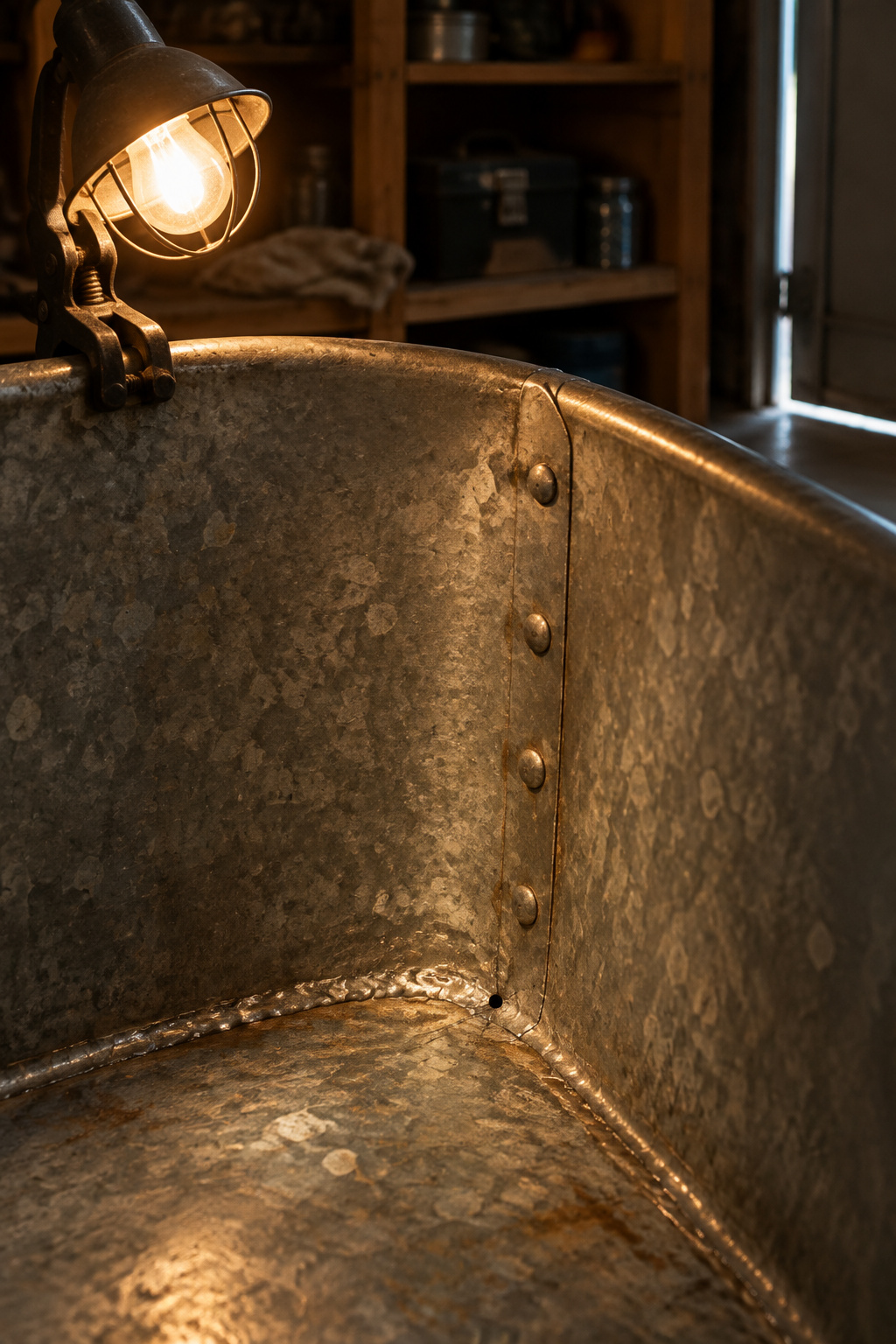
- Shine a light inside along the seam where the bottom meets the wall, where tubs leak first. Look for pinholes, cracks and thin metal.
- Read the seams. Old tubs were usually riveted heavy-gauge steel; smooth welded seams and a bright, even finish point to a replica or a recoat. Thick paint inside can hide pinholes.
- Lift it by the handles. The same standard hung tubs full of dry sand from the handle for five minutes and failed any handle or rim that bent.
- Fill it and wait 24 hours.
- My check: press a dry paper towel along the outside of the bottom seam. A weep you can’t see shows up as a damp line.
The test costs about 11 gallons of hose water and a day. A new 11-gallon tub is around $33, so paying more than that for an old one that leaks is paying for character.
Skip it and a pinhole gives you a slow overnight weep under a soaking load and a wet floor edge by morning. If you can’t test before buying, test before it goes near a floor you care about.
White Rust Is Not Rust-Through: What Galvanizing Does in a Damp Room
Old wash tubs were dipped in molten zinc, which corrodes so the steel doesn’t. The color of the rust tells you which one is losing.
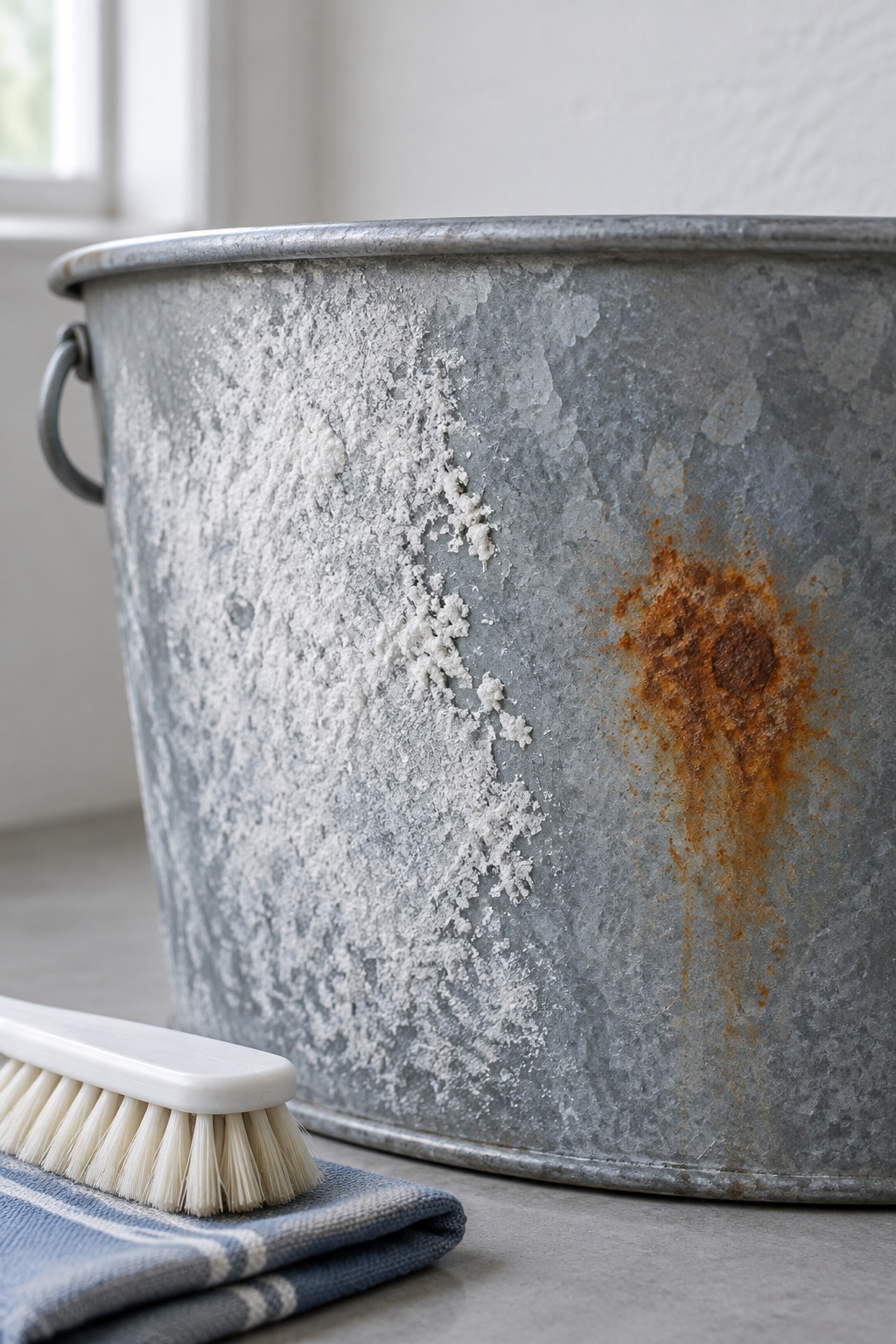
White rust: the zinc doing its job
The white or grey powder is zinc oxide and hydroxide. It forms when water sits on zinc without moving air, and it looks worse than it is, because the powder is bulky and little zinc has gone. The American Galvanizers Association says light and medium white rust doesn’t affect service life; the Galvanizers Association of Australia warns it can do considerable damage to the coating. So judge it by severity: a dusting is cosmetic, a thick crust deserves a close look.
Brush light stain off with stiff nylon, never wire or steel wool; for heavier stain, wash with white vinegar and rinse at once. Zinc builds its dull protective patina through wet and dry cycles over roughly 6 to 12 months.
Nobody has tested galvanized in a steamy laundry room, the same gap our guide to industrial pipe shelving in the laundry runs into. Going by how white rust forms, a tub emptied, wiped and left open should build patina, and one kept damp and covered should grow it.
Red rust: when the steel is going
Orange or reddish-brown spots mean the zinc has worn through and the iron is rusting. Check the bottom and lower walls for pits and holes. Sand small spots back and touch them up with cold-galvanizing compound, a very zinc-rich paint; it won’t look original. A hole is a patch job.
Seal It Only Where the Zinc Is Worn or Patched
A sound galvanized tub doesn’t need sealing to hold laundry water. The American Galvanizers Association puts zinc’s comfortable range at roughly pH 5.5 to 12, and laundry detergents measure about pH 7 to 11. Sealing is for worn zinc, a patched hole or a repaired seam.
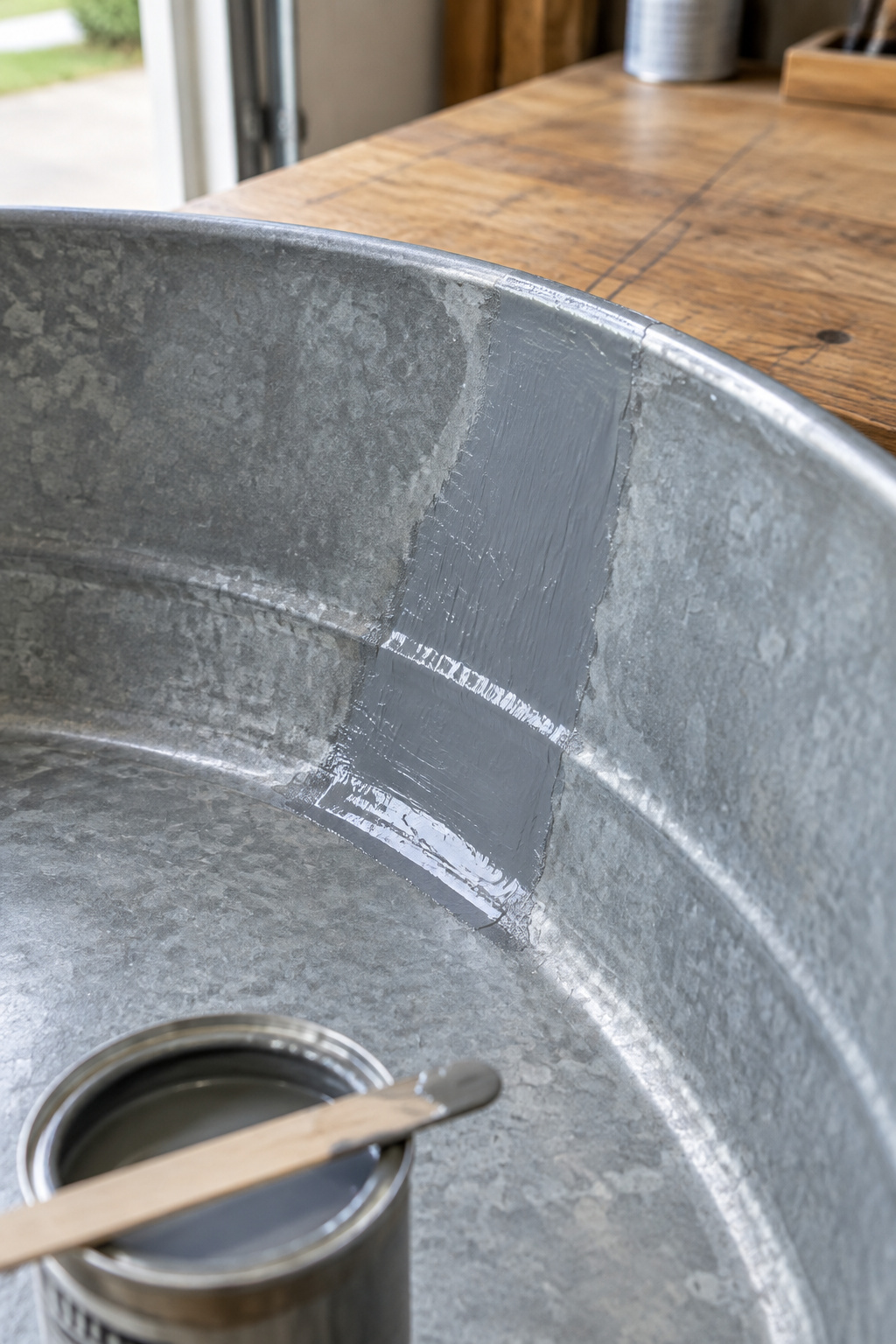
For a hole up to about dime size, use a steel-reinforced two-part epoxy; bigger than that, epoxy putty, because the patch carries the water’s weight.
- Put on a respirator and sand a border at least 1 in wide around the hole with 60-grit, down to clean metal.
- Wipe it clean and let it dry.
- Mix the epoxy, usually 1:1, and work it over the hole.
- Leave it. It sets in 4 to 6 hours and fully cures in 15 to 24.
- Refill and run the 24-hour test again.
That’s about 2 days. I always buy 10% more than the plan says, epoxy included.
If the whole inside is worn, use an epoxy mastic its maker lists for galvanized metal and water immersion (not drinking water). Degrease, remove the white rust, dry, then brush on two untinted coats. It needs 7 days after the second coat, so with a day to prep and a day for coats it’s 8 to 9 days to the first soak. No sealant has been tested in a laundry soak tub; read the data sheet for your tin.
Fill before full cure and you get tacky soak water and a patch to redo. I once skipped a primer coat to save a day and repainted the whole wall two weeks later.
Set Up the Station: Stand, Floor Protection and a Washboard for the Tub
Water weighs about 8.34 lb a gallon. A full 15.5-gallon tub holds about 129 lb of it, and a full double about 259 lb, on a stand that ships at 35 lb with no load rating from its maker. Lock or wedge the casters before you fill. I don’t trust a loaded stand on wheels.
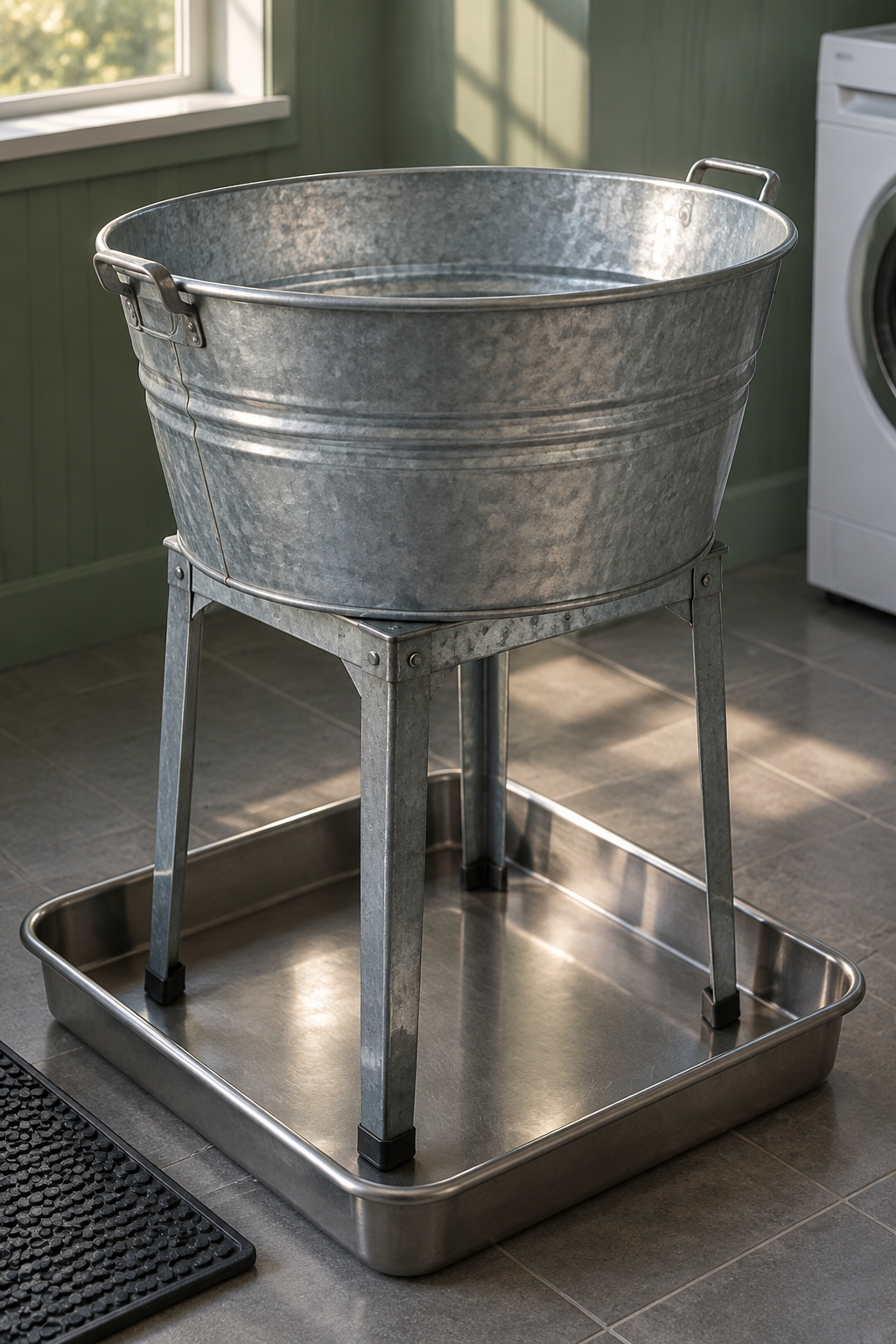
Then plan for the leak. A 32 by 32 by 2.5 in stainless washer pan was listed at around $110. That’s 2,560 cubic inches, about 11 gallons to the brim, less than one full tub holds. It fits under a single-tub stand, whose feet spread about 19 in square, but a double stand’s base runs about 40 in long and needs a bigger tray. A rubber mat catches drips, not a dumped tub; for soaking, I’d take the pan.
I keep a box of spare screws, shims and a level behind my truck seat, started after a job where I drove forty minutes for one screw. Buy the patch kit and the pan or mat on the same trip as the tub. Plan for the trip you don’t want to make.
New kits come with 30-inch drain hoses that empty into a bucket or floor drain; plumbing a tub in as a sink belongs with laundry room sink ideas.
Mind the height. A tub on its stand is 32.5 to 33 in tall, a base cabinet box 34.5 in, the counter top 36 in. That leaves 1.5 to 2 in to the box and 3 to 3.5 in to the top: beside the counter run, not under it. Add a washboard for the tub and the pair is a hand-wash station again.
What Never Goes in an Old Tub, and the Day It All Works
Tape this inside a cabinet door:
- Bleach, even diluted. It corrodes galvanized; a weak 1% solution with a quick rinse and dry is as far as the galvanizers go.
- Strong caustics. Above about pH 12.5, zinc dissolves.
- Vinegar or descaler left to sit. Clean with them, then rinse at once.
- Acidic food or drink. Virginia’s food code bars galvanized from contact with acidic food because zinc leaches, so a tub that did laundry doesn’t become a citrus-and-soda cooler.
I teach a Saturday beginners’ class at a community workshop, and I’d hand this project to a nervous beginner, because nothing in it is hidden. The corner tub gets a light, a day full of water and a paper towel along its seam, then a job, a pan and a dry towel after every soak, the whole idea behind decorating a laundry room with things that did the wash.
The cheapest reversible version costs around $33: a new single tub on the floor holding sorted whites, with nothing to seal and nothing to fill. If you hate it, it goes to the porch and holds a fern.
FAQ
What is the difference between a galvanized tub and an enamel tub?
A galvanized tub is steel coated in zinc; an enamel tub is coated in enamel, and they want different care. Galvanized takes mild soap, a thorough dry and no steel wool. Enamel wants a soft sponge and no metal scouring pads. Vintage enamel can carry lead, which matters for food but far less for a tub that only holds laundry.
Can you paint a galvanized wash tub?
Yes, with prep. Wash off oil and soap film, remove all white rust because paint won’t hold over it, then rinse and dry fully. Prime with a primer made for galvanized metal before the color coat, or use cold-galvanizing compound for a plain grey finish. Inside a soak tub, use an epoxy listed for water immersion and wait seven days.
What size wash tub fits under a laundry-room counter?
A loose single tub fits easily: an 11-gallon tub is about 20.25 in square and 10.75 in deep. A tub on its stand doesn’t. At 32.5 to 33 in tall it leaves only 1.5 to 2 in below a standard 34.5 in cabinet box, so it stands beside the counter, and a double needs about 3.5 ft of wall.