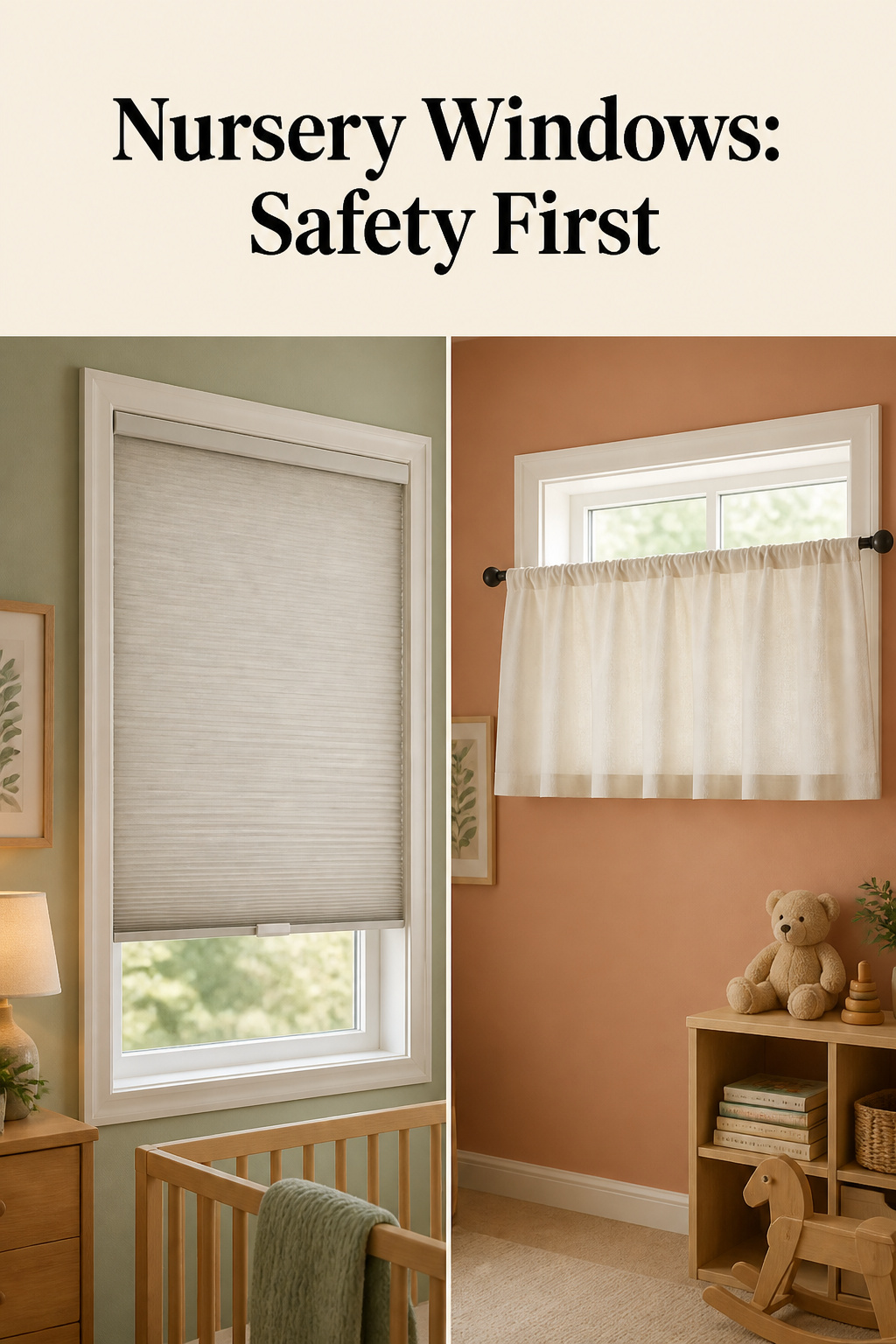
Years ago, in my Albuquerque kindergarten classroom, I spent a whole term battling kids who couldn’t settle at story time. Then I moved the reading corner three feet, away from the glare of one window, and the fussing mostly stopped. The room had been teaching them to be restless, and I hadn’t noticed. That’s the lens I bring to every child’s space now, and why nursery window treatments are the one decision I ask parents to slow down on. Most people choose them on looks. A standard corded blind can look normal on the wall and still be a genuine strangulation hazard for the exact age using the room.
TL;DR
- Cordless overrides every other choice: at least 456 children have died from corded window coverings since 1973, and 93% of those deaths were kids age 3 and under.
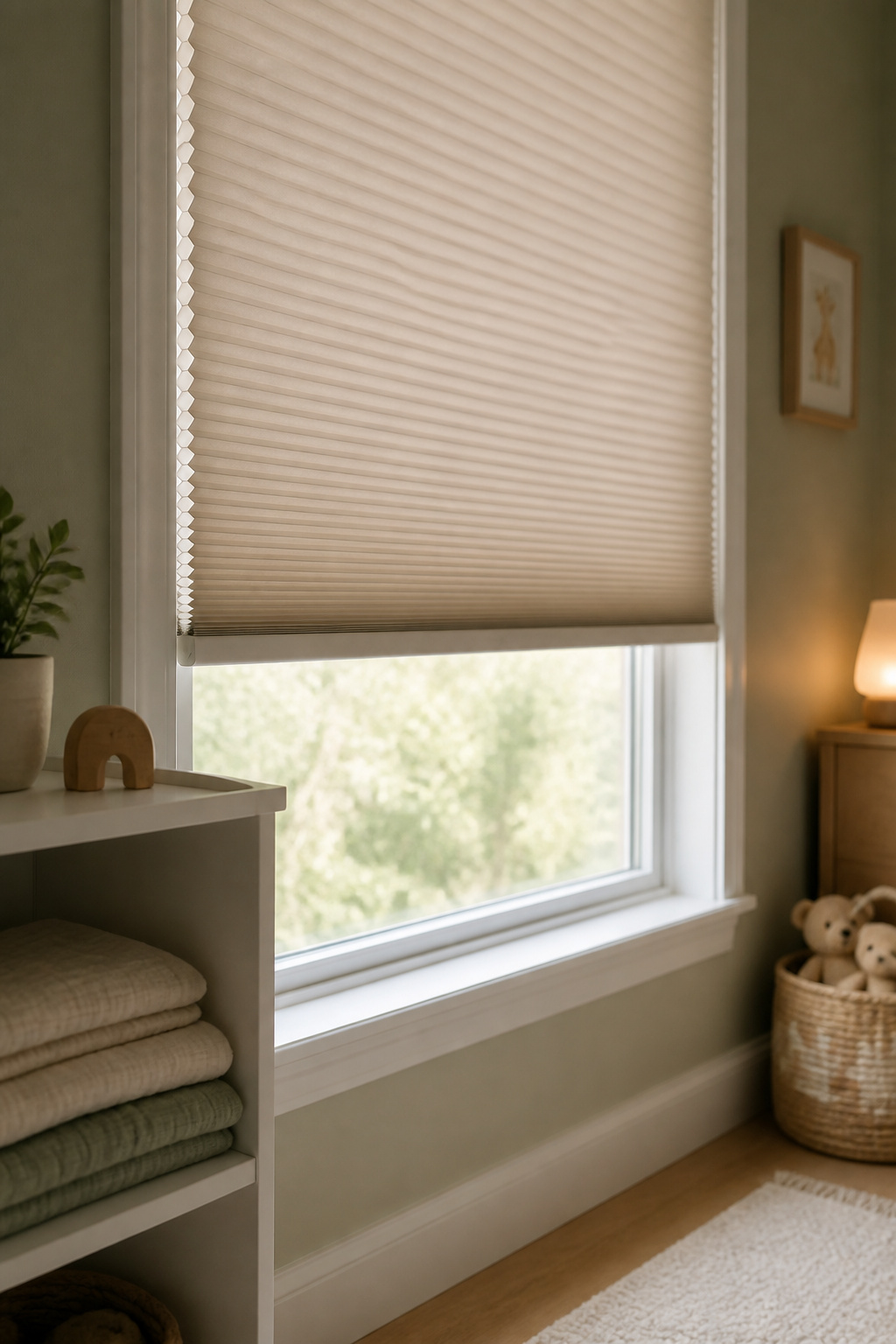
- The best nursery pick is a cordless cellular (honeycomb) blackout shade — no exposed cords, blocks roughly 99% of light for consistent naps, and adds insulation.
- Cordless isn’t a premium: since the 2023 federal rule, faux wood mini blinds and basic cellular shades are cord-safe too, so you’re choosing by price, not by paying for safety.
The Rearranged Reading Corner That Changed My Mind About Environment
What a small environment change taught me
A room is never neutral. Move the furniture, change the light, and you change how the small people in it behave. One adjustment shifted a whole term. I’ve stopped treating any element of a child’s room as decoration only since. The window included.
Why window treatments are a safety decision, not just a style one
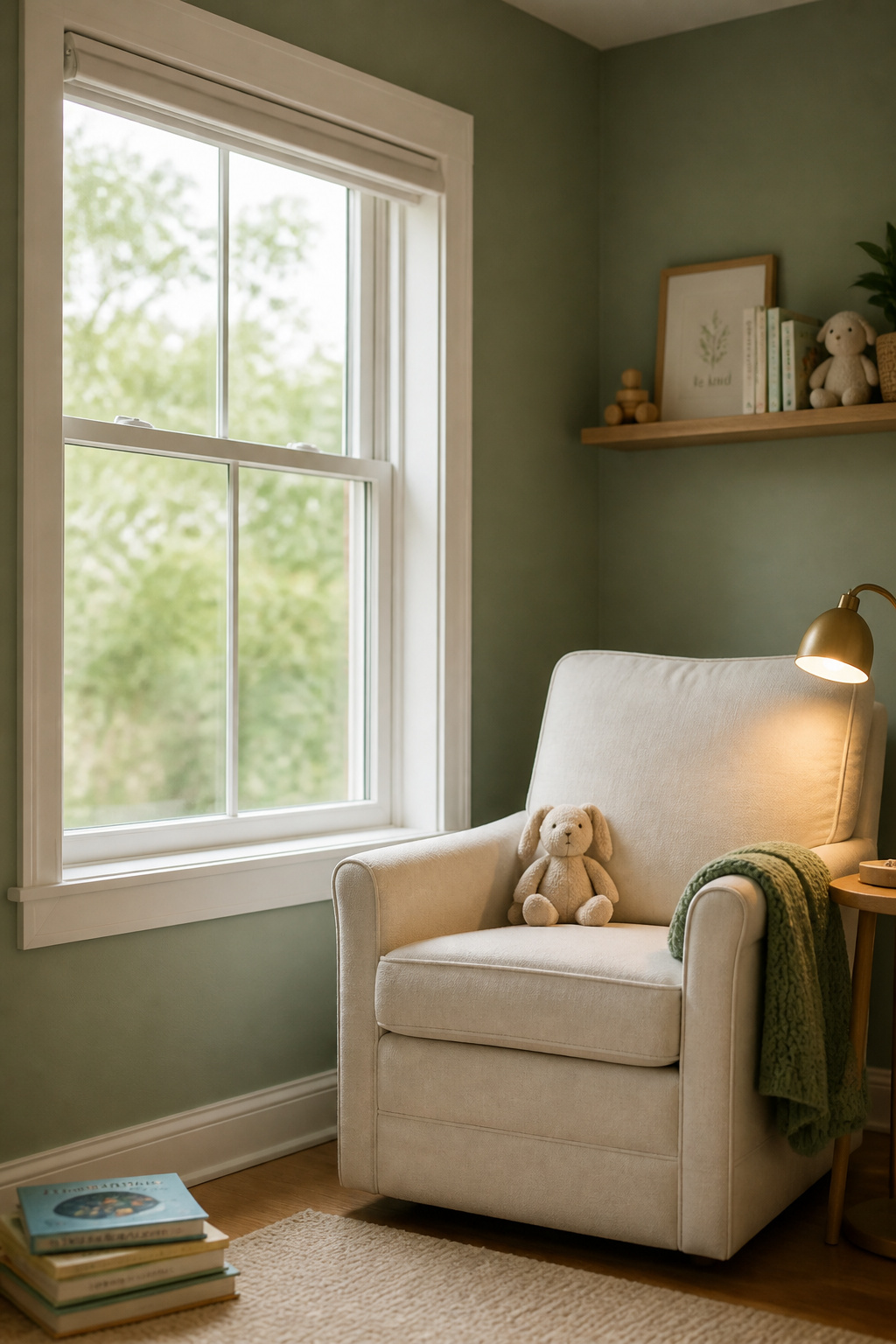
Regulators agree with me here. The CPSC classifies window covering cords as one of the top five hidden hazards in American homes — the same tier as furniture tip-over and unsafe crib slat spacing, not paint color. In 2023 the Commission formally deemed the cords a “substantial product hazard,” the same designation used for defective cribs. The danger peaks between ages one and four, exactly when a child can reach a cord but doesn’t know it’s dangerous and can’t free themselves once caught.
Cordless Is the Rule That Overrides Everything Else
Why corded blinds are a real hazard
I won’t soften this, because the numbers don’t allow it. At least 456 children age eight and under have been strangled to death by corded window coverings in the US since 1973, and about nine children under five still die this way every year. Over a 13-year CPSC review, a child died in 48% of recorded incidents — nearly half. Worse still for our purposes, 93% of those deaths were children age three and under. That’s not a general child-safety statistic. That’s precisely the nursery-through-toddler window this article is about.
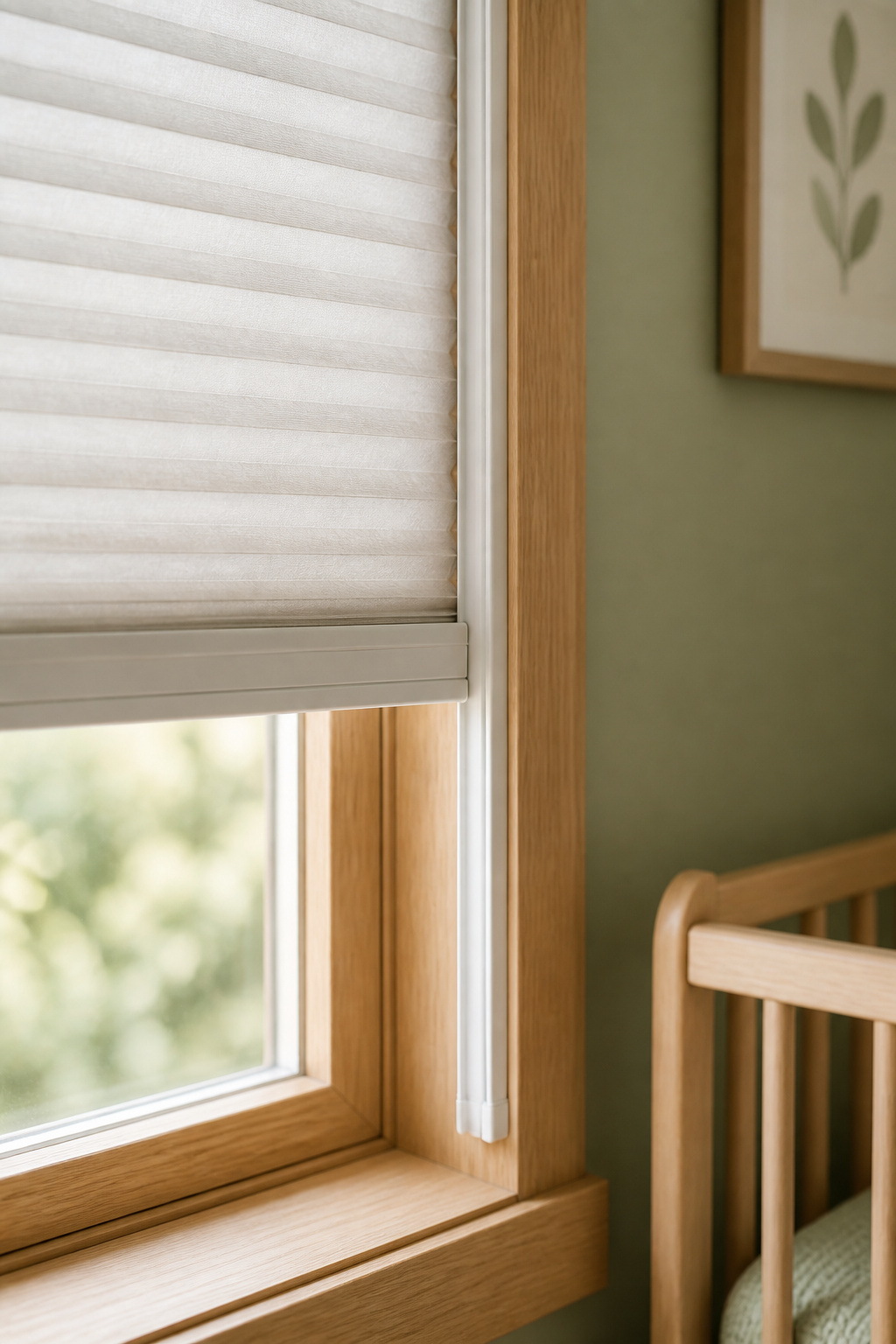
What “cordless” actually means on a label
“Cordless” should mean zero exposed operating cord, tilt cord, or cord loop in any position — lowered, raised, or tilted — not a cord merely tucked away in one configuration. Don’t trust the word alone. Look for the WCMA “Best for Kids” certification, created in 2015: products independently tested by Bureau Veritas or Intertek to meet the ANSI/WCMA A100.1 standard — a verified claim, not marketing language. The strictest tier is a motorized sealed-track shade: no cords, no accessible fabric edges, operated only by remote or voice, nothing physically there for a small hand to grab.
Code requirements to check before you buy
Two rules matter here. Since the CPSC’s federal standard took effect May 30, 2023, stock window coverings sold in the US must be cordless, have inaccessible cords, or have cords no longer than 8 inches, in any configuration. Then, effective June 1, 2024, the revised ANSI/WCMA A100.1-2022 standard eliminated free-hanging operating cords, tilt cords, and multi-cord connectors on made-to-order custom coverings. Any corded product still legally sold today must use a retractable cord or a tensioned continuous loop — a free-hanging pull cord is no longer permitted at all.
One more flag: any blind bought before November 2000 is the highest-risk category still in circulation. Its inner lift cords can be pulled into a strangulation loop, and CPSC guidance is to replace these outright, not retrofit them.
Blackout for Nap Consistency
Now that the room is cord-safe, we can solve the problem that actually brought most parents here: naps.
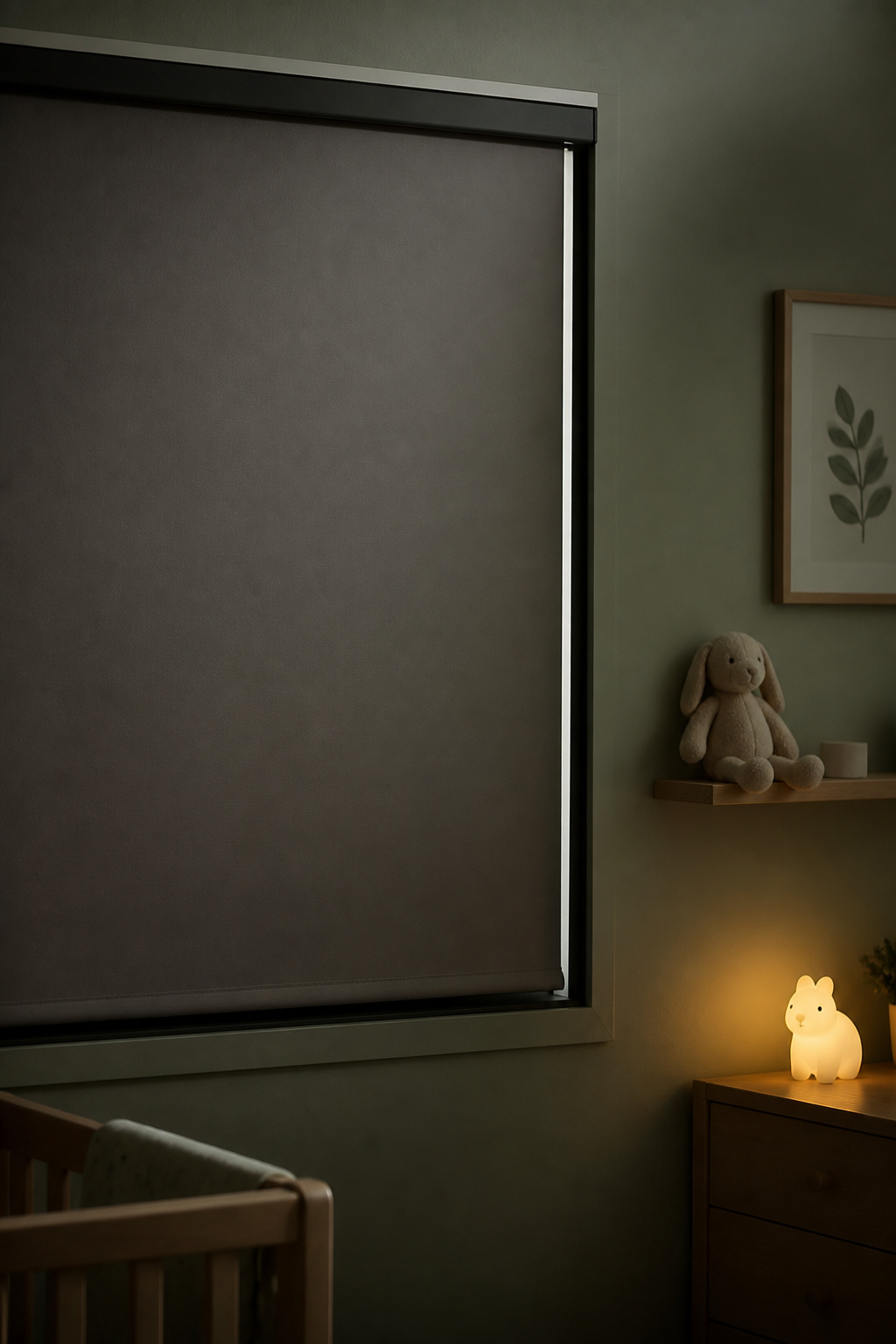
Why naps break down with partial light
Here’s the developmental why. A baby’s body clock runs on light. Without near-total darkness, infants can’t reliably tell a daytime nap from nighttime sleep, and that confusion shows up as fussiness, not a settled child. Newborns need up to 16 to 18 hours of sleep a day, and even small amounts of light interrupt the melatonin that carries them into deep sleep. By three to six months, true blackout starts to meaningfully improve sleep quality by reinforcing a stable day-night rhythm.
Blackout options that are also cordless
Two picks give you full darkness and full cord safety at once. The cordless cellular (honeycomb) blackout shade is the one I recommend most: no exposed cords, blackout-rated fabric that blocks roughly 99% of light, and a honeycomb structure that adds real insulation. The upgrade is a motorized blackout roller shade, which does one nap-specific thing manual shades can’t — open or close it by remote without entering the room and risking a wake-up. A workable split for many families: cordless shades through the house, motorized blackout in the nursery specifically, where nap timing matters most.
Quick fixes for an already-installed treatment
If you’ve already hung something and don’t want to start over, you have options. Extend the curtain 6 to 15 inches past the frame on each side and mount the rod close to the ceiling to cut light spilling around the edges. Where gaps remain, blackout curtain tape sealed along the frame closes them cheaply. A blackout liner added behind an existing decorative curtain adds real light-blocking without replacing the treatment you like. For the full sleep-science version of fabric and heading choices, see blackout curtains for better sleep.
Choosing for the Toddler-Tugging Years
The rule I live by with kids’ furniture: buy for the stage after next. Window treatments are no different — what’s safe over a still crib becomes a climbing target the moment your child pulls to standing.
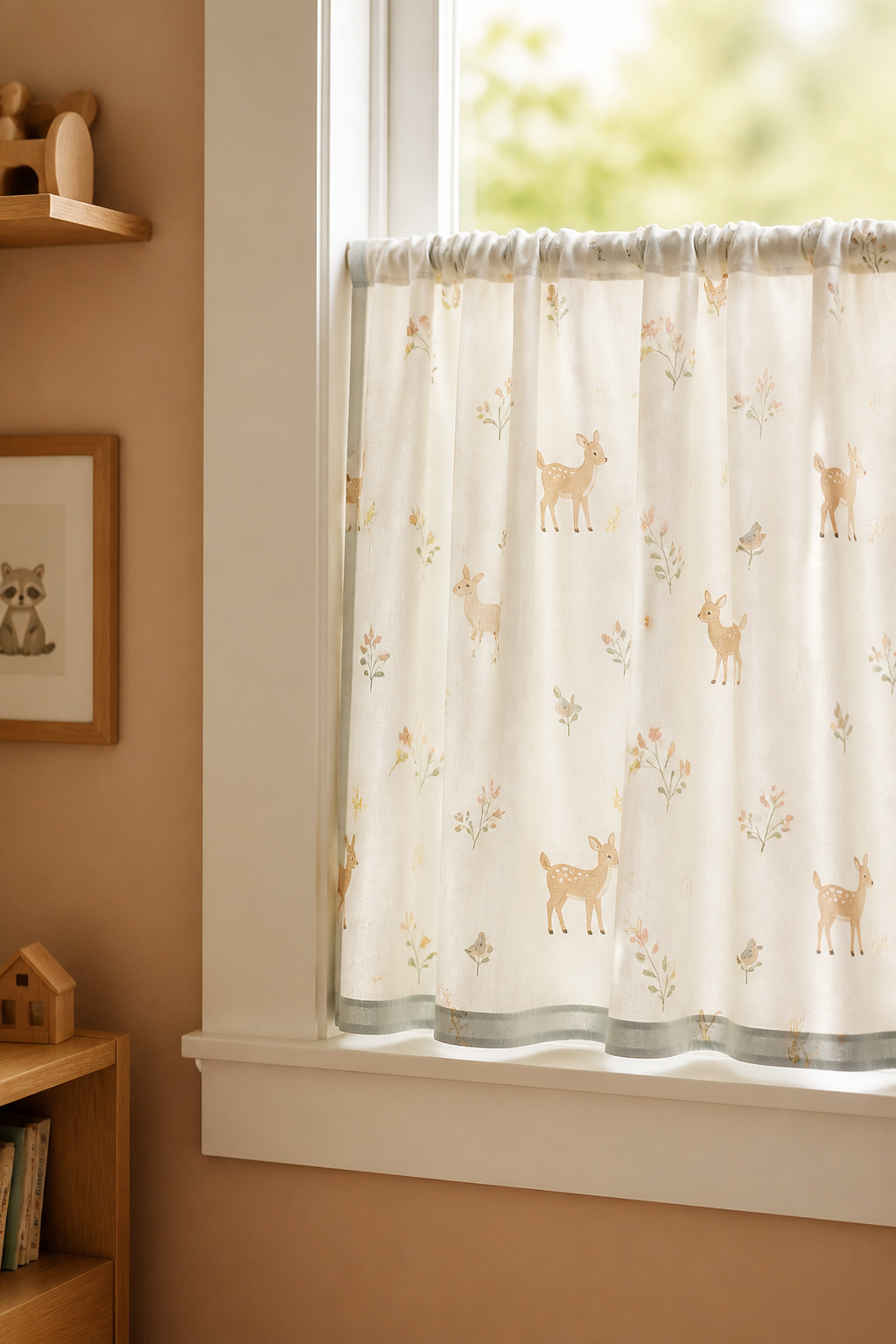
What survives a curious toddler
Cords aren’t the only hazard. Toddlers get tangled in long drapery or use it to haul themselves up, which can tear the hardware off the wall. Sill-length curtains — stopping at the sill, not the floor — remove that risk while still framing the window nicely. Skip traditional fabric tiebacks, too; magnetic or clipless versions do the same styling job without adding another cord.
Mounting height and reach
Two different “out of reach” numbers circulate, and they answer different questions — don’t treat them as interchangeable. One safety guide says mount rods 6 to 8 feet up to clear a toddler’s reach. The common styling rule, though, is 4 to 6 inches above the frame for proportion, which in a standard bedroom doesn’t reach that threshold. Reach and proportion are separate goals. For anything at standard window height, absent hardware beats high hardware every time — a climbing toddler reaches higher than a standing one, so the safest lever is no wand or cord present at all, not a shorter one placed higher.
Fabric that holds up to grabbing
Imagine a small fist closing on the fabric daily, because it will. Organic cotton, linen, and non-toxic polyester come up most often as safe and durable for kids’ rooms. Cotton or polyester blends take the wear and usually machine-wash, which matters given how often nursery textiles need cleaning. For blackout specifically, a mixed-fiber blend often beats pure natural fiber — it balances light-blocking, washing, and durability better than either extreme.
Budget-Friendly Safe Options
Let me clear up the biggest myth I hear from parents: that cordless is the expensive tier. It isn’t. Since cordless became the baseline on stock products in 2023, you’re choosing between safe options by price and finish, not paying extra for safety itself.
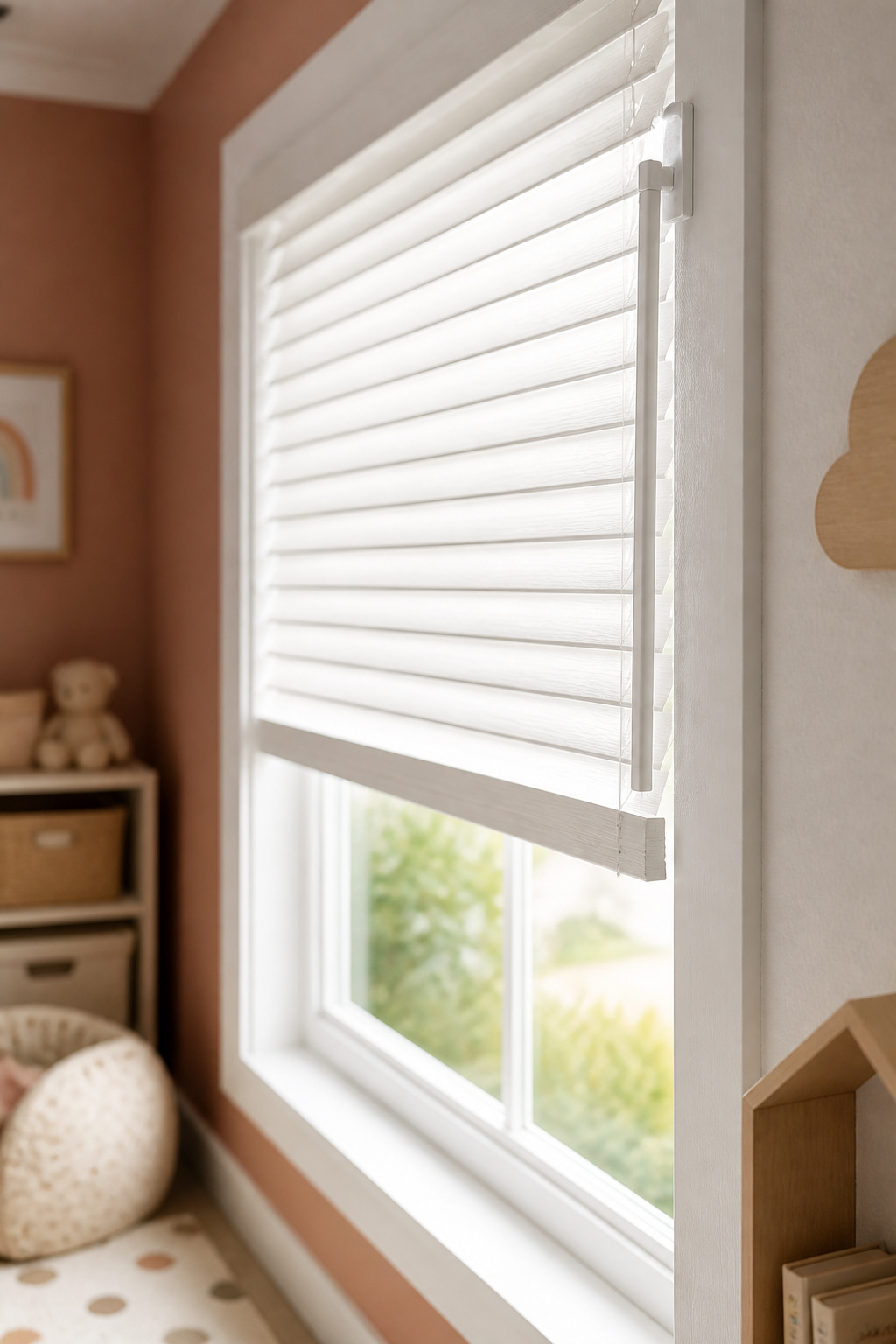
Affordable cordless picks
Faux wood and mini blinds are durable, widely sold cordless, and about the lowest-cost genuinely safe category there is. Pleated paper shades are cheaper still, though lighter-duty than fabric cellular. A basic cordless honeycomb shade is the least expensive option in its category while still meeting CPSC standards and adding insulation. A tight budget and a safe nursery window aren’t in conflict.
Where to spend and where to save
The real cost step isn’t safe versus unsafe — it’s manual versus motorized. Basic battery-powered motorized shades start around $100 per window, and fuller setups run $150 to $500 each; that premium buys convenience, not safety. Basic polyester or vinyl roller shades sit at the budget end, with blackout fabric mid-range, so you get real blackout performance without the top tier. Spend on blackout and fit, which affect naps and safety; save on motorization unless not waking the baby earns it for you. For a small starter-home window, the small window ideas on a budget guide pairs directly with this.
A Safe Nursery Window, Start to Finish
The kneel-and-check test before you buy
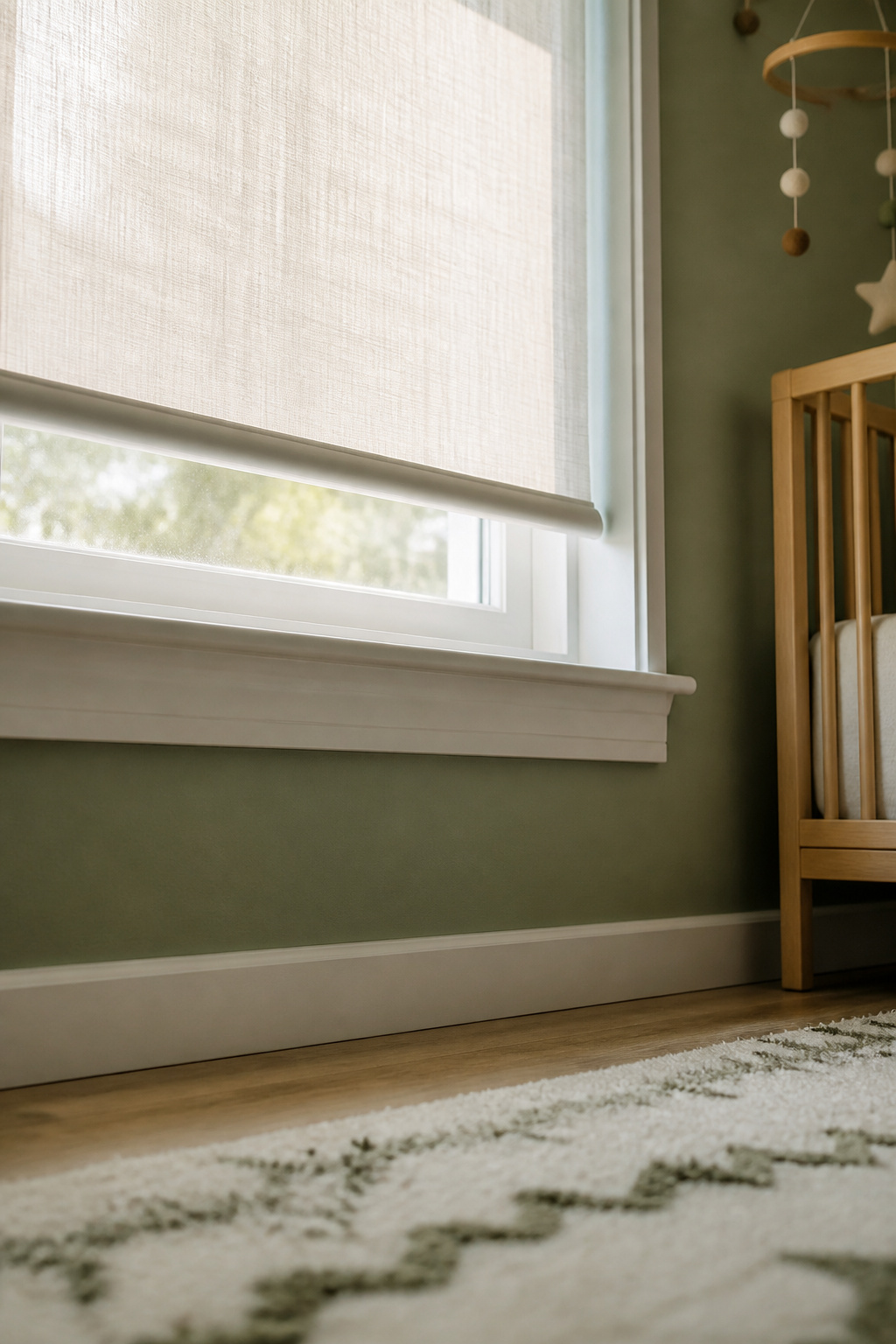
I ask every parent to do what I do: kneel to your toddler’s eye and reach height at the window, and physically test what a small hand can grab. You’ll see things you’d miss standing up. On any existing blind, check three specifics: whether the pull cords connect to form a loop, whether the plastic tassel is one solid piece or snaps apart, and whether an inner lift cord can be pulled into a dangling loop. Treat any blind from before November 2000 as high-risk regardless — that’s the CPSC’s named replace-don’t-retrofit category.
What to do this week
Your highest-leverage move this week: confirm every treatment in the room is cordless in every position — lowered, raised, tilted. That’s the safety decision; blackout and durability are the non-urgent upgrades after it.
If you can’t fully replace a corded treatment yet, the Window Covering Safety Council offers free retrofit kits (windowcoverings.org or 800-506-4636). Their cord cleats must be mounted at least 60 inches from the floor with the provided screws — not adhesive, which fails the safety requirement — and the cord wrapped in a figure-eight. Be clear with yourself, though: on a pre-2000 inner-cord blind, a retrofit kit is a stopgap until you replace it, not the fix.
That’s the whole job. You now know the rule that overrides the rest, the blackout pick that keeps naps consistent, and how to check the window at a child’s height. For how a nursery fits the wider picture, our guide to bedroom window treatments for every room covers every space in the house. Start with the kneel-and-check test this week, and the hardest safety decision is already made.
FAQ
Are cordless blinds actually safer for kids’ rooms?
Yes. Cordless blinds remove the exact hazard behind at least 456 documented child strangulation deaths since 1973, because there’s no cord loop left to form around a child’s neck. The CPSC’s 2023 federal standard requires stock coverings to be cordless for this reason. Look for the independently tested WCMA “Best for Kids” mark to confirm.
What window treatments are recommended for a nursery?
Cordless cellular (honeycomb) blackout shades are the most consistently recommended nursery option, combining no exposed cords with near-total light block and added insulation. Motorized blackout roller shades add the ability to adjust light without entering the room and waking a napping baby. Faux wood cordless mini blinds and pleated paper shades meet the same safety baseline for less.
At what age can a child have corded window treatments?
There’s no CPSC-recommended “safe age” for corded treatments — the federal standard bans accessible cords over 8 inches on stock products, regardless of age. Risk peaks at one to four, and 93% of deaths are age three and under, but it never fully disappears. Corded coverings stay a hazard for visiting kids and pets, too.