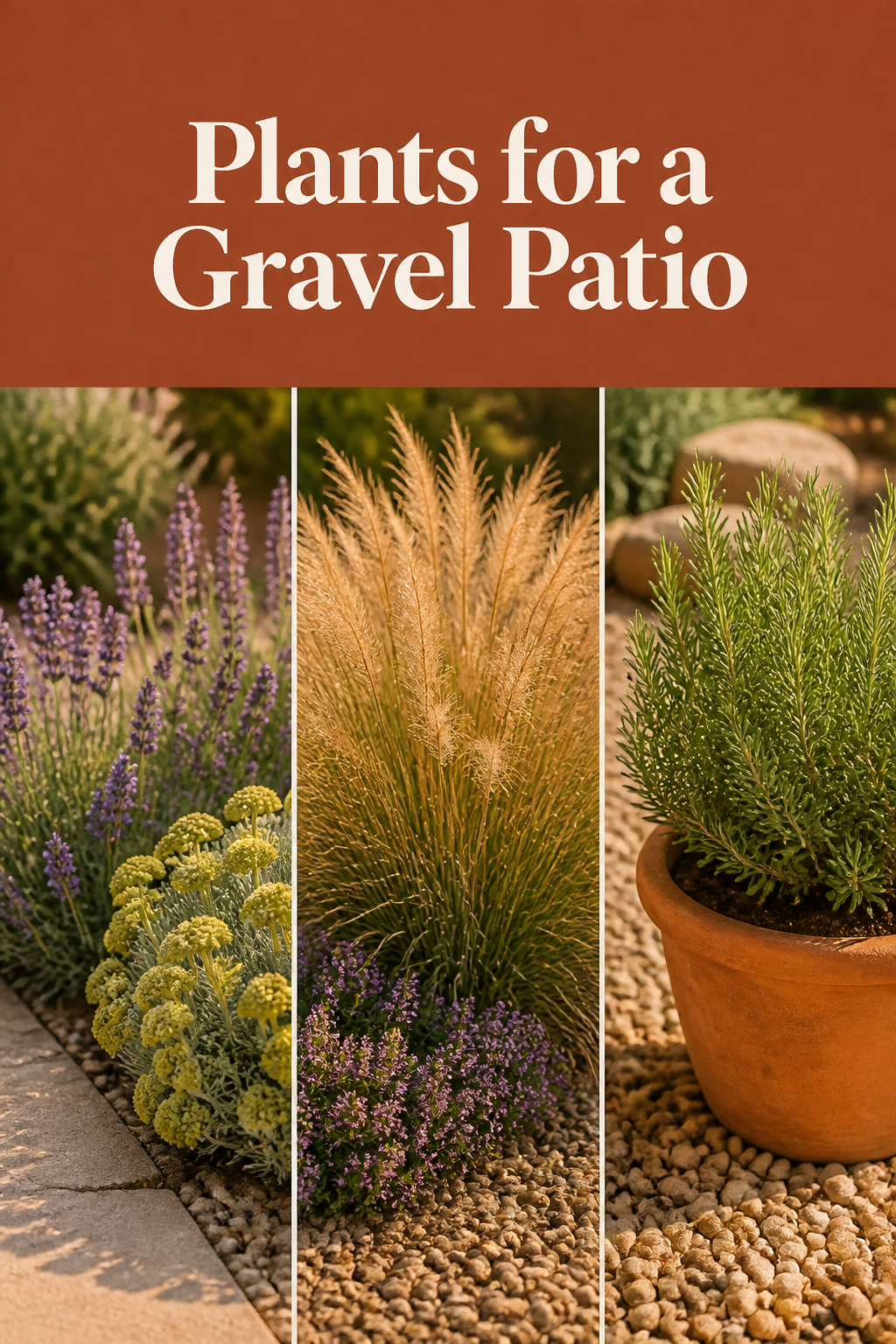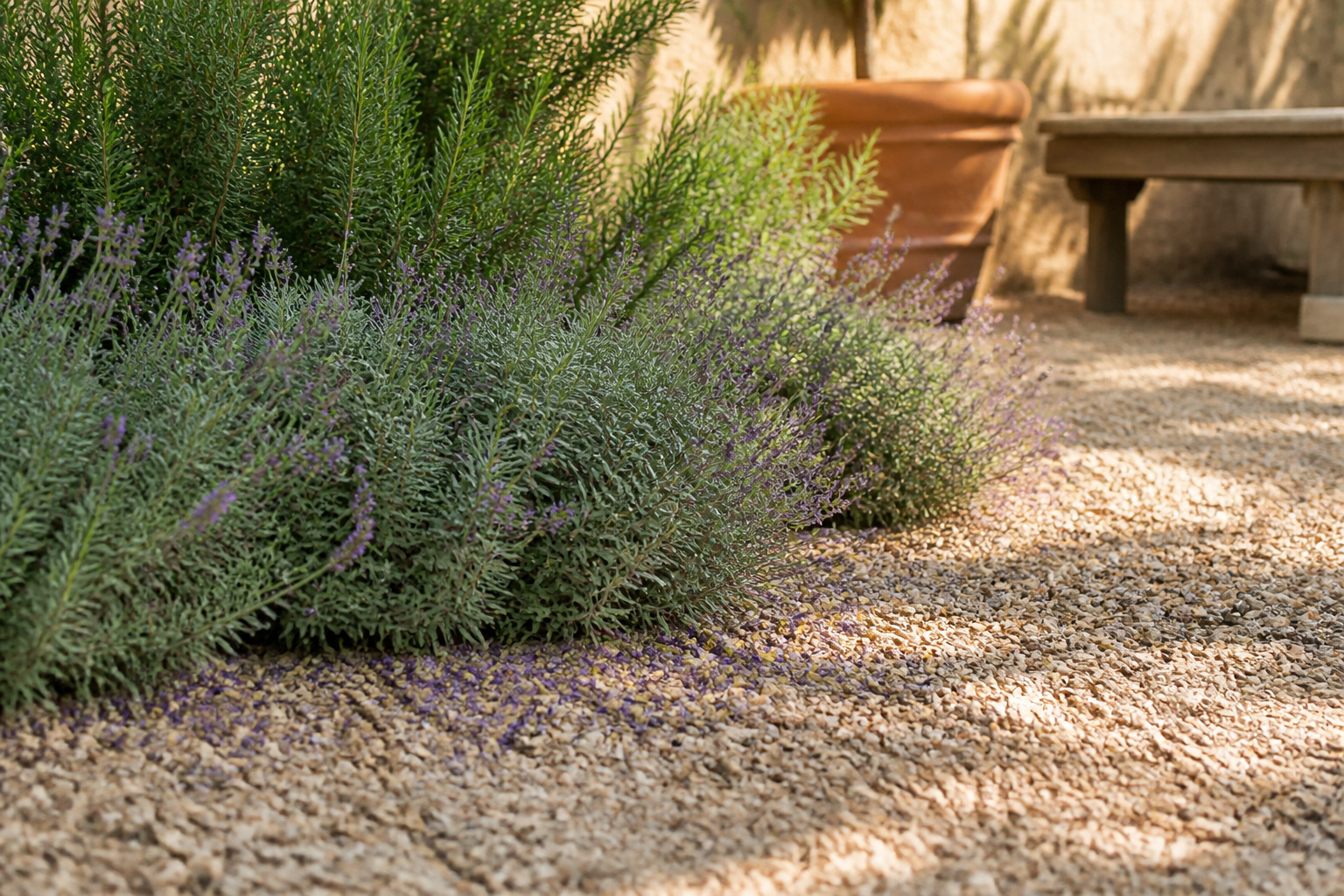
Stand on a gravel patio late in the afternoon and close your eyes. What you notice first is never a color: it’s warm resin where your sleeve brushed the rosemary, a dry rustle of grass, the sweetness lavender releases as the stone beneath it heats. Scent and sound are design materials, equal to color, and most advice about plants for a gravel patio ignores two of the five senses. These plants are chosen for what they release and how little they ask, not for how finished they look from the kitchen window.
TL;DR
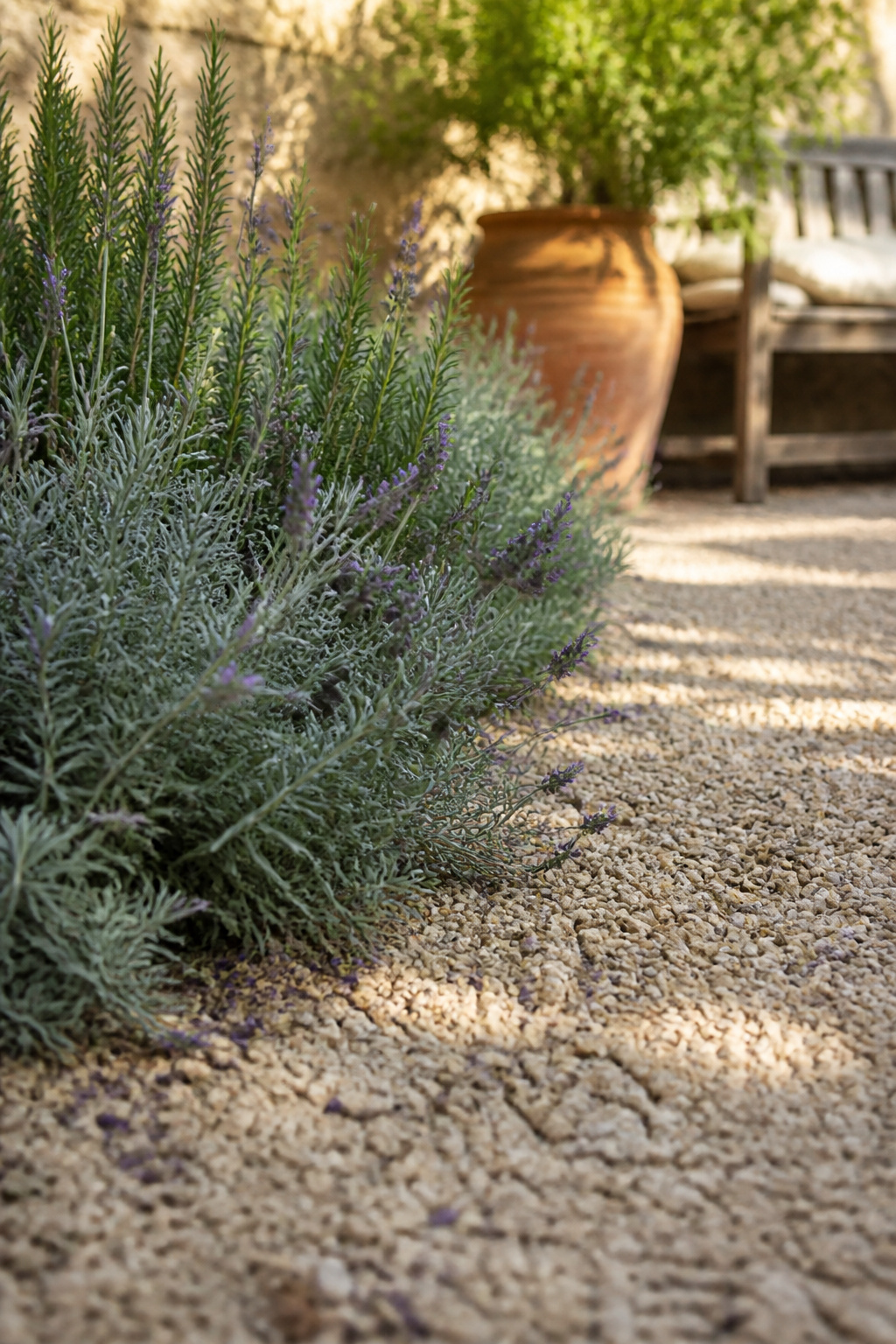
- Lean on drought-tolerant Mediterranean plants: English lavender (USDA 5–9), rosemary (6–10) and santolina (6–9b) want full sun and sharp drainage, and release scent when brushed or crushed — set them within arm’s reach of a seat, not the far edge of the bed.
- Plant into pockets dug through the gravel to the soil below (Beth Chatto’s gravel garden uses a 3–5cm mulch, no membrane), or sink pots into the stone where a species fights your native soil.
- Mexican feather grass adds movement but self-sows aggressively and sits on California’s invasive watch list (PlantRight) — check local guidance first, and give any planting two to three seasons of real watering before it earns its drought-tolerant name.
What Plants for a Gravel Patio Should Do Before They Look Finished
Before you choose a single plant, decide what you want the patio to feel like when you step onto it: settled, or styled.
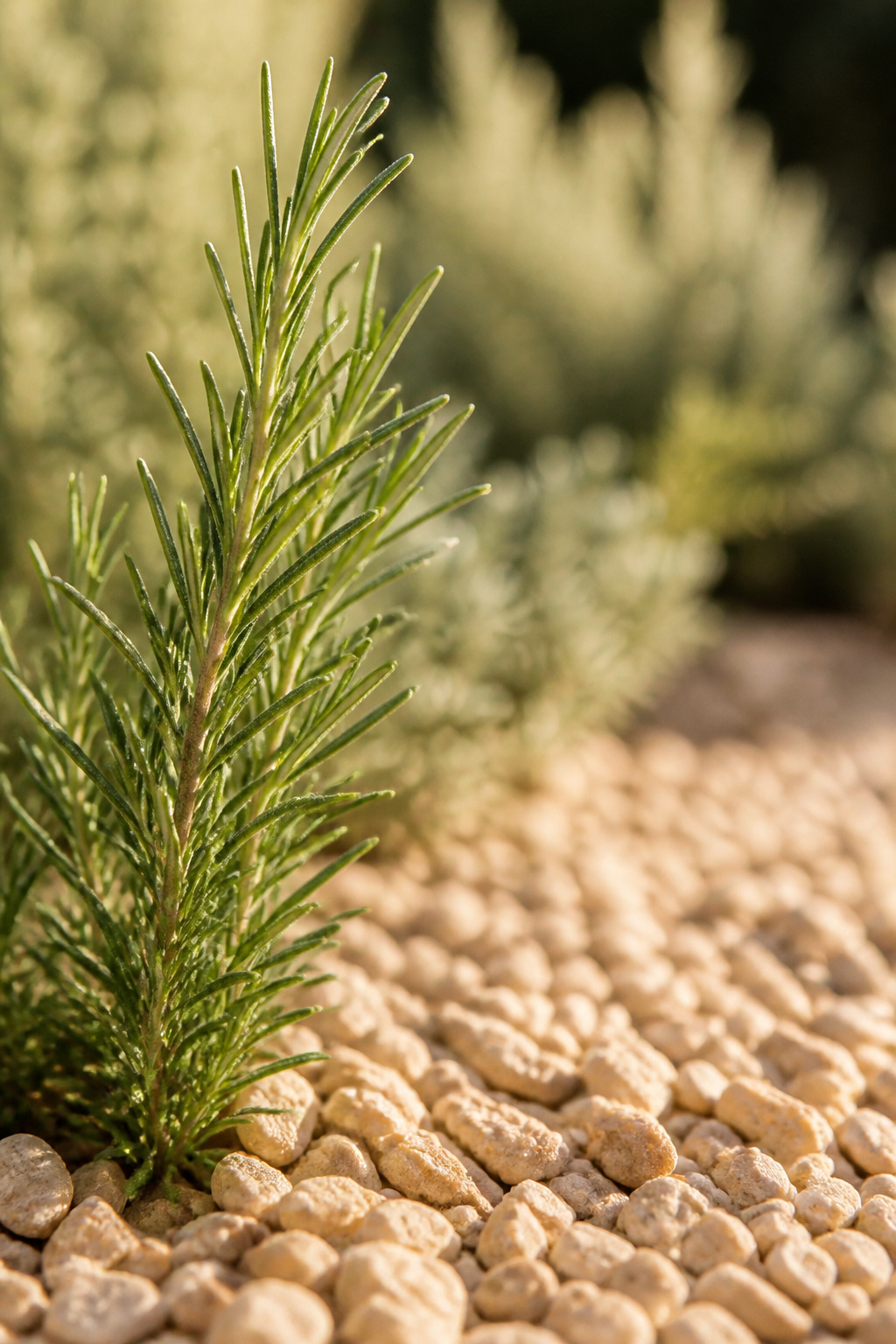
Naming the feeling before naming a species
Fragrance is not a backdrop you walk past. In sensory-garden design, scent is something you activate: brush the foliage, or crush a leaf to intensify it. Creeping thyme set where feet fall turns a plain route into a scented corridor. The first question is not which plant, but where a hand will meet it.
Why fewer, sincere plantings beat a full bed done for show
Specimen planting — one plant given room to be itself — suits small spaces and focal points, concentrating attention on a single shape and scent. Mass planting earns its effect from repetition and volume: coverage, not encounter.
During my teacher training in Dharamshala, the practice hall had no decoration except window light moving across a plank floor. Nothing was added, because nothing needed to be; the room felt more alive for the emptiness. A gravel bed asks the same restraint. Before you add a thing, decide what to leave out:
- plants chosen for how they photograph from the table rather than where they’ll be touched
- a full border planted for coverage, with no room left to meet any one plant
- anything thirsty enough to fight the gravel’s fast drainage
styling a gravel patio covers the ground this piece leaves alone. Walk the patio once and mark the single spot a hand passes most; start there.
Scent as a Design Material: Lavender, Santolina and Rosemary
On a warm afternoon these three share one origin and three voices: all are Mediterranean, want full sun and fast drainage, and each releases a distinct register of scent.
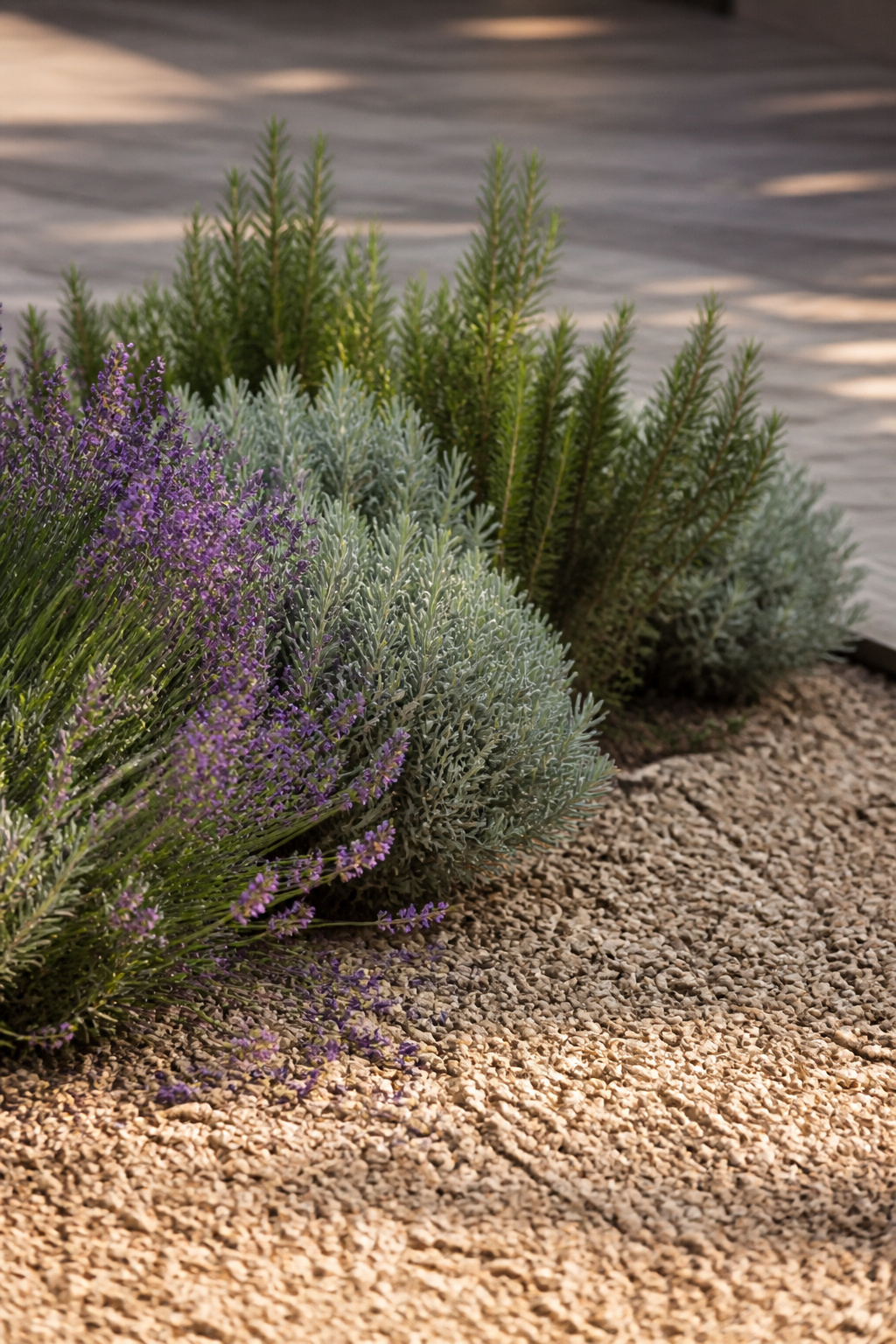
What each brings on a warm afternoon
Lavender gives sweetness into the warm air; santolina holds a sharp, camphor-like note until you crush its silver-grey foliage; rosemary turns resinous the moment a needle is bruised.
| Plant | Hardy in (USDA) | Mature size | Sun it wants | Scent, and when it comes |
|---|---|---|---|---|
| English lavender (Lavandula angustifolia) | 5–9 | 30cm dwarf to 45–60cm compact | Full sun | Sweet, into warm air and on touch |
| Santolina (Santolina chamaecyparissus) | 6a–9b | 1–2 ft tall × 2–3 ft wide | Full sun (6+ hrs) | Strong, distinctive — only when crushed |
| Rosemary (Rosmarinus officinalis) | 6–10 | ~4 ft tall × 4 ft wide | Full sun (6–8 hrs) | Resinous, pungent — when brushed |
Choose the size for the spot before the scent: rosemary fills a corner, lavender a low edge.
Placing scent where it’s actually encountered, not just seen
A plant admired only from across the gravel never delivers its scent. Touch-activated fragrance needs to sit close to where you move: a chair arm, a step edge, the path to the gate. Santolina looks like quiet silver texture from a distance, but its scent stays locked until crushed.
Water needs against the gravel’s reflected heat
Gravel stresses plants in a way open ground does not: pale stone soaks up sun all day, then throws that heat back into nearby foliage, and the stress peaks in mid-to-late afternoon, not noon. It happens even with adequate soil moisture — the plant is overheating in place, so watering more won’t fix it; the right plant will. Santolina and creeping thyme both sit among the reliable choices for the hottest, narrowest strips beside hardscape.
Grasses and Herbs That Soften the Stone Line
Scent tells you where you are with your eyes closed. Movement, sound and low texture tell you with them open — the job grasses and walkable herbs do that scented shrubs cannot.
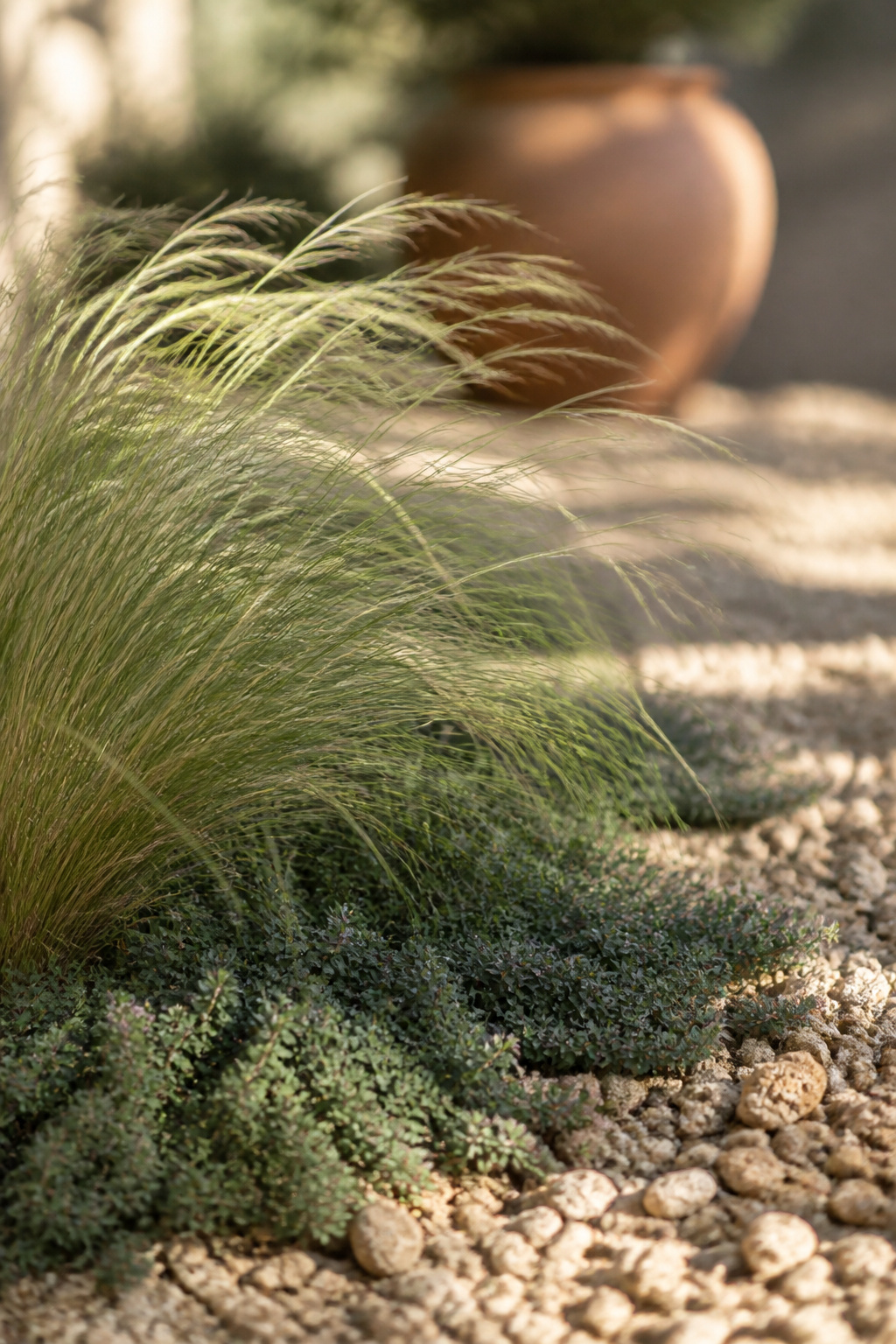
Ornamental grasses that move with the wind
Mexican feather grass (Nassella, formerly Stipa tenuissima) is the one everyone reaches for — hardy in USDA zones 7–10, one to two feet each way, with fine arching panicles that catch the smallest breeze. But those hair-like blades make it highly prolific: it self-sows readily into cracks in roads and sidewalks, and it’s flagged as an emerging invasive species on California’s Invasive Plant Council watch list, tracked by PlantRight. Check local guidance first, and be ready to edit out volunteer seedlings. Santolina and rosemary, by contrast, rarely self-seed — rosemary germinates poorly, santolina is grown from cuttings.
Culinary herbs that earn a spot near the seating
Creeping thyme is the gentler spreader: zones 4–9, two to four inches tall, spreading eighteen inches or more, scented when brushed or stepped on. Set plants six inches apart, work compost into each gap for drainage; it tolerates poor, rocky soil. Oregano (zones 4–10, one to three feet tall) gives a spicier, earthy note with minty undertones when crushed. Both belong close to a seat: contact, not air, triggers them.
Texture as the quiet counterpart to scent
At ground level, sedum holds the stillness. Gold moss stonecrop (Sedum acre, zones 3a–9b) grows one to four inches tall, mat-forming and succulent, and seldom needs watering — though it spreads aggressively and can crowd smaller plants left unedited. Set against feather grass, the layers settle cleanly: stillness at your feet, movement above.
Gravel That Plants Like
Does anything root in gravel, or is it only a surface to sit on? It roots — but in the ground beneath, not the stone.
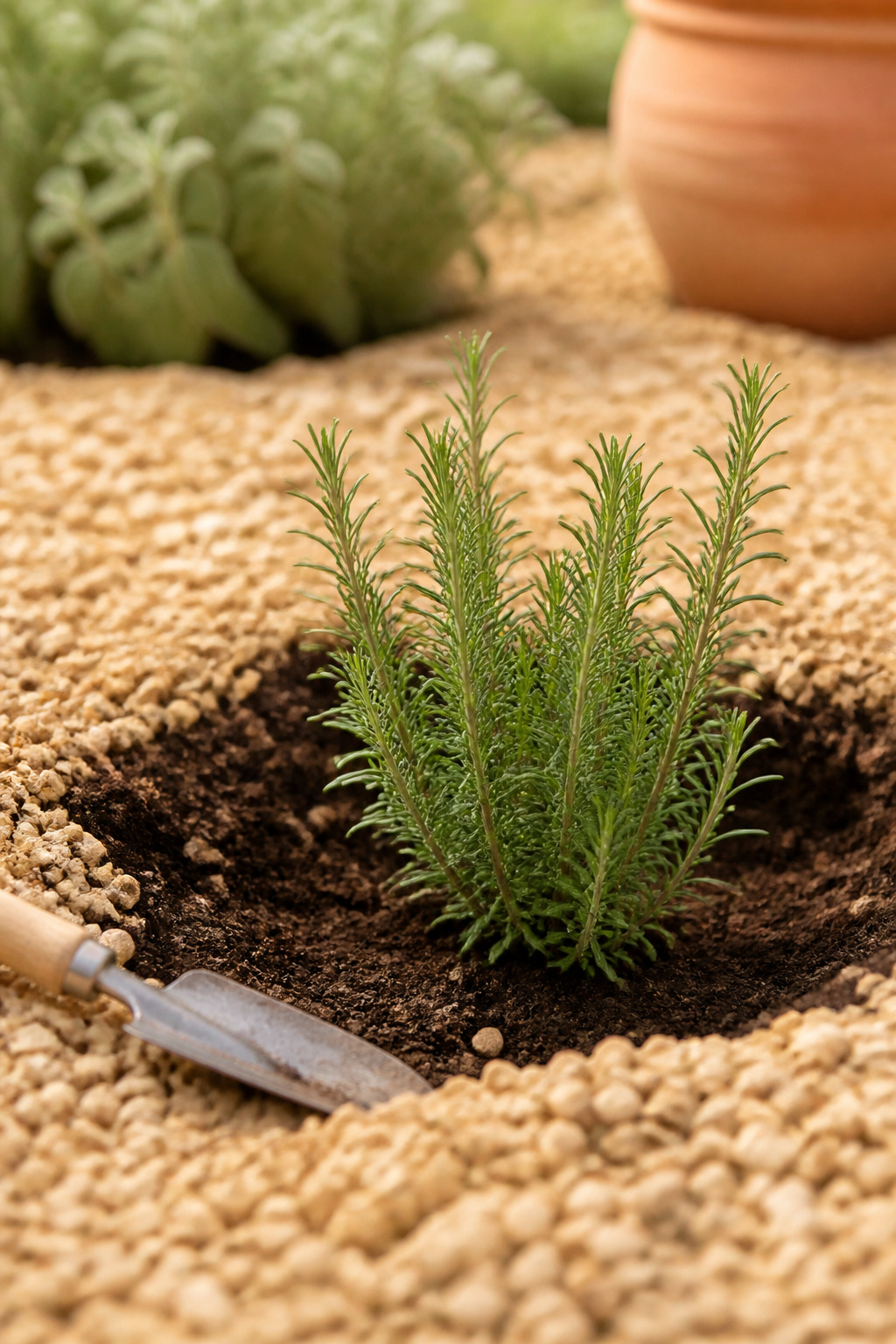
Why drainage matters as much for roots as for footing
Beth Chatto’s gravel garden mulches beds with three to five centimetres of gravel, so plants root straight through to the ground below. That thin layer holds soil moisture while letting rain pass to the roots. Pea gravel is the top mulch choice for lavender, for the same reason: rounded stones drain without pooling. Organic mulches — bark, wood chips, compost — do the opposite, holding damp against the crown where rot pathogens like Phytophthora take hold.
Planting pockets versus pots set into the stone
Dig through the gravel to the soil, plant into native or amended ground, then pull gravel back around the base — roots in earth, stone as a blanket on top. No weed membrane is needed: a barrier only blocks hand-weeding and does nothing against seed already germinating in the gravel. A pot works better when a plant fights your soil, needs winter shelter, or you want seasonal color change. Which stone suits a planting pocket is its own decision; gravel that plants like weighs the surfaces side by side.
Placement That Settles a Small Gravel Patio
The common mistake is to ring the whole patio in one plant and call it planted. A border met by no one does less than a single plant met every day.
Where a single planting does more than a border of them
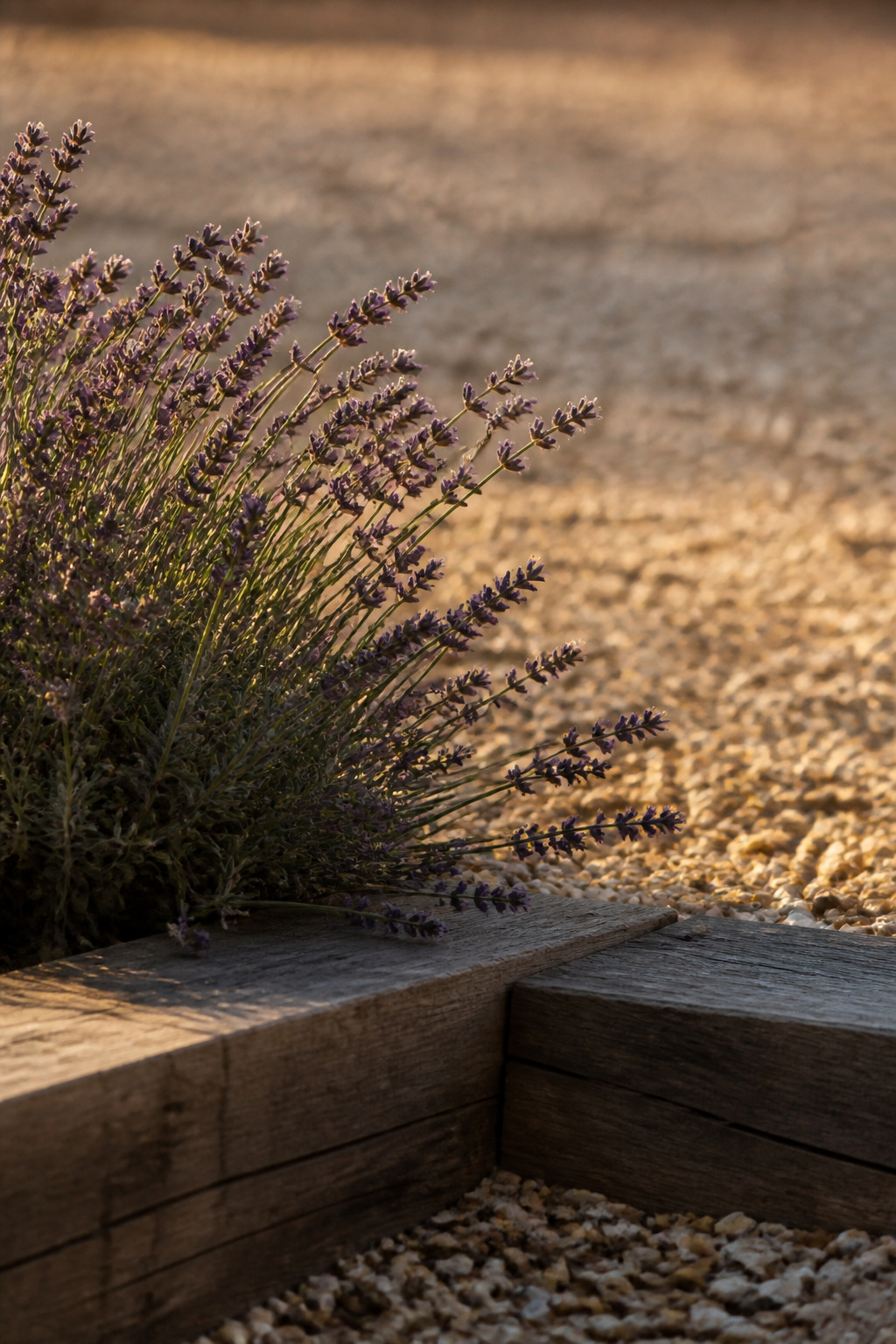
One lavender or rosemary set where a hand or sleeve passes delivers scent every time — the same plant repeated along the edge is met only by chance. Sizing the floor a small yard spares for planting is its own question — planting a small gravel patio sizes that against the seating.
The doorway-test habit, applied outside
I keep one habit for finished rooms that works just as well outdoors: stand at the door you use, and notice where your eye lands and where your hand would reach without thinking. Those unthinking crossings — the door, the arm of the daily chair, the path to the gate — are the best spots for a scented plant, visited automatically, not chosen. Put the plant where the routine already goes.
A Season of Watching It Establish
Planting day and the first full bloom look nothing alike, and the distance between them is longer than most people expect.
What changes between planting day and the first full bloom
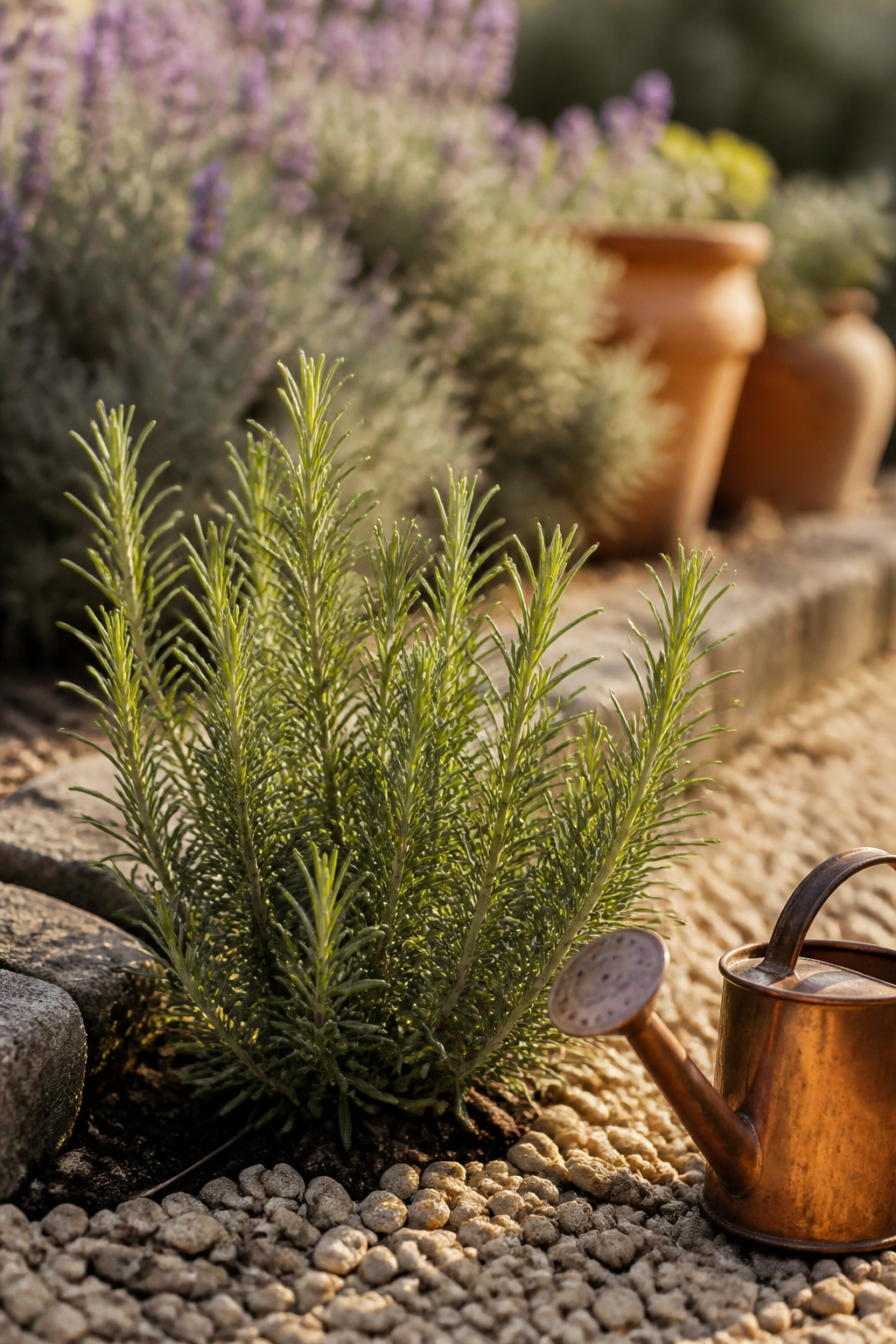
A drought-tolerant plant isn’t drought-tolerant yet in its first summer. It needs at least two, preferably three, growing seasons of regular watering to earn that reputation. Saturate the whole root zone, then let it dry — a few days to two weeks — so roots chase moisture downward. Santolina turns woody with age; cutting it back hard to six inches every three or four years keeps it compact. Even a settled planting still wants water through a long drought.
A single practice for tending it without over-managing it
The kindest thing for these plants is mostly leaving them alone. Rosemary flowers better in poor soil than rich, arguing against feeding it like a vegetable bed. Deadheading lavender’s spent spikes after the main flush tidies the plant and can coax a second, lighter bloom. Beyond that, the practice is closer to noticing than doing: two dry weeks, a wet crown, feather grass seeding where you didn’t ask. Watch more than you intervene.
Come back to the patio at that hour: the lavender has thickened into the edge, the grass moves untouched, and your sleeve finds the rosemary as you cross to the chair. Nothing here is performing. You chose drought-tolerant, scented plants for what they release and how little they ask, and placed each one where it would be met — so the space settles instead of styling itself for a photograph. This weekend, stand at your own door and find the one spot a hand passes most. Plant that first, let the rest follow.
FAQ
Do plants grow well directly in gravel, or only in pots set into it?
Both work, but differently. Plant directly into the soil beneath a thin gravel mulch — as Beth Chatto’s gravel garden does, with no membrane — so roots reach real ground, not decorative stone. Choose a pot instead when a species fights your soil, needs winter shelter, or you want to move color around.
What plants tolerate the reflected heat that gravel holds?
Plants with small, narrow or silver-grey leaves and compact, mounded growth cope best. Santolina and creeping thyme are reliable choices for the hottest strips beside hardscape, alongside low sedum. Lavender, rosemary and oregano share the same Mediterranean profile. Since the plant overheats in place, species matters more than watering more often.
How do you stop soil from washing into the surrounding gravel?
Work compost into the planting pocket before backfilling, so the soil holds together instead of washing loose in the first heavy rain. Planting on a slight mound — the trick lavender growers use against waterlogging — also sheds water outward instead of letting it pool and carry soil with it. A pot with a gravel top-dress contains the question entirely.