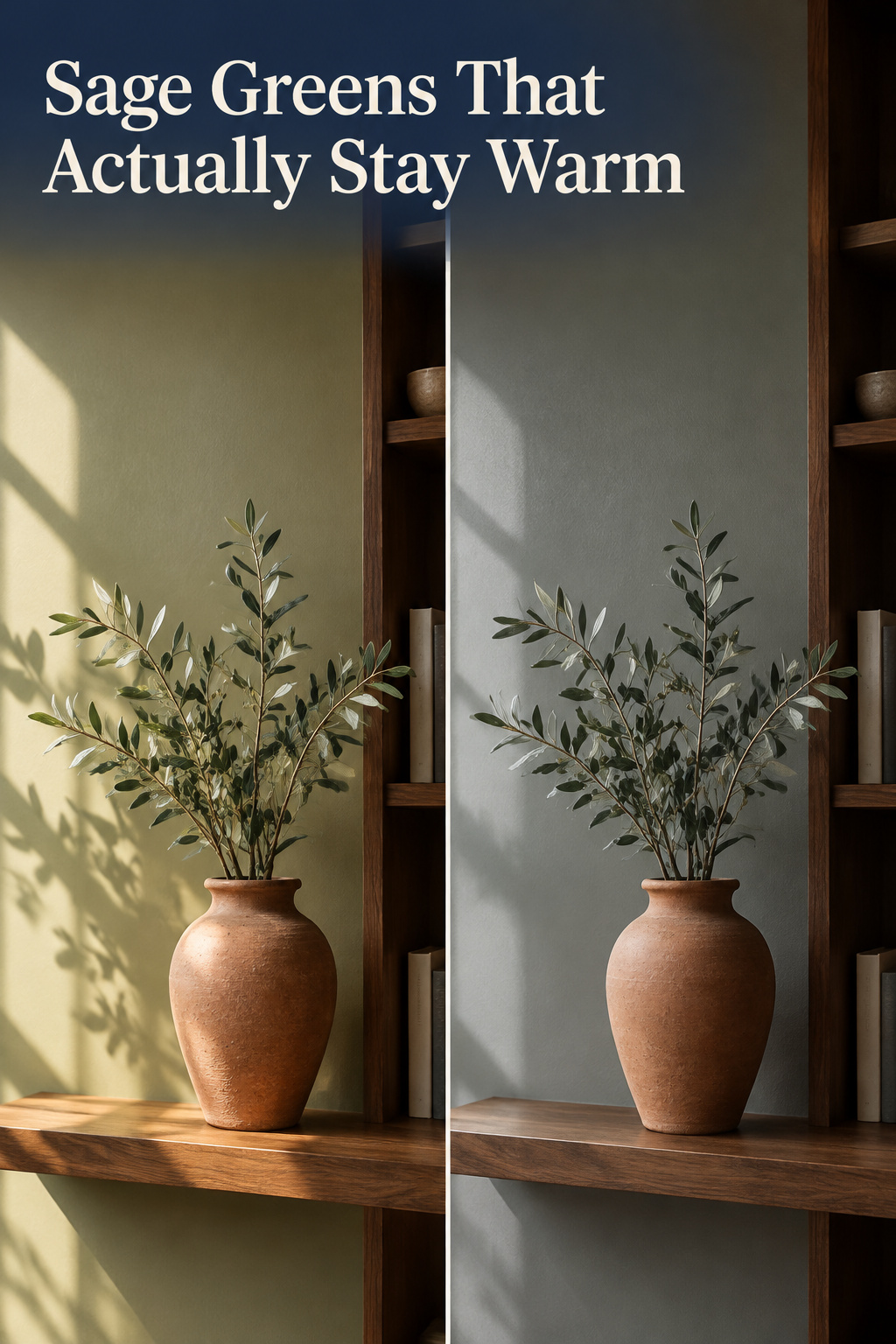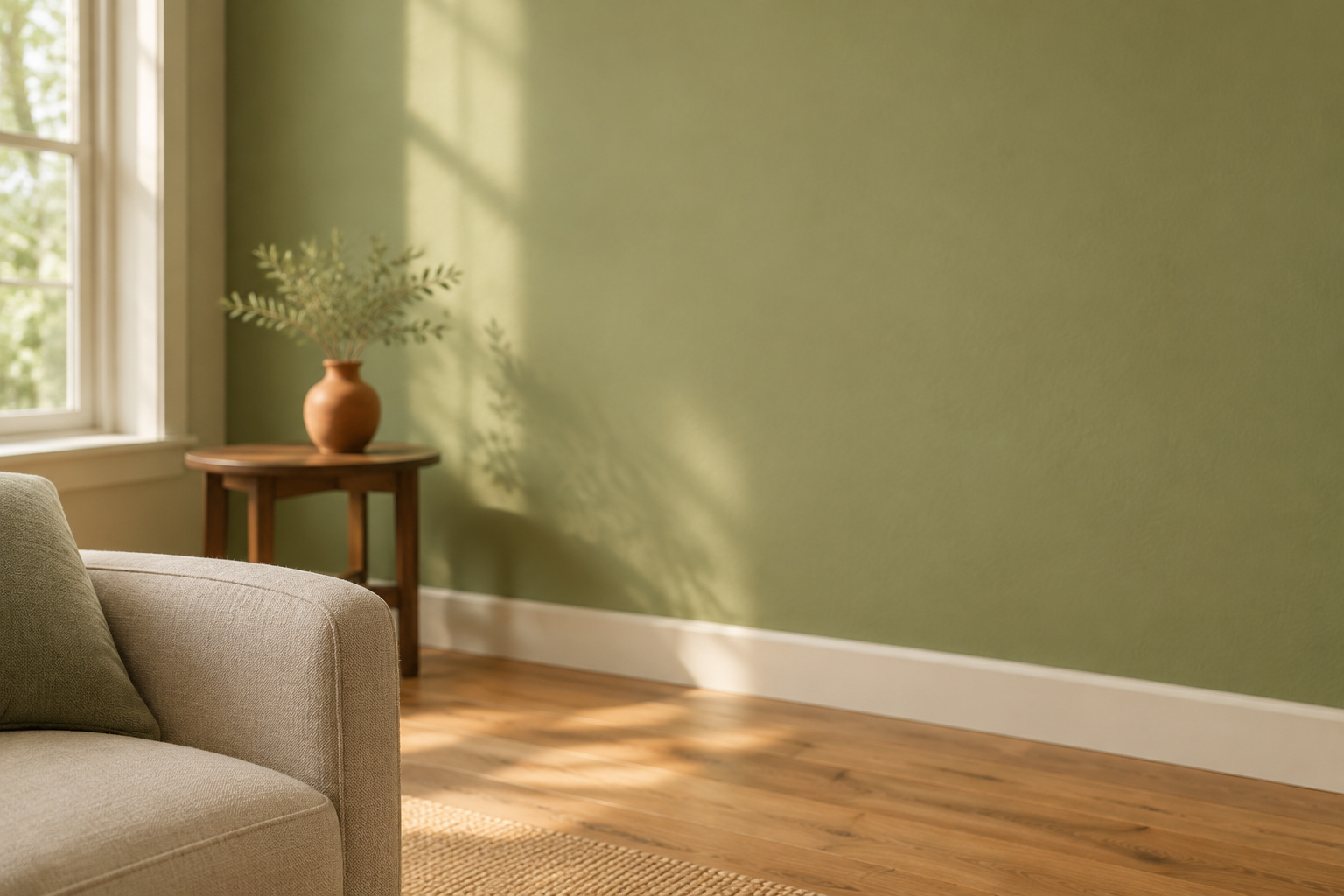

Sage is the green people choose when they would rather not decide: soft, muted, close enough to a neutral that nothing else has to change. Sage green living room walls carry this family’s one real risk — the color you fell for on the chip goes flat and cold on the wall by mid-afternoon.
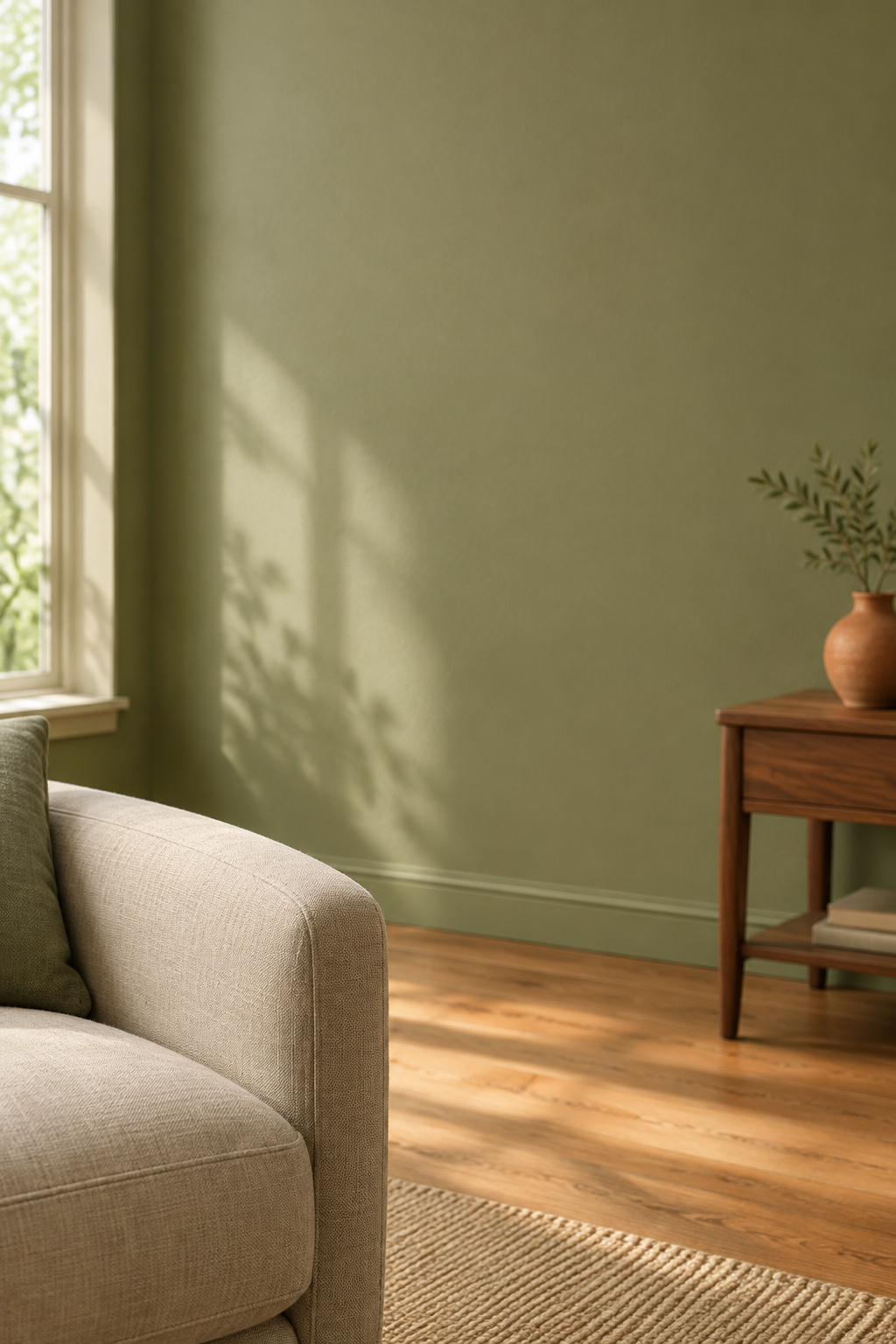
TL;DR
- The sages that hold their warmth carry visible yellow-green: Benjamin Moore October Mist and Saybrook Sage, Sherwin-Williams Clary Sage, Farrow & Ball Lichen.
- The gray-out is this family’s failure mode: a soft mid-tone green on the chip turns deeper, grayer, sometimes gray-blue on a real wall in low light.
- Test on an A2 board or larger, two full coats, on a white board instead of your wall, moved to two walls and checked three times a day.
The Sage Myth: Why Sage Green Living Room Walls Aren’t Automatically Safe
Sage gets called foolproof so often that the rooms where it isn’t never make the story.
Why every green living room list leads with sage
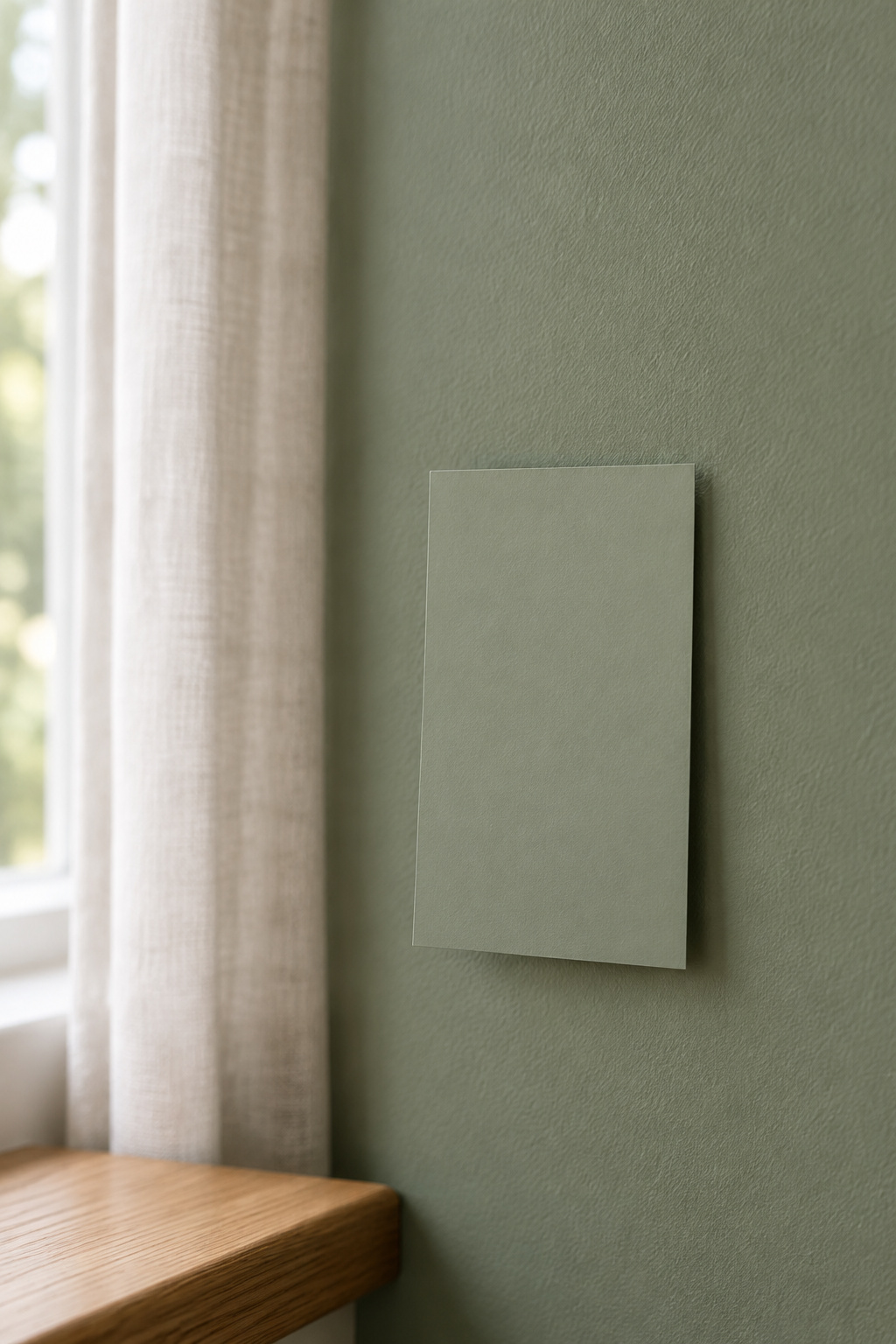
Designers place sage deliberately between warm and cool, and that in-between quality is the whole pitch. Livingetc’s 2026 reporting quotes a designer calling it “almost a default” — predictable from overuse, not from any flaw in the color.
The promise sage makes on a paint chip
A chip two inches square cannot show what a color does at wall scale, yet that is where the promise gets made.
The one way it breaks that promise — and where this guide settles why
Grove Street Painting, which paints these rooms for a living, describes the sequence: a homeowner picks a beautiful sage from a fan deck, paints the room, and watches the color disappear by noon.
The Sages That Actually Stay Warm and Light
Line up eight cards all sold as sage on a windowsill, and the family splits in two.
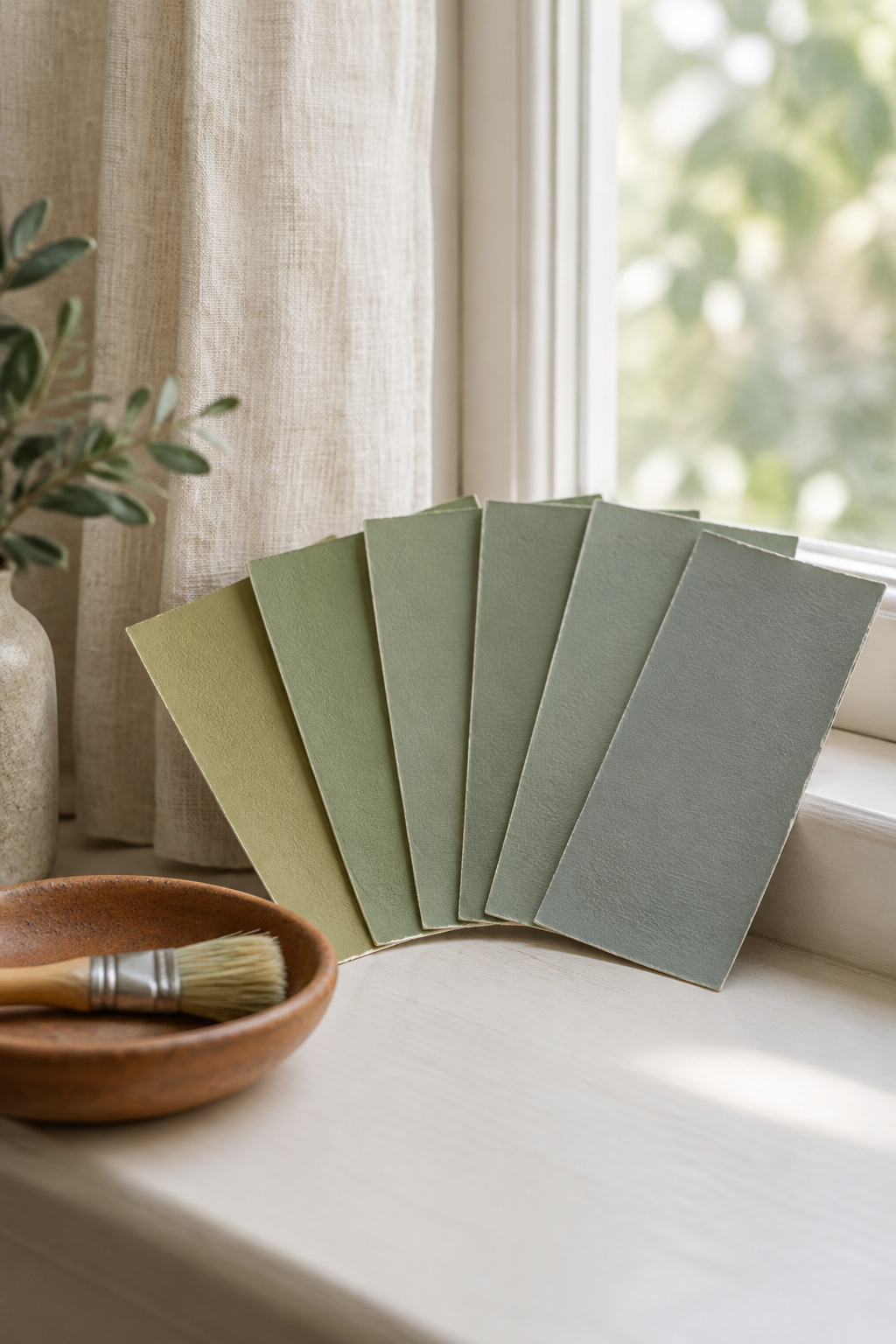
Named sages that lean warm and hold it
These carry visible yellow-green. Treat each as a starting point for a sample.
| Sage | On a wall |
|---|---|
| Benjamin Moore October Mist | Light and earthy; never heavy |
| Benjamin Moore Saybrook Sage | Warm, committed to the color |
| Sherwin-Williams Clary Sage | Muted warmth, yellow-green; morning light |
| Farrow & Ball Lichen | Natural, visibly warm |
| Benjamin Moore Mediterranean Olive | Golden undertones, deeper |
Named sages that lean cooler and gray-leaning
Sherwin-Williams Oyster Bay has warmth in the formula and appears cool anyway, so the name on the can does not tell you the undertone. Evergreen Fog, SW 9130, sits almost exactly between green and gray, and Comfort Gray, Hollingsworth Green and Farrow & Ball Pigeon are grayer still. None of that is a fault. It is a different job, and it changes the colors that sit with it.
How much gray a sage can carry before it stops reading as green at all
Sage lives in a gray-green middle ground, less boldly green than forest and less obviously yellow than olive, so a small shift in gray tips it out of green altogether. If you cannot name the color without checking the can, it has stopped doing a green’s work. Glidden’s Olive Sprig functions almost as a neutral.
The Gray-Out: When a Perfect Chip Goes Flat and Cold
How do you know a wall has grayed out, rather than being a green you have gone off?
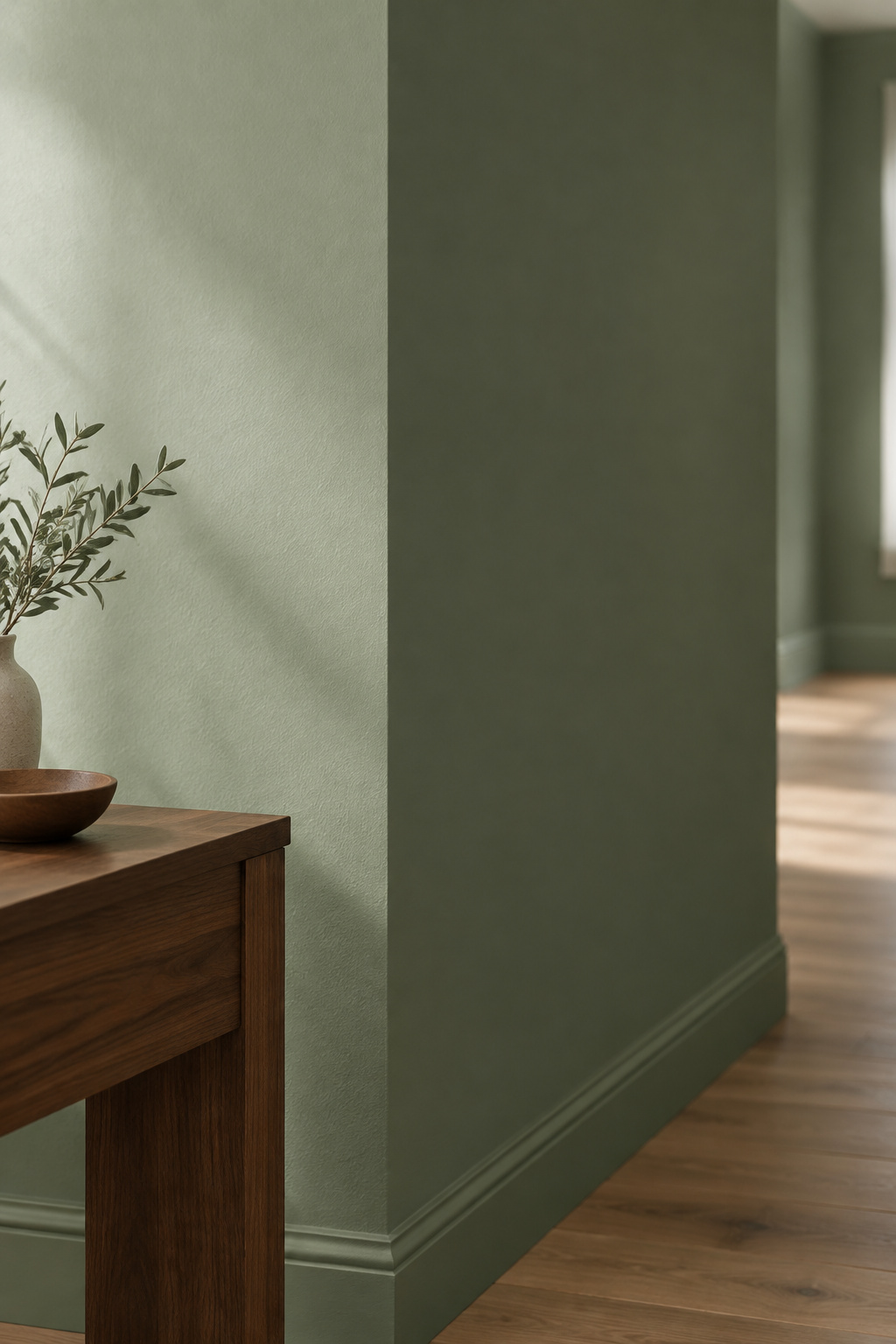
What the gray-out symptom actually looks like on a wall
Peyton Paige, reviewing Evergreen Fog, puts it exactly: on the chip it is a soft mid-tone green, in a room with limited natural light it goes deeper and grayer, and in a dark north-facing room it goes gray-blue. The tell is that the wall does not look like a green you dislike. It looks like no color at all — a temperature instead of a hue, flattest around four.
Why it happens most in this shade family and least in saturated greens
Sage formulas balance green, gray and sometimes yellow pigment, so the gray can overpower the green and leave walls looking dirty rather than earthy. A forest or an emerald has far more color to give up first.
It’s Not a Bad Shade — and Where the Full Explanation Lives
Maria Killam, twenty years into specifying paint professionally, argues that most “the lighting changed my color” complaints trace to undertone and to how the paint relates to the room’s other finishes, not to lighting. The green was never going to work next to that floor. What north light does to a pale green is where the light gets measured.
Testing a Sage Before You Commit the Room
Almost everyone tests a sage in the way least likely to catch this: a chip, in a hand, under store lights.
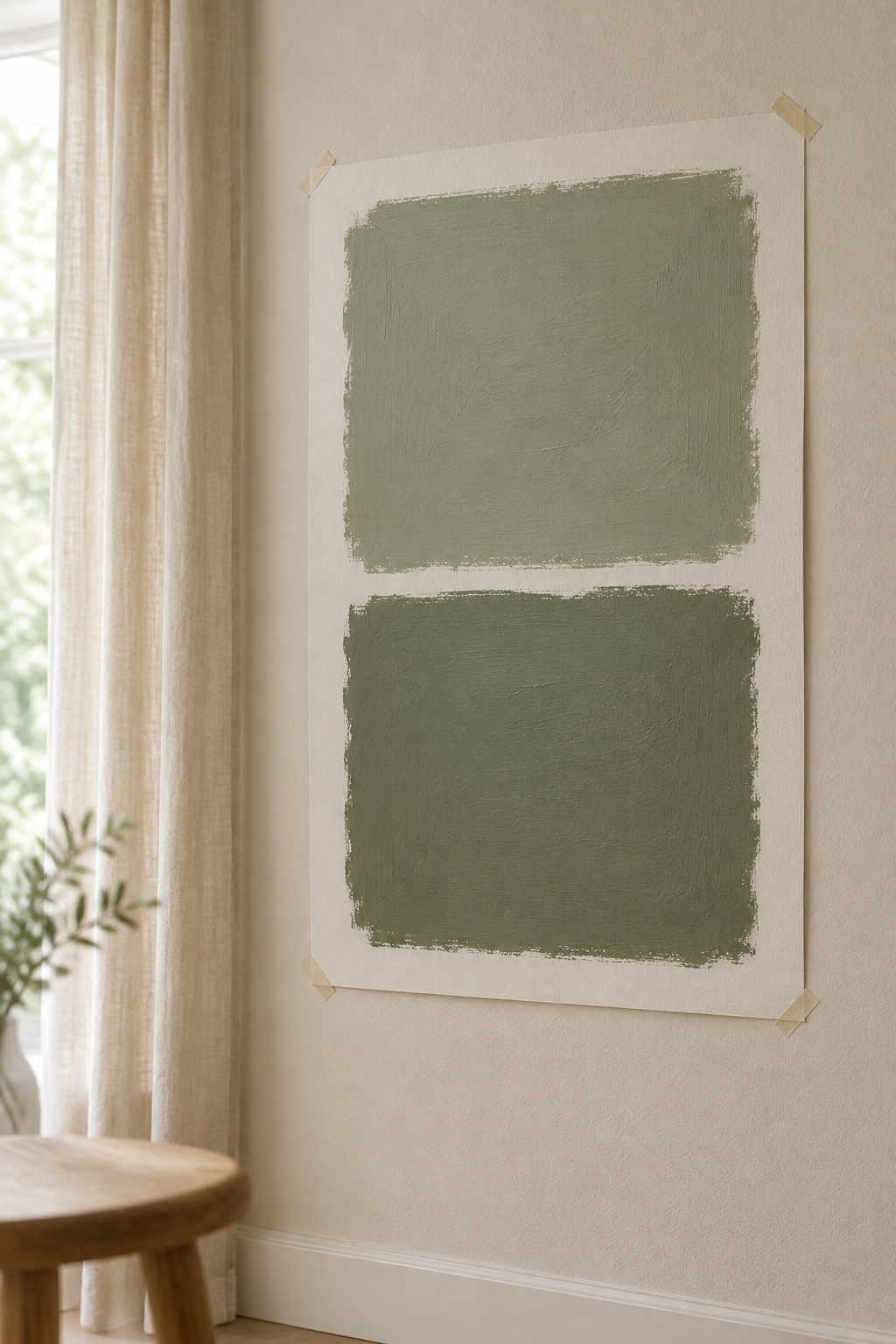
Why a swatch app or a paint chip can’t catch the gray-out
Killam adds that pale, muted colors are hardest of all to judge from a chip, because they take more of their character from their surroundings.
What to look for on a real sample, morning and evening
- Paint an A2 board or larger — use a white board and not the existing wall, so the old color cannot bleed into the read.
- Give the board two full coats, because one coat never reads accurately.
- Move it to at least two walls: one that gets direct sun, one that does not.
- Check it at three points across a day, and leave it long enough to see more than one afternoon.
- Judge it only once the room’s final light fittings and bulbs are in.
The moment to walk away from a sage that’s already going cold
Reviewers name the same mistake every time, which is choosing it straight from the chip. My rule is blunter: if it only looks right at ten in the morning on a sunny day, it is a part-time color.
Trim, Ceiling and the Rest of a Sage Room
White is not a neutral, and a sage room is where most people find that out.
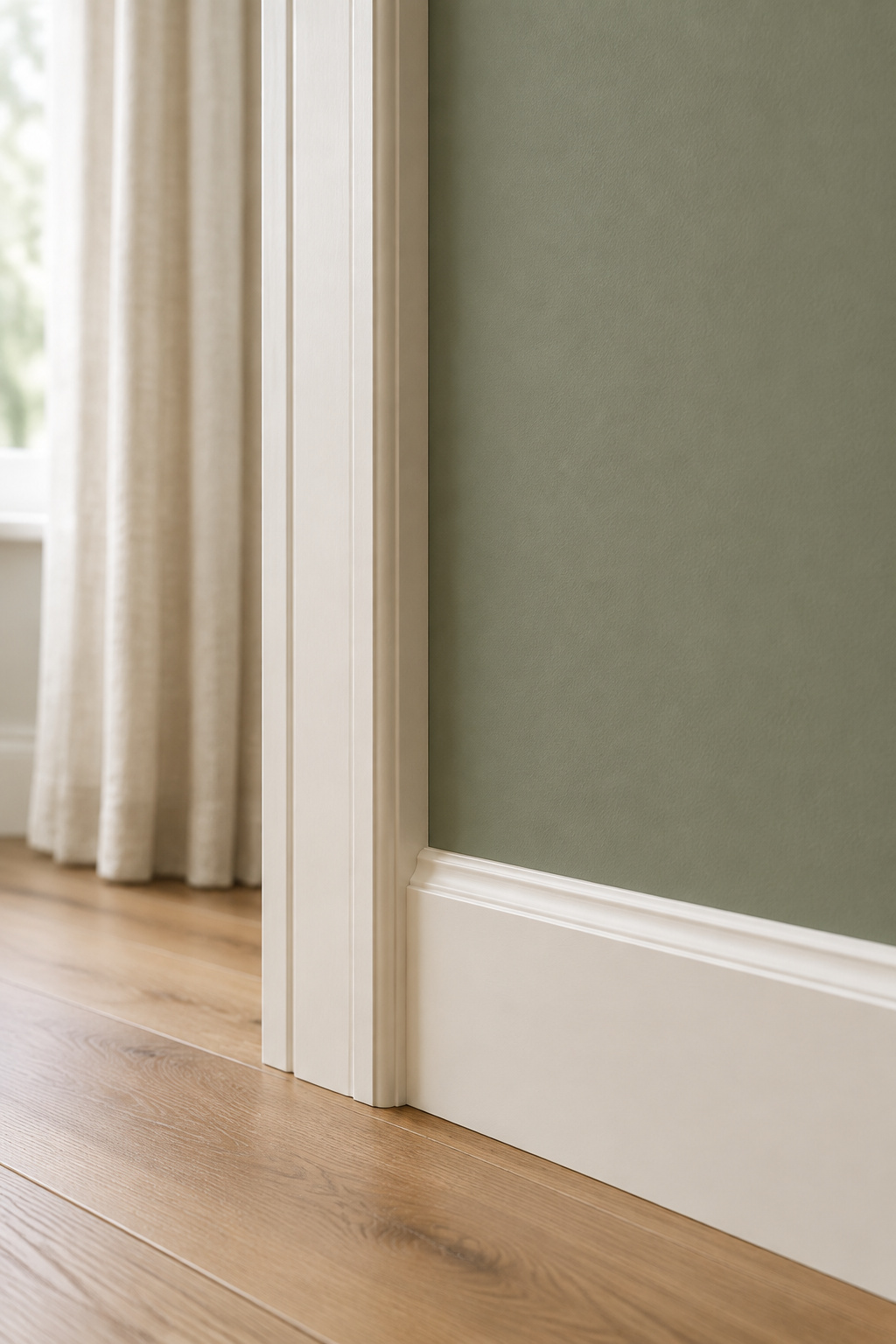
Why a stark white trim can fight a warm sage
Most bright whites carry cool blue or gray undertones, so against a warm sage the wall has not changed. The baseboard has slandered it. Alisa Popelka, founder of Alisa Cristine Interiors, calls ultra-bright white trim harsh and unwelcoming, and says it can leave an adjacent color looking dull. Warm, creamy whites fix this: Benjamin Moore White Dove (OC-17) and Sherwin-Williams Alabaster (SW 7008).
Ceiling choices that keep a light green feeling open, not boxed in
For a light sage, match the ceiling to the trim white and not the wall color, so the green stays on the wall plane and the room keeps its height. For a deeper sage across the whole wall, cut the wall paint by roughly 25% for the ceiling instead of using flat white.
The finish (sheen) that flatters this shade family most
Flat gives the richest, most velvety color payoff, and sage looks its most natural in it. Flat scuffs easily, though, and is harder to clean. Satin and eggshell add depth and definition instead, per Sherwin-Williams’ own guidance.
Sage on the Wall, Everything Else in the Room
My first dedicated sitting space was a corner of a rented Chicago apartment, four feet by six: a jute rug marking its edges, one cushion, a folding screen of paper and wood. Three objects, all three visible, and each one either warming the wall or cooling it.
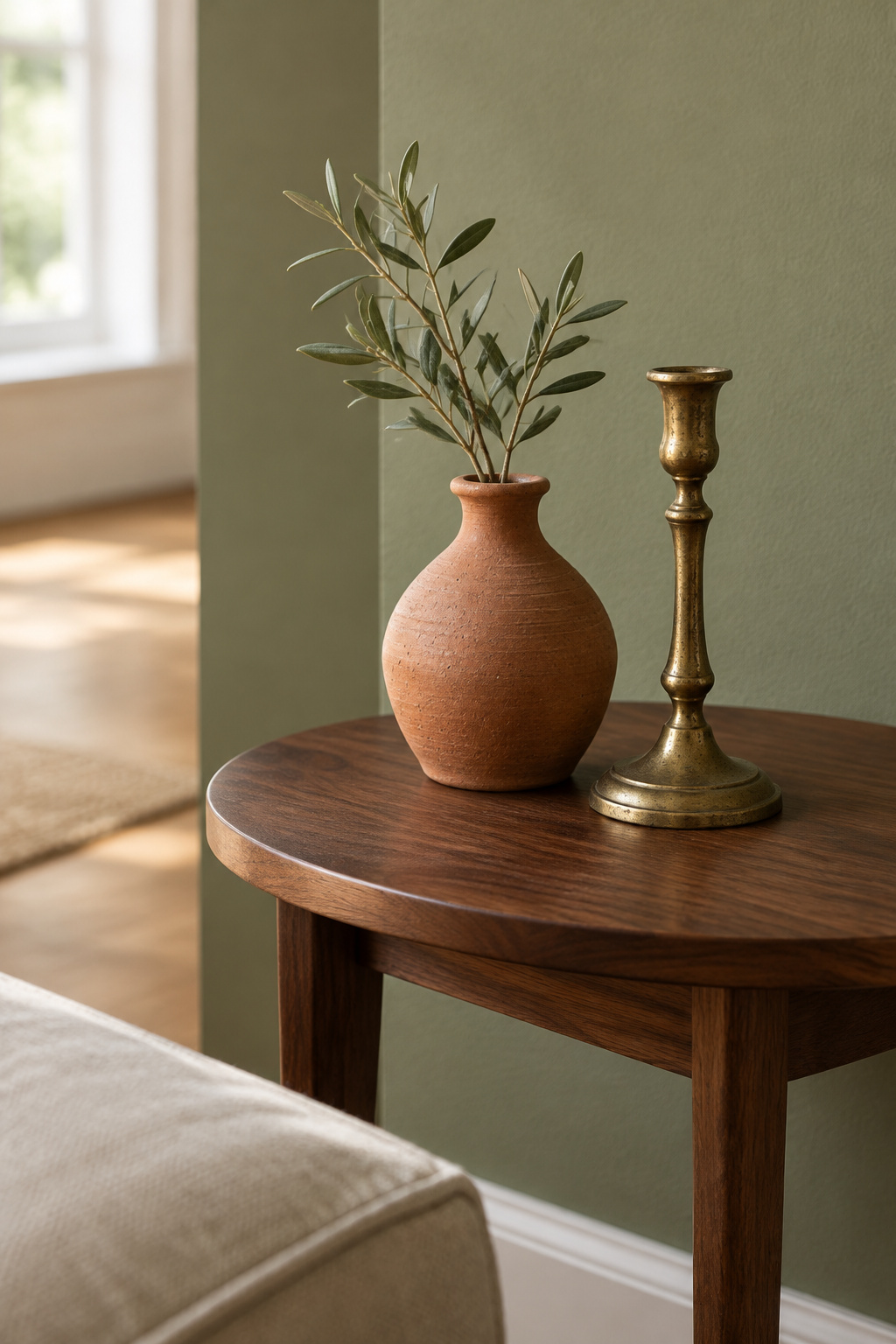
The pairings that keep a sage room feeling warm, not washed out
The materials that keep a warm sage warm are the warm ones: cream, terracotta, warm woods. A gray-leaning sage wants the cool set instead. Subtract before you add, and take out the cool-toned object already arguing with the wall.
Where this guide sends you for the full pairing logic
That is the shortlist for warmth, not the whole system. The pairing article in this series organizes every green by undertone. If you are still choosing, green living room ideas walks the decision in order: light, then undertone, then how much of the room to give it.
The gray-out is a verdict on the hour, not on the shade. A sage that reads flat and gray at four in the afternoon, the hour a sage tells the truth, was never the wrong green. It was the right one, judged in light that hadn’t earned its trust yet.
FAQ
Is sage green going out of style for living rooms?
No. Designers interviewed for 2026 coverage are unanimous that the color is not over. What became predictable is the styling around it, not the shade. Sage became a default, so keep it considered: deeper, earthier versions, matte finishes, layered timber and stone.
What color trim goes best with sage green walls?
A warm, creamy white. Benjamin Moore White Dove (OC-17) and Sherwin-Williams Alabaster (SW 7008) are the names that recur. Multiple designers describe bright, cool white trim as harsh, cold and almost fluorescent beside a warmer wall, and say it leaves the adjacent color looking dull.
Does sage green paint look different in LED light vs. natural light?
Yes. Interior designer Victoria Holly notes green paint often appears brighter and more vibrant in strong natural light, while warm LED or incandescent bulbs enhance its yellow undertones and cooler LEDs bring out the blue. Cooler-toned rooms sway greens bluer still, adds color consultant Flora Hogg.