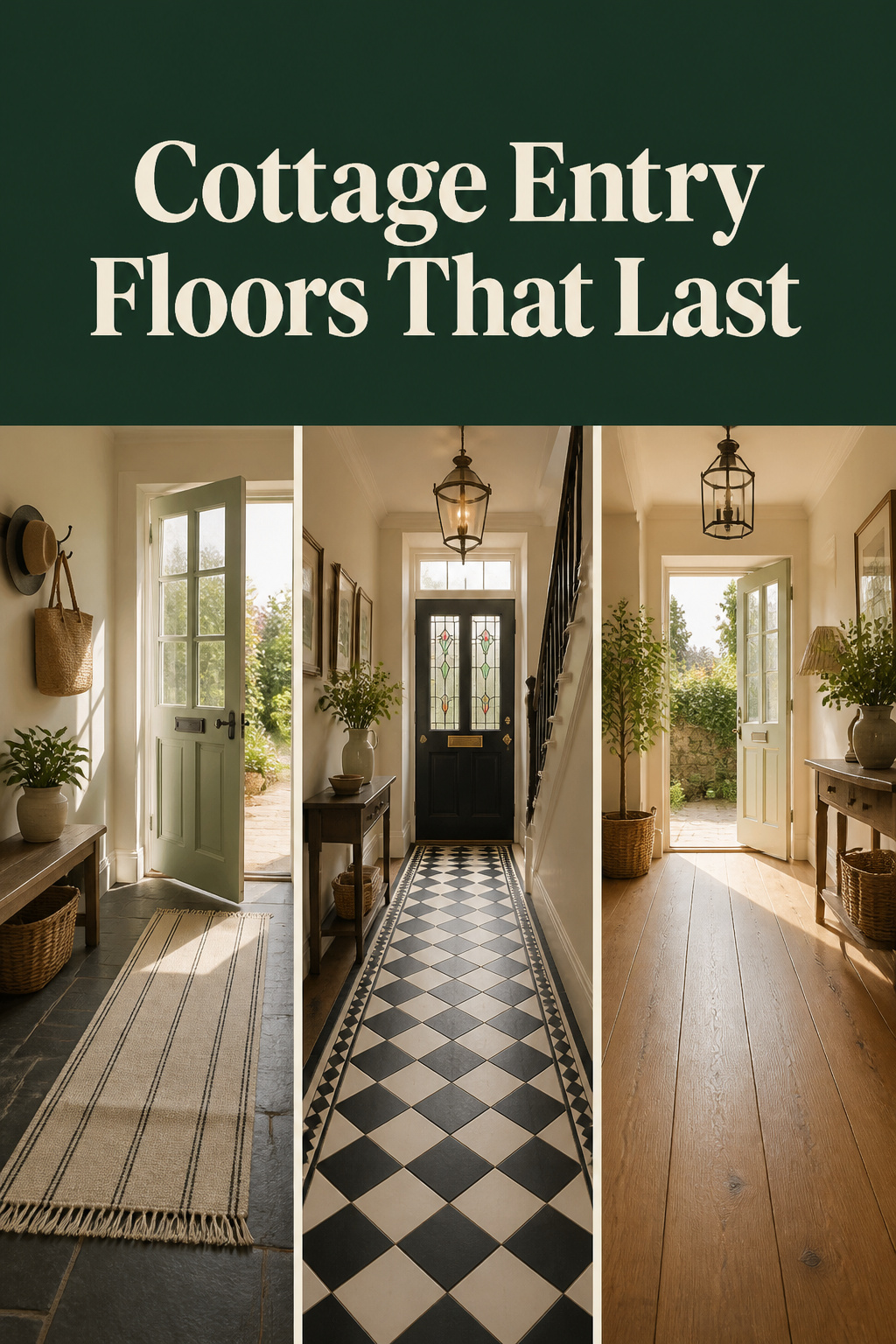
Picture the first thirty seconds of a wet February morning. You push the door open, stamp the weather off your boots, and the floor takes it — cold grit, a slick of rainwater, the scrape of soles off a gravel path. The best cottage entryway flooring ideas absorb all that and still look warm when the low sun catches them an hour later. A bad floor shows you every winter it has survived: a worn track, grey grout, a board cupping at the threshold. The gap comes from choosing for weather and traffic first.
TL;DR
- For glazed tile, specify PEI IV minimum for abrasion and a wet-slip DCOF of at least 0.42 (ANSI A326.3) — both must pass, because a polished tile can clear PEI IV and still fail wet.
- Natural slate brings its own slip resistance from its cleft face, but stone needs a stiffer subfloor (L/720 deflection) than tile; start solid wood 24–36 inches back from the door so wet boots don’t cup it.
- Layer a low-pile runner (under 1/2 inch) over the hard floor, leave a 3–6 inch gap at the door for grit to fall, and use a non-slip pad on any surface.
What the Entry Floor Has to Survive Before It Gets to Look Charming
Know what the floor faces on its worst day — that day, not the showroom, decides whether the choice holds.
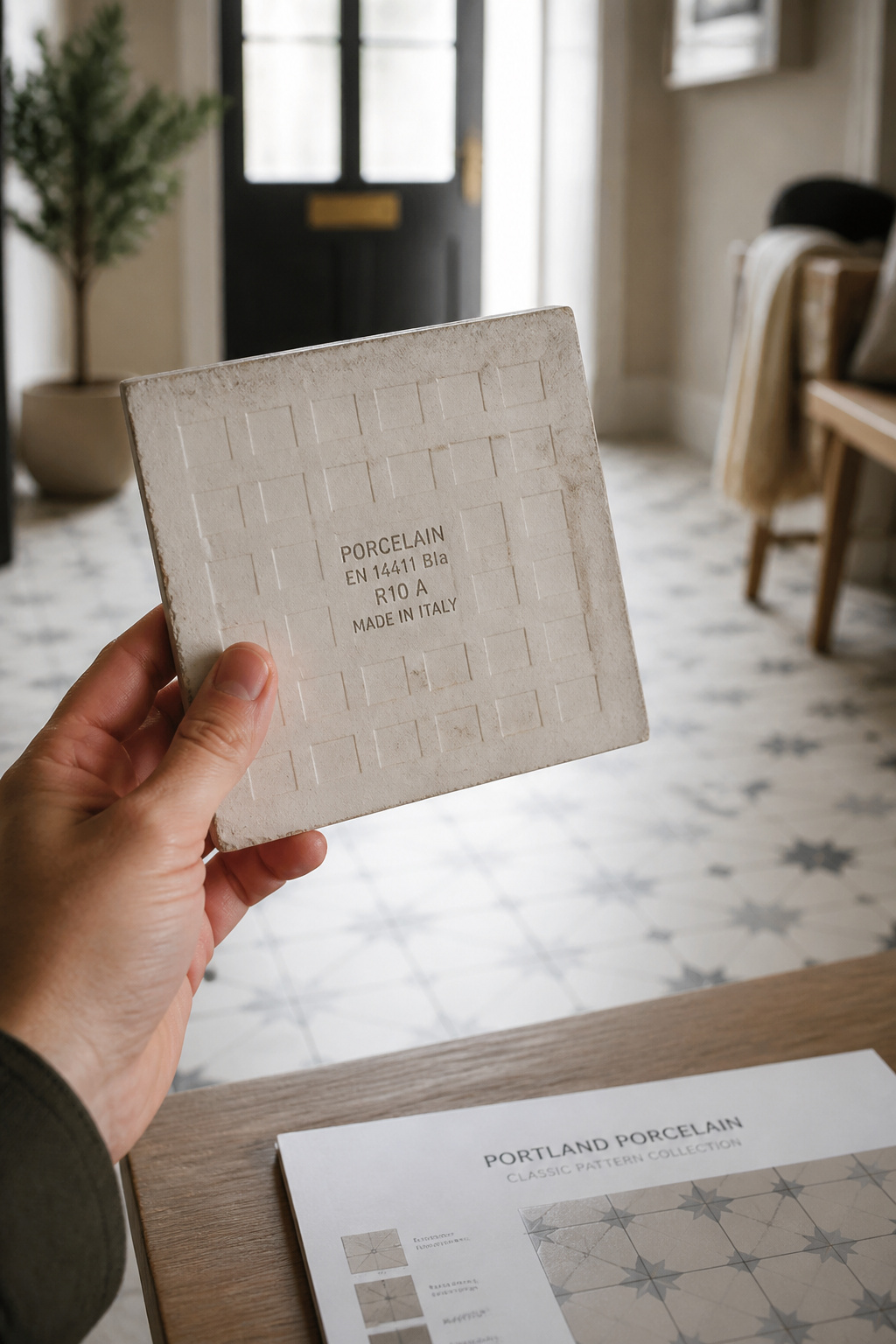
Moisture, grit, and foot traffic — the three enemies of entry flooring
Tracked-in grit acts like sandpaper underfoot, wearing a glazed surface far faster than bare feet. Flooring America frames the entry as a transition zone between outdoors and in — not an interior living space — and that changes the spec. Porcelain classed as impervious under ASTM C373 absorbs 0.5% or less; ceramic absorbs 3–7%, enough to invite staining and cracking in a wet entry.
Why ‘cottage-style’ materials fail when they’re the wrong category for the job
The materials that photograph as cottage are often rated for gentler rooms. Zellige glazed tile has a wet DCOF around 0.16 — well under the 0.42 floor for surfaces walked on wet. Encaustic cement tile is subtler: unglazed, so no PEI rating applies, and its pigment layer can wear within a year of grit without disciplined sealing. The look and the spec aren’t in conflict — porcelain delivers the cottage language at PEI IV.
The single specification check that separates durable tile from a liability
Two numbers: PEI IV minimum abrasion and a wet DCOF of at least 0.42 under ANSI A326.3 — both must pass independently, because as Daltile notes, a tile can earn PEI IV and still fail wet-slip with a polished finish. Natural stone and unglazed tile use the R-slip scale; R11 is the entry-grade specification. The cottage entryway design guide ties the floor to everything else in the space.
Stone and Brick: The Originals That Earned the Cottage Look
Stone was the original entry floor because it worked — the look and the performance were the same decision.
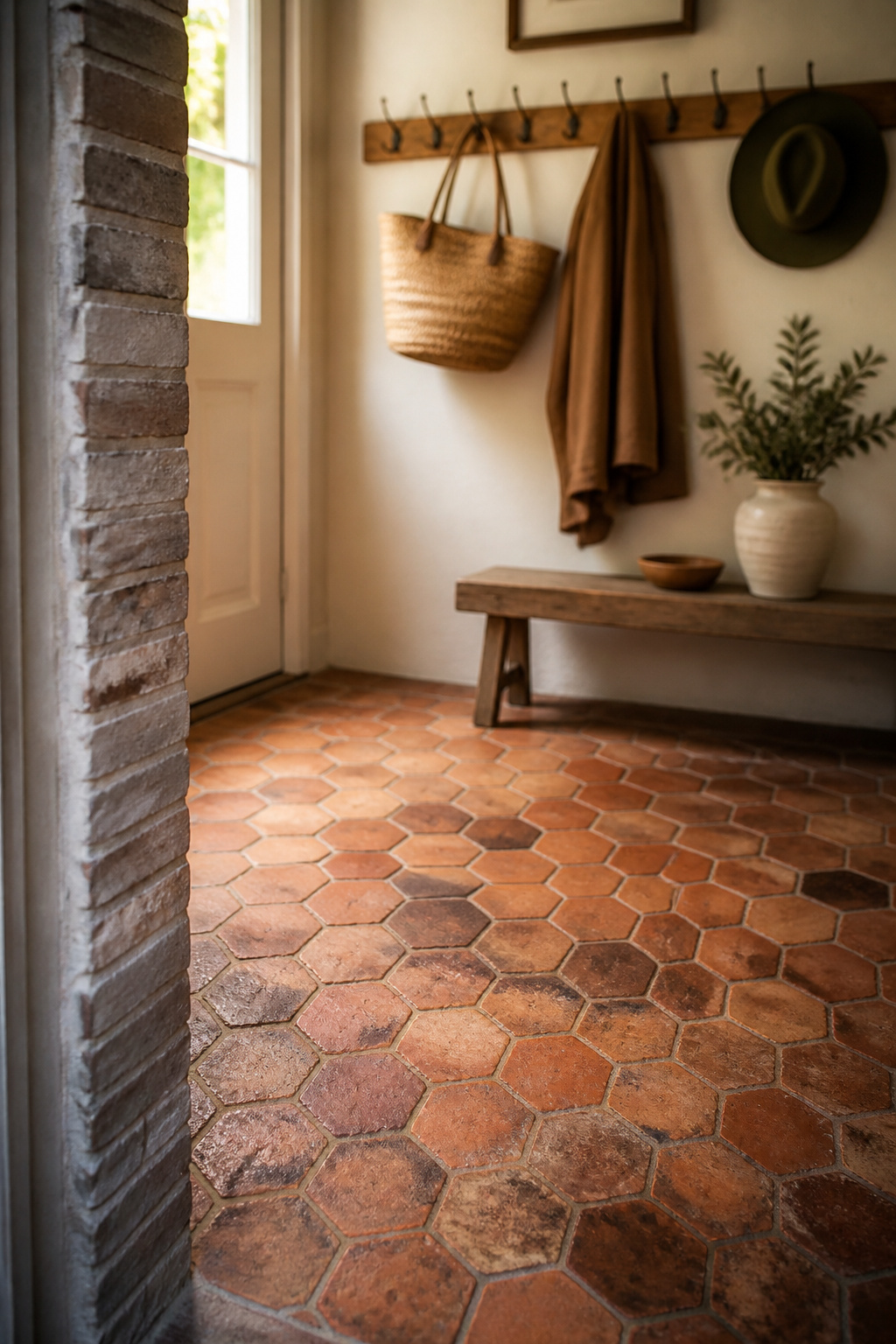
Flagstone, slate, and limestone — character, slip resistance, and sealant reality
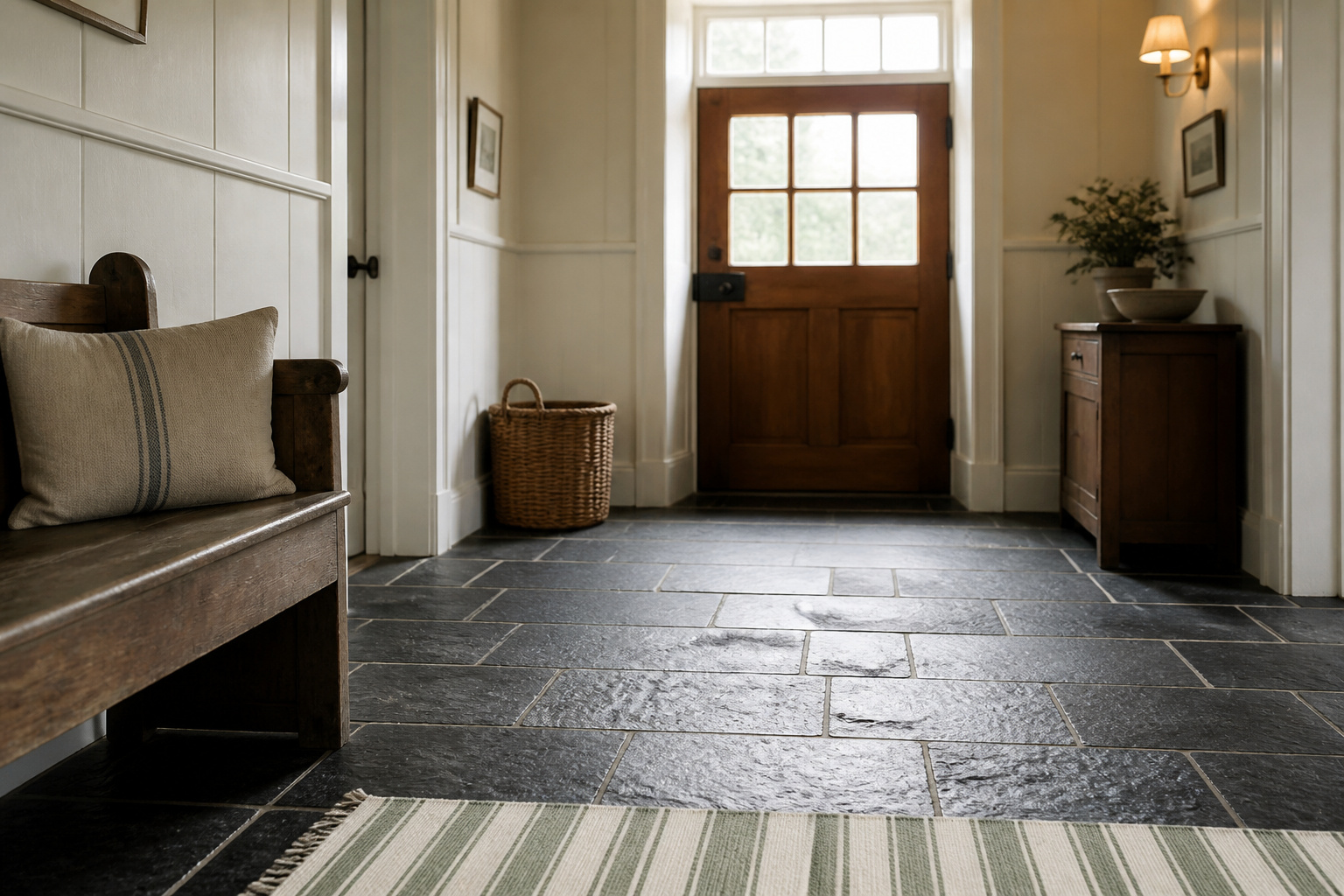
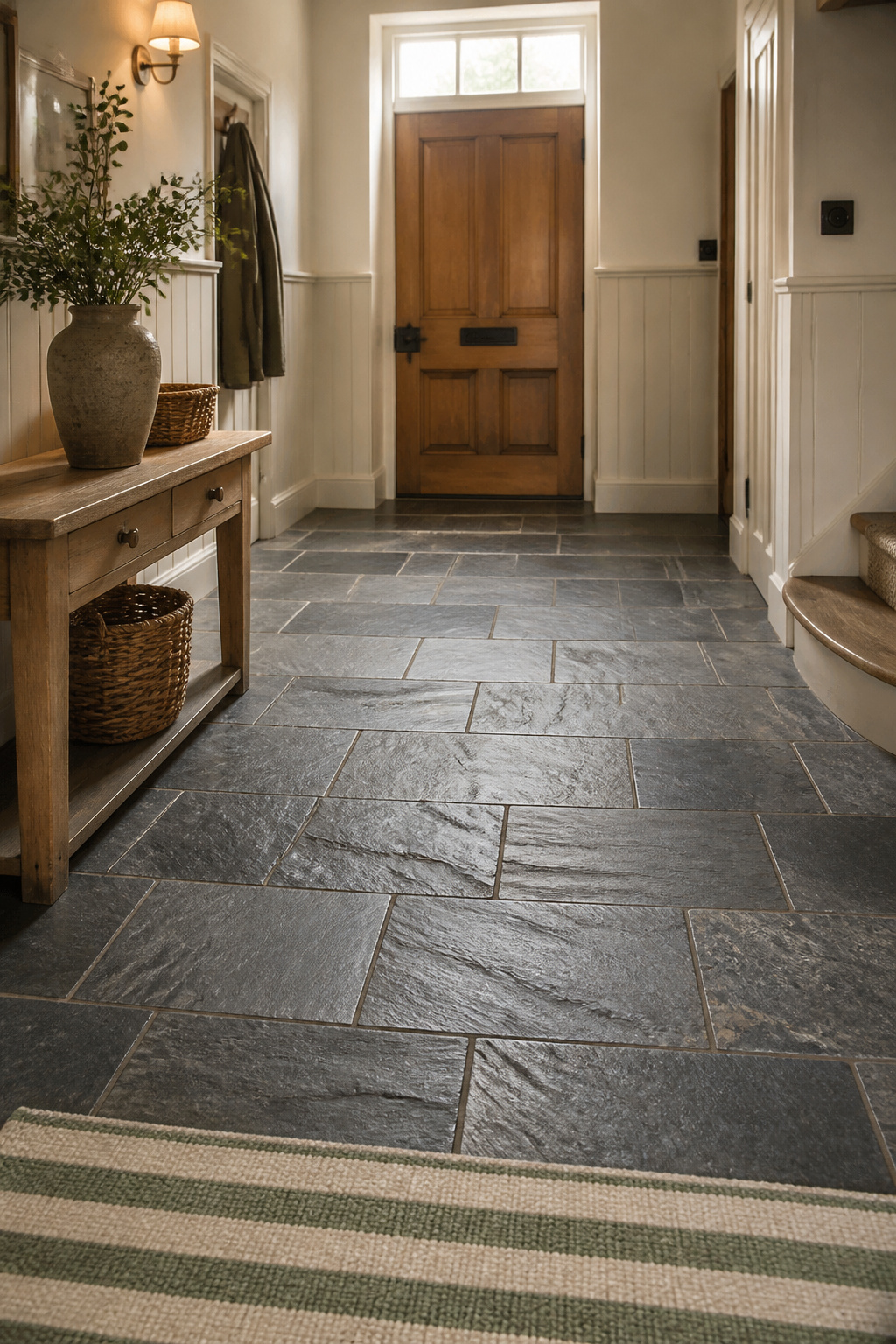
Slate’s natural cleft face gives inherent slip resistance around R10 or better. Limestone is warmer but softer — at Mohs 3–4 it scratches under grit and wants sealing every 6–12 months. Settle the stone before locking in your entryway paint colors, since floor tone and wall colour are chosen together.
Reclaimed brick and terracotta — why they age into the entry rather than out of it
Reclaimed terracotta deepens its patina with each year of traffic — wear reads as character. Terracotta needs a breathable penetrating sealer, never a topical coat that traps vapour and blooms efflorescence, re-applied every one to three years. Thin brick tiles around 2.5×8 inches install at standard tile thickness without full-depth-paver loads; treat reclaimed brick as needing the same sealing discipline.
Thickness, subflooring, and the structural question to ask before ordering
Natural stone requires L/720 deflection — twice the stiffness ceramic needs — so typical L/360 joists need a cement-board layer and often sistering. Specify floor-grade stone in the 10–20 mm range, not thin wall veneers.
| Material | Slip / abrasion basis | Sealing rhythm | Subfloor demand |
|---|---|---|---|
| Slate | Cleft face, R10+ natural grip | Penetrating sealer every 2–3 yrs | L/720, cement board |
| Limestone | Softer (Mohs 3–4), scratches | Seal every 6–12 months | L/720, cement board |
| Reclaimed terracotta / thin brick | Matte clay, indicative grip | Breathable penetrating, 1–3 yrs | Std tile build (thin brick) |
Porcelain and Ceramic Tile: The Modern Workhorse in a Heritage Finish
Wood-look planks — the ones that actually pass for the real thing and the ones that don’t
Whether a wood-look tile convinces comes down to resolution: porcelain reproduces grain at a micro-texture level, while cheaper ceramic prints coarser and reads glassy. Lay it herringbone and match grout to within two or three tones — or the floor reads as tile. Herringbone adds 10–15% in offcuts, so budget for it.
Encaustic-look and patterned porcelain: PEI ratings and why they matter at entry PEI IV
Encaustic-look porcelain prints the pattern into a glazed, full-PEI body — charm at PEI IV. Genuine encaustic cement tile is the one to be careful with: unglazed, so no PEI rating applies, and high-maintenance in a grit-loaded entry. Specify matte: matte encaustic-look porcelain typically reaches DCOF 0.50–0.65, while the polished version can drop below 0.42 wet.
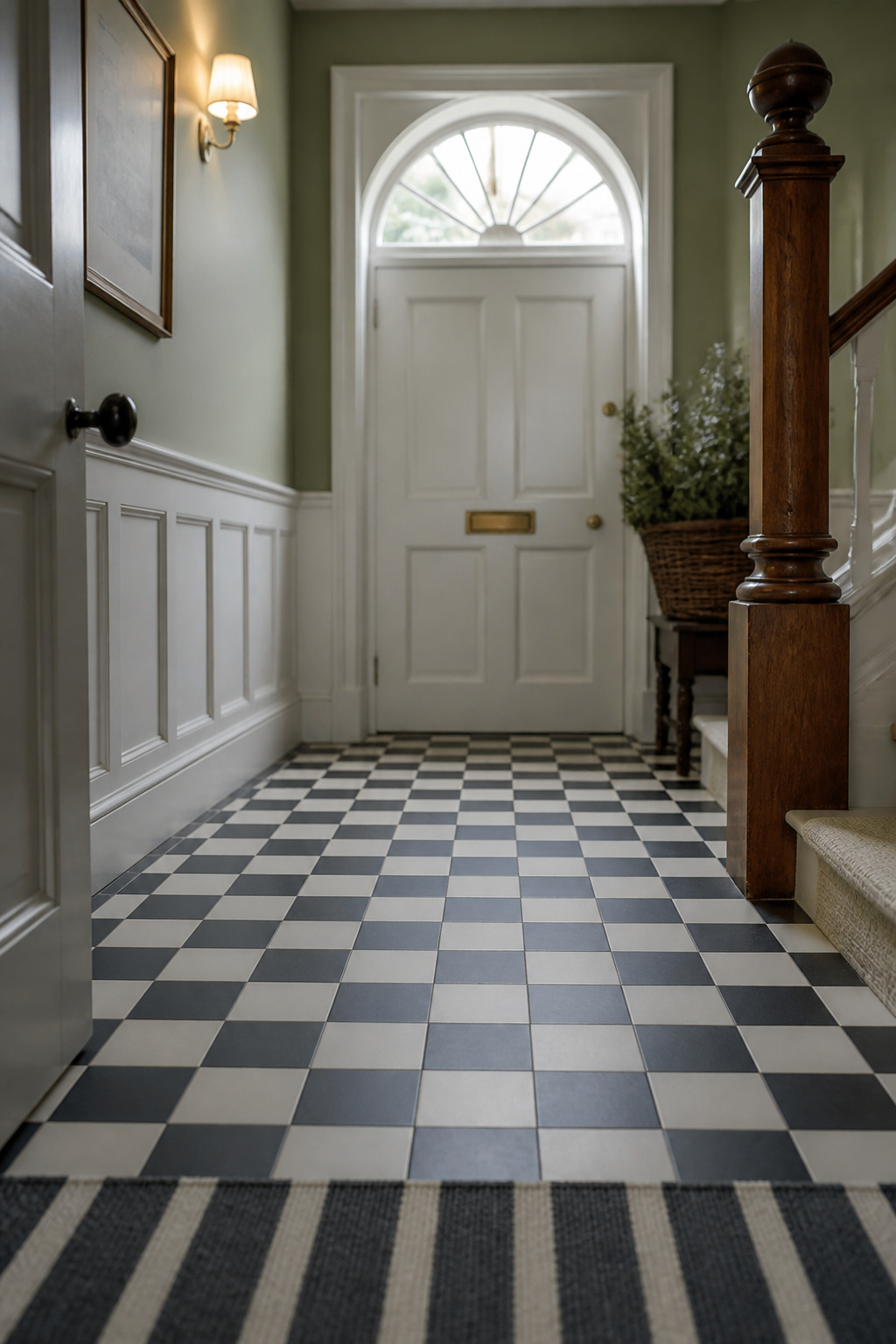
Checkerboard and herringbone layouts — the geometry that earns the cottage reference
The black-and-white checkerboard has Victorian pedigree — keep the format small: 4×4 or 6×6-inch squares suit a narrow entry far better than a 12×12. Diagonal layout pulls the eye to the corners and eases the tunnel effect below four feet wide, one of several tricks in narrow cottage hallway ideas.
| Tile route | Cottage read | Entry spec to demand |
|---|---|---|
| Wood-look plank, herringbone | Parquet warmth | PEI IV, 10–12 mm, close-tone grout |
| Encaustic-look porcelain | Patterned heritage | PEI IV, matte, DCOF 0.50+ |
| Small-format checkerboard | Victorian entry | 4×4–6×6 in, matte, diagonal option |
Solid Wood and Engineered Wood: The Warmth Question
Wood is the warmest floor you can put in an entry, and the riskiest. The honest question isn’t whether to use it — it’s where the wood begins.
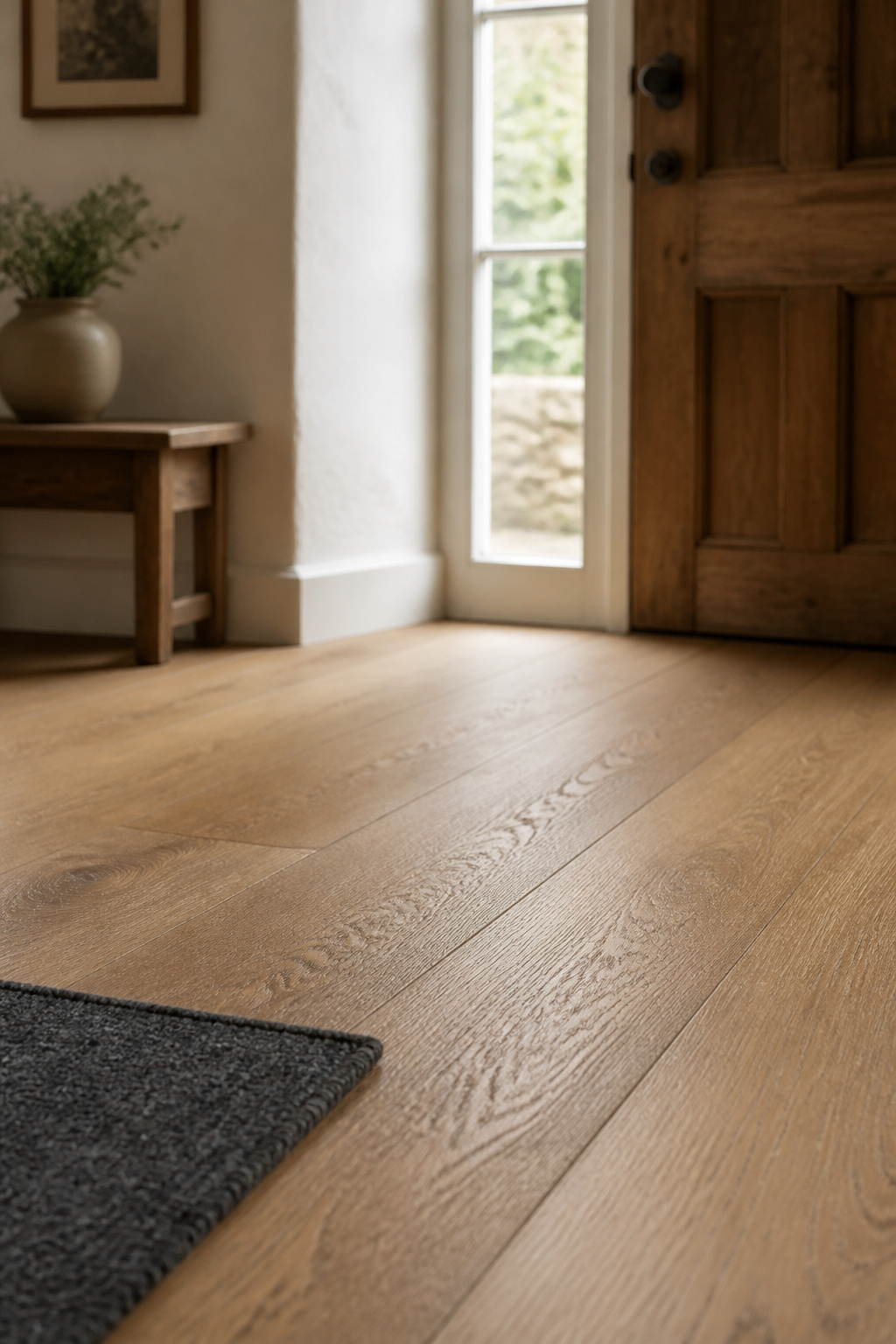
Why solid hardwood is a risk at the entry threshold — and where it starts to make sense
Solid wood cups when moisture under a plank outpaces moisture in it — and the threshold is where that happens first. Start solid wood 24–36 inches from the door; a hard surface handles the transition zone. Hickory (1,820 lbf Janka), hard maple (1,450) and white oak (1,360) resist grit best; red oak at 1,290 is borderline, anything under 1,000 lbf belongs elsewhere. Hardwood’s safe envelope is 35–55% relative humidity, which a door-adjacent entry rarely holds.
Engineered wood’s moisture envelope in a damp entry context
Engineered wood’s cross-ply core moves roughly half as much as solid per humidity swing — more forgiving, but not waterproof. Glue it down rather than float it: a floating join flexes under the door’s compression and can fail after a couple of seasons.
Finish and species choices that read warmly without failing in two seasons
White oak is the species to reach for: 1,360 lbf Janka, open-grained enough to take a stain from pale grey-brown to warm amber. A hardwax oil — Rubio Monocoat, Osmo Polyx — hardens in the fibre rather than forming a film, so threshold wear spot-repairs seamlessly. Keep the finish matte or satin to hide footprints.
Runners and Washable Rugs: Pattern, Warmth, and the Case for Layering
The runner carries the cottage pattern the hard surface leaves plain, and takes the daily grit so the floor underneath doesn’t have to.
Runner length, width, and the gap at the door that collects grit
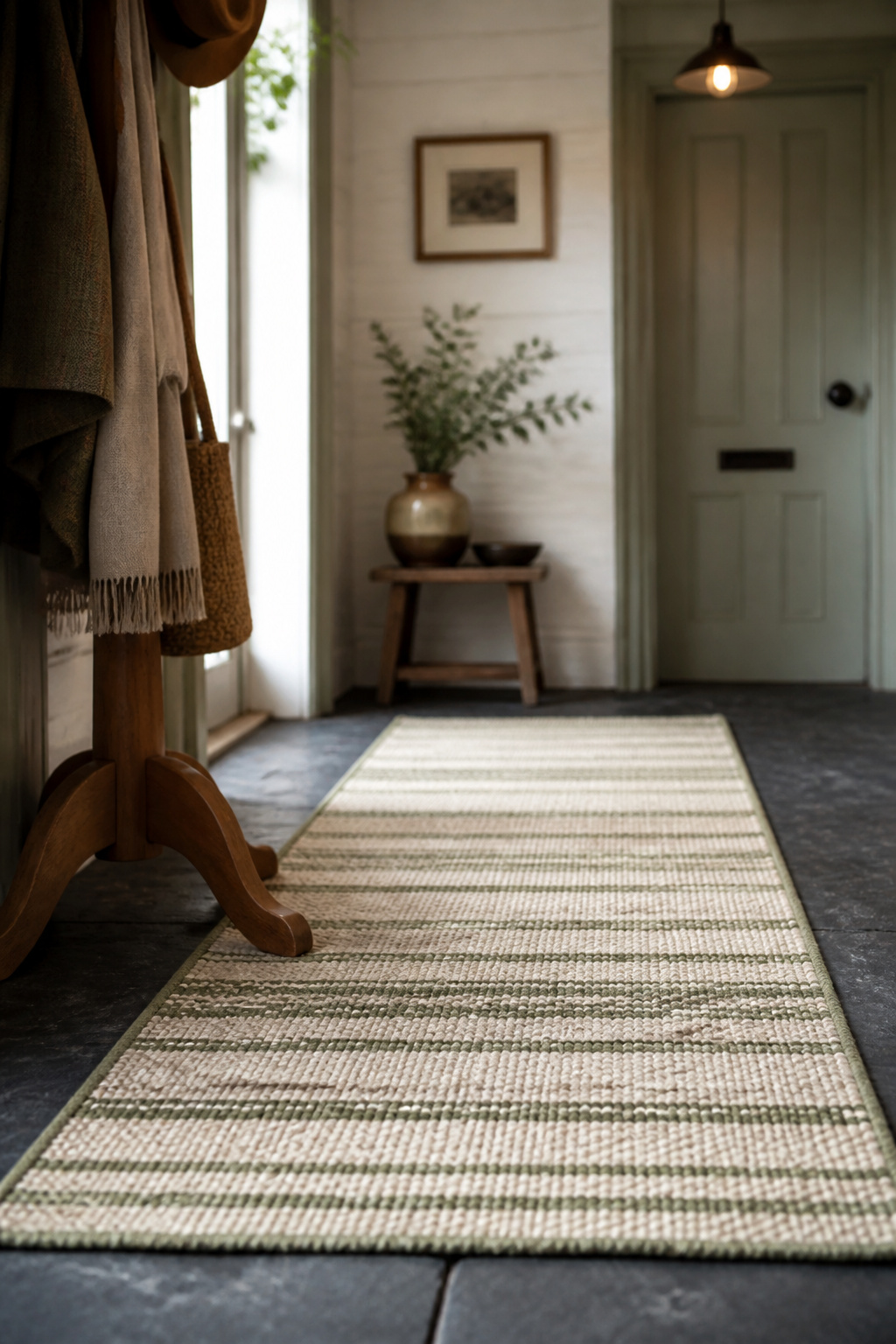
Most cottage entries suit a 2.5×6 or 2.5×8-foot runner. Leave 4–8 inches of hard floor on each side and 6 inches at each end. The detail people miss: leave 3–6 inches of bare floor between threshold and runner — push the runner against the door and you trap wet grit under the backing. Keep pile under 1/2 inch so it never catches the swing.
Cotton flatweave vs wool runner — washability and pile for an entry
Cotton flatweave goes in the machine and the dryer — at the cost of compressing flat in 3–5 years. Wool lasts 15–20 years and is naturally stain-resistant from lanolin, but shrinks above 30°C. Rotate whichever you pick twice a year so the threshold end isn’t always the high-wear patch.
Pattern choices that complement cottage flooring rather than fight it
Over plain slate or stone, a ticking stripe or simple border carries the cottage character. Over patterned tile, go solid or tone-on-tone — two patterns at the same scale create noise. Non-slip pad on every hard surface: TPR for tile or stone, felt-and-rubber for wood where pure rubber can stain the finish.
Choosing Among Cottage Entryway Flooring Ideas: A Decision Framework
Work through four questions in order — traffic and moisture decide the category, then subfloor and budget pick between what’s left.
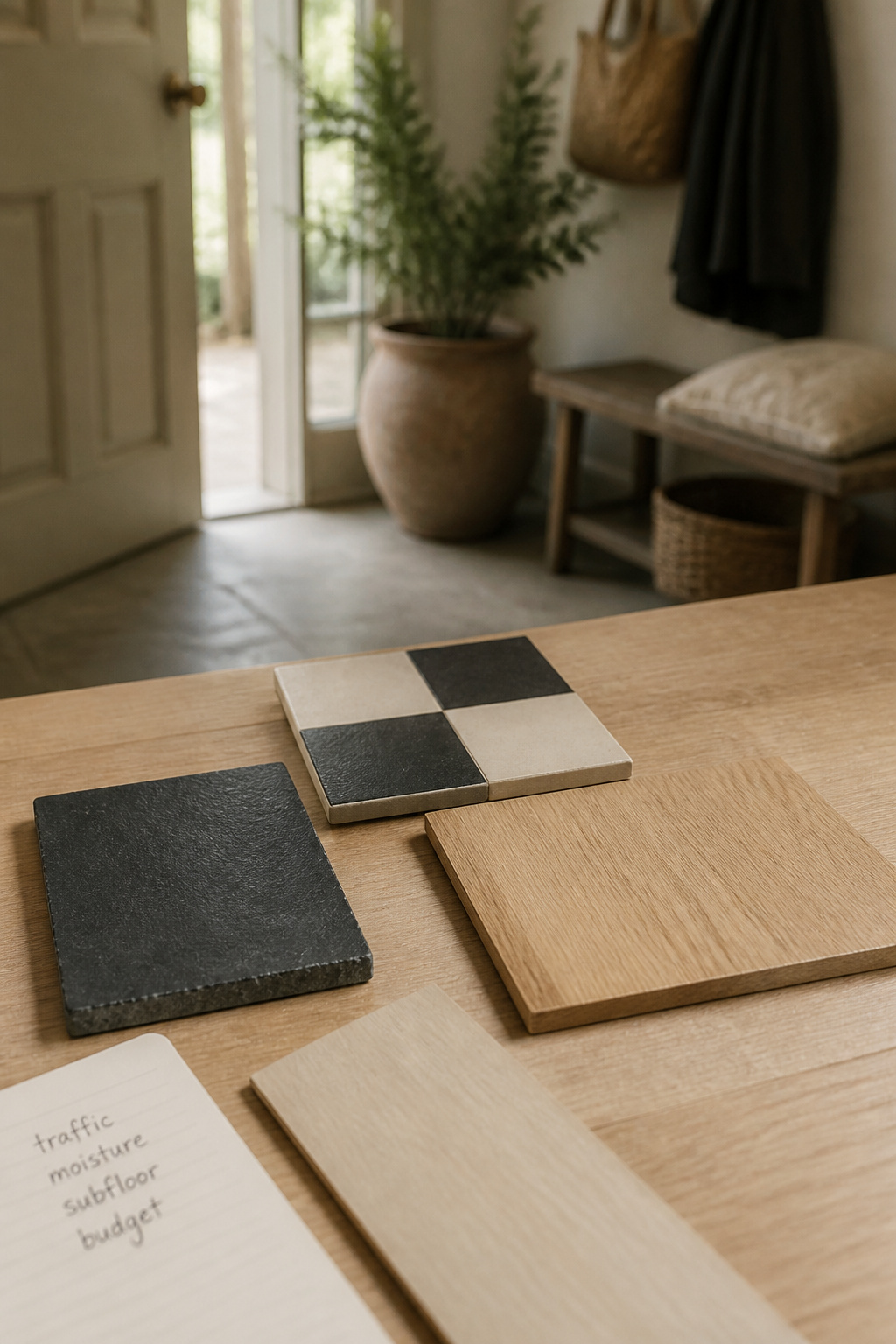
- Traffic. A family entry with pets or kids needs PEI IV or better — glazed porcelain, hard slate, or LVP at a 20-mil wear layer.
- Moisture. A fully exposed entry needs absorption of 0.5% or under, or stone with annual sealing. A covered-porch entry can support engineered wood starting 24 inches back.
- Subfloor. Stone and heavy tile on timber need L/720 stiffness and a 1-1/8-inch build-up. Solid hardwood cannot go over slab.
- Budget. Indicative 2026 installed costs: LVP $4–16, engineered wood $7–20, porcelain $10–50, stone $15–50+, reclaimed $20–80+. LVP carries the lowest ten-year cost; stone and engineered wood return the most at resale.
Where to spend more and where to save
Spend on setting: a poorly bedded tile cracks at the grout joints within two or three years, and the cement board that prevents it costs little against relaying the floor. Save on the runner — a $50–120 cotton flatweave does the same daily job as a $400 wool one short-term.
The maintenance contract you’re signing with each material
Porcelain asks least — grout sealing every 2–3 years and a pH-neutral scrub. Stone and terracotta want resealing on the rhythms in the tables above, checked each spring. Engineered wood takes a yearly hardwax-oil pass on the threshold zone; LVP needs only a damp mop. Never reach for vinegar on stone or terracotta — acid etches the surface and strips the sealer.
Choose with those four questions and you end up with the floor from the opening — the one that takes a wet February morning and still glows warm by afternoon.
FAQ
What is the best flooring for a small cottage entryway?
Matte porcelain tile rated PEI IV is the most practical choice — it handles moisture, grit and heavy traffic with little upkeep, in stone-look, wood-look, encaustic and checkerboard finishes. LVP at a 20-mil wear layer is the budget alternative at $4–16 installed. In a small entry, a lighter tone reflects more light.
Can you put hardwood in an entryway?
Yes, but keep solid hardwood 24–36 inches back from the exterior threshold, with tile, stone or LVP in the moisture zone — wet boots and humidity swings cause cupping there. Engineered hardwood is the better fit, moving about half as much as solid; specify a white oak or hard maple veneer and a hardwax oil finish so threshold wear spot-repairs.
What tile pattern works best in a narrow cottage hallway?
A checkerboard laid diagonally (45 degrees to the walls) draws the eye to the corners and eases the tunnel effect in hallways below 36 inches wide. Herringbone with the V pointing toward the door lengthens the apparent run; use smaller plank formats in a tight space. A lengthwise runner reinforces the effect.