There is a quiet belief behind most small bedroom curtain ideas: that a small window is a problem to compensate for. So we reach for more — an extra layer, an oversized panel, a valance to look finished. The instinct is understandable. It’s also backwards. A small window doesn’t ask you to add; it asks you to choose one thing and hang it well — and the roundups pushing a full-window setup onto a modest opening solve the wrong problem, often at a price the window never needed.
TL;DR
- On a small window, one spare, well-fitted treatment reads calmer than two crowded layers — a flat linen or cotton panel, a cafe curtain (from around $50, less no-sew), or a cordless roller shade (under $50).
- Spend on light, textured neutral fabric and on hanging the rod 4-8 inches above the frame and 6-12 inches wider each side; a spring tension rod needs no drilling.
- A single blackout layer already blocks 95-98% of light — enough for most bedrooms — so a second layer earns its place only for day-to-night flexibility or insulation, not to look finished.
A Small Window Doesn’t Need More — It Needs Less, Done Well
A small window is not underdressed by default. It’s only underdressed if you leave a real need — light, privacy, warmth — unmet.
The compensating instinct that backfires
The mistake is to treat a small window like a small person to dress up. Opulent pleats and a rich gather of fabric overwhelm a small window rather than dressing it, as Laurel Bern Interiors notes. An oversized pattern does the same in reverse — chosen to make the window a feature, it only reads smaller.
A skimpy panel does look cheap — but the fix is proportion, not maximum fabric.
What a small window actually asks for
Think about the light first. Sheers, linens, and lightweight cottons keep a small window feeling open rather than closed-in, and light colours — ivory, taupe, warm white — reflect what daylight you have and help a room breathe.
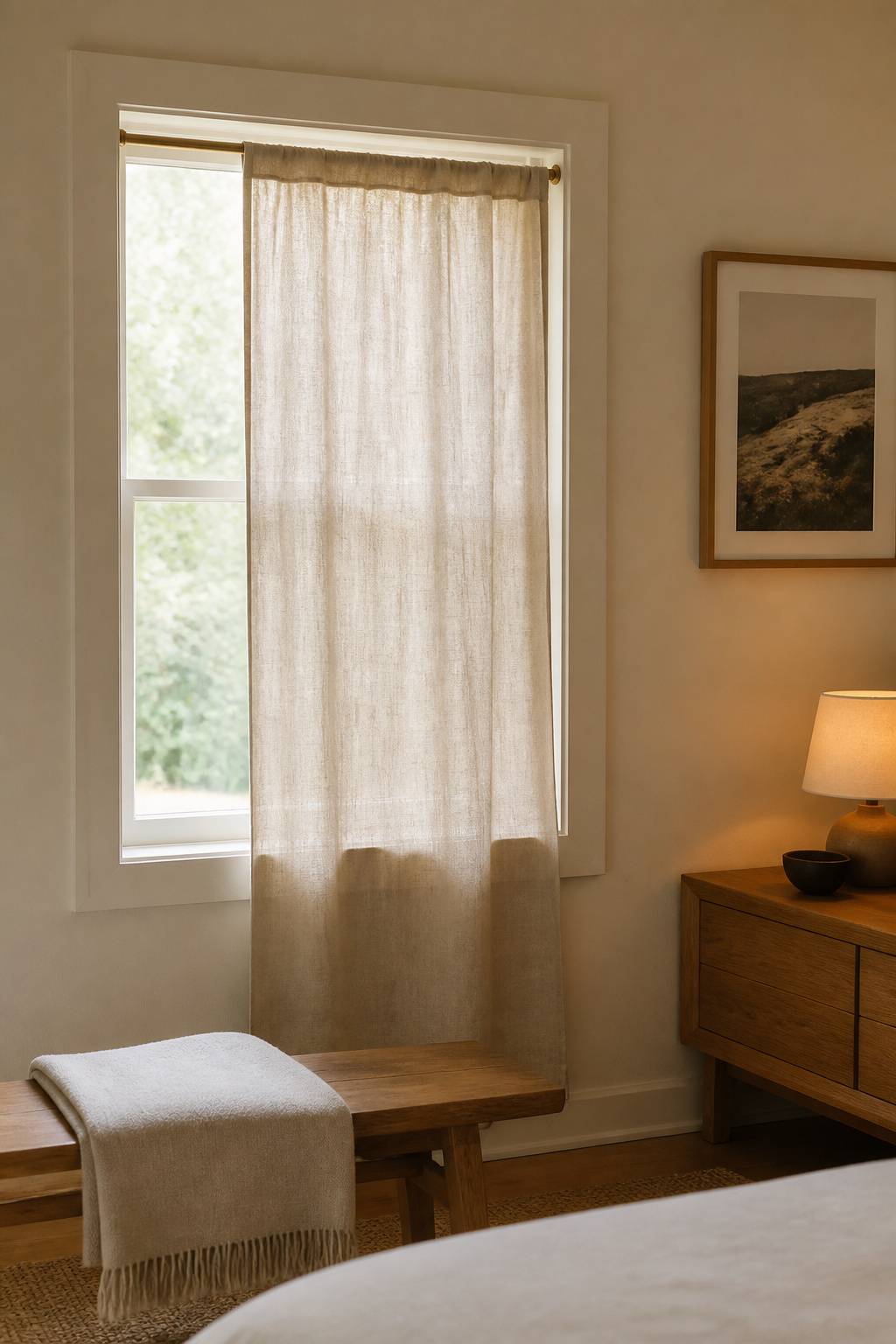
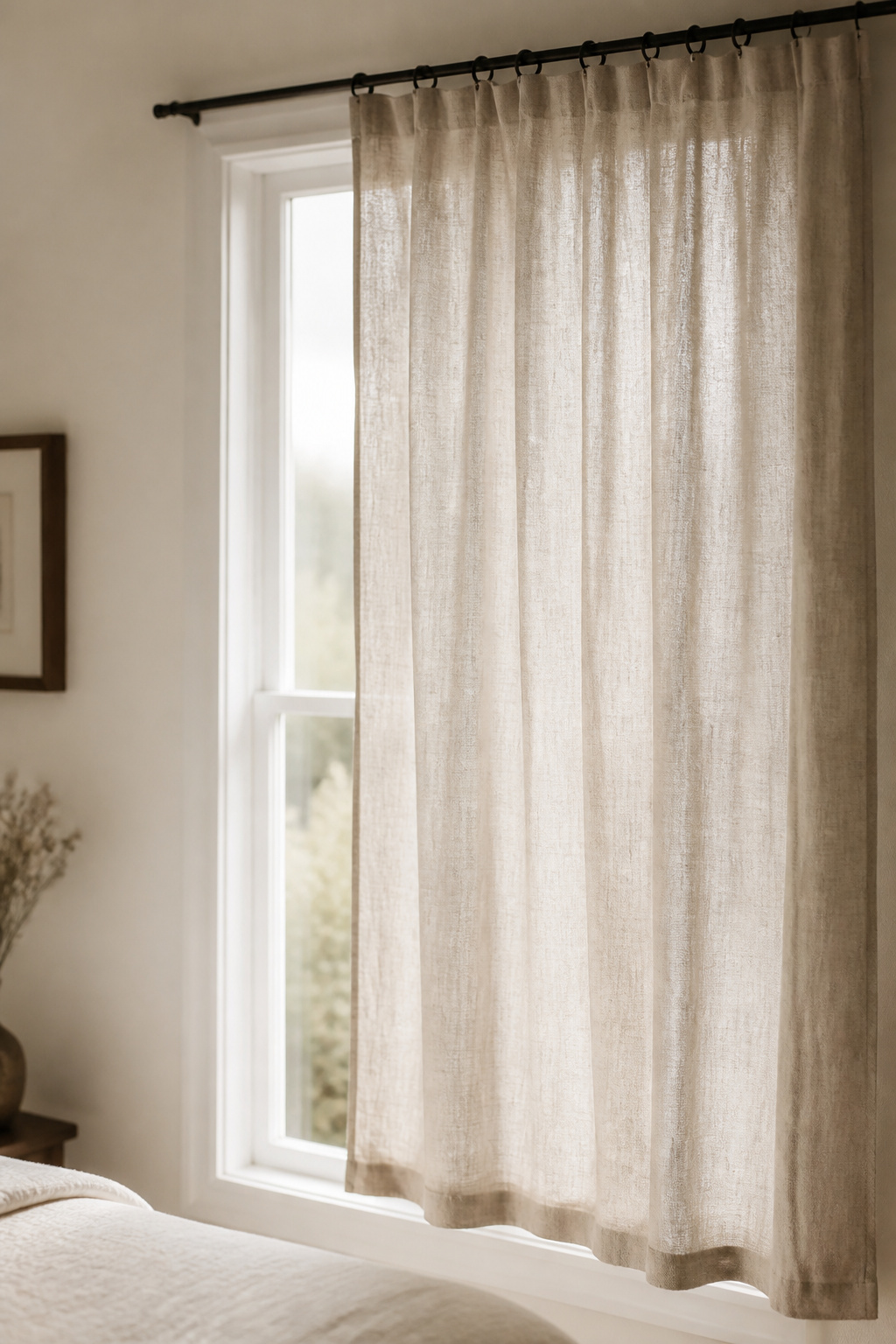
A single width of fabric, one panel rather than a gathered pair, is a deliberate choice on a genuinely small window — not a compromise.
Removing before adding
My own first sitting space was a four-by-six-foot corner of a rented Chicago apartment — a jute rug, a cushion, a paper screen, and a small window I nearly over-dressed before I stopped myself. That corner taught me the rule I still bring to a small window: ask what it already does well — light, view, privacy — before you add anything.
Add fabric only to close a real gap. A single panel that hangs flat and clean — no valance, no tieback, no second layer — is a finished look.
Treatments That Read as Spare, Not Crowded
A few treatment types are quiet by nature — they cover the window without competing with it, and they happen to be the affordable ones.
Single-panel and cafe curtain approaches
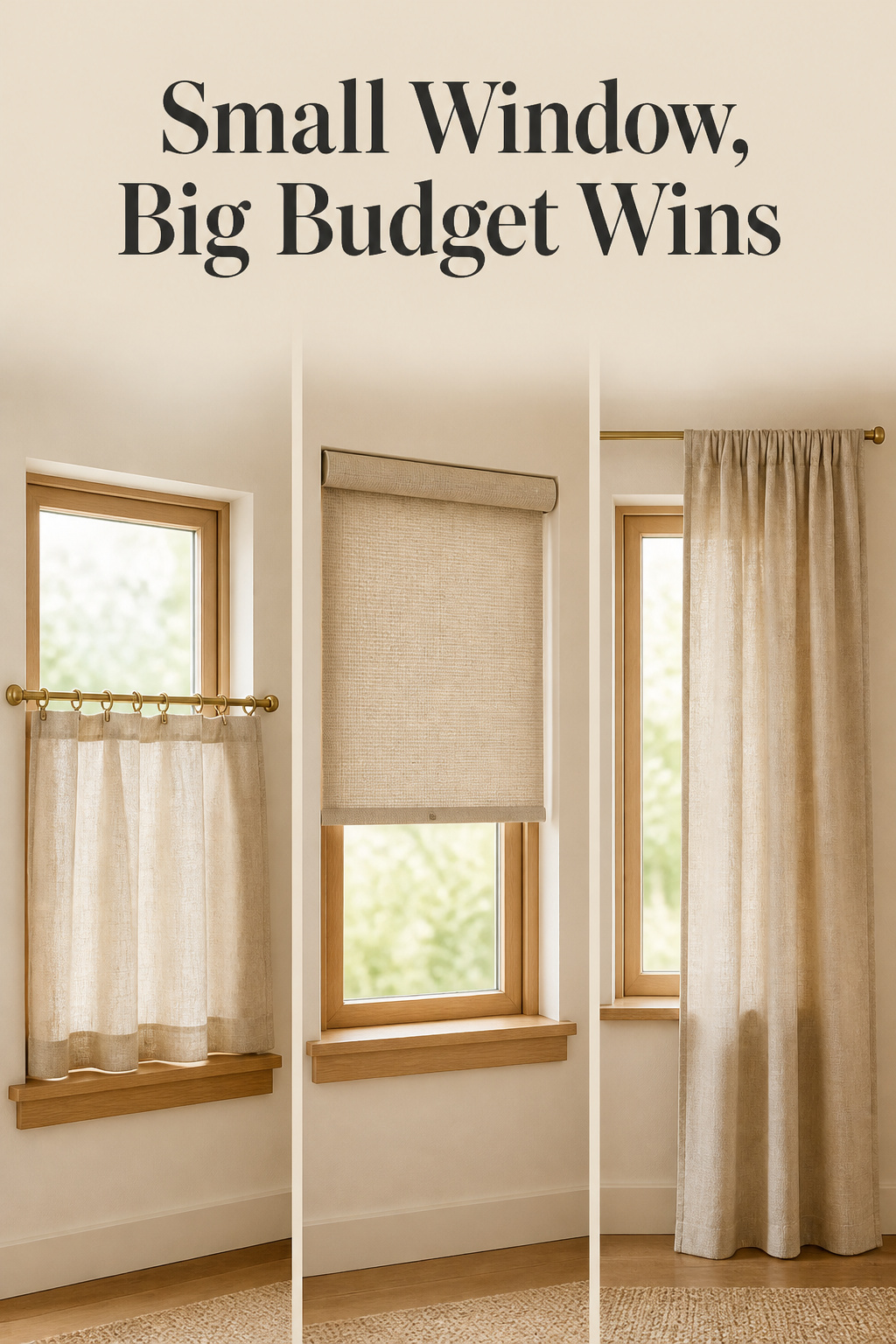
A cafe curtain covers the lower half or two-thirds of the window on a slim rod, holding privacy while letting light spill over the top — right for a window that faces a neighbour but still needs morning light. Custom, budget-conscious cafe curtains run around $50 per window; a no-sew version on clip rings costs less again. A slim brass rod with cafe clips stays visually quiet, so the eye settles on the light, not the fittings.
Roller shades as a quiet, low-profile option
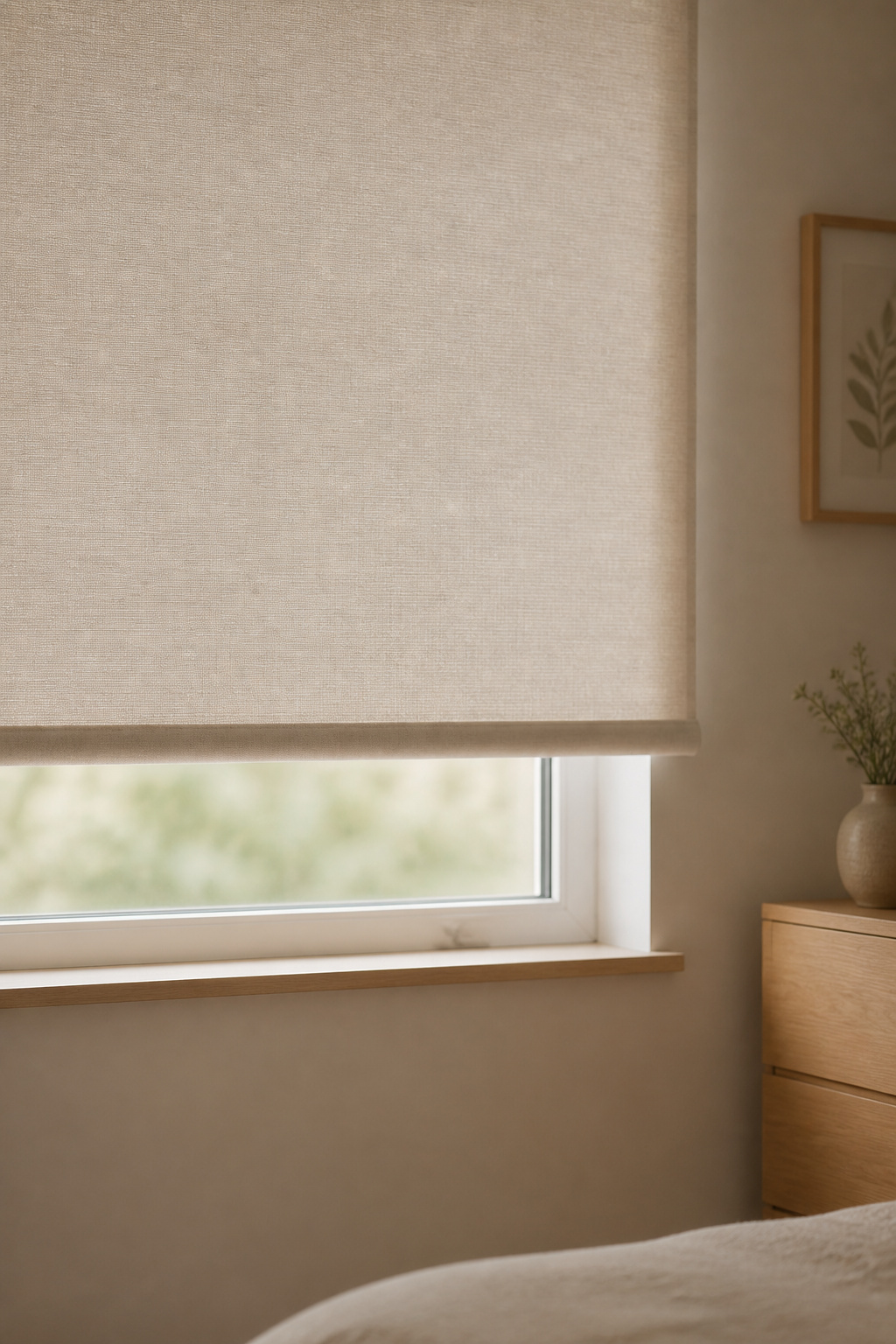
A roller shade is the most self-effacing option here. Raised, it all but disappears — no folded bulk, nothing eating into the sightline. As the Affordable Blinds roller-shade guide puts it, because a roller shade is so compact when raised, it won’t distract from your view.
It’s also the cheapest made-to-measure route: around $40 for a 24-by-36-inch window, or under $50 for a basic cordless version. A Roman shade for the same window runs 30-50% more, since its folds demand extra fabric.
What to skip on a small window
Some choices add visual weight a small window can’t carry:
- Roman shades, if bulk is your concern — even raised, their folded stack takes up more visual space than a roller’s flat roll.
- Full pinch-pleat multi-width pairs, the standard for large windows — disproportionate cost for a genuinely small opening.
- Valances and swags, which stack a second layer above the glass a short window rarely has the height to carry.
Low-Cost Materials Worth Choosing
Budget rarely shows where people fear it will. What reads as cheap is almost never the price of the fabric — it’s the wrong fabric, or the wrong colour.
Where to spend on a small budget
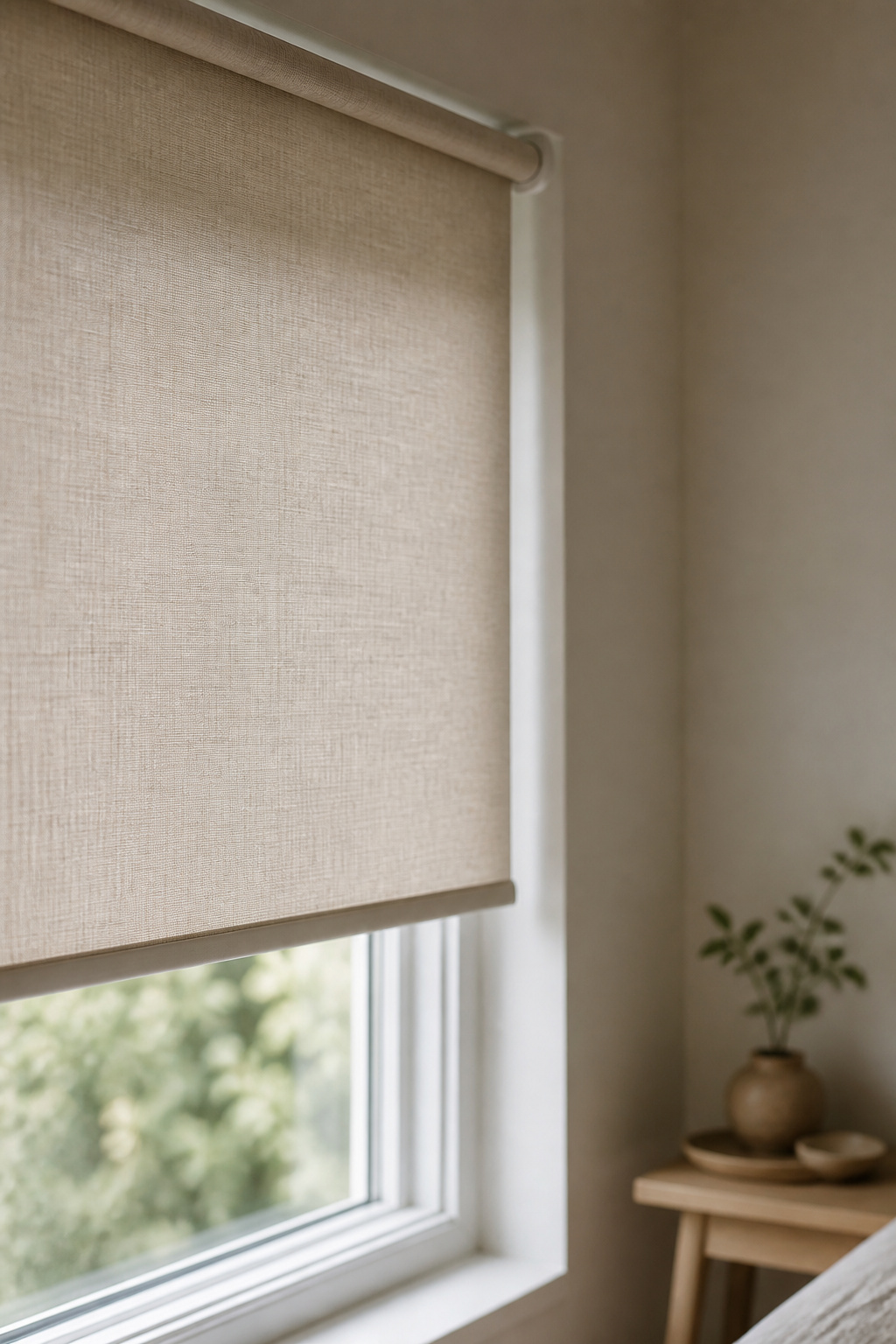
Spend on texture. Linen, a subtle-print cotton, a soft jacquard — textured fabrics reflect light gently and read as considered even at a low price point, as Jessica Welling Interiors observes. Neutral tones — ivory, taupe, greige, soft grey — consistently read more expensive on a budget panel than a bold print. You needn’t buy at all: a repurposed twin bed sheet with a hemmed header converts easily into a rod-pocket panel.
Where cheaper fabric genuinely doesn’t show
Fabric cost scales with a single narrow panel, not the multi-width pairs a large window demands, so a mid-weight cotton or linen blend stays affordable where the same cloth would cost more at full scale.
At the lowest end, a paper accordion-pleat shade starts under $10, cuts to size with scissors, and attaches with an adhesive strip — a genuine covering, not a stopgap. Bamboo matchstick shades add a tailored look for a little more.
Tension rods and no-drill hardware
For renters, the hardware is where a budget install lives or dies. A spring tension rod fits inside the window casing with no drilling, screws, or wall contact — it holds by an internal spring pressing outward. Measure the inside casing at its narrowest point before buying.
When a tension rod isn’t rigid enough, tap-in brackets and strong adhesive brackets are the next step, holding steady for most light and medium curtains and removing without wall damage.
One Layer, Chosen Well, Beats Two
This is where the subtractive rule meets its honest exception. Most small windows want one layer; a few genuinely want two — a judgment call, not a rule to memorise.
When a single layer is genuinely enough
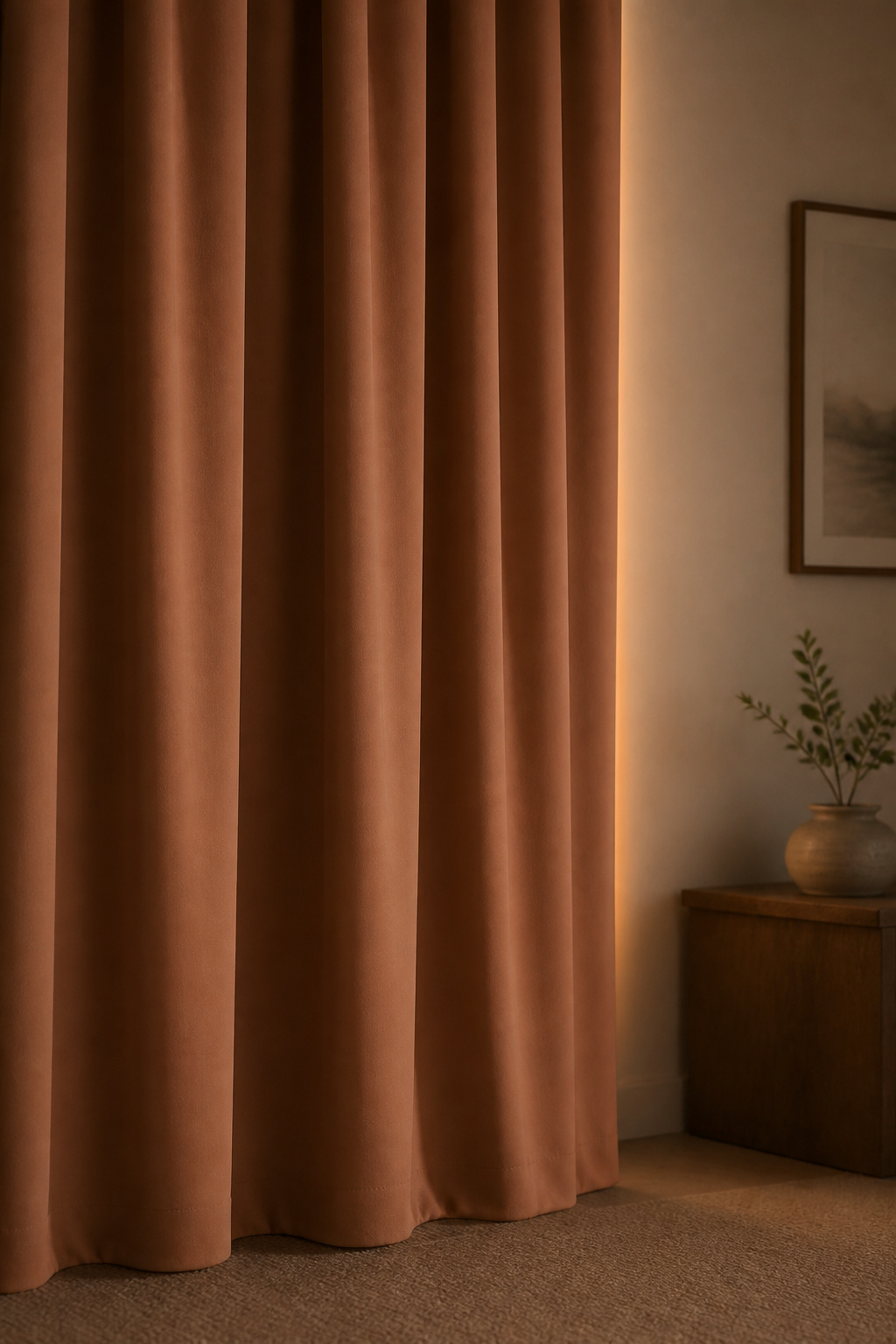
Start from what one layer already does. A single-layer blackout curtain achieves 95-98% light blockage — enough for most bedrooms — and is specifically recommended for limited space or odd measurements, as The Hues notes.
There’s a spatial reason too. A double-layer setup typically needs about 6-8 inches of wall depth for both rods to sit without crowding — depth many small bedrooms don’t have. Layering only pays off once you understand what each base category contributes on its own.
The rare case a small window still wants two layers
Two layers earn their place on function, not finish. A sheer for daytime filtering plus a blackout layer for darkness gives real day-to-night flexibility — a need, not a preference. The trapped air gap between them also adds insulation, which can matter on a small, poorly insulated older window even where light control alone wouldn’t justify it.
Where a small room genuinely needs both, wall-mounted brackets with a modest projection can carry two thin layers without the full 6-8 inches a standard double rod assumes. Reach for a second layer only when light or warmth asks for it.
Hanging a Small Window to Look Bigger
If you spend on one technical thing, spend here. The single adjustment that makes a small window read larger costs almost nothing.
Mounting slightly wider and higher on a budget
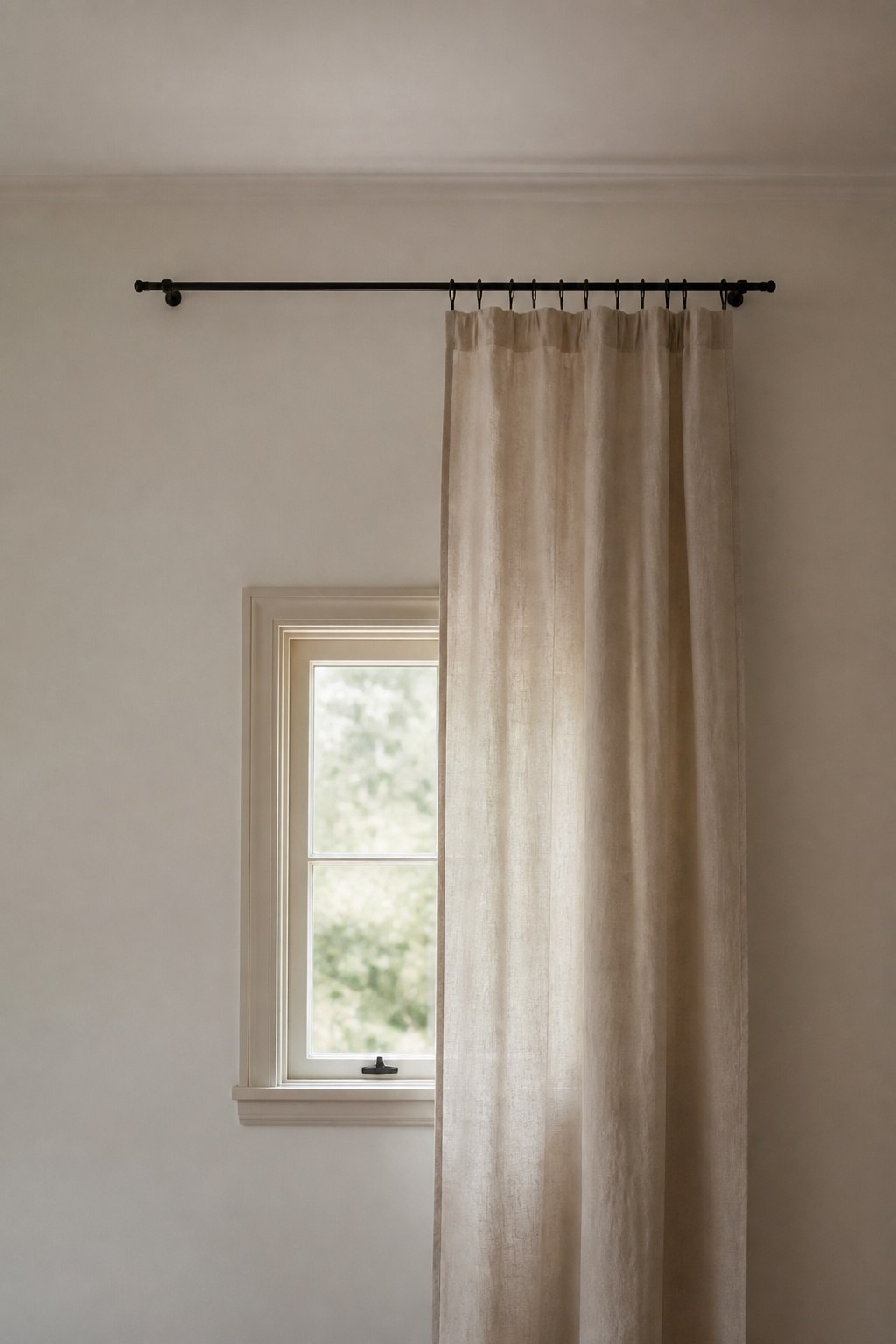
Mount the rod 4-8 inches above the frame — higher if the ceiling allows — to draw the eye up and make window and room read taller. Then extend the rod 6-12 inches beyond the frame on each side, so an open panel stacks off the glass instead of eating into the window. The illusion depends on doing both:
| Adjustment | What it does |
|---|---|
| Rod 4-8 in above the frame | Draws the eye up; the room reads taller |
| Rod 6-12 in wider each side | Panels clear the glass; the window reads wider |
| Both together | The full illusion — either alone undercuts it |
It costs only a slightly longer rod, usually a few dollars more — the highest-value technical change on a small budget.
What changes on a rental-friendly install
No-drill hardware limits how far you can push the width. A tension rod mounts inside or at the casing only, capping the illusion it delivers. Tap-in brackets go into the trim with no drill and can still sit a few inches above and beside the frame.
Adhesive brackets bridge the gap: they sit on the wall beside the frame, enabling the width extension without drilling, though their weight limits run lower than screw-mounted ones — an easy trade for a light curtain.
The Spare-Window Rule to Remember
If you take one thing from this, take the rule underneath every section above: on a small window, proportion and restraint beat volume — light fabric, a flat clean hang, and correct rod placement outperform layering or bold pattern every time.
The one decision that matters most
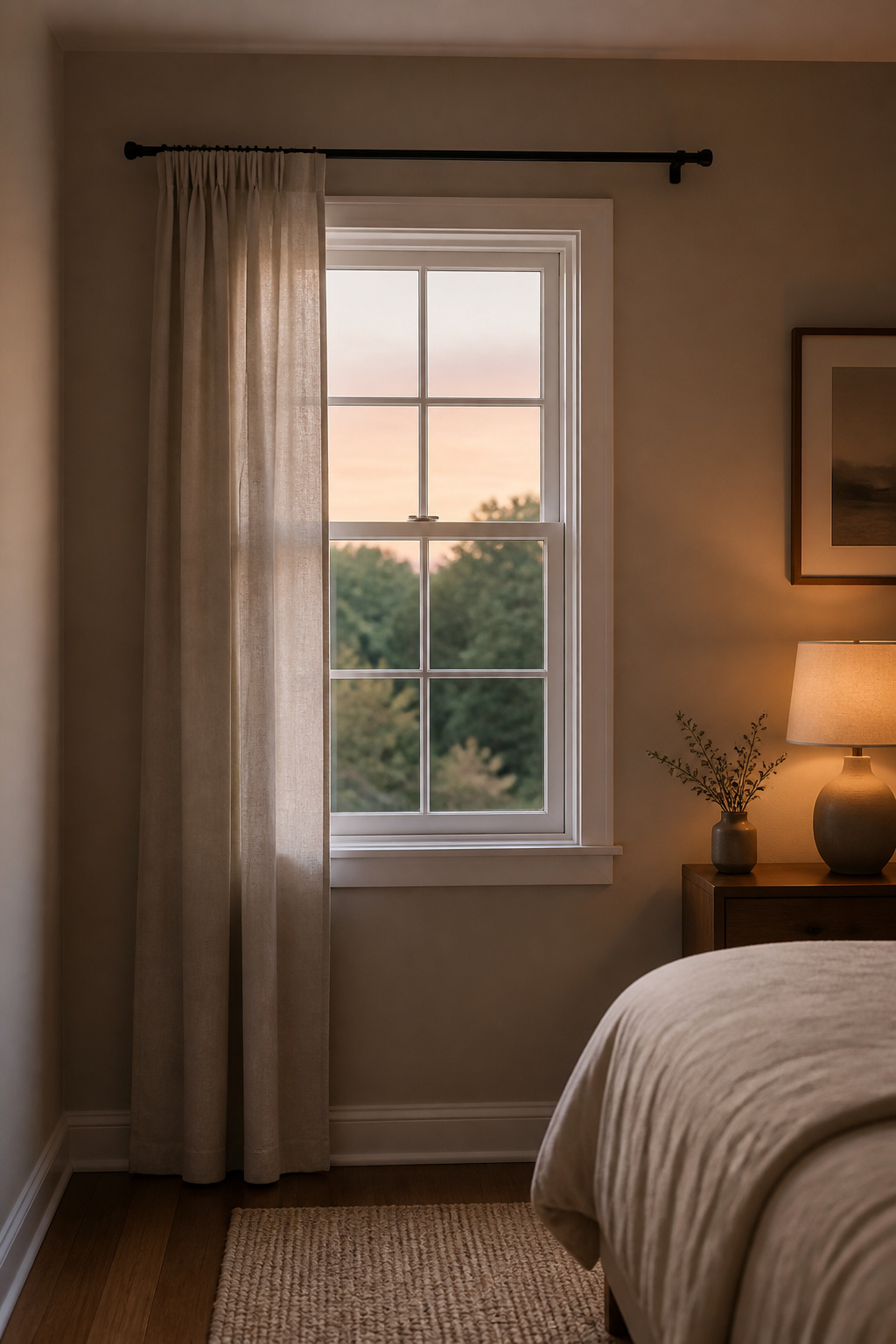
The decision that matters most is not which treatment, but how much. Choose one treatment that meets the window’s real need, then give it enough fabric to read as intentional — roughly 1.5-3x the window’s width. That generous fullness in a single layer is what keeps a small window from looking skimpy; spare is not the same as scant.
When your window isn’t rectangular
This logic assumes a rectangular opening. An angled or corner window needs a corner rod system or L-shaped bendable rod; a peaked window can take two tension rods meeting at the apex; a bay or bow is dressed with several curtains following its shape. The hardware changes, but the budget instincts still hold — start with dressing an angled bay window before you buy a rod. The same restraint scales down for budget ideas for a kids’ room window, and the complete guide to dressing bedroom windows sets your small window beside every other option.
Here is the one move to make today: stand at your bedroom doorway and look at the window as it is. Name the single thing it needs — more privacy, less light, a little warmth — and choose one treatment for that. Nothing more.
FAQ
What is the cheapest way to cover a small bedroom window?
Paper accordion-pleat shades are the lowest-cost genuine covering, starting under $10, cut to size with scissors and fixed with an adhesive strip. A repurposed twin bed sheet on an inexpensive tension rod is the cheapest DIY panel. For a ready-made option that still looks finished, a cordless roller shade typically starts under $50.
Should curtains be wider than a small window?
Yes. Even on a narrow window, panels should measure roughly 1.5-3x the window’s width so the fabric gathers and reads as intentional, not skimpy. Extending the rod 6-12 inches beyond the frame on each side lets an open panel stack off the glass. Going wider is the fix for a cheap-looking panel — the goal is proportion.
Can you use tension rods instead of drilling for small windows?
Yes. A spring tension rod installs inside the window casing with no drilling, screws, or wall contact, holding by an internal spring pressed against the casing. Measure the inside casing at its narrowest point before buying, since the rod adjusts within a limited range. Tension rods suit light cafe or sheer panels; a heavier blackout panel needs a tap-in or adhesive bracket.