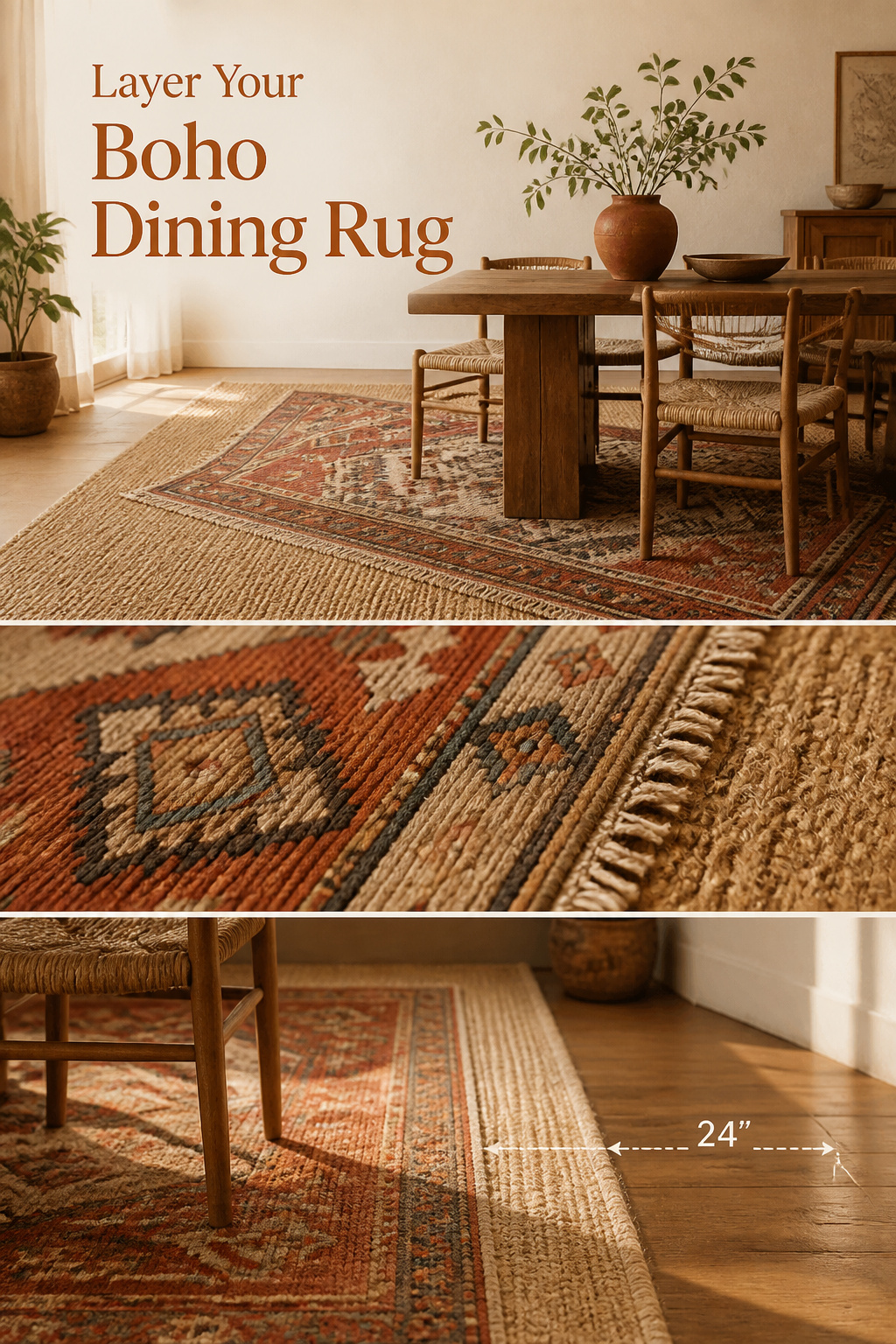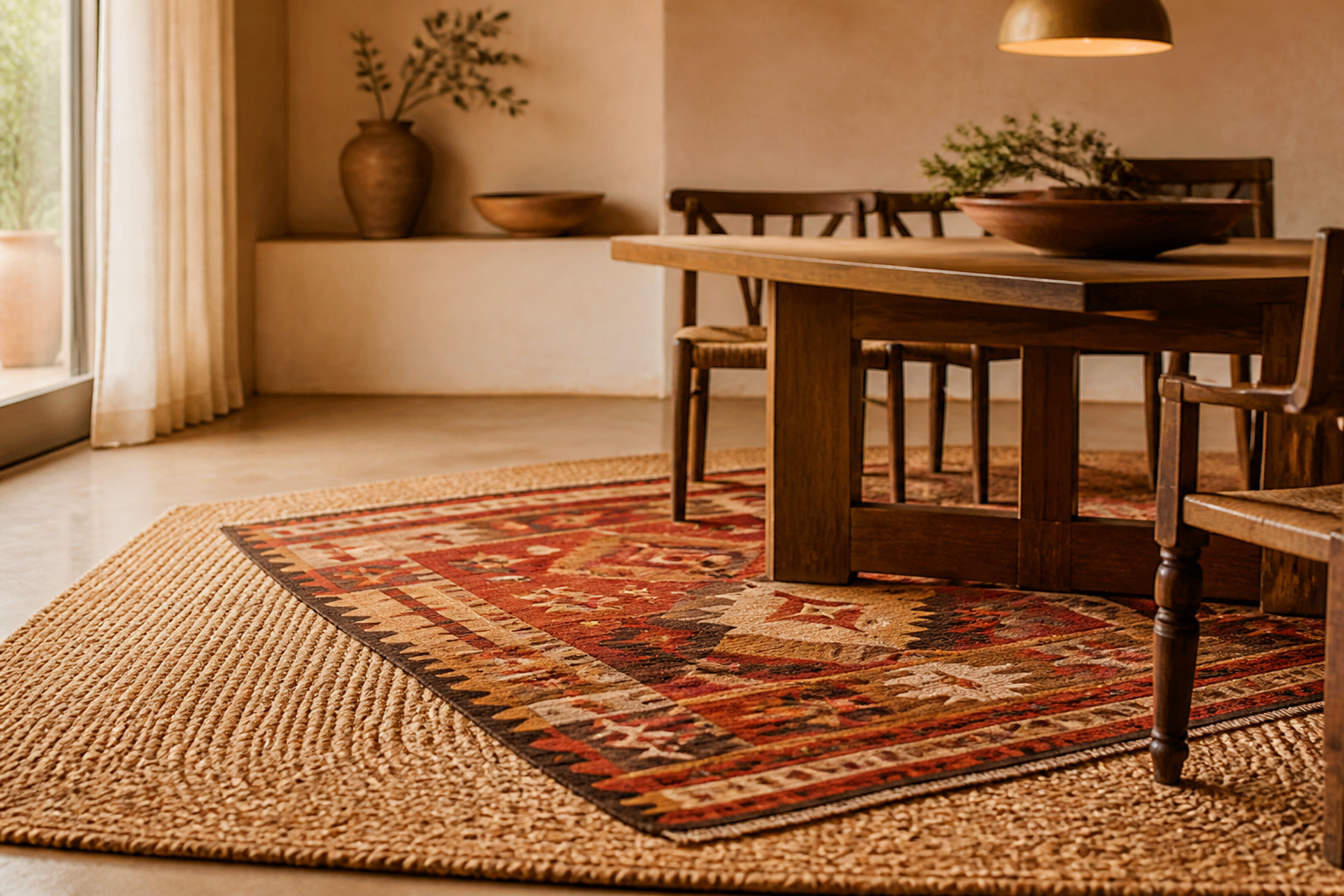
Look closely at the boho dining rooms you keep saving, and almost every one shares something: not one rug, but two. The best boho dining room rugs are layered — a large neutral base with a smaller patterned rug set on top and turned at an angle. It is the single most repeated technique across top-ranking boho dining content, treated as near-mandatory rather than an optional flourish. The single-rug rooms are the flat ones — and if your own floor looks a little lifeless under the table, this is almost always why.
TL;DR
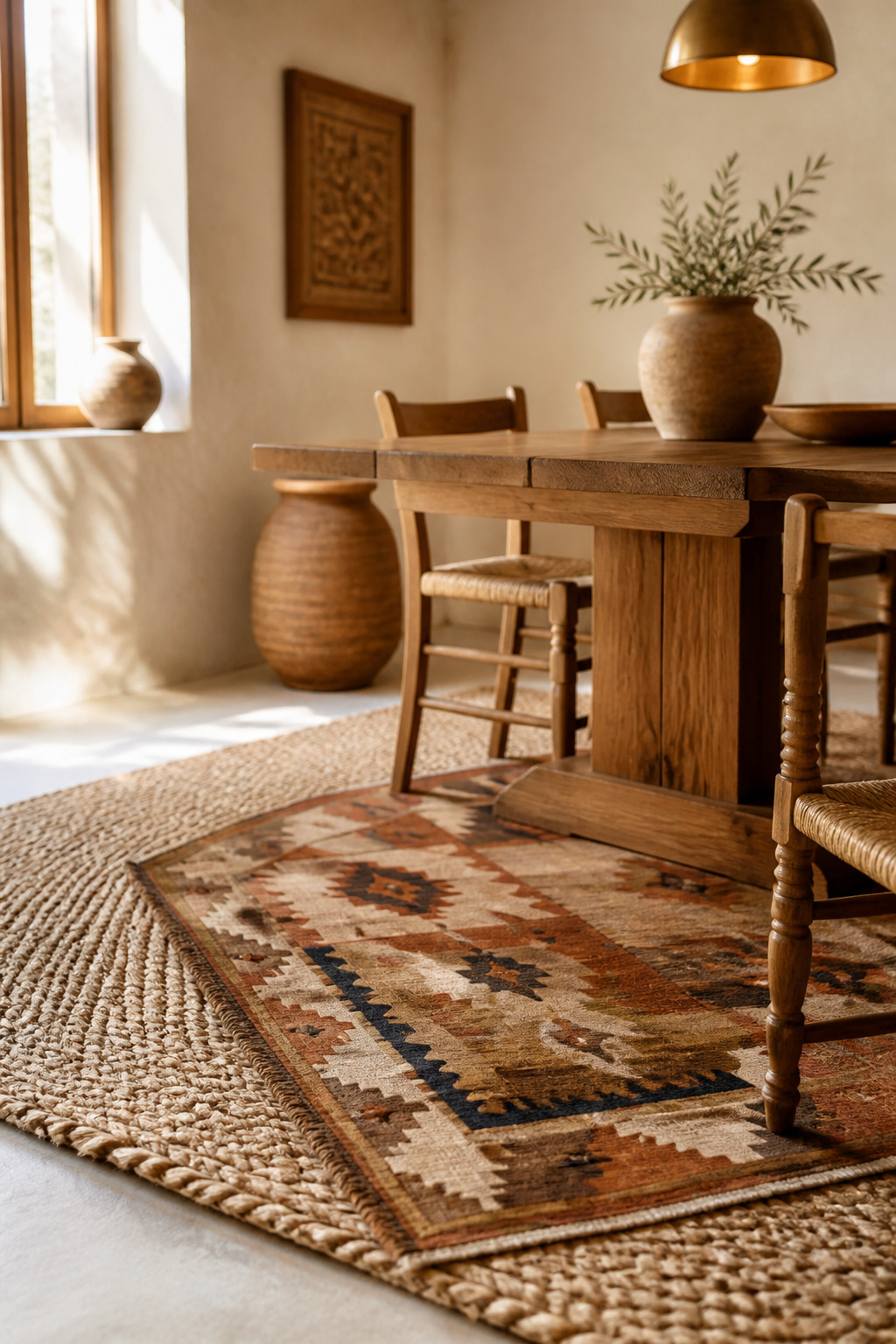
- Layer a large neutral base rug (jute or sisal) with a smaller patterned top rug rotated 45–90 degrees, leaving 6–12 inches of the base visible as a frame.
- Size the base to extend 24–30 inches past the table on every side so chairs stay on it when pulled out — roughly 8×10 feet for a six-seat table.
- A genuine vintage kilim is flat, thin and flexible with visible knots on the back; a printed reproduction has a flat, uniform, unmarked back that gives it away.
The One-Rug Habit That’s Flattening Your Boho Dining Room
Why a single new rug rarely produces the boho look on its own
A single flat, uniform rug looks like a furnishing decision. A base-plus-pattern combination looks assembled and collected — the gathered-over-time quality boho design is built on. One new rug, however handsome, announces that it was chosen, not accumulated. Layering solves that structurally: the base grounds the space, the top layer brings colour and pattern, and the seam between them suggests history.
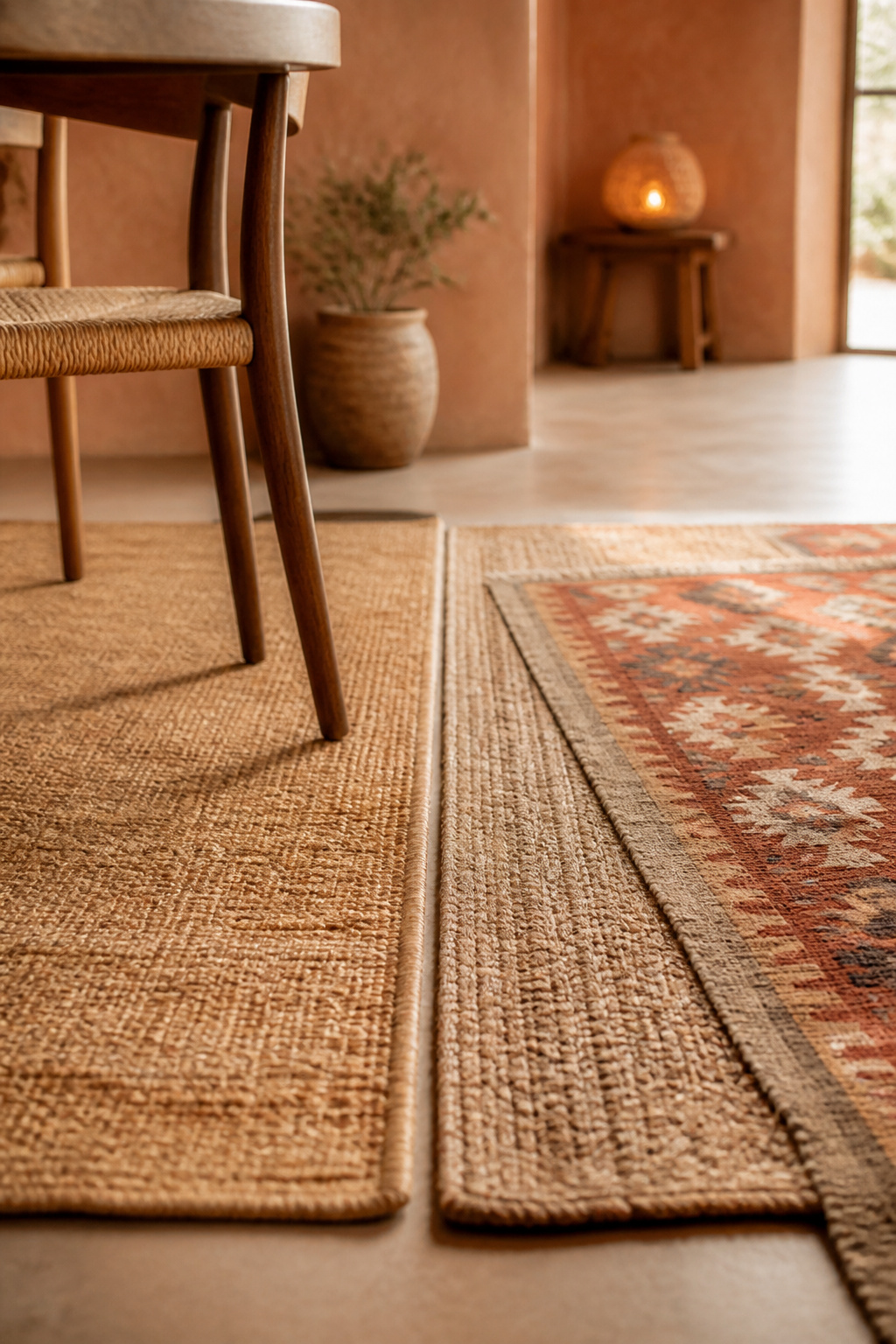
The layering formula almost every ranking boho dining room actually uses
The formula is consistent enough to write down. Start with a neutral base — jute or sisal is the standard — then set a smaller, more vibrant rug on top; a jute base with a Persian- or kilim-style rug is the most repeated combination there is.
Two details separate a considered layer from a careless one: rotate the top rug 45 to 90 degrees off the base’s axis, and leave 6 to 12 inches of the base visible around the top rug’s edges. The angle signals a deliberate choice; the margin keeps the pairing legible rather than looking like one rug slipped under another. A non-slip pad under the base is close to essential once you’re stacking two.
The Base Layer: Neutral, Textural, Forgiving
Why jute and sisal are the default base material
Jute and sisal earn their place as the base because their natural fibre texture anchors the space without competing with the patterned layer above — backdrop, not feature. Sisal is the sturdier pick: extremely durable, and it lasts 10 to 15 years or more even in high-traffic use. Jute is softer underfoot but sheds fibres and wears faster; it shows up more in styling photos, but sisal is the better choice under a table used most nights.
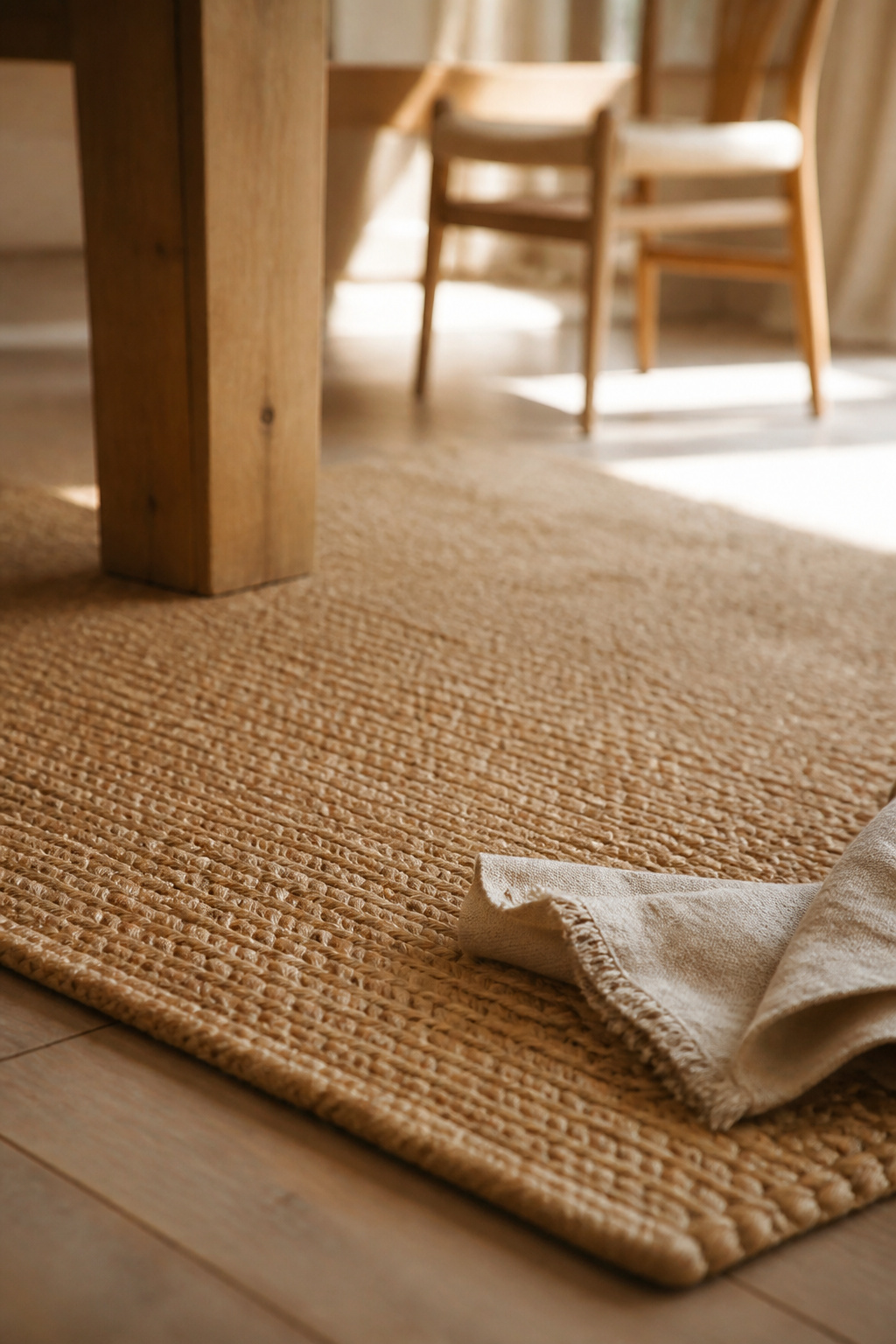
Sizing the base layer to clear the table and chairs when pulled out
Size the base to the whole seating footprint, not just the tabletop — it should extend 24 to 30 inches beyond every side of the table so chairs stay fully on it when pulled out (exact sizes by table are in the placement section below). That clearance rule governs the base specifically; the smaller top rug sits inside that footprint and doesn’t need to meet it on its own.
Natural fiber care realities under a table that sees daily spills
Natural fibre bases have one rule that saves a ruined rug: never soak them. Blot spills and lift solids immediately — jute especially should never be drenched, since water releases its natural oils and browns the rug as it dries. Dab wine or sauce stains with club soda or a natural-fibre cleaner, and never run a vacuum’s beater bar over jute or sisal; the bristles shred the fibre. Suction only, or a low-pile setting.
The Top Layer: Where the Boho Character Comes From
Vintage and kilim rugs versus new reproductions — what actually differs beyond price
The top layer is where the room’s character lives, and a genuine kilim differs from a reproduction in ways you can verify with your hands, not just your wallet.
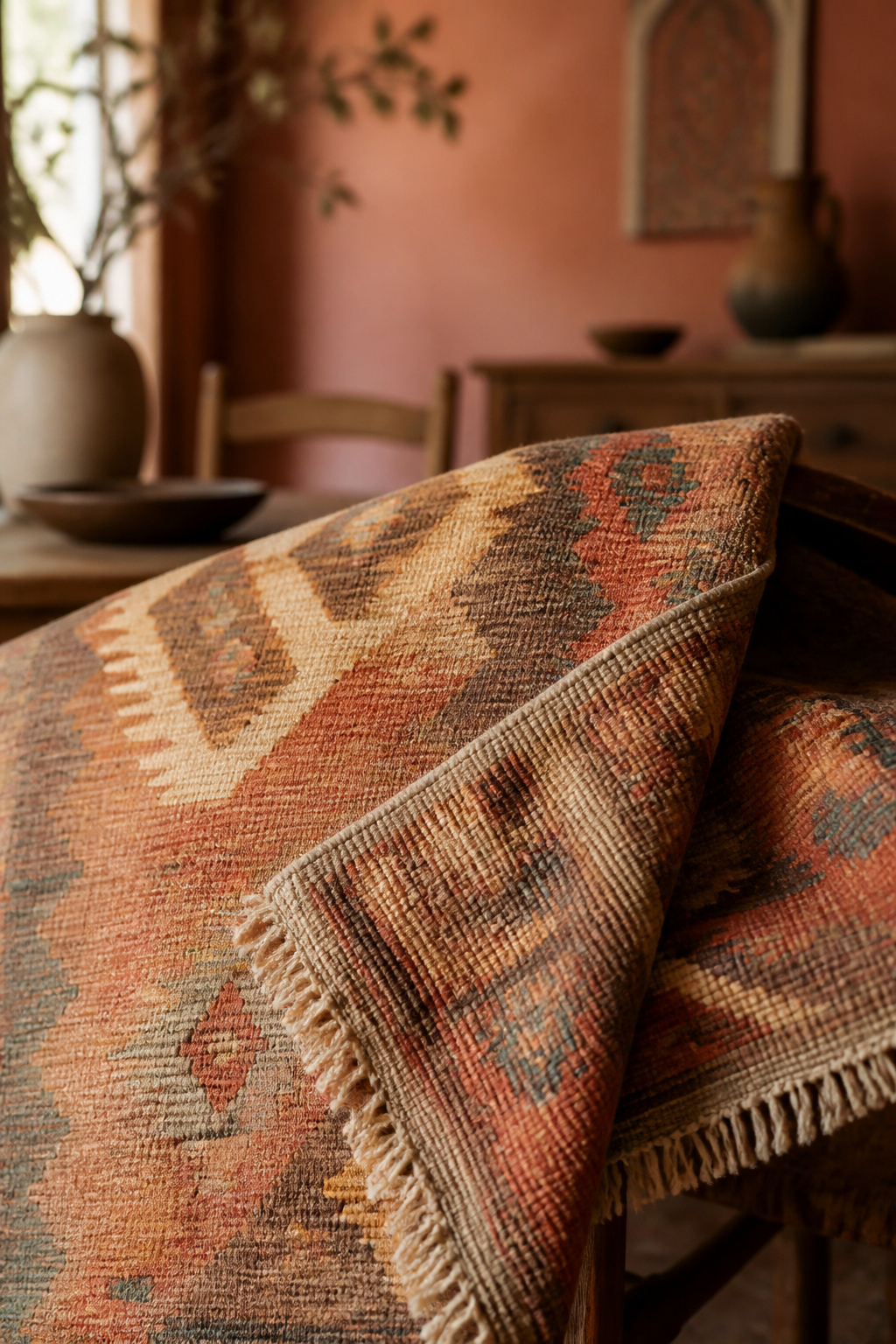
Flip it over — the back is the most reliable tell: a knotted piece shows individual knots and a tight, uneven weave, while a printed rug has a plain, uniform back. Real kilims are flat, thin and flexible from their flatweave construction; reproductions feel thicker and stiffer. Look too for abrash, the subtle colour variation across a rug’s field caused by wool dyed in separate batches — collectors prize it as a sign of genuine handwork, while a faked version shows a discrete, even band of colour change instead of a gradual fade.
Choosing a top-layer pattern scale that won’t fight the base
Pattern scale is governed by contrast: pair a large-scale pattern on one rug with a smaller, more intricate one on the other, so one reads as the star and the other as support. Two patterns of similar scale tip a layered pair into visual noise. The thread that holds them together is a shared colour — keep at least one colour consistent between base and top, and even bold pattern-on-pattern combinations feel intentional, a pairing Apartment Therapy notes some designers actively encourage.
Rotating the top rug 45-90 degrees off the base for the deliberate-not-matchy look
Rotate the top rug 45 to 90 degrees off the base’s orientation — the angle tells the eye this was a choice, not a rug that slipped. Keep the top rug smaller than the base, roughly two-thirds its size, so the framing margin stays visible around the rotated edges and the rotation reads as styling rather than accident.
Placement Under a Dining Table, Specifically
How far the rug should extend past the table on every side
The 24-inch clearance rule is easy to underestimate in a showroom, so translate it into actual sizes. The base has to hold every chair at full pull-out — measure generously.
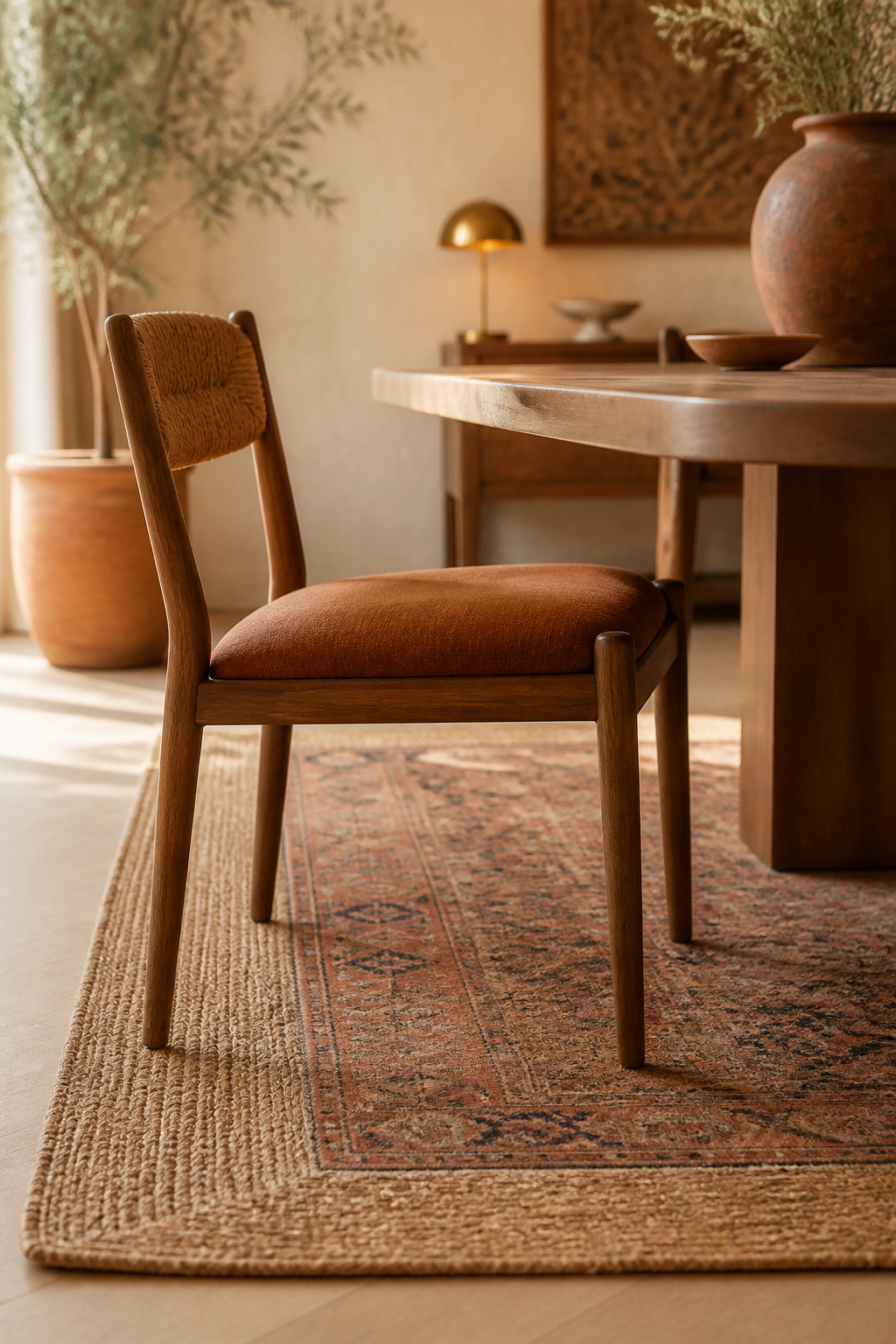
| Table size | Seats | Minimum base rug |
|---|---|---|
| ~36 x 72 in (rectangular) | 6 | 8×10 ft |
| ~36 x 96 in (rectangular) | 8 | 9×12 ft |
| Small square/round | 4 | 6×9 ft |
Those are minimums, not targets. Err larger if the room allows: a rug that stops short of the pulled-out chairs undoes the whole layered effect.
Placement rules when chairs are mismatched heights or widths
Measure the clearance from the table’s footprint, not from any single chair — with a mismatched set, one wider bench or deeper upholstered chair extends further than the rest, so size the rug to the widest seat at full pull-out. A non-slip pad underneath keeps the base from creeping as chairs get dragged in and out.
What changes in a small dining room versus an open-plan one
Room type changes how forgiving the sizing is, though this is guidance rather than a hard rule. A walled small room is fairly forgiving, since the walls already draw the boundary. An open-plan layout needs more deliberate coordination — the dining rug should read as its own distinct area from an adjoining living-room rug, sharing colour, scale or texture without mirroring it exactly.
Sourcing Boho Dining Room Rugs Without Overpaying
What to check before buying a used kilim or Moroccan-style rug
Buying secondhand is where the layered look gets both its character and its bargains. Run through a short checklist before you hand over money:
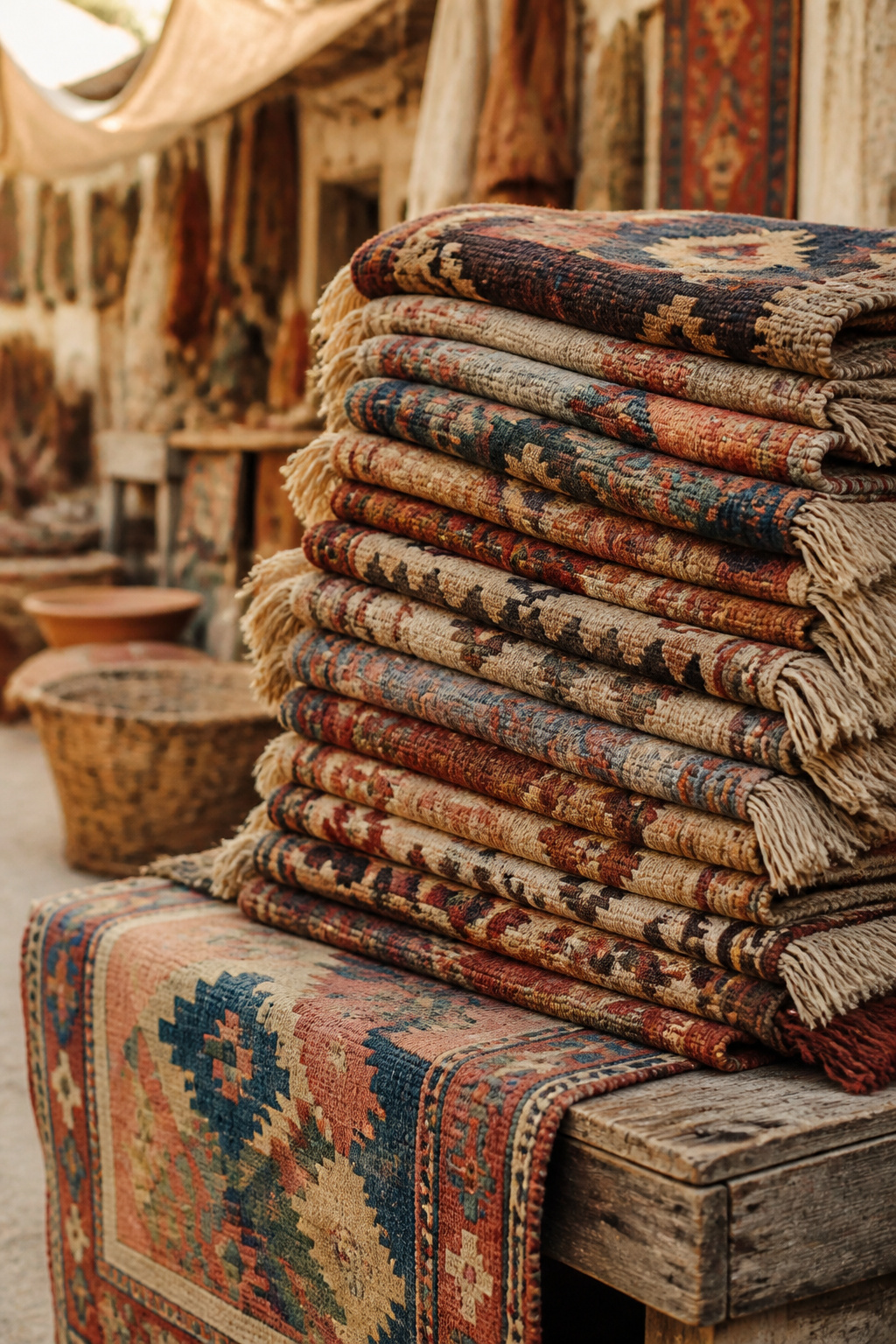
- Flip it over. A hand-knotted back shows individual knots and a tight, uneven weave; a machine-made or printed back is flat, uniform and unmarked. This is the single most reliable check available.
- Tell weaver’s marks from damage. Small openings where the weaver changed colours are normal. Holes where fibre has been eaten down to the warp and weft are moth damage — the flaw to avoid.
- Skip hand-tufted pieces secondhand. Tufted rugs hold dirt, clean poorly, and lack the long-term value of a hand-knotted flatweave.
- Accept honest wear. Some visible age is part of a genuine rug’s character; passing on a well-made piece for light wear is a mistake.
I learned the flip-it-over habit the expensive way, on a sourcing trip years back: a kilim that looked convincingly old across the field, faded and soft, until I turned it over and found a flat, blank, machine-printed back — the “wear” painted on. The back tells the truth the face is selling you.
Reasonable price ranges for genuine vintage versus new
Price varies enormously by where you buy. Kilims at flea markets typically run $200 to $2,000 depending on size and quality, well below curated-dealer pricing. Through a specialist dealer, vintage kilims usually run $1,000 to $3,000, while a broader range including newer pieces sits around $100 to $1,200. One negotiating tip: large kilims are heavy, and dealers often prefer not to haul unsold stock home, so a market stall near closing time can quietly improve your price.
When a well-made new reproduction is the honest answer
A good reproduction is not a lesser choice, just a different one. Machine-made pieces are meaningfully cheaper, reflecting real differences in labour and history rather than a defect. When floor space or budget rules out true vintage, a flatwoven, well-constructed reproduction is a legitimate answer — the only dishonesty is passing one off as vintage.
Building the Palette and Chair Mix Around Your Rug
Letting the rug’s undertone set the room’s color direction
Choose the rug before you finalise wall colour or chair finishes, not after — a well-chosen rug can lead a room’s entire palette rather than simply matching it, its dominant colour and undertone working as the foundation, not the final accent.
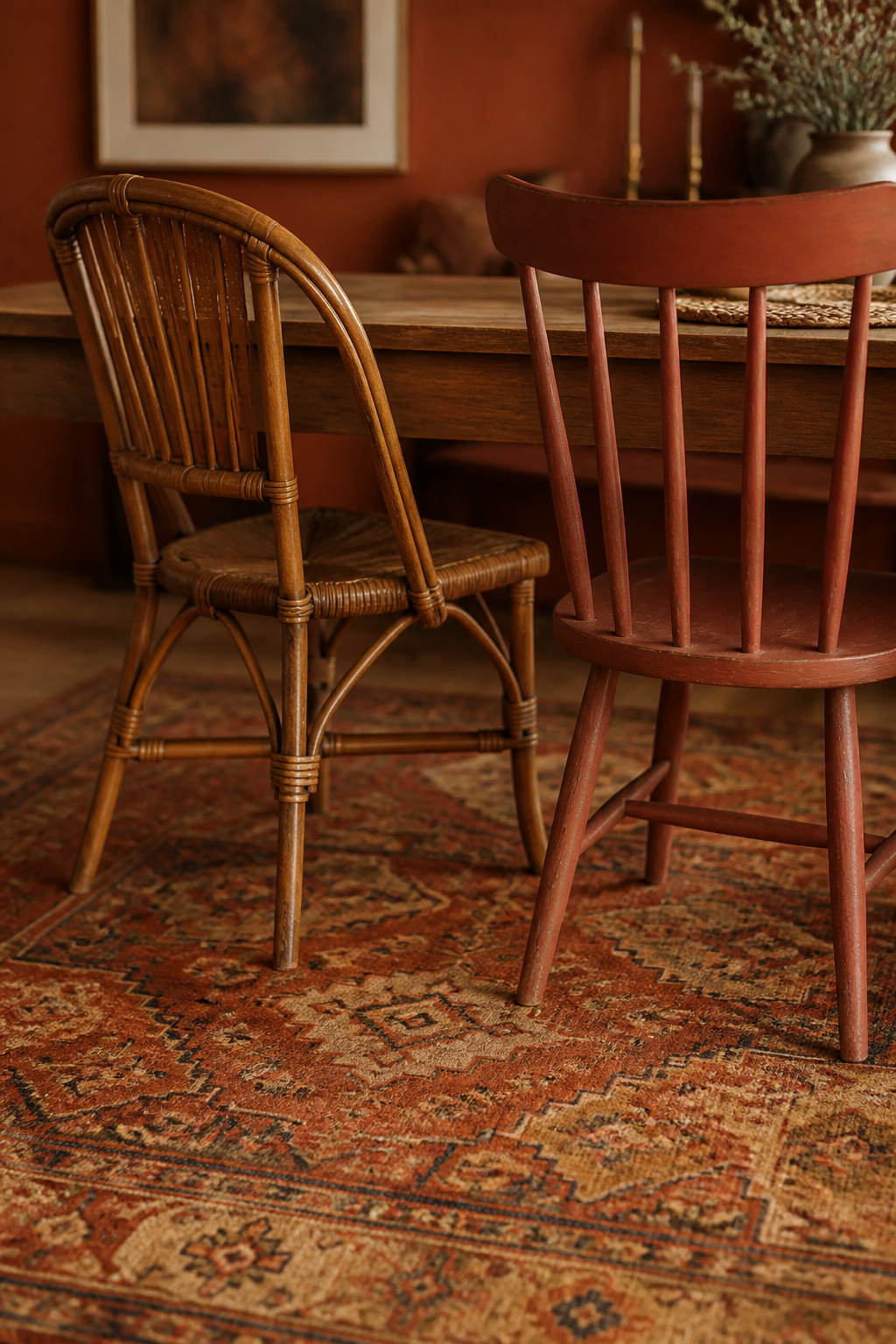
Undertone matters even within neutrals: an ivory rug with a warm, pinkish cast looks different, and cosier, than one leaning grey. Keep undertones consistent across any rugs and nearby furniture, whether warm, cool or neutral — that’s what makes a room feel cohesive rather than randomly assembled. Once the rug’s tone is set, you can build a palette around your rug with confidence.
Pairing the rug with a mismatched chair set instead of a matched one
The rug is the anchor; the chairs follow it. A rug with a warm, brass-adjacent gold undertone ties naturally to brass hardware, and the same logic lets its tone anchor a mismatched chair mix built around a shared metal or wood finish. The full rules for pairing rugs with mismatched dining chairs belong to that spoke; here it’s enough that the rug leads and the seating answers to it.
Layer a neutral base with a top rug that has genuine character, rotate it, size the base past the pulled-out chairs, and let the whole thing anchor your palette — that is the technique behind almost every boho dining room worth saving. For how the rug fits alongside lighting, plants and the rest, our complete guide to boho dining room ideas ties it together.
FAQ
What size rug goes under a dining table with chairs pulled out?
A dining rug should extend 24 to 30 inches beyond every side of the table so chairs stay fully on it when pulled out. A standard six-seat table (about 36×72 inches) needs a minimum 8×10-foot rug; an eight-seat table needs 9×12 feet; and a smaller four-seat table needs 6×9 feet.
Can you layer two patterned rugs, or does one need to be plain?
Yes. Designers are split — some prefer a plain base as the safer route, others encourage pattern-on-pattern — but the rule that makes two patterns work is scale contrast plus one shared colour: large-scale on one, smaller and intricate on the other.
How do you keep a jute rug from fraying under dining chairs?
Skip the vacuum’s beater bar on jute — the bristles shred the fibre; use suction only or a low-pile setting. A non-slip pad reduces the shifting that accelerates fraying. If it keeps recurring, switch the base to sisal, which holds up better under daily use.