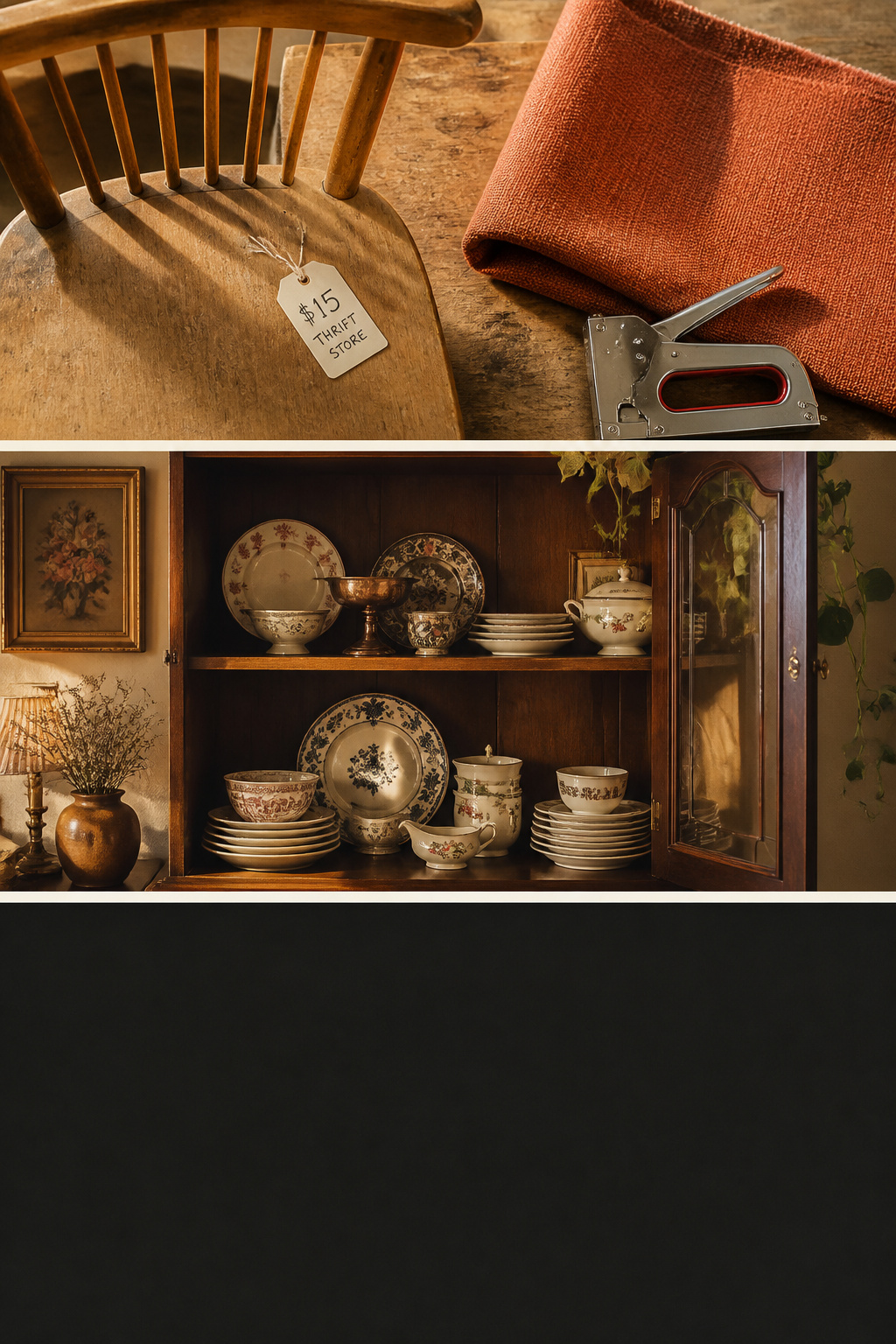
A few years back I built my sister a kitchen island out of stock lumber for $212, and the family still calls it “the showroom one.” That number stuck with me because it proves a point I keep coming back to: a room that looks collected and expensive almost never costs what people assume. An eclectic dining room on a budget is the cleanest example I know. The whole style runs on mismatched, thrifted, slightly imperfect pieces — which means the look you want and the price you can afford are pulling in the same direction for once. Here’s what it actually costs and the order to buy in, so you skip the expensive mistakes.
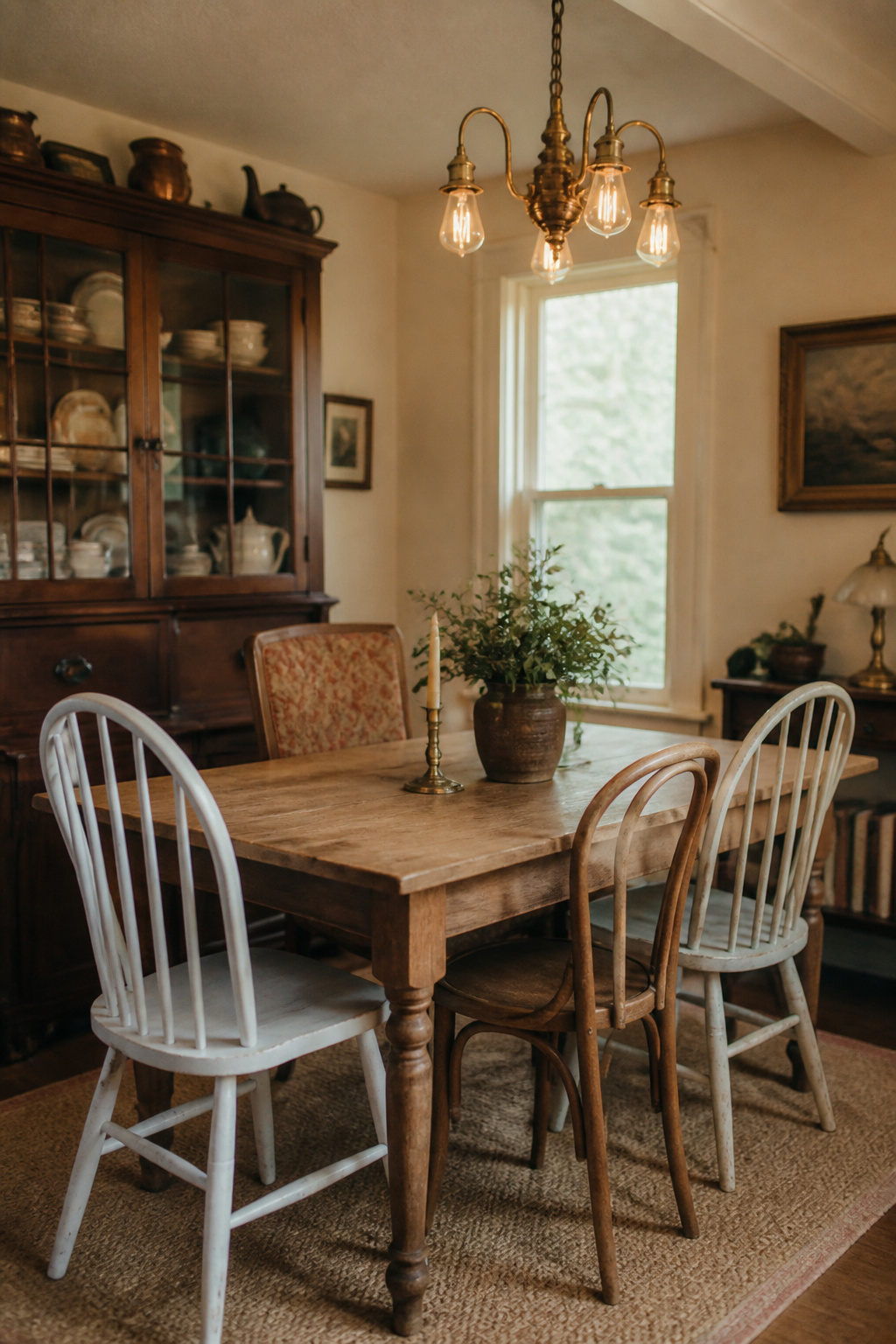
TL;DR
- A full eclectic dining room sourced from thrift stores and estate sales runs an estimated $300–$800 total — chairs ($5–$30 each), a vintage china cabinet ($50–$250), and a rewired chandelier ($30–$50 plus $100–$300 rewiring) absorb most of it.
- Reupholster a thrifted chair for under $60: a $15 frame plus $20–$40 in fabric and new foam, 30–60 minutes per drop-in seat, no sewing.
- Buy the frames, cabinets, and fixtures secondhand; buy foam, rug pads, and bulbs new. Then assemble slowly — anchor piece first, chairs second, layers last.
What This Approach Actually Costs: The Honest Numbers First
Before any inspiration, the money. A complete eclectic dining room pulled mostly from thrift and secondhand sources realistically lands between $300 and $800, depending on your region and how much reupholstery you take on. Emily Henderson sourced roughly 80% of one budget dining room from vintage finds and still landed a polished result. One documented refresh got the table alone — the single biggest piece in the room — for $60. House Digest notes eclectic is one of the easiest styles to thrift for, because mismatched chairs and layered patterns are the point, not a compromise.

Full-room eclectic assembled from thrift and secondhand: a realistic budget range
Here is roughly where the money goes when you build the room from secondhand pieces. Treat the figures as a planning range, not a quote.
| Item | Buy thrifted | Buy new | Estimated cost |
|---|---|---|---|
| Dining chairs (set of 4–6) | Yes | — | $5–$30 each |
| China cabinet / case piece | Yes | — | $50–$250 |
| Chandelier or pendant | Yes (rewire) | — | $30–$50 + $100–$300 rewiring |
| Foam inserts, rug pad, bulbs | — | Yes | $30–$70 combined |
| Dinnerware, linens, accessories | Yes | — | Under $100 combined |
When local thrift options are thin, platforms like AptDeco and Kaiyo run pre-owned furniture at up to 70% below retail with delivery — useful for chairs and case pieces you can’t source in person.
The three high-impact purchases versus the three you can skip
Three categories define the room’s character: chairs, one statement case piece like a china cabinet, and overhead lighting. Spend here. Used dining chairs alone can run up to 90% below new — the highest-return thrift category in the room by a wide margin.
What you can skip without anyone noticing: matched accessories, brand-new decorative filler, and anything sold as “vintage-style” at full retail. Dinnerware, textiles, and candles fill out the rest for almost nothing.
What to buy new even on a budget (and why)
Buy new: foam for any seat you reupholster (old foam can carry pests, and pre-2010 manufacturing often used flame-retardant chemicals now flagged as hazardous), rug pads for floor protection and slip safety, and light bulbs. New seat foam runs about $10–$25 per chair; a chandelier rewiring kit is $15–$30 in parts.
Chairs: The Highest-Impact Thrift Buy in the Dining Room
Chairs are the first stop and the best return in the room. Secondhand dining chairs run $5–$30 each, and a $15 frame becomes a statement piece for under $60 with new fabric and foam. The upholstery condition is irrelevant — you’re replacing it. What you’re buying is the frame.
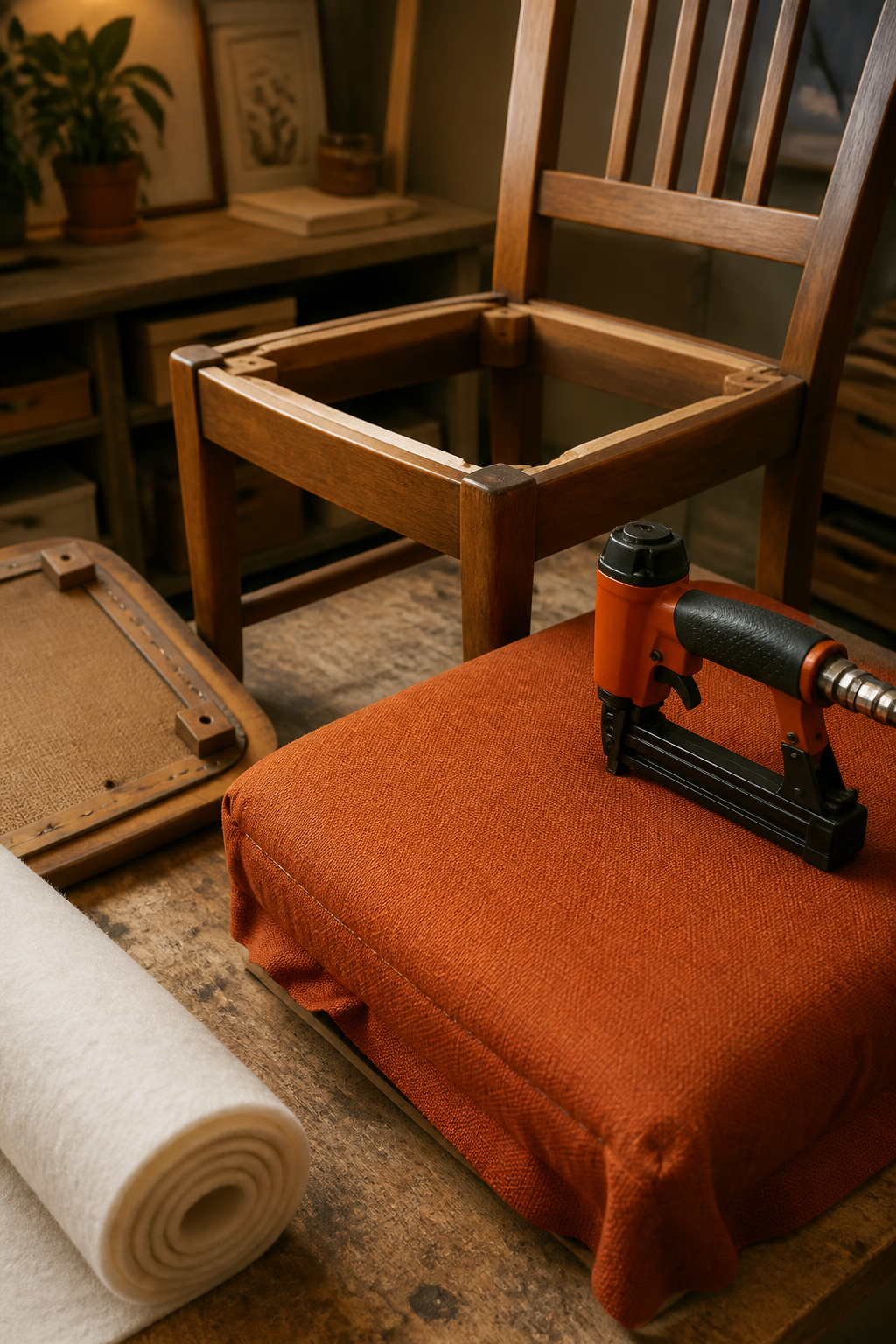
What to look for in a thrifted dining chair: frame, joints, seat condition
Flip the chair over first. Solid hardwood is what justifies buying used — cheap modern chairs use plywood or particleboard, and you can see the difference underneath. Then sit in it and rock side-to-side and front-to-back. Wobble or creak means loose joints; a clean joint re-glues, but one already packed with crumbling old glue is not worth the fight.
Press down hard on the centre of the seat base. It should feel rigid — a springy or sagging base means the chair stays uncomfortable no matter what you put on top. Last, measure seat height from a hard floor. Your target is 17–19 inches; anything outside that won’t cohere with a standard table or the other chairs.
The reupholstery math: $15 chair plus $40 fabric equals a $55 statement piece
The math is friendly. One yard of 54-inch fabric covers two drop-in seats with spare, so a set of six chairs eats about three yards. Materials per chair — new foam, fabric, staples — run $20–$60. The only extra tool you need beyond scissors and a screwdriver is a staple gun ($15–$35).
A drop-in seat takes 30 to 60 minutes per chair the first time. No sewing. The part that goes wrong: you pull the fabric tight on one side, then the opposite, and end up with puckers. Pull a little from each of the four sides in turn, checking the top face after each pull. Even tension is the whole game. Once your frames are sound, the mixing rules — equal seat height, repeating one element — are covered in depth at mixing mismatched chairs.
Tess’s rule for rejecting a chair on the spot
My fast no: any head or end chair shorter than the side chairs. End chairs should sit equal to or taller than the rest, never lower — it breaks the table’s hierarchy. The wider version: if seat heights vary by more than 2 inches around the table, the set reads as a mistake before it reads as style. Walk away rather than talk yourself into a chair that fails it.
The China Cabinet: The Storytelling Piece Worth Hunting For
If chairs are the best return per dollar, the china cabinet is the best return per dollar of character. A vintage step-back cabinet runs $50–$250 secondhand against $400–$1,500 new. It’s the piece that tells the room’s story — glass doors full of collected dinnerware and inherited odds and ends.
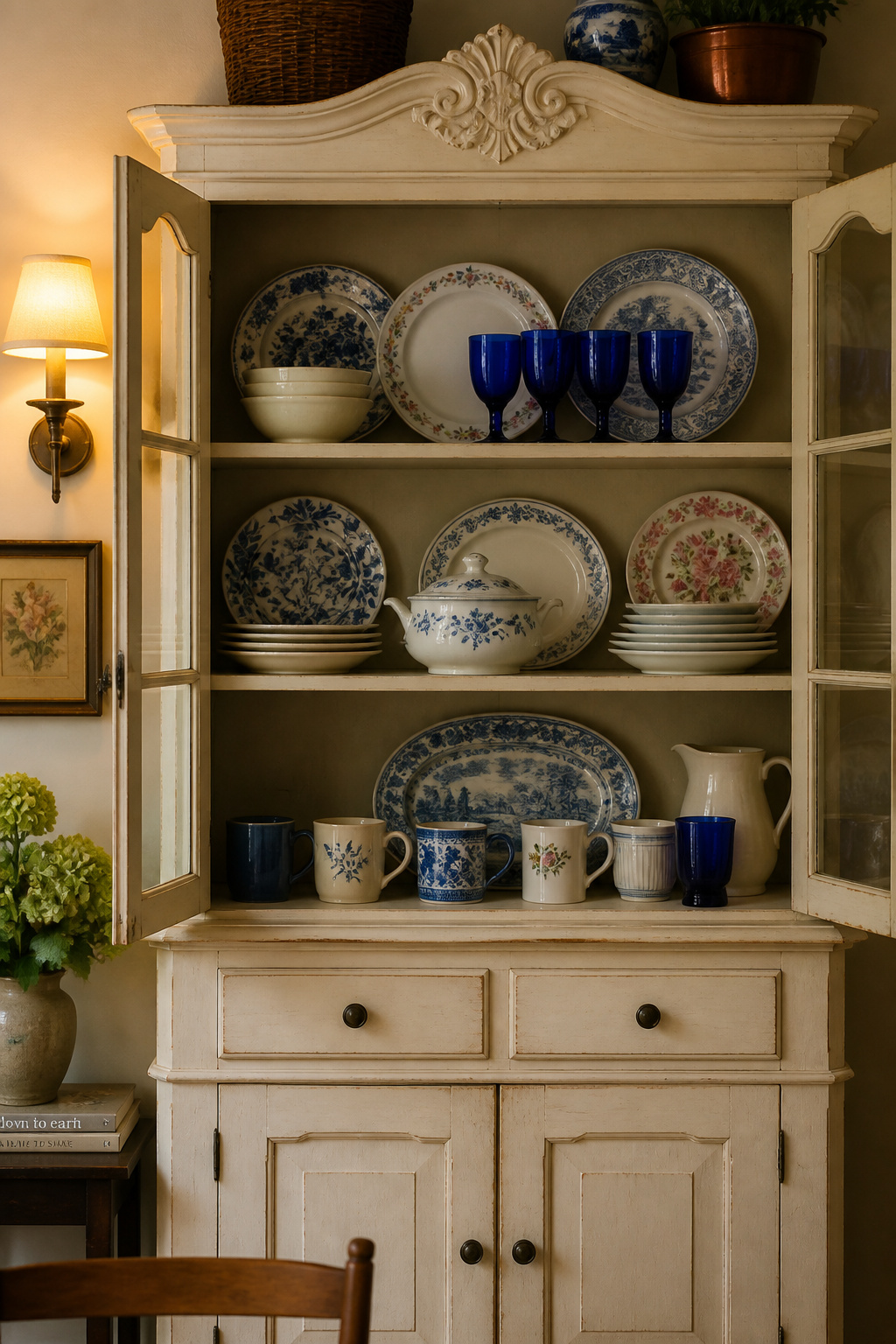
Why a vintage china cabinet delivers more per dollar than any other case piece
China cabinets are a genuine buyer’s market right now. They sell cheaply because formal dining rooms have fallen out of fashion, which means consistent supply across Goodwill, Salvation Army, Facebook Marketplace, and estate sales. In an eclectic room, that out-of-favour piece becomes the narrative anchor: the item that displays a story instead of just holding plates.
What to inspect before buying: back panel, drawer slides, glass condition
Three checks before you commit. First, the back panel — it should be solid wood, even if thin; a particleboard back warps and swells, and solid-wood backs are available at the same price. Second, open and close every door and drawer. Sticky drawers from swollen wood usually free up with paste wax; a drawer that won’t close means the carcass has warped — unfixable. Third, set a level on top. Minor lean shims out with furniture feet; significant warp means doors and drawers will never line up. Cracked glass panes are a disqualifier unless you want a $15–$40 glass-shop bill per pane.
Painting, leaving, or stripping: the three paths and their real effort
- Paint — fastest. Chalk or milk paint bonds without priming. Materials $30–$80, about 4–8 hours across two days with drying time.
- Leave it natural — correct when the original finish is stable and the patina suits the room. A mild wood cleaner and furniture wax, $10–$20.
- Strip and refinish — labour-heavy, only worth it for good bones under a finish worth saving. DIY stripping pools in carved detail; professional refinishing averages $625.
Lighting on a Budget: Thrifted and Rewired Fixtures
Vintage lighting is abundant and transformative per dollar. A $20–$50 chandelier rewired for $100–$300 produces a fixture that would retail at $200–$400 new — with real patina no “aged brass” finish fully fakes. Price the rewiring before you fall for the piece.
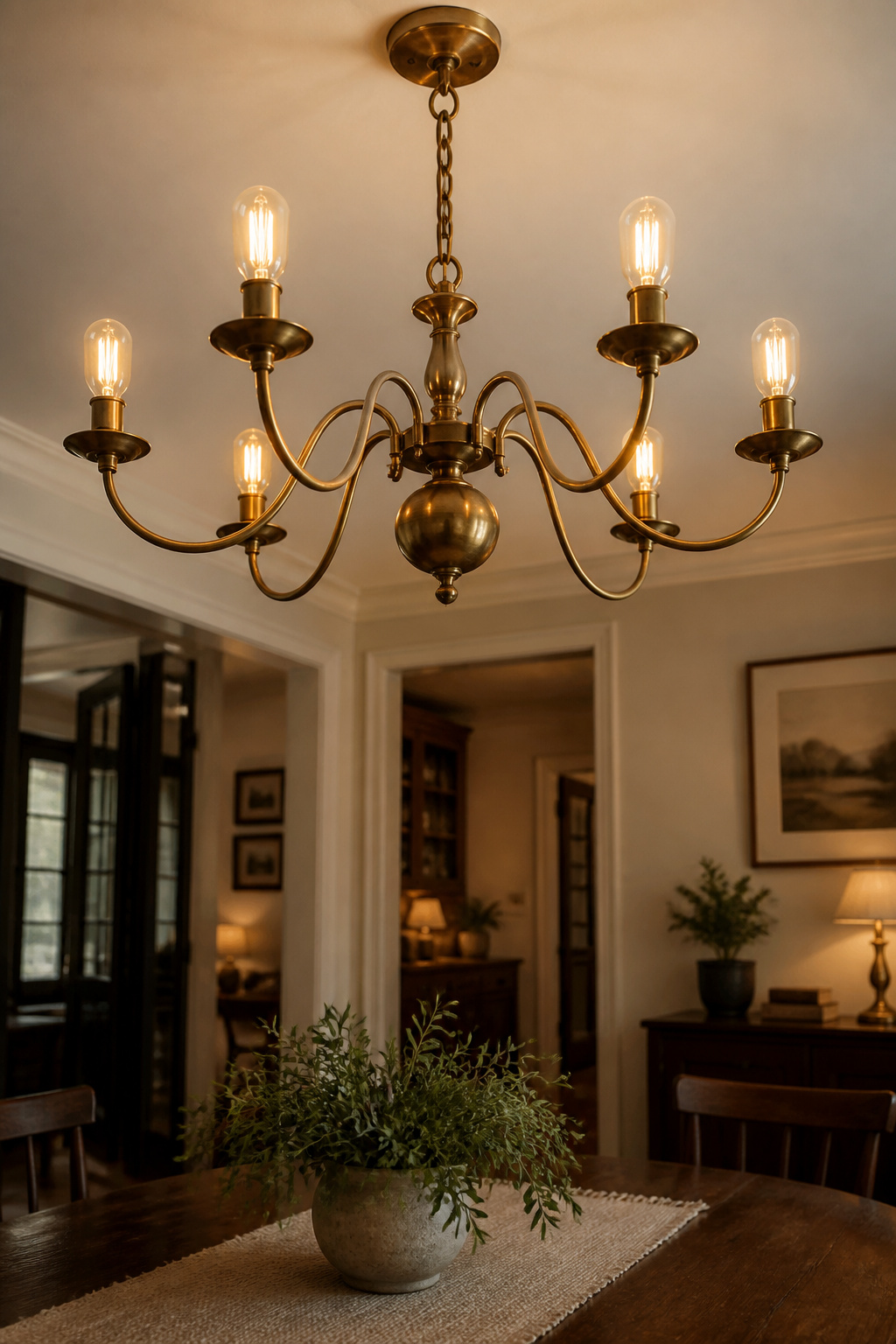
Where to find vintage chandeliers and pendants worth rewiring
Habitat for Humanity ReStore is the steadiest source — pendants, chandeliers, and sconces donated from renovations, without the antique-store markup. Goodwill, Salvation Army, and Savers carry fixtures in their home-goods sections; tarnish and dated shades wash out, so check that socket hardware is intact and the mount is standard. Estate sales are where brass chandeliers turn up cheapest, because heirs clearing a house want speed, not top dollar.
The rewiring cost and what it adds to a $30 fixture
Hire an electrician for multi-arm chandeliers. Professional rewiring runs $100–$300 total — a 2–3 hour job — and buys you a safe, code-compliant install. A $30 brass chandelier plus $150 in rewiring still beats the $200–$400 retail equivalent. A single-socket pendant is a legitimate DIY job with a $15–$30 kit: cut back to bare copper, wire-nut the new cord, thread the canopy. Anything past three arms, call the pro.
New budget fixtures that read vintage: what Tess keeps an eye out for
The fastest cheat: metallic spray paint. Aged brass or oil-rubbed bronze over a dated chrome or nickel fixture takes 30 minutes and $8–$15, and reads vintage from across the table. Repurposing a thrift fixture — new shade, fresh paint — works from base materials costing $5–$20.
Vintage Dinnerware and Table Accessories: The Layer That Costs Almost Nothing
This is the layer that costs pocket change. Individual vintage plates and bowls run $0.25–$3.00 at estate sales; vintage napkins average about $1 each. The styling logic is the same shared-colour rule that holds the rest of the room together.
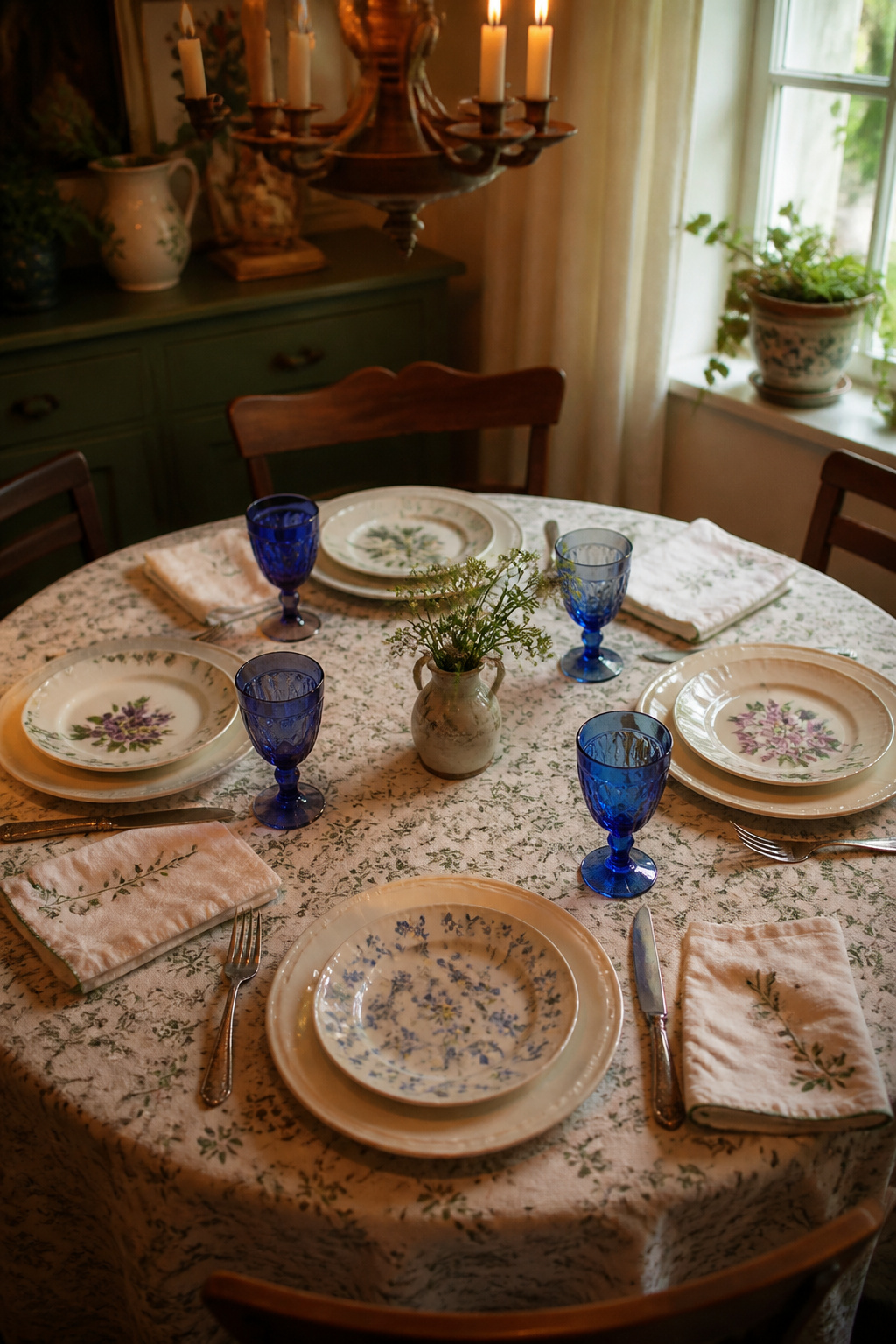
Mixed vintage dinnerware as an eclectic table styling move
Don’t chase a matched set — that’s the opposite of the point. Gather an assortment of plates, bowls, and saucers, then keep only the ones that share a colour thread and pull anything that clashes. A practical version: a plain new white base set with vintage patterned bowls and dessert plates mixed in for whimsy. The same buy-old, buy-new instinct carries the whole room — see mixing vintage and modern pieces for the furniture side of it.
What to look for at estate sales: condition checks and pattern mixing logic
Run a finger around each rim — a chip you can’t feel is cosmetic on a decorative plate, but crazing matters on anything that holds food. Find the shared element (a floral motif, a cobalt blue, a gold rim) and build the assortment around that thread rather than around one pattern in quantity. Blue-and-white transferware is the easy starter — neutral enough to anchor without competing, and consistently stocked at estate sales nationwide.
Textiles: thrifted table linens as the easiest pattern layer
Linens are the cheapest pattern you can add. A table runner over a plain cloth gives you colour and motif for a few dollars, swaps out by season, and spares you a full tablecloth. Vintage runners and cloths mostly land at $5–$25. Look for monograms, embroidery, or handmade lace — that visible craft history is what separates eclectic from generic.
Assembling the Room: The Order That Makes the Budget Work
Eclectic rooms fail when everything gets bought in one weekend before there’s a colour story or an anchor. The order matters as much as the budget.
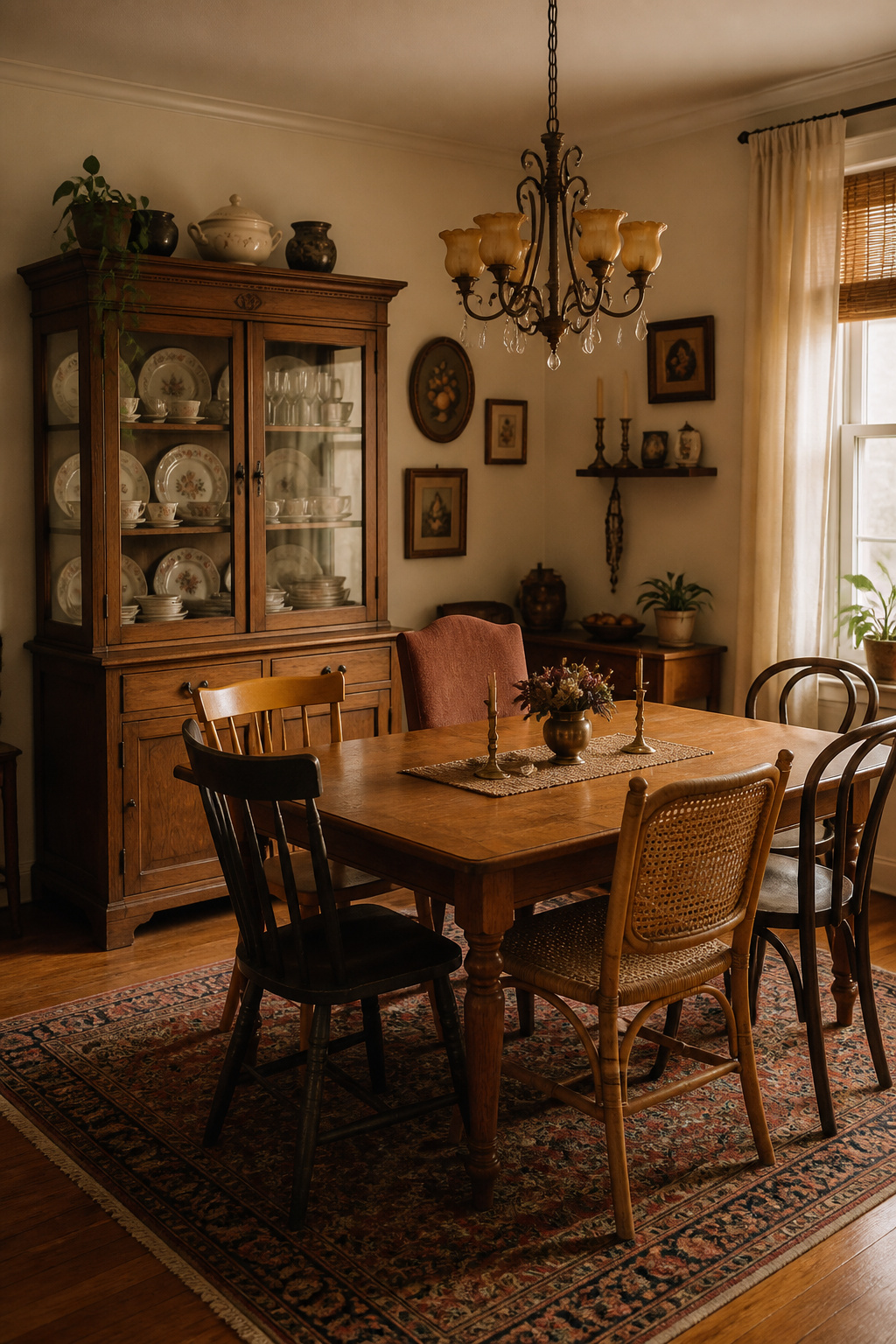
Start with chairs and one anchor piece, then add layers
Place the biggest furniture first. The anchor — usually the table or china cabinet — sets the room’s tone, colour, and period, and everything after is chosen to relate to it. Then layer in sequence: settle a two-to-three-colour story from what you already own, add texture, and bring in soft furnishings last.
How to avoid the trap of buying everything at once
Patience is the actual skill here. A room hunted over 3–6 months reads differently than one assembled in a single Saturday — and it stops you blowing the whole budget in one category. My personal split for a $500 build: roughly 50–60% into chairs and the anchor case piece, 20–25% into lighting, the rest into dinnerware and textiles. Clearance racks at HomeGoods, TJ Maxx, and IKEA as-is fill the gaps for the rug pads and bulbs you’re buying new anyway.
The first purchase Tess recommends for anyone starting from scratch
Here’s your first move: buy a single chair. Not a set — one genuinely unusual chair with good bones and a seat height in the 17–19-inch range. The fabric you choose to recover it is the first thread in the room’s palette, and every piece after gets chosen to echo that one decision. One chair under $30 turns the whole project from abstract to underway. For the bigger picture of how the pieces relate, the guide on putting together an eclectic dining room maps the whole style.
FAQ
How do you decorate an eclectic dining room cheaply?
Start with three high-impact thrift categories: mismatched chairs ($5–$30 each), a vintage china cabinet ($50–$250), and a rewired chandelier ($30–$50 plus $100–$300 rewiring). These define the room. Reupholstering a thrift chair with new fabric costs under $60 total, and mixed vintage dinnerware at $0.25–$3 a piece styles the table for almost nothing.
What is the best thrift store find for a dining room?
Solid wood dining chairs are the single best find — they save the most money (up to 90% versus new), reupholster easily, and create the mismatched character the style depends on, commonly $5–$30 each. Vintage china cabinets are the best case piece, cheap right now at $50–$250 because formal dining fell out of fashion, yet exactly the storytelling anchor an eclectic room needs.
How much does it cost to reupholster a dining chair yourself?
DIY materials for a drop-in seat run $20–$60 per chair: new foam ($10–$25), fabric (3/4 yard covers two chairs, $10–$30), and staples. Add $15–$35 for a staple gun if you lack one. Each chair takes 30–60 minutes with no sewing. Professional slip-seat reupholstery runs $100–$550 per dining chair (2026 Angi data), so DIY saves the bulk of that cost.