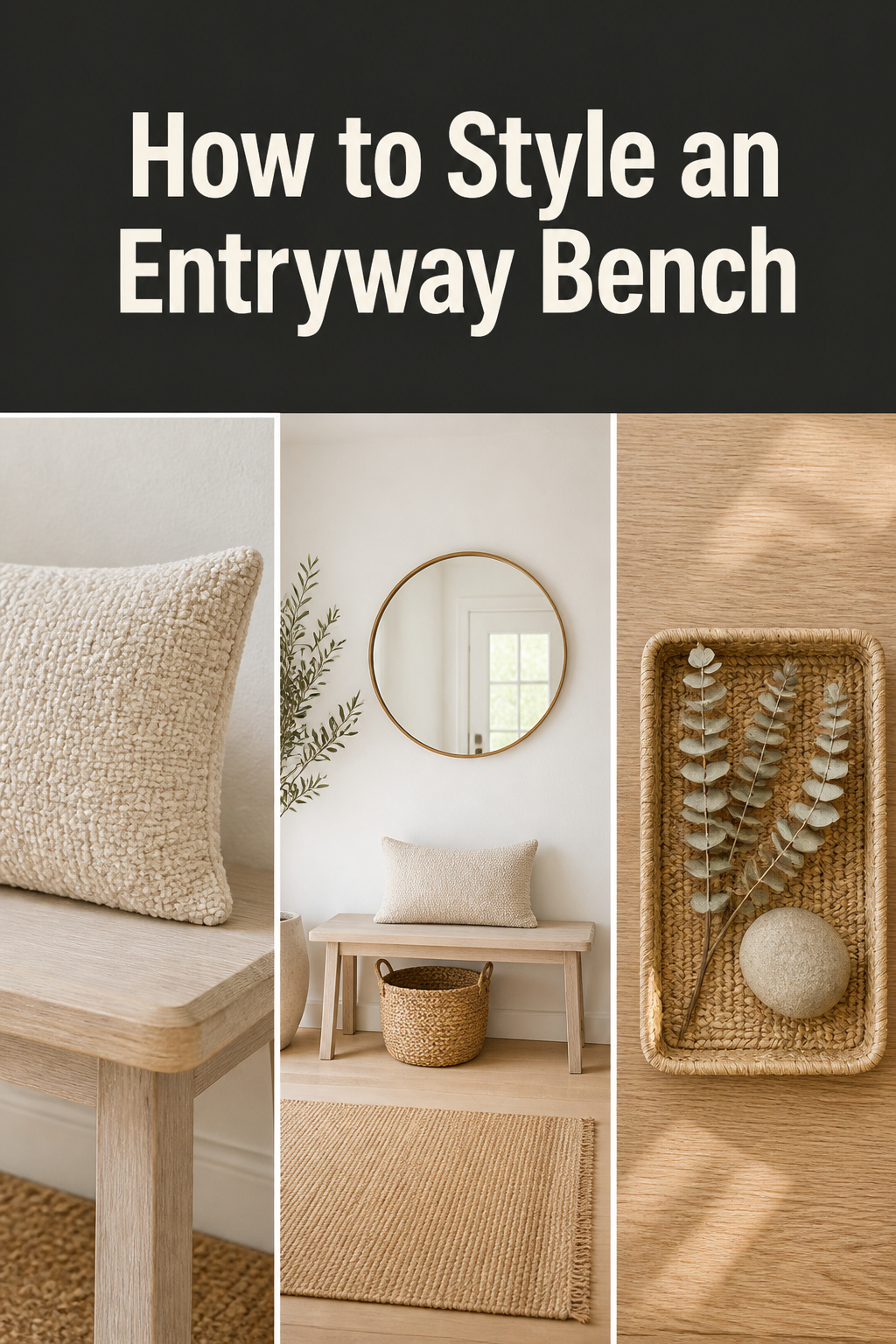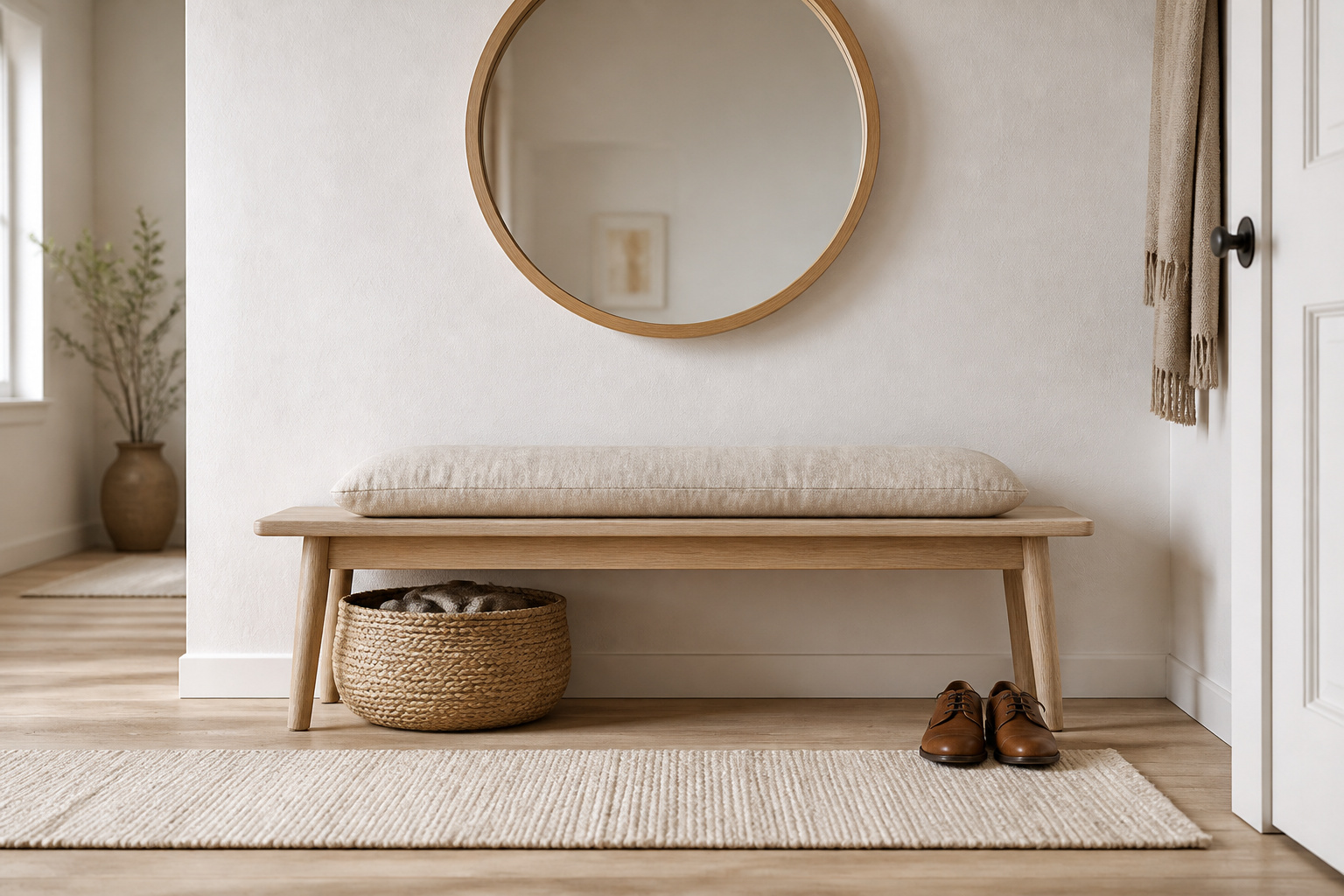

You already have the bench. You have probably noticed, too, that the styled entries you admire are not doing more than yours — they are doing less, on purpose. Good entryway bench styling is not addition; it is choosing the few things that earn their place and trusting the empty space to do the rest.
TL;DR
- Style around one cushion at roughly two-thirds the seat width, one basket beneath that also stores something, and one mirror hung six to eight inches above the cushion.
- A 2-to-2.5-inch cushion keeps the seat in the comfortable 17–19 inch range; texture over pattern (woven linen or boucle) reads as considered in a transition space.
- A bare wall above a well-styled bench is a design choice, not an oversight — empty space used on purpose is part of the composition.
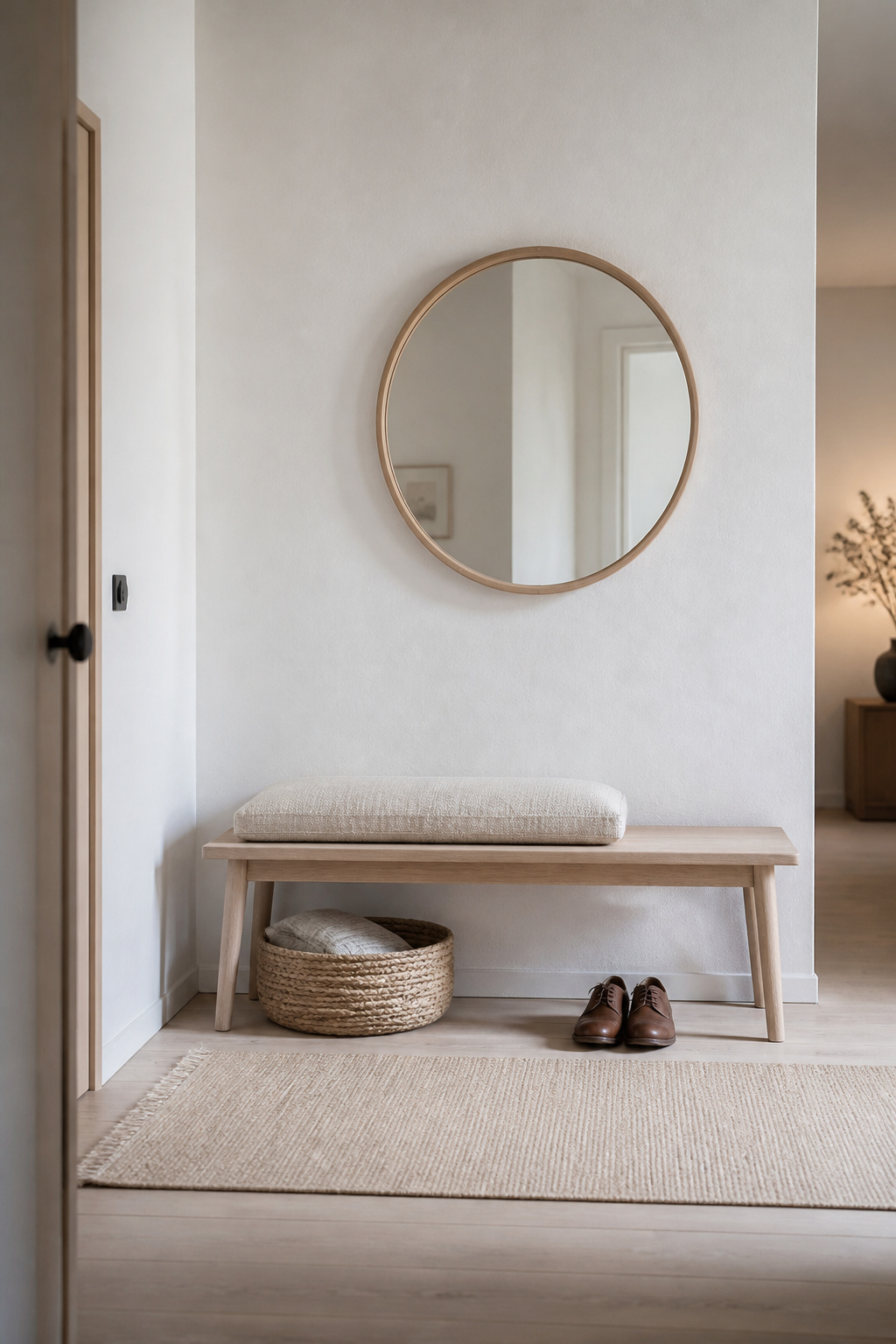
My grandparents’ summer cottage on the Stockholm archipelago had an entry of unpainted pine: one bench, one row of pegs, a basket for boots. Nothing on the bench but the light. It taught me early what “enough” looks like. What follows builds in stages — the empty bench, the cushion, the basket, the wall above, and the seasonal refresh.
Start With Nothing: The Bench Before Anything Is Added
The developed eye starts subtractive, not additive — clear the bench completely first.
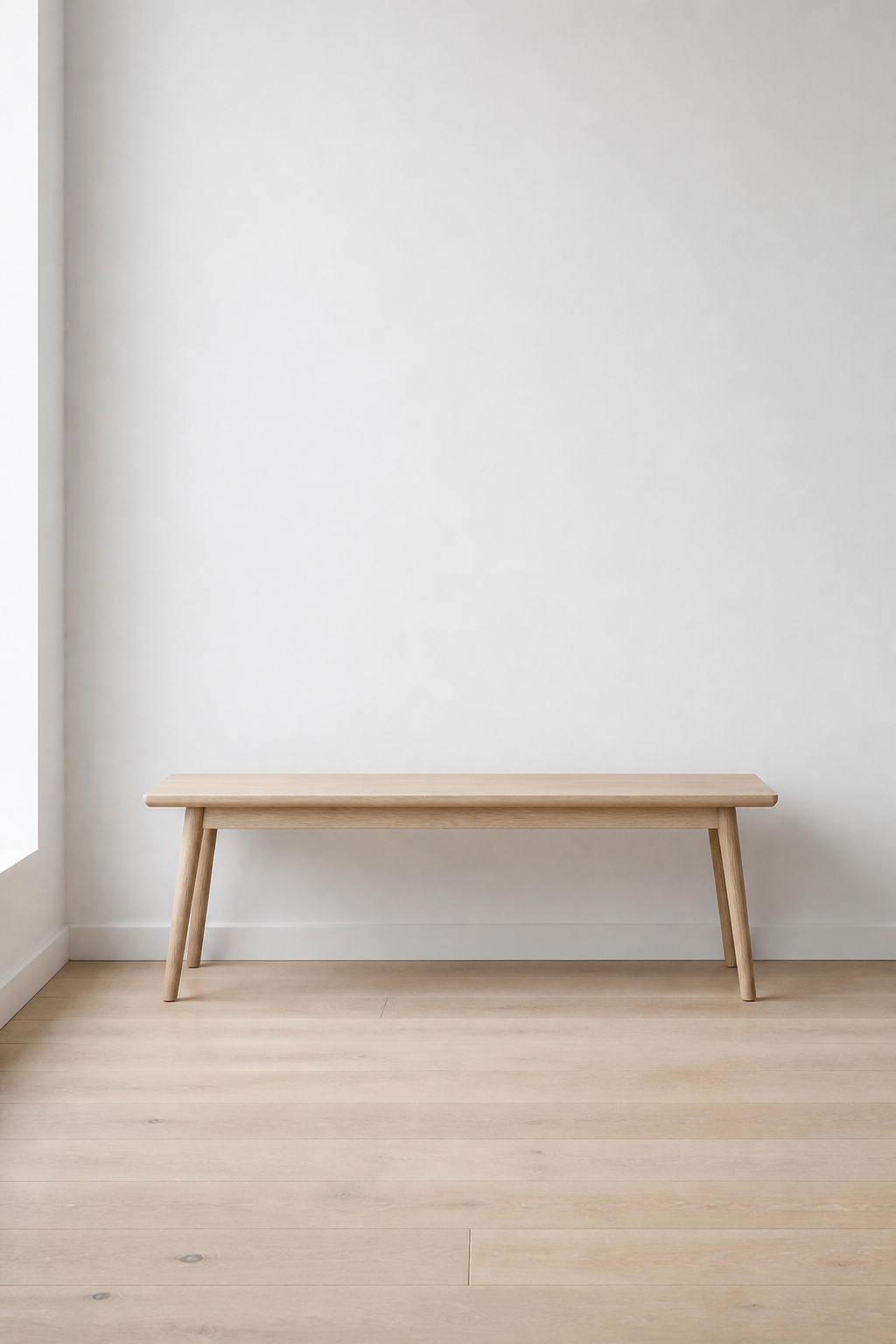
Clearing the bench completely before restyling
The Swedish idea of lagom — not too much, not too little, but just right — is the foundation: remove everything, then add back only what earns its place. Designer Sarah at Grace in My Space limits a small entry to two focal points — typically a mirror and the bench.
Reading the bench’s own lines, material and weight first
Scandinavian design prizes functional beauty: honest materials, visible craft, clean lines beautiful in themselves. Pale woods like ash, birch and pine are canonical for entry benches because the grain and joinery are part of the look. Ask whether the bench’s silhouette already carries the visual weight — often it does, and the bench is the main event.
The question that cuts: what does this entry need to feel, not look like?
Katherine Mueller puts purpose first: a bench must work — a short sit, a place to tie shoes — before it is styled. (Still choosing the bench? Our full entryway bench guide covers sizing and storage.) Welcome and calm, not curated: that feeling points toward fewer objects.
The Cushion: Choosing the One Textile That Earns Its Place
With the bench read honestly, the first and most useful object is a single cushion.
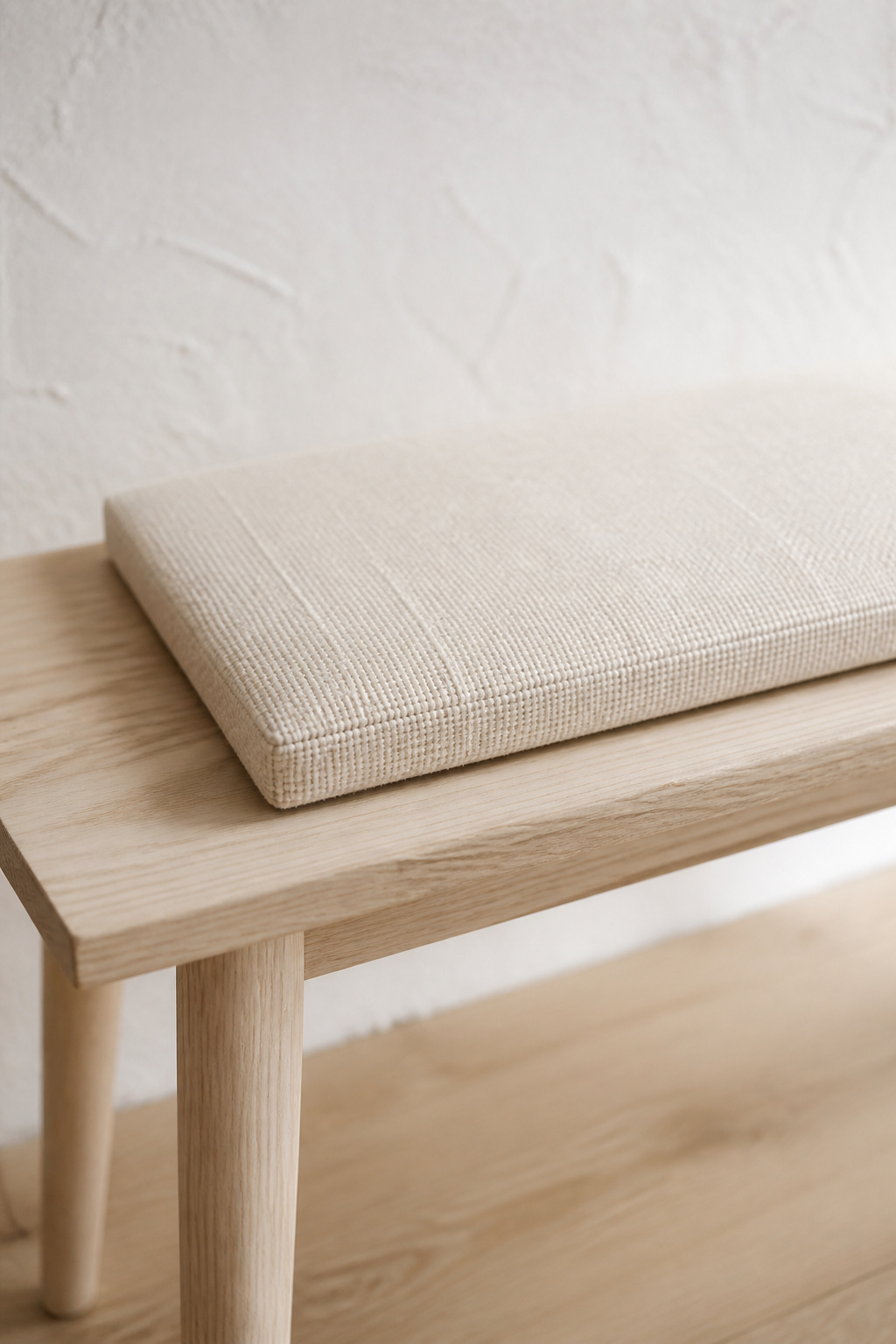
Size: cushion width relative to the bench seat
The proportion to aim for is roughly two-thirds of the seat width — the well-established 2/3 furnishing rule cited for mirrors and art, applied to the cushion below. No source codifies it for cushions specifically; it is that principle applied consistently, not a published rule. The bare wood at each end is part of the composition.
Take the 48-inch bench as your reference row — the rest scale from it. The cushion figures are the 2/3 rule inferred for cushions; the mirror figures are the same rule as cited for mirrors and art.
| Bench width | Cushion target (~2/3 seat) | Mirror/art target (~2/3 bench) |
|---|---|---|
| 36 in | ~24 in | ~24 in |
| 48 in | ~32 in | ~32 in |
| 60 in | ~40 in | ~40 in |
Texture over pattern: why a woven or boucle reads as considered
In a transition space, strong pattern competes with everything the eye is meant to rest on; texture does the opposite. A woven linen, a looped boucle, or a brushed chenille in cream or warm grey adds a quiet layer. Keep it thin: 2 to 2.5 inches of high-density foam holds the seat in the comfortable 17–19 inch range, while anything above 3 inches pushes it past 22.
The case against a cushion: when the bench looks better without one
Sometimes the honest answer is no cushion at all. A bench with a naturally beautiful surface — oiled oak, a tight seagrass seat, a built-in upholstered pad — is already resolved, and a cushion only interrupts its line. On a bench under 30 inches wide, a cushion often reads as a pillow dropped on the frame.
Baskets Under the Bench: Earning the Negative Space
The Nordic discipline for the space under the bench is clear: a basket that only decorates is a harder sell than one that works.
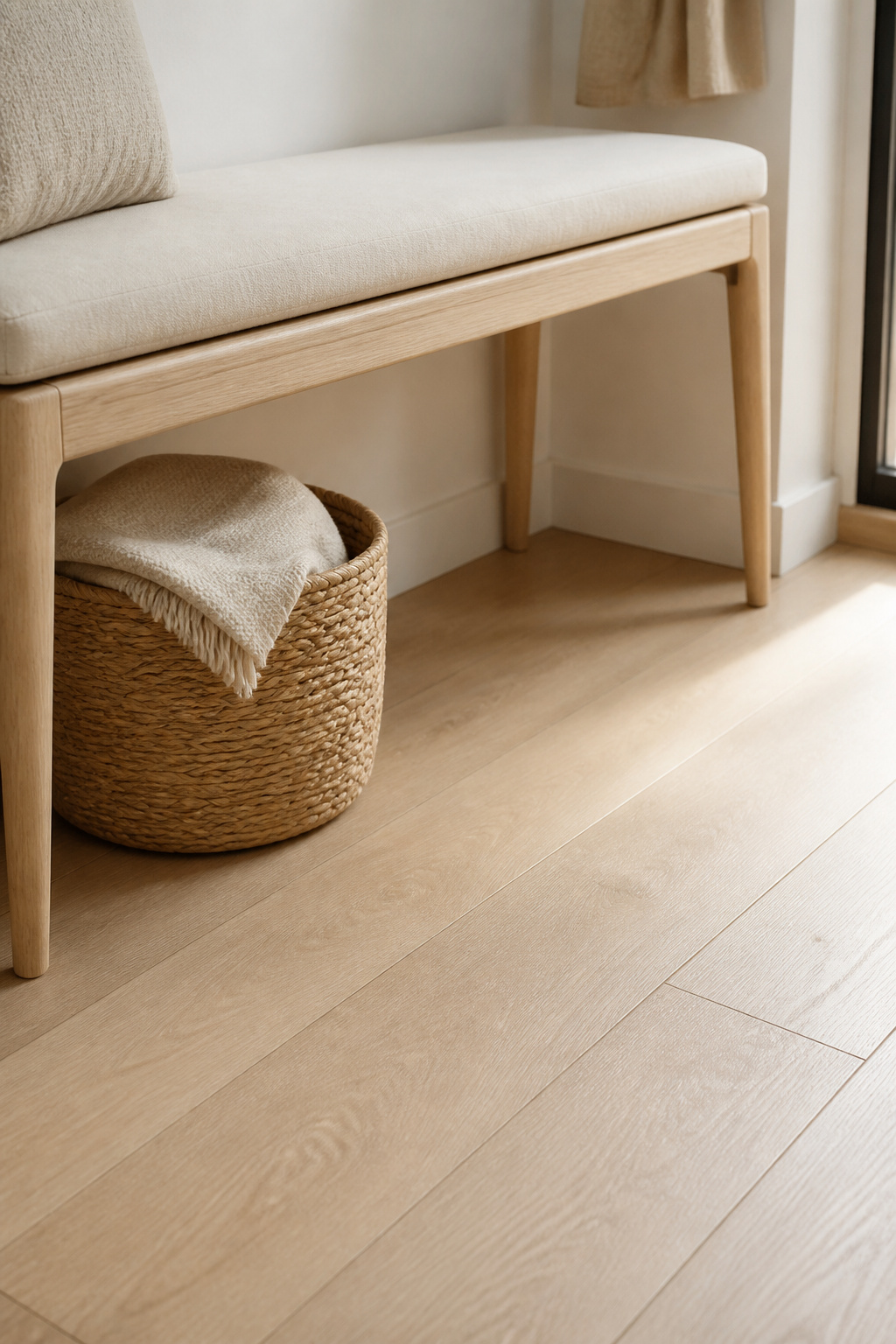
One basket vs two: the odd-number rule and when to ignore it
The rule of odds — odd numbers read better than even ones — is the most consistent convention in vignette styling. Kylie M Interiors names it as a foundational guideline, not a law: one, or three, usually beats two. Under a bench, two identical baskets read as a matched set, while one to the side reads as a single considered object.
Material and height: what the basket contributes to the entry’s texture story
Natural fibres — seagrass, water hyacinth, rattan, wicker — bring warmth and organic texture against the hardness of wood and plaster. The basket should slide easily under the lower rail with a little visual clearance, so the two read as distinct objects rather than one merged mass — a rule of thumb, not a published measurement, but the eye confirms it.
Baskets that double as storage vs baskets that are only decorative
This is where the lagom standard bites. A basket that holds shoes, a folded throw, or the dog’s lead earns its place — the functional layer is the permission slip for the decorative one. An empty, ornamental basket occupies floor space without returning anything. Vermont Woods Studios frames the under-bench basket as exactly this pairing: storage that also styles.
What to Hang Above the Bench (and What to Leave Blank)
The wall above is where most people over-decorate. You have three honest options: a mirror, a single piece of art, or nothing.
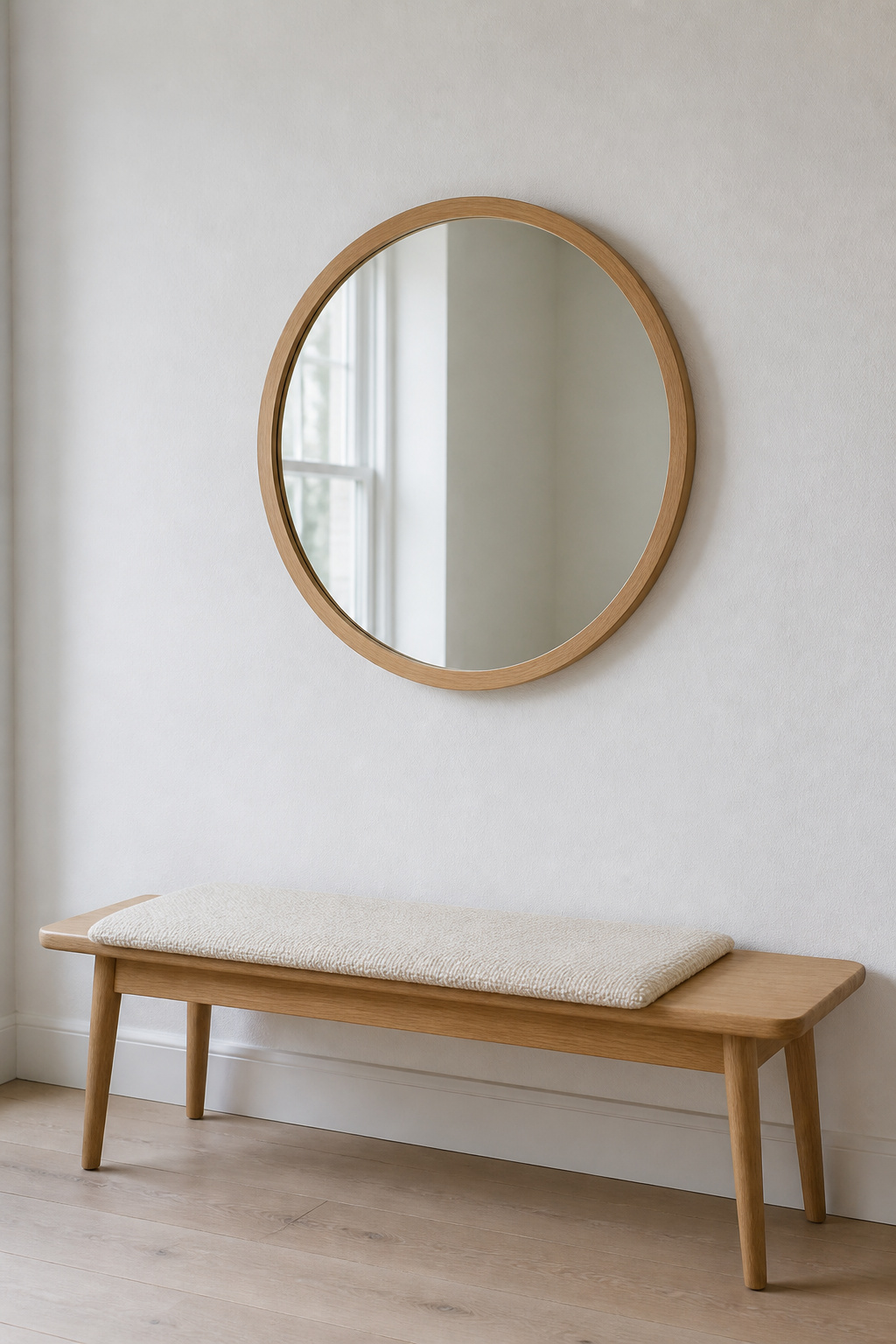
Mirror: the most functional piece of art for an entry
A mirror earns the wall on function alone — a last outfit check, and reflected light in a dim space. Size it at roughly two-thirds the bench width, with 50–75% as the flexible zone. Hang the bottom edge 6 to 8 inches above the cushion top — that gap, per Kylie M Interiors, connects the mirror to the bench so it reads as a pair.
Single artwork or print: sizing it so it doesn’t float
The same 2/3 rule governs a single artwork: the table’s mirror column applies unchanged, with the bottom of the frame 6 to 8 inches above the seat or cushion. The common mistake is a piece too small for the wall, which leaves both art and bench out of proportion. Barrett Woodward of Modest Hut suggests art over a mirror when the entry is already bright enough not to need the light.
The argument for leaving the wall blank above a well-styled bench
A bare wall is not an unfinished wall. In Scandinavian and wabi-sabi thinking, empty space is an active element — the silence between the notes that makes the music. A bench with a considered cushion, one basket and a floor runner can be a complete entry with nothing above it — a design choice, not neglect. If you would rather work the wall harder, our guide shows how to work in hooks and a hall tree.
Entryway Bench Styling for a Small or Narrow Bench: Less Is Productive
On a narrow bench the constraint sharpens the discipline: less carrying capacity means each choice counts for more.
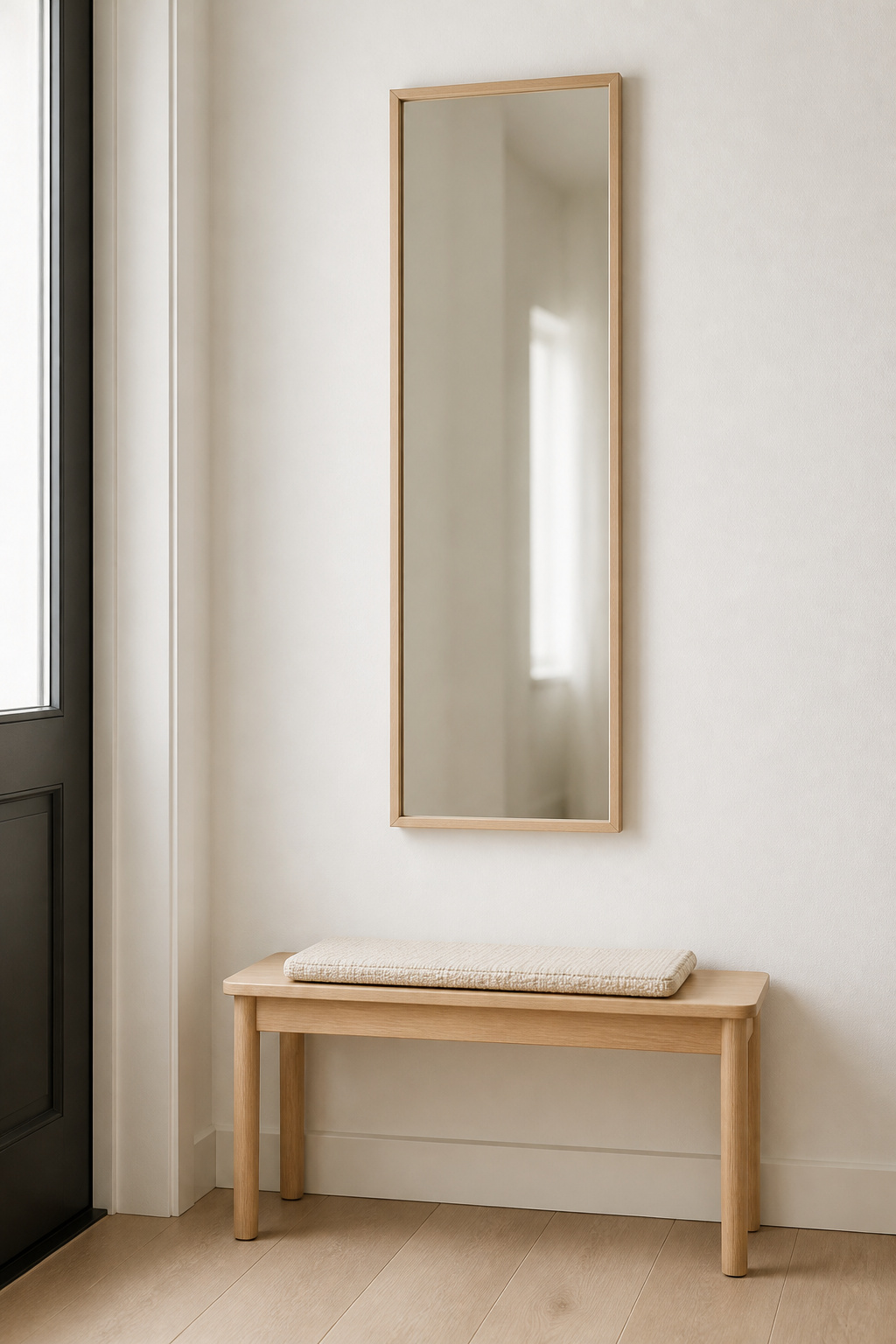
The one-item rule for a bench under 36in wide
For a bench under 36 inches, start with one styling element — one cushion, one basket, or one small plant, never all three. The principle is the two-focal-point guidance that Sarah at Grace in My Space applies consistently: the bench is one focal point, so it carries only one styling element. On benches under 30 inches, a two-thirds cushion reads as a throw pillow; a folded throw over one end serves better.
Vertical interest above a narrow bench without overwhelming the space
When the bench is too narrow to carry objects across, move the styling up. The wall becomes the primary zone: a simple mirror, a slim vertical print, or two or three hooks carries the weight the bench cannot. Architectural detail — a board-and-batten panel or textured wallpaper — is one of the best investments here. For more on sizing and clearance, see our approach to styling tight entry benches.
Seasonal swap: changing one textile vs redecorating
The smartest small-bench refresh is a single swap: change the cushion cover, or the basket, for the colder months and leave everything else where it is. Linen reads spring and summer; boucle or brushed velvet reads autumn and winter.
The Seasonal Edit: Refreshing the Entry Without Buying New Things
Keeping an entry alive is not about buying more — it is about rotating what you own.
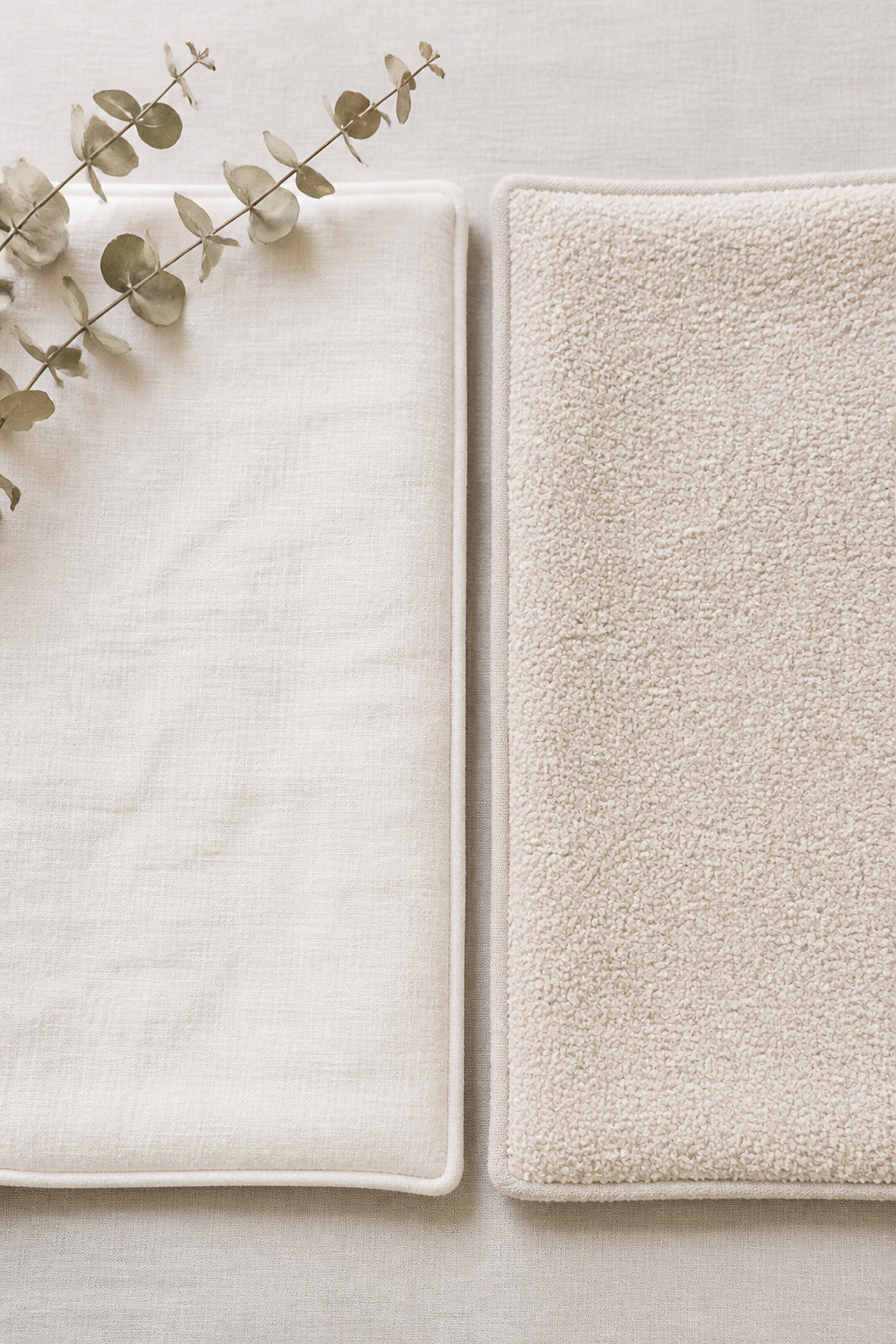
The textile rotation: two cushion covers, two basket liners, one year of variety
Katherine Mueller recommends rotating cushion covers by season — cosier fabrics for autumn and winter, breezier weaves for spring and summer. The insert stays; only the cover changes, and the covers stack flat in a drawer. Grace in My Space does the same with baskets: a cosier find for winter, the lighter original for spring.
Plant and branch placements that change with the season
A small plant or a few branches mark the season without buying themed decor: eucalyptus and magnolia for winter; tulips or potted herbs for spring; dried grasses and seed heads for autumn. The bench need not carry the plant on its seat — a pot on the floor beside the leg gives a living vertical accent.
The five-minute entry reset: what to move, what to remove
The reset is maintenance, not redecoration. It runs in three quick moves:
- Remove everything that has landed since the last reset — mail, dropped keys, a bag left “just for now.”
- Return each item to its real home: the basket, the hooks, the hall table.
- Re-evaluate what remains against your original intention, questioning anything that has sat there a full week unmoved.
The reset breaks the cycle. That is the lesson of the pine bench by the archipelago: enough, kept honest, is plenty.
FAQ
What should I put on top of an entryway bench?
Keep it sparse: one cushion at roughly two-thirds the seat width, and optionally a small tray or bowl to corral keys and sunglasses. The bench surface is a working one — bags get dropped, shoes get set down — so treat anything decorative as a deliberate choice rather than a default that merely fills space.
How do you make a plain bench look good in an entryway?
The fastest transformation is a single woven or textured cushion at two-thirds the seat width. Add one natural-fibre basket underneath — seagrass, rattan or water hyacinth — for floor-level texture. Then hang a mirror at two-thirds the bench width, its bottom edge 6 to 8 inches above the cushion. That bench-textile-mirror trio is the classic resolved entry.
Should an entryway bench have a cushion?
Not always. A bench with a naturally beautiful surface — oiled oak, woven seagrass, or an integral upholstered pad — is complete without one. For a hard wood or metal seat, a 2-to-2.5-inch high-density cushion adds comfort while keeping the seat at a usable 17–19 inches. On benches under 30 inches wide, a folded throw often works better.