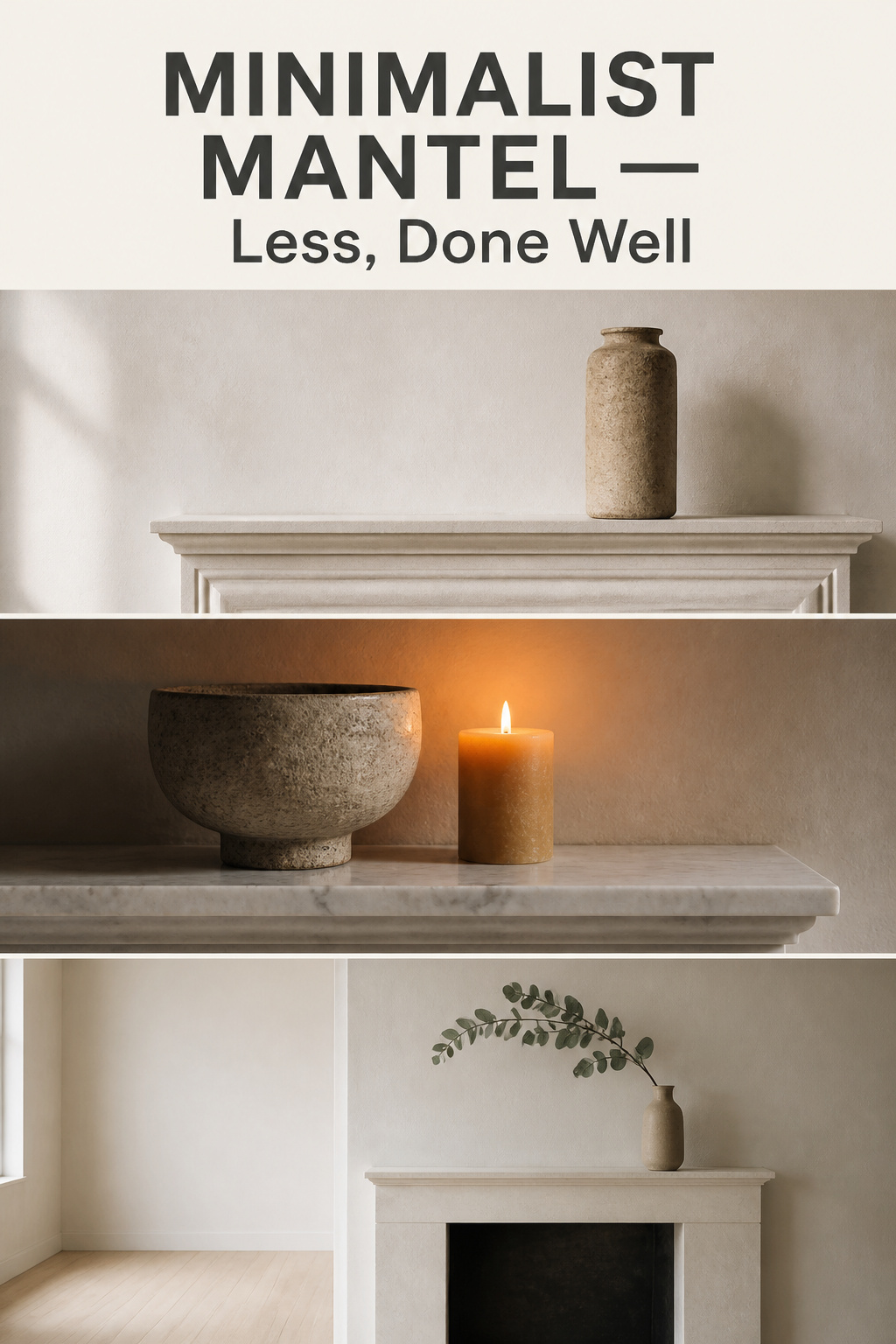
Ask first what you want the mantel to be, and the object questions answer themselves. Most people start at the other end — with what to buy, then a shelf made to hold it all. Minimalist mantel styling reverses the order. You decide this surface should be a quiet place in the room, and that decision removes most of what you were about to put there. What is left is not empty. It is chosen.
TL;DR
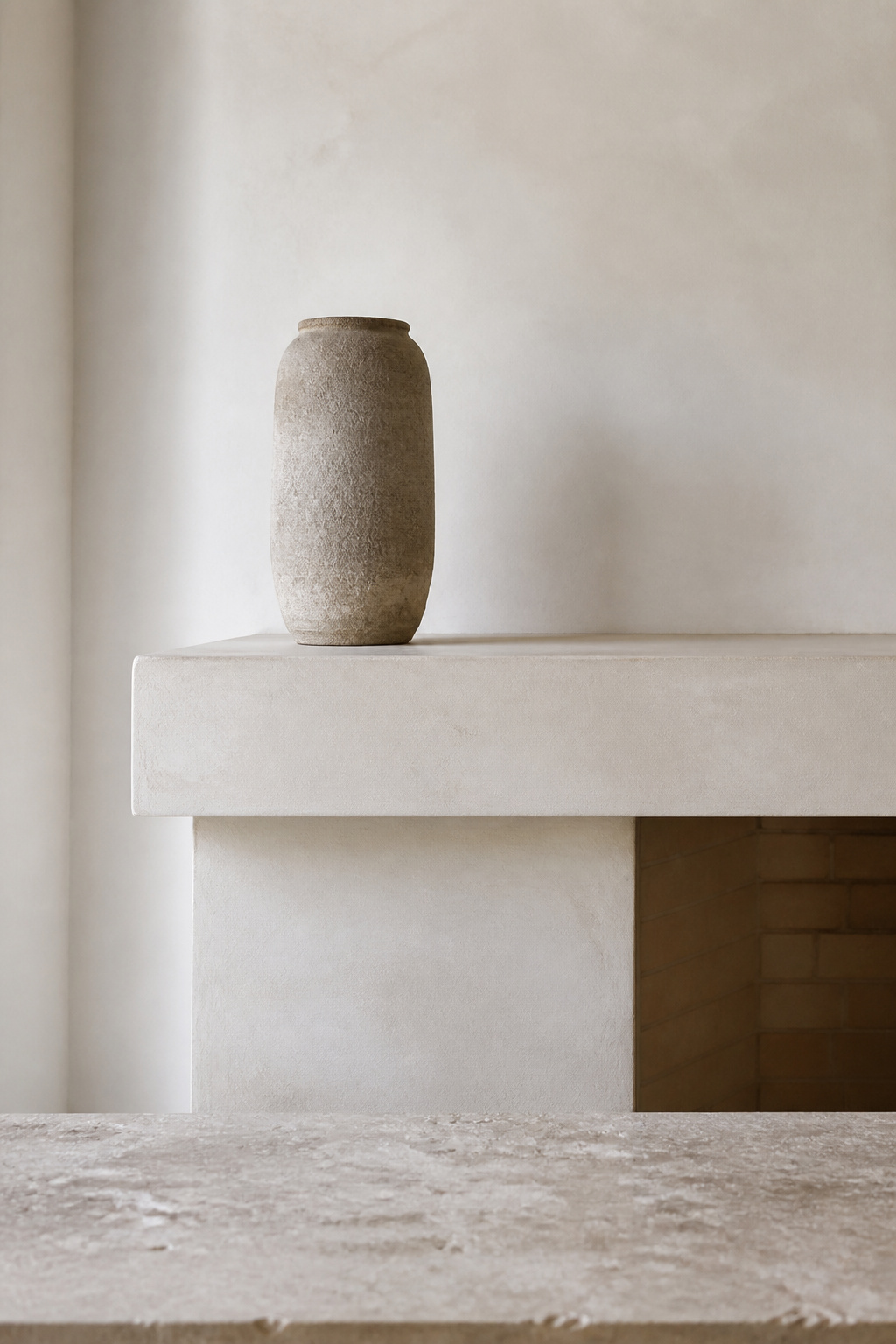
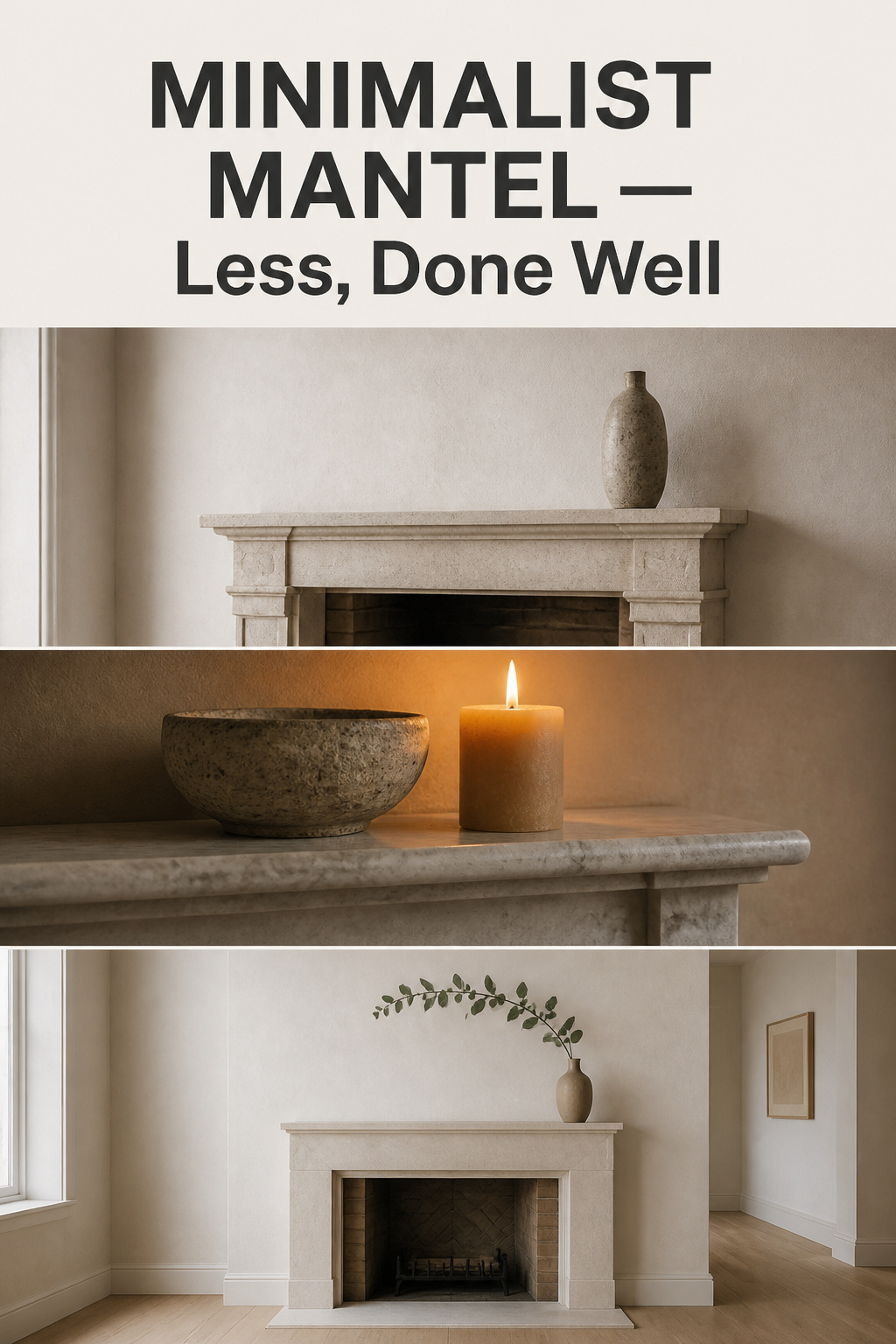
- Minimalist mantel styling means one to three objects, chosen for material quality, with roughly 40% of the shelf left deliberately bare — the empty space is the design, not an oversight.
- Warmth comes from texture and light, not quantity: unglazed clay, rough wood, a beeswax candle and a single botanical stem read warm where ten polished trinkets read cold.
- A minimal mantel works in a busy room as the eye’s rest point, as long as one material or colour on the shelf echoes something elsewhere in the room.
Why Minimalist Mantel Styling Is an Active Choice, Not an Absence
In Sweden we have a word, lagom — roughly “just the right amount,” the point between too much and too little. At the mantel scale it is a discipline: keep what you need to feel the shelf is alive, and stop. That usually means one or two objects, not a row of them. You can find the full framework for how to decorate a fireplace mantel in our complete guide; what follows is the argument for restraint.
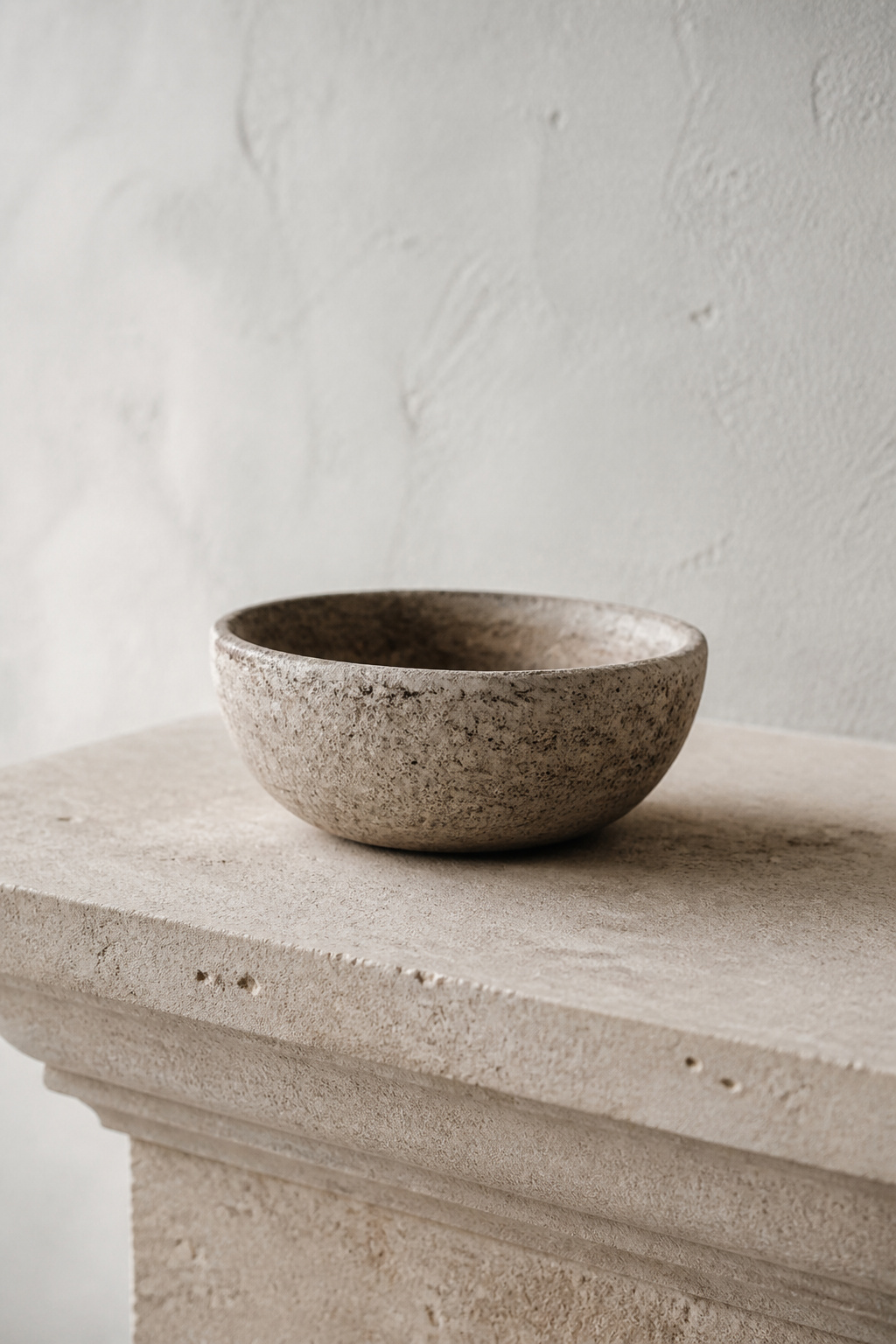
What Scandinavian design means by ‘enough’
Nordic minimalism is not the austere, ideological minimalism of the design schools. It lets the shelf breathe but insists on warmth through material — light wood, stone, linen, soft daylight. The goal is harmony with the room, not the elimination of comfort. That came from practical life: long winters indoors, small houses, limited resources. A culture that lives close to its few things learns to choose them well.
Why the eye needs somewhere to stop
A room gives the eye a great deal of work — pattern, colour, furniture angles all ask for attention. Used on purpose, an empty surface gives it somewhere to rest. Research from ArchDaily, cited by Homestyler, shows that leaving roughly 40% of the mantel bare lets a single standout object read more clearly than it could in a crowd. The fireplace is already a focal point; a minimal mantel lets that pull work instead of competing with it.
Undecorated versus minimally styled
An undecorated mantel has no objects and no intention — it reads as neglect. A minimally styled one has one to three objects placed with precision and chosen for quality, and its empty space reads as a decision. One genuinely good handmade vessel holds more presence than five ordinary ornaments. So if you go minimal, buy the one beautiful object, not the several average ones. That is the whole rule.
Choosing Two or Three Objects That Earn Their Place
The fastest way through the edit is one test: if you could keep only one thing on this shelf, what would it be, and why?
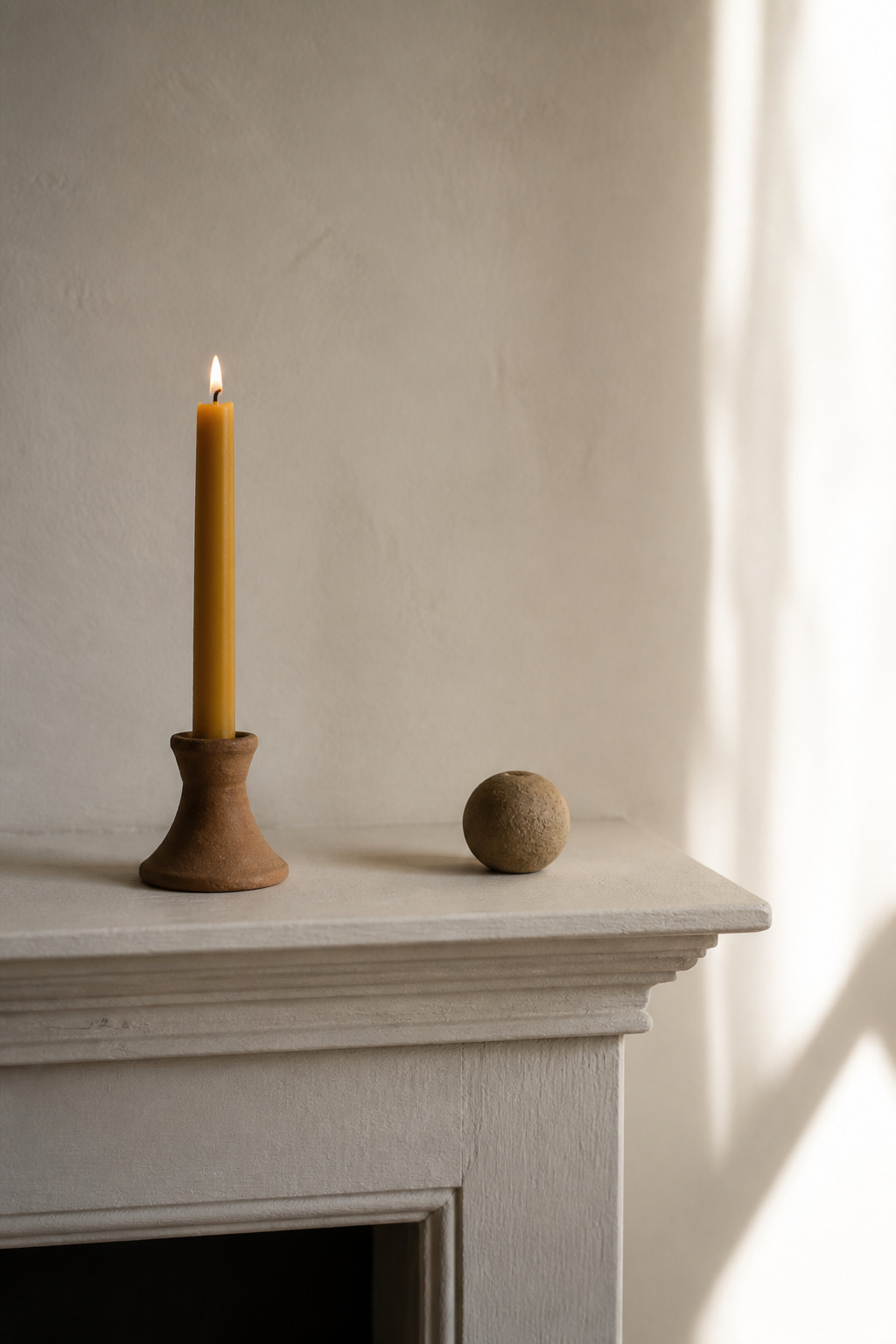
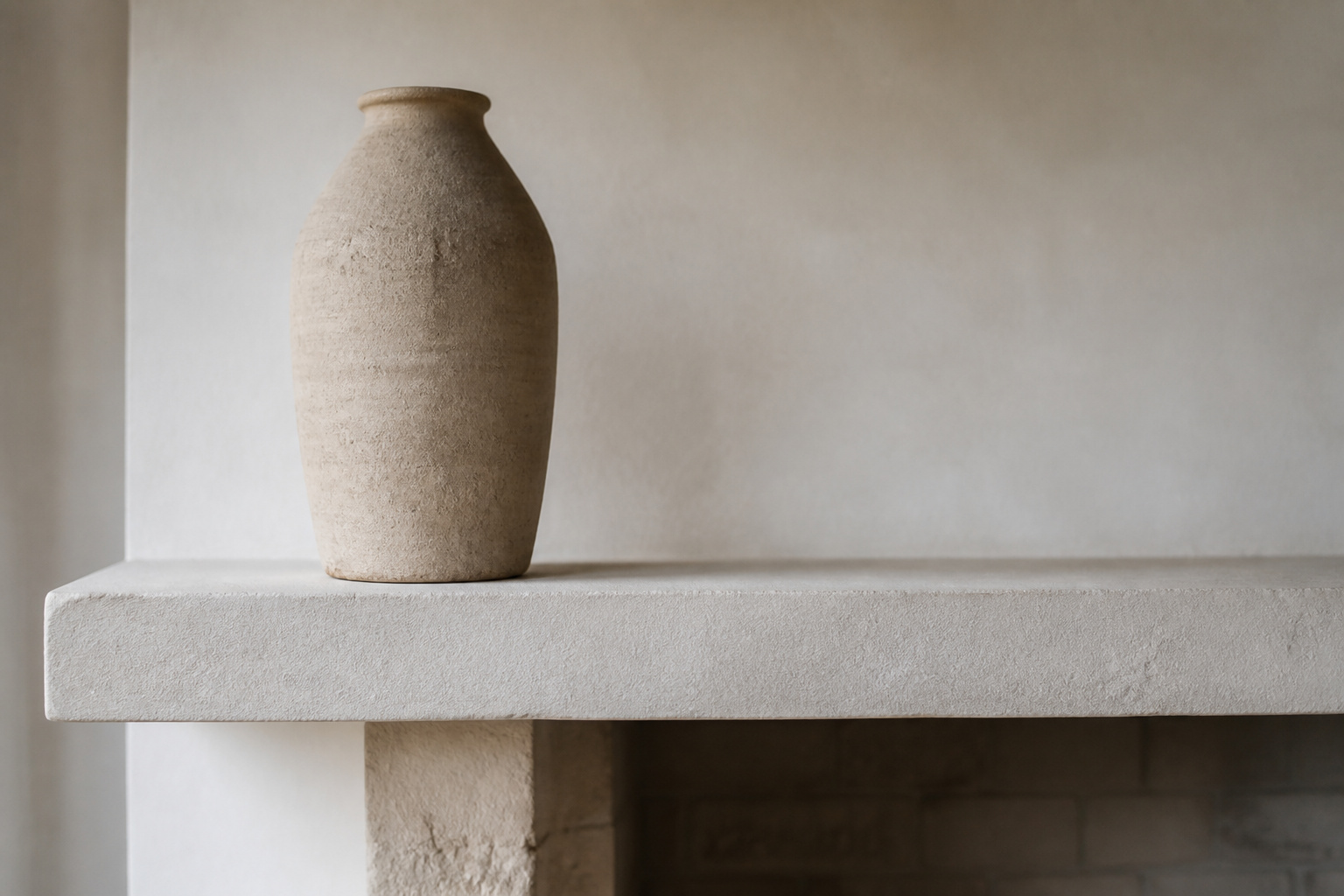
Whatever survives that question is your anchor. It should be sculptural and honest — a vessel in unglazed stoneware, a stone form, a tall piece in metal — its shape and texture carrying interest alone. As Lauren Whitmore of Simple Space Decor puts it, a single sculptural object “becomes the star of your mantle without the need for other objects.” Size it to span about two-thirds of the mantel width, so it feels grounded rather than adrift.
How many objects? Most rooms want one or three — odd numbers settle more naturally than pairs — and the table below is the decision, not a menu.
| Object count | Visual effect | Best suited to | Risk if misjudged |
|---|---|---|---|
| One | Quiet, formal, fully committed | Small or narrow mantels; busy rooms | Reads as bare if the object is poor or too small |
| Two | Calm with a little tension | Medium mantels; symmetrical surrounds | Can look like a pair that wants a third |
| Three | Rhythm without density | Wide mantels; rooms wanting more warmth | Tips into a collection if heights and materials drift |
If you cannot decide, choose one — a single right object is harder to get wrong than three competing ones.
Material over quantity
On a minimal mantel, material does the work that quantity does on a busy one. Natural materials carry it best: stoneware, untreated wood, stone. They sit near fireplace heat without discolouring and hold light differently. An unglazed piece absorbs light rather than bouncing it — a glossy object commands the eye, an honest clay one holds it. Light wood paired with rough ceramic is a Nordic signature because both show the marks of their making.
Scale, sized right
Scale errors are magnified when there are few objects. Too small, a piece looks lost; too large, it crowds the shelf alone. Where you use two or three objects, vary height rather than number — one tall, one low, perhaps one at mid-height with a single stem. As designer Emily Carter notes, “odd-numbered groupings with staggered heights enhance the perceived space and lightness of the décor” — on a minimal mantel, where nothing hides behind anything else, that rhythm is fully legible.
Proportion and Positioning: Where One Object Goes Changes Everything
With few objects, placement is the main design variable — every position is visible and consequential.
Centre or off-centre
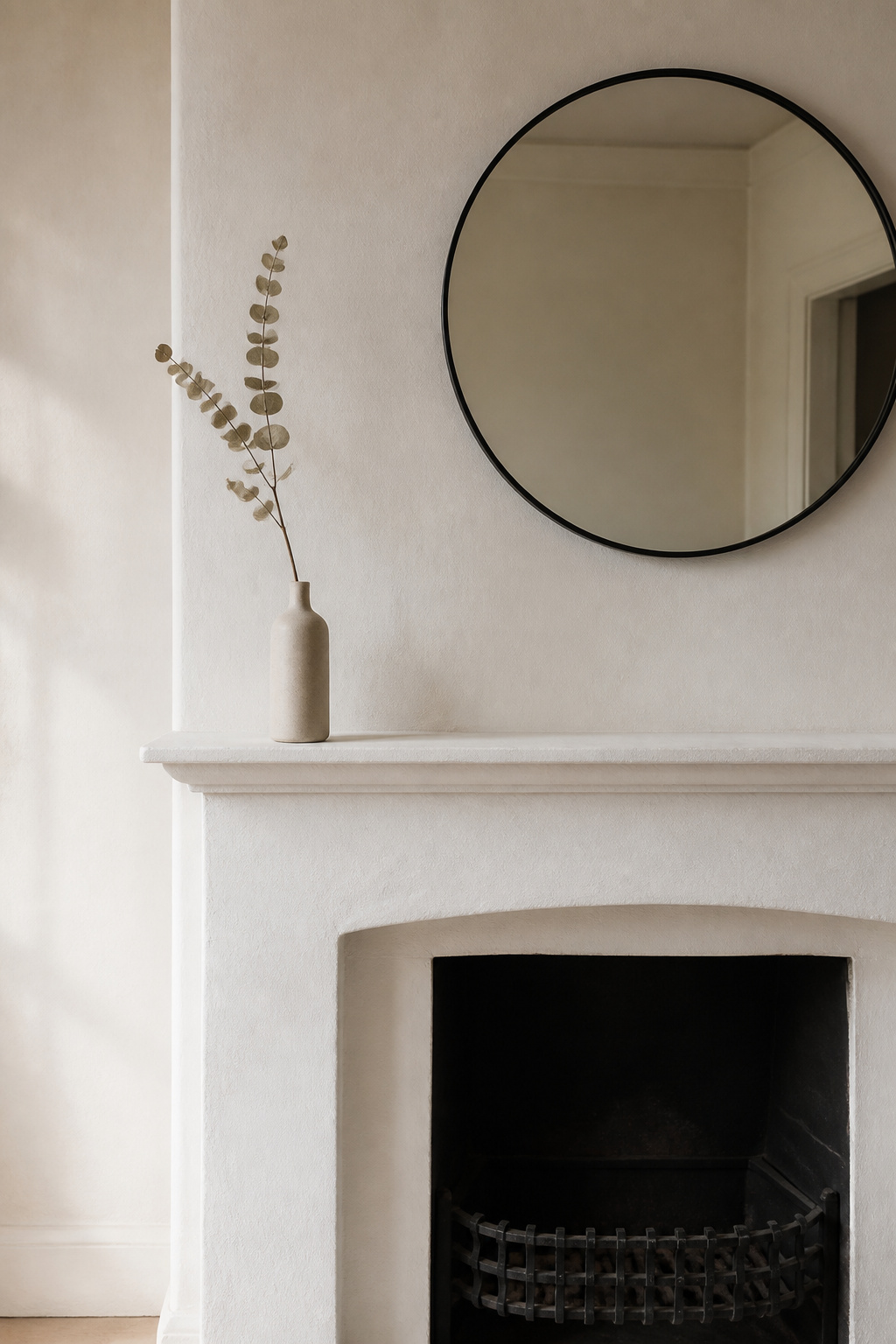
Centred placement suits a symmetrical surround and a formal room. Off-centre placement — the object set firmly to one third of the shelf, the rest left open — reads as contemporary and fits a Scandinavian interior more naturally. There is no published number for how far off-centre is “enough,” so trust this: if a viewer would wonder whether the placement was an accident, it is not committed enough. Slightly off-centre looks like a mistake; a clear third looks like a choice. Commit, or centre it.
The vertical line
A single tall object earns more than its share. A slim vase, a holder, a branch in a narrow vessel — each draws the eye upward and lengthens the perceived height of the fireplace. The standard firebox runs 24 to 36 inches tall; a tall piece above the mantel should reach at least half that height to hold its place.
What sits below and above
On a minimal mantel the firebox below and the wall above read as one composition, because nothing on the shelf hides them. Leave the wall bare, or hang a single frameless or thin-framed mirror; it reflects light without adding a hard frame. The professional range for hanging is 4 to 12 inches above the shelf; for a minimal look I take the tighter 4 to 6 inches, so the piece reads connected rather than floating. The firebox is no dead zone — an empty box with its cast-iron grate showing is an honest architectural detail. Even a minimal mantel earns from light seasonal changes: one branch swapped for the season is enough.
How Minimalism Stays Warm: The Hygge Edit
The most common objection to a minimal mantel is that it will look cold. Hygge, the Nordic sense of cosy contentment, answers that directly: warmth comes from texture and light, not from how many things you own.
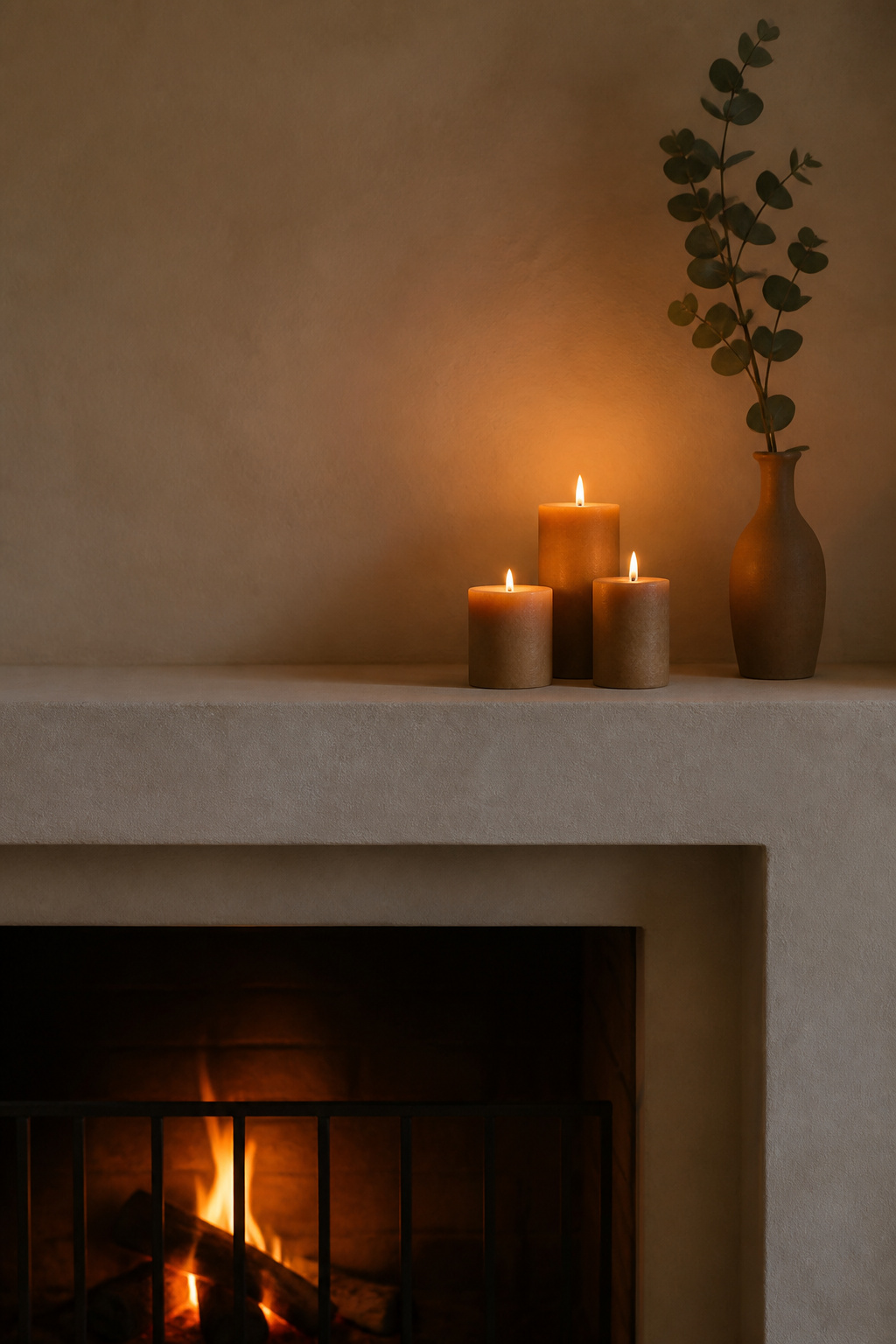
Texture without volume
Three material families carry the warmth on a minimal shelf:
- Wood — birch, ash, or pine. Light-toned, warm in any lamp.
- Clay or stone — unglazed stoneware is the characteristic Nordic choice; finger marks and firing colour read as warmth while adding almost no visual weight.
- A textile element — a folded linen cloth, a small woven piece.
One from each family, palette muted. Let the surfaces do the work.
The candlelight exception
Candles are always allowed, even on the strictest shelf, because a candle is not a decorative object — it is a light source. Beeswax burns at a low, steady, honey-amber flame with a faint natural scent that suits the slow calm of a Nordic room. Your Nordic Home calls candlelight the single most important hygge element — “a warm, flickering light that feels cozy and intimate.” If the fire is unlit, a warm LED in the 2700–3000K range does similar work; above 3500K it turns blue and undoes everything.
Greenery, in single stems
Greenery belongs on a minimal mantel at the scale of one: one eucalyptus stem, one olive branch, one monstera leaf in a slim clay vase. Dried botanicals — pampas, dried eucalyptus — are quieter still and need no care. The Nordic instinct is single branch types, never mixed arrangements. If the greenery fills a gap rather than adding warmth, remove it.
The Minimalist Mantel in a Non-Minimalist Room
Most people who want a minimal mantel do not have a minimal room. That is fine. A minimal mantel needs only to read with confidence against whatever surrounds it — in a busy room, it becomes the place the eye pauses before re-engaging with the pattern and colour everywhere else.
Restraint against the surround
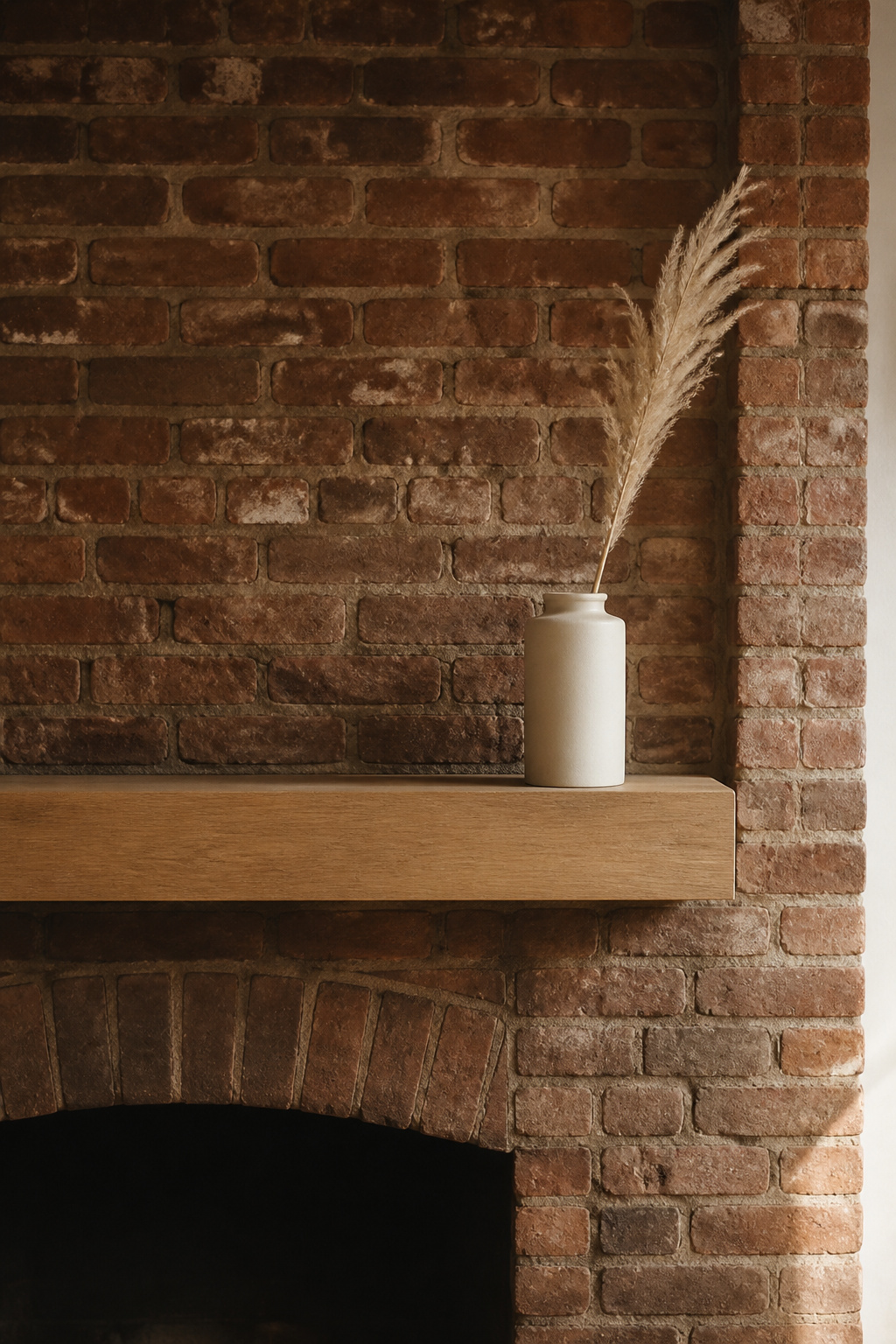
The surround sets the terms. Against brick or stone, choose an object that answers its register — a clay vessel against brick, a pale stone form against limestone, a birch branch against grey stone. Clean geometry against rough texture is a deliberate opposition, not a clash. Against an ornate carved wood surround, restraint on the shelf creates striking contrast: Chairish reports that designers working with material-heavy surrounds edit the shelf down to “just the right pieces,” letting the surround speak.
The harder question
A minimal mantel succeeds in a non-minimal room when at least one material or colour on the shelf appears somewhere else — a furniture wood, a cushion tone, a rug colour. Without that echo, it reads as isolated rather than restrained. The more maximal the room, the harder you edit: with five or more dominant elements, move closer to one object than three. In a true maximalist room, a minimal mantel can look undercooked. If that is your room, the warmer rustic approach is the more honest pole to commit to.
A minimal mantel is not a shelf you forgot to fill. It is one you chose to leave mostly open, holding one or two things you would happily keep for ten years. Pick the better object, place it with conviction, let the candle and the clay carry the warmth. Done that way, less is not what you gave up. It is the point.
FAQ
What do minimalists put on their fireplace mantel?
Minimalist mantels usually hold one to three objects: most often a single sculptural vessel in unglazed stoneware or stone, one or two beeswax candles in matte holders, and sometimes one botanical stem in a slim vase. The emphasis falls on material quality over decorative complexity, with roughly 40% of the shelf left deliberately bare.
How do you style a mantel without it looking empty?
The difference between empty and minimal is material quality and placement, not quantity. One genuinely beautiful object — a handmade ceramic, a stone vessel, a beeswax candle in a clay holder — carries presence a cluster of average pieces cannot. A single tall object also creates a vertical line that anchors the composition and stops the shelf reading as bare.
Can you have a minimalist mantel if your room is not minimalist?
Yes, and in a busy room a minimal mantel becomes the eye’s rest point amid surrounding pattern and colour. It works best when at least one material or colour on the shelf echoes something elsewhere in the room, which keeps the restraint from reading as isolation. In a true maximalist room, edit harder — closer to one object than three.