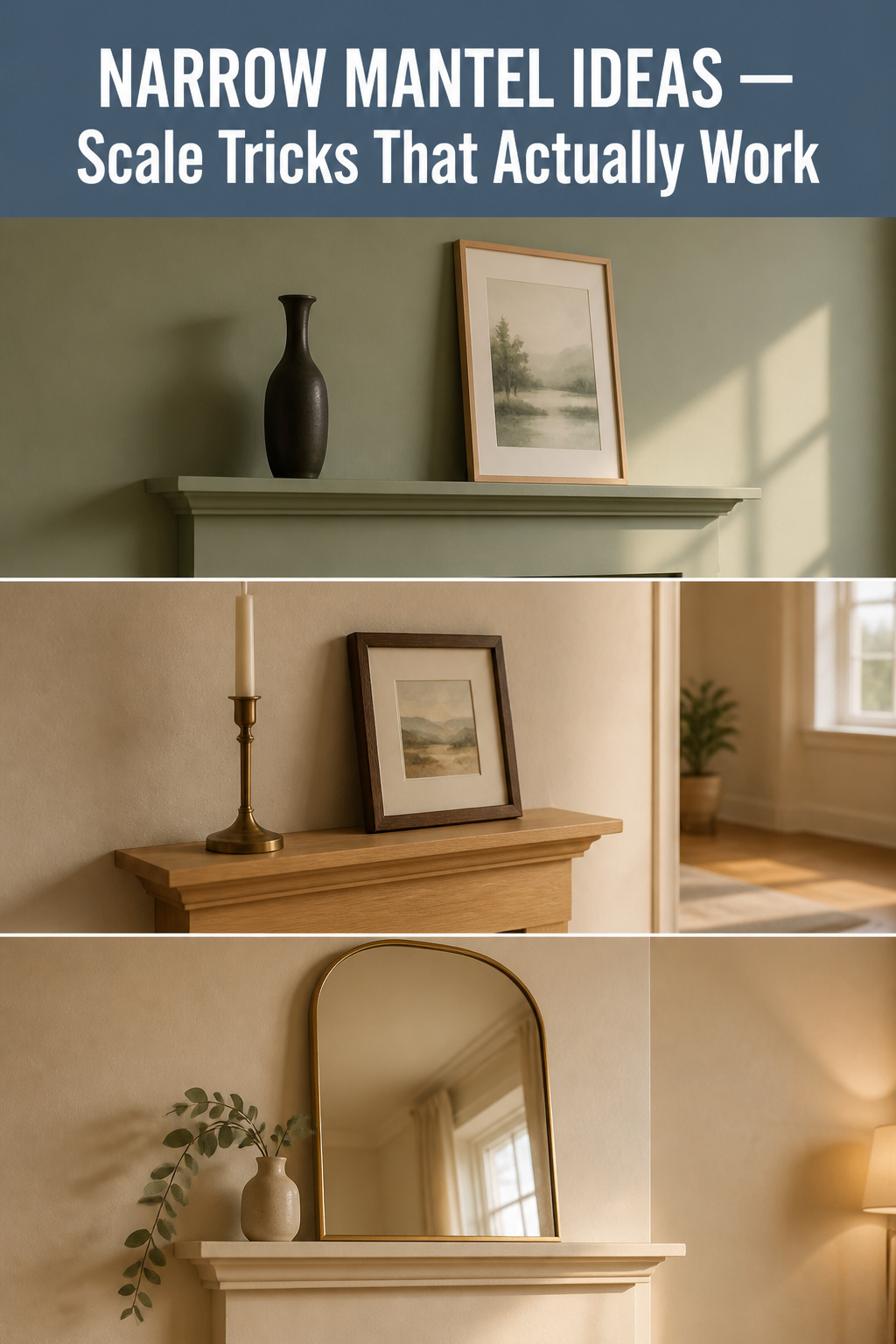
The advice you’ll get for a small mantel is “keep it simple.” It’s not wrong, but it sends you the wrong direction. People reach for small objects — tiny frames, a votive, a little plant — and the shelf ends up looking like an afterthought. The real problem was never the number of things. It’s the size. Narrow mantel decorating ideas fail when objects are tabletop-scaled, not shelf-scaled.
TL;DR
- The fix for a narrow mantel is scale, not quantity: go taller, not wider. One slim 12–18 inch vase or a leaned print beats five small objects in a row.
- Measure the usable depth first. Older and apartment mantels run 3–6 inches; modern ones 7–12. Under 4 inches use two objects; at 4–6 inches run a three-object triangle.
- Renters: lean art and mirrors instead of hanging, and use a Command Picture Ledge (21-inch, up to 5 lb, about $15–20) above the shelf — no drilling, no damage.
The Small Mantel Mistake Everyone Makes (and the Scale Fix)
Before you buy anything, this is a measuring job. Get the scale right and a shallow shelf looks deliberate; get it wrong and no arranging saves it. It’s the foundation our fireplace mantel decor ideas guide builds on.
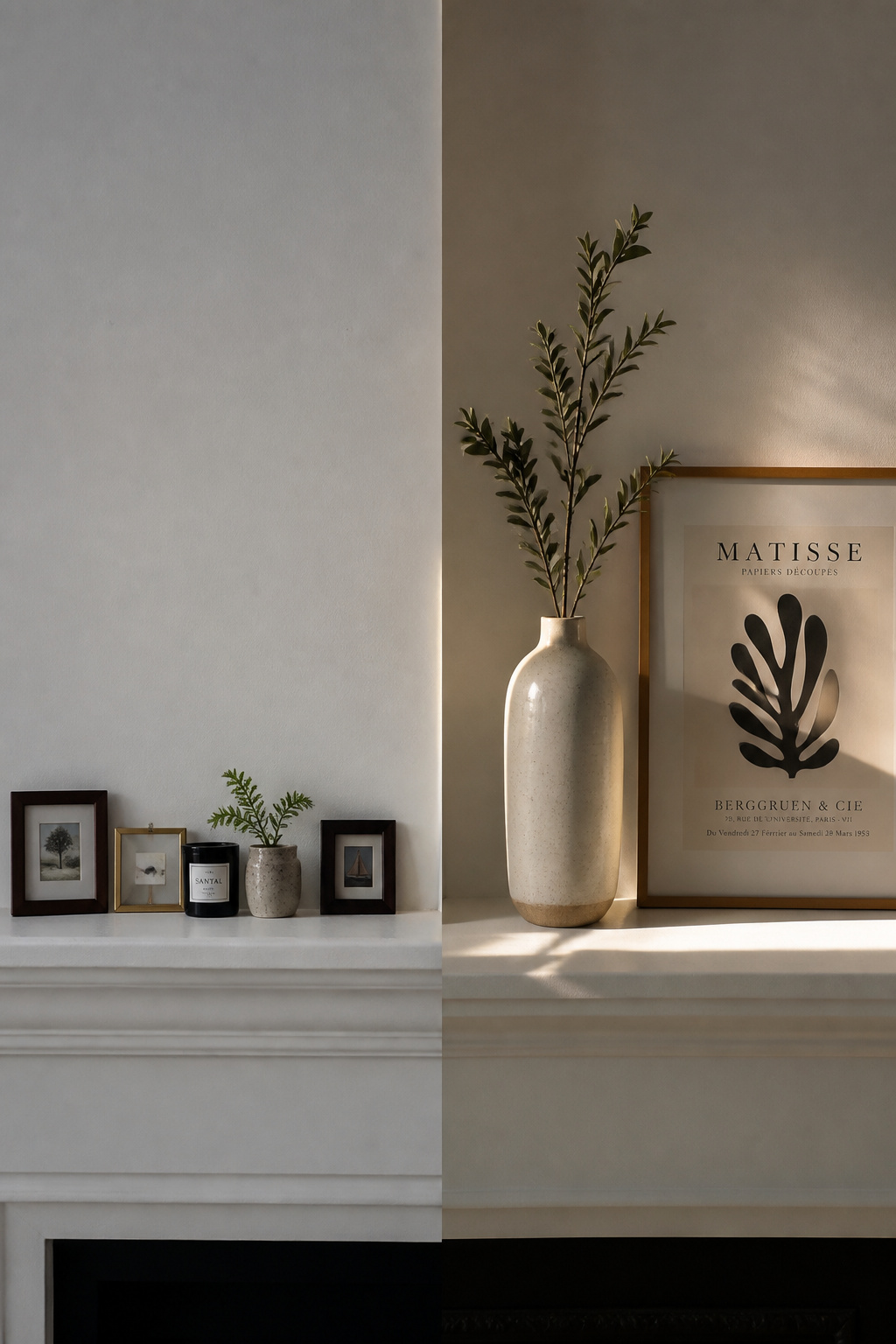
Why objects that look right in a store look miniature on a narrow shelf
A vase looks generous on a deep showroom table. On a shallow shelf against a wall, it shrinks. The most common mantel mistake, per Casey Finn at The DIY Playbook, is using items too small — small frames leave a big patch of wall above doing nothing. A reliable sizing check: nothing intended as a main element should read smaller than a cantaloupe — sounds odd until you try it.
The one number that changes everything: your mantel’s depth in inches
Measure the usable top surface — the flat part you set things on, not the moulding below it. Standard modern mantels run 7–12 inches deep. Victorian, Georgian, and pre-war apartment surrounds are shallower: 3–6 inches is common. At 5 inches or less you’re in “slim mantel” territory, restricted to footprints of 4 inches or under — flat frames, slender vases, disk-shaped pieces. Decorator Samantha Potter, who worked with a 6-inch shelf, puts it plainly: same principles as a normal shelf, just harder to pull off.
The scale rule for narrow mantels: taller, not wider
You can’t go wider on a shallow shelf — there’s no depth to spread into. Go up instead. Pulling height into the wall above makes the whole fireplace read taller. Three objects at staggered heights read as a composition; at the same height, they read as a line of stuff.
Going Vertical: How Height Saves a Narrow Mantel
Vertical is the single best tool here, and most of it costs nothing but rearranging.
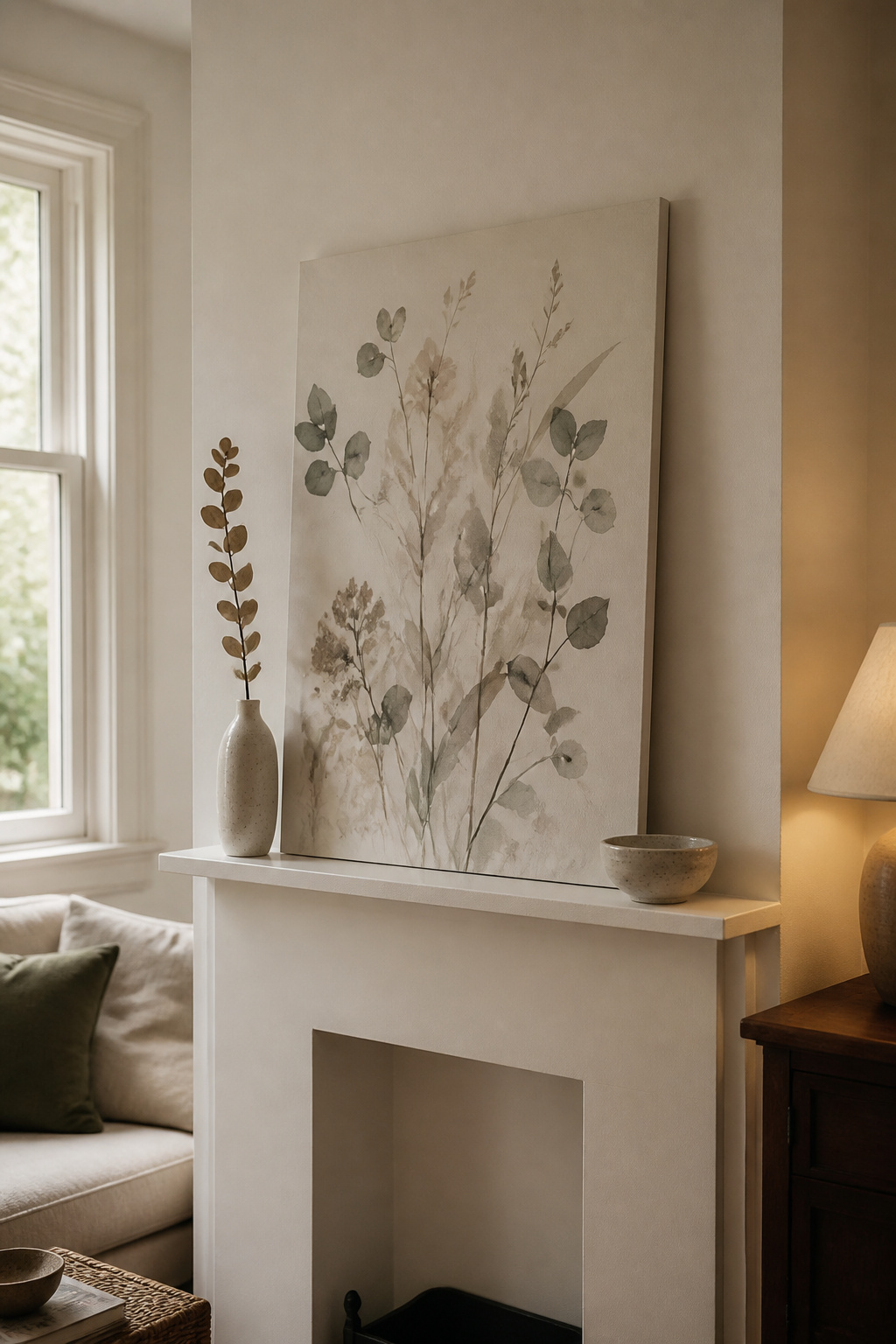
One tall object beats three small ones
A slim vase in the 12–18 inch range, or a pair of tapers, brings vertical weight with a footprint of about 3 inches — the ideal category for a shallow mantel. Running more than one tall piece? Stagger the heights — 16, 12, and 8 inches — so the eye climbs a staircase. Pick broad, stable bases: under 5 inches deep, a tall piece with a small base tips on the first slammed door.
Leaning art and mirrors beat hanging on a shallow shelf
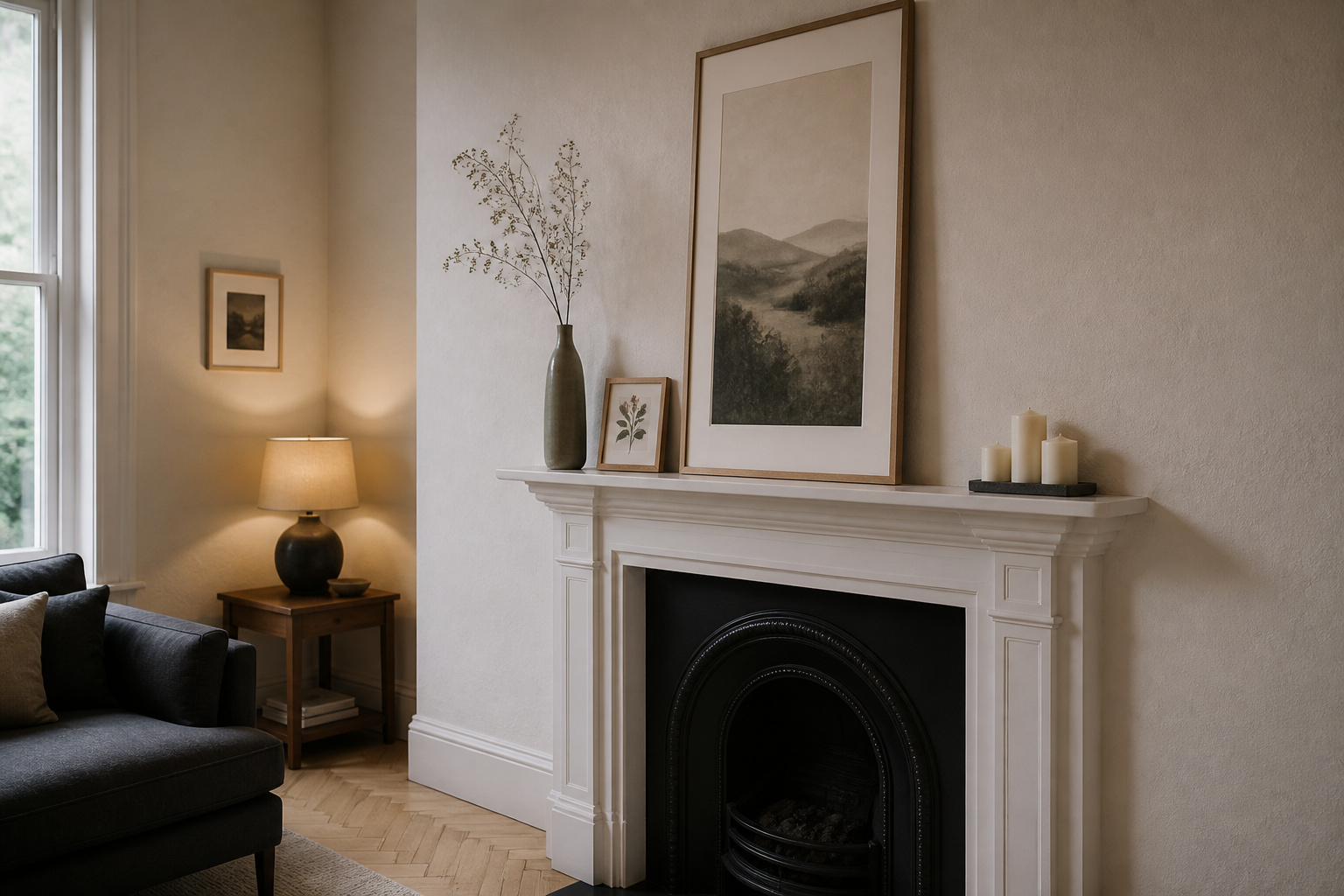
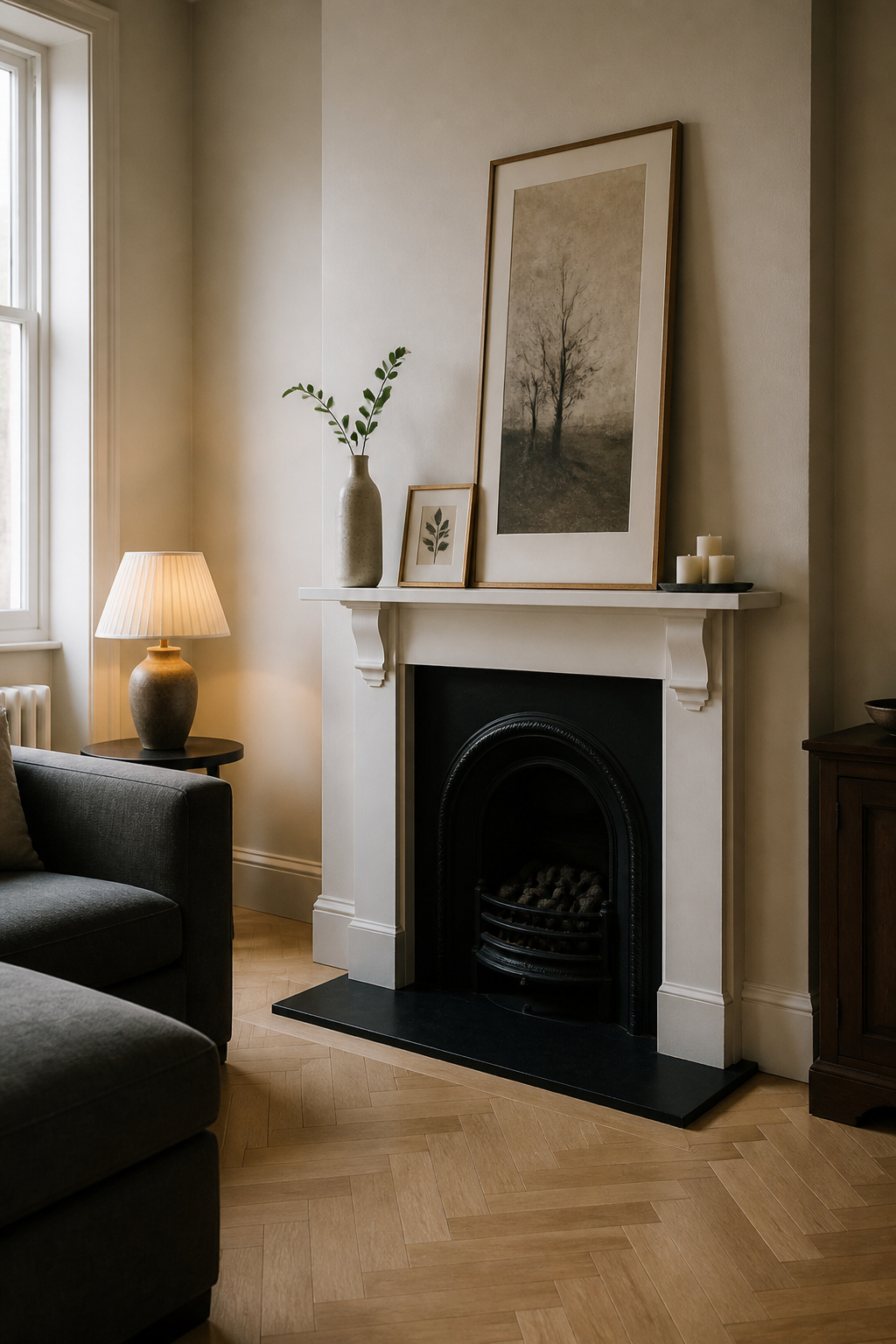
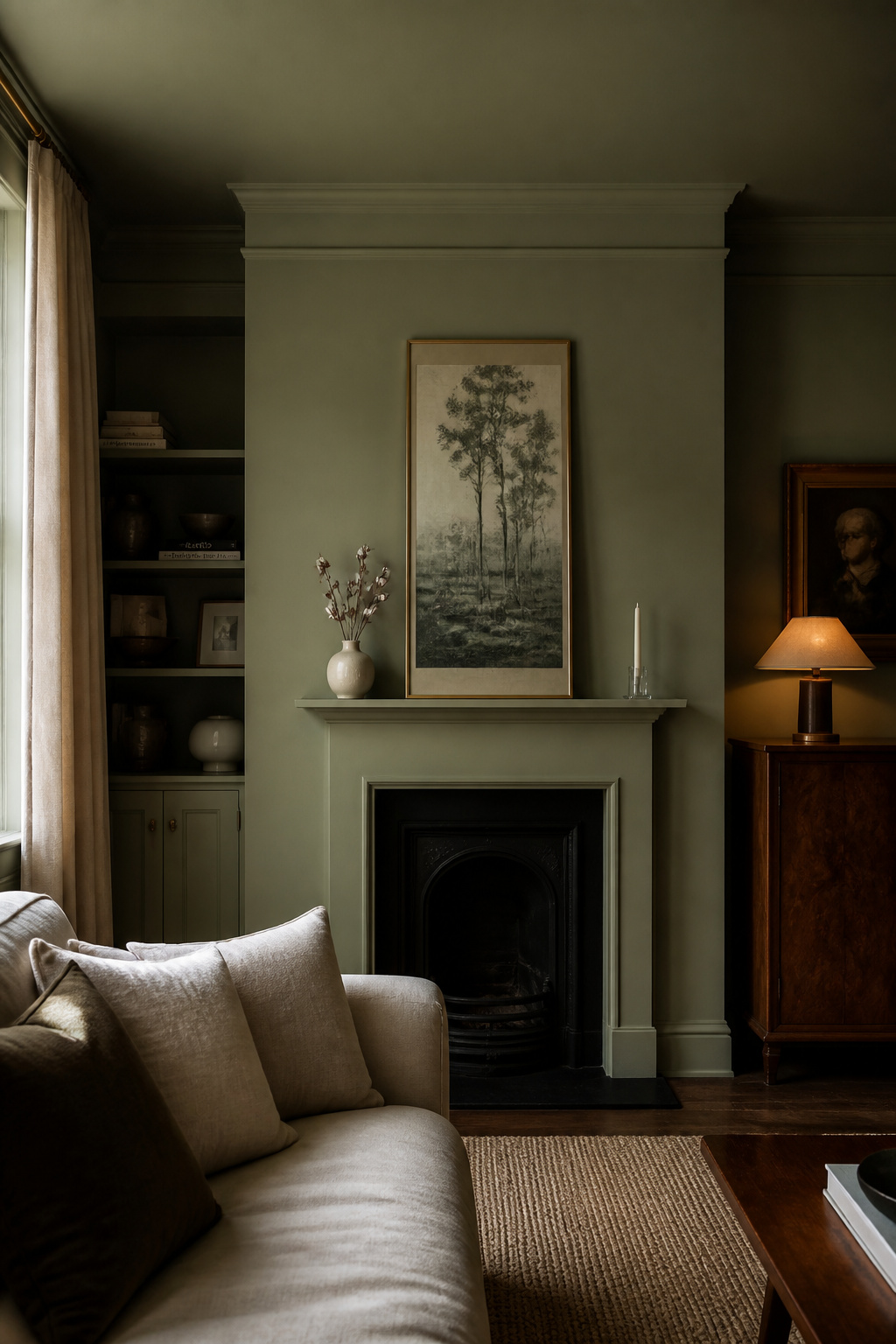
Lean it. Don’t hang it. A leaned piece rests on the shelf and against the wall at once — a deliberate choice now, not a renter’s compromise. Size it to two-thirds to three-quarters of the mantel width: narrower looks adrift, wider swamps the objects below. Arched mirrors with a flat bottom are made for this — stable base, arch pulls the eye up. Leaned pieces tip forward, so stick a Command strip or felt dot where the frame meets the wall. It anchors without a single hole — Casey Finn recommends this directly.
The wall above as part of the composition
On a shallow mantel the wall above isn’t background — it’s the rest of your canvas. A leaned print or mirror extends the arrangement into that zone, which is how you fill a shelf too shallow to hold much. That piece is the make-or-break call, so read our take on choosing what goes above before committing to a size. A tall narrow piece also tricks the ceiling into reading higher.
The Edited Group: How to Style a Narrow Mantel Without Overcrowding It
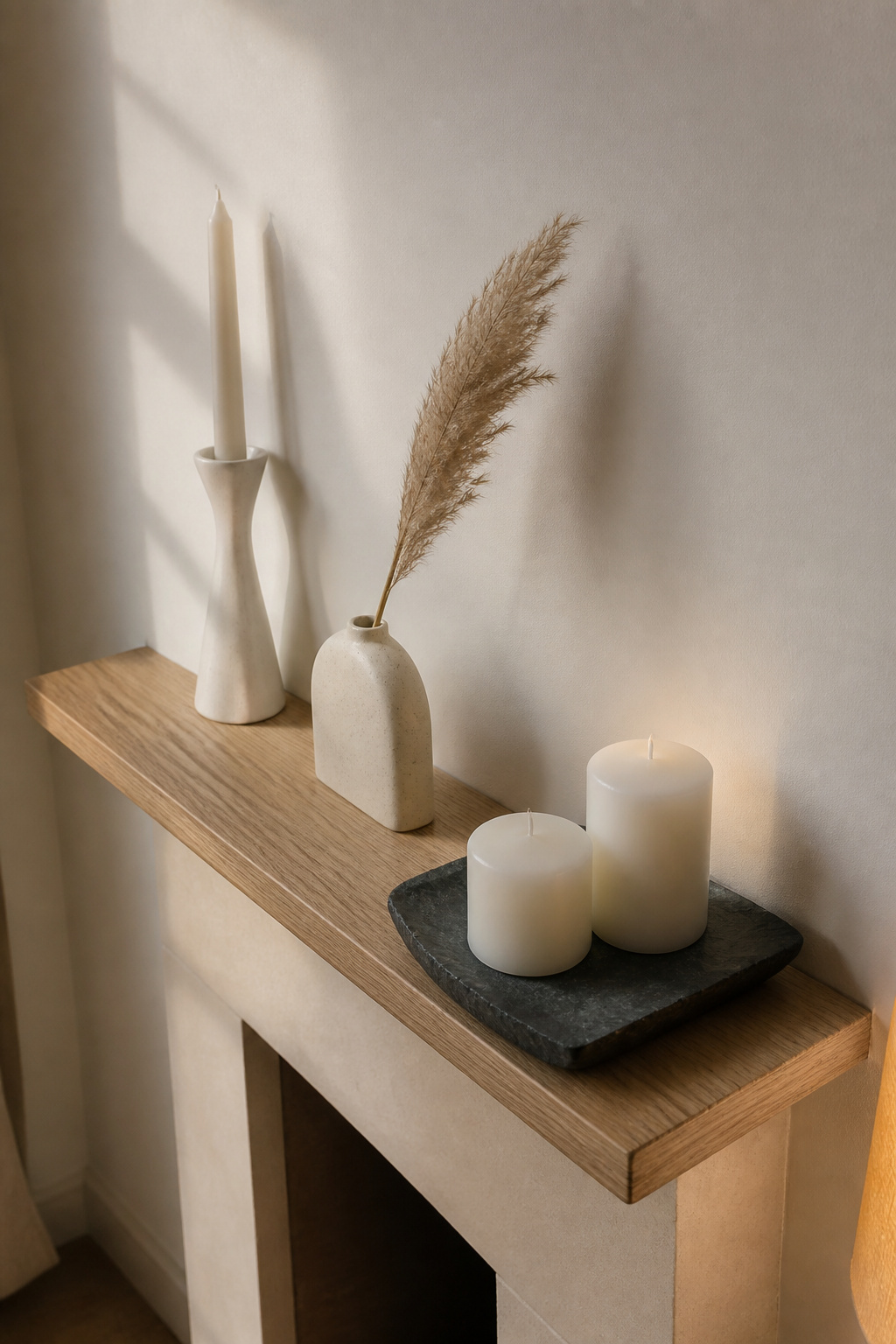
How many objects you can run comes straight off your depth measurement. This is my working rule from the shop — not a published standard, but what holds up when you set things on a shelf and watch what tips.
| Shelf depth | Max objects | Best anchor type | What to avoid |
|---|---|---|---|
| Under 4 inches | 2 | Leaned frame or disk-shaped piece (1–2 in footprint) | Anything round with a narrow base — it tips |
| 4–6 inches | 3 | Slim 12–18 in vase or leaned mirror | Deep objects that overhang the front edge |
| 6 inches and up | 3, layered | Leaned mirror plus a piece in front of it | Filling the whole width like a console table |
The two-object rule for very shallow shelves (under 4 inches)
Under 4 inches, two objects is your limit without overhang or tipping. Make them a working pair: one tall to set the vertical (a vase, candlestick, or small plant), one flat for ground (a leaned print or low tray). Frames are the easiest start — shallow front-to-back, every size, and leaned they fill the vertical zone without eating footprint.
The three-object triangle on a 4–6 inch mantel
At 4–6 inches, run a three-object triangle: one tall anchor at one end (mirror, tall vase, or candlesticks); one medium piece near centre; one low piece slightly in front. Keep it asymmetric so the eye travels. Layering is your depth trick: lean art at the back, set a vase in front, and even a 2–3 inch overlap fakes a deeper surface. Stacked books are the underused move — almost no depth on their spines, and a flat stack makes a riser for a small plant.
The elimination test: what to cut when it feels busy
When it looks cluttered, step back and remove one thing. On a narrow mantel a gap between objects reads as breathing room, not a hole you forgot to fill — negative space is a choice, the same one behind minimalist mantel styling. One more cheat: limit objects to one or two colours from the room or the art so they read as a set, not a collection.
Renter-Friendly Solutions: No Damage, Full Effect
Got the fireplace but can’t touch the wall? More options than you think, most for less than dinner out.
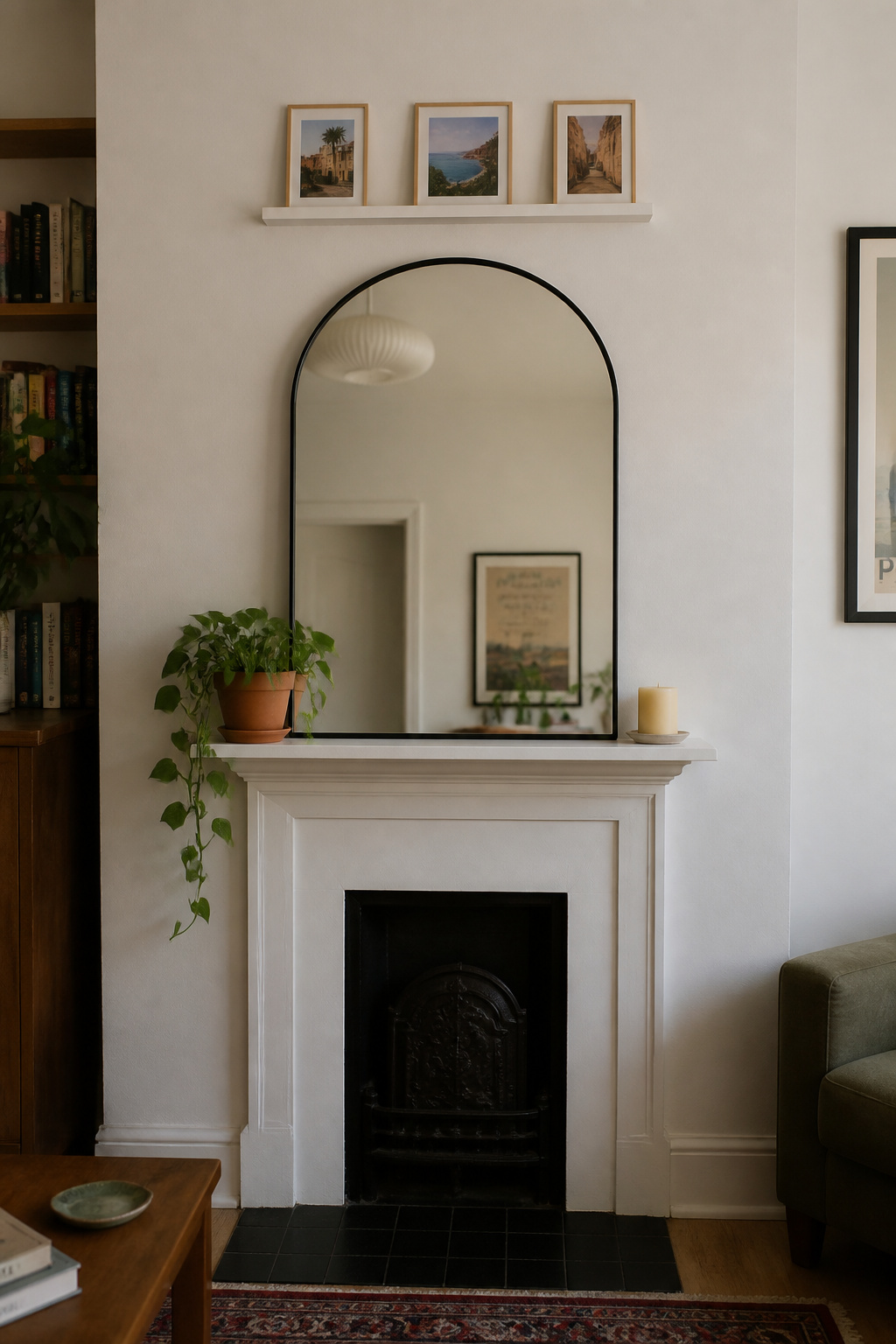
Adhesive strips and picture-ledge rails for the wall above
Two no-drill options cover the wall above a narrow mantel:
- Command Picture Ledge. The 21-inch ledge holds up to 5 lb and runs about $15–20 at Home Depot or Target. Mount it 20–24 inches above the mantel for a row of small prints that read as one composition.
- Command strips, by rating. Rated by pair size: Small 1 lb, Medium 3 lb, Large 4 lb, XL 5 lb. On matte paint, real-world hold drops 25–50% below rating. Clean with rubbing alcohol, press 30 seconds, wait an hour before loading weight.
One note: 3M requires a 7-day wait after painting before application. Fresh paint means the strip falls — or takes the paint with it.
Peel-and-stick mirror tiles vs a leaned mirror: what each costs
A leaned large-format mirror (24–30 inches) runs $40–$150 at IKEA, Target, or Amazon and lifts out clean — just secure the top back edge with a removable adhesive tab so it can’t tip. Peel-and-stick mirror tiles are cheaper: a 12×18-inch accent runs roughly $12–$24 in material (tiles are $13–$27 per square foot). But they can lift matte or textured paint on removal, so test a hidden corner first. For most renters the leaned mirror wins: removable, reflective, zero risk.
Temporary solutions that still look permanent
The trick is making removable read as intentional. Secure a leaned frame or mirror and it passes for hung. Know your rights too: HUD counts ordinary nail and pin holes as normal wear and tear, so a couple of small holes usually aren’t deposit territory. Big screw holes and drywall damage are — exactly what the no-drill moves above avoid.
Apartment Fireplace Styling: When the Whole Mantel-to-Ceiling Zone Is Tight
In an apartment you’re fighting two constraints at once: a shallow shelf and a low ceiling above it. Older buildings sit around 8–9 feet, leaving 36–48 inches between mantel and ceiling. The job is making the fireplace sit into the room, not dominate it.
Proportioning objects when the ceiling is low
In that 36–48 inch zone, lean off the shelf rather than hang high — leaving the wall above clear keeps the ceiling from feeling pressed down. Keep it portrait, not landscape: taller than wide stretches the ceiling up; wider than tall squashes the room further.
Keeping the fireplace from dominating a tight room
A narrow mantel takes over a small room when it fights the walls. Stop fighting: make the fireplace one calm focal point and centre the seating on it. If the surround is brick or dated tile you can’t change, a tall leaned piece drawing the eye up beats any amount of shelf fussing.
Why going monochrome with the wall reads as larger
The strongest small-room move is paint: colour the mantel and surround the same shade as the walls — designers call it colour drenching, and the Ideal Home team calls it the surest way to stop the fireplace overpowering the room. Wall, mantel, and surround read as one surface. Then let two or three objects do the decorating: either tone-on-tone or one deliberate pop — a terracotta pot, a brass candlestick. Can’t paint? A light mantel (white or pale grey) is next best; light colours reflect more.
The first move isn’t shopping — it’s measuring. Grab a tape, get the usable depth, write it down. That number tells you whether you’re running two objects or three, whether a vase will tip, and how wide the leaned mirror should be. Decor that fits the depth beats expensive decor that doesn’t. Measure first, then go taller.
FAQ
What do you put on a narrow fireplace mantel?
Choose tall, slim objects: a ceramic vase 12–18 inches high with a small base, a pair of taper candlesticks, or a framed print leaned against the wall. Combine one tall anchor, one medium piece, and one low element for a three-height look. Size any anchor piece to about two-thirds of the mantel width.
How do you decorate a small fireplace mantel in an apartment?
Lean a large mirror or framed print on the shelf against the wall — no drilling — and secure the top back edge with a removable adhesive tab to stop it tipping. If you can paint, colour the mantel and surround to match the walls; designers call it colour drenching, and it stops the fireplace dominating the room.
What looks good on a shallow mantel shelf?
Objects with a front-to-back footprint of 4 inches or less: slender vases, leaned picture frames, disk-shaped pieces, and broad-based candlestick holders. A small pothos or trailing succulent works well, since its weight sits low and the trailing stems add interest without depth. Books stood on their spines use almost no depth and lift other objects to varied heights.