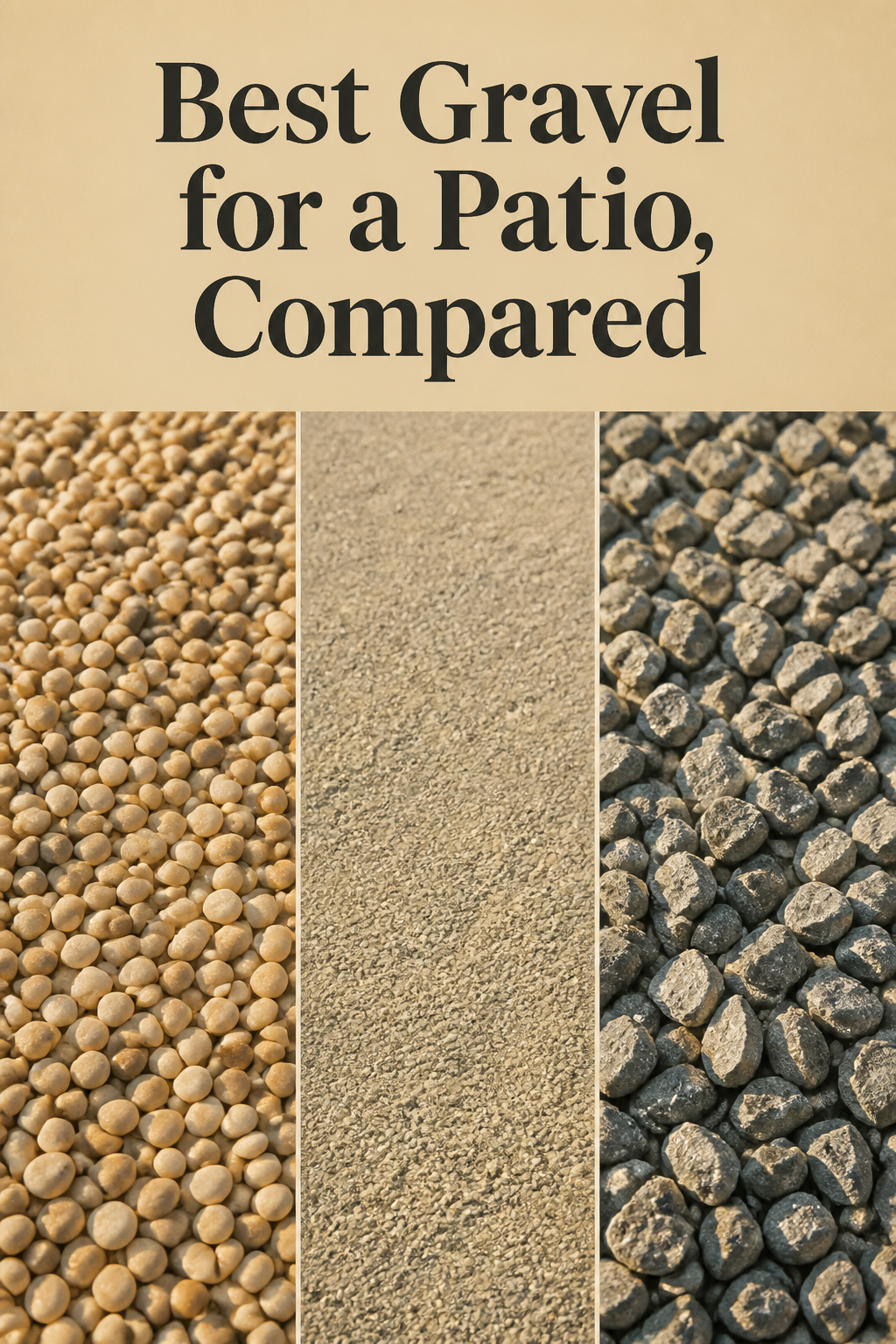
Every gravel patio guide tells you to “choose your gravel” and then moves on, as if the choice made itself. It doesn’t. In a stoneyard, pea gravel, decomposed granite and crushed stone all look like versions of one idea: small stones, warm tones, pick a bucket. They aren’t. One is kind to bare feet and cruel to chair legs. One packs down like a trail. One holds furniture solid and makes you tiptoe. The best gravel for a patio is whichever matches how you’ll use the space — this guide sorts the three by what decides that outdoors.
TL;DR
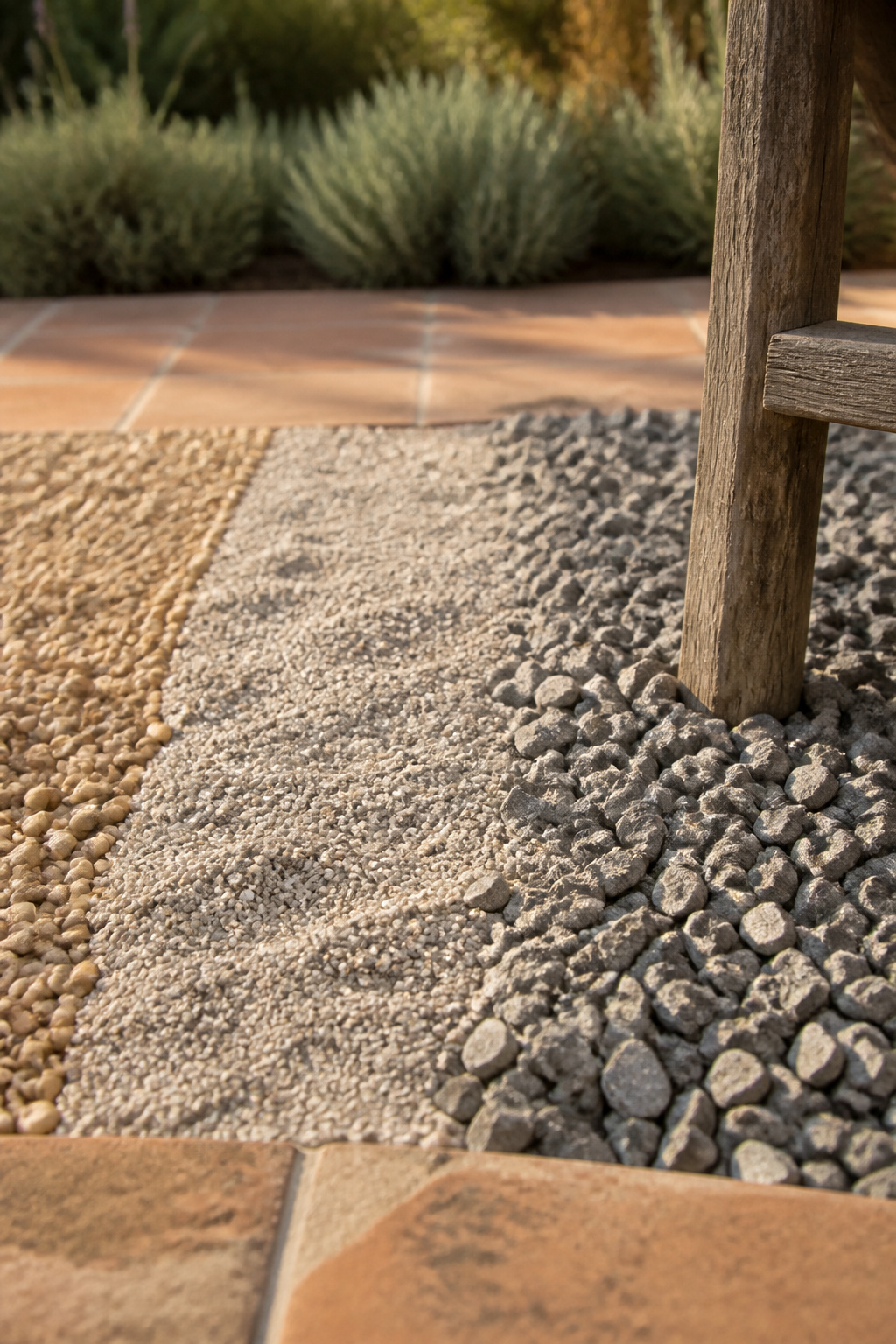
- Pea gravel (1/8–3/8 in, rounded) is the most comfortable barefoot and the fastest-draining, but furniture legs sink into it — best for casual, walk-through spaces, not a fixed dining set.
- Decomposed granite compacts into a firm, trail-like surface that holds furniture, though its fines turn muddy in wet, shaded spots — best for dry, sunny patios.
- Angular crushed stone (1/4–3/8 in) locks solid under furniture and won’t wash away in heavy rain, but it’s sharp underfoot — best for wet climates and dining zones, worst for bare feet.
The Standard to Actually Judge Gravel By
Before you pick a stone, you need a yardstick, and looks aren’t it. Three things decide how gravel behaves once it’s lived on: drainage, how well it locks, and comfort weighed against furniture hold. For the wider picture — layout, edging, planting — see our complete gravel patio design guide.
Drainage and how water moves through it
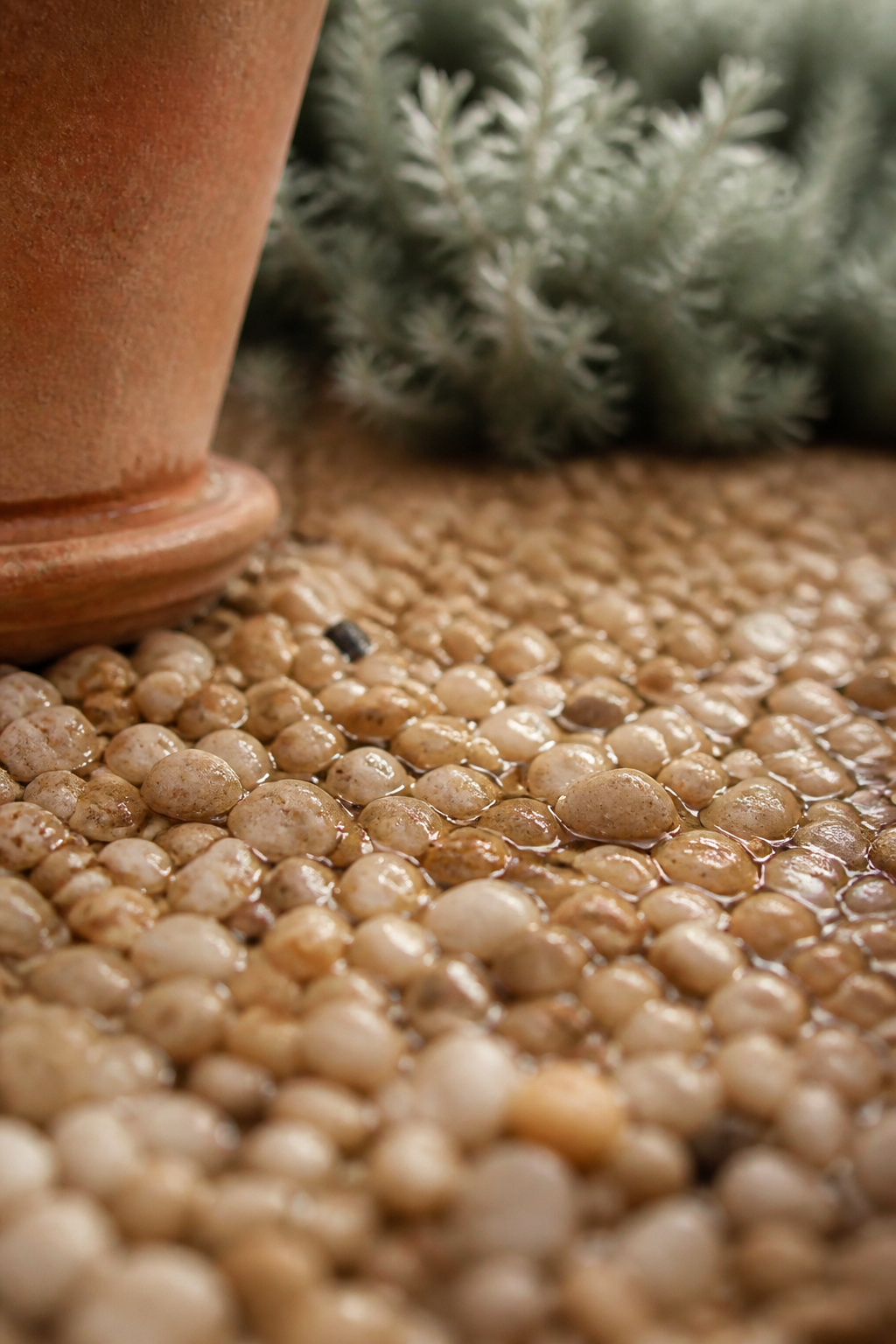
Nine wet months a year designing gardens around Portland taught me to ask where the water goes before what a surface looks like. Loose stone wins by default: pea gravel drains 15 to 20 inches an hour against native soil’s 0.5 to 2, and angular crushed stone rates “excellent” too. Decomposed granite trails at “good,” since its fines plug some of the gaps.
How well it locks underfoot
Locking comes down to fines — the dust-fine particles that fill gaps between larger pieces. Rounded pea gravel has none, so it stays loose. Crusher fines and decomposed granite carry fines that knit together under a compactor, which is why they, not pea gravel, make the wheelchair-accessible surface.
Furniture stability and comfort barefoot
Here’s the catch no stone escapes: comfort and furniture stability come from the same property, angularity, pulling opposite ways. Rounded stones feel cushioned; sharp ones grip a chair leg. As Kat Aul Cervoni of Staghorn NYC notes, gravel “is also not the most comfortable surface for bare feet.” No gravel is “best” outright — each trades one axis for the other.
Here’s the scorecard:
| Stone | Grain and shape | Drainage | Barefoot comfort | Furniture hold | Best climate |
|---|---|---|---|---|---|
| Pea gravel | 1/8–3/8 in, rounded | Excellent (15–20 in/hr) | Cushioned, but rolls | Poor — legs sink | Wet, or hot in a light colour |
| Decomposed granite | Fine, sand-like (no set grade) | Good (compacts) | Firm, trail-like | Good, once compacted | Dry, sunny, well-drained |
| Crushed / angular stone | ~1/4–3/8 in, angular | Excellent, won’t wash | Sharp — you’ll tiptoe | Best — locks solid | Wet, heavy rain |
If you read one row, read furniture hold: a dining set on the wrong stone sinks a little further every month until the table rocks.
Pea Gravel: Where It Shines and Where It Fails
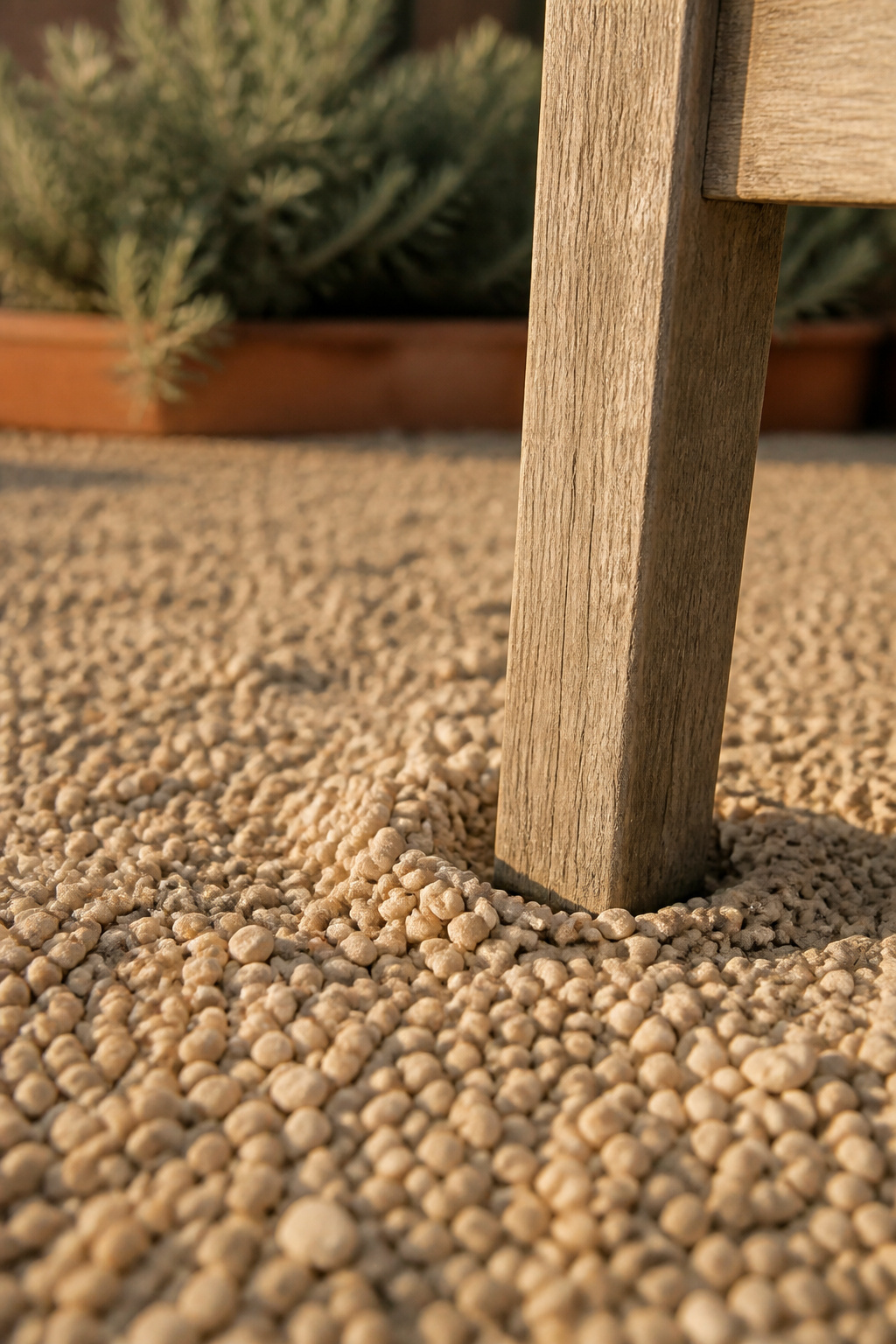
Kick your shoes off on pea gravel on a warm July evening and its appeal lands in one step: this is the soft, informal patio people picture.
Comfort and sound underfoot
Pea gravel runs 1/8 to 3/8 inch, the 3/8 size most stable while still comfortable, and its rounded stones ranked most walkable in one barefoot test of seven gravels. But comfort has a footnote: landscape architect Liz Pulver notes the pebbles are “typically all round, and can be harder to walk on” — a rolling instability, not a sharp one.
Why furniture legs sink into it
With no fines to lock, pea gravel stays loose and won’t hold weight in one spot. One owner four years in put it plainly: “legs sink into the gravel. Not good for table and chairs.” Without solid edging the surface migrates outward, too.
Best climates and uses for pea gravel
Its open structure sheds water fast, so pea gravel suits wet yards, and freeze-thaw winters have nothing cemented to crack. Its best homes share one trait: a cool, walkable surface matters more than dead-level support:
- casual seating nooks
- poolside surrounds
- decorative borders
For a fixed dining zone, though, it’s the weakest of the three.
Decomposed Granite: The Stone That Locks Together
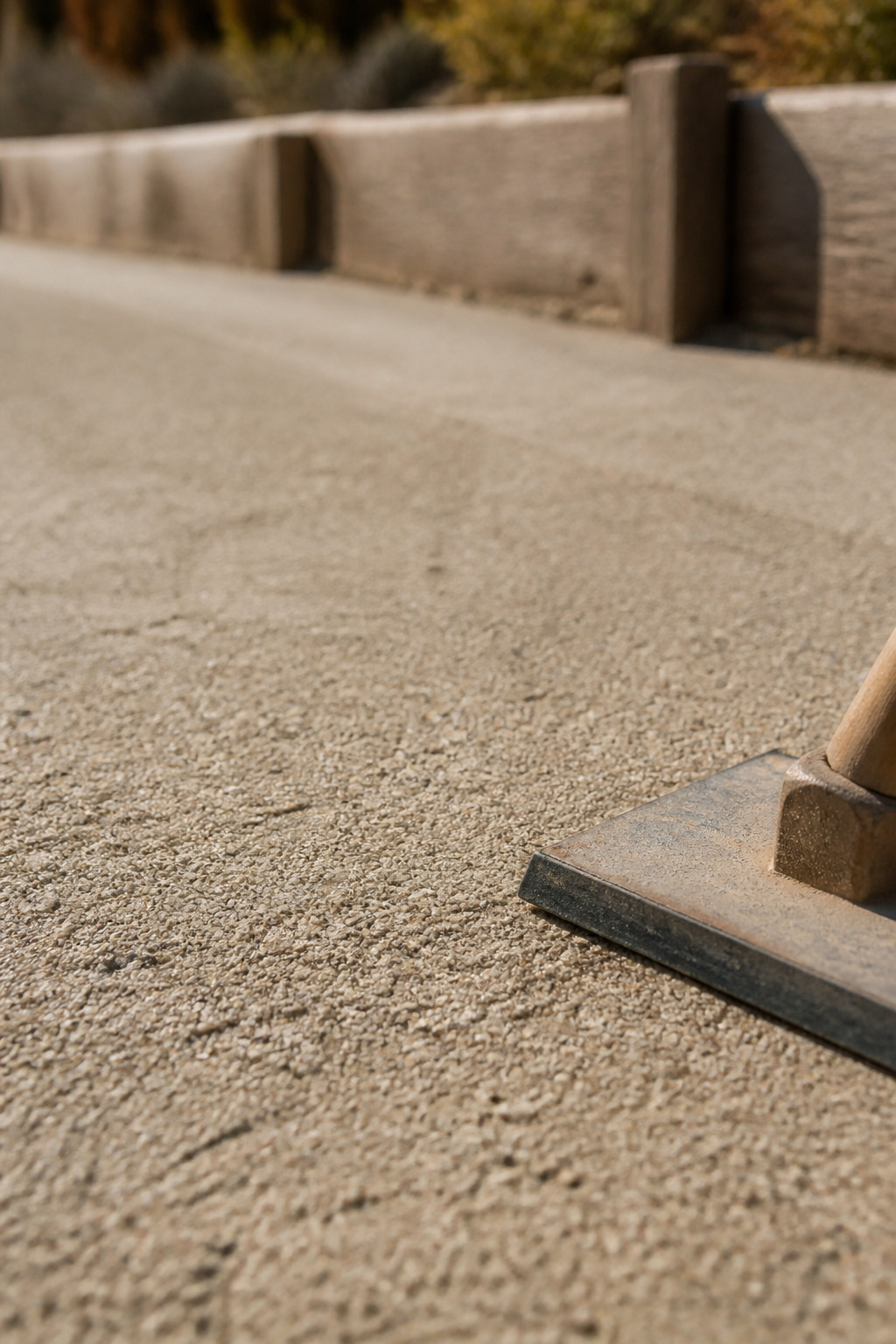
Run a plate compactor over decomposed granite with a light mist of water and it does what pea gravel never will — it packs into a near-solid surface you could roll a loaded wheelbarrow across.
Why it compacts into a near-solid surface
Decomposed granite is a blend of fine granite, sand and silt, not a single graded stone — so it has no clean size figure; judge it by feel, sand-like and fine. Compacted, the fines lock the grains into a dense surface. As designer Kathryn Prideaux explains, stabilized DG adds an agent that creates a “more hard packed surface.”
Drainage trade-offs versus pea gravel
The compacting is the compromise. DG rates only “good” permeability, below pea gravel’s open rate, because the fines fill some drainage voids. So build it with a slight crown, clear of downspouts, or in wet, shaded spots the fines turn muddy and grow moss. Avoid wax-polymer-sealed DG where drainage matters — it seals like pavement.
Best climates and uses for decomposed granite
Properly compacted, stabilized DG is an acceptable ADA surface, unlike pea gravel. Testers called it “like walking on a firm trail — pleasant, stable, and easy on the joints,” the top all-rounder. Its mud risk suits it to drier regions or sunny, well-drained corners, and it comes in 40-plus colours — the widest range of the three.
Crushed and Angular Stone: Maximum Stability, Minimum Comfort
Walk across crushed stone barefoot once and you’ll reach for shoes next time. That roughness is the price of its one superpower: it holds.
Why it holds furniture and edges best
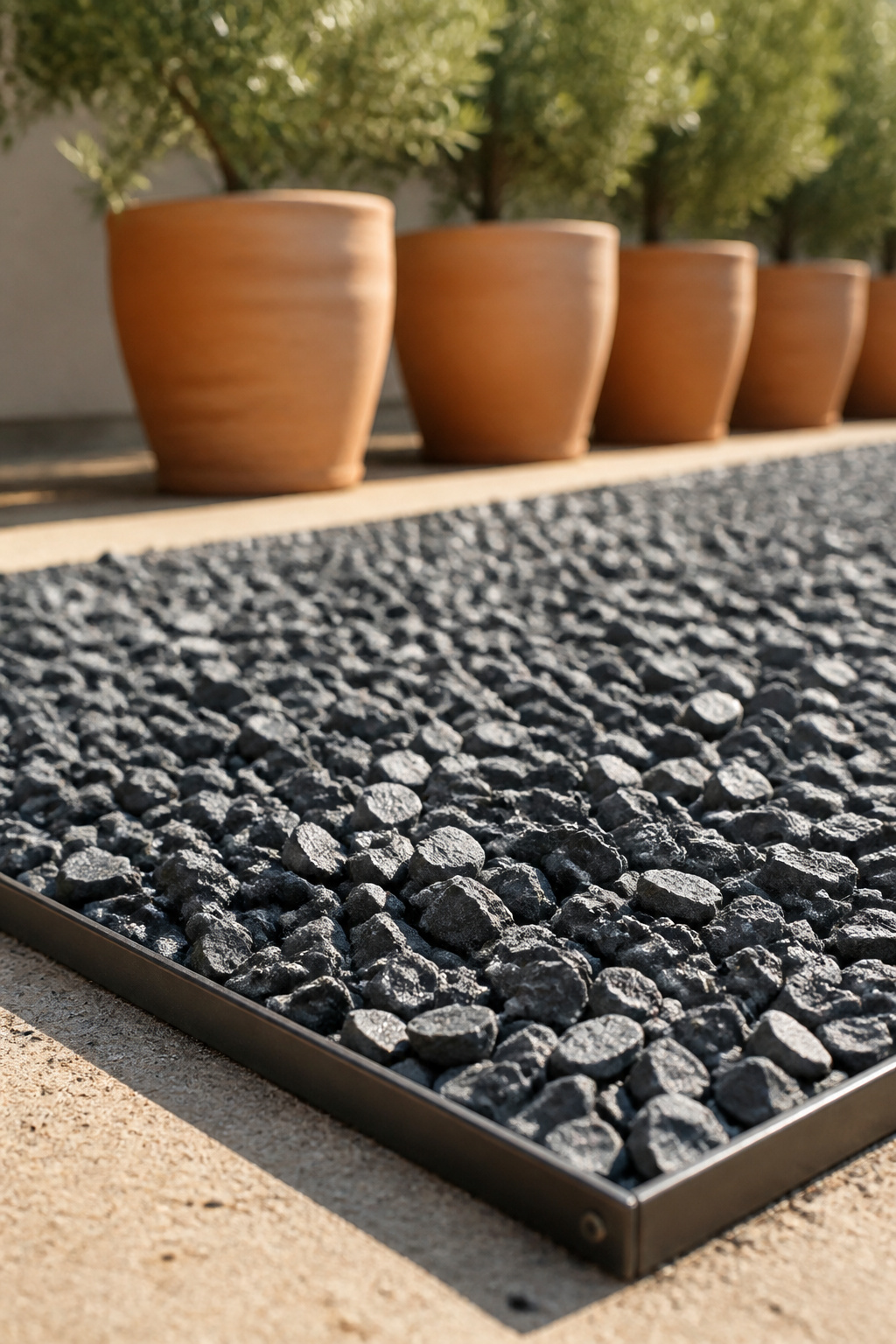
Angular crushed stone in the 1/4 to 3/8 inch range locks when compacted because its broken faces grip in a way rounded pea gravel can’t. Stabilized crushed granite “hardens almost like concrete” and holds chair legs “very solid.” It’s also the base under almost any patio — fitting, since about 90% of hardscape failures trace to poor base prep.
Why bare feet won’t thank you
The grip costs you above ground. In that seven-type test, crushed limestone and slate ranked lowest for barefoot walking, and crushed granite made testers tiptoe rather than walk. One reviewer called it rough enough to notice but not sharp enough to cut — noticeable, not pleasant.
Best climates and uses for crushed stone
This is the wet-climate specialist: crushed stone in the 1/4 to 3/8 inch range rates “excellent” for drainage because its angular shape won’t wash away under sustained rain. Use it where a surface carries real weight — dining and lounge zones, fire-pit surrounds, crisp edges. Its colour leans grey and tan, narrower than DG’s.
Matching the Best Gravel for a Patio to Climate and Furniture
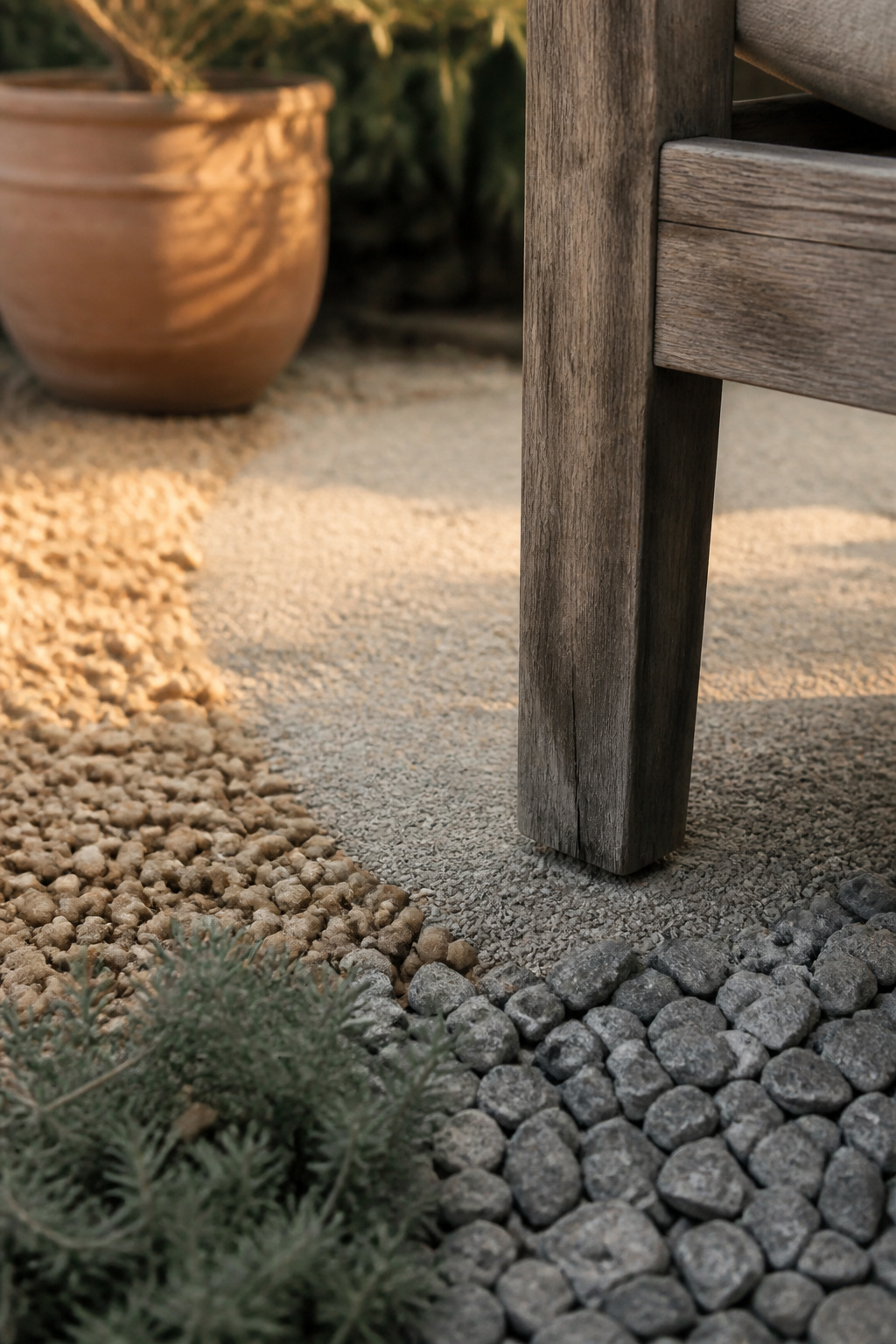
So which stone fits your yard? Side by side, the three sort cleanly by use condition rather than by which is “best” — and that sorting is where the decision gets made.
Wet-climate drainage priorities
In sustained-rain country, angular crushed stone is strongest, rated “excellent” because its interlock resists washing away. Pea gravel drains as fast but migrates under heavy runoff without solid edging, and decomposed granite needs a crown and distance from downspouts or it turns to mud. All three fail if you skip the compacted base underneath.
Hot-climate colour and heat retention
Colour does more work here than material. Light buff or tan stays measurably cooler in sun than charcoal or deep red — a barefoot tolerance of only three to five seconds signals a surface too hot. Gravel and DG also stay open and air-permeable, so they cool fast once shade returns rather than holding heat.
Which stone holds a dining set without sinking
If a table lives out there full-time, only two qualify on their own: stabilized DG and compacted crushed stone hold legs level, while loose pea gravel lets them settle over a season. Want pea gravel’s lighter tone anyway? Keep it for walking areas and set the table zone on a paver pad or compacted stone.
How to Lay It Down
The stone you picked changes the labour, not the depth.
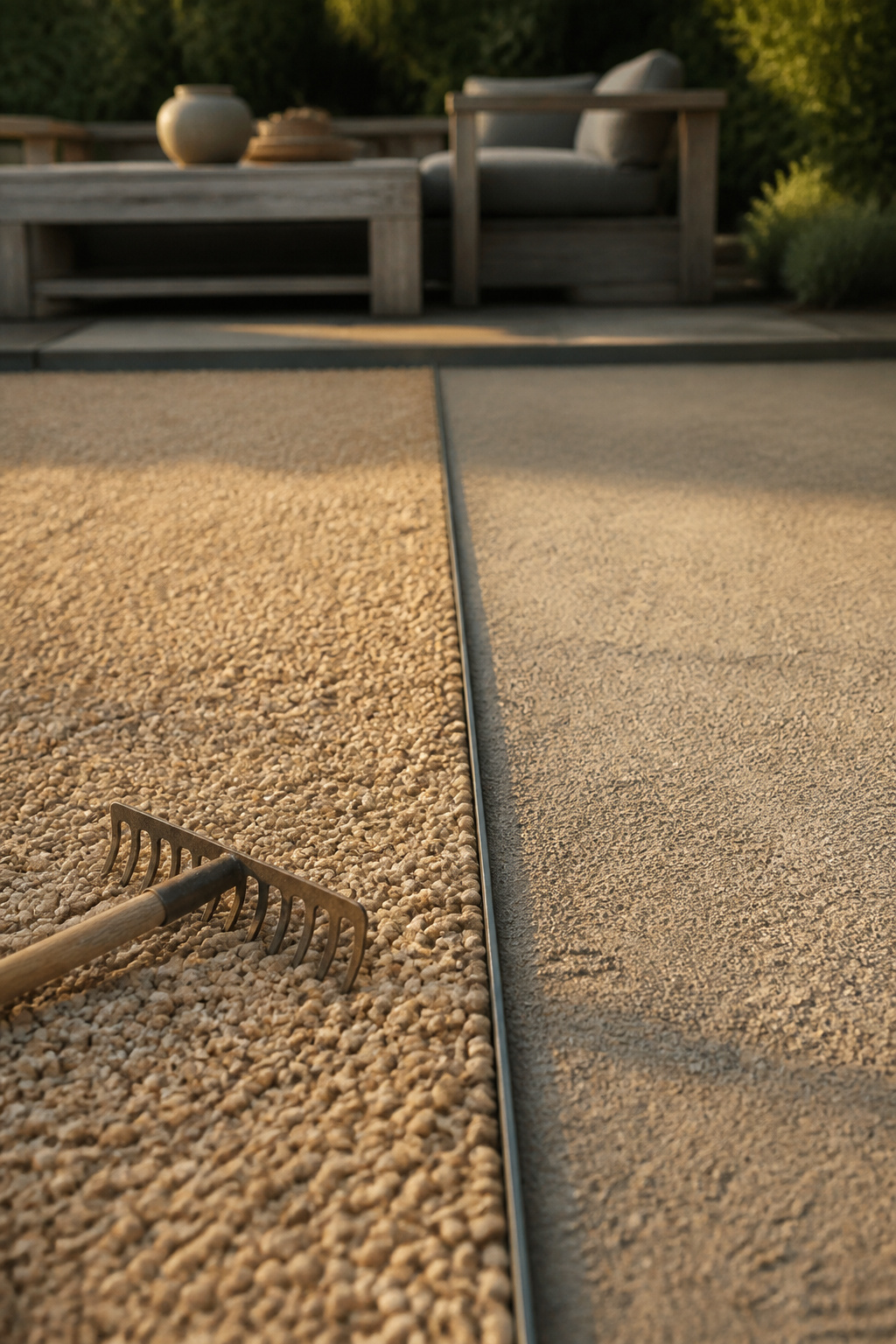
What changes in the build depending on the stone you picked
Pea gravel needs no compaction gear — spread and screed is the whole finishing step. Decomposed granite and crushed stone both want a plate compactor or tamper, worked in layers with light misting until they lock. The full sequence — footprint, excavation, base and edging — applies whichever stone you choose, and it’s covered start to finish in how to lay it down.
Ordering the right depth for your choice
Depth barely swings by stone type. Pea gravel runs a 2 to 3 inch finish over a 3 to 4 inch compacted base, and DG and crushed stone use that same 2 to 3 inch finish. The real variable isn’t depth — it’s the compaction step that makes the surface walkable.
What It Adds to the Cost
Per ton, these three stones can differ by three or four times over — but the sticker price rarely moves your budget most.
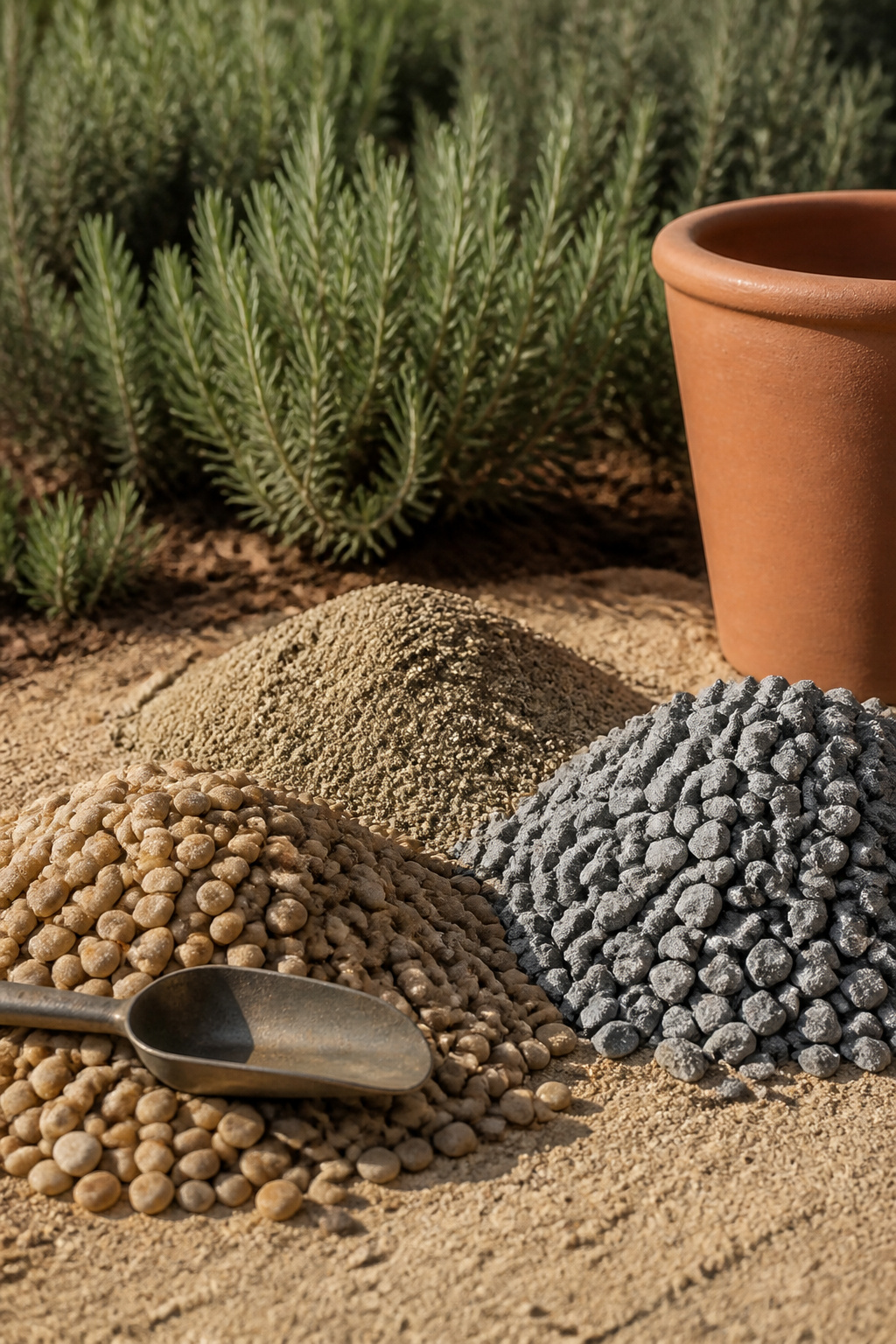
Rough price difference between the three stone types
Pea gravel runs about $30 to $35 per cubic yard with no compaction gear; decomposed granite runs $40 to $50 and needs a compactor. General crushed stone spans a wider $10 to $50 per ton across its many grades. Marble chips and river rock sit above this trio — a price marker, not part of the core comparison.
Where the material choice moves the budget most
The bigger lever is usually compaction, not the per-ton price: DG and crushed stone add equipment rental or labour hours pea gravel skips. The full cost-per-square-foot math and ten-year picture against pavers and concrete are in what it adds to the cost — this is only the material half.
So the decision rule is short. Judge each stone on drainage, lock, comfort and furniture hold, then weight those by climate. A wet or shaded yard wants angular crushed stone for the dining zone — it holds and won’t wash out. A hot, sunny one wants light-coloured pea gravel where people walk barefoot, with a paver pad under the table. Decomposed granite is the middle answer for a dry, well-drained patio. Pick for the month your weather is worst, not the afternoon the photo was taken, and the patio will still be working the summer after next.
FAQ
Does pea gravel get too hot to walk on in summer?
Not if it’s light-coloured. Buff, tan or sand-toned pea gravel stays notably cooler than concrete or asphalt in direct sun, thanks to its pale colour and porous, air-permeable structure. Dark stone is the real problem — a barefoot tolerance of only three to five seconds means the colour, not the material, runs too hot.
Can you walk barefoot comfortably on decomposed granite?
Yes, more comfortably than most loose gravel. Testers described compacted decomposed granite as “like walking on a firm trail — pleasant, stable, and easy on the joints.” Its comfort comes from the fine, sand-like grain rather than pebbles, but it depends on compaction: loose DG feels gritty, closer to coarse sand.
What gravel size best keeps shoe heels from sinking in?
Medium gravel in the 3/8 to 3/4 inch range balances stability, drainage and comfort best, handling heavy foot traffic without much displacement. Smaller stone shifts and lets heels sink; larger stone resists shifting but feels harsh. Shape matters too — angular stone with fines resists sinking at almost any size, rounded pea gravel least.