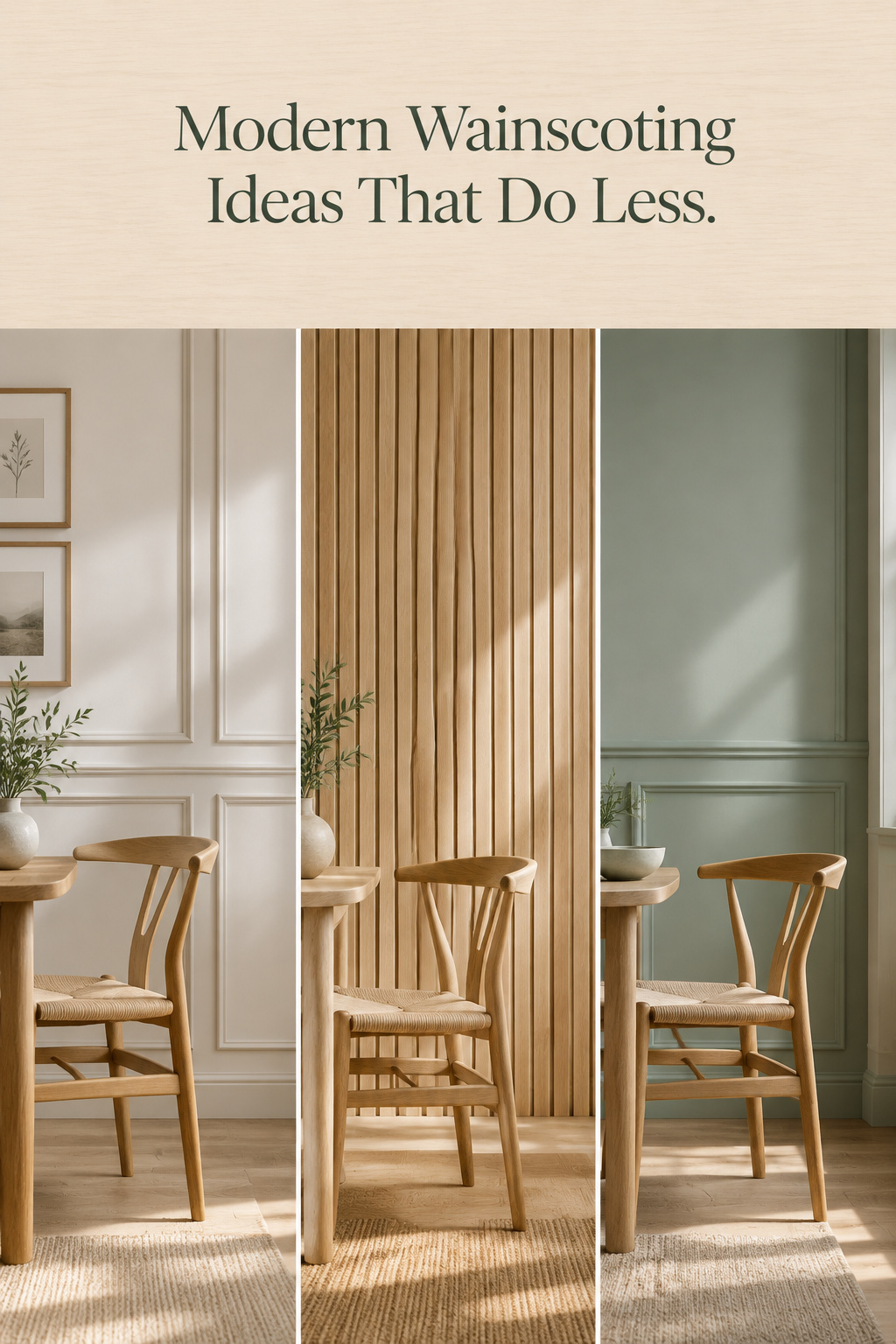
Is wainscoting outdated, or only the version you have in your head? Most people who ask are picturing heavy boxes under a thick rail, slightly glossy, the kind of paneling plenty of homeowners pried off. Modern wainscoting ideas start from a quieter wall. The panel stays. The profile gets thinner, one color runs from the baseboard up the wall, and where there is wood, it is real wood. What you get is a dining room that asks less of you at the end of the day, and that is most of what I want from a dining room.
TL;DR
- What dates wainscoting is the execution: ornate profiles, chunky caps, and dark, glossy or imitation-wood finishes. Flat, square-edged stock in one color looks current.
- Slat spacing has two answers. Lowe’s sets 2 in slats 1 in apart so more wood shows than wall, while lighter designs open the gap to one or two slat widths.
- Oiled oak is the warm alternative to paint. Hardwax oils cure in 4 to 5 days or 7 to 14 days depending on the maker, and a worn patch can be repaired on its own.
Is Wainscoting Outdated? What Actually Dates It
Walk up to a paneled wall that feels old and look at what is on it. Usually it is dark wood-tone raised panels from the 1980s and 90s, ornate profiles under heavy molding, faux wood-grain sheet paneling, or pickled oak. The common thread is the finish: dark, glossy and imitation surfaces age badly.
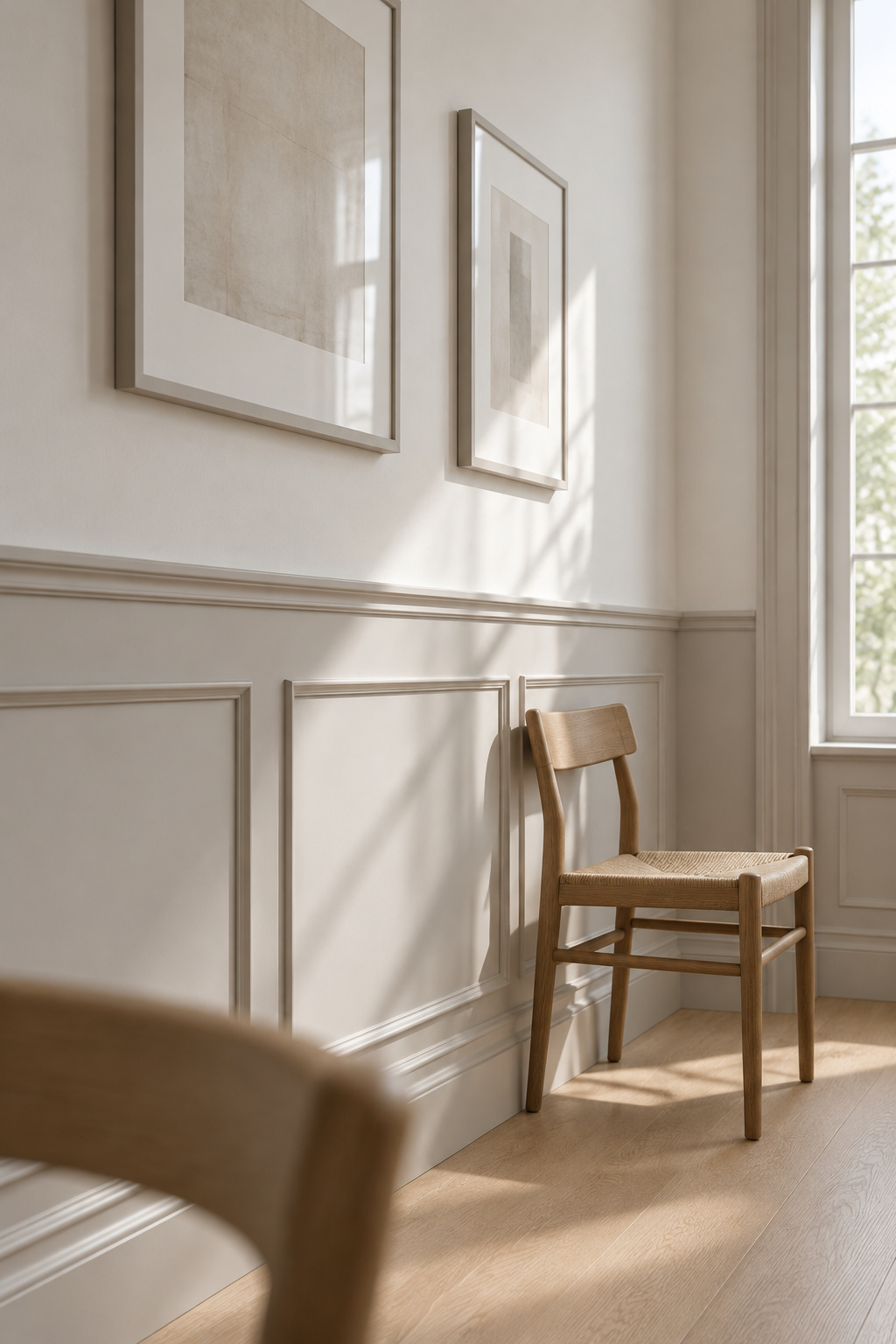
There is one honest disagreement. Interior Design Trends calls white panels under a colored wall the least current version of all, while several other guides still show that pairing as fresh. I side with the others on dating. A white wainscot under color is not wrong. It is louder than I would choose.
Dark and saturated paneled walls are a separate subject; here I stay with light and middle tones. If you are still choosing a style, start with every way to panel a dining room. What follows are four moves: a slimmer profile, one color, a vertical rhythm, and real wood.
Slimmer Stiles and Caps: Modern Wainscoting Ideas That Keep the Panel and Lose the Fuss
You can keep the grid of boxes. Take away the deep, layered molding that made it Victorian and the same structure looks modern: flat or square-edged stock, square inside corners, little rounding on the edges, and a cap that projects just enough to throw a thin shadow in side light. For how the older, deeper construction differs, see raised versus flat panel wainscoting.
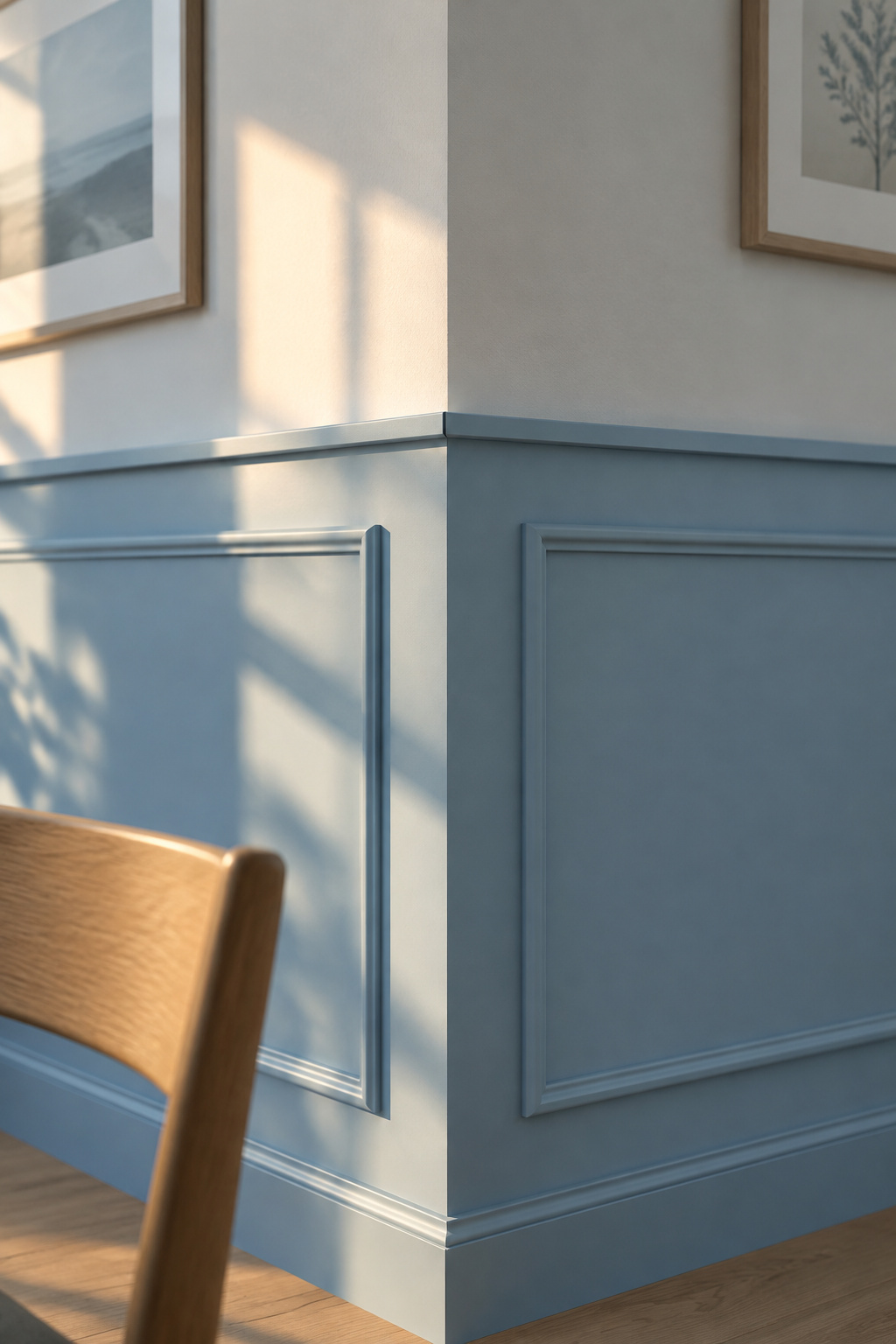
From busiest to quietest:
| Profile | Shadow line | How it looks in a dining room |
|---|---|---|
| Ornate molding, ogee edges | Deep, broken into several lines | Period and formal; busy behind a full table |
| Slim picture-frame boxes, square-edged | One crisp line around each box | Calm grid, keeps a little tradition |
| Flat panel, square inside corners | Single shallow step at the frame | Quiet and architectural |
| Plain plank border, no boxes | Almost none | Minimal; the wall barely changes |
I would build the flat panel with square inside corners. It keeps enough relief to catch evening light and asks nothing else of the room.
One Color From Panel to Wall: Tone-on-Tone Wainscoting
Paint the panels, the rail and the wall above in one color, and the paneling turns into texture. Jennifer Marsh of Mowery Marsh Architects puts it plainly: walls with wainscot “can be painted all the same color but it still offers a layer of texture.”
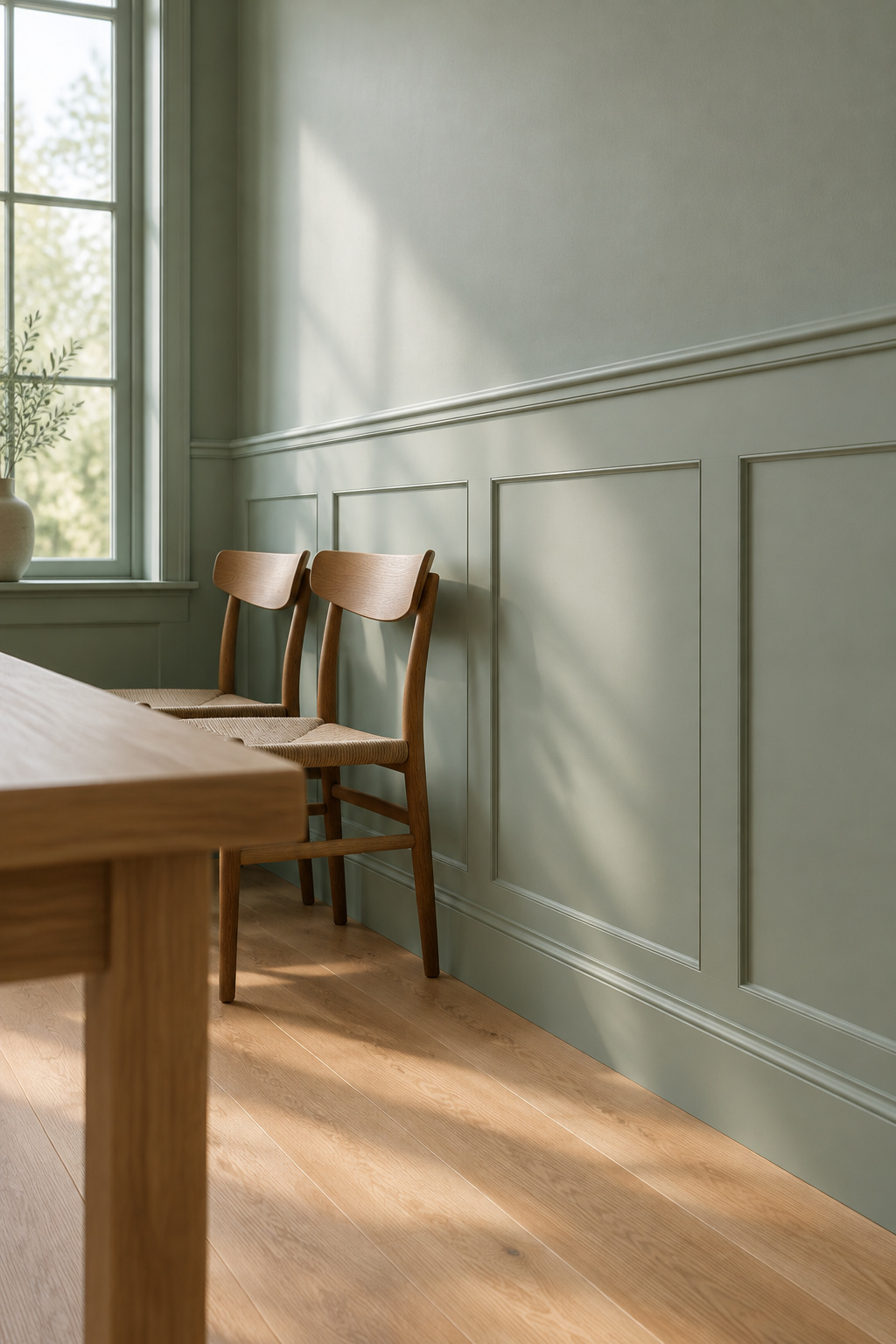
This is the move I trust most, because it removes a decision rather than adding one. When panel and wall match, the eye loses the hard line across the middle of the wall and takes the room in as one continuous volume. The room is no bigger, only calmer.
Commit to it. A half-done drench makes the remaining boundary more visible, so a rail left in contrasting white becomes a stripe.
Light carries the pattern instead. Shadow lines show best when daylight grazes across them from a side window; lit flat from the front, the relief nearly disappears. A slight change in sheen between panel and wall helps the lines show, and a matte wall above has a soft look I like.
Tone-on-tone is one way to relate panel and wall; the others, and the actual pairings, are in paint colors for wainscoting and the wall above.
Vertical Slats and Fluting: Slat Wall Paneling for a Dining Room
Slats replace the grid with a rhythm: narrow vertical strips with open gaps over a backer, which at table height give the wall a texture you can almost feel from your chair. Fluting is a solid face with channels cut into it and no gaps, and it looks more formal.
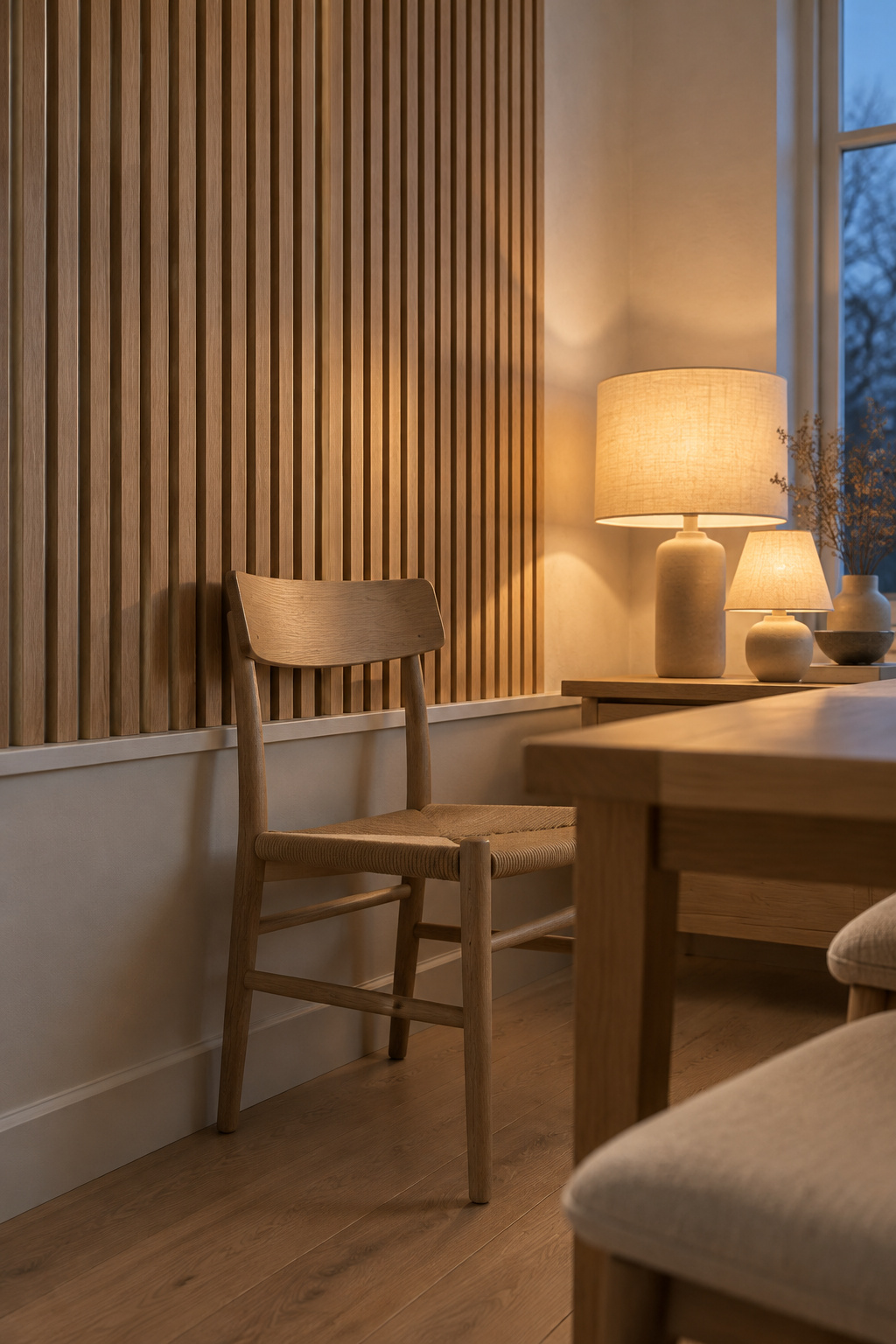
Use slats or flutes as a feature on one wall, not a field around the room. Wrapped around every wall, the effect cancels itself.
Spacing is where the advice splits. Lowe’s builds with 2 in slats set 1 in apart and wants the gap narrower than the slat, so more wood shows than wall. Other planners open the gap to one or two slat widths for a lighter, more graphic wall. Both work. A tight gap gives a dense, corduroy texture; a wide one gives stripes. Pick by how busy the rest of the room already is.
Slats painted to match the wall
Lowe’s and one slat planner paint the wall behind the slats very dark so the gaps become deep shadows. For a quiet dining room I would paint slats and backer in the wall color, and the gaps turn into soft gray lines. A slat wall adds thickness, so any outlet on it needs a box extender sized to the panel.
Slats left in wood
White oak suits slats best. It is light and calm, and its straight grain runs with the vertical rhythm. Let the wood sit in the room for 48 to 72 hours before installing, and finish the slats before they go up, because the edges are hard to reach afterwards. A matte oil looks right; gloss throws hard reflections across the shadows the slats are there to make.
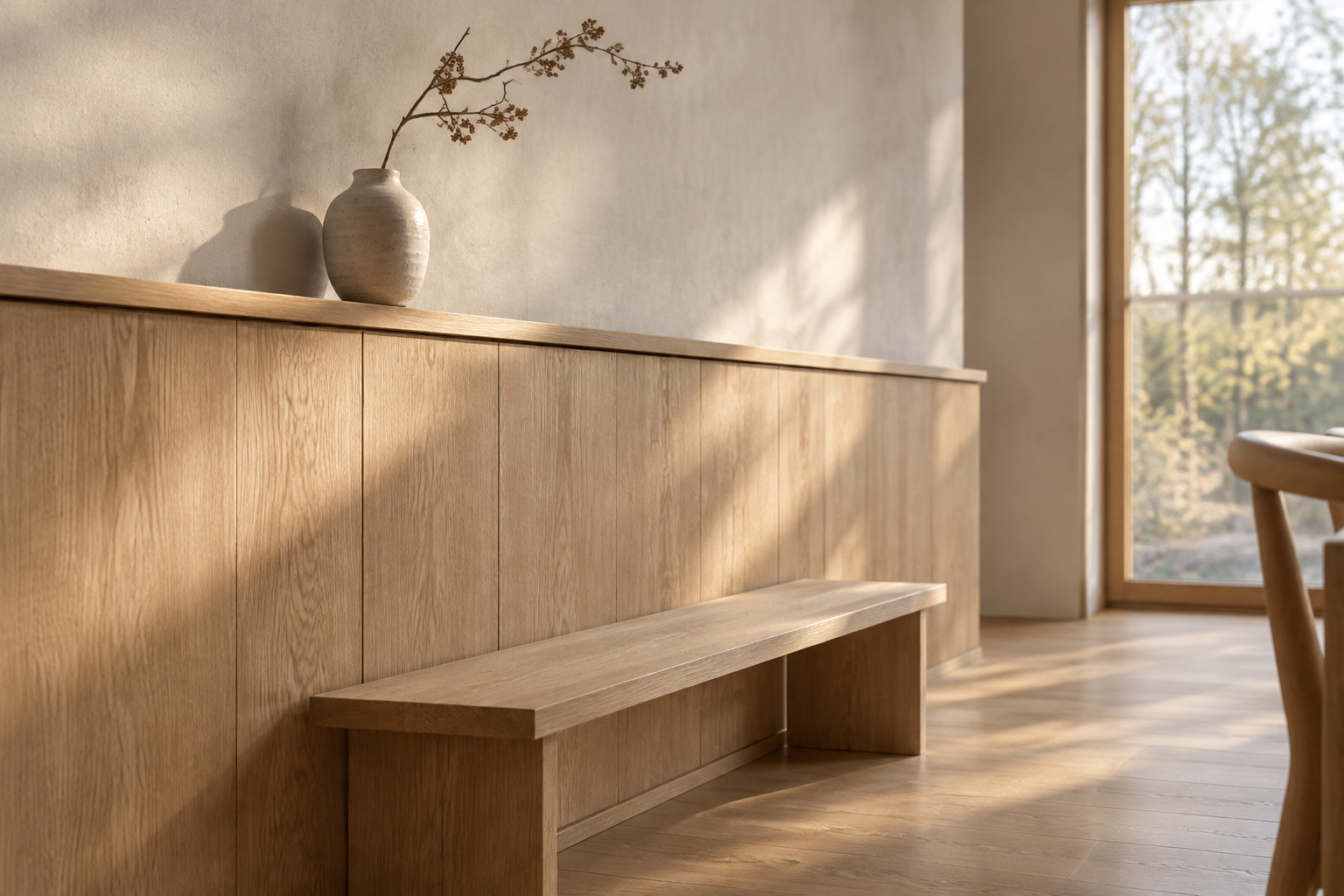
Real Oak Instead of Paint: A Flat Panel That Lets the Grain Do the Work
My breakfast table in Duluth is a small oak table that was my desk, my dining table and my workbench for six years. It has knife marks I refuse to sand out. Good furniture follows you between homes, and that is the case for real wood on a wall.
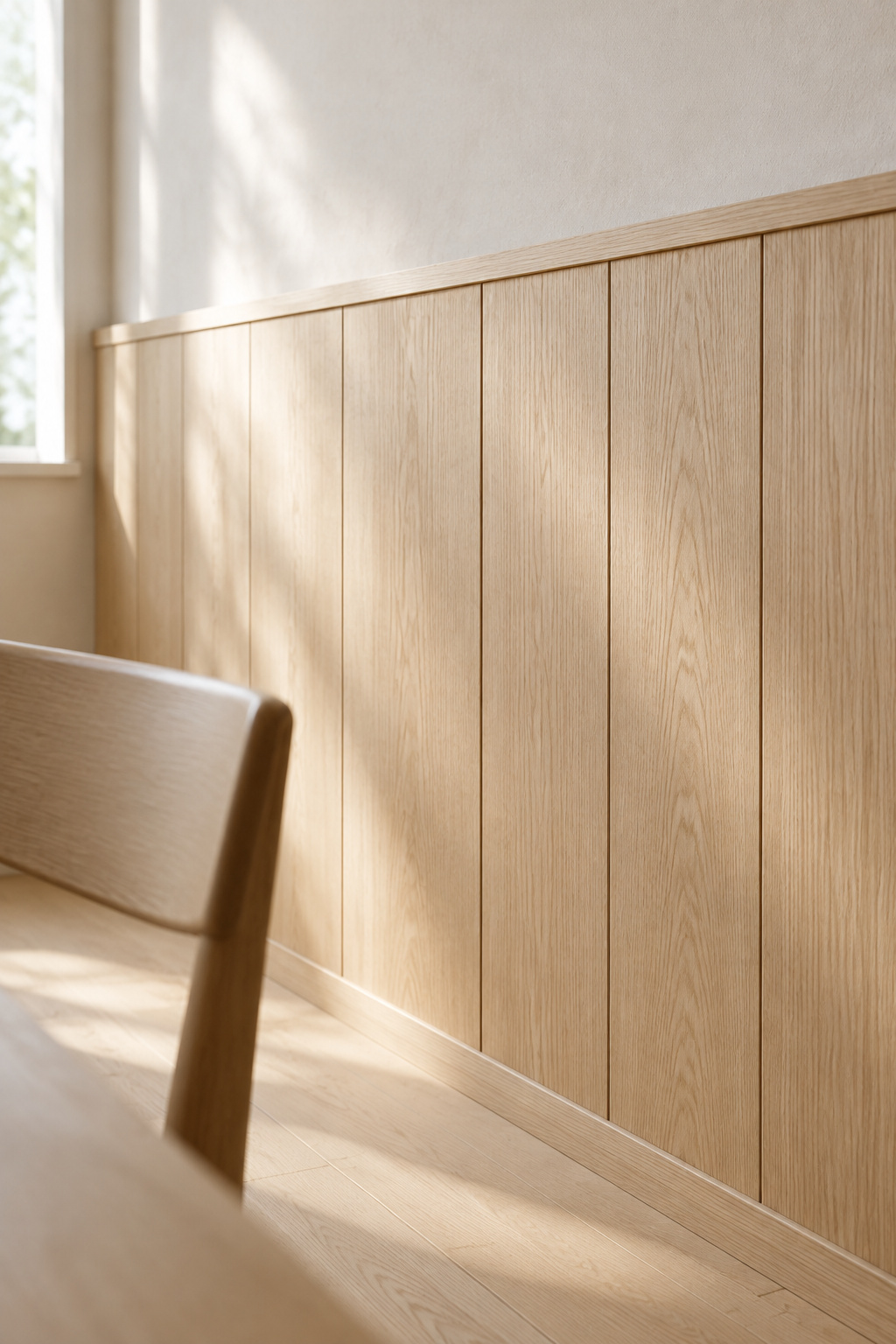
Most “Scandinavian” furniture sold in the US is pale veneer pretending to be wood. Buy fewer pieces of actual wood, and if you panel in wood, use solid boards or a thick veneer. The reason is repair. A 0.6 mm veneer face can be lightly sanded once or twice before you go through it; solid wood can be refinished many times. Veneer makers say their engineered cores are more stable, and they are right; a wide solid panel moves with the seasons and has to be built for it. My case for solid wood is the years of scuffs ahead.
The finish I would use is a hardwax oil, applied thin, because a heavy coat stays soft. Cure times vary by maker, from 4 to 5 days for one to 7 to 14 days for another, so follow the can you bought. No oil maker publishes durability data for walls; the data sheets are written for floors and furniture, which take harder wear, so treat their figures as the cautious end. When the wall does get marked, an oiled surface can be repaired with a light sand and a fresh coat on the worn patch, which polyurethane does not allow invisibly.
A Cap That Becomes a Narrow Ledge, and the Dining Room You End Up With
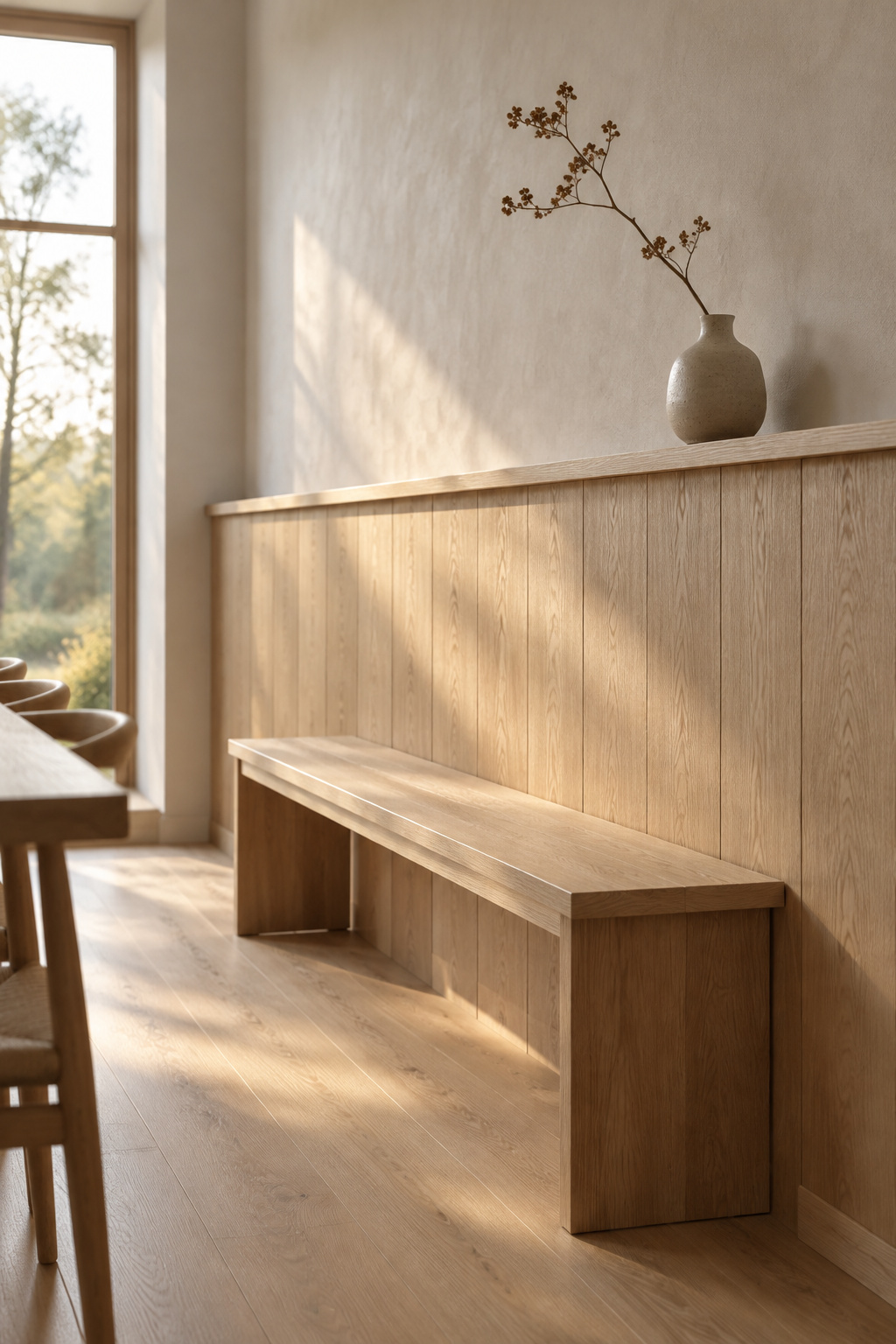
To my eye the cap decides which decade a wall belongs to. Replace the shaped chair rail with a plain flat cap, or let it become a narrow ledge. A ledge becomes the one line the room respects, with frames leaning on it and a bench back lined up below. Give it a few things, or it turns into storage you have to dust. The trade-off is that furniture can no longer sit snug against the wall unless it is lower than the wainscot, so check your sideboard first.
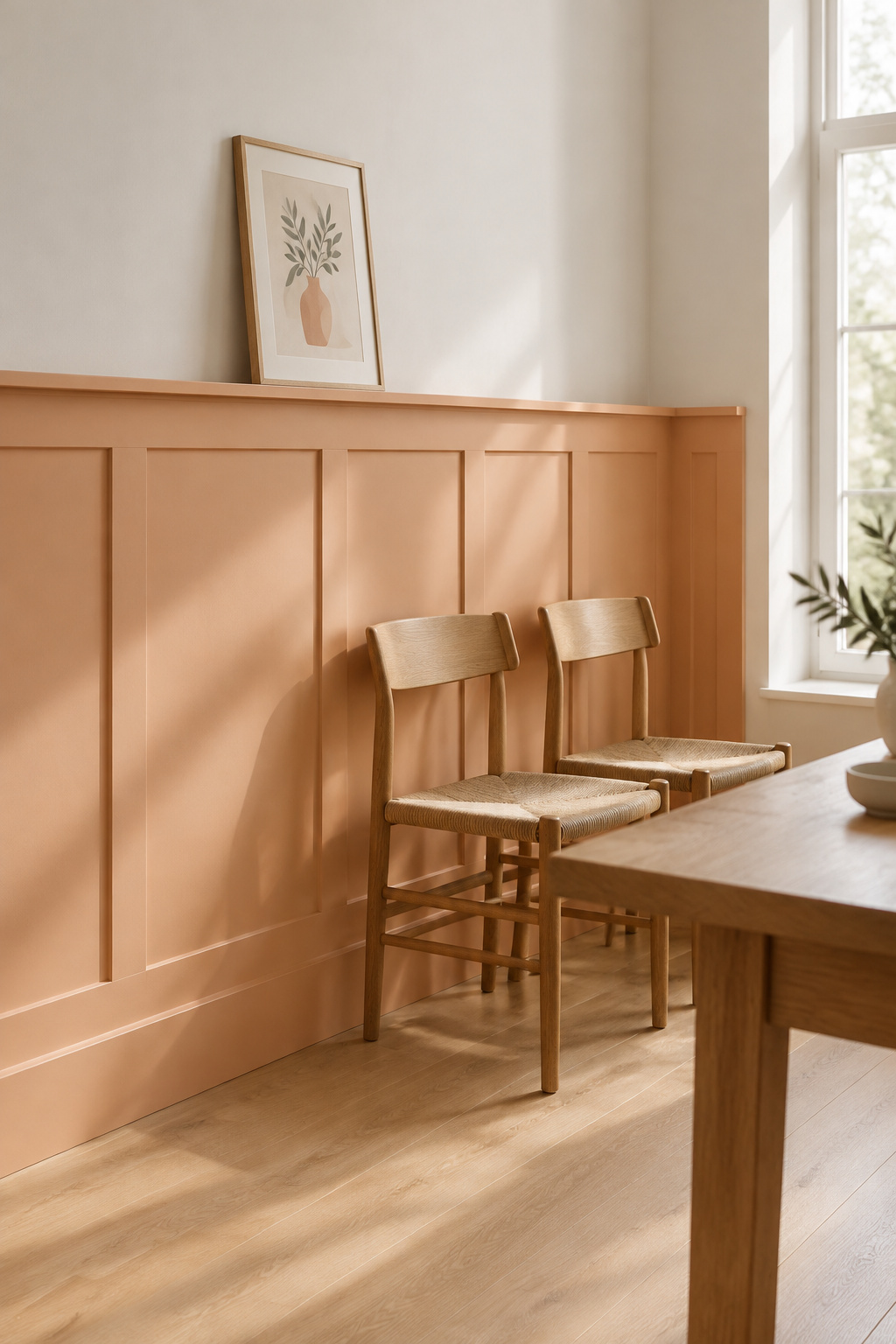
Go back to the wall you started with. The heavy boxes are slim, or replaced by slats. Panel and wall share one color. Where you wanted warmth there is oiled oak, and along the top runs a single quiet line.
Two decisions are left, and neither belongs here. Which colors go on the panel and the wall is a pairing question for the paint color article. Where the cap line sits is a measuring job, and the wainscoting height article on decorfull takes it from there.
FAQ
Does modern wainscoting work in a small dining room?
Yes, especially tone-on-tone. Painting panel and wall one color removes the hard line across the room, so the eye takes the space in as one continuous volume and it feels calmer. Slats and panels add thickness to the wall, so check that your chairs still pull out comfortably before you commit.
Is oiled oak paneling hard to keep clean around a dining table?
No. Dust it and wipe it with a damp, well-wrung cloth or a mild soap-based wood cleaner. Avoid alcohol-based cleaners, which can leave the oil tacky, and skip wet cleaning while the oil cures. Marks can be spot repaired by recoating the worn patch rather than refinishing the whole wall.
Can modern wainscoting sit in a dining room with traditional furniture?
It can, with care. Very spare paneling tends to sharpen the contrast with ornate, carved pieces rather than soften it. It sits most happily with furniture that has strong horizontal lines and simple shapes, such as a plain wood table and chairs, so pick the plainer pieces you own for that wall.