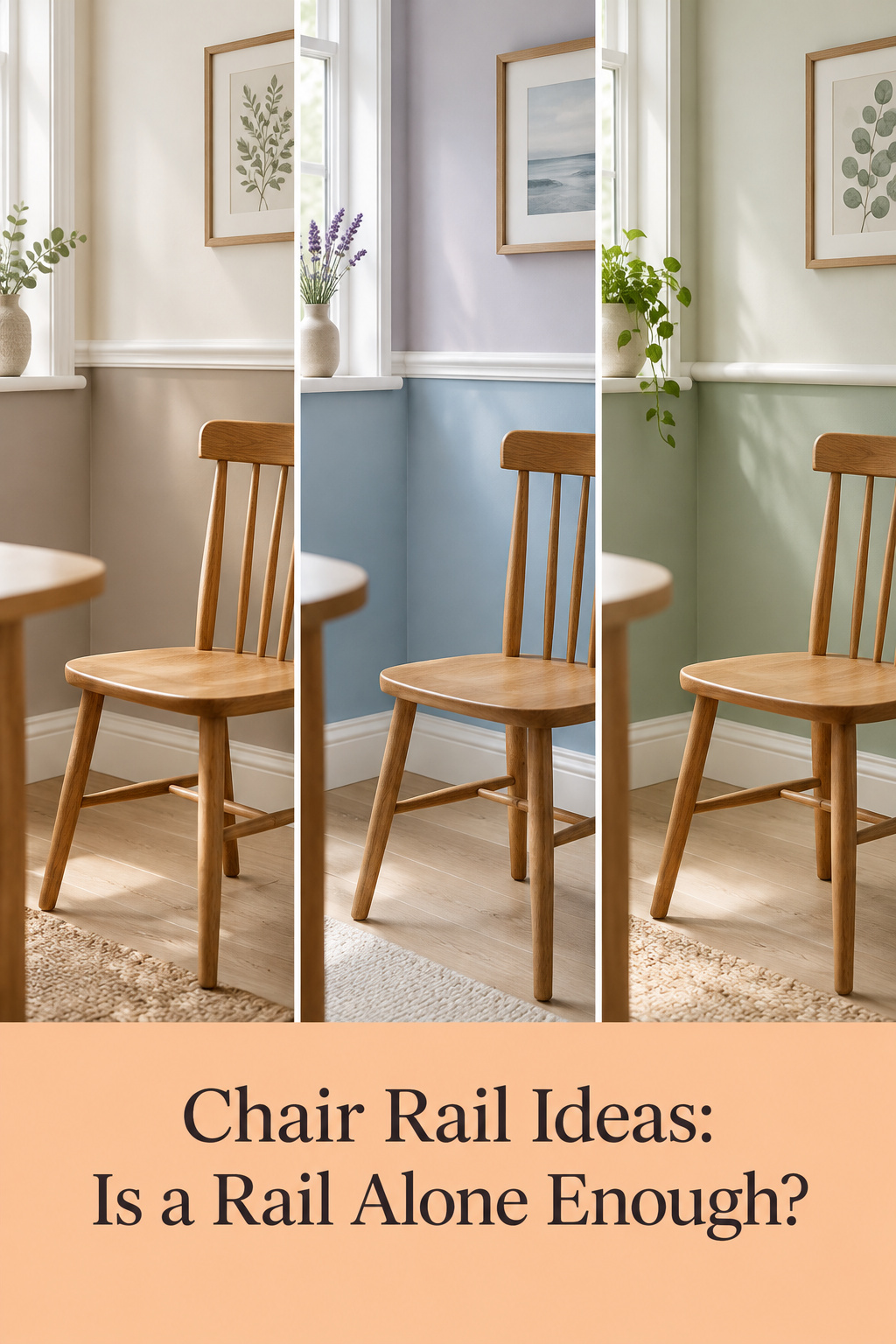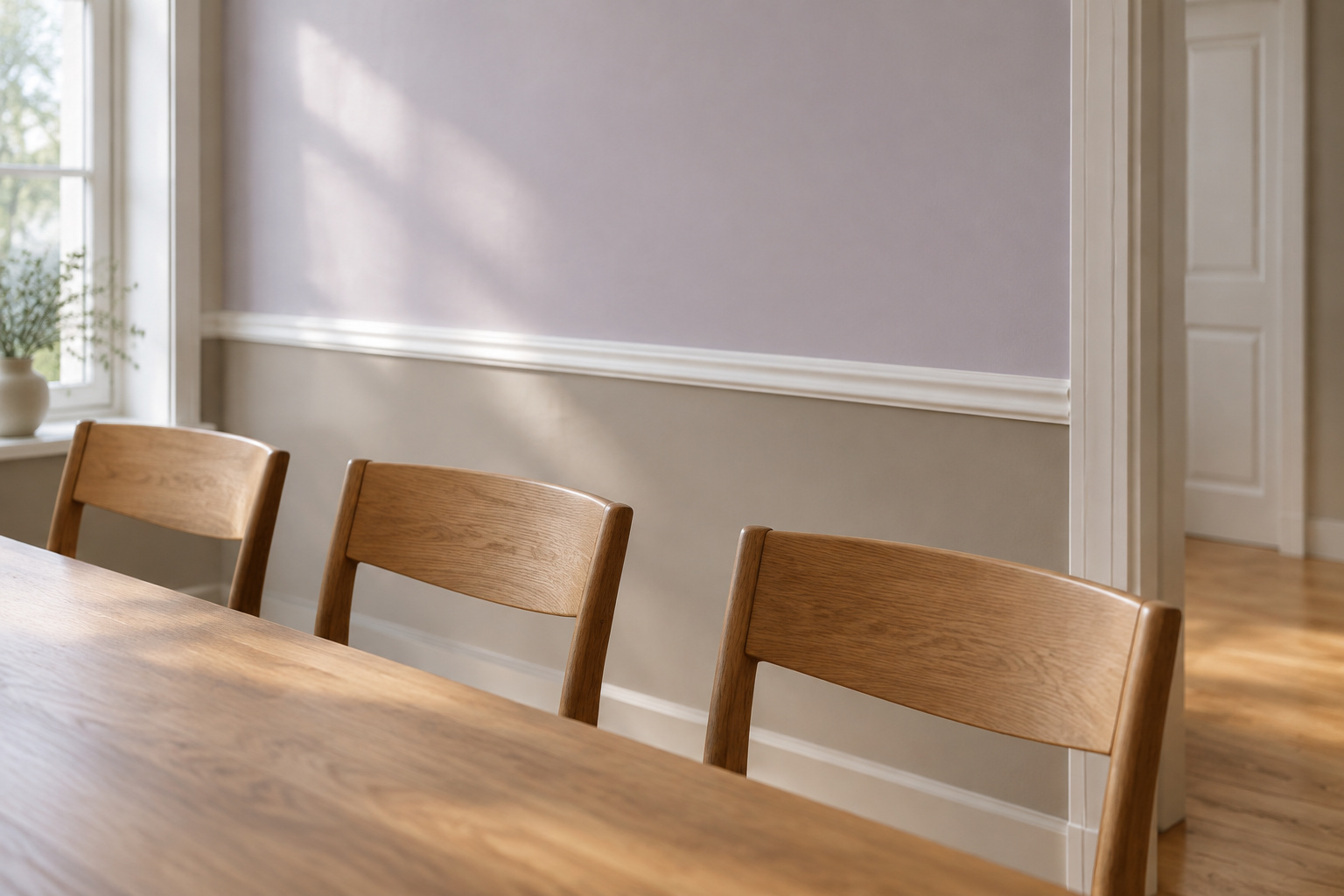

The rail goes up and looks lovely, and the wall below it gets the same flat paint as the rest of the room. A month later there’s a gray arc of chair-back marks just under the rail, right where the kids shove their chairs back.
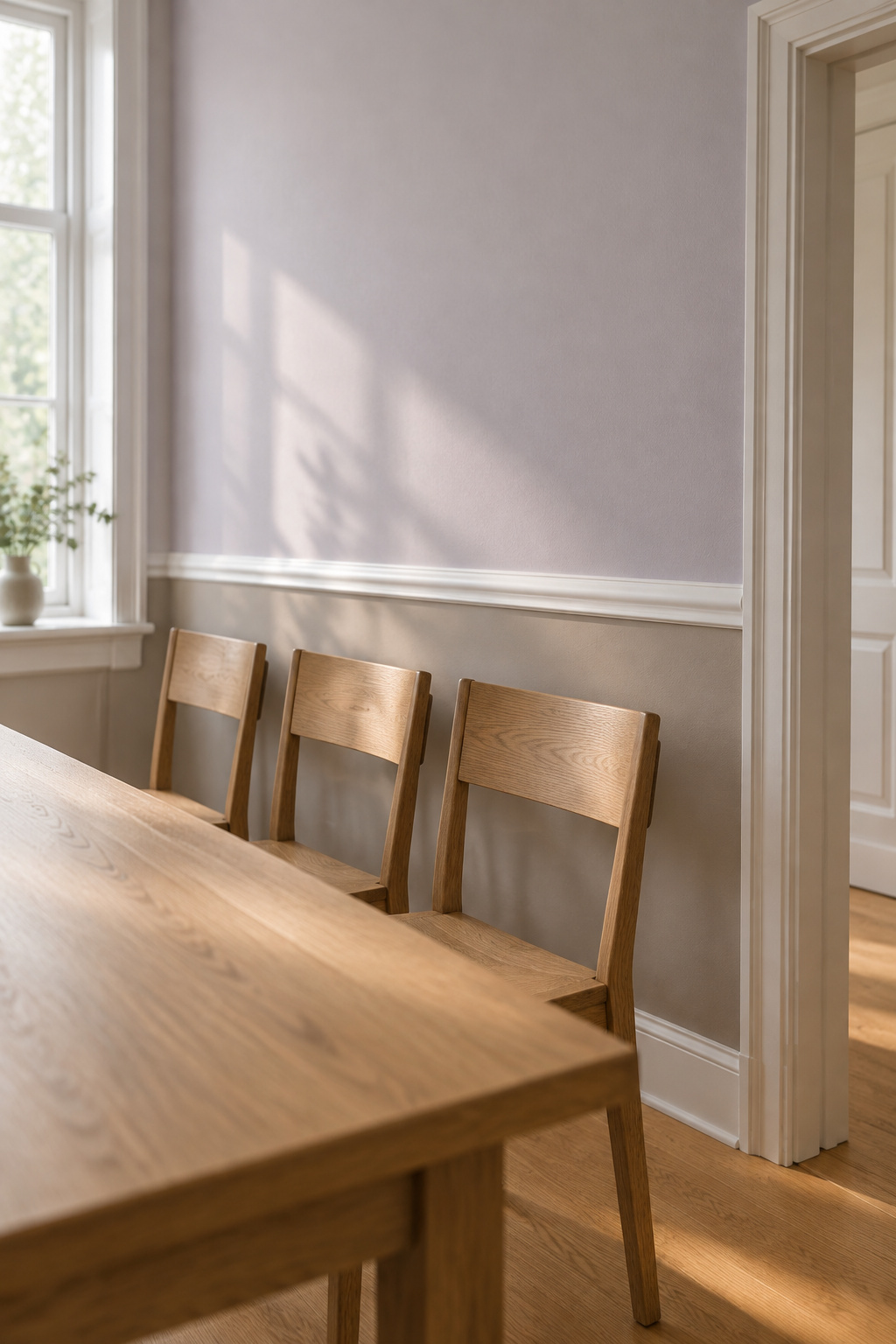
Plenty of dining room chair rail ideas treat the rail as a bit of trim for character. In a house with children it has a job. The strip of wall under it is the scuff zone, where chairs land at every meal, and the rail and the paint below it decide whether those marks wipe off or stay.
So the real question is whether a rail alone can protect that wall, or whether it needs paneling underneath. You can answer that for your own room, then pick a profile that wipes clean and a sheen that lets a chair mark come off with a damp cloth.
TL;DR
- Paint the rail in satin or semi-gloss and the wall below it in satin; eggshell is good enough there only in a premium washable line, and flat or matte paint doesn’t belong under a rail.
- A rail with tough paint below is enough when chairs bump the wall now and then; daily hard knocks call for paneling under the rail, and paneling needs a cap along its top anyway.
- Choose a shallow profile with crisp edges and no wide ledge on top, because deep, built-up profiles trap dust in every channel and need a brush to clean.
What a Chair Rail Is Actually For: The Scuff Zone, Not the Decoration
Before you buy any molding, kneel down beside a dining chair and look at the wall behind it. You’ll find the marks, and they’ll sit in a band, because every chair in the room comes back to roughly the same spot. Kids get down from the table in one move and never check behind them, so the wall does the stopping.
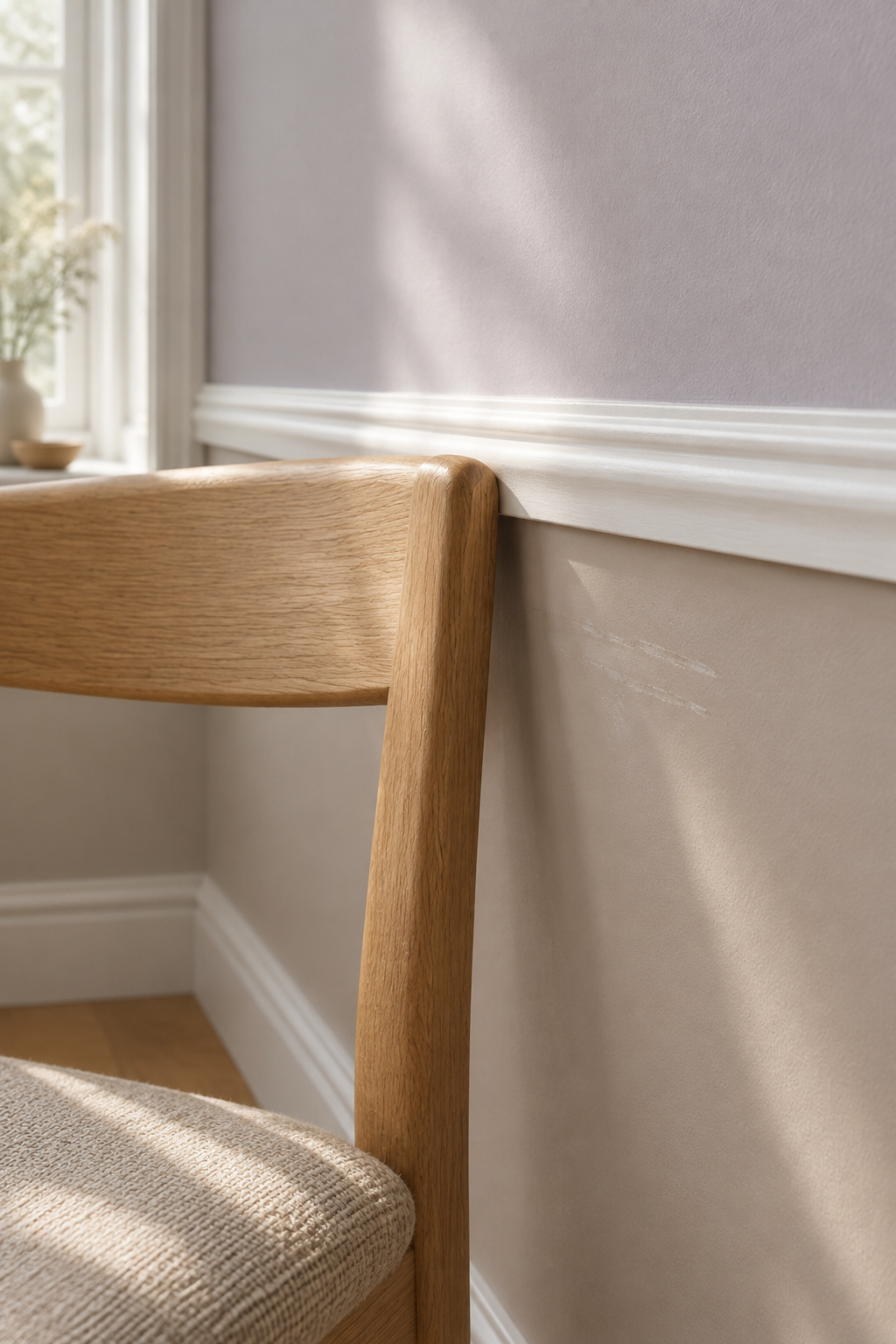
A chair rail has two jobs: protecting the wall from scuffs and bumps, and breaking up a wall of one color. People who study old houses still argue over whether it began as protection or as classical proportion. For a family, protection is the job that matters now. Trim is harder than drywall, and a marked rail is easy to touch up.
The rail belongs at the line set by your chairs and windows. The method for finding it is in how high to set the wainscoting cap. One warning from the trim world: a rail that almost lines up with a windowsill is more noticeable than one that clearly misses it.
Sheen and Wipeability: Which Finish Lets Chair Marks Wipe Off
Flat paint is the weakest choice for a scuff zone. Paint makers put it at the weak end for marks, and Benjamin Moore warns that stains are harder to remove from low-sheen paint and that constant rubbing can burnish it, leaving a shiny patch exactly where you scrubbed.
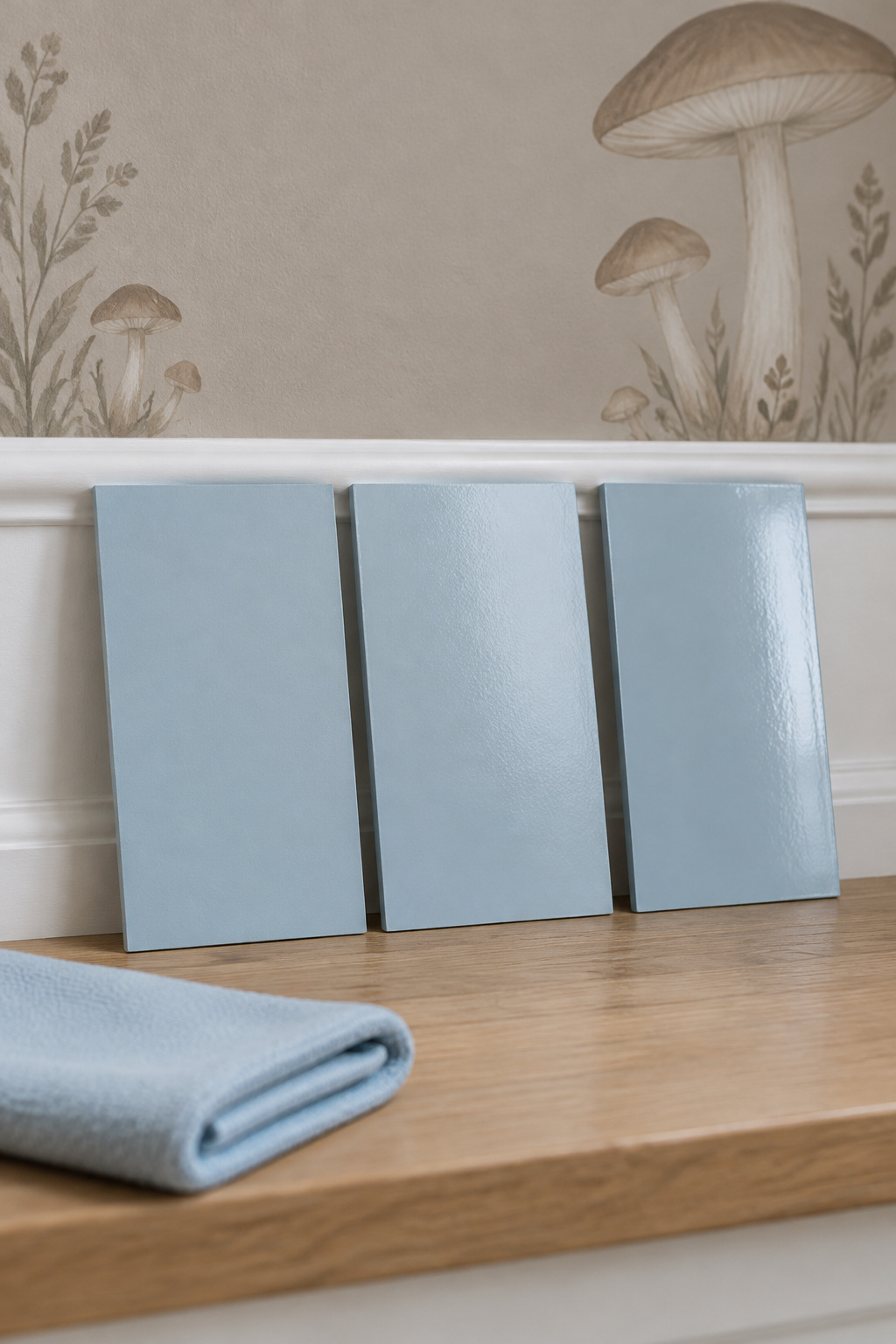
PPG, a coatings maker, ties sheen to how much pigment sits in the binder: more pigment means lower sheen and typically weaker scrubbing, so glossier paints tend to scrub better. On a wall that takes chair knocks, the finishes compare like this:
| Finish | How marks come off | What it shows |
|---|---|---|
| Flat | Prone to scuffs and stains; rubbing can burnish it | Hides wall flaws best |
| Matte | A little tougher than flat, still weak for the strip under a rail | Nearly shine-free |
| Eggshell | Easy to clean in ordinary rooms; satin beats it on stains | Low sheen that varies by brand |
| Satin | Better stain resistance and durability than eggshell | Soft sheen, some wall flaws |
| Semi-gloss | Tough, stain resistant, easy to clean | Every dent and patch once light crosses the wall |
My verdict: the rail in satin or semi-gloss, and the wall below it in satin. Eggshell holds up below a rail only in a premium washable line; Benjamin Moore says its Aura paint washes the same in every sheen, so in a line like that the choice comes down to looks. Flat and matte stay above the rail or out of the room.
Keep semi-gloss off a wavy or patched lower wall, because it will pick out every flaw. If you’re torn between two sheens, paint two scrap boards and lean them against the rail in evening light. That test is for shine only; color comes later.
A Rail Alone or Paneling Underneath: Chair Rail vs Wainscoting
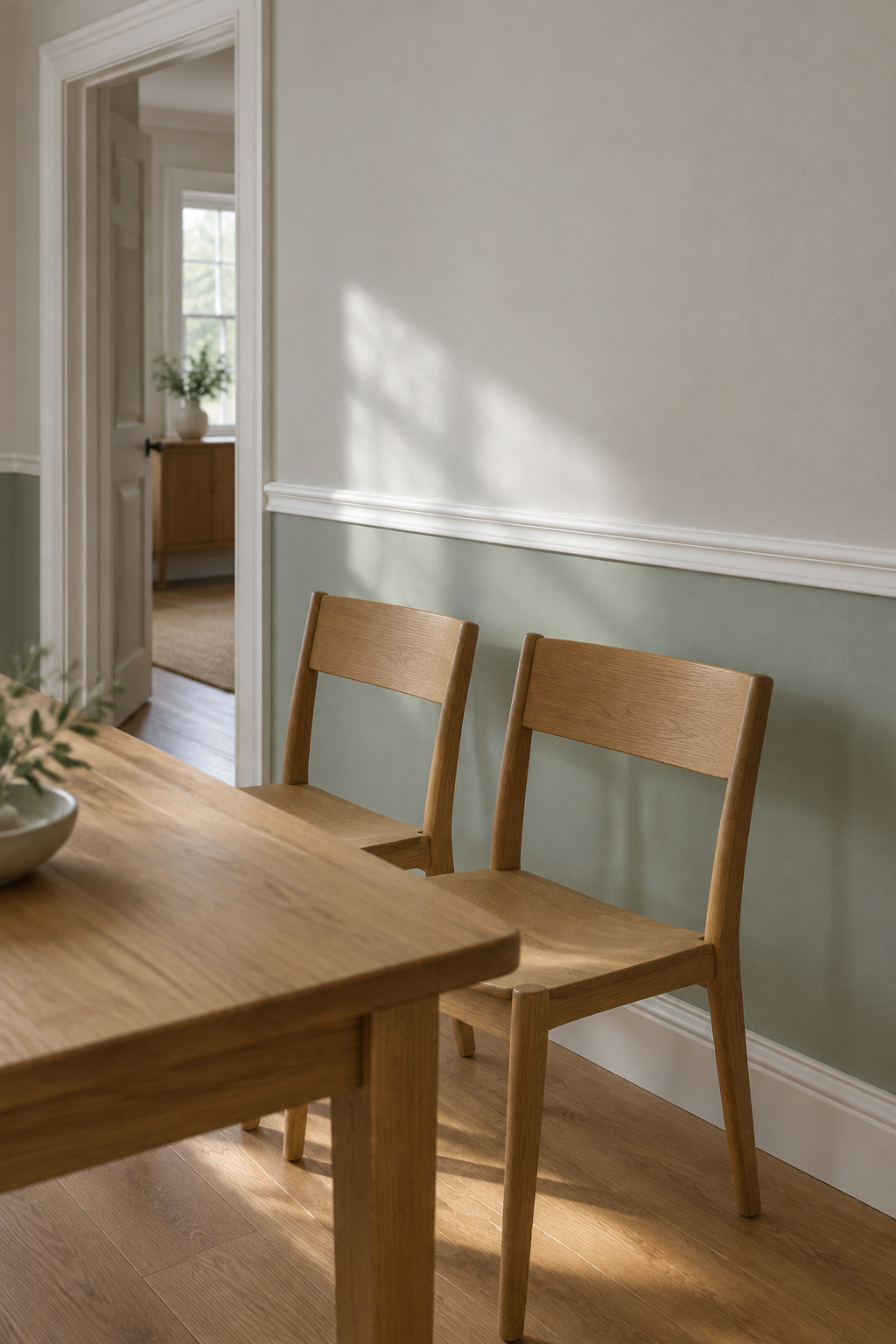
A chair rail is one strip of molding with painted wall below it. Wainscoting covers the whole lower wall in paneling, and it needs a rail or cap along its top edge, or the panels just stop against flat drywall and look unresolved. A rail can stand on its own. Paneling can’t.
When a rail with paint below is enough
A lone rail works when the chairs bump the wall now and then, and when the rail lines up with something real in the room. As Luxe Architectural, a molding retailer, puts it, a rail added without a visual reason “tends to look unfinished rather than restrained.” A paint change at the rail is the easiest reason to give it.
It’s also the smaller job: far less material and labor than paneling, and a weekend for a handy person. With satin below, I think that covers most family dining rooms.
There is no test comparing how well a rail alone protects a wall against full paneling, so the marks on your own wall are the best evidence you have.
When the wall needs paneling beneath
If the band under the rail is dented as well as marked, paint won’t keep up. Paneling puts a harder surface where the chairs land. Adding molding boxes between the rail and the baseboard is how a lone rail turns into wainscoting, and the styles, costs and install choices for full wainscoting in a dining room make a bigger project of their own.
Dining Room Chair Rail Ideas Worth Copying: Profiles That Clean Easily
Run a finger along the top of an old chair rail and you’ll learn which profiles collect dust. Curves, channels and narrow grooves all hold it, and a flat cloth only reaches the high points. The more detailed the profile, the more you’ll need a soft brush for the low ones.
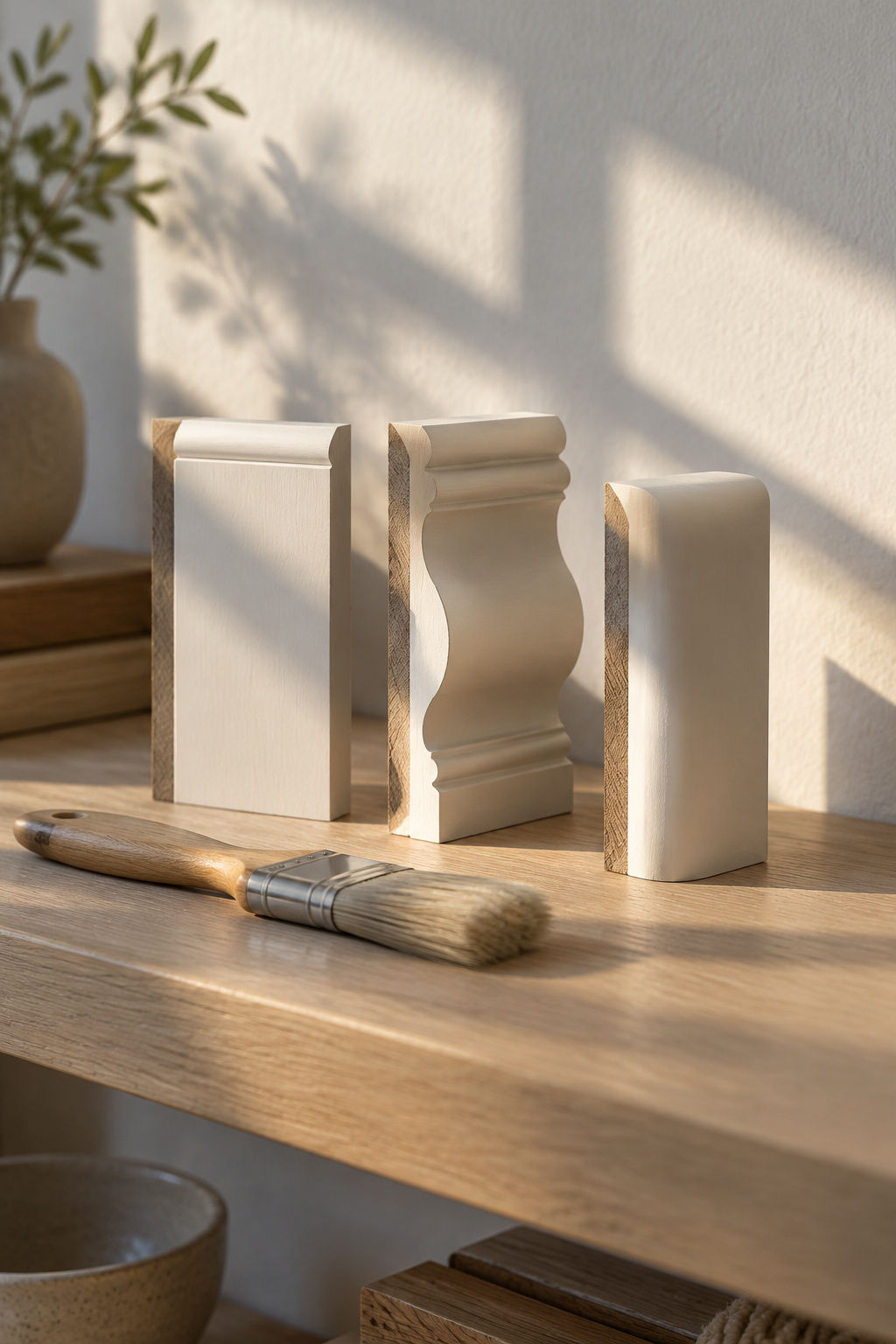
| Profile | Cleaning | Look |
|---|---|---|
| Flat (a flat face between two small curves) | Quick wipe; dust sits only in the edge curves | Plain, leans modern |
| Colonial (an S-curve center with curves at each end) | Several grooves to brush out | Traditional and familiar |
| Built-up classical (cove, ovolo and corona, sometimes egg-and-dart or dentil) | Ledges and recesses that need a brush and a swab | Formal; deep versions may need a backband to end neatly at casings |
| Shallow single curve with crisp edges | One pass with a damp cloth | Quiet, with a sharp shadow line |
My pick for a family dining room is the shallow one: one clean curve or a flat face, crisp edges, no deep channels and no wide flat top for crumbs to settle on. Can a tired kid do it? Hand a seven-year-old a damp cloth and a flat-faced rail and the answer is yes. Hand them dentil molding and you’ll be finishing the job yourself.
Crisp matters for looks too. Gary Katz, a Fine Homebuilding contributing editor, says crisp, sharp edges make crisp, sharp shadow lines. MDF often struggles to hold a sharp edge, so look at the actual piece in the store before you buy.
Paint Below and Above the Rail: Colors for a Lone Rail
Color decides which marks you notice. The closest guide is painted furniture, where pale colors show scuffs and scratches and dark colors show dust and fingerprints. Walls aren’t furniture, but by that analogy a darker lower wall hides chair scuffs better and a pale one shows them sooner. If you love a pale lower wall anyway, go ahead. It’s a room, not a museum, and satin wipes.
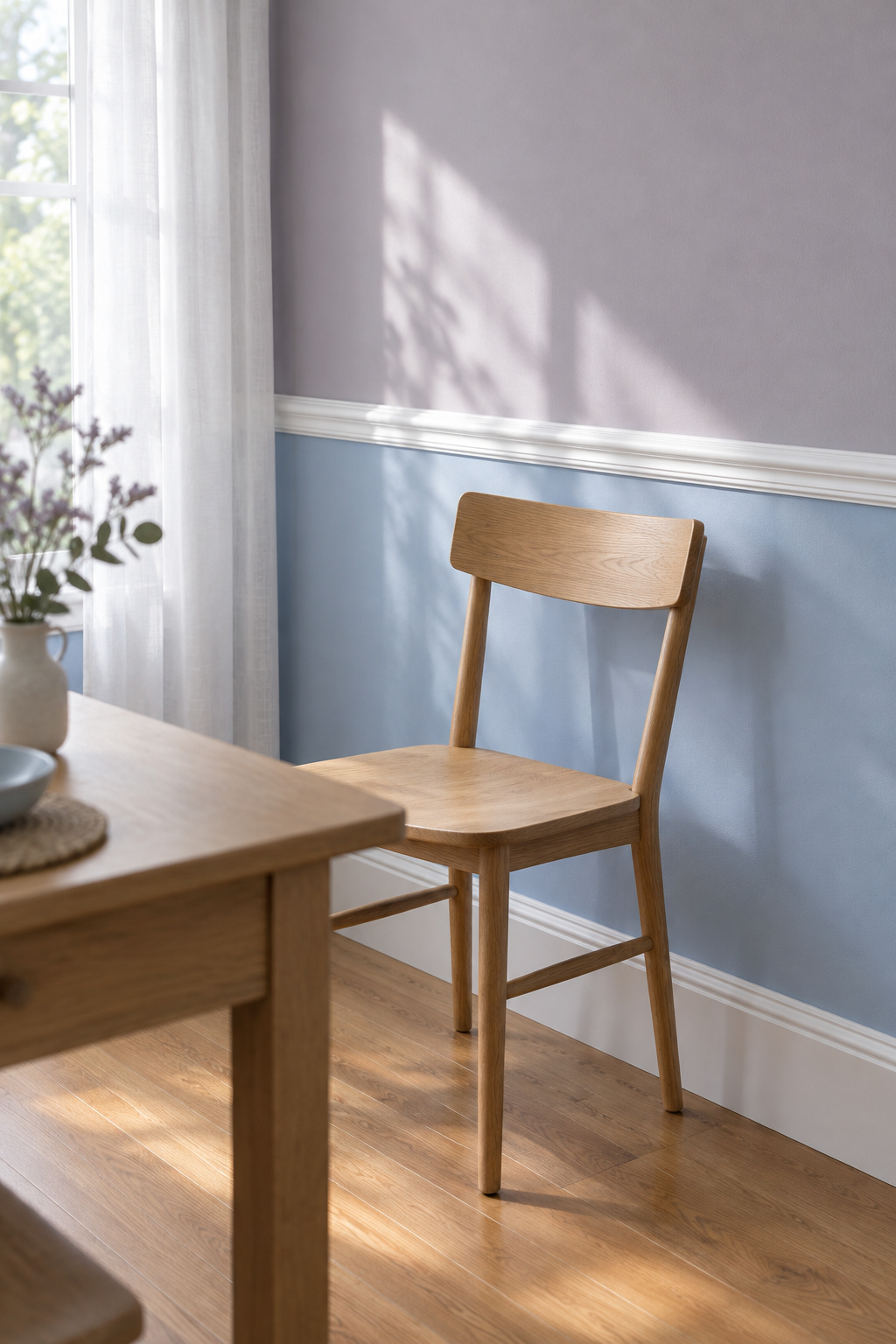
For the rail itself, Farrow & Ball calls a white rail clean and classic and a rail painted the wall color a strong contemporary look, and Kylie M Interiors, a designer, says a painted rail should match the room’s other trim. Wallpaper is fine above the rail and only there, the same rule I give for kids’ rooms: wallpaper at adult height only.
The pairings themselves, and how much contrast to put between the two halves of the wall, are covered in paint colors for wainscoting and the wall above.
Your Chair Rail Plan, Start to Finish
Work in this order:
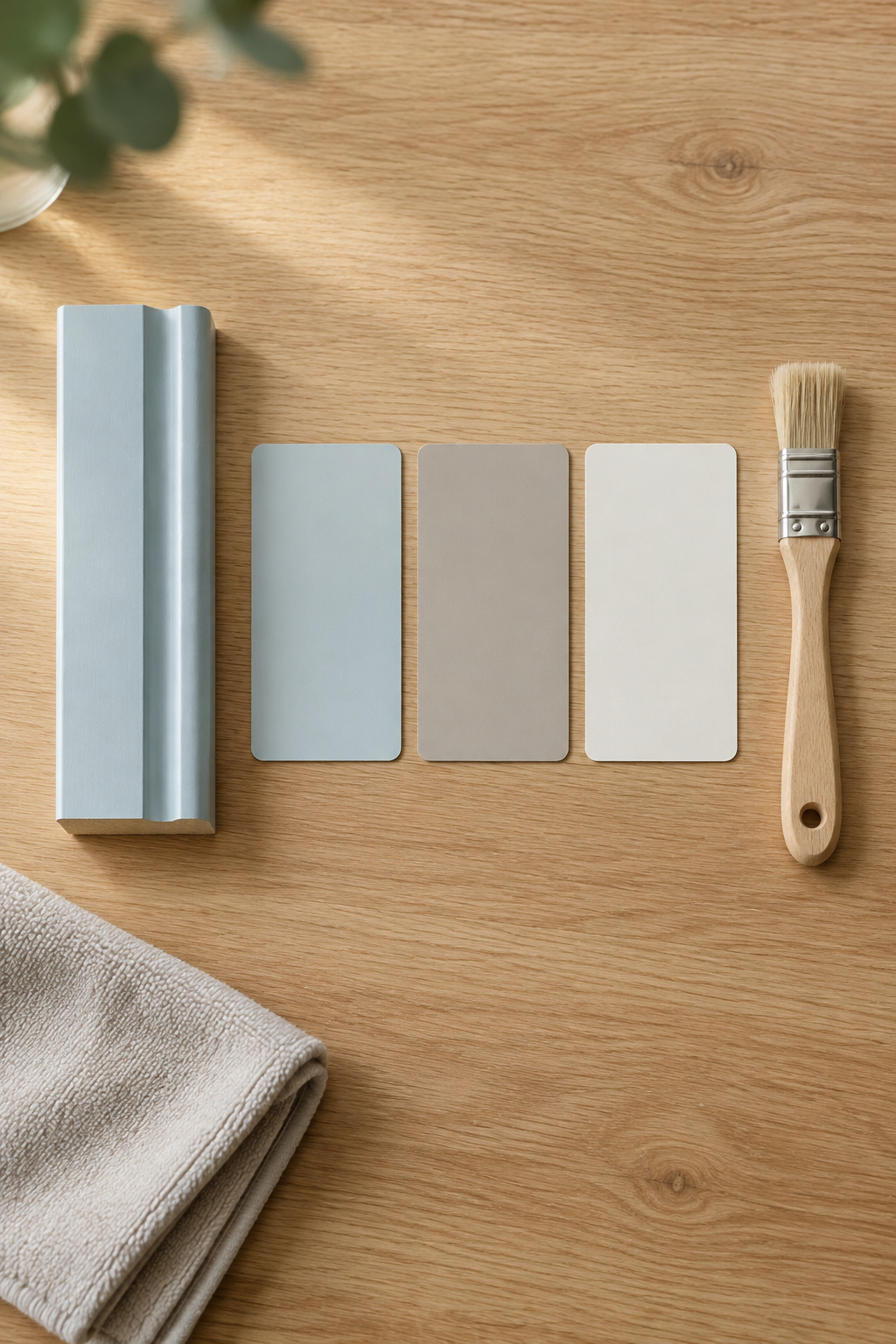
- Kneel down and read the marks. Occasional scuffs mean a rail with paint below; dents mean paneling under the rail.
- Pick a shallow profile with crisp edges and no wide top ledge.
- Set the sheen: satin or semi-gloss on the rail, satin on the wall below.
- Choose the colors for the lower wall, the upper wall and the rail.
- Find the rail’s line from your chairs and windows with the height method, and only then cut molding.
- Leave the new paint alone for a while. Benjamin Moore’s satin trim enamel can be washed after two weeks and takes up to 30 days to reach full hardness.
Plan for the next stage, too. My two shared a bedroom for years, and now the older one wants a door that locks, so I know arrangements don’t stay put. The shoving phase passes and the rail stays, so pick one you’ll like when dinners are calmer.
If you rent, or you aren’t sure yet, start with the cheapest reversible version: no molding at all, just a durable satin on the lower wall up to the line where your chairs hit. A nailed rail is a commitment, and paint isn’t. Give the satin a season, then decide whether the rail is worth adding.
FAQ
Do you need a chair rail if your dining chairs never touch the wall?
Not for protection, though it can still be worth having. Without chair contact, only one of its jobs is left: breaking up the wall. If the rail connects to something in the room, such as a paint change or a window line, keep it. A rail with no visual reason tends to look unfinished.
What do you do with a chair rail where it meets a door or window casing?
You can butt it against the casing or finish it with a mitered return, and both are legitimate. Brent Hull, a historic-moldings expert, always butt cuts the rail and never interrupts the casing itself. Other carpenters miter the end and glue in a small return. Deep, built-up profiles sometimes need a backband to finish neatly.
Does a chair rail make a dining room look smaller or dated?
Designers disagree. Two interviewed by Real Homes say a rail stays in style when the details around it are right, while another designer would remove one from a newer home. Brent Hull says a rail set too high makes a room feel squat. If you dislike yours, painting it the wall color helps it recede.