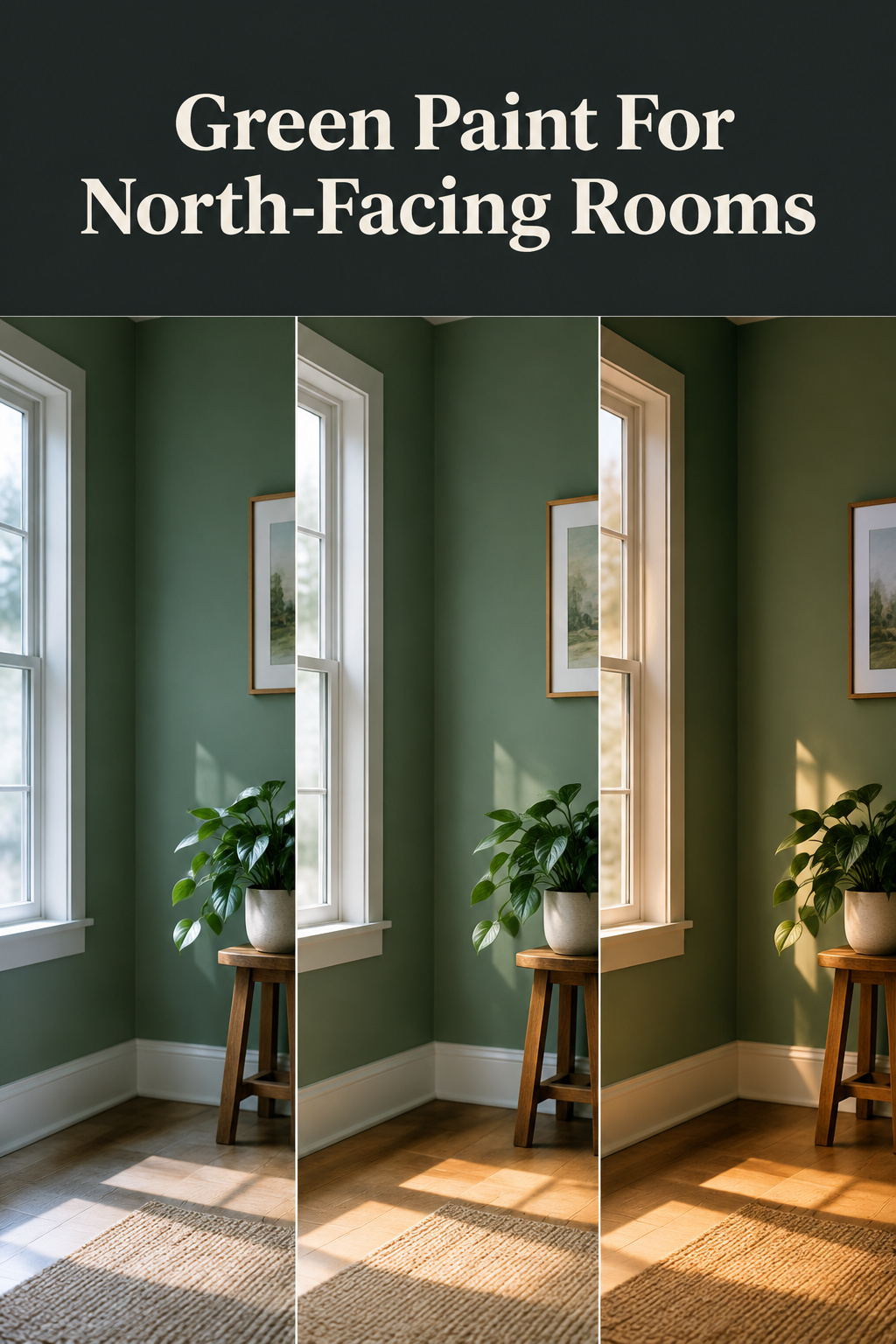
Half of what ends up on your wall is the color in the can. The other half is the light your room gets, and green shows that light more plainly than any other family, which is why green paint for north facing rooms is a different question. Same can, two rooms, two colors.
TL;DR
- North light runs cool and steady: the CIE D65 daylight standard sits near 6500K, with overcast and open shade around 6500–7500K. That coolness flattens the yellow out of a warm green.
- Target roughly 5 to 10 LRV points higher than facing south, and bias warm: Benjamin Moore Forest Green 2047-10 (LRV 7.58) is warm, Hunter Green 2041-10 (LRV 6.39) is cool.
- Sample on an A2 board or larger, two full coats on white board, on two walls, morning, midday and evening.
The Same Can, Two Different Colors
Why a store green changes at home
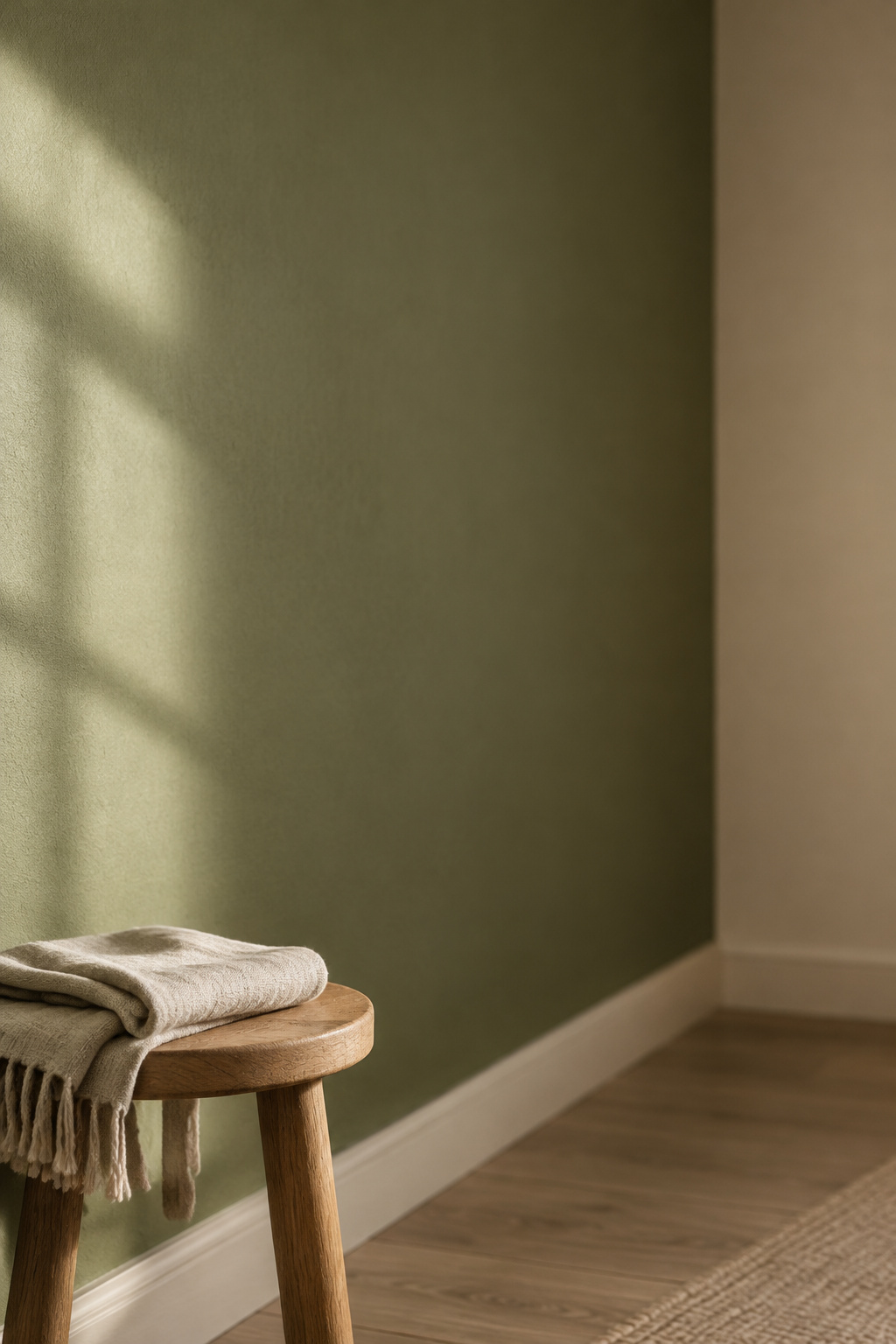
Store lighting is bright and even, nothing like a real room, so a chip under it is no preview. Northern light, as Farrow & Ball puts it, brings out a color’s cooler tones.
The moment most people notice it
Rarely at noon. Usually an overcast morning, when the warmth drops out of the light and the undertone surfaces. Your phone won’t show it: white balance corrects away the cast you need to see.
What this guide settles: a method, not a shade
No green is best for every cool room. The method carries over.
What North Light Actually Does to a Green
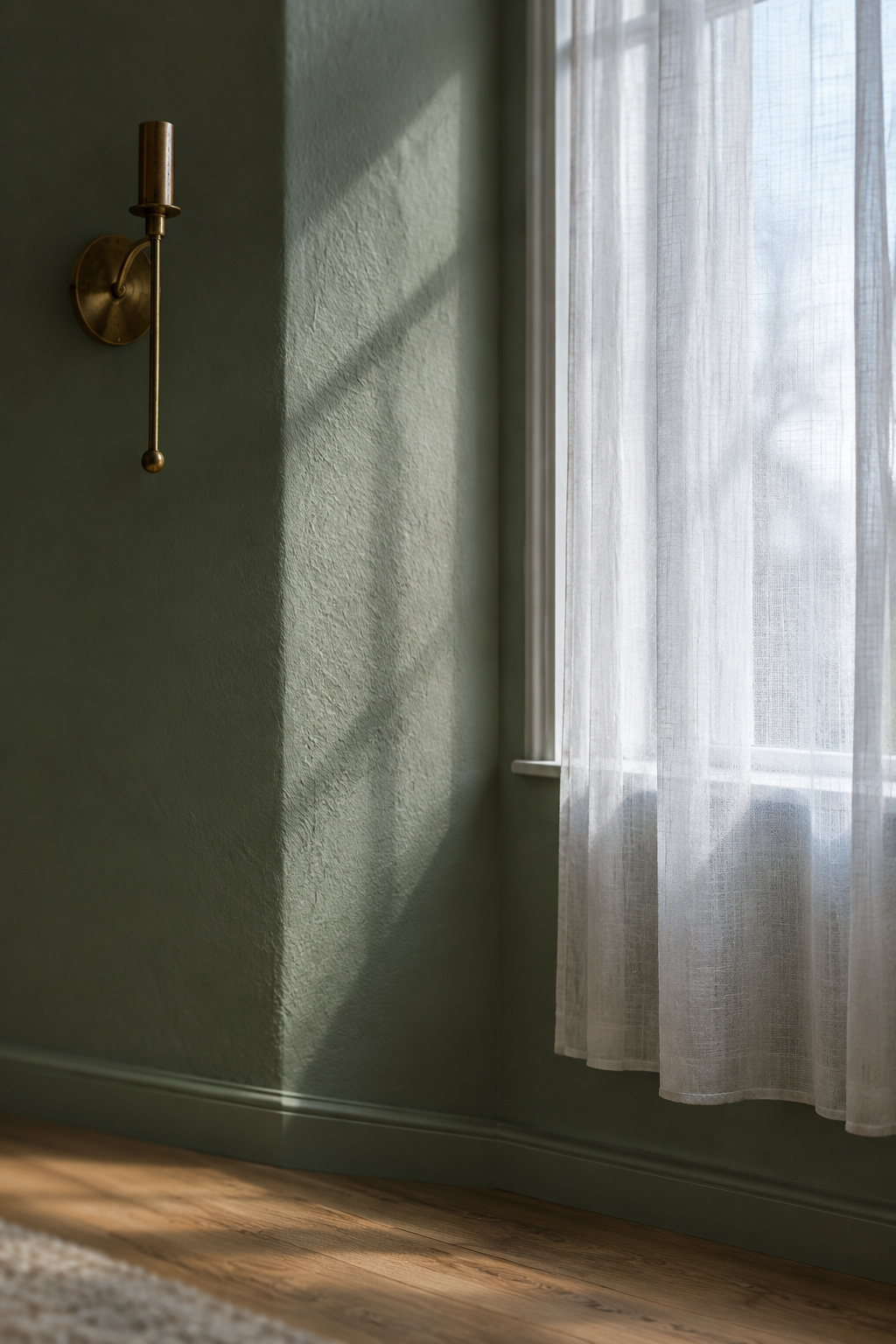
I trained as a teacher in Dharamshala, in a practice hall with nothing on the walls. The only decoration was window light crossing a plank floor; light was the room’s whole ornament.
Why north light pulls every green toward its flattest self
A north-facing window never gets direct sun, only indirect sky light: diffuse, shadowless, unchanging from breakfast to dusk. With no warm hour to lift it, the yellow inside a green stops showing.
The light and undertone numbers, and what you see
CIE standard illuminant D65, defined in ISO/CIE 11664-2, is the international reference for representative daylight at roughly 6500K. Overcast sits near 6500K and open shade nearer 7500K, against about 5500K for midday sun and 2700K for a warm bulb. Treat that as a range, not a reading: field studies put real overcast light well outside it, by season and cloud. A window varies more than any number, and stays bluer than the shop all day.
Light Reflectance Value runs in standard depth bands: White 82–94, Off-White 73–81, Light 55–72, Light-Medium 40–55, Medium 20–40, Medium-Dark 10–20, Dark 2–10. In a north-facing room, target roughly 5 to 10 LRV points higher than the same color needs facing south, and favor warm, yellow-based undertones. The room starts dimmer and cooler, so it needs the headroom.
The ‘gray-out’, and why light causes it
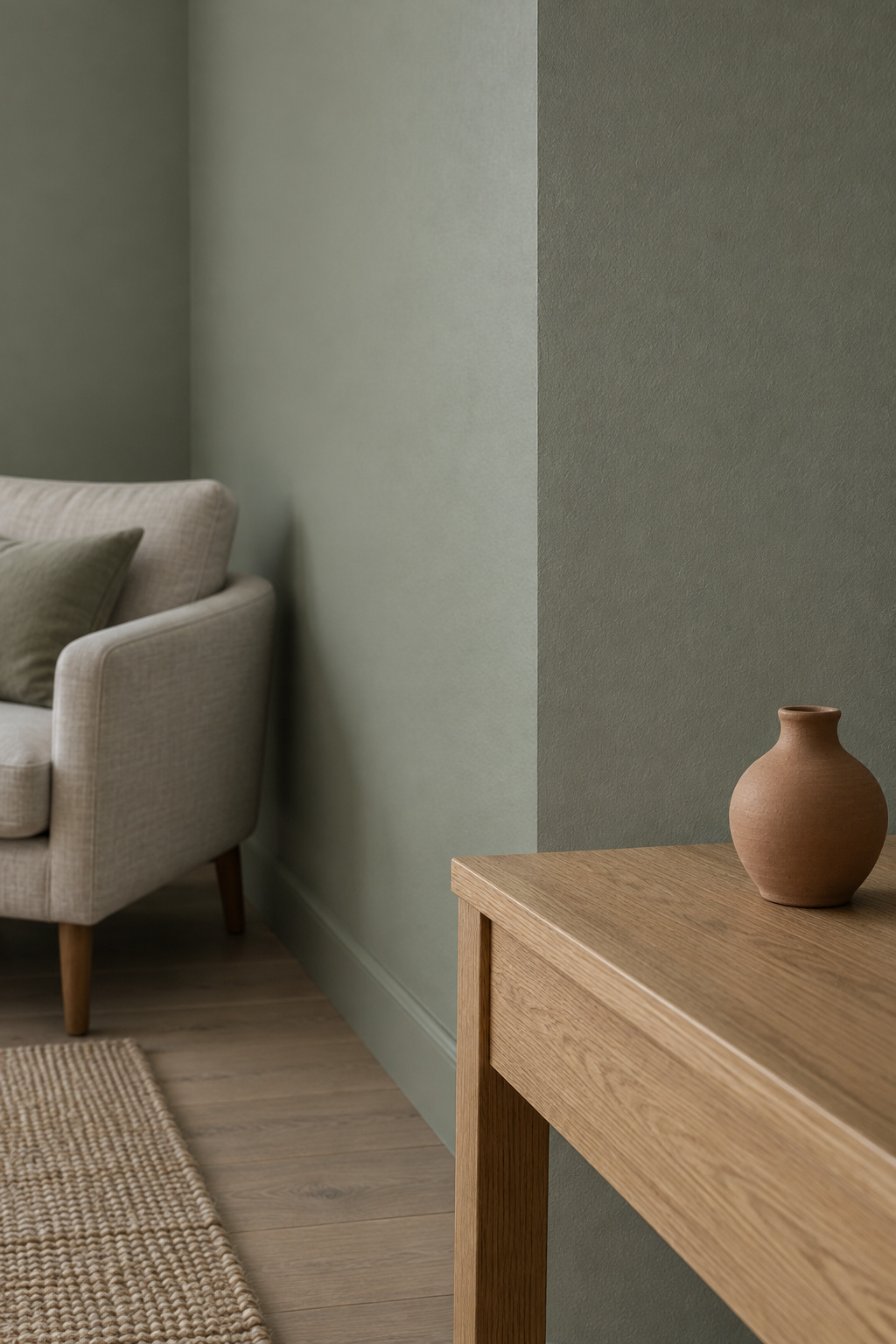
Cool undertone under cool light: the two stack instead of canceling, the hue drains, and a temperature is left where a color should be, the symptom the sages that hold their warmth are chosen to avoid. Pale greens go first.
Green Paint for North Facing Rooms: Which Half of the Range Survives
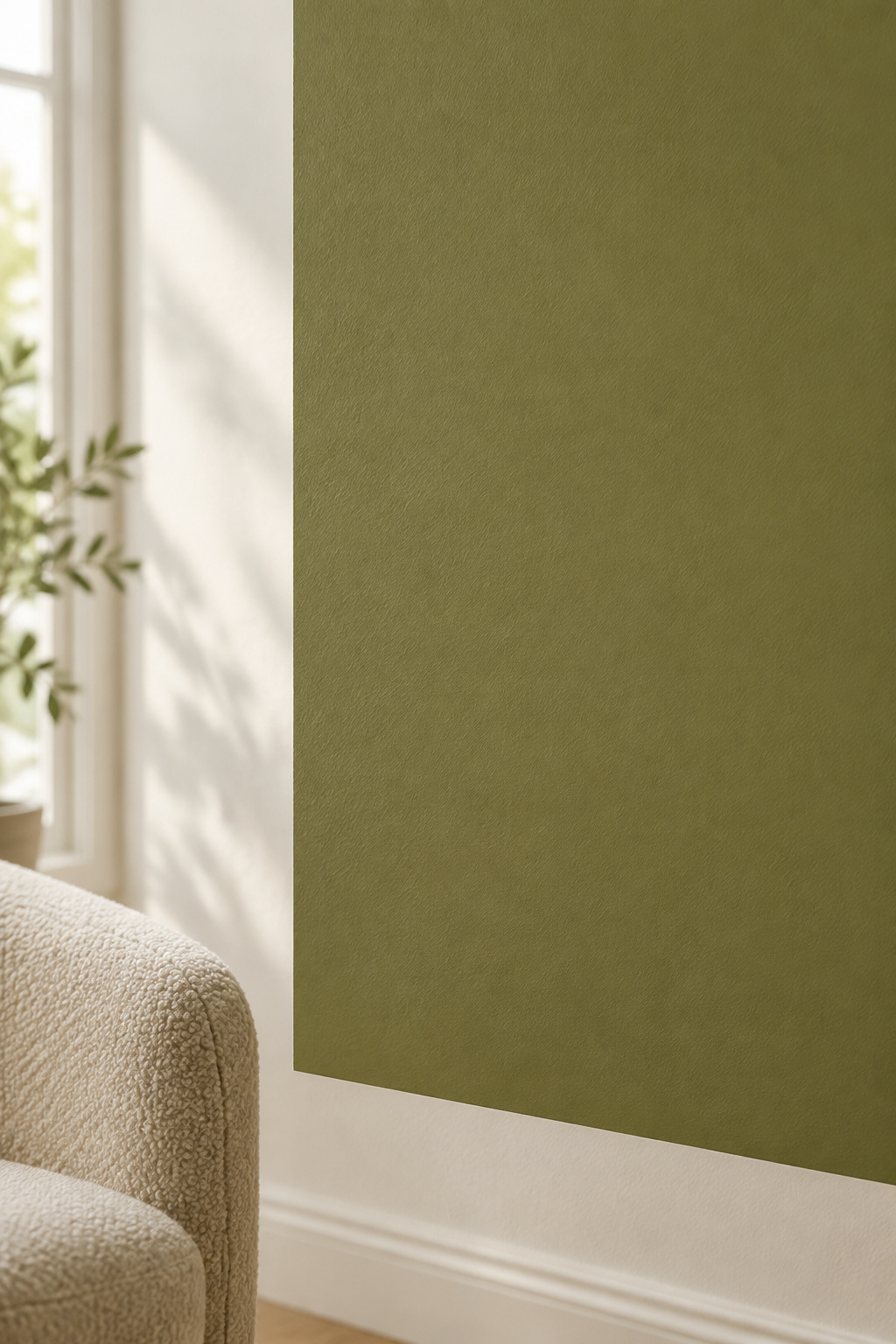
Six named greens, ordered by the light they hand back.
| Green | LRV | Undertone | In north light |
|---|---|---|---|
| Benjamin Moore Soft Fern 2144-40 | 57 | the light end | most headroom |
| Sherwin-Williams Evergreen Fog SW 9130 | 30 | blue-leaning sage | intensifies the cast |
| Benjamin Moore Forest Green 2047-10 | 7.58 | warm, golden yellow | carries a whole room |
| Farrow & Ball Studio Green No. 93 | ~7.2 | complex green | near-black until daylight |
| Benjamin Moore Hunter Green 2041-10 | 6.39 | cool, blue-green | better as an accent |
| Benjamin Moore Black Forest Green HC-187 | not published | cool, blue-green | close to black |
Warm, yellow-leaning greens that hold
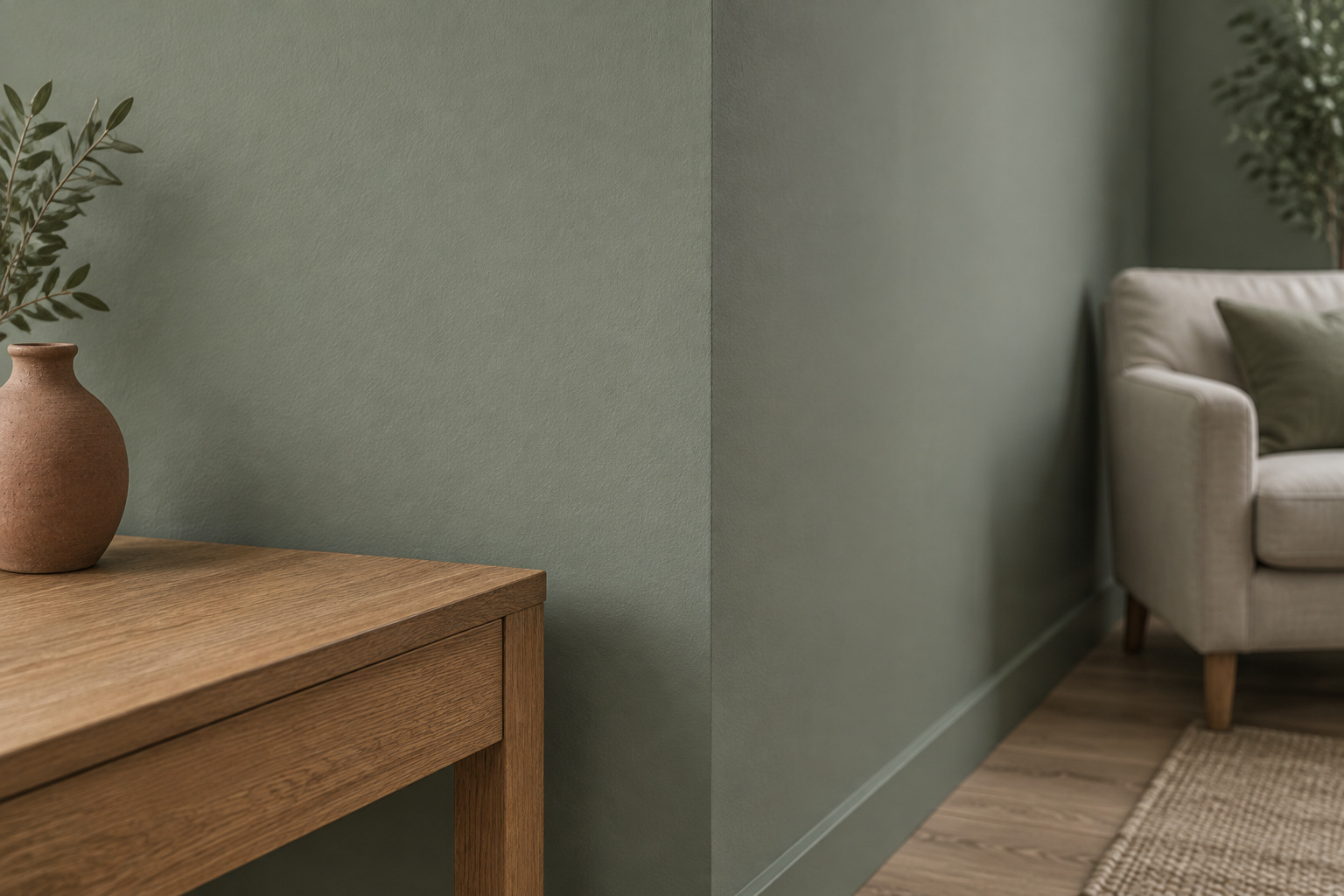
Olive, moss and warm sage sit opposite the blue this light adds, so the two partly cancel. Sherwin-Williams Grassland 6163 carries a greige warmth and Farrow & Ball’s Sap Green an olive with a hint of yellow; neither publishes an LRV. Benjamin Moore Guilford Green HC-116 does: 57.22, warm green-yellow, light enough to carry the cast without disappearing into it.
Cool, blue-leaning greens that turn sour or gray
Teal, mint and seafoam do the opposite. They add to the cast, and the room goes cold rather than quiet. My instinct here is subtractive: take the light-hungry green out of the running before you add lamps and cushions to rescue it.
Why the deep, saturated end differs again
Below roughly LRV 10–15, so little reflected light is left that undertone is nearly all you can still see. Farrow & Ball Studio Green No. 93, at LRV ~7.2, is near-black in low light and finds its green only when daylight reaches it. The deep end of the range makes the fuller case.
How Sheen Changes What the Light Does to the Color
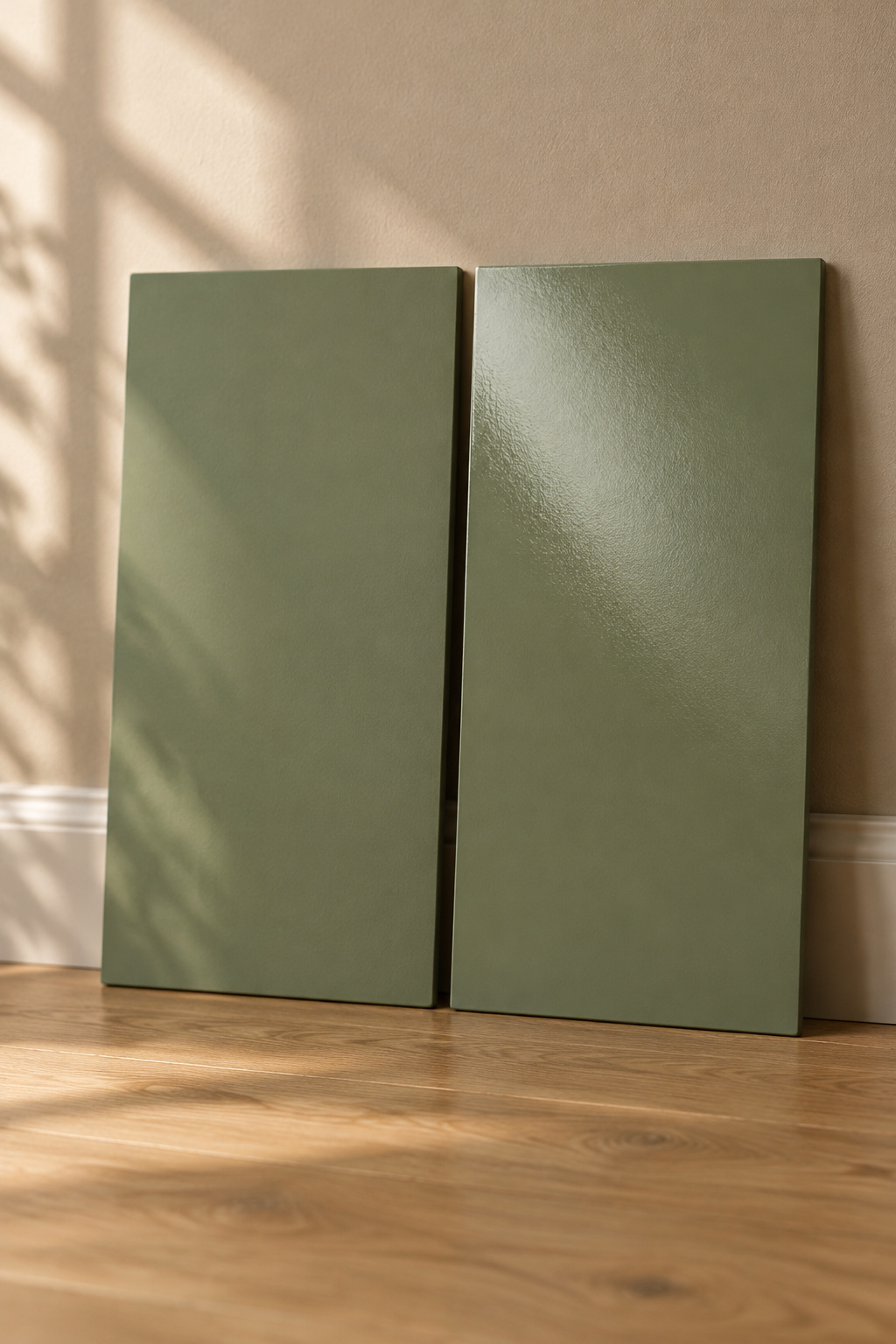
In a cool room, sheen decides how much light comes back.
Why one green differs in matte, eggshell and satin
| Finish | Light it hands back | What you notice |
|---|---|---|
| Flat or matte | roughly 0–5% of the incident light | velvety; hides texture |
| Eggshell | 10–25% of the incident light | a faint glow |
| Satin | 25–35% of the incident light | lighter and cooler than matte |
| Semi-gloss | 35–70% of the incident light | depth, and every roller mark |
| Gloss | over 70% of the incident light | near-mirror; not for walls |
Those are rough shares of the room’s light a wall throws back, and they are not gloss units. ASTM D523 and ISO 2813 measure specular reflectance against polished black glass at a fixed angle, 60° for gloss and 85° for sheen.
Sheen that helps a north-facing green stay warm
On a warm green, a soft eggshell or satin keeps the wall from going lifeless, because it returns some light instead of swallowing it. Semi-gloss adds depth to a dark color and advertises every roller mark.
Where sheen can’t fix an undertone
Gloss is defined independently of color, so a cool blue-green in satin is still cool, only lighter. Sheen cannot warm an undertone. Check in the sheen you intend to buy.
The Sampling Method That Actually Settles It
Almost everyone tests paint the one way that cannot catch this: small, once, in a hand.
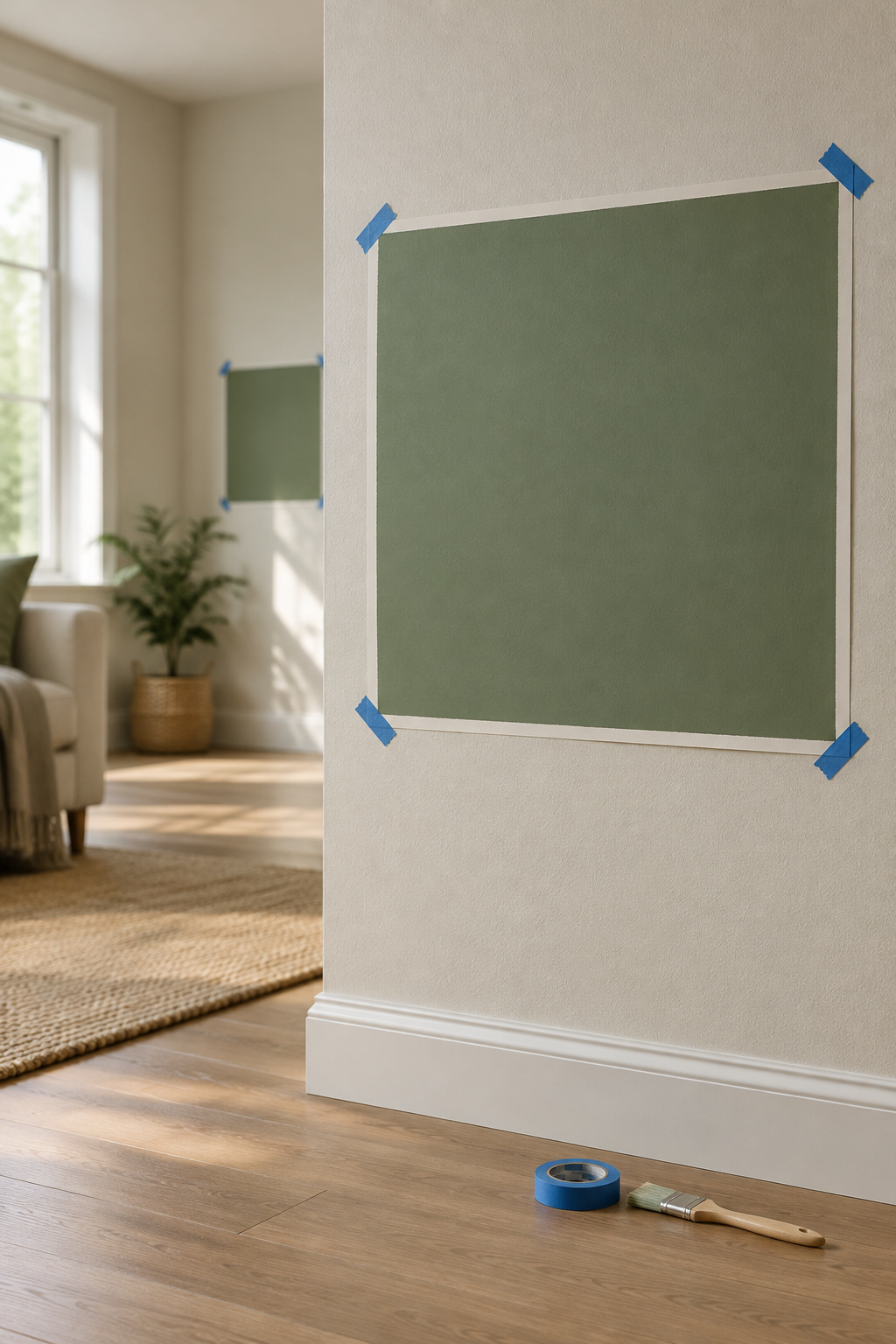
Why a paint chip and a phone photo mislead
A chip is business-card size, too small to register against a whole wall of light and shadow. A phone is worse, because white balance neutralizes casts, and the cast is what you came for.
Sample large, on two walls, three times a day
- Paint an A2 board or larger, about 16.5 by 23.4 inches, on white board instead of the existing wall, so the old color cannot bleed the read. One square foot is the minimum.
- Give it two full coats; one coat shows the board’s opinion as much as the paint’s.
- Move it to at least two walls, one that gets direct sun and one that never does.
- Look at three points across a day, morning, midday and evening, and leave it up at least a couple of days, more than one day-night cycle.
- Hold it against plain white paper. A yellow shift means warm and likely to hold; a blue or icy shift means cool and at risk.
- Judge it only after the room’s final light fittings and bulbs are in.
What to look for — and when to walk away
Watch the hue, not the brightness. Everything dims as the light goes; ask whether the green is still green or sliding toward gray. A different hue by evening is undertone, so put the can back.
What You Now Know That Most People Never Learn
The one thing to check before a full can
Look at the sample in the room’s dimmest honest moment, an overcast morning or the last hour of usable daylight, and confirm it is still the hue you chose, not a grayer relative.
Why this travels to every room
The mechanism works the same in any room, and the method suits any color family: it tests the light in front of you instead of a color’s reputation.
So the order is settled: light direction first, undertone second, LRV third, sheen last. Avoid the rescue mission: lamps bought to prop up a green that grayed out on day one. If the shade is still open, choosing a green for a living room walks the range. Tonight, tape a white board to the wall that never sees sun.
FAQ
What green paint colors work best in a room with no natural light?
Choose a fairly high LRV with a warm, yellow-leaning undertone, so the color has enough reflected light to register at all. Benjamin Moore Hollingsworth Green HC-141 is recommended for windowless bathrooms and hallways, and Sherwin-Williams Pewter Green SW 6208 keeps its richness without going muddy.
How long should I leave a paint sample up before deciding?
At least a couple of days, so you see the color across more than one day-night cycle. Benjamin Moore’s guidance backs the method without naming a day count: look from morning to evening, under natural and artificial light, and check three times in one day.
Does the direction my windows face matter more than the room’s size?
Direction matters more, because it sets the color of the light. A north-facing room gets steady, cool illumination in roughly the 6500–7500K range all day, while a south-facing room warms whenever direct sun arrives. Size only changes how far it stretches.