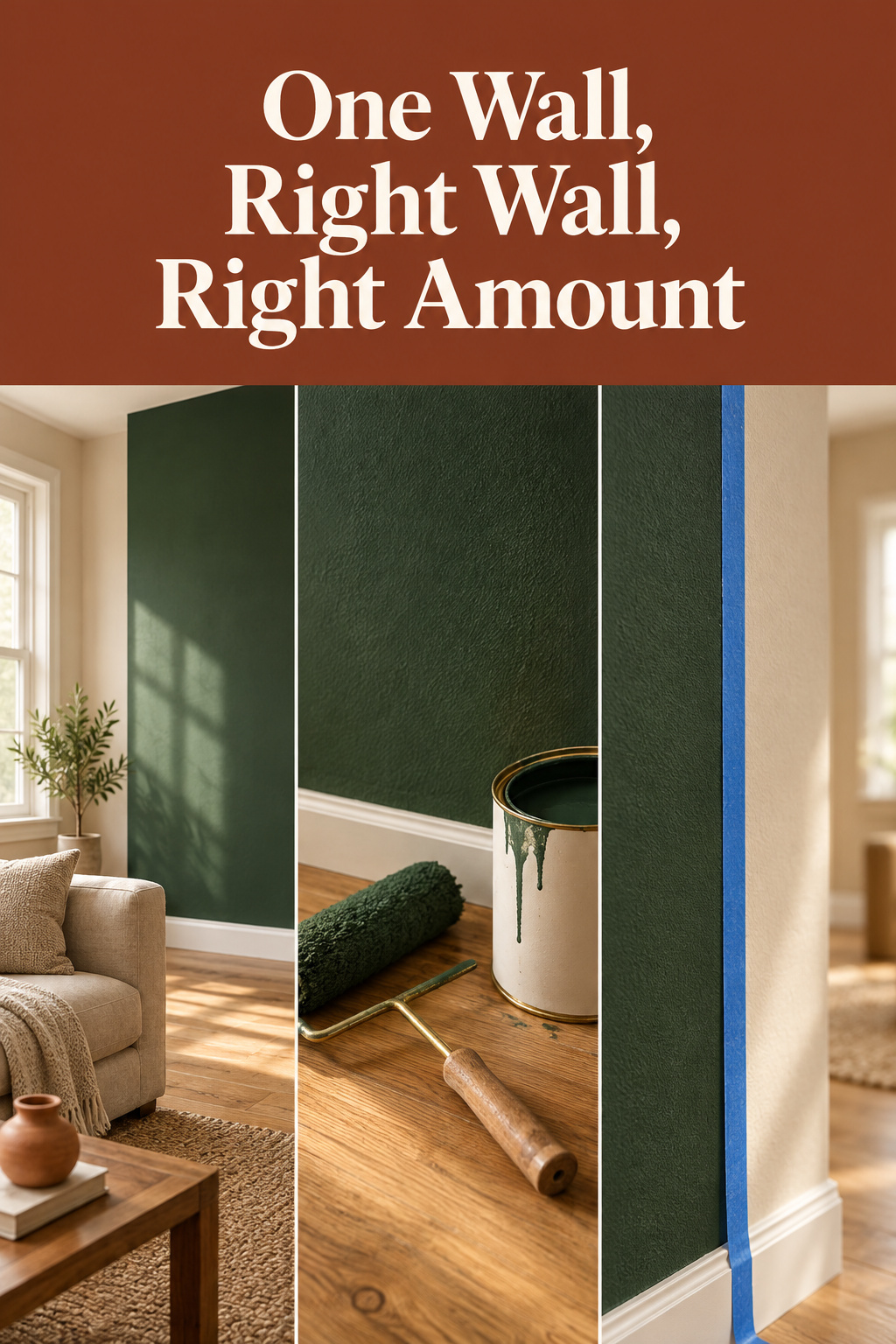

The paint is perfect and the room still feels wrong. The edges are crisp, the color matches the sample board, and a decision seems pending. A green accent wall living room almost never fails on the color. It fails on the wall, picked because it was easy to reach or because it looked right in someone else’s photograph.
TL;DR
- Let the architecture choose: the chimney breast is the default and an alcove the close second. A wall with no furniture anchored to it feels off balance in any color.
- Premium interior paint covers 350 to 400 square feet per gallon per coat. A deep green over pale paint wants three coats on the wall, or two with a primer tinted halfway to the topcoat.
- Paint and supplies for one DIY wall run $130 to $225. The $718 to $1,840 figures quoted elsewhere are professional labor plus materials, not paint.
The Accent Wall That Fails Is Usually the Wrong Wall
Why a well-painted accent wall can still feel like a mistake
The Decorologist puts the rule plainly: ignoring the architecture is always a mistake. Interior designer Jennifer Davis names the symptom: a side wall with no big statement pieces near it makes a room feel off balance.
The wall most houses have already chosen for you
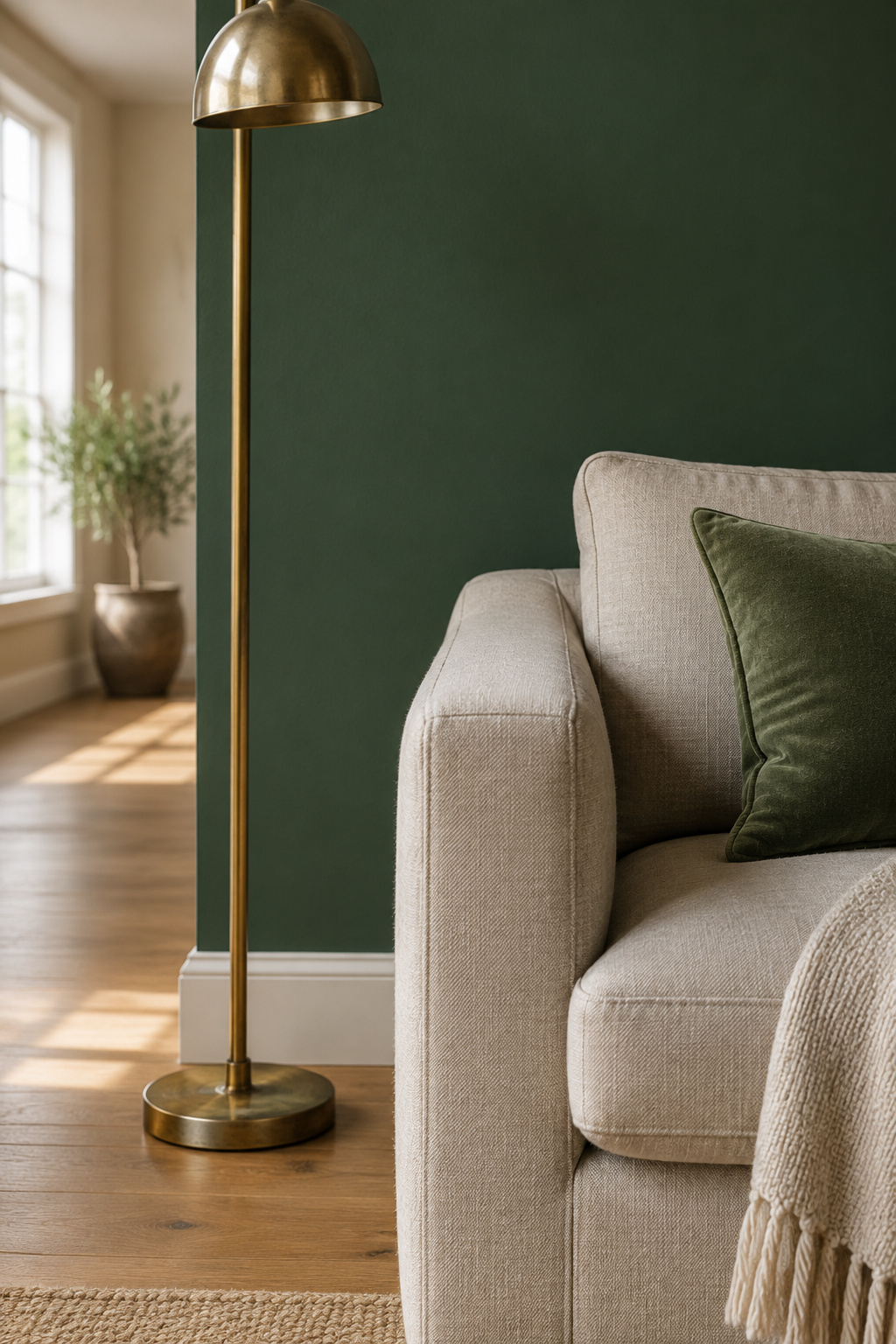
Good candidates are a fireplace wall, a nook or recess, or any plane already carrying architectural detail. In a farmhouse kitchen from the 1890s, my clients wanted a deteriorated built-in hauled out. We kept the carcass and rebuilt it as the island instead, because the house had already chosen the center of that room.
What this guide settles: which wall, how much paint
Two questions remain: which plane your room already emphasizes, and what it costs in gallons and dollars. A room chopped up by cabinets and fixtures is a poor candidate for either.
Reading Your Room for the Wall It Already Points At
The chimney breast: the default answer in most living rooms
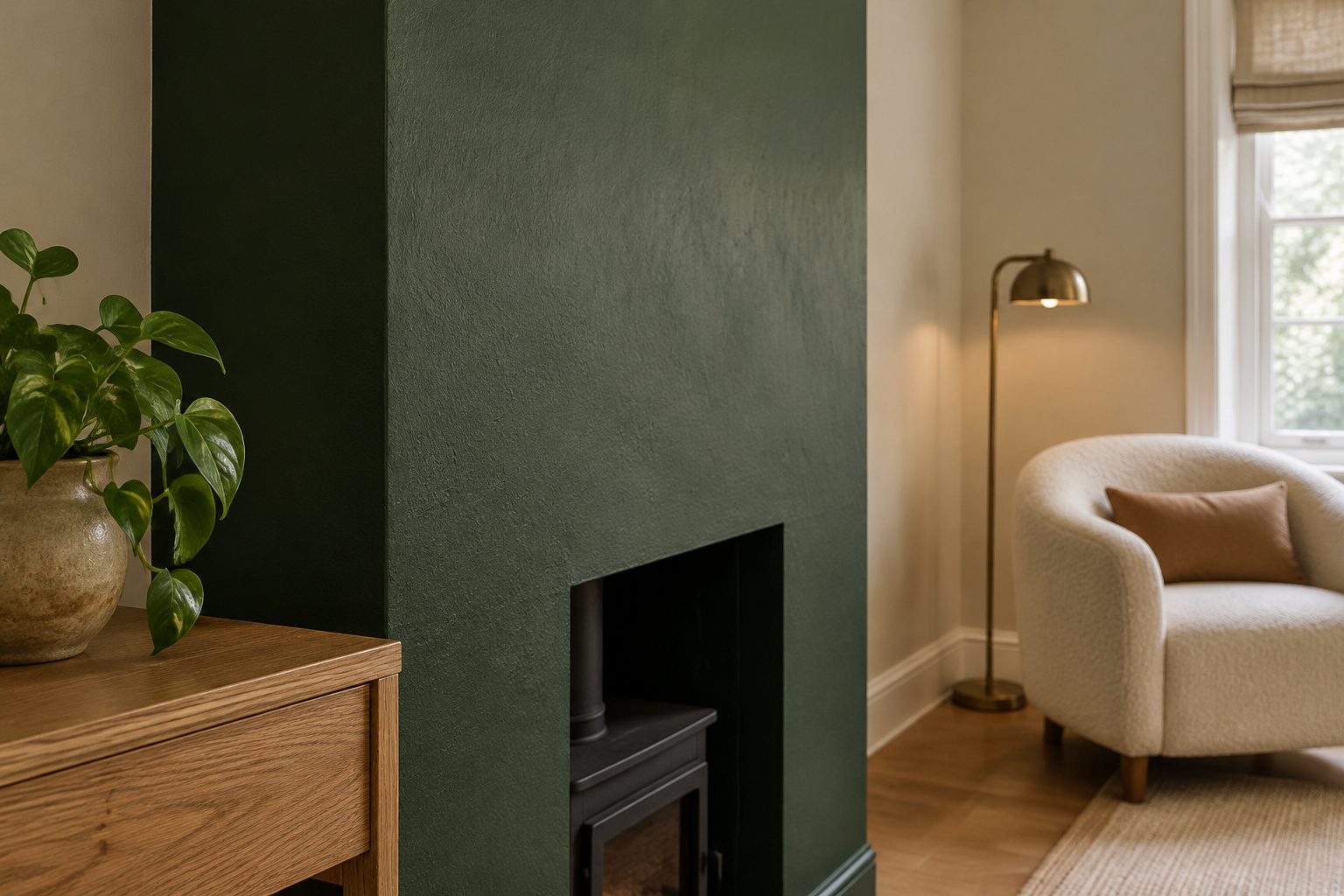
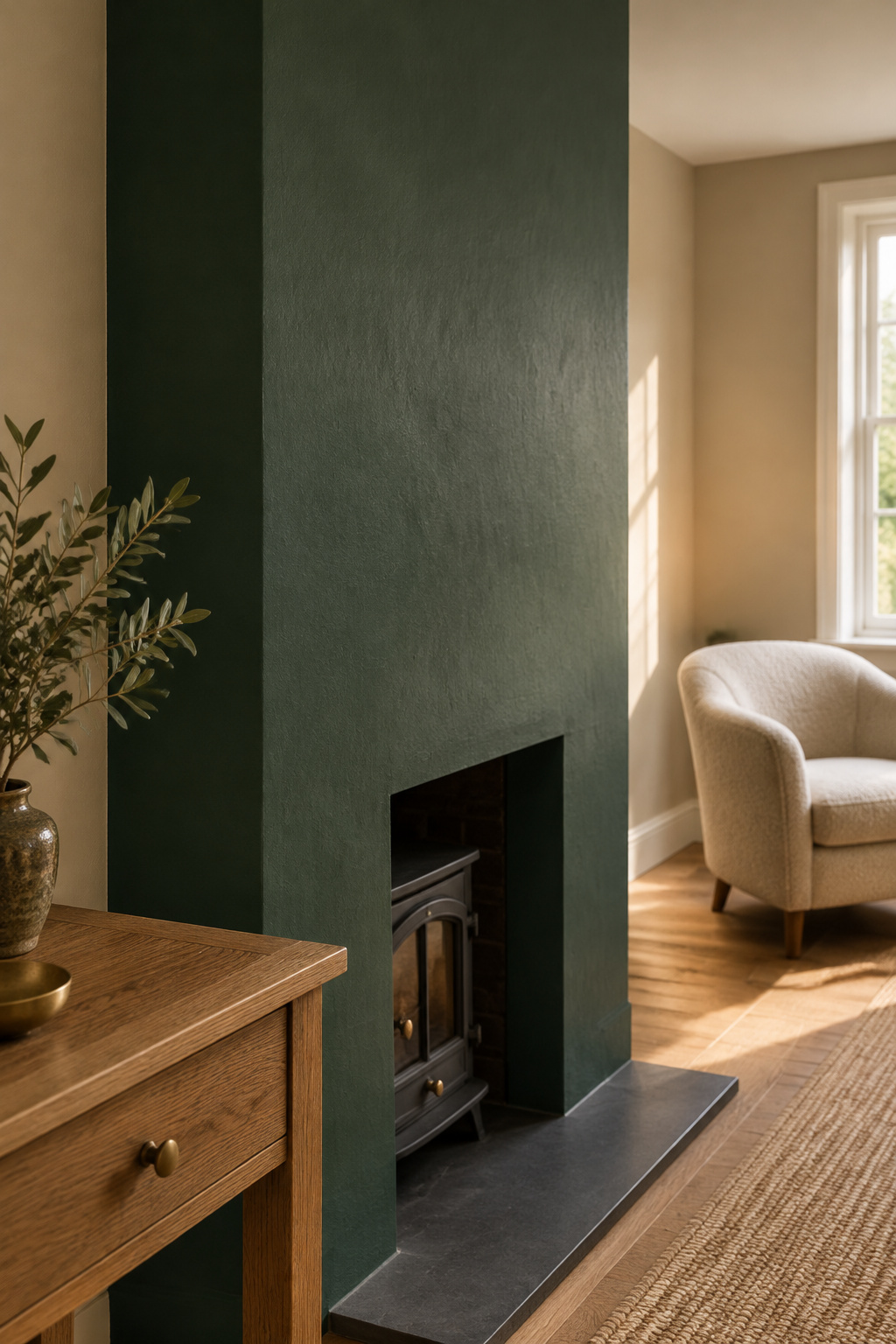
A chimney breast projects. With a hearth beneath and a defined edge on each side, a saturated color sits inside a frame the house built, rather than stopping nowhere in open wall. If the surround itself is in play, tiling the surround inside it is a separate decision.
Alcoves and recesses: the close second
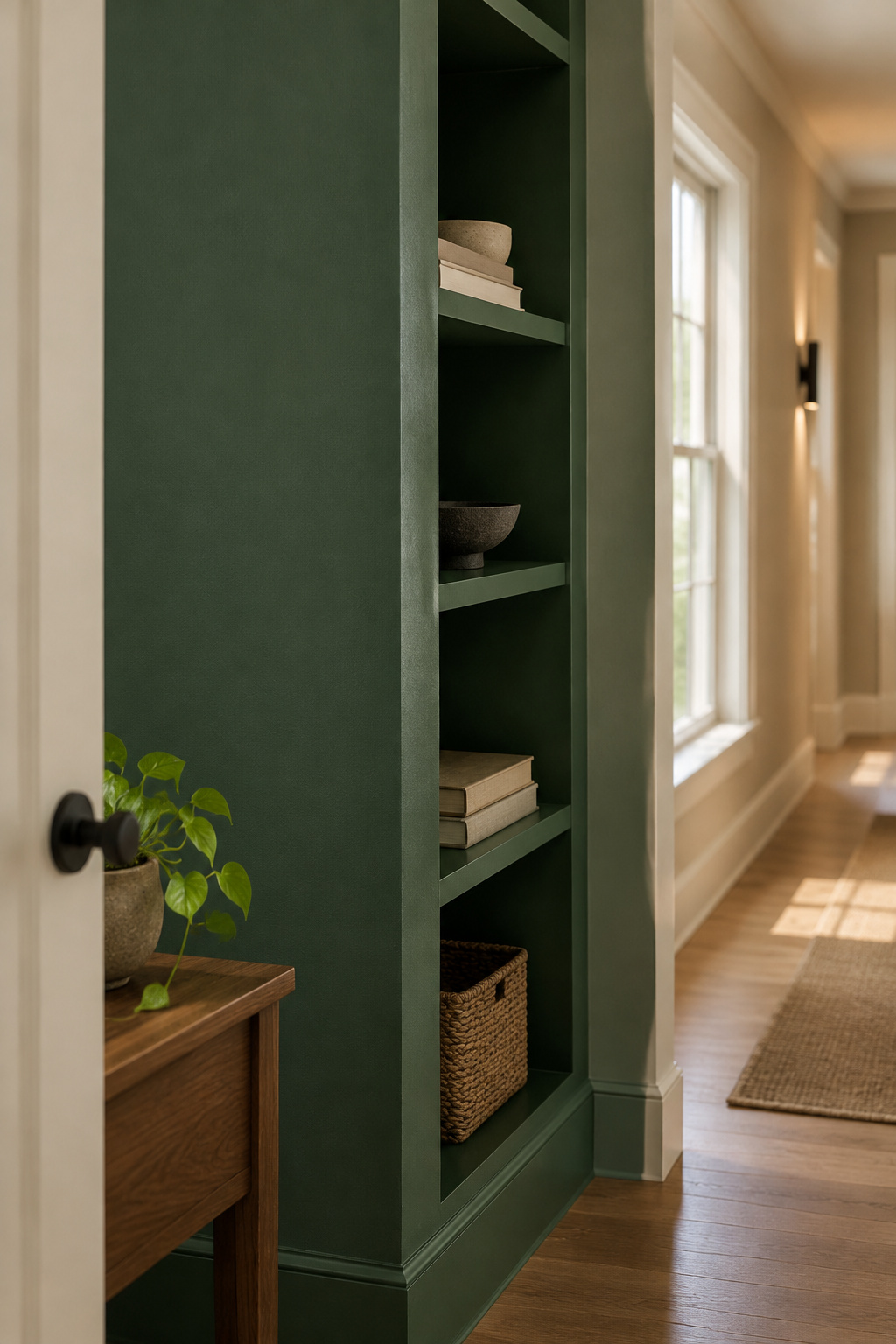
An alcove is contained and out of the traffic path, so it takes wear better than an open plane, and a deep, velvety green is the standard recommendation for one. No source I found argues an alcove against a chimney breast head-to-head. Treat them as two strong options, not a ranking.
The wall the door or main sightline faces
Jennifer Davis frames the choice around where you want to draw the eye, usually the first wall you see walking in, though not always. Nina Takesh calls those visual paths sightlines. When the sightline and the chimney breast disagree, nothing in the sourcing rules on it. My read: the breast wins unless the fireplace is invisible from the door, or the room is long and narrow, where a dark far wall advances and shortens it. That is a judgment, not a rule.
When the Chimney Breast Is the Answer
Why a fireplace wall carries a deep color better than a flat wall
Depth needs a boundary. The breast steps forward, so a deep green lands as a defined block instead of a stripe that stops for no reason, and the color reinforces a hierarchy the room already has.
What changes if a tiled surround is already there
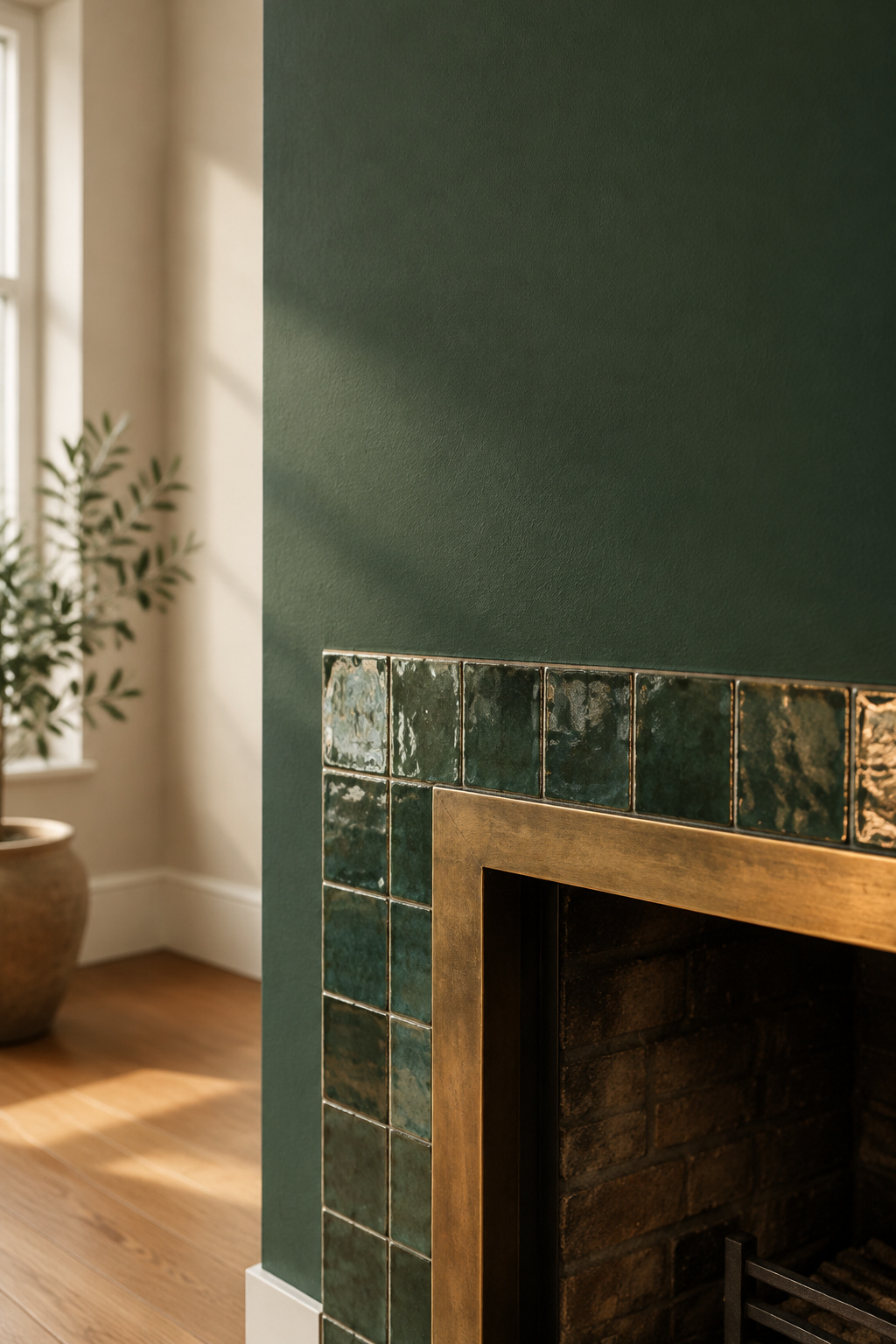
Less than expected. Painting around an existing surround is a masking problem rather than a color-matching one, since the paint line simply stops at the tile edge.
Painting around, not over, the surround material
Before you cut in, run painter’s tape or a rigid edge guide along the tile-to-plaster junction. Glazed tile does not take wall paint the way plaster does, so a slip means scraping.
Green Accent Wall Living Room Paint: How Much You Actually Need
Measuring the wall: square footage, minus doors and windows
Four steps, and a tape measure settles all of them.
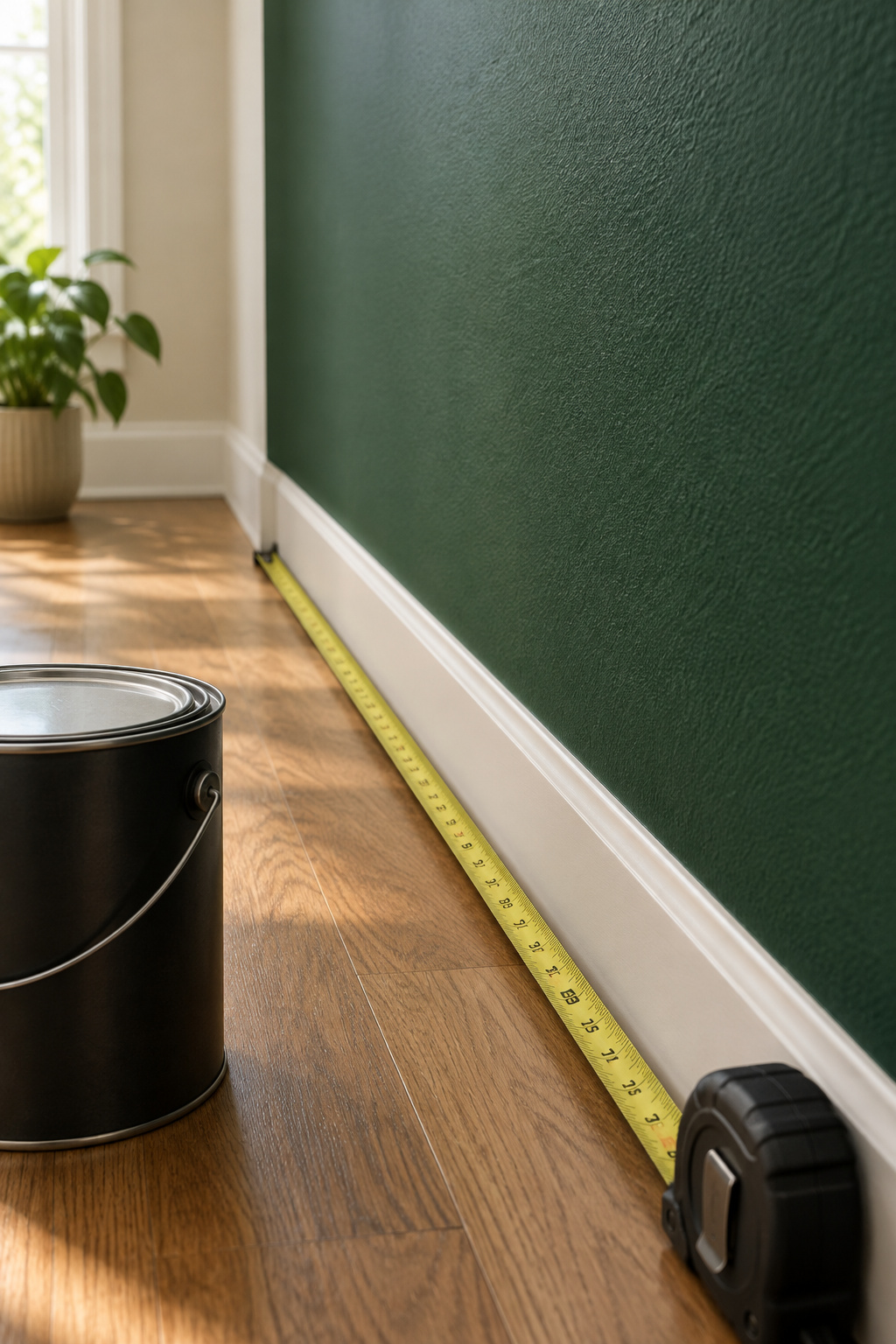
- Multiply length by height for gross square footage.
- Subtract about 21 square feet per standard door and 15 per average window.
- Divide what’s left by the paint’s coverage per gallon.
- Multiply by the number of coats.
Most accent walls land between 70 and 150 square feet, which gives you a check against your own tape.
Coverage per can, and how many coats a deep color needs
Plan on 350 to 400 square feet per gallon per coat. That figure comes from Sherwin-Williams’ own data sheet for Emerald and Benjamin Moore’s Aura Interior brochure for matte, eggshell and satin; Aura’s 400 to 450 applies to semi-gloss alone. Farrow & Ball trips people up by publishing per liter: Estate Emulsion covers up to 14 square meters per liter per coat, roughly 570 square feet per US gallon-equivalent, level with the US premium lines, not below them. Read a per-liter figure as a per-gallon one and you will overbuy by nearly four times. That “up to” is a best case, and Farrow & Ball sells 2.5-liter tins rather than gallons, so the gallon number is a comparison aid. The premium sits in the price per tin, not the coverage. Darker, stronger colors need extra coats regardless. Two coats is the baseline on the wall for a color change, and a saturated green over a pale wall wants three. A primer tinted halfway to the topcoat brings that job back to two.
What a typical living room accent wall costs in paint alone
Each figure below carries its scope, since these numbers measure different things.
| Scope | Cost |
|---|---|
| Sherwin-Williams Emerald, per gallon | $74.49–$85.49 |
| Benjamin Moore Aura, per gallon | about $60–$110 |
| Farrow & Ball emulsion, per gallon | $120–$175 |
| DIY, one wall: paint, tape, cloths, rollers | $130–$225 |
| DIY, paint only | $50–$300 |
| Pro labor plus materials, one wall | $718–$1,840, average $1,259 |
That last row is mostly labor, not paint. Farrow & Ball’s $120 to $175 needs precision too. Cost calculators circulate a per-gallon average nearly double it, while a review site and three authorized retailers converge on this range.
Choosing Sheen for a Single Deep Wall
Why one saturated wall is a different sheen conversation
A single wall sits beside its pale neighbors, so roller texture and old patches show more than they would across four walls. Change sheen along one continuous run and it looks like a missed spot. On a separate plane it registers as deliberate.
The sheen that hides roller marks on a feature wall
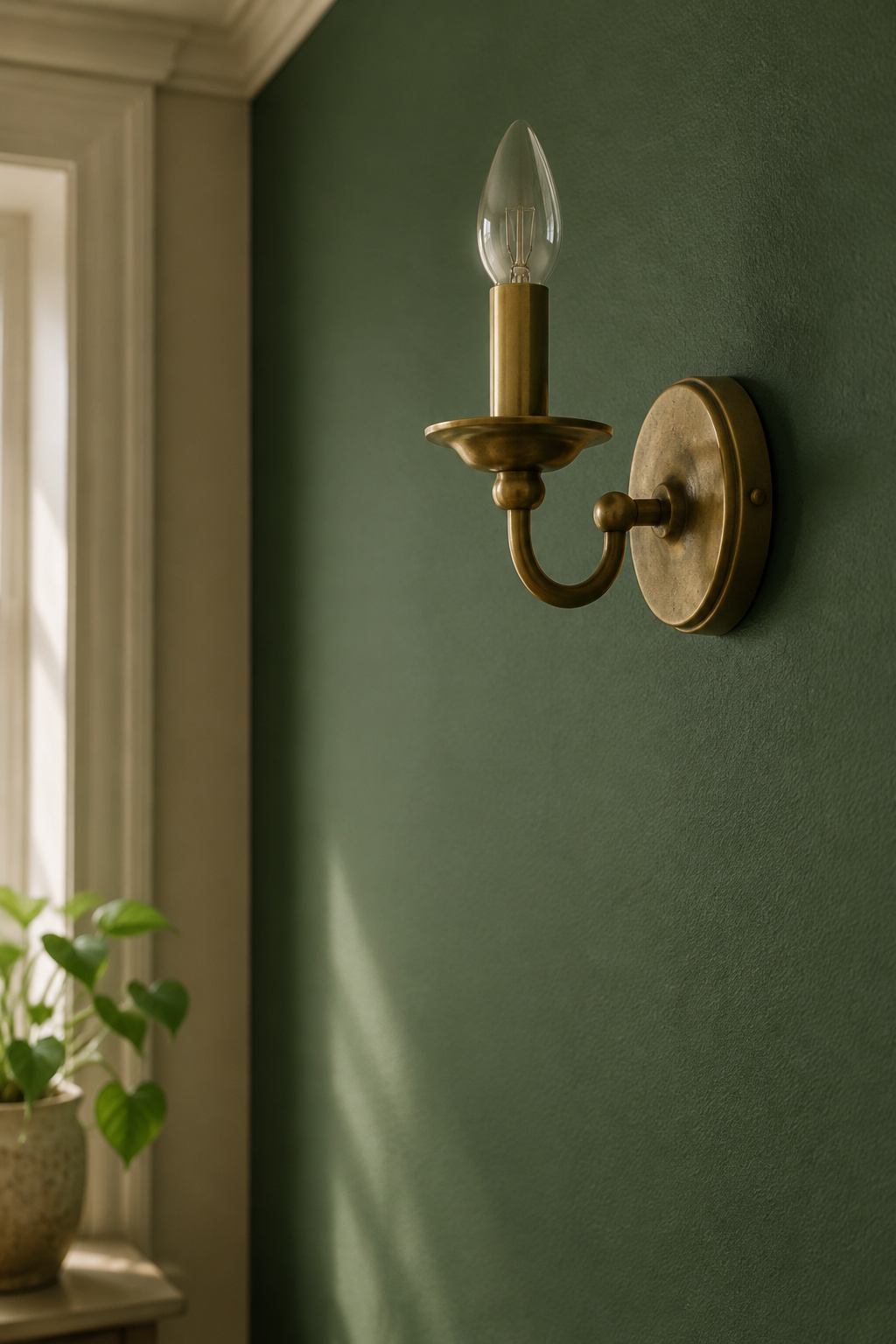
Flat and matte absorb light instead of bouncing it back, so they hide lap marks and skim-coat lines better than anything glossier. Eggshell rates good at this and satin only fair. I would put a deep green on one wall in matte every time.
What to avoid if the wall catches direct light
Satin’s velvety sheen is the trap. Light reflected off it picks out lap marks and patched areas, and a wall beside a window gets plenty. The reflectance figures sit in the north-facing light article; I am calling this by eye and trade guidance, not gloss units.
Worth the Risk: Heritage Greens on a Single Wall
Why a deep heritage color is easiest to try on one wall first
The argument for one plane is simple. A color you end up disliking costs $130 to $225 and a weekend to undo, a modest price for finding out whether a near-black green suits your light.
Where to find the pigment story behind those colors
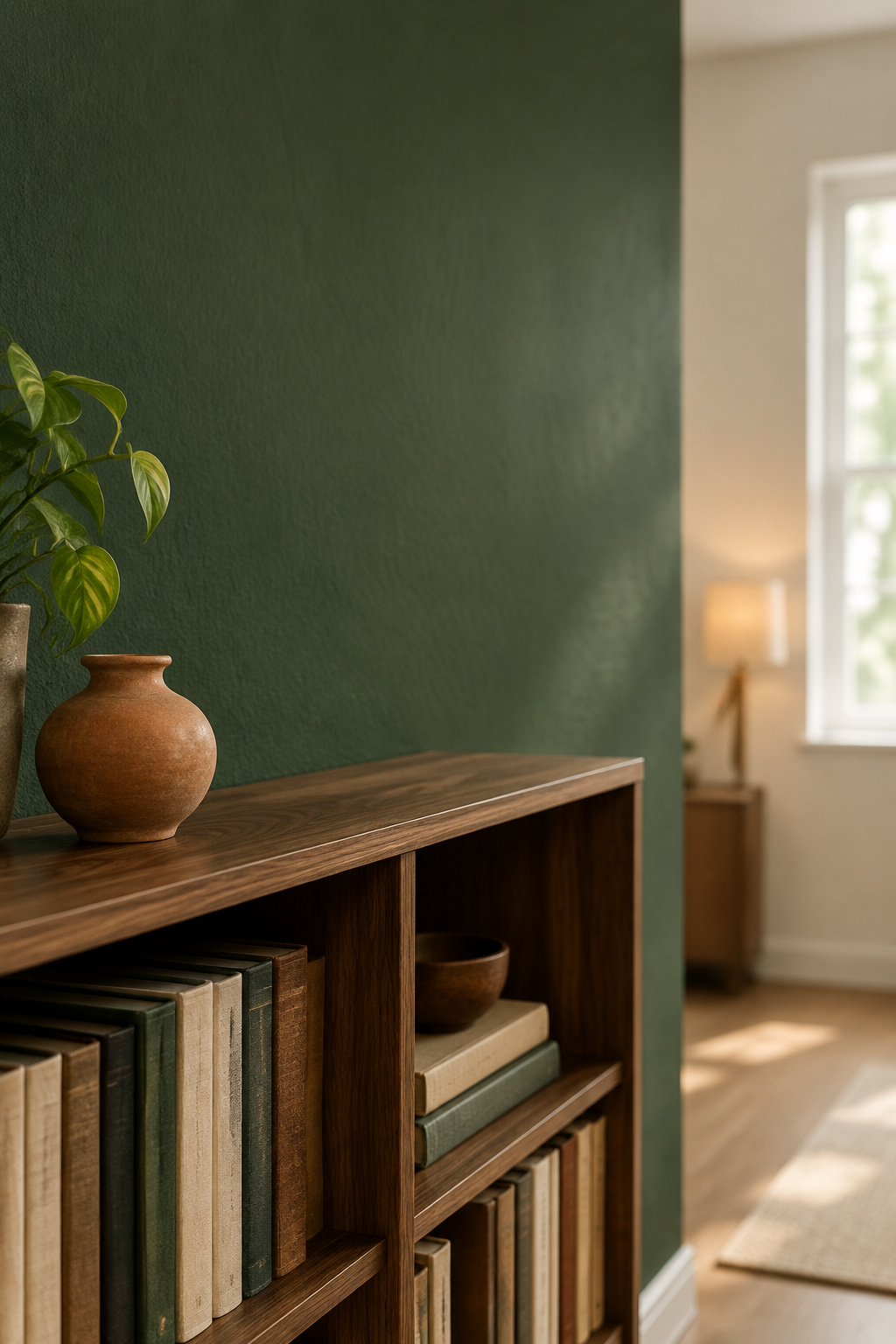
The chemistry behind these colors is good reading: verdigris, the arsenical Scheele’s and Paris greens, the chrome greens that industrialized the color. That story, and which modern lines reproduce which era, sits with the heritage greens worth the risk.
Your Next Step: Tape It Off Before You Buy the Can
How to mark out the wall with painter’s tape first
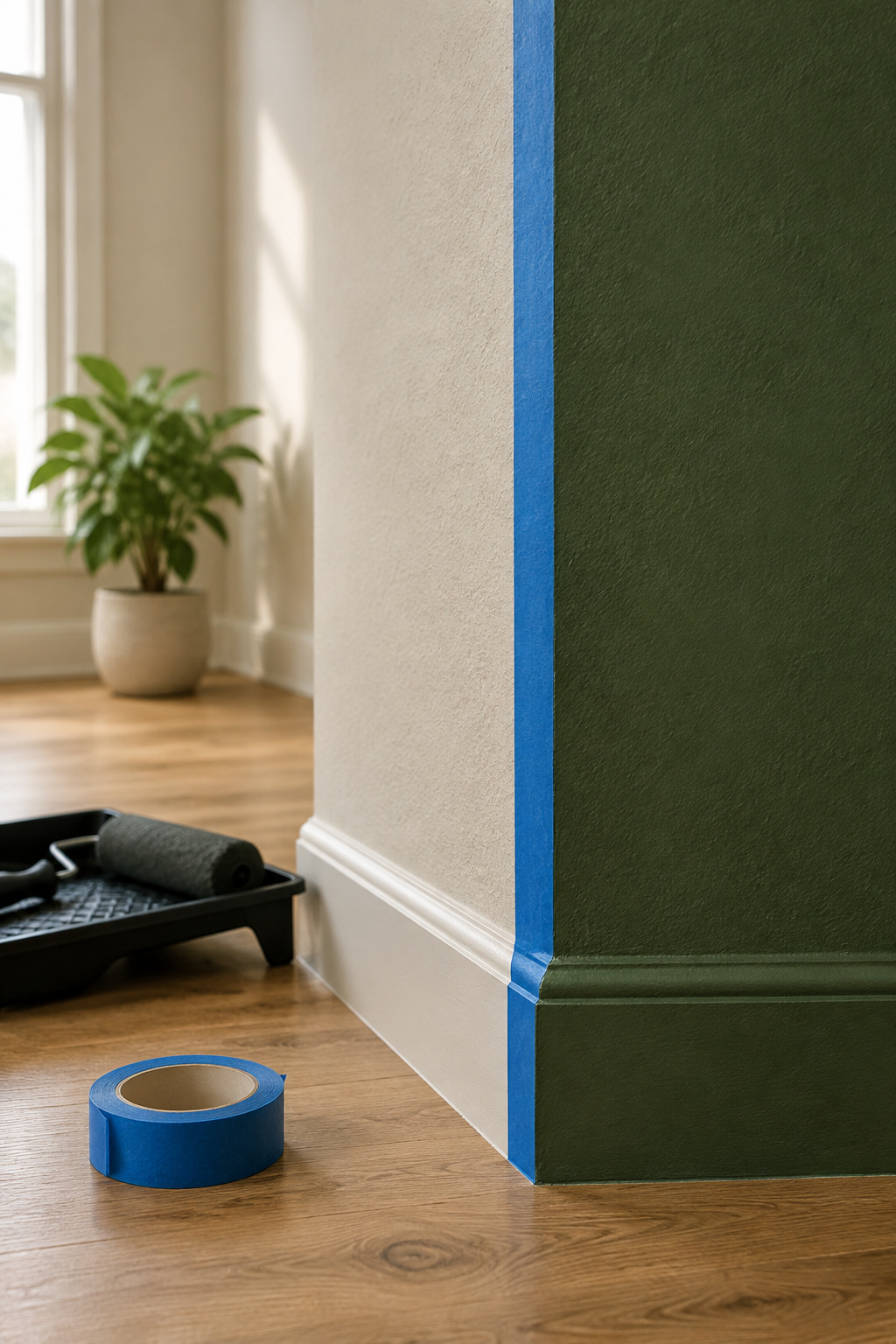
Buy the tape before the paint. Run it along the wall’s real boundaries, the breast’s returns or an alcove’s inside corners, so you see the true shape of the color. A kit of tape, cloths, roller and brush runs $60 to $97.
Living with the taped outline for a day before you paint
Leave it alone. Painting a single wall takes 6 to 8 hours across two days: prep and first coat, then second coat and cleanup. A full day with the outline up shows how daylight travels across that plane.
The one measurement to double-check before you checkout
Re-measure height and width, including everything the tape travels around: trim, the breast’s projection, an alcove’s return. Under-measuring is the commonest reason people run short mid-coat. With that number and a coverage rate your gallons are worked out, not guessed. If the shade is still open, the complete guide to greens for a living room is the step before this one.
FAQ
Can you paint an accent wall a different sheen than the rest of the room?
Yes. An accent wall is a separate plane, so a different sheen there reads as deliberate rather than a mistake. Flat or matte is the usual choice for a deep single wall because it holds up better under direct light than eggshell or satin.
Does an accent wall need to be the largest wall in the room?
No. Designer guidance puts impact and architecture ahead of size: Robin Burrill’s answer is the wall that makes the biggest impact, often a fireplace wall or an alcove rather than the largest run of drywall. Real furniture anchoring it matters more.
How long does painting a single accent wall usually take?
About 6 to 8 hours spread over two days: roughly 4 hours of prep and a first coat on day one, then 2 to 4 hours for the second coat and cleanup. A third coat for a saturated color adds 1 to 2 hours.