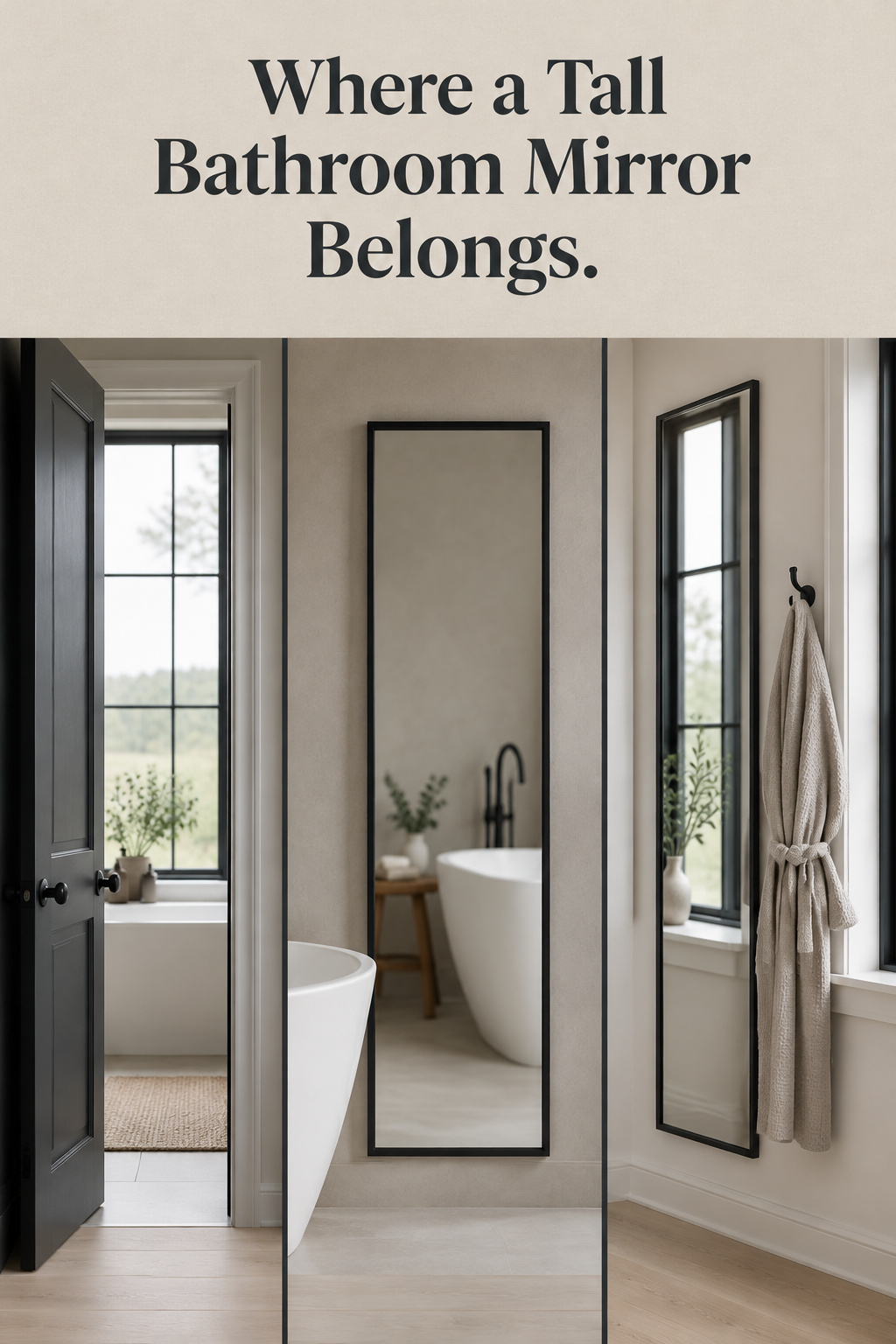

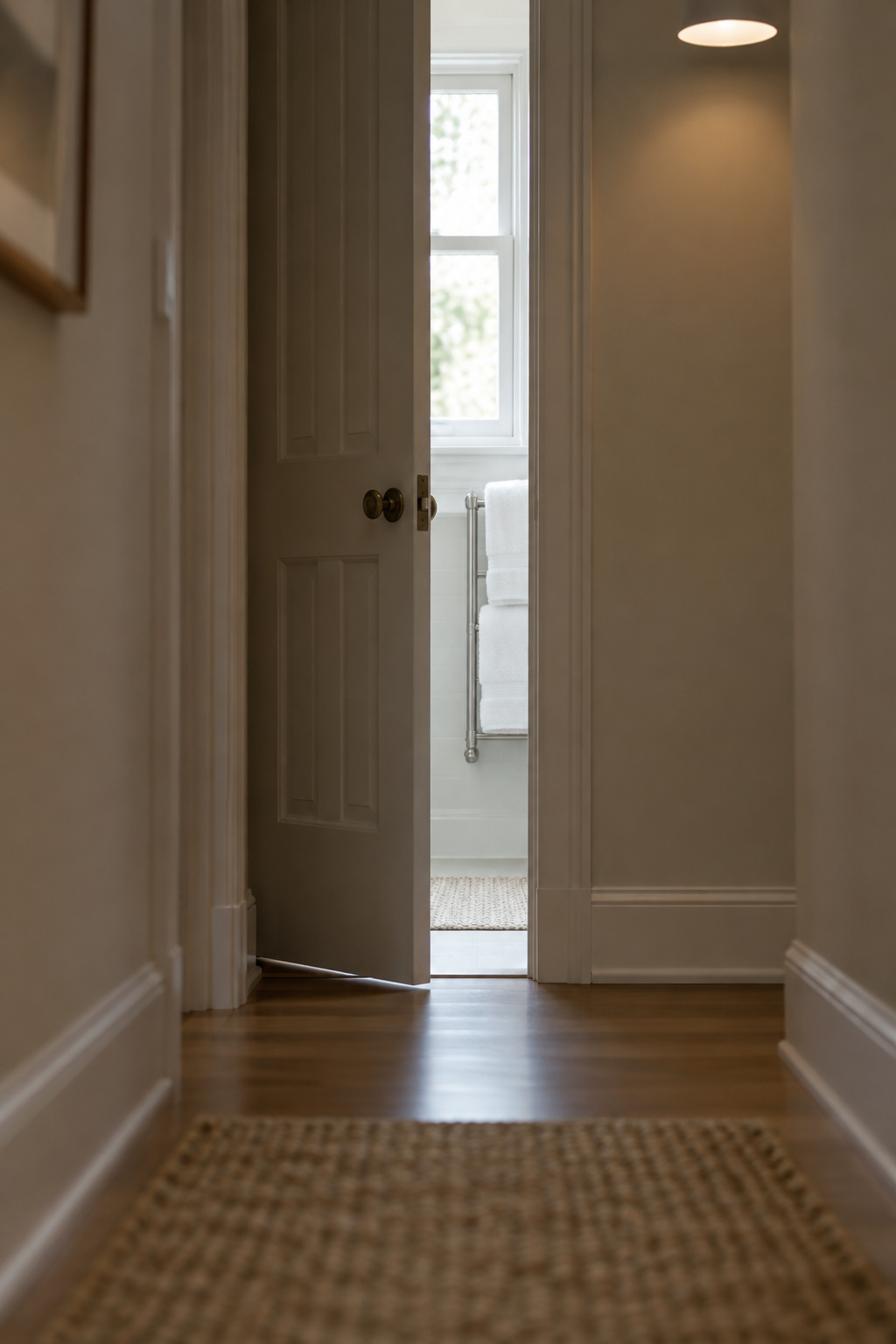
You come down the hall in the evening. The bathroom door is open a hand’s width, the air through it still warm from someone’s bath. Before you reach the handle you have already seen the room, or rather what the tall glass inside it chose to show you. Plenty of advice on a full length mirror in bathroom layouts says to hang it on whatever wall is free and promises it will make a small room feel bigger. Stand in that hallway, though, and you see what the gallery photos never show: the toilet, the tub, sometimes the person in it, handed straight back to anyone passing.
TL;DR
- Choose the wall by what the mirror returns from three places, the doorway, the tub and the toilet: it should give back a window or a quiet wall, never a fixture or a bather.
- To see yourself head to toe, a flat wall mirror only needs to be half your height (35 in for someone 70 in tall), but 60 to 72 in tall leaves slack for moving around.
- A mirror changes how a room feels more than how big it looks: a study of 207 people found no significant effect of mirrors on how spacious dressing rooms felt.
Full length mirror in bathroom placement starts at the doorway
The first glance into a room sets its mood, and I hold that a room is calmer when you can’t see the TV from the door. A bathroom works the same way. What the tall mirror shows from the hall becomes the room for everyone who passes.
A toilet is the obvious failure. Bowmans, a UK bathroom retailer, calls a mirror facing the WC the rule most often missed and most often regretted, because it throws the toilet back into the room every time the door opens. The interior designer Henriette von Stockhausen is blunter: she would never put a full-length mirror opposite a shower or behind a loo.
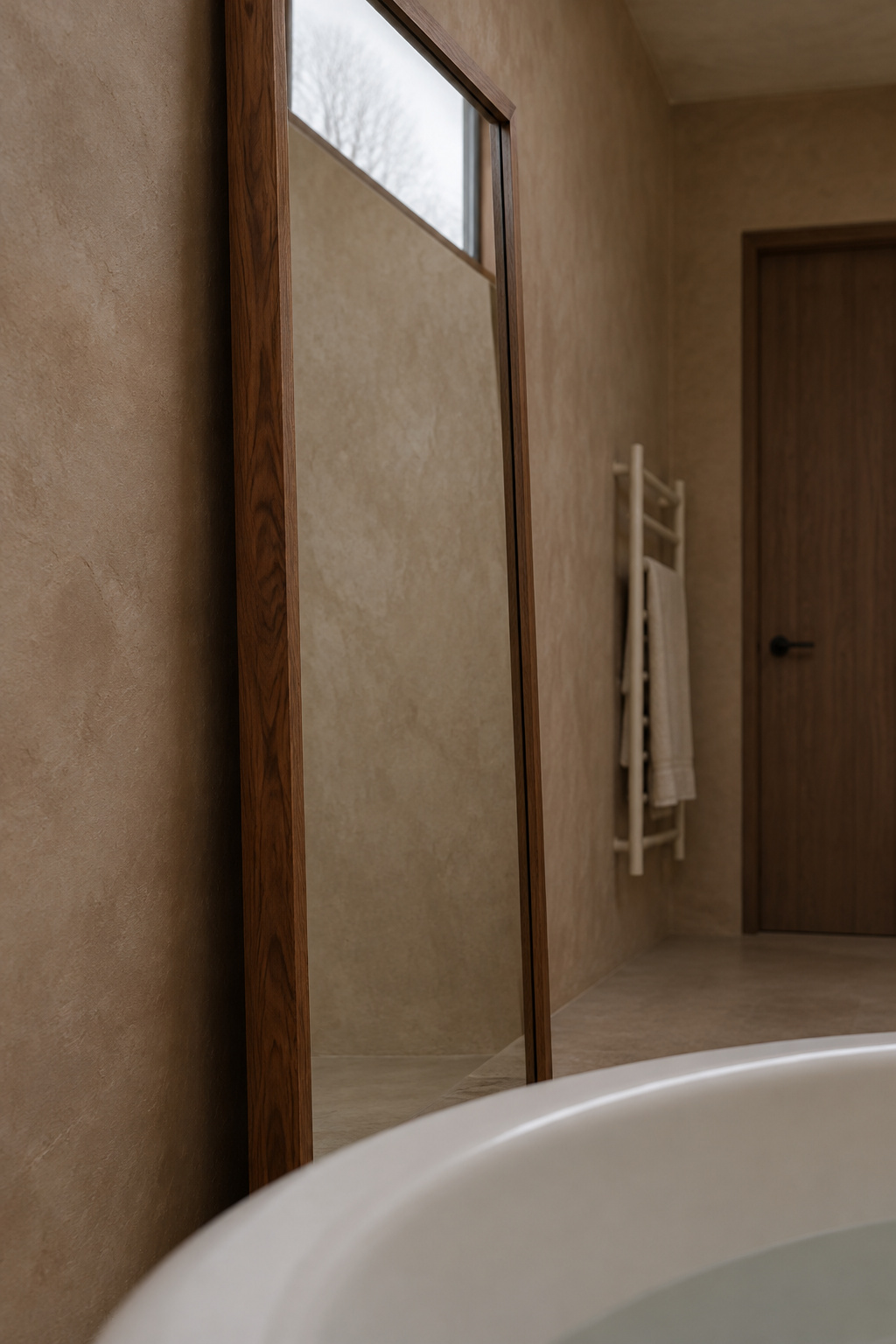
A subtler failure is a mirror on the wall the door swings toward, which reflects the moving door itself. What you want from the hall is a window or a stretch of plain plaster, nothing that asks for attention.
Tonight, open the bathroom door a hand’s width, step back into the hallway and notice the first thing your eye finds.
From the tub and the toilet: the two views a tall mirror gets wrong
Two more places matter, and both are low. The table below is my reasoning from the designers’ warnings about showers and toilets, applied to where people actually sit and lie in a bathroom; the view from a reclined bather has never been measured.
| Where you look from | What the mirror should give back | What makes it fail |
|---|---|---|
| The doorway | A window or a plain wall | The toilet, or a bather seen from the hall |
| The tub | A window or plain plaster | The shower, the taps or the other fixtures |
| The toilet | A plain wall or the door | The bowl, or yourself sitting on it |
From the tub
Lying back in warm water is one of the few moments in a day when the body lets go. A mirror that shows you the shower head and the toilet pulls the mind straight back to chores. Aim it so the bath sees a window, plain tile, wood or stone, the surfaces that let you settle.
From the toilet
The objection here is practical. Most of us would rather not watch ourselves on the toilet, and a guest would like it less. Sit on the closed lid for a minute, look up, and if the glass is there, it is on the wrong wall.
Dress where it’s dry: a spot out of the steam and beside the window
The spot you want feels unhurried. Daylight on your face, a dry floor under your feet.
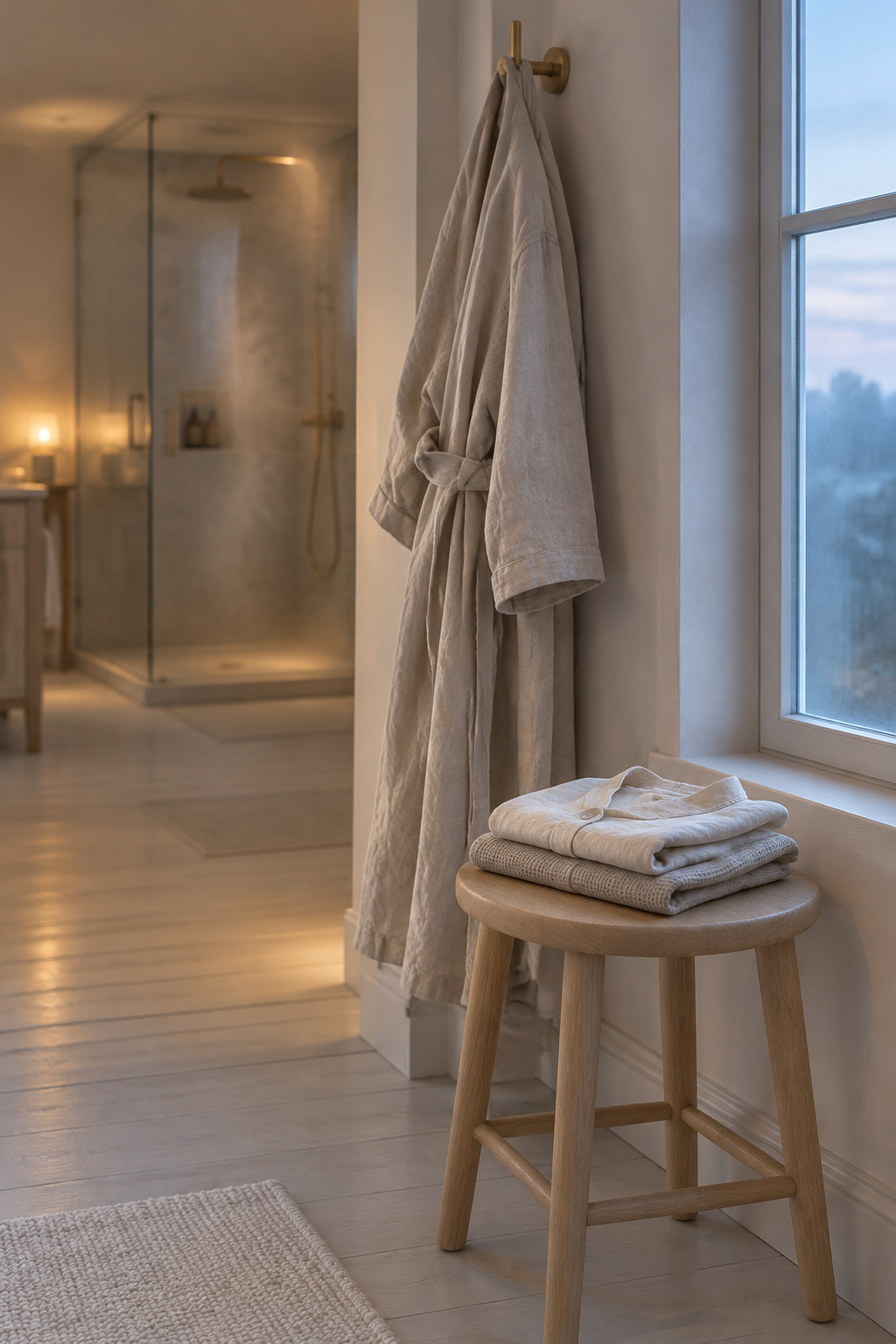
Steam decides a lot of this. The silvering behind the glass is protected by paint but still vulnerable to damp, and when it fails you see black spots near the edges. Glass-industry guidance is to leave air behind the mirror rather than pressing it flat, keep its edges out of anywhere water pools, and ventilate the room. There is no agreed safe distance from the shower, so the rule stays plain: the further from the steam, the better. Wipe condensation off rather than letting it dry on the edges, and keep harsh cleaners off the glass.
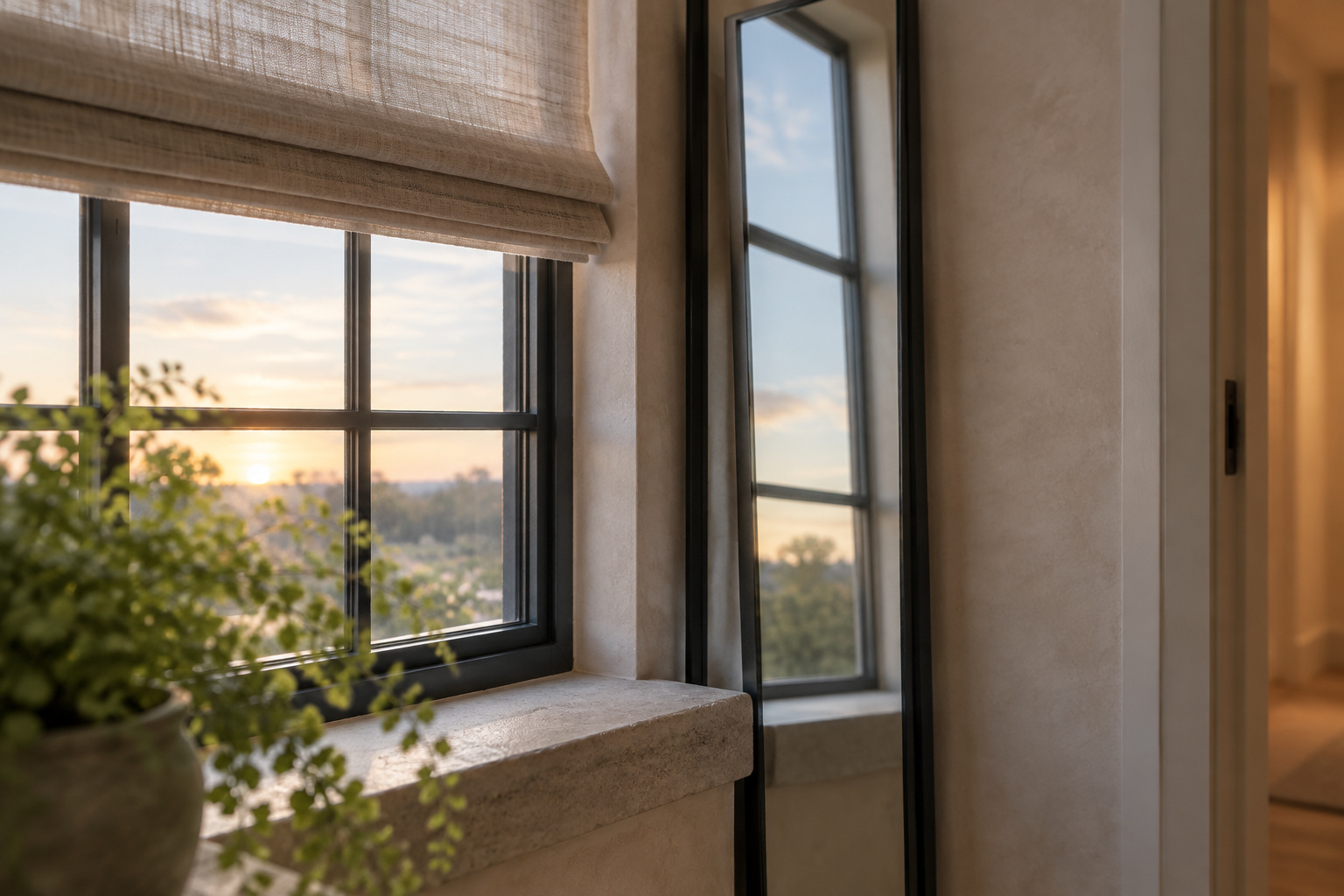
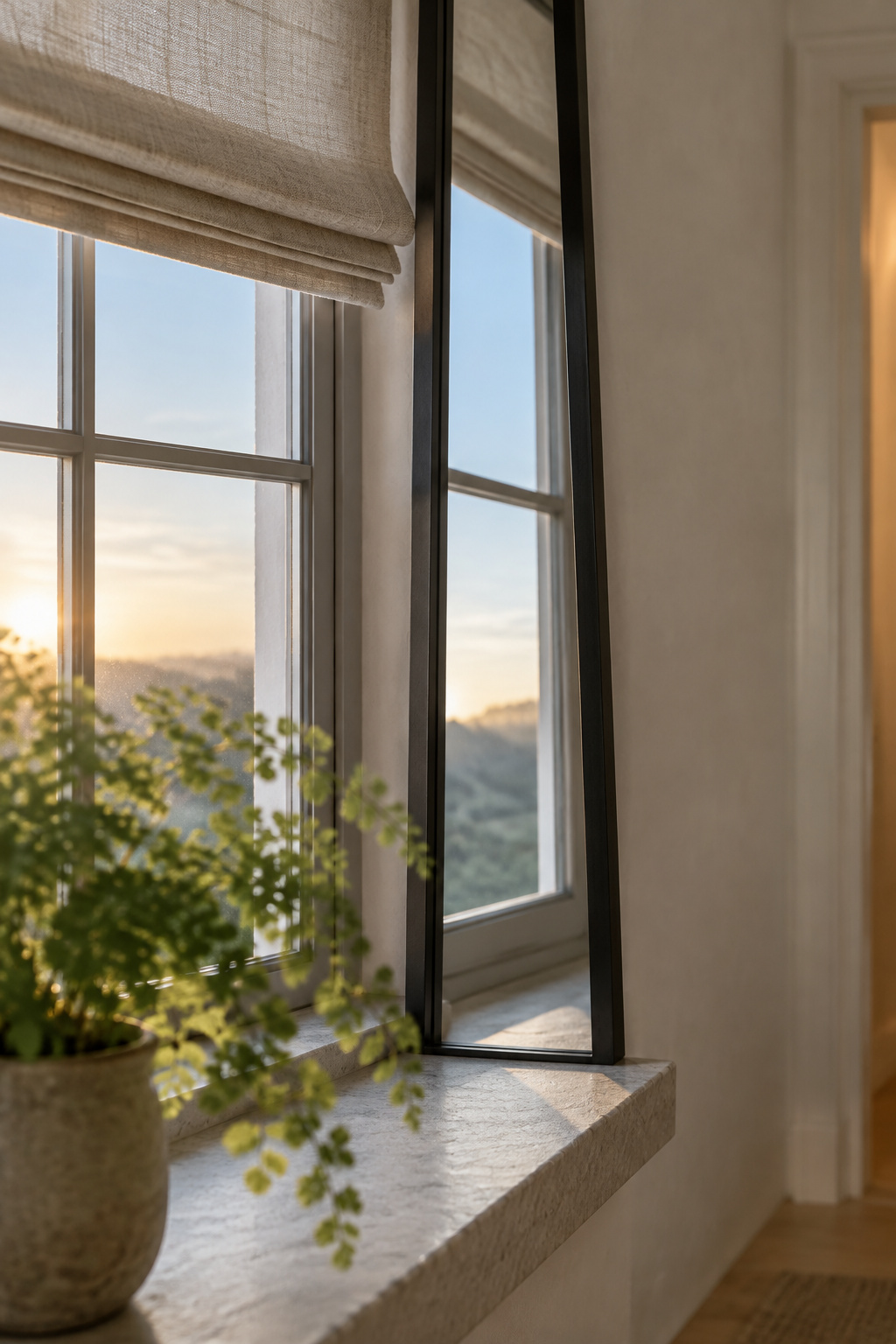
Then let the window do the work. A tall mirror beside a window returns daylight, and a window ahead of you puts that light on your face, where backlight or a single overhead fixture would shadow it.
If yours is an old full-length mirror, read our guide to an antique mirror in the bathroom before you choose its wall.
The back of the door is the best wall, if the swing allows
If the bathroom has no spare wall, the back of the door is easy to forget. A narrow mirror around 18 by 60 in is a size that fits a door back, though your door’s width and swing set the real limit.
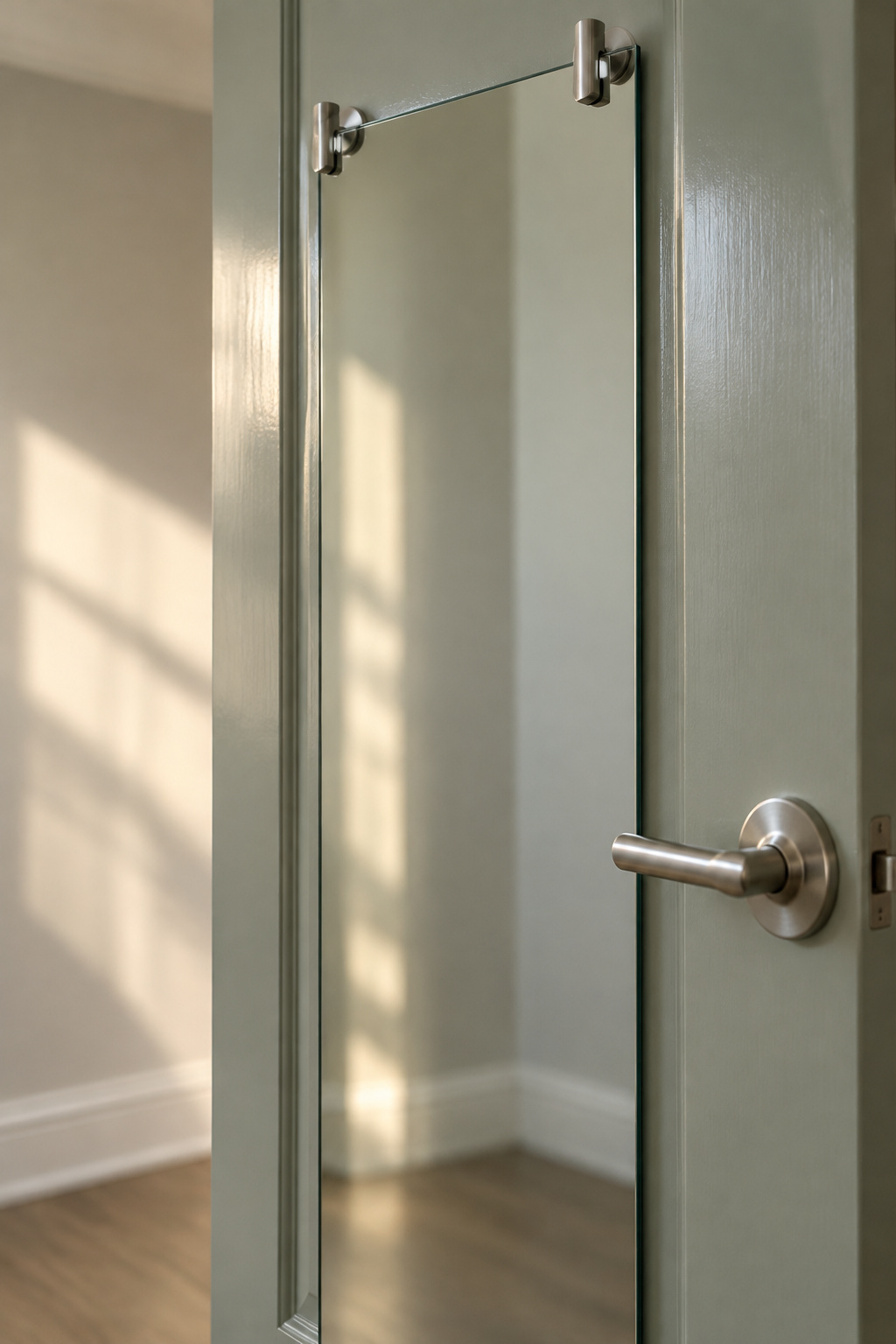
Check it with the door open as well as shut. On a door that swings into the room, a mirror on the inside face turns toward the room when the door opens, and in your bathroom that may mean the toilet. If the open door aims the glass at a fixture, the door back is the wrong place.
Weight is the other question. A door moves every time someone uses it, and Home Depot’s setup sheet says to avoid hanging heavy mirrors on doors because the movement can cause them to fall. Keep a door mirror light, and with any over-door hanger, check that the door still closes freely before you trust it.
Leaning or mounted
A floor mirror leaning against the wall looks relaxed, but resting it there does nothing to stop it tipping. Use the securing setup the model specifies, and keep an unsecured lean away from children, pets and passing traffic. Guides disagree on how far the base should sit from the wall, so follow your mirror’s instructions. For straps, anchors and fixing a tall mirror to tile or a door, the hanging guide shows mounting a tall mirror safely.
How tall is tall enough, and what one mirror does to a small room
Less glass than you’d think. A flat mirror hung straight on the wall needs only half your height to show all of you, and that stays true however far back you stand. Someone 70 in tall needs 35 in of glass. People shift and households hold more than one height, so the comfortable sizes run 60 to 72 in tall. A leaning mirror changes the angles, so this sum holds only for one hung flat.
Now the second half of the belief, that a mirror makes a small room bigger. In a 2022 study by Park, Lee and Jeon, 207 people rated images of dressing rooms with and without mirrors, and the mirrors made no significant difference to how spacious the rooms felt. Those were retail fitting rooms, not bathrooms. What does track how large a room seems is how bright its surfaces are, so a tall mirror beside a window helps by sending daylight back into the room. Buy one for the light, the mood and the whole outfit, not for square feet it can’t give.
Check three sightlines, then hang it
Stand in that hallway again, the door open a hand’s width. The question used to be which wall was empty. Now it is what the glass returns from the doorway, the tub and the toilet. The answer to all three is a window or a quiet wall, in a spot that stays dry and lets daylight reach your face.
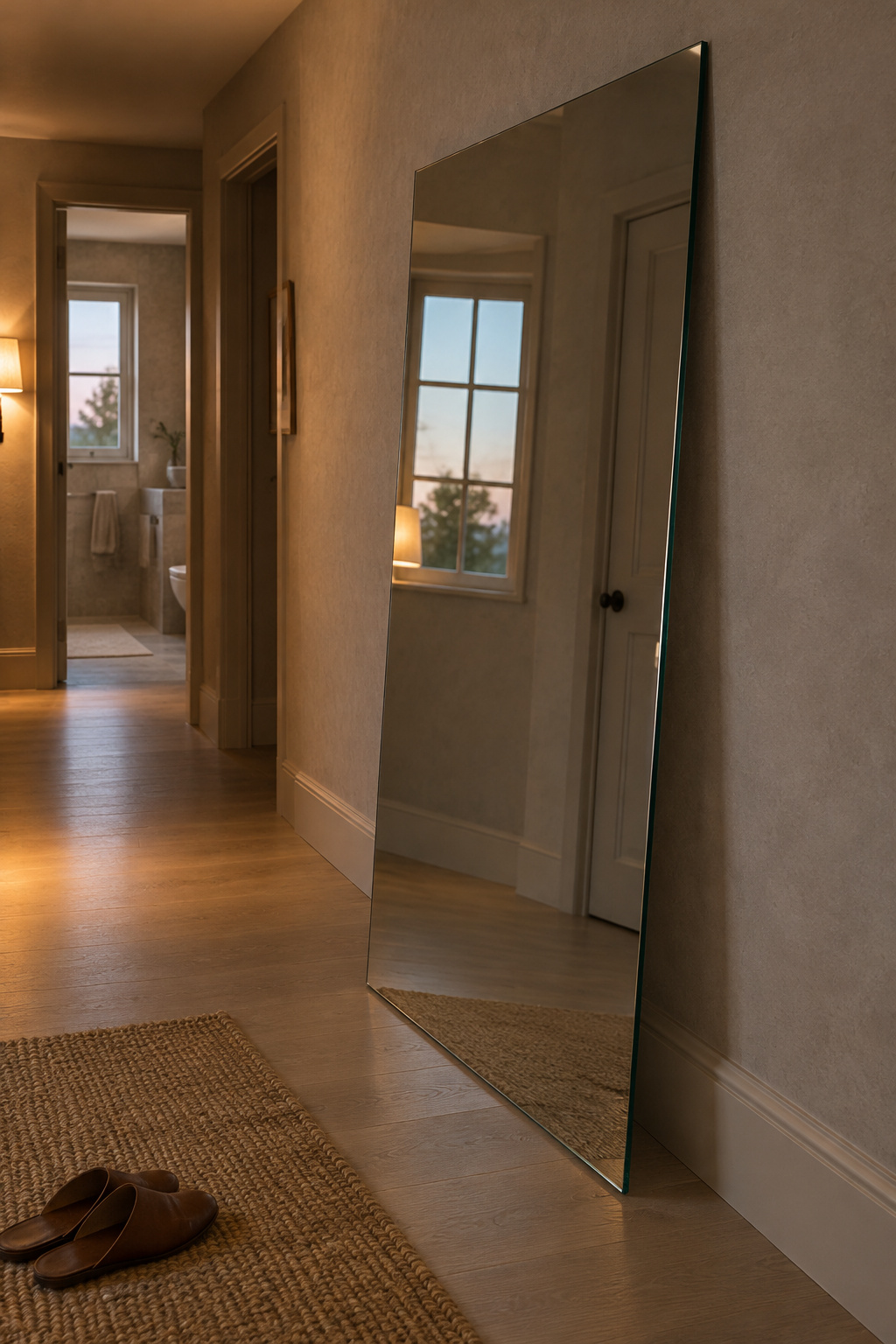
On Sundays my mother cooks dinner for both floors of our two-flat in Logan Square, and with a full house passing the bathroom door, a mirror on the wrong wall shows itself.
The mirror over the sink is a separate choice of size, light and mounting, covered in the main guide to choosing the main bathroom mirror.
The cheapest version costs nothing and undoes in a minute. Lean the mirror where you think it belongs, somewhere nobody will knock it, and live with it for a week. Walk past the open door, take a bath, get dressed in front of it. If every view holds, then drill.
FAQ
Will a full length mirror in the bathroom be ruined by humidity?
Not if you place it with care. The glass maker AGC says its mirrors can be used in damp rooms such as bathrooms as long as they are never immersed. Damage shows up as black spots near the edges, so keep air behind the glass, keep its bottom edge off wet surfaces and stand it away from the shower’s steam.
How wide should a full length bathroom mirror be?
For everyday use, 20 to 24 in wide is a common planning band, with 24 by 60 in a sensible minimum for one person and 30 by 70 in more comfortable. A narrow wall can take 16 to 20 in. Measure the visible glass, since a frame can cover a couple of inches on each side.
Does feng shui say where a bathroom mirror should not go?
Some feng shui practitioners advise against a mirror directly across from the toilet, and some also avoid reflecting the tub, taps or shower head. MyDomaine, which reports the toilet advice, weighs it against practicality and personal preference. These are traditions rather than measured effects, and checking the three sightlines reaches the same answer without them.