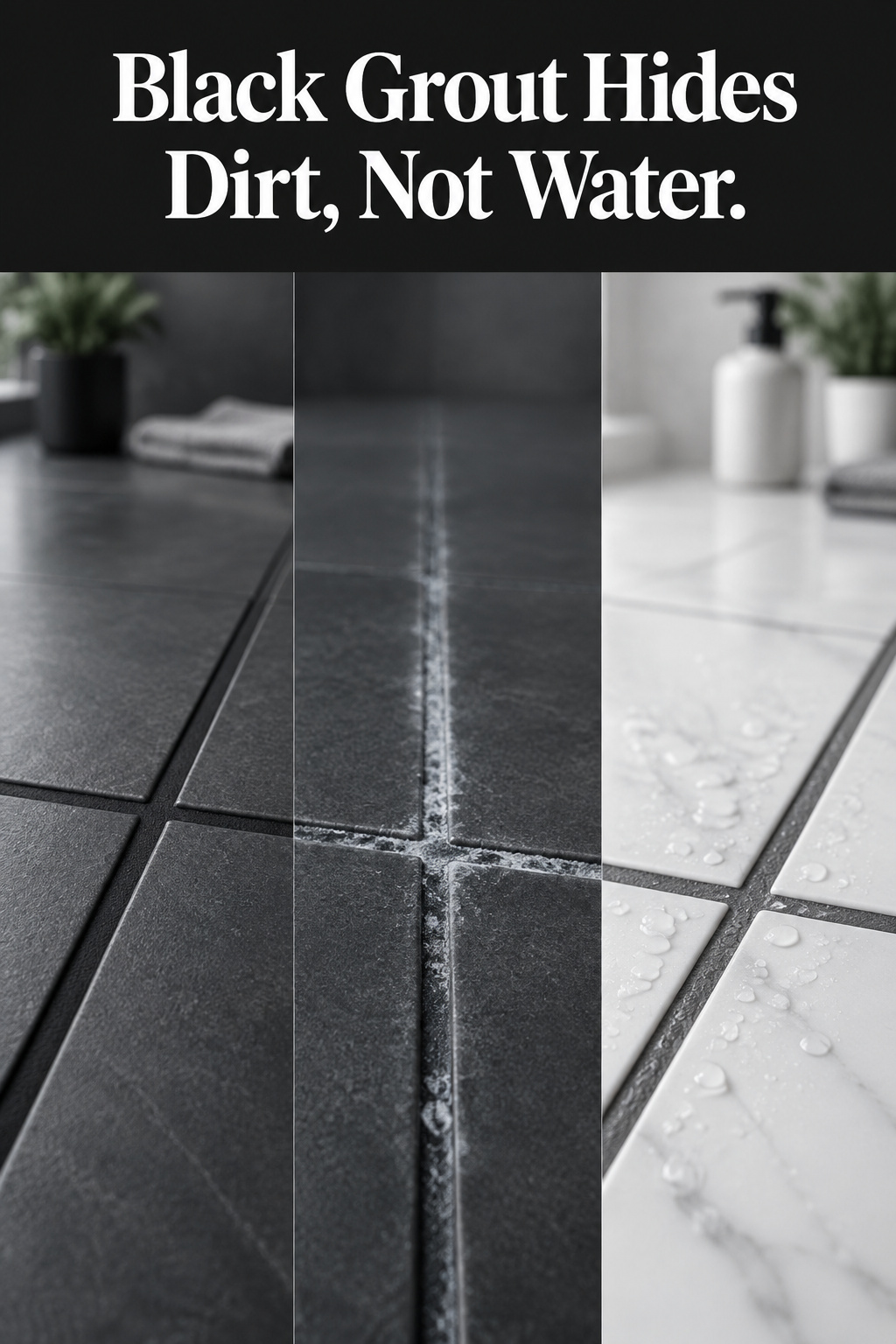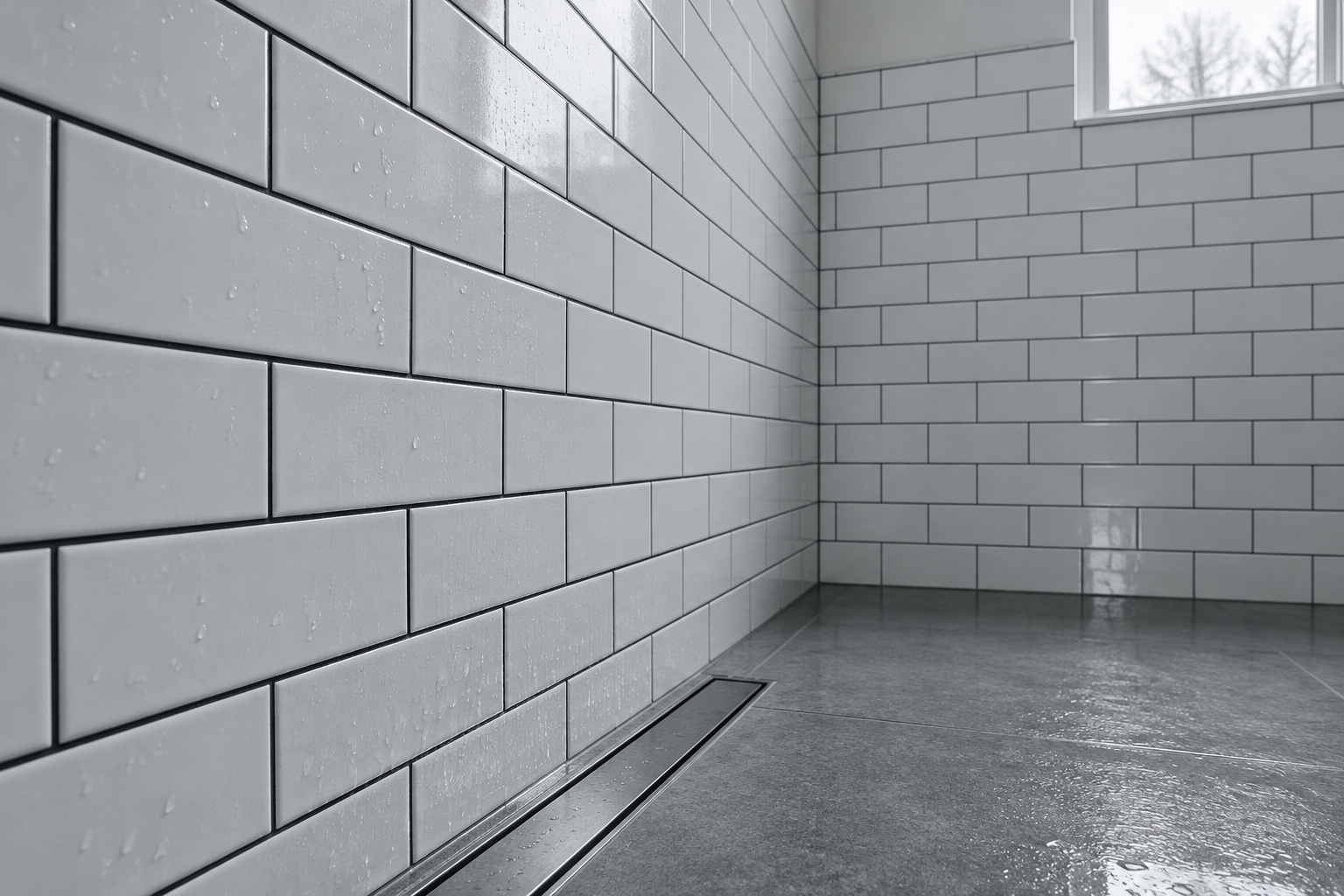
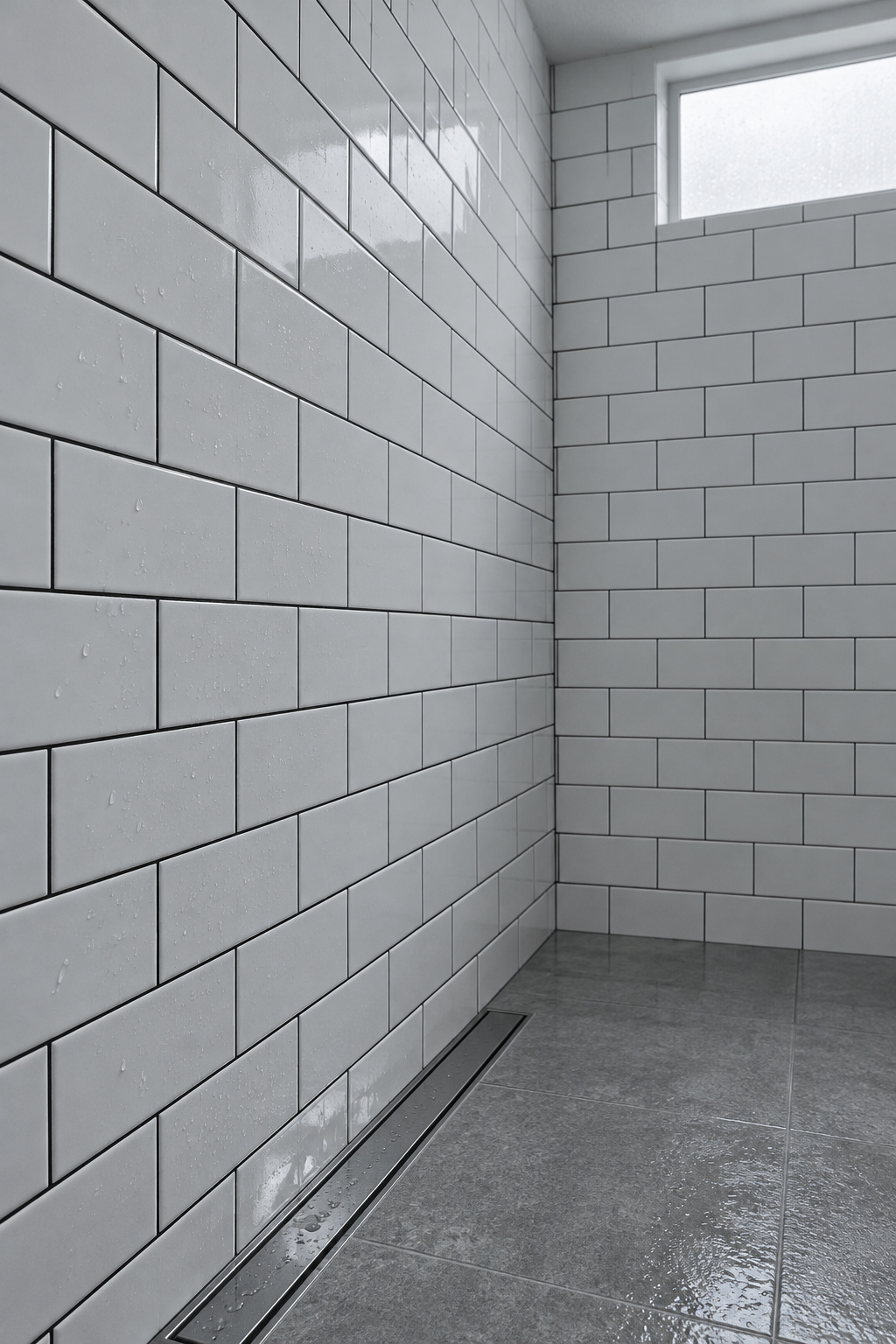
Every gallery of white subway tile with black grout says the same thing: black is the forgiving joint, the one that never looks dirty. The grout maker half agrees, in one document. LATICRETE’s Grout Guide, TDS 400, says white joints “show soil readily” and, a few points later, that “dark joints in a shower or exterior may show water deposits and/or the natural occurrence of efflorescence more readily than a lighter colored joint.” Black grout hides dirt. A shower mostly makes water. Plan for that before you mix a bag.
TL;DR
- Black grout hides dark soil, but in a shower it may show water deposits, efflorescence and soap film more readily than a lighter joint, according to the maker’s own grout guide.
- Epoxy grout (EN 13888 class RG) absorbs no more than 0.5 g of water at 240 minutes against 5 g for improved cement grout (CG2), about ten times less, and adds no salts of its own.
- Mix every bag from one lot number, buy 10% more than the job needs for waste, keep a same-lot spare for repairs, and use gray or charcoal on a hard-water shower floor.
White subway tile with black grout: what it hides and what it shows
A bathroom makes two kinds of mess, and they look different on a dark joint. Dirt is dark: grit, hair, skin oils, the gray film off a mop. On white grout it shows fast. On black it vanishes, which is where the forgiving reputation comes from.
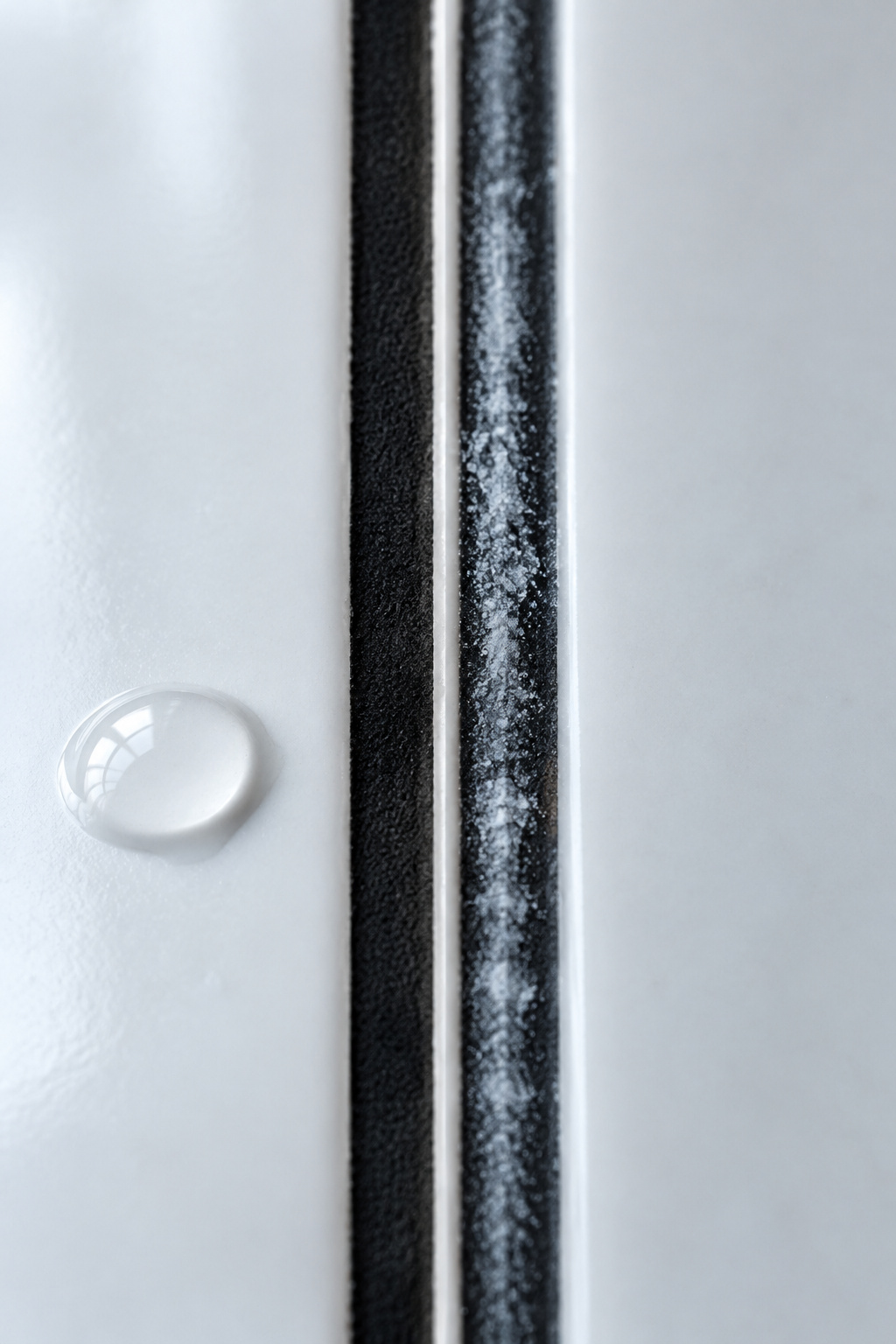
Water mess is pale. Soap film, hard-water minerals and the salts that come up out of cement all dry white. Black is the color where they stand out most.
Cement grout also darkens when it’s wet. In a shower, the floor and the first several rows of wall go dark as soon as water hits and stay that way until they dry. Grout a practice board in my Saturday beginners’ class and the joints go a shade darker the moment the sponge hits them. That part is normal. Judge the color that’s left once the joint dries.
So judge a joint by what lands on it. A dry wall behind a vanity gets grime; black is a fine choice there. A shower wall gets water daily, and the low rows get the most. Note the maker’s verbs: “may show” and “more readily”. Black won’t always bloom, but when a joint does, black is the color that shows it.
Efflorescence and soap bloom are why black joints turn chalky
How efflorescence forms in cement grout
Efflorescence is a white crystalline deposit of salts, and it takes three things at once: soluble salts, which every portland-cement product carries; water in the setting bed, mortar bed or grout; and a force, like evaporation or capillary movement, that brings the salts up. Remove any one and it doesn’t happen. It’s a natural condition of cement products, not a defect.
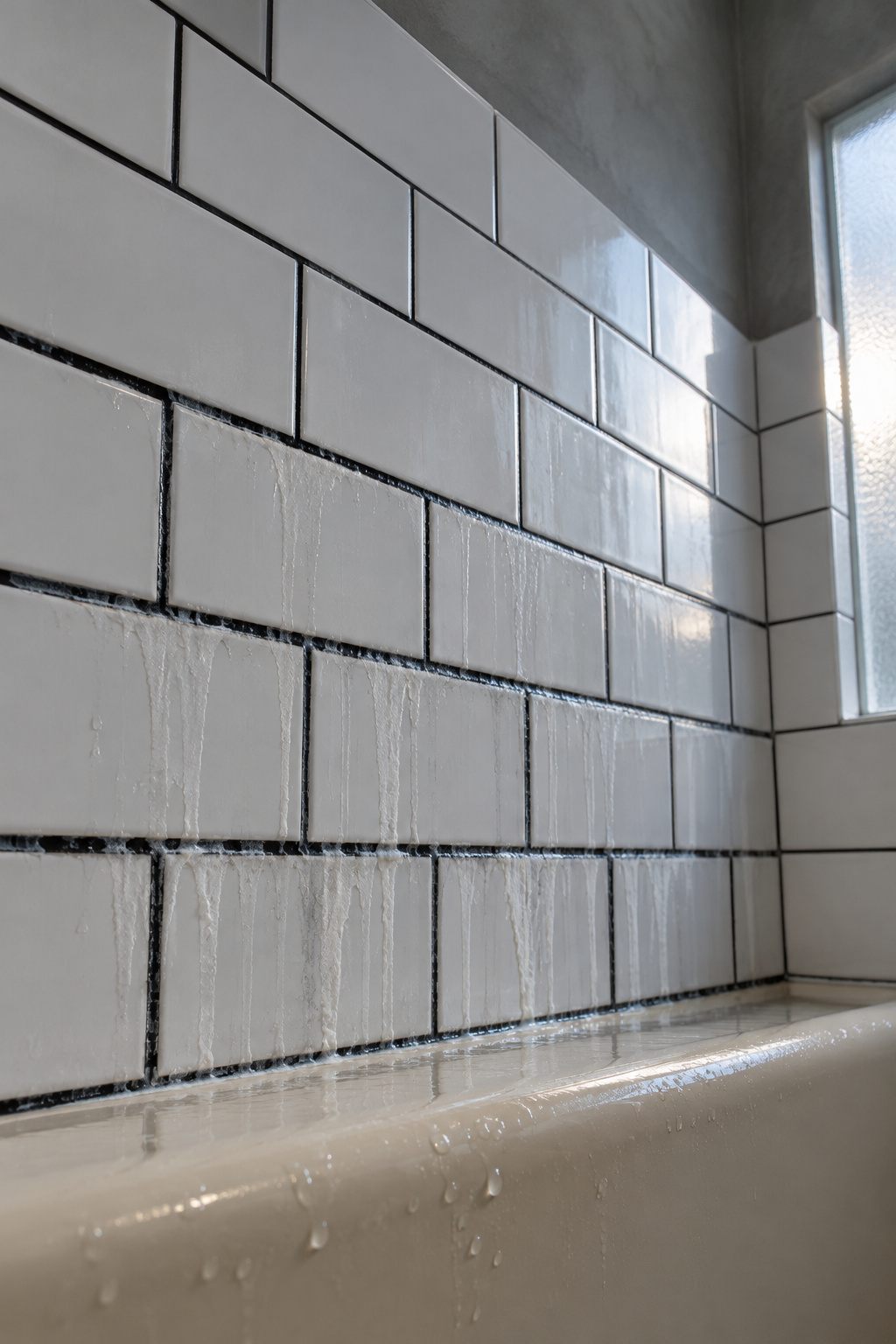
The Tile Council of North America says the minerals usually start in the slab or mortar bed below the tile, and ordinary cleaning water isn’t enough to cause it. The grout is just the porous path up.
And not every white mark is efflorescence. Soap film, limescale and the whitish haze an acrylic sealer can develop when moisture gets under it all look alike against black. Clean the joint first, then decide what you’re fighting.
Why hard water makes it worse
Hard water leaves calcium and magnesium scale on top of the soap film, and porous cement grout soaks up some of both. A very dark joint shows white scale clearly. Slow drains and a floor without enough slope leave soapy water standing on the low rows.
How hard your water is decides how often the white comes back, so start by testing how hard your water is before you commit to black in a shower. Grout color for a period bathroom is a separate question, covered in the vintage bathroom tile guide.
Cement, high-performance or epoxy: which grout holds black longest
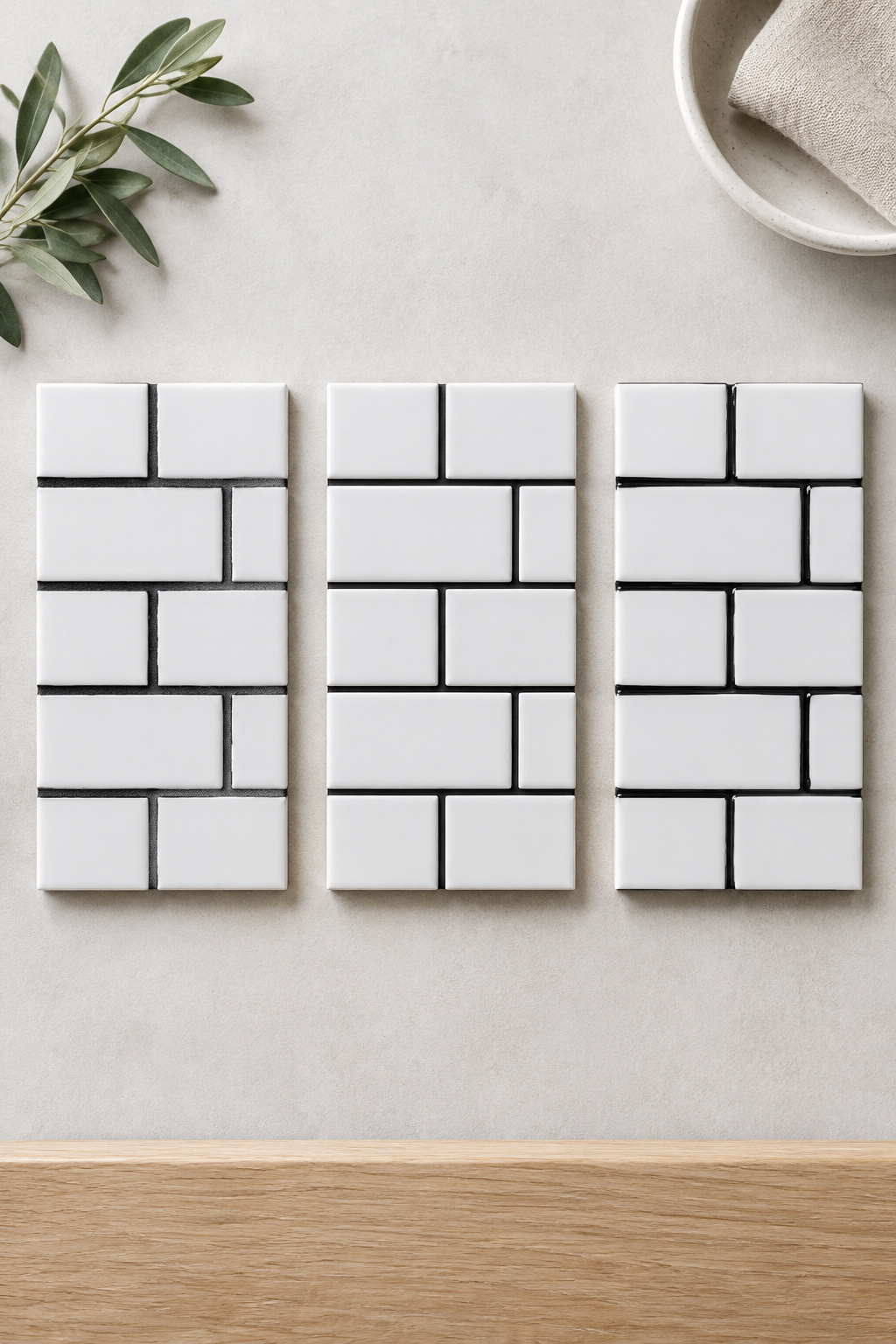
If you want black in a shower, the grout type matters more than the shade. The EN 13888 classes give a ladder: CG1 is normal cement grout, CG2 improved cement grout, and RG reaction-resin (epoxy) grout. The extra letters W and A mean reduced water absorption and high abrasion resistance.
| Grout type | Class | Water absorption limit (240 min) | Abrasion limit | Holds dark color | Watch for |
|---|---|---|---|---|---|
| Cement | CG1 / CG2 | up to 5 g (CG2) | up to 1,000 mm³ | Porous; carries salts | Efflorescence, soap and scale soak in |
| High-performance cement | CG2WA | 3 g in one maker’s sheet | up to 1,000 mm³ | Sold on color stability; absorbs less moisture | Fortified lines claim improved, not zero, efflorescence |
| Epoxy | RG | up to 0.5 g | up to 250 mm³ | Sold as colorfast, uniform color | Needs the maker’s cleaner; UV can discolor it outdoors |
On a shower wall, watch the water absorption: 0.5 g for epoxy against 5 g for cement, ten times less, and epoxy adds no salts of its own. Bostik still points out that efflorescence can push up through an epoxy joint from the adhesive or screed beneath it.
My pick: high-performance cement grout on the shower wall, some-builds work, and epoxy on the shower floor, which is confident-builder work: left overnight on unglazed or textured tile, it can be impossible to remove. Nobody publishes a price comparison between the three, so price the exact products at your store.
Tile edges, lot numbers and a spare bag decide the install
Pigment on porous and crackle edges
Dark pigment goes where it can soak in. The worst version is picture framing: porous tile edges absorb pigment and each tile ends up with a darkened outline. Florida Tile gives the textbook bad pairing as unglazed white tile grouted with black.
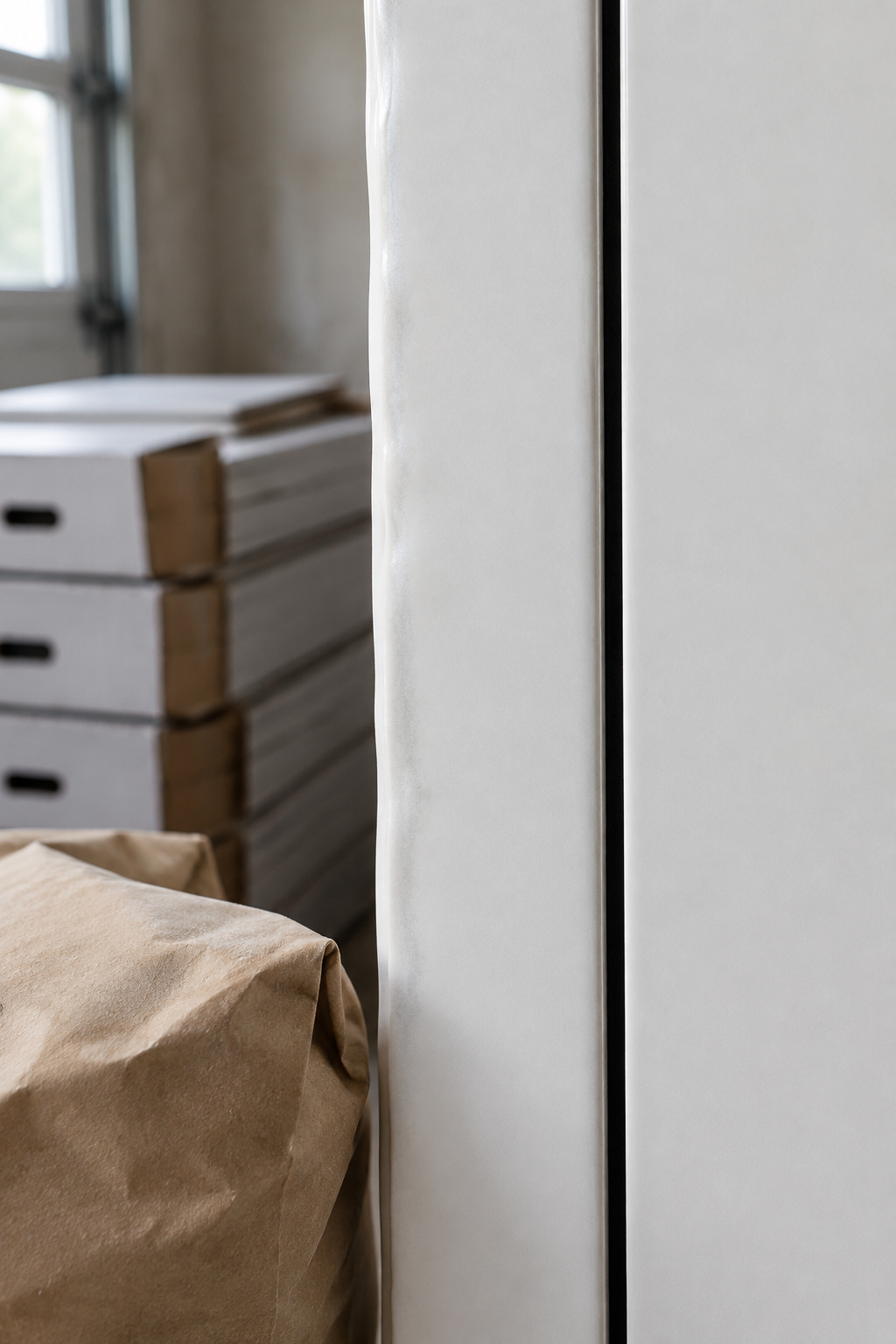
Glazed subway tile generally doesn’t need a grout release, which can haze glazed ceramic. Crackle glazes and anything unglazed get their faces sealed or released first. Either way, grout a test patch and look at the edges before you touch the wall.
Same lot, plus a spare bag
Grout color shifts from batch to batch and with temperature and moisture on the day, so TDS 400 says to use one control or lot number. The classic mistake is the halfway bag: you run short, buy one more from a different lot, and the second half of the wall dries a slightly different black. Once you’ve spotted that line you can’t unsee it.
Always buy 10% more material than the plan says. TDS 400 calls 10% extra the customary waste allowance, so a job that needs 25 lb carries 2.5 lb for waste. The spare for future repairs is separate, on top, from the same lot, and it stays in the house.
- Check the lot number on every bag before you open the first.
- Grout a test patch on your actual tile, including a cut edge.
- Seal or release porous, crackle or unglazed faces; skip release on glazed tile.
- Buy the 10% for waste, plus a same-lot spare you never open during the job.
- Budget one more weekend than the plan says, because the cure wait outlasts the grouting.
Cleaning black grout without discoloring it, and the colorant that fixes it
Routine care is boring, which is the point. Use a pH-neutral tile and grout cleaner, a soft nylon brush and a full rinse. Squeegee the walls after a shower and run the fan, so less water sits in the joints.
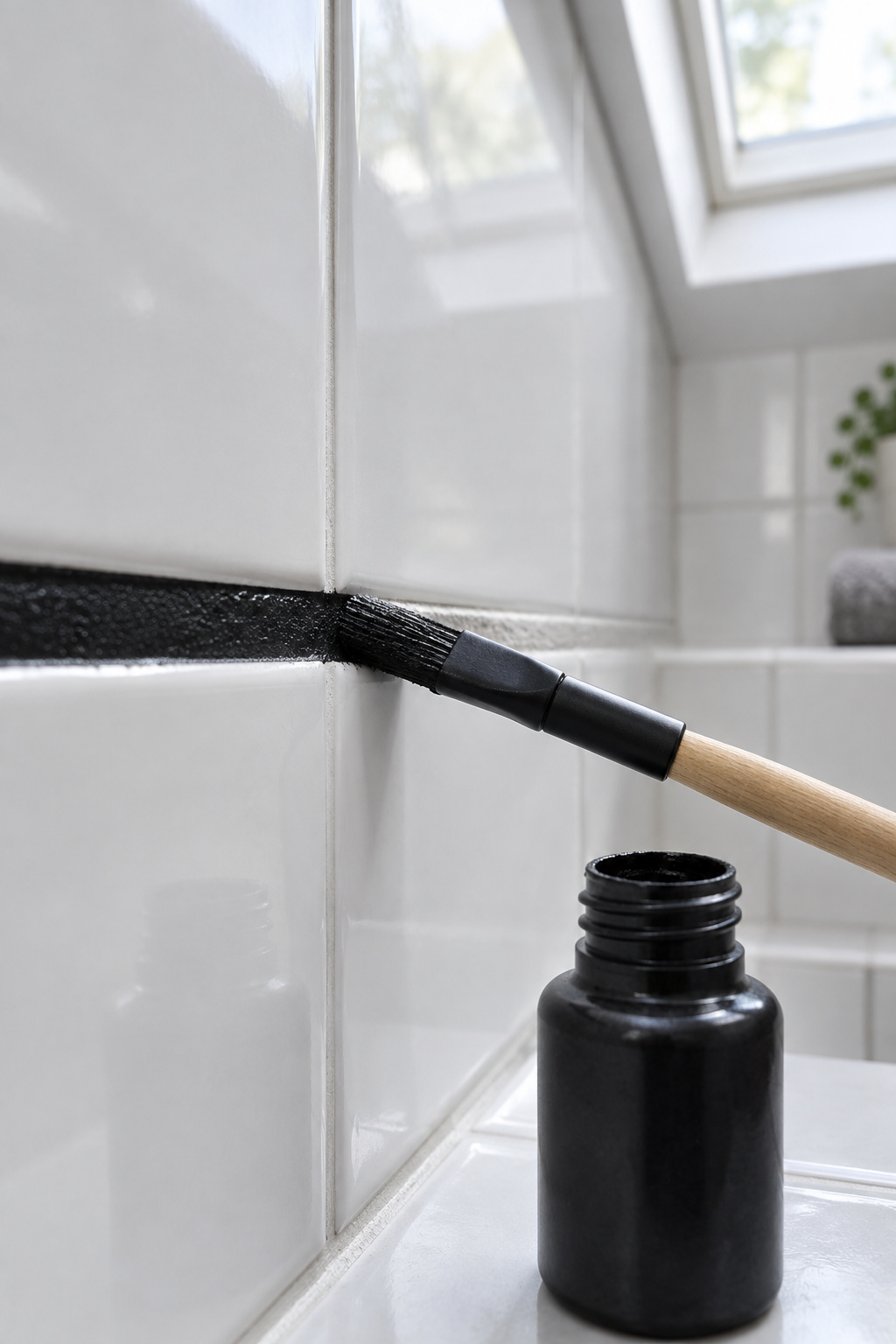
Keep bleach and vinegar out of the weekly routine. Mapei says regular use of either “can discolor and weaken grout.” On acid for hard-water spots, the makers split: some say no acid on colored grout at all, others allow a mild sulfamic acid solution for deep deposits. Two answers, so follow the maker printed on your bag.
If a joint has already discolored, grout colorant is the rescue. It’s a waterborne epoxy that recolors and seals the joint. It needs clean, dry, unsealed grout at least 48 hours old, thin even coats, and 20 days before you scrub it. The maker claims up to 15 years. It’s plan B; the right grout is plan A.
Floors are different. Underfoot you get soil and water together, which changes the color question for black and white floor tile.
Where gray beats black: the small bath and the shower floor
Charcoal sits between the two risks. Neutral and dark gray show soil less than a light joint, and mid-tones hide buildup better than black does.
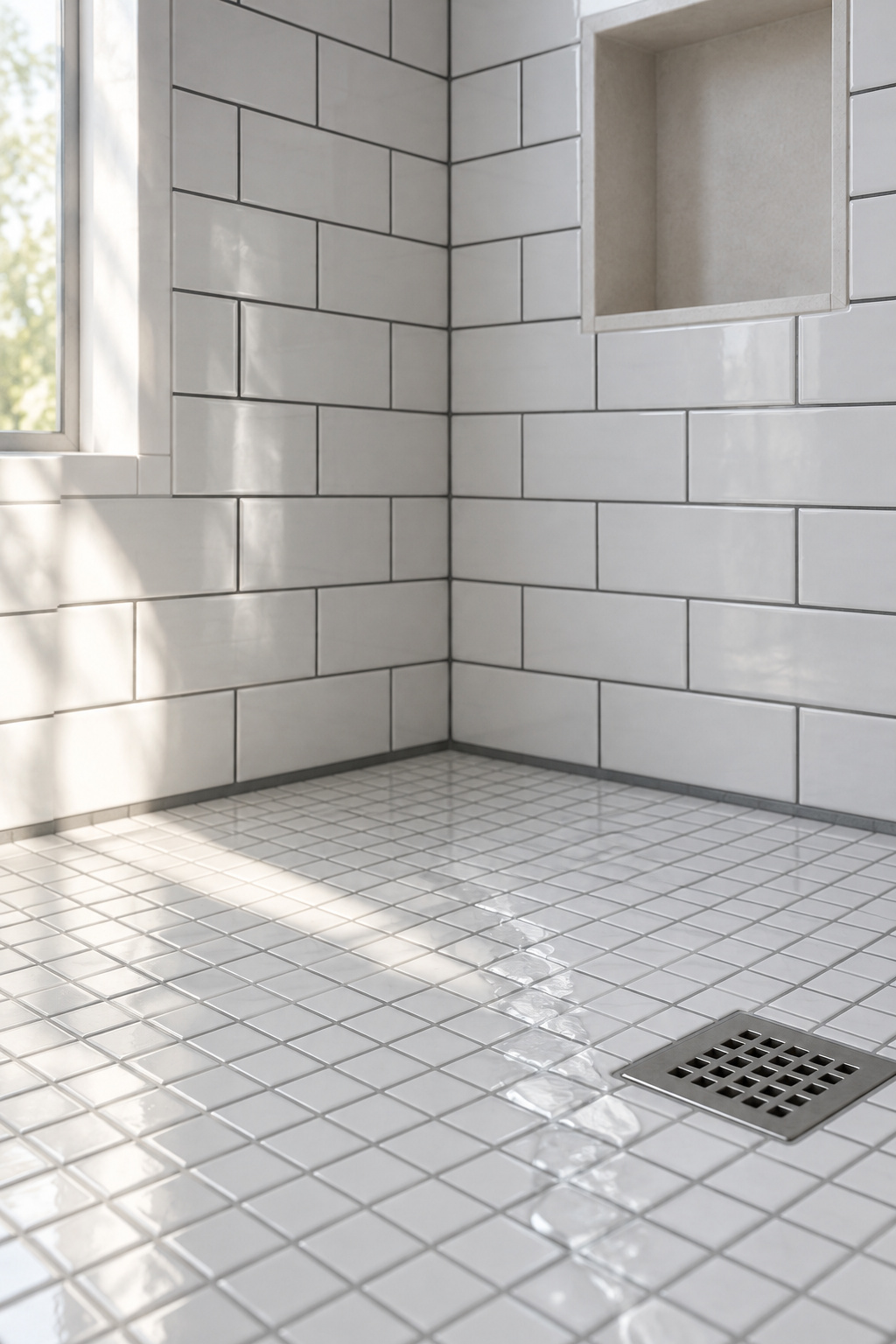
Gray wins in two places. The first is the hard-water shower floor, where joints stay wet longest and water stands after every shower. Use a mid-gray or charcoal epoxy there and keep black for the walls if you want the look. The second is a small bathroom, where I’d soften the joint too; the small black-and-white bathroom guide has the edge argument.
Grout a scrap board with your tile and the exact grout you’re considering, cure it for the time on the bag, then spray it with your own tap water every day and let it dry. Check it twice, once damp and once dry. If it blooms on the board, expect it on the wall.
You started out believing black grout hides dirt. It does, and it may show water. The joint is one surface; the tub, floor, vanity and glass each get the same test, and the rest of a black-and-white bath sorts them one by one.
FAQ
Should you seal black grout in a shower?
It depends on the grout. Epoxy and single-component urethane are non-porous and need no sealer, and some fortified cement grouts are sold as never needing it. Standard cement grout is porous, so a penetrating, vapor-permeable sealer helps. Avoid topical acrylic sealers on black joints, because trapped moisture can turn them a whitish haze.
How long should new grout cure before you shower?
Follow the cure time printed on your bag, because makers set it by product. LATICRETE’s PERMACOLOR Select needs 14 days at 70°F (21°C) before steam or submersion, and its SP-100 epoxy reaches full stain resistance in 10 days. Cold or humid rooms lengthen the cure, so add time in winter.
Should white subway tile with black grout be stacked or offset?
Offset, or running bond, is the classic pattern and the more forgiving one, because the stagger softens the grid and masks small variations. Stack bond turns black joints into a precise grid that outlines every tile. It looks sharper, but every joint runs unbroken in both directions, so any bloom would read as a line.