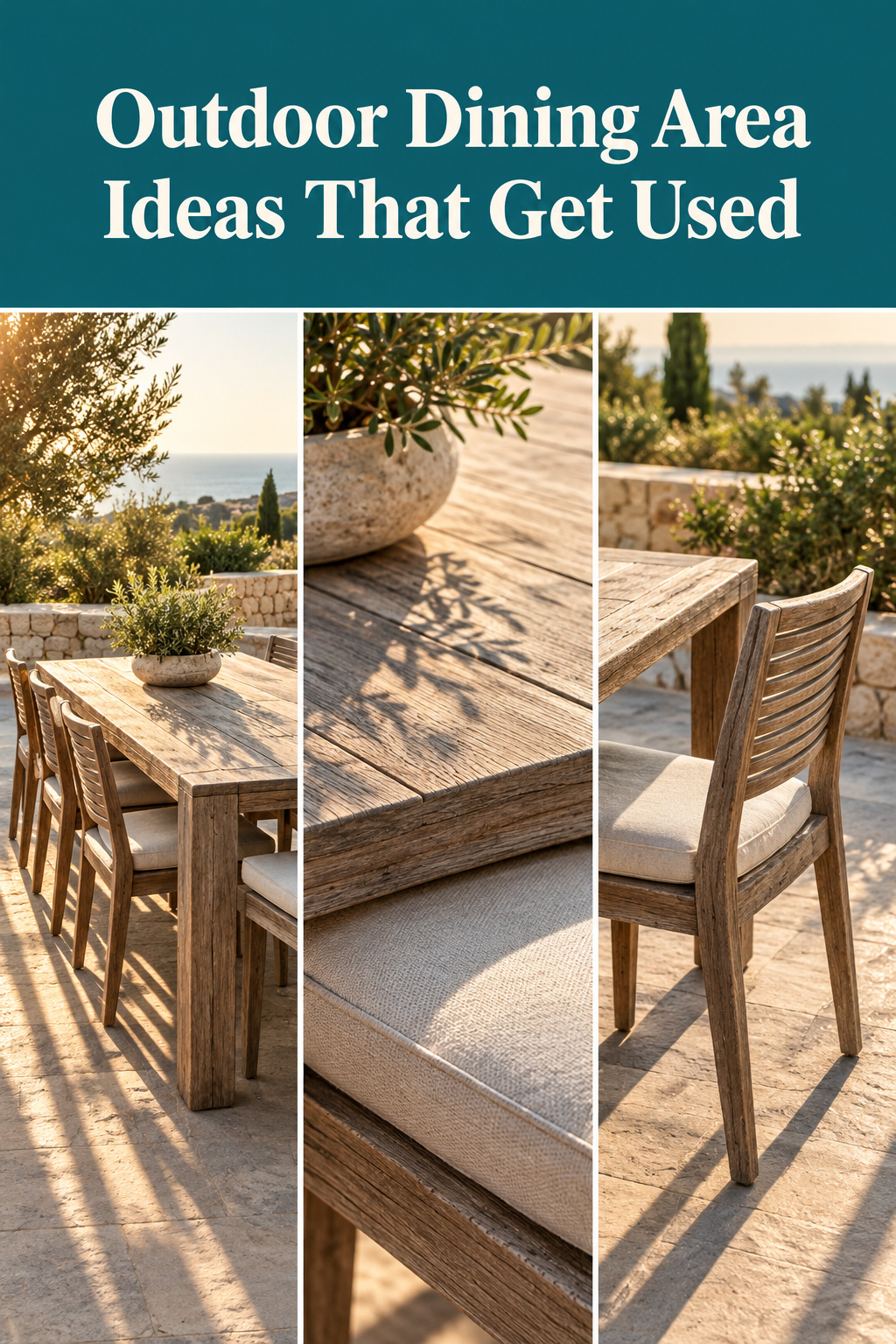
The most-used table I own cost me nothing. It’s a salvaged prep table in my backyard, scarred and a little out of true. I pressed it into service one June because I wanted somewhere to eat outside and didn’t want to wait for a proper plan, and it came together over three weekends. Summers later I can still tell you roughly how many evenings a year it gets used. Every fancier project I’ve designed since has had to beat that number, and most don’t come close. This survey of outdoor dining area ideas is organized around that gap.
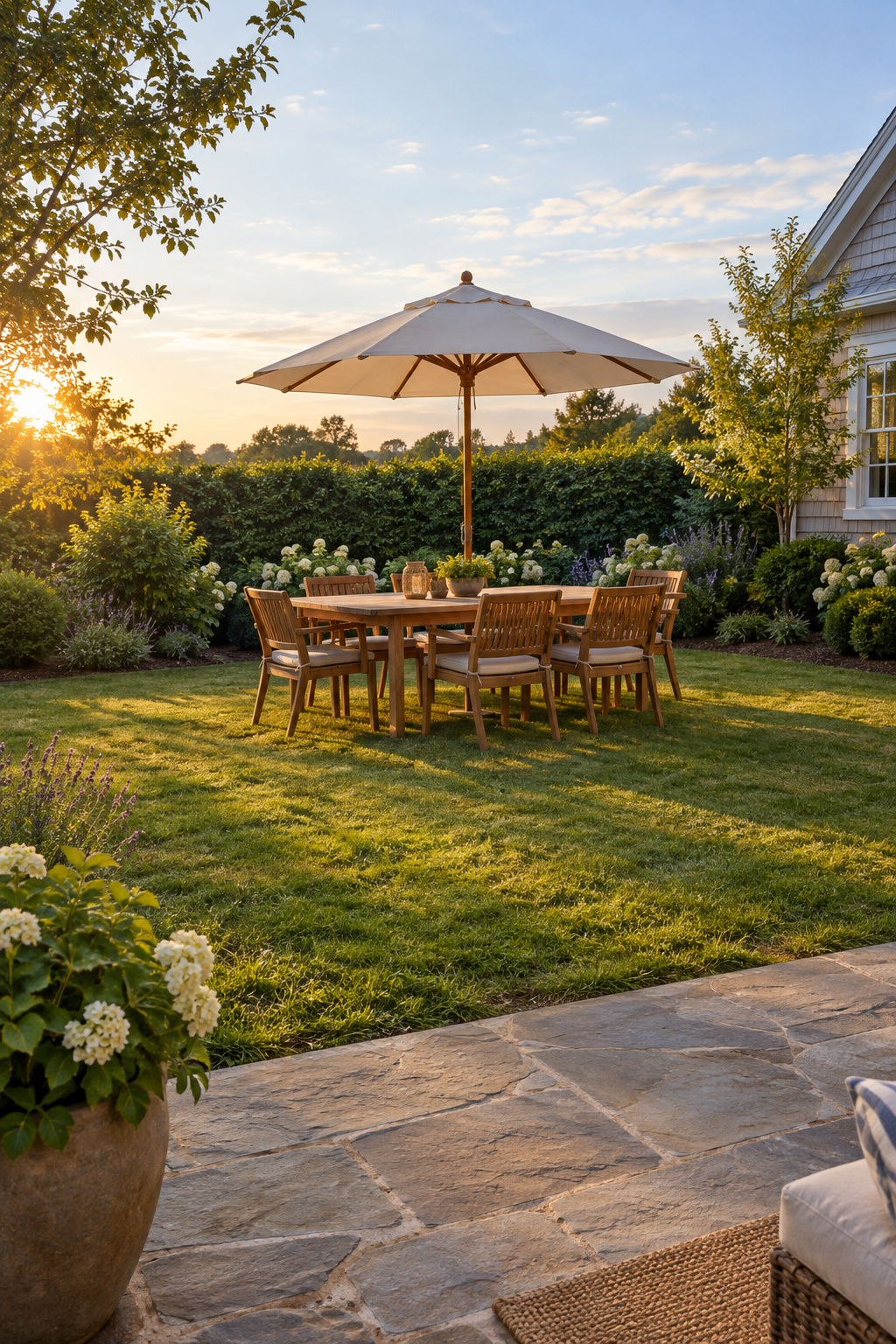
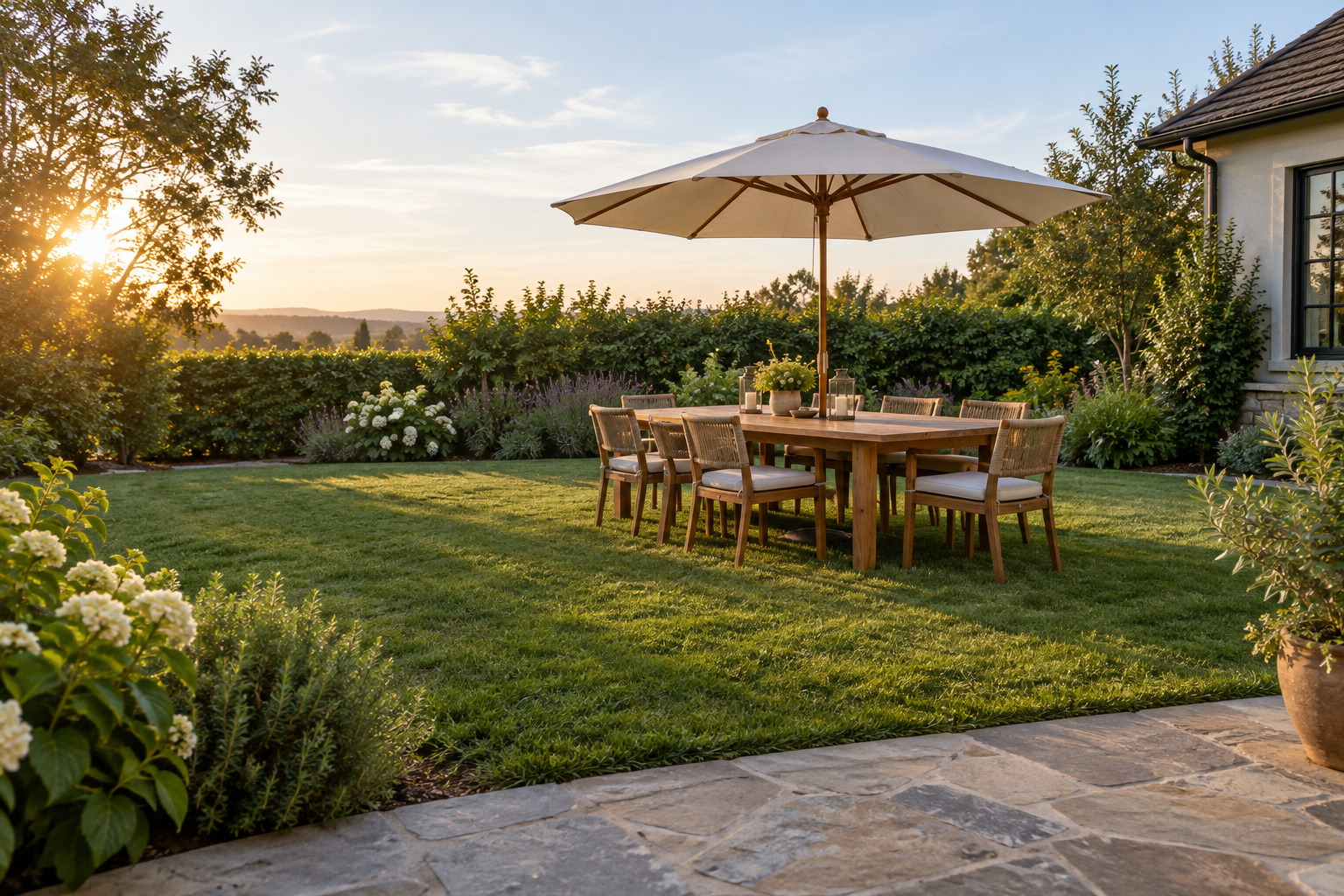
A dining table isn’t like the rest of a yard. A bench by the fence can sit empty for a week and nobody minds. A dining table has a fixed hour, a headcount, and a shape it either fits or doesn’t, which is why so many get bought correctly, placed once, and abandoned by August.
An outdoor dining space involves about eight real decisions, and they don’t carry equal weight. I take them in the order that decides whether anyone sits down. Along the way I name the one purchase worth making before any other and the one I think is most often wasted, and I hand each specialist question to the article that owns the arithmetic.
A Meal Has an Hour, a Headcount, and a Geometry
What sets a dining setup apart from everything else outdoors is the ritual underneath it, not the furniture.
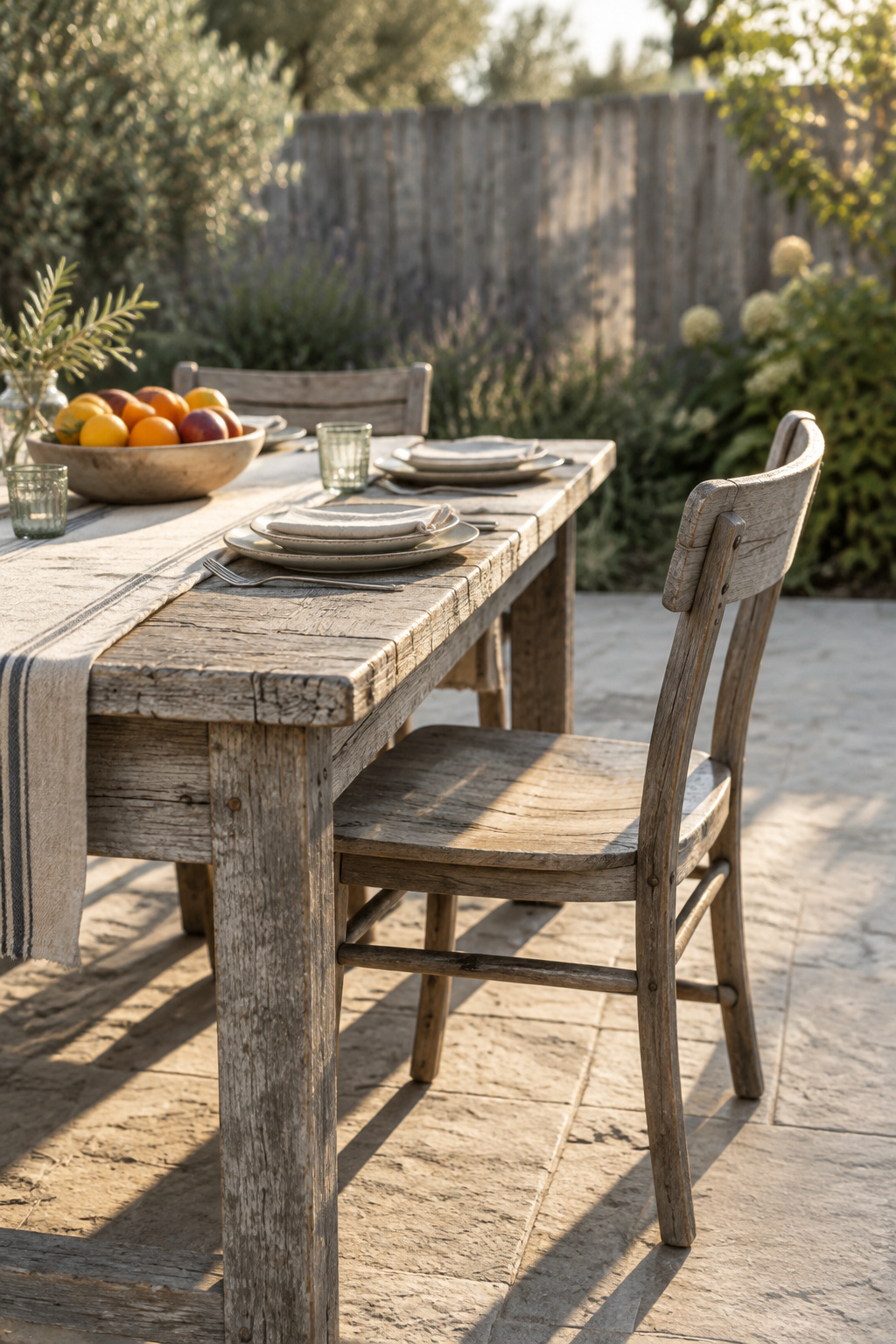
Lounge seating is opportunistic and forgiving. One person uses it, or four, at noon or at eleven at night, facing the garden or facing nothing. A dining setup answers to a schedule. Everyone sits at once, facing each other, at roughly the same time of day, in a shape that has to hold all of them. An hour, a headcount, a geometry: fail any one of the three and the furniture stops being used, no matter how well it photographed.
So it fails differently from everything else you put outside. A lounge chair in the wrong spot is a mild disappointment you walk past. A dining table in the wrong spot produces a specific, memorable bad evening: too hot at the west end, one chair nobody can get out of, somebody eating with a plate on their knees because the shape ran out of room. People don’t repeat that. They move the meal indoors, promise to try again when the weather settles, and the table becomes a place to put the potting tray.
Someone has measured the scale of that failure properly, once. A survey of 1,000 U.S. adults, fielded by Wakefield Research for the International Casual Furnishings Association, found that 77% of consumers underuse their outdoor living space. They use it less than they’d like, and only about a quarter say they use it as much as they want to. That is one fielding, by one research firm, in one year. I quote it as a single well-documented reading, not a settled fact, because it is one study re-reported consistently, not several studies agreeing.
The other half of the same survey is what makes it worth quoting: most of those households already had the space. A porch, a patio, a deck, a balcony, built, paid for and sitting there. Access isn’t the shortfall. Furniture isn’t really either, since the same survey found a majority own little or nothing in the way of outdoor furnishings or need to replace everything they have. The infrastructure exists. The evenings don’t happen.
Joe Raboine, Vice President of Design at Oldcastle APG, names the cause I see most often when he lists forgetting to consider where the sun hits during the day as one of the biggest mistakes homeowners make planning a patio. People buy the look of an outdoor dining space and never work out the ritual it has to support.
One boundary before we start: where the food gets cooked is a separate subject with its own guides, covering the grill, the counters and the cook’s route through a work zone. This guide starts at the table.
The Hour Decides More Than the Furniture Does
Which of these decisions governs how long people stay at the table? In all the years I’ve been doing this, nobody has told me they went back indoors because the chairs were wrong. Two things come up again and again, and neither is furniture.
Where the Shade Falls
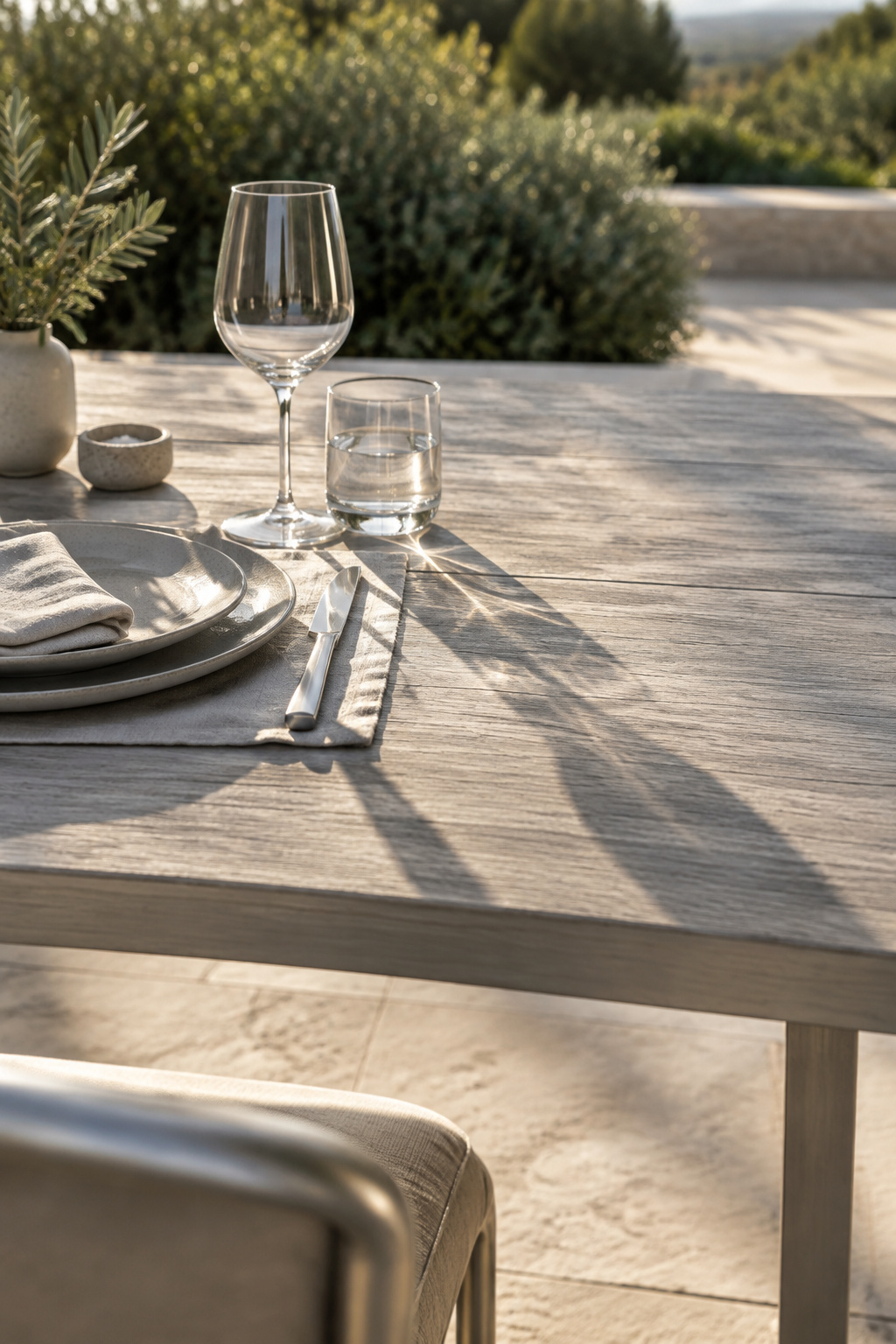
Indoors you control the air. Outdoors you can’t, and that changes what comfort means. The outdoor thermal-comfort literature describes seeking shade as the predominant adaptive behavior people take on a hot day (Pearlmutter and colleagues, cited in Elnabawi and Hamza’s 2020 review), because shade is the one variable a person can act on. A host has the same short list. You can’t lower the temperature of your yard, but you can decide what stands between the table and the sun.
Jan Gehl’s urban-design work established the consequence: local sun and shade conditions significantly affect whether people go outdoors at all and how long they stay once they do. A peer-reviewed field study by Middel and colleagues put numbers on the preference. They surveyed 1,284 people outdoors at Arizona State University and found that shade improved how comfortable they felt in every season but winter. The detail I find most useful for planning is that natural tree shade and built shade performed about equally well. The shade does the work, whatever casts it.
The trap is that shade moves, and it moves fastest in the hours people eat. A canopy that covers the plates at midday can be aimed at nothing by the time the food is on the table. That is a geometry problem with a real answer, and the answer, sizing shade to the table, includes the arithmetic of where a shadow lands hour by hour. Read it before you buy any canopy at all.
What Shows Up After Dark
The second variable keeps its own schedule, and it rarely matches yours. The University of California’s statewide Integrated Pest Management Program notes that some mosquito species are active at dawn and dusk while others are active all day. It lists avoiding outdoor activity during locally high-activity hours among its core recommendations. Penn State Extension’s factsheet independently reaches the same conclusion and treats the timing of outdoor activity as a genuine non-chemical lever alongside repellents.
So the cheapest fix is sometimes just eating an hour earlier or later, and sometimes it does nothing at all, depending on what you have. That question turns on measured evidence, so keeping insects off the table is where I’d go for what has been tested and what has only been advertised.
How Big This Actually Needs to Be
The common sizing mistake is sizing the table and forgetting that it is only the middle of the object you are really installing.
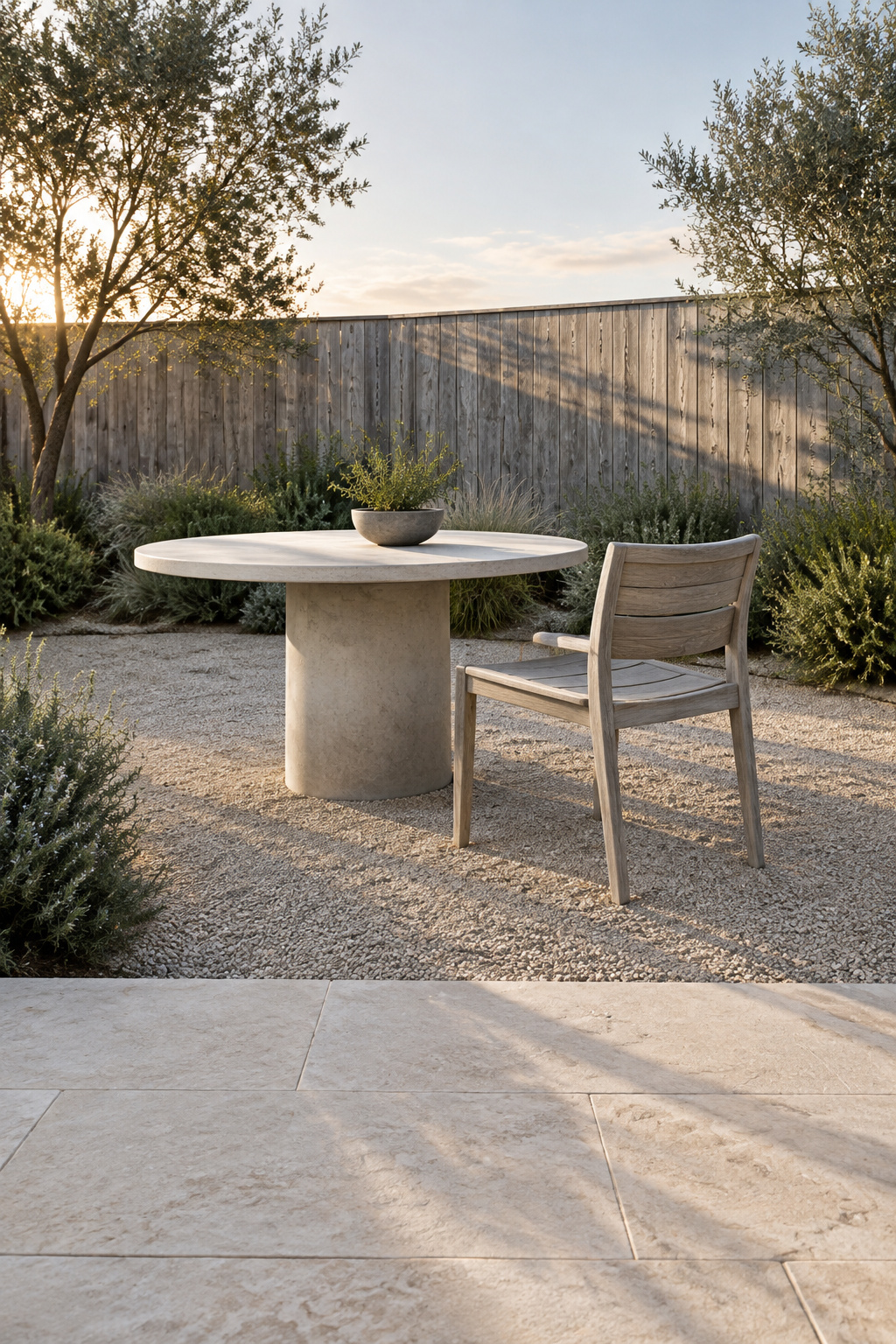
The whole assembly has to fit while it moves: people arriving, chairs sliding out, someone standing to fetch the salt while the person behind them stays seated. Chairs travel, and the space they travel through isn’t optional. It separates a table where six people can get in and out without choreography from one where two seats quietly stop being used. Start from the headcount you feed in an ordinary week, not the largest group you’ve ever hosted, then check the ring of room around the whole setup before the length of the top.
Every real figure in that calculation lives in one place: how big a table the space can take works through per-diner width, the clearance behind a chair pulled fully out, and where the number everybody quotes came from, which turns out not to be an outdoor source at all. Settle that before you order anything.
Two things sit just outside this decision. The ground under the table is its own project: a chair has to stand level where you put it, and the gravel patio guides settle how to choose or build that surface. And the same logic scales down to a balcony with little modification, since the hour, the headcount and the geometry still rule, though a balcony brings constraints that deserve their own treatment.
Shade Is the Highest-Leverage Purchase You’ll Make
Here is my first committed call, and I’ll stand on it. Of everything sold for eating outside (the table, the chairs, the cushions, the heat, the bug gear, the soft furnishings), shade is the single purchase that adds the most evenings of actual use.
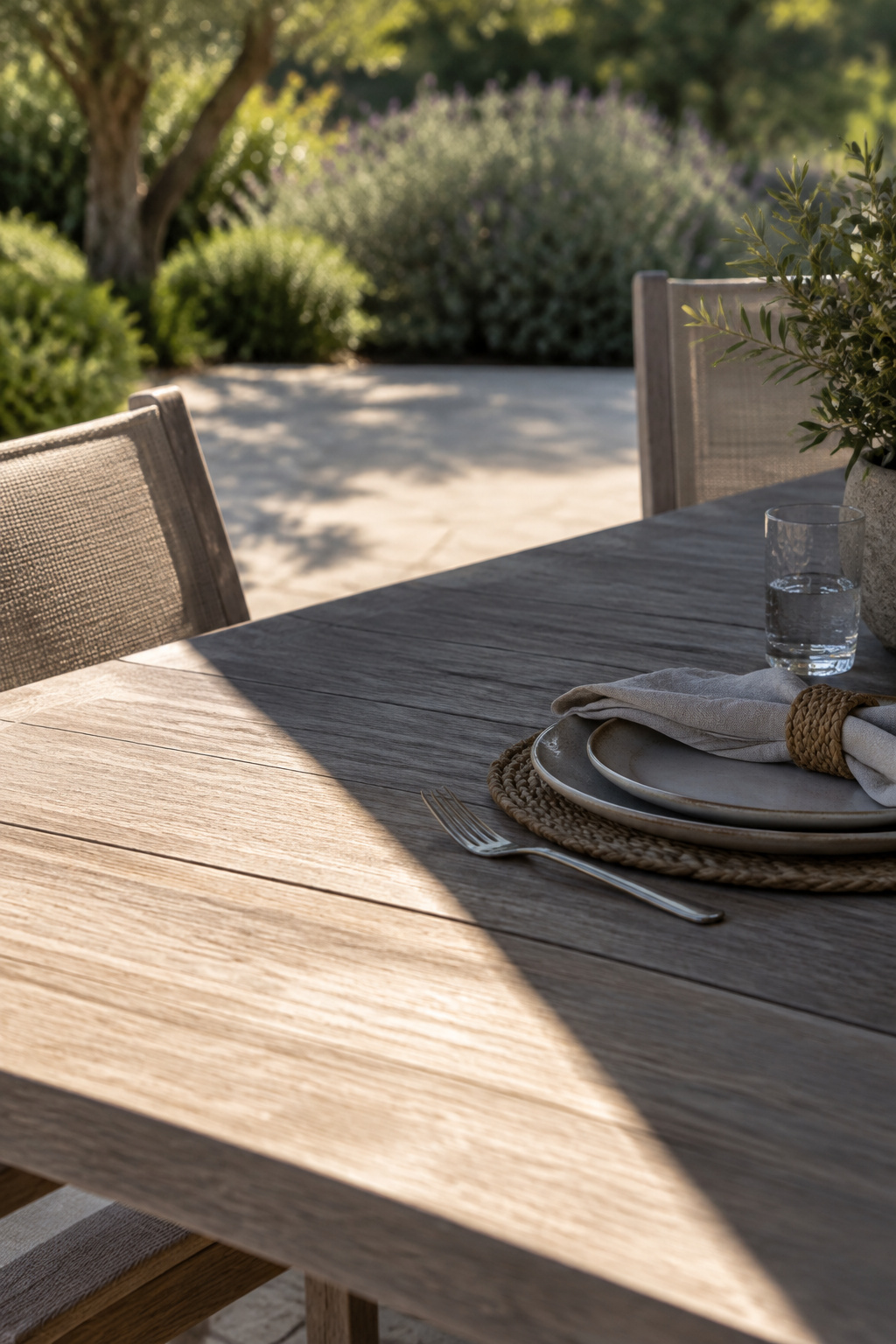
The mechanism sits in the research above, not in my preferences. Shade is the comfort lever with the most reach: it is the only one that touches the variable you can’t otherwise change, and sun and shade conditions have been shown to affect whether people come outside at all. Nothing else on the list has that property. A better chair makes a seated person marginally more comfortable. A canopy decides whether the seat is usable at the hour you eat.
Shade also fails gracefully, a quality I value more as I get older. Get it wrong and you have a hot first course. Get it right and you’ve bought back a run of evenings across the hottest weeks of the year, which is when a dining table is most likely to stand empty.
It also meets the test I apply to every outdoor room, which is how naturally people drift into it. Nobody deliberates over carrying a bowl through a door. They step out without thinking or they hesitate, and the hesitation almost always comes from a comfort variable they couldn’t name if you asked. A covered table reads, from the kitchen doorway, as somewhere you can sit down. An uncovered one in full sun looks like a chore with cutlery. Same furniture, same yard, entirely different traffic.
One clause on the purchase people reach for instead, resting on nothing but the yards I’ve worked in: a patio heater or fire feature bought before the shade is sorted is the classic wasted purchase at this scale. It solves the rare cold evening and leaves the routine hot, glaring one unfixed.
What the Table Is Made Of, and How You Get One
Three decisions live in this section, and they run into each other: what the table is made of, whether you buy it or build it, and what a given amount of money reaches. Order matters more than people expect. Settle the material first and the other two get easier, because material tells you whether a build is worth attempting and what a price tier is really selling. Settle the budget first and you’ll meet the material by accident.
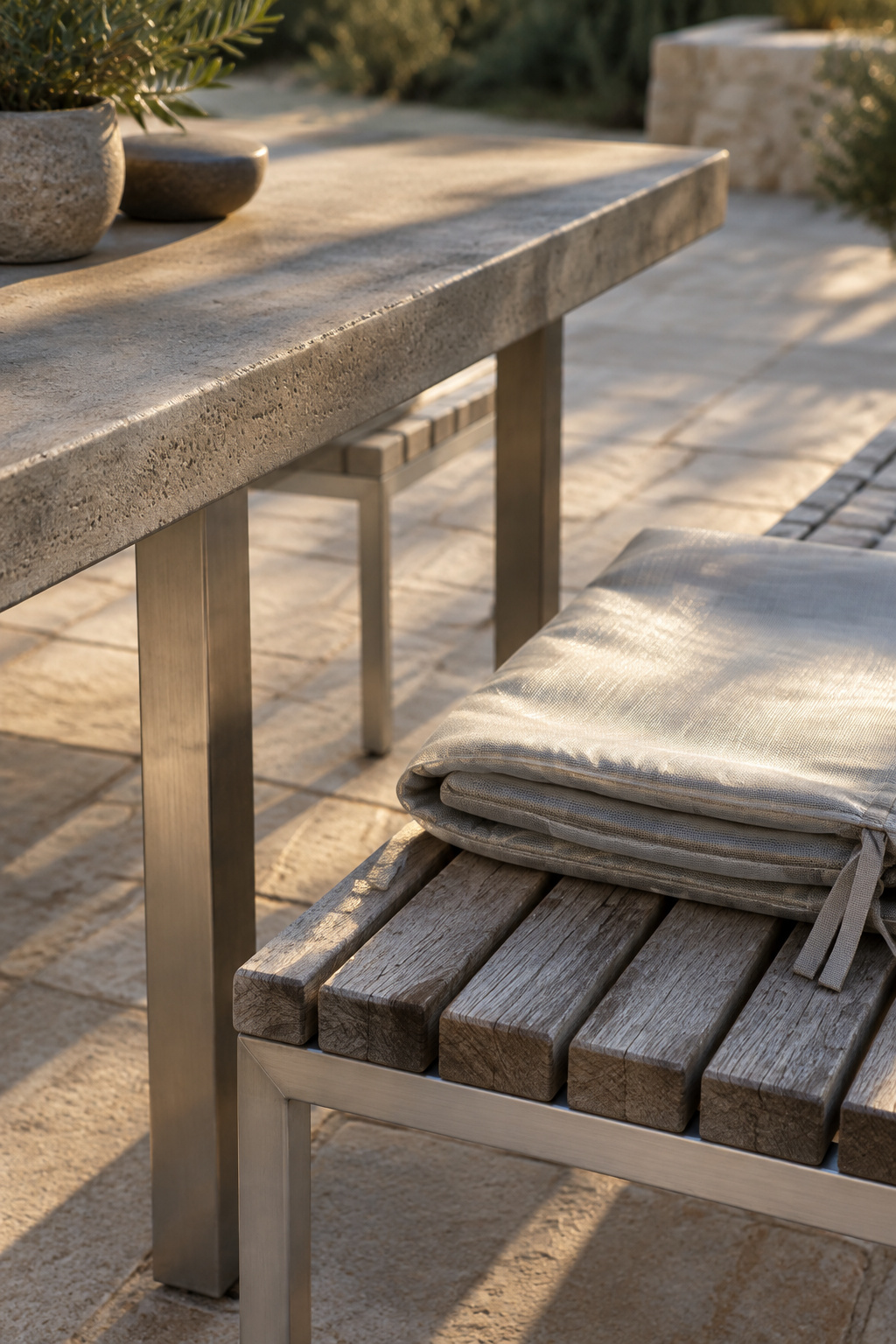
Which Material Survives Your Climate
Material is a weather bet. The useful question isn’t which material lasts longest but which one your climate has least purchase on. Those questions have different answers, and a catalog can’t tell them apart for you.
People are surprised that the table is rarely what fails first. The soft parts on top of it wear out on a much shorter clock, which changes what buying well means. The two clocks sit side by side in which material survives your climate, including service lives that rest on a single trade source and say so.
Building It Yourself
A dining table is one of the few genuinely good first outdoor builds. It’s flat, it’s forgiving, and when it fails the damage is cosmetic, not dangerous. If you own a drill and can give it two weekends rather than one, a built table is a real option, not a consolation prize. The honest caveats are that the joinery decision matters more than the cutting and that cure times aren’t negotiable however fast you work.
Building is also the only route where you choose the proportions instead of accepting them, and building the table yourself carries the cut list, the joint-strength comparison that contradicts itself in public, and the finish I’d use if I were doing it again.
Different Budgets Get You Different Things
Spending more doesn’t buy more decoration. It buys construction quality in places a photograph can’t show you, which is why two listings side by side can’t settle the money question.
That also makes the cheap version the right call more often than people admit, provided you know which components punish you for saving, and what each price tier actually buys draws that line, names the two line items worth paying up for, and treats secondhand as the two separate markets it is.
Eating Outside With Kids Changes the Calculus
A child arriving at an outdoor table is a different piece of engineering from an adult arriving at one. They climb rather than sit, they exit sideways at speed (usually because somebody mentioned dessert), and they meet the furniture with bare skin in a way adults mostly don’t.
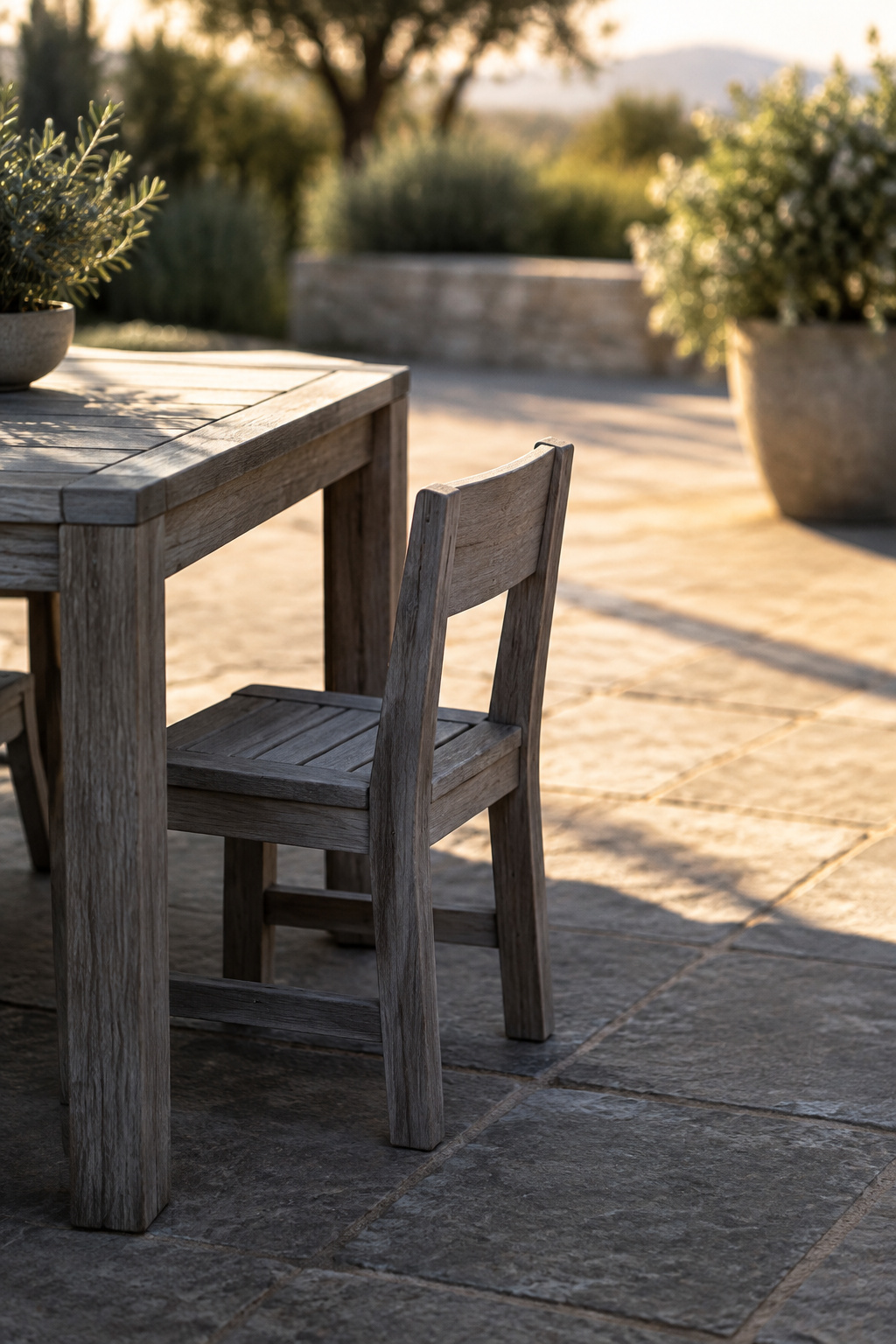
Outside, that raises questions an indoor table never does. A seat that has sat in full afternoon sun is a surface, not a temperature. The ground is rarely as flat as a kitchen floor, and getting into a chair unaided is harder on ground that isn’t. There is also a tabletop material question with a standard behind it and a specialist’s refusal attached, which is hers to make, not mine to summarize.
So I hand this one over whole: eating outside with young children covers the heights, the independence test worth running in a showroom, and the one material that gets refused, all of it specific to outdoors.
Keeping It Looking Like This Next Summer
Every material asks for something each spring before it gives you the summer. Treat that as a specification, and put it in the buying decision instead of a drawer of good intentions.
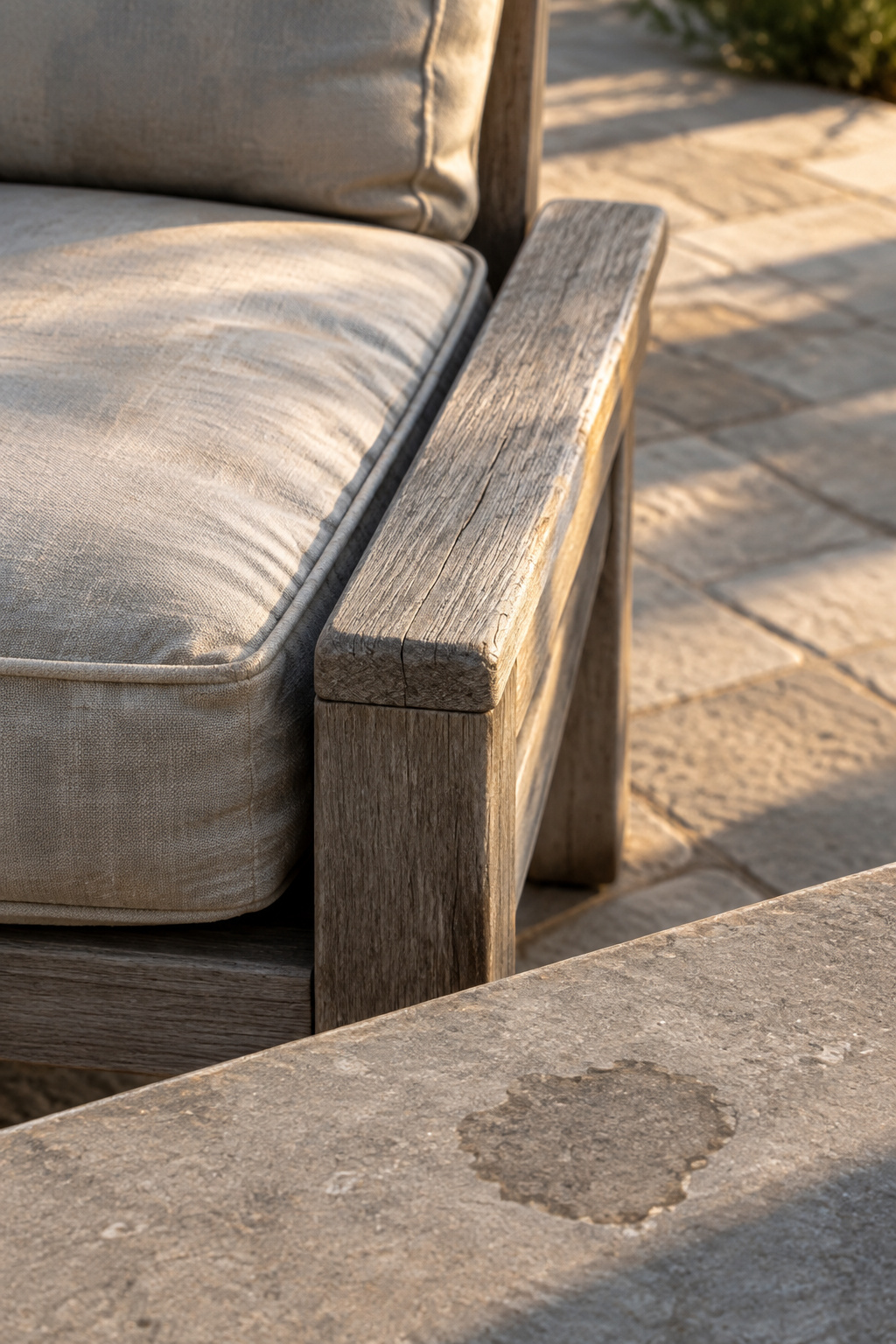
My stance, after specifying finishes for people who never once reapplied them: the finish or fabric you won’t actually maintain is the wrong finish or fabric for you, however good it looks in the showroom. That’s planning, not a character judgment. A surface that needs attention on a cycle you know you’ll skip will look worse in three years than a duller surface that asks for nothing, and you’ll like it less. Choose for the version of yourself who is busy in April.
That’s why you should read the care requirements before you buy rather than after: cleaning and storing it season to season is where the actual triggers live, including what each material needs, what quietly strips it, and the one bottle that is the cure on fabric and the villain on wood. Treat it as part of the purchase.
Outdoor Dining Area Ideas: The One Decision to Make First
Eight decisions make a pile, and a pile is why people collect saved images for a month and buy nothing. Take the list you’ve been building (the saved images, the open tabs, the half-full cart) and reorder it once.
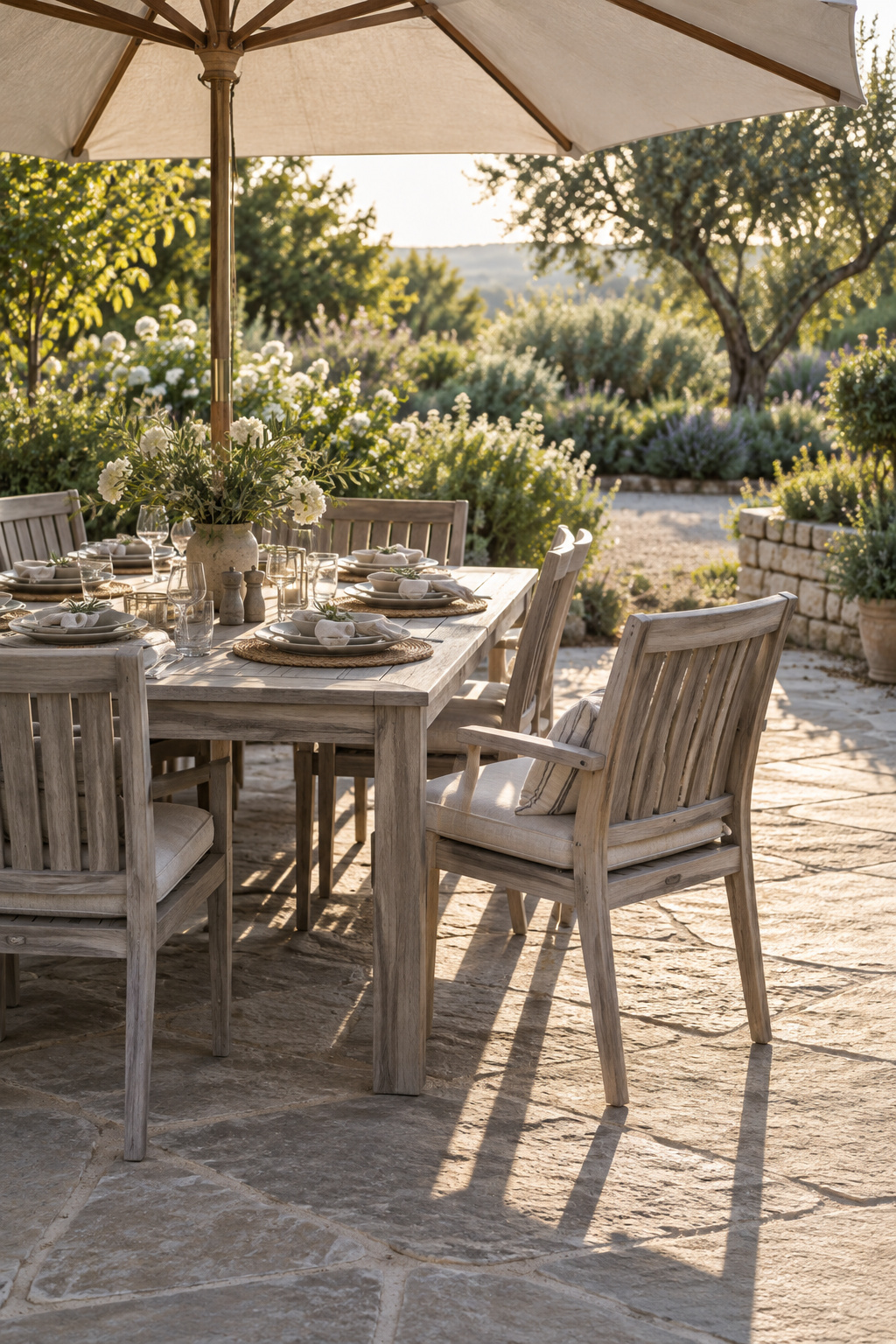
Put shade at the top: above the table, above the chairs, above the cushions, and well above anything with a heating element in it. Make that decision before anything else goes in a cart, because it determines whether the hour you intend to eat in is an hour anyone wants to sit through. Everything after it can come in any order: whether it fits, what it’s made of, whether you build it, what a tier buys, the children, the insects, the upkeep. Each has its own article above, and none is urgent until the first is settled.
That salvaged table in my yard isn’t the best thing I’ve built. It is the one that had shade over it before it had anything else, which is most of the reason it’s still in use in August while better-funded patios I’ve walked past sit empty.
Whether your shade comes from a canopy you buy, something you build a year from now, or a wall and a tree line you already own, it goes first on your list. Decide it, and the other seven stop being a pile and become a queue.