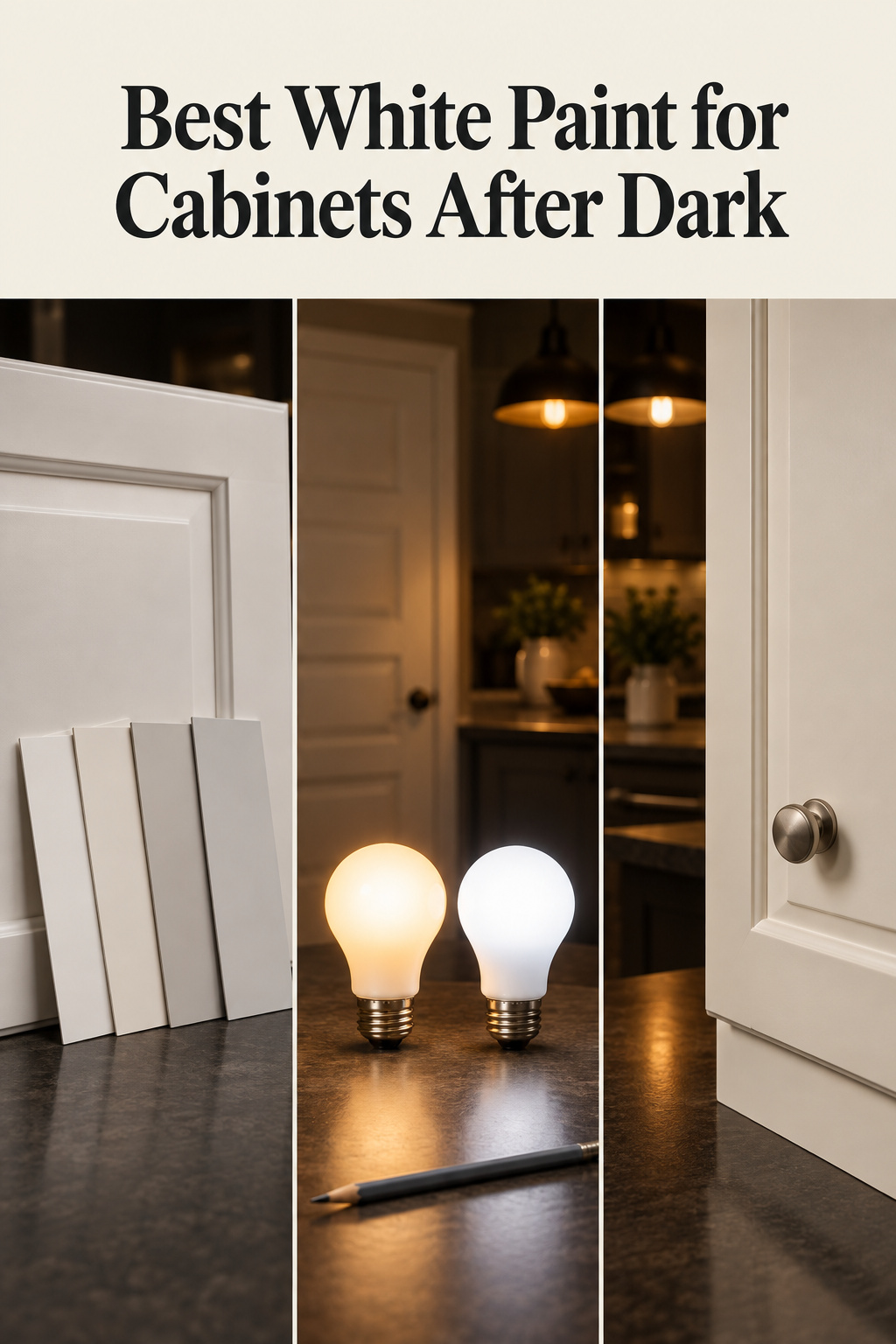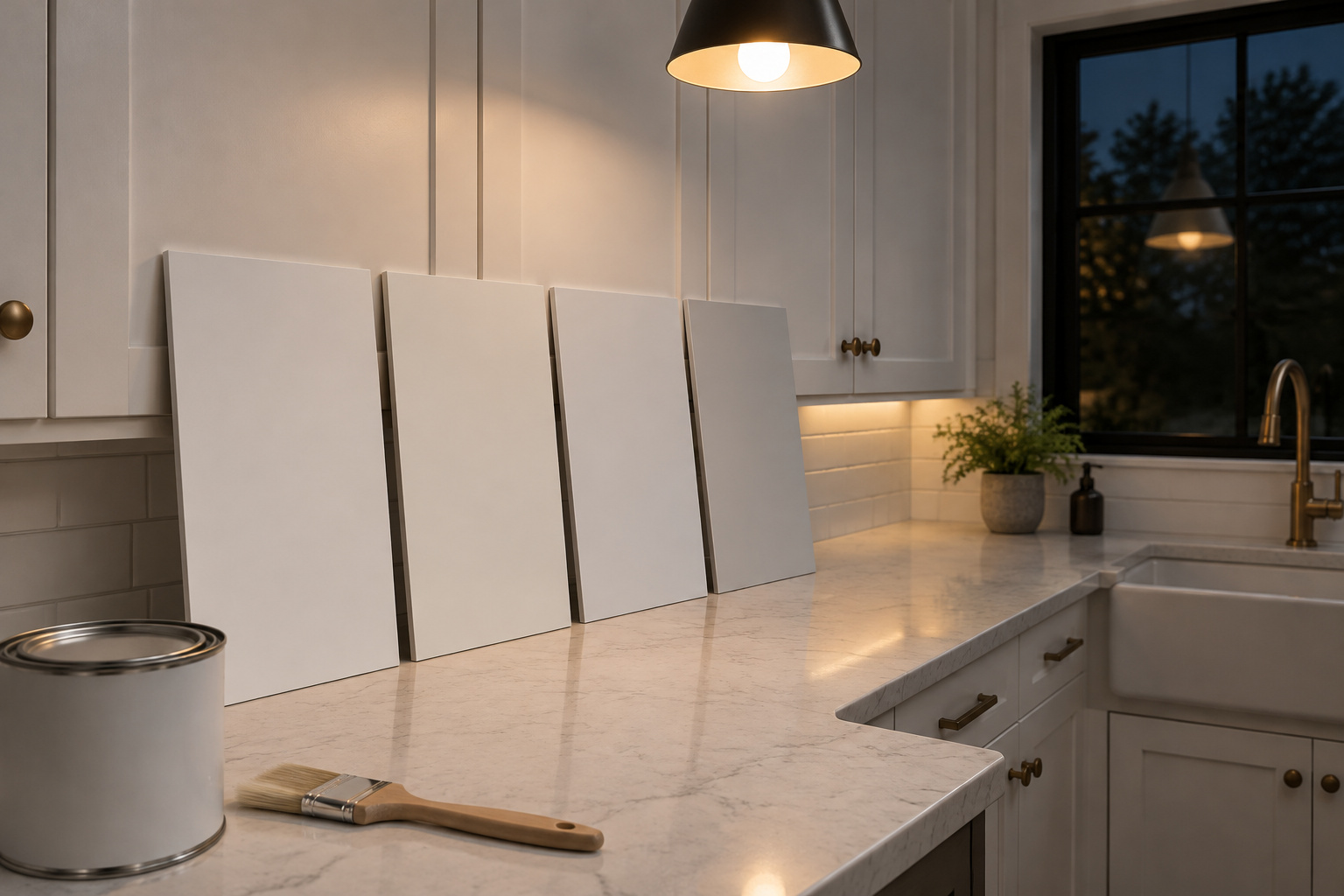
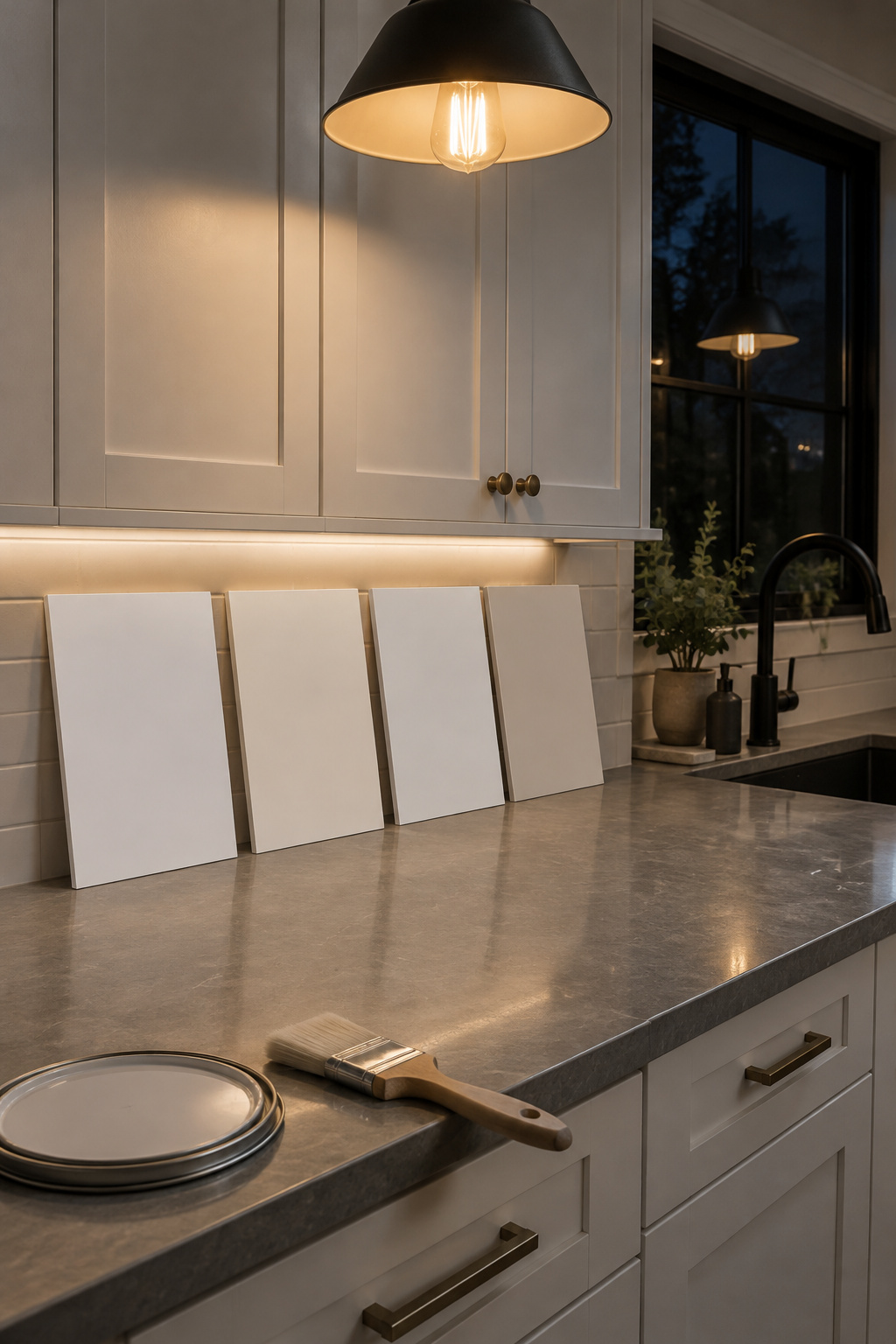
It is six o’clock in January. The window over the sink has gone black and hands you back your own reflection. Onions are softening in the pan, the range hood hums, and the only light comes from the pendant over the island and the strip under the wall cabinets. The cabinet white you picked from a chip at noon is now a different color. In one kitchen it has gone cream. In the next, painted from the same can, it has gone gray. The best white paint for kitchen cabinets is the one that still looks right at this hour, and you can choose for it on purpose.
TL;DR
- Bulbs move a white more than its chip suggests. Behr notes that 2700K LEDs bring out creamy and yellow undertones, while 5000K daylight bulbs bring out blue and gray.
- Of four makers’ whites, Benjamin Moore Super White (LRV 87.36) is my pick for a kitchen lit by warm 2700K bulbs. Under cool 4000K light, Simply White (LRV 89.52) holds better.
- Use one white for the cabinets, the trim and the ceiling, and make the final call at the hour you cook, under the bulbs you already own.
The white you chose at noon is not the white you cook under at six
When I was a child in Uppsala, my mother ironed at the kitchen table every Thursday, because that was where the light was best. Rooms get used where the light is, whatever the plan says.
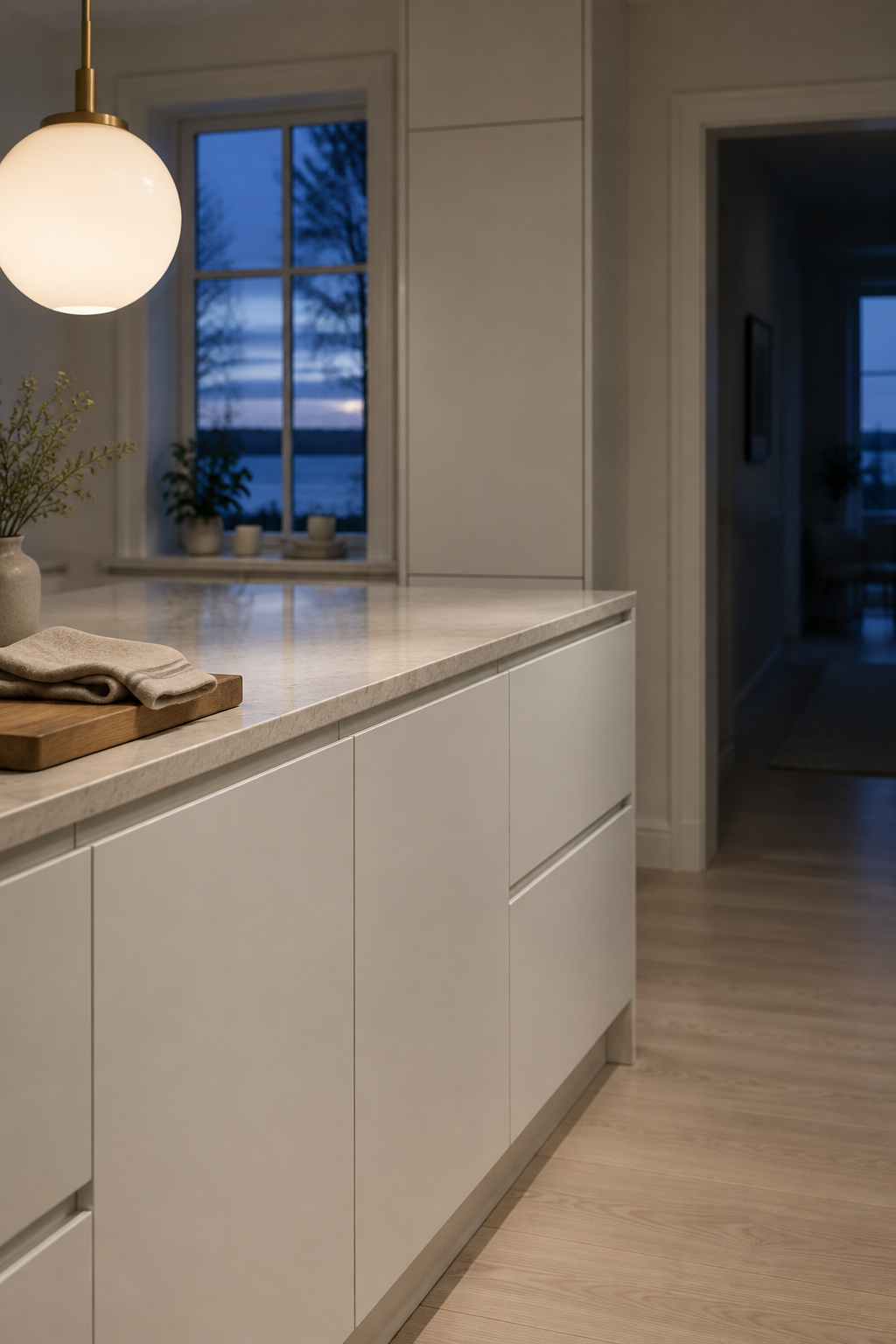
I treat a kitchen as an evening room, used in the hours its paint chip never saw: dinner, the dishes, the counter wiped down under a pendant. I choose a cabinet white for those hours.
The way whites are sold works against you: a wall of near-identical chips, roundups that rank them by undertone, and no way to compare them under the light you will stand in. Benjamin Moore’s UK team describe the habit plainly: people “often fall into the trap of planning our schemes only in natural light conditions and don’t consider how the scheme will work in artificial light.” Sherwin-Williams gives the reason in one line. When you mix color and light, you are mixing two colors together.
The larger decisions about white kitchen cabinets, the route, the door and the sheen, are made before this one. The shade comes last, and the bulb should choose it.
What an LRV number tells you about a white, and what it leaves out
Every roundup quotes an LRV, so start there. Light reflectance value is the share of light a painted surface sends back, on a scale of 0 to 100. A 60 reflects 60 percent of the light that falls on it. In practice a very reflective white sits around 90, and house paint whites top out near 94.
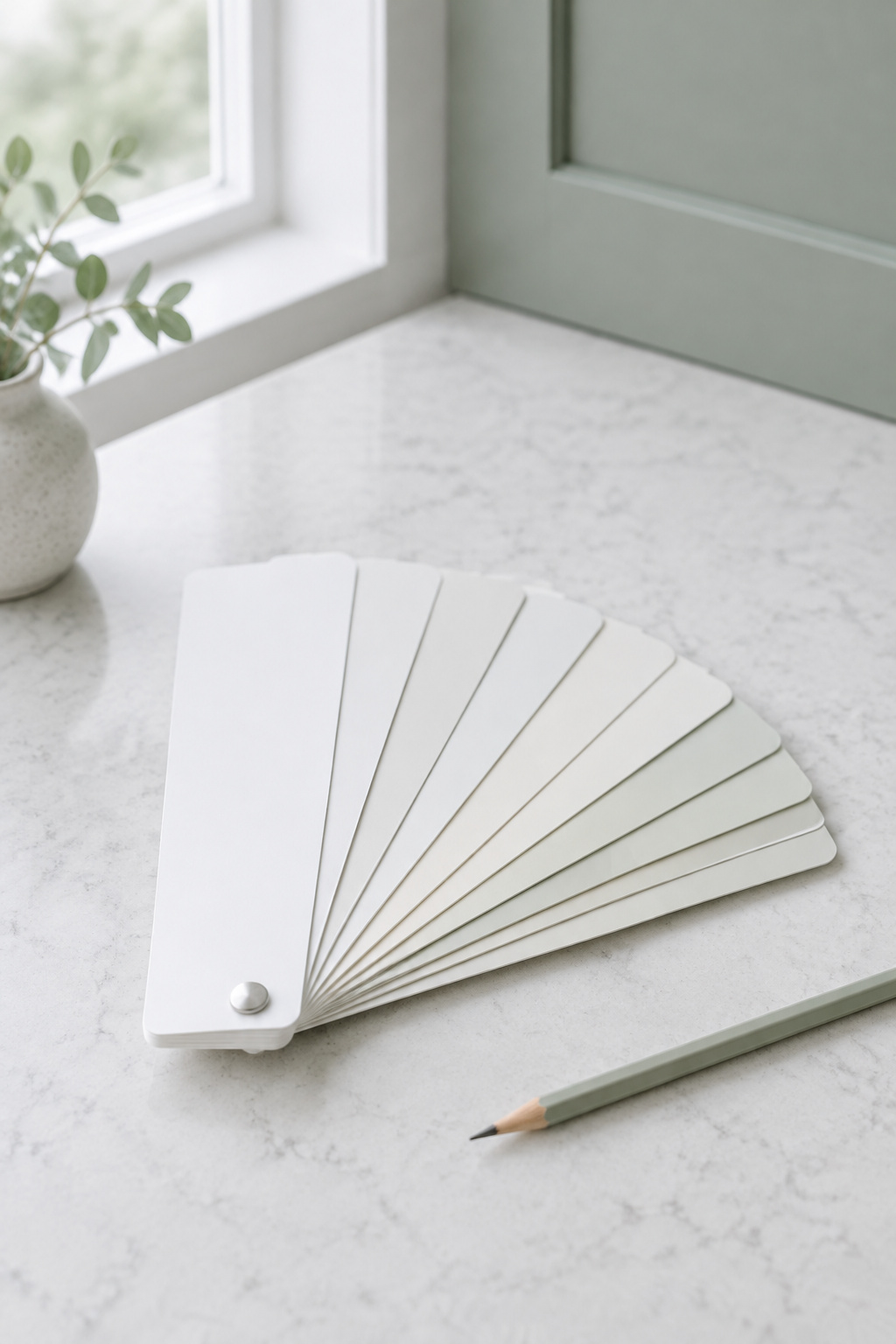
The color consultant Kylie Mawdsley sorts paints into bands by LRV: white from 82 to 94, off-white from 73 to 81. She calls the bands approximate, two or three points either way, and says they are not scientific. Treat them as a rule of thumb. Some good whites sit right on the line.
What the number cannot tell you is the color you will see. It is measured with a spectrophotometer from the maker’s color standard, and it never changes, though the room does. A high-LRV white still needs light to reflect, and a 2700K bulb gives it very different light from the afternoon sun. Use LRV to shortlist for brightness, then put the shortlist down until you have looked at your bulbs.
Bulb color temperature and placement: what 2700K, 3000K and 4000K do to a cabinet white
Cabinet white under LED lights: what the kelvin number does
Turn over the box your kitchen bulbs came in. I trust its kelvin number more than any undertone in a roundup.
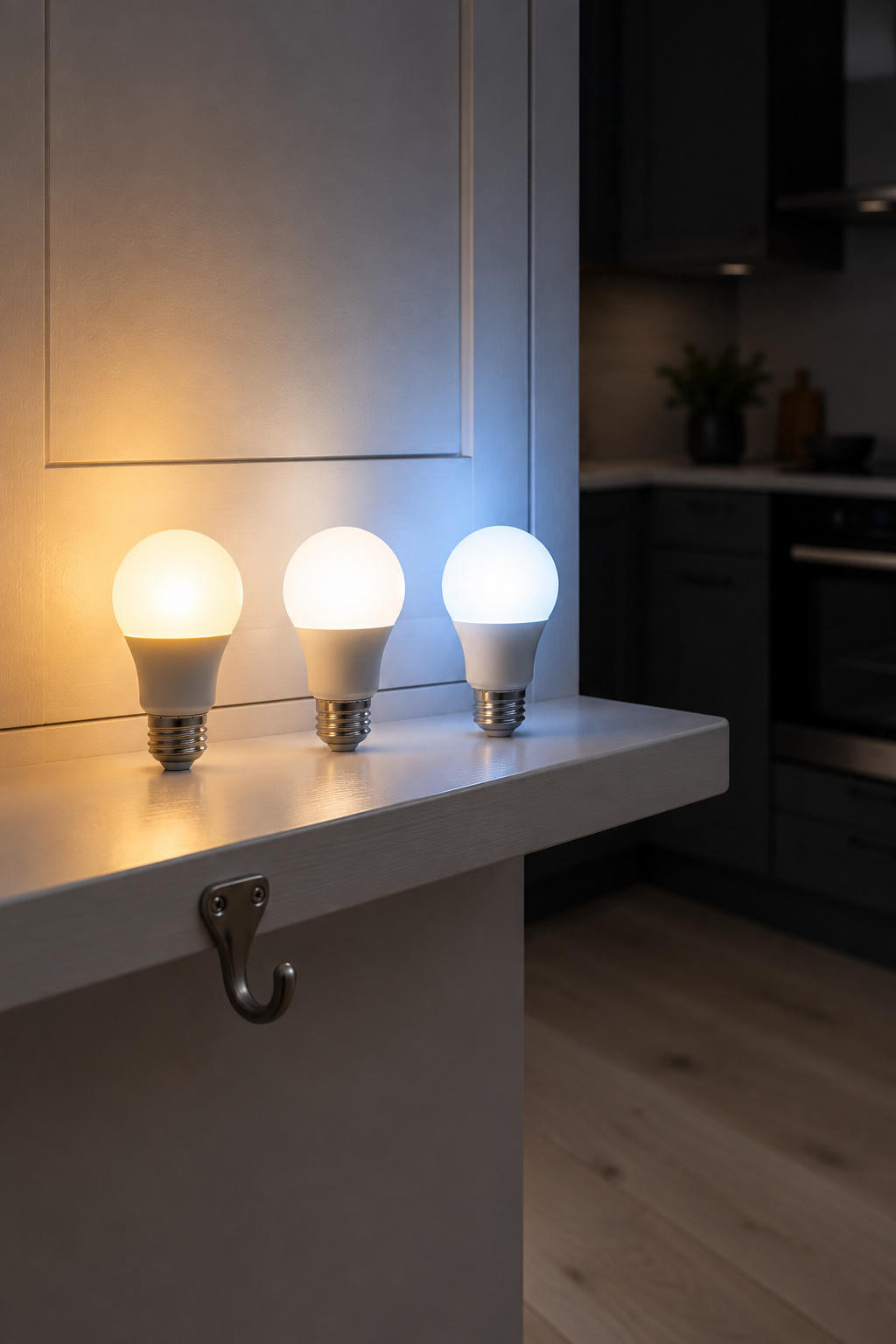
According to Behr, warmer 2700K bulbs “tend to enhance creamy, yellow, or peach undertones,” and cooler 5000K daylight bulbs “emphasize blue and gray undertones.” Homes are usually lit at 3,000K or below, which counts as warm. From 3,000 to 4,000K is neutral, and 4,000K and up is cool, the range typically recommended for offices.
Check the CRI on the same box too. It runs from 0 to 100, and a higher number means less color shift; 80 is acceptable for most rooms, and I would buy 90 or better for a kitchen.
Ceiling, pendant, under-cabinet: where the light lands on the door
Overhead lighting is for cleaning, not for living. A ceiling downlight often puts you between the light and the counter, so the worktop sits in your own shadow.
Under-cabinet strips are mounted behind the front lip of the wall cabinets. They are there to light the counter and the backsplash. The lower doors get only spill and bounce from the worktop, so the strip changes the counter beside your doors far more than the doors themselves.
On the right color for those strips, the lighting trade disagrees. One lighting retailer recommends 4000K for white cabinets. An appliance seller’s buying guide recommends 2,700 to 3,200K and says a light near 3,000K makes white look whiter and crisper. I side with the warmer figure, because under warm pendants a very cool strip can stand out sharply when both are on. Keep the visible light colors in one kitchen close.
- 2700K, warm: pushes a white toward cream; the usual light in a home.
- 3000K to 4000K, neutral: moves a white least.
- 4000K and up, cool: pulls a white toward gray and blue; office light, and the cool end of the strips.
Best white paint for kitchen cabinets: four whites and a verdict under each kind of kitchen light
No paint maker publishes tests of its named whites under different bulbs. These verdicts are mine, read from each maker’s LRV and description and the direction the bulbs push.
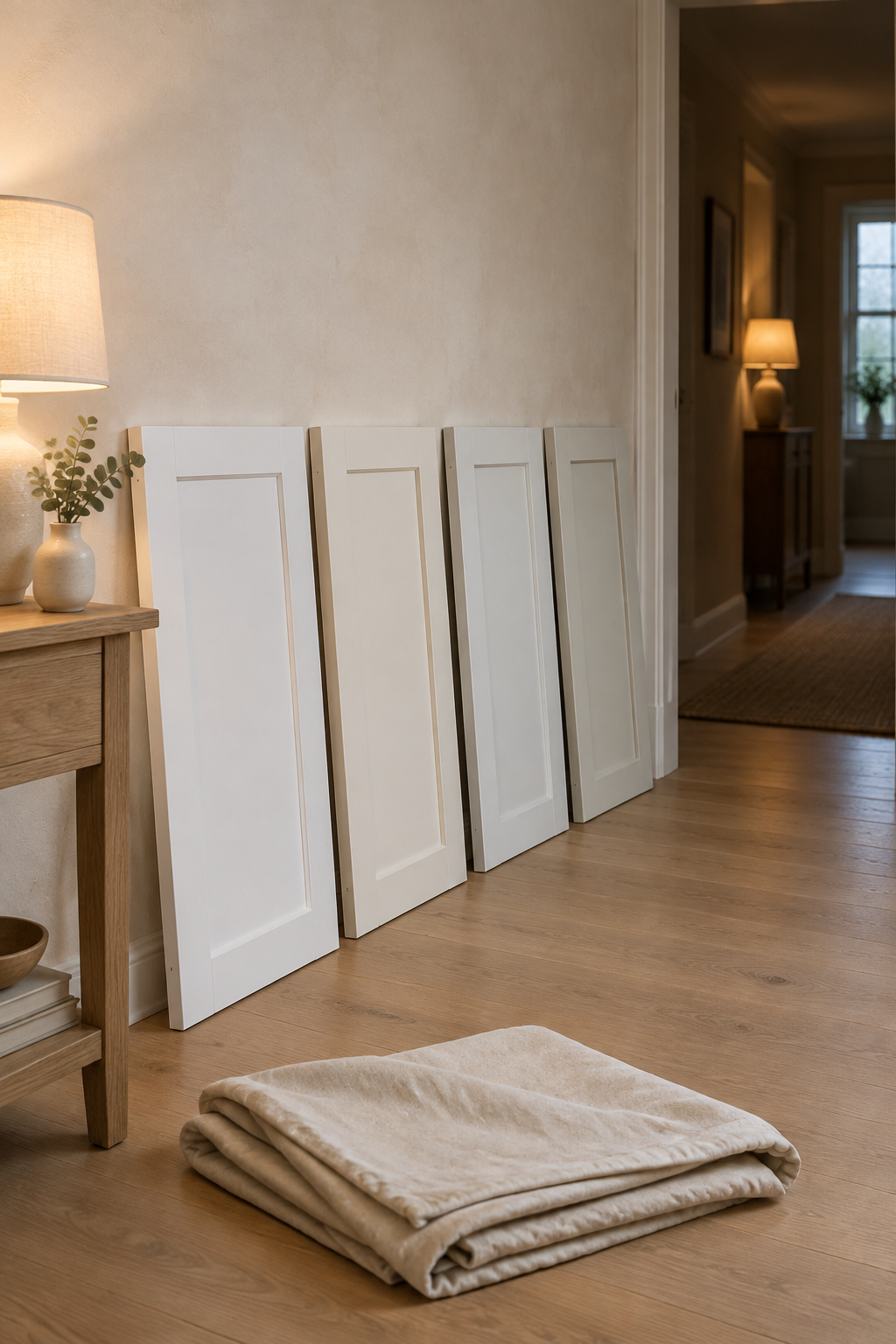
| White | Maker | LRV | Maker’s own words | Under warm 2700K bulbs | Under cool 4000K+ light |
|---|---|---|---|---|---|
| Simply White OC-117 | Benjamin Moore | 89.52 | “The slightest hint of warmth” | Drifts creamy | Holds clean and warm |
| Super White OC-152 | Benjamin Moore | 87.36 | “A radiant, slightly cool shade of white” | Reads clean white | Turns cold and gray |
| Pure White SW 7005 | Sherwin-Williams | about 84 | Described differently on the maker’s own pages | Sits between the two | Sits between the two |
| Swiss Coffee OC-45 | Benjamin Moore | 81.91 | “Just the right amount of warmth” | Goes clearly cream | Keeps its warmth |
For the usual kitchen, lit at night by 2700K bulbs, I would paint Super White. On the chip it looks slightly cool, and the bulb supplies the warmth, so after dark it reads as a plain, clean white instead of a cream. Under cool 4000K strips, or in a kitchen that spends its evenings under cool overhead light, the same white goes cold, and Simply White, with its hint of warmth, is the better paint. A white with less yellow is the safe choice only where the light is warm.
Pure White is the middle of the four. Sherwin-Williams’ own pages disagree on whether it leans yellow or cool, so I would buy it only after seeing it under your bulbs. Swiss Coffee, at 81.91, sits on the line between white and off-white, and Benjamin Moore sells it among its off-whites.
Off-white and cream kitchen cabinets: when they beat white, and when they only turn yellow
Cream beats white in a kitchen where the light runs cool. Cool light makes colors with gray, blue or lavender undertones look duller, and Benjamin Moore counts most brilliant whites in that group. Its advice is a clean white with a hint of yellow. If your evenings happen under 4000K strips or a cool ceiling light, an off-white such as Swiss Coffee gives the doors back the warmth a bright white loses.
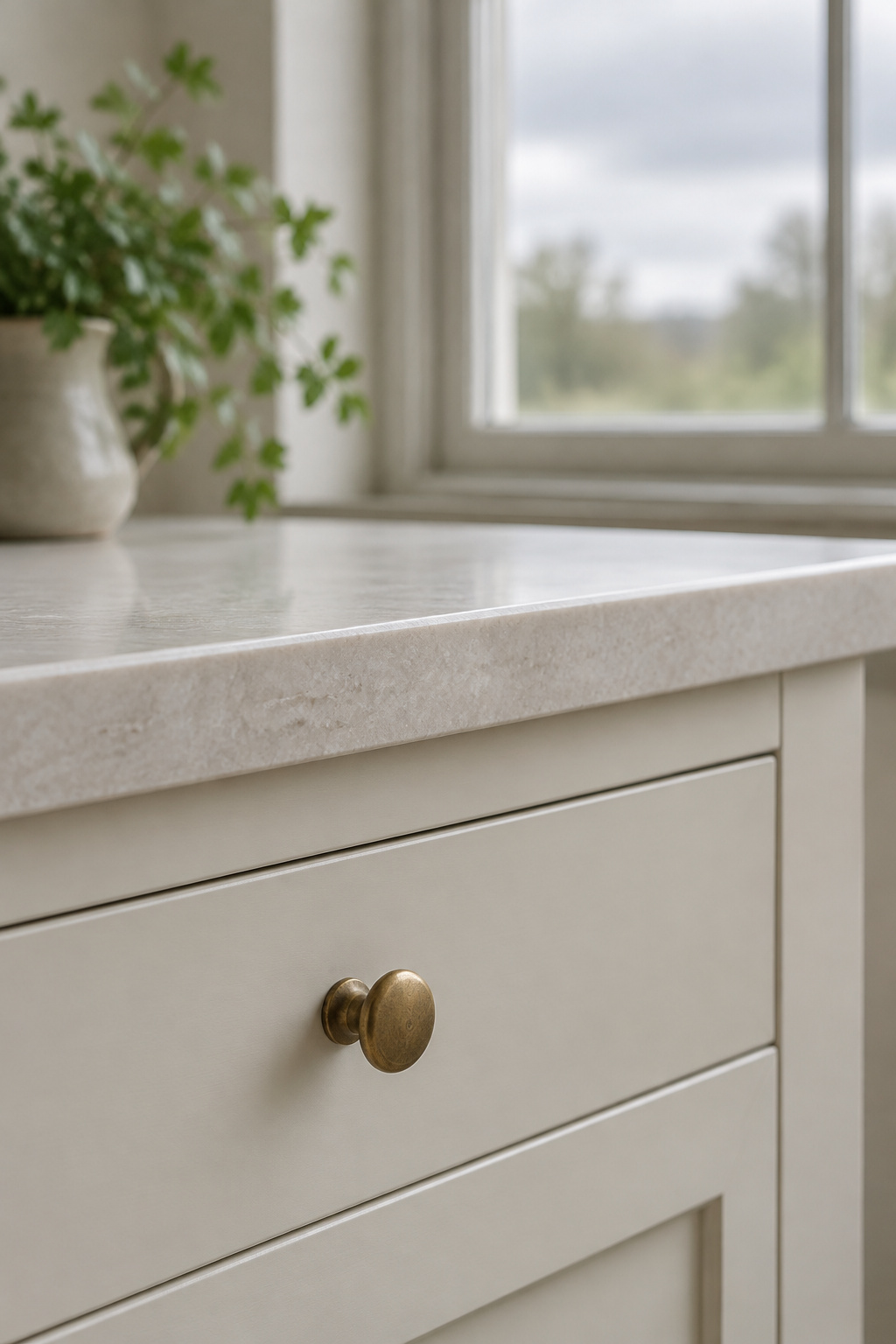
Under warm bulbs the logic turns against cream, because warm light adds to warm paint. A 2700K bulb already brings out yellow undertones, and incandescent light intensifies yellows. Put a yellow-leaning cream under that light and the doors can tip toward yellow after dark, which may be what you want, but it is no longer white.
People choosing cream also ask whether a creamy white will look yellow later, years from now rather than tonight, which is a separate question with its own causes. Cottage cabinet colors, the creams, sage and blue, are covered in the cottage kitchen cabinet colors guide.
One white for cabinets, trim and ceiling: how many whites a kitchen can hold
My rule is one white for the cabinets, the trim and the ceiling. Three near-matches under the same bulbs look like a mistake: the trim a little cooler than the doors, the ceiling a little warmer, since a white takes color from whatever sits next to it. The makers already sell single whites for all three jobs; Sherwin-Williams suggests Pure White for trim.
Enough is a good word, and in a white kitchen one white is enough. I keep a short list taped inside a cupboard door of everything in the house I would buy again, and a white that holds up at night is the kind of decision that belongs on it.
The walls are a different color and a different decision. Once the doors are settled, choosing a wall color around white cabinets comes next.
Tonight, before you buy a single sample, read the box of the bulbs you cook under. The Lighting Facts label on an LED package tells you what color of light it gives. If it says 2700K, your kitchen is a Super White kitchen. If it says 4000K or more, start with Simply White. At 3000K, the start of the neutral range, put Pure White beside those two. Then stand at your own stove at the hour you cook, and decide on one.
FAQ
Can a paint store color-match a cabinet white from another brand?
Yes, closely but not exactly. A spectrophotometer reading gives the store its starting formula, and Dunn-Edwards says an exact match is impossible. Bring a physical sample, such as a cabinet door, because a phone photo cannot carry the color data. Tell the store your sheen as well, since the same color can look lighter at a different sheen.
Do white cabinets look different in a north-facing kitchen?
Yes. North light is muted and cool, with a blue-gray cast, so whites with gray or blue in them look duller and can feel stark. Benjamin Moore recommends a clean white with a hint of yellow for those rooms. After dark the window stops mattering, and the bulbs decide again.
Do I need to repaint if I change my kitchen bulbs later?
Usually not. A paint’s LRV never changes; only the light on it does. The shift can still be visible, because Behr says moving between 2700K and 5000K bulbs noticeably changes how whites look. If new bulbs make your doors look wrong, the light is the likelier culprit, so settle the bulbs before you reach for a brush.