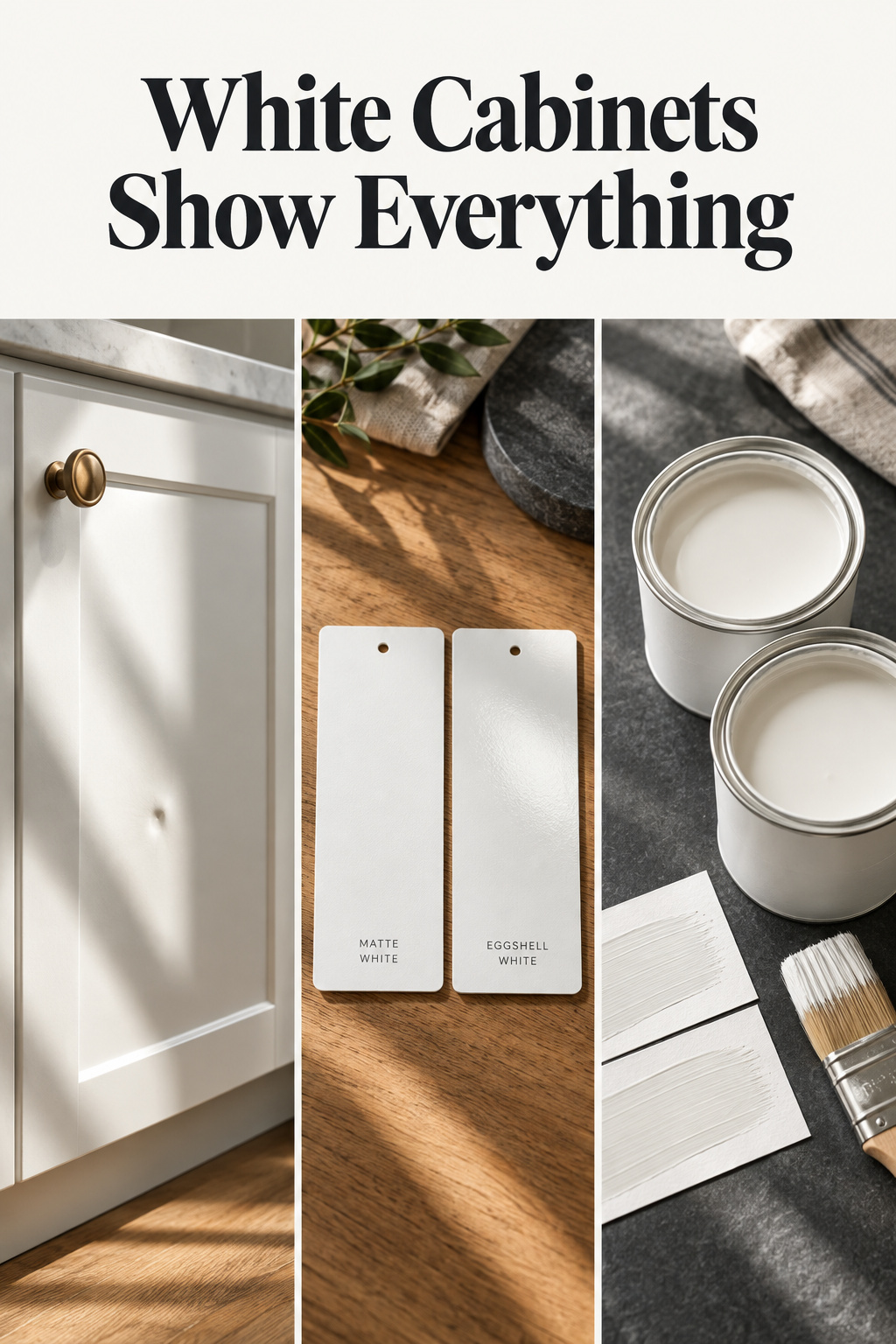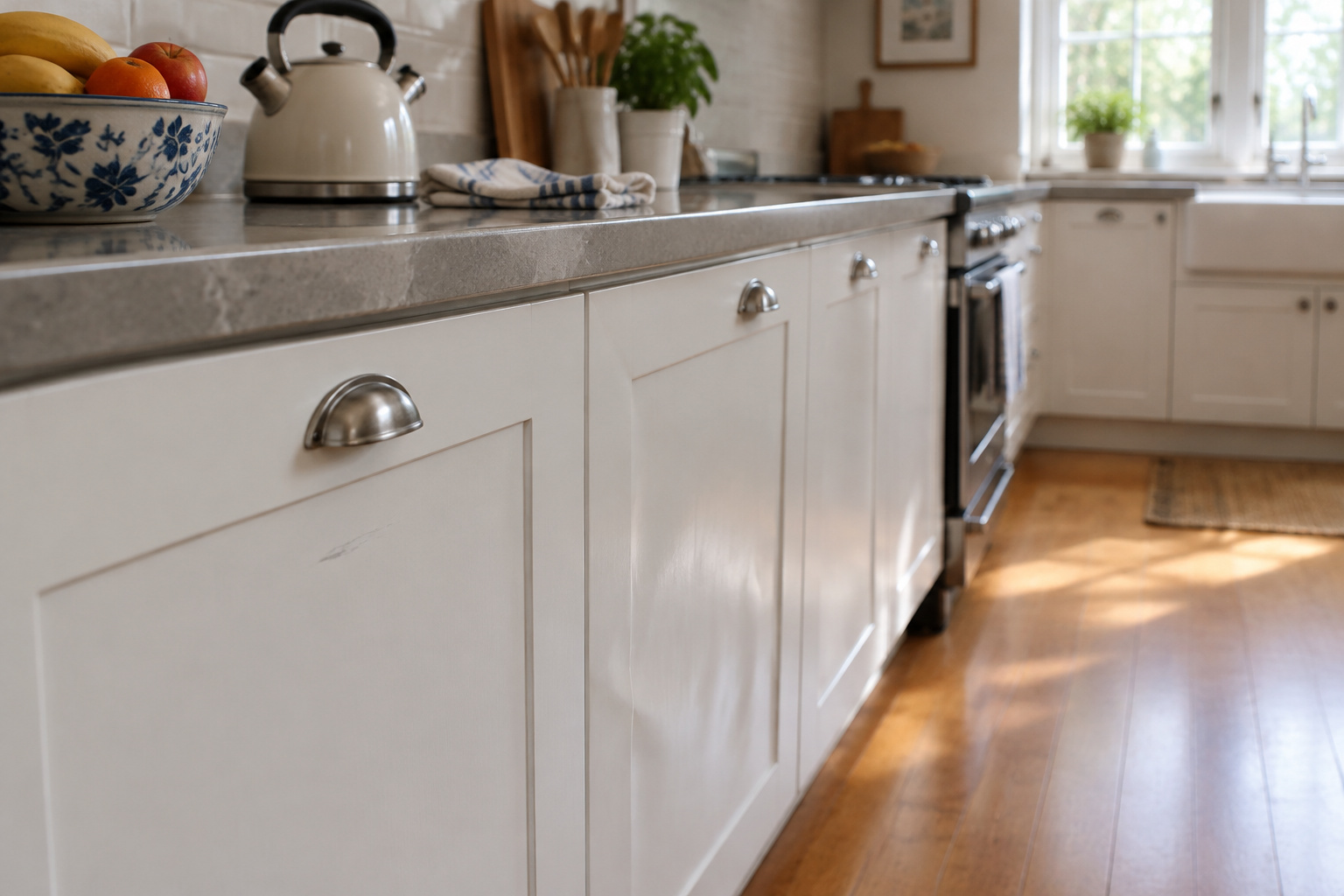

White kitchen cabinets show everything. Take a kitchen with a window at the end of the counter, painted white one spring. The afternoon sun runs along the doors, and by the next spring you can see every brush stroke, the dent where the stockpot hit, and a gray film on the doors beside the range. The white did nothing wrong. The kitchen asked it to put up with sun from the side and a stove at arm’s length, and nobody planned for either.
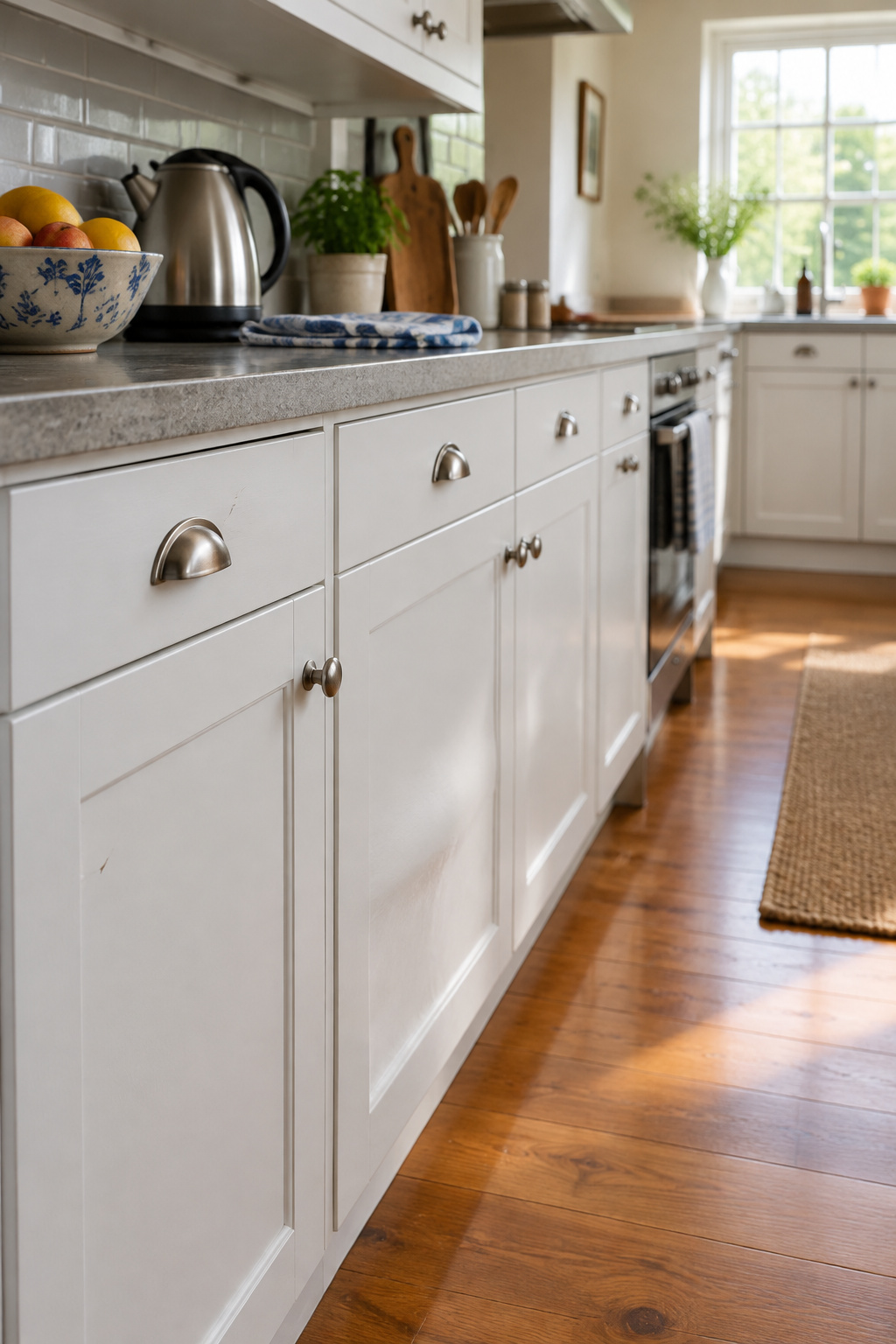
My verdict: white suits most kitchens, as long as you plan for what it shows. The trouble starts with the idea that white is the safe, forgiving choice, because that idea sends people straight to a fan of paint chips. The shade is the decision that can wait. The ones that decide how a white kitchen looks a year in are the route you take with the cabinets you have, the door, and the sheen, all chosen for where the light rakes and where the hands land.
Who White Kitchen Cabinets Suit, and Who They Punish
White doesn’t cause dirt. It reports it. Grease, dust and hand oil look darker against a light surface, and a greasy fingerprint changes the way light bounces off the paint. Painters and cabinet makers name the same short list for where the film shows first: around handles and knobs, on the trash pull-out, near the stove. Every kitchen gets that film, whatever the finish; white just shows it.
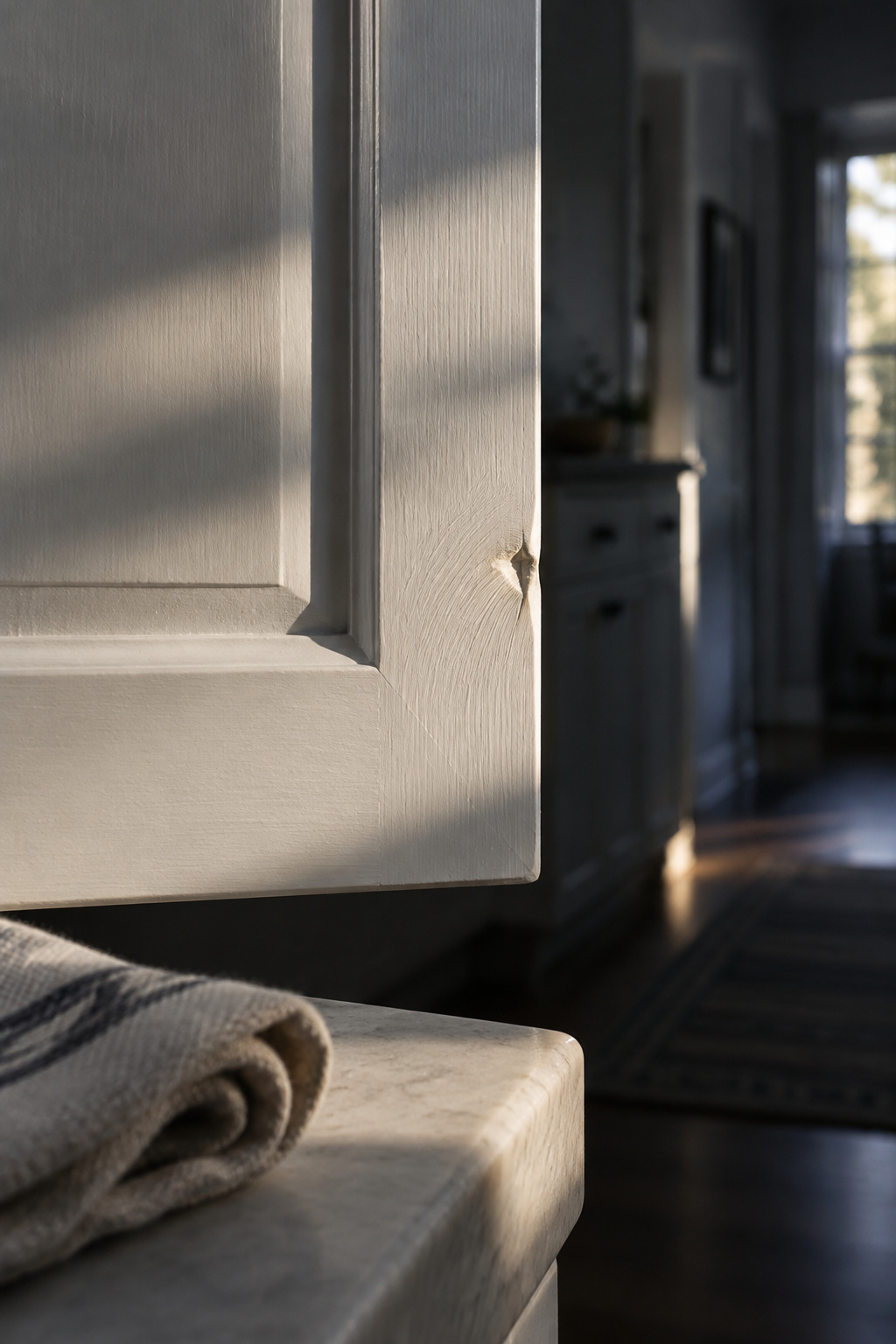
Light is the other half. The Master Painters Institute calls a room where the light makes surface defects stand out critical lighting. In that light, it says, a high-gloss coating “will accentuate every imperfection and make surface defects seem worse than they are.” A white door under a side window is about as critical as kitchen lighting gets.
White suits a kitchen where:
- The cabinet boxes are sound, so the white is going on something worth keeping.
- The light is decent, or at least you know where it rakes and can choose a sheen for it.
- Somebody will wipe the low fronts and the doors by the range every week without resenting it.
White suits a kitchen less where:
- Someone cooks hard every day, so the doors beside and above the range carry a steady grease load.
- There are children in the house, and the high-touch spots need wiping more often than once a week.
- The island takes all the traffic. One kitchen firm says fingerprints and edge wear on an island “usually tell the story first.”
- The boxes are failing and the plan is to hide it with paint. White won’t hide it.
None of those rules white out. They just mean choosing the sheen and the door for that kitchen. And be honest about upkeep. A cabinet retailer points out that stained wood hides wear because the grain works like camouflage, and that a paint touch-up is much more noticeable without a perfect color match.
Keep the Boxes, Change the Faces: The Route and What White Exposes on Each
Tired oak doors on solid boxes make people want to rip it all out. Houzz’s 2026 kitchen study found that 68% of renovating homeowners replaced all their cabinets. I’d start somewhere cheaper. Keep what is sound, change the faces that aren’t, and paint what’s left. Each route leaves something different for white to show, and that’s what I’d weigh before anything else.
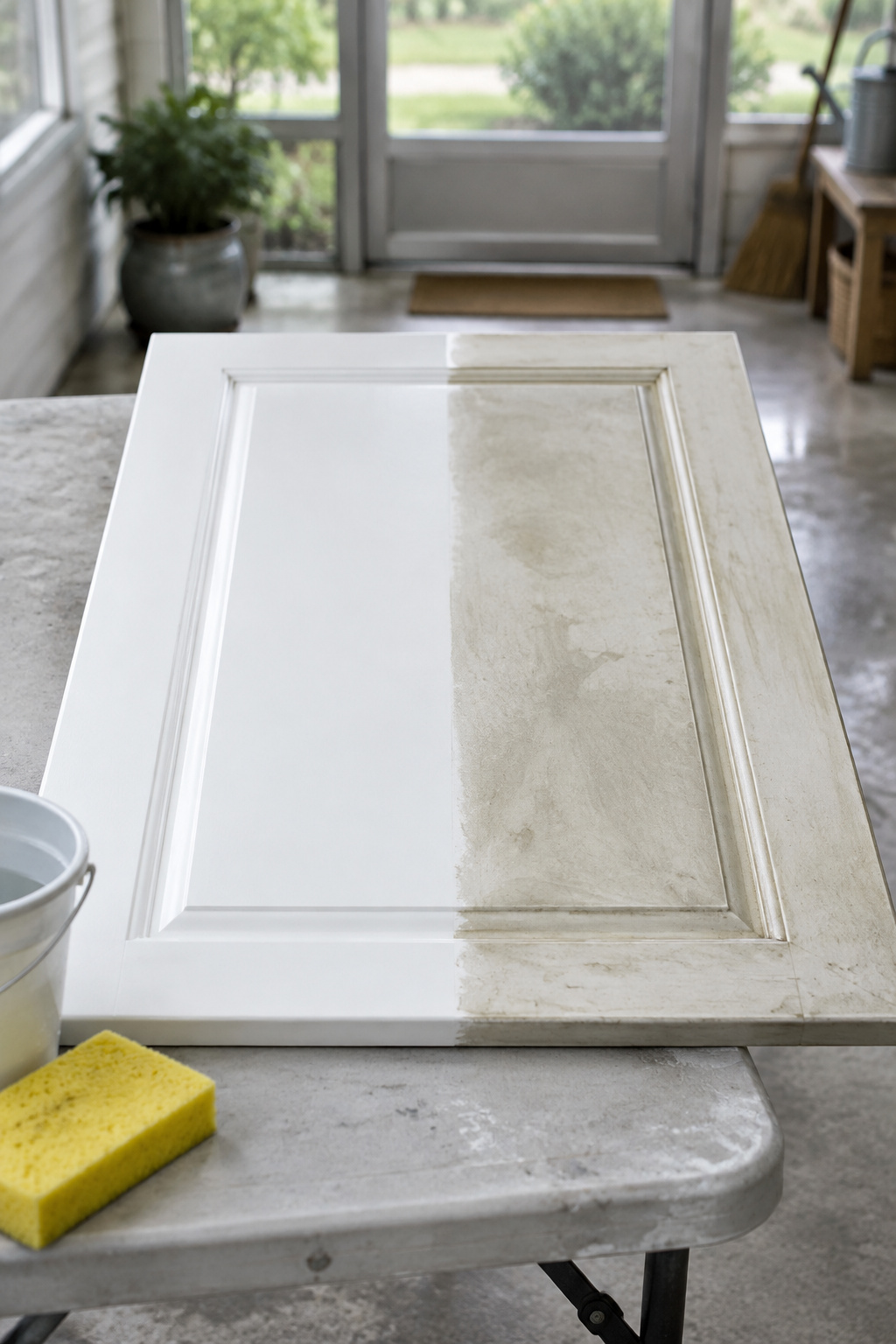
This is my builder’s read on where white catches you out on each of the four routes.
| Route | What changes | What white still shows |
|---|---|---|
| Paint | Only the finish | Every dent, old repair and missed spot of sanding on the existing doors, plus brush marks wherever light rakes |
| New doors | Door and drawer fronts | Crisp new faces next to the old face frames and box edges, which keep their old finish unless you paint them |
| Reface | New veneer on the frames, plus new doors | Any box fault underneath that telegraphs through, like a bowed panel or a swollen edge |
| Replace | Everything | Nothing old; only the quality of the install and the factory finish |
Which route your boxes allow, and what each one costs, come before any shopping. Start with whether to reface or replace kitchen cabinets before you price anything.
If you paint, the work is mostly preparation, and white is where preparation shows. Dunn-Edwards says preparation matters most where the finish is glossy, because gloss tends to highlight defects and imperfections on a surface. Expect the project to take one more weekend than you planned.
Oak brings two problems of its own, one that bleeds through the paint and one that stays in the grain. If that’s your kitchen, read up on painting oak cabinets white before you open a can.
Door Style: Where Light Rakes Across a White Panel
From the window end of the kitchen, look back along the cabinet doors, nearly side-on. That’s the view that decides the door. Head-on, in a showroom, every white door looks clean. From the window you see what the profile does with dust and what the surface does with light.
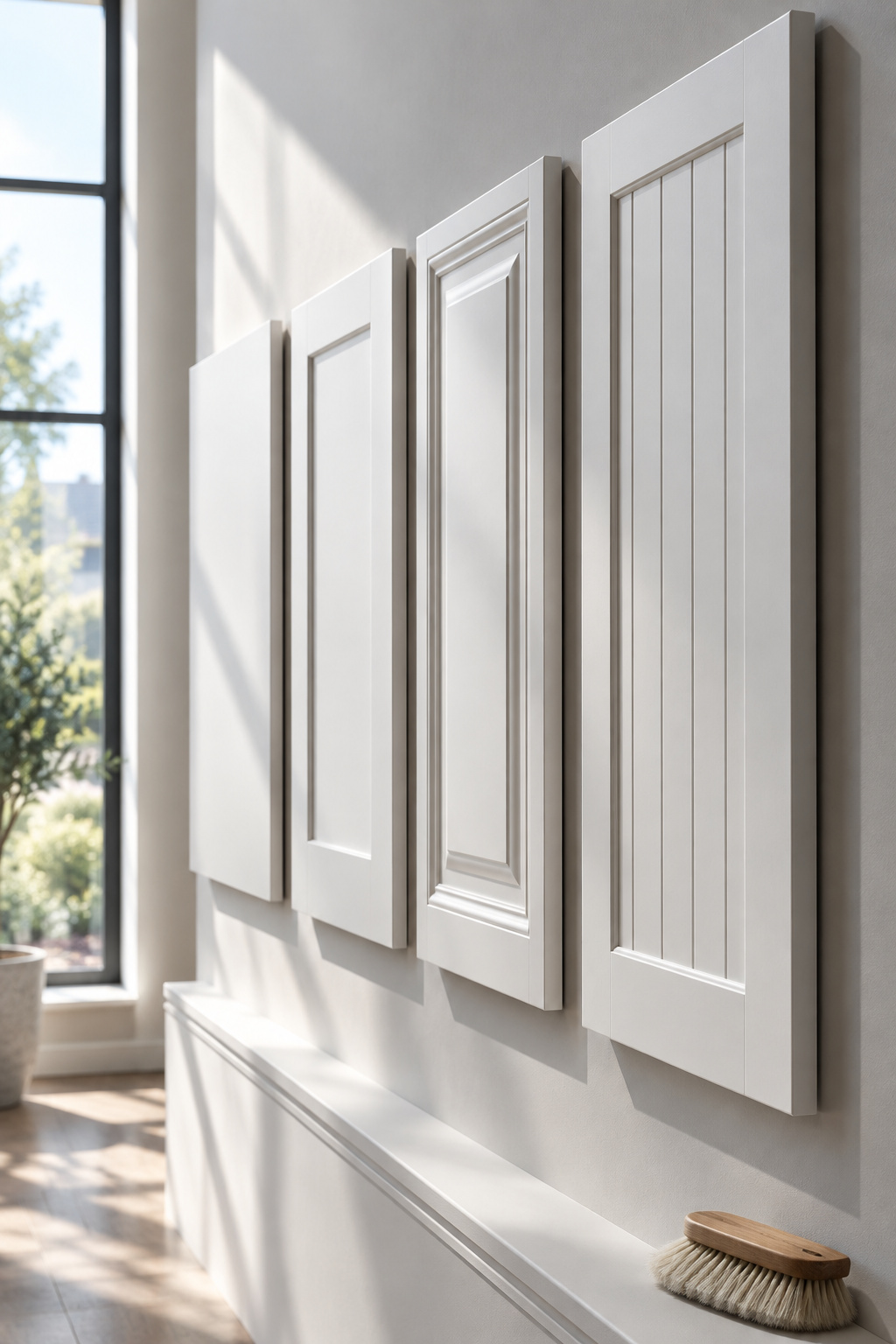
- Slab. A flat door has nowhere for dust to sit, and one damp cloth usually does it. But a big flat panel shows every wave and dent when light skims across it, because that’s a surface effect and a slab is all surface.
- Shaker. Where the center panel meets the frame there’s a small square ledge, and dust settles on it, worst on the bottom rail. Leave it and the dust can harden into the corner. Under white, the joint between frame pieces can show too.
- Raised panel. The valley around the panel collects dust in several places, and the bottom edge, where panel meets rail, is a double trap. Side lighting makes it more visible.
- Beadboard. Every groove holds dust, and spills run down into them and dry hard. I’d keep it away from a range that does a lot of frying, or a steamy kitchen. Beadboard panels on an island are covered in the farmhouse kitchen island guide.
Run a finger along the bottom rail of a showroom door and you’ll see what you’d be wiping.
For most people the shortlist ends up as slab or Shaker, and if it’s Shaker, the next choice is how the door sits: inset, flush inside the frame, or overlay, sitting on top of it. That choice sets the line around every door, and on white the line shows. Before you order, read up on how to choose a white Shaker door, from the way it sits to the corner where panel meets frame.
Sheen as Exposure: Higher Shows the Flaws, Lower Holds the Grime
Paint one white door in two sheens, satin on the left half and semi-gloss on the right, and hang it beside a window. In the morning, with the sun skimming across it, the semi-gloss half shows every brush mark and the slight wave in the panel. The satin half looks smoother than it is. Then cook a few dinners and touch it the way you’d touch it every day. Now the satin half is the one holding a dull film near the pull, and it takes more work to wipe off.
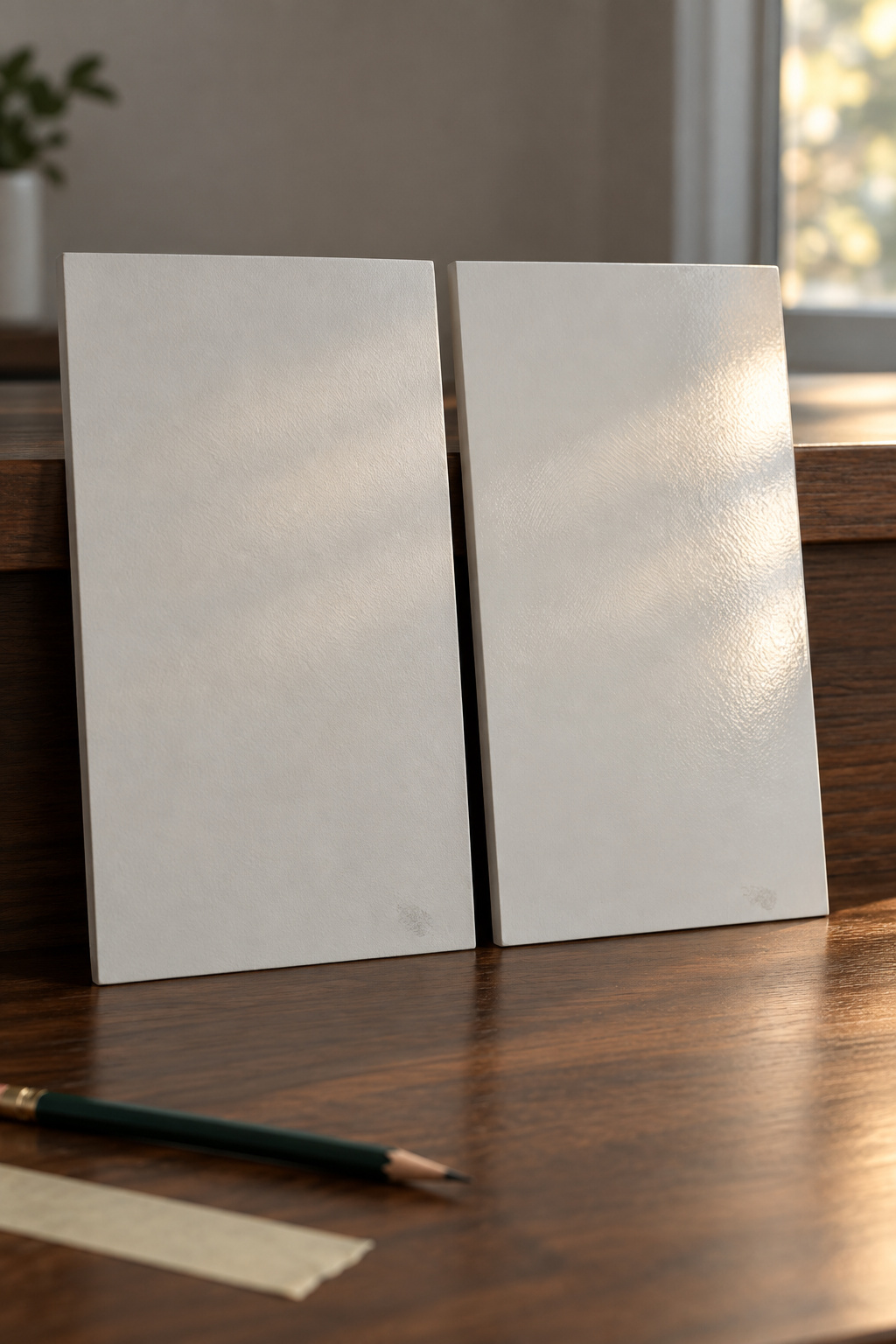
Higher sheen shows the flaws. Lower sheen holds the grime and is harder to wipe. Paint makers agree on both halves. MPI says low-gloss coatings mask surface defects but can show poor abrasion resistance and be harder to clean, and it says the lighting in the room should be judged before the gloss is chosen.
Sheen is measured with a gloss meter at 60 degrees, and MPI sorts paints into levels by that reading.
| Sheen | MPI level | Gloss units at 60° | What white shows | Where I’d use it |
|---|---|---|---|---|
| Satin | Level 4 | 20–35 | Fewest brush marks and dents; holds more grime | Doors under a side window, slab doors, older doors with dings |
| Semi-gloss | Level 5 | 35–70 | Brush marks and waves in raking light; wipes clean easier | Well-prepped doors in flat, frontal light |
| Gloss | Level 6 | 70–85 | Nearly every surface flaw | Only on a sprayed, near-perfect surface |
| High gloss | Level 7 | Over 85 | Every flaw, amplified | Rarely in a family kitchen |
For most white doors, I’d go with satin. A Washington-area kitchen firm calls satin “the sensible middle ground,” with enough shine to clean without announcing every mark, and I agree. Move up to semi-gloss only when the doors are smooth and well prepped and no window rakes across them.
Some cabinet makers do say a lower sheen hides fresh fingerprints better. That’s a different property from holding grime: on white, the film that settles into a flatter finish and resists the cloth is what you’ll be fighting at the lower doors.
Sheen also changes the color. Dunn-Edwards says the same color in a different gloss will appear as a different color, and MPI says coatings tinted alike can look different when their gloss levels or textures differ.
Choosing the White Last: Let Your Light Narrow the Field
Walk from the window end of a white kitchen to the dark corner by the refrigerator and the same paint changes on the way. That is why the shade comes last: the light in your own kitchen narrows the field before any chip does.
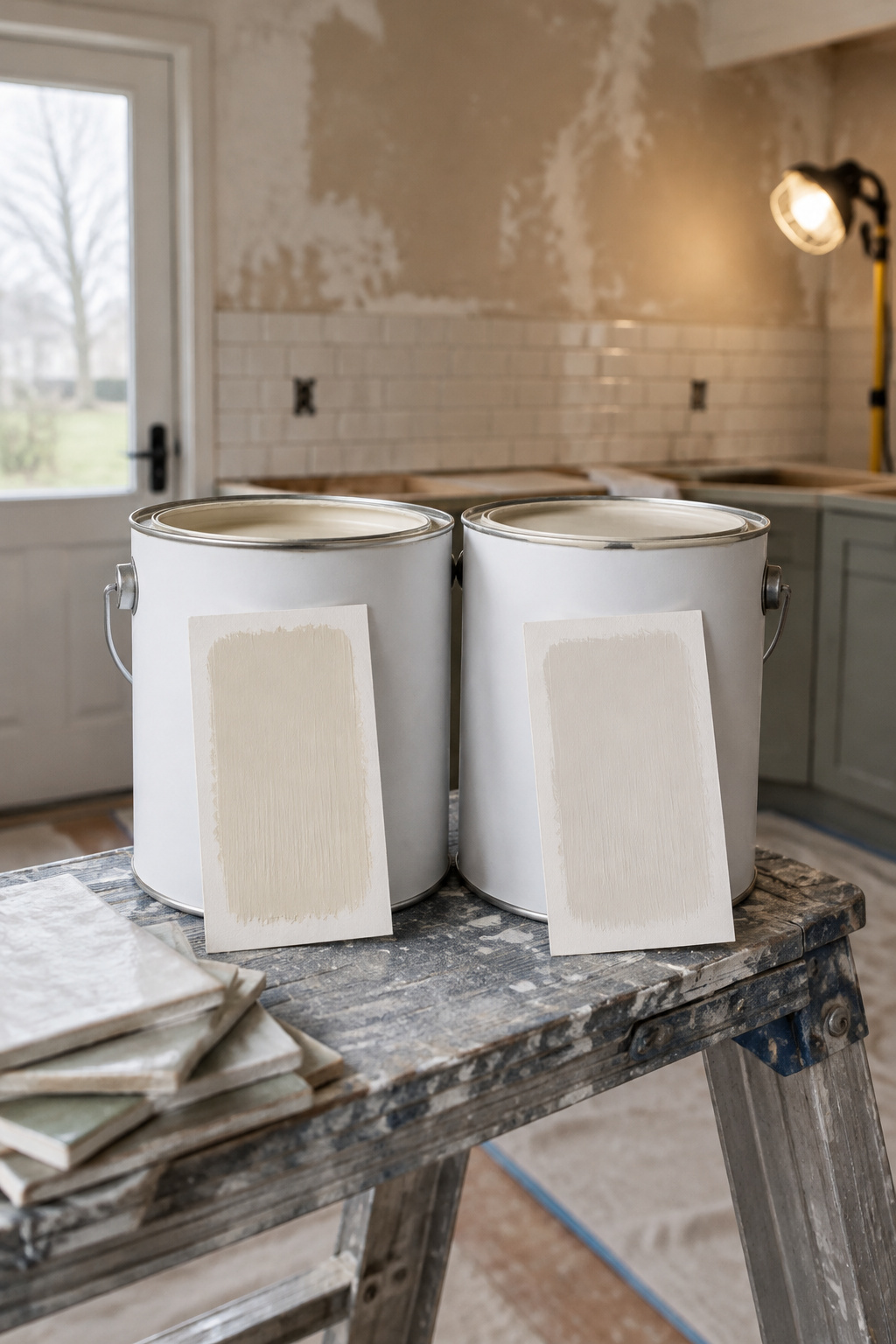
Helen Shaw, a director at Benjamin Moore, says “white paints are especially prone to taking on different tonalities from morning to evening.” The door and the sheen change how a shade reads too, so I won’t pick one for you here. Named whites, their reflectance numbers and what your bulbs do to them are their own subject; start with how to choose the best white paint for kitchen cabinets.
Buy one batch, not two
In my own kitchen, in the 1970s ranch house outside Knoxville, I tiled the backsplash myself and ran short of tile. Getting more from the same batch took three weeks. Since then I buy extra material up front, 10% more than the plan says, every time.
Paint does the same thing as tile. Sherwin-Williams explains that paint, tint and even the tinting machines all work within tolerances, so cans bought at different times may not match exactly. White is no exception, and cabinet doors sit side by side where any difference is easy to compare. A UK paint maker says it plainly: for small areas such as doors, use paint from one container. Painters handle a bigger job by boxing it, pouring every can into one big bucket and mixing before they start, so the whole job is one color.
No maker publishes a figure for how far a white drifts between batches. That’s no reason to relax about it. Buy all the white for the job at once, plus your 10%, and take every touch-up from that same batch, in the same sheen. Sherwin-Williams adds that touch-up paint wicks into a surface at a different rate than the original topcoat and that exact rates are virtually impossible to reproduce, so a touch-up can flash even when it comes from the same can. A satin touch-up on a semi-gloss door may not match even with the same formula, because the sheen alone changes the color.
The Room Around White Cabinets: Walls, Counters, Floors and Hardware Finish
Once the cabinets are decided, everything else in the room gets chosen against them.
Walls and ceiling
The wall color is a smaller decision than it feels, and it’s best made after the white is settled, because the wall gets judged against the doors every time you walk in. Picking it is about the counter, the floor and the room next door. Start with kitchen paint colors with white cabinets.
Counters and floors
Counters are usually fixed before the paint, and the honest version is that white stone shows marks the same way white paint does. Houzz’s 2026 study found white the most common countertop color, at 37% of renovating homeowners, so plenty of white kitchens carry two white surfaces. Consumer Reports’ testing found quartz came through spills, hot pots and knives with top scores and doesn’t need sealing for stain protection, while marble chips and scratches easily and needs sealing now and then. Marble also etches from acids, and the etching shows most in direct sun; a honed finish makes scratches and etching less obvious. If the counter sits under that same window that rakes across your doors, a white marble top will show you its wear too.
Floors, backsplashes and wood counters are covered in the guides to flooring with white cabinets, backsplashes for white cabinets and butcher block with white cabinets.
Pull and knob finish
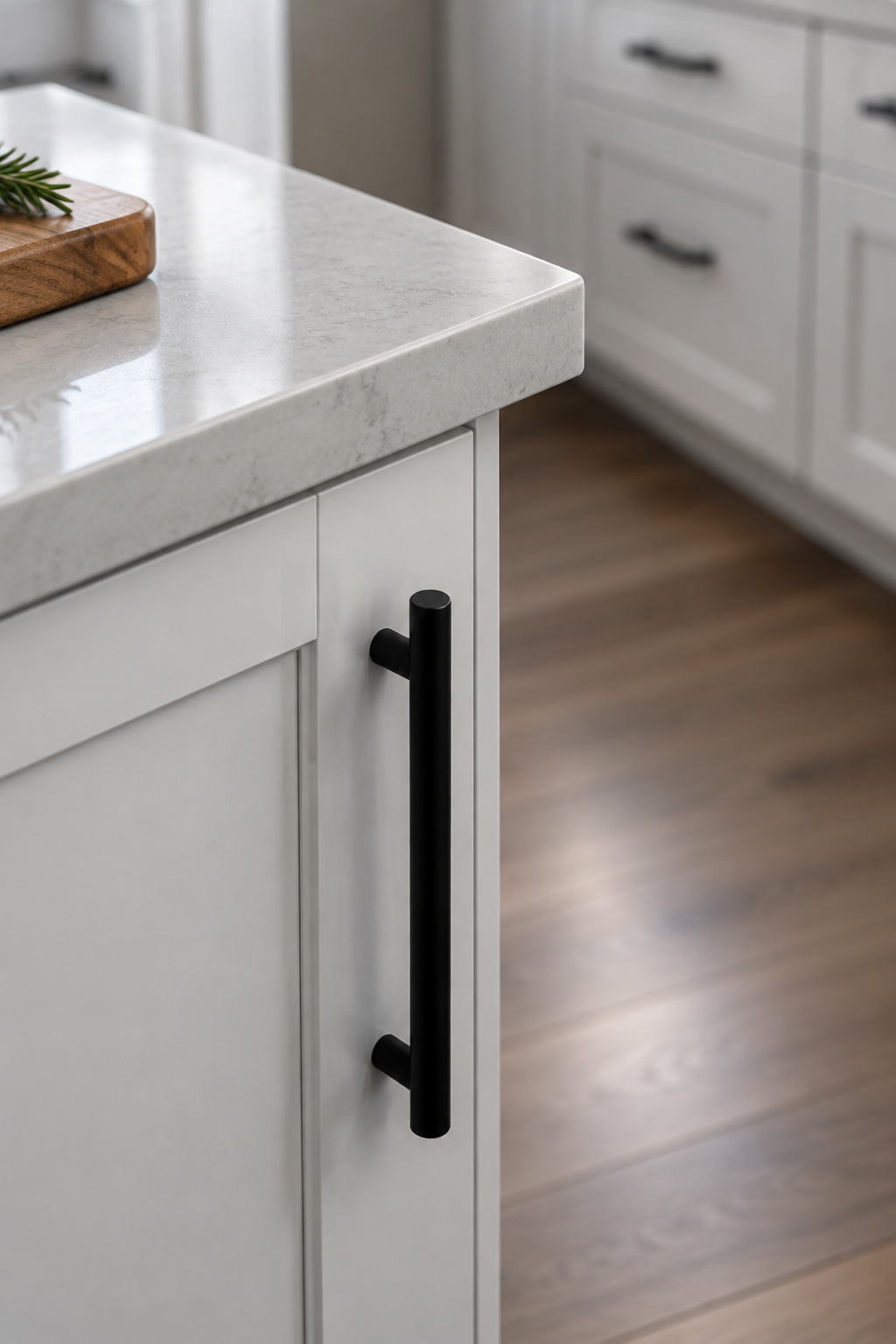
Against white, the pull’s finish draws a small line on every door, so a dark finish reads graphic and a pale one disappears. Either works; pick the one you want to see.
Living With White Cabinets: What Wipes Off and What Turns
Every white kitchen ends up with two different problems that look alike from across the room: one washes off and the other is in the paint. Mixing them up wastes a weekend.
What wipes off
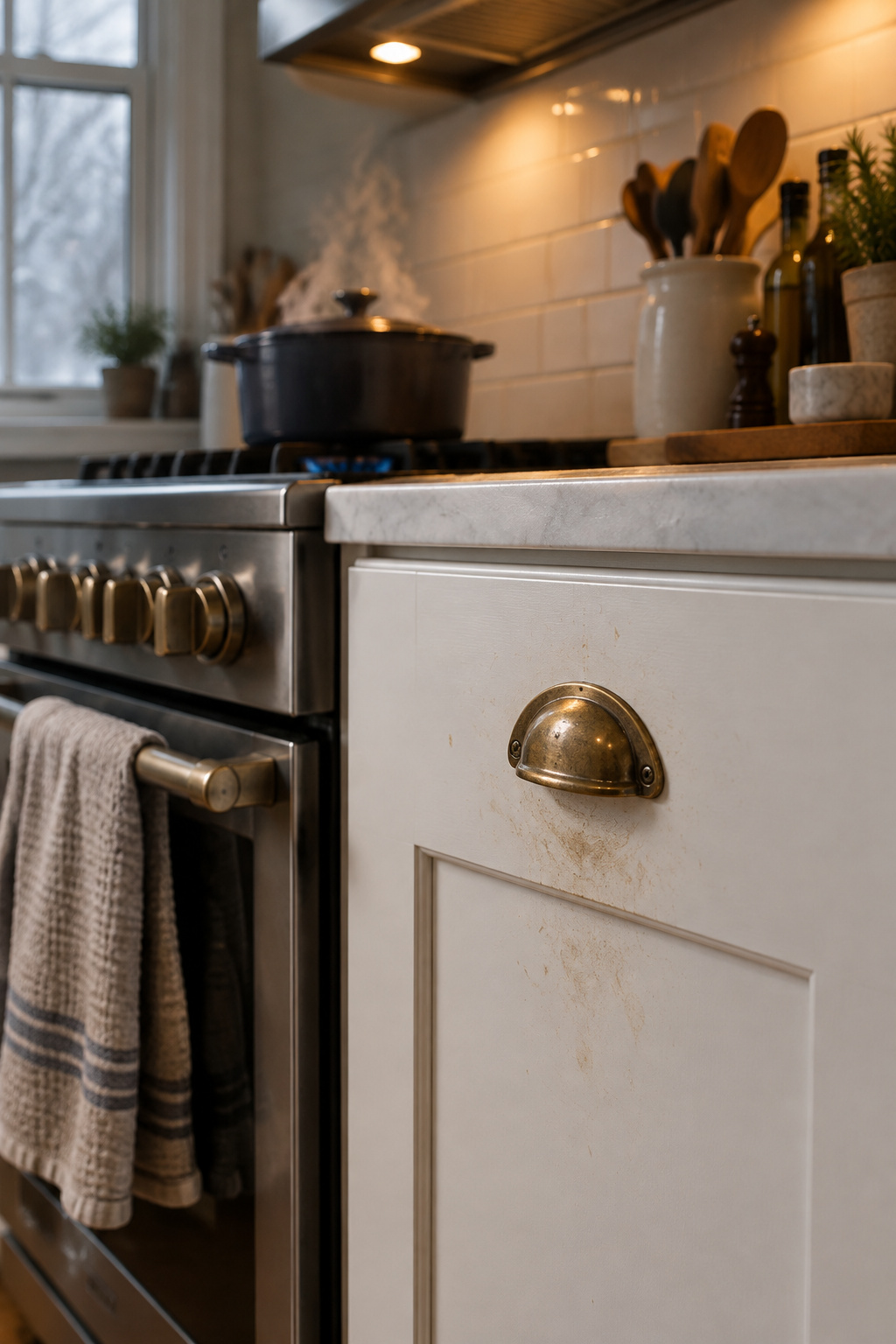
The everyday dirt on white is a film of airborne grease, steam and dust, plus hand oil. The upper cabinets mostly get it from rising steam and the lower ones from hands and splashes. It builds slowly enough that most people only notice it when the light hits a door just right, or when one clean spot makes the rest look gray. That’s normal kitchen soil, not a paint failure, and the routine for it is in keeping white cabinets clean in a busy kitchen.
Degreasing is the boring step people skip on painted white. Paint laid over a grease film doesn’t grip properly, and a good white can look tired early because of it.
What turns yellow
Yellowing is a different problem, and you can’t scrub it out. It shows up mostly in low light, like the inside of a cupboard, and even water-based whites can yellow a little. Thermofoil and the color bounced off a warm wall can both pass for yellow paint too. Before you repaint anything, work out why white cabinets turn yellow in your kitchen.
Are White Kitchen Cabinets Out of Style?
The headline you’ve probably seen is true. In Houzz’s 2026 Kitchen Trends Study, wood took the top spot for cabinet color, chosen by 29% of renovating homeowners, up 6 points. White slipped to 28%, down 5. The survey covered 1,780 Houzz users who had recently remodeled a kitchen or were planning to, fielded in July 2025, so it describes people renovating now rather than every homeowner in the country.
Houzz counts off-white separately, and off-white held steady at 15%. White and off-white together come to 28 + 15 = 43%, against wood’s 29%. In the same study, where people chose different colors for upper and lower cabinets, white was still the most common upper. The NKBA’s 2026 report, a survey of industry professionals, points the same way: wood grain is gaining. Neither says white is finished.
A one-point lead for wood is no reason to avoid white in a kitchen it suits, and no reason to choose white for a kitchen it doesn’t. No study says white cabinets raise or lower what a house sells for, so nobody can honestly promise you either.
White suits most kitchens, and it shows everything, so plan for that. Keep the boxes that are sound. Pick a door whose profile you’re willing to wipe, and a sheen chosen for the window, with satin as the default. Buy all the white in one batch, with 10% extra. What to avoid: a high gloss on dented doors under a side window, paint over a grease film, and a second can bought halfway through the job.
Next time the sun is in the kitchen, open the cabinet door nearest the window and look at its edge and face in daylight. Check how the light crosses it, where the dents are, and how much of the old finish has chipped off the edge. That one door will tell you more about your route, your door and your sheen than any paint chip will.