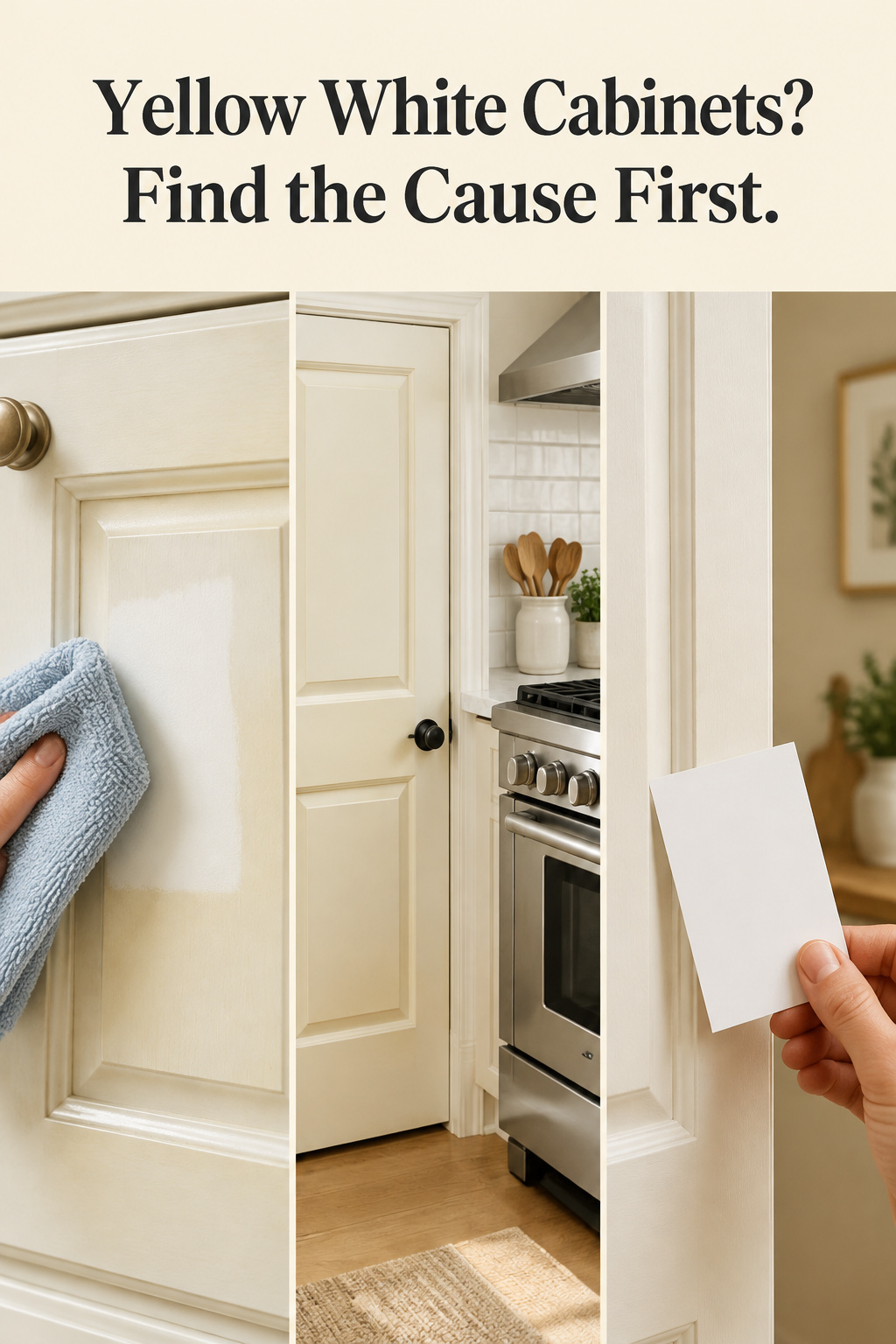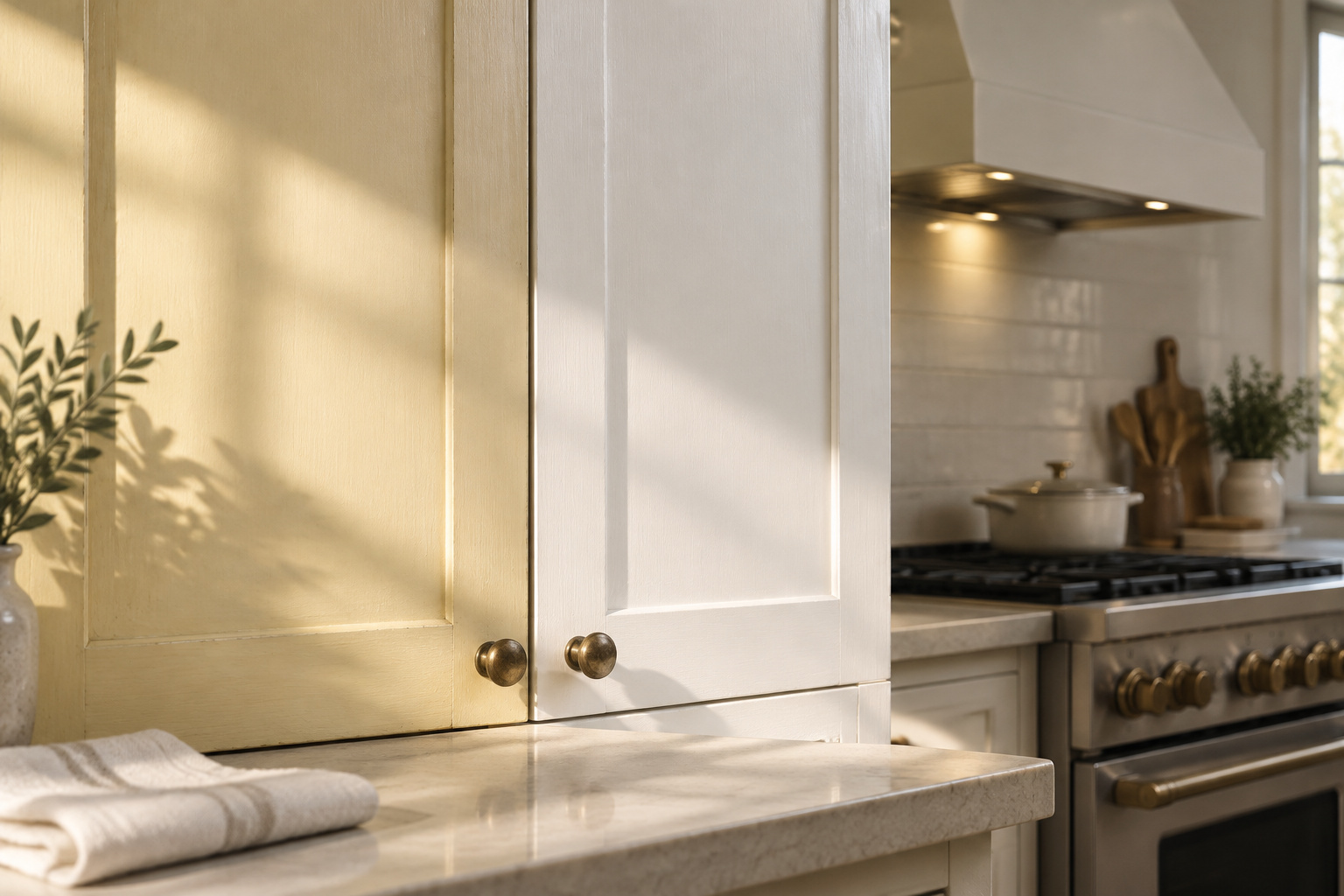
The door to the left of the range is the color of old piano keys. Tilt a lamp low across it and the yellow shows texture: a faint tackiness near the handle, a darker band along the bottom rail, nothing on the inside face. The reflex with white cabinets turning yellow is to blame the paint and book a weekend to repaint. For three of the four usual causes, that weekend fixes nothing. Grease washes off, warm light tints a door without touching the paint, and a vinyl-wrapped door is aging in a way no brush can reach. Only an old oil finish is cured by paint, and the checks below find yours in the order that costs least.
TL;DR
- Wipe one yellowed patch and one inside-face patch with mild soapy water first; if the yellow lifts, it is cooking grease film and a cleaning routine fixes it, not paint.
- Oil and alkyd enamels yellow with age and yellow fastest in low light, so an even amber that is worst inside cupboards is the one cause repainting in a water-based enamel solves.
- Thermofoil doors are a vinyl skin over MDF; door makers rate them to about 70°C (158°F), and heat and steam above that peel and shrink the film, so the fix is a new front, not paint.
White cabinets turning yellow: run a wipe test before you buy paint
Before I touch any finish I put a light low beside it and look along the surface. A grease film shows as a dull skin that holds dust; yellow inside the paint is flat and even.
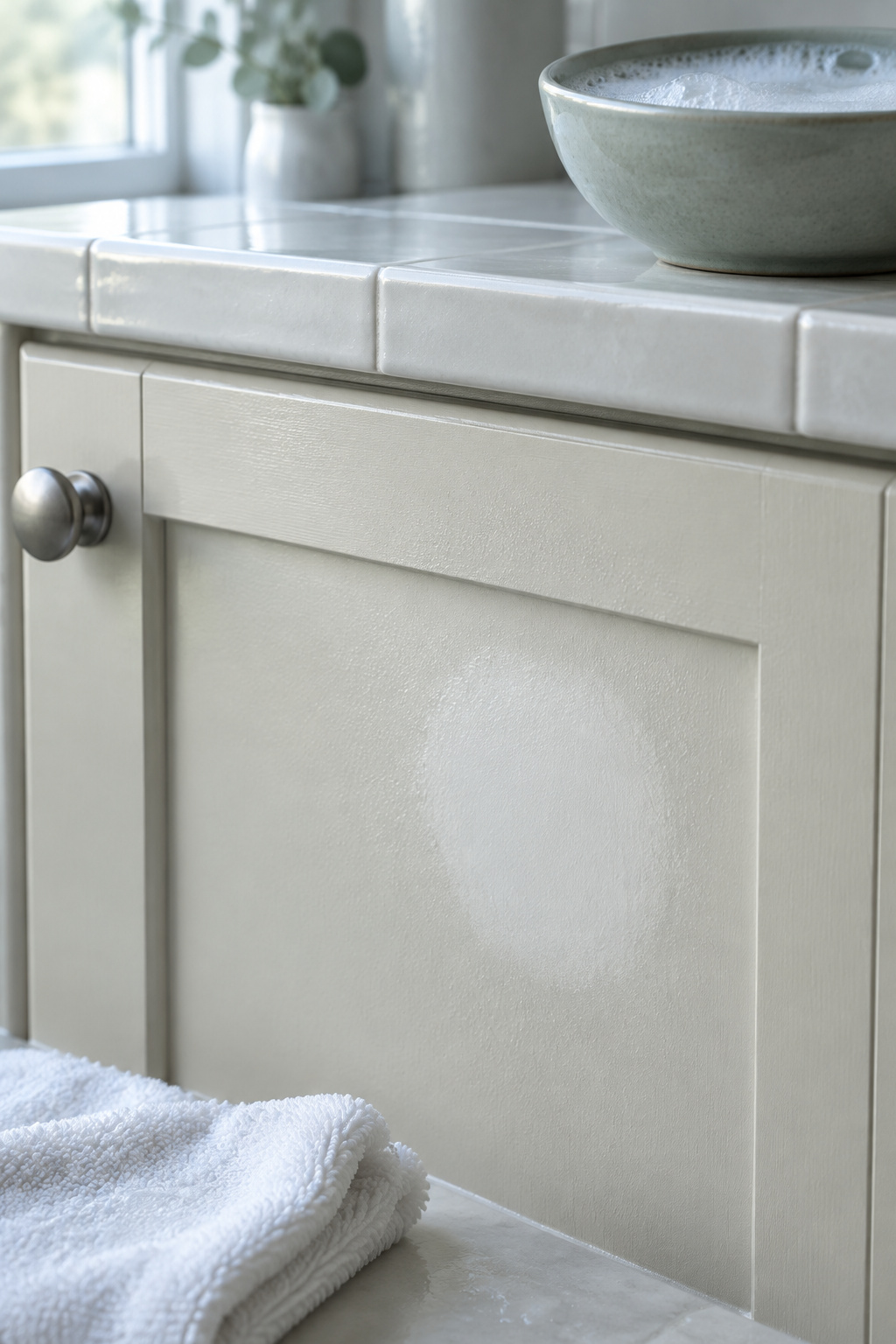
Cooking fat travels as a fine mist, settles on cooler surfaces like cabinet doors, and oxidizes into a tacky, yellowish layer, worst on the doors nearest the range.
- Dampen a soft cloth with warm water and a drop of mild dish soap, wring it nearly dry, and let it rest on a yellowed spot near the range before you rub. Dwell time does more than force.
- Clean a second coin-sized patch on the inside face of the same door, which shares the paint and its age but sees almost no grease.
- Compare both patches in daylight against a white tile or counter nearby, since those are made to stay white.
An amber smear on the cloth with whiter paint underneath is film. Outer patch clean but inner face still cream means grease outside and an aged oil finish inside. Neither patch changing means the paint itself has yellowed. This is contractor practice, not a published standard, and it costs ten minutes.
If the yellow lifts, the answer is a cleaning routine for white cabinets, and repainting over the film would only seal it under fresh paint.
Where the yellow sits tells you the cause: a four-spot map
Next, walk the kitchen.
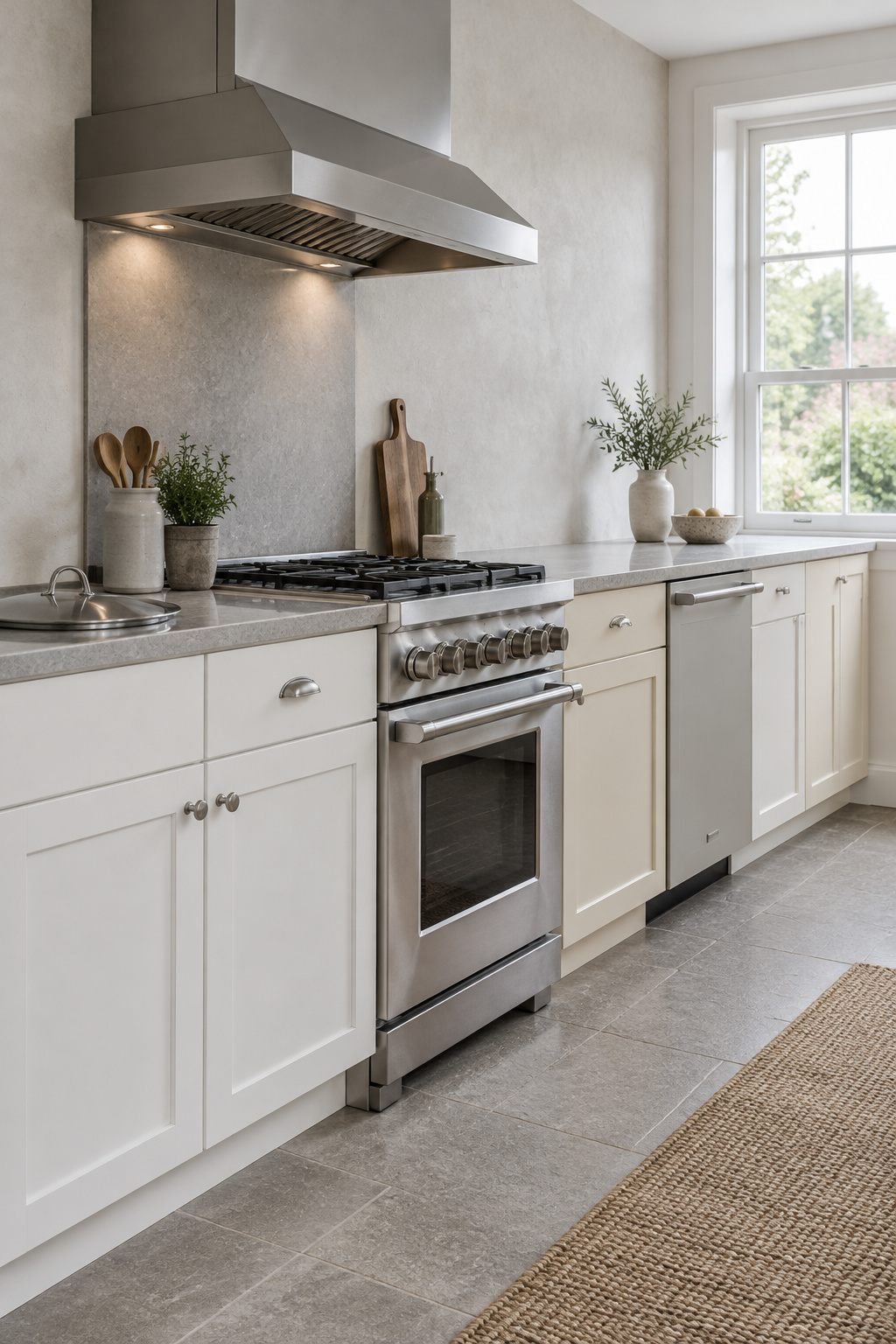
| Where it shows | Likely cause | Quick check | What fixes it |
|---|---|---|---|
| Evenly on all doors, worst inside cupboards and drawers | Aged oil or alkyd enamel | Inside face yellower than outside | Sand the gloss, repaint in a water-based enamel |
| Doors beside the range, over the dishwasher | Grease film; on vinyl doors, heat and steam damage | Wipe test; look for lifting edges | Clean painted doors; replace damaged vinyl fronts |
| Doors facing a sunny window | Sun and UV aging light thermofoil | Shaded doors are whiter | New fronts; shade the window |
| The whole run, mostly at night or beside a colored wall | Reflected color or warm light | White card against the door, day and night | Change the bulb or the wall; leave the paint alone |
Aged oil and alkyd finishes amber in low light, and only paint fixes that
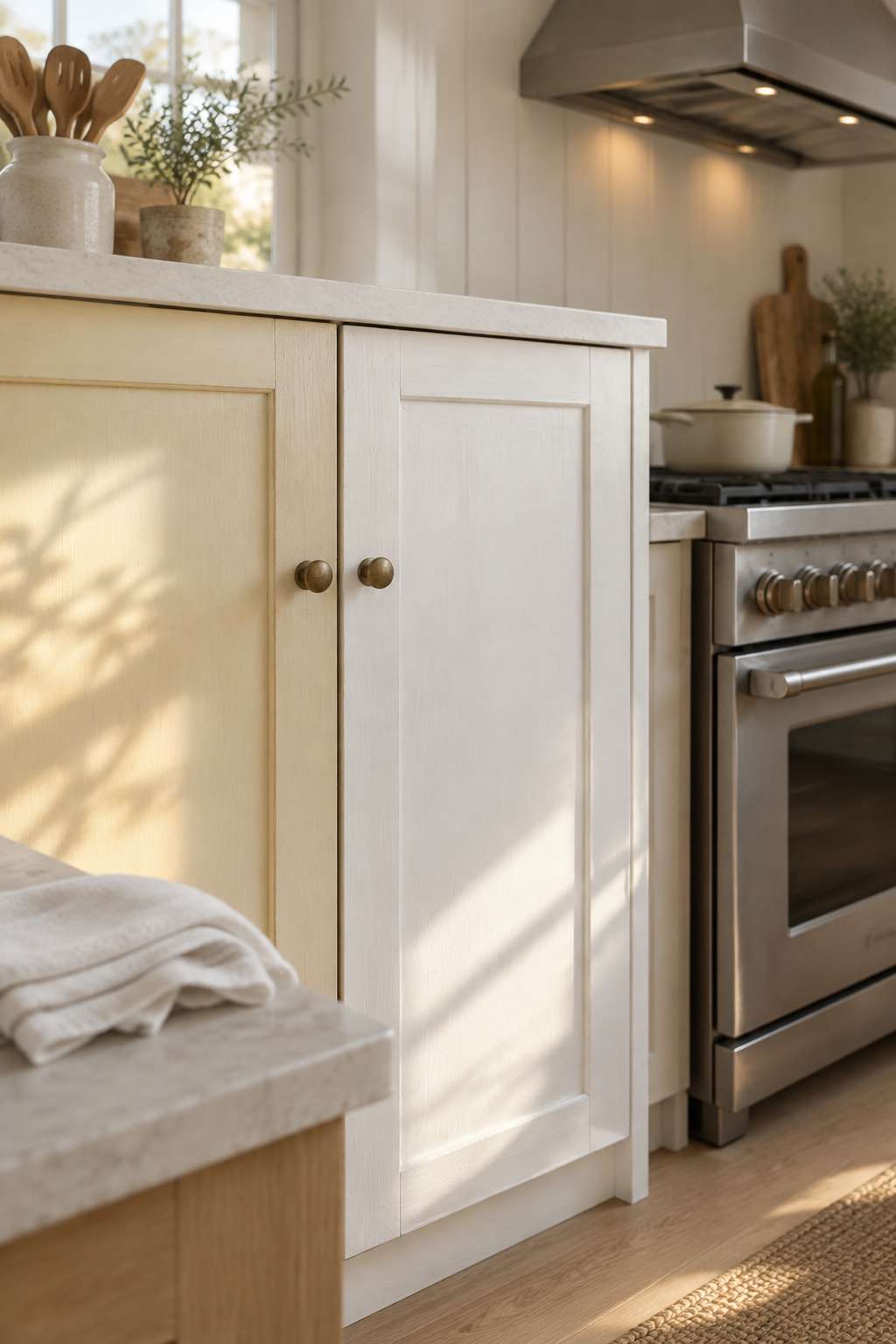
If the cloth came away clean and the inside face is the yellowest place in the kitchen, suspect the finish itself. An oil-based or alkyd enamel yellows as it ages, and it does so fastest where daylight is poor. Dulux calls it an industry-wide trait of oil enamels, most noticeable inside cupboards, in door jambs and behind furniture. White shows it most.
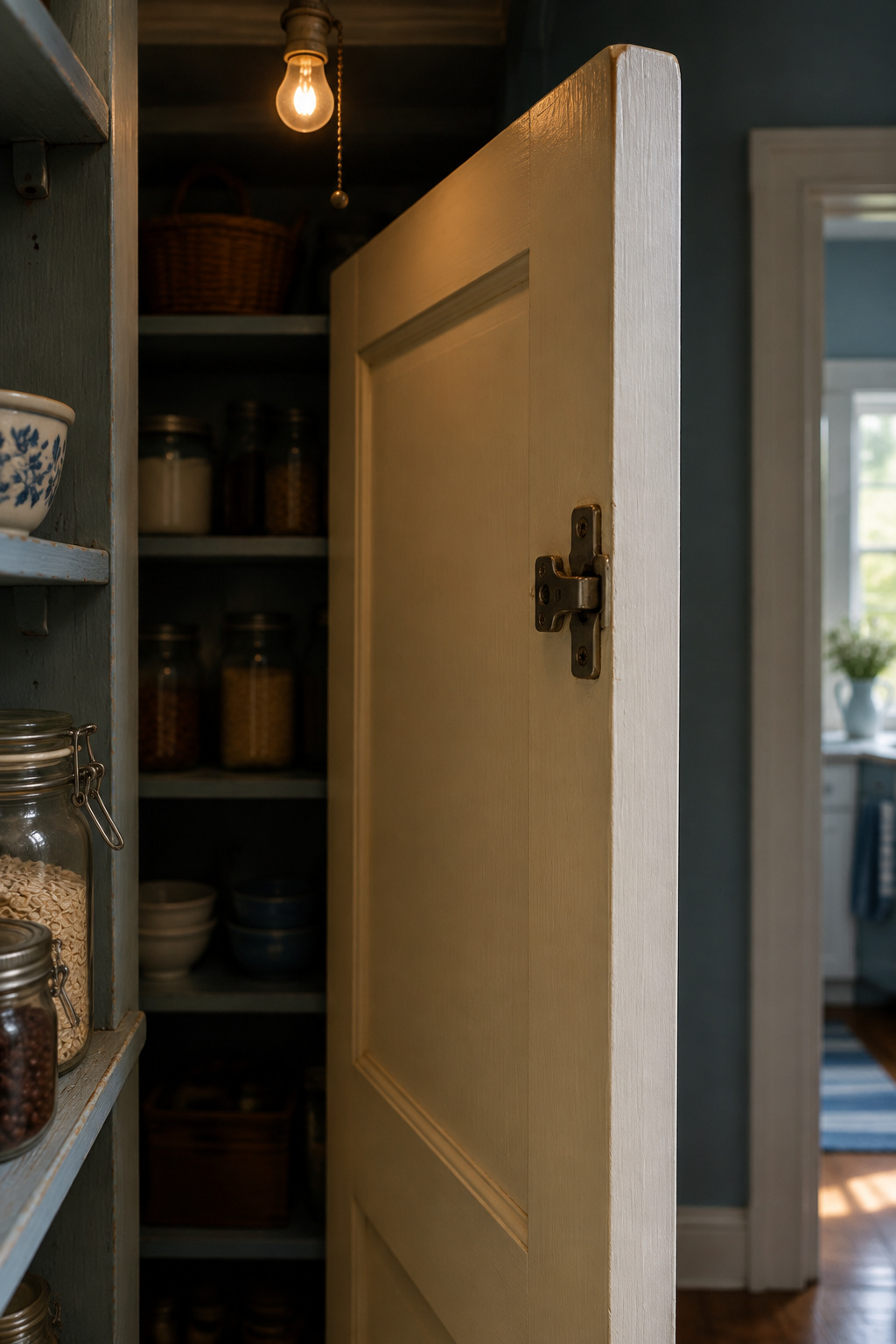
The reason is the oil in the binder. It dries by reacting with oxygen, and that reaction leaves behind compounds that shift reflected light toward yellow. Sunlight slows the reaction; low light speeds it up. Ammonia from cleaners, or from latex wall paint drying in the same room, speeds it too.
The yellowing comes in two kinds: what formed in the dark can partly bleach back once light returns, while yellowing from the oil oxidizing as it cures does not.
For the second kind, paint is the honest repair: let the old enamel harden, sand lightly to take off the gloss, and recoat in a water-based system. Paint from before 1978 may contain lead, so don’t dry-sand it unprotected. Brown stains coming through paint on oak doors are covered in the guide to painting oak.
Thermofoil near the oven and dishwasher: the door itself is changing, and paint can’t fix it
Thermofoil is a thin vinyl skin heat-pressed over an MDF core. Run a thumbnail along the door edges beside the oven and dishwasher: a corner of film that lifts or has shrunk back is heat damage.
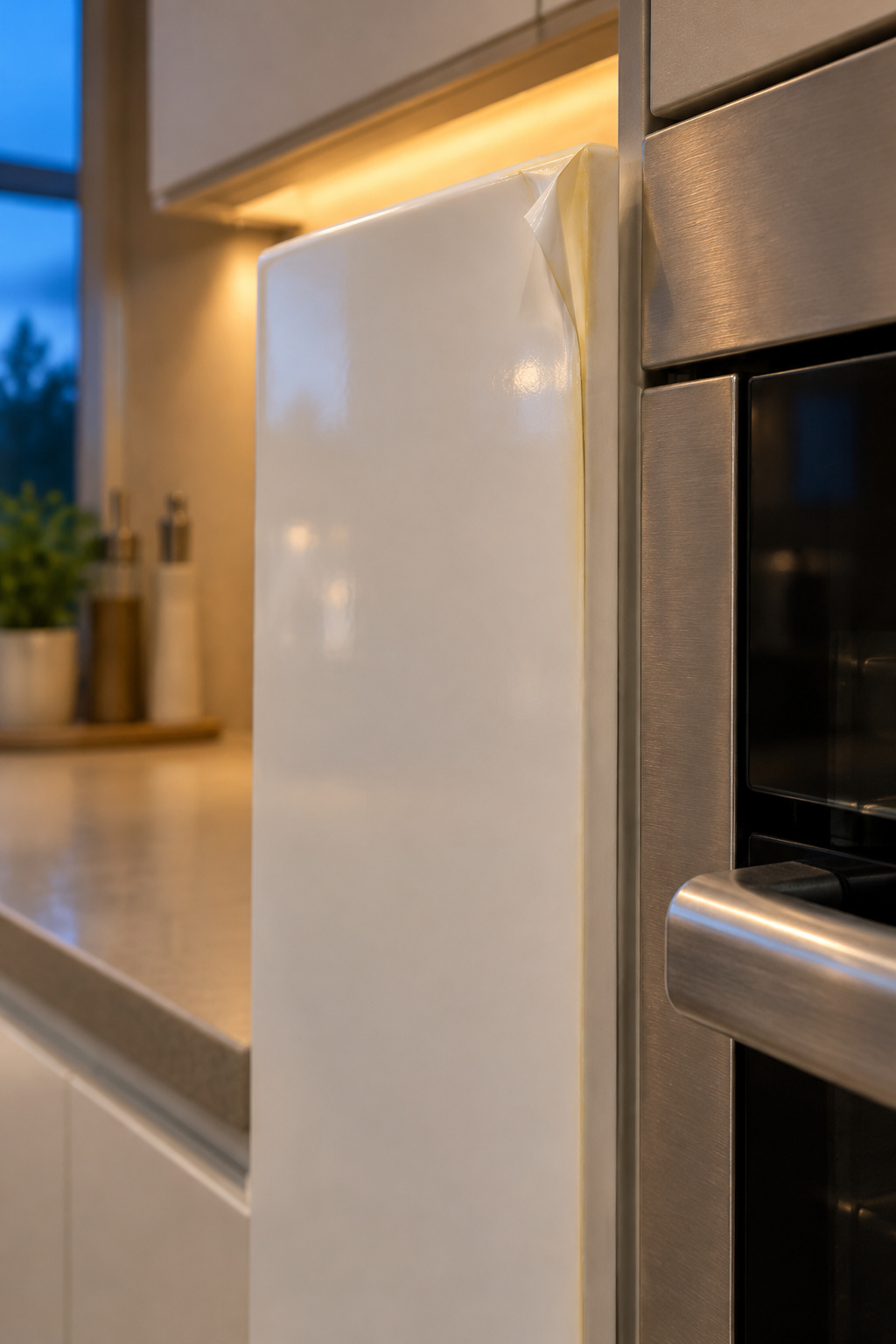
Door makers’ care guides say plainly that the foil delaminates, peels or shrinks back when it gets too hot, and two rate their doors to about 70°C (158°F) for four hours; Wolf says 160°F, about 71°C. Steam is the other enemy: opening a dishwasher mid-cycle sends a hot, wet cloud onto the doors beside it, and humidity attacks the back edge rather than the face.
Age and light account for the yellow. Deslaurier says white thermofoil may fade and take on a yellowish tint over time, and that it ages visibly more than most cabinet materials; strong sun on light doors can also yellow them unevenly. Heat does the structural damage. Either way, the film is the surface: there is no paint layer to restore, and film lifting across a door will not stay fixed.
So the fix is new fronts, with heat shields beside the oven and a full-depth panel beside the dishwasher; whether to replace doors or reface everything depends on the boxes underneath. Until then, run the hood and keep the toaster oven out from under the uppers.
A warm wall or bulb can make white doors look yellow with no change in the paint
Sometimes the paint has done nothing wrong. The lighting designer Randall Whitehead describes warm incandescent light as amber, growing more so as it dims, enough to turn whites yellow; a colored wall mixes its own color into the light and throws it back onto whatever sits across from it. A terracotta wall facing a run of white doors can warm them.
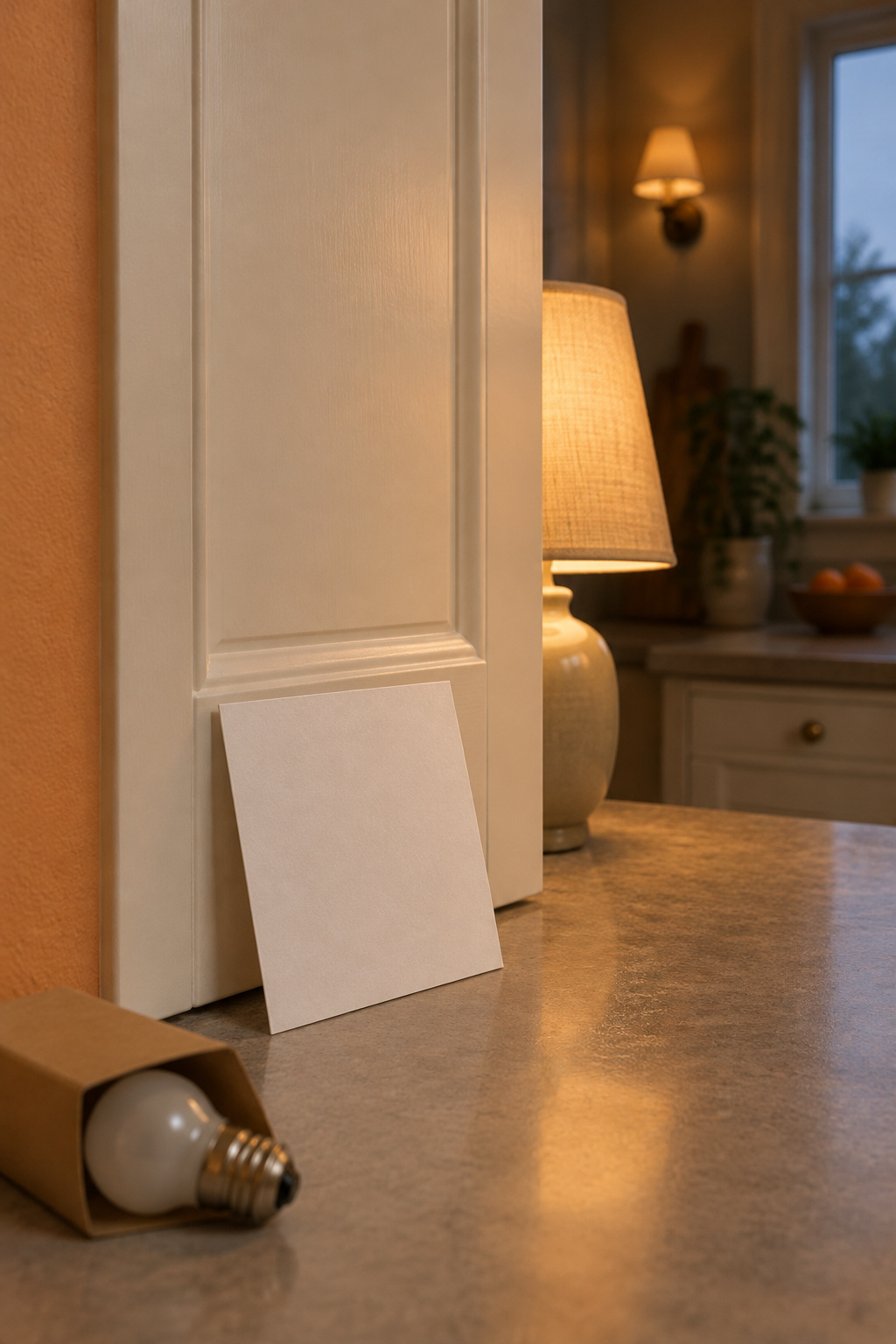
Three checks rule this out:
- Hold a plain white card flat against the door. If card and door look the same color, the tint is in the light.
- Look at the same door in morning daylight and again at night under your usual lamps.
- Swap one bulb near the worst door for a cooler one and leave it a few days.
There is no published rule for how close or how strong a wall color has to be before it tints a cabinet, so trust the card. Picking a white and a bulb that suit each other, or a wall color, is another matter; the card is only there to save you a repaint the paint never needed.
Does water-based paint never yellow? The claim tested, and how to buy a white that stays white
The water-based claim, tested
The usual advice is to repaint in water-based enamel because it never yellows. It yellows less, not never, and the makers of waterborne alkyds say so themselves.
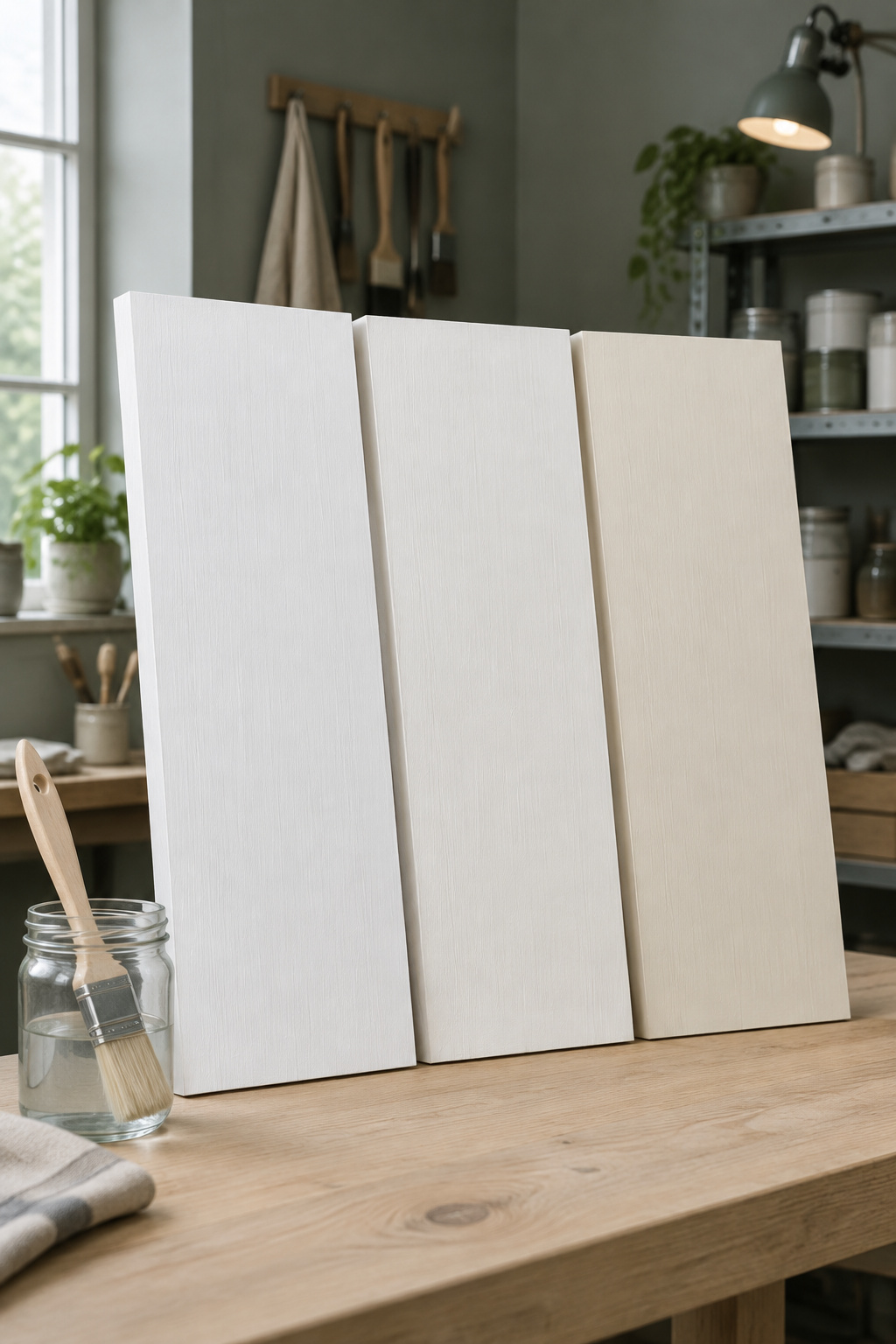
Benjamin Moore’s data sheet for Advance, a waterborne alkyd, promises minimal yellowing, then adds that “a slight amount of yellowing may occur,” faster in dark or poorly ventilated areas and more visible in lighter colors. General Finishes goes further: “All bright white paint will yellow slightly with time, with or without topcoat,” and it now advises against putting a clear water-based topcoat over bright white at all.
A waterborne alkyd still carries oil-modified resin, and that resin still oxidizes, just more slowly. Pure acrylic enamels have no independent test either way.
Buying a white that stays white
Kitchens are the one room where I think modern function should usually win. A kitchen door lives beside heat and steam, and a waterborne enamel that yellows less is the right material for it. The rest follows from the causes:
- Choose a waterborne alkyd or acrylic enamel over a traditional oil enamel.
- Skip the clear water-based topcoat over bright white.
- Let latex wall paint dry fully before enamel goes on in the same room.
- Test the whole system, primer to finish coat, on a hidden door first.
For what white asks of you over years rather than weeks, see living with white kitchen cabinets.
Wipe, map, check the light, then decide about paint. One question I can’t close for you is whether a dim-yellowed cupboard will come back. A Swiss maker’s technical sheet says yellowing formed in the dark can fade again once light returns; Dulux says yellowing, once it has happened, is irreversible. Both are describing real paint.
FAQ
Will touching up one yellowed door with new white paint leave a visible patch?
Usually, yes. Aged oil enamel yellows unevenly, a fresh coat goes on whiter than the paint around it, and light colors show the gap most. Cabinet sheens are also harder to blend than flat paint. Repaint a whole door, or a whole run, and only once you know the cause is an aged oil finish.
Do gas ranges make white cabinets yellow faster than electric ones?
No maker or test compares the two. The documented cause is cooking itself: frying and roasting put fat into the air that settles on doors as a yellowish film. On vinyl doors, heat from an oven, gas cooktop or induction cooktop is the risk. Run the hood whenever you cook.
How long before a painted white cabinet starts to look yellow?
No paint maker publishes a timeline for cabinet enamel. Dulux says only that yellowing comes with age and shows earliest in closed-up rooms with little ventilation or daylight. Water-based enamels yellow more slowly. Compare the inside face of a door with its outside face to see how far it has gone.