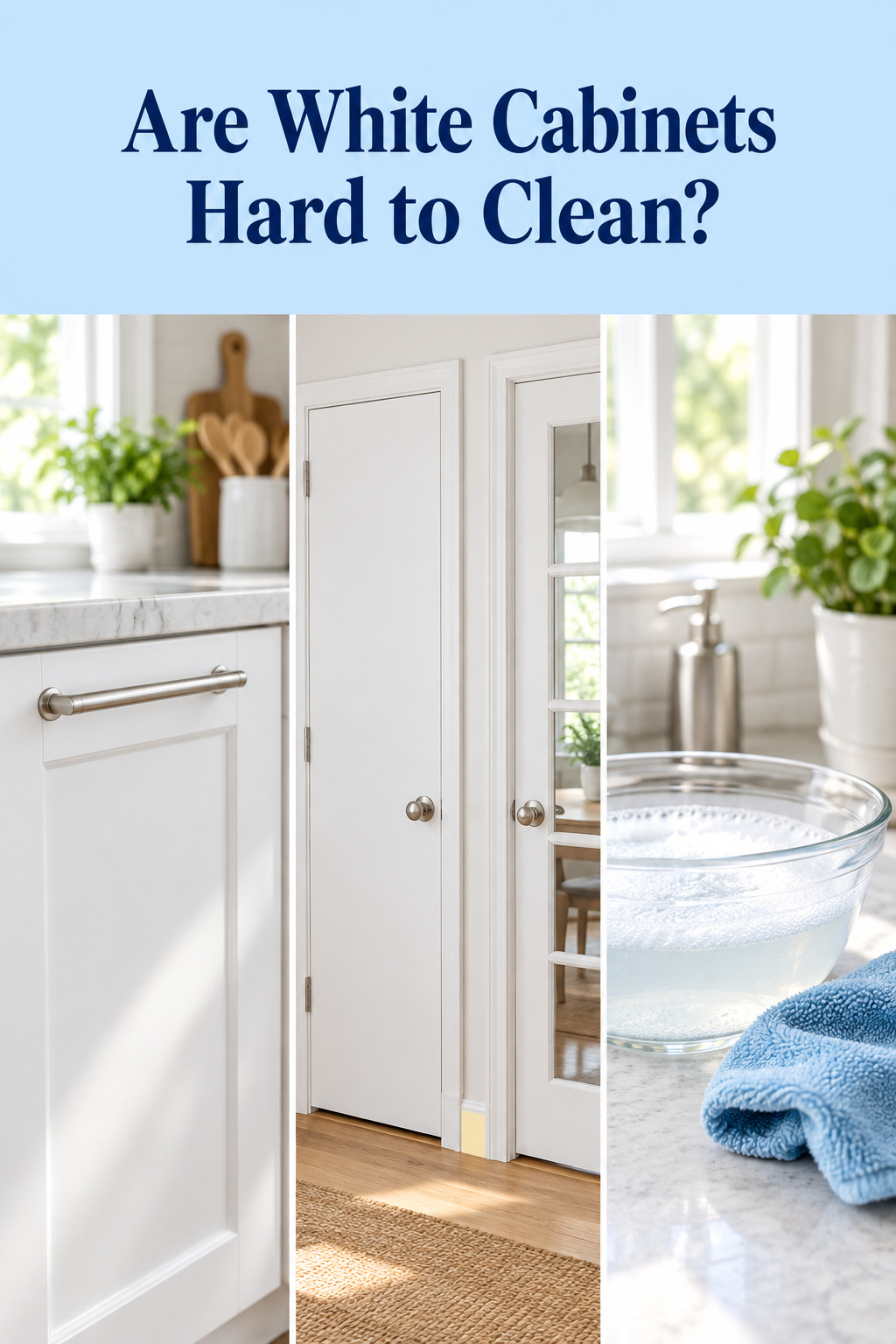
Nobody has ever measured whether white cabinets need cleaning more often than dark ones. So are white cabinets hard to keep clean? Yes, in about four spots, and hardly at all everywhere else. If your house has no children in it, the answer is the same with different dirt: grease and wet hands instead of jam.
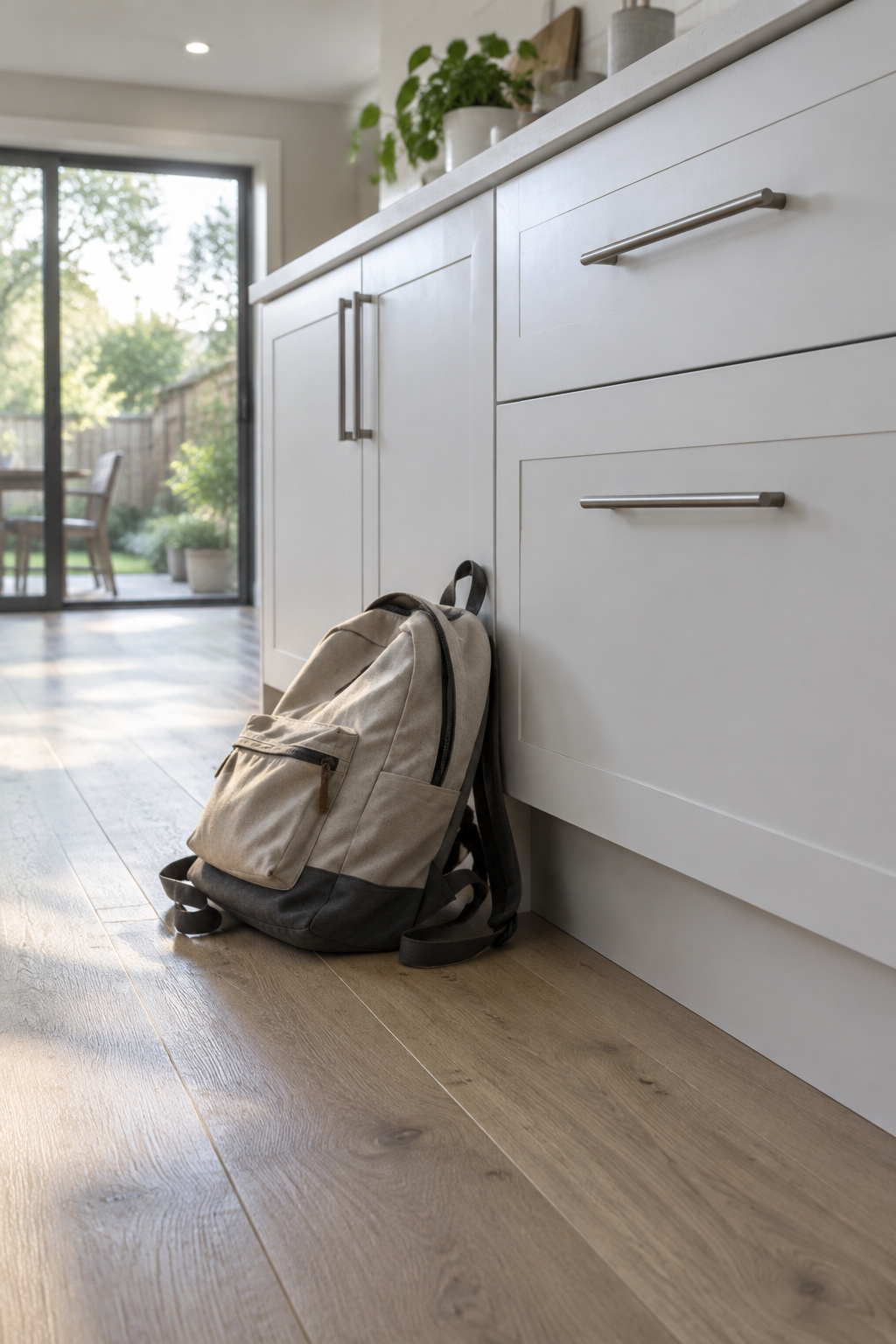
The usual pros-and-cons list says white shows dirt and stops there, which leaves you scrubbing a wall of doors that were never dirty. Find where hands land in your kitchen, choose the pulls, doors and finish for that patch, and the rest mostly looks after itself.
TL;DR
- Dirt on white cabinets gathers in four places: the lowest fronts, the paint beside each pull, the sink base and the trash pull-out. Wipe those weekly.
- Three choices change that zone: pulls in the top corner of base doors, 2 to 3 in from the corner; slab doors, which wipe in one pass; and a glossier paint, which lets grime go more easily than matte.
- Clean with mild dish soap in warm water on a soft cloth, then dry at once. New cabinet enamel can take gentle washing after about two weeks but needs up to 30 days to reach full hardness.
Are white cabinets hard to keep clean? Yes in one zone, easy everywhere else
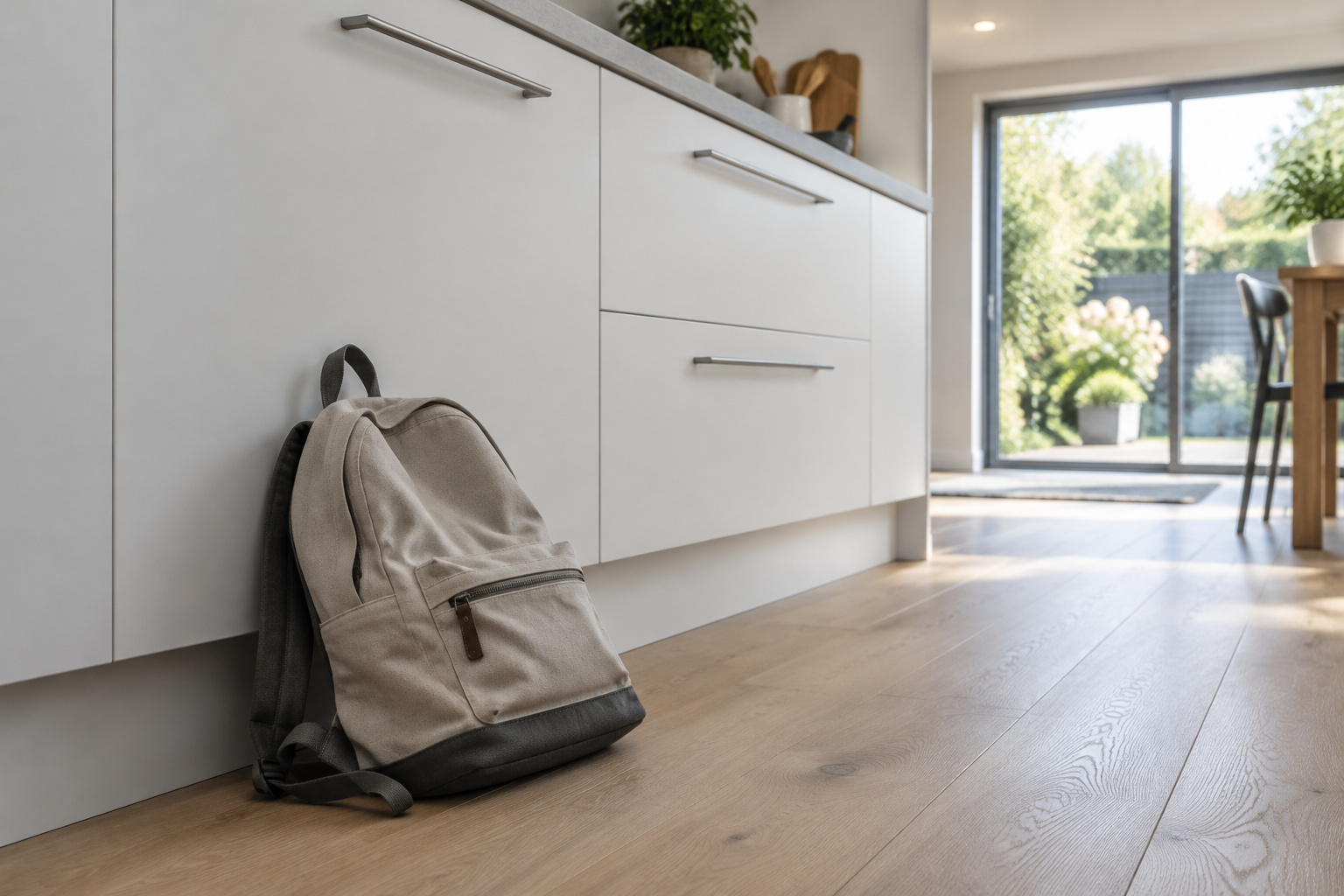
In the family kitchens I plan, the small prints sit low: on the bottom half of the lowest doors and in a gray halo around the pull. In my experience little children use their hands for balance as much as for reaching, so in a kitchen the cabinet door becomes a railing.
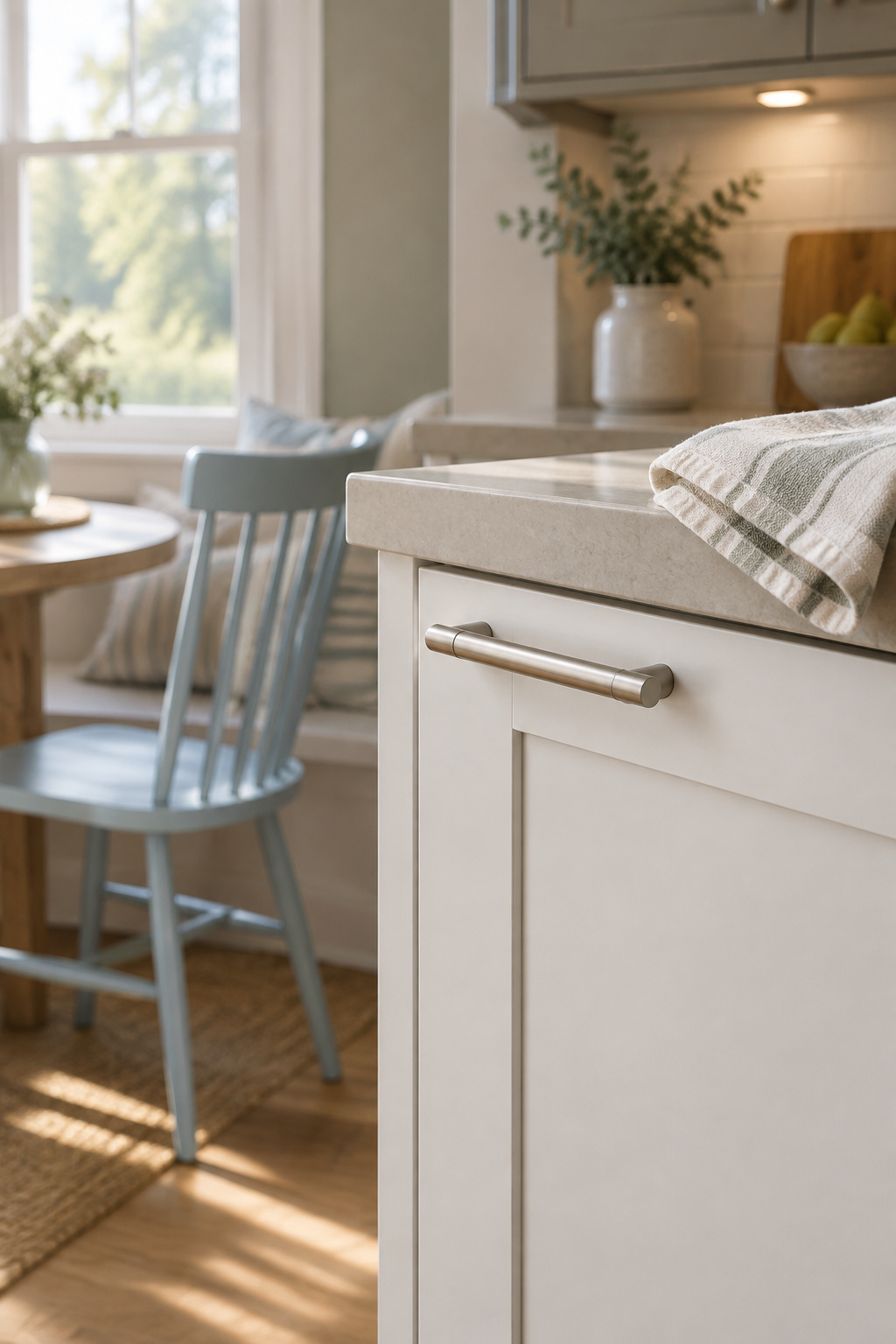
A playroom is often less used than the kitchen floor. In my single-story adobe-style house in Albuquerque the kitchen is big and the bedrooms are small, so the low doors are part of the play space whether anyone planned it or not.
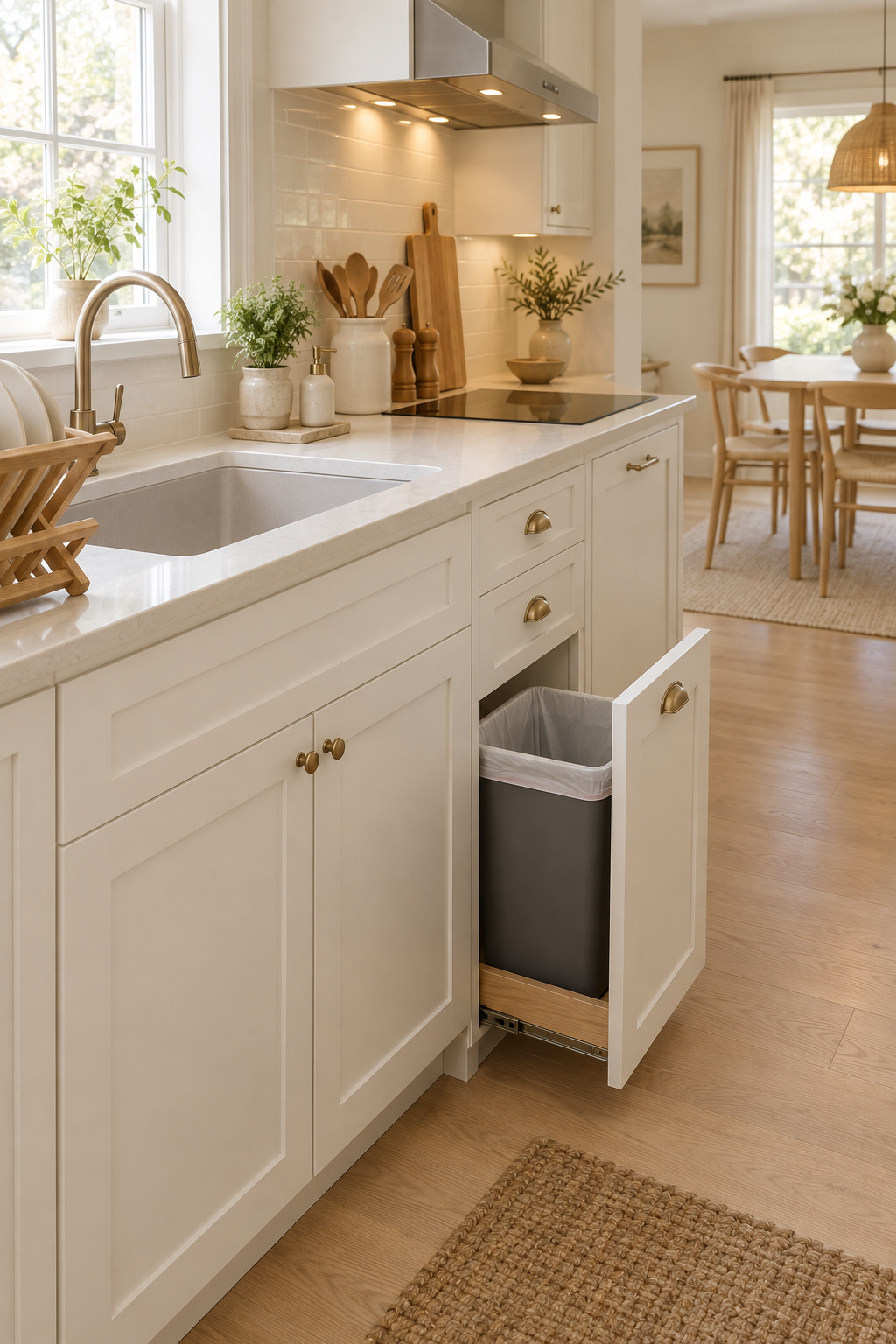
Adults leave their own marks, greasier ones. Painters list the same short set of trouble spots: around the pulls, the sink base, the trash pull-out and the corners by the stove. Dirt shows there first. Once the paint has cured, the rest of a white run is easy to wipe.
Where the dirt lands: low fronts, pull edges, the sink base and the trash pull-out
Trade sources name the same four spots for any household. The children’s column is what I see in family kitchens.
| Spot | With children | Adults-only | Why it shows |
|---|---|---|---|
| Pull edges | Sticky prints, snack residue | Skin oil, lotion, cooking oil | Every reach lands on the same small patch, and oil leaves a dark halo on white |
| Lowest fronts and toe kick | Handprints, shoe scuffs | Shoe scuffs, mop splash, floor dust | Feet, vacuums and mop handles hit here more than anywhere |
| Sink base | Splashes from small hands at the tap | Wet hands, drips, cleaning products | Standing water is the most common cause of finish damage |
| Trash pull-out | Sticky fingers, kicks | Food hands, kicks to close it | Opened dozens of times a day |
Before you buy anything, get down to their height. Kneel in front of your base run in daylight and look along it. The marks sit in a short stretch near the sink and the bin. No children? Crouch anyway, because toe kicks take more shoe and mop traffic than anyone notices standing up.
One cabinet maker’s care guide says to dry the sink base and the garbage cabinet after every use. Everything above the counter and away from the range usually needs only a light weekly wipe.
Pulls are cleaning tools: place and size them to keep hands off the door face
A pull tells the hand where to go. Put it where the hand already arrives and fingers stay off the door face.
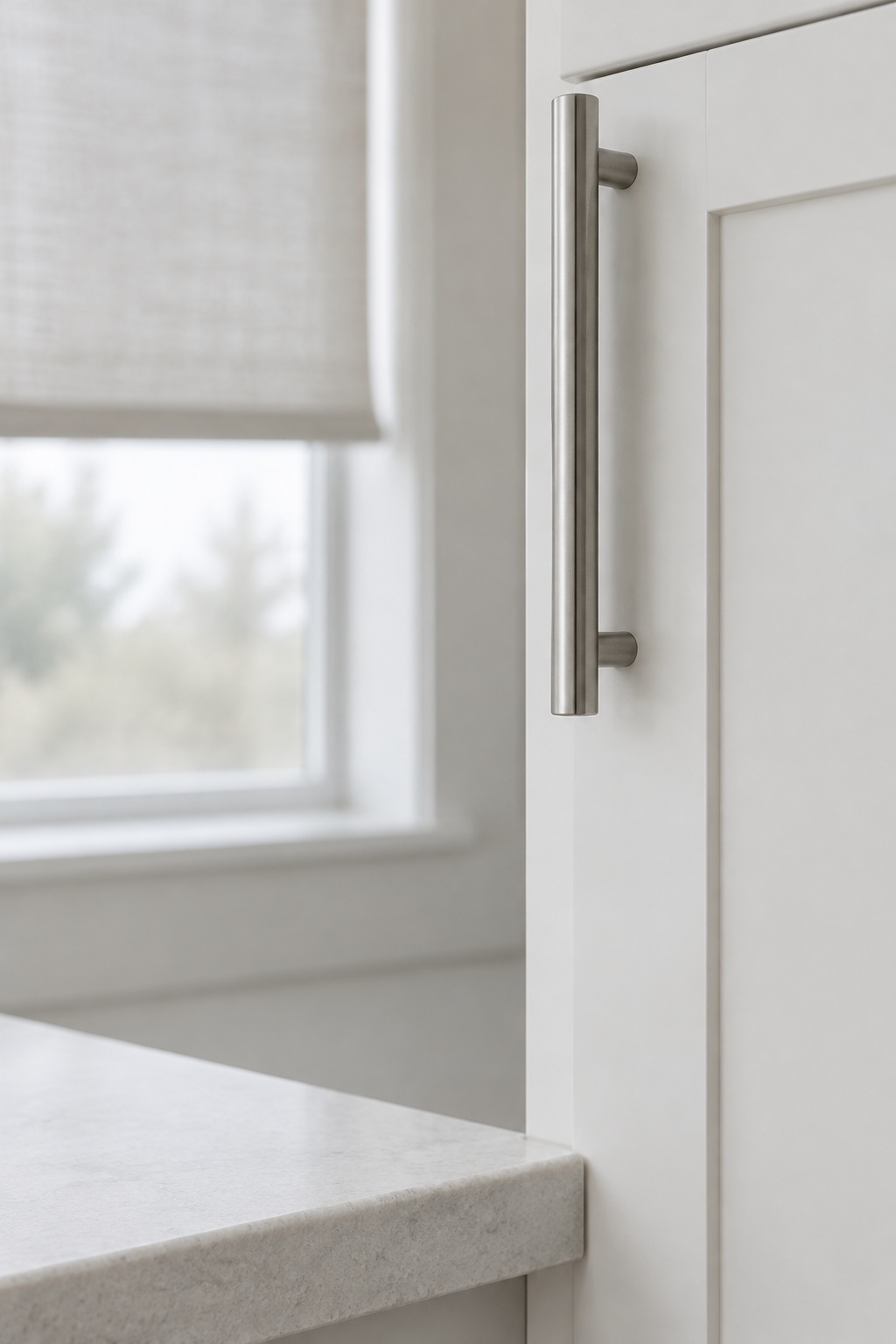
Set the pull in the upper corner of a base door on the opening side, vertically, about 2 to 3 in from the corner; hardware makers and installers agree on that spot. Wall doors take the pull in the bottom corner. How far in from the opening edge is less settled, anywhere from about 1 in to about 3 in. Set a pull low and a whole hand lands on the paint every time the door opens.
Nobody has tested whether a deeper pull keeps more dirt off the door, so my test is simpler: can a tired kid do it? In my experience a child grabs the door edge when the pull is too small to hold, and the edge gets the prints. I pick pulls a small hand can close around, and the same pull still works when that child is three years older.
Keep them tight. A loose pull wobbles and chips the paint around its screw holes.
Door profile decides how much scrubbing a white door needs
Grease and dust land on every door equally, and the profile decides where they stay. A flat slab front wipes clean in one pass. A framed Shaker door has four inside corners where the panel meets the frame, and those hold grime, especially near the range. Raised-panel and beaded profiles need a soft brush at the corners every few weeks.
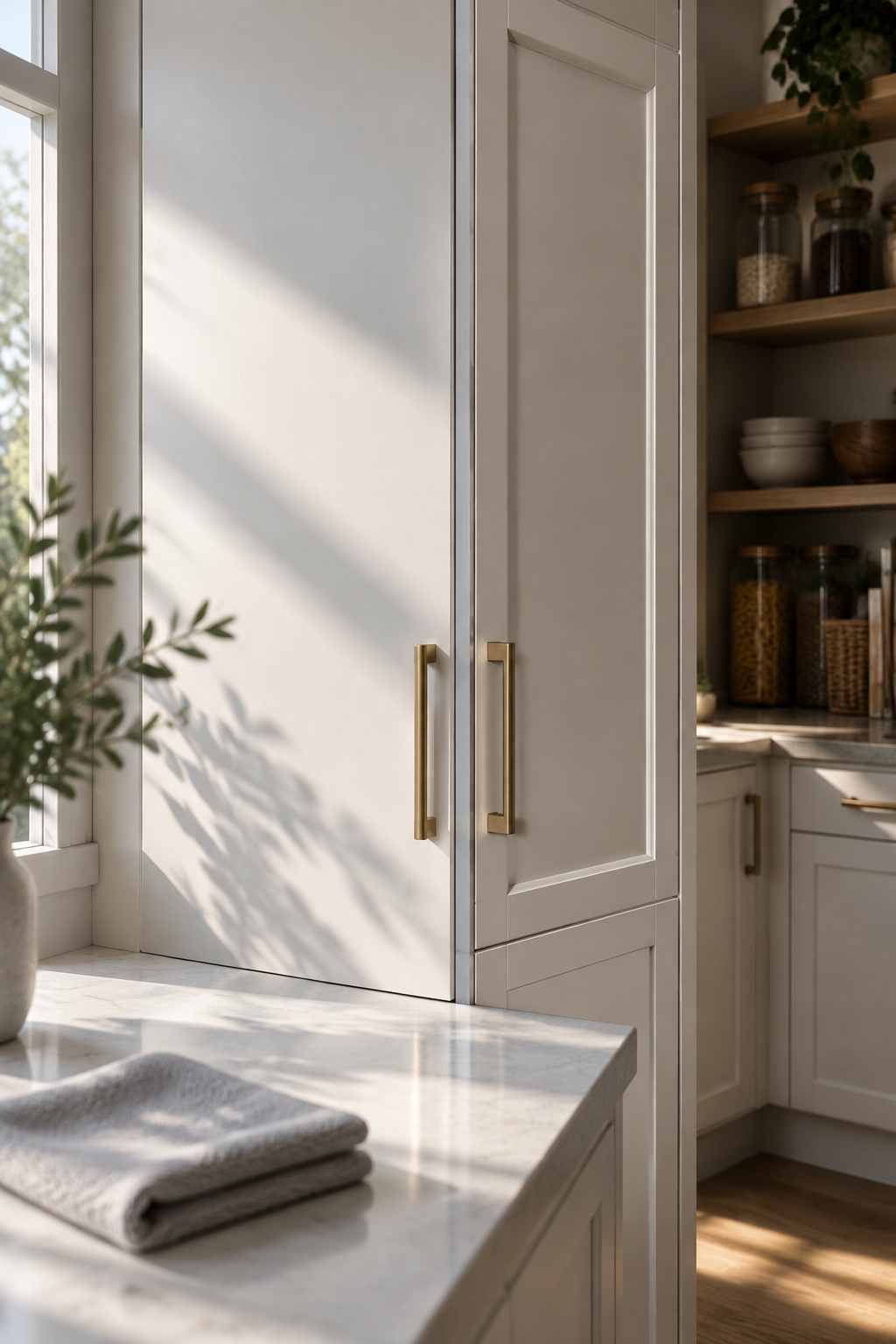
If you love a framed door, the corners are a small, regular job; how the panel is built is covered in the guide to white Shaker cabinets. Avoid the panic scrub. One custom cabinet maker says most of the damage it sees is cleaning damage: someone attacks a greasy corner with a degreaser or a scrub pad. A soft toothbrush and soapy water do it without taking the paint along.
Slab has its own catch: a glossy slab shows every fingerprint. For the lowest doors in a house with toddlers I still pick slab, because a mark you can wipe in one pass beats one stuck in a corner.
Sheen, matte honesty and the wait before you scrub new paint
Finish is the third choice, and the paint makers agree that glossier films are easier to keep clean. A flat finish has a rougher, more porous surface, so dirt settles into it and a cloth has to work harder to lift it, and scrubbing can burnish a patch shinier than the paint around it. Nobody has scrub-tested cabinet enamel by sheen, so maker guidance is what you have.
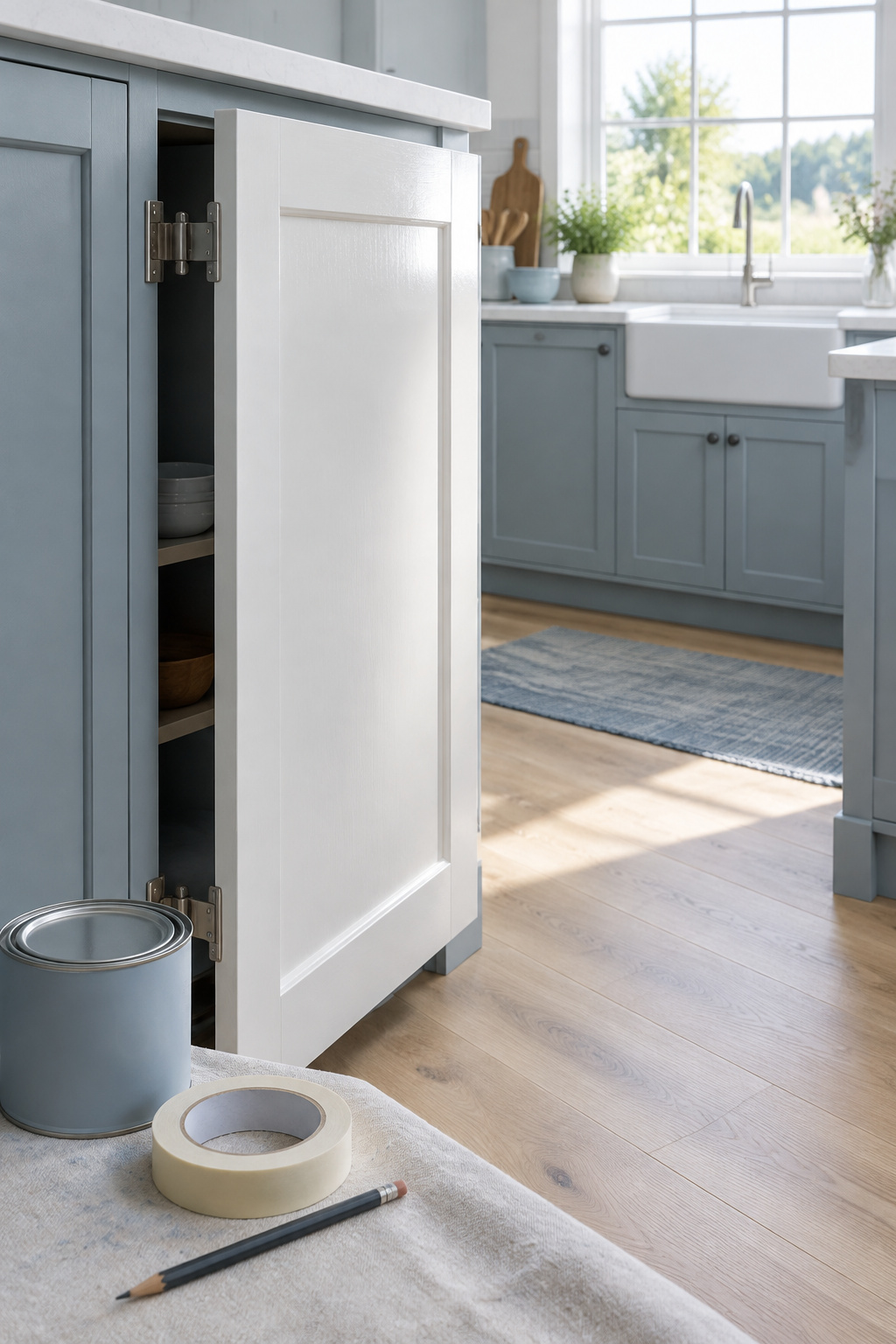
Matte does two different things. It hides fresh fingerprints and dust better than gloss, which is why one cabinet maker steers families toward it. It also holds stains and burnishes when you scrub. It looks clean longer and gets clean harder. Which sheen to put on your doors is settled in the full guide to white cabinetry; for the hand zone, know which of those two properties you’re buying.
Benjamin Moore’s satin cabinet enamel data sheet says the surface can be washed after two weeks and takes up to 30 days to reach full hardness, while the company’s how-to page says wait at least 30 days before cleaning. Behr’s sheet also says two weeks. The makers’ own pages split on it, so treat two weeks as gentle washing and 30 days as fully hard. Until day 30, dab rather than scrub, because scrubbing can lift paint.
Two weeks is a long time to keep jam off a new door, I know. Spot-dab what you must.
The weekly wipe that keeps white cabinets white, and cleaners that spoil the finish
The weekly wipe
Start where the dirt is and stop when the doors look clean.
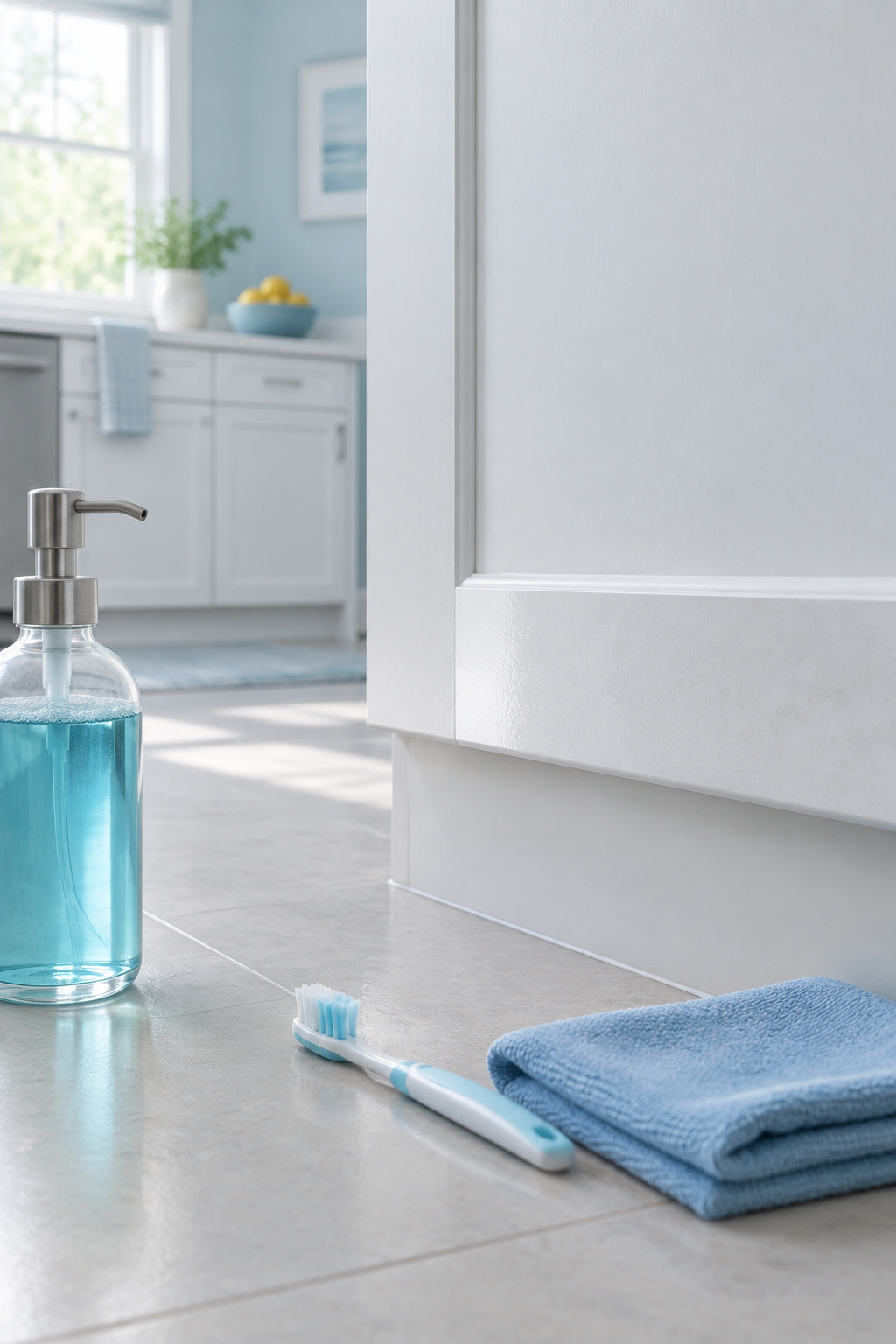
- Dust the doors with a dry microfiber cloth.
- Mix one to two teaspoons of dish soap into a bowl of warm water. Test it once on a hidden spot.
- Wipe the pulls and lowest doors first, then the sink base and trash pull-out, bottom up to avoid streaks. Use a soft toothbrush around hardware. Do the rest of the run only if it needs it.
- Rinse with a clean damp cloth and dry straight away. Don’t spray water on the cabinets, and don’t hang a wet towel over a door.
Once a month, tighten loose pulls and hinges.
Cleaners that spoil painted finishes
Cabinet and paint makers agree on what to keep away from painted doors:
- Scouring pads, steel wool and melamine sponges such as Magic Erasers, which dull the sheen with repeated use
- Bleach, ammonia and alcohol
- Wax and furniture polish, which leave a film that attracts dirt and can turn hazy or yellow
Some house cleaners suggest diluted vinegar or a baking-soda paste. Cabinet makers warn against both, so I leave them under the sink. If a mark won’t lift with soap and water, it may not be dirt at all; yellowing that looks like dirt has its own causes.
I design rooms around how families use them, not paint, so the cleaning chemistry here belongs to the people who make the paint and the cabinets. Where hands land is my part, and the four spots you found are your weekly list.
FAQ
Do white cabinets show scratches and chips more than darker ones?
Possibly, though the only comparison is one designer’s remark about painted furniture: pale colors show scuffs more, while dark low-sheen paint shows dust and fingerprints. Chips come from knocks at edges and corners on any color. Some marks that look like scratches are surface deposits, so try a damp microfiber cloth first.
Is a white kitchen realistic with a dog or cat?
Yes, if the toe kick goes on your weekly list. Toe kicks gather pet hair and take the most shoe traffic in the kitchen, and one cabinet painter names scratching dogs among the things that wear paint early. Expect touch-ups low in the run.
How often does a busy kitchen’s painted white cabinet need touching up or repainting?
Expect small touch-ups around the pulls long before a full repaint. One painter sees standard interior latex break down near hardware within a year or two of regular use. One painting contractor estimates 8 to 10 years for a professional finish. Touch up small spots with the same paint, and repaint the whole door when wear spreads.