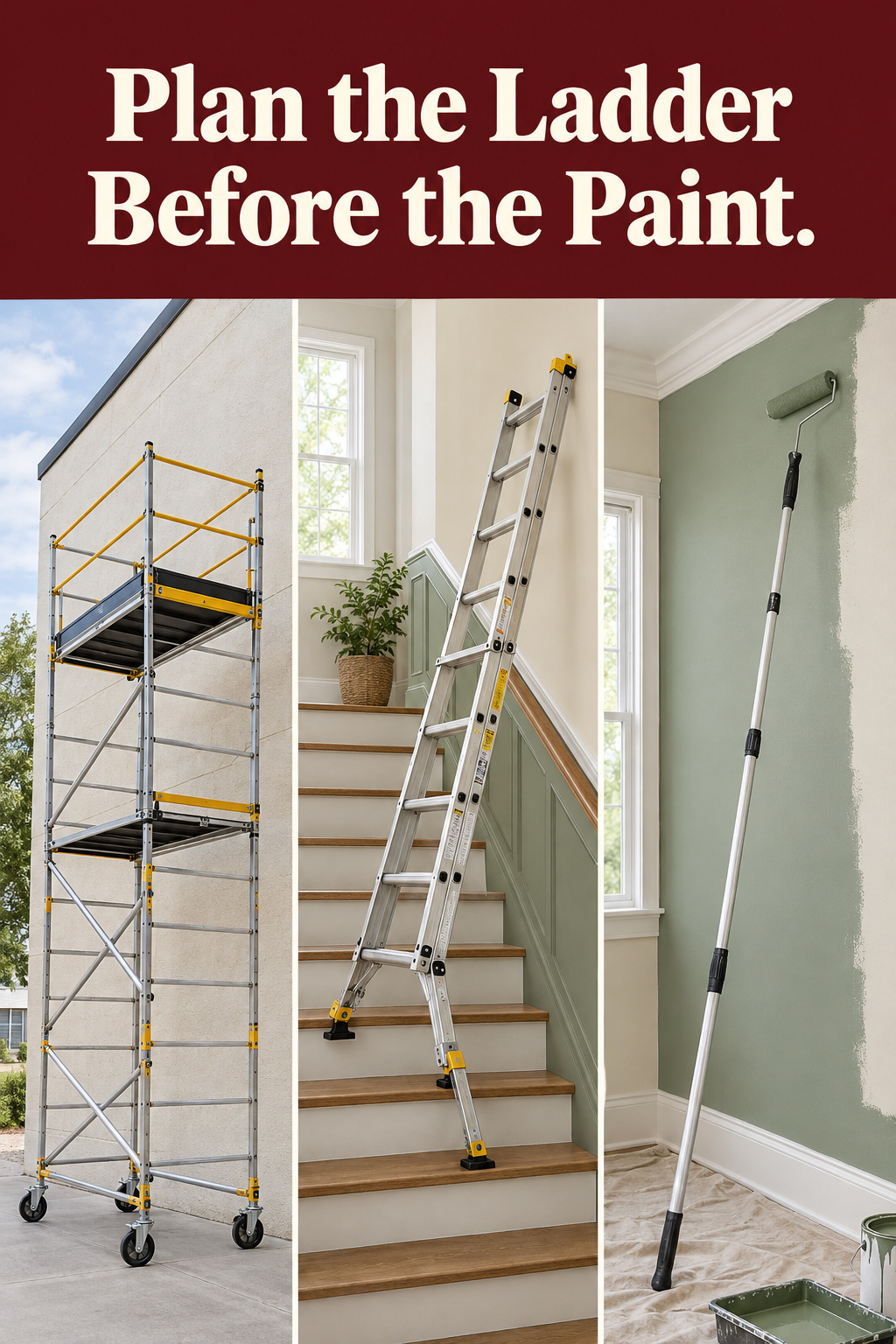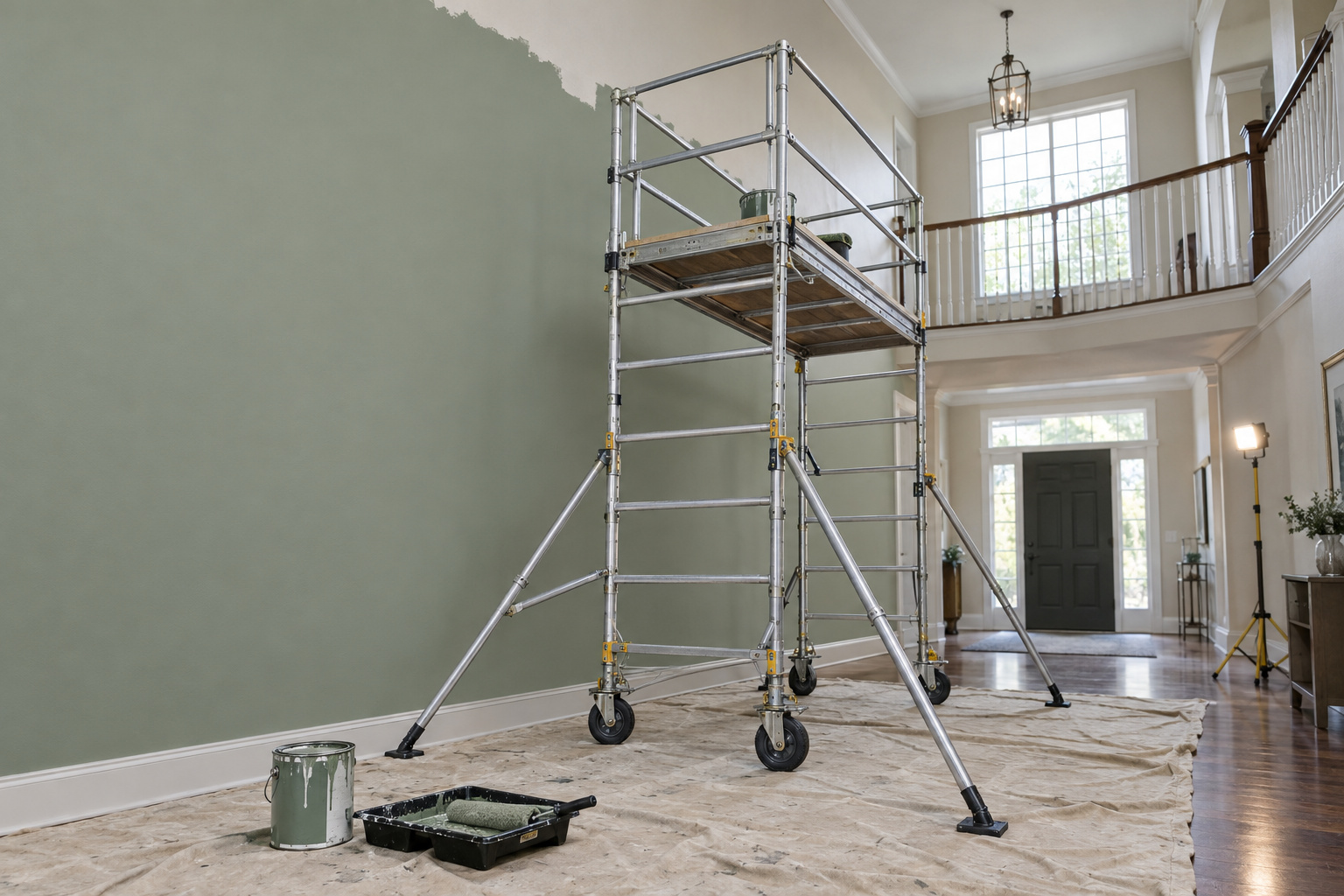

I once skipped a primer coat to save a day. Two weeks later I was repainting the whole wall. Make that mistake at the top of a foyer and it costs you the scaffold all over again.
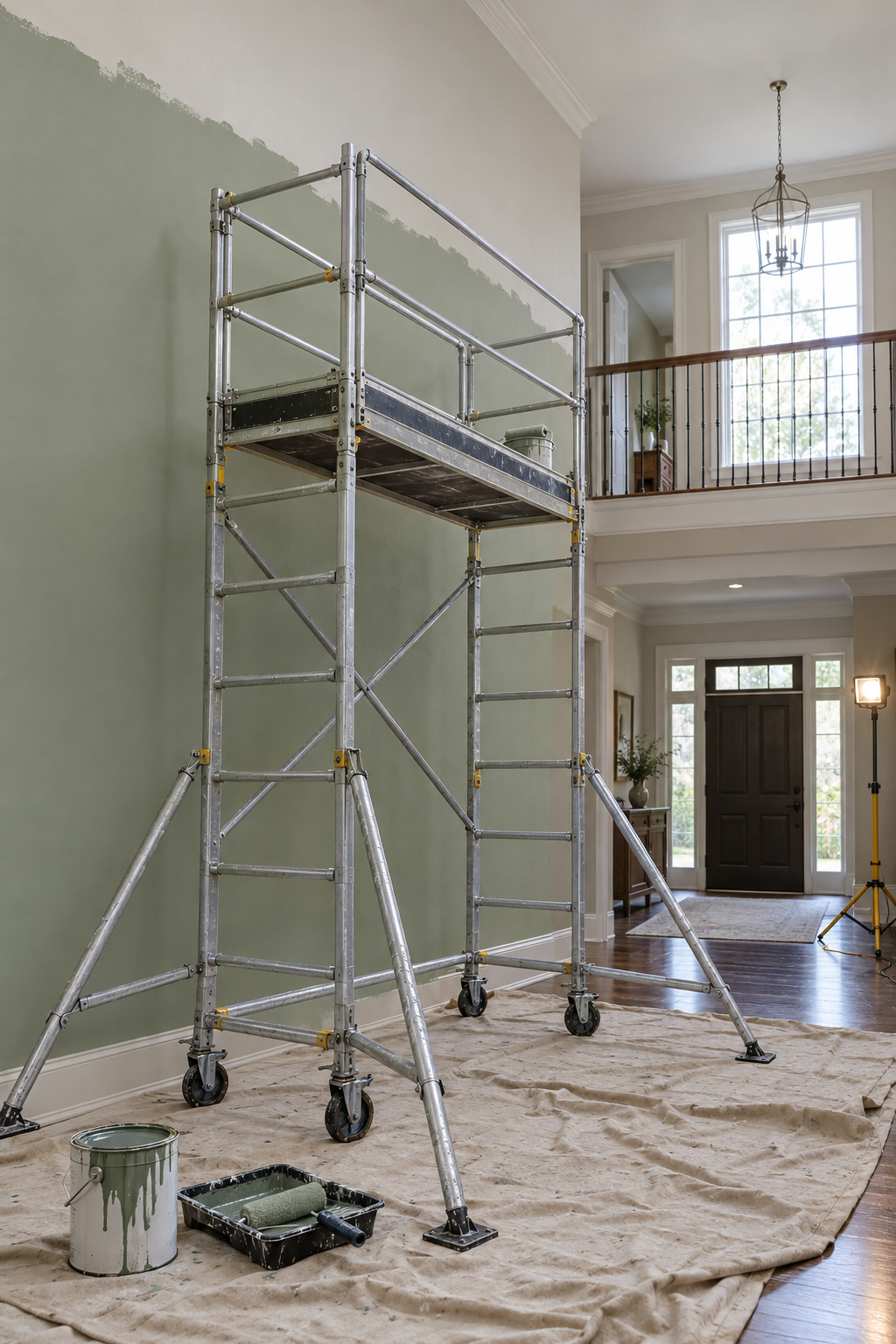
Painting a two story foyer makes every shortcut dearer, because each trip to the top costs a rental day and a climb. So here is the bill before any talk of color. Doing it yourself costs a few hundred dollars and a weekend, which has a way of turning into two. Hiring it out costs thousands. Which side you land on depends less on paint than on how you reach the top safely and what that access costs.
TL;DR
- Plan access before color: an extension ladder set at 4 to 1 with a leveler, or a rolling baker tower at $54 to $144 a day.
- On an example 12 x 12 ft foyer with 18 ft walls (764 sq ft after openings), a pro at $2 to $6 per sq ft costs $1,528 to $4,584; DIY with a week of tower rental, paint and primer runs $228 to $528.
- Two coats there take 3.82 to 4.37 gallons at 350 to 400 sq ft per gallon, so buy 5.
Painting a Two Story Foyer Starts With the Ladder Plan, Not the Color
The trouble with a stair-side wall is the floor. Where a ladder’s feet should go, there is a tread, or nothing at all.
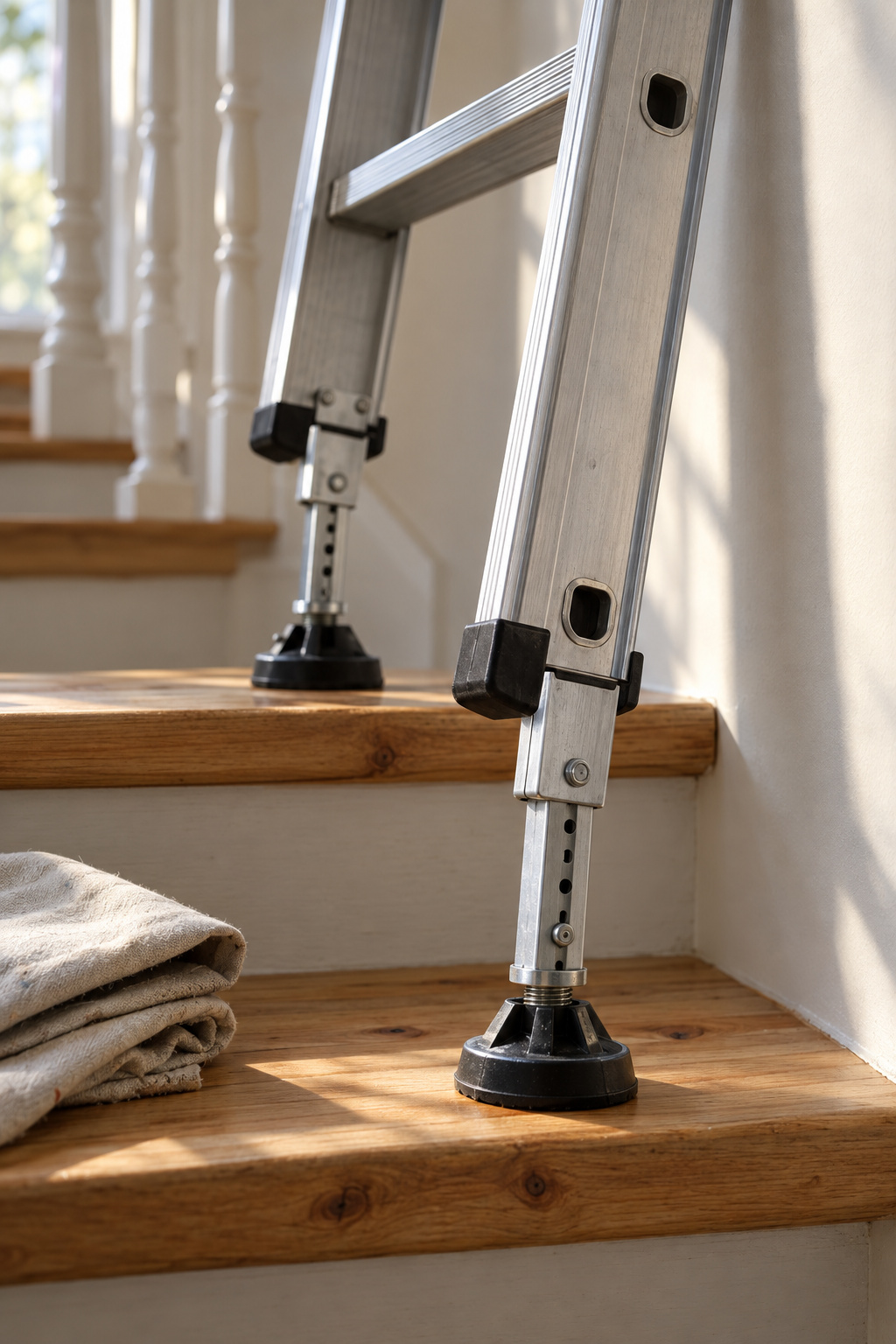
Four setups work, priced here from independent rental stores.
| Setup | Rental cost | Reach and limits | Skill level |
|---|---|---|---|
| Extension ladder, 28 to 32 ft, with a stabilizer | $15 to $55/day; stabilizer $5 to $15/day | Needs level floor at the foot | some builds |
| Multi-position ladder set on the stairs | $30 to $55/day | One side set to the step height | some builds |
| Plank on ladder jacks between two ladders | Jacks $6.50 to $17/day; plank $17 to $28/day | Platform no higher than 20 ft, at least 12 in wide | confident builder |
| Baker or rolling tower | $54 to $144/day; $108 to $188/week | Firm, level floor only | some builds |
An extension pole, worked from the floor or the landing, covers much of the middle of the wall, but not a clean line at the ceiling.
Extension ladder with a leveler on the stairs
Before I trust a level, I flip it end for end and check it against itself. Treat the ladder the same way: set it, then check it twice.
- Rent a ladder long enough that your highest foot stays at or below the fourth rung from the top. OSHA says no standing on the top three rungs; some guidance allows one more, and I go with the stricter rule.
- Walk the base out a quarter of the working length. A ladder touching the wall 16 ft up wants about 4 ft of level floor.
- Level the feet with a leveler, never blocks or boxes. Werner’s LevelSafe Pro corrects up to 8.5 in; its maker doesn’t mention stairs, so don’t assume it spans a riser.
- Rest both rails evenly, away from the front door.
- To step off onto the landing, run the rails 3 ft above it.
- Keep a helper at the foot, and never move the ladder with anyone on it.
Baker’s scaffold or rolling scaffold
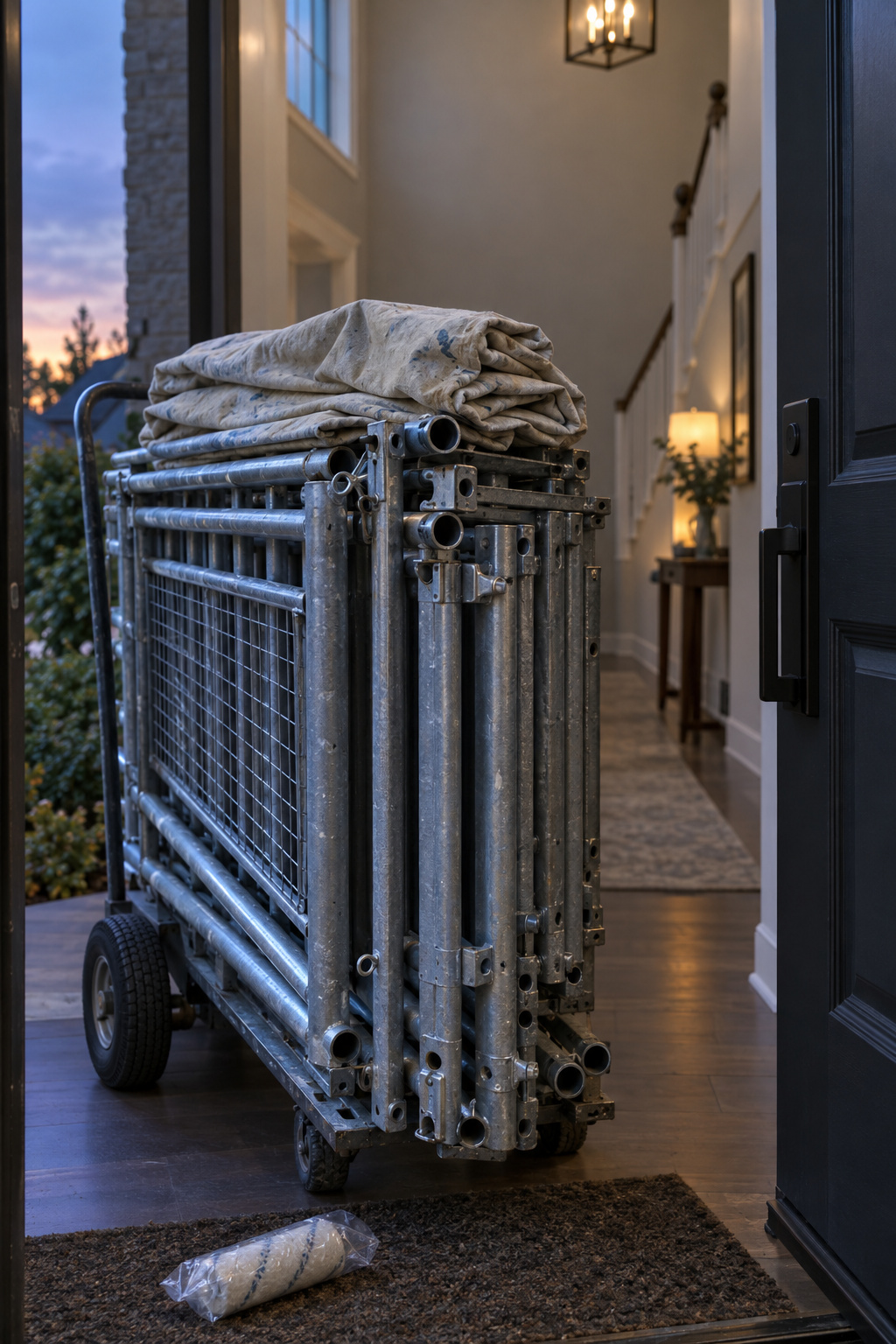
A rolling tower is what I’d pick for most of the wall, because you stand on a platform instead of a rung. Rent the full package with guardrails and outriggers; a store pricing them separately is quoting only the frames. One maker’s 29 in frames roll through a standard 30 in doorway, and three stacked units reach a 17 ft platform. The catch is the floor: a tower needs firm, level ground, so it works from the foyer floor, not the stairs. Never roll it with anyone aboard. If the high wall rises straight out of the stair void and no tower fits, that’s a pro job.
Hire the Top, Paint the Bottom, or Do All of It: The Math
In my Saturday class nobody touches a saw for the first hour. They measure the same board until everyone gets the same number. Measure your foyer that carefully, because every price hangs on the square footage.
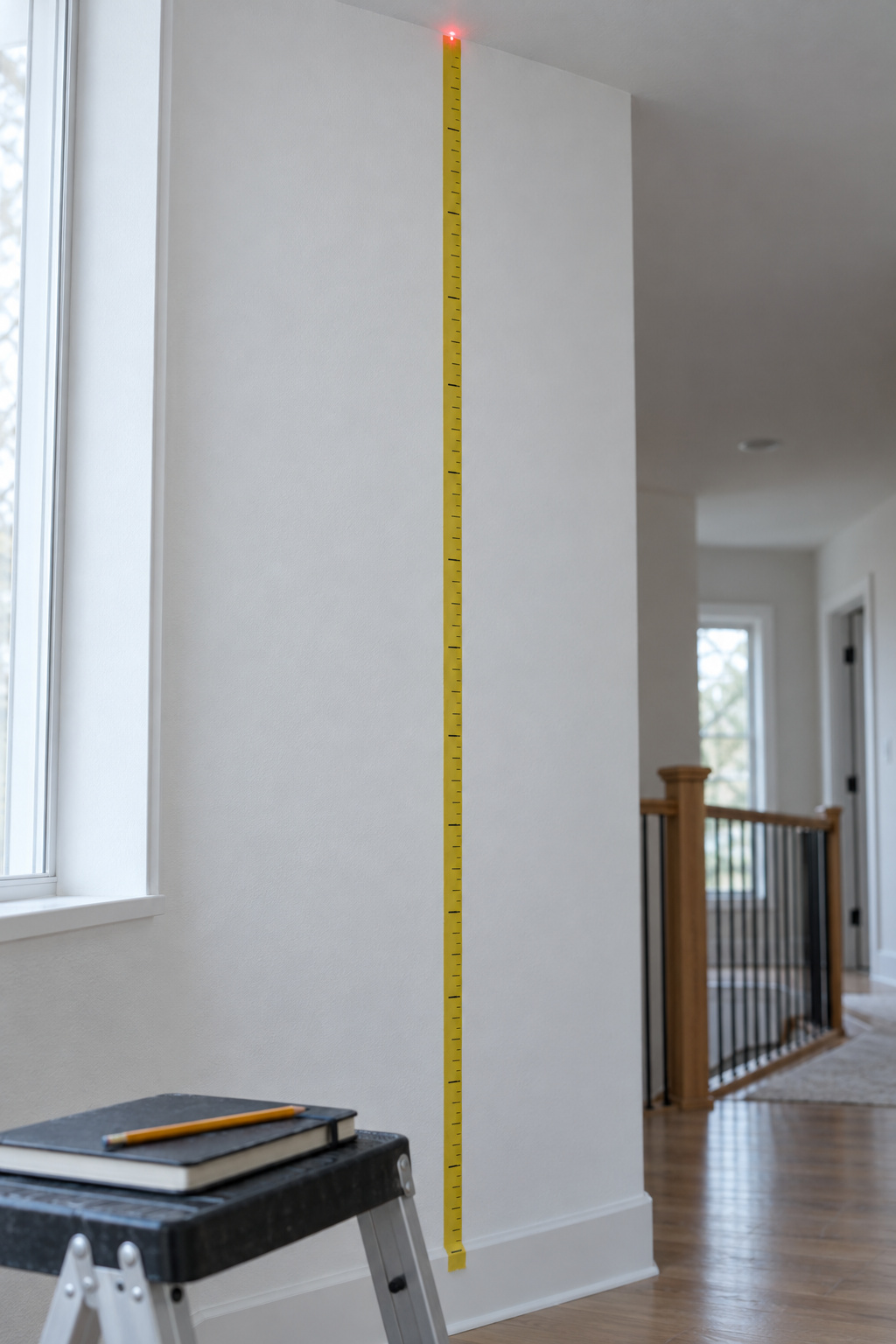
Take an example foyer, 12 x 12 ft with 18 ft walls. A 48 ft perimeter gives 864 sq ft of wall; less an assumed 100 sq ft of door and windows, 764 sq ft to paint.
Angi and Fixr both put professional wall painting at $2 to $6 per sq ft. Neither prices height, which is what a painter is really charging for. One Sacramento contractor’s per-job quotes for tall stairwell walls work out to $5.00 to $16.15 per sq ft. Keep both: the first is a starting point for a big wall, the second what a small tall wall can cost.
| Plan | Cost on the example foyer | Your time | Who takes the height |
|---|---|---|---|
| Do all of it yourself | $228 to $528; $278 to $728 with delivery | A weekend, likely two | You |
| Hire the top, paint the bottom | A quote for the top half, plus your paint | The lower walls only | The painter |
| Hire all of it | $1,528 to $4,584 at $2 to $6/sq ft | None | The painter |
The DIY line is a week of tower rental plus paint and primer ($120 to $340), with $50 to $200 for delivery if you can’t haul the frames. Ignore the four to six DIY hours quoted for painting stairs; that is an ordinary stairway, not this wall.
Prices for hiring out only the top are not listed anywhere. Half the wall is not half the price: a painter may still charge for the whole rig, and the top is the hard half. Ask for a quote on the top half only. If the tower won’t fit or the height turns your stomach, that split is the plan I’d choose, because the time and the risk both live up there.
How much paint a tall foyer takes
Two coats on the example wall is 1,528 sq ft of rolling, or 3.82 to 4.37 gallons at standard coverage.
Always buy 10% more material than the plan says. That makes 4.20 to 4.80 gallons, so buy 5. On a tall wall the extra matters twice: running dry halfway up means climbing down with a wet edge drying above you, then paying another rental day while you fetch more. A full primer coat is up to 3 gallons; patches alone need far less.
Order of Work: Prime, Cut In, Roll, and the Coat I Skipped
Work the wall in this order, top down, one wall at a time.
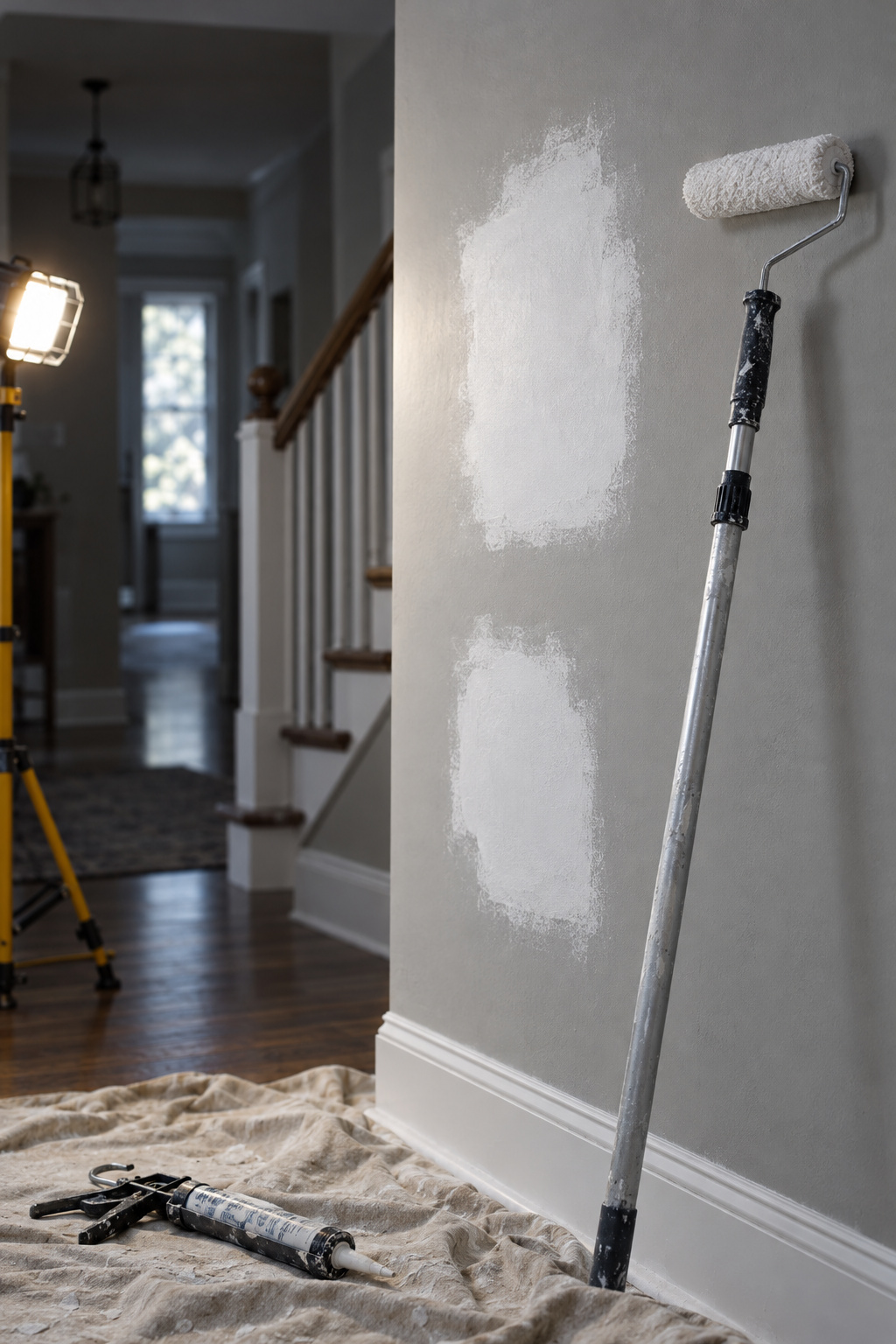
- Cover the floor and treads with drop cloths; mask woodwork and fixtures.
- Patch, caulk and prime every repair and any bare drywall.
- Paint the ceiling first, then the walls, then the trim.
- Cut in one wall and roll it while the cut line is wet, up and down with the pole.
- Wait out the recoat time: 4 hours at 77 F and 50% humidity on the Sherwin-Williams sheets, longer in a cool or damp house.
- Give it the second coat in the same order.
Step two is the one people skip, me included. Unprimed patches show through the finish, and on a tall wall you notice after the tower has gone back. Check the wall after the first coat while you can still reach it; if spots show, spot-prime them and let them dry before the second coat. For a big color change, a primer tinted about halfway to the new color can save a third coat. It is boring, and cheaper than repainting the whole wall.
Cutting in at the ceiling and the corners from a ladder
Keep your belt buckle between the rails. Many people reach about 3 ft either side, a 6 ft stretch of cut line per setup; past that, climb down and move the ladder. Carry the brush in a belt so your hands are free on the way up.
Cut a wide band at this height. Brush 6 to 8 in down from the ceiling, not the usual narrow line, and the pole can roll the rest from the floor.
Use an angled brush for the cut line, or a pole-mounted edger if you’d rather stay lower and accept a softer edge. Corner pads reach corners a roller can’t.
Where the Color Stops on a Wall That Never Ends
The foyer wall turns a corner and keeps going into the upstairs hall, and somewhere the color has to stop.
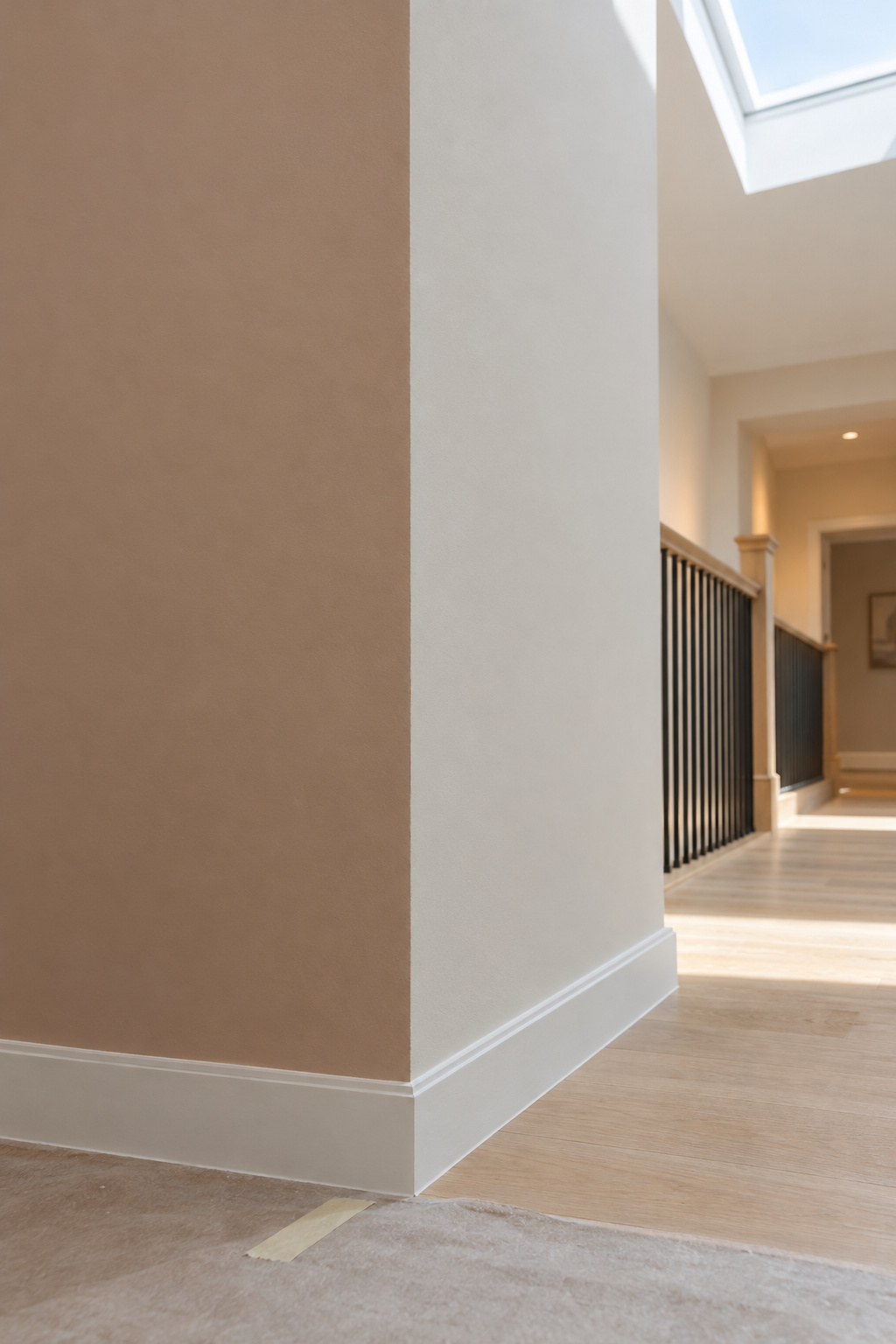
Stop it at an inside corner, never on a taped line floating mid-wall and never splitting a wall down the middle. An opening takes the color of the room you’re walking into. Walls lie: a long taped line wanders with every bow in the drywall, and an inside corner doesn’t.
One tall color is the simplest answer. If you want a change, one answer is the second-floor line, about 10 feet up, where a band of trim gives the paint an edge to stop against. A color break can also sit higher than the trim line.
Decide before the first ladder trip. A stop line at height needs the same access as the cut-in, and changing your mind means renting the tower again. Dark colors and painting everything one shade are covered in the dark entryway paint colors article; on this wall the only color question is where it stops.
One Ladder Trip: Everything You’ll Do Up There
I write my cut list on the back of the receipt and tape it to the first board. Write this one and tape it to the tower frame. A rental week costs about two to four day rates and delivery is charged per trip, so everything that needs the platform goes on one booking.
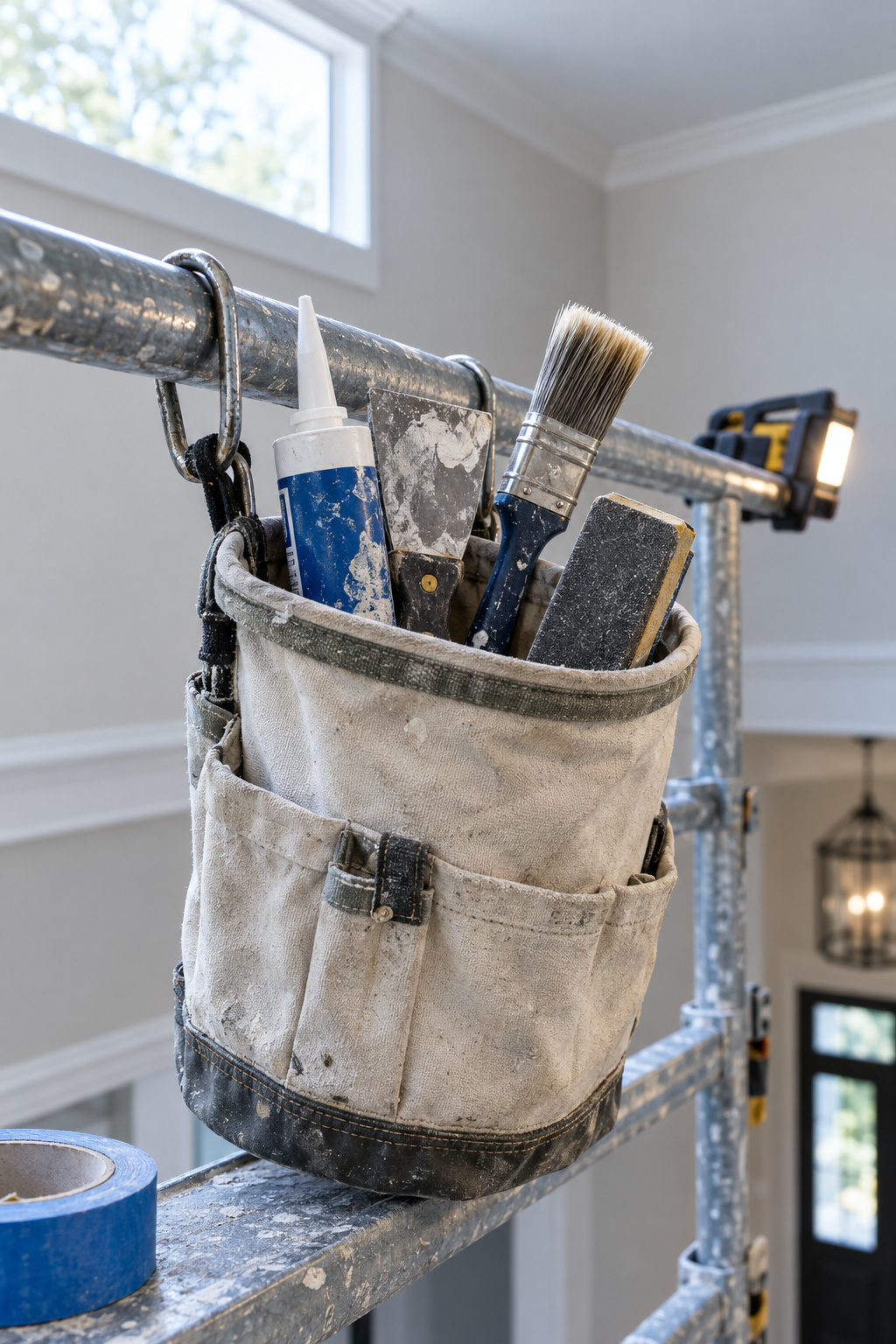
- Patch, caulk and prime first, because paint goes over them.
- Paint the top before the lower walls, so drips land on unfinished paint.
- Plan on adding trim while the scaffold is up if you want a band at the second floor.
- Finish with dressing the ledge in the same ladder trip once the paint has dried.
- Check the whole wall from the floor in daylight before the tower comes down.
The Cost of a Weekend You Didn’t Plan
I keep hardware-store receipts in the truck’s sun visor, because something is always going back. On a foyer, what goes back late is the rental. Every project takes one more weekend than the video promised, and keeping a tower and a ladder two extra days adds $152 to $378. Book the week up front and that weekend is already paid for.
Today, measure the tallest wall, door and windows included. Call a rental store for a week’s price on a tower with guardrails, outriggers and delivery. Then ask one painter for a quote on the top half only.
On my example foyer, with a painter at the bottom of that per-square-foot range, even the dearest delivered DIY total sits $800 under the cheapest pro quote. Your walls will give different numbers, which is why you measure first. When the paint is dry, the rest of the space is waiting in decorating a two-story entryway top to bottom.
FAQ
What paint sheen works best on high foyer walls?
Matte or flat suits most high foyer walls, because it hides the dents and roller marks a tall wall shows. Choose a washable matte for the lower walls people brush past. In a dim foyer, eggshell’s slight sheen reflects what light there is, which can keep the upper wall from looking dull and flat.
How do you paint the ceiling of a two story foyer?
Paint the ceiling first, before the walls, so drips never land on finished paint. Use a low-sheen ceiling paint to hide unevenness. Painting the ceiling the wall color takes the pressure off cutting a perfect line from a pole. Fixr prices a 12 ft stairway’s ceiling at about $1 to $2.50 per sq ft, less than its walls.
How do you protect the stairs and floor when painting a tall foyer?
Cover the floor and every stair tread with drop cloths, and mask woodwork and light fixtures before you open a can. Use a cloth at least 6 ft wide, because drips travel farther from height. Stand a rolling tower only on firm, level floor with every outrigger set.