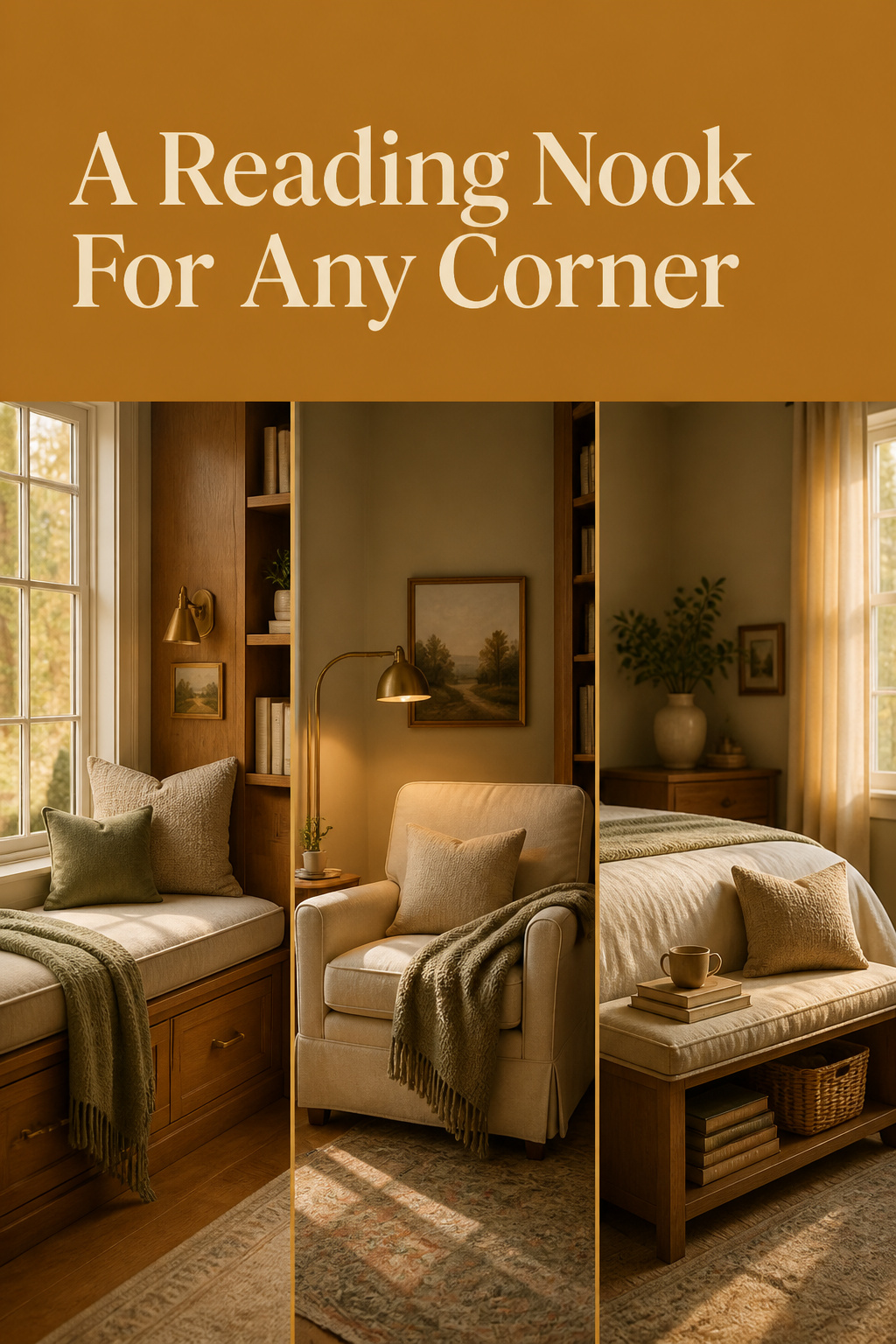
In 1814, British troops burned the Capitol and its roughly 3,000-volume congressional library. Thomas Jefferson offered Congress his own collection to replace it, and Congress paid $23,950. The detail I never tire of: the contract covered 6,487 volumes, Jefferson’s own count ran nearer 6,707, and he never asked for the difference. His library was choice not for its size, but because he had built it shelf by shelf, for use.
Bedroom reading nook ideas fill Pinterest by the thousand, and a reading corner is really that principle shrunk to a single chair: everything in it is used, not displayed. What the photos never tell you is why one corner holds you for an hour while the one you copied sits empty. That gap is the whole of this article.
TL;DR
- A reading corner works on four principles, not a style: a seat that fits your posture, light aimed at the page, books within reach, and a scale that suits the corner.
- For the light, aim for 300–600 lumens at the page (450 is the sweet spot) and set the lamp behind and to the side of your shoulder, so it lights the page, not your eyes.
- A workable nook needs only about a 4-by-4-foot footprint — roughly 16 square feet — so even a small bedroom usually has room near a window or the foot of the bed.
What Actually Makes Bedroom Reading Nook Ideas Work
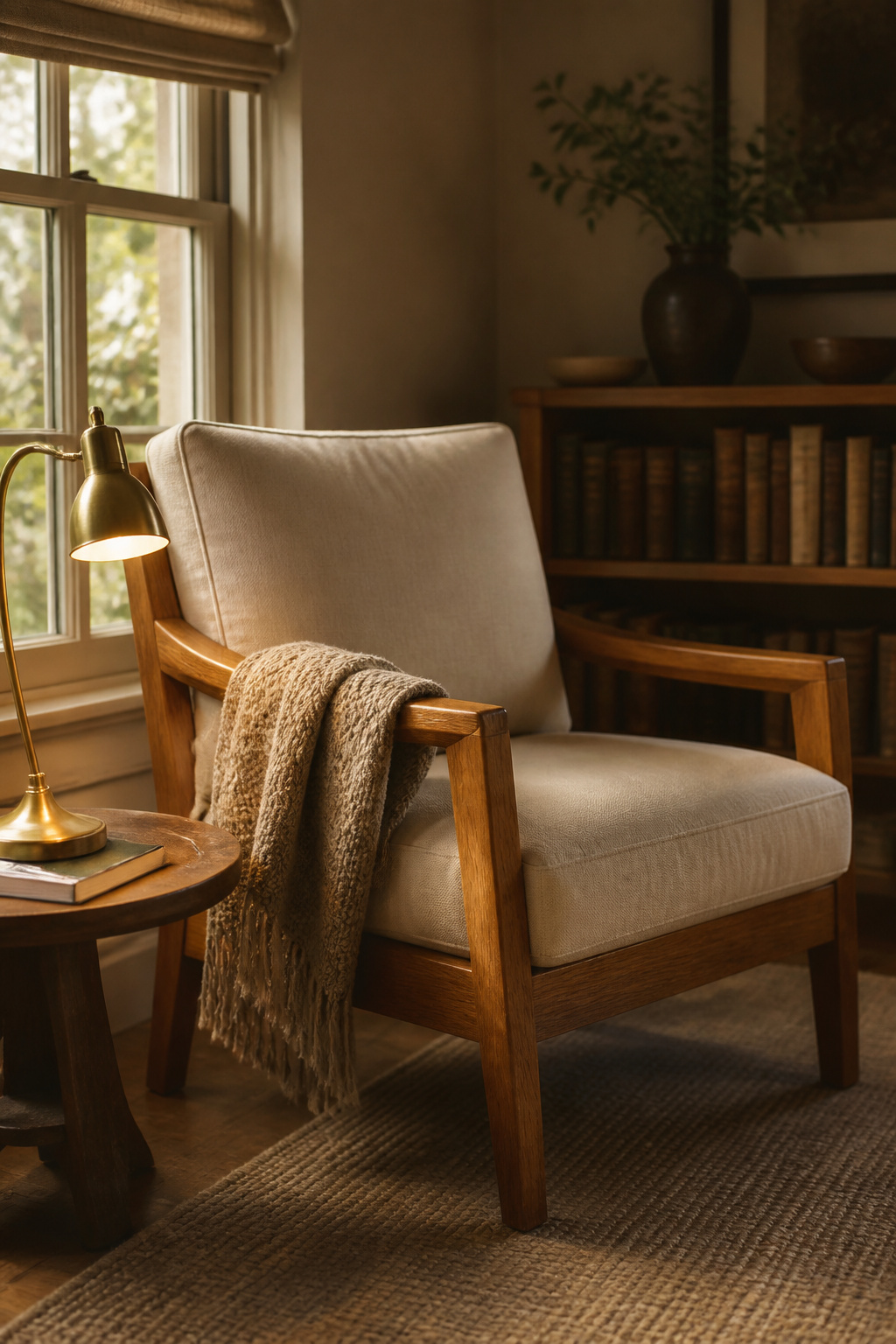
Strip away the styling and every reading corner runs on the same short list.
A library precedent for the private reading corner
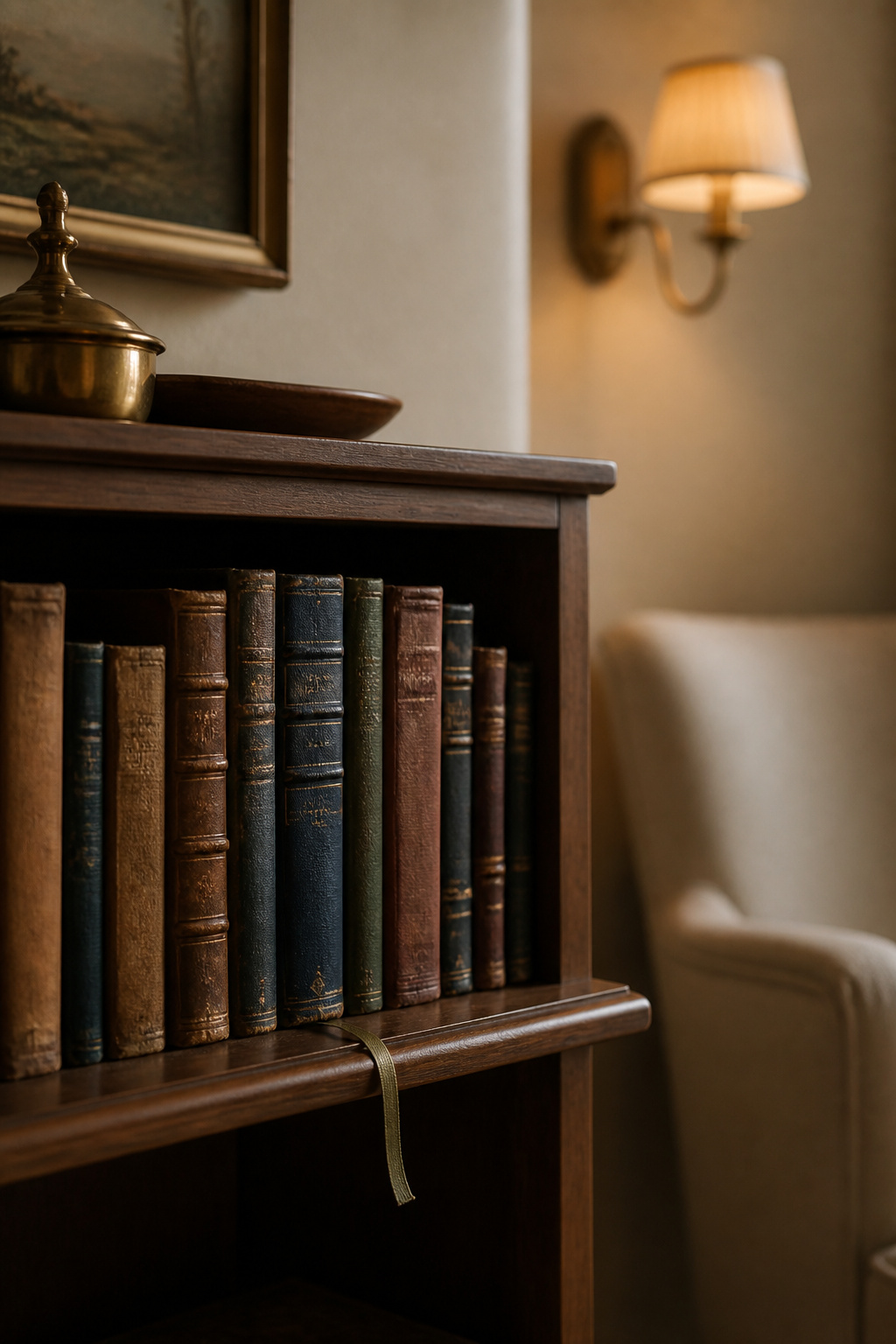
Ann Lowengart Interiors makes a point I would carve over the door: the shelves worth photographing hold well-loved books, not props. A reading corner is that test at single-chair scale — it rings true only when the books on the shelf are the ones actually in rotation. Decorate a corner with unread books and it looks like a set.
The principle beneath the photos: light, seat and reach
Interior designer Caroline Gidiere frames a nook around four essentials, in order: a seat with proper pitch, a hard surface within reach, a considered light source, and one tactile textile. Notice what is missing: a particular chair, a colour, a style. Two corners can look identical and feel entirely different, and the culprit is usually one of those first three done wrong.
Claiming a corner as a design act, not a compromise
I hold this firmly: every home has room for a real reading spot, and claiming a low-traffic corner with a chair, a light and a table is a design decision, not settling for leftover space. Ask yourself first how you actually read — curled sideways with a leg tucked under, or upright with tea going cold? That answer decides the rest.
Choosing the Chair or Window Seat
The most common way to get a reading chair wrong is to choose it with your eyes and not your spine.
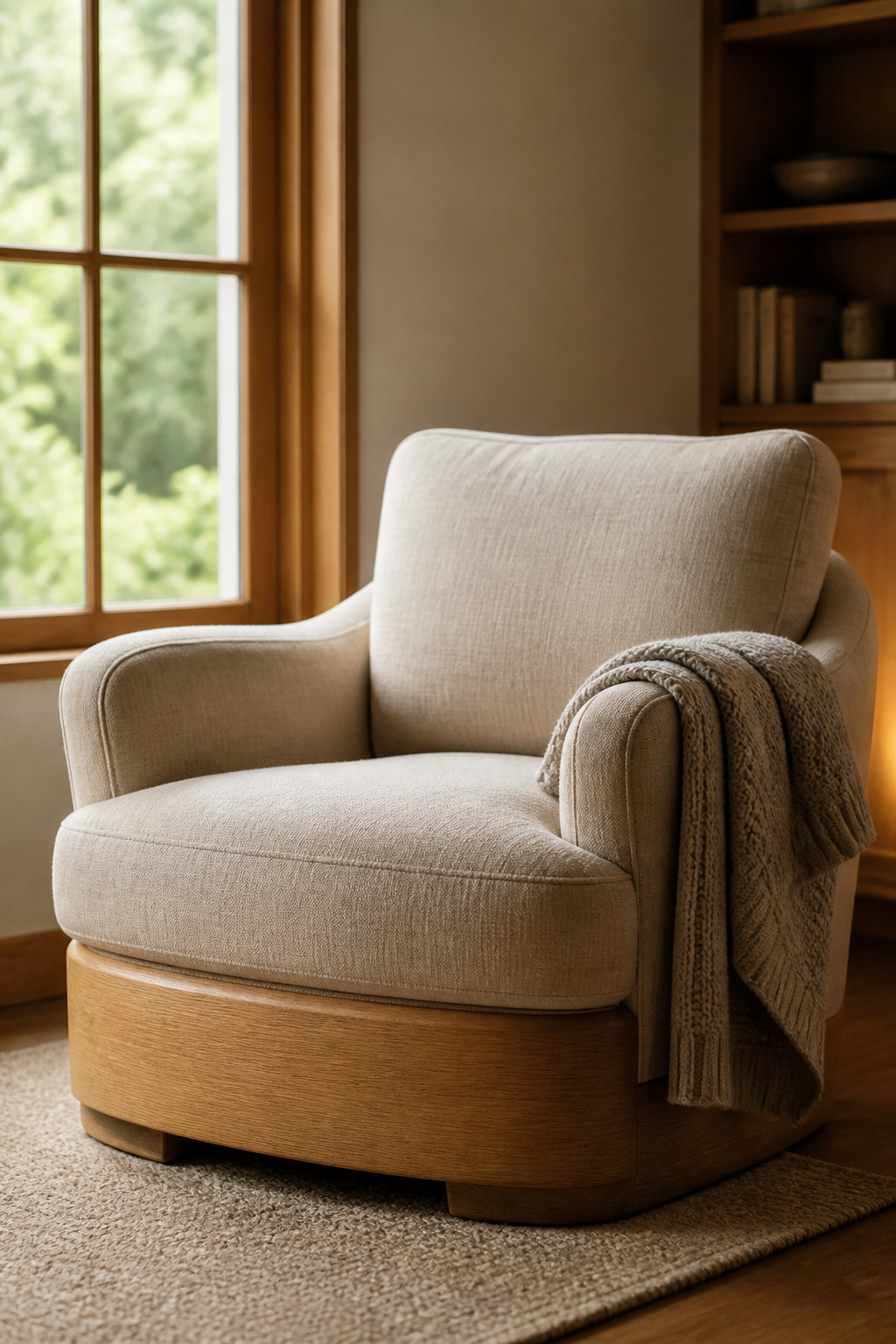
Chair depth and pitch for actual reading posture
Here is the librarian’s-footnote version. Seat depth wants 19 to 23 inches — deep enough to sit fully back with a 2-to-3-inch gap behind the knees. A 16-to-18-inch seat height keeps your feet flat, and a gentle 10-to-15-degree recline takes nearly 30 percent of the load off your lower back. A chair-and-a-half proportion beats a trim armchair, because it lets you curl rather than perch.
Window seats versus a freestanding chair
A built-in window seat solves the same problem from the other side: 17 to 20 inches deep, 16 to 21 high, at least 6 inches of cushion, and a 4-foot bench seats two. The trade-off is permanence — a window seat commits for good, while a freestanding chair follows the light. Both chase daylight, the best light a reading corner can have.
Buying once for the long sit
Buy the chair once and buy it right, because the abandoned reading chair is the most expensive one in the house. It need not cost four figures — a well-reviewed club chair with honest details turns up around $300 to $400. The tell is the base: interior designer Emily Henderson notes a solid, rounded wood base looks dearer than it is, while a flimsy one dates a cheap chair fastest.
Lighting the Nook So You Can Actually Read
How much light does reading actually take? Less than an office, and more than the mood glow most bedrooms settle for.
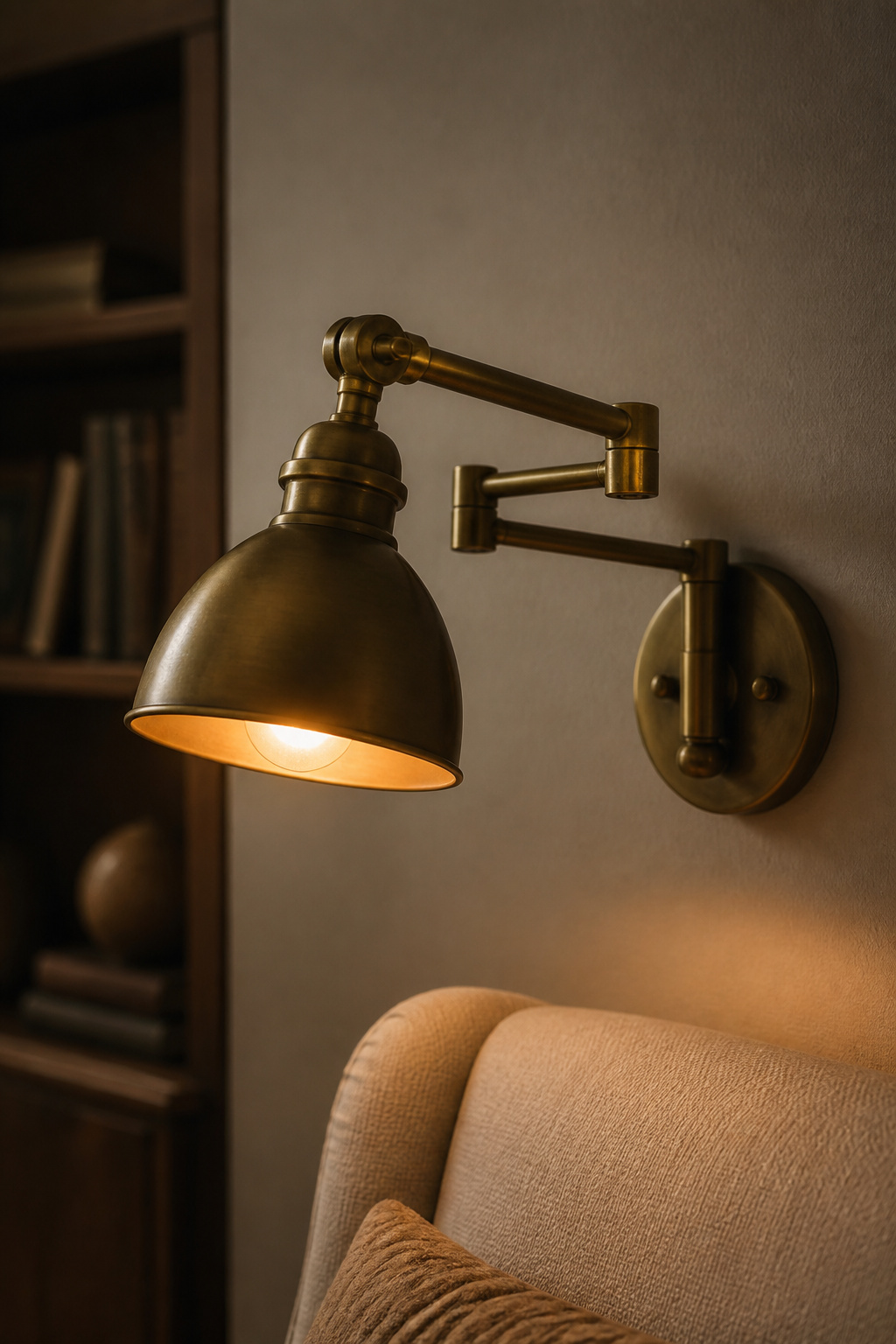
The lumens a reading task actually needs
In the special-collections reading room where I trained, light was what we were most careful about — rationed to the page, kept off the spines, measured rather than guessed at. You need no archival rigour over a paperback, but the instinct scales down: measure the light where the page is, not at the ceiling.
| Reading light target | Recommended level |
|---|---|
| Task light at the page | 300–600 lumens (450 is the sweet spot) |
| Library / study illuminance | 30–50 foot-candles (300–500 lux) |
| General living-space illuminance | 20–30 foot-candles (200–300 lux) |
| Colour rendering at 2700K warmth | CRI 90 or above |
The IESNA Lighting Handbook puts library reading well above a general living room. A warm bulb with low CRI proves it: cosy, and still hard to read by.
Task lamp placement relative to the shoulder
Placement matters as much as brightness. Set the lamp on the side opposite your dominant hand, about 15 inches from the page, so your arm never shadows the line. A source roughly 20 inches behind you, angled 30 degrees to the side, lights the page without reaching your eyes. That over-the-shoulder position is the one designers keep returning to, and a swing-arm sconce delivers it while freeing the table.
Avoiding glare on the page
Glare comes from a light aimed at glossy paper, or a fixture in your line of sight. Angle the lamp so it skims the page from the side. A single overhead commits both errors at once, casting your own head as a shadow across the text. The nook needs only its task light; the room’s larger scheme of layered, low glow is a separate project — see warm bedroom lighting for that.
A Small Table, Shelf and the Books Within Reach
Everything a reading corner needs should live inside an arm’s reach — the gap between a habit that holds and one that dies from fetching the book.
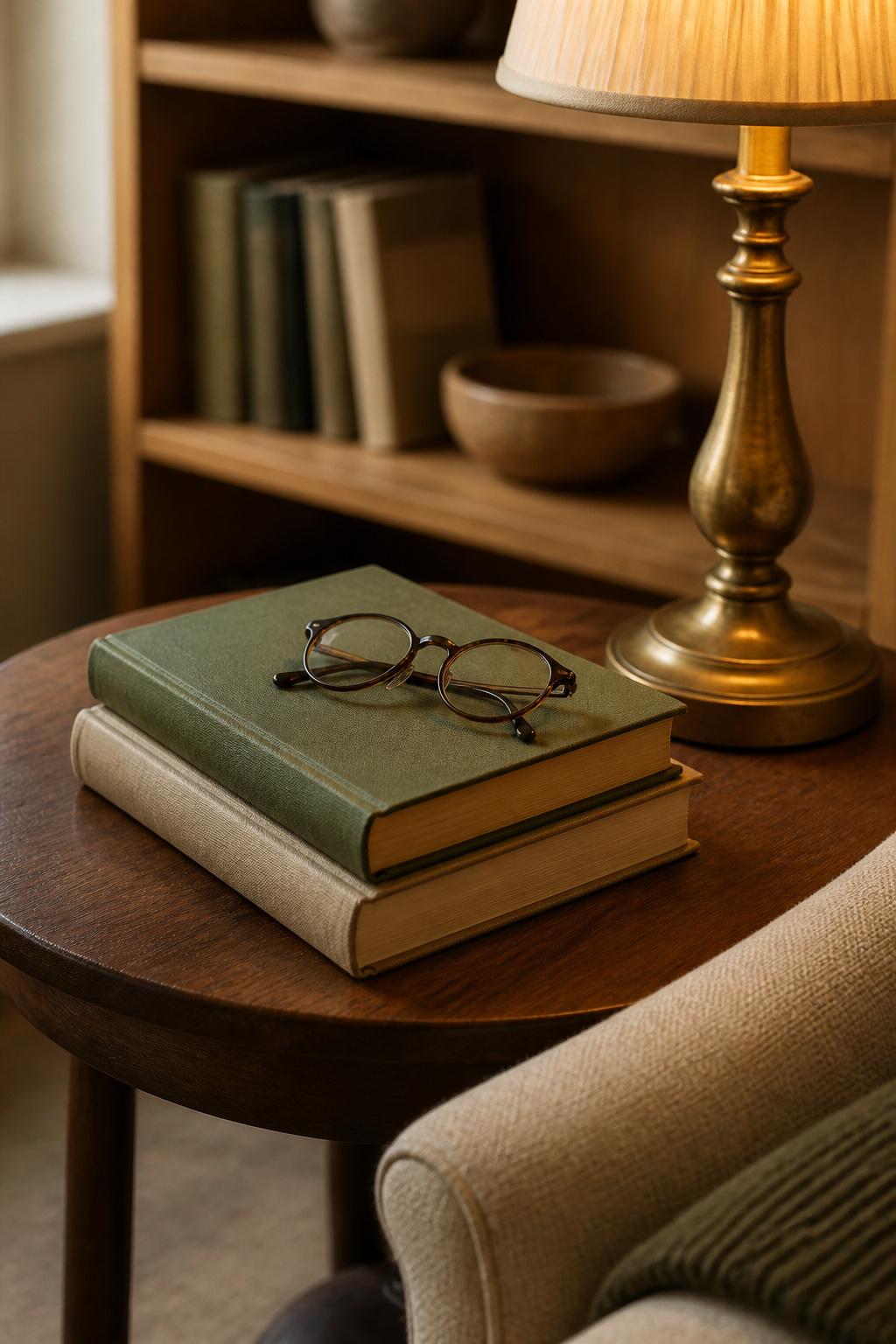
What a side table actually needs to hold
A side table should sit level with, or an inch below, the chair arm — around 18 to 24 inches high as a good rule of thumb, so you reach it without leaning. Within easy reach it should carry:
- The book in progress, and the next one or two behind it
- A hard surface for a cup of tea or coffee
- Somewhere to set a phone, face down
- Reading glasses and a bookmark
A shelf or drawer underneath keeps the glasses, the bookmark and the top itself clear.
Shelf depth for the books that live here, not the whole collection
The nook shelf is not the library; it holds the working rotation, which keeps the numbers kind. Ten to twelve inches of depth suits a mixed run of paperbacks and hardcovers, and 8 to 12 inches of vertical clearance between shelves handles all but oversized volumes. Give paperbacks the same shelf dignity as hardcovers — a reading life is not graded by binding.
Retrieval over display
Shelve for retrieval, not for looks. A shelf you cannot pull a book from without a game of Jenga has become a wall treatment — not what you sat down for. Keep the in-progress stack at arm’s reach. If anyone proposes turning the spines to the wall for a tonal effect, that is the point at which I get up and leave.
Fitting a Nook Into a Tight Footprint
Small bedrooms are where people assume a reading nook is out of the question. They are usually wrong; only the proportions change.
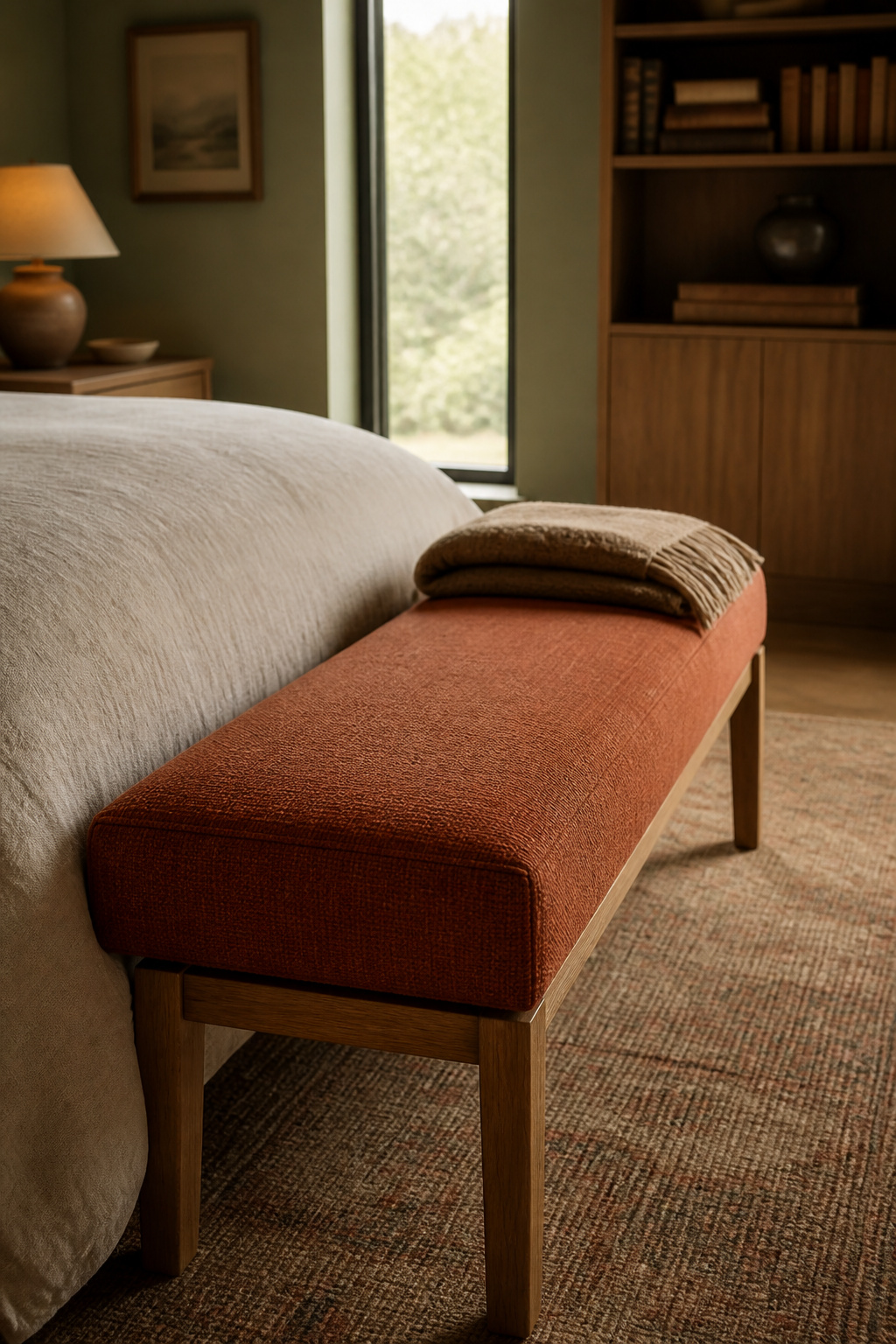
The minimum footprint a nook needs
A commonly cited rule of thumb puts the workable minimum near a 4-by-4-foot area — about 16 square feet — enough for a chair, a small table and a lamp. Treat it as reasonable guidance rather than a code figure. No obvious corner? Recessed niches, the deep end of a hallway, or a repurposed shallow closet are the usual places the space turns out to be hiding.
Corner, window bay, or foot-of-bed placements
Three placements do most of the work. A low-traffic corner near a window is the default. A window bay or dormer alcove concentrates the room’s best daylight into one spot. And the wasted foot of the bed takes a bench, which a widely repeated guideline sizes to about two-thirds of the bed’s width — roughly 40 to 44 inches for a queen, 47 to 53 for a king.
Scaling the same principles down
A tight footprint changes the furniture, not the requirements. Swap the wide chair for a narrower one, the floor lamp for a wall-mounted swing-arm sconce, the bookcase for a wall shelf. The sconce especially earns its keep here, giving reading light without spending scarce floor space. The seat, the light and the reach still apply — they just take less room.
Making the Corner Feel Claimed, Not Borrowed
Stand in the doorway and look. Does the corner read like a deliberate place, or a chair someone left there? The last small moves decide it.
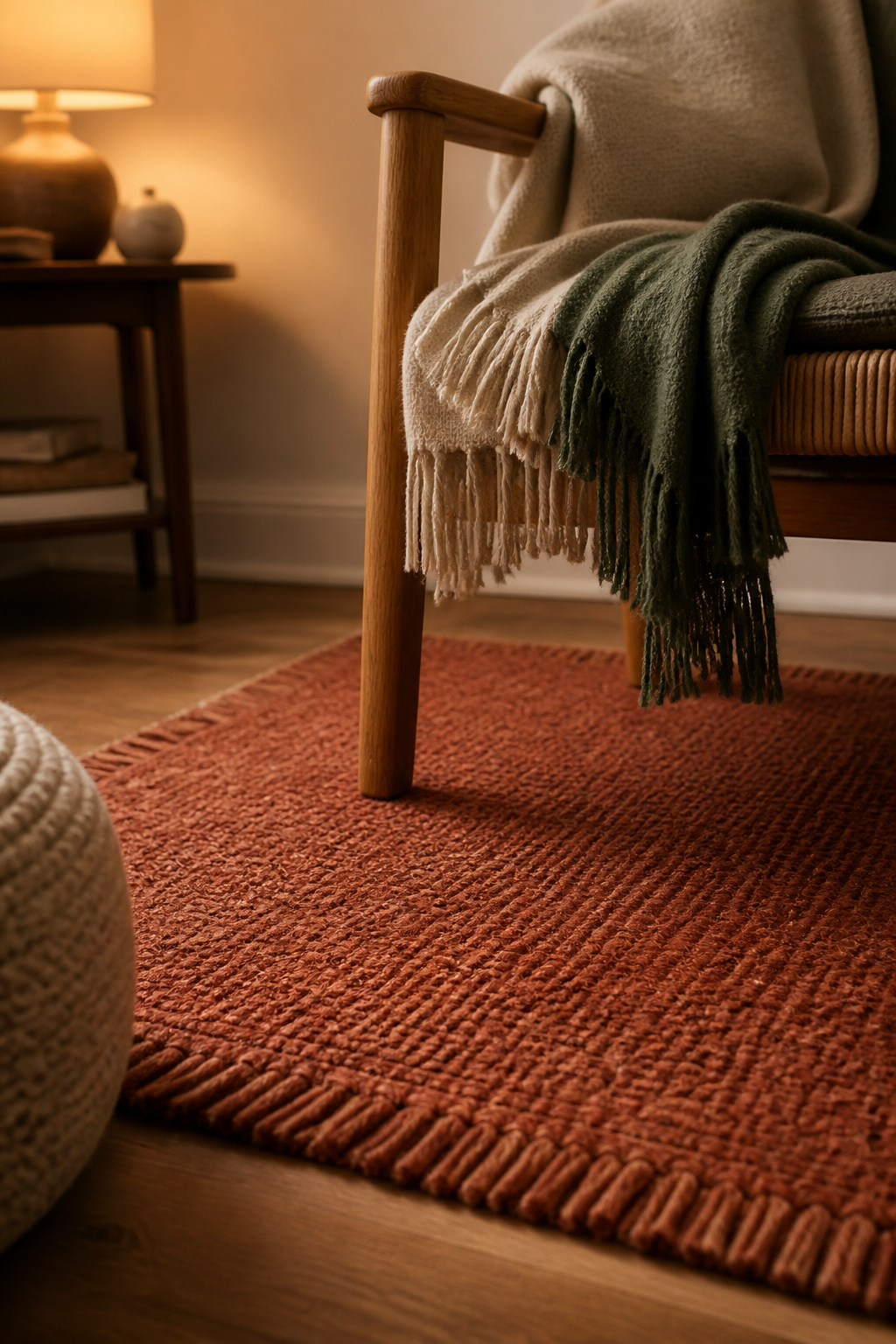
A throw, a rug edge, a lamp that says ‘this is different’
Gidiere’s fourth essential was one tactile textile, and it does more than it looks. Something soft — the upholstery, a throw, a lampshade — signals relaxation before you have sat down. A rug does the structural job: a 5-by-7 or 5-by-8 suits a compact corner, and in a tight layout it is fine for only the chair’s front legs to rest on it. When in doubt, size up.
Signaling the corner’s boundary without walls
A corner needs no partition to feel enclosed; it needs an edge. A rug under just the chair draws that edge without a single wall. Layered throws finish it — an oatmeal base with a deeper terracotta or sage looks considered where one flat blanket never does. These are cues, not construction, yet they turn floor space into a room within a room.
Living with the corner day to day
An ottoman often tips a nook from a chair in a corner to a place you sink into. But the corner keeps its floor space only if you live in it honestly: leave the book in progress on the table, and the moment it is tidied out of reach, it reverts to just a chair. Reduce it all to four words — light, seat, reach, scale — and you stop copying a photo and start reading your own corner the way Jefferson read a shelf: by what it is for. Apply those four to your quietest corner, and the rest can follow, whether that means a calmer bedroom or the wider cozy bedroom ideas guide.
FAQ
How much floor space does a reading nook actually need?
About sixteen square feet — a rough 4-by-4-foot area — is enough for a chair, a small table and a lamp comfortably. Treat it as a commonly cited rule of thumb, not a fixed standard. A narrower chair, around 30 to 35 inches wide, plus wall-mounted light lets that same footprint work in a genuinely small bedroom.
Can you fit a reading nook in a small bedroom?
Yes. Recessed niches, the deep end of a hallway, or a shallow closet can yield nook space when no spare corner is obvious. Scaling down means a narrower chair, a wall sconce instead of a floor lamp, and a small wall shelf rather than a full bookcase — but the same seat, light and reach apply.
Does a reading nook need its own rug?
Not strictly, but a rug is one of the simplest ways to mark the corner as its own space without a wall or partition. A 5-by-7 or 5-by-8 rug suits a small nook, and in a tight layout only the chair’s front legs need sit on it.