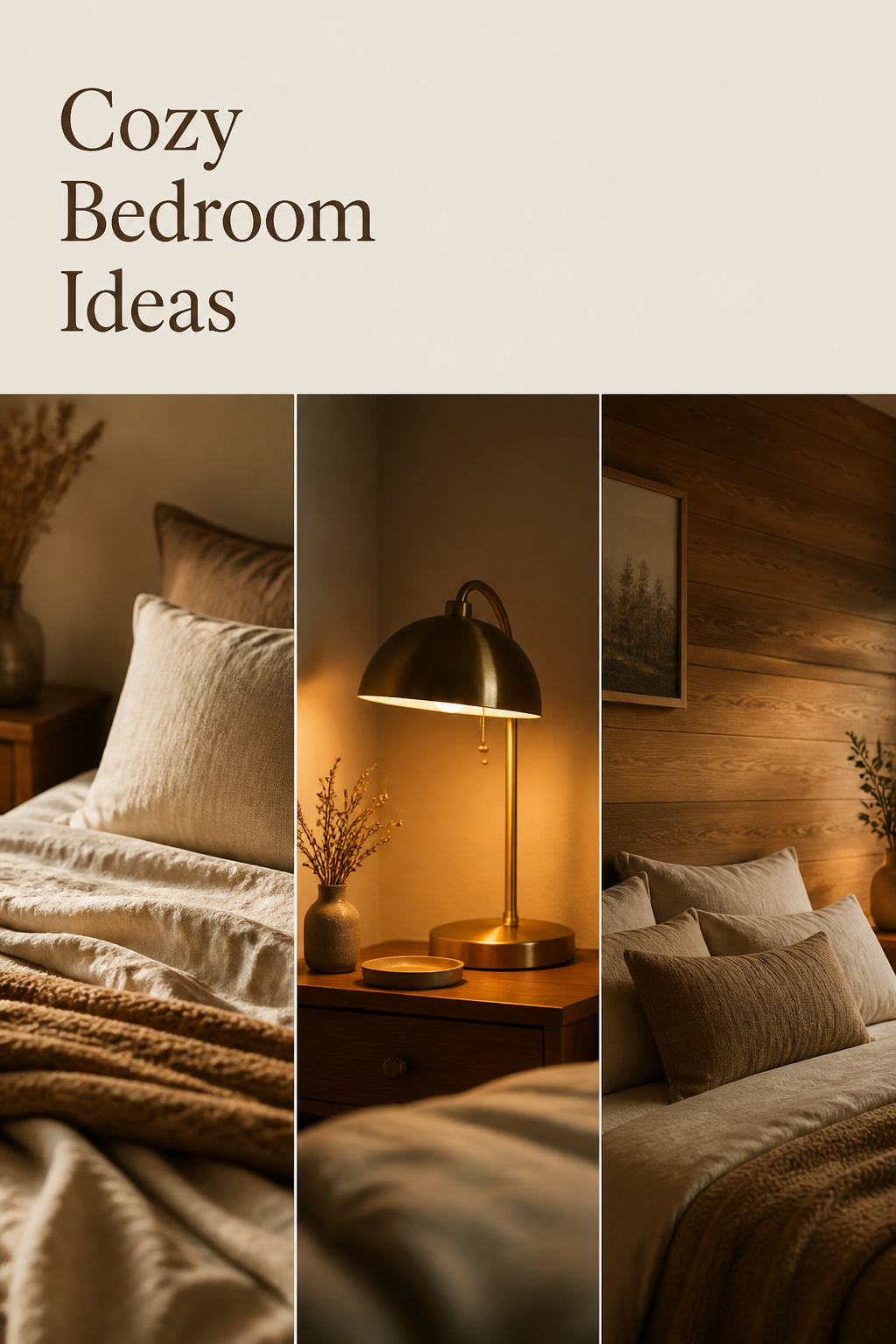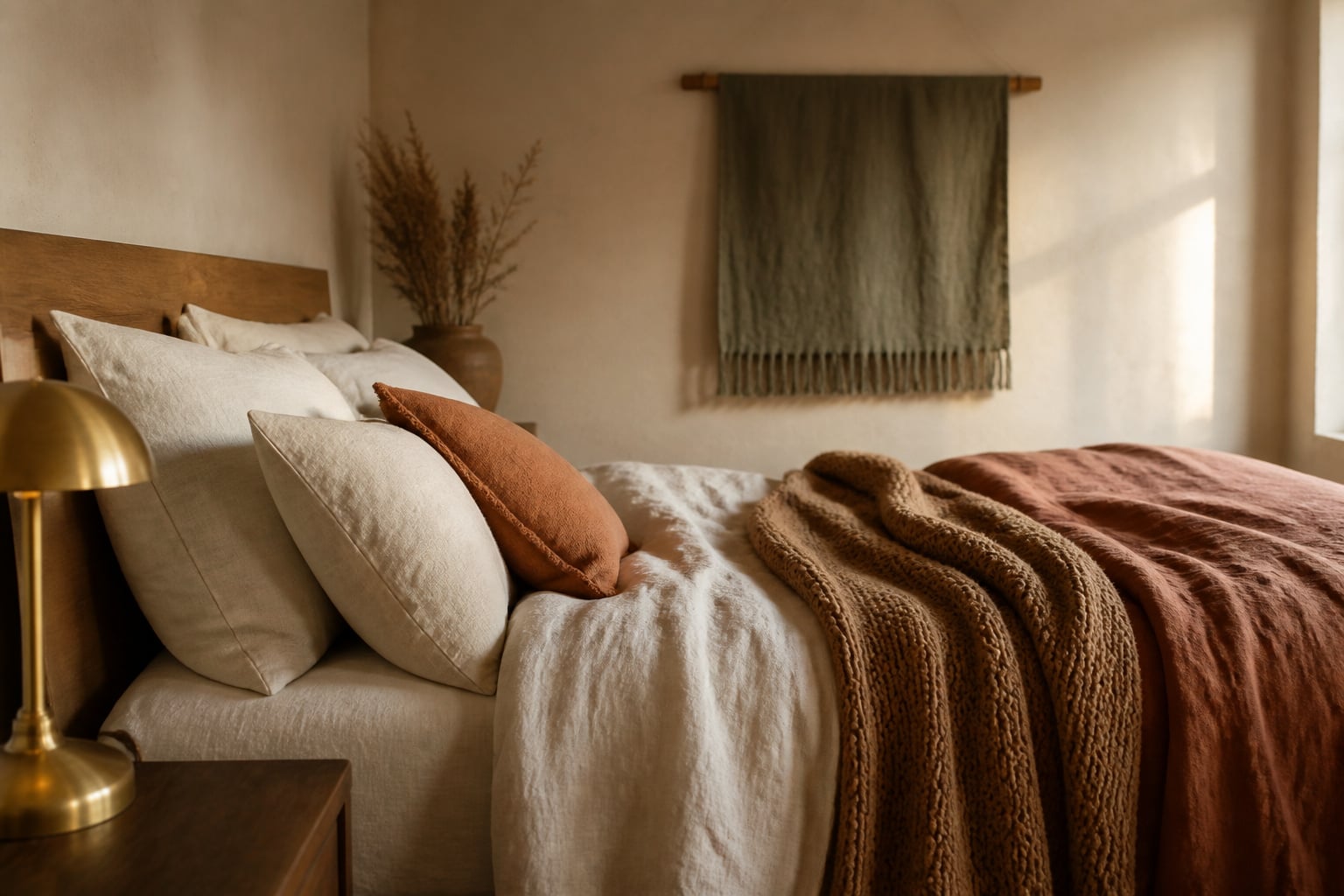

Search “cozy bedroom ideas” and you get a thousand of them: string lights, a mountain of throw pillows, a candle in every photo. Almost none of it tells you which change to make first, or which one your room actually needs. I have spent years building warm rooms in a climate that spends half the year in the dark, and the surprise is always the same. Coziness is not a long shopping list. It is five or six levers, and most rooms need only two of them fixed to turn the corner.
This guide sorts the noise. I will walk every lever that genuinely warms a bedroom — bedding, light, color, a soft corner, a built feature — and hand each one to a deeper guide, then end where most articles begin: with which change to make first, in your room, on your budget. The obstacle here is not a cold room. It is the paralysis of too much advice with no order to it.
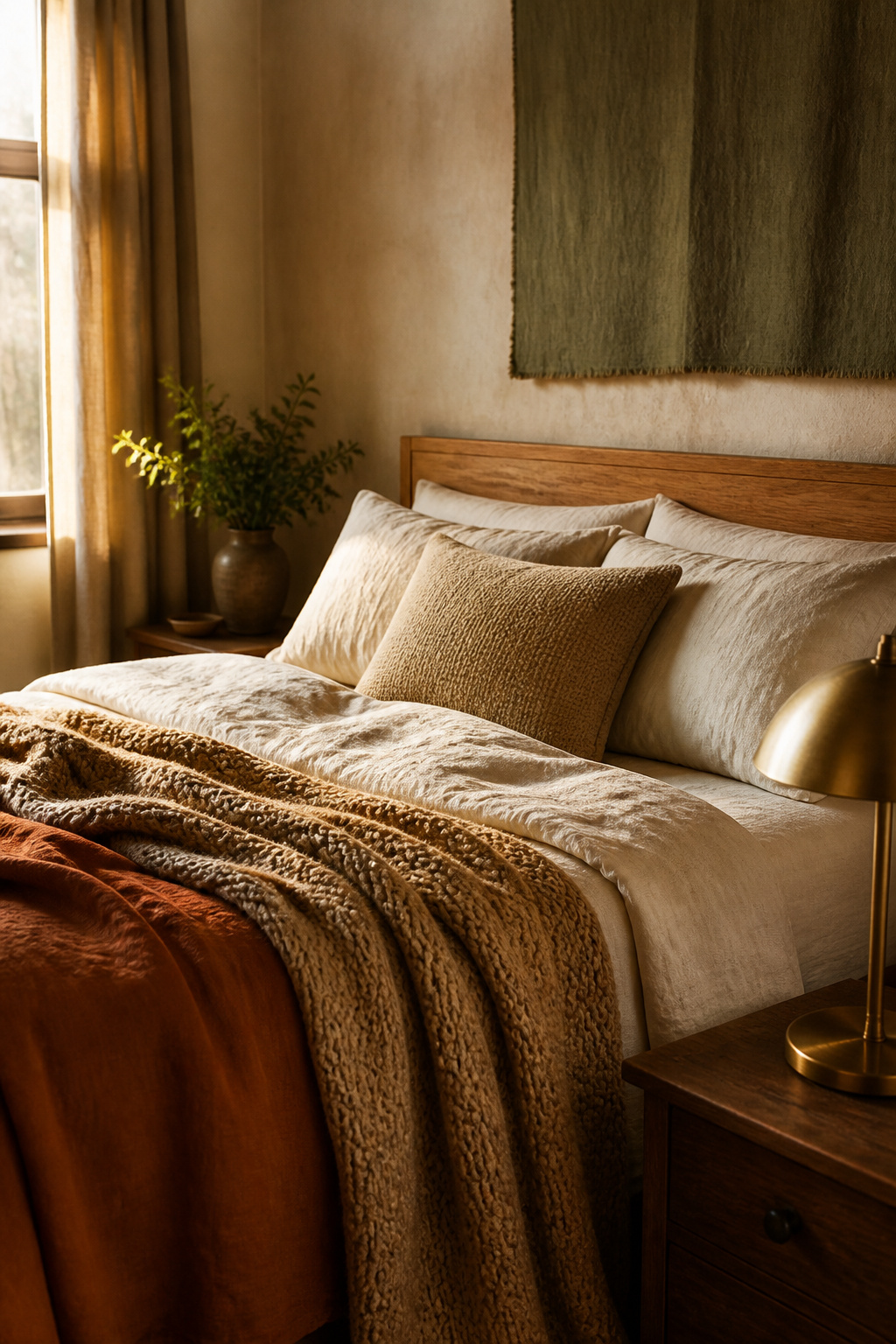
What Cozy Bedroom Ideas Actually Share
Strip the styling away and every warm bedroom runs on the same short logic. Coziness is not decoration you add at the end. It is warmth you build in from the floor up.
Warmth is layered, not decorated on top
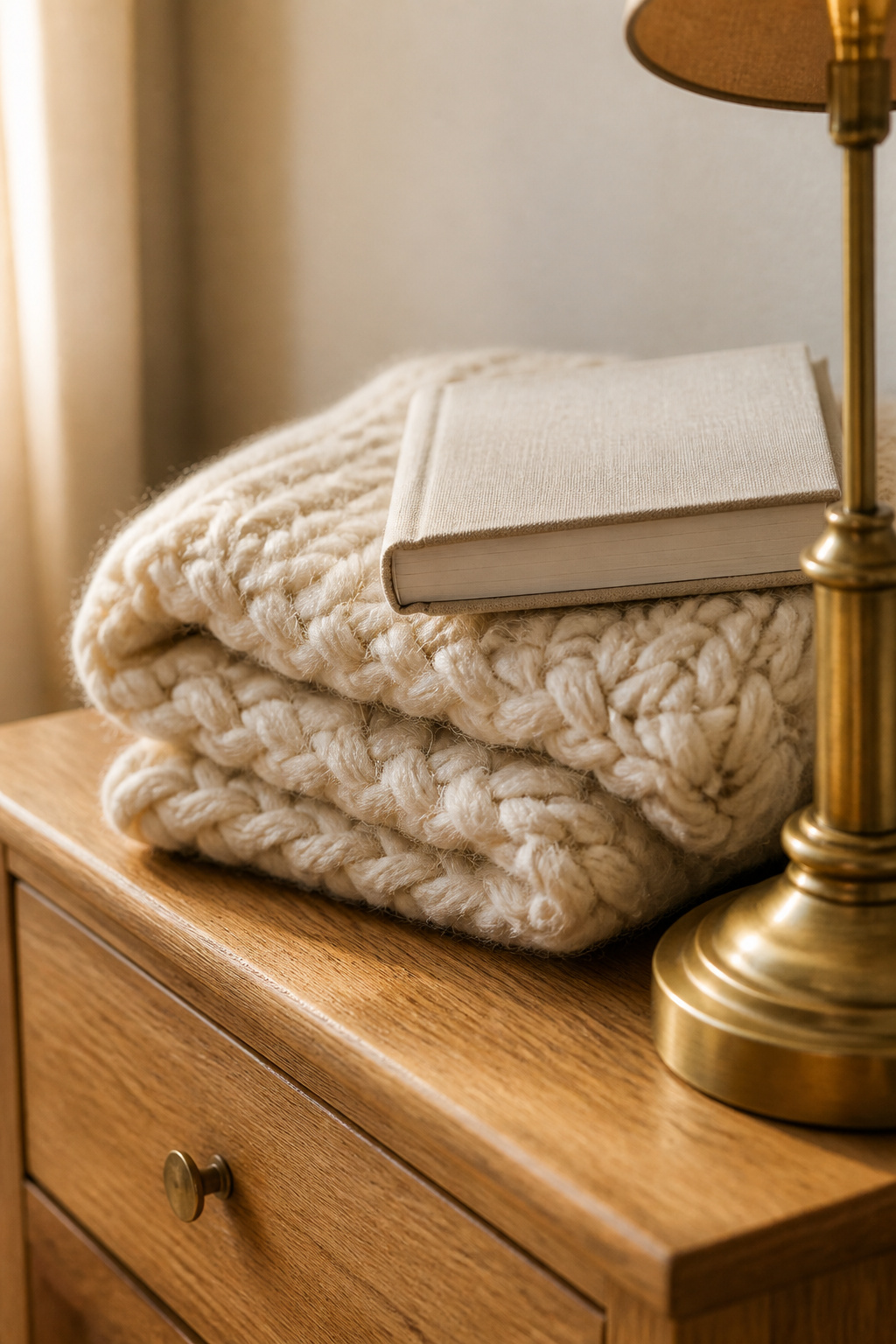
Interior designer Tamsin Johnson starts a room with a rug she can lie down on over a timber floor, then builds up from there — warmth arrives in successive layers, never as a finishing touch dropped on last. Georgia Metcalfe of French Bedroom doubles up throws in contrasting textures, setting something with sheen against something matte, like velvet and linen, so the two catch light differently and the pairing looks intentional rather than accidental. That is the thread running through every idea below: warmth is a stack of small decisions, not one big purchase. The most common mistake in a cozy bedroom is treating it as a single buy — one blanket, one candle — instead of a set of layers that add up.
The feeling a cozy room is really after
Yvonne Keal of Hillarys puts it simply: at its core, coziness is a feeling of safety, warmth and comfort, not a particular style. That is why the same lever can warm a rustic farmhouse and a spare, modern room equally — a low, golden lamp does the same work in both. Caitlin O’Keeffe of Serena & Lily ties the warm look to layered materials and darker neutral tones — beige, deep olive, textured whites — rather than to any one color. Chase the feeling, not the look, and you stop copying photos that were never your room.
The rule of three, and the levers ahead
One discipline keeps all this layering from sliding into clutter: the rule of three. Hold a room to about three material tones or finishes sharing one undertone family — all warm, or all cool — and it looks considered. A fourth or fifth competing texture starts to look busy; one or two alone look bare. Oak, wool and linen in the same warm register is the rule in practice. With that guardrail set, here are the levers this guide covers, fastest and least disruptive first.
| Lever | How fast | How disruptive | What it warms |
|---|---|---|---|
| Layered bedding | An afternoon | None | The bed — the room’s largest soft surface |
| Warm, low light | An evening | Low | The whole room after dark |
| A warm paint palette | A weekend | Medium | Every wall at once |
| A soft corner | A weekend | Low | A second, restful use for the room |
| A wood feature wall | Two weekends | Medium-high | Texture and depth behind the bed |
Budget and calm are missing from that list on purpose. Neither is a single object — they are lenses you apply over every lever above, and each gets its own section near the end.
Layer Your Bedding for Warmth
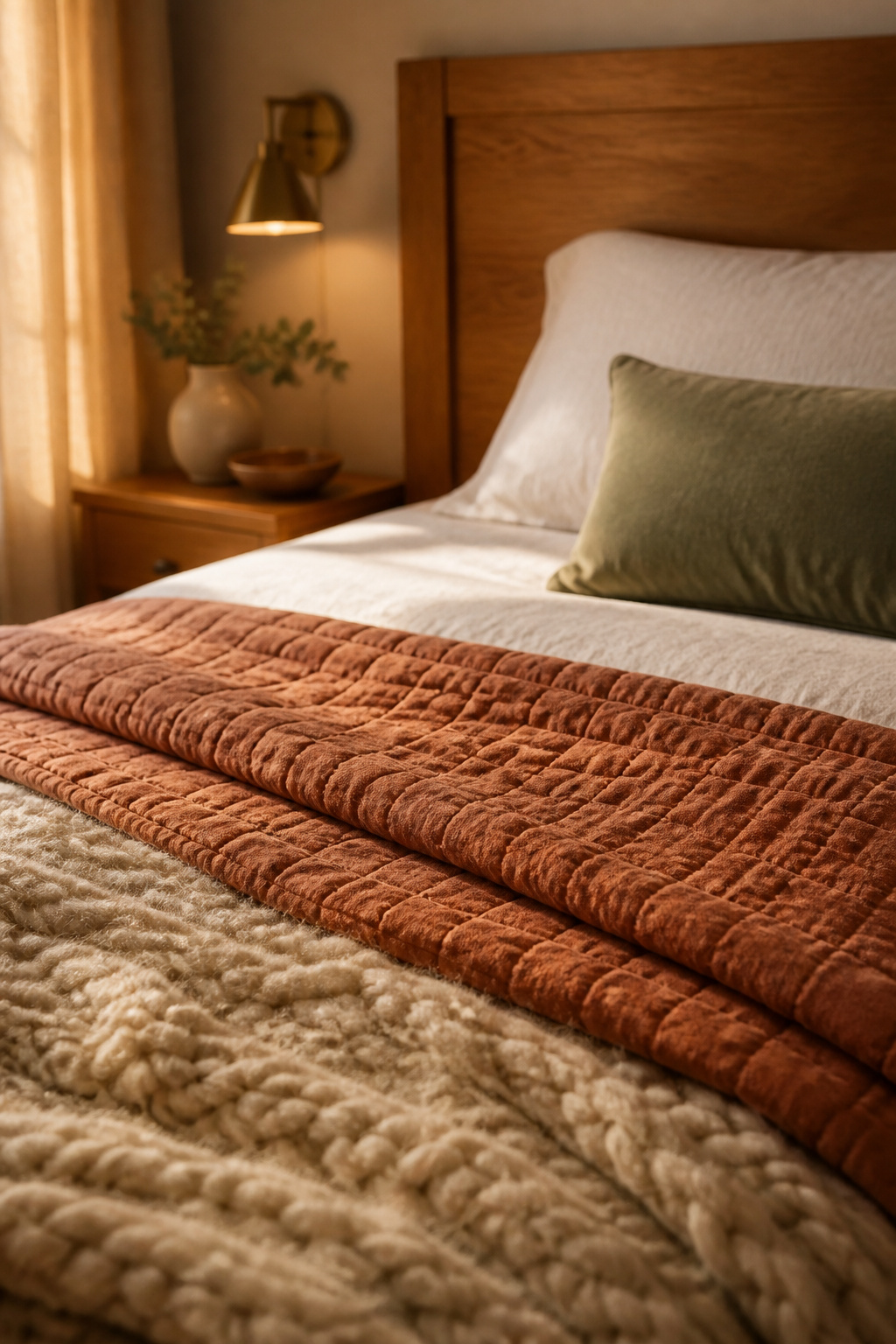
A bed and its bedding cover more of the room than any other surface you style, which makes it the fastest place to add warmth and the natural place to start. Build it as a system, in order, and a few layers will out-warm a crowded pile.
The order layers go in
The stacking order that works, from the mattress up: fitted sheet, flat sheet, a quilt or coverlet folded back about a third, then a duvet or comforter, tiered pillows behind your sleeping pair, and a throw across the foot. Ruben Gutierrez of Errez Design calls the sheets the foundation — skimp there, he warns, and the whole thing falls apart. Fold the coverlet back rather than burying it, so the layers underneath show instead of hiding.
Fabric and weight choices
Sheets in cotton, linen or bamboo breathe and hold temperature; the top layers are where you build warmth and contrast — a wool or textured-linen throw over a lighter, year-round coverlet. A sheepskin laid over a larger rug is one of the coziest additions a bedroom can take, per designer Bethany Adams, and works better layered than used alone. Designer Nina Lichtenstein describes layered quilts and duvets as the move that shifts a bed from merely functional to deeply nurturing.
When a bed has too many layers
More is not warmer. Gutierrez names pillows as the spot where people lose their way — the fix is balance, not volume. The rule of three applies to the bed itself: roughly three fabrics sharing one undertone looks curated, while a fourth or fifth competing texture starts to look like a heap. The full method — which layer folds back where, how duvet weight matches your room’s temperature, how many pillows is too many — is a craft of its own, set out in a guide to how to layer your bedding for warmth.
Warm Up the Light in the Room
Nearly every bedroom ships with the same flaw: a single bulb in the middle of the ceiling, and nothing else. It is the main reason a room can feel cold the moment the sun goes down, and the easiest thing on this list to fix in an evening.
Why one overhead bulb fights coziness
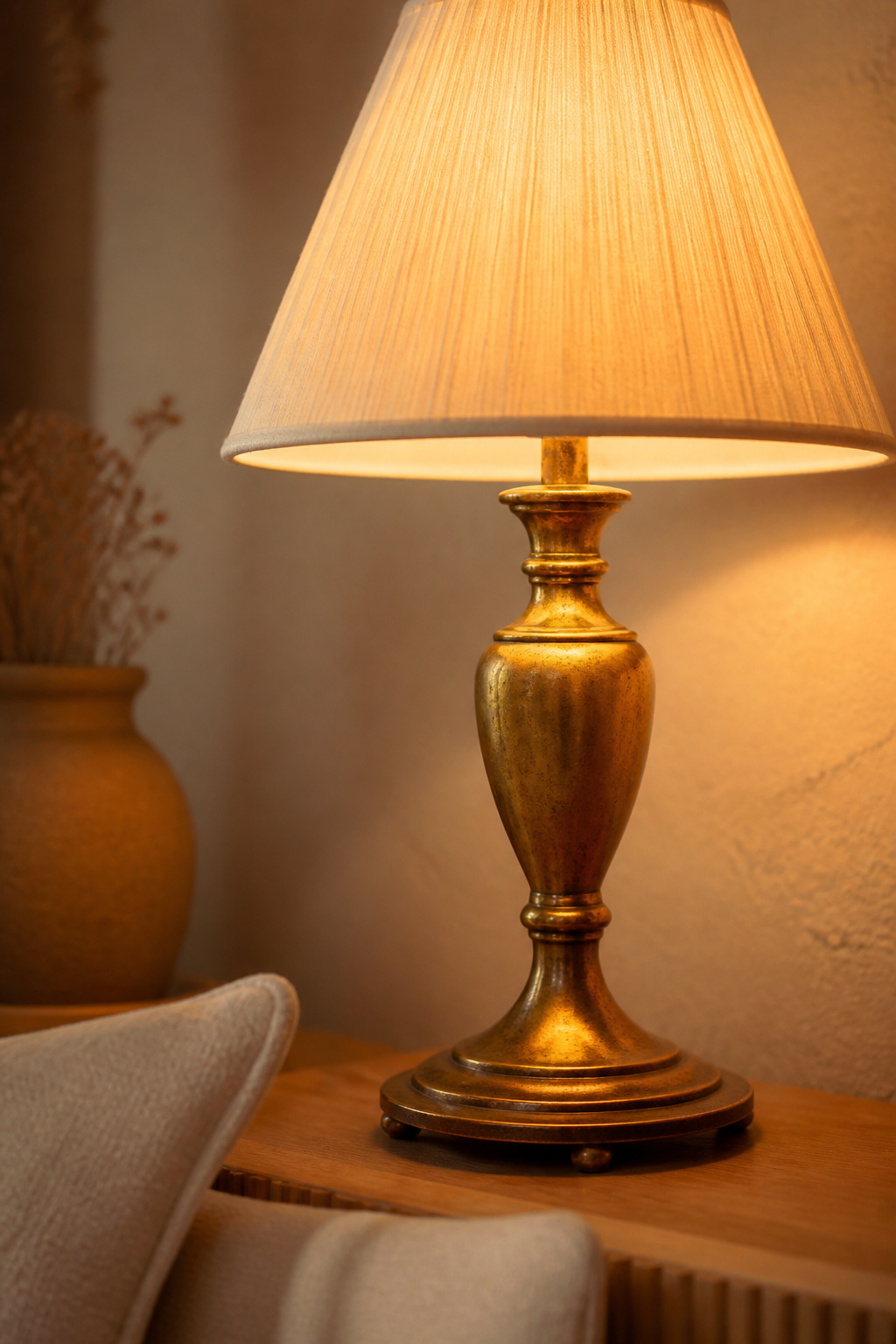
Designer Rohan Blacker’s rule is blunt — avoid the big light; one central fixture as the only source makes a room flat, stark and uninviting. Flat light erases the shadow that lets wood, linen and brass look warm rather than utilitarian. Brighten that one bulb and all you get is a flatter, brighter room. The light in a bedroom is the first thing you feel after dark and the first thing worth changing.
Layering bedside, wall and accent light
The fix is three kinds of light working together: ambient to move around by, task light to read by, and a low accent glow for depth. A bedside lamp and a wall sconce cover the first two; a concealed strip behind the headboard or a grouped set of candles handles the third. Charlie Bowles of Original BTC recommends bone-china shades for the soft, translucent glow a bare or glass shade cannot give. Independent switches at each side of the bed end the nightly compromise over one shared overhead.
Bulb temperature in one sentence
Buy 2700K soft-white bulbs: the warm, golden tone minimises blue light and supports the melatonin that helps you fall asleep, where cooler 3500K-and-up bulbs work against it and read clinical in a bedroom. For bedside reading, aim around 450 lumens — bright enough for the page, dim enough not to fight sleep. Which fixtures, what height to mount a sconce, how to dim without rewiring — the full plan lives in a companion guide to warm bedroom lighting.
Choose a Palette That Reads Warm
What makes one beige feel warm and another feel like a dentist’s waiting room? Not the name on the chip. Two things decide it, and the paint aisle hides both — the color’s undertone, and the light your room actually gets.
Undertone over hue
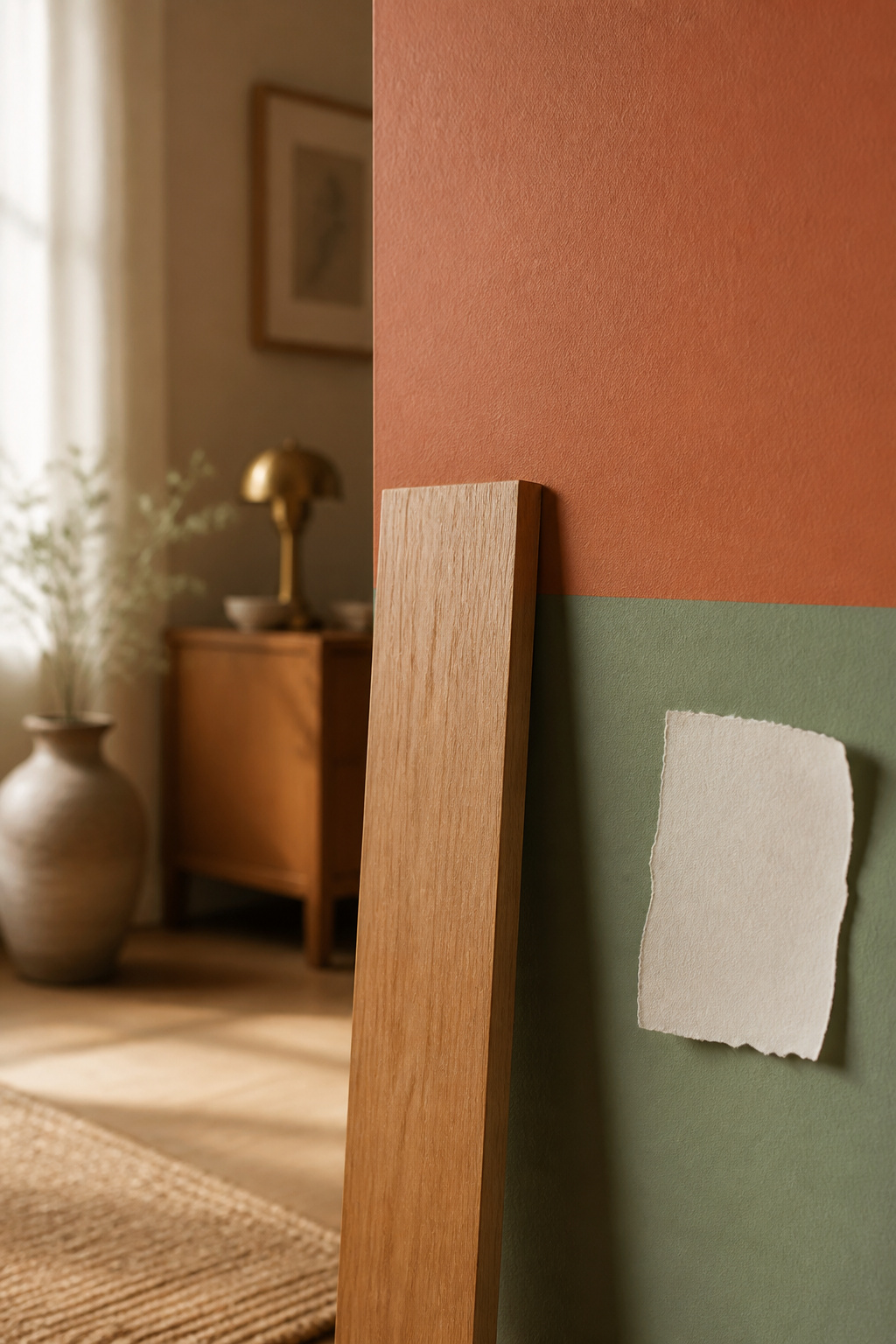
Undertone is the color family beneath the visible hue: a yellow, orange or red base pulls warm; a blue, green or grey base pulls cool, whatever the label says. You can spot it by comparison. Hold a swatch against plain white paper in daylight and the warm one shifts gold while the cool one goes faintly blue. That single test settles more paint decisions than any color name.
Earthy neutrals to moody depths
Four families cover most bedrooms: warm whites and greiges for a whole room, soft terracottas and clay tones for an accent wall, muted sages that stay earthy rather than minty, and moody charcoals or forest greens for depth. Light reflectance decides how a color behaves — a low-reflectance terracotta or charcoal wraps a room close, while a high-reflectance warm white opens it up. Keep the saturated colors to a single wall, usually the one behind the bed, the first your eye meets walking in.
Testing a color before committing
The same chip changes through the day, so test it where it will live: brush a real sample onto the wall and check it in morning, midday and evening light before you commit to a full can. North-facing rooms need the warmth most, because their daylight runs cool and flattens warm undertones. The named shades that survive that test — and the reflectance numbers behind them — fill a guide of their own on warm paint colors for the bedroom.
Add a Corner Made for Slowing Down
Most bedrooms have a chair that has quietly become the place clothes go to land. Reclaim it, and the room gains a second use it never had — somewhere to sit that is not the bed.
Why a dedicated corner matters
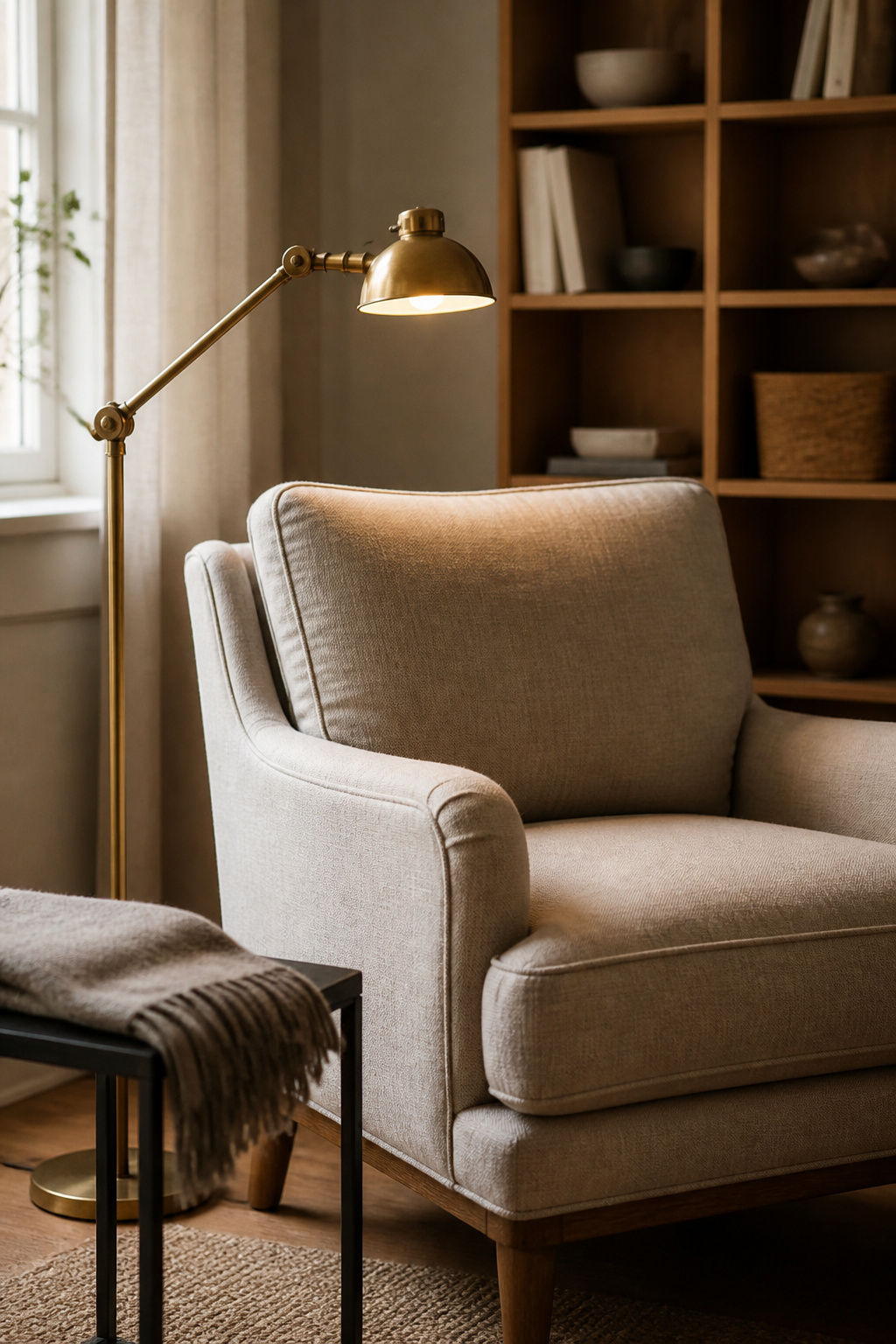
Karen Pulaski of Tribute Goods counts a small sitting area among the moves that make a bedroom feel personal rather than purely functional. A corner with a purpose feels deliberate; the same corner left vague just collects clutter. Giving the room a non-sleep function is part of why a reading spot comes across as intentional rather than as more furniture crammed in.
The minimum a nook needs
It takes little: a comfortable chair, a side table within arm’s reach, a light you can aim, one soft throw, and somewhere for a few books. A swing-arm lamp with a dimmer lets the same corner serve both reading and winding down, dropping from a working brightness to a candle-like glow. That is the whole kit, and none of it needs a large room.
Fitting one into a small room
Even a tight bedroom usually has the space; a built-in window seat runs just 17 to 20 inches deep, and a four-foot bench seats two. In a small room, favour slim-profile pieces — a narrow chair, a wall-mounted sconce instead of a floor lamp — so the corner does not eat scarce floor. The full build-out, from chair pitch to shelf depth to lighting the page and not your eyes, is our reading-room specialist Marcus Thompson’s territory, in his guide to how to add a bedroom reading nook.
Bring In a Built, Textural Feature
A plain painted wall behind the bed is a missed chance. Texture there changes the whole room, and building it is far less work than it looks — closer to a beginner’s weekend project than a contractor job.
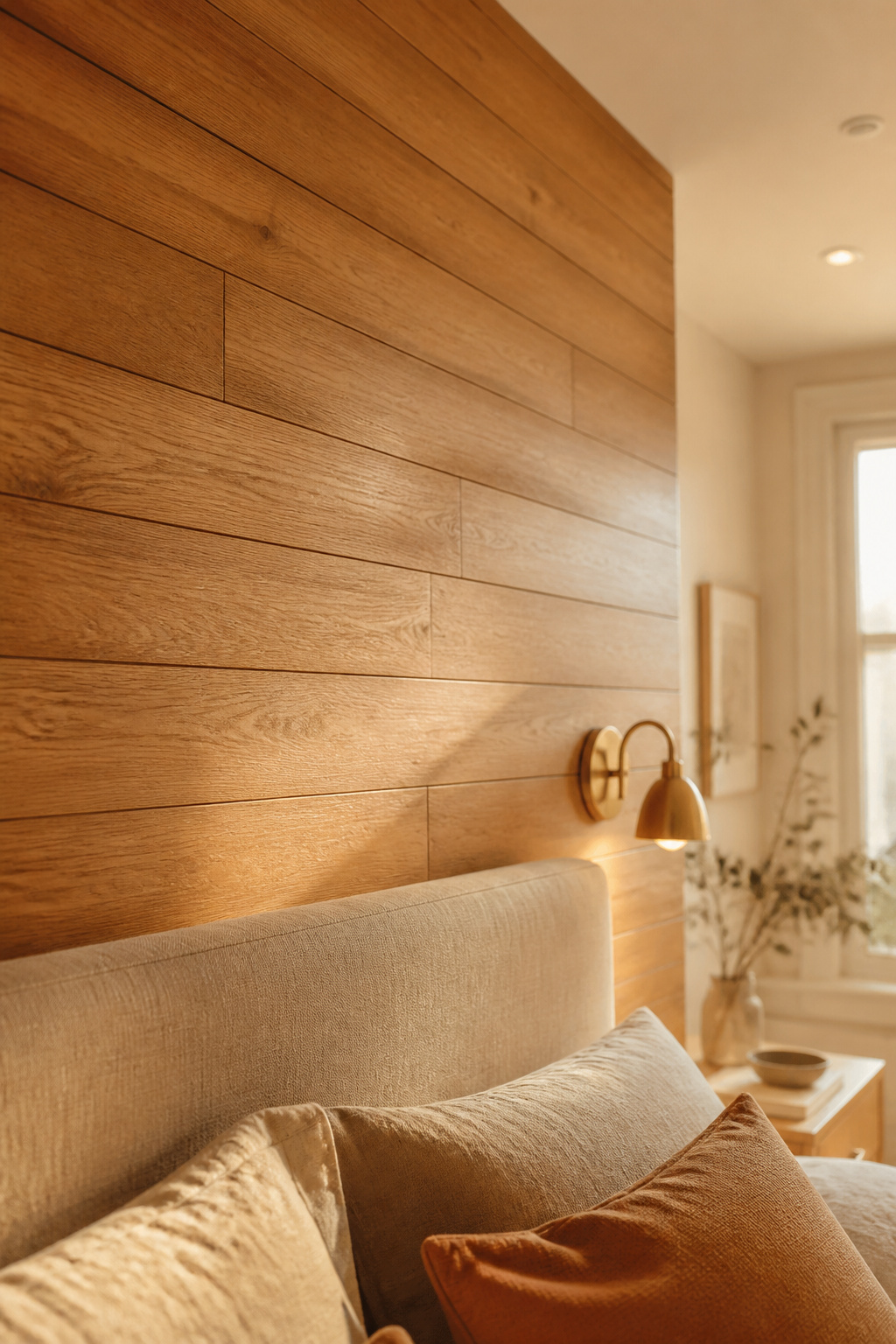
Why texture behind the bed changes the room
Tom Rutt of TR Studio frames natural materials in neutral tones as the direct way to warm a space and give it character — the reason a wood wall behind a bed feels warmer than the same wall painted flat. Wood also improves with time: walnut, in particular, starts chocolate-brown fresh-cut and lightens toward a deeper, caramel amber within its first six to twelve months of indoor light, so a wall built in it settles into its color rather than fading.
Plank, shiplap, slat or panel, briefly
Four common approaches cover most walls: horizontal shiplap for a classic line, vertical slats for height, flat panel moulding for a tailored grid, or simple planks. Horizontal boards make a room look wider; vertical ones make it look taller. All go up with the same basic kit — a saw, a level, a stud finder and a hammer or nail gun.
What a weekend build realistically takes
A bed-wall-sized feature of 80 to 150 square feet runs roughly $160 to $1,050 in materials for a do-it-yourselfer, and a furring-strip slat wall costs far less. The catch is the calendar, not the skill: boards need 48 to 72 hours to acclimate in the room before you nail them, or they gap later. DIY-build specialist Tess Carver walks the whole thing — cost, tools, and how to recover when a board won’t sit flush — in her guide to a wood plank accent wall behind the bed.
Do It on a Real Budget
A complete textile refresh — a throw and a set of pillows — runs about $60 to $100 and takes an afternoon. That one number dismantles the idea that a warm and inviting bedroom has a high price of entry. The rooms in the photos usually cost thousands because they were staged against a full renovation, not because warmth is expensive.
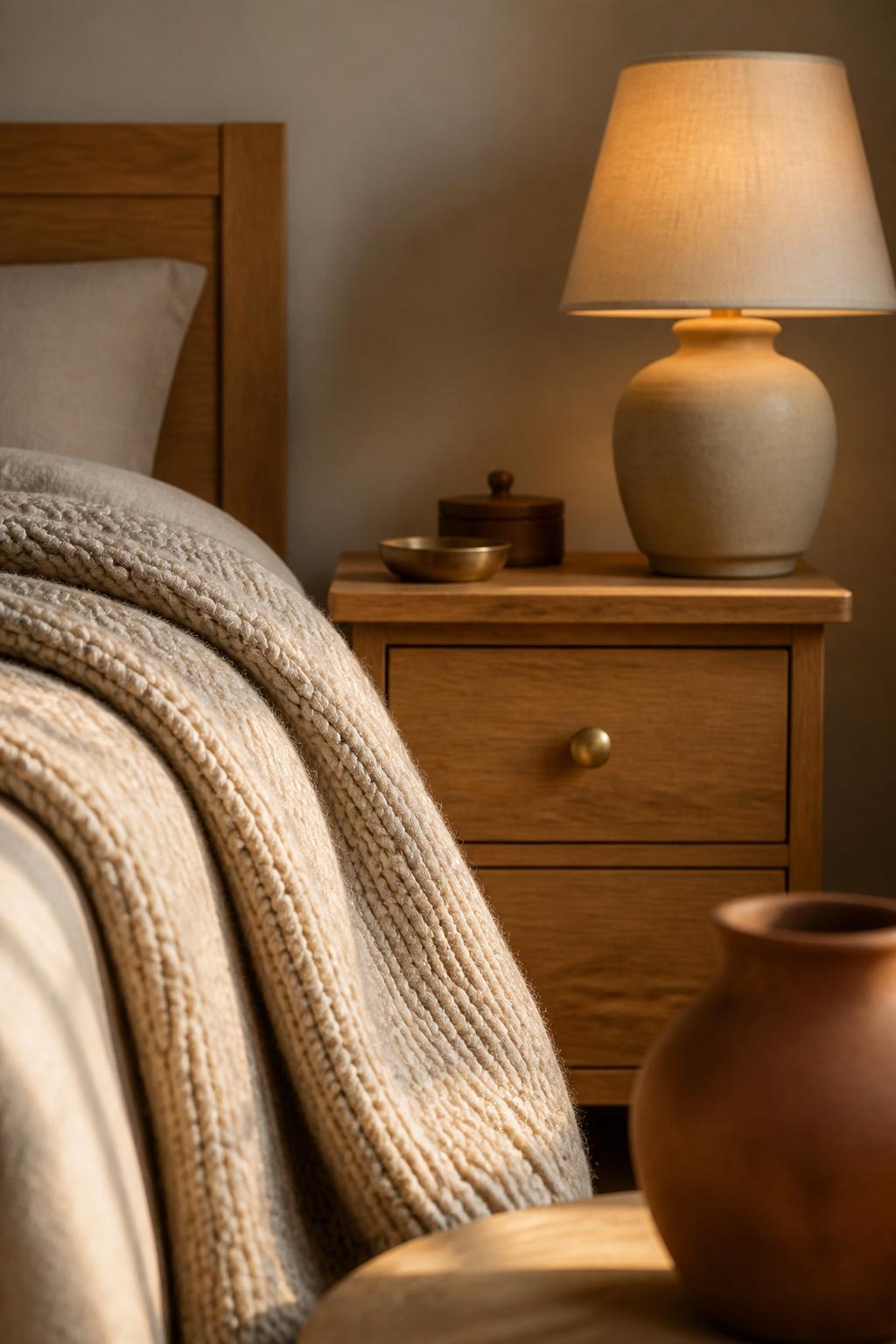
The highest cozy-per-dollar moves
HGTV’s editors name bedding as the one thing worth spending the most on, because you feel it every night and it touches the whole experience of the room. After that comes light: if you cannot remove an overhead fixture, a dimmer on it is a low-cost way to soften the room without a renovation. Layered throws and rugs sit among the most affordable transformations there are.
Where to spend and where to skip
Spend on what your body touches for eight hours a night — the mattress and the sheets — and save on what you only look at. A thrifted solid-wood dresser or a recovered headboard brings character at a fraction of new-furniture prices, while decorative cushions do not deserve the same money. Some of the best moves cost nothing at all: a plant, furniture pulled toward the window, cords and electronics tucked out of sight.
A simple sequencing plan by price
Buy in phases rather than the cheapest version of everything at once, which reads disjointed. The rough tiers: at $500, splurge on one anchor piece, often a rug; at $1,000, add lighting and storage; at $2,000, the finishing touches. The full itemised breakdown, thrift tactics and safe secondhand rules included, is in a guide to how to make it cozy on a budget.
Make the Room Calm, Not Just Warm
A room can carry every visual marker of warmth and still keep your body alert once the lights are off. Cozy is what a photo shows. Calm is what you feel with your eyes closed — and it runs on senses a camera never captures.
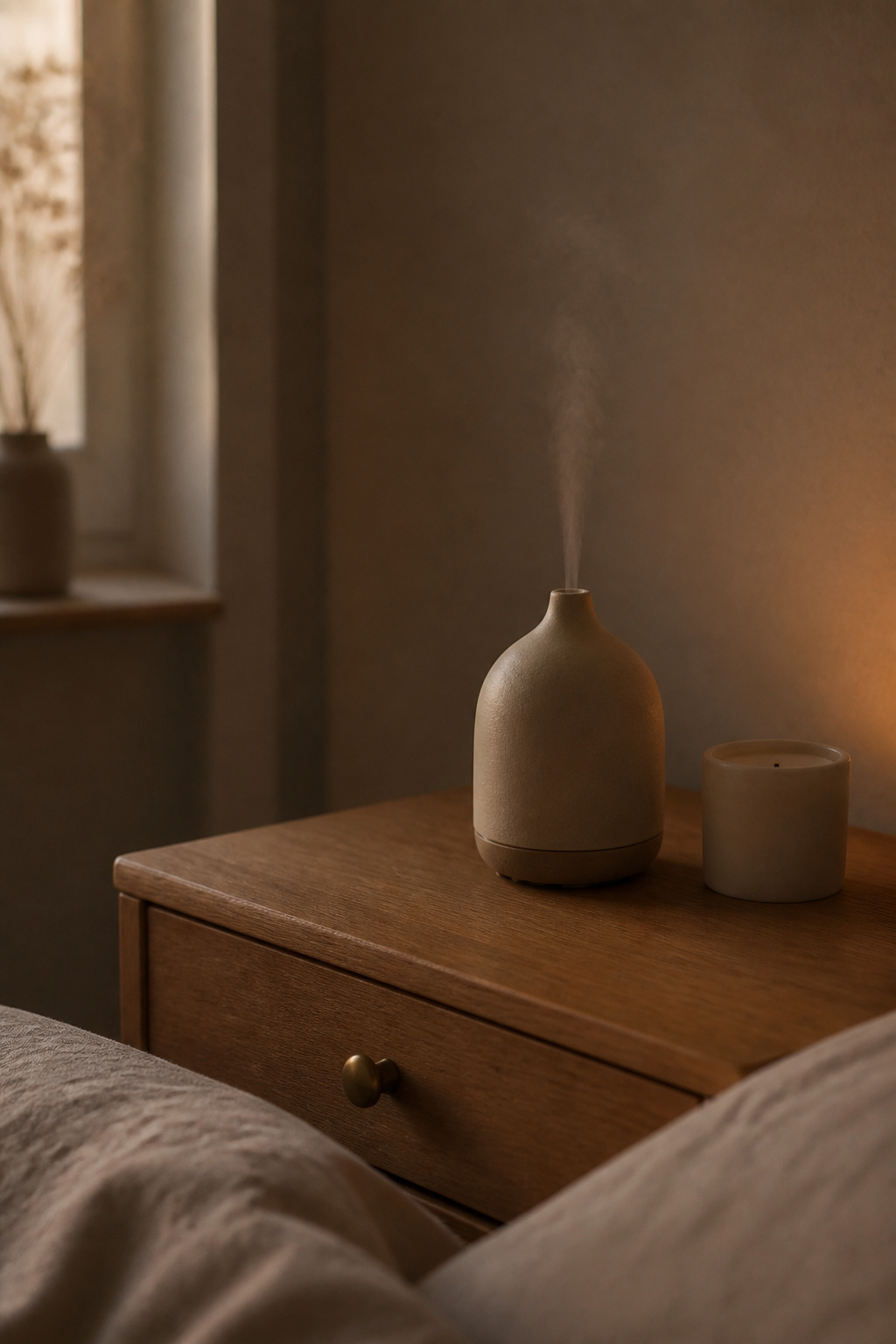
The difference between cozy and restful
Color psychologist Tash Bradley advises keeping saturated, high-energy colors out of a sleep space in favour of muted tones. A room can look warm and still be over-stimulating if the saturation runs too high, which is why calm is a separate target from warmth rather than the same one. The two overlap, but a cozy-looking room can still leave you wired at bedtime.
Scent, sound and decluttered surfaces
The best-evidenced calming levers are physical, not decorative. Keep the room around 65 to 68°F, since extremes in either direction interfere with rest. Clear the surfaces, because clutter tracks with higher stress and poorer sleep. Add a gentle scent — lavender, cedarwood or bergamot — as a light background layer rather than a strong dose right before bed. None of these show up in a styled photo, which is exactly why most rooms ignore them.
A wind-down corner
Reserve a small spot and a short, repeatable ritual for the hour before sleep, with screens left in another room. Consistency, more than the specific ritual, is what trains the body to feel sleepy on cue. The full sensory and sleep-quality side of a bedroom — scent, sound, air and the routine that ties them together — is mindful-design specialist Aisha Patel’s subject, in her guide to a calmer, more restful bedroom.
Where to Start First
So which lever do you pull first? After all seven sections, the honest answer is short, and it is the same for most rooms.
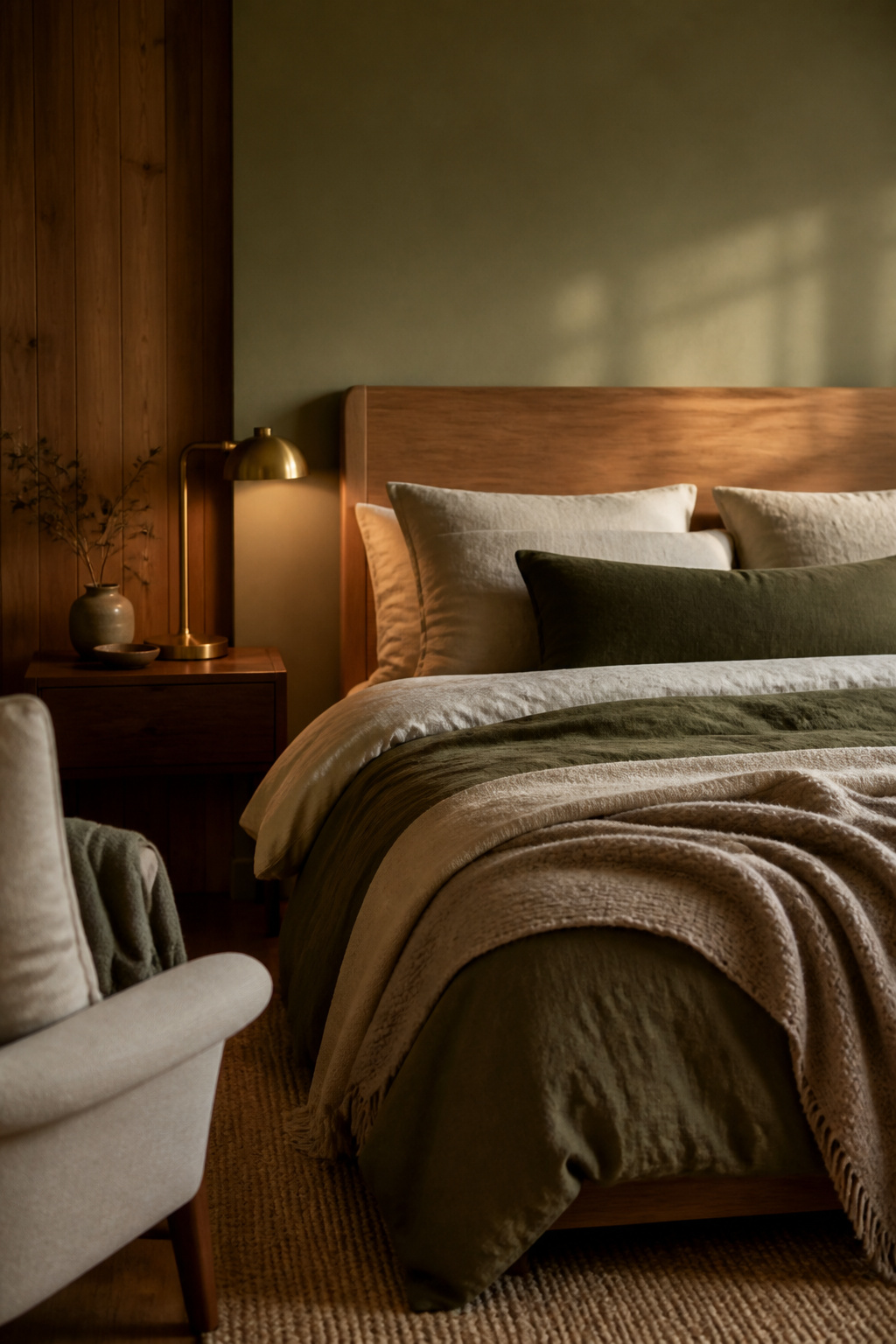
The one change with the biggest return
Start with the bed. A fresh textile layer needs no renovation, no paint drying and no wall access, and it warms the room’s largest surface in a single afternoon — which is why designers name bedding the highest-return cozy spend there is. Then add warm, low light. Those two, done first, settle most rooms before you touch a wall or a budget. Everything after them is refinement, and knowing that is what keeps the project from stalling before it starts.
A sequencing plan by room size
Small rooms change the order. Designer Sarah Glenn Boman saturates a small bedroom with color first, letting a deep, warm shade soften the edges before any furniture is chosen; Jessica Ranjbari then argues for fewer, larger pieces over many small ones, with drapery hung high near the ceiling to lift the walls. I learned that discipline the hard way. For six years I lived in a 38-square-metre flat in Malmö where nothing could be bought unless it owned a fixed place — the dining table was also my desk and my workbench — and the room only worked once I stopped filling it with small things and committed to a few larger ones. A roomier bedroom lets you run these levers in any order your biggest complaint points to; the color-first sequence is a small-space fix, not a universal rule.
A sequencing plan by budget
If money sets the pace, spend in phases rather than thinly across everything.
- Around $500, buy one anchor textile — better bedding, or a good rug.
- Around $1,000, add layered lighting and storage: a pair of lamps, two nightstands, curtains.
- Around $2,000, add the finishing touches — a statement mirror, an upgraded fixture, the last considered pieces.
Whichever path fits your room, you now hold what the thousand scattered ideas never gave you: an order. Change the bedding and the light first, apply the rule of three so the layers stay calm rather than crowded, and let color, a corner, a textural wall and the quiet details follow once those first two prove the room out. That is a cozy bedroom built on decisions instead of guesswork — and a plan you can start tonight, by swapping one wrong-weight blanket for one that matches the room you actually sleep in.