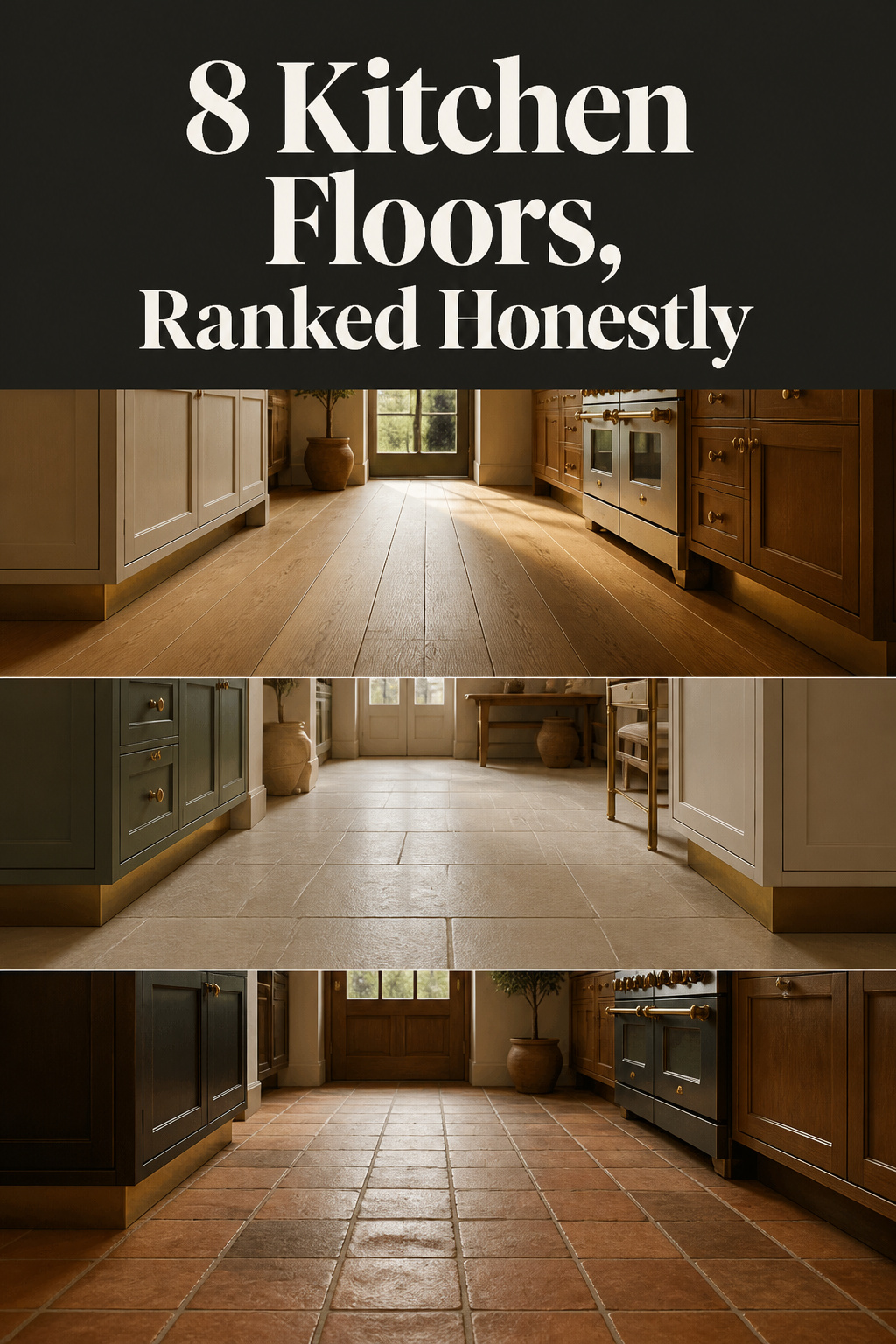
The cheapest material here outlives a pricier one. Linoleum runs $3 to $11 per square foot installed in HomeGuide’s 2026 flooring cost guide and lasts 40-plus years. Engineered wood, $7 to $20 in that guide, realistically gives you 25 to 30. Showrooms sell looks and price tags, not lifespans, so the best flooring for a kitchen is rarely what you would pick off a display board.
TL;DR
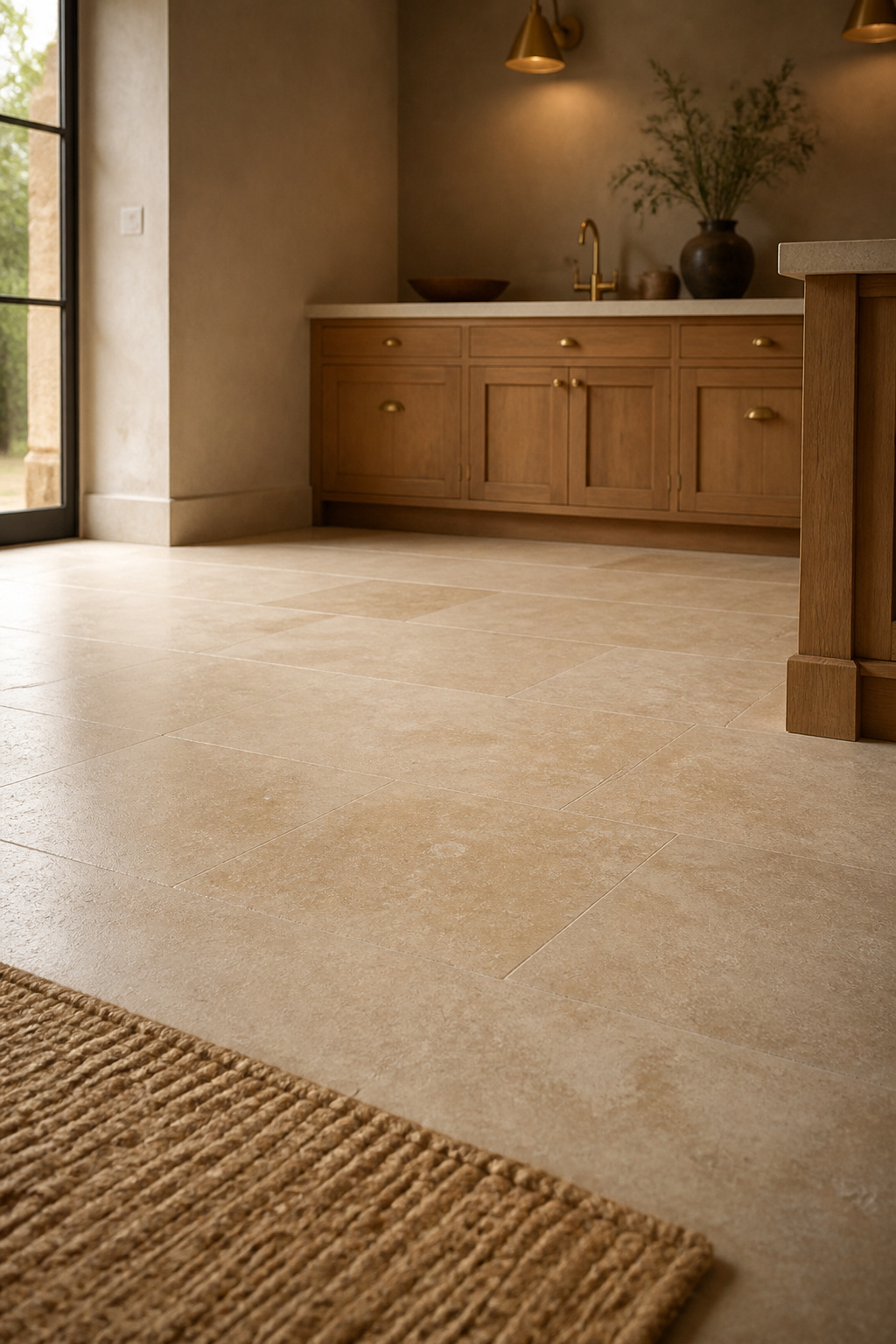
- Porcelain tile is the only one of the eight with no real standing-water failure at the surface — grout is the weak point, not the tile.
- For pets and kids, buy the spec, not the picture: 20-mil wear layer on vinyl, AC4 or better on laminate. Budget 6-to-8-mil vinyl wears out fast.
- Standard laminate swells at the seams after roughly 30 minutes of standing water. Waterproof laminate with sealed edges handles spills up to 24 hours.
The Five Things That Actually Decide the Best Flooring for a Kitchen
Five factors decide this, and colour is not one: standing-water tolerance, dent and scratch resistance, comfort underfoot, installed cost, and realistic lifespan. Cost and lifespan travel together, so I have paired them. Pattern and tone belong to the wider kitchen floor ideas guide.
Standing-Water Tolerance
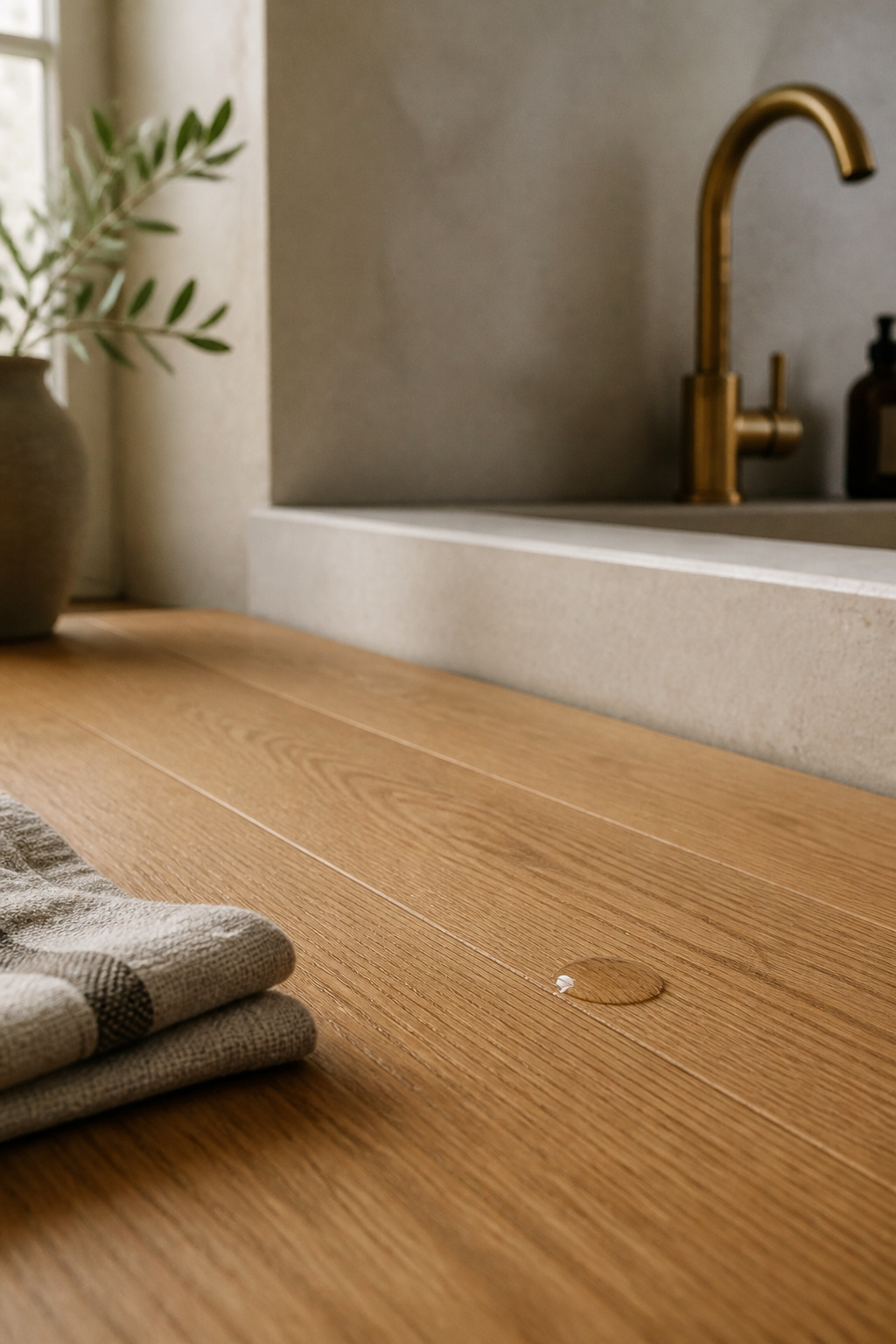
Routine mopping is not the test. A dishwasher line letting go on a Tuesday is the test. Standard laminate seams swell once water sits for roughly 30 minutes; porcelain has no meaningful surface failure at all. Waterproof vinyl will not swell, but pooling at a seam still needs wiping up before it reaches the subfloor.
Dent and Scratch Resistance
Three scales measure this, and none converts into another. Janka compares wood species to each other, so hickory at 1,820 lbf tells you nothing about porcelain. Laminate uses the AC rating, an EN 13329 abrasion scale from AC1 to AC5. Vinyl uses wear-layer thickness in mil.
Comfort Underfoot
Comfort over hours of standing comes down to give. Cork’s cushioned surface and wood’s warmth feel easier underfoot than tile or concrete late in a cooking session. However, softness cuts both ways: cork also dents more easily. Comfort and dent resistance work against each other.
Cost and Realistic Lifespan
Cost sources contradict each other constantly. HomeGuide’s pet-flooring guide prices cork and concrete differently from its own general 2026 guide, so every figure below names its page. No authoritative average replacement cost exists. And a warranty term is a marketing period, not a lifespan.
How the Eight Materials Score, Side by Side
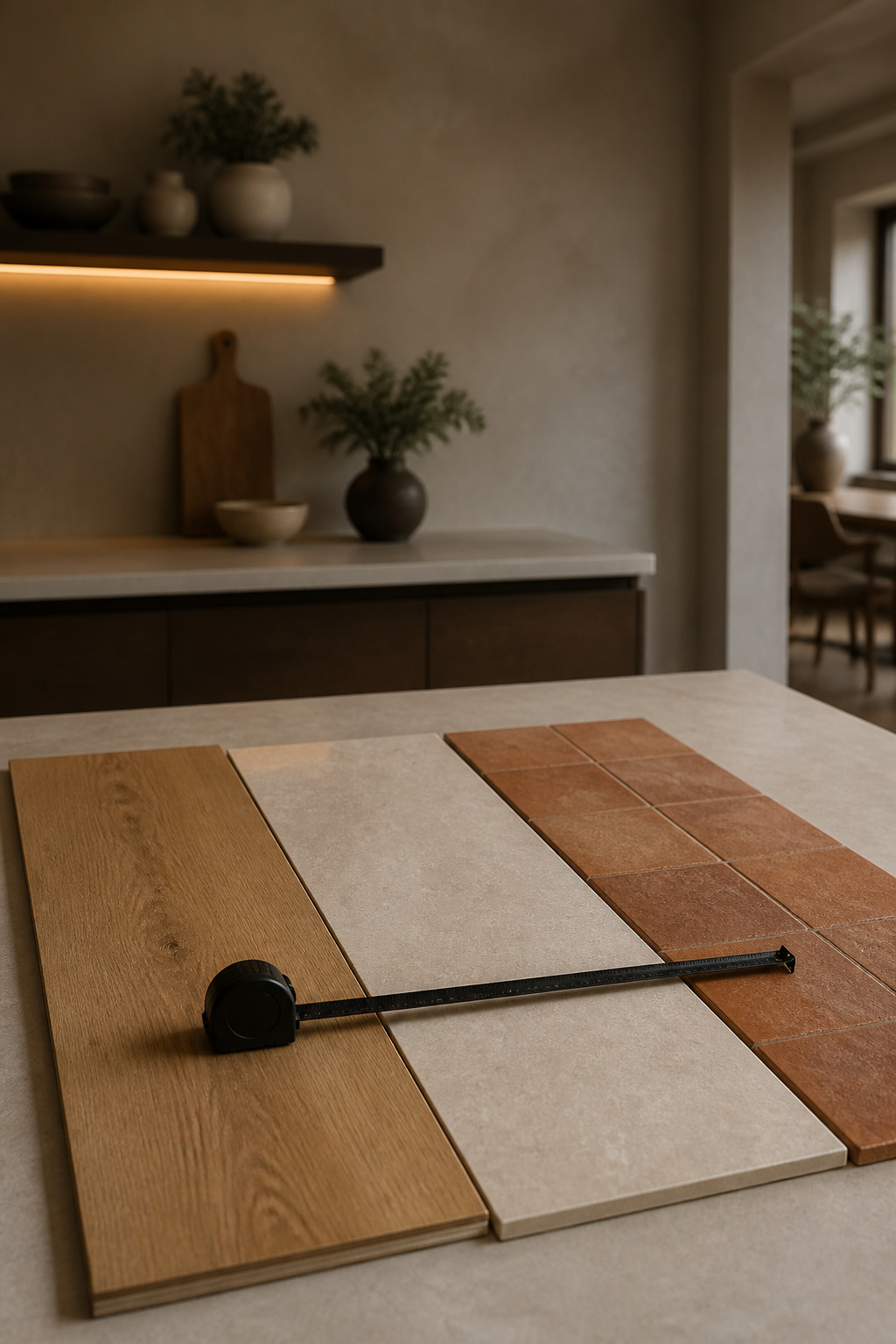
The mistake I watch people make is comparing one material’s best number against another’s worst — porcelain’s lifespan against vinyl’s price. Score them on the same columns instead. Costs are installed, per square foot, from HomeGuide’s 2026 general flooring guide; cork and sealed concrete also carry a second, differing figure from HomeGuide’s separate 2026 pet-flooring guide, named in those two rows.
| Material | Standing water | Dents and scratches | Underfoot | Installed cost | Lifespan |
|---|---|---|---|---|---|
| Porcelain / ceramic tile | Waterproof; grout is the weak point | Excellent; edges chip | Hard, cold unless heated | $10–$50 | 50+ years |
| Luxury vinyl plank | Waterproof; wipe seam pooling | Depends on wear layer | Firm; WPC gives more than SPC | $4–$16 | 15–25 yrs; 8–12 at 6–8 mil |
| Laminate | Standard swells ~30 min; waterproof 24 hrs | AC4 kitchen minimum | Firm | $4–$14 | 15–25 years |
| Engineered wood | Splashes yes, leaks no | Dents from pans and claws | Warm, some give | $7–$20 | 25–30 yrs; 50+ refinished |
| Solid hardwood | Its greatest threat | Species-dependent; white oak 1,360 lbf | Warm, some give | $11–$25 | 50–100+ yrs, refinished |
| Cork | Resists moisture, not waterproof | Dents easily | Softest of the eight | $5–$15; $6–$12 pet guide | 30–40 years |
| Linoleum | Warps if water stands | Scratch-resistant; dents permanently | Slight cork-dust cushion | $3–$11 | 40+ years |
| Sealed concrete | Waterproof sealed; slippery wet | Shows wear; hard to repair | Hardest, coldest | $6–$12; $3–$15+ pet guide | Concrete sealer: 1–3 yrs acrylic, 5–10+ yrs epoxy |
Tile and Stone-Look Options
Porcelain’s 50-plus-year figure is the best-supported number in the table, corroborated by a tile-longevity source independent of the cost guide. That $10 to $50 spread is no quality signal, though — big-box porcelain and handmade tile share one category.
Vinyl and Laminate
These two sit in nearly the same price band and fail in completely different ways. Vinyl’s weakness is a thin wear layer; laminate’s is a seam and a clock. Neither shows in a sample.
Wood, Cork and Linoleum
Call this the water-resistant group, and read that phrase carefully. Engineered wood handles humidity better than solid hardwood, but a prolonged leak still damages its layers. Cork stains where a spill sits; linoleum warps outright.
Sealed Concrete
Resealing is a separate number from installation: a basic concrete sealer runs roughly $1.00 to $1.75 per square foot to apply, resealed on its own cycle — one to three years for acrylic, five to ten-plus for epoxy or urethane.
Is Laminate Flooring Actually OK in a Kitchen?
Yes — if it is waterproof-rated with sealed edges, AC4 or better, wear layer 12 mil or thicker. No, if it is standard AC3 laminate going in beside a fifteen-year-old dishwasher. The yes-or-no framing is the problem: standard and waterproof laminate are two products sharing one category name.
Where Laminate Fails
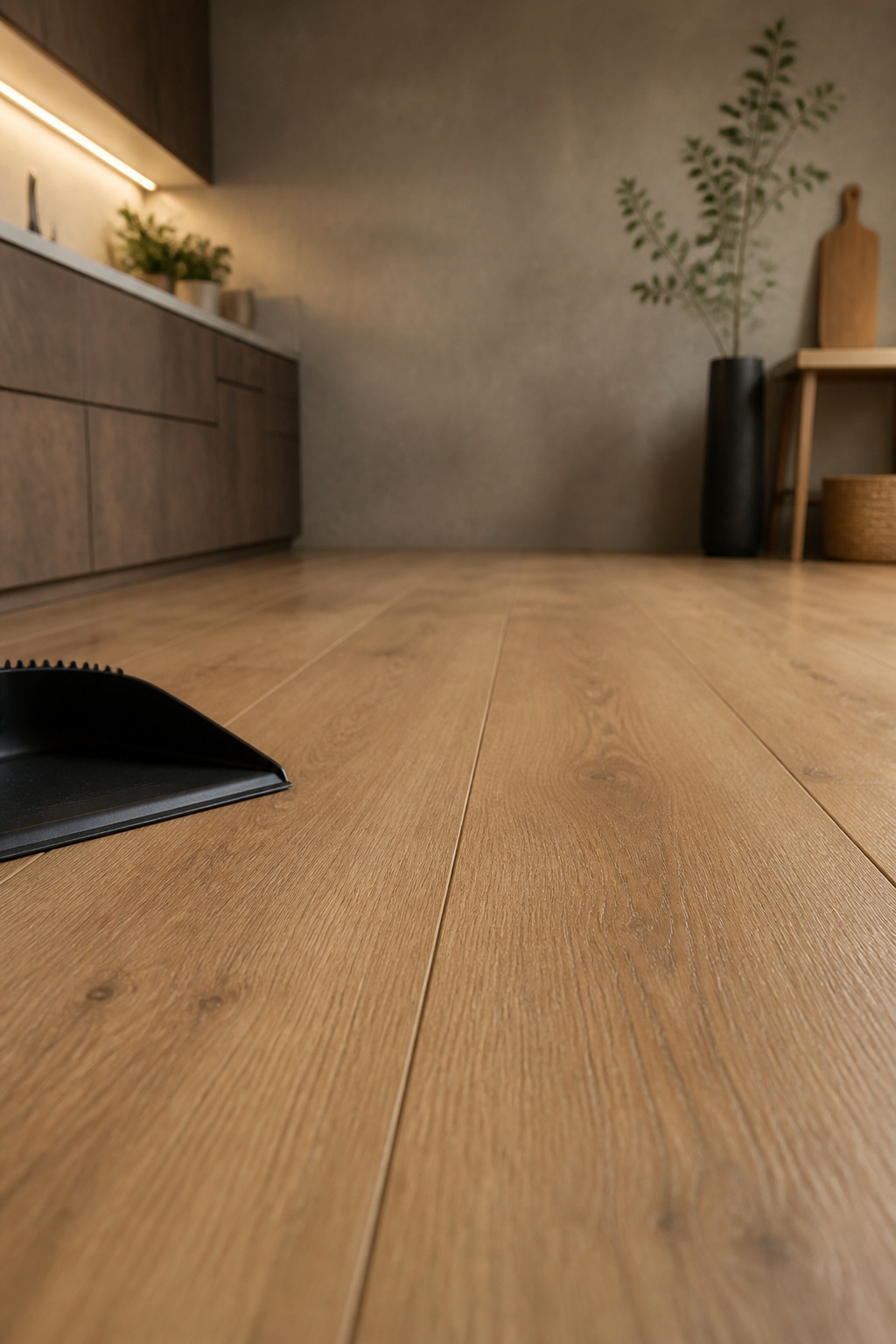
Standard laminate’s core is compressed wood fibre. When standing water reaches a seam and stays roughly 30 minutes, that core swells, and swelling does not reverse. The trigger is a dishwasher, icemaker or supply-line leak, not daily cooking. Laminate also cannot run under built-in appliances.
The AC-Rating Numbers That Matter
AC3 is rated for normal residential rooms — bedrooms, dining rooms, home offices — and shows stress in high-traffic areas over time. A kitchen is a high-traffic area. AC4, rated for general commercial use, is the recommended kitchen minimum and resists scratches and impacts far better in pet or kid households. AC5 suits rentals.
When Laminate Is the Right Call
The first thing I built alone, at twenty-two, was a workbench out of two sheets of plywood. It is still in my garage, dented and load-bearing, and I have never once hesitated to set a running saw on it. Nothing I have built since has been that useful. Ugly-strong beats pretty-weak.
Laminate is that bench. Waterproof, AC4 or AC5, 12-plus mil, at $4 to $14 installed and 15 to 25 realistic years, it is the lowest-cost wood-look floor here. The catch: once the wear layer goes, you replace rather than refinish.
Durability for Pets and Kids: What the Marketing Doesn’t Say
A seventy-pound dog taking a corner at speed does two things to a floor: it drags claws across the surface, and it slides. Most pet-flooring advice covers only the first. Claws work like small chisels, so what sits above the design layer decides year five.
Claw and Scratch Resistance by Material
| Material | How claws mark it | Slip risk when wet | Spec to check on the box |
|---|---|---|---|
| Porcelain tile | Resists claw marks | High if glossy or glazed | Wet DCOF of 0.42 or higher |
| Luxury vinyl plank | 20 mil resists for years; 6–12 mil marks | Low to moderate | Wear layer in mil |
| Laminate | Moderately resistant; still wears | Moderate; gets slick | AC4 or AC5 |
| Solid hardwood | Marks easily, and marks stay | Finish grows slick with age | Species hardness plus finish |
That running order comes from pet-flooring retailers, not a test standard, so take it as trade opinion. The mil and AC numbers are the corroborated part.
Wear-Layer Mil Explained
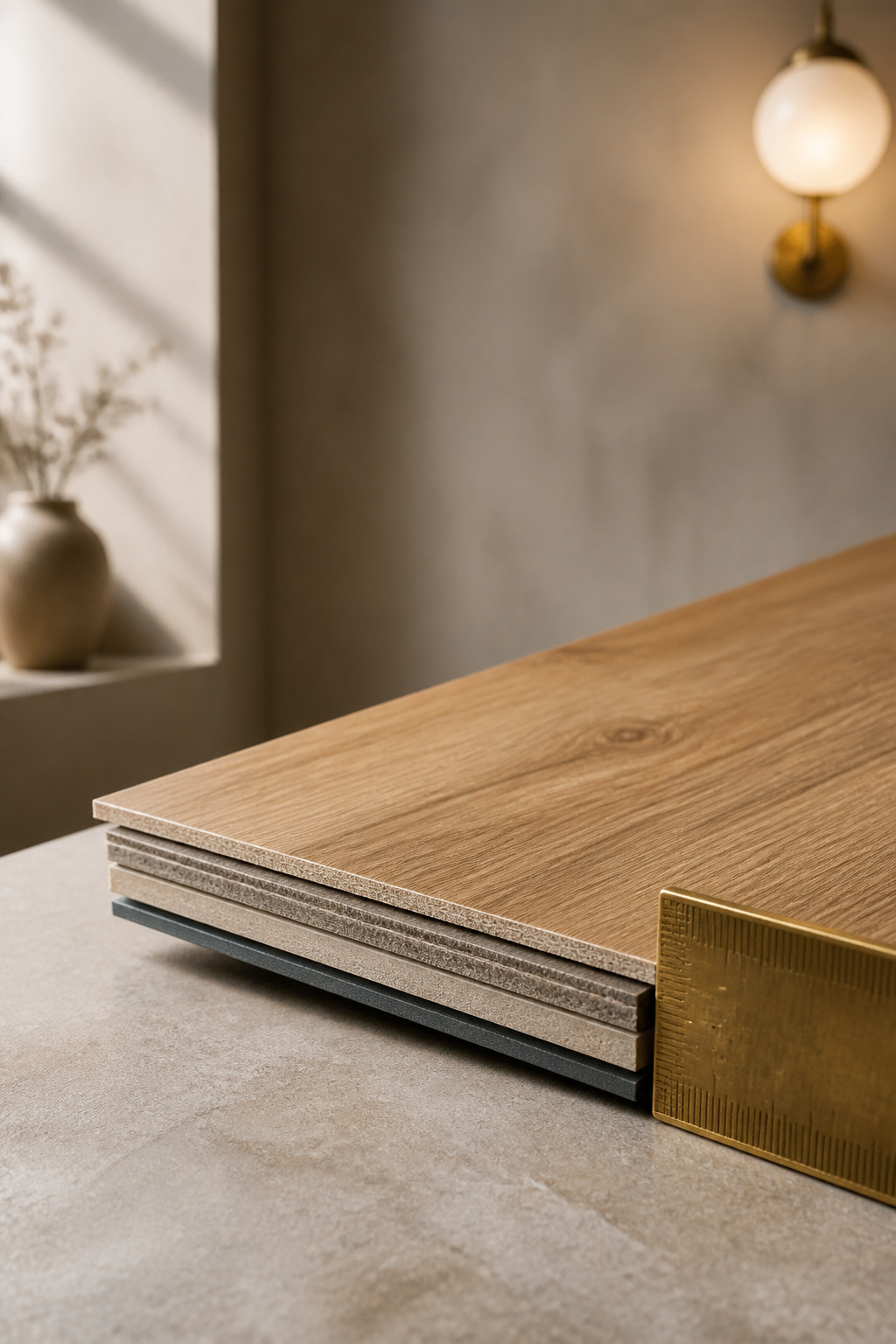
A mil is a thousandth of an inch of clear coat over the design layer — the only thing between a claw and the pattern. Entry-level 6-to-8-mil product wears within a few years under pet traffic. Twelve mil is a reasonable mid-tier minimum in general residential use, but a kitchen isn’t general residential use: grit and appliance traffic do the damage here, not impact, and twenty mil — often reinforced with ceramic beads or aluminium oxide — is the documented threshold for a kitchen with big dogs or active kids.
The Two Materials to Avoid With Big Dogs
Solid hardwood and standard non-waterproof laminate. Hardwood scratches easily and its finish turns slippery as it ages; laminate swells at the joints when wet and gets slick too. Glossy glazed tile deserves the same scepticism. ANSI A326.3 (2017, rev. 2022 — previously published within A137.1) sets the minimum wet DCOF at 0.42 for a level interior floor expected to be walked on wet, and glazed zellige measures roughly 0.16 wet — under half. A dog’s joints pay for that number.
Underfloor Heating Compatibility
Does the floor you want survive a heated slab? Two short lists answer it.
Which Materials Conduct Heat Well
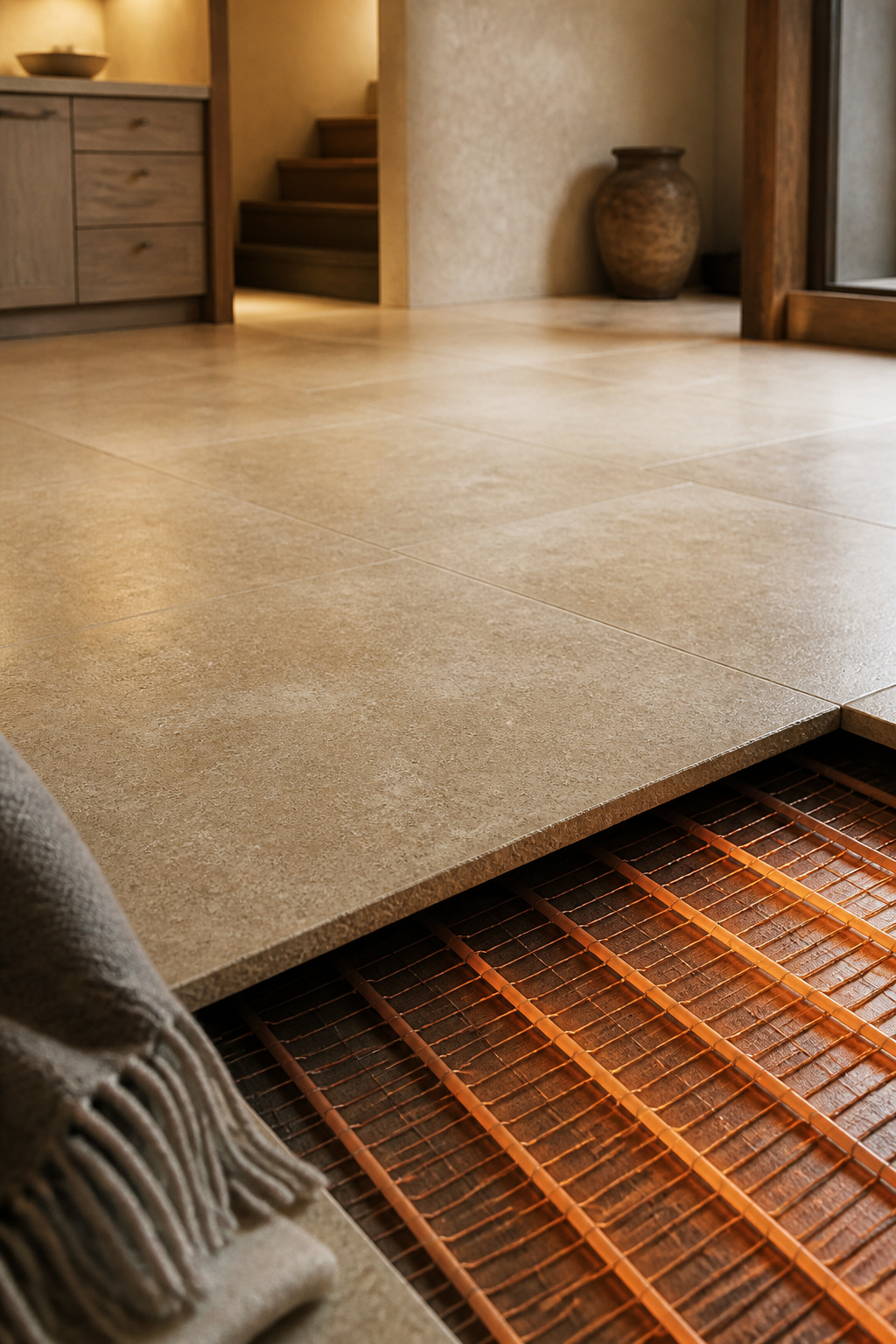
- Porcelain tile — excellent conductivity, and it will not expand or contract under radiant heat.
- Natural stone, including honed limestone — dense enough to retain heat and take heavy traffic.
- Engineered wood — layered construction minimises warping and gapping, a better fit than solid hardwood.
- Rigid-core waterproof vinyl — works with many systems per 2026 manufacturer guidance; confirm the product.
Which Materials Warp or Crack
- Solid hardwood — the genuine risk. Guidance caps floor surface temperature at 85°F, keeps planks under 5 inches wide, and favours oak and walnut over maple, beech, pine or Brazilian cherry.
- Standard laminate — no tested figure exists, but heat cycling adds a second stressor at weak seams.
- Cork — more heat-sensitive than tile or engineered wood, so get manufacturer confirmation.
Which Material Actually Fits Your Kitchen
Pick your worst risk first, then read the table again with only that column in view.
If Water Is Your Main Risk
Porcelain tile, then waterproof vinyl plank. Porcelain has no meaningful surface-level water failure; vinyl is a close second, tolerant of everything short of long-neglected seam pooling. Vinyl raises questions this comparison leaves alone — under-cabinet edges, floating versus glued — which is how vinyl plank behaves in a real kitchen once installed.
If Budget Is Tight
Linoleum at $3 to $11 and laminate at $4 to $14 sit at the low end of HomeGuide’s 2026 general flooring guide, with vinyl at $4 to $16 just behind. For a similar spend, vinyl buys better water tolerance than either.
If You Want the Real-Wood Look
Solid hardwood at $11 to $25 has the longest realistic lifespan here — 50 to 100-plus years with refinishing — and the least water tolerance. Engineered wood at $7 to $20 trades some of that ceiling for stability, though its 25-to-30-year figure rests on a manufacturer’s own source. Rachel Blackwood sets out when hardwood is the right call.
Two rules, then go measure your kitchen. Rule materials out on water first, because that is the failure that ruins a floor rather than ages it. Rule the survivors in on the printed spec — mil for vinyl, AC for laminate, DCOF for tile. Those numbers predict year five; the sample square does not.
FAQ
Do I need to remove the dishwasher and stove to replace kitchen flooring?
It depends on the appliance. Dishwashers and freestanding ranges move and leak, so many installers run flooring underneath them for a seamless look and leak protection. A built-in oven that never shifts often needs no flooring beneath it. Flooring run under an appliance must be lifted again during future service.
What kitchen flooring is easiest to clean?
Ceramic and porcelain tile, according to Diane Hyde of tile maker Craven Dunnill, who rates it the most durable and lowest-maintenance option long term. Luxury vinyl tile runs close behind: Sarah Escott of Amtico notes it needs only sweeping and occasional mopping, and damaged tiles can be replaced individually.
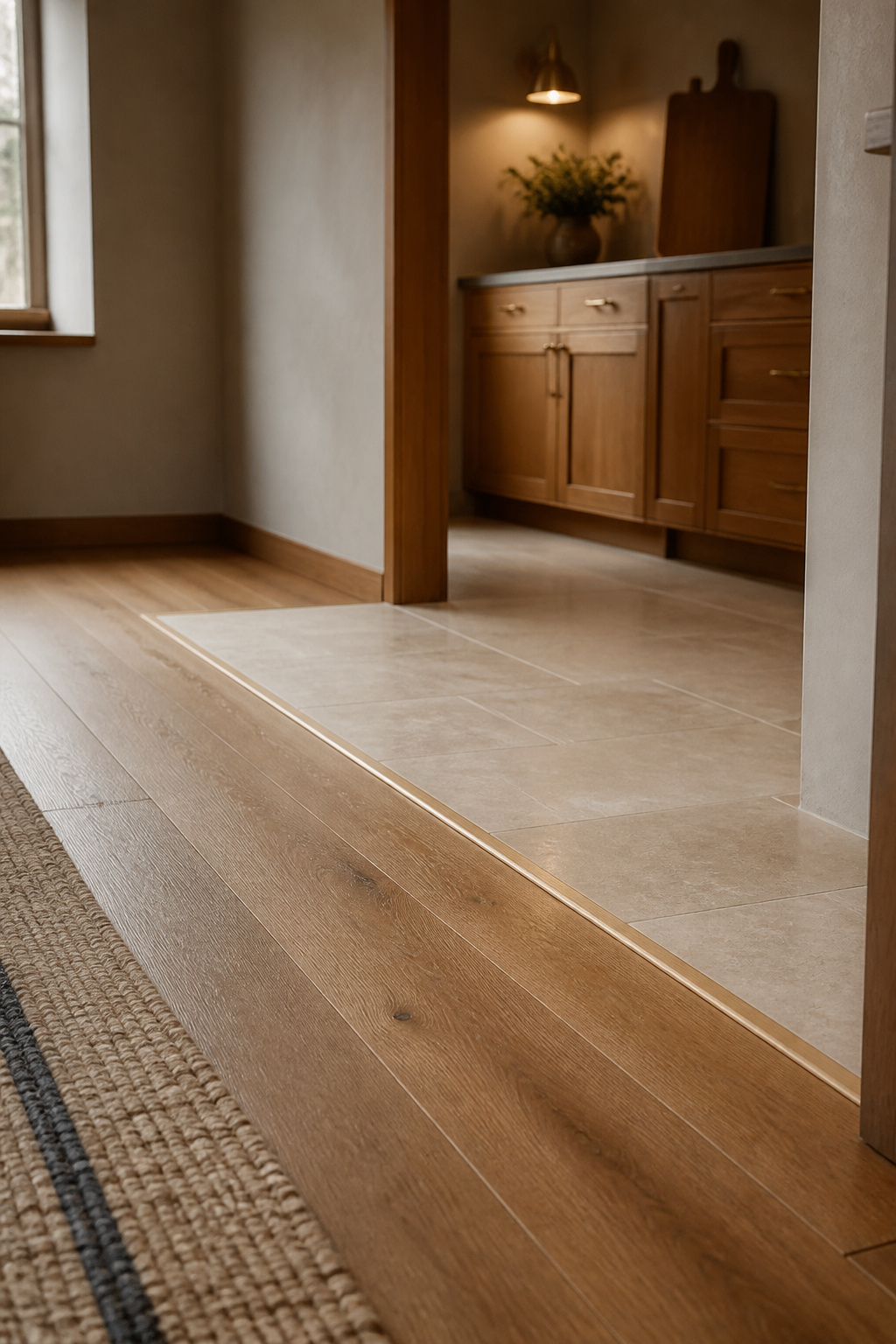
Can I mix two different flooring materials in one kitchen?
Yes, provided the transition lands at a natural architectural break — a kitchen edge, a hallway opening, a doorway threshold — rather than mid-room, where it looks like a mistake. Tile paired with wood or wood-look flooring works well here. In a small kitchen with no clear zone break, use one material.