Walk into a tile showroom and every box claims to be durable. The word means nothing. A polished marble that scratches under a grain of driveway sand is “durable.” So is a ceramic that cracks the first January it freezes. Here’s the unglamorous truth: the best tile for an entryway floor isn’t a look, it’s three numbers printed on the side of the box. Get them right and you can chase any look you want. Get them wrong and you’re re-tiling in three years.
TL;DR
- Check three specs before anything else: water absorption (you want under 0.5%), PEI 4 minimum, and a wet DCOF of at least 0.42.
- Matte or textured porcelain wins almost every weather-exposed front door — impervious, hard, and grippy when wet, at roughly $5–$10 per square foot for the tile.
- Ceramic, slate and encaustic cement all earn a place, but only in sheltered, dry entries — and the question that decides it is whether wet boots land on the tile.
The Spec That Matters Most at the Front Door
Three numbers do almost all the work. Each one predicts a different way a floor fails, and a tile can ace one while flunking another. Check all three before you check the price.
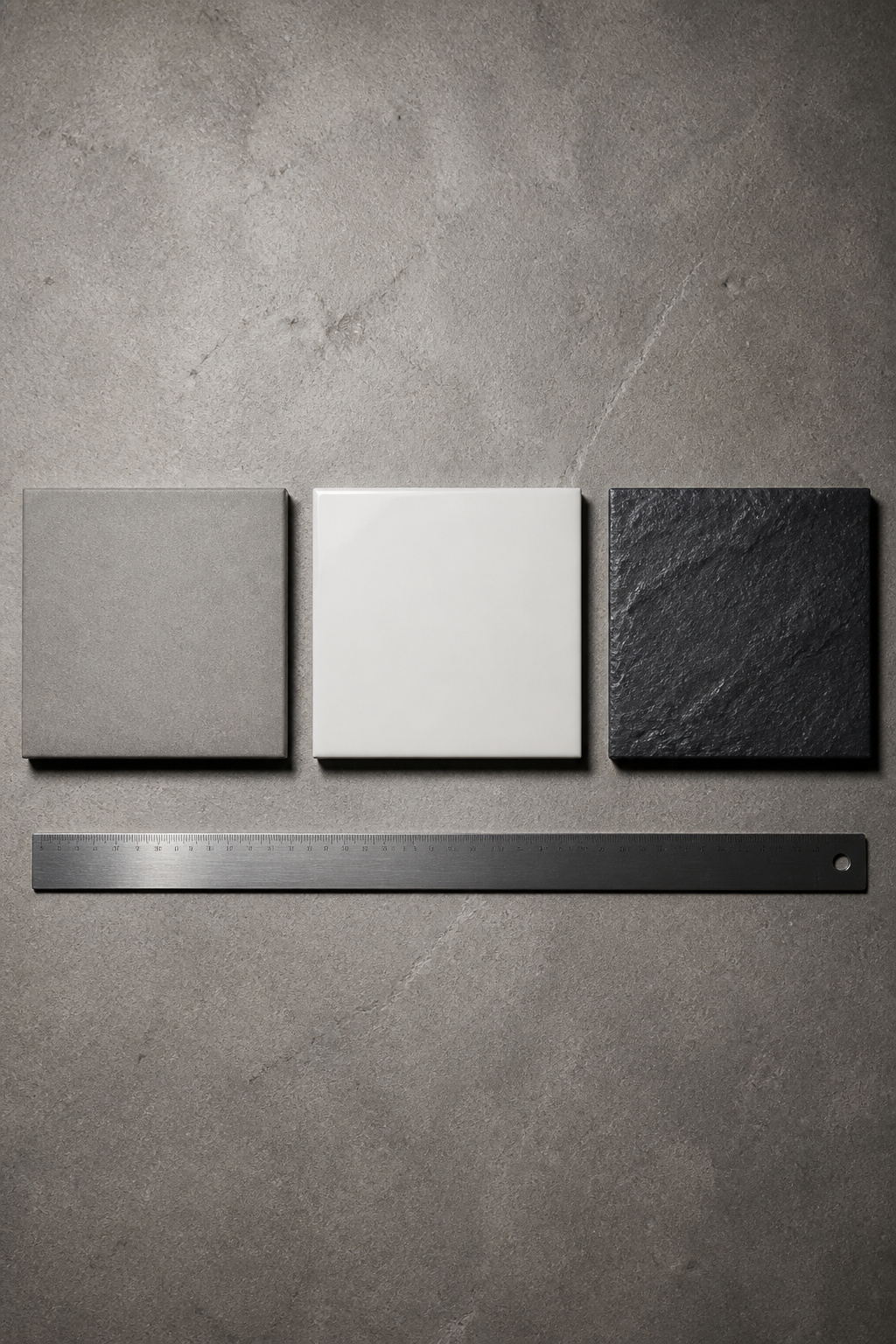
Here’s what each measures and the minimum to look for in an entry. For the full range of entryway tile floor ideas, start with the pillar.
| Spec | What it measures | Minimum for an entryway |
|---|---|---|
| Water absorption | How much moisture the tile body soaks up | 0.5% or less (impervious) |
| PEI rating | How well the glaze resists grit wear | PEI 4 |
| DCOF | Grip when the surface is wet | 0.42 or higher |
Water absorption: why under 0.5% is the number to look for
Under ANSI A137.1, tile is sorted by how much water it drinks: impervious (0.5% or less), vitreous (0.5–3%), semi-vitreous (3–7%), and non-vitreous (over 7%). Porcelain sits in that top impervious band, which is why it shrugs off wet boots. Here’s why it matters at a front door and nowhere else: rock salt and snowmelt tracked in seep into a porous tile, then freeze and expand. A non-vitreous tile that’s fine in a powder room will spall and crack at an unheated entry. Aim for impervious, or vitreous at worst.
PEI hardness rating: what Class 3, 4 and 5 mean for foot traffic
PEI rates how many cycles of grinding grit a glaze takes before it shows wear. PEI 4 is the floor for entryways, mudrooms, and any house with pets, because outdoor grit on shoe soles works like sandpaper. PEI 3 will look tired in a busy family entry within a couple of years. But PEI measures glaze wear and nothing else, so it says nothing about water, strength, or slip. Through-body porcelain isn’t even PEI-rated, because the colour runs the full thickness and a chip shows the same material underneath.
COF slip rating and why wet-boot entries need it
DCOF, the dynamic coefficient of friction, is the grip number for a surface already in motion, which is what walking is. ANSI A137.1 requires a wet DCOF of 0.42 or more for interior floors walked on wet. As flooring authority D and G Flooring puts it, a polished tile can carry a respectable PEI number and still be dangerously slick wet, so never check one without the other. For an entry that sees real puddles, treat 0.42 as the bottom and target 0.50-plus for margin.
Porcelain: The Front-Door Default and Why It Earned That Reputation
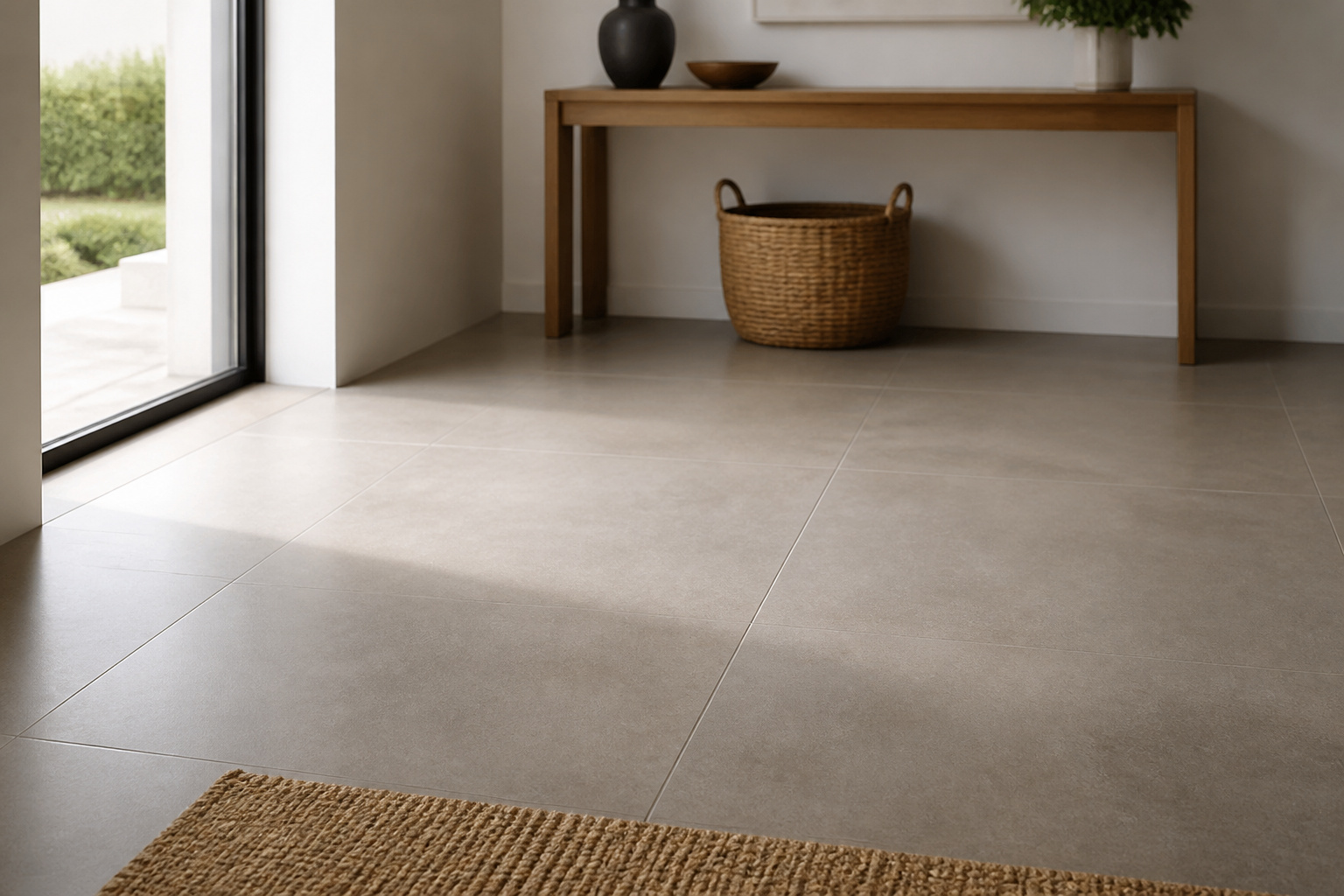
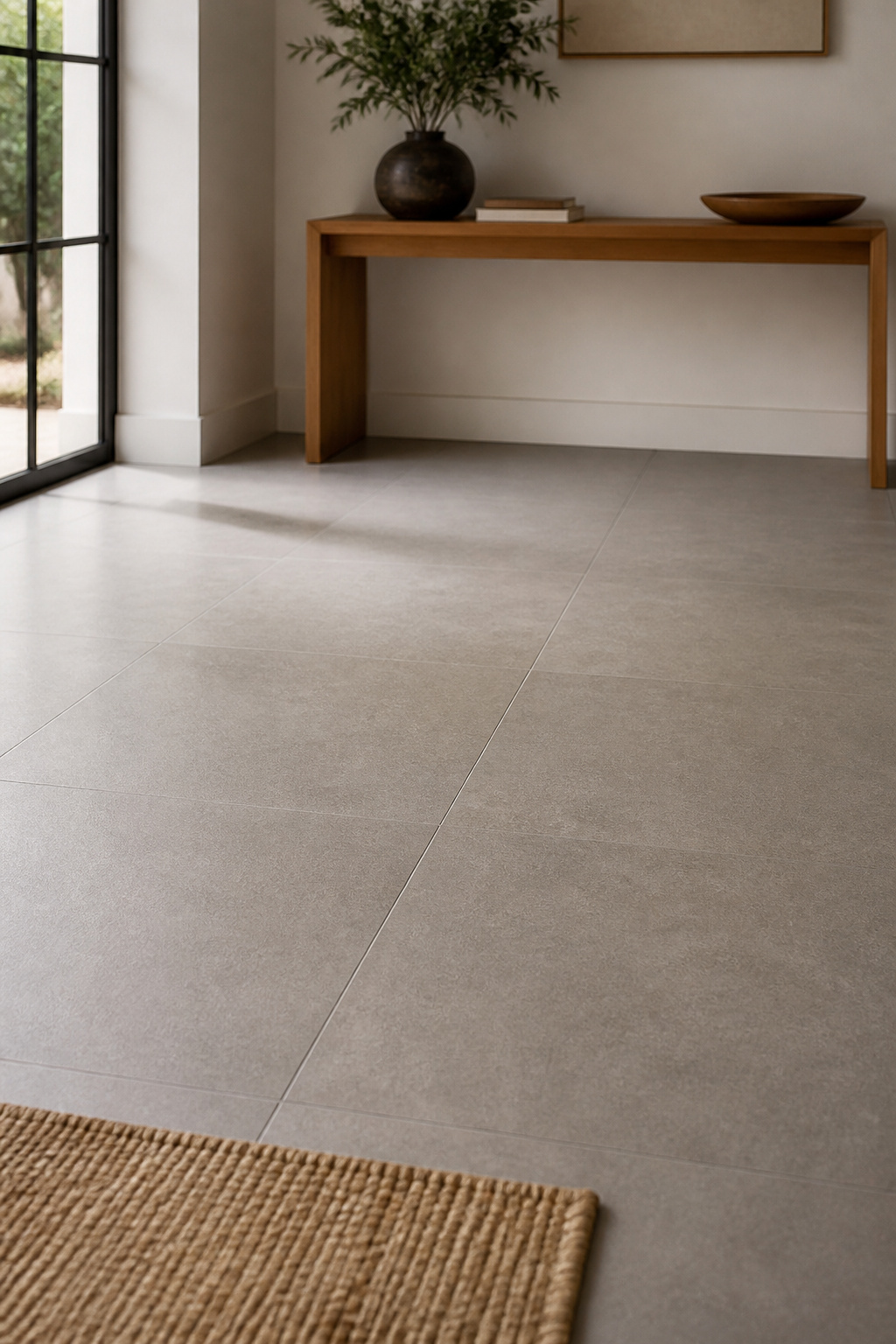
Porcelain is the default for a boring, excellent reason: it’s the only common material that nails all three specs at once. Impervious body, PEI 4, and a matte finish that grips wet. That’s the whole pitch.
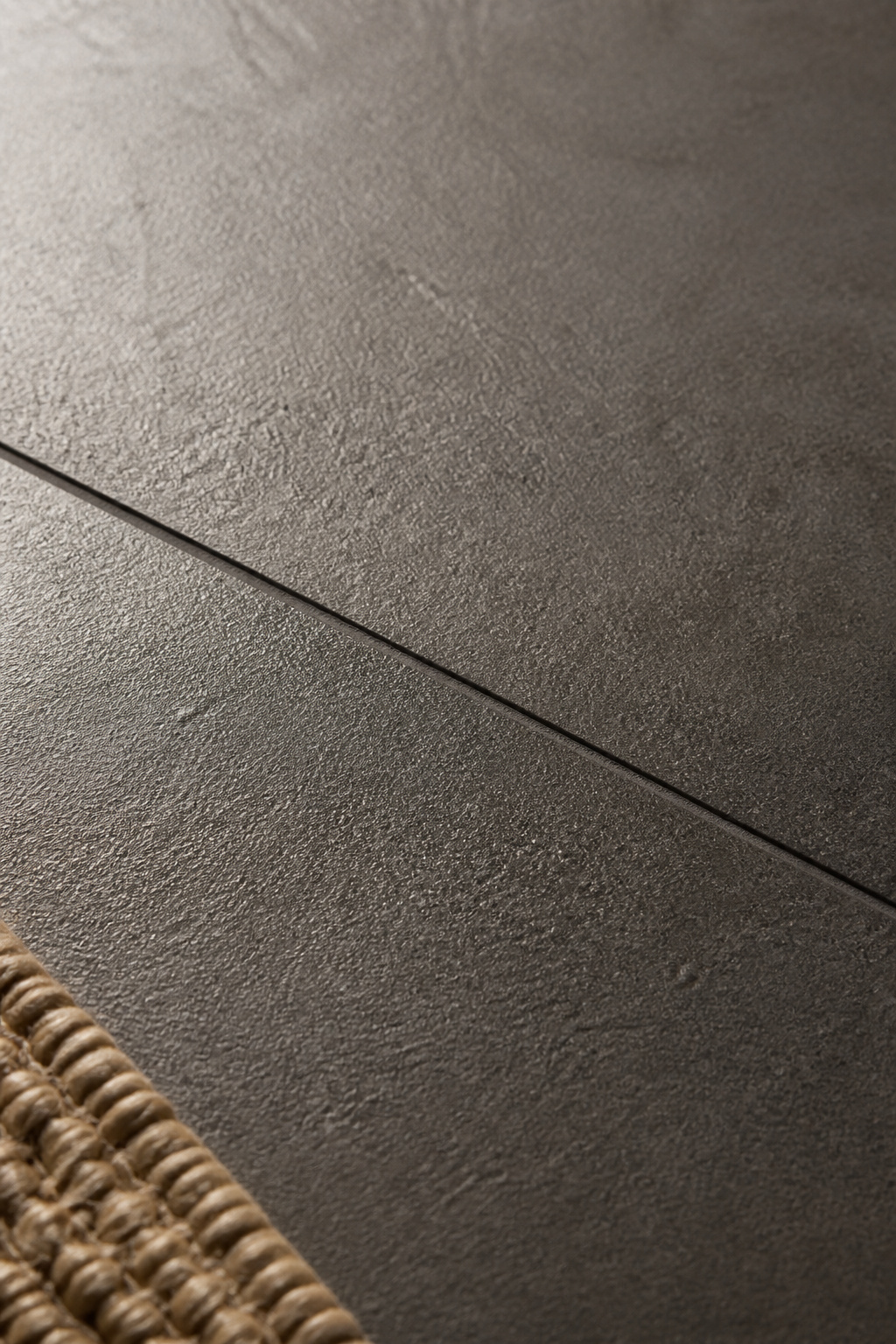
What makes porcelain denser than ceramic
It comes down to the recipe and the oven. Porcelain uses refined kaolin clay with feldspar and quartz, fired at 2,200–2,500°F. That heat vitrifies the clay into a near-glass state with almost no open pores, which is where the under-0.5% absorption comes from. Standard ceramic fires at 1,000–1,800°F, so it stays porous. If you can spring for it, full-body porcelain runs the colour through the whole tile, so a chip doesn’t flash a pale scar.
Finish options: matte, textured, polished
This is the one place porcelain can let you down, and it’s your call at the counter. Polished porcelain is buffed to a shine, but the same buffing strips the micro-texture, dropping it to an R9 rating that’s safe dry only. At a wet door, that’s a slip waiting to happen. Matte keeps a fine texture from firing and clears 0.42 without help. Textured tile climbs to R11 and is the right call next to a mudroom. Ranked for an entry: textured, then matte, and skip polished near the door.
Real cost range and what you get at each tier
Porcelain spans a wide range, so know which tier you’re buying.
| Tier | Tile only | Installed all-in |
|---|---|---|
| Builder-grade | $2–$5/sq ft | $10–$16/sq ft |
| Mid-range | $5–$10/sq ft | $15–$22/sq ft |
| Designer/large-format | $10–$20+/sq ft | $20–$35+/sq ft |
Mid-range is the sweet spot for most entries: PEI 4, rectified edges for tight grout, and real 24×24 or wood-plank options. A typical 40–60 sq ft entry in mid-range porcelain lands around $600–$1,320 installed. If you want the warmth of timber without the upkeep, wood-look porcelain is one of these mid-range options and survives the same abuse.
Ceramic Tile: Where It Works and Where It Doesn’t
Ceramic isn’t disqualified. It’s conditional. The whole question is what kind of entry you’ve got.
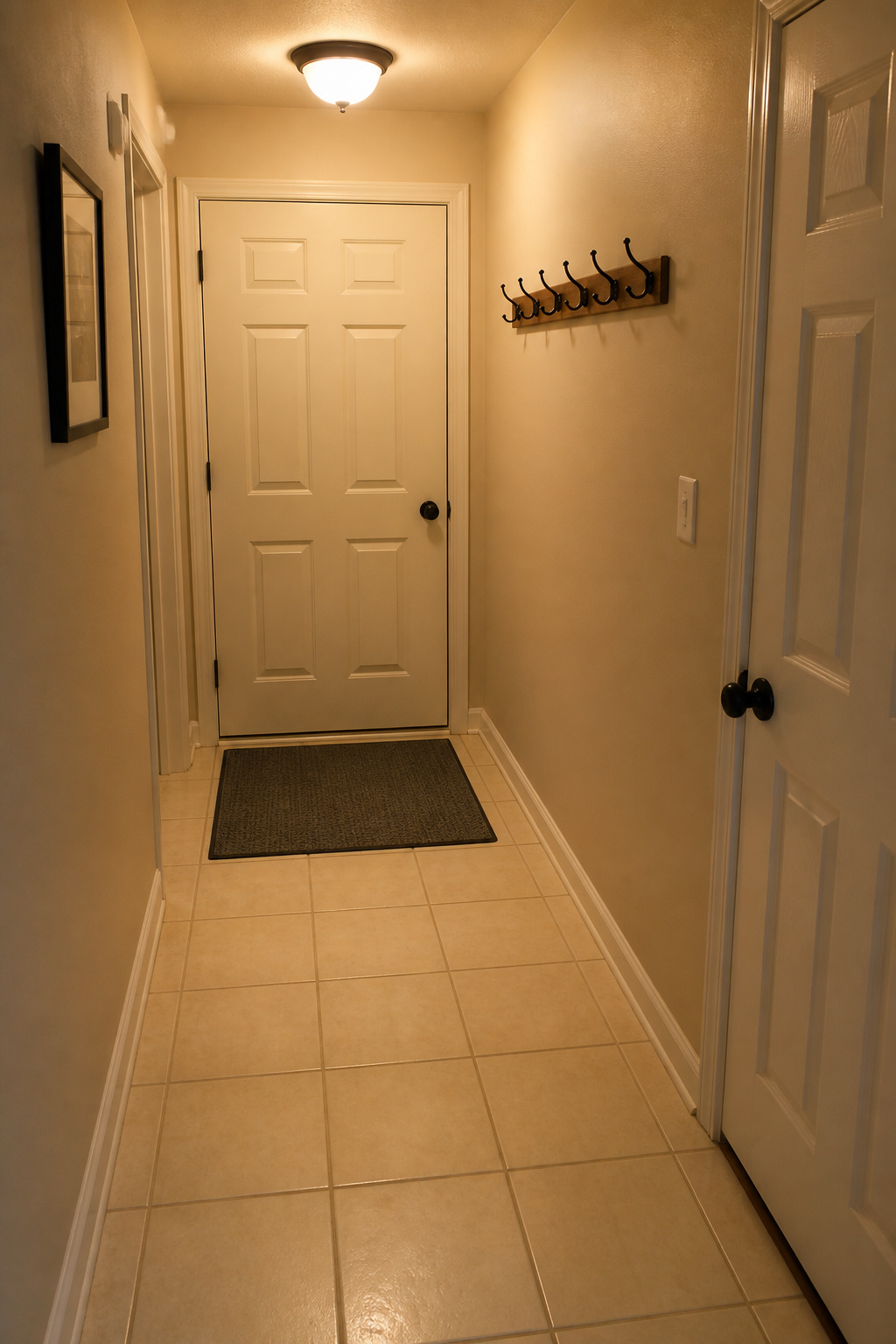
The water-absorption gap between ceramic and porcelain
Standard glazed ceramic lands in the vitreous to semi-vitreous range, 0.5–7%, so it absorbs roughly 6 to 14 times more moisture than porcelain. In a warm, dry foyer that’s a non-issue. In an unheated entry it’s the whole problem: absorbed water freezes, expands, and cracks the body. Add tracked-in rock salt and you get spalling faster still. As InHome Flooring notes, builder-grade ceramic simply wasn’t engineered for mudroom-level abuse.
Sheltered entries and climate-controlled foyers: when ceramic is fine
So when is it fine? A fully interior foyer with a covered porch outside, a mild climate, and a mat that catches boots before they reach the tile. There, vitreous ceramic is code-acceptable and saves real money: $1–$5 a square foot for the tile against porcelain’s $2 and up. The field test: if wet boots hit the tile daily, the entry borders an unheated garage, or your winters drop below freezing, step up to porcelain. Otherwise ceramic holds.
Glazed vs unglazed ceramic
Glazed ceramic has a fused glass surface that resists stains and moisture, but the grout around it still needs sealing, a step DIYers skip constantly. Unglazed ceramic, like quarry tile, grips better wet but the body itself must be sealed and resealed. Either way, hold to PEI 4: the glaze on a PEI 3 ceramic will show wear in a busy family door inside two or three years.
Natural Stone: Marble, Slate and Travertine at the Front Door
Stone brings character nothing manufactured matches. It also brings a maintenance bill you sign up for on day one. Worth it in the right entry, a regret in the wrong one.
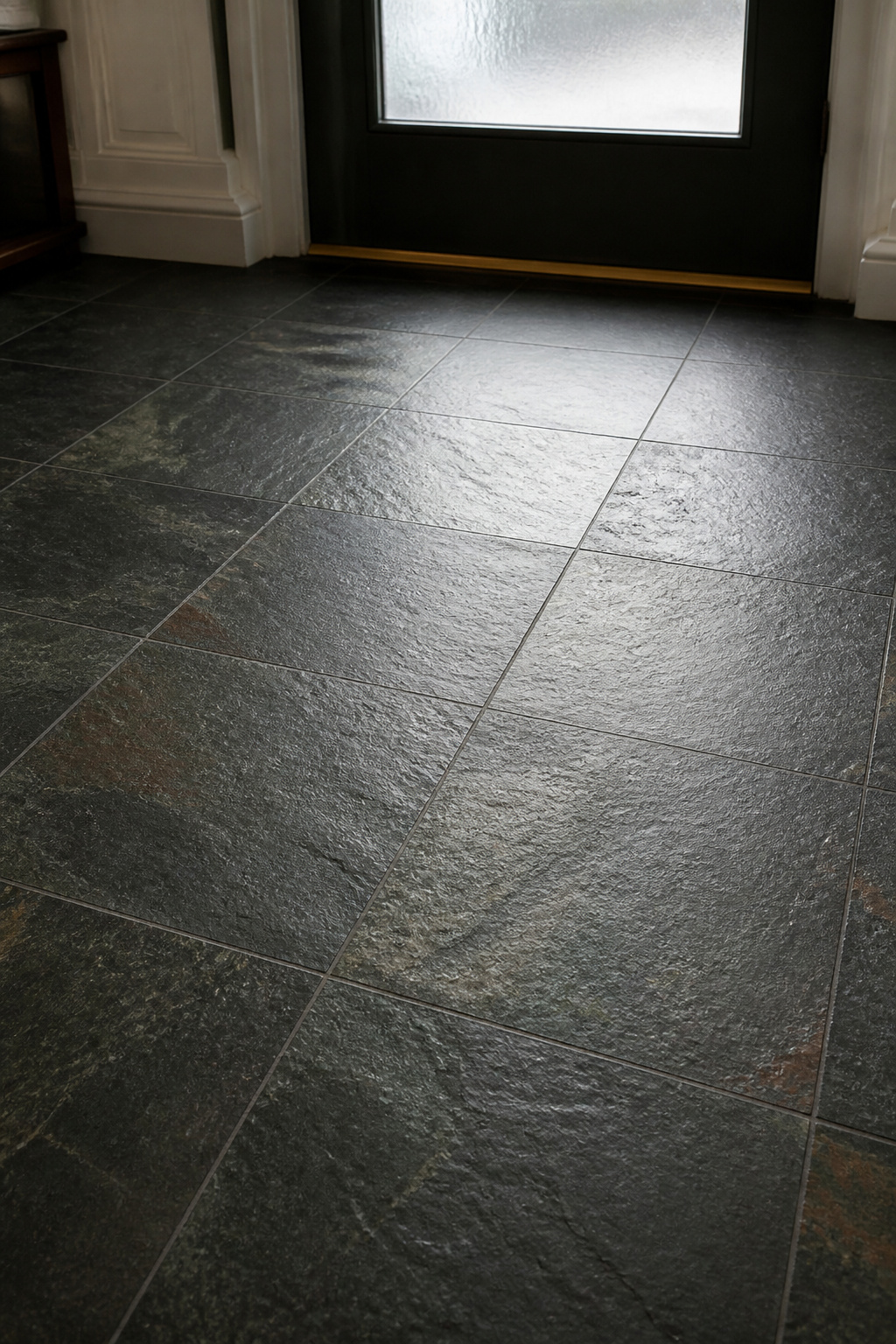
Porosity and sealing: the annual commitment
Porosity climbs by stone type: marble 0.5–3%, slate 0.4–5%, travertine 3–12%. All need a penetrating sealer before grouting, then again on a schedule. A high-traffic marble entry wants resealing every 6–12 months. The test is simple: drop water on the stone, and if it darkens within three minutes, it’s time. Travertine’s porosity puts it closer to semi-vitreous ceramic than to porcelain, making it the most vulnerable stone at a wet door.
Slate and honed marble vs polished marble
Finish decides slip here too. Natural cleft slate, with its riven layered texture, is one of the grippiest stones going and generally clears the 0.42 threshold without help. (Stone makers rarely print a lab DCOF figure, so treat that as the direction of travel, not a spec-sheet promise, and ask for the number if they have it.) Honed marble, matte rather than polished, hides scratches and grips better. Polished marble at a wet door is both a slip risk and an etching magnet from grit and acidic cleaners. For DIY, choose gauged slate (uniform thickness) over ungauged, which needs skilled thinset work to lay flat.
Cost reality: stone plus sealing over ten years
Stone material runs $6/sq ft for slate up to about $17/sq ft for marble, but installed it climbs hard. A $15 marble tile often hits $35–$50 installed, because stone demands white thinset, mandatory sealing, and slow, skilled labour. Then maintenance keeps charging: marble averages $200–$500 a year in sealing and restoration against $0–$100 for porcelain. Over ten years that gap runs $1,500–$4,000-plus. Stone earns its premium in a sheltered, formal, dry-climate foyer, not a cold-climate family mudroom.
Encaustic Cement Tile: The Pattern Option With a Maintenance Premium
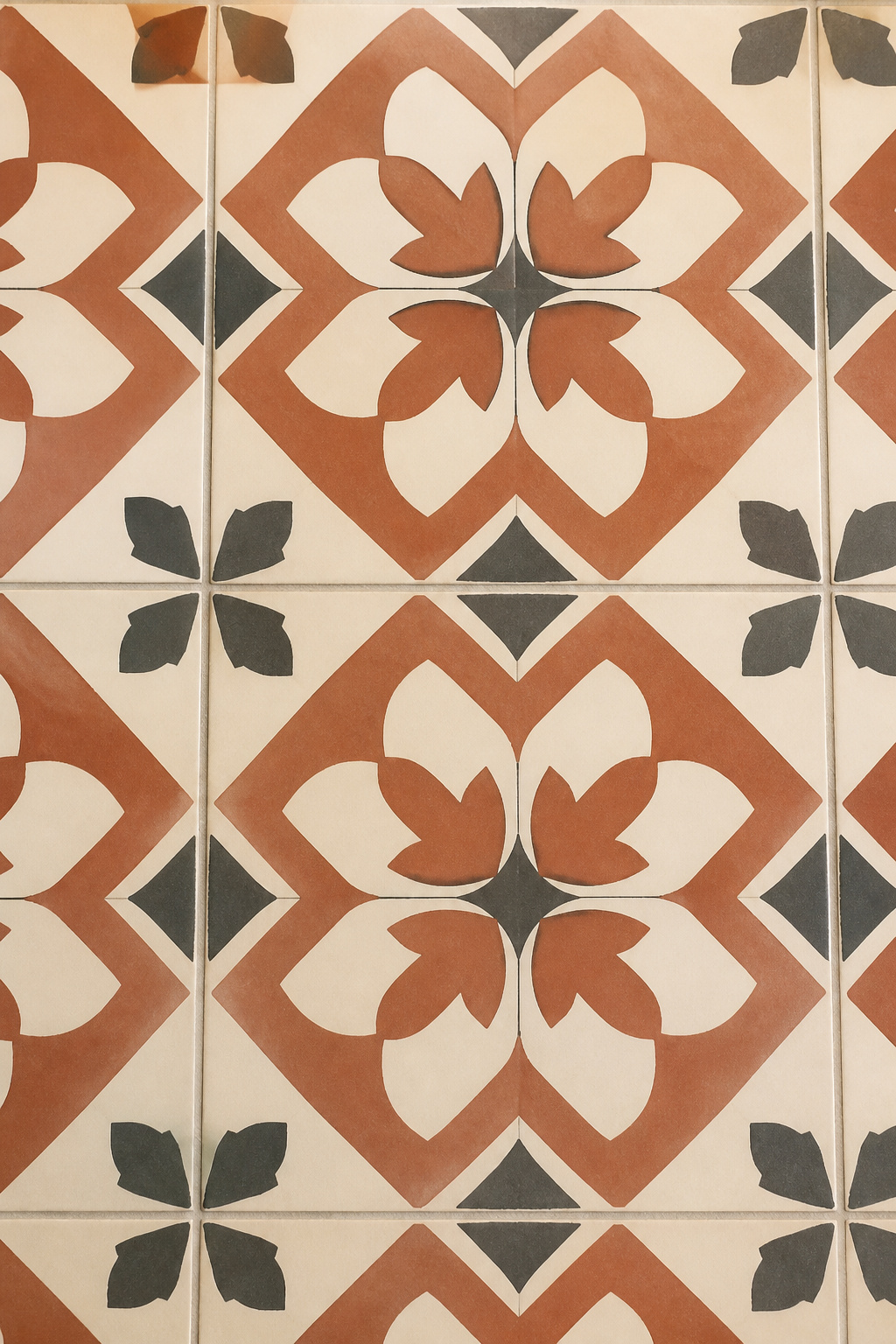
People either understand encaustic going in or get blindsided by it. The pattern is genuine, built from layers of pigmented cement rather than printed on. So is the porosity.
Why cement tile is porous and what that means at a wet entry
Encaustic is pressed, not fired to vitrification, so the body stays porous straight through. There’s no single published absorption figure I’d stand behind, since it varies by maker and most don’t print a lab number. But by its ASTM classification it sits well above glazed ceramic, into the semi- or non-vitreous range (figure on roughly 6%-plus, and verify with your supplier). The fallout: it must be sealed before grouting, or grout colour bleeds permanently into the tile within minutes. Mud, salt, and oils penetrate faster than on any other entry material, and only pH-neutral cleaners are safe.
Sealing schedule and the consequence of skipping it
The protocol is real work: seal before tiling, again before grouting, and once more after the grout cures (give it 48–72 hours before that final coat). Then reseal yearly, or whenever water soaks in within 60 seconds instead of beading. The pattern won’t wear off, because it runs through the cement, but skip the schedule at a wet, busy entry and you’ll get permanent staining and a dull surface.
Where it earns its place
A dry, sheltered foyer with light enough traffic to keep up the care, in a period, Moroccan, or Spanish-Colonial home where the pattern is the point. On cost, be clear-eyed: genuine handmade tile starts around $10–$15 a square foot for materials, and that’s a floor, not a ceiling. Imported and custom patterns run $20–$30-plus, with installed figures reaching $20–$45 once sealing labour is counted. If you love the look but have a damp or high-traffic door, encaustic-look porcelain prints the pattern onto an impervious body for $3–$10 a foot, with none of the upkeep.
Choosing the Best Tile for an Entryway Floor: The Comparison
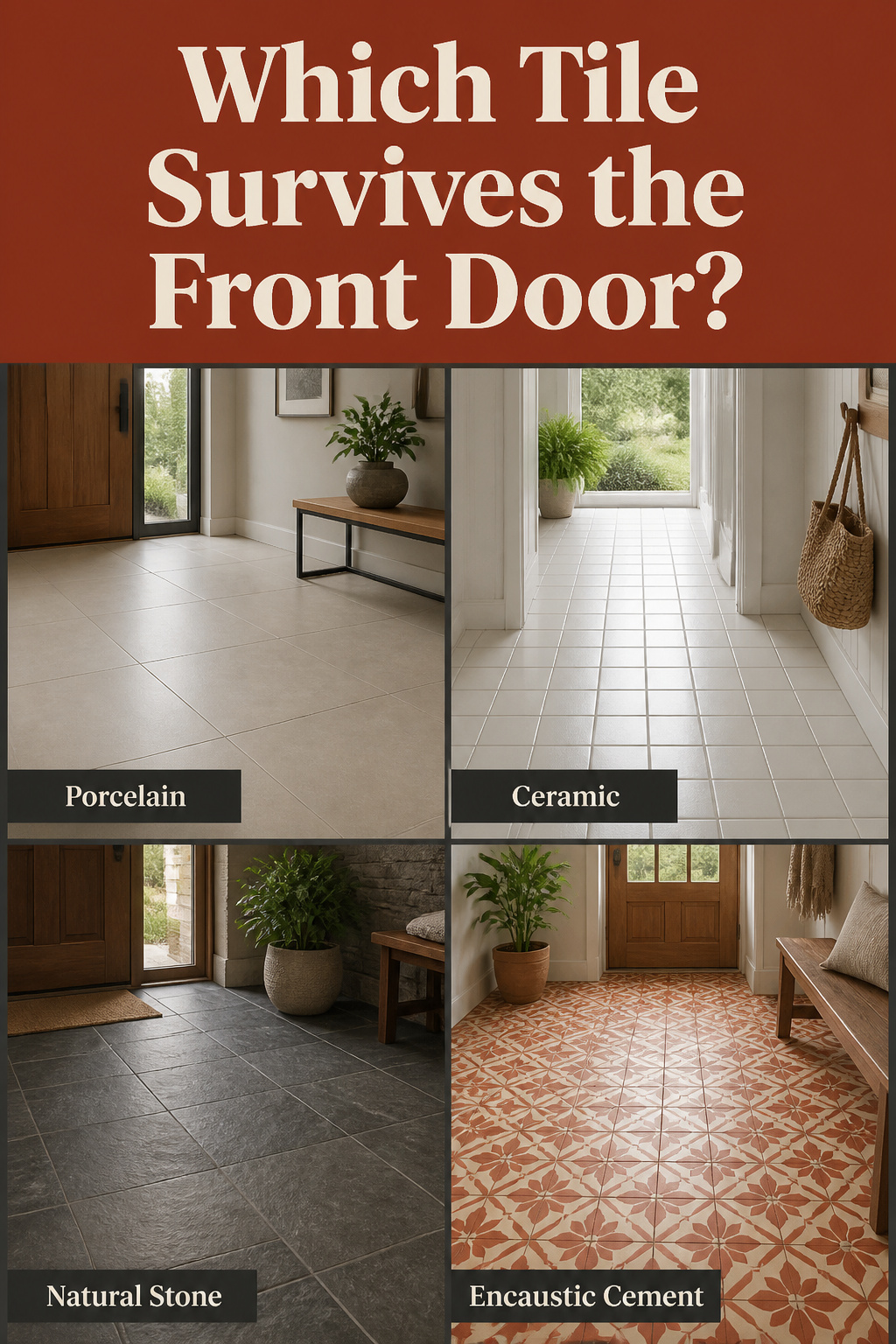
Here’s all four against the specs that decide it. Read the row for the entry you actually have, not the one in the catalogue photo.
| Material | Water absorption | PEI / hardness | Sealing | Tile cost/sq ft | Best for |
|---|---|---|---|---|---|
| Porcelain | ≤0.5% | PEI 4–5 | Grout only | $2–$20 | Any wet, high-traffic entry |
| Glazed ceramic | 0.5–7% | PEI 2–4 | Grout only | $1–$5 | Sheltered, climate-controlled foyer |
| Natural stone | 0.4–12% | Mohs 3–6 | Pre-grout + annual to biennial | $6–$20+ | Formal, dry, low-traffic entry |
| Encaustic cement | ~6%+ (approx.) | Unrated | Triple-coat + annual | $10–$30+ | Dry period home, willing to maintain |
Which material wins by entry type
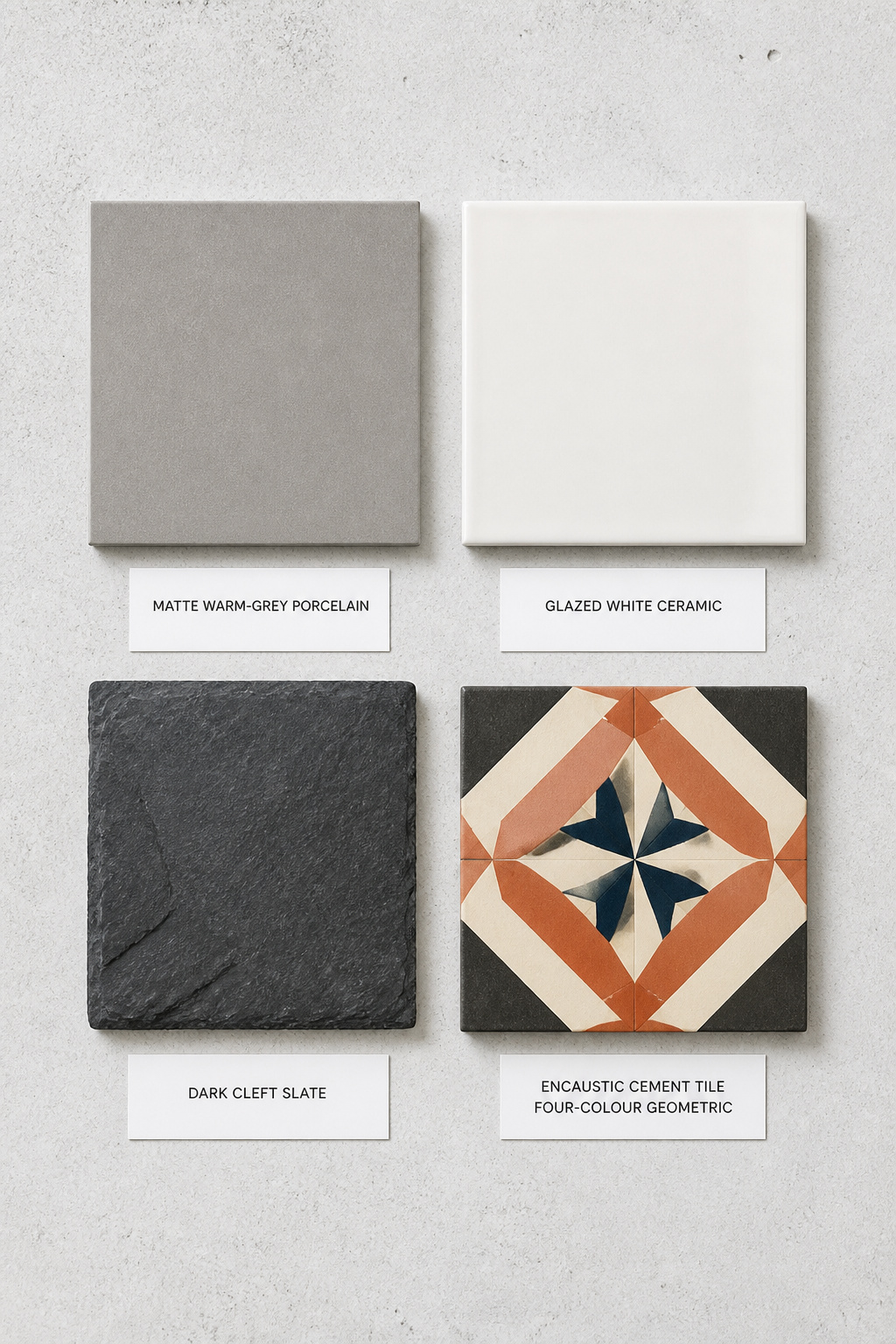
For a weather-exposed door with wet boots, salt, dogs and kids, matte or textured porcelain wins with no close second. For a sheltered, climate-controlled foyer, PEI 4 ceramic is acceptable and cheaper, with gauged slate a strong mid-premium step up. For a period or character home, encaustic cement or honed marble both fit if the entry is dry and you’ll do the upkeep, with encaustic-look porcelain as the practical fallback.
The one question to ask before buying any tile
Before colour, format, or budget, ask one thing: will wet boots from rain or snow land directly on this tile? If yes, the answer is matte or textured porcelain at DCOF 0.42 or higher, full stop. If no, the field opens up and maintenance appetite is the tiebreaker. Either way, verify the numbers on the spec sheet, because two tiles that look identical can carry very different ratings. Once the material’s settled, you’re ready to lay it yourself or hand the specs to your installer.
FAQ
Is porcelain tile too slippery for an entryway?
It depends entirely on finish. Polished porcelain is genuinely slippery when wet, rated R9 for dry use only, and a poor choice at a weather-exposed door. Matte or textured porcelain with a DCOF of 0.42 or higher is the correct spec, and most residential matte tiles clear it comfortably. Verify the rating on the spec sheet.
How often do you need to reseal natural stone in an entryway?
Marble and travertine in a high-traffic entry need resealing every 6–12 months; slate needs it every one to two years plus a seal before grouting. The quick test: drop water on the stone, and if it darkens within three minutes, reseal now. Budget roughly $25–$75 a year in DIY sealer for a 50-square-foot floor.
Can you use indoor ceramic tile in a mudroom entry?
Not standard indoor ceramic. Its 3–7% water absorption leaves it open to freeze-thaw cracking and salt-driven spalling wherever wet boots, grit and cold reach it. For a mudroom, use impervious porcelain at PEI 4 with a matte or textured finish. The one exception is a fully sheltered, climate-controlled foyer with a mat outside the door.