
Let’s put a number on this before anything else: a new six-piece matched retail dining set — table, chairs, buffet — runs $1,000 to $7,000. A collected, layered boho room built the way I actually source it usually comes in under half that, often well under. People assume the opposite because a room this textured looks like money. It isn’t. The layering is a sourcing technique, not a spending signal, and the receipt proves it every time.
TL;DR
- The collected boho look is cheaper than a matched retail set by design: spend new only on the table base (solid hardwood realistically starts near $1,000), and source chairs, rugs and accents secondhand.
- Chairs are the biggest thrift win — bentwood under $50 at thrift stores, vintage rattan sets $200–$2,000+ on marketplaces — but budget any reupholstery ($100–$550 pro, $20–$100 DIY) into the sticker price.
- Sequence it over months, not one trip: table first, then chairs, then a jute base rug with a small kilim on top, then lighting and accents.
Why a Boho Dining Room on a Budget Beats the Matched Set
Why a layered, mixed-provenance room reads as more expensive than it is
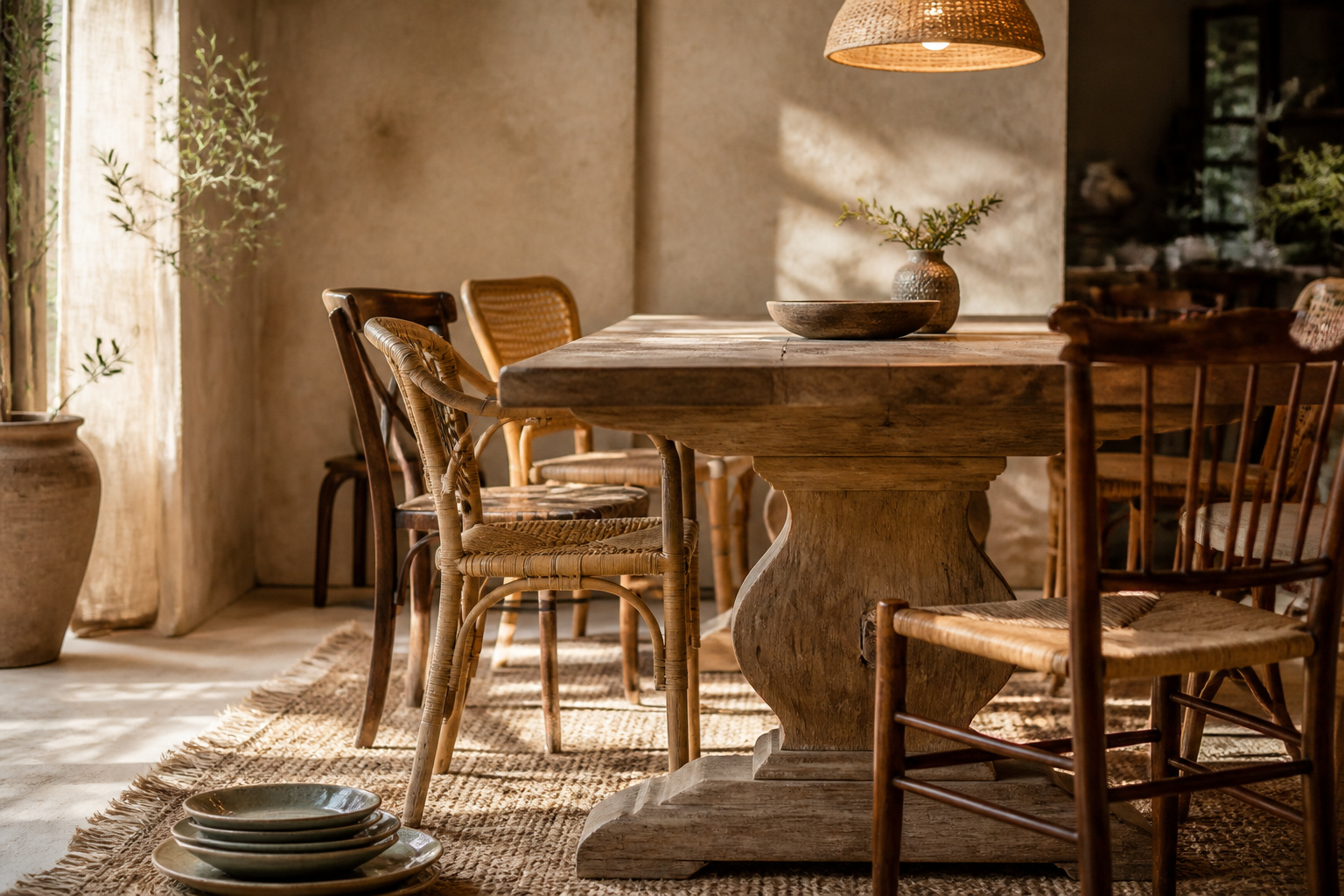
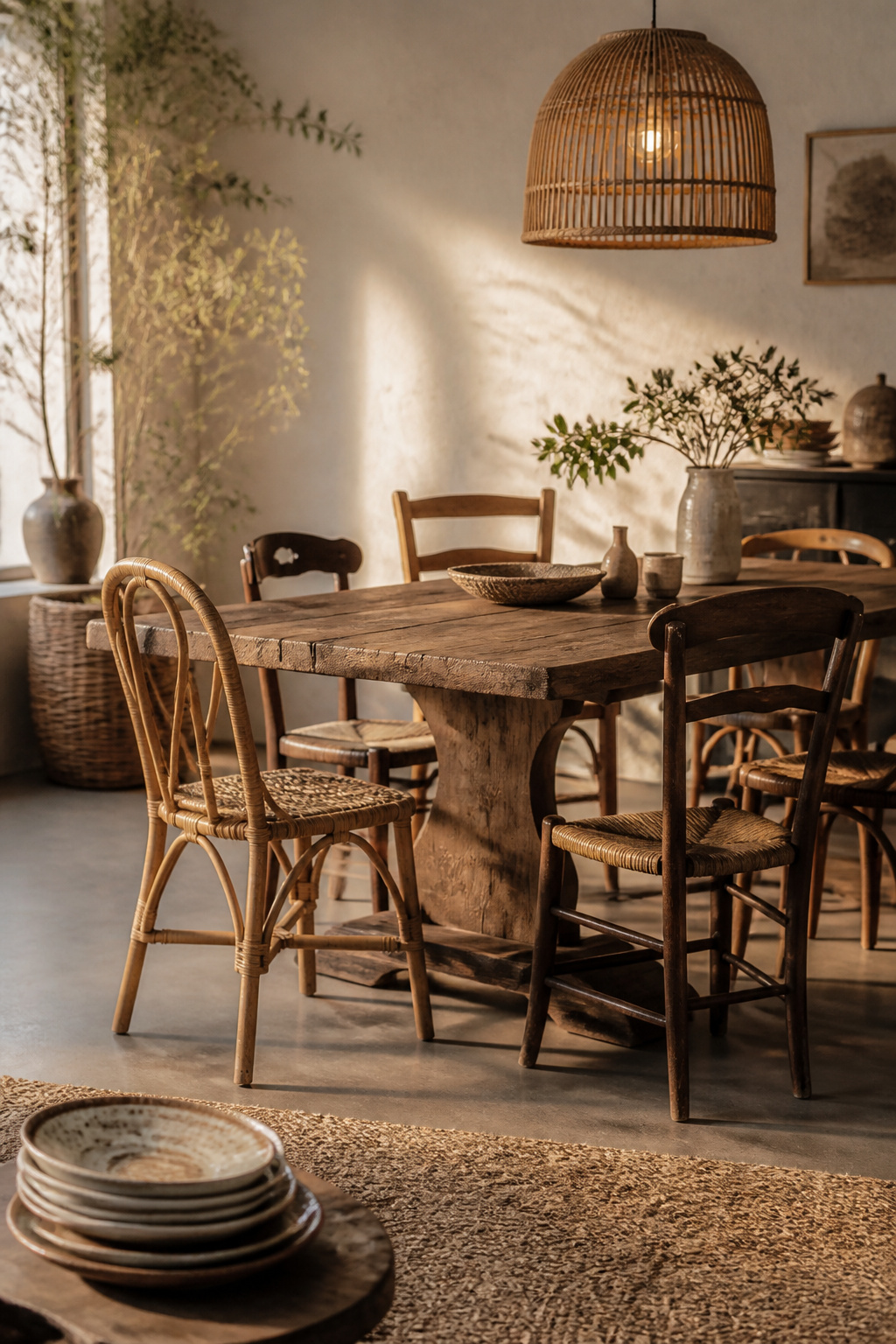
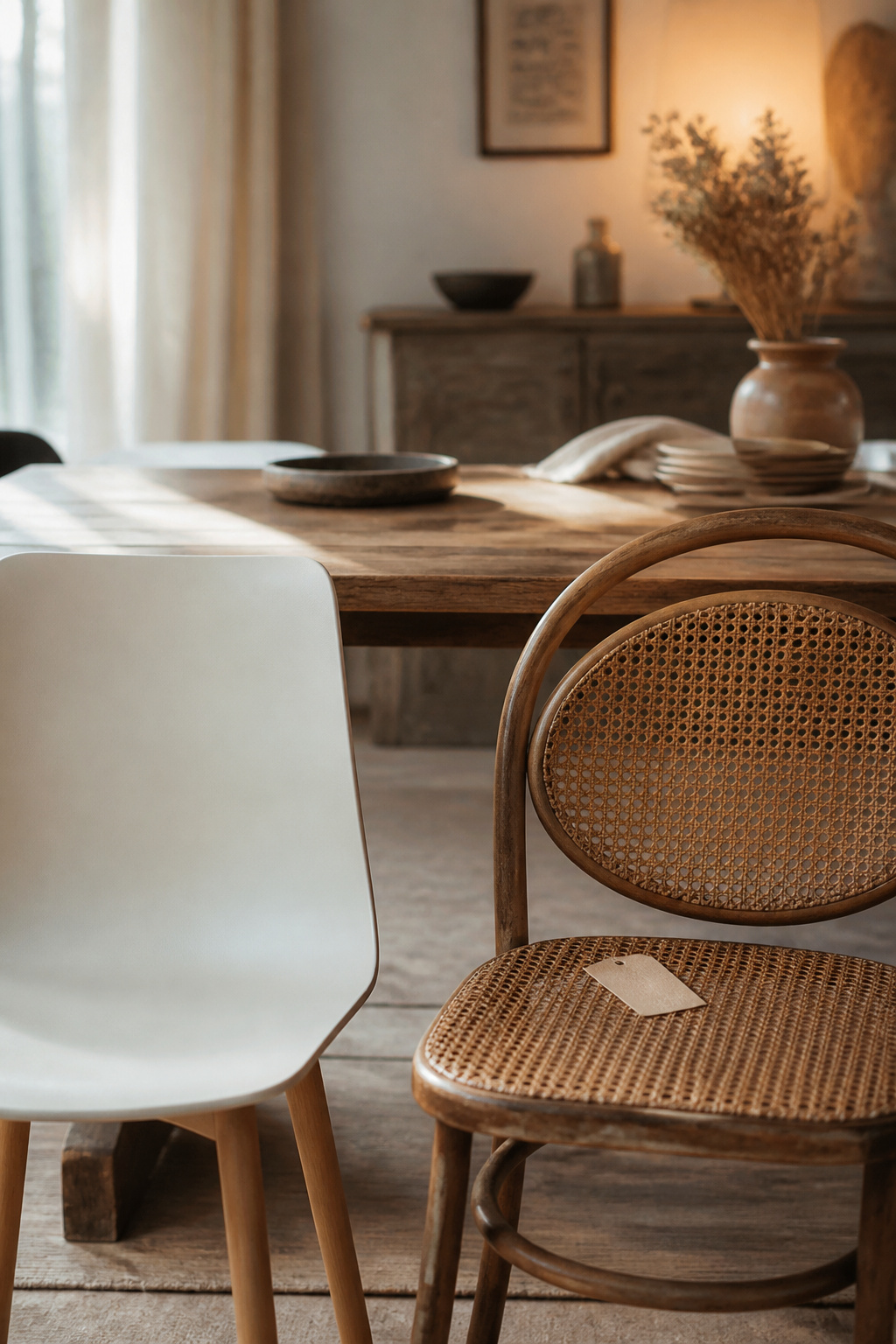
That gathered-over-time quality is the styling, not a byproduct of spending more. Boho furniture gets called one of the most budget-friendly styles precisely because the look embraces secondhand pieces rather than fighting them. Mix chair styles, tie them together with one shared color or material, and you get a personal result at a fraction of a matching set’s cost — same look, different receipt.
What actually drives the cost in a retail matched dining set versus a sourced boho one
The cost driver is simple: every piece new, one manufacturer, full markup, all at once. Boho spreads spend across new and secondhand channels instead, and secondhand is where the numbers get silly: a rattan shelf that’s about $80 new turns up around $8 secondhand.
What this guide gets you: a real sourcing plan, not a shopping list
I’m not handing you a list to add to a cart — a cart is how you overspend. You want a decision, category by category, on where new is worth it and where secondhand wins. The filter that keeps it from turning into a junk pile is one question asked of every piece: does this fit the thread already running through the room, not do I like it.
What’s Worth Buying New
A solid table base as the one piece worth full retail price
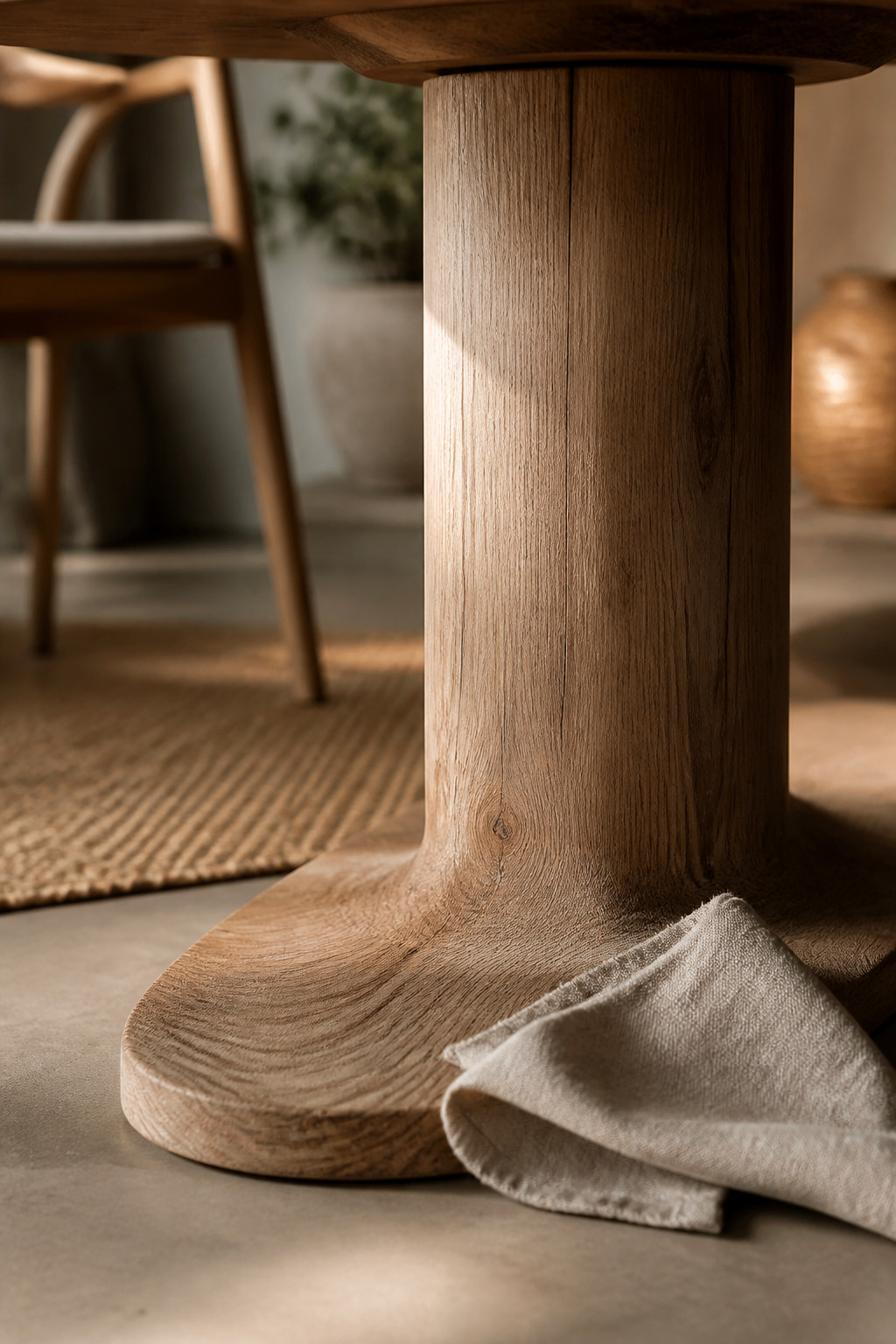
The table base takes daily structural stress from every diner who leans on it, so it’s the one place I won’t tell you to gamble. Genuine solid-hardwood tables with decent joinery become realistic starting around $1,000–$2,500 — that’s where solid oak and acacia live. Below that, most tables are veneer over engineered wood or particleboard; in the $300–$600 range you’re getting veneer over MDF, pine, or rubberwood. That’s the honest trade-off at that price, not a defect.
Why table stability isn’t the place to cut corners
Veneer isn’t a dirty word — it’s genuinely more stable and warp-resistant than solid wood in a humid climate, lighter, and cheaper. What solid wood buys you is repairability: sand it, refinish it, keep it for generations, while a peeling veneer top has no fix. Look for a wide, flared pedestal with a spider-style leg spread — the extra floor contact resists wobble better than four legs on an uneven floor.
Budget-new options that still hold up to daily use
Favor hardwoods — oak, walnut, acacia — over softer woods. A thrifted base works too, at the same test I’ll give you for chairs next: a cut joint where the leg meets the apron, not hardware alone.
Chairs: Your Biggest Thrift Win
Skill level: patience — the deals reward repeat visits, not one lucky Saturday.
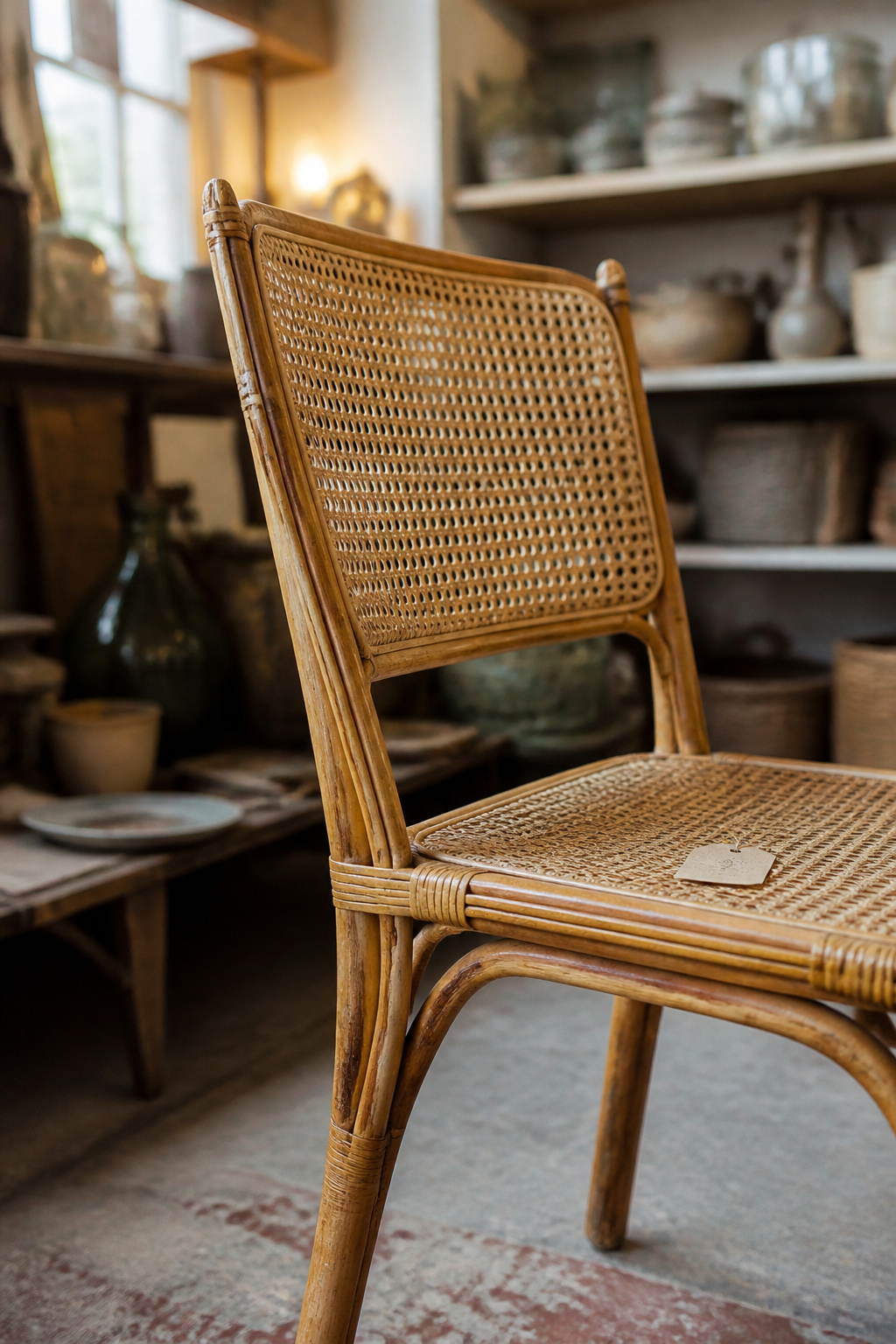
I spent eight years running crews for a remodeling contractor in Tennessee before I went solo, and one thing that job burned into me is this: pros measure, beginners guess. Nowhere does guessing cost you faster than a chair. A “$20 bargain” that needs $150 of reupholstery is a $170 chair you found out about too late.
Where to find secondhand vintage and rattan chairs
The channels overlap, but their prices don’t — here’s the real spread for planning a mismatched four-chair set:
| Source | Typical price per chair | Best for |
|---|---|---|
| Thrift store (Goodwill, Salvation Army) | Under $50 (bentwood/wood) | Widest variance, best deals with patience |
| Estate sale / yard sale | $20–$60 | Structural pieces sold fast, room to negotiate |
| Facebook Marketplace | 20–30% below asking is a fair opening offer | Local pickup, no shipping cost |
| Consignment shop | $75–$150 | Curated, staff-vetted condition |
| Curated vintage dealer (Chairish, 1stDibs) | $100–$175+ | Known provenance, least room to negotiate |
A listing up more than a week usually has more give on the opening counter. For the full channel-by-channel breakdown, see where to find mismatched chairs cheap.
What to inspect before buying a used chair
Quality wood chairs use cut joinery — dovetail, mortise-and-tenon, or dowel — not staples or hardware alone, which loosen faster. Run the wobble test: sit in the chair, check all four legs stay flush without sway. And skip used upholstered dining chairs unless the source is clean or you’ve budgeted a reupholster — fabric holds dust mites and odors steam cleaning can’t fully undo.
Real price ranges for a mismatched set built from secondhand pieces
The mistake I see most: treating the sticker price as the total. A chair that needs new upholstery costs the sticker plus $100–$550 professionally per standard chair ($210–$620 for curved or armed ones), or $20–$100 in materials for a DIY slip seat. Keep seat height within about 2 inches across the set — 17–19 inches from the floor at a 29–30 inch table — or your diners won’t sit level.
Rugs and Textiles Without the Vintage Price Tag
New jute and sisal base rugs as a genuinely affordable category
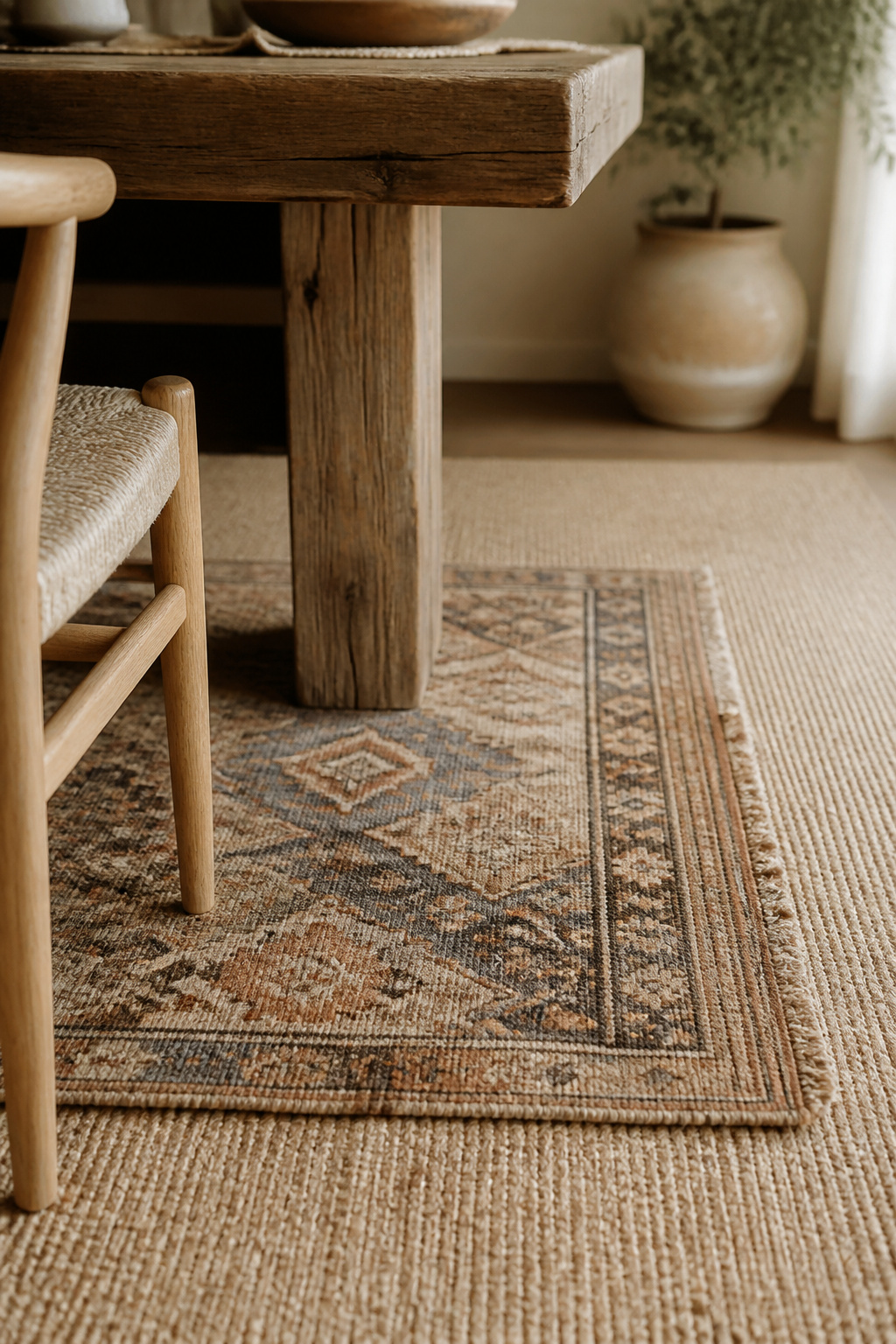
Same new-versus-secondhand logic, underfoot: start with a new jute or sisal base. An 8×10 commonly runs $150–$230 at full price, and sale pricing brings comparable pieces under $150. Jute is machine-made in most retail lines, which is why the base is reliably cheap — it doesn’t need to be the vintage piece for the layered look to read as authentic.
Finding a real vintage or kilim top layer at flea markets versus paying boutique prices
Size decides the top layer’s price more than anything: a 12×15 kilim costs roughly three to four times a 4×6 of the same quality. So don’t shop for a room-size vintage kilim — that’s the $200–$2,000 flea-market range, $1,000–$3,000 at boutiques. Shop a small accent format instead. A 2×3 or 3×5 kilim is sold as its own “small kilims” category, sits well below the full-size range, and gives the same layered read for a fraction of the price.
Budget textile swaps that refresh the look seasonally
This is the payoff of a neutral base doing the heavy lifting: rotating a small accent kilim, a runner, or cushion covers seasonally costs a fraction of replacing the base rug or the furniture.
Sequencing the Room Over Months, Not One Trip
Why buying everything at once usually costs more and fits worse
Phasing purchases over 6–12 months spreads the cash, lets you catch seasonal sales, and stops you locking in pieces before you’ve lived with the layout. Furniture stores refresh inventory at the end of winter and summer, so the best sales land in January/February and July/August. Thrift chains like Goodwill and Salvation Army restock daily, rewarding a monthly-visit habit over one big haul.
A realistic order: table, chairs, rug, then lighting and accents
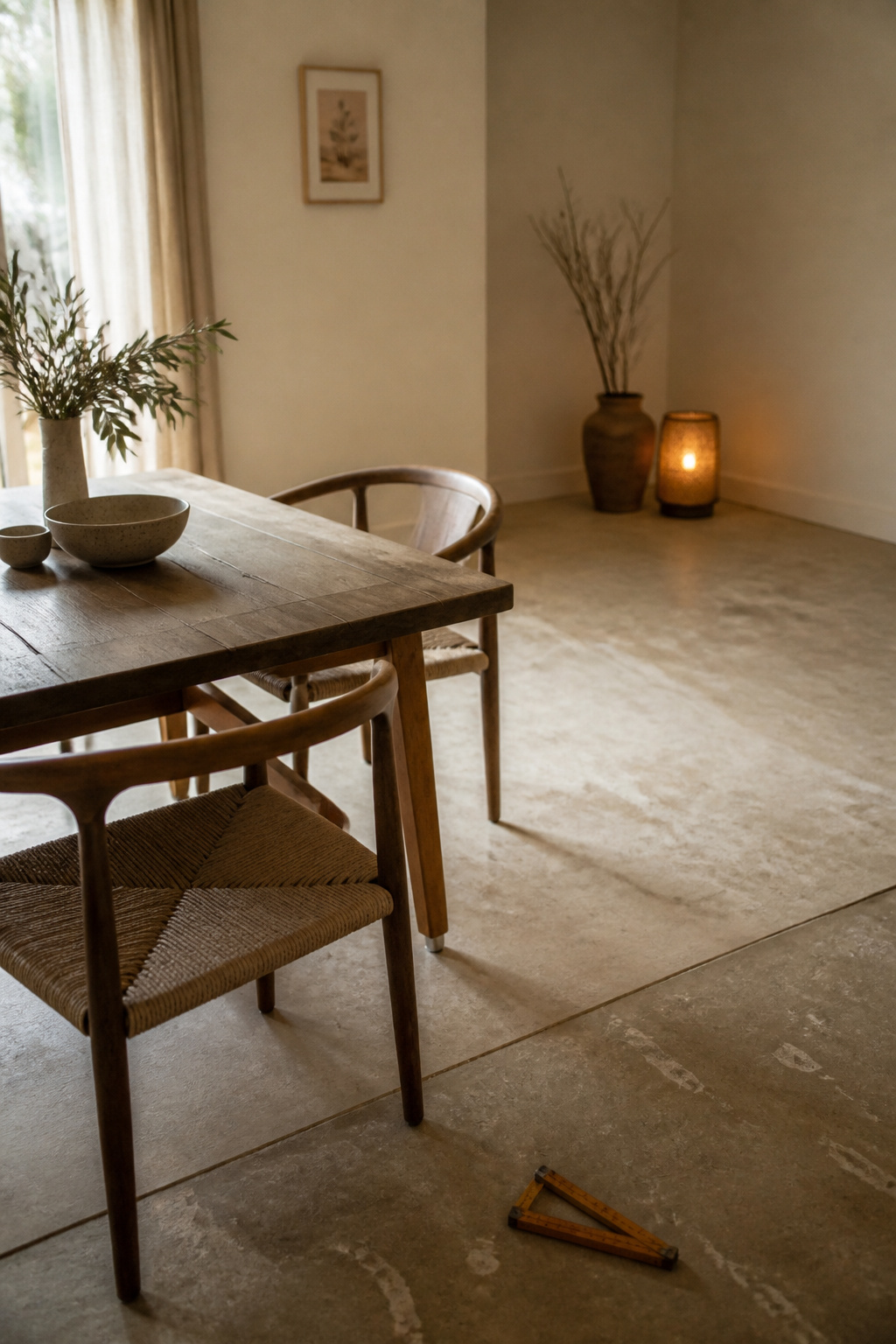
- Buy the table base first. The structural anchor and the one new-money piece; every chair height and rug size answers to it.
- Source the chairs next, one at a time, measuring seat height against the table as you go.
- Layer the rug once table and chairs are in — jute base first, small kilim on top.
- Finish with lighting and accents — pendant, textiles, centerpiece — the swappable, lowest-stakes layer.
Setting a per-month budget instead of a lump sum
Total your rough estimate, divide by the months to your target date, and move that into a furniture fund monthly. A $1,200 plan over six months is $200 a month — the math a lump-sum shopper never does.
What to Build Instead of Buy
Where a DIY project saves the most money relative to effort
Skill level: first project, no power tools required. Nothing here shows a bigger gap than a woven wall hanging: a retail macrame piece runs $80–$400, and the cotton cord for a comparable one costs $15–$40, for a project under two hours. On larger pieces the gap gets absurd — one big driftwood macrame hanging that would retail up to $1,500 got made DIY in about ninety minutes for under $50. You’re paying the markup on cord and knots, almost none of it material.
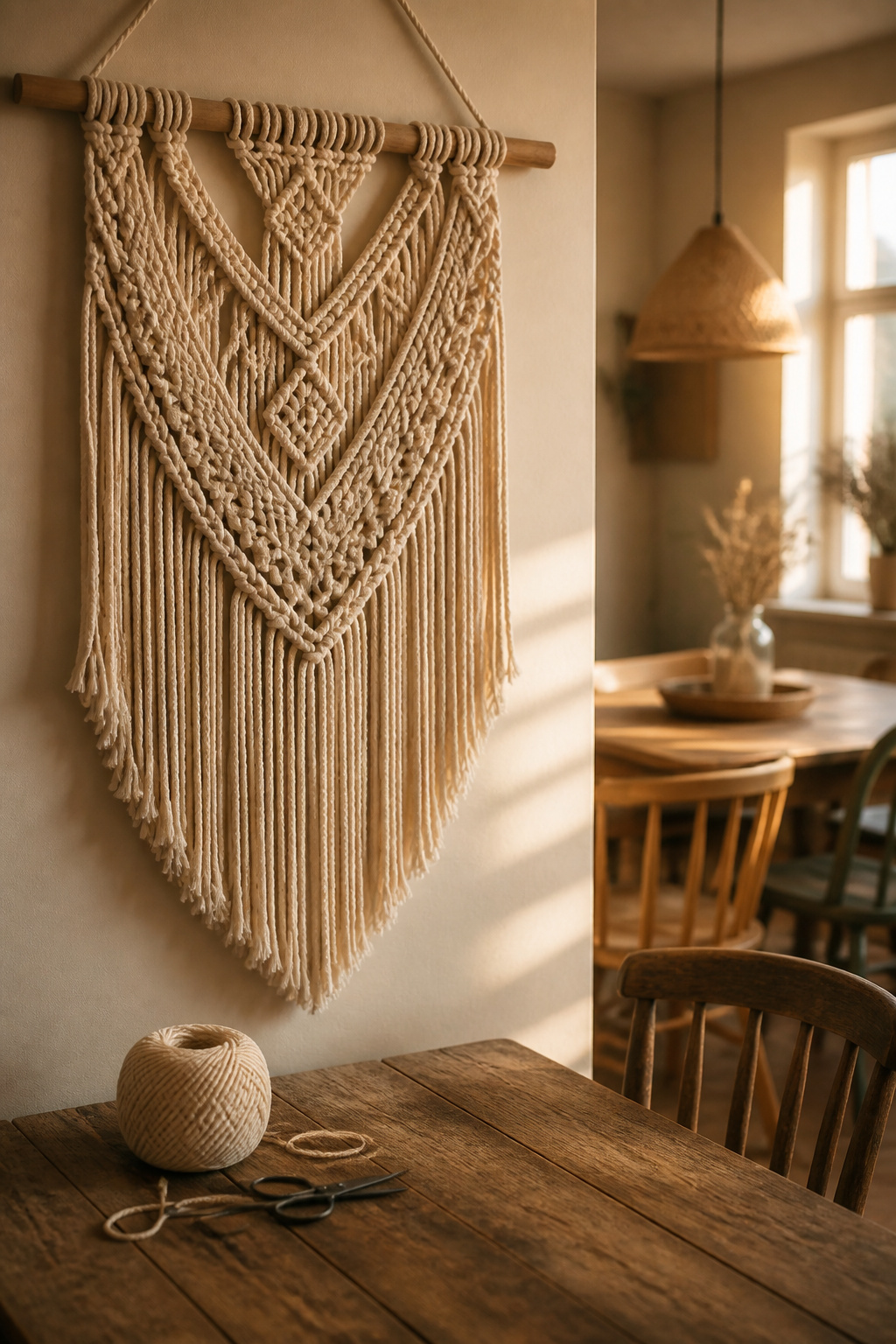
The first project worth tackling before any other
Build a macrame wall hanging first. No power tools, cheap cotton cord, and it fills the one wall every dining room has that retail boho decor marks up hardest. Buy five to six times your finished hanging’s length in cord so you don’t run short. For the step-by-step, see DIY projects to pair with budget sourcing — and the boho dining room ideas pillar sets all of this in the wider room.
So this is what you couldn’t do before you clicked: price and sequence a real boho dining room without guessing. Pick your target number, divide it by your months, and start hunting the anchor table this week. The room that looks collected was never the expensive one — it was the plan.
FAQ
How much does it realistically cost to furnish a boho dining room secondhand?
A comparable secondhand-heavy furnishing project came in under $1,500 total, mixing one secondhand major piece, a new budget storage unit, a rug, and thrifted seating — against $1,000–$7,000 for new matched retail dining furniture. The single biggest lever is the table: new solid-hardwood starts near $1,000, while a secondhand base keeps the project well below that.
Is it cheaper to buy a rattan pendant light new or find one used?
New rattan pendants typically run $120–$260 for common styles, with higher-end handwoven pieces reaching $275–$555. Vintage rattan pendants sell through vintage dealers, but pricing isn’t standardized like new retail, so you negotiate case by case. Budget rewiring for any used fixture too — a vintage pendant needs safe, working wiring before you compare its price to new.
What should you never buy secondhand for a dining room?
Avoid used upholstered dining chairs unless the source is known-clean or a reupholster is already budgeted — fabric holds dust mites and odors steam cleaning can’t fully remove. Furniture made before 1978 may carry lead paint, so swab-test a painted vintage piece first. Metal chairs and solid wood tables are generally safe secondhand, since non-porous surfaces clean fully and durability is visible.