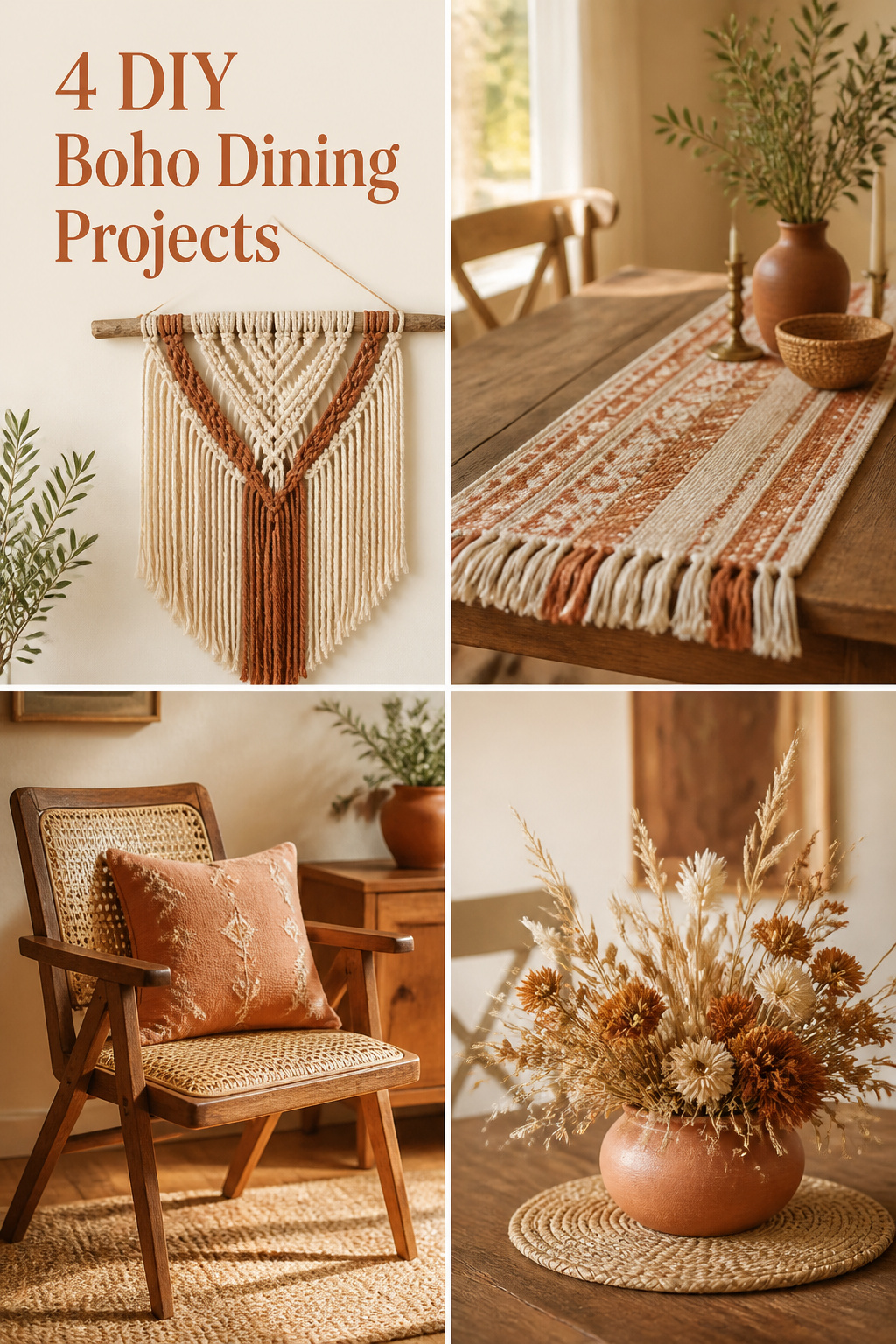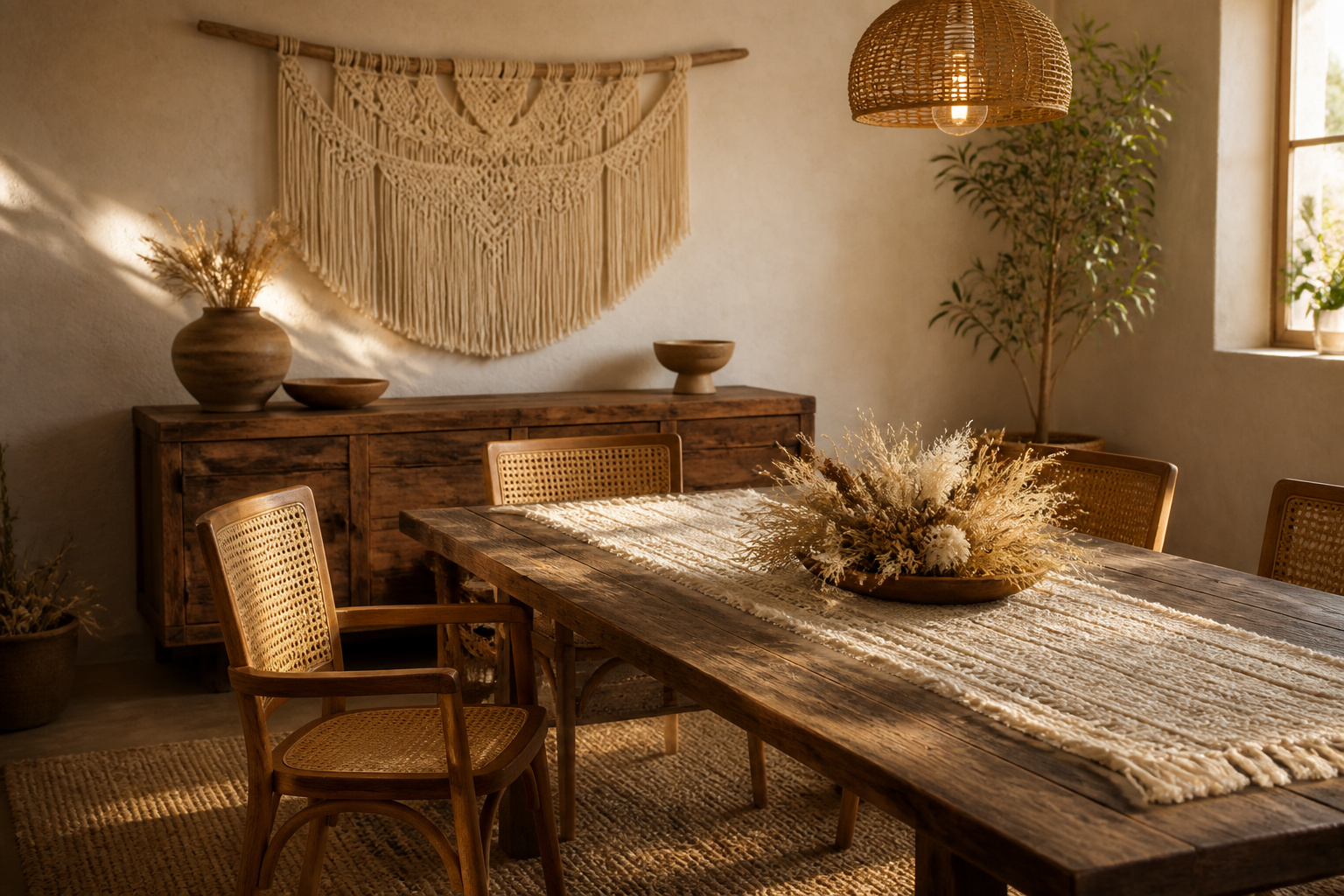

I once told a room full of my DIY students their first macrame wall hanging was a two-hour job. Mine took most of a Saturday — the knots weren’t the problem, the extra time went to a trip back to the store for more cord, because I’d cut it to the finished length instead of six times that. That gap, between the tidy inspiration photo and the actual instruction sheet, is where most DIY boho dining room decor goes sideways. Here’s the honest version of four weekend projects: real cost, real hours, and where beginners lose the time.
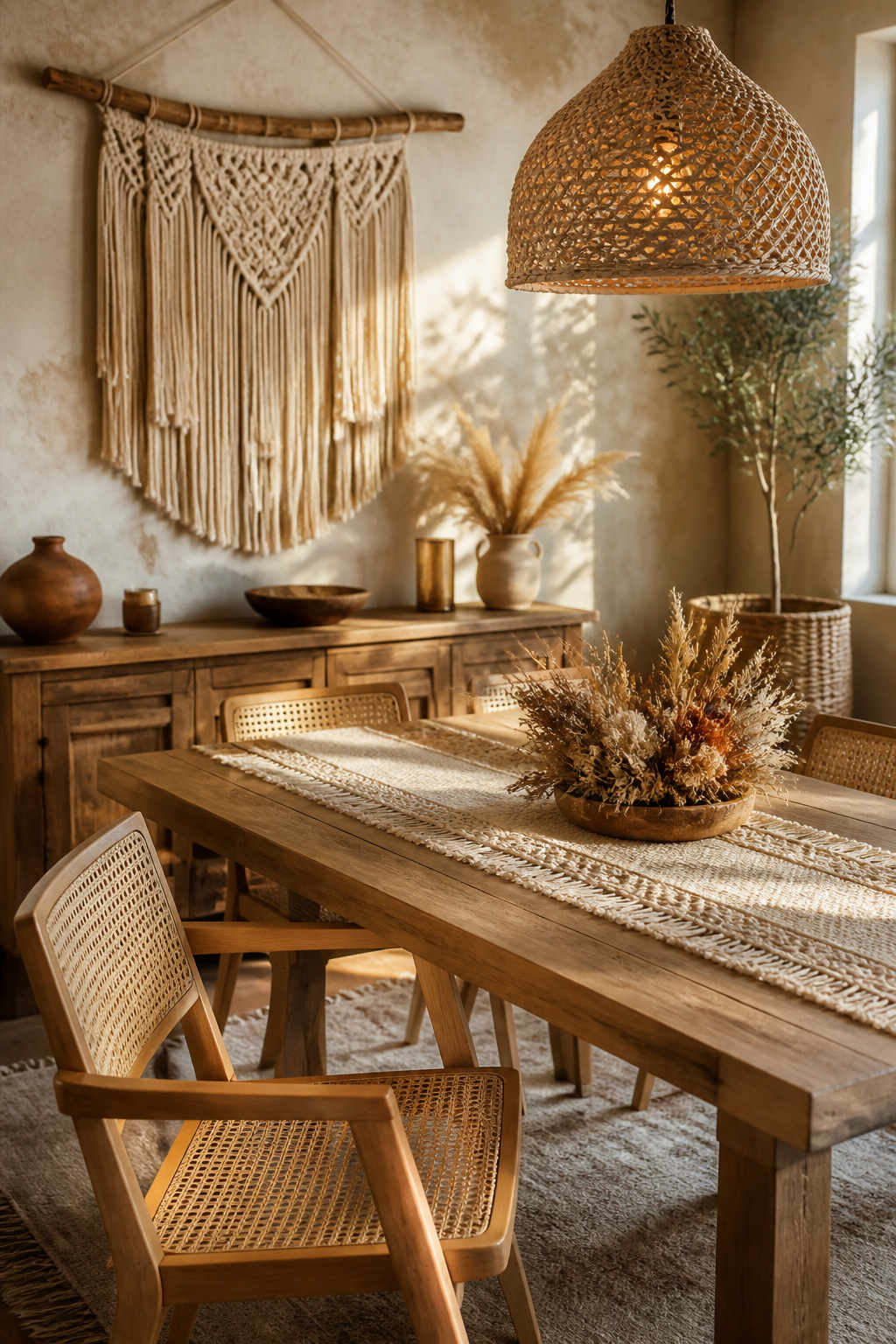
TL;DR
- Four buildable projects, cheapest first: a no-sew table runner ($15–$30, under an hour), a macrame wall hanging (roughly $20–$70, 1–4 hours), a restyled thrift chair ($50–$150 plus a caning kit if needed), and a dried centerpiece rotation (base $25–$50, swaps around $10–$20).
- The hidden hours aren’t the craft — they’re dry and cure time: a painted chair needs 24 hours before you handle it, and a recaned seat needs a full 3 days before anyone sits.
- Cut macrame cord to 4–6 times the finished length (8 if it folds at the mount), and keep any centerpiece under 12 inches so diners can see across the table.
DIY Boho Dining Room Projects: My First One Took Twice as Long as I Said It Would
The project that looked simple in the photo and wasn’t, the first time
The tool I trust most on a project like this is a $40 multi-tool nobody on my old crew respected. A first macrame hanging gets quoted as an under-two-hour job on four basic knots; real first attempts run under an hour to about 3.5 hours, depending on tension and spacing comfort. Furniture refinishing hides more: an overnight dry between coats, 24 hours before handling, seven days before heavy use.
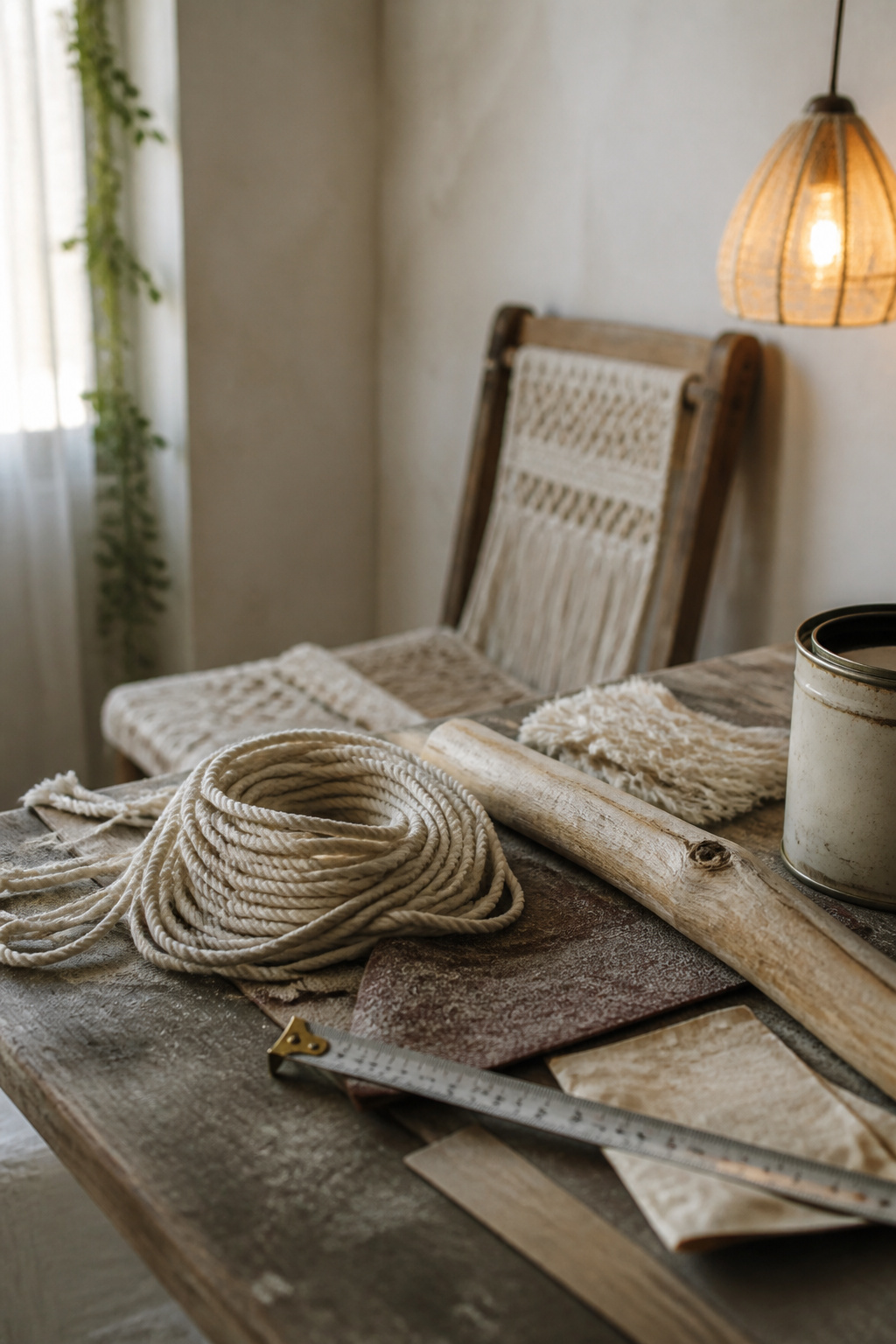
What actually ate the extra time, and why it wasn’t the craft itself
A cane seat’s kit estimates about an hour of active work, but the slow part is scraping old cane and glue from the groove, then waiting three days for the webbing to cure. Macrame’s trap: cut cord four to six times the finished length, eight if folded at the mount.
The honest version of these four projects: cost, hours, and where beginners lose time
Ballpark numbers, since prices swing by region and shop.
| Project | Materials cost | Active time | Where the time hides | Skill level |
|---|---|---|---|---|
| No-sew table runner | $15–$30 | Under 1 hour | Testing the fringe on a scrap first | First build |
| Macrame wall hanging | $20–$70 | 1–4 hours | Cutting cord long enough | First build |
| Restyled thrift chair | $50–$150 (+$22–$60 kit) | Hours, over days | 24-hour dry, 3-day glue cure | Some builds |
| Dried centerpiece rotation | $25–$50 base, $10–$20 swap | Under 1 hour | None — the low-stakes one | Beginner |
Project One: A No-Sew Table Runner
Materials list and real cost
No machine, no glue cure — scissors, a seam ripper, and $15–$30 of fabric, the lowest barrier of the four. For a 70-inch table with 8 inches of overhang per end (the standard runs 6–12 inches), you need about 86 inches of fabric — 2.5 yards — plus 2 inches to finish the ends. Cotton dyes evenly and costs less; linen is more durable and gains texture with washing. Aim for mid-weight, 200–240 gsm, so it lies flat.
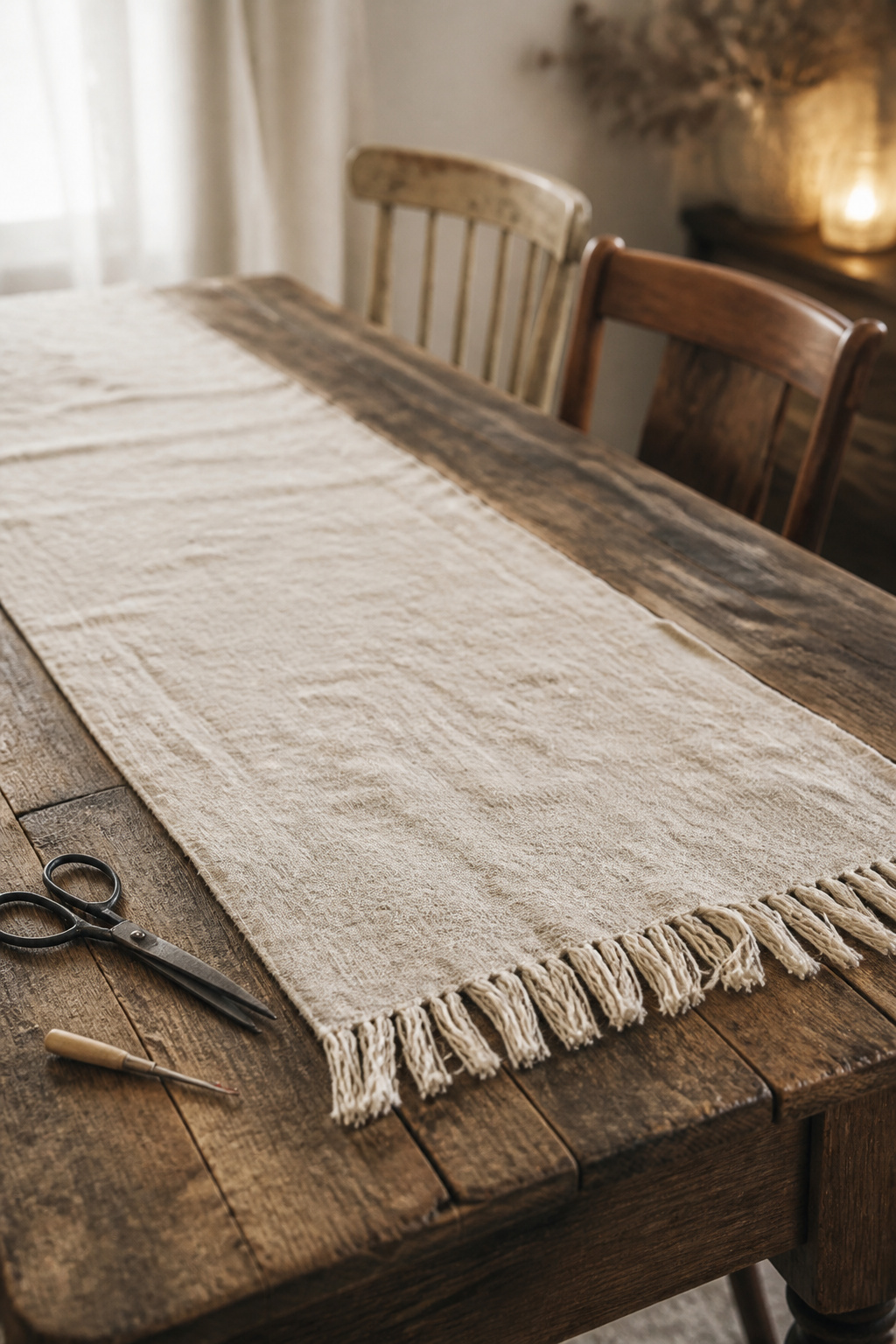
Steps: cutting, fraying or fringing the edge, sizing to the table
- Measure your table, add the overhang per end plus 2 inches, and cut to length.
- For a pulled-thread fringe, use a seam ripper or pin to pull threads from the cut edge until a half-inch of fringe forms.
- On tight weaves that won’t pull clean, cut or tear along the grain for a similar frayed edge.
- To finish a long edge without sewing, iron a hem under with fusible tape.
- Lay it down the center and check the overhang falls even on both ends.
The mistake paragraph: what goes wrong at the cutting step
The fringe fails at the edge you didn’t test: pull-fringing works on a loose weave, but a tight one snaps instead of sliding, leaving a ragged edge. Test a scrap corner first. A flat sheet often costs less than yardage and fringes the same.
Project Two: A Macrame Wall Hanging
Materials, knots needed, and realistic hours for a first attempt
Beginner-friendly once you know two knots. Use 3–4mm cotton cord, three-ply or single-strand — single-strand combs softer, three-ply holds knots crisper. Cord plus a dowel or driftwood branch runs roughly $20–$70; driftwood runs 24–48 inches, an inch thick, $10–$25 online, or forage it free. Budget 1 to 4 hours, cutting cord 4–6 times the finished length — 8 if folded at the mount.
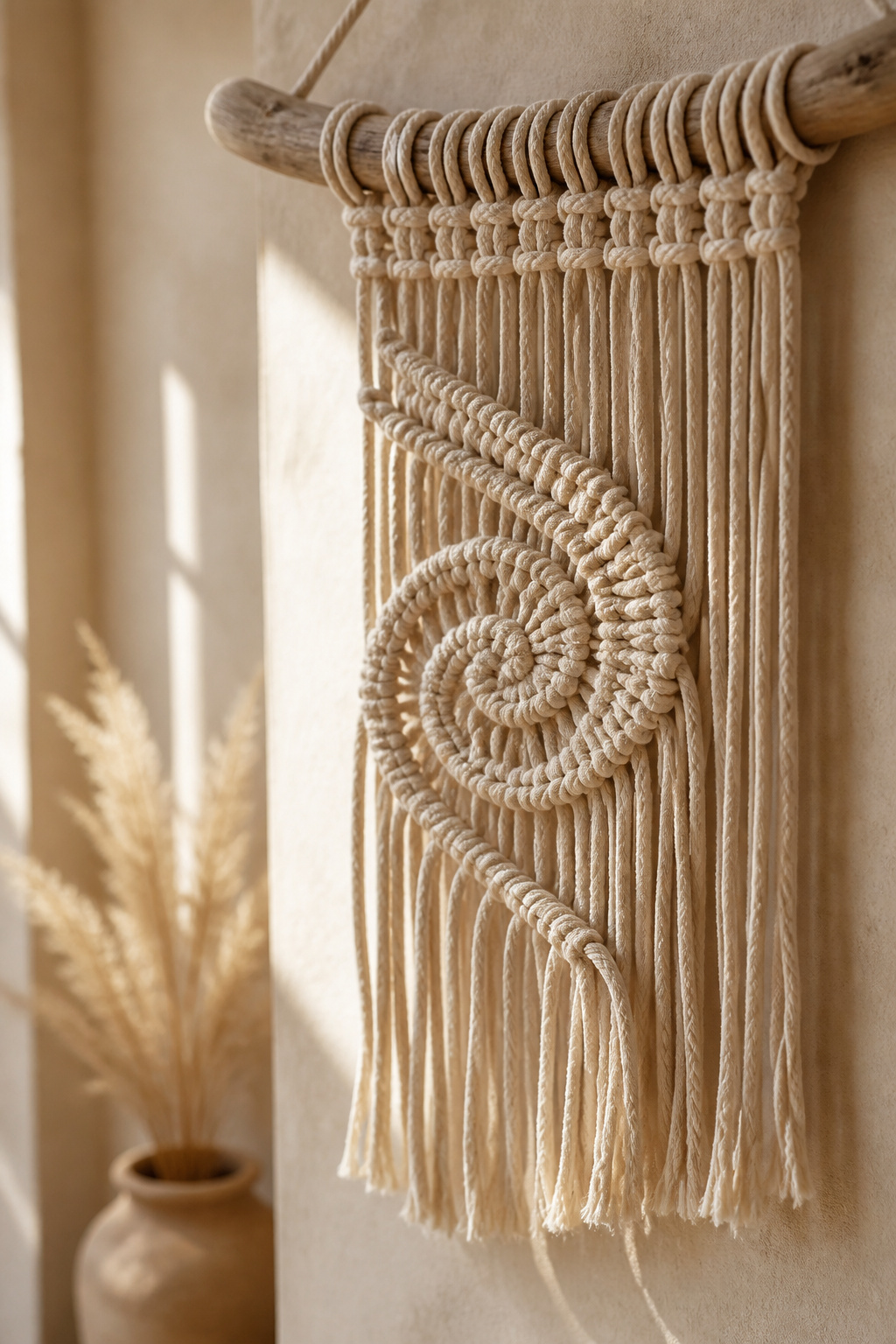
Steps: mounting the dowel, the core repeating knot pattern, finishing the fringe
- Mount each cord with a lark’s head knot: fold it in half, slip the loop under the dowel, then pull the loose ends through and tighten.
- Build the body with square knots — two outer working cords over two center filler cords, cross left over the middle and under the right, then repeat from the other side.
- For a spiral column, repeat the square knot’s first half on the same side over and over; the cords twist on their own.
- Comb the bottom ends into a fringe once the piece is hanging, then trim so gravity settles the drape first.
The mistake paragraph: uneven tension and how to fix it without starting over
Uneven tension is the rookie tell — some knots yanked tight, others loose, so the grid looks lopsided. You don’t restart: untie back to the uneven knot and redo just that section. Our guide to boho dining room lighting fixtures covers scale and hanging height for a pendant overhead.
Project Three: Restyling a Thrifted Chair or Table
What to look for in a thrift find worth restyling
Rated “some builds” — it drags a dry-and-cure clock, so start it first if your weekend is tight. Check the joinery where legs meet seat: a cut joint (dowel, mortise-and-tenon) holds up; hardware or glue alone loosens over time. Run the wobble test — sit in it, confirm all four legs stay flush. Most used furniture sells 40–70% below retail, and solid wood already outperforms new budget furniture.
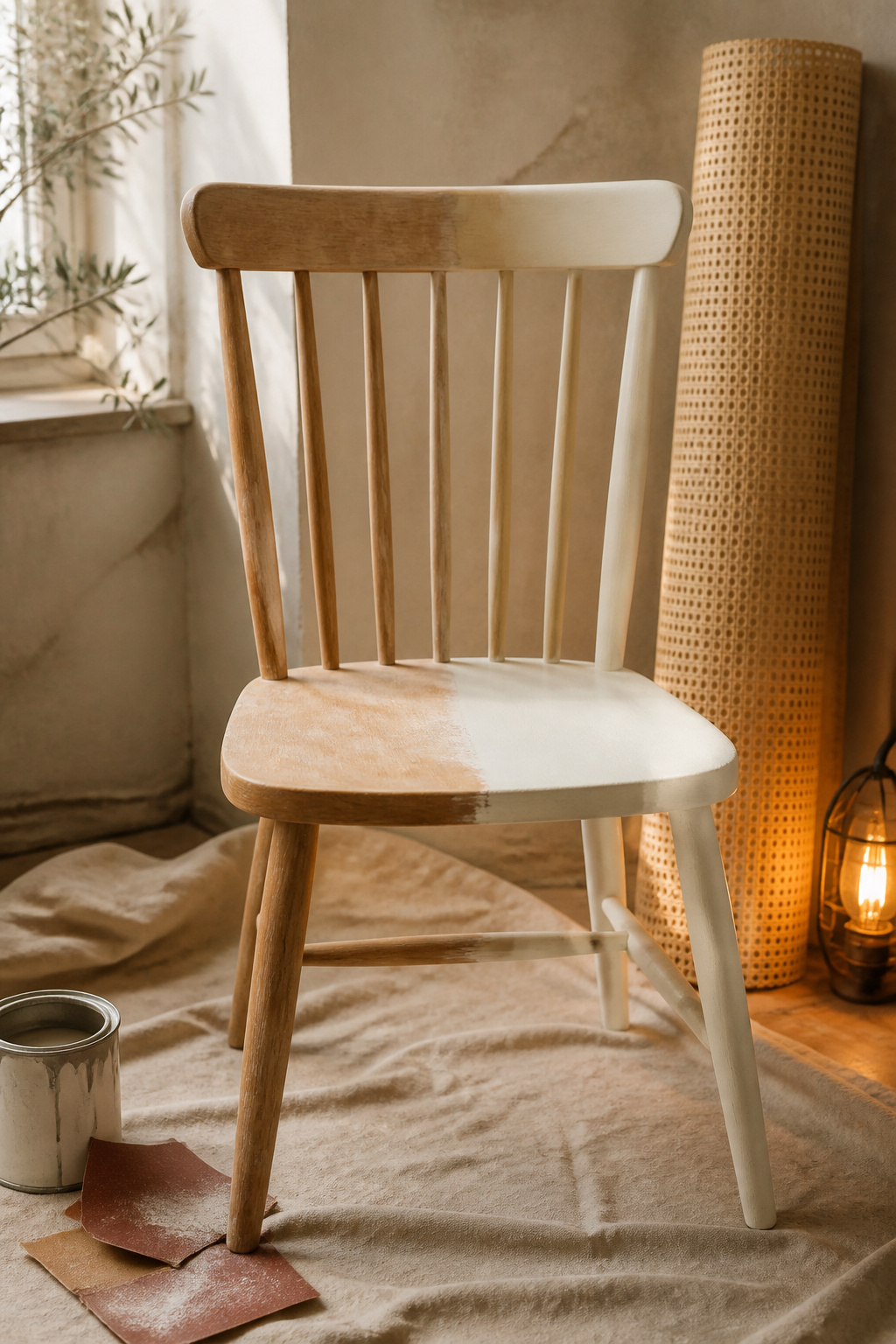
Steps: cleaning, sanding, finishing or painting, reseating a cane or rattan seat if needed
- Clean, then sand in sequence: 80-grit to strip the old finish, 150-grit to kill the gloss, 220-grit to prep for primer (320-grit between coats is optional).
- Vacuum the dust and wipe with a tack cloth; over dark wood, use a shellac-based primer so tannins don’t bleed through.
- Prime, then paint, letting primer and each coat dry overnight — 24 hours before handling, seven days before heavy use.
- If the seat needs recaning, fit a pre-woven cane webbing kit: about $22–$37 for an 18×18-inch seat, $36–$61 for 24×24.
- Budget time for scraping old cane and glue from the groove — the slow part; webbing installs in about an hour once clean, then needs a 3-day cure before anyone sits.
The mistake paragraph: skipping the sanding step and what it costs you later
Don’t paint over a glossy finish to skip sanding — paint grips nothing on a slick surface, so it peels within weeks and you redo the whole chair, angrier. The other rushed failure: sitting on fresh caning before its three-day cure is up, warping the weave. For where to find these chairs cheap, our guide to budget sourcing for your DIY materials covers the thrift-and-flea circuit.
Project Four: A Seasonal Dried Centerpiece Rotation
Building a base arrangement that lasts, then swapping in seasonal stems
The low-stakes project you keep going all year — no cure times, no wobble tests. Dried flowers don’t perish; they last for years with basic care, which makes a reusable base — a vase plus structural stems — smarter than starting over each season. Go modular: small vases swap more easily than one big fixed arrangement. Fall wants dried wheat, foxtails, tan mums and eucalyptus; winter goes restrained around evergreen stems; spring reads best with a single tulip or ranunculus in a slim bud vase.
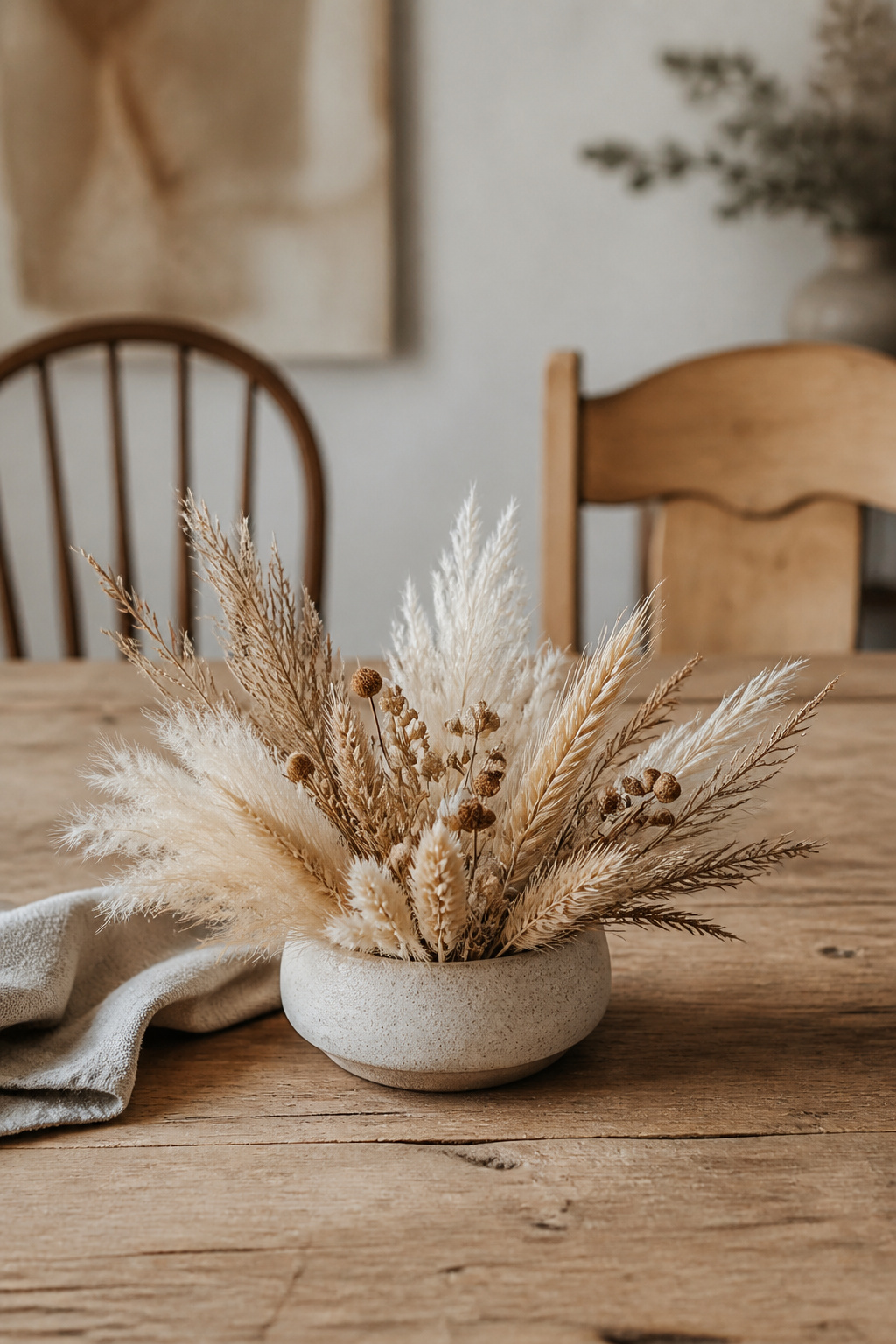
Materials and cost for a rotation that covers three seasons
A base — vase plus stems like pampas grass or wheat — runs $25–$50; swap-ins run $10–$20 since you reuse the vase. Dried pampas grass lasts 1–3 years indoors out of direct sun and humidity, dusted every week or two. To cut shedding, mist it with light hairspray or a clear matte sealer once the stems fully fluff out, not the moment you get them home.
Keeping the centerpiece low enough to see across the table
Keep the arrangement 12 inches or under (under 14 is safe). The 15-to-23-inch range is the blocking zone — too tall to see over, too short to see under — so avoid it; going tall means clearing 24 inches from the table surface. Quick test: shorter than a wine bottle clears every sightline.
Pick One and Start This Weekend
Which of the four projects to start with based on tools already on hand
Own only scissors and a seam ripper? Build the no-sew runner. The macrame hanging needs only cord and a stick; the dried centerpiece is just as tool-light. Restyling a chair is the only one assuming sanding tools and, if recaning, a multi-day cure — start it first and let it dry while you knock out the others.
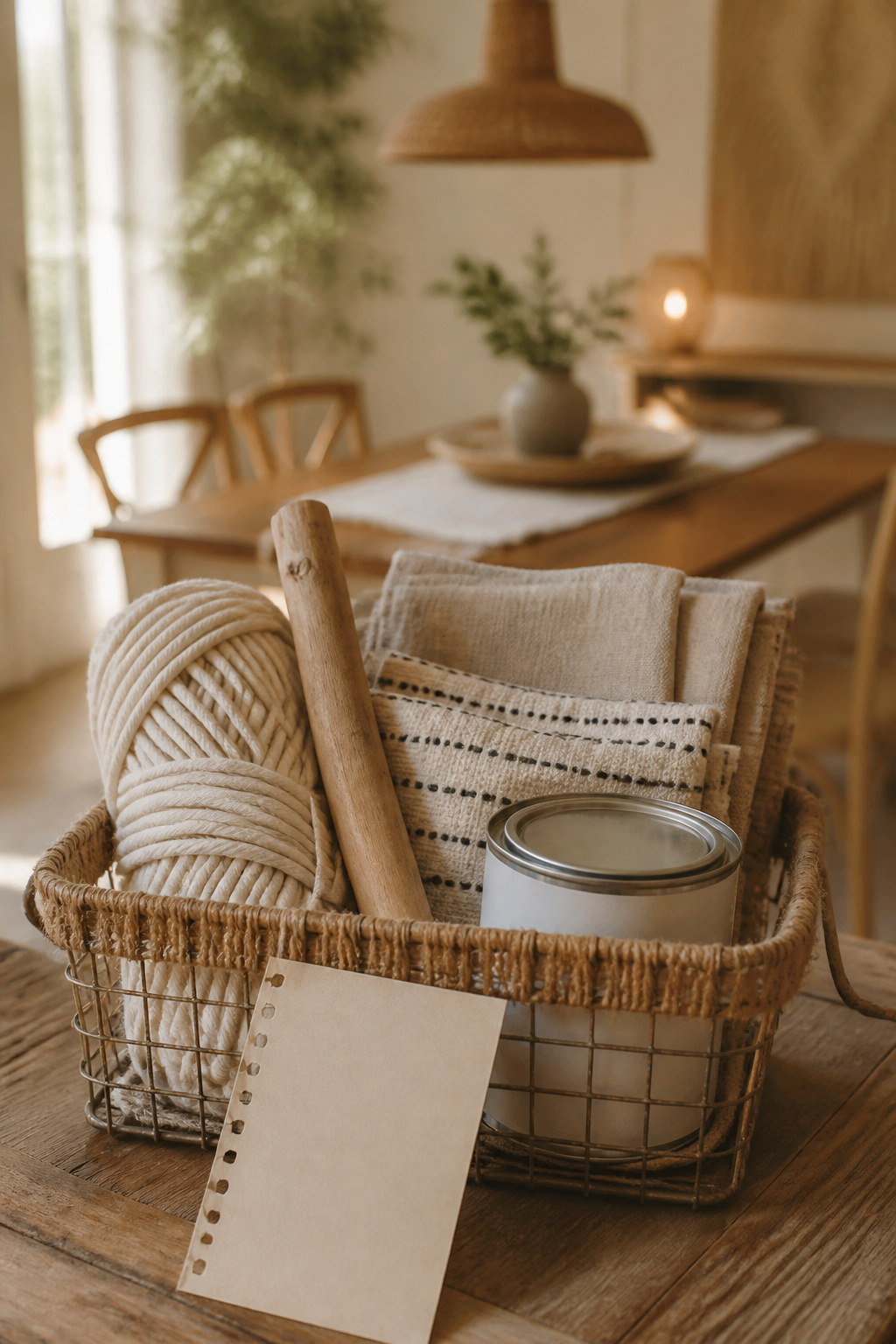
What to buy before Saturday morning so the project doesn’t stall
Fabric yardage and cord length are the most common under-buys, forcing the store trip I keep warning about — buy slightly over your minimum and skip it. For the chair, buy primer, paint and sandpaper in one trip; running out mid-coat costs a day. Match tools to project and you’ll have one real piece finished by Sunday night. For the wider room these pieces live in, our bohemian dining room ideas guide shows how it all comes together.
FAQ
What size dowel or driftwood branch works best for a macrame wall hanging?
Driftwood branches sized for wall hangings typically run 24–48 inches long and about an inch thick, sold online for $10–$25. A smooth, sturdy dowel is a reliable substitute — it just needs a rigid, splinter-free surface the lark’s head knots can grip. Match the length to your wall: wider spreads cords for an airier look, narrower concentrates them.
Can you restyle a rattan chair without replacing the woven seat?
Yes. If the woven seat passes a wobble test with no sagging or broken strands, you only need to sand and refinish or paint the frame, leaving the weave as is. A sagging base felt from underneath, even if it looks fine on top, signals the weave needs replacing. Painters usually mask off the weave first.
How long does a dried centerpiece arrangement actually last?
Dried flowers generally don’t perish and can last for years if kept away from direct sunlight and moisture. Dried pampas grass specifically lasts 1–3 years indoors with occasional dusting every week or two and no direct sun. Direct sunlight is the main cause of fading, so placement away from a bright window extends the display most.