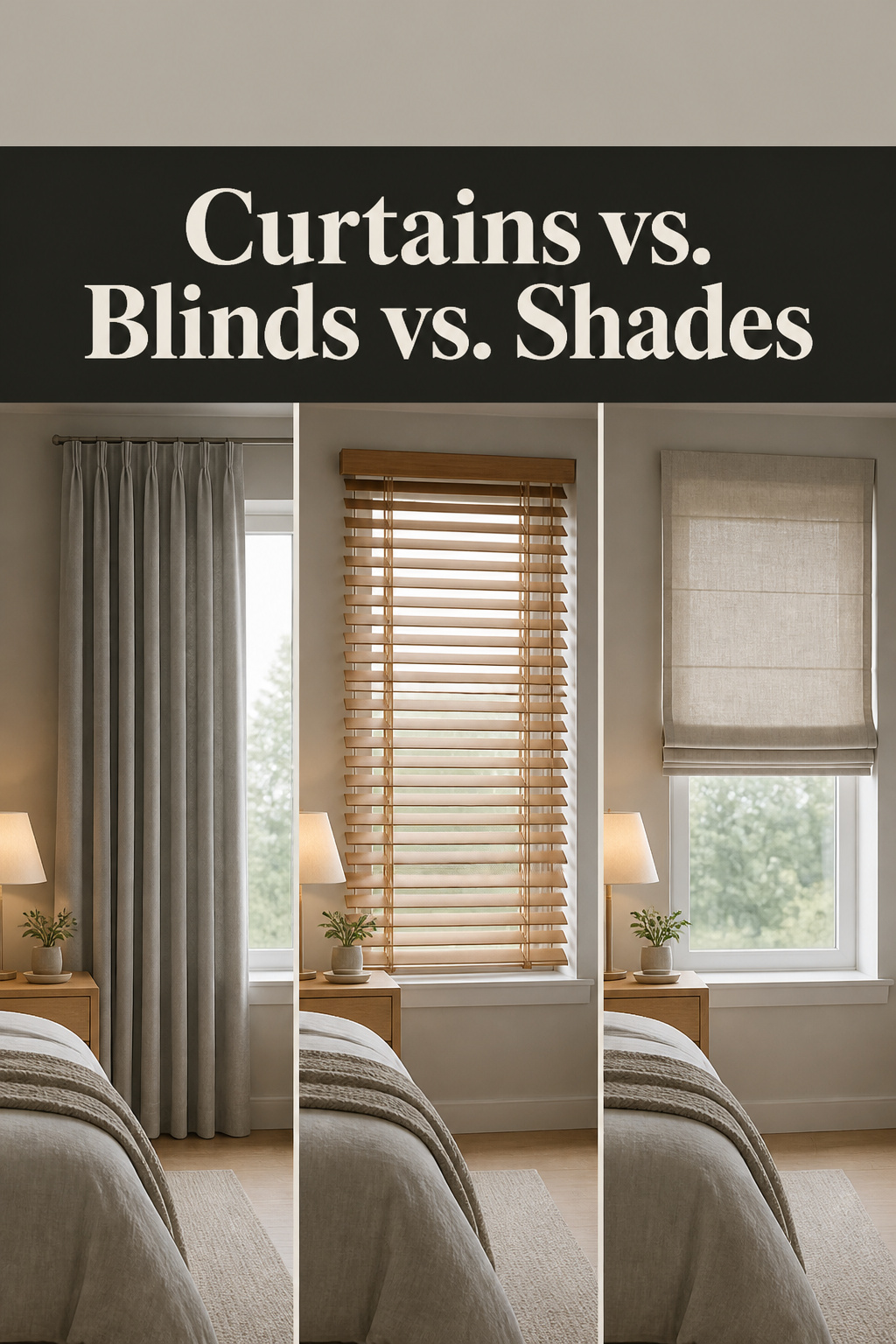
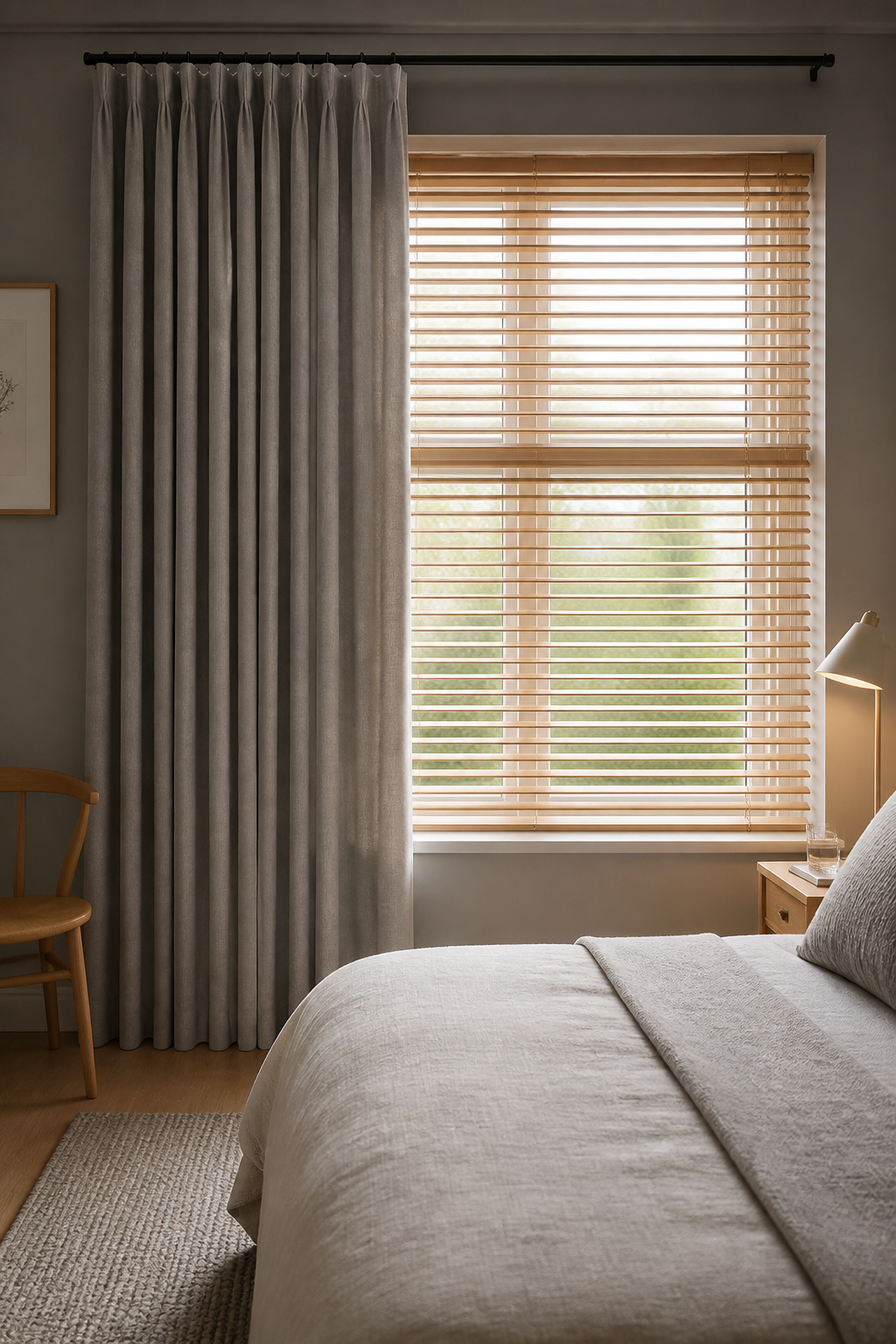
Here is the finding that surprises most people shopping for a bedroom: blinds look like the serious, technical choice, but curtains usually beat them on the three things a bedroom actually needs — blackout, warmth, and quiet. The reason is counterintuitive. A blind mounts to the frame, and that neat, fitted mounting is exactly what limits it; a curtain hangs loose, and once you size it generously that looseness becomes the advantage. So the honest answer to curtains vs blinds for bedroom sleep is rarely a single winner — it is which of the two, or which combination, matches your one biggest problem.
TL;DR
- Curtains generally beat blinds on blackout (95–98% for quality blackout fabric), sound (a 20–40% reduction), and warmth, because oversized panels overlap the wall where frame-mounted blinds leak.
- Blinds and shades win on low upkeep and a smaller footprint; cellular honeycomb shades are the one exception that outperforms curtains on pure insulation, cutting heat loss up to 40%.
- Match your top priority to a category — darkness or noise means curtains, upkeep means blinds, pure warmth means honeycomb shades — and layer when two priorities tie.
The Surprising Case for Curtains First
Most bedroom window advice compares the wrong things. It weighs a blind’s opacity against a curtain’s, when the question that matters is what happens at the edges.
Why curtains usually win on blackout
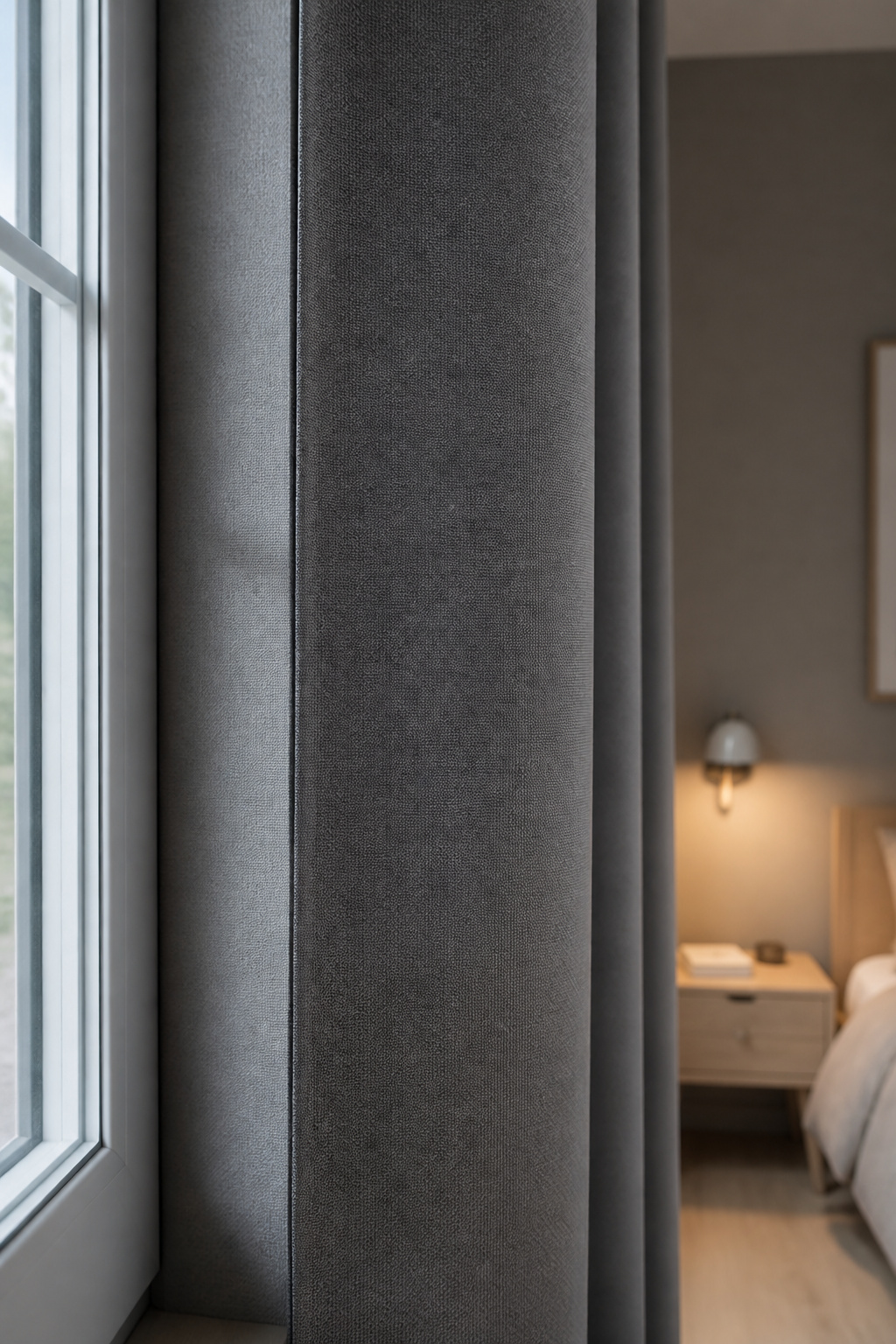
Quality blackout curtains block 95–98% of light, premium triple-weave lines reaching 99%. On paper, professional blackout blinds do better — 98–99.9% at the fabric level. But that number describes the slat, not the window. A blind mounts inside or just outside the frame, so it always leaves perimeter gaps at the edges, even fully closed. A curtain closes those gaps because oversized panels and a wide rod let the fabric overlap the wall well beyond the opening. For a bedroom, where full darkness matters more than in a living room, that edge seal is why curtains usually win.
The insulation and sound advantage
Light is the first material of any room, but warmth is the second, and here fabric earns its keep. A well-fitted thermal-lined curtain can push a window’s effective R-value as high as 6, while standard aluminium mini-blinds do almost nothing. Sound follows the same logic: soft, heavy fabric absorbs it where rigid slats reflect it, so curtains cut noise by roughly 20–40%. In a street-facing bedroom, that is the difference you hear at 6am.
Where blinds and shades still have the edge
Curtains do not win everything. Cellular honeycomb shades cut heat loss by 40% or more, genuinely ahead of most thermal curtains on insulation, and their cell structure traps sound too. But the everyday edge is simpler: blinds are easier to live with. A duster or damp cloth handles them, where a curtain comes down for washing, and in a small bedroom or tight recess a blind’s smaller footprint is a real advantage.
Light Control: Which Category Blocks the Most
If darkness is your reason for reading this, weigh the categories on installed performance, not the box.
Blackout percentages by category
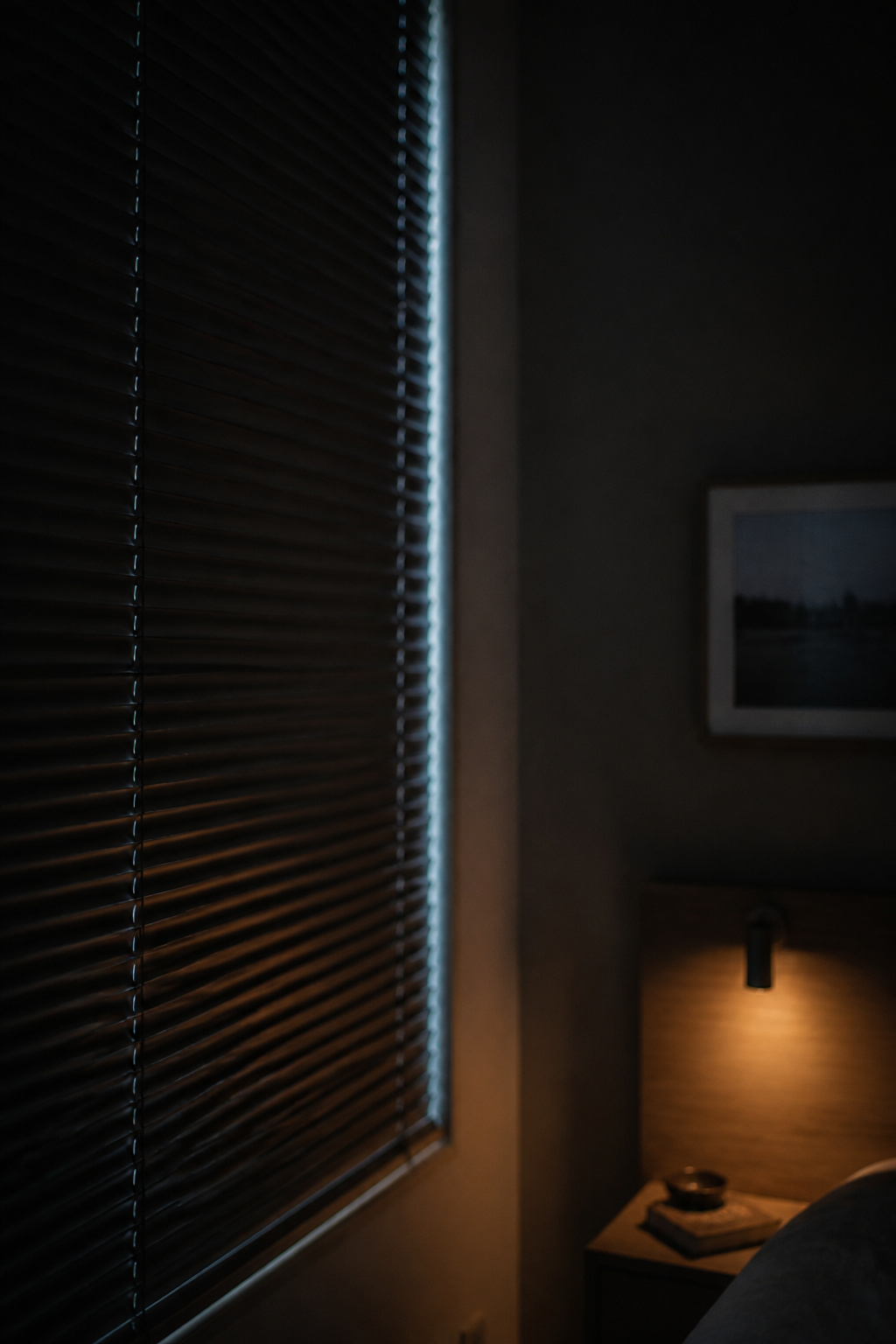
Three tiers matter. Blackout curtains block 95–98% of light, up to 99% in premium fabric. Professional blackout blinds and shades reach 98–99.9% at the fabric level. Room-darkening shades cut roughly 95–99% but never reach true blackout, and venetian or sheer blinds always let some light through even fully closed. So the raw percentage tells you little until you know how the treatment is installed.
Gaps and light leak points
The heading style decides a curtain’s leak. Rod-pocket and tab-top headings leave gaps between fabric and rod; triple pinch-pleat headings with blackout lining seal far better. The hardware matters just as much: mount the rod at least 8 inches above the frame and extend it 10 inches past the frame on each side. Blinds leak at the perimeter instead, and side channels reduce that gap without ever eliminating it.
Combining categories for full blackout
For a shift worker, the gap between 95–97% room-darkening and true 99–100% blackout is the gap between a dark grey room and pitch black. A blackout roller shade never seals completely alone — there is always a gap between shade and frame — so blackout-lined drapery over a blackout roller shade is the setup most often recommended for genuinely dark bedrooms.
Insulation and Sound: The Daily-Use Difference
Both thermal and acoustic performance come down to mass and coverage. That is why the “best” answer flips depending on whether your problem is temperature or noise.
Thermal performance in winter and summer
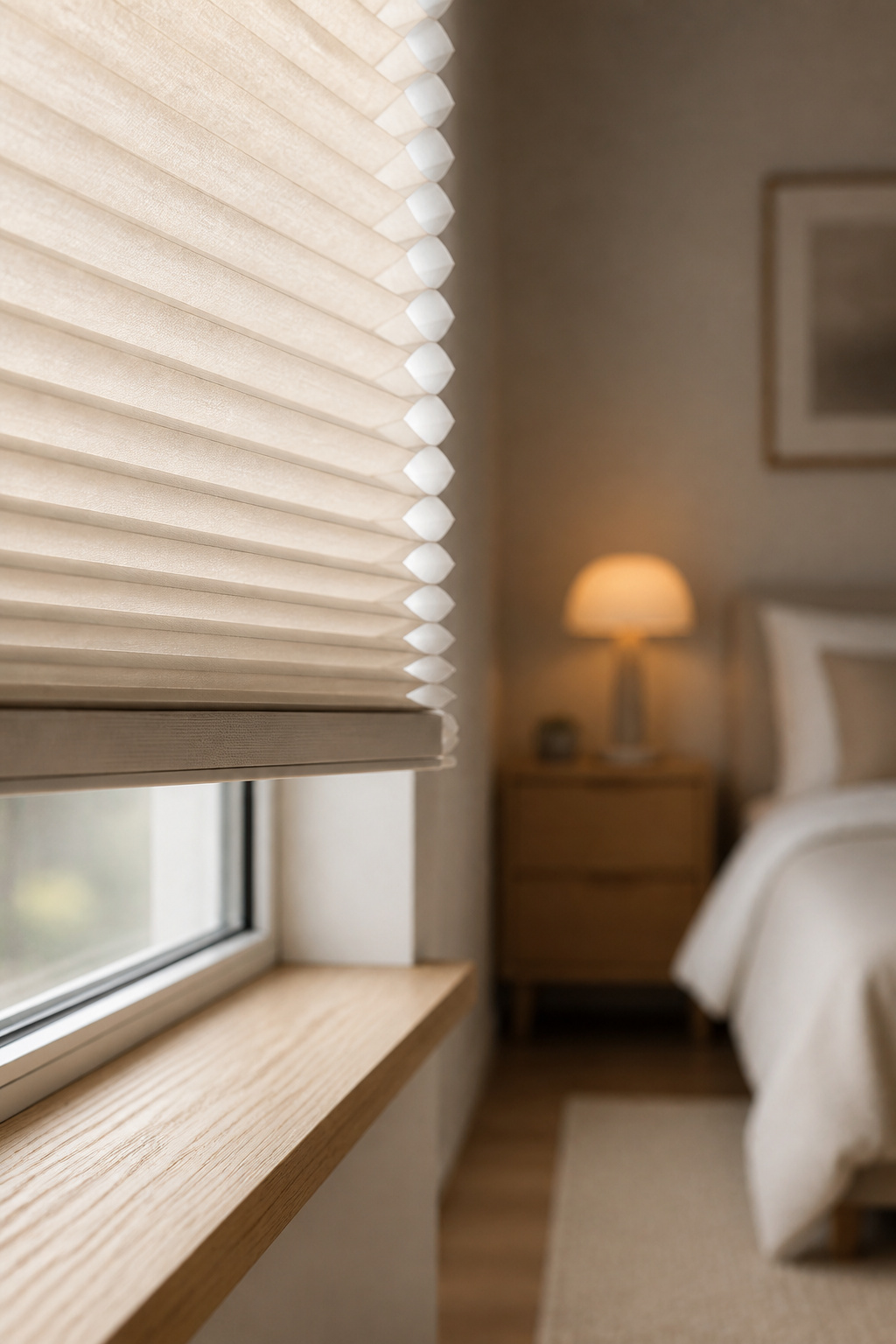
For pure warmth, ranked simply: honeycomb shades lead, thermal curtains follow, bare aluminium blinds trail badly. Cellular shades reach R-3.5–4.0 and cut heat loss up to 40%; thermal curtains sit at R-2.0–3.0, higher when sized well. But the strongest option is neither alone — a blind or shade paired with a curtain traps a layer of still air between them, and that trapped air beats either treatment on its own.
Sound dampening in a shared or street-facing bedroom
Noise reduction rewards weight. A hard surface reflects sound; soft, heavy fabric absorbs it, so the thicker the curtain, the quieter the room. Among blinds, honeycomb is again the standout, trapping sound in its cells, while wood, aluminium, and vinyl slats do little. For a bedroom against a busy street, a heavy curtain over a honeycomb blind gives you two absorbing layers plus a trapped air gap — the most effective single setup.
Fabric weight vs. slat material
Weight is measurable, so measure it. Blackout curtain fabric runs 300–500-plus GSM; below 200 GSM it does almost nothing for sound, while above 400 GSM it starts to cut echo and street noise. The interlining does more work than the face fabric — a dense batting layer between face and backing gives a heavy curtain its acoustic effect. When sound is the goal, acoustic velvet at 500 GSM plus a separate blackout lining earns its price. A wood blind, however tightly it closes, will never match that.
Maintenance, Lifespan, and Cost Over Time
Sticker price is the least useful number here. What matters is what a treatment costs per year it stays up.
Cleaning each category
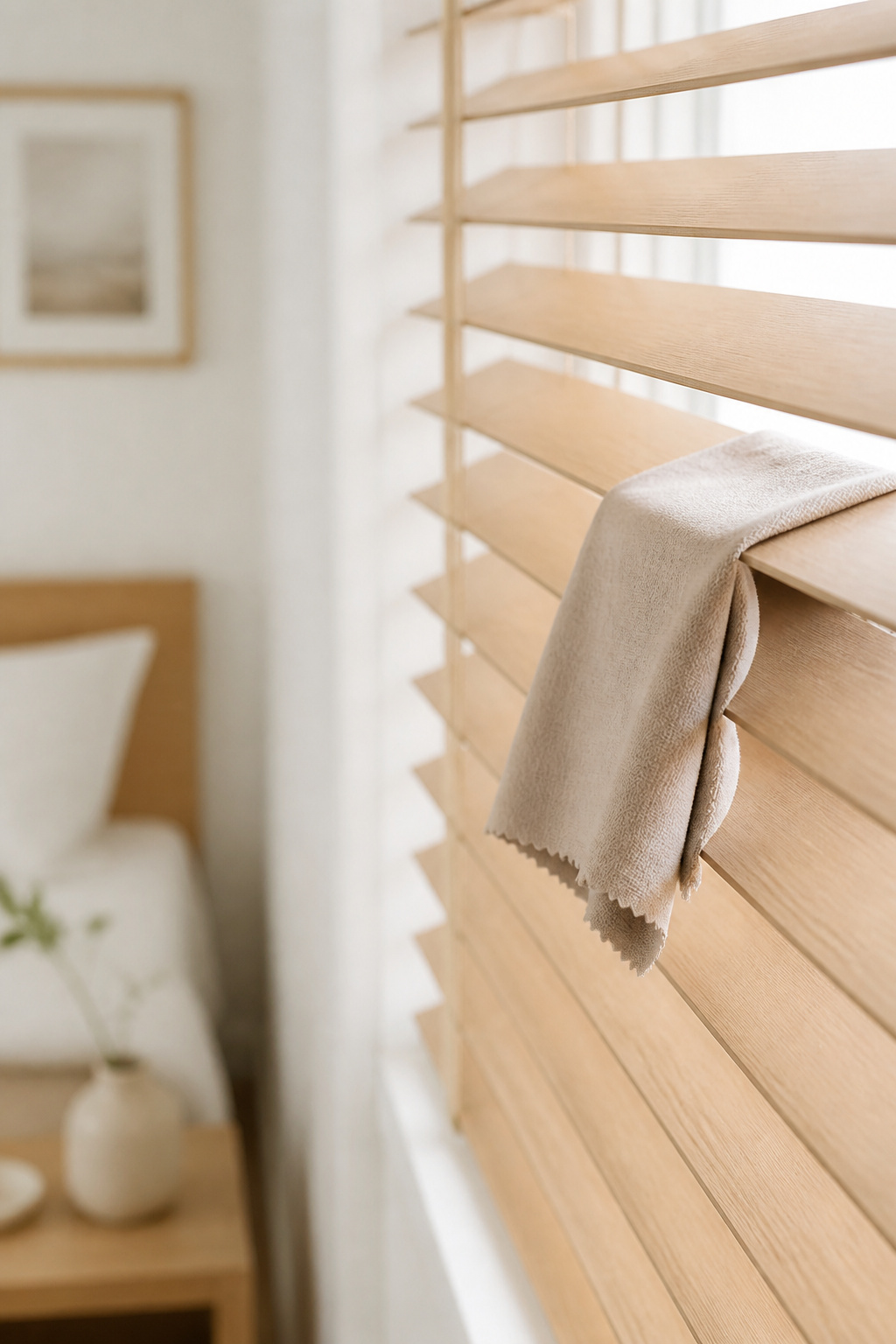
Blinds ask for little: a microfibre duster, a damp cloth, or a vacuum brush keeps the slats clear. Curtains ask more — periodic washing or dry cleaning, and professional cleaning of heavy fabric runs $30–60 per panel each time. Real wood blinds need quarterly oil treatments and quick spill cleanup to survive a bedroom’s humidity swings.
What wears out first
Lifespans vary more by material than by category. Vinyl blinds are the weak link at just 4–6 years before warping or discolouring, while most blinds average 6–8. Quality lined curtains last 10–15 years; thin unlined sheers only 3–7. Real and faux wood blinds both reach 10–15 years with care, though faux wood drops to 8–12 in humid climates. Quality, in short, buys years.
Cost per year of use, not just sticker price
Here the sticker price misleads. Blinds cost roughly $15–200 per window; curtain panels run $40–300 before rods, and blackout lining adds 30–50% on top. So blinds win upfront. But spread across their service life the gap narrows sharply: a vinyl blind may need replacing twice before a quality lined curtain wears out. Faux wood costs 60–80% more than vinyl yet often works out cheaper over 8–10 years once you count replacements. Treat “cost per year” as a reasoned estimate, not a published figure — but it is what decides real value.
Side-by-Side: Curtains vs. Blinds vs. Shades
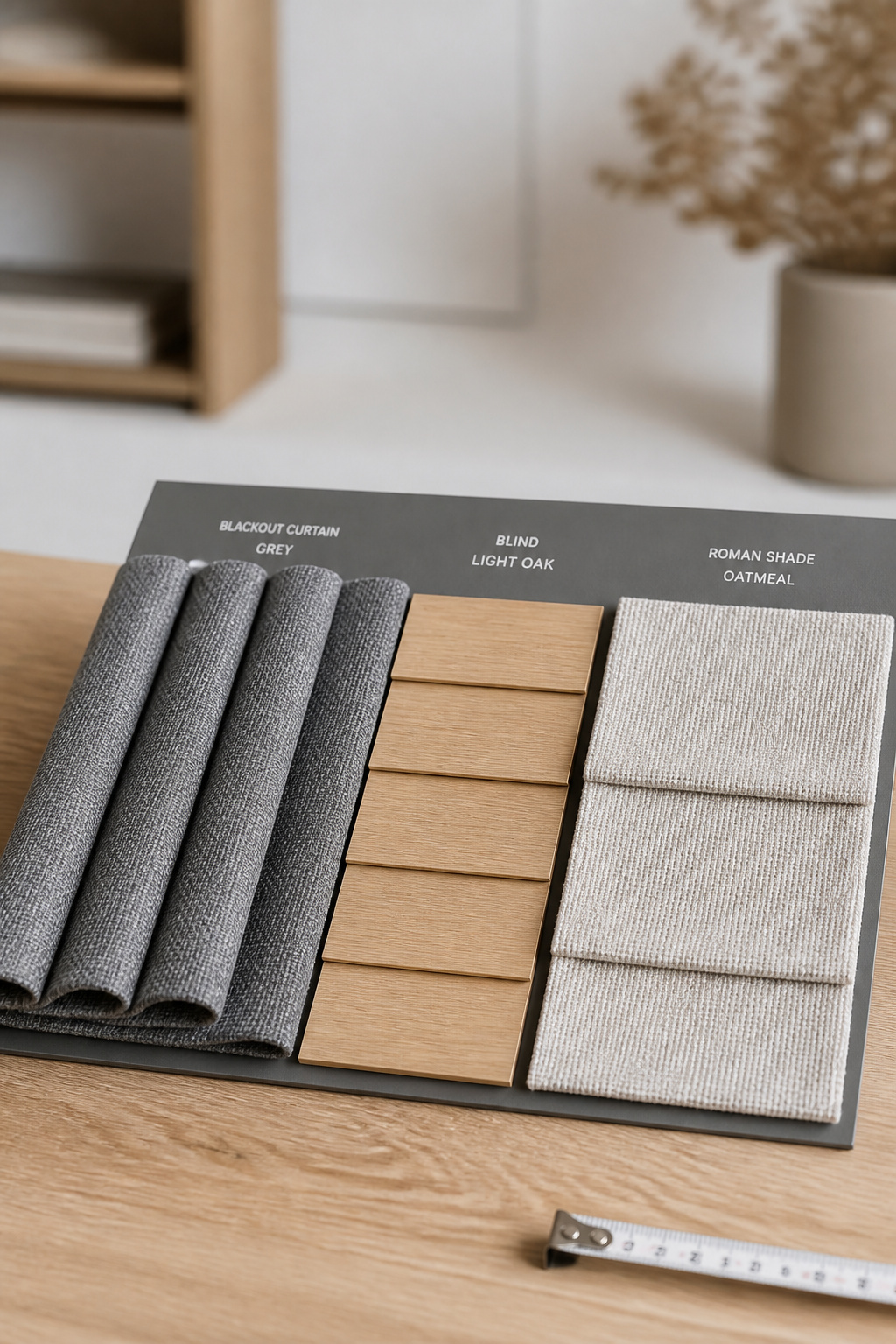
Everything above lands in one table — read it as a map of trade-offs, not a ranking.
| Attribute | Curtains | Blinds | Cellular (honeycomb) shades |
|---|---|---|---|
| Blackout | 95–98% (up to 99%), best real-world edge seal | 98–99.9% fabric-level, but perimeter leak | 95–99% room-darkening; blackout versions leak at edges |
| Insulation | R-2.0–3.0 (up to R-6 fitted) | Aluminium near-zero | R-3.5–4.0+, cuts heat loss up to 40% |
| Sound | Reduces noise 20–40% | Poor (hard slats reflect) | Best blind type, still trails heavy curtains |
| Maintenance | Wash / dry-clean $30–60 per panel | Routine dusting only | Routine dusting only |
| Cost / lifespan | $40–300/window (+30–50% lining), 3–15 yrs | $15–200/window, 4–15 yrs | Mid-range, 6–10 yrs typical |
Reading the table against your own priority
The table has no universal winner; treating it as one is the common mistake. Read it against your single biggest problem instead. If that problem is light leak or noise, weight it toward curtains. If you rent, run a tight budget, or value low maintenance over marginal blackout, weight it toward blinds or shades. And when two attributes matter equally and neither category wins both, that tie is the signal to stop choosing.
When to Stop Comparing and Layer Instead
The single-choice framing is often false. Some windows simply ask for two treatments, and recognising that early saves buying the wrong one twice.
Signs one category won’t be enough alone
A few situations make a single layer insufficient by default. A street-facing or shared-wall bedroom that needs both blackout and sound is the clearest case, because no one category leads on both. A shift worker needing true 99–100% blackout rather than 95–97% room-darkening is another. So is a window facing a streetlight or a sunrise exposure.
The layering shortcut
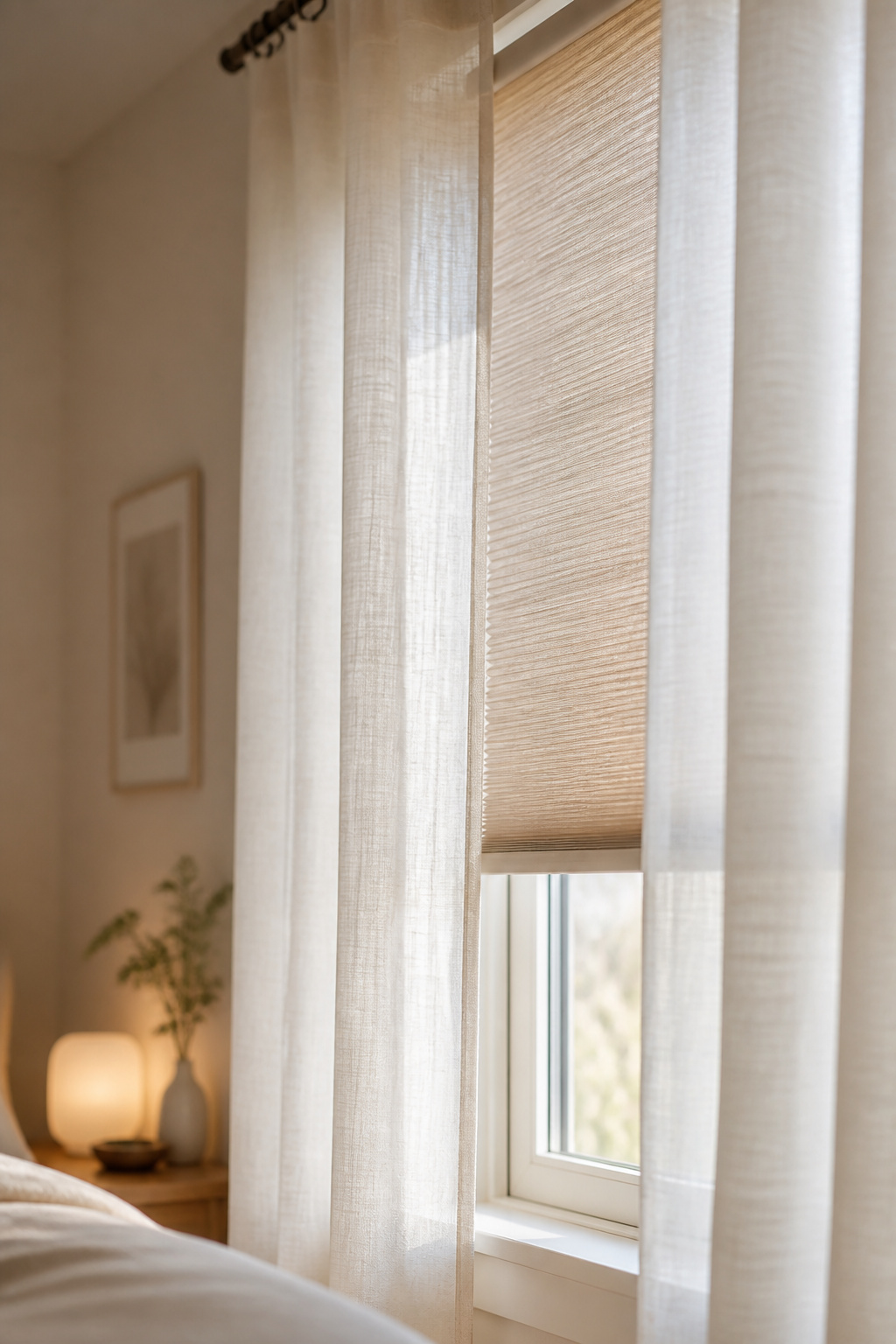
The standard layered setup is simple: a blackout roller shade or cordless blind mounted tight against the glass, with sheer or decorative curtains on an outer rod. The base layer handles full night-time blackout and privacy; the sheer gives daytime softness and a view without exposure — two use cases one treatment can’t cover. The trapped air between the layers adds insulation, and heavy drapery over a blind adds a second layer of sound dampening. If your window fits this pattern, learn how to layer two treatments together properly rather than stacking them at random.
Making the Call: A Decision Rule You Can Use Today
Strip the comparison down to one question — what is your single biggest problem at this window — and the choice makes itself.
Match your top priority to a category
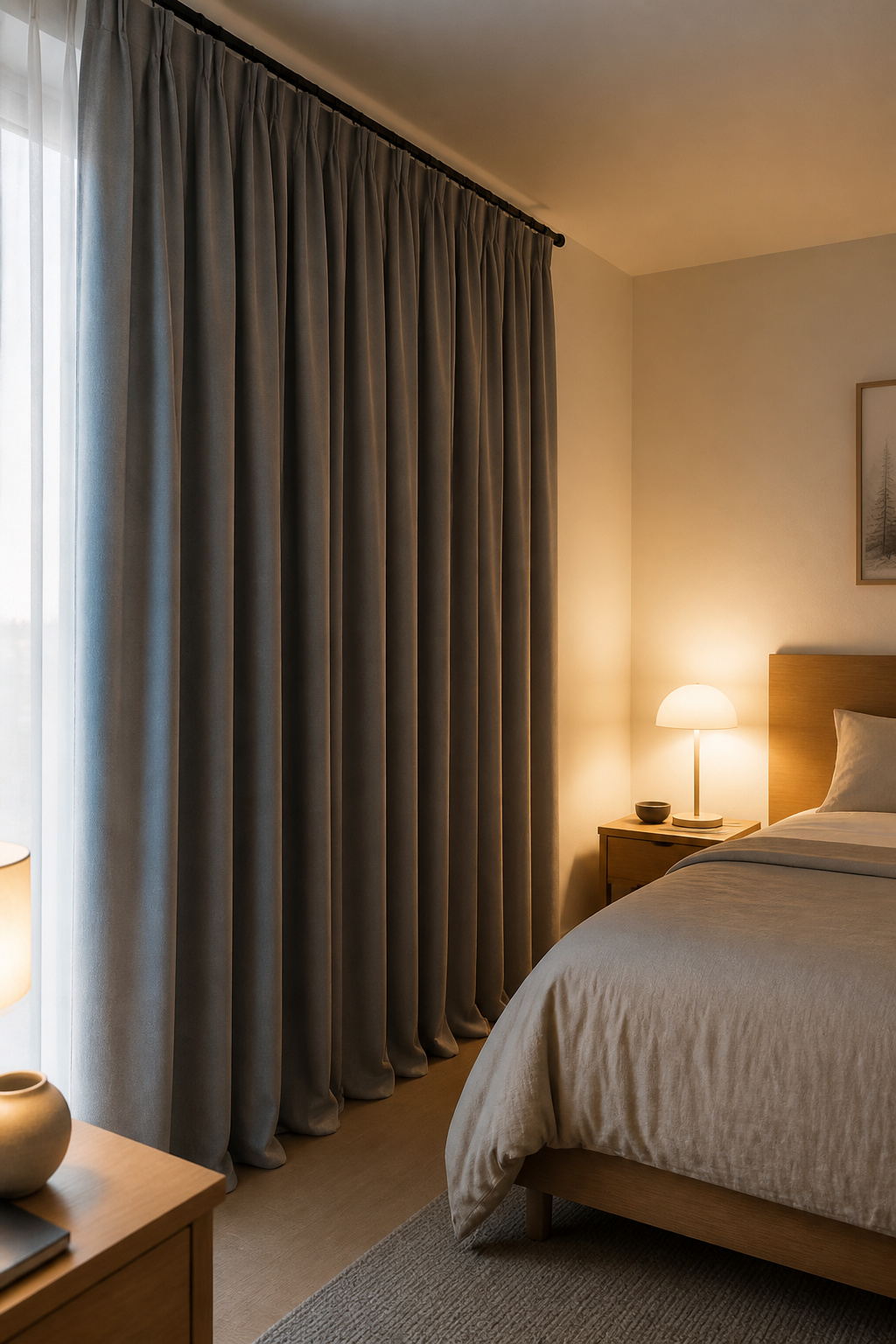
The rule, committed rather than hedged: for sleep-grade darkness or quiet, choose a heavy, oversized curtain with blackout lining and a pinch-pleat heading. For easy upkeep and a clean, small-footprint look, choose a quality blind or shade. For pure warmth, a cellular honeycomb shade edges out even a good thermal curtain on R-value alone. And when two priorities genuinely tie, layer a functional base with decorative curtains rather than force a single winner. One priority, one answer.
Next step: measuring and hanging your choice
Whichever category you land on, the number that decides whether it performs is the one most people skip: hardware placement. Rod height, width, and extension past the frame are what let a curtain hit its rated blackout and insulation figures — a well-chosen panel hung too tight to the frame leaks like a cheap one. I photograph a finished room at 7am in the darkest week of February; if the light behaves then, it is hung right. So before you order, read how to hang your new curtains correctly, and for the wider view, start with our complete bedroom window treatments guide.
FAQ
Are curtains or blinds better for a bedroom?
Curtains are usually the stronger bedroom choice, because when sized and hung correctly they outperform blinds on blackout, insulation, and sound. Blinds still win where minimal upkeep, a clean look, or a tight window recess matter more than maximum darkness. If you need both, layering a base blind under a curtain resolves the trade-off rather than forcing one winner.
Do blinds or curtains block more light?
On fabric opacity alone, professional blackout blinds reach 98–99.9% versus 95–98% for quality blackout curtains. In real installations, though, curtains usually block more total light, because oversized panels overlap the wall well beyond the window and close the perimeter gaps a frame-mounted blind structurally can’t avoid. Layering a blind under a curtain closes whatever either leaves behind.
Are blinds cheaper than curtains long term?
Blinds cost less upfront — around $15–200 per window against $40–300 for curtains, plus 30–50% more for blackout lining. They also need less ongoing cost, since routine dusting replaces the $30–60 per panel that curtain dry cleaning can require. The gap narrows over time, however, because vinyl blinds average only 4–6 years while quality lined curtains last 10–15, so material quality decides real cost per year.